
Under the direction of Co-Founder and CTO Prasad Dasi, PhD, YoungHeartValve is developing a fully synthetic, polymer-based transcatheter aortic valve designed to deliver lifelong durability without the need for chronic anticoagulation. Headquartered in Atlanta, Georgia, the company is advancing its transcatheter aortic valve platform with the goal of addressing one of structural heart’s most persistent trade-offs: durability versus safety. Backed by more than $6 million in non-dilutive funding and supported by over a decade of NIH-funded research, YoungHeartValve is preparing to transition from advanced preclinical validation to first-in-human studies.
Origin Story
YoungHeartValve was founded in 2020 after years of academic research pointed toward a clear clinical gap in structural heart therapy.
“YoungHeartValve was founded in 2020 when my long-time academic collaborator, Dr. Susan James, and I decided to translate more than a decade of research into a real clinical solution for patients,” Dasi explained. “We were motivated by a clear unmet need; today’s heart valves either wear out too quickly or require lifelong anticoagulation. We believed a polymeric valve could fundamentally change that trade-off.”
The defining moment came after a six-month preclinical sheep study.
“Both of our prototype valves performed remarkably well: no thrombosis and no calcification, complications that are commonly seen in tissue valves,” he said. “The clinicians involved immediately recognized that this could represent a step-change in durability and patient safety. That result convinced us that the technology should not remain in the lab.”
Thus, the team filed multiple foundational patents.
“Dr. James developed the polymeric leaflet biomaterial, and I designed the stent-valve system and hemodynamic architecture. Together, these form the basis of the YoungHeartValve platform.”
The company’s roots trace back to more than a decade of NIH-funded research conducted across Colorado State University, The Ohio State University, and Georgia Tech. Dasi’s background is in cardiovascular biomechanics and predictive modeling, and he previously founded DASI Simulations to bring patient-specific treatment planning into clinical cardiology. Dr. James brings more than 30 years of experience in polymeric implants and previously translated biomaterials into commercial orthopedic devices through the company BioPoly.
The Current Landscape
Heart disease remains the leading cause of death in the U.S., and aortic stenosis is one of the most common and serious valve disorders. In 2019 alone, more than 800,000 Americans over age 75 were affected, and the number continues to grow as the population ages. More than 100,000 transcatheter aortic valve replacement (TAVR) procedures are performed annually in the U.S., and the global TAVR market is projected to grow from approximately $6.8 billion in 2024 to nearly $11.8 billion by 2033.
According to Dasi, access is no longer the primary constraint.
“The problem is not access to treatment; it’s durability.”
Today’s valve therapies present a difficult trade-off. Patients can undergo open-heart surgery to receive a surgical valve that offers somewhat greater durability but requires a highly invasive procedure and long recovery. Alternatively, they can receive a minimally invasive transcatheter valve and return home within days, but with potentially reduced longevity. Both approaches rely on chemically fixed animal tissue that inevitably calcifies, deteriorates, or develops thrombosis over time.
“This durability limitation is particularly problematic for younger and lower-risk patients, as well as those with complex anatomies such as bicuspid valves,” Dasi said.
As the field moves toward treating asymptomatic and moderate aortic stenosis patients, the absence of a lifelong solution becomes more pressing.
“Today’s therapies were designed for elderly patients. But medicine is rapidly expanding toward treating patients decades younger.”
Attempts at synthetic polymer valves date back to the 1960s, but prior materials failed due to calcification, clotting, or material degradation. “None have demonstrated clear superiority over tissue valves,” he noted.
Inside the Innovation
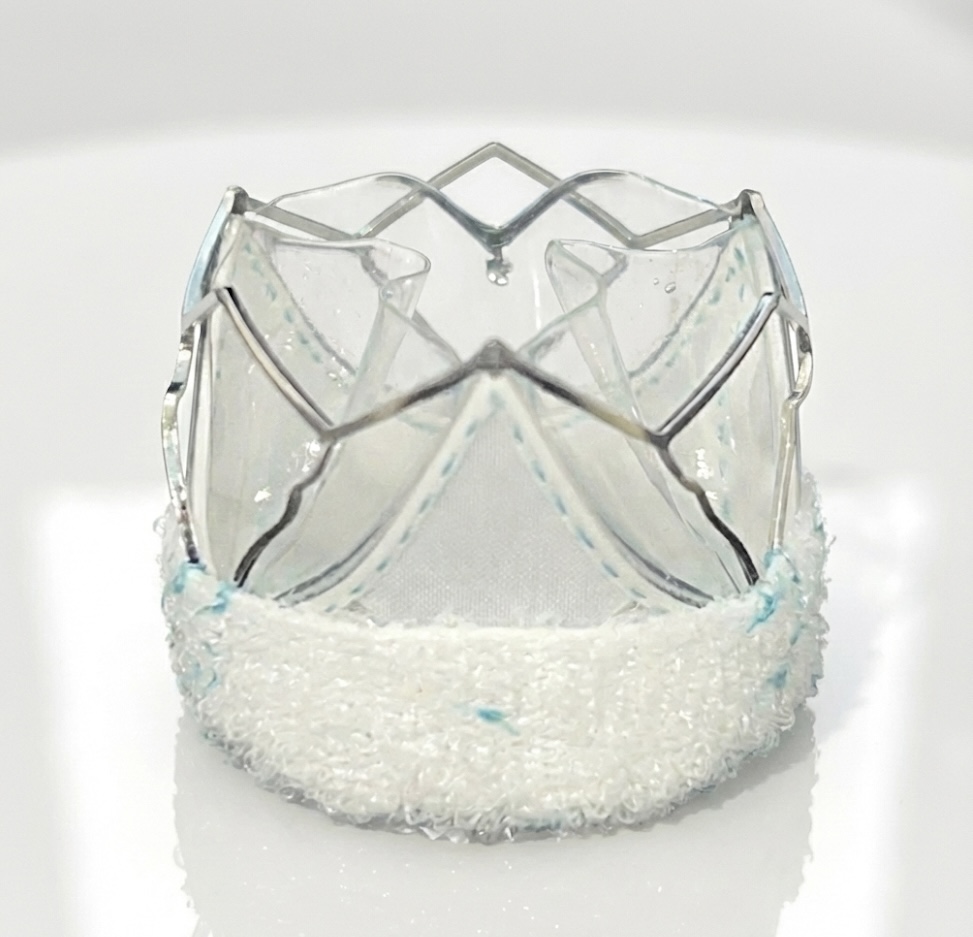
YoungHeartValve’s solution is inspired by biology. The inner lining of healthy blood vessels and native valve leaflets contains hyaluronic acid, a naturally occurring biomolecule that creates a highly hydrated surface recognized by blood cells, platelets, and immune cells as “self.”
“Our key innovation is a synthetic polymer leaflet material in which hyaluronic acid is integrated at the molecular level,” Dasi explained.
The company developed proprietary chemistry that converts otherwise hydrophobic polyethylene into a permanently hydrophilic and biocompatible material.
“Rather than applying a surface coating that can wear off, the hyaluronan is interpenetrated throughout the polymer structure itself, so the biological functionality is built into the material.”
The leaflet is composed of approximately 98% linear low-density polyethylene (LLDPE) and about 2% hyaluronic acid in an interpenetrating polymer network. Because the hyaluronic acid is distributed throughout the bulk polymer, its biological functionality remains stable in the mechanically demanding environment of the heart.
“The hydrated interface reduces protein adsorption and platelet adhesion, directly addressing thrombus formation and mineral nucleation pathways that drive structural valve degeneration,” Dasi said. “These effects have been demonstrated in chronic large-animal studies up to six months, showing absence of leaflet calcification and thrombotic deposition.”
The leaflet is mounted on a balloon-expandable cobalt-chromium stent frame with a low-profile geometry designed to preserve coronary access and minimize obstruction risk. Flexible polymer leaflets allow tight crimping for catheter delivery while recovering optimal coaptation after deployment. Bench testing and preclinical studies show hemodynamic performance equivalent to contemporary clinical valves.
Beyond clinical performance, YoungHeartValve is also rethinking manufacturing.
“Traditional valves depend on animal tissue harvesting and extensive hand-sewn assembly,” Dasi noted. “Our valve is fully synthetic and designed for automated manufacturing, from leaflet fabrication to stent assembly.”
Eliminating biological sourcing and manual assembly improves scalability, reliability, and cost structure.
“We are not just improving an existing valve; we are building a platform capable of expanding minimally invasive valve therapy to younger patients, broader populations, and global markets where cost and longevity currently limit access.”
Progress and Milestones
YoungHeartValve’s TAVR system is currently in the advanced preclinical stage. The company is conducting chronic large-animal studies, and its latest design has met regulatory bench-testing requirements for valve performance and mechanical durability. “We have implemented a soft design freeze that incorporates physician feedback from earlier acute implantations to optimize both hemodynamic performance and procedural usability,” Dasi shared.
In parallel, YoungHeartValve is engaged with the FDA through the pre-submission process and preparing for an IDE application to initiate first-in-human trials following completion of ongoing chronic studies.
Since its founding, the company has secured several key milestones. In August 2024, YoungHeartValve was awarded an NIH SBIR Phase II grant, enabling full-scale preclinical development and long-term sheep studies. It also secured a worldwide exclusive license originating from Colorado State University, with an inter-institutional agreement including Georgia Tech and The Ohio State University.
The IP portfolio now spans seven international patent families, covering the polymer leaflet material, manufacturing methods, stent and valve assembly, and accessory technologies such as adaptive sealing skirts.
To date, the company has operated exclusively on non-dilutive federal funding while building a Medical Advisory Board of structural heart KOLs and establishing manufacturing, supply chain, and regulatory partnerships.
Looking ahead, YoungHeartValve is pursuing a staged $20 million Series A financing designed to carry the company through final design freeze, long-term GLP animal studies, IDE approval, first-in-human implantation, and an Early Feasibility Study.
For Dasi, the mission remains clear: “Our goal is to deliver the first truly durable, anticoagulation-free transcatheter heart valve for lifelong therapy.”
Join Us at LSI USA ‘26
Dasi has been selected to present at LSI USA ‘26, March 16th–20th, in front of hundreds of global medical technology companies. Join us in welcoming him to the event in Dana Point, CA, where he will share the latest updates on YoungHeartValve’s technology and development.








Request Info

The Lens - Complimentary Issue
Subscription Includes

Global Medtech Market Analysis & Projections (MAP), 2021-2031
Published: 2023
Next Update: Q4 2024
Deliverables:



Global Surgical Procedure Volumes Dashboard, 2018-2029
Published: 2022
Next Update: Q2 2024
Deliverables:
United States Surgical Procedure Volumes, 2018-2029
Published: 2022
Next Update: Q2 2024
Deliverables:
Aesthetics, Global Surgical Procedure Volumes, 2018-2029
Published: 2022
Next Update: Q2 2024
Deliverables:
Cardio, Global Surgical Procedure Volumes, 2018-2029
Published: 2022
Next Update: Q2 2024
Deliverables:
ENT, Global Surgical Procedure Volumes, 2018-2029
Published: 2022
Next Update: Q2 2024
Deliverables:
General, Global Surgical Procedure Volumes, 2018-2029
Published: 2022
Next Update: Q2 2024
Deliverables:
Neuro, Global Surgical Procedure Volumes, 2018-2029
Published: 2022
Next Update: Q2 2024
Deliverables:
OB/GYN, Global Surgical Procedure Volumes, 2018-2029
Published: 2022
Next Update: Q2 2024
Deliverables:
Ophthalmology, Global Surgical Procedure Volumes, 2018-2029
Published: 2022
Next Update: Q2 2024
Deliverables:
Orthopedic, Global Surgical Procedure Volumes, 2018-2029
Published: 2022
Next Update: Q2 2024
Deliverables:
Peripheral Vascular, Global Surgical Procedure Volumes, 2018-2029
Published: 2022
Next Update: Q2 2024
Deliverables:
Spine, Global Surgical Procedure Volumes, 2018-2029
Published: 2022
Next Update: Q2 2024
Deliverables:
SRS, Global Surgical Procedure Volumes, 2018-2029
Published: 2022
Next Update: Q2 2024
Deliverables:
Urological, Global Surgical Procedure Volumes, 2018-2029
Published: 2022
Next Update: Q2 2024
Deliverables:
Global Markets for Hip Replacement Implants, 2023-2028
Published: 2023
Next Update: Q2 2024
Deliverables:
Global Markets for Peripheral Vascular Guidewires, 2023-2028
Published: 2023
Next Update: Q2 2024
Deliverables:
Global Markets for Peripheral Atherectomy Catheters, 2023-2028
Published: 2023
Next Update: Q2 2024
Deliverables:
Global Markets for Electrosurgery, 2023-2028
Published: 2023
Next Update: Q2 2024
Deliverables:
Global Markets for Peripheral Vascular Balloons & Vena Cava Filter, 2023-2028
Published: 2023
Next Update: Q2 2024
Deliverables:
Global Markets for Mechanical Heart Valves, 2023-2028
Published: 2023
Next Update: Q2 2024
Deliverables:
Global Markets for Tissue Heart Valve Replacement, 2023-2028
Published: 2023
Next Update: Q2 2030
Deliverables:
Global Markets for Transcatheter Mitral Valve Devices, 2023-2028
Published: 2023
Next Update: Q2 2024
Deliverables:
Global Markets for Femoral Closure, 2023-2029
Published: 2023
Next Update: Q2 2024
Deliverables:
Global Markets for Tricuspid Valve Repair, 2023-2028
Published: 2023
Next Update: Q2 2024
Deliverables:
Global Markets for Percutaneous Pulmonary Valves, 2023-2028
Published: 2023
Next Update: Q2 2024
Deliverables:
Global Markets for Coronary Angio Guidewires & Catheters, 2023-2028
Published: 2023
Next Update: Q2 2024
Deliverables:
Global Markets for Oncology Ablation Devices, 2023-2028
Published: 2023
Next Update: Q2 2024
Deliverables:
Global Markets for ENT Devices, 2023-2028
Published: 2023
Next Update: Q2 2024
Deliverables:
Global Markets for Cell Delivery Catheters, 2023-2028
Published: 2023
Next Update: Q3 2024
Deliverables:
Global Markets for Urology Devices, 2023-2028
Published: 2023
Next Update: Q3 2024
Deliverables:
Global Markets for External Pain Pumps, 2023-2028
Published: 2023
Next Update: Q3 2024
Deliverables:
Global Markets for Ureteral Access Devices, 2023-2028
Published: 2023
Next Update: Q3 2024
Deliverables:
Global Markets for Pelvic Floor Repair, 2023-2028
Published: 2023
Next Update: Q3 2024
Deliverables:
Global Markets for Atrial Fibrillation, 2023-2028
Published: 2023
Next Update: Q3 2024
Deliverables:
Global Markets for Neurovascular Devices Ischemic, 2023-2028
Published: 2023
Next Update: Q3 2024
Deliverables:
Global Markets for Neuromodulation Devices, 2023-2028
Published: 2023
Next Update: Q3 2024
Deliverables:
Global Markets for Vertebroplasty Devices, 2023-2028
Published: 2023
Next Update: Q3 2024
Deliverables:
Global Markets for Benign Prostation Hyperplasia Implants, 2023-2028
Published: 2023
Next Update: Q3 2024
Deliverables:
Global Markets for Cryoablation, 2023-2028
Published: 2023
Next Update: Q3 2024
Deliverables:
Global Markets for Diagnostic Electrophysiology Catheters, 2023-2028
Published: 2023
Next Update: Q3 2024
Deliverables:
Global Markets for Hernia Repair, 2023-2028
Published: 2023
Next Update: Q4 2024
Deliverables:
Global Markets for CRM Devices, 2023-2028
Published: 2023
Next Update: Q4 2024
Deliverables:
Global Markets for Neurovascular Devices Hemorrhagic, 2023-2028
Published: 2023
Next Update: Q4 2024
Deliverables:
Global Markets for Renal Denervation, 2023-2028
Published: 2023
Next Update: Q4 2024
Deliverables:
Global Markets for Upper+Lower Suture Anchors, 2023-2028
Published: 2023
Next Update: Q4 2024
Deliverables:
Global Markets for Peripheral Stents, 2023-2028
Published: 2023
Next Update: Q4 2024
Deliverables:
Global Markets for Electromagnetic Navigation Systems, 2023-2028
Published: 2023
Next Update: Q4 2024
Deliverables:
Global Markets for GI Endoscopy, 2023-2028
Published: 2023
Next Update: Q4 2024
Deliverables:
Global Markets for Hemodialysis, 2023-2028
Published: 2023
Next Update: Q4 2024
Deliverables:
Globals Markets for Cardiac Ablation, 2023-2028
Published:
Next Update:
Deliverables:
Global Markets for Atrial Septal Occlusion, 2023-2028
Published: 2023
Next Update: Q4 2024
Deliverables:
Global Markets for Aortic Grafts, 2023-2028
Published: 2023
Next Update: Q4 2024
Deliverables:
Global Markets for Interventional Cardiology Devices, 2023-2028
Published: 2023
Next Update: Q4 2024
Deliverables:
Global Markets for Oncology Embolization, 2023-2028
Published: 2023
Next Update: Q4 2024
Deliverables:
Global Markets for Vascular Access Devices, 2023-2028
Published: 2023
Next Update: Q4 2024
Deliverables:
Global Markets for Rotator Cuff Repair Suture Anchors, 2023-2028
Published: 2023
Next Update: Q4 2024
Deliverables:
Global Markets for Electrical Stimulation Devices, 2023-2028
Published: 2023
Next Update: Q4 2024
Deliverables:
Global Markets for Wearable Monitoring Devices, 2023-2028
Published: 2023
Next Update: Q4 2024
Deliverables:
Global Markets for Low Complexity Medical Devices, 2023-2028
Published: 2023
Next Update: Q4 2024
Deliverables:
Canada Surgical Procedure Volumes, 2018-2029
Published: 2022
Next Update: Q2 2024
Deliverables:
Germany Surgical Procedure Volumes, 2018-2029
Published: 2022
Next Update: Q2 2024
Deliverables:
France Surgical Procedure Volumes, 2018-2029
Published: 2022
Next Update: Q2 2024
Deliverables:
U.K. Surgical Procedure Volumes, 2018-2029
Published: 2022
Next Update: Q2 2024
Deliverables:
Italy Surgical Procedure Volumes, 2018-2029
Published: 2022
Next Update: Q2 2024
Deliverables:
Spain Surgical Procedure Volumes, 2018-2029
Published: 2022
Next Update: Q2 2024
Deliverables:
Poland Surgical Procedure Volumes, 2018-2029
Published: 2022
Next Update: Q2 2024
Deliverables:
Netherlands Surgical Procedure Volumes, 2018-2029
Published: 2022
Next Update: Q2 2024
Deliverables:
Belgium Surgical Procedure Volumes, 2018-2029
Published: 2022
Next Update: Q2 2024
Deliverables:
Sweden Surgical Procedure Volumes, 2018-2029
Published: 2022
Next Update: Q2 2024
Deliverables:
Switzerland Surgical Procedure Volumes, 2018-2029
Published: 2022
Next Update: Q2 2024
Deliverables:
Denmark Surgical Procedure Volumes, 2018-2029
Published: 2022
Next Update: Q2 2024
Deliverables:
Finland Surgical Procedure Volumes, 2018-2029
Published: 2022
Next Update: Q2 2024
Deliverables:
Norway Surgical Procedure Volumes, 2018-2029
Published: 2022
Next Update: Q2 2024
Deliverables:
China Surgical Procedure Volumes, 2018-2029
Published: 2022
Next Update: Q2 2024
Deliverables:
India Surgical Procedure Volumes, 2018-2029
Published: 2022
Next Update: Q2 2024
Deliverables:
Japan Surgical Procedure Volumes, 2018-2029
Published: 2022
Next Update: Q2 2024
Deliverables:
South Korea Surgical Procedure Volumes, 2018-2029
Published: 2022
Next Update: Q2 2024
Deliverables:
Australia Surgical Procedure Volumes, 2018-2029
Published: 2022
Next Update: Q2 2024
Deliverables:
Thailand Surgical Procedure Volumes, 2018-2029
Published: 2022
Next Update: Q2 2024
Deliverables:
Malaysia Surgical Procedure Volumes, 2018-2029
Published: 2022
Next Update: Q2 2024
Deliverables:
Singapore Surgical Procedure Volumes, 2018-2029
Published: 2022
Next Update: Q2 2024
Deliverables:
New Zealand Surgical Procedure Volumes, 2018-2029
Published: 2022
Next Update: Q2 2024
Deliverables:
Caribbean Surgical Procedure Volumes, 2018-2029
Published: 2022
Next Update: Q2 2024
Deliverables:
Argentina Surgical Procedure Volumes, 2018-2029
Published: 2022
Next Update: Q2 2024
Deliverables:
Colombia Surgical Procedure Volumes, 2018-2029
Published: 2022
Next Update: Q2 2024
Deliverables:
Chile Surgical Procedure Volumes, 2018-2029
Published: 2022
Next Update: Q2 2024
Deliverables:
Guatemala Surgical Procedure Volumes, 2018-2029
Published: 2022
Next Update: Q2 2024
Deliverables:
Dominican Republic Surgical Procedure Volumes, 2018-2029
Published: 2022
Next Update: Q2 2024
Deliverables:
Costa Rica Surgical Procedure Volumes, 2018-2029
Published: 2022
Next Update: Q2 2024
Deliverables:
Panama Surgical Procedure Volumes, 2018-2029
Published: 2022
Next Update: Q2 2024
Deliverables:
Mexico Surgical Procedure Volumes, 2018-2029
Published: 2022
Next Update: Q2 2024
Deliverables:
Brazil Surgical Procedure Volumes, 2018-2029
Published: 2022
Next Update: Q2 2024
Deliverables:
Turkey Surgical Procedure Volumes, 2018-2029
Published: 2022
Next Update: Q2 2024
Deliverables:
Russia Surgical Procedure Volumes, 2018-2029
Published: 2022
Next Update: Q2 2024
Deliverables:
South Africa Surgical Procedure Volumes, 2018-2029
Published: 2022
Next Update: Q2 2024
Deliverables:
Request Info
See Full Attendee List