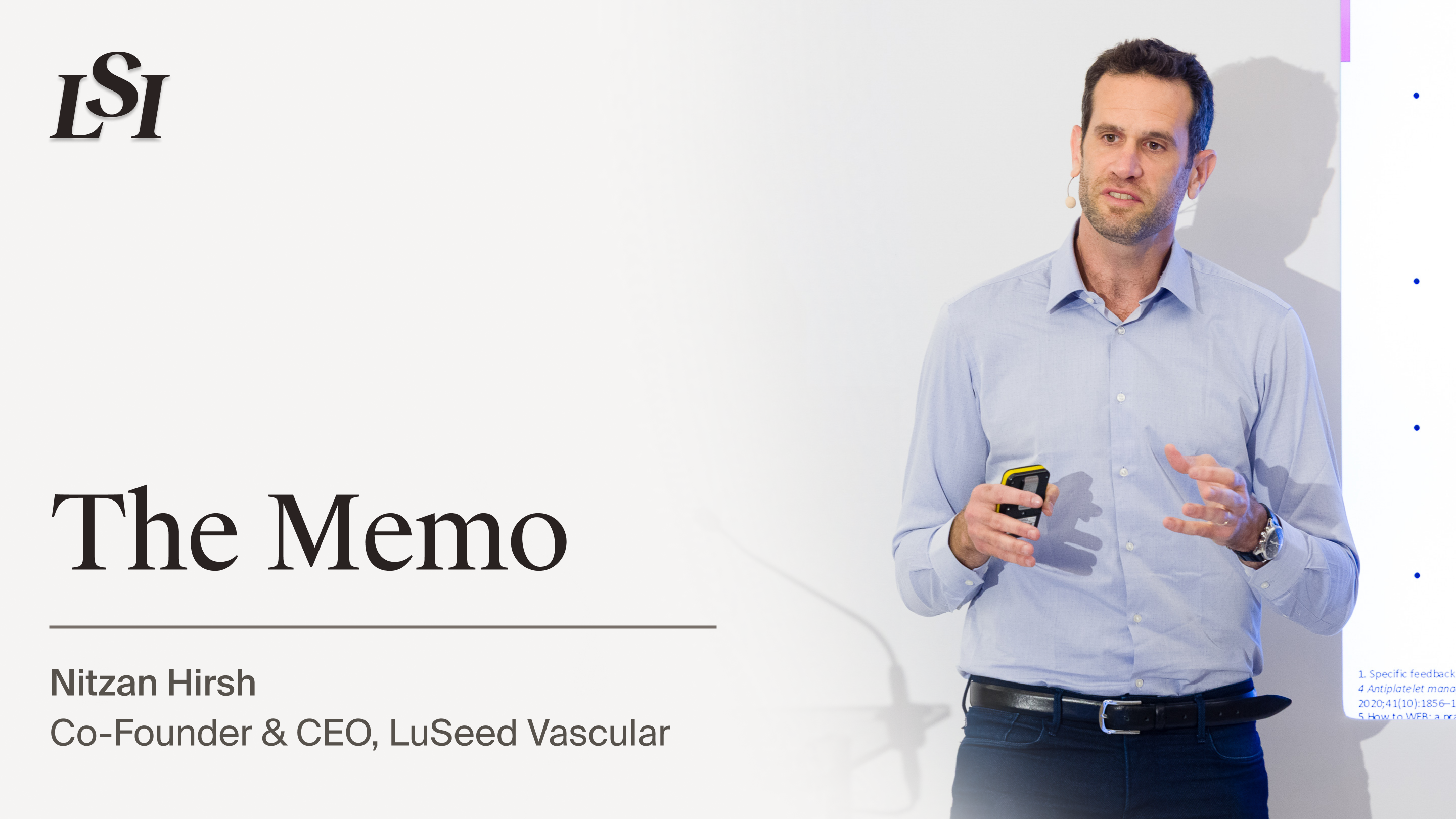
Under the direction of Co-Founder and CEO Nitzan Hirsh, LuSeed Vascular is developing a minimally invasive approach to brain aneurysm treatment designed to address one of the persistent limitations of current intrasaccular devices: treating aneurysms across both bifurcation and sidewall anatomies. Its flagship DOME™ device combines a flexible, dual-layer nitinol mesh design with multidirectional deployment and minimal parent-artery protrusion, with the goal of making intrasaccular treatment available to a broader patient population while simplifying the procedure for physicians. With first-in-human work completed, a multicenter clinical program underway, and preparations for a pivotal study in progress, the company is now working toward its next phase of clinical and regulatory development.
Origin Story
LuSeed’s beginnings trace back to Hirsh and Co-Founder Amir Arthur’s time completing their master’s degrees in biomedical engineering. Rather than beginning with a technology and searching for an application, the pair took a needs-driven approach.
“Amir and I always aspired to do something different,” Hirsh said. “While finalizing our master’s degrees in biomedical engineering, we started interviewing physicians about their problems using the Biodesign method and soon found ourselves in the neurovascular domain, from which the road to brain aneurysms was almost obvious.”
The process combined structured problem-solving with something less quantifiable.
“It is interesting, in retrospect, to remember the combination of a methodical and systematic approach with listening to gut feeling and catching those ‘aha’ moments when we knew we were heading in the right direction,” Hirsh said.
Based in Israel, LuSeed was co-founded by Hirsh and Arthur, now the company’s COO. For Hirsh, building the company offered an opportunity to turn his engineering background into something with a direct impact on patient care.
“What excited me was the possibility of using my time to do something that I love, using learned knowledge to create something that directly contributes to medicine,” he said. “That was the main motivator early on, and it never stops.”
The Current Landscape
Brain aneurysms are common, but their anatomy can make treatment anything but straightforward. Hirsh estimates that roughly one in 20 people harbors a brain aneurysm and points to more than 30,000 ruptures annually in the U.S. alone.
Endovascular treatment has traditionally relied on approaches including coiling and flow diversion. While these technologies have transformed aneurysm care, Hirsh said they can introduce procedural complexity, potential complications, and, for some approaches, the need for prolonged antiplatelet therapy.
Intrasaccular devices offer another option by placing an implant within the aneurysm itself to disrupt blood flow and promote occlusion. Yet LuSeed sees a significant anatomical limitation in the current generation of these devices.
Existing intrasaccular technologies are generally optimized for bifurcation aneurysms, where an aneurysm forms near the junction of branching vessels. Sidewall, eccentric, and highly angulated aneurysms present a different challenge because of the angle from which the device must be delivered.
According to Hirsh, these anatomies represent a substantial portion of the patient population that current intrasaccular devices struggle to address.
“The devices are built for straight deployment rather than angular deployment,” Hirsh said. “Therefore, they are not adept for cases with this type of angularity.”
For LuSeed, solving that limitation could expand where physicians can use the intrasaccular approach rather than forcing anatomy to dictate an entirely different treatment strategy.
Inside the Innovation
LuSeed DOME is a minimally invasive, “one-and-done” intrasaccular implant designed for both bifurcation and sidewall brain aneurysms.
Once implanted within the aneurysm and positioned against its walls and neck, DOME is designed to disrupt blood flow into the aneurysm and promote thrombosis.
Its architecture is central to that approach. DOME incorporates a dual-layer nitinol mesh with its marker contained within the device layers, a configuration intended to minimize unwanted protrusion into the parent artery. The two layers are also not connected at the distal end, which creates an atraumatic tip and increases flexibility during deployment.
Together, Hirsh said, those characteristics allow DOME to be deployed from a wider range of angles than existing intrasaccular technologies.
“The device provides the unique characteristic of deployment from a wide range of angles, a characteristic that is not provided by any product in the category, and thus allows it to reach the respective unmet patient population,” Hirsh said.
That flexibility means positioning within the aneurysm is designed to be independent of the precise location of the catheter tip, opening the possibility of treating both bifurcation and sidewall anatomies with the same platform. By minimizing protrusion into the parent artery, DOME is also designed to reduce the need for chronic dual antiplatelet therapy.
LuSeed has focused on simplifying device selection as well. DOME comes in seven sizes, compared with up to 40 for some existing devices in the category, which Hirsh said makes the technology easier to use and adopt.
Progress and Milestones
LuSeed has now moved beyond the earliest stages of clinical development. Hirsh said DOME has been deployed in nearly 30 patients, with the company observing complete long-term aneurysm occlusion in more than 80% of cases to date. The clinical experience has included anatomies that existing intrasaccular devices can struggle to address.
“The company is gearing up toward its pivotal study, following successful completion of FIH and progression in its multicenter pilot program,” Hirsh said.
The company’s longer-term regulatory roadmap includes initiation of the pivotal program, completion of U.S. enrollment, CE Mark, and ultimately FDA premarket approval.
The U.S. is LuSeed’s primary long-term commercial target, while Europe is also a key market for the company. Hirsh sees additional opportunities in Asia-Pacific markets, particularly Japan and India.
LuSeed is currently raising financing to support the company through the pivotal phase and toward PMA approval, with completing the syndicate a priority for Hirsh at LSI.
“We’re currently looking at completing our syndication for the financing round by partnering with players with experience in the field and with the ability to directly contribute to the success of the company,” he said.
For Hirsh, the timing reflects a convergence of clinical progress, product positioning, and fundraising momentum.
“I’m excited about our current stage and position coming to LSI, both relating to the clinical outcomes and product positioning in the market, and to the fundraising momentum with our leading investors,” Hirsh said. “I’m looking forward to meeting the great people who work hard to make patients’ lives better and to expanding the group of organizations that partner for the success of the company.”
Join Us at LSI Europe ‘26
Hirsh has been selected to present at LSI Europe '26, September 28th–October 1st, in front of hundreds of global medical technology companies. Join us in welcoming him to the event in Barcelona, where he will share the latest updates on LuSeed’s technology and development.








Request Info

The Lens - Complimentary Issue
Subscription Includes

Global Medtech Market Analysis & Projections (MAP), 2021-2031
Published: 2023
Next Update: Q4 2024
Deliverables:



Global Surgical Procedure Volumes Dashboard, 2018-2029
Published: 2022
Next Update: Q2 2024
Deliverables:
United States Surgical Procedure Volumes, 2018-2029
Published: 2022
Next Update: Q2 2024
Deliverables:
Aesthetics, Global Surgical Procedure Volumes, 2018-2029
Published: 2022
Next Update: Q2 2024
Deliverables:
Cardio, Global Surgical Procedure Volumes, 2018-2029
Published: 2022
Next Update: Q2 2024
Deliverables:
ENT, Global Surgical Procedure Volumes, 2018-2029
Published: 2022
Next Update: Q2 2024
Deliverables:
General, Global Surgical Procedure Volumes, 2018-2029
Published: 2022
Next Update: Q2 2024
Deliverables:
Neuro, Global Surgical Procedure Volumes, 2018-2029
Published: 2022
Next Update: Q2 2024
Deliverables:
OB/GYN, Global Surgical Procedure Volumes, 2018-2029
Published: 2022
Next Update: Q2 2024
Deliverables:
Ophthalmology, Global Surgical Procedure Volumes, 2018-2029
Published: 2022
Next Update: Q2 2024
Deliverables:
Orthopedic, Global Surgical Procedure Volumes, 2018-2029
Published: 2022
Next Update: Q2 2024
Deliverables:
Peripheral Vascular, Global Surgical Procedure Volumes, 2018-2029
Published: 2022
Next Update: Q2 2024
Deliverables:
Spine, Global Surgical Procedure Volumes, 2018-2029
Published: 2022
Next Update: Q2 2024
Deliverables:
SRS, Global Surgical Procedure Volumes, 2018-2029
Published: 2022
Next Update: Q2 2024
Deliverables:
Urological, Global Surgical Procedure Volumes, 2018-2029
Published: 2022
Next Update: Q2 2024
Deliverables:
Global Markets for Hip Replacement Implants, 2023-2028
Published: 2023
Next Update: Q2 2024
Deliverables:
Global Markets for Peripheral Vascular Guidewires, 2023-2028
Published: 2023
Next Update: Q2 2024
Deliverables:
Global Markets for Peripheral Atherectomy Catheters, 2023-2028
Published: 2023
Next Update: Q2 2024
Deliverables:
Global Markets for Electrosurgery, 2023-2028
Published: 2023
Next Update: Q2 2024
Deliverables:
Global Markets for Peripheral Vascular Balloons & Vena Cava Filter, 2023-2028
Published: 2023
Next Update: Q2 2024
Deliverables:
Global Markets for Mechanical Heart Valves, 2023-2028
Published: 2023
Next Update: Q2 2024
Deliverables:
Global Markets for Tissue Heart Valve Replacement, 2023-2028
Published: 2023
Next Update: Q2 2030
Deliverables:
Global Markets for Transcatheter Mitral Valve Devices, 2023-2028
Published: 2023
Next Update: Q2 2024
Deliverables:
Global Markets for Femoral Closure, 2023-2029
Published: 2023
Next Update: Q2 2024
Deliverables:
Global Markets for Tricuspid Valve Repair, 2023-2028
Published: 2023
Next Update: Q2 2024
Deliverables:
Global Markets for Percutaneous Pulmonary Valves, 2023-2028
Published: 2023
Next Update: Q2 2024
Deliverables:
Global Markets for Coronary Angio Guidewires & Catheters, 2023-2028
Published: 2023
Next Update: Q2 2024
Deliverables:
Global Markets for Oncology Ablation Devices, 2023-2028
Published: 2023
Next Update: Q2 2024
Deliverables:
Global Markets for ENT Devices, 2023-2028
Published: 2023
Next Update: Q2 2024
Deliverables:
Global Markets for Cell Delivery Catheters, 2023-2028
Published: 2023
Next Update: Q3 2024
Deliverables:
Global Markets for Urology Devices, 2023-2028
Published: 2023
Next Update: Q3 2024
Deliverables:
Global Markets for External Pain Pumps, 2023-2028
Published: 2023
Next Update: Q3 2024
Deliverables:
Global Markets for Ureteral Access Devices, 2023-2028
Published: 2023
Next Update: Q3 2024
Deliverables:
Global Markets for Pelvic Floor Repair, 2023-2028
Published: 2023
Next Update: Q3 2024
Deliverables:
Global Markets for Atrial Fibrillation, 2023-2028
Published: 2023
Next Update: Q3 2024
Deliverables:
Global Markets for Neurovascular Devices Ischemic, 2023-2028
Published: 2023
Next Update: Q3 2024
Deliverables:
Global Markets for Neuromodulation Devices, 2023-2028
Published: 2023
Next Update: Q3 2024
Deliverables:
Global Markets for Vertebroplasty Devices, 2023-2028
Published: 2023
Next Update: Q3 2024
Deliverables:
Global Markets for Benign Prostation Hyperplasia Implants, 2023-2028
Published: 2023
Next Update: Q3 2024
Deliverables:
Global Markets for Cryoablation, 2023-2028
Published: 2023
Next Update: Q3 2024
Deliverables:
Global Markets for Diagnostic Electrophysiology Catheters, 2023-2028
Published: 2023
Next Update: Q3 2024
Deliverables:
Global Markets for Hernia Repair, 2023-2028
Published: 2023
Next Update: Q4 2024
Deliverables:
Global Markets for CRM Devices, 2023-2028
Published: 2023
Next Update: Q4 2024
Deliverables:
Global Markets for Neurovascular Devices Hemorrhagic, 2023-2028
Published: 2023
Next Update: Q4 2024
Deliverables:
Global Markets for Renal Denervation, 2023-2028
Published: 2023
Next Update: Q4 2024
Deliverables:
Global Markets for Upper+Lower Suture Anchors, 2023-2028
Published: 2023
Next Update: Q4 2024
Deliverables:
Global Markets for Peripheral Stents, 2023-2028
Published: 2023
Next Update: Q4 2024
Deliverables:
Global Markets for Electromagnetic Navigation Systems, 2023-2028
Published: 2023
Next Update: Q4 2024
Deliverables:
Global Markets for GI Endoscopy, 2023-2028
Published: 2023
Next Update: Q4 2024
Deliverables:
Global Markets for Hemodialysis, 2023-2028
Published: 2023
Next Update: Q4 2024
Deliverables:
Globals Markets for Cardiac Ablation, 2023-2028
Published:
Next Update:
Deliverables:
Global Markets for Atrial Septal Occlusion, 2023-2028
Published: 2023
Next Update: Q4 2024
Deliverables:
Global Markets for Aortic Grafts, 2023-2028
Published: 2023
Next Update: Q4 2024
Deliverables:
Global Markets for Interventional Cardiology Devices, 2023-2028
Published: 2023
Next Update: Q4 2024
Deliverables:
Global Markets for Oncology Embolization, 2023-2028
Published: 2023
Next Update: Q4 2024
Deliverables:
Global Markets for Vascular Access Devices, 2023-2028
Published: 2023
Next Update: Q4 2024
Deliverables:
Global Markets for Rotator Cuff Repair Suture Anchors, 2023-2028
Published: 2023
Next Update: Q4 2024
Deliverables:
Global Markets for Electrical Stimulation Devices, 2023-2028
Published: 2023
Next Update: Q4 2024
Deliverables:
Global Markets for Wearable Monitoring Devices, 2023-2028
Published: 2023
Next Update: Q4 2024
Deliverables:
Global Markets for Low Complexity Medical Devices, 2023-2028
Published: 2023
Next Update: Q4 2024
Deliverables:
Canada Surgical Procedure Volumes, 2018-2029
Published: 2022
Next Update: Q2 2024
Deliverables:
Germany Surgical Procedure Volumes, 2018-2029
Published: 2022
Next Update: Q2 2024
Deliverables:
France Surgical Procedure Volumes, 2018-2029
Published: 2022
Next Update: Q2 2024
Deliverables:
U.K. Surgical Procedure Volumes, 2018-2029
Published: 2022
Next Update: Q2 2024
Deliverables:
Italy Surgical Procedure Volumes, 2018-2029
Published: 2022
Next Update: Q2 2024
Deliverables:
Spain Surgical Procedure Volumes, 2018-2029
Published: 2022
Next Update: Q2 2024
Deliverables:
Poland Surgical Procedure Volumes, 2018-2029
Published: 2022
Next Update: Q2 2024
Deliverables:
Netherlands Surgical Procedure Volumes, 2018-2029
Published: 2022
Next Update: Q2 2024
Deliverables:
Belgium Surgical Procedure Volumes, 2018-2029
Published: 2022
Next Update: Q2 2024
Deliverables:
Sweden Surgical Procedure Volumes, 2018-2029
Published: 2022
Next Update: Q2 2024
Deliverables:
Switzerland Surgical Procedure Volumes, 2018-2029
Published: 2022
Next Update: Q2 2024
Deliverables:
Denmark Surgical Procedure Volumes, 2018-2029
Published: 2022
Next Update: Q2 2024
Deliverables:
Finland Surgical Procedure Volumes, 2018-2029
Published: 2022
Next Update: Q2 2024
Deliverables:
Norway Surgical Procedure Volumes, 2018-2029
Published: 2022
Next Update: Q2 2024
Deliverables:
China Surgical Procedure Volumes, 2018-2029
Published: 2022
Next Update: Q2 2024
Deliverables:
India Surgical Procedure Volumes, 2018-2029
Published: 2022
Next Update: Q2 2024
Deliverables:
Japan Surgical Procedure Volumes, 2018-2029
Published: 2022
Next Update: Q2 2024
Deliverables:
South Korea Surgical Procedure Volumes, 2018-2029
Published: 2022
Next Update: Q2 2024
Deliverables:
Australia Surgical Procedure Volumes, 2018-2029
Published: 2022
Next Update: Q2 2024
Deliverables:
Thailand Surgical Procedure Volumes, 2018-2029
Published: 2022
Next Update: Q2 2024
Deliverables:
Malaysia Surgical Procedure Volumes, 2018-2029
Published: 2022
Next Update: Q2 2024
Deliverables:
Singapore Surgical Procedure Volumes, 2018-2029
Published: 2022
Next Update: Q2 2024
Deliverables:
New Zealand Surgical Procedure Volumes, 2018-2029
Published: 2022
Next Update: Q2 2024
Deliverables:
Caribbean Surgical Procedure Volumes, 2018-2029
Published: 2022
Next Update: Q2 2024
Deliverables:
Argentina Surgical Procedure Volumes, 2018-2029
Published: 2022
Next Update: Q2 2024
Deliverables:
Colombia Surgical Procedure Volumes, 2018-2029
Published: 2022
Next Update: Q2 2024
Deliverables:
Chile Surgical Procedure Volumes, 2018-2029
Published: 2022
Next Update: Q2 2024
Deliverables:
Guatemala Surgical Procedure Volumes, 2018-2029
Published: 2022
Next Update: Q2 2024
Deliverables:
Dominican Republic Surgical Procedure Volumes, 2018-2029
Published: 2022
Next Update: Q2 2024
Deliverables:
Costa Rica Surgical Procedure Volumes, 2018-2029
Published: 2022
Next Update: Q2 2024
Deliverables:
Panama Surgical Procedure Volumes, 2018-2029
Published: 2022
Next Update: Q2 2024
Deliverables:
Mexico Surgical Procedure Volumes, 2018-2029
Published: 2022
Next Update: Q2 2024
Deliverables:
Brazil Surgical Procedure Volumes, 2018-2029
Published: 2022
Next Update: Q2 2024
Deliverables:
Turkey Surgical Procedure Volumes, 2018-2029
Published: 2022
Next Update: Q2 2024
Deliverables:
Russia Surgical Procedure Volumes, 2018-2029
Published: 2022
Next Update: Q2 2024
Deliverables:
South Africa Surgical Procedure Volumes, 2018-2029
Published: 2022
Next Update: Q2 2024
Deliverables:
Request Info
See Full Attendee List