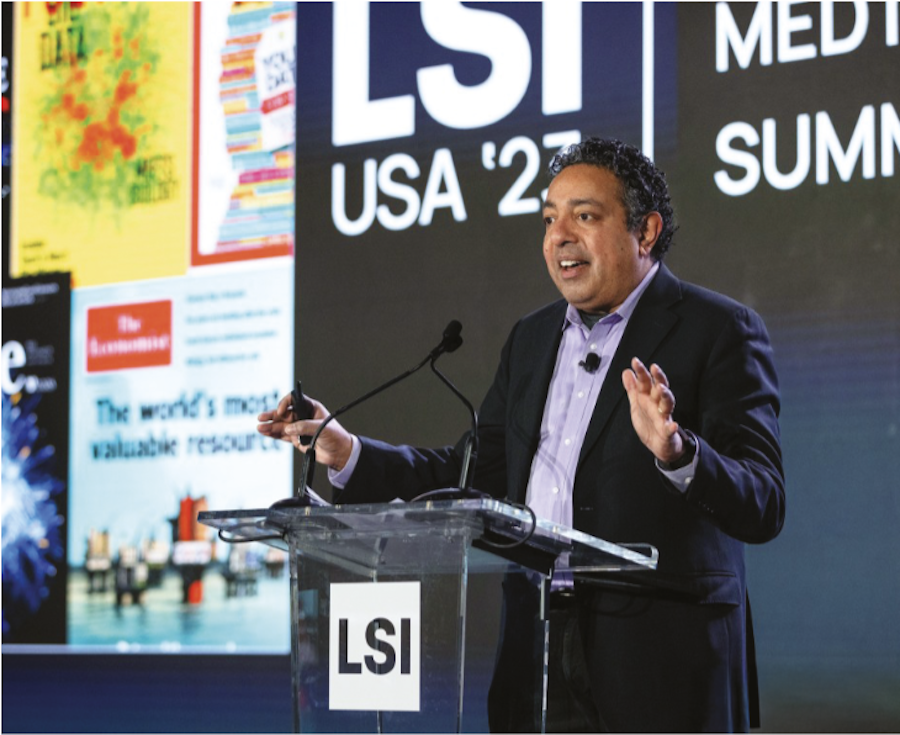
As a visionary biomedical informatician, pediatrician, and biotech entrepreneur, Dr. Atul Butte leaves behind an extraordinary legacy, defined not only by his groundbreaking work in data-driven medicine, but also by his contagious positivity and unwavering commitment to uplifting others. He was as fierce an advocate for human potential as he was for scientific progress, and the fields of translational and clinical bioinformatics that he pioneered will benefit for generations to come. Here, we pay tribute to his transformative work and passion for human health.
“Once we let data flow, lifelong discoveries become possible.”
This statement truly defines the transformational achievements and life of Atul Butte, MD, PhD, a respected champion in the use of big data in science and health, and one of the most highly cited researchers in his field.
When he walked on stage at a recent LSI USA event in Dana Point, CA to give a compelling keynote address, entitled “Precisely Practicing Medicine with a Trillion Points of Data,” he first grabbed everyone’s attention with his dazzling, friendly smile. Then, a single slide crammed with company logos appeared behind him. Dr. Butte noted that the list represented his “conflicts of interest,” and grinned: “I wouldn’t blame you if you didn’t believe another word I say.”
What followed though was an unforgettably inspiring talk that was equal parts manifesto and master class, ranging from a rapid-fire review of the power of big data, to electronic health record treasure troves, and the story of three investor-backed startups he created out of public datasets: NuMedii, Carmenta, and Personalis, the latter which IPO’d at a peak $2 billion valuation. Dr. Butte hammered home a simple thesis: data, unlike oil, multiplies when shared.
“I hate the saying that data is the new oil,” he said. “You might take the same dataset and build a diagnostic; I might find a therapeutic. We can both win.”
That relentless optimism and drive, and the code, companies, and protégés that these traits unlocked, defined Butte’s life. When he passed away on June 13, 2025, at just 55, tributes poured in from University of California, San Francisco (UCSF) colleagues, Silicon Valley CEOs, and thousands of clinicians who now rely on the algorithms he once sketched on cocktail napkins.
“It’s a rare person who leaves their mark on a university like Atul,” noted UCSF Chancellor Sam Hawgood, in a tribute post on the university’s website. Under Dr. Butte’s leadership, UCSF became a global hub for artificial intelligence, informatics, and translational science, advancing healthcare in service of patients and discovery alike. And, his unparalleled impact on the UC Health system offers valuable lessons for all healthcare entities around the world.
A Philly-Born Prodigy With “Very High Throughput”
Born in Philadelphia in August 1969, young Atul toggled effortlessly between Legos and BASIC code. He entered Brown University’s Program in Liberal Medical Education at 17, picking up a computer science degree and working as a software engineer at Apple and Microsoft, en route to his MD in 1995. A pediatrics residency and a fellowship in pediatric endocrinology at Boston Children’s followed, along with a PhD from the Harvard-MIT Health Sciences and Technology program. Here, he met mentor Isaac Kohane, MD, PhD, who once urged him to narrow his research focus, as noted in the UCSF post. The story goes that Butte smiled back and said, “I’m very high-throughput. It takes a lot more to overwhelm me.”
A Stanford University faculty position in 2005 gave him the opportunity to prove it. There, he helped coin the term “translational bioinformatics,” referring to the convergence of molecular bioinformatics, biostatistics, statistical genetics, and clinical informatics. He also published a pair of seminal Science Translational Medicine papers showing how public bioinformatics data could identify new uses for approved drugs. One paper birthed his company NuMedii, which hunts for new uses for existing drugs within open access molecular data. Another seeded Personalis, which provides medical genome sequencing services. He also co-founded Carmenta, developer of a protein-based test for preeclampsia, a hypertensive disorder of pregnancy. In 2015, the company was acquired by Progenity, 18 months after it spun out of Stanford University (more on his data-driven companies later). He was also a co-inventor on 24 patents, including protein and gene biomarkers for rejection of organ transplants, biomarkers for ovarian cancer, methods of prognosing preeclampsias, and methods for diagnosis and treatment of non-insulin dependent diabetes mellitus.
The Architect of UC Health’s Digital Nervous System
Dr. Butte proudly served as the Priscilla Chan and Mark Zuckerberg Distinguished Professor of Pediatrics, Bioengineering and Therapeutic Sciences, and Epidemiology and Biostatistics at UCSF, inaugural director of the UCSF Bakar Computational Health Sciences Institute, and the first chief data scientist at the University of California (UC) Health System. In this role, Dr. Butte melded the clinical data from six UC medical centers into a single, de-identified data warehouse that comprises 9 million patients, 378 million encounters, 1.3 billion meds, 5.2 billion lab values, 44 million medical device uses, and much more, over an 11-year span. And, all the data is centrally updated on a nightly basis.
Under his watch, pharmacists slashed unnecessary intravenous acetaminophen, saving millions; oncologists benchmarked biologic spending across campuses; and investigators used the data trove to secure an FDA nod for a cryo-nerve block in adolescents, without enrolling a single new patient.
Dr. Butte showed the LSI USA audience some of the powerful data that has been reaped from the centralized UC Health data warehouse, and how operational teams throughout the health system are benefitting from this data every day and saving millions of dollars in the process. Teams have been able to draw insights from billions of de-identified data points that have been aggregated and harmonized on an ongoing basis since 2012 from both UCSF (3 million patients) and the entire UC Health system (7 million patients), through the UCSF Center for Real World Evidence.
“The future of evidence-based medicine is data-driven medicine.”
“The future of evidence-based medicine is data-driven medicine,“ he explained. “Instead of let’s try this treatment, then if that doesn’t work let’s try that, how about let’s use the power of data to get patients under better therapy sooner. We can do this across hospital systems, and across disease states. I think the future is not where we learn with our data, I think the computer is going to teach us automatically how to improve our care. If this seems far-fetched, it’s really not. It’s happening now. It’s an amazing time for the power of clinical data to empower researchers, entrepreneurs, and communities.”
Turning Trillions of Data Points into Innovative Startups
Dr. Butte didn’t just publish and speak on the power of data; he turned it into diagnostics, therapeutics, and real-world solutions. His entrepreneurial efforts reflected his belief that open datasets could be mined not only for insight, but for impact.
“If you want to change the world, you can’t just keep writing papers about it. The science continues in the startup companies.”
Each of his companies began with a deceptively simple question: What if we could put existing data to better use? For Dr. Butte, the answers fueled not just academic discovery, but tangible progress toward more precise, affordable, and impactful care. Across each venture, he demonstrated how public science could be translated into patient-centered innovation.
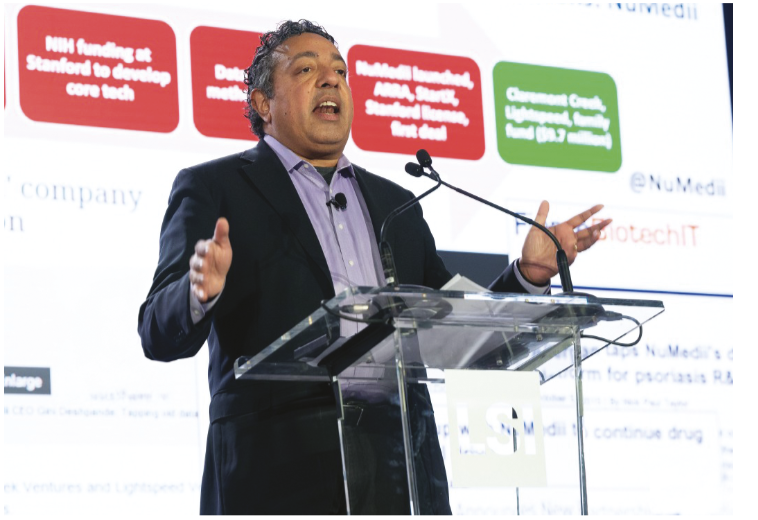
NuMedii: Drug Repositioning at Scale
NuMedii, founded in San Mateo, CA in 2008, discovers and de-risks effective new drugs by translating life sciences big data into therapies with a higher probability of therapeutic success. The company’s proprietary and dynamic big data technology, developed in Dr. Butte’s lab at Stanford University and licensed exclusively to NuMedii, consists of hundreds of millions of human, biological, pharmacological, and clinical data points that the company normalized and annotated.
Dr. Butte’s team realized that thousands of gene-expression studies mandated by the National Institutes of Health now lived online, free for the taking. By matching disease signatures to drug profiles, they generated a conveyor belt of new uses for old drugs, and developed proprietary Artificial Intelligence for Drug Discovery (AIDD) technology. NuMedii’s AIDD technology employs deep learnings of human biology, coupled with proprietary machine learning and network-based algorithms to discover and advance precise, effective new drug candidates, as well as biomarkers predictive of efficacy for subsets of patients across a broad spectrum of therapeutic areas.
The company formed active R&D collaborations with several global pharmaceutical and biotech companies and patient-centric organizations, including Yale School of Medicine and Brigham and Women’s Hospital, to create pipeline and new products in multiple therapeutic areas including inflammation, oncology, and, rare diseases. NuMedii raised its first $10 million and pivoted to idiopathic pulmonary fibrosis, an orphan disease that is chronic, progressive, and usually fatal, pulling a potential therapy from the digital ether in just months.
“Every one of you can come up with a new diagnostic for a different disease and we’d never step on each other’s toes. We need that many diagnostics in medicine today.”
Carmenta: Hack the Genome, Sell the Company
Preeclampsia kills 70,000 pregnant women worldwide each year. Carmenta began by downloading every publicly available placental dataset, hunting for convergent biomarkers. By analyzing every available dataset on preeclampsia, Dr. Butte’s team developed a blood-based diagnostic test for this life-threatening pregnancy complication. Within 18 months, the company went from GitHub repo to $2 million in funding, to acquisition by Progenity, validating Dr. Butte’s creed that “open data is venture fuel.”
“The data is out there, the papers are out there. It’s up to you to realize this need is coming, and ask, what can I do about it now to address it in three to five years?”
Personalis:From a High School Intern to a $2 Billion IPO
In 2008, a San Jose high schooler in Dr. Butte’s lab manually curated 50 genetics papers to build a list of spots on the DNA associated with diseases. The exercise snowballed into the world’s most comprehensive variant disease catalogue, and Personalis. The company IPO’d in 2019, reached a $2 billion market cap, and its cancer monitoring assay now guides therapy for thousands of patients. Its technology even underpins the Defense Advanced Research Projects Agency’s (DARPA’s) genomic surveillance program.
Mapping Mortality: His Final Frontier
Cancer slowed but never silenced him. Even in treatment, Dr. Butte spoke of “maps of death indices,” which are animated trajectories of Californian lives arcing from wellness to organ failure to sepsis. The point wasn’t morbidity; it was agency: if we can predict the next 90 days, we can intervene today. His team is continuing to push that work forward.
“I want to know how our patients are going to die, so we can change the ending.”
A Legacy of Optimism, and a Fierce Advocate for Others’ Success
Dr. Butte has been recognized with numerous scientific accolades over the years. By 2013, he was an Open Science Champion of Change at the White House. In 2015, he was elected to the National Academy of Medicine. In 2024, he was honored with the Morris F. Collen Award of Excellence, the highest honor in biomedical informatics. He also received the Association for Molecular Pathology’s Award for Excellence for his pioneering work in molecular diagnostics and computational health sciences. In April of this year, he was recognized for his outstanding career in the computational and health sciences with induction into the American Academy of Arts and Sciences, one of the most prestigious and oldest honor societies in the U.S.
By any metric, from citations, to startups, to colleagues and patient lives touched, Dr. Atul Butte leaves a supercluster of impact. Yet friends say he measured success differently: in the number of students and colleagues who he inspired, and in the terabytes of public health data waiting to be mined.
“He brought this incredibly optimistic view of what can be accomplished,” Chancellor Hawgood noted in the UCSF post, “and it’s changed the way the entire institution undertakes digital transformation.” Hawgood’s statement, also joined by Dr. Talmadge E. King, Jr., Dean of UCSF School of Medicine, Suresh Gunasekaran, President and CEO at UCSF Health, and Dr. David Rubin, Executive Vice President at UC Health also notes: “While we mourn this profound loss, we also celebrate a life lived at the intersection of compassion and computation. Dr. Butte showed us what is possible when we unite data, medicine, and purpose. We honor him by continuing the work he championed: unfreezing data, advancing equitable innovation, and ensuring that discovery always serves humanity.”
A memorial fund now supports cancer research, and Bakar Computational Health Sciences Institute has planned an annual Butte Lecture for computational health disruptors.
Meanwhile, every time a clinician at UC Health swaps an EHR-driven insight for unnecessary guesswork, or a biotech repurposes an old molecule for a new disease, a quiet echo of Dr. Butte’s inspirational quote from the LSI stage lives on: “Data multiplies when shared.”
Special note: All of us here at LSI have been deeply impacted by Dr. Butte and his extraordinary vision, and we offer our deepest condolences to his wife, Gini Deshpande, their daughter, and his family and friends.
Related Content:
- LSI USA ‘23 Panel Discussion: Powering Up Innovation in a Digital, Connected World, featuring Atul Butte, MD, PhD, Gretchen Purcell Jackson - Intuitive, Josh Makower - NEA, Todd Brinton - Edwards Lifesciences, and Joe Smith - BD
- What Happens When We Mix Real Doctors, Big Data, and AI? Dr. Atul Butte’s Tedx Talk, December 2018
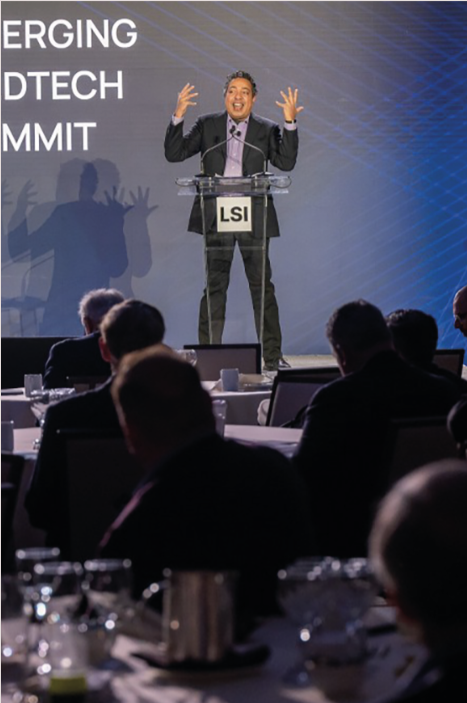
Honoring a Legend
From all corners of the Life Sciences, the heartfelt tributes, fond memories, and inspiring stories of Dr. Butte are too numerous to list. A few poignant testimonials gathered by The Lens are noted below.
“The passing of Atul Butte still weighs heavy on me. There are some people that are just special. He was one of those people … his thinking and approach to healthcare and medicine was ahead of its time. And, frankly, I couldn’t have done my job at the White House without his input.
When I found myself back in public service during COVID, of course whose email showed up with what the entire UC System was seeing in regards to COVID? Yep. Atul’s email. He mobilized fast and gave us insights that were essential. And then he figured out how to automate the whole thing to get us the reports daily. The entire healthcare system (and California) owes him a debt of gratitude. I’m going to miss the insightful conversations. But most of all, I’m going to miss sitting at our local sandwich shop and watching Atul come around the corner getting his steps in while on a call. We’d wave to each other as he passed by and I knew he was helping solve a problem for someone. It was always motivation for me to pick up the phone and call someone to see if I could help someone. Thanks for being an inspiration Atul.”
- DJ Patil, Investor, entrepreneur, public policy, former U.S. Chief Data Scientist (excerpted from his June 2025 LinkedIn post)
“Atul has had an immeasurable impact on my career and my life. I met Atul nearly 20 years ago when I was interviewing for graduate school and he was giving a job talk at Stanford. I was blown away by his infectious excitement, charisma, and the potential impact of the work he was proposing. I was fortunate to join his lab in 2006 and after a brief stint at Pfizer join him back in academia first briefly at Stanford and then at UCSF in 2015.
Nearly everything that I know about doing science I learned from Atul. He taught me how to ask questions, how to think big, how to mentor and bring collaborative teams together. He taught me the importance of communication and telling a story. But I’m only one of hundreds if not thousands of people that he has inspired. He was a true innovator and a champion. He was very supportive of getting students excited about science early in their career and had numerous high school interns in his lab throughout the years. He was a fierce advocate of women in science. He had a unique ability to elevate people around him, making them feel good about themselves and the work that they did which in turn inspired them to grow. He was incredibly loyal and dedicated - to his work and his family. He was an optimist and his positive outlook and energy was contagious.
He was a fighter and one of the strongest people I know. The world has lost an amazing person. He was truly one of a kind. Atul Butte, I’m incredibly thankful for the opportunity to work with you and learn from you over the past 19 years and I will do my very best to continue your legacy at University of California, San Francisco and beyond. Rest in peace and may your memory be an inspiration to many generations to come.”
- Marina Sirota, PhD, Professor and Acting Director, Bakar Computational Health Sciences Institute, UCSF (excerpted from her June 2025 LinkedIn post)
“Atul Butte was my mentor, colleague, and close friend for 20 years across two institutions. I loved everything about him - his huge smile, contagious laugh, passion for our field, and amazing ideas. He dreamt up concepts like ‘machine learning healthcare systems’ and ‘AI as scalable privilege’ and he inspired me and countless people around the world to think bigger. I will miss him but my life is immeasurably better for knowing him and I am grateful for the time we spent together. May his memory be a blessing to all who knew him and his legacy inspire those who didn’t.”
- Chris Longhurst, MD, Chief Clinical and Innovation Officer; Executive Director, Jacobs Center for Health Innovation, UC San Diego Health (excerpted from his post on Kudoboard)
“Atul had that rare gift of turning complex science into something captivating and deeply human. I first saw him speak about AI and data at a packed global event, and he had the entire audience spellbound. Not just learning, but laughing, inspired, and moved to act. He was a brilliant communicator, a connector, and a deeply principled leader who never lost sight of impact. You didn’t just want to hear him speak, you wanted to be part of his orbit. He was the real deal: physician, data scientist, entrepreneur, educator, and just an all-around good human being. We are all better for knowing him.”
- Lisa Carmel, Chair - Business Development, Mayo Clinic (excerpted from a recent interview with The Lens)
“Atul was a rare and catalytic force at the intersection of science, engineering, and medicine. He had an infectious joy in discovery, an unshakable belief in the power of open data, and a gift for showing us all that the future of healthcare wasn’t just possible, it was inevitable, and we all had a role to play.
What made him truly remarkable was not just his vision, but how generously he shared it. He didn’t seek credit; he invited others in. Long before AI became a buzzword, Atul was already connecting machine learning, molecular biology, and public health to improve lives. His time with us was too short, but his legacy will endure in the tools he built, the problems he helped solve, and most of all, in the people he inspired.”
- Joe Smith, MD, PhD, Senior Vice President & Chief Scientific Officer, BD (excerpted from a recent interview with The Lens)
“In honor of my dear friend Atul Butte, whose fierce authenticity and magnetic enthusiasm lit every room; whose courage in speaking uncomfortable truths, boundless innovation, and visionary service to science carved highways in the tapestry of human possibility. I miss you!
The Spark
Ideas lit the room, he spoke, and silence listened.
Fire glowed within his eyes, he filled the air and hearts then left them brighter.
Even data danced, when he looked at it with joy.
Whispers in the code, echoes in the minds he moved.”
- Yves Lussier, MD, Chair of Biomedical Informatics at University of Utah School of Medicine (excerpted from his post on Kudoboard)
“It’s hard to put into words the loss of Atul Butte. Through AMIA and the field of informatics, I had the privilege of calling him a colleague, a mentor, and a friend. Atul had a rare gift—his clarity of thought could cut through complexity, his wit could light up a room, and his ability to connect with people on multiple levels was nothing short of extraordinary. He offered me career advice that shaped my path, and his presence in our field was both grounding and inspiring. He will be deeply missed, but his impact will continue to resonate in all of us who had the honor of knowing him and well beyond. My deepest condolences to Gini, Kimi, and Atul’s extended family.”
- Genevieve Melton-Meaux, MD, PhD, FACMI, FACS, FACSRS, professor in the Department of Surgery and Institute for Health Informatics, Senior Associate Dean of Health Informatics and Data Science, and Director of the Center for Learning Health System Sciences at the University of Minnesota (excerpted from her post on Kudoboard)
“I am saddened by the loss of one of my scientific mentors and one of the great physician-scientists of this era. I will be forever grateful that Atul took a chance on me during a time when I was struggling. I would not be the physician-scientist I am today (in fact, I might not have even made it at all) without his support and mentorship.
I will carry with me his infectious optimism and enthusiasm, his chase of the big important questions, his belief that it is the role of a good scientist to apply their findings to real world benefit of others, and his teaching that credit is infinitely divisible. You can see his imprint on my career as a pediatric immunologist and genome editor designing genetic therapies for children with rare diseases.
Above the science was Atul’s genuine passion for lifting up others and his love of family. When I updated him about my faculty appointment and the birth of my son, you can tell from his very characteristic response where his heart lay: “... but even more important, congrats on your new Large Language Model, and so great to see exponential growth in those neurons!!”
Warp speed, Atul.
- Matthew Kan, MD, PhD, Butte Lab postdoc 2016-2017, Assistant Professor of Pediatrics, UCSF (excerpted from his post on Kudoboard)
Note: Quotes used with permission, or cited from public sources.
For more insights like this, subscribe to The Lens medtech magazine today.




© 2026 Life Science Intelligence, Inc., All Rights Reserved. | Privacy Policy | Your Privacy Choices | Delete my Data
Request Info

The Lens - Complimentary Issue
Subscription Includes

Global Medtech Market Analysis & Projections (MAP), 2021-2031
Published: 2023
Next Update: Q4 2024
Deliverables:



Global Surgical Procedure Volumes Dashboard, 2018-2029
Published: 2022
Next Update: Q2 2024
Deliverables:
United States Surgical Procedure Volumes, 2018-2029
Published: 2022
Next Update: Q2 2024
Deliverables:
Aesthetics, Global Surgical Procedure Volumes, 2018-2029
Published: 2022
Next Update: Q2 2024
Deliverables:
Cardio, Global Surgical Procedure Volumes, 2018-2029
Published: 2022
Next Update: Q2 2024
Deliverables:
ENT, Global Surgical Procedure Volumes, 2018-2029
Published: 2022
Next Update: Q2 2024
Deliverables:
General, Global Surgical Procedure Volumes, 2018-2029
Published: 2022
Next Update: Q2 2024
Deliverables:
Neuro, Global Surgical Procedure Volumes, 2018-2029
Published: 2022
Next Update: Q2 2024
Deliverables:
OB/GYN, Global Surgical Procedure Volumes, 2018-2029
Published: 2022
Next Update: Q2 2024
Deliverables:
Ophthalmology, Global Surgical Procedure Volumes, 2018-2029
Published: 2022
Next Update: Q2 2024
Deliverables:
Orthopedic, Global Surgical Procedure Volumes, 2018-2029
Published: 2022
Next Update: Q2 2024
Deliverables:
Peripheral Vascular, Global Surgical Procedure Volumes, 2018-2029
Published: 2022
Next Update: Q2 2024
Deliverables:
Spine, Global Surgical Procedure Volumes, 2018-2029
Published: 2022
Next Update: Q2 2024
Deliverables:
SRS, Global Surgical Procedure Volumes, 2018-2029
Published: 2022
Next Update: Q2 2024
Deliverables:
Urological, Global Surgical Procedure Volumes, 2018-2029
Published: 2022
Next Update: Q2 2024
Deliverables:
Global Markets for Hip Replacement Implants, 2023-2028
Published: 2023
Next Update: Q2 2024
Deliverables:
Global Markets for Peripheral Vascular Guidewires, 2023-2028
Published: 2023
Next Update: Q2 2024
Deliverables:
Global Markets for Peripheral Atherectomy Catheters, 2023-2028
Published: 2023
Next Update: Q2 2024
Deliverables:
Global Markets for Electrosurgery, 2023-2028
Published: 2023
Next Update: Q2 2024
Deliverables:
Global Markets for Peripheral Vascular Balloons & Vena Cava Filter, 2023-2028
Published: 2023
Next Update: Q2 2024
Deliverables:
Global Markets for Mechanical Heart Valves, 2023-2028
Published: 2023
Next Update: Q2 2024
Deliverables:
Global Markets for Tissue Heart Valve Replacement, 2023-2028
Published: 2023
Next Update: Q2 2030
Deliverables:
Global Markets for Transcatheter Mitral Valve Devices, 2023-2028
Published: 2023
Next Update: Q2 2024
Deliverables:
Global Markets for Femoral Closure, 2023-2029
Published: 2023
Next Update: Q2 2024
Deliverables:
Global Markets for Tricuspid Valve Repair, 2023-2028
Published: 2023
Next Update: Q2 2024
Deliverables:
Global Markets for Percutaneous Pulmonary Valves, 2023-2028
Published: 2023
Next Update: Q2 2024
Deliverables:
Global Markets for Coronary Angio Guidewires & Catheters, 2023-2028
Published: 2023
Next Update: Q2 2024
Deliverables:
Global Markets for Oncology Ablation Devices, 2023-2028
Published: 2023
Next Update: Q2 2024
Deliverables:
Global Markets for ENT Devices, 2023-2028
Published: 2023
Next Update: Q2 2024
Deliverables:
Global Markets for Cell Delivery Catheters, 2023-2028
Published: 2023
Next Update: Q3 2024
Deliverables:
Global Markets for Urology Devices, 2023-2028
Published: 2023
Next Update: Q3 2024
Deliverables:
Global Markets for External Pain Pumps, 2023-2028
Published: 2023
Next Update: Q3 2024
Deliverables:
Global Markets for Ureteral Access Devices, 2023-2028
Published: 2023
Next Update: Q3 2024
Deliverables:
Global Markets for Pelvic Floor Repair, 2023-2028
Published: 2023
Next Update: Q3 2024
Deliverables:
Global Markets for Atrial Fibrillation, 2023-2028
Published: 2023
Next Update: Q3 2024
Deliverables:
Global Markets for Neurovascular Devices Ischemic, 2023-2028
Published: 2023
Next Update: Q3 2024
Deliverables:
Global Markets for Neuromodulation Devices, 2023-2028
Published: 2023
Next Update: Q3 2024
Deliverables:
Global Markets for Vertebroplasty Devices, 2023-2028
Published: 2023
Next Update: Q3 2024
Deliverables:
Global Markets for Benign Prostation Hyperplasia Implants, 2023-2028
Published: 2023
Next Update: Q3 2024
Deliverables:
Global Markets for Cryoablation, 2023-2028
Published: 2023
Next Update: Q3 2024
Deliverables:
Global Markets for Diagnostic Electrophysiology Catheters, 2023-2028
Published: 2023
Next Update: Q3 2024
Deliverables:
Global Markets for Hernia Repair, 2023-2028
Published: 2023
Next Update: Q4 2024
Deliverables:
Global Markets for CRM Devices, 2023-2028
Published: 2023
Next Update: Q4 2024
Deliverables:
Global Markets for Neurovascular Devices Hemorrhagic, 2023-2028
Published: 2023
Next Update: Q4 2024
Deliverables:
Global Markets for Renal Denervation, 2023-2028
Published: 2023
Next Update: Q4 2024
Deliverables:
Global Markets for Upper+Lower Suture Anchors, 2023-2028
Published: 2023
Next Update: Q4 2024
Deliverables:
Global Markets for Peripheral Stents, 2023-2028
Published: 2023
Next Update: Q4 2024
Deliverables:
Global Markets for Electromagnetic Navigation Systems, 2023-2028
Published: 2023
Next Update: Q4 2024
Deliverables:
Global Markets for GI Endoscopy, 2023-2028
Published: 2023
Next Update: Q4 2024
Deliverables:
Global Markets for Hemodialysis, 2023-2028
Published: 2023
Next Update: Q4 2024
Deliverables:
Globals Markets for Cardiac Ablation, 2023-2028
Published:
Next Update:
Deliverables:
Global Markets for Atrial Septal Occlusion, 2023-2028
Published: 2023
Next Update: Q4 2024
Deliverables:
Global Markets for Aortic Grafts, 2023-2028
Published: 2023
Next Update: Q4 2024
Deliverables:
Global Markets for Interventional Cardiology Devices, 2023-2028
Published: 2023
Next Update: Q4 2024
Deliverables:
Global Markets for Oncology Embolization, 2023-2028
Published: 2023
Next Update: Q4 2024
Deliverables:
Global Markets for Vascular Access Devices, 2023-2028
Published: 2023
Next Update: Q4 2024
Deliverables:
Global Markets for Rotator Cuff Repair Suture Anchors, 2023-2028
Published: 2023
Next Update: Q4 2024
Deliverables:
Global Markets for Electrical Stimulation Devices, 2023-2028
Published: 2023
Next Update: Q4 2024
Deliverables:
Global Markets for Wearable Monitoring Devices, 2023-2028
Published: 2023
Next Update: Q4 2024
Deliverables:
Global Markets for Low Complexity Medical Devices, 2023-2028
Published: 2023
Next Update: Q4 2024
Deliverables:
Canada Surgical Procedure Volumes, 2018-2029
Published: 2022
Next Update: Q2 2024
Deliverables:
Germany Surgical Procedure Volumes, 2018-2029
Published: 2022
Next Update: Q2 2024
Deliverables:
France Surgical Procedure Volumes, 2018-2029
Published: 2022
Next Update: Q2 2024
Deliverables:
U.K. Surgical Procedure Volumes, 2018-2029
Published: 2022
Next Update: Q2 2024
Deliverables:
Italy Surgical Procedure Volumes, 2018-2029
Published: 2022
Next Update: Q2 2024
Deliverables:
Spain Surgical Procedure Volumes, 2018-2029
Published: 2022
Next Update: Q2 2024
Deliverables:
Poland Surgical Procedure Volumes, 2018-2029
Published: 2022
Next Update: Q2 2024
Deliverables:
Netherlands Surgical Procedure Volumes, 2018-2029
Published: 2022
Next Update: Q2 2024
Deliverables:
Belgium Surgical Procedure Volumes, 2018-2029
Published: 2022
Next Update: Q2 2024
Deliverables:
Sweden Surgical Procedure Volumes, 2018-2029
Published: 2022
Next Update: Q2 2024
Deliverables:
Switzerland Surgical Procedure Volumes, 2018-2029
Published: 2022
Next Update: Q2 2024
Deliverables:
Denmark Surgical Procedure Volumes, 2018-2029
Published: 2022
Next Update: Q2 2024
Deliverables:
Finland Surgical Procedure Volumes, 2018-2029
Published: 2022
Next Update: Q2 2024
Deliverables:
Norway Surgical Procedure Volumes, 2018-2029
Published: 2022
Next Update: Q2 2024
Deliverables:
China Surgical Procedure Volumes, 2018-2029
Published: 2022
Next Update: Q2 2024
Deliverables:
India Surgical Procedure Volumes, 2018-2029
Published: 2022
Next Update: Q2 2024
Deliverables:
Japan Surgical Procedure Volumes, 2018-2029
Published: 2022
Next Update: Q2 2024
Deliverables:
South Korea Surgical Procedure Volumes, 2018-2029
Published: 2022
Next Update: Q2 2024
Deliverables:
Australia Surgical Procedure Volumes, 2018-2029
Published: 2022
Next Update: Q2 2024
Deliverables:
Thailand Surgical Procedure Volumes, 2018-2029
Published: 2022
Next Update: Q2 2024
Deliverables:
Malaysia Surgical Procedure Volumes, 2018-2029
Published: 2022
Next Update: Q2 2024
Deliverables:
Singapore Surgical Procedure Volumes, 2018-2029
Published: 2022
Next Update: Q2 2024
Deliverables:
New Zealand Surgical Procedure Volumes, 2018-2029
Published: 2022
Next Update: Q2 2024
Deliverables:
Caribbean Surgical Procedure Volumes, 2018-2029
Published: 2022
Next Update: Q2 2024
Deliverables:
Argentina Surgical Procedure Volumes, 2018-2029
Published: 2022
Next Update: Q2 2024
Deliverables:
Colombia Surgical Procedure Volumes, 2018-2029
Published: 2022
Next Update: Q2 2024
Deliverables:
Chile Surgical Procedure Volumes, 2018-2029
Published: 2022
Next Update: Q2 2024
Deliverables:
Guatemala Surgical Procedure Volumes, 2018-2029
Published: 2022
Next Update: Q2 2024
Deliverables:
Dominican Republic Surgical Procedure Volumes, 2018-2029
Published: 2022
Next Update: Q2 2024
Deliverables:
Costa Rica Surgical Procedure Volumes, 2018-2029
Published: 2022
Next Update: Q2 2024
Deliverables:
Panama Surgical Procedure Volumes, 2018-2029
Published: 2022
Next Update: Q2 2024
Deliverables:
Mexico Surgical Procedure Volumes, 2018-2029
Published: 2022
Next Update: Q2 2024
Deliverables:
Brazil Surgical Procedure Volumes, 2018-2029
Published: 2022
Next Update: Q2 2024
Deliverables:
Turkey Surgical Procedure Volumes, 2018-2029
Published: 2022
Next Update: Q2 2024
Deliverables:
Russia Surgical Procedure Volumes, 2018-2029
Published: 2022
Next Update: Q2 2024
Deliverables:
South Africa Surgical Procedure Volumes, 2018-2029
Published: 2022
Next Update: Q2 2024
Deliverables:
Request Info