
Under the direction of Founder and CEO Firas Al-Ali, MD, CygnusMed is developing an endovascular access system designed to create continuous sealing of the guiding catheter, eliminating blood reflux and stagnation into it, a first in endovascular intervention. This significantly reduces embolic risk and blood loss while enabling continuous arterial pressure monitoring during endovascular procedures. Headquartered in Akron, Ohio, the company is advancing its EndoSphinx platform to address long-standing limitations in endovascular technologies, beginning in neuroendovascular care and with a long-term vision to expand across the full spectrum of endovascular procedures worldwide.
Origin Story
CygnusMed was born directly from clinical experience. Al-Ali, a neuro-interventionalist with more than 25 years of practice, repeatedly encountered “limitations in existing endovascular technologies that are often accepted as unavoidable but carry real consequences for patients.”
One particular case profoundly shaped his thinking. “I performed an elective brain aneurysm coiling on a young woman. The procedure itself was technically flawless,” he explained. “Shortly after waking up from anesthesia, however, the patient complained of a mild headache. An MRI revealed a small focal embolic lesion in the region where I had been working.”
The patient exhibited no neurological deficits and was discharged without symptoms, but the finding raised a deeper concern. “This was not a difficult or complicated case, yet an embolic event still occurred. That realization prompted a critical question: if embolization can occur in a perfectly executed procedure, then the problem must be structural, not technical.”
That insight led him to reexamine the fundamentals of endovascular intervention. “I began to analyze the mechanics of endovascular intervention and identified a key issue: current systems allow blood to reflux back into the guiding catheter lumen. This blood stagnates within the catheter, where it can clot. When contrast is subsequently injected, these microthrombi are flushed back into the circulation.”
From this realization, CygnusMed and its foundational technology, EndoSphinx, were created. “I developed a novel valve system designed to continuously seal the system, including time of microcatheter insertion, removal, or manipulation, maintaining constant, stable pressure inside the guiding catheter so blood does not reflux and clot within it, decreasing the risk of embolism. It also significantly reduces current blood loss, an important limitation in all endovascular systems. With a constant pressure inside the system, integrating a pressure sensor in the device allows for constant blood pressure monitoring, eliminating the current need for a second arterial obtained solely for this purpose,” he said.
The Current Landscape
Endovascular procedures are among the most widely performed interventions in modern medicine. Each year, approximately 10 million endovascular procedures are performed in the United States alone, with more than 25 million procedures worldwide. In every one of these interventions, the operator must insert a guiding catheter into the patient’s blood vessel, with the external end connected to a hemostatic valve.
Despite the scale and growth of endovascular care, key clinical, operational, and economic challenges remain largely unaddressed.
“Current systems allow uncontrolled saline flushing while still permitting blood to reflux into the guiding catheter,” Dr. Al-Ali explained. “This blood stagnates and can clot. When contrast is injected, these microthrombi are flushed back into the circulation, effectively causing a shower of emboli to the target organ, whether the brain, heart, kidneys, or peripheral vasculature.”
Blood loss represents another underrecognized issue. “Because catheter sealing is intermittent rather than continuous, blood loss during endovascular procedures is common and often underestimated,” he said. “Up to 4% of patients undergoing endovascular interventions lose as much as 25% of their circulating blood volume, leading to higher mortality, increased complications, and elevated readmission rates.”
The economic impact is significant. “Each readmission can cost hospitals up to $17,000, costs that are unreimbursed when occurring within 30 days of the index procedure.”
Finally, many procedures require a second arterial line for pressure monitoring. “In nearly half of endovascular procedures, physicians must place an additional arterial line solely for hemodynamic monitoring,” he said. “This adds 10 to 15 minutes to procedure time and increases costs by up to $1,100 per case, while exposing patients to additional procedural risk, and time delay for the angio suite schedule translates into lost revenue to the hospital.”
Together, these issues represent a persistent clinical and operational burden across millions of procedures each year.
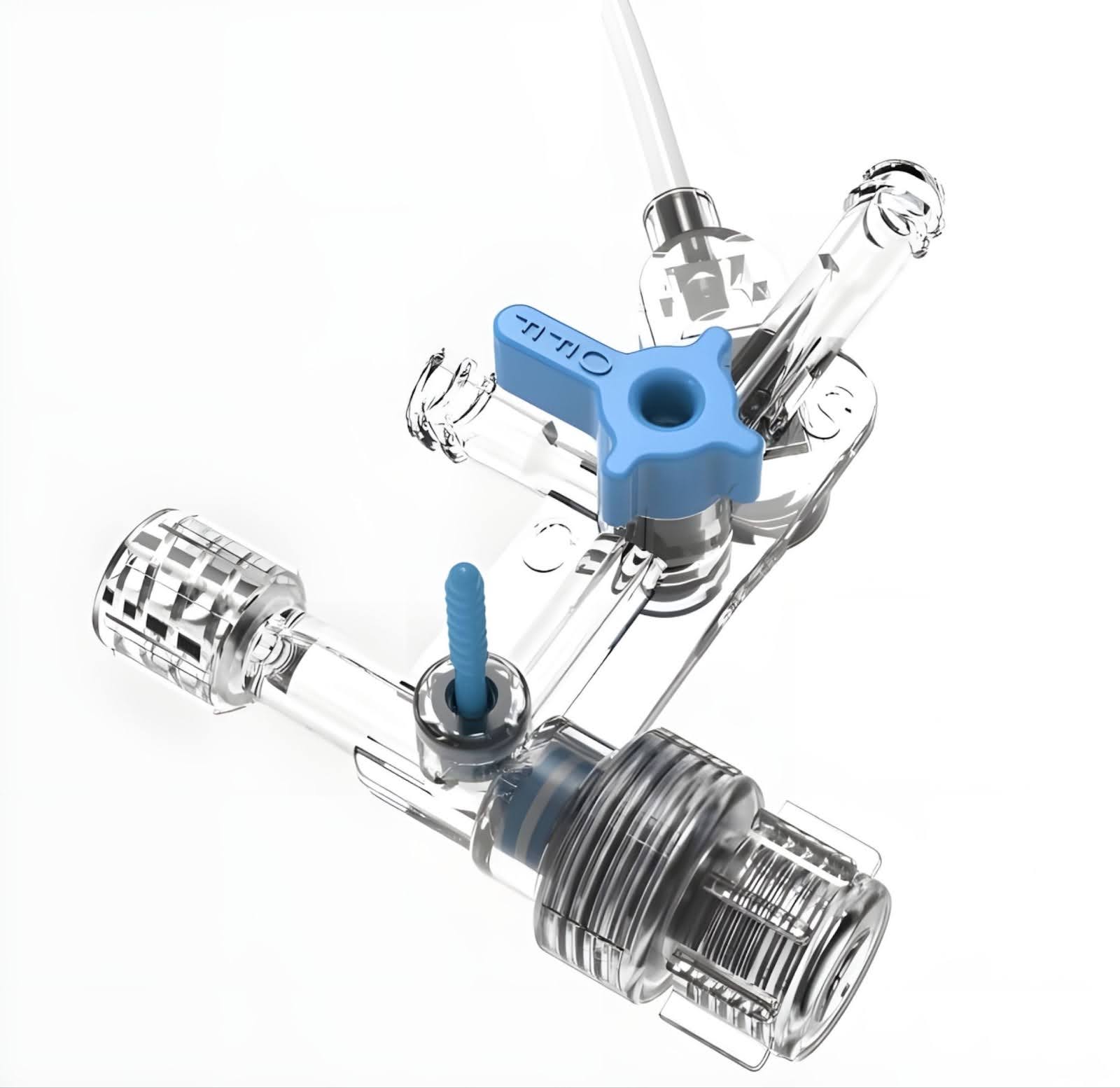
Inside the Innovation
According to Al-Ali, the EndoSphinx system is not a variation of existing devices; instead, it represents a fundamental shift in endovascular intervention after more than 70 years of established practice.
“EndoSphinx provides continuous sealing of the guiding catheter through an integrated Cygnus valve, allowing microcatheter insertion, removal, and manipulation without loss of seal,” Al-Ali said.
Traditional systems rely on intermittent sealing that must be opened during device manipulation. “These openings result in transient pressure drops within the guiding catheter, allowing blood to enter the system and escape outside the patient,” he explained. “This process promotes blood stagnation and clot formation within the catheter, increases the risk of embolism, causes blood loss, and necessitates the use of a second arterial line solely for continuous blood pressure monitoring.”
EndoSphinx is designed to eliminate these events entirely. “By providing continuous sealing of the guiding catheter at all times, EndoSphinx prevents blood entry and intraluminal clot formation, eliminates blood loss, and enables continuous arterial pressure monitoring without the need for a second arterial access.”
The system maintains a fully sealed system even during microcatheter insertion, removal, and manipulation. “For the first time in endovascular intervention, the guiding catheter can be continuously flushed with no blood entering the system,” he said. “This significantly reduces the risk of embolic complications and establishes a new standard of safety in endovascular procedures.”
In addition to improving safety, the technology will streamline workflows and reduce costs. “EndoSphinx renders the additional arterial line and manifold obsolete, reducing procedural time and cost, while improving clinical outcomes,” Dr. Al-Ali noted.
Progress and Milestones
CygnusMed has already achieved several key milestones. The company completed a pre-seed round supported by 12 neurointerventionalist investors, a milestone that reflects strong physician engagement and good product-market fit.
“This makes us a unique startup with significant participation from clinicians who are also the end users of the technology,” Al-Ali said.
The company reached a design freeze in February 2026 and is now raising a Seed round of $1.5 to $2.0 million. This funding will support completion of the final device and FDA testing, submission for FDA clearance through the 510(k) pathway, and execution of the EndoSphinx clinical study across six early-adopter sites. “The study will evaluate the accuracy of blood pressure measurements obtained with EndoSphinx compared to the current gold standard, a second arterial line, and will also compare blood loss between the current standard of care and EndoSphinx,” he said. “We are confident the data will demonstrate a significant reduction in blood loss.”
CygnusMed has outlined an ambitious development timeline:
- July 2026: Final product ready for FDA testing
- August–September 2026: Industry-sponsored study launched at six U.S. early-adopter sites
- September–October 2026: Study completion (4–6 weeks)
- Q4 2026: Anticipated FDA 510(k) clearance; Series A financing
- Q1 2027: Commercial product launch
CygnusMed plans to begin in neuroendovascular procedures in the United States before expanding internationally and across peripheral vascular and coronary interventions.
As CygnusMed advances toward clinical validation and commercialization, the company is focused on redefining the safety and efficiency of endovascular care.
Join Us at LSI USA ‘26
Al-Ali has been selected to present at LSI USA ‘26, March 16th–20th, in front of hundreds of global medical technology companies. Join us in welcoming him to the event in Dana Point, CA, where he will share the latest updates on CygnusMed’s technology and development.








Request Info

The Lens - Complimentary Issue
Subscription Includes

Global Medtech Market Analysis & Projections (MAP), 2021-2031
Published: 2023
Next Update: Q4 2024
Deliverables:



Global Surgical Procedure Volumes Dashboard, 2018-2029
Published: 2022
Next Update: Q2 2024
Deliverables:
United States Surgical Procedure Volumes, 2018-2029
Published: 2022
Next Update: Q2 2024
Deliverables:
Aesthetics, Global Surgical Procedure Volumes, 2018-2029
Published: 2022
Next Update: Q2 2024
Deliverables:
Cardio, Global Surgical Procedure Volumes, 2018-2029
Published: 2022
Next Update: Q2 2024
Deliverables:
ENT, Global Surgical Procedure Volumes, 2018-2029
Published: 2022
Next Update: Q2 2024
Deliverables:
General, Global Surgical Procedure Volumes, 2018-2029
Published: 2022
Next Update: Q2 2024
Deliverables:
Neuro, Global Surgical Procedure Volumes, 2018-2029
Published: 2022
Next Update: Q2 2024
Deliverables:
OB/GYN, Global Surgical Procedure Volumes, 2018-2029
Published: 2022
Next Update: Q2 2024
Deliverables:
Ophthalmology, Global Surgical Procedure Volumes, 2018-2029
Published: 2022
Next Update: Q2 2024
Deliverables:
Orthopedic, Global Surgical Procedure Volumes, 2018-2029
Published: 2022
Next Update: Q2 2024
Deliverables:
Peripheral Vascular, Global Surgical Procedure Volumes, 2018-2029
Published: 2022
Next Update: Q2 2024
Deliverables:
Spine, Global Surgical Procedure Volumes, 2018-2029
Published: 2022
Next Update: Q2 2024
Deliverables:
SRS, Global Surgical Procedure Volumes, 2018-2029
Published: 2022
Next Update: Q2 2024
Deliverables:
Urological, Global Surgical Procedure Volumes, 2018-2029
Published: 2022
Next Update: Q2 2024
Deliverables:
Global Markets for Hip Replacement Implants, 2023-2028
Published: 2023
Next Update: Q2 2024
Deliverables:
Global Markets for Peripheral Vascular Guidewires, 2023-2028
Published: 2023
Next Update: Q2 2024
Deliverables:
Global Markets for Peripheral Atherectomy Catheters, 2023-2028
Published: 2023
Next Update: Q2 2024
Deliverables:
Global Markets for Electrosurgery, 2023-2028
Published: 2023
Next Update: Q2 2024
Deliverables:
Global Markets for Peripheral Vascular Balloons & Vena Cava Filter, 2023-2028
Published: 2023
Next Update: Q2 2024
Deliverables:
Global Markets for Mechanical Heart Valves, 2023-2028
Published: 2023
Next Update: Q2 2024
Deliverables:
Global Markets for Tissue Heart Valve Replacement, 2023-2028
Published: 2023
Next Update: Q2 2030
Deliverables:
Global Markets for Transcatheter Mitral Valve Devices, 2023-2028
Published: 2023
Next Update: Q2 2024
Deliverables:
Global Markets for Femoral Closure, 2023-2029
Published: 2023
Next Update: Q2 2024
Deliverables:
Global Markets for Tricuspid Valve Repair, 2023-2028
Published: 2023
Next Update: Q2 2024
Deliverables:
Global Markets for Percutaneous Pulmonary Valves, 2023-2028
Published: 2023
Next Update: Q2 2024
Deliverables:
Global Markets for Coronary Angio Guidewires & Catheters, 2023-2028
Published: 2023
Next Update: Q2 2024
Deliverables:
Global Markets for Oncology Ablation Devices, 2023-2028
Published: 2023
Next Update: Q2 2024
Deliverables:
Global Markets for ENT Devices, 2023-2028
Published: 2023
Next Update: Q2 2024
Deliverables:
Global Markets for Cell Delivery Catheters, 2023-2028
Published: 2023
Next Update: Q3 2024
Deliverables:
Global Markets for Urology Devices, 2023-2028
Published: 2023
Next Update: Q3 2024
Deliverables:
Global Markets for External Pain Pumps, 2023-2028
Published: 2023
Next Update: Q3 2024
Deliverables:
Global Markets for Ureteral Access Devices, 2023-2028
Published: 2023
Next Update: Q3 2024
Deliverables:
Global Markets for Pelvic Floor Repair, 2023-2028
Published: 2023
Next Update: Q3 2024
Deliverables:
Global Markets for Atrial Fibrillation, 2023-2028
Published: 2023
Next Update: Q3 2024
Deliverables:
Global Markets for Neurovascular Devices Ischemic, 2023-2028
Published: 2023
Next Update: Q3 2024
Deliverables:
Global Markets for Neuromodulation Devices, 2023-2028
Published: 2023
Next Update: Q3 2024
Deliverables:
Global Markets for Vertebroplasty Devices, 2023-2028
Published: 2023
Next Update: Q3 2024
Deliverables:
Global Markets for Benign Prostation Hyperplasia Implants, 2023-2028
Published: 2023
Next Update: Q3 2024
Deliverables:
Global Markets for Cryoablation, 2023-2028
Published: 2023
Next Update: Q3 2024
Deliverables:
Global Markets for Diagnostic Electrophysiology Catheters, 2023-2028
Published: 2023
Next Update: Q3 2024
Deliverables:
Global Markets for Hernia Repair, 2023-2028
Published: 2023
Next Update: Q4 2024
Deliverables:
Global Markets for CRM Devices, 2023-2028
Published: 2023
Next Update: Q4 2024
Deliverables:
Global Markets for Neurovascular Devices Hemorrhagic, 2023-2028
Published: 2023
Next Update: Q4 2024
Deliverables:
Global Markets for Renal Denervation, 2023-2028
Published: 2023
Next Update: Q4 2024
Deliverables:
Global Markets for Upper+Lower Suture Anchors, 2023-2028
Published: 2023
Next Update: Q4 2024
Deliverables:
Global Markets for Peripheral Stents, 2023-2028
Published: 2023
Next Update: Q4 2024
Deliverables:
Global Markets for Electromagnetic Navigation Systems, 2023-2028
Published: 2023
Next Update: Q4 2024
Deliverables:
Global Markets for GI Endoscopy, 2023-2028
Published: 2023
Next Update: Q4 2024
Deliverables:
Global Markets for Hemodialysis, 2023-2028
Published: 2023
Next Update: Q4 2024
Deliverables:
Globals Markets for Cardiac Ablation, 2023-2028
Published:
Next Update:
Deliverables:
Global Markets for Atrial Septal Occlusion, 2023-2028
Published: 2023
Next Update: Q4 2024
Deliverables:
Global Markets for Aortic Grafts, 2023-2028
Published: 2023
Next Update: Q4 2024
Deliverables:
Global Markets for Interventional Cardiology Devices, 2023-2028
Published: 2023
Next Update: Q4 2024
Deliverables:
Global Markets for Oncology Embolization, 2023-2028
Published: 2023
Next Update: Q4 2024
Deliverables:
Global Markets for Vascular Access Devices, 2023-2028
Published: 2023
Next Update: Q4 2024
Deliverables:
Global Markets for Rotator Cuff Repair Suture Anchors, 2023-2028
Published: 2023
Next Update: Q4 2024
Deliverables:
Global Markets for Electrical Stimulation Devices, 2023-2028
Published: 2023
Next Update: Q4 2024
Deliverables:
Global Markets for Wearable Monitoring Devices, 2023-2028
Published: 2023
Next Update: Q4 2024
Deliverables:
Global Markets for Low Complexity Medical Devices, 2023-2028
Published: 2023
Next Update: Q4 2024
Deliverables:
Canada Surgical Procedure Volumes, 2018-2029
Published: 2022
Next Update: Q2 2024
Deliverables:
Germany Surgical Procedure Volumes, 2018-2029
Published: 2022
Next Update: Q2 2024
Deliverables:
France Surgical Procedure Volumes, 2018-2029
Published: 2022
Next Update: Q2 2024
Deliverables:
U.K. Surgical Procedure Volumes, 2018-2029
Published: 2022
Next Update: Q2 2024
Deliverables:
Italy Surgical Procedure Volumes, 2018-2029
Published: 2022
Next Update: Q2 2024
Deliverables:
Spain Surgical Procedure Volumes, 2018-2029
Published: 2022
Next Update: Q2 2024
Deliverables:
Poland Surgical Procedure Volumes, 2018-2029
Published: 2022
Next Update: Q2 2024
Deliverables:
Netherlands Surgical Procedure Volumes, 2018-2029
Published: 2022
Next Update: Q2 2024
Deliverables:
Belgium Surgical Procedure Volumes, 2018-2029
Published: 2022
Next Update: Q2 2024
Deliverables:
Sweden Surgical Procedure Volumes, 2018-2029
Published: 2022
Next Update: Q2 2024
Deliverables:
Switzerland Surgical Procedure Volumes, 2018-2029
Published: 2022
Next Update: Q2 2024
Deliverables:
Denmark Surgical Procedure Volumes, 2018-2029
Published: 2022
Next Update: Q2 2024
Deliverables:
Finland Surgical Procedure Volumes, 2018-2029
Published: 2022
Next Update: Q2 2024
Deliverables:
Norway Surgical Procedure Volumes, 2018-2029
Published: 2022
Next Update: Q2 2024
Deliverables:
China Surgical Procedure Volumes, 2018-2029
Published: 2022
Next Update: Q2 2024
Deliverables:
India Surgical Procedure Volumes, 2018-2029
Published: 2022
Next Update: Q2 2024
Deliverables:
Japan Surgical Procedure Volumes, 2018-2029
Published: 2022
Next Update: Q2 2024
Deliverables:
South Korea Surgical Procedure Volumes, 2018-2029
Published: 2022
Next Update: Q2 2024
Deliverables:
Australia Surgical Procedure Volumes, 2018-2029
Published: 2022
Next Update: Q2 2024
Deliverables:
Thailand Surgical Procedure Volumes, 2018-2029
Published: 2022
Next Update: Q2 2024
Deliverables:
Malaysia Surgical Procedure Volumes, 2018-2029
Published: 2022
Next Update: Q2 2024
Deliverables:
Singapore Surgical Procedure Volumes, 2018-2029
Published: 2022
Next Update: Q2 2024
Deliverables:
New Zealand Surgical Procedure Volumes, 2018-2029
Published: 2022
Next Update: Q2 2024
Deliverables:
Caribbean Surgical Procedure Volumes, 2018-2029
Published: 2022
Next Update: Q2 2024
Deliverables:
Argentina Surgical Procedure Volumes, 2018-2029
Published: 2022
Next Update: Q2 2024
Deliverables:
Colombia Surgical Procedure Volumes, 2018-2029
Published: 2022
Next Update: Q2 2024
Deliverables:
Chile Surgical Procedure Volumes, 2018-2029
Published: 2022
Next Update: Q2 2024
Deliverables:
Guatemala Surgical Procedure Volumes, 2018-2029
Published: 2022
Next Update: Q2 2024
Deliverables:
Dominican Republic Surgical Procedure Volumes, 2018-2029
Published: 2022
Next Update: Q2 2024
Deliverables:
Costa Rica Surgical Procedure Volumes, 2018-2029
Published: 2022
Next Update: Q2 2024
Deliverables:
Panama Surgical Procedure Volumes, 2018-2029
Published: 2022
Next Update: Q2 2024
Deliverables:
Mexico Surgical Procedure Volumes, 2018-2029
Published: 2022
Next Update: Q2 2024
Deliverables:
Brazil Surgical Procedure Volumes, 2018-2029
Published: 2022
Next Update: Q2 2024
Deliverables:
Turkey Surgical Procedure Volumes, 2018-2029
Published: 2022
Next Update: Q2 2024
Deliverables:
Russia Surgical Procedure Volumes, 2018-2029
Published: 2022
Next Update: Q2 2024
Deliverables:
South Africa Surgical Procedure Volumes, 2018-2029
Published: 2022
Next Update: Q2 2024
Deliverables:
Request Info
See Full Attendee List