Today, not a minute goes by without news about the AI giants. Financings, acquisitions, large-scale buildouts, and more.
It's understandably easy for something like the recently announced collaboration between Oath Surgical and NVIDIA to be gleaned and missed as part of the AI milieux.
But, it shouldn't be.
This announcement was the catalyst for the LSI team to reach out to the leaders at Oath Surgical and NVIDIA, and dissect the real signals we are seeing from NVIDIA’s increasing integration into the healthcare industry.
This partnership is significant for many reasons. At the macro level, it is as clear an example as any of where healthcare is actually heading, and how platform companies like NVIDIA are positioning themselves as the operating system for AI-native care delivery.
To understand why this matters, our team created this special edition of The Numbers, unpacking what Oath is building, why NVIDIA is involved, and what this combination signals for the broader medtech and healthcare ecosystem.
Special thank you to the leaders at NVIDIA and Oath for sharing their perspectives on what the next generation of healthcare delivery will look like.
What Oath Surgical Is Building
Oath Surgical is building OathOS, a software and AI-defined operating layer that sits on top of existing infrastructure, integrating with sensors, video, imaging systems, and medical devices already in place in the OR.
Oath’s model is focused on the ambulatory surgery center (ASC), the site-of-care where the majority of all surgical procedures are now performed in the U.S.
Rather than requiring greenfield builds, Oath’s model allows ASCs to:
- Upgrade intelligence without rebuilding facilities
- Improve operational performance using real-time, ambient data
- Adopt AI-native workflows incrementally
In effect, Oath is targeting the "installed base" of outpatient surgical facilities, as opposed to just new centers. And it's paying off, as Oath is already active across 30+ surgical centers.
In Portland, for example, the company has centers including Oath West and Oath Central, which are "premium and technology-supported surgical centers" that "are multi-specialty, including general surgery, urology, urogynecology, gastroenterology, pain management, neurosurgery, spine, and other specialties."
Rather than treating AI as a bolt-on, Oath is designing centers where:
- Video, audio, robotics, and device data are captured continuously
- AI models interpret workflows and spatial context in real time
- The environment itself becomes an intelligent participant in care delivery
Oath is led by Dr. Oliver Keown, MD, the former head of Intuitive Ventures and a long-time LSI alumni. In Oliver's assessment, complex surgical care will continue to move to outpatient settings, and the facilities delivering it must evolve accordingly.
“We believe the future of complex surgical care is outpatient and that the center of gravity will soon shift to ‘outpatient until proven otherwise’ as quality-first delivery models like Oath scale. That means the entirety of the $1TN+ surgical care delivery market is in scope for our next-generation outpatient platform."

The Oath-NVIDIA Partnership
Through this new partnership, the tech giant is supplying the underlying AI infrastructure that makes Oath's mission possible.
According to David Niewolny, Director of Business Development for Healthcare and Medical at NVIDIA, the collaboration sits squarely with NVIDIA’s vision for where healthcare is heading through Physical AI:
“The transition to physical AI, where AI models are no longer confined to screens but are physically integrated into the clinical environment to perceive, reason, and act in real time, brings great opportunity. Working with medical device leaders, we can bring advanced spatial intelligence to the operating room, transforming static hardware into software-defined, autonomous and semi-autonomous systems.”

This framing is important. NVIDIA isn’t talking about better dashboards or post-hoc analytics. It’s talking about AI embedded into the physical workflow of care, from surgical robotics to ambient sensing and real-time decision support.
Oath is one of the first care delivery platforms attempting to build around that premise from the ground up. Oliver highlights that this partnership is focused on proving the unique value that premise can unlock:
“We expect to demonstrate the power of a fully integrated and intelligent, ambient, multimodal platform, both physical and AI, on the quality of care delivered to patients as well as the financial and operational performance of our centers.”
The Numbers on the Outpatient Shift
We are constantly speaking with teams in the industry that are trying to quantify and understand the trends in outpatient surgical volumes.
LSI's Market Intelligence team estimates that the majority (~80%) of all surgical procedures performed in the U.S. are performed in ASCs. That’s approximately 56 million procedures.
At the inception of the ASC movement, these sites of care were initially focused on elective, low-risk, high-volume procedures that were technically simple and financially significant. However, new technologies and models, like what Oath is building, continue to enable the shift of more complex surgical procedures to the ASC.
The shift is driven by a confluence of stakeholders, each with different goals, but all made possible through:
- Patients want convenience, without compromising on quality of care.
- Payors want lower costs, like what an ASC can deliver with lower overhead, zero length-of-stay, and high procedural efficiency.
- Providers want greater control of their environments (i.e., staffing, workflow optimization, equipment choice).
With these factors in mind, it’s no surprise that the number of ASCs in the U.S. has nearly doubled since 2020, from ~5,900 to over 10,000 active ASCs today.
According to Oliver (and consistent with LSI's market research), this shift is not confined to the U.S.:
“Care is transferring rapidly … the trend is undeniable … It’s not just a U.S. phenomenon. While the U.S. could be viewed as being ahead, we’re seeing the start of activity in many other countries and regions, including Europe.”
Enter the opportunity for Oath Surgical and other forward-thinking organizations.
Ambulatory surgery centers are structurally better positioned than traditional outpatient hospitals to adopt next-generation, AI-enabled platforms. ASCs operate with leaner, standardized workflows, more flexible technology infrastructures, and faster decision-making processes than larger hospital systems.
Our friends at AcuityMD, a valuable software provider to help medtech companies grow revenue and a long-time partner of our summits like LSI USA, have published interesting data on ASCs. Some of their findings include:
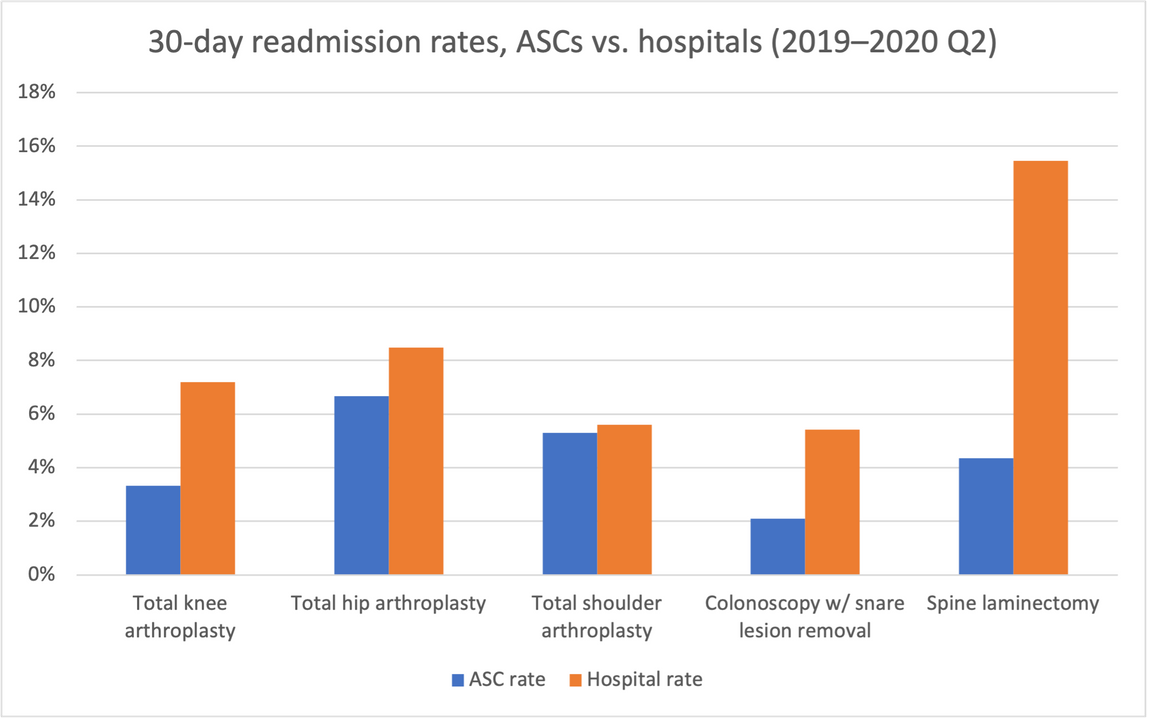
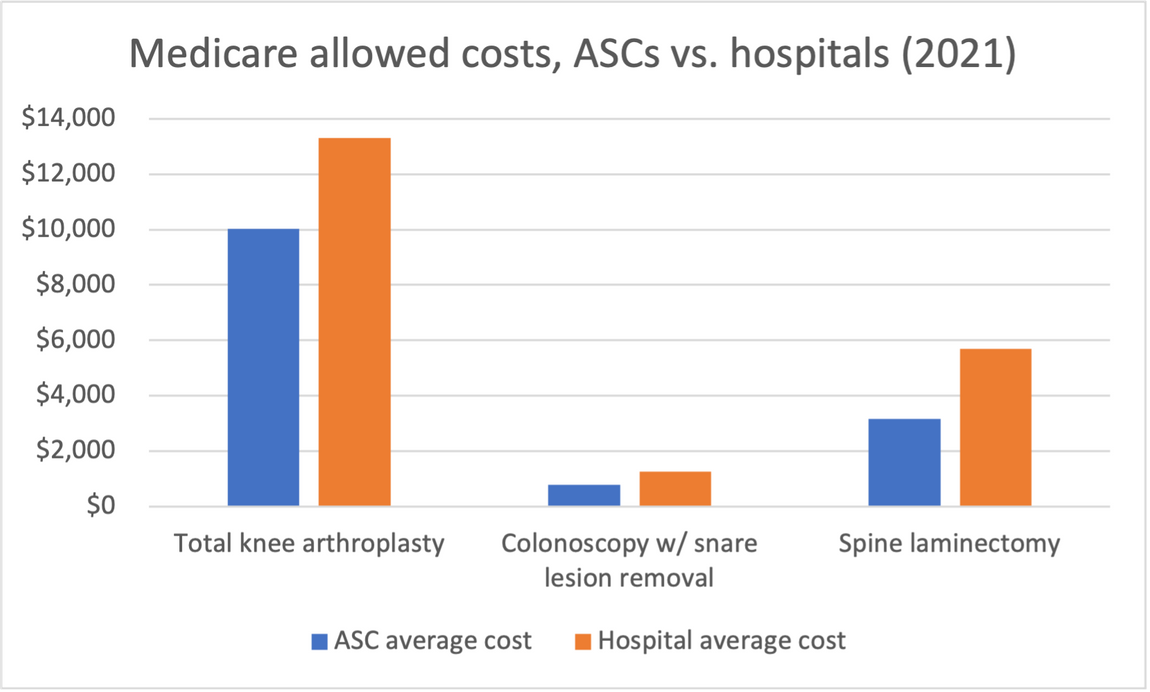
While it is undeniable that infrastructural debt remains a key barrier and growth can vary by region and procedure, platforms like OathOS are enabling providers to leapfrog traditional limitations.
The vision to transform ASCs into AI-native, high-performance environments sets the stage for impact both within individual procedures and far beyond.
How NVIDIA Thinks in Healthcare
From NVIDIA’s perspective, David notes that NVIDIA’s involvement in medtech, and more broadly healthtech, is increasing as systems become software-defined:
“NVIDIA’s involvement is accelerating rapidly as the industry moves toward software-defined physical systems. The future of healthcare relies on the digital twin of the surgical environment, where physical AI allows for the continuous monitoring and optimization of both the tools and the space they operate in.”
The technical backbone enabling this vision includes platforms like NVIDIA IGX and Holoscan, which are designed to run multimodal AI models directly at the edge, where latency and reliability matter most.
When you hear David's insights, you start to put the pieces together. These aren't one-off collaborations. They are part of NVIDIA’s strategy to position itself as a foundational layer across the ecosystem.
When speaking to what NVIDIA is looking for when determining who to partner with, David shared:
“As a foundational platform company, NVIDIA works across the healthcare ecosystem, from early-stage startups to global medical device leaders … we prioritize partners that share a clear vision for the future of AI in healthcare and are tackling complex, high-impact problems.”
Oath certainly checks those boxes.
Where Else NVIDIA Is Embedding Itself
Across multiple domains, NVIDIA is not competing with device companies, pharma, or care providers. Instead, it is becoming the shared compute, simulation, and "AI substrate" that sophisticated systems are built on.
There are a few key areas where their activity is painting a picture.
Surgical Robotics and Physical AI
The synergy between surgical robotics and physical AI is undeniable. NVIDIA has established partnerships or deep technical collaborations with:
- Intuitive: through research collaborations focused on simulation, autonomy, and AI-assisted surgery.
- Moon Surgical: whose Maestro platform leverages NVIDIA technology to enable software-defined robotic assistance.
- XCath: with the development of autonomous navigation and digital twins to enhance the company’s platform for endovascular and stroke care.
- EndoQuest Robotics: to integrate NVIDIA’s compute, AI, and visualization technologies into EndoQuest’s flexible endoscopic system.
Medical Imaging and Diagnostics
If surgical robotics is the emerging frontier, medical imaging is where NVIDIA’s position is already entrenched. Major imaging players like GE HealthCare, Siemens Healthineers, Philips, and Canon Medical Systems Corporation have standardized significant portions of their AI pipelines on NVIDIA GPUs and SDKs.
Today, hundreds of FDA-cleared imaging applications explicitly rely on NVIDIA hardware or software for:
- AI-driven image reconstruction
- Real-time guidance
- Workflow automation
NVIDIA has become the de facto compute layer for advanced imaging. As imaging systems evolve toward real-time AI interpretation and autonomy, replacing that layer becomes increasingly non-trivial.
Biotechnology, Healthtech, and Beyond
NVIDIA partners with established pharma leaders such as Amgen, Genentech, Eli Lilly and Company, and Novo Nordisk, as well as AI-native biotech firms like Recursion, Insilico Medicine, and Schrödinger.
Through platforms like BioNeMo and DGX Cloud, NVIDIA supports foundation models for molecular design, large-scale simulation, and integration of wet-lab and dry-lab workflows.
Beyond drug discovery, NVIDIA works with companies such as Illumina, Thermo Fisher Scientific, and IQVIA to make genomic, clinical, and real-world data AI-ready, enabling scalable digital twins of biological and clinical systems.
Why This Matters
AI-native operating environments are still early. Broad adoption will take time, validation, and regulatory comfort. However, the momentum is building, and NVIDIA is positioning itself as the operating system for the increasingly software-defined healthcare of tomorrow.
In that context, the Oath Surgical collaboration is a key signal and preview of how AI-native care delivery platforms, device manufacturers, and biotech companies may increasingly converge on a shared foundation.
The question is no longer "will AI reshape healthcare?"
It’s "who builds the foundation everyone else ends up standing on?"
More from LSI
We just launched Compass AI, our new platform connecting all of LSI's proprietary private market data, executive perspectives from our summits, and market research in one platform. Executives can databases of companies, investors, deals, and insights, and use our AI Agents to build custom reports and conduct deep analysis right in the platform.


-(1).png)




Request Info

The Lens - Complimentary Issue
Subscription Includes

Global Medtech Market Analysis & Projections (MAP), 2021-2031
Published: 2023
Next Update: Q4 2024
Deliverables:



Global Surgical Procedure Volumes Dashboard, 2018-2029
Published: 2022
Next Update: Q2 2024
Deliverables:
United States Surgical Procedure Volumes, 2018-2029
Published: 2022
Next Update: Q2 2024
Deliverables:
Aesthetics, Global Surgical Procedure Volumes, 2018-2029
Published: 2022
Next Update: Q2 2024
Deliverables:
Cardio, Global Surgical Procedure Volumes, 2018-2029
Published: 2022
Next Update: Q2 2024
Deliverables:
ENT, Global Surgical Procedure Volumes, 2018-2029
Published: 2022
Next Update: Q2 2024
Deliverables:
General, Global Surgical Procedure Volumes, 2018-2029
Published: 2022
Next Update: Q2 2024
Deliverables:
Neuro, Global Surgical Procedure Volumes, 2018-2029
Published: 2022
Next Update: Q2 2024
Deliverables:
OB/GYN, Global Surgical Procedure Volumes, 2018-2029
Published: 2022
Next Update: Q2 2024
Deliverables:
Ophthalmology, Global Surgical Procedure Volumes, 2018-2029
Published: 2022
Next Update: Q2 2024
Deliverables:
Orthopedic, Global Surgical Procedure Volumes, 2018-2029
Published: 2022
Next Update: Q2 2024
Deliverables:
Peripheral Vascular, Global Surgical Procedure Volumes, 2018-2029
Published: 2022
Next Update: Q2 2024
Deliverables:
Spine, Global Surgical Procedure Volumes, 2018-2029
Published: 2022
Next Update: Q2 2024
Deliverables:
SRS, Global Surgical Procedure Volumes, 2018-2029
Published: 2022
Next Update: Q2 2024
Deliverables:
Urological, Global Surgical Procedure Volumes, 2018-2029
Published: 2022
Next Update: Q2 2024
Deliverables:
Global Markets for Hip Replacement Implants, 2023-2028
Published: 2023
Next Update: Q2 2024
Deliverables:
Global Markets for Peripheral Vascular Guidewires, 2023-2028
Published: 2023
Next Update: Q2 2024
Deliverables:
Global Markets for Peripheral Atherectomy Catheters, 2023-2028
Published: 2023
Next Update: Q2 2024
Deliverables:
Global Markets for Electrosurgery, 2023-2028
Published: 2023
Next Update: Q2 2024
Deliverables:
Global Markets for Peripheral Vascular Balloons & Vena Cava Filter, 2023-2028
Published: 2023
Next Update: Q2 2024
Deliverables:
Global Markets for Mechanical Heart Valves, 2023-2028
Published: 2023
Next Update: Q2 2024
Deliverables:
Global Markets for Tissue Heart Valve Replacement, 2023-2028
Published: 2023
Next Update: Q2 2030
Deliverables:
Global Markets for Transcatheter Mitral Valve Devices, 2023-2028
Published: 2023
Next Update: Q2 2024
Deliverables:
Global Markets for Femoral Closure, 2023-2029
Published: 2023
Next Update: Q2 2024
Deliverables:
Global Markets for Tricuspid Valve Repair, 2023-2028
Published: 2023
Next Update: Q2 2024
Deliverables:
Global Markets for Percutaneous Pulmonary Valves, 2023-2028
Published: 2023
Next Update: Q2 2024
Deliverables:
Global Markets for Coronary Angio Guidewires & Catheters, 2023-2028
Published: 2023
Next Update: Q2 2024
Deliverables:
Global Markets for Oncology Ablation Devices, 2023-2028
Published: 2023
Next Update: Q2 2024
Deliverables:
Global Markets for ENT Devices, 2023-2028
Published: 2023
Next Update: Q2 2024
Deliverables:
Global Markets for Cell Delivery Catheters, 2023-2028
Published: 2023
Next Update: Q3 2024
Deliverables:
Global Markets for Urology Devices, 2023-2028
Published: 2023
Next Update: Q3 2024
Deliverables:
Global Markets for External Pain Pumps, 2023-2028
Published: 2023
Next Update: Q3 2024
Deliverables:
Global Markets for Ureteral Access Devices, 2023-2028
Published: 2023
Next Update: Q3 2024
Deliverables:
Global Markets for Pelvic Floor Repair, 2023-2028
Published: 2023
Next Update: Q3 2024
Deliverables:
Global Markets for Atrial Fibrillation, 2023-2028
Published: 2023
Next Update: Q3 2024
Deliverables:
Global Markets for Neurovascular Devices Ischemic, 2023-2028
Published: 2023
Next Update: Q3 2024
Deliverables:
Global Markets for Neuromodulation Devices, 2023-2028
Published: 2023
Next Update: Q3 2024
Deliverables:
Global Markets for Vertebroplasty Devices, 2023-2028
Published: 2023
Next Update: Q3 2024
Deliverables:
Global Markets for Benign Prostation Hyperplasia Implants, 2023-2028
Published: 2023
Next Update: Q3 2024
Deliverables:
Global Markets for Cryoablation, 2023-2028
Published: 2023
Next Update: Q3 2024
Deliverables:
Global Markets for Diagnostic Electrophysiology Catheters, 2023-2028
Published: 2023
Next Update: Q3 2024
Deliverables:
Global Markets for Hernia Repair, 2023-2028
Published: 2023
Next Update: Q4 2024
Deliverables:
Global Markets for CRM Devices, 2023-2028
Published: 2023
Next Update: Q4 2024
Deliverables:
Global Markets for Neurovascular Devices Hemorrhagic, 2023-2028
Published: 2023
Next Update: Q4 2024
Deliverables:
Global Markets for Renal Denervation, 2023-2028
Published: 2023
Next Update: Q4 2024
Deliverables:
Global Markets for Upper+Lower Suture Anchors, 2023-2028
Published: 2023
Next Update: Q4 2024
Deliverables:
Global Markets for Peripheral Stents, 2023-2028
Published: 2023
Next Update: Q4 2024
Deliverables:
Global Markets for Electromagnetic Navigation Systems, 2023-2028
Published: 2023
Next Update: Q4 2024
Deliverables:
Global Markets for GI Endoscopy, 2023-2028
Published: 2023
Next Update: Q4 2024
Deliverables:
Global Markets for Hemodialysis, 2023-2028
Published: 2023
Next Update: Q4 2024
Deliverables:
Globals Markets for Cardiac Ablation, 2023-2028
Published:
Next Update:
Deliverables:
Global Markets for Atrial Septal Occlusion, 2023-2028
Published: 2023
Next Update: Q4 2024
Deliverables:
Global Markets for Aortic Grafts, 2023-2028
Published: 2023
Next Update: Q4 2024
Deliverables:
Global Markets for Interventional Cardiology Devices, 2023-2028
Published: 2023
Next Update: Q4 2024
Deliverables:
Global Markets for Oncology Embolization, 2023-2028
Published: 2023
Next Update: Q4 2024
Deliverables:
Global Markets for Vascular Access Devices, 2023-2028
Published: 2023
Next Update: Q4 2024
Deliverables:
Global Markets for Rotator Cuff Repair Suture Anchors, 2023-2028
Published: 2023
Next Update: Q4 2024
Deliverables:
Global Markets for Electrical Stimulation Devices, 2023-2028
Published: 2023
Next Update: Q4 2024
Deliverables:
Global Markets for Wearable Monitoring Devices, 2023-2028
Published: 2023
Next Update: Q4 2024
Deliverables:
Global Markets for Low Complexity Medical Devices, 2023-2028
Published: 2023
Next Update: Q4 2024
Deliverables:
Canada Surgical Procedure Volumes, 2018-2029
Published: 2022
Next Update: Q2 2024
Deliverables:
Germany Surgical Procedure Volumes, 2018-2029
Published: 2022
Next Update: Q2 2024
Deliverables:
France Surgical Procedure Volumes, 2018-2029
Published: 2022
Next Update: Q2 2024
Deliverables:
U.K. Surgical Procedure Volumes, 2018-2029
Published: 2022
Next Update: Q2 2024
Deliverables:
Italy Surgical Procedure Volumes, 2018-2029
Published: 2022
Next Update: Q2 2024
Deliverables:
Spain Surgical Procedure Volumes, 2018-2029
Published: 2022
Next Update: Q2 2024
Deliverables:
Poland Surgical Procedure Volumes, 2018-2029
Published: 2022
Next Update: Q2 2024
Deliverables:
Netherlands Surgical Procedure Volumes, 2018-2029
Published: 2022
Next Update: Q2 2024
Deliverables:
Belgium Surgical Procedure Volumes, 2018-2029
Published: 2022
Next Update: Q2 2024
Deliverables:
Sweden Surgical Procedure Volumes, 2018-2029
Published: 2022
Next Update: Q2 2024
Deliverables:
Switzerland Surgical Procedure Volumes, 2018-2029
Published: 2022
Next Update: Q2 2024
Deliverables:
Denmark Surgical Procedure Volumes, 2018-2029
Published: 2022
Next Update: Q2 2024
Deliverables:
Finland Surgical Procedure Volumes, 2018-2029
Published: 2022
Next Update: Q2 2024
Deliverables:
Norway Surgical Procedure Volumes, 2018-2029
Published: 2022
Next Update: Q2 2024
Deliverables:
China Surgical Procedure Volumes, 2018-2029
Published: 2022
Next Update: Q2 2024
Deliverables:
India Surgical Procedure Volumes, 2018-2029
Published: 2022
Next Update: Q2 2024
Deliverables:
Japan Surgical Procedure Volumes, 2018-2029
Published: 2022
Next Update: Q2 2024
Deliverables:
South Korea Surgical Procedure Volumes, 2018-2029
Published: 2022
Next Update: Q2 2024
Deliverables:
Australia Surgical Procedure Volumes, 2018-2029
Published: 2022
Next Update: Q2 2024
Deliverables:
Thailand Surgical Procedure Volumes, 2018-2029
Published: 2022
Next Update: Q2 2024
Deliverables:
Malaysia Surgical Procedure Volumes, 2018-2029
Published: 2022
Next Update: Q2 2024
Deliverables:
Singapore Surgical Procedure Volumes, 2018-2029
Published: 2022
Next Update: Q2 2024
Deliverables:
New Zealand Surgical Procedure Volumes, 2018-2029
Published: 2022
Next Update: Q2 2024
Deliverables:
Caribbean Surgical Procedure Volumes, 2018-2029
Published: 2022
Next Update: Q2 2024
Deliverables:
Argentina Surgical Procedure Volumes, 2018-2029
Published: 2022
Next Update: Q2 2024
Deliverables:
Colombia Surgical Procedure Volumes, 2018-2029
Published: 2022
Next Update: Q2 2024
Deliverables:
Chile Surgical Procedure Volumes, 2018-2029
Published: 2022
Next Update: Q2 2024
Deliverables:
Guatemala Surgical Procedure Volumes, 2018-2029
Published: 2022
Next Update: Q2 2024
Deliverables:
Dominican Republic Surgical Procedure Volumes, 2018-2029
Published: 2022
Next Update: Q2 2024
Deliverables:
Costa Rica Surgical Procedure Volumes, 2018-2029
Published: 2022
Next Update: Q2 2024
Deliverables:
Panama Surgical Procedure Volumes, 2018-2029
Published: 2022
Next Update: Q2 2024
Deliverables:
Mexico Surgical Procedure Volumes, 2018-2029
Published: 2022
Next Update: Q2 2024
Deliverables:
Brazil Surgical Procedure Volumes, 2018-2029
Published: 2022
Next Update: Q2 2024
Deliverables:
Turkey Surgical Procedure Volumes, 2018-2029
Published: 2022
Next Update: Q2 2024
Deliverables:
Russia Surgical Procedure Volumes, 2018-2029
Published: 2022
Next Update: Q2 2024
Deliverables:
South Africa Surgical Procedure Volumes, 2018-2029
Published: 2022
Next Update: Q2 2024
Deliverables:
Request Info
See Full Attendee List