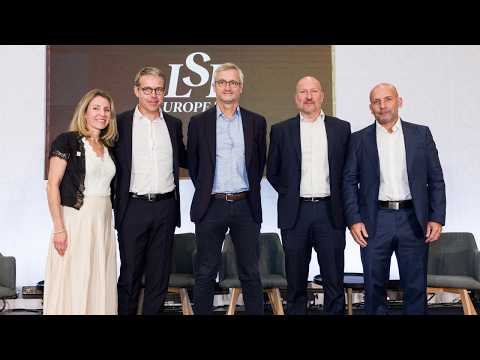
Thriving Amidst Turbulence: Resiliency in Medtech | LSI Europe '25

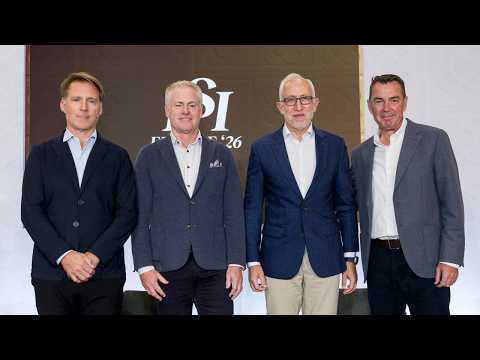
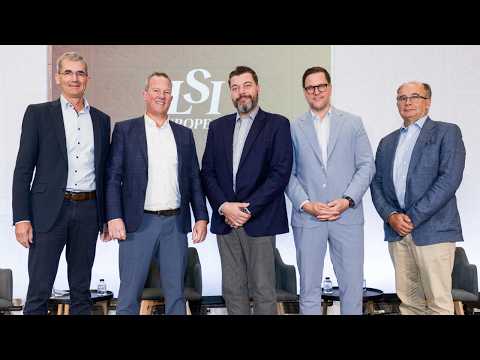
Industry leaders from Trinity Life Sciences, KCK MedTech, Boston Scientific, NAMSA, and Sofina share strategies for building resilient medtech organizations that can weather market volatility and industry challenges.
Join Our Next Event
Partner with the leaders
shaping the future of
Medtech at LSI USA ‘26
March 16th - 20th, 2026
Waldorf Astoria, Monarch Beach

David Uffer  0:05  
Well, welcome everybody to LSI Europe, London, 2025 My name is Dave Uffer. I'm the managing director of Trinity Life Sciences, and I'll be your moderator for this session, thriving amidst turbulence, resiliency and med tech. We've heard a lot of panels say how difficult Medtech is, but I think we're going to talk about the turbulent times and not have a woe is us situation. We're going to talk about what we've seen people successfully navigate in these turbulent times. I myself have been med tech about 35 years, everything from corporate strategy, business development, investing, advisory, investment banking, and we've seen a lot of different times. I'm joined by such a diverse group of panelists with different backgrounds, I'd like them to introduce themselves, and we'll start again to a discussion.


John White  0:54  
All right. Great. Hi everyone. My name is John White. I'm a managing director with KCK med tech. We are a single family evergreen fund. We make what I would describe as traditional venture capital investments, typically later clinical and earlier commercial stage companies. My background, I've been in med tech for 20 years. Before I was an investor, I was an operator in a couple of different startups in the Bay Area and and as a founder and a company back in the day. So happy to be here.


Ainhoa Manterola  1:31  
Thank you. My name is Ainhoa Manterola. I'm part of Sofina, which is an investment holding based in Belgium, but actually investing globally, managing 10 billion and we're investing both in funds, but also in directs, and in directs. One of the sectors that we specialize in is healthcare, which I am leading for Sophia. Hi.


Craig Smith  1:52  
My name is Craig Smith. I'm on the venture capital team at Boston Scientific. I've been in med tech for about 25 years, in various legal roles and business development roles.


Brian Smith  2:06  
So Brian Smith, the new CEO of NAMSA, I am also an operating partner at the healthcare only fund ArchiMed, which I think is the largest healthcare only fund in the world. And glad to be here.


David Uffer  2:19  
Well, thanks everybody. And for the introduction, we've seen change in our industry. We've seen change in the markets, curve balls, difficult times, whatever it was, whether it's the US financial crisis in the mid 2000s the change in tax that we had levied on us and in med tech, even changes in MD R for European regulation. We're starting to see a little bit of turbulent times today. How we navigating this? Talk about some of the turbulence that you're seeing now that are concerning, either you as an investor or some of your portfolio companies? Yeah.


John White  2:55  
I mean, it's, it's a broad question. I think there's lots of different areas where we can dive in. You know, one of the things I look at as an investor is what exactly are the risks I'm underwriting in every single investment that I'm making, and when there's turbulence, that gets to be a more difficult proposition. So what I'm always looking for are teams that can focus and can come up with creative ways to work through whatever challenges come at them. I'd say one of the areas where we are struggling the most right now is around market access and reimbursement. And this is no surprise to anyone in this room, but that's an area where we see just a tremendous amount of change, a tremendous amount of difference when it comes to the game that you are playing with payers. And so for us, understanding what a company strategy is and how they're going to attack those challenges is critical.


David Uffer  4:03  
I know it. Will you see now that concerns you with turbulence?


Ainhoa Manterola  4:07  
Well, in our case, the thing is, we come we typically invest after reimbursement has been granted. So we, let's say we're less exposed to our portfolio companies. Are less exposed to that. What I would say is, for our portfolio companies, things that have been in their minds this year is mainly tariffs because of their they are manufacturing out of Europe or Asia and commercializing in the US, and also the NIH kind of uncertainties about funding. Okay, yeah,


Craig Smith  4:38  
I would concur, just in terms of access to capital for the earlier stage companies, even the pre clinical companies, I think that's a real challenge. Like many investors, you know, we prefer to see some some human data beforehand. We'll certainly invest before, before commercialization. But you know, those that early stage funding seems to be very challenging. I think there's capital available. I think it's just harder to find. I think a lot of it's residing in the family offices seem to be very active. And there's also, I'm seeing a lot of activity in health care systems having funds set aside. So I think, I think that's an access point that maybe hasn't been fully tapped, that's that's ready to to step in.


Brian Smith  5:31  
That's interesting actually, I think, at the end of the day right now, the lack of clarity that comes out of Washington in particular, makes it very difficult for people to plan ahead. Where are they going to allocate dollars? Sadly, as an American, I am the one has to sit here and say that, but it really particularly out of Health and Human Services. It makes investment where NAMSA is part of that R and D cycle. I think it makes it very challenging to make decisions. I think that's at least I consider that one of the core drivers of Roth in the market


John White  6:05  
in general. I think the word you use, that I would echo, is uncertainty, and certainly Washington is not helping things when it comes to that right now. And it as investors like I said, we like to understand I'm putting this money in? What risk Am I taking? And oftentimes we're seeing just these externalities that come in and make things much more challenging.


David Uffer  6:30  
So I used to say, doesn't make a difference if you have higher earnings, lower earnings when it comes to your wall street perform,


John White  6:38  
later stage, early stage. We're all up here struggling with some of these things.


David Uffer  6:42  
Yeah, and as long as you can plan for what the factors are, you can build your business that way, but with the uncertainty. And I think the lack of as you term, the lack of clarity, is just very difficult. Are you seeing your portfolio companies struggle with, what do we do next, and how should we navigate this?


John White  7:05  
Yeah, I mean, for sure, maybe we could stick a little bit on the development side of things. I think there, what we're seeing is a focus on being more capital efficient, sort of, if you get capital in making sure those dollars go farther and really prioritizing what is critical. Because there, there are times when you can go after nice to have things, and there are times when you have to go after, need to have things, and when you have uncertainty which may impact your timeline. That's when you have to really start to focus on the must haves, especially on the development side.


Craig Smith  7:47  
Yeah, that's, that's a really interesting way to put it. I think we see a lot of you know, earlier to mid stage companies that you know, that talk about their company, and they talk about their product, but then they spend almost as much time talking about, you know, what else that technology can be used for, and then talking about all these different iterations, it's like, you know, if you can get one to work, you're going to be successful. So just focus on that one and let let the other pieces. You know, it's kind of weighed and don't, don't get distracted with with all these other opportunities. Because, you know, getting one to work is is all you really need. And oftentimes,


Brian Smith  8:26  
I think historically, you know, clinical trials or things, they transcended administrations, generally, so it did. But I think again, there's enough disruption at the moment that it makes, even though you will transcend, right, I still think it makes it a little more difficult to know when and where to go. I mean, everyone, I just ran Archimedes neurosurgery company, ad tech, and you know, that is an incredibly hot space, and there is capital available there, but I think in some of the other therapeutic categories, those challenges are significant. Yeah, we see a lot of early stage we sound like doom and gloom, don't we?


David Uffer  9:02  
No, I think we'll, we'll lay all the gloom or the turbulent factor, because we market it that way. But, but we're here to give insights into the early stage companies and how they can navigate this. One thing you had mentioned Craig was the NIH funding. A lot of the early stage companies really rely on non dilutive capital, not because it's non dilutive, because it's available, and you can start your companies that way. I just came from a workshop where we're talking about reg CF and crowd funding and even reg D. Are you seeing a lot of difficulty getting some of these earlier mechanisms for funding the earlier stage companies. And where do you see that gap being filled?


Craig Smith  9:46  
Yeah, I, I do think there is a gap for for early stage companies that are, I think one of the things that that early stage companies can do to, you know, attract. Investment is to focus on on a category where there really is an unaddressed tam that is large, because then you can attract the quality investors that you're going to need to do the follow ons and carry through pivotal you look at the timelines for you talked about the doom and gloom stuff you talked about the time, if you see timelines for development of a PMA product of a decade, you're going to go through three cycles of doom and gloom and different layers of you know what the challenge is? You know, the challenge today might be, you know, uncertainty and the regulatory environment and reimbursement, I think is, is is a big one, but in five years, it's going to be something else. So, you know, focusing on a large tam that's going to overcome the cycles is important, if you if it is a more niche product or category, again, I think there is money available in family offices. Many of them are focused on particular therapeutic groups that, you know, maybe have a different lens that they look at it, which I think can be very valuable, and the and the healthcare systems. And we've also seen situations where or some of the service providers, some of the like R and D type shops, are willing to enter into some risk sharing arrangements. So I think those are ways that you can, you know, push the company a year or two down the road before you talk to some of the, you know, more more name investors.


Brian Smith  11:40  
That's interesting. You say that because at NAMSA, we've created a program called Venture ready. Now we're not going to invest capital because we can't pass judgment on a device if we're an owner in it right conflict of interest, but we've been able to plug into other sources of capital, almost all family office who are super interested in being part of it.


Ainhoa Manterola  11:59  
I think what it's really important is to think about the cap table that you are creating, and that that cap table can sustain you over those different Doom and loom cycles. Because I think that having at least maybe not all of them, but having just a percentage of that cap table being able to support the company across the cycles is really important, because that's when syndicates really work together. It's really important in times like this, I think, yeah,


Craig Smith  12:24  
no, that is super important, and it can be such a challenge. The company has done so much work and they get ready for a pivotal and their cap table is exhausted, yes, so that can be a real challenge. But if you know, if there are ways you can, you know, you can, you know, push the company further. So then you start, you know, attracting the larger investors. It just might be a strategy that that some companies might be able to use.


John White  12:52  
I think the reality here is there's a, at least, what I'm seeing is there is some capital at the very early siege, seed, stage formation, like you say, within family offices, especially if you can find an investor that is passionate about what you're doing, that is and look, sometimes that just takes a lot of lot of calls, a lot of meetings, a lot of LSI conferences, but when you find that person who's passionate that is what can carry you forward. There is a lot of capital at the pivotal and early commercial stage. Like I'm seeing a lot of financings at that stage. I'm seeing a lot of very large financings almost over capitalization at that stage. And so we we have a another investor that we work with, and he always says, look, you've got to survive in advance. That's what the key is, until you can kind of break through into that pivotal stage. And at that point there does feel like, provided you've got a big Tam and you're going after a category that's interesting, there, feels like there's capital to be had there, but it's just getting through there where it takes a lot of creativity, and, frankly, a lot of a lot of effort, and a lot of you're going to get a lot of no's along the way, but when you find that investor that's passionate about it, you'll that's really the key to move yourself forward.


David Uffer  14:24  
This is a difficult way to pitch it with investors here, but we understand the market speaks for itself, and especially at the later stage, where there's a lot of competition. Maybe we look at different terms at the early stage. Do you think there's fairness in the pricing, in the terms that are being set in these valuations. Because I hear a lot of grumbling or whining, if I were to put it that way, from from the company saying, you know, I got, I got a nice investor coming along, but boy, the terms are just nearly predatory.


John White  14:55  
So this is a supply and demand ecosystem, and right now, in the early stage. Age, there is not a lot of supply of capital and but also, you know, having done both early and late stage investing, I'm here to tell you that when you get to that pivotal round, or you get to that commercial round, those investors are going to be putting prices on top of you as the earlier investor that you may not like. And so it's a market. It's I wish, I wish there was more capital sloshing around everywhere for everyone, but it's just, it's just not the case. And so the one thing I will say is, if you do what you say you are going to do, and you execute, as a management team, I, as an investor, am always going to keep you aligned with the success of the company, because I know if you're not aligned, you're not going to put in the effort to drive the outcome that we're looking for. So especially some earlier stage investors may not understand that the long game may just be building equity in your options and kind of running from there,


David Uffer  16:06  
Craig, Boston, Sai, you will both lead and follow on.


Craig Smith  16:11  
Oh, we, we typically do not lead, but we will lead at times, and we tend to lead more so in the earlier stages, if there's something that we are particularly interested in, and sometimes, you know, you need that term sheet from a box of scientific for other people to join in. And I did want to comment about the pricing for early rounds and early stage companies. I frankly think that it is more realistic pricing, because, you know, the more sophisticated investors know the timelines. I you know, you see the deck that shows four years, and an experienced investor knows it's eight years and it's twice as much money. And they, they do need to preserve that ownership for, you know, two more rounds than the founders are anticipating. So I don't think, I don't think it's, it might feel predatory. I don't necessarily think that it is. I think it's more realistic. And if you can, you know, then build, you know, build that investor group with more and more high quality investors and a step up in basis that feels great. Then Then taking money at a at an inflated valuation, and then, you know, running into a stone wall when you're trying to raise that next round, and nobody wants to sign up for what feels like a predatory round at that stage. So that doesn't feel good for the early investors, but just maybe, you know, consider that there's another side to that story.


David Uffer  17:54  
Yeah, I the companies I'm on the board just to your term, to steal it again, to survive and move on, you need to do that, and you'll make it up in next rounds. As you reach milestones, you'll be rewarded for the milestones you make. But these companies that you're going to go back and make, make sure you get a strong invested we're so concerned about that valuation today, because when you need that bridge, you're going to go back to them, and they'll be by yourself, make sure they're good investors that


Brian Smith  18:20  
or early stage, I would say that the med tech investing community, whether venture or private equity, is much smarter than it was 10 years ago as well. You've seen an evolution of that's why I think, to your point, if you're four years and 8 million, it's really eight years and 16 million. I just think as an industry, we have become wiser with a few burn marks, but I do think the investing community is much more aware of what's really out there, and so bringing you know, an offering to the table that is not in line with realities, not advantageous.


Craig Smith  18:53  
I feel like we should have renamed this session survive in advance. I think that just sounds much more positive than thriving amidst turbulence, because there's always turbulence, survive in advance. That is, that's the theme here, because there's no, there's no secret sauce to, you know, thriving amidst turbulence, other than persistence and survive in advance. Let's go real


David Uffer  19:21  
ladies and gentlemen, fasten your seat belts. Hold on in turbulence. Let's throw out the T word. We talked about tariffs, and you mentioned that that's a big issue today. Is it really big? Is it No? Close your eyes. In six months, we'll see what happens, or you better prepare for this today. How are you telling your portfolio again? Or what are you looking at companies in evaluating differently with this on the table, I


Ainhoa Manterola  19:49  
know, yes, on our companies. I mean, there's quite a few that have been affected, as I was mentioning, and so what we tell them is to prepare a different The thing is, there. So much uncertainty. So that's that's the issue that we're having, I think, here, especially this, these past months, like it was really a lot of a lot of guessing, let's say, of what was going to happen. So in the end, what we've asked our companies is really to map their current manufacturing, the different origins of the SKUs, really understanding what could the potential impact be, and what are the plan A, plan B, plan C, options, and understanding what's the impact on the on the bottom line, really understanding what what is reasonable, and what are the timelines, and what are the potential ROIs of moving or not certain sourcing. But in the end, because of that uncertainty, you can only plan for it and choose and readjust depending on what happens.


John White  20:46  
And I'd say our advice has sort of started with recognition that it's really uncertain. And then at least the first couple of months, we've sort of said just delay, extend, get through it. But now I think what's happening is we're all seeing like this is either this it is even though it's still uncertain, it is here to stay. And so now we're going through and executing on some of the different scenarios that we've laid out with some of our companies, where if there's an option to bring some of the manufacturing over to the US. We do it most of the time. That's not possible, in which case we're looking for different suppliers and different geographies so that we have different access points depending on what's going on out in the market. But you know, some of this is also just financial planning and wrecking and sort of modeling in worst case, and saying, This is what's going to hit us, and so we better be able to absorb it from a financial point of view.


Brian Smith  21:48  
When I was living in China, in Shanghai, we were building out these, these supply chains. And I think one of the things, one of the things is missing at the moment, is actual time impact. Because if you've got a bill of materials, and, you know, suzieu China, and you want to land something in Des Moines, Iowa, a finished product, that's five months, probably minimum, sometimes, as you get through all the intermodal transportation, and I think we really haven't seen, as yet, the net impact of tariffs, just because it's been approximately since five months since the announcement of tariffs, I think we're going to begin over the next the next this, this quarter, the next quarter, I think to, perhaps unfortunately, feel that impact a


John White  22:27  
little more. I'd say that to your point, that we are making the hard decisions Well, whereas before, we're like, well, we'll just kind of delay, and we've built up some inventory, and we can kind of get through this. But that is that luxury is, is sort of gone. I think


Brian Smith  22:42  
the CEO of one of the larger healthcare systems in North America is a friend of mine. And I said, Did you just buy everything you could in the first quarter? And he said, Absolutely, every warehouse we have is full. I can't pay the light bill to have no cash. But no, I think that there was a lot of that in the first two quarters, and that'll go away in three


David Uffer  23:01  
and four as we sit here in Europe, are there credible news sources, or Is everybody getting the same information on a timely basis? Or do you see a challenge in what to read, what to believe, what's really going to happen?


Craig Smith  23:17  
I don't think you can. I don't think you can really predict what's going to happen. You know, there's also the recent, actually, I don't recall if it's a Supreme Court I think it was a an appeals court decision that said many of the the tariffs were inappropriate because they were not based upon a true emergency. So this will, this will be litigated back and forth for a while, also during the time period when, when you start to see some of the potential results of the tariffs, coupled with, you know, what they actually bring in, I think in another, you know, 45 to 30 days, there will be, you know, Maybe some forced certainty between the court system and people seeing actual results and maybe, you know, attenuating some of the things. I mean, one, one thing with uncertainty is, so, you know, the tariffs kind of, you know, there's a lot of talk. They kind of went in, and then they go, they get renegotiated on different terms based upon who the last visitor was. And so that's going to continue. And, and so I, you know, like, like John said, you just have to make the best decision you can. And if you're going after a large enough Tam and and in the med tech interest industry, we are very fortunate in this industry that if you do have an approved product and it's a quality product, our margins are actually enviable to most industries, and if you're losing some points on gross margin, you can still have a successful company. I, you know, I don't, I don't think it's going to, I don't think it's necessarily going to put any, you know, companies out of business. And if that starts to happen, I think there could be reactions in another in another way, you know, you talk about, or, you know, compressive gross margins, you know, potentially from tariffs, I think the biggest risk out there is, is reimbursement, and reimbursement, really, at a macro level, as the population ages and the stress on the health care systems and what can be paid for, and you know what, what can be afforded. It's harder to put your head around that a, you know, 50% tariff and a 40% or a 20% tariff, but how, how healthcare systems are going to how they're going to make really, difficult decisions over the next five years. I think is a potential bigger risk.


David Uffer  26:08  
Let's go in that direction then, because as an advisor in strategy consulting, we don't get as much as the general strategy as we do now. Everything market access, and whether it's, do I fall under DRG? And how do I address a value analysis committee, or I'm watching value based healthcare creep into certain segments? What are the biggest challenges that your portfolio companies are running into, and what are you really challenging your companies that you're looking at for investment, to understand what that risk factor in reimbursement or market access is. If you want to


John White  26:46  
talk about uncertainty, try to get coverage for your new technology. It is not you know, at least we used to complain about regulatory and this, but at least with the FDA, there's usually a pretty good series of steps that you need to follow. And you know, there's some off ramps where you might get stuck, but in general, you kind of can plan for it. Getting coverage has been really challenging. We just don't see consistency in what ultimately works to get coverage. And so when I talk to companies, I'm looking one to see one. Do they under do they have a plan when it comes to the the basics, the coding, the payment rates, all of these things, and then, Are they realistic about coverage? Have they planned appropriately for the amount of effort it's going to take? Do they understand who are the payers they've got to go get? Is this a Medicare population, a commercial population? And do they understand the game? Which, I guess some when I run across someone who does it, gives me a lot of confidence that we've got a chance when we're out there, but, but you have to plan for it taking a lot longer and being a lot more challenging than you think it will.


Craig Smith  28:05  
Yeah, irrational and unpredictable for commercial coverage, I've been surprised so many times for products that have pretty good evidence that net take costs out of the system and they don't get covered for for years and and that that can be really disappointing and challenging for for companies.


John White  28:29  
It was a great study out of Stanford Biodesign that really shows the time it takes large breakthrough technologies to get coverage. And that is a sobering paper. It's something that I think we can work on as a group, as an industry, but it is something you have to plan for.


David Uffer  28:50  
I would expect the early stage companies that they can't have all the solutions, but they have to be looking to an eye, foot and Noah, the stage where you're coming in, I would expect that they have very specific plans in how they deal with reimbursement and coverages. Are you seeing them ready to answer those questions in specific plans, or still red flags around the market for you,


Ainhoa Manterola  29:14  
I would say in our case, because they already have the reimbursement when we invest. So that's typically already covered. And so the question is really about commercialization. So that's where they need to be. I agree with that. They need to be very clear on who are the clients, how to start that, you know, core base of customers, just to show not only the reimbursement, but also how successful they're going to be commercializing and then being able to scale and raise the capital for that real later stage commercialization. So that's where we that's where we really


John White  29:50  
play the the good management teams know that their commercial strategy is going to be driven by their coverage. And so. So if you crack Medicaid of Ohio, you're putting two sales reps in Ohio, and you're not going to have any in Illinois. Do you have the right market access people out there who are going to be able to get to meetings, get you in front of the payers to make the case for your technology. That's sort of way down at the commercial end of things. When you get those meetings, you really have to have done the work up front to make sure you've got the right studies that are designed and you've got the right health economic evidence, because getting the meeting is so hard. When you actually get your shot, you have to nail it, and so, you know, that's why it's critical to think about this journey from the very beginning,


Brian Smith  30:53  
this is not a plug for NAMSA, but we see the evidence of what you're talking about, where a lot of the of our consulting work has been slower, um, VR, slowed things down, as you can imagine. But where we do see that is on reimbursement, and I can tell you that if you don't have an A plus plan the moment you get your shot, you don't get a lot of second bites at that out now.


David Uffer  31:14  
So Brian, I want to specifically ask you, because the experience with NAMSA, I would see too many companies would go out and do the clinical trial and then say, Well, did you do the secondary end points? Just bury them into the trial. Oh, no, we didn't. We're going to do a trial for the economic end points. You just doubled your expense or added another 40% whatever the number is, where you could have had secondary the learning to put the secondary economic endpoints. They're just as important, sometimes even more important than the clinical endpoints that we're looking at.


Brian Smith  31:45  
We would agree with you. Our chief medical officer sitting over there smiling at me the I think that what we see now is when a venture backed organization, we see a lot of early stage things, because we do a lot of the early stage testing, biocompatibility, etc, I think we see when VCs come to us and talk about one of their portfolio companies, we now spend more time talking about the economic as much time. I shouldn't say as much time, because you make a great point, right? FDA is an imperfect institution, as all government institutions are, but there is a pathway, right? Okay, you get dinged a couple of times. You need some more evidence here, but there is a pathway. I think, to your point, the economic pathway has become equally, if not more, difficult, at least that's for the startups that we work with.


John White  32:28  
Yeah, and I think the you can be creative, like I don't on your clinical evidence, we've got a company that is running an amazing post market registry. It took a little bit of doing to get it through the IRB, but now that it's through the IRB, we're working with patients and collecting patient outcome information by texting them and getting simple follow up answers. And when you come to a payer with a study with an n of 1500 like that's a really different conversation than I've got my, you know, two, 200 patient RCT. Or, you know, you need to have the RC t2. They're gonna That's step one. But, but kind of coming to them as sort of overwhelming evidence is, is at least a strategy that we've had to take was some of our portfolio


David Uffer  33:22  
where the clinicals, you could have many different phases and cost structures to that. Are you okay with I seen folks go to different geographies for either the EFS just before they go do a US trial. If that's the market that they intend to launch to initially, they'll do EFS in different geographies, whether it's sometimes central South America. I've seen the go to Eastern Europe, all over the world, India, yeah.


John White  33:55  
I mean, you probably see a lot of these things, yeah.


Craig Smith  33:58  
I think, I think that's actually a really good strategy before you invest the time money and lock down your pivotal with the FDA. And so if you can save some time and money doing EF s in other jurisdictions, I think that can be really helpful. And I think where it's most helpful is in working out the training and putting in it into various doctors hands, because so many early stage companies, they're, they're really tied into a small, a very small cadre of top level physicians who can, you know, do the procedure and they think it's awesome, and then you Put it in the hands of people who have been trained by the company, but it's just a different level of competence. And then when you put it out into a pivotal trial, and then into the market, just working out all those bugs of what's really important, we. I mean, boss of scientific everybody's had it where you've had really good products, but the training was not right, and you had mixed results, and it ends up coming off the market. So speed, efficiency, and you can, you can learn a hell of a lot doing the Fs in in other countries, I think,


David Uffer  35:23  
yeah, I appreciate that comment. I had a meeting this morning with a clinician from from the Mayo and we're looking at a technology said, I can think of maybe four people in my department who could use that. Never mind, just not the male clinicians, but when you go to the general community, yeah, and we all like to go to the kll first to get input, but we forget sometimes that they're about the five or 10% that could deploy some of this until you make it broader.


John White  35:48  
I think for us, it the question of where your data comes from depends a lot on what the technology is. You know, actually, I see my friend from by testro in the in the audience, that's an example where a blood draw, if it's automated, you can do that a lots of different places, and I'm going to have confidence in that. If it's a super complex catheter based procedure, maybe, like the one you're talking about earlier, that's when a lot of the training comes into play. That's where I'm going to start to make sure it's going to fit into the US system, because for us, by and large, we're looking at the US market at the end of the day. So it does depend a lot, and the FDA is going to have really different opinions on that as well.


Brian Smith  36:35  
You're making my day, because we just had a strategy session in Chicago for three days with the executive team, and medical education was at the very top of the list. More cadaveric work, different ways of approaching now, taking some of the animals out of the out of the equation. So to hear you guys say that is encouraging.


David Uffer  36:53  
Well, we do have a few minutes. I think we're here for you as the audience. So if anybody has questions, please raise your hand. We have some microphones that will circulate you have a question for the panelists. 


John White  37:12  
We can hear you. 


Audience Question  37:14  
Thank you. This is Martin from from ArchiMed. It seems like you've been in this markets for quite a while. How many of the turbulences we've been discussing you think are structural versus cyclical? You know, a function of interest rates going higher, the capital becoming less available, and so forth. Thank you. I


Brian Smith  37:37  
have to deal with him every day. Sorry. You can take that.


John White  37:40  
I'll say there's, there is some cyclicality to things like tariffs. You know, there are some underlying structural elements though, that I we can't just hope are going to resolve. So I think, in particular, the point that was brought up earlier around just look at our ability to pay for these innovations. Just step back and sum up all the money that's available and all the costs that's coming into the system, and you can see that's a structural element that we're going to have to deal with. And it kind of makes sense that market access might be harder now, because that's becoming that situation is becoming obvious to everyone. So I think some of the cyclical things are putting pressure on us, like today, in the moment, and that makes things even harder. I do think some of those things will ease in the future, but we always have to understand this is med tech. This is hard. We're but, you know, we're doing it for the right reasons, because it's great for patients and great for outcomes. So, you know, put your head down, survive and advance. Is maybe the summary there.


David Uffer  38:53  
Yeah, I think if we learn nothing else, we're always going to have a new challenge. And as you started this out, saying, You want people who are adept at being able to deal with a new issue, and that are good leaders. They know how to navigate the any turbulent time, not just what facing today. I think we could have had this session three years ago, 10 years ago, 20 years ago, there's always going to be a little bit of a curve ball your face, any last one before we close out our session. Heather, 


Audience Question 2  39:24  
I wonder if you can comment on what you mean by low pre money valuations, because I think it's all very different, depending upon the industry. But if you have a low in going pre money, then do the investors align with topping up capital structures through ESOP programs, and what would that standard be in your particular industries?


John White  39:52  
Not sure. I totally understand the court what I would say, what I would say is, in general, we're going to set aside enough I'm. A space in the option pool to make sure we can incentivize employees. What is that? It depends on what stage of the development cycle the company's at. It's really different if you're late stage commercial than if you're all the way down at the beginning. So that's going to that's going to scale. I think on the pre money side, I think the main point is setting yourself up for success as you continue to raise capital, because if you put your self in a valuation Stranglehold, because you pushed your your valuation very high in the early stages, it's going to get very challenging later to raise capital, and someone's going to have to do a lot of work to reset that structure,


Craig Smith  40:41  
yeah, and I agree on keeping management incentivized. I mean, we're very sensitive to that as well, that that's what you're betting on. So that's important.


Audience Question 2  40:51  
So do you think that it's an appropriate thing in this particular difficult market where pre money is de minimis, and as you go, the understanding is that the success based incentives will be more highly aligned than they might normally be. Instead of moving from a 10 to 20% kind of ESOP program, can it be a preference off the top, assuming that performance reaches a certain hurdle? Because I'm plagued with, how do you come up with an appropriate valuation? If some of you are kind of the early stage versus it's proven and valuation today is all over the place?


Craig Smith  41:31  
Yeah, I don't think there's any, I don't think there's any any secret sauce or calculation. I think it's supply and demand, and I don't think that complicated structures like management carve outs and stuff are, are, you know, the right conversation at an early stage. I think early stage, it just has to be a management pool of, you know, the 10 to 20% or whatever that's, you know, something fairly standardized, and if valuations get ahead of things and they it has to get reset. That's when those conversations will have to come around about juicing the management pool, or carve out or some other more complicated when the when the runway is little more clear.


David Uffer  42:21  
Yeah, well, I think that's a wrap out I'm looking at the flashing light. Many thanks to the LSI staff for putting this together, the panelists for sharing your insights and your time, and the audience for your attention. Thank you very much. Thank you.