The Future of Longer, Healthier Lives | LSI Asia '25

This panel brings together industry leaders to discuss innovations and strategies shaping the future of longer, healthier lives, focusing on advancements in healthcare and longevity.

Arthur Chen  0:02  
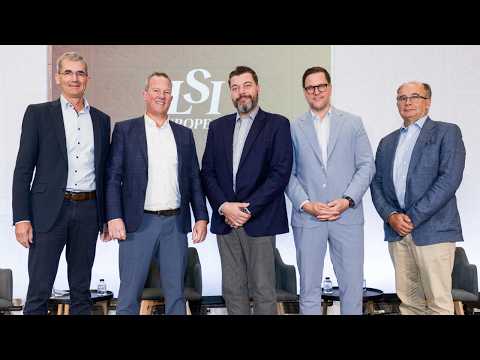
Okay, good afternoon. Thanks for joining us for this important panel on the topic of the future of longer and healthier life. I'm Arthur today's moderator. We are hospital supported venture capital fund backed by two of Taiwan's leading hospital systems. One is Taipei Medical University, the other one is short Quan health groups. With that we have incubated over 150 startups and invested in more than 30 So continue to support the global startups expand into Asia and partner with our hospitals. So today is my honor to moderate this panel alongside with four visionary leaders shaping the future of aging related innovation. So I would like to have everyone to introduce yourself and starting from the leader the global executive on Hologic.


Linda Seah  0:58  
Thanks, Arthur. I'm VP of Asia for Hologic. Hologic is Meg tech company based in the US, 40 years old. We are present everywhere, globally, and very much focused on Women's preventive health, and we are specialized particularly in detection and prevention.


Arthur Chen  1:19  
Soyoung, please. 


Soyoung Park  1:21  
Thank you for having me. My name is Soyoung Park. I'm a general partner of 1004 venture University venture partners located in San Francisco, Bay Area and San Diego. We are investors to investing in transformative technologies to support healthy aging. I'm looking forward to today's discussion, and I would want to look, want to meet all of you here. Thank you.


Arthur Chen  1:46  
Okay, the next Ruben,


Ruben de Francisco  1:49  
thank you for having me. Arthur. I'm Ruben de Francisco. I'm CEO of Van era health. We are a sleep diagnostic and monitoring company. We bring, for the first time the gold standard sleep test that we call polysomnography from the sleep lab into patients home. We commercial stage company and very much interested in the topic of the panel today. Okay, thanks for having you,


Arthur Chen  2:13  
Seemant.


Seemant Jauhari  2:14  
Thanks. It's a pleasure to be here. I'm Seemant Jauhari. I'm a partner at jungle ventures, leading healthcare investments. We are one of the largest VC funds in the region. We invest in India and Southeast Asia. Formerly a CEO at Apollo hospitals. And I'm very happy to be here for this panel. Thank you.


Arthur Chen  2:36  
Thank you. Let's begin with our topic, the future of longer and healthier life. So we often hear that people are living longer, but not necessarily healthier. So I serve as a visiting professor at Tohoku University, which gives me a first hand insight into how Japan is addressing their aging related, you know, challenges. So most countries in Asia, just like Japan, like Taiwan, we are navigating the convex reality of the rapidly aging populations. So my question to all the panelists, from your perspective, what is the most important issue we must address in order not just to attend to the lifespan, but also, most importantly, the health span in aging society in Asia, verifying Lydia,


Linda Seah  3:29  
maybe I can start off. And you know, thanks Arthur for inviting me, because of hologics interest in women's health, not only are we focused on technology and innovation, we decided four years ago to create and develop insights, multi across many countries, 140 over countries across, 140,000 over patients, women and to really create this standardized index across the wall on how women are faring in a health and wellness and we actually measure five parameters which would then allow us to create a standardized index. And we measure that over time, one of the biggest gap that we saw, and we are in the fourth year of the data, was that there's a huge prevention gap today. Unfortunately, only 10% of women are being screened, and unfortunately this fourth year data is also showing that that screening rate is declining. So there's a huge prevention gap that needs to be addressed. And I think there's a lot that we can do together, you know, as all being part of the whole ecosystem. Okay,


Soyoung Park  4:52  
yeah, so I want to kind of bring some attention our life span. So when. You, please think about when your grand grandparents days, what was the life spent? Expected expectancy? I think it was about 5060, and now you can see your parents maybe have a life of a 70 to 80 or maybe 90. So what I meant is we actually extended our life span 20 to 30 years. But if you think about our health span is still remaining low. So when you draw a bell curve this, let's say this is aging. When you when you're born, you grow, and then you got down this whole aging process. Now we actually extend our life span, but our health span actually not improved. So my goal is to reduce this gap between health span and life span. How can we reduce this one? I actually see a lot of ways we talk about diet, we talk about exercise, we talk about mental mental control, our mental health. But also, there's a lot of technologies out there we're gonna discuss today. We with that kind of technology, I think we can reduce the gap between health span and life span. That's what I want to bring.


Arthur Chen  6:22  
Ruben, what's your feedback?


Ruben de Francisco  6:24  
Yep, very much. In agreement, I think, with my colleagues here, my co panelists, yeah, I think aging population one of the effects that it has is that we don't have enough people to take care of us, and sometimes it comes at the prevention, prevention stages, right? But I think it affects the entire care continuum, from prevention to cure, chronic disease management and so on. So with with aging population, it just not, not sustainable, and we need more tools to be able to take care of ourselves, maybe to bridge that gap right between your life span and health span, we need, we need good tools. And we are med tech. We have Medtech companies. So we believe, you know, technology is really going to help us bridge, bridge that gap, and technologies that need to be very scalable economically, right? They need to become cheaper in volume, so that all of us can make use of these tools at home. That's the direction, also effective


Arthur Chen  7:31  
factor way. So Seemant, anything to add?


Seemant Jauhari  7:36  
Yeah, I think it's a huge challenge that is going to hit us really hard, and we are under prepared. So let me come from the other angle, just in terms of the extent that we are trying to see as an impact. We take Asia itself, we have roughly 60% of the world's population out here, and roughly 1/4 of this, 60% of the world's population is going to be greater than 60 years old, right? So that roughly gives you a figure of about, you know, 600 million people who are going to be 6065 and above, right? 300 million in China, 50 million somewhere Southeast Asia, then rest India, and so on, so forth. And this is a huge issue because of what Linda and so young mentioned. You know, you're living longer, and you're you're older, you're getting older, and associated issues start coming. Can you live healthily? So first of all, there is a lot of people to take care of, and unfortunately, in today's generation, we are almost like a sandwich generation, where we have patchwork care, as I like to call it loosely, right? We have patchwork care. It's incremental care, it's reactive care, but we need organized elderly care for good health span with great life span. And that's two or three things I'll touch upon and hand it back over to you. Arthur as one is clearly the preventive piece, which Linda talked about, you need to be even more cautious in preventively checking your health every single year for a certain set of parameters. Now the second piece is the personalization preventive health checks. So it's not just going through a laundry list of tests, but it's actually for every individual, the kind of test that you need to do at to more extent, needs to be customized and personalized to that person. Third is your paying capability. So insurance has to play a role here, because if I can pay, then I can I will take that preventive test. Is done. And fourth is, can you continuously, is there an organized platform on which these elderly can land and they can be taken care in a more professional manner? So I think all these are big issues to be solved, to take care of, that huge problem that's waiting to hit us, and we are under prepared.


Arthur Chen  10:22  
Thank you for all their thoughtful perspective. So it's clear that the aging population are not demographic issues, but they are a catalyst right for system wide transformation in how we approach health care. So let's take a close look into how innovation and even investments are responding to this urgent main needs. So at be health, we launched our aging related accelerators, and over time, we have observed the investors has consistent interest in our focus on several important vehicle like preventive medicines, the AI diagnosis, the elderly, you know, modeling models. So my question to so young and Steven, from you know, investor perspectives, what areas that you think is still remain under exploited, under funded, or any vehicles that you see promising but not yet receive enough investors attention. So probably fine. So,


Soyoung Park  11:26  
yeah, so health span is actually not just something you can actually target. It's not pinpoint solution. It is definitely throughout your life. It's a quality of life and your life journey. So I as an investor, I also in very interested in a lot of technologies like stem cell, epigenetic reprogramming, sensing, self elimination, TPE, mitochondrial transfusion, those kind of things I actually I pay attention to, but those are biotech and also it takes quite a lot of time to be in the health system. I see a lot of things actually go to direct to consumer market, but at the same time, we see that a lot of rise our digital health. So for example, there's a digital clinic on your palm. A lot of probabilistics measure your Brain Age, measure your metabolic age, and then you put everything in the distal clinic, and then you basically maintain your health. Now, I see a lot of consumers are very aware of their value of their health data. Those data will accumulate at some point, as Simon said, personalized and more customized medicine and treatment and support month solution will be available for the those we are actually, I think, is we are still on the way to collect all the data, especially our data, is not sufficient to train AI technology, but in healthcare, we I see a lot of opportunity. We can accumulate more valuable data, and once we can have enough, sufficient and accurate data, we can bring more value in the future. This is not definitely ignored anything. We are very aware of it, and I am actually looking for who actually owns the data set and bring us to the next level.


Arthur Chen  13:33  
Okay, thank you. Totally. The Innovation isn't always where the capital is following or is going. So Seemant, why don't you catch your insight? Yep,


Seemant Jauhari  13:43  
so I think I'll go to the part where what is underfunded and what's really needed, and I'll narrow down on Asia. Again, I feel that there are a lot of basic sort of layer which we need to address is creating enough organized infrastructure and services around to take care of the elderly. So the first thing is around. If you have the thinnest level of service, you have assisted daily living centers, which are there second as you grow older and you have chronic diseases, or you have spinal spinal issues, or you have neuro issues, and you know, you need transition care facilities and rehabs and all of those to be there. Now it was always very, you know, a mom and pop centers, unorganized markets. Now they are slowly starting to consolidate a little bit. Then when you have these centers, then how can you engage? As you know, one of you said, we need constant engagement for these people, so there has to be some digital interface which constantly engages this. And it all starts with actually. Doing the preventive health check and finding out where you are and how you need to be and how you need to be. This journey is probably where the interventions come, and they could be digital. There is variables to continuously keep getting that data, and as So Young said, make sure you are able to process that data and then be you know, are the interventions like a drug intervention, or is there genetic sort of identification of what are your predispositions like? We came across the braca tests and the predispositions initially with the Geva studies, and now you know, we it should become more mainstream for your preventive and personalized check to actually programmatically make your road map for this particular person and for each one of those so that you can stick with that program, and then you can stay on the platform, so that you can actually and this part is underfunded, both in terms of facilities, infrastructure resources and the Innovation pieces. So silver economy, as a lot of people call it, is here to stay, and it it's more complicated, because as you grow older, mental health also starts coming in, so you have mild cognitive impairment and brain health, which also starts coming in. And there's a lot of innovation going on in that, but there's not too much funding that's underfunded. So if you see home care. Or it is, let's say, transition care. It is assisted living. It is innovations, wearables, CRISPR and genetic related things. All of these are, I think, from that standpoint, we could use with more funding and more innovation and packaging around this as a wholesome service.


Arthur Chen  16:44  
Okay, that's incredibly illuminating, especially the way how you frame both their obvious and overlooked opportunities in agent related innovation. So let's shift gears towards one of the toughest parts of scaling the innovation, which is addressing the real world validations. So in my career as an investor, I've learned that there is super crucial for the med tech startup to, you know, partner with the hospitals to validate their ideas with physicians. So that's why we work with two of Taiwan's leading hospital system with Taipei mental diversity, we support the startups to leverage Taiwan's single payer well structured data to pioneer in the medical AI and with short trend, which owns the largest training center for surgical innovation. So we connect the startup with the physician. So Ruben, my question is to you, you have that only our health is painted across different regions. So how did you, you know, choose your first entry point in Asia, right? And how did you build your, you know, partnerships with different hospitals, different physicians, especially to succeed in this age as very fragmented regulatory landscapes, yep.


Ruben de Francisco  18:06  
So indeed, to be successful with home care solutions, they need to be very much vertically integrated. And typically that means you're going to have to rely on partners like example, that see what we're just talking about, right? This digital part, wearables, all sort of assisted living services. You're gonna need different companies, because it's different core, core competencies. We are not yet in Asia. So we are exploring Asia, right? And some of these decisions about, you know, how, how to pick the different countries and what partners we are going through right now. But I can share a little bit how it was for us, also in Europe and in the US. Europe is also very fragmented, right? Although there's one regulatory approval and the C Marc, it is very fragmented for everything else, right? Different reimbursement payer systems, it's all very fragmented. So what we did is we started in Europe and then in the Netherlands, we expanded to a few European countries. We expanded to the US. Most important thing is to make sure that, of course, you you tick all the boxes right. Regulatory check is the reimbursement right? In this geography, there's no reimbursement. If there is no reimbursement available. You might need to come up with reimbursement. Perhaps you need a project to get to it. And the other aspect, of course, market size, what you are going to require in terms of clinical adoption, so that gets adopted and so on. In those countries, we decided to go direct, actually. So we are selling direct to hospitals to clinics. Those are our customers. But in Asia, we are looking at it a little bit different, because we realize that each of the geographies have very strong particularities sometimes. So we will rely on some partners. We expect some strategic partnerships. Be able to come to those geographies. So we are assessing right now, Japan, some context in China as well. Here good things about Singapore, for sure, we are we are here right now, Hong Kong, Taiwan, etc, etc. So now to be able to be successful, one of the approaches that we used before, that we for sure, are going to use this time is to start small, working very closely with the clinical institutions. So pilots, pilot your product before you run too far right, make sure that it fits like it will not fit. There's some kind of workflows, clinical workflows, and different things. And you need to adapt your business model. You might need to adapt your service. And that's a recipe that worked very well for us in the US, for instance, and then we will apply for sure here. So that's a key part of the equation. Still today, what are the geographies where we can have strong clinical partners that will help us roll this out?


Arthur Chen  20:59  
Okay? Thank you. Ruben, your experience really highlights the underground partnership is as strategic as technology itself. So in addition to validation and technical collaboration, another hurdle for startup is to develop their sustainable business model, especially embarked with evolving reimbursement system in Asia. So one example from our portfolio is how to think the that company now is their largest Asia diabetes digital platform with over 1.5 million users. A big breakthrough they can do is they partner with Big Pharma, Sanofi, they have together come out health economy study for reimbursement and unlock long term value. So my question is to Linda from hologics point of view, how do you collaborate with the startup to co develop the business models, and what makes this partnership succeed, not just in technology alignment, but in strategy and outcomes. From your perspective, sure,


Linda Seah  22:07  
I think there's been a lot of successful partnership and collaboration. It starts with recognizing that, you know, startups has got a you know, the strength really is in innovation and in being nimble strategics, you know, has has got experience in market access, you know, clinical trial, regulatory pathways. So I think if it both strategic and startup, could see how complimentary it can be. I think it's, it's a very good start to recognizing both, you know, strengths from both parties. Just thinking about reimbursement systems, I think great tech is not viable when no one pays for it. So I think that, you know, it's very important to have a shared vision, you know, shared outcomes, to understand what that health outcomes would be assuming that there's a shared vision on what is the problem that we're going to solve, then really there's, there needs to be an alignment and understanding of, what are the health care policies, you know, what are the reimbursement systems, both nationally, regionally and even, you know, down to, you know, the accounts level. So market access is a very big word. It can be very high level, but really it go, go deep down, you know, even down to the hospital level. So I think having a shared vision for the economics of health outcomes, you know, is very crucial, and that has to be very, very early alignment, right from the start, you know that both parties come together, align early and really state, you know what that economics is going to be to be able to really get the pay and the funding that will recognize the value of the innovation. I think the second aspect is really leveraging and CO, working, CO, creating together, you know, the clinical data, the regulatory pathways and leveraging some of the data that really exists in strategics, you know, like tech companies like Hologic, you know, create and, you know, do a lot of work in gathering data, like I mentioned earlier on, right, multi year commitment. You know, 140 over countries, 140 over 1000 women, to really try and understand the state of health care. So I think, you know, all those really shared, you know, strength, you know, that I think can be leveraged. I think at the end of the day, the shared risk and reward together, the partnership can be very strong. And it definitely, we know, would elevate the startup from being pilot to bring it together to the population. So, you know, it's really that. Shared KPI, shared risk and reward and shared vision. And I think underpinning that is really the trust, you know, the trust and the transparency. Sometimes the cultures are so different that we don't understand each other. But I think, you know, just having that trust, underpinning that relationship, would definitely be key to success.


Arthur Chen  25:22  
Okay, thank you. So definitely is a powerful reminder how big corporates cannot just be acquired. But strategy partners, yes, yeah, to co direct their values with startups. So due to the constraint of time, I would like to close by having each of you choose your probably one or two sentence in terms of, how can we co create the future of the longer, healthier life, probably from Siemens, yep,


Seemant Jauhari  25:51  
go for your preventive health checks and make sure you stay on a road map To keep yourself healthy as long as you live. You


Ruben de Francisco  26:03  
of I would say, empower people by bringing care to their homes in a way that's very scalable and cost efficient. Okay,


Soyoung Park  26:14  
I like to ask everybody to pay attention to where we are and if we can nurture those future technology and help the elders and also bring the healthy baby to the society. I think that's probably what we can contribute the most. I like you to involved in and cultivate this technology to bring to the society.


Linda Seah  26:39  
And I think for me, I just want to add on that the cross sector collaboration, you know, really needs, you know, attention. I think Singapore is an example of a huge, great ecosystem, with government support, with the private sector, with the government sector, with startups, with, you know, Meg, tech companies coming all together. And I think with a shared objective of, what is it in healthcare that we want to elevate, it will definitely be, you know, a great future for healthcare.


Arthur Chen  27:10  
Okay, thanks for all of the panelists. You're inspirational and forward looking discussions and perspectives. So it's very clear that the agents that our society is not just a growth market, but it has become the engine for global innovation.


LSI USA ‘26 is filling fast. Secure your spot today to join Medtech and Healthtech leaders.

March 16th - 20th, 2026  Waldorf Astoria, Monarch Beach Register arrow