The Future of Early-Stage Medtech Investing: A Global Outlook | LSI Europe '25

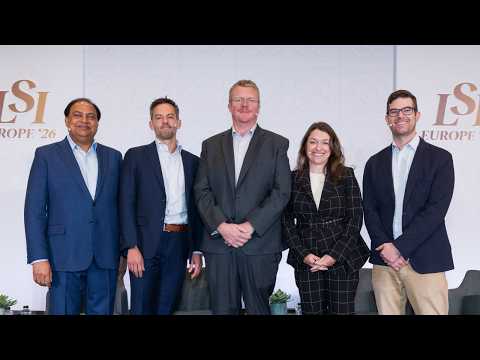
Leading venture capital experts from Solas BioVentures, Buenavista Equity Partners, Precision Life Science Partners, MedMountain Ventures, and Mercia Ventures examine global trends and opportunities in early-stage medical technology investments.
Join Our Next Event
Partner with the leaders
shaping the future of
Medtech at LSI USA ‘26
March 16th - 20th, 2026
Waldorf Astoria, Monarch Beach

Dave Adair  0:06  
Good morning. We got some stragglers coming in doing the last coffee. Philip there. It looks like I'm Dave Adair. I'm from Solas Bioventures in Chattanooga, Tennessee. It's a hotbed of med tech biotech. We're the largest and the smallest biotech med tech firm and all of Chattanooga, because we're the only one, but kind of like chipper right? Today, Scott has asked me to do a moderate a panel on the future of early stage med tech. So when the opportunity came about, I asked one of my partners, what should we kind of focus on? And he said, to be pretty easy, Dave, just tell everybody, go home and shut down. I don't think that the death of med tech, I think it's over exaggerated, and I'm seeing a lot of signs of early opening of the gates. And so the four year kind of dundrums that we've been in, I think in the next six to 12 months is going to get really, really bright. So this is a very timely topic. I'm joined today with four incredible talents representing both the EU and the US, and I could never get into credit or Much Ado for this talent. So I'm going to let each person introduce themselves, starting with BB,


Bibi Sattar Marques  1:19  
Thank you, David. Good morning to all. I'm Bibi Sattar Marques, I'm going to give you a little bit of my initial story how I got here. So actually, I was almost going to med school, but then I realized that wasn't for me. I couldn't dissect frogs, not then, not now. And so I realized I was at second year journey. I was doing economics and finance, I know, and I really wanted to work in hospitals, so I applied for volunteer work in the pediatrics in the oncology Hospital in Lisbon. And the director of volunteer work denied my application because I was too young for the job. So it took me six months to actually convince him to allow me to do the volunteer work. I did it, and it was one of my greatest achievements in my whole life. I learned so much as you can imagine, in every single aspect. It gave me full insight how a hospital works, how it's run, how to provide better care for patients. This was like a really huge learning for me. And then from there, I went to work for PwC. I also learned there that to never give up, to actually continue and do what you're supposed to do. And then I had some experience in regulation, which actually led me to where I am today. Partnered Buena Vista, leading seed and early stage investments in health care and biotech, backing founders willing to develop new innovations, new technologies, new solutions. We have a very hands on approach at Buena Vista, we work side by side with our founders. Currently, we have funds investing, not only hard tech, Medtech and biotech. At the seed stage, our average ticket would be around 3 million. What is really important for us right in the beginning is to actually understand the problem, the real problem that you're trying to solve with your innovations.


Dave Adair  3:27  
Nick, 


Nick Pachuda  3:27  
Yep. Hey, everybody. Nick Pachuda, partner at niove Capital, 100 million dollar Life Science fund, 70% med tech, 30% biotech ticket size is up to 2 million. And we like to lead, and I think to take off of Dave's comment, there are early stage investors. There are lead, early stage investors in med tech. They actually exist. This is just a tiny sampling of a lot of them that are here. You just got to dig us up and find us. But yeah, I was surgeon by training practice for 10 years. 25 years in industry. Number of exits along the way led external innovation for Johnson and Johnson med tech. For 10 years, traveling around the world, making early stage investments and partnerships in some key areas of interest, left J and J in 2020 and joined our first fund. Now we're raising for our second fund also built a little company called precision life science partners, which partners with startup companies around the world to help them hopefully get across the finish line. So great to be here, and I appreciate being part of the panel.


Dave Adair  4:34  
Brandon. 


Branden Rosenhan  4:35  
Thanks. Branden Rosenhan, I'm a critical care physician turned entrepreneur and now venture capitalist. We're I'm the founder of med mountain ventures. We're a small physician driven technical experts, and we're in the west of the US of the United States. Our ticket size is about half a million dollars is the first check. And even though we're smaller investors, we also will lead rounds and. And I'm happy to be here.


Dave Adair  5:03  
Rob 


Robert Hornby  5:03  
And Rob Hornby, Director at Mercia Ventures. Mercia Ventures is a UK focused VC. I think we manage about 2 billion AUM today. I think we are the second most active VC in the UK. We've got 250 portfolio companies. Ticket sizes range from 500,000 to 10 million. But we often follow on well beyond that, invest in all sorts of different spaces, from orthopedics, got a lot in spine, but, you know, looking for really anything, anything exciting. We're very wide range in terms of, I suppose, stage of business too, from quite early stage through to late stage commercial. My background is spent a number of years in BC, 10 years before that, in kind of MBA, in corporate development. And then I was a pharmacologist by training prior to that, so slightly different, more in their molecules than devices, but yeah, since transitioned. So that's me.


Dave Adair  5:56  
Since we're going to concentrate on early stage med tech, I thought it might be a good idea to level set some of the things that are going on you heard on the last panel these creative names, when rounds have more names than alphabet soup of fraternities and fraternities at a sec school. You know, it gets complicated. So to level set you so you understand the game you're going to be playing. Because this is a full contact sport, you need to understand what the rules of engagement are. So one of BB and Rob, tell us a little bit about what you're seeing, you know, in the market. So to speak, of pre seed, seed, minus seed, I think I heard there's a plus seed, A's, etc. And BB, why don't you kick us off?


Bibi Sattar Marques  6:41  
Okay, so going from C to series A is really challenging for most companies, not all able actually to arrive to series A successfully. In my point of view, you need to build really strong teams, because they will back you ups and downs while you're doing this trash. Actually, they will be your safety net. Surround yourselves with really talented people, even people that know much more than you, because they will actually back you throughout the whole cycle. It's a very difficult stage, going from sea to series A you practically have to do everything. You have to prove the concept, build the product, R and D, innovation, regulatory. You need to build the company itself. Can't just arrive and have a project. You will be a company. So a lot of challenges surround yourself with talented people. Then second would be, define very clearly your regulatory path, your strategy, you will need that because it has to be really, really understandable since the beginning, so you can define all the milestones you need to achieve and have it really, really clear. It's not going to be easy, it's it's complex, but you just need to be compliant. These are the rules. We are also regulated industry, and we know the rules. We have to be compliant. Then also, I would define, since the beginning, the fundraising strategy. So you need to understand along the way, how many I mean, you need to be in fundraising more mode, all the time, actually. But you need to understand you're going for grants you're going for other types of financing when you will need to fund raise, which milestones you need to achieve to get you there that will keep you stable throughout the whole cycle. So this would be basically, I think, what it takes to go from sea to CBC. Yeah, it's


Robert Hornby  8:38  
pretty comprehensive, to be fair. I mean, I think kind of hammer home on milestones. And I think companies coming to us with a quite an unclear plan, or a plan that doesn't have those, you know, quite key delineated milestones. In terms of, you know, this section of the fundraise will get you to here, there's a value inflection point. This will bring other people on board. But I think even with that, I think in today's funding market, even that sometimes is not enough. I think what we've seen, typically UK focus is companies obviously set the plan at the start. They have milestones. The market moves. And I think what we've seen is today, everyone has become significantly more risk averse. So those milestones may have been true five years ago, but actually today, they may not be as true. So I think I'd be going in with the mindset of, if you can do this, it's not easy, but at seed stage, if you can build the syndicate in mind, at that point, you know, have a syndicate that could theoretically fund you through series A and get you to a point where you are commercial. You just have a much easier journey, because it's much easier when those investors on board from the start, because they've got vested interest to get you there. If the milestones move and you've not quite achieved what the market requires today. It's really, really hard for a business to then bring them on board. So I think just having that in mind, in a sense, at the start, try and think about, how do you de risk the journey for investors, you know, all the way through, but not easy.


Dave Adair  9:56  
So since we have a mixed audience of investors, entrepreneurs. Errors. We want to give everybody a full serving here, right? So let's talk about tail winds and head winds, because I love airplanes for both the opportunities and then, you know, places to avoid for entrepreneurs as well as investors. So Nik, do you want to kick us off on that one?


Nick Pachuda  10:18  
Sure, I think it ties into that first question of seed, pre seed a and you know, what's an early stage investor, and how the startups interact with them, and we talked about headwinds and tailwinds, but what's an early stage investor? If we go to the websites of lots of the funds that are here, it'll say, we're looking for early stage investment. And then you have the conversation, and they say, Well, do you have 10 million in revenue, and do you have your FDA and CE, and tell me about your commercial team and your reimbursement and but we love to take risk. Yeah, okay, maybe you do. But by definition, to me, your your vision and your strategy is basically played out in how you deploy capital, right? If you're willing to take risk at real risk, you're going to be pre seed, seed a round investors, and you're going to be structured to do that. And, you know, invest with conviction and be willing to live with the consequences of, you know, being early stage investors. You know, with the headwinds in the market today, certainly there's, you know, more market unpredictability. Interest rates are still high, but I think one of the dynamics we've seen that ties into this. What does it mean to be an early stage investor? Is that the success of 2018, 2019, 2020, until the mid 2021, there was a lot of success, a lot of liquidity, IPOs, and the funds that might have been a $50 million fund or $100 million fund then did quite well. And then they do a $300 million fund or $400 million fund. But to do that now, you have to write bigger checks, right? And now you're writing that five to $30 million check. And unfortunately, then covid hits, and we spend the last four years watching the number of new life science venture capital funds that come out drop exponentially, Down, Right? So there's far fewer new funds. And when you're a new fund, you don't usually come out of the block with a $300 million fund. It's a small fund that does earlier stage investments and write small checks. So what's happened was the successful funds from five years ago have gone later and bigger. There's been less new emerging funds. So as a startup, trying to find a lead investor right now is about as difficult as you can get, because there's just less around. So you're going to have to be, you know, more buttoned up. So the implication to a startup is you're going to have to be more sophisticated in your approach, more aggressive and more present everywhere in the world than ever before. There's less investors and less early stage capital, and it's going to be more competitive. So you're just going to have to, you know, be more buttoned up than ever before.


Branden Rosenhan  12:52  
You know, Nick covered most of it, which is, was excellent. I'm just going to add a little bit more to the head wind of having been in founder, angel investor. And then, you know, early stage, the concept of a series, a, seed series, A and B, to me, has evolved downstream. Very much ties into what Nik said about the amount of capital that these funds have. And what I tell our early entrepreneurs, because we are aggressive and we're early, but we probably behave more like a series a fund of, you know, a decade ago, and so we will take risk, but to us, risk is still we want to see a little bit of an of revenue, or at least a real clear pathway where medical, medical devices, and then all things healthcare, except pharma and so again, what people have thought have been traditional pre seed. Seed has gone downstream. And we'll tie a little bit into this later, that your angel groups are actually a great opportunity for getting great feedback, because they're becoming more sophisticated. So that's a headwind, but it's also can be a little bit of the other side of the coin is it's a little bit of a tailwind, and can help you, because these early angel investors behave like prior seed funds, and they actually can help you a lot. And a lot of them are engaged and want to give you feedback and their new angel investors, another headwind I see in the US is that I came out of the hospital system, HCA healthcare. It's a large system, and even though they have, you know, their their all time stock price as high as it's been, they are not paying for new products. They're not paying for new services. They really are reducing their budget. And people don't understand that these hospital systems are not going to give you the next opportunity to change something. And they'll tell people that it actually even though you'll think, I'm going to reduce cost of care, they don't think about it that way. If they don't get revenue to that hospital, they are not going to look at the tax. Technology. So that's an ahead of and then in terms of a tailwind, really, it's the success and the confidence and also just the talent of early entrepreneurs and how more sophisticated they are. And so while it's competitive to us as an early stage investor, we we would argue it's it's a competitive time, and it's tough for capital, but it also is the best opportunities for Health Care Improvement and revenue generation than we than we've ever seen.


Dave Adair  15:29  
So since Scott's here, the legal disclaimer any comments of reflecting a live or dead person or firm are just purely coincidental. Okay, what I think we're hearing here some real opportunities for people to come in and take advantage. I think since sir Darwin is British, it's appropriate we're here. You know, this is Darwinism at its finest, right? With the covid, head head wind and hangover, you had to adapt and change, and so you as an entrepreneur, need to find the opportunities that are out here when life gives you lemons, make lemonade, or if you're an investor, of the same thing. So appreciate those comments. How about we switch gears? Because in the States, we don't have as much prevalence, particularly recently with the changes at the NIH SBIR grants and so forth, but here in the EU, you have a very robust program, so I'd ask that the panelists, if they would, to talk about the pros and cons of finding grants, government and any other place you can find money. Why don't we do BV? And then I think we'll have, how about Brandon? Follow that one?


Bibi Sattar Marques  16:38  
Okay, so grants actually play a significant role right in the beginning of your journey, because they can allow you to get some funding that will help you navigate to R and D process, especially in the beginning where there is no that much capital available, and as Nik was saying, early stage investors and risk takers, but then where are the revenues? So it doesn't match really at that time, right in the beginning. So grants can play actually significant role at the European Union. There are several programs available at the IC, for example. We also know that only around 6% of the applications actually are approved, but it can also mean that if you study properly how the process is built and how you need to do the application, it can be actually worthwhile doing that application, because it will give you the capital necessary to take off. Then I think in terms of grants and subsidy strategies, there are other programs available, regional programs that will maybe oblige you to create a subsidy in some specific regions and locals. I can give you, for example, in Portugal, we have some tax benefits related to R and D in investment. Also in Spain, a lot of programs existing that help technologies and innovations founders start up companies to actually navigate through those initial times. What I would advise is that study very in detail all the programs available, understand where you can combine your access to talent at the same time, and the subsidies available so you can match them, because they will oblige you to have a geographical presence where you're going to receive this type of subsidies or funds. But I would say it is an advantage. It is available money, and you should take this opportunity and include in your financial strategy,


Branden Rosenhan  18:40  
in the US, everyone knows, and as Dave mentioned, a lot of reduction NIH grants in term, also the amount of SBIR money that's available. So the companies, especially the early ones, are struggling. But I think there's, there's actually a positive in that which maybe don't, don't, well, let me go back first. There are states that still give grants, there are states that still will give opportunities for companies to relocate. For example, one in Oklahoma, I know company city there, and then there's another in Maryland, they still have companies that can get a state sponsored tax grant. So the states still compete for excellent startup companies to come and get the tax benefits or to get even state grants. So there's still great positivity, the hard and I'll come back to one more positive, and then I'll go to the negative side is, of course, the NIH and the SBIR and those dollars are more competitive, but I've actually seen recently something that's very positive for that. And so while it's more challenging to get capital. I'm seeing these healthcare institutions, sort of the ivory tower of the large universities and other systems and different hospitals, are allowing now more industry to come in and actually do re do research with them and trials, because they don't have the government money anymore. They still have to pay their overhead. They still. Have to pay their professors, and so that's an exceptional opportunity to go back to your investors, especially as you're an entrepreneur that has some capital. You say, look, something we couldn't do before. We have a company right now, Hopkins, and we would have never been able to do a trial with Hopkins. They're sort of, we're ivory tower. You guys are not going to maybe, you know, coordinate with us and collaborate with us. And now we know that they need capital. Now they might say that maybe it's not Hopkins, maybe it's someone else, but there are opportunities on both ends. So still states, and then I actually view even if you can get that extra capital, and you go press on your current investors, you say, Look, this is changing the game for us. We're going to this large hospital in this large hospital, and we're going to have these opportunities to get these next milestones so that we can then completely improve the continue to improve, and, you know, have success with the companies.


Dave Adair  20:52  
So I think, in summary, all capital has cost. Understand those costs going into it, whether it's a government grant, investors, etc. Darwin again at work here, we've experienced much the same some of these prestigious institutions who previously had to hold their nose to industries now are welcoming, I mean, coffee, donuts, the whole bit. Please come in work with us. So it is a changing tide. So some real opportunities there. So this is, I think, where I may want to take some notes. I think this is a great one here. It's a pet peeve. Don't follow investors to the bathroom to fit your company. So that's a free before you today, but these experts here are going to give you some more. It's going to we're going to talk about how to influence people and gain friends, ie, how to be successful in your funding endeavor. And so I'm going to charge Nik and Rob with this one. So Nik, you want to kick it off, and then we'll go to rob.


Nick Pachuda  21:51  
Sure, I don't know if I'm the best person to target of how to make friends, but you know, I think it starts with just the basics of, you know, are you present? Right? Look at this. You know, the LSI series has, you know, the access to all the people you need to get to around the world, whether you're in Singapore or Barcelona or London or Dana, point, right? Are you out there looking at whether it's grants? As a venture investor, I love companies that are finding grants. It's just to us. It's free money that doesn't dilute anything. So if you're out, if you're out trying to talk to all the big, late stage growth investors, and you don't have any money and you haven't tried to get a grant, that's a challenge. But it's are you hungry enough to do what it takes to get across the finish line in your funding and then later, commercialization and exit, et cetera. Are you hungry? And does that mean, are you hungry enough to do your homework? Do you know the fund you're talking to, what stage they are, what is their focus? And if you're not sure, look where they've deployed capital already. The best way again, to find out someone's strategy is to see how they spend money. So do you know your audience when you're in that meeting with the next investor, Did you at least look at them on LinkedIn to know who you're talking to and what they're up to, or are you just giving the same pitch to everybody all the time? And I'll speak for myself, but I'm sure the panel sees the same thing. If you're shotgunning your approach to all of us with the same story to everyone, you might get a zinger that I will ask about. Well, tell me about Nivea capital and my first fund, Mountain State Capital, and what was interesting to us, and why do you think it's a good idea to talk to us? So know your audience, and you know, have something that's more compelling than here's my capital plan. I'll get a 5 million. It's the milestone. It's going to be awesome, just something that's going to get us to be friends before we're business partners. I mean, that's my best piece of advice. Yeah, I think


Robert Hornby  23:43  
again, pretty comprehensive. I mean, I think being present is very important. It's easier to make connections when you're face to face with someone than a pitch deck coming through an email. So I think, you know, those touch points are really important, persistence. I think, you know, most of the investments we make are not made the first time we need someone. It might be over the course of a year, 18 months, two years, multiple meetings, you get to know the people behind it. I think that's really important. You've got to trust those people. But also, I suppose, you see a story, and it's quite helpful, actually, as part of diligence, to see how that story progresses before you put your money in the bank. So the guests I know on day one doesn't necessarily mean it's a no forever. So I think just keep going as hard as that may be. Sometimes, I think I said it before, being realistic about milestones and the plan and what you can achieve in each phase, why it makes sense for I guess the investors come on now versus you know why they might wait for the next time or the time after, you know, be very clear why you know that makes sense what you're achieving that phase, what the value inflection points are from that, and then what you do there as well. And I think just being realistic, you know, speak to a lot of people at each phase, so don't just focus on this phase, but think about what's the next phase, growth investors, or series A investors, what do they need to see and come to the investors, I guess, armed with that information, because, you know, we see a lot of. Different companies. We can't know all the specific milestones for each business. It's a lot more helpful when you sort of step through those going right. We'll achieve this in this phase. We spoke to X, Y and Z, people that have said that's enough to raise the next round. Kind of do the homework for us, because it's you just can't always do that. Sadly, like we see hundreds of opportunities a year, we you know, you want us to kind of be hooked and go into depth. So, you know, just helps along the way.


Dave Adair  25:25  
So in summary, on that one, you have to kiss a lot of frogs, but make sure that if you're being smart, you don't have to kiss as many frogs. So know your homework. Know the fund, the LSI app, is great, but anybody with ventures on their name does not mean that they're automatically going to invest so you help yourself, because you have a limited amount of time here. So try to make sure you're targeting the right audience, and so that's know the audience. So this is a difficult one, okay, and I've already had pushback. I think that there's, there's questions around this, but can development and commercialization co exist. Some some examples to think of, you know, would be a early platform that could scale and grow to something bigger. Could be that you're commercializing in Europe while you're doing regulatory studies in the US are now more common, actually, opposite with the MDR, we're doing things in the US, then come into Europe. So why don't we kick off with Nick and you know, since you had the J and J background, and then we'll let Brandon Powell on at the end with the "Tush Push". 


Nick Pachuda  26:31  
yeah, I Well, you know, whether it's, you know, J and J or the new of a capital I've never invested in science projects, right? You know, life science innovation, if you're going to spin out of a university, or wherever the innovation comes from, it's a three legged stool. Do you have a clinical problem? And are you focused on solving a big clinical problem? From the last panel, that was a great thing, tackle something big if you're going to try, because it's hard. Number two, are you balancing the science and the technology and the feasibility of getting that across the finish line? And then finally, is there a market opportunity? Are you investable? Are you exitable? Are you going to be able to grow commercially? So when I hear a story, and you can always tell who's telling it, if it's an MD, it's the clinical problem, we're going to solve the biggest thing in the world. I haven't thought about how to get it through the FDA, and I don't know how to commercialize it, but it's going to be amazing, right? If it's from an engineer, and, you know, I'm as biased as they come, it's going to be technology, and it's the best thing that's ever happened, and I'm the only one that could ever develop it. But let me tell you on the next 63 slides how amazing my tech is, and then finally, on the business side, everything has to be a billion dollar platform opportunity. It doesn't have to be there are lots of, as we say in the US, singles and doubles. They don't all have to be home runs, right? It just has to make financial sense. But my takeaway on, you know, early stage investment is I want to hear all three. I want to hear the clinical problem. I want to hear your technical and development plan, and I want to hear go to market capital and exit plan. And I don't care what stage you are, I want to hear at least those basic elements.


Branden Rosenhan  28:12  
Brandon, yeah, so I think in terms of it ties into what I said before that well, or at least what what we've alluded to is that you have to be very creative. And this ties into Who are you going to meet with, who are you going to ask for. But as you go, how creative Are you going to be at that early stage? You know, again, Dave said the MDR happened. Our first company is easy to get to Europe. We actually had a largest customer that was in Europe when we when our company was acquired, that was a big sort of positive and then MDR changes everything. Our early stage medical advice companies don't even look at MDR, but something I've seen recently. And again, it's for those very creative and very challenged and very hard working entrepreneurs that will think, man, the US is the best market, of course, the largest market. But we can go find other opportunities to get some early capital, get some traction, whether it's a very small system, not generate the revenue, but at least get that milestone that can really get us through the capital in the in the next stage that we need in the US, for example, we, a lot of us, came from Singapore, where LSI had a first conference there, and we were baffled, not baffled, but even as looking for LPS, at how smart and thoughtful they had been, and how much technology they had started in Singapore, and the innovation that they've had. So whether it's Singapore, even South America, some of the large companies where people go and do their tests, their trials, those are opportunities to still, if you're very creative and you think outside the box, you're going to get opportunities to get revenue, and then maybe push back into the US, and then, of course, over to Europe.


Dave Adair  29:47  
Okay, now we're going to do a bat around our topic is going to be how to lose an investor in 10 seconds, and teach you how to how to properly say hello and stick the first date. Okay? Because. Is you're wanting a fast yes news flash. There are no fast yeses and venture capital. A fast no is the best you can hope for. And while that's not what you want to hear, you know a mercy death is sometimes beneficial. Okay? So a forever maybe will kill you. So with that background, we're going to just start, we'll start with Rob, and we'll work backwards and tell us, tell us some do's and don'ts there, Rob.


Robert Hornby  30:28  
I mean, I suppose if you want to lose an investor in 10 seconds in a positive way, so you don't want to waste a load of time and have loads of conversations that aren't relevant, I guess, be very clear up front about, you know, where the business is, the capital requirements, what that plan looks like. I think I've seen a lot of businesses be maybe slightly opaque around where they are, the traction they've got, you know, they might suggest they're slightly further along than they are, and then it's a surprise. When you get down the line and diligence, you actually go, Well, you're not really here, you're here. So that doesn't really fit. So I would almost avoid doing that, just be really open and honest. I think that's a, you know, it's a good thing, and it good thing that it means that actually, when you are kind of there, we might be, you know, willing to invest. So that's a key thing, I think, as well. I mean, just be very clear on who you're speaking to as well. So, you know, talked about it before around, you know, the fund, know the investor, know their interests, in a sense, like people you know, quite open about what we like we don't like the stage, so the size of check, all right, so do your research there. But again, go the quick nose, like you don't want to be wasting your time speaking to people that are just never going to invest in you at this stage. So really go down that trap. I mean, I think slower nose, I think people that just come with unrealistic plans, like early stage business trying to raise 30 million out of the blocks. Like, if it doesn't have credibility, it just you're not like, immediately you're looking at you when we're never going to do this. It might be the best idea in the world, but you come to us with a thing that is it just lacks credibility. You question the person behind it and the amount of research they've done, the thought they put into it. So I think just really think about what you're doing. Don't have an ego. Just go, where are we? What stage of business are we? You know, if you need to raise 1 million or 500k to get to the next phase, it's fine, doesn't matter. Just build it up over time. But just be realistic, credible.


Branden Rosenhan  32:20  
And I'm just going to give it one simple topic, one simple principle is, and it goes back to what said multiple times, preparation. So I love that. Nick said, Well, you got to go back and understand and your preparation is knowing about me. What did I do in my last fund? And then I'll just finish with two things of LSI, it was very easy for me. I actually changed our our description of what my fund does. Later on, I put seed with a big, huge capital S ED. And so anyone that came and I saw in their attempt that we're raising 200 we're raising $20 million of XYZ. Easy, no click, no, sorry, too small or too large, we're too early. And then the other one was even easier. If I saw no profile, I just said no profile, no meeting. So you got to have your preparation. Those of you, they're going to go to Dana Point spend, you know, get going weeks early and really do your research. And so preparation always going to help you, whether it's LSI or other conferences. Know your audience.


Nick Pachuda  33:17  
I'll use the easy bucket, hard bucket analogy. Don't put yourself in the hard bucket in the first 30 seconds, right? And how do you do that? And you just gave an example. You're looking for a seed round, and you're talking to someone that starts writing a check, like, say, MVM at $20 million right? So to me, it's about the first 30 seconds, right? Whether you're in the bar, whether you're in the pitch session, wherever we are, speed dating conversation in the great room. Can you hook me in 30 seconds? You know, you're not going to get, you're not going to get a check written in the first 30 seconds. But it's very easy if we're now on, you know, 10 minutes over time and you're still introducing yourself and you haven't even told me about the technology we're done. And I'll give an example from yesterday. I had someone, a CEO, pitching the story. We got, you know, two minutes before the meeting was going to be up. And I said, that was great. It's really interesting. We should follow up, you know. Thank you very much. And then they just kept talking. When the event when you know it's rare to get someone who says, Hey, I really like that, and I want to follow up with you that that's you're in the easy bucket. Don't keep talking. Because what I'm looking for are CEOs that I can work with. Because this isn't a one time transaction. This is many years together through good and bad to get you across the finish line. So if you aren't, you don't have the ability to listen, learn and pivot based on what your investors are telling you, you're now in the hard bucket. And there's hundreds of startups here that I can meet with. I want to meet with the ones in the easy bucket today and easy bucket tomorrow. I don't want to talk to the ones that put themselves in the hard bucket in the first 30 seconds. Yeah.


Bibi Sattar Marques  35:00  
You be so I'm going to start giving you an example. Just a few months ago, I had a meeting, a digital meeting, with a founder, and basically started the meeting saying, I'm not here for fundraising. We were like, and the second sentence afterwards, do you know what we do? Okay, so it took me 10 times, yeah, exactly. So it was either charm or alarm, and that was a huge alarm, honestly. I mean, just drop this. So this is basically to say that don't come unprepared. This is not a blind date, okay, you know exactly who you're meeting with. You know your date, study the date, prepare everything you can. This already been said, but I'm just repeating this because this is so fundamentally important for you to be successful in a fundraising process. We do fundraising as well. We fundraise a lot for our own funds. We have a lot of experience, and we know the pain. It's really painful. It's really difficult. You will struggle a lot. It's not easy. You get 100 no's when you get one little hope to actually be able to follow up. So just do your homework. Prepare everything very clearly. Know exactly how you need to proceed every single stage of fundraising, do follow ups, speak with your investor, be transparent. Don't pretend you know more than you than you actually know, because that will give a wrong impression to your investors. It means that you just like pretending every single information and that this will bring it won't be credible. Okay, so, and also, not only that, but know very well your problem while doing the presentation to your investors. Because more than the solution that we already know, you dominate the solution. You're building the technology. You know the solution, but we really want to understand if you really know the problem for the solution that you're building. Okay, so this is tremendously important preparation at all means.


Dave Adair  37:12  
So from this, I'm gonna add just a little bit coachability, understanding that what's being asked of you. Most VCs don't give feedback. We give feedback because we feel like that's the right thing. When I was in your shoes as an entrepreneurial journey, people would say, I love you 50 million on Monday, and next thing I know, it's like crickets. So we're at soulless we're definitely not the sharpest knife in the drawer, but we I think the questions we're going to ask somebody else is going to ask you those questions. So, so you need to be be have a different answer, or be better prepared for it. Don't become accosting. Okay? When you're getting free feedback, okay, you're paying nothing for it. It's free. So take it for that, but take it as a value builder, because coach ability solve things that we look for, how you treat others, how you treat the people who are coming in and taking out your your garbage. How do when you walk through the room, do people approach you, or do they run away from you? Those little soft cues help us to decide whether we want to be a partner with you or not. So Coach ability. You know, just being a good human being is a good way to start. We have about 50 seconds first, I want to say thank you to this just talented panel. They were put together like a fine piece of leather. So appreciate the opportunity making my job easy. Okay, we do have a couple of seconds. If anybody has a question, anyone they've solved the answers. Okay, well, thank you all. We'll let you out 30 seconds early. Okay?