The Connected Patient: Monitoring's Next Frontier | LSI Europe '25

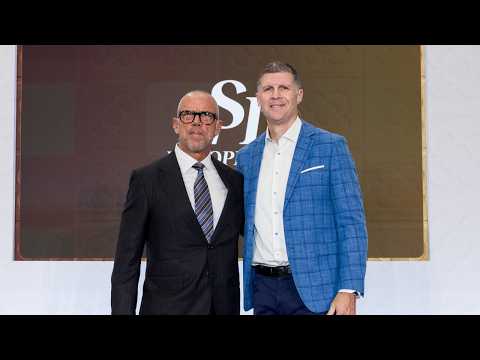
Industry leaders from CS Lifesciences, Rekovar, Corticale, Onera Health, and BrainSpace discuss innovations in patient monitoring technologies and how connected health solutions are transforming continuous care delivery and patient outcomes.
Join Our Next Event
Partner with the leaders
shaping the future of
Medtech at LSI USA ‘26
March 16th - 20th, 2026
Waldorf Astoria, Monarch Beach

Edwin Lindsay  0:06  
Good afternoon, everybody. I'd like to introduce myself from Edwin Lindsay, from CS Lifesciences, we're a quality regulatory clinical company from Miami. I've been involved with patient monitoring for 15 years, covering as a quality regulator, bringing devices to the FDA, C marking, etc. Let sheer introduce herself now.


Shiva Sharareh  0:29  
Hi. My name is Shiva Sharareh, and I'm CEO and founder of recobar. We're focusing today on babies that are born from addicted moms, and we're looking at the NICU, a non invasive monitoring device, and I will talk about it later.


Fabio Boi  0:49  
I'm Fabio Boi. I'm CTO and co founder of corticale, that is an Italian start top whose main purpose is to develop new generation of invasive BCI, so not for monitoring, of course, and also to, let's say, interconnect brain with external CC devices. So good morning everybody.


Ruben de Francisco  1:13  
Hi everybody. I'm Ruben de Francisco, founder and CEO of ONERA health. We are a sleep diagnostics and monitoring company. We brought the first polysomnography, or PhD, which is the gold standard and sleep testing, to the patient's home in a way that super comprehensive. Is the first single use PhD system that can be applied by patients very easily at home by themselves. And it's brain, cardiac, respiratory monitoring. So very, very comprehensive, a lot of data, a lot of insights, and yeah, very excited to be here today.


Caitlin Morse  1:47  
Hi. My name is Caitlin Morse. I'm the CEO and co founder of BrainSpace. We're working in brain pressure management, and we are helping the neuro ICU transition from monitoring and needing the nurse to intervene to a closed loop, automated platform.


Edwin Lindsay  2:04  
Thank you. So we'll kick off as I say, patient monitoring is developing over the years. It's developing fast, as we can see with the companies here. But Shiva, we'll start off with you, with the future of monitoring and kind of the different hybrid models, home, hospital, the clinical grade kind of all the kind of challenges we see with the future monitoring. What do you see from that?


Shiva Sharareh  2:28  
So I could start from how we started recovore, basically, we were facing a challenge of these opioid addicted babies that are born in NICU, and we realized that these babies are connected to a lot of wires. It's very uncomfortable, and some of the wiring systems are just providing one or two monitoring elements, and it's not really looking at holistically, at the symptoms of these babies and tracking them. So we talked to a lot of doctors and nurses and realized that initially we wanted to just build a wearable, and realized we can't just build a wearable, and these babies are going through a lot of different symptoms. So we put a video audio in connection with our device, and realized even that is not enough, so we have to build a symptom tracking with AI and combine all of this to really go from a wearable into a complete system in the NICU. And when we talked more with doctors and we realized that basically, in the next few years, these devices need to go home, so it needs to be clinically validated and very accurate. So we took that path, which is a very difficult path. It's not easy, but we want to build the first objective tool that can assess any babies that Nik here and provide a symptom tracking element to them. So where I think it's going, it's starting from a very clinical in the hospital setting, and then that has to be clinically validated, even if it's non invasive, and it's gonna basically move to home. And that is what


Edwin Lindsay  4:30  
do we want to join them, real experience?


Ruben de Francisco  4:33  
Well, just to, just to echo that, I think, as we go from within hospital walls into patients homes, what's really important is that we keep on or keeping that comprehensiveness of the data sets right, the richness that we have on all the data right, that we don't compromise. We say, Hey, we're going to the home and just make everything very simple. Let's measure less data right, lower the quality. We shouldn't do that. We need to make sure that accuracy remain. Remains very high. Comprehensiveness remains very, very high, right? That we add all sort of additional value on top of that, but we don't compromise on but we are in the hospital today, right? Well, while going to the home,


Caitlin Morse  5:14  
I think we need to also not underestimate the additional burden we're now putting on the caregivers of whoever that person is right, there's a lot of appeal of hospital at home the perspective of the hospital and the health system, because right now, the care giving role is not quantified economically, and so as we make that transition, it's really important that not only are we providing the same level of medical care, but that we're also considering, how do we do this in a way that's feasible for assuming, in a pediatric case that there are people to care for them, but not every, every adult has that. And so a lot of the conversation on hospital at home has to do more to pull in the caregiver community.


Fabio Boi  5:52  
Yeah, if they may, add on top of this. So we we thought about non invasive technologies, of course, for invasive technologies, like in the case of invasive BCI, that is the topic that you are trying to solve in in critically, there's even more challenge, because we know that most of the invasive technology that, for example, stereo EEG devices that are currently implanted are Usually implanted for a very low amount of time, and they are usually all these procedures are undergone in a hospital. And also the neuro monitoring that is done in order to the case of epilepsy, understand where is the focus that you have to remove is not something that is taught at the beginning to be brought at home, bring it home. So I think that in case of invasive especially in the case of invasive technologies, there is an entire new world that we have to explore in order to push forward this transition between hospital and at home care. Let's say so this is a great challenge. Let's say,


Ruben de Francisco  7:01  
Yeah, agree, so that that's something that's going to change quite a bit. I think when we talked about monitoring in the past, or like home monitoring technologies, it was always about just a few parameters. Don't you do any right? You know, very small amount of data. And everyone's talking about AI, right to, you know, to partner, sort of the value that we have data. We need a lot of data, right? We need very rich data sets on the patient, right, so that we can not just to very focused the things, but that we can generally extract a lot of information and value, whether invasive or non invasive, yeah,


Shiva Sharareh  7:36  
just one. Add one more thing on the wearable side. I think we're moving away for just monitoring one or two element. You have to really build a wearable and a smart system even to measure any more physiological, psychological and behavior of that patient. So you so you have to look at it as wellness devices, but clinically validated.


Edwin Lindsay  8:06  
So following on from this, we've mentioned various scenarios, at home, invasive and hospital kind of, but throw in wellness and like, how do we stay away from the wellness trap? But how do we link this to value and the reimbursement of the product? Because obviously we see, as Caitlin says, Here you go to the home as a value, as a cost. Are you going? Who's going to pay for it? Where do you see this going in the kick off of Ruben,


Ruben de Francisco  8:31  
yeah, yeah. So Medtech is a really interesting says, right? Because so many actors need to win, right? They bring a new procedure forward, whether it's home, whether it's hospital, you need to make sure that everyone waits with it right. So the patient, provider, the physician, all the professional healthcare staff, your payers, everybody. So how do we make sure that the value right is the right value, right? So that's that's one point, and then the other one. How do we make sure that that procedure, that new technology, fits really, really well with the workflows, right, how people are using it? That's it all of a sudden. It doesn't mean a ton more work, right, but it actually means more productivity, more value, perhaps, for those patients and those doctors. So, so in essence, it boils down to that, right? Just making sure that the value of that innovation, in this case, patient monitoring, it's very clear that there is strong evidence supporting it, right? That's the evidence that you need to create, not only for for payers, but also for clinical adoption, right? So you need to prove that there is a very strong value. You're talking a Shiva about the clinical validation, right? That's something that, as an example, we've also done large scale study, 200 patients side by side, right? All these three to prove all right. So you go from the. Hospital to the home, you're not losing any value, right? It's as good as, right, as what you're used to get today, and in the future, we are able to show that even more value, right, that there's even more value to it when doing things remotely, via monitoring, then the reimbursement, I believe, is going to be the right reimbursement level, right? With the right evidence you can you can support adequate reimbursement for patient monitoring.


Shiva Sharareh  10:27  
Anybody else would you join in? So for our patient population, which is opioid dependent right now, a lot of the parents are Medicaid, so we've talked to the payers, and they are very interested into a clinically validated device they could go home with the patient. So that's our focus. You know, you start from the hospital. They pay for that. There was codes that are already for therapeutic and diagnostic that we can currently use, but then after that, they're willing to build a new code for a monitoring device that's accurate and can go home.


Edwin Lindsay  11:11  
Following on from that, we mentioned Medicaid, and it's around the mid the med tech challenges, the the kind of data dialog. One of the examples I had when I first started, when working with one of the companies is Medicaid, we had the patient monitoring device that was going to the home. This was 2016, 17. When we got it to home, they didn't have Wi Fi or phone number one. Oh, what do we do here? Fill it back. So that's that was. That's an old challenge, I think. But what challenges you just see nowadays with regards to data security, post cyber security and all that. And I kick off a Caitlin, because she's the product in the market, sure.


Caitlin Morse  11:50  
So I think when we talk about data, one of the first things we have to ask is, what is this data supposed to accomplish? Right? And we're talking about clinical validation, and what are the studies, and what is the action we're expecting to take? And it's the same conversation. Whether you're in the hospital, you're in the home, okay, now you can tell me something's happening, what am I doing with that? Right? And in our case, we're doing everything we can to do that automatically and have that response. But if you need to contact someone, does the device know who to call, right? Does the app know who to notify in when you think about tech, SaaS startups, traditionally, yes, it was doable. Yes, it was buildable. And the question was, should it be built? Could it make a business? And I think because traditionally, med tech has been Yes, we know it's going to be valuable. Is it possible not? Is it needed? When some of the wearables first came in, it was just a question of, hey, these sensors are now affordable. These batteries are now small enough we can do this. And early on, there wasn't enough data around. At what time frame do we need to intervene? Is this a days, weeks? Sometime this quarter we're going to change medication long term? Or this is a hey, go to the ER, right now, right? And so there's been this real transition around when we have this data, how are we using it, and then similarly, what amount of it is getting transferred? So there's this tension between, on the one hand, Wi Fi capabilities, or even just internet in different parts of the country, in different countries around the world. You you're going to have different considerations. So if you're trying to stream very high fidelity data that's much better for your AI multi modal sets, that's going to require capabilities that may or may not exist, not only in the home, but even in some of the hospitals we're talking to have. You know, we've all been there in a hospital trying to get a phone call. So I think there's really this question of, how do we balance the volume of data that's useful for AI and for training with the volume of data that's needed for an emergency, an emergency or immediate kind of response. And so when we think about that, it's really important in that architecture to really stratify what data do I need to deliver in what time frame and what can happen async what can happen at some point in the next, you know, day or week versus what needs to happen right away. And then we've talked about, you know, we actually the first version of our system is not cloud connected. It connects to the patient monitor and uses the patient monitor to connect to the EHR, because cybersecurity can be a real long timeline, right? You go into a hospital, and even if you've got the bat committee and everything else, it now becomes another challenge. So even though, long term, we expect to be flood connected, I do think it's a consideration, if you are in hospital on what that timing looks like. And that's that's something we've talked about


Fabio Boi  14:33  
a lot. That's totally true, Caitlin, and especially considering that, let's say what we are receiving, let's say also on our side with our technology is that in the next picture, what we will have is that the volume of data will increase, let's say, in a quite noticeable way, and say probably is not a linear


Caitlin Morse  14:51  
group, but exponentially financial probably.


Fabio Boi  14:56  
I just want to bring the example of our current technology. We are producing something like 300 megabit per second. So you can imagine that if you need to monitor a patient, 24 hours per day, seven, seven. So let's say we are talking about terabyte of data. And I definitely agree with what you said right now. Caitlin, so there is the need of a stratification. Let's say so different time of the development, of the validation of your product, of your main device, requires probably a different kind of data treatment. So in the beginning, probably when you need to re understand which is the powerful and the richness inside your data to train your ml ni model, you probably need to have a very large storage and probably Wi Fi, and let's say the idea to move the patients at home probably is not the right choice, and not now with it, with the technology that we have, but probably at a certain point, once You, and let's say, stabilize the model you you perform all the calibration on your device, and you can think to move with your patient at home, probably, and this is something that Ruben just mentioned during the very first question. You need to extract and to extrapolate from the the whole amount of data that your device is capable to collect just some peculiar features that may be useful in different cases. Let's say alarm on one side, maintenance and the other side, update on the other side. So there are many, many different aspects that should be, my opinion, still well studied somehow, depending on the on the device that you are adopting. But there are many, many features and matrix that you need to know in order to guarantee that your device is fully functional, and that, let's say, you don't have to recalibrate your device, or there is something else that you need to take care, to take care of.


Caitlin Morse  16:54  
I think that question, though, of over time we're just going to only keep a subset of the device is, is maybe missing the opportunity that med tech really has. Because how many of us have read a paper where it was a retrospective study and they're like, well, we couldn't include this part of the cohort because this wasn't in the EHR or, well, this part was a partial subset for this reason, right? I think often when we're first going in on a first gen product, we don't actually know which data is going to be the most valuable. And when you look at the ability for we are the ones physically interacting with the body, right? If you have a physical device in med tech, you have an opportunity to develop rich data sets. And so from an edge computing perspective, from the growth weing With LM s the cost is really coming down for that storage. And I think we just shouldn't be too quick to dismiss data that today may not be useful, because you need to build much larger data sets to sometimes really understand what is possible. And so we're really looking at, how do you continue to build these larger and larger data sets? Everyone throws around the term digital twin, but how are you really getting there if you're only saving the subset of data that you need to treat this particular patient?


Shiva Sharareh  18:08  
So what we have done in in our company is developed a whole ecosystem, ecosystem around it, so we get the data, raw, data, structured, unstructured, and we filter what we need. We put segments of 15 seconds, and we analyze and annotate the data, but we keep all the data we have to continuously every second. Look at the baby visually, you know, look at the sound, look at the sensors, integrate all of that together, so we're also learning how much data we really need and how much data we should keep. And so our first clinical trial, we did 35 patients. So we've just accumulated a million clips right now that's been annotated, but I'm sure there's a lot more that we're going to learn from the data that we've captured and validated with the physicians.


Ruben de Francisco  19:09  
I can't think that all of you guys are right, no way. Because, I mean, what's, what's a rich data set and a large data set? It's a matter of perspective, right? I think we're coming from a world where data was quite limited in my view, in my perspective that we are collecting medically on the patient, right? Sleep studies, we are looking at hundreds of megabytes, low gigabytes, you talk terabytes, right? It's, it's crazy, right? I mean, and technology has to kind of follow, right? So you're very hungry to make sure that we'll have, you know, very high speed data, large storage, very efficient. I think there's a time for all of these things. And what's really interesting is that this is a metech panel, right? It's not about devices, actually, it's about data. Right? In the end of the day, is all about data. We need to strike the right balance. We need a lot of data to create the right. Algorithms, right? The right models, because, in the end, is insights, right? It's patient insights that we need to deliver. And at the same time, you know, you think short term to mid term, there is a trade up there to be made, where, sometimes, yeah, maybe you need to run some AI on your device and some AI in your cloud, right? Yeah, a lot of people are just running all the AI, just in the cloud these days or on a server somewhere. But in fact, I think we may need for certain applications, like you guys have all, like, real time stuff going on, right? You may have to run a lot of your AI just right on the right, on the edge, right?


Caitlin Morse  20:36  
And at the end of the day, it comes back to, how does that actually change treatment for the patient, right? And so that's where the more that we can have that clinically robust, you know, what is the protocol? How does care change for this patient when we have that information? And that's you guys have both spoken well to that whole question of the clinical validation, beyond the data itself.


Fabio Boi  20:56  
And another point is also interoperability of data. So let's say, How can I make these data because maybe the data are so many that maybe a single company does not have the chance to analyze all of them in all the details and all the features that are contained into the raw data. And so might be prospectively. Even though we are a company, we are not a research center, so but in any case, data are, if we want to see it in a philanthropic from a philanthropic point of view, our data the humanity and let's say I can someone else can get from my own data some specific feature that might be helpful for another patient categories or for another pathology. Let's say that maybe and not currently looking at. And so another point is data format, data protocols and interpretability of the data. So this is another point that is not just a problem of the med tech is a problem of, in our case, neurotech data in general, also in on the research side, for example. And the reason, what we are noticing is that there is a huge, huge push towards adopting, let's say standardized data from any kind coming from, let's say behavioral data, genomic data, electrophysiological data, Sleep data, whatever, into unique format that can be affordable and readable from anyone on the hills. So, and this is one another crucial point, in my opinion, if we talk about data well,


Caitlin Morse  22:34  
and then just think about how much clinicians are now overwhelmed with the amount of additional information, right? And so that's that's part of why we're looking at automation and closed loop and closed loop on what we can do, it's why you're taking all of that and simplifying it down to, okay, what's the action to be taken? Because we do have to recognize that the amount of information we're expecting clinicians to be able to act on is is growing in an incredible pace, and that that just is a huge burden for clinicians. If, if we don't think about how do we actually take the burden off of them instead of adding to it.


Shiva Sharareh  23:02  
So it's like looking at this and nurse today, when you go to like an emergency room to NICU or ICU, they come in and ask you a lot of questions. They connect you to a temperature monitor, blood pressure monitor. They actually measure your pulse oximeter. They look and see if you have any respiration issue. They're all done with different instruments. What we think future is going to be that nurse is going to have a tool that basically provides all that feedback while she's using her time to actually assess and do other things that are more important. So that's where I think the next generation devices would be.


Edwin Lindsay  23:47  
So following on again from there, because you mentioned about data and informing the clinicians with given data for them to make informed decisions when it comes to the algorithms liability and who owns that. Where do we see that going now? Because we're providing them with all this data and we're giving them, we're giving them algorithms, AI to help them make informed decisions. But who does the algorithm, the liability fall then?


Shiva Sharareh  24:14  
So we currently have an iPad that is our device, the wearable device, the electronics we own them. We go to the hospital and they have their system, but we're actually collecting all the data in our iPad. We own our data, right?


Fabio Boi  24:33  
Yeah, let's see. That's a very good point, because, and I think that is a problem that is not just about Medtech. Of course, Medtech is even more crucial. But just think about the automated cars, the self driving cars. They are in the end, they are taking decision in your place that can kiss you at a certain point. So and


Caitlin Morse  24:52  
so you have the ticket too


Fabio Boi  24:56  
this point. And so it's very. Really, this is something, I think, thoughtfully new, because while before, have all the algorithms that we implemented into medical devices usually are just, let's say, predictive, you really know where the algorithm goes. Indeed, with AI, it's a radical different problem. So it can evolve basing on the training that you have done. So it's really update dependent everything. Somehow it really depends on the data set that you provide to the to the AI algorithms. And it takes decision based on something that you don't know. Till the end you don't know, which is the internal connection of an ML algorithm, whatever, and so that the and the liability becomes a huge problem. I i personally think that certain point also with the, let's say, with increase of of medical device that will take advantage of a algorithm at a certain point, these kind of liability problems related to you to the decision of AI based algorithm would be somehow regulated, and probably we will arrive to a shared, or shared liability, let's say between, between the hospital, the company that provides medical device and the algorithms the insurances. So let's say it's something really tricky. It's not easy to really understand which will be the future, but I really think that with a very wide adoption at the second point, this will be somehow regulated.


Ruben de Francisco  26:39  
Yeah. Sorry, just wanted to add, yeah. It also depends what you are doing with with that data, right? So I think so far, most of the algorithms are more doing decision support, right. Rather, you know, making the like last decision empowers the physician to do maybe better decisions or quicker decisions, etc, etc. So I think that's, I think, short and midterms is also safe place to operate, where we're figuring out all these liability questions. And my lawyer is not in the room, so I'm going to be super careful watch it later. I know, right, right, yeah, so, so I think that's, that's the main thing. And then in terms of the ownership, I know it's always a bit of who owns the data. Everyone wants. Everybody wants to own the data. But in essence, as we were just talking about, it's about, you know, being able to deliver those insights and being able to access the data, or control that data, making sure that you can build a lot of value on that data, right? So as long as we as companies, we make sure that we are able to access how the right rights to access that data to deliver, you know, value, back to the physicians, back to the patient, right? Then, then, maybe that's not the question, right? The question is, how do we make sure that we build a lot of value on data? And I think all of us are collecting huge amounts of data, which we know we're going to harness and we're going to get a lot of value out. And how do we make sure that we can keep on building insights on top of that data going forward?


Caitlin Morse  28:13  
So every time I'm at a neuro conference, I go to any workshop that there is around integrating USB machine learning. Now, AI right? And the number one thing I hear from neurosurgeons and intensivists every time is explainability. And so to your point of, well, we don't really know how the AI made that decision. I don't personally believe that medical professionals will adopt technology that they can't understand. And what I actually think we see with llms is, I don't know about you guys, mine has learned that it has to provide sources every single time I don't trust it, right? I'm always like, provide the sources. Prove the evidence, and where I think we actually should expect it to go is similar to the relationship between a senior and junior doctor, right? So when an attending is training a resident, they're like, Okay, what's the decision, what's your basis of that decision, what's a differential for that decision? And I think that's actually where we're going to see a similar kind of adoption of being able to say, here's the recommendation, here's the primary evidence that we're leaning on, here's the other things we considered. And I don't know if any of you there was a recent change with chat GPT, where it'll now show you like checking this location and checking this type of source, and that's how we need to be thinking about this. I believe for medical professionals to be able to say, we're considering these elements now, we're not necessarily going to be able to say, Okay, it's 12% this and 17% that, right, but being able to say, here's the range of things that were considered, here's the parameters that were most relevant. But I do believe that most clinicians I talk with at least want to have these tools, but they're not willing to rely on them, as long as they're still holding all the liability without the explainability. And so I think that's that's really what it


Fabio Boi  29:57  
comes down to, just a very last thing about that. I definitely agree on that. But the point that we need to consider is that if the information coming from the algorithms is just a suggestion for the clinician, let's say and so I definitely agree to you me to explain me why you are telling me this, why this can be dangerous, why there is this alarm and so on so forth. A different thing is that, instead your your device based on ML model or whatever takes a decision that is, let's say, in, in as a consequence of, let's say, the reasoning behind the argument. So let's take, for example, what we're doing with the with the BCI device. A BCI device recorded data the ML algorithm, analyze the data, and the output is, okay, I control something. It's true, no, and there's no clinician that is saying, Okay, tell me the reasoning. Why you You asked to switch on the light. I don't know. I'm just


Caitlin Morse  30:56  
so maybe not in that moment, but if you think about an M, M, so when something goes wrong in surgery, a group of doctors get together and say, what went wrong, and how do we differently when we have closed loop, if there's an issue, and they're like, well, that's not what I expected to happen with the patient. We're going to have that same question, right? They're going to say, Well, why did you make that change? Well, why did you do it in that way? And so whether it's real time explainability for clinical support, or whether it's being able to do a retrospective and say what decisions were taken and why. I don't think we're going to be able to fully get away from this idea of simply saying that's what AI thought was best is probably not going to cut it. But I hear what you're saying that the clinician may not have a chance in that moment, exactly.


Fabio Boi  31:40  
And here we come back to what we mentioned before. So data availability. So how can I get if my ML model, or whatever is performing actually as I expect, if I don't have the data that I can, let's say, analyze manually, they say, by myself, in retrospection, let's say, and so this is why, also data, especially in the very first stage of a new kind of technology that that you are delivering, it's so it's also crucial, let's say, to


Ruben de Francisco  32:11  
validate your algorithm Exactly. I think the ethical sparkles again, to the clinical evidence, right? Have you proven, you know, in a clinical trial that the algorithm is able to work really, really well, right? Like you take a data set, you have physicians analyzing manually the data, maybe two, maybe three, maybe five of them, any of the AI, and you prove that, you know, on a large data set of patients and the right population that you're looking at, the algorithm is doing really well, right? That also provides a lot of confidence, because the reality is, sometimes you don't know what the neural network is doing, right? It's identifying all sort of features, but now try to explain each of the features. Just know you got it right, because it's a huge amount of data, because machine learning models have been evolving right, so rapid in the last years, and I'm talking about the more traditional machine learning, right? Not, not particularly more Gen AI and other LEMs, but really, you know, taking time, series of data, very, right, a lot of data, and having the algorithm do the magic on a very good, very good training data set, because you need very, very good data. Otherwise it's not going to work. But you have very, very good data, it just works. And the way to prove that it provide confidence is actually looking at the output, you cannot explain all the steps very often, but as you look at the output, then it goes back to, you know, strong clinical evidence.


Edwin Lindsay  33:32  
So as we probably guessed, we'll overrun the questions, but we probably time for one more question, just because we could probably talk for hours on this, one of the areas I see in the industry, it's probably under looked at, is pediatrics. But when you've talked here about risks and about patient monitoring, investors might get stopped to get nervous because it's pediatrics, and it's not a good thing if something goes wrong. How do you see this with patient monitoring and going into the new frontier?


Shiva Sharareh  33:59  
So how we are looking at it is you got to build a very good intelligence system that is not alarming all the time. And because right now, you're moving from the hospital to home, so you have caregivers, parents that can't make medical decisions, and you're relying on your AI machine learning to predict some of these values and alarm system, so you got to really build the intelligence system that is user friendly. And basically the your patient is the pediatrics under 18. They can't make clinical decisions, so you have to be able to make sure that they are not doing that. So we look at this as holistic way as what we're building in the hospital versus what is going to go home is going to have to be very different.


Edwin Lindsay  34:57  
Anybody else get some inputs into that?


Ruben de Francisco  35:00  
I would I think everybody loves pediatrics, yes, sometimes, indeed. And you look at market sizes and things like that, right? You look at the business case, it's tricky, right? I mean, if you look as a whole, pediatrics is great. You look at as a certain specialty, like, Okay, what the pediatric market looks like, the portion 10% of the adult or 20% sometimes a bit difficult, but I think it's, it's great to make those, you know, pediatric more focused technologies, more available in the home. I think it could be a much bigger market, actually, than it is. Think very often we don't want to bring kids to the hospital because of the burden, if it can be avoided, and also shortcuts that are taken, right? So we see, and all I think about tonsillectomies, for instance, right? So kids need to have the tonsils removed, or the adenoids removed, and they should do a test, and very often they don't even do the test, right, or a sleep study. They just okay go directly for surgery, right? It's going to be better. Otherwise, you need to bring to the hospital. They get to the hospital twice. So I'm sure we would be able to do make much better decisions. Pediatrics. It will do more measurement, and we make it more available, less burdensome, less invasive and intrusive rights. And you know, think from a market perspective, if the kid is doing the test and maybe the parents will be doing the test or study, right? So I do think it can, can be a bit of a fly wheel effect. So I really like pediatrics. I think it's huge opportunity remote remote monitoring, patient monitoring, yeah,


Caitlin Morse  36:31  
in our case, the same device is used in both pediatrics and adults, which is how we get around the market size consideration, and we actually believe that you're going to have much better understanding of the brain if you can actually see a growing and developing brain. So in our case, there are patients that are, you know, 10 on the that will be using once it is FDA cleared, which it is currently not, and all the way through to dementia and and patients that are in their 90s. And so in our case, it's actually the fact that patients can be more mobile that has a lot of that pediatric appeal. But we're in the hospital, so it's a little different than if you're sending a pediatric patient home.


Fabio Boi  37:12  
There may be, if I may add on this on, let's say for invasive technology, the pediatric feel kids. Let's say it's a very sensitive argument touch, let's say, and also there's that there's some technicalities that you have to solve when you talk about the invasive devices, especially the one that we developed so that that you need to stick into the brain. So we're talking about something that, first of all, is quite scary, and they can get the parents that can say, okay, maybe we can wait so we can see if there's something else. And the second point is also the fact that the brain, especially when, when you have very young kids, is not still completely forth until undergone this kind of patients, to this kind of of surgeries and adopt this kind of technology might be quite hard, in my view, let's say, but let's say there are some gets that's probably would need it. Unfortunately, I would say, for sure, is not the very first market, at least in our case, that we are looking at. It's very, very complicated, let's say.


Edwin Lindsay  38:21  
And that's good timing. 10 seconds to go. Thank you very much, and that's the end of it. Thank you.