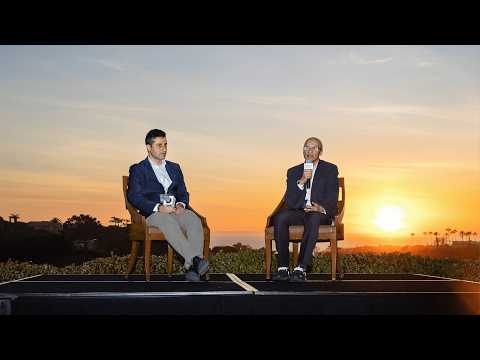
Robert Fenton 0:05
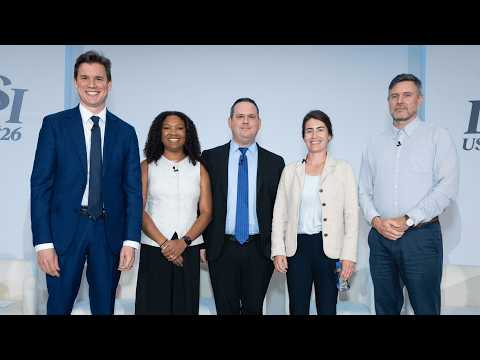
Good afternoon, folks, and thank you everybody who's hanging on on the post lunch session on the third day of the conference. Very excited to chat with you Jim and you rashna today. I think the title is pretty apt, and I was hoping that in in our conversation, we could really cut through a lot of what the hype cycle is, and really get down to what we're seeing as the practical uses and impacts we're seeing in AI in particular, in Medtech. So thank you for joining. I thought that maybe we'd kick off starting with you. Rachna, if you could give a quick introduction,
Rachna Dayal 0:41
sure, absolutely, I'm one of those classic cases who couldn't make up her mind. So I'm an engineer by training. Semiconductor engineer. Moved to healthcare after running a tech startup, and then decided to live big corporation to start my own fund. I invest in medical devices and AI enabled healthcare platforms, very early stage.
Jim Schwoebel 1:01
Awesome. Hopefully you're all awake really late, late in the day, but after lunch. But Hey everyone. I'm Jim. I'm the CEO of a company called QM. We're building what we're calling the healthcare cloud, and empowering a new class of builders in healthcare called citizen developers, non technical stakeholders, that can build applications very quickly and secure, applications that are HIPAA compliant. So very excited to be here. I've also been an investor, prior CEO of an exit and also an engineering leader in a variety of companies, last company being verily. So very excited to be here. Chat here and have the conversation.
Robert Fenton 1:40
Thank you, Jim. And my name is Rob. I'm the founder, CEO of qualio, and we are a quality and compliance acceleration platform for Medtech companies, and we have had the great pleasure of supporting over 1000 customers in accelerating paths to market, scaling quicker and launching products faster than they've ever thought possible. So really excited to be here and share some our learnings and chat with you both. Quick show of hands, maybe before we we dive in anybody here implementing AI, either to drive efficiencies or to actually put into their products and services that they're giving to customers? Okay, about a third, I think that was actually pretty good. Thank you. So maybe with that context, we have a good few people here who are tackling this. I thought the first conversation we could have is around the practical implementations of AI. And I know we've spoken in the prep session. There's a lot of ideas and thoughts and opinions here, but maybe I'd kick off with what we think the biggest misconception is. And Jim, you might take us off here and share some of your thoughts.
Jim Schwoebel 2:46
Yeah. So, I mean, I like to look at AI as taking a step back with analogies. So I think of kind of the cycle we're at as llms are kind of like an operating system. So if you look at Microsoft when they started their business, there's a PC in every home. If you look up today, it's kind of like everybody has an LLM in their pocket. You know, you have local LMS, you have cloud based llms. Everyone probably is accessing LMS here. I could probably ask everyone, are you using LMS? Everyone will say yes. So we look at kind of now operating system is out there, and the application layer is when applications became useful. So Microsoft had PCs in their home. It wasn't until Microsoft Word or Microsoft Excel was in every home that actually households started to use PCs in a useful way. And we're starting to see that now the application layer, be it the agentic application area we're in, it's like building useful software applications is where you're going to see a lot of, you know, exponential gains in the next few months. And so I don't know if that's a misconception, but I think a good framing for how I view it. And I think a lot of VCs and others are jumping on board there, and very curious to hear what you have to say on this. Yeah, I,
Rachna Dayal 3:56
you know, to be very important. And Rob knows this about me. It's all very contextual, right? It depends on what application you're looking at, what problem you're trying to solve. So if I think about remote areas where you need to diagnose things, and you may be off the grid, you need SlMs, you need small language models, you need edge computing that works on your device, and that's very device dependent. So any engineers in the room will understand that it's a software hardware interaction. So if you change from an Apple device to actually, you know, a Google device, the application layer will change slightly to adapt to that, because the hardware is different. And if you're talking about mothership that is always connected all the time, and it can access data 24/7 then absolutely go for LLM, or a stripped down version of the big llms that are available as open source. On the other hand, when you think about AI in general, you know, people started talking about AI and Gen AI when open AI released chat GPT. But the reality is that AI and generative AI, or predictive AI, has been in the makes, in the laboratories, for the last 30 years, and there have been applications in the Marketplace, leveraging. Those things without people realizing that they're actually leveraging smart intelligence software into whatever they're using. So, so to me, this is not a fan. This is something that we've been using. You know, I've invested in a company, not healthcare, but an LLM Gen AI company that was developing the model for three years before open. Ai release chat GPT to the public, right? And that is because we know that we are going to replace the boring jobs, the repetitive tasks that humans are doing behind the computer. What I tell my friends in VC is, you know, if you're looking to come into the VC world as an analyst, don't do that, because the analyst jobs are all going to go away in a few years, the principal jobs in VC are going to go away, and only the highest level decision making jobs are going to remain, because everything else will be automated. And I'm looking at automating our due diligence funnel with the help of generative AI as much as I can. So it's happening now. It's not happening five years from now exactly.
Robert Fenton 5:57
I think that's a very, very common misconception, and I think the way that we've been talking about equality and with other peer CEOs that are in the software world is that it's less of a technology problem right now. I think it's getting somewhat commoditized. Actually, it's a use case problem and it's a business transformation problem. So there's three things that I think are always true about anything new technology. And for us, it's been about what are the clear ROI the business outcomes are trying to solve for customers, and how? How well can you understand those? For our case is all about compliance acceleration and audits, and some of the use cases we're putting in now is to help some of our customers go from taking months to get ready for FDA submission or for a big ISO audit down to days. So that's like a real outcome we've been chasing and pushing for. And with that, people often say it's, oh, it's about automation. It's actually not automation. It's it's completely fresh and new approach. And if you try and just automate something, you're just going to end up with a mediocre solution that's 1.5 times better. But I think it's about taking completely new ways of working. And with all of that, the third piece is, and our company, and everyone I've spoken with is it's actually an organizational change problem then as well, which is, what's the training? What's the support? How do you get people to find their superpowers with these two new technologies and not feel threatened? And that's it. I think the companies that are investing in that, as much as everything else, are the ones that are seeing success, at least. That's, you know, what we've really seen. I'd be curious, Rana, from your perspective, as you're doing due diligence and assessing companies, how are you trying to determine and measuring companies that are doing this well versus companies that are just, you know, a solution, a search for a problem using AI,
Rachna Dayal 7:44
yeah. I mean, that's, that's a trillion dollar question you've just asked there, Rob, right? Because, if you will share that, we hope we don't miss stuff. Well, what's actually happening is, I'll give you an example, which makes it very difficult, right? For due diligence. VCs actually tend to reach out to the experts. And if they don't, they should reach out to the experts in the market, because no VC firm has all the experts in house, big or small, right? So you got to go out to the experts. Now I was talking about something in biological computing, and I was talking about industry organization, how US has to lead in this. And I was talking to a tech leader from a big tech company from an era gone by, and he kept talking about distributed compute models. Yes, that's a great place to start, but that's not what biological computing is going to unlock that's already been done and dusted. And I think that is the challenge when you come to the application layer, is when you're entering an era where new things can be done that have never been unlocked before. Who do you rely on? Whose expertise do you actually rely on? Because the some of the older generation can move on, and the others are stuck in the models that they created, right? And it's time to move on. So we face a lot of problem, and the way I solve that problem is that I try to work not just with healthcare entrepreneurs, but the latest tech entrepreneurs. And so it's a lot more work for us to do that, because it's organizational change, skill set change, and it doesn't make my job any easy. I don't know if I answered the question or created more
Robert Fenton 9:10
questions. You actually you actually did, because I was going to move on to, okay, well, what are we seeing as the business impacts of some of this? And you touched on pieces of it. I've had the pleasure of connecting with a lot of CEOs here this week as part of part of my job. But one of the things I've been hearing a lot is is that today, companies are being expected to accelerate from concept to launch into real revenue way faster than ever before, and they're also being expected to do that with less capital than ever before. So I thought maybe we'd pivot and talk a little bit about what we're seeing from speed gains, efficiency gains, and maybe Jim, I love your thoughts on this is something I know we've spoken about quite a bit.
Jim Schwoebel 9:51
Yeah, I think software engineering in healthcare has been a really long process for a long time. A typical med device company. A diagnostic or a digital health app might take years to get to market due to audit cycle software development studios we're seeing now, just with agents being able to type in a prompt and build a fully functional application, you can get the prototype literally in 30 minutes. Bolt new replica agent. There's a lot of tools out there that aren't HIPAA compliant, that have grown super, fast. And so now it's expected from a UX designer to actually have a working prototype in the same day, put it in front of a physician, get feedback instantly. And I think that mindset is going away from Document driven design to prototype driven design. And so we're seeing now the build cycles go, you know, 1,000x faster, and then the review cycles going back to audits are the stage where we're going to see a lot more, you know, things going into the audit phase, and then be a longer review cycle. So we're shifting left a little bit, a lot of responsibility in a lot of roles. A lot of roles are changing. And I think this, this new class of developer we're thinking about, is causing a lot to reflect, how do we get that 1,000x efficiency gain, you know, in our in our org, if we have a lot of software products, and so, yeah, I think it's a new paradigm. I think there's a lot of industries that this is affecting with agents. I think software and regulated agents are a new area. And I think this is only going to speed up, you know. And I think that the real value is like, if you can get the idea to revenue in six months, as opposed to five years, it's really going to speed up, not only financing to the point earlier, but business traction, and eventually you might see a lot of self sustaining, profitable businesses that are emerging really quickly, which I think is a really great thing for startups and a great thing for investors. If you get it right, it's just the thesis is changing. One of the anecdotes I'll give here is like, one of the things we do as demos. We pull from venture funds. They're all the portfolio companies in digital health, and we can literally make demos for all their companies that same day. And that's, that's something that's a little crazy if you think about is, if you can literally pull from a name and description of companies prototypes, it just changes how you think about competitive mode, right? And then just, I wanted to highlight that example as well, because I think that's, that's really the world we live in now. It's getting really easy to reproduce technologies just from a little bit of text. So I
Rachna Dayal 12:06
had a thought here. I think I agree with everything that you said, Jim. In addition to that, I think what is happening now with AI and Gen AI is that people are running after the shiny objects. And in healthcare, it is the plumbing. It's the nuts and bolts. It's the non sexy dirty work, which if you don't do, you can never pass through the regulations and never really help patients get better, or help hospitals become more sustainable, or payers have better algorithms. But what happens is, in bigger companies and smaller companies, it's very easy to get a huge marketing budget, it's much harder to get a quality and regulatory budget improved. So these people are going to face higher pressure, and you probably see this drop more often. And so I think hard coding intelligence into the process helping these people. I am a fan of that kind of plumbing, because that is what actually moves the needle faster when you talk about founders having less money and having to do more with less, these are the kind of things that can help them, because they can't miss a beat on Quality in Healthcare. They can't miss a beat on regulation, because it's about people and their lives and their health, and it's important. So maybe you have an opinion. I'm going to throw this back at you
Robert Fenton 13:18
a few opinions I might maybe share what we're what I'm seeing is companies are doing who are getting ahead of this, and then share a quality anecdote as well. So there's two things that we've seen in our customer base where they're succeeding and actually gaining advantage. The first is this idea of the software team and the scientist team being not these two separate teams, and it's please, build this application interface for this piece of medical device we're building is they're actually the one team working together in shared goals. We saw that in DevOps. We see that in a lot of the accelerations in industries the past few decades, and we're seeing this now happen in Medtech in particular. And that's really exciting. I think the second part is, is for better or worse, my first job was an intern at Pfizer, updating the three year review of their standard operating procedures. So I've been there, done some of that, but that was over 20 years ago, and the industry is still a pretty document centric, reactive saps, protocol submissions. Did you give a doc if it didn't document it, it didn't happen, right? We've all heard that. If you've been near the industry, that's all willing, good, but I think the real asset is the data asset. And companies who are not thinking in documents, but are thinking in terms of data as the real asset, have a huge advantage, and that's been something we've through customer discovery and a whole lot of work the last couple of years have been really, last year particular, really diving into and the example I would give is one where it's been interesting that we'll talk to CEOs, and they might say, yeah, it's working great. We have the regulatory person, the quality person. We have one market this year, one market next year. We're doing fine. But then you probe, you probe, you probe, and you realize that they just have this assumption that's as fast as you can go because of the complexity and. Because of this old world that we've worked very hard to try and break through that, and the last few months, we're now working releasing to our customers. We call it a compliance acceleration product offering. And what we're seeing with automatic mapping from frameworks to controls, requirements to data to remediation is we've been able to take some of our customers and or even our own internal data, and go from months of prep down to days. And really it's almost minutes hours, but days is how we how we talk about it and present it right now, and that from some of our customers, is not a cost optimization. And we've heard is, oh, now I can go after both these markets at once, or I can go after three markets this year. So it's a it's a revenue acceleration to unlock. And, you know, in my role, nothing makes you more happy than seeing people feel like they can go further faster. And that's just our example. But there's just tons, and I think there'll be this new class of company that gets a real advantage of because of that.
Jim Schwoebel 15:58
Yeah. I mean, I'd riff off that. I feel like I like to use sino.ai as an analogy to healthcare applications. If you look at podcast or just music generation, sino made it really easy to type in a prompt and make a song. And then whenever people made a lot of songs, they thought, oh, I want to make an album of songs. And I think a lot of companies now are starting to think, How can I create an album of applications? How can I create an album of products to accelerate revenue. And I think we're in this new phase of a new paradigm, really, to think about, how do I create that album that creates net dollar retention revenue in our product portfolio, either diagnostics or, you know, digital health applications, patient care portals, whatever it is. But as soon as you get one customer mode, you're you're seeing people thinking, albums, indie platform companies, and think, how do I build that operating system in a way? And I think this is going down in efficiencies. And you know, if you can build, you know, 100 applications for the price of one, historically, you're going to start seeing really different types of companies emerge. I don't know quite what they'll look like, but it's exciting to see. To say Luis,
Robert Fenton 16:56
so that's some of the really fun advantages and possibilities, but we, because the products that are built by Medtech companies save impact, changed lives. There's the regulatory consideration I'd be really curious. Rashna, to start with you and get your thoughts on how you think you might assess companies from a regulatory strategy, knowing that you know continuously learning AI models are hard to validate. Maybe,
Rachna Dayal 17:23
yeah, somebody asked me a question a few months ago. I'm part of DTX Alliance, which is trying to figure out digital therapeutics and the regulatory space around it, like, do you think the med device and AI regulatory body should be the same? And I was like, Oh, dear God, I don't even know how to answer that, because in certain cases, I want them to be the same body for efficiency and speed and being able to talk to each other. And in some cases, I want it totally separate, because I don't want the AI mindset to kind of corrupt the med tech the device side and the device side to corrupt AI side. And so I still don't know how to answer that question, because we really are at the infancy of that. And you know, I always tell AI enabled med device companies that I'm working with, and we're holding an educational session in April for some of our companies to say, talk to the experts, because there are people who know that while FDA makes up their mind on what they want from you, you could enter the market with a less potent, but a consumable version of what you can deliver and start testing the market and gathering real world evidence as you build that may not be an option for every device. It can happen a lot with class one kind of devices, right? If you think about it, definitely not the case for class three devices. But then there are other devices. I'll give an example of a company some of you might have heard about, not in my portfolio. Cardicare right. They have a device that measures your Vitals and it does closed loop treatment, you know, and prevention, they they're not calling it treatment, they're calling it prevention, because treatment comes with its own labels of regulations and what you have to show in data and all of that. But the era of closed loop devices that are measuring your Vitals and changing something in your body to actually rectify whatever challenge and health you're facing. We are facing that era, whether we like it or not, right? I see this as a classic fight that I had with my mother, the intergenerational fight. And then now my son is 15, he's having with me on certain topics, and we just have to learn to be comfortable with it and accept it for all it is without feeling without feeling threatened, right? As a parent, you don't have to feel threatened as a kid, you don't have to feel threatened. We just different generations existing together, and I'm the classic sandwich generation where I'm still fighting my mom and my kid and and so and so. Yeah, I mean, be open is the mantra that I have, because if you're not open, we're going to miss out on amazing opportunities to improve human health, lead the pathway to prevention and actually have less stress on the hospital systems. Because, you know, giving the surgery for everything is not the only option to proper health. I don't believe in that holistic health. Is more than that, and devices are not just for cutting open people. They can be for prevention as well. And that's a very different mind shift. I would say, Sure,
Robert Fenton 20:08
Jim, if you if you might want to add to that, I have some thoughts. Well, I
Jim Schwoebel 20:13
just think the pace, just this coming from personal experience. My brother had treatment resistant schizophrenia. He was hospitalized. He went and out eight times he committed suicide a few years ago. So very tragic in my family and I just look at the pace of that, that area, suicidality, schizophrenia, look at, look at that over 50 years, what has changed so so to me, my perspective is, like these new things could potentially speed up a literature search on all papers related to schizophrenia, literally, create a list of all possible treatment mechanisms, Outcomes Based Care readmission rates. Create a report. Create a digital health app based on the cutting end research. Get a physician in the loop, maybe five leading psychiatrists in the world to review the research of those topics. Build a functional application in seven days, go through maybe an observational study in five weeks through collaborations with the right hospitals, and really show, like, real, real impact in three months. And to me, that's what, that's what's driving me here. But I think that, like, this is the change I want to see. It's more like, why are we here? So help us build that. I don't know how to build that, but I asked everyone here to try to build up to move faster. We have to move faster for people like my brother or or people like, you know, my wife's a pediatric oncologist. 100% fatality rate in DIPG, in brain tumors and cancers of kids. We got to do better, right? And I'm saying is, is, I believe, strong that these new things, especially these new technologies, we can move faster. And by moving faster, be more experiments. And by more experiments, some of those will work faster. So to me, it's kind of like high throughput screening of things. If we can get more throughput, then it's kind of like selecting the protein or hit, you know, same thing now with software. And to me, that's exciting. And also I think can drive a lot of impact if rooted in the right science, right in the right the right panels. And I personally think FDA, with all the changes in administration happening right now, is going to move slowly. It's our responsibility of private companies to start coming up and creating the right review panels on new endpoints that may not exist yet. And this is one area like could not maybe not exist yet. So maybe 10 psychiatrists are the leading in the world. Wants to review this, for example. So yeah, a lot of work through there. I'm just trying to save the disruption coming, and how do we work through that? Right?
Robert Fenton 22:31
Thanks, Jim. I think it's pretty clear that the FDA and auto regulatory bodies ignoring some of the current disruption that's happening there. Realize that companies who are trying to deploy 20 times a day to production as they're iterating fast, or they have continuously learning AI models, or insert all the things that technology companies are trying to do today, they realize that it doesn't really work, that the status quo and how to have done it. We see across our customers, there's just hope for the future, but it's very much a transitional point, and that's pretty challenging. I do think the changes the FDA have come up with around shifting to more quality assurance, more process based, more risk based, rather than point in time, and super documentation heavy is a really big long term optimistic view. But I think right now, companies are struggling a lot, and even at quality, we've wrestled this for an awful long time. We were, I think we're the we were the first company in industry to move to a continuously validated GXP software deployment model. We deployed 1000s of times to production last year. But that was something that was a number one priority for a large team of people for an awful long time, and even now, with AI, as we're bringing out these features, our team have been partnered up with Amazon Web Services, bedrock Life Sciences team figuring out how we can deploy those in production in heavily regulated environments. So we're hoping we can take those learnings to our customers. But nobody hasn't really figured out yet. So it's I aspire to everything, everything you've said, and I think it's the people who were here get to kind of push. I think the one thing we can do is just go, well, let's keep going slow, because somebody will eat your breakfast, who will figure it out beforehand, competitively. But also, everybody here wants to build a great business. People here typically also have a mission. So I think it behooves everybody to keep pushing, rather than just shrug the shoulders. And I've seen a lot of people very much trying to push that here this week, which maybe might be a good time to pivot and look a little bit forward. I'm curious as to how you folks might see next 12 months, because everything changes very fast, but curious what you're excited about happening and changing? Right? Changing right now in this in this area. Jim, I want to go first, or rashna, you want to go, Oh, you're first, okay.
Rachna Dayal 24:51
Oh, wow. I think there's a lot of innovation leveraging AI happening in healthcare, Medtech, life sciences, in general, the areas. It excites me are, how can the things that will prevent hospitals from shutting down and make them more profitable? Because, you know, care give, there has to be a place for caregiving, the parts that can actually move to home health. And there's a lot of work to be done there, but AI is going to play a pivotal role in managing all the data that is being collected at home, for the patient, for the family, consumers in general, and then how that integrates with health systems and their providers and and what it does, what that data can actually do, what regulation will allow it to do. And given the current regulatory situation, I don't have an answer in which direction it's going to move and how fast it's going to move there, so, but that's an area to watch out for, because it's coming. The second thing is, I think I'm excited that innovation can happen faster with with startups, because they can do with these AI support services a lot more in shorter periods of time, faster time frames. And, you know, with better outcomes, right? Whether it's the quality regulatory frameworks. They can move it faster, whether they know how to port the clinical trial data from one country to the other country's requirements and stuff like that, all of that with the help of AI, can be done much faster, which means that the speed of innovation, whether it's the speed of launch or speed of failure, is going to be faster. And that's good, because not everything is going to succeed. There is going to be failure in innovation, like there's always been. We're just going to get to get to it cheaper and faster. And that is exciting, because that means more money will go into broader into innovation in general, and and so med tech might become actually more affordable, and we could see the return of med tech investors, because we're kind of a dying breed, if you think about it.
Robert Fenton 26:38
Maybe there's a more provocative question around that then, which is, what, what do we think is happening with the the arrival of the non healthcare investor into this industry? Because that's been a huge force, I think the last couple of years. I think you each might have differing opinions, so I'd love to hear how you, how you think about that, and how that's reshaping for good or for bad?
Jim Schwoebel 27:01
Yeah, yeah. I think there's a lot of new tech inspired funds that are investing. And Horowitz's new bio fund, for example, and Vijay in there, and a lot of the other funds that are forming, our investors are more tech inspired investors. And I would say that that's that's opportunistic for healthcare one, it will create more capital into the healthcare ecosystem. Gen AI budgets and healthcare from Menlo Ventures report $500 million last year in spend. It's the highest spend category out of every industry in Gen AI. So this industry attracting more venture funding is going to be net positive for capital efficient startups. And to me, really exciting. And I also think separately, it's just going to create more more innovation in places like, like science, right? How do you do science in in this field? I brought up the deep research example, because science is going to change. Google scientists just was released. How is that going to change what it means to be a scientist? I think these questions, especially with recent budget chains like just look at the budget changes happening. I think it's going to cause a new wave of science and innovation that trickles into startups. I don't know quite way the way that looks, but it excites me, because these tech investors may be that vehicle to spawn that investment to work on things that are that are net new, and we need that new things. Going back to my brother's story, the things we've been doing have not been working all the time in every industry. So to me, it's exciting. I don't know all the answers, but I can say that the investors that I've seen in the tech space are opening up a lot of doors for distribution channels. They're connected to a lot of other funds. They're really good at growth based marketing as well as, you know, access to specific patient communities that they're tied to, so they have some value to add. I could say, in my experience,
Rachna Dayal 28:47
the way I'm tackling this is, I've started creating think tanks on AI enabled healthcare outcomes, invitation only. I bring tech investors, hospital systems, payers, healthcare investors, entrepreneurs, together, very limited capacity, but to have really deep discussions about and you know, in one of the keynote chats, in that discussion, the head of venture investments from a big hospital system said, Look, we're a big, giant animal, and we move very quickly. If you really want to work with us, try coming in with smaller innovations. You can't replace epic as a small startup today, and that's the very realistic view of things. But if start chipping off at the edges, and you prove your value, you're working with us, you're already a vendor to us, then pitching the next solution on the platform is much easier. And I think that was very pragmatic advice, you know, because I don't think a 70 hospital system is going to throw out epic and start using that, you know, small startup software as the EHR, EMR, ERP software. That's not happening today. It may happen in a couple of decades, but it's not happening today. So I think practical advice on how do you invest? And I feel like industries tend to work in silos, so have the best AI tech investors. And work with the best health tech investors, especially at the early stage, because the magic has to begin there. So I host these sting tanks because I think we need to learn from each other, and we can't be isolated
Robert Fenton 30:11
well. Thank you both for volunteering your time here at the chat today. I've enjoyed it. I hope everybody here has as well. I know we're going to be next door chatting for a little bit after this. So we'd really welcome the chance to follow up with anybody who's got any follow ups or just interested in talking about the topic generally. Thank you, both, and for everybody here at LSI who helped facilitate this, really appreciate it. Thank you.
Robert Fenton 0:05
Good afternoon, folks, and thank you everybody who's hanging on on the post lunch session on the third day of the conference. Very excited to chat with you Jim and you rashna today. I think the title is pretty apt, and I was hoping that in in our conversation, we could really cut through a lot of what the hype cycle is, and really get down to what we're seeing as the practical uses and impacts we're seeing in AI in particular, in Medtech. So thank you for joining. I thought that maybe we'd kick off starting with you. Rachna, if you could give a quick introduction,
Rachna Dayal 0:41
sure, absolutely, I'm one of those classic cases who couldn't make up her mind. So I'm an engineer by training. Semiconductor engineer. Moved to healthcare after running a tech startup, and then decided to live big corporation to start my own fund. I invest in medical devices and AI enabled healthcare platforms, very early stage.
Jim Schwoebel 1:01
Awesome. Hopefully you're all awake really late, late in the day, but after lunch. But Hey everyone. I'm Jim. I'm the CEO of a company called QM. We're building what we're calling the healthcare cloud, and empowering a new class of builders in healthcare called citizen developers, non technical stakeholders, that can build applications very quickly and secure, applications that are HIPAA compliant. So very excited to be here. I've also been an investor, prior CEO of an exit and also an engineering leader in a variety of companies, last company being verily. So very excited to be here. Chat here and have the conversation.
Robert Fenton 1:40
Thank you, Jim. And my name is Rob. I'm the founder, CEO of qualio, and we are a quality and compliance acceleration platform for Medtech companies, and we have had the great pleasure of supporting over 1000 customers in accelerating paths to market, scaling quicker and launching products faster than they've ever thought possible. So really excited to be here and share some our learnings and chat with you both. Quick show of hands, maybe before we we dive in anybody here implementing AI, either to drive efficiencies or to actually put into their products and services that they're giving to customers? Okay, about a third, I think that was actually pretty good. Thank you. So maybe with that context, we have a good few people here who are tackling this. I thought the first conversation we could have is around the practical implementations of AI. And I know we've spoken in the prep session. There's a lot of ideas and thoughts and opinions here, but maybe I'd kick off with what we think the biggest misconception is. And Jim, you might take us off here and share some of your thoughts.
Jim Schwoebel 2:46
Yeah. So, I mean, I like to look at AI as taking a step back with analogies. So I think of kind of the cycle we're at as llms are kind of like an operating system. So if you look at Microsoft when they started their business, there's a PC in every home. If you look up today, it's kind of like everybody has an LLM in their pocket. You know, you have local LMS, you have cloud based llms. Everyone probably is accessing LMS here. I could probably ask everyone, are you using LMS? Everyone will say yes. So we look at kind of now operating system is out there, and the application layer is when applications became useful. So Microsoft had PCs in their home. It wasn't until Microsoft Word or Microsoft Excel was in every home that actually households started to use PCs in a useful way. And we're starting to see that now the application layer, be it the agentic application area we're in, it's like building useful software applications is where you're going to see a lot of, you know, exponential gains in the next few months. And so I don't know if that's a misconception, but I think a good framing for how I view it. And I think a lot of VCs and others are jumping on board there, and very curious to hear what you have to say on this. Yeah, I,
Rachna Dayal 3:56
you know, to be very important. And Rob knows this about me. It's all very contextual, right? It depends on what application you're looking at, what problem you're trying to solve. So if I think about remote areas where you need to diagnose things, and you may be off the grid, you need SlMs, you need small language models, you need edge computing that works on your device, and that's very device dependent. So any engineers in the room will understand that it's a software hardware interaction. So if you change from an Apple device to actually, you know, a Google device, the application layer will change slightly to adapt to that, because the hardware is different. And if you're talking about mothership that is always connected all the time, and it can access data 24/7 then absolutely go for LLM, or a stripped down version of the big llms that are available as open source. On the other hand, when you think about AI in general, you know, people started talking about AI and Gen AI when open AI released chat GPT. But the reality is that AI and generative AI, or predictive AI, has been in the makes, in the laboratories, for the last 30 years, and there have been applications in the Marketplace, leveraging. Those things without people realizing that they're actually leveraging smart intelligence software into whatever they're using. So, so to me, this is not a fan. This is something that we've been using. You know, I've invested in a company, not healthcare, but an LLM Gen AI company that was developing the model for three years before open. Ai release chat GPT to the public, right? And that is because we know that we are going to replace the boring jobs, the repetitive tasks that humans are doing behind the computer. What I tell my friends in VC is, you know, if you're looking to come into the VC world as an analyst, don't do that, because the analyst jobs are all going to go away in a few years, the principal jobs in VC are going to go away, and only the highest level decision making jobs are going to remain, because everything else will be automated. And I'm looking at automating our due diligence funnel with the help of generative AI as much as I can. So it's happening now. It's not happening five years from now exactly.
Robert Fenton 5:57
I think that's a very, very common misconception, and I think the way that we've been talking about equality and with other peer CEOs that are in the software world is that it's less of a technology problem right now. I think it's getting somewhat commoditized. Actually, it's a use case problem and it's a business transformation problem. So there's three things that I think are always true about anything new technology. And for us, it's been about what are the clear ROI the business outcomes are trying to solve for customers, and how? How well can you understand those? For our case is all about compliance acceleration and audits, and some of the use cases we're putting in now is to help some of our customers go from taking months to get ready for FDA submission or for a big ISO audit down to days. So that's like a real outcome we've been chasing and pushing for. And with that, people often say it's, oh, it's about automation. It's actually not automation. It's it's completely fresh and new approach. And if you try and just automate something, you're just going to end up with a mediocre solution that's 1.5 times better. But I think it's about taking completely new ways of working. And with all of that, the third piece is, and our company, and everyone I've spoken with is it's actually an organizational change problem then as well, which is, what's the training? What's the support? How do you get people to find their superpowers with these two new technologies and not feel threatened? And that's it. I think the companies that are investing in that, as much as everything else, are the ones that are seeing success, at least. That's, you know, what we've really seen. I'd be curious, Rana, from your perspective, as you're doing due diligence and assessing companies, how are you trying to determine and measuring companies that are doing this well versus companies that are just, you know, a solution, a search for a problem using AI,
Rachna Dayal 7:44
yeah. I mean, that's, that's a trillion dollar question you've just asked there, Rob, right? Because, if you will share that, we hope we don't miss stuff. Well, what's actually happening is, I'll give you an example, which makes it very difficult, right? For due diligence. VCs actually tend to reach out to the experts. And if they don't, they should reach out to the experts in the market, because no VC firm has all the experts in house, big or small, right? So you got to go out to the experts. Now I was talking about something in biological computing, and I was talking about industry organization, how US has to lead in this. And I was talking to a tech leader from a big tech company from an era gone by, and he kept talking about distributed compute models. Yes, that's a great place to start, but that's not what biological computing is going to unlock that's already been done and dusted. And I think that is the challenge when you come to the application layer, is when you're entering an era where new things can be done that have never been unlocked before. Who do you rely on? Whose expertise do you actually rely on? Because the some of the older generation can move on, and the others are stuck in the models that they created, right? And it's time to move on. So we face a lot of problem, and the way I solve that problem is that I try to work not just with healthcare entrepreneurs, but the latest tech entrepreneurs. And so it's a lot more work for us to do that, because it's organizational change, skill set change, and it doesn't make my job any easy. I don't know if I answered the question or created more
Robert Fenton 9:10
questions. You actually you actually did, because I was going to move on to, okay, well, what are we seeing as the business impacts of some of this? And you touched on pieces of it. I've had the pleasure of connecting with a lot of CEOs here this week as part of part of my job. But one of the things I've been hearing a lot is is that today, companies are being expected to accelerate from concept to launch into real revenue way faster than ever before, and they're also being expected to do that with less capital than ever before. So I thought maybe we'd pivot and talk a little bit about what we're seeing from speed gains, efficiency gains, and maybe Jim, I love your thoughts on this is something I know we've spoken about quite a bit.
Jim Schwoebel 9:51
Yeah, I think software engineering in healthcare has been a really long process for a long time. A typical med device company. A diagnostic or a digital health app might take years to get to market due to audit cycle software development studios we're seeing now, just with agents being able to type in a prompt and build a fully functional application, you can get the prototype literally in 30 minutes. Bolt new replica agent. There's a lot of tools out there that aren't HIPAA compliant, that have grown super, fast. And so now it's expected from a UX designer to actually have a working prototype in the same day, put it in front of a physician, get feedback instantly. And I think that mindset is going away from Document driven design to prototype driven design. And so we're seeing now the build cycles go, you know, 1,000x faster, and then the review cycles going back to audits are the stage where we're going to see a lot more, you know, things going into the audit phase, and then be a longer review cycle. So we're shifting left a little bit, a lot of responsibility in a lot of roles. A lot of roles are changing. And I think this, this new class of developer we're thinking about, is causing a lot to reflect, how do we get that 1,000x efficiency gain, you know, in our in our org, if we have a lot of software products, and so, yeah, I think it's a new paradigm. I think there's a lot of industries that this is affecting with agents. I think software and regulated agents are a new area. And I think this is only going to speed up, you know. And I think that the real value is like, if you can get the idea to revenue in six months, as opposed to five years, it's really going to speed up, not only financing to the point earlier, but business traction, and eventually you might see a lot of self sustaining, profitable businesses that are emerging really quickly, which I think is a really great thing for startups and a great thing for investors. If you get it right, it's just the thesis is changing. One of the anecdotes I'll give here is like, one of the things we do as demos. We pull from venture funds. They're all the portfolio companies in digital health, and we can literally make demos for all their companies that same day. And that's, that's something that's a little crazy if you think about is, if you can literally pull from a name and description of companies prototypes, it just changes how you think about competitive mode, right? And then just, I wanted to highlight that example as well, because I think that's, that's really the world we live in now. It's getting really easy to reproduce technologies just from a little bit of text. So I
Rachna Dayal 12:06
had a thought here. I think I agree with everything that you said, Jim. In addition to that, I think what is happening now with AI and Gen AI is that people are running after the shiny objects. And in healthcare, it is the plumbing. It's the nuts and bolts. It's the non sexy dirty work, which if you don't do, you can never pass through the regulations and never really help patients get better, or help hospitals become more sustainable, or payers have better algorithms. But what happens is, in bigger companies and smaller companies, it's very easy to get a huge marketing budget, it's much harder to get a quality and regulatory budget improved. So these people are going to face higher pressure, and you probably see this drop more often. And so I think hard coding intelligence into the process helping these people. I am a fan of that kind of plumbing, because that is what actually moves the needle faster when you talk about founders having less money and having to do more with less, these are the kind of things that can help them, because they can't miss a beat on Quality in Healthcare. They can't miss a beat on regulation, because it's about people and their lives and their health, and it's important. So maybe you have an opinion. I'm going to throw this back at you
Robert Fenton 13:18
a few opinions I might maybe share what we're what I'm seeing is companies are doing who are getting ahead of this, and then share a quality anecdote as well. So there's two things that we've seen in our customer base where they're succeeding and actually gaining advantage. The first is this idea of the software team and the scientist team being not these two separate teams, and it's please, build this application interface for this piece of medical device we're building is they're actually the one team working together in shared goals. We saw that in DevOps. We see that in a lot of the accelerations in industries the past few decades, and we're seeing this now happen in Medtech in particular. And that's really exciting. I think the second part is, is for better or worse, my first job was an intern at Pfizer, updating the three year review of their standard operating procedures. So I've been there, done some of that, but that was over 20 years ago, and the industry is still a pretty document centric, reactive saps, protocol submissions. Did you give a doc if it didn't document it, it didn't happen, right? We've all heard that. If you've been near the industry, that's all willing, good, but I think the real asset is the data asset. And companies who are not thinking in documents, but are thinking in terms of data as the real asset, have a huge advantage, and that's been something we've through customer discovery and a whole lot of work the last couple of years have been really, last year particular, really diving into and the example I would give is one where it's been interesting that we'll talk to CEOs, and they might say, yeah, it's working great. We have the regulatory person, the quality person. We have one market this year, one market next year. We're doing fine. But then you probe, you probe, you probe, and you realize that they just have this assumption that's as fast as you can go because of the complexity and. Because of this old world that we've worked very hard to try and break through that, and the last few months, we're now working releasing to our customers. We call it a compliance acceleration product offering. And what we're seeing with automatic mapping from frameworks to controls, requirements to data to remediation is we've been able to take some of our customers and or even our own internal data, and go from months of prep down to days. And really it's almost minutes hours, but days is how we how we talk about it and present it right now, and that from some of our customers, is not a cost optimization. And we've heard is, oh, now I can go after both these markets at once, or I can go after three markets this year. So it's a it's a revenue acceleration to unlock. And, you know, in my role, nothing makes you more happy than seeing people feel like they can go further faster. And that's just our example. But there's just tons, and I think there'll be this new class of company that gets a real advantage of because of that.
Jim Schwoebel 15:58
Yeah. I mean, I'd riff off that. I feel like I like to use sino.ai as an analogy to healthcare applications. If you look at podcast or just music generation, sino made it really easy to type in a prompt and make a song. And then whenever people made a lot of songs, they thought, oh, I want to make an album of songs. And I think a lot of companies now are starting to think, How can I create an album of applications? How can I create an album of products to accelerate revenue. And I think we're in this new phase of a new paradigm, really, to think about, how do I create that album that creates net dollar retention revenue in our product portfolio, either diagnostics or, you know, digital health applications, patient care portals, whatever it is. But as soon as you get one customer mode, you're you're seeing people thinking, albums, indie platform companies, and think, how do I build that operating system in a way? And I think this is going down in efficiencies. And you know, if you can build, you know, 100 applications for the price of one, historically, you're going to start seeing really different types of companies emerge. I don't know quite what they'll look like, but it's exciting to see. To say Luis,
Robert Fenton 16:56
so that's some of the really fun advantages and possibilities, but we, because the products that are built by Medtech companies save impact, changed lives. There's the regulatory consideration I'd be really curious. Rashna, to start with you and get your thoughts on how you think you might assess companies from a regulatory strategy, knowing that you know continuously learning AI models are hard to validate. Maybe,
Rachna Dayal 17:23
yeah, somebody asked me a question a few months ago. I'm part of DTX Alliance, which is trying to figure out digital therapeutics and the regulatory space around it, like, do you think the med device and AI regulatory body should be the same? And I was like, Oh, dear God, I don't even know how to answer that, because in certain cases, I want them to be the same body for efficiency and speed and being able to talk to each other. And in some cases, I want it totally separate, because I don't want the AI mindset to kind of corrupt the med tech the device side and the device side to corrupt AI side. And so I still don't know how to answer that question, because we really are at the infancy of that. And you know, I always tell AI enabled med device companies that I'm working with, and we're holding an educational session in April for some of our companies to say, talk to the experts, because there are people who know that while FDA makes up their mind on what they want from you, you could enter the market with a less potent, but a consumable version of what you can deliver and start testing the market and gathering real world evidence as you build that may not be an option for every device. It can happen a lot with class one kind of devices, right? If you think about it, definitely not the case for class three devices. But then there are other devices. I'll give an example of a company some of you might have heard about, not in my portfolio. Cardicare right. They have a device that measures your Vitals and it does closed loop treatment, you know, and prevention, they they're not calling it treatment, they're calling it prevention, because treatment comes with its own labels of regulations and what you have to show in data and all of that. But the era of closed loop devices that are measuring your Vitals and changing something in your body to actually rectify whatever challenge and health you're facing. We are facing that era, whether we like it or not, right? I see this as a classic fight that I had with my mother, the intergenerational fight. And then now my son is 15, he's having with me on certain topics, and we just have to learn to be comfortable with it and accept it for all it is without feeling without feeling threatened, right? As a parent, you don't have to feel threatened as a kid, you don't have to feel threatened. We just different generations existing together, and I'm the classic sandwich generation where I'm still fighting my mom and my kid and and so and so. Yeah, I mean, be open is the mantra that I have, because if you're not open, we're going to miss out on amazing opportunities to improve human health, lead the pathway to prevention and actually have less stress on the hospital systems. Because, you know, giving the surgery for everything is not the only option to proper health. I don't believe in that holistic health. Is more than that, and devices are not just for cutting open people. They can be for prevention as well. And that's a very different mind shift. I would say, Sure,
Robert Fenton 20:08
Jim, if you if you might want to add to that, I have some thoughts. Well, I
Jim Schwoebel 20:13
just think the pace, just this coming from personal experience. My brother had treatment resistant schizophrenia. He was hospitalized. He went and out eight times he committed suicide a few years ago. So very tragic in my family and I just look at the pace of that, that area, suicidality, schizophrenia, look at, look at that over 50 years, what has changed so so to me, my perspective is, like these new things could potentially speed up a literature search on all papers related to schizophrenia, literally, create a list of all possible treatment mechanisms, Outcomes Based Care readmission rates. Create a report. Create a digital health app based on the cutting end research. Get a physician in the loop, maybe five leading psychiatrists in the world to review the research of those topics. Build a functional application in seven days, go through maybe an observational study in five weeks through collaborations with the right hospitals, and really show, like, real, real impact in three months. And to me, that's what, that's what's driving me here. But I think that, like, this is the change I want to see. It's more like, why are we here? So help us build that. I don't know how to build that, but I asked everyone here to try to build up to move faster. We have to move faster for people like my brother or or people like, you know, my wife's a pediatric oncologist. 100% fatality rate in DIPG, in brain tumors and cancers of kids. We got to do better, right? And I'm saying is, is, I believe, strong that these new things, especially these new technologies, we can move faster. And by moving faster, be more experiments. And by more experiments, some of those will work faster. So to me, it's kind of like high throughput screening of things. If we can get more throughput, then it's kind of like selecting the protein or hit, you know, same thing now with software. And to me, that's exciting. And also I think can drive a lot of impact if rooted in the right science, right in the right the right panels. And I personally think FDA, with all the changes in administration happening right now, is going to move slowly. It's our responsibility of private companies to start coming up and creating the right review panels on new endpoints that may not exist yet. And this is one area like could not maybe not exist yet. So maybe 10 psychiatrists are the leading in the world. Wants to review this, for example. So yeah, a lot of work through there. I'm just trying to save the disruption coming, and how do we work through that? Right?
Robert Fenton 22:31
Thanks, Jim. I think it's pretty clear that the FDA and auto regulatory bodies ignoring some of the current disruption that's happening there. Realize that companies who are trying to deploy 20 times a day to production as they're iterating fast, or they have continuously learning AI models, or insert all the things that technology companies are trying to do today, they realize that it doesn't really work, that the status quo and how to have done it. We see across our customers, there's just hope for the future, but it's very much a transitional point, and that's pretty challenging. I do think the changes the FDA have come up with around shifting to more quality assurance, more process based, more risk based, rather than point in time, and super documentation heavy is a really big long term optimistic view. But I think right now, companies are struggling a lot, and even at quality, we've wrestled this for an awful long time. We were, I think we're the we were the first company in industry to move to a continuously validated GXP software deployment model. We deployed 1000s of times to production last year. But that was something that was a number one priority for a large team of people for an awful long time, and even now, with AI, as we're bringing out these features, our team have been partnered up with Amazon Web Services, bedrock Life Sciences team figuring out how we can deploy those in production in heavily regulated environments. So we're hoping we can take those learnings to our customers. But nobody hasn't really figured out yet. So it's I aspire to everything, everything you've said, and I think it's the people who were here get to kind of push. I think the one thing we can do is just go, well, let's keep going slow, because somebody will eat your breakfast, who will figure it out beforehand, competitively. But also, everybody here wants to build a great business. People here typically also have a mission. So I think it behooves everybody to keep pushing, rather than just shrug the shoulders. And I've seen a lot of people very much trying to push that here this week, which maybe might be a good time to pivot and look a little bit forward. I'm curious as to how you folks might see next 12 months, because everything changes very fast, but curious what you're excited about happening and changing? Right? Changing right now in this in this area. Jim, I want to go first, or rashna, you want to go, Oh, you're first, okay.
Rachna Dayal 24:51
Oh, wow. I think there's a lot of innovation leveraging AI happening in healthcare, Medtech, life sciences, in general, the areas. It excites me are, how can the things that will prevent hospitals from shutting down and make them more profitable? Because, you know, care give, there has to be a place for caregiving, the parts that can actually move to home health. And there's a lot of work to be done there, but AI is going to play a pivotal role in managing all the data that is being collected at home, for the patient, for the family, consumers in general, and then how that integrates with health systems and their providers and and what it does, what that data can actually do, what regulation will allow it to do. And given the current regulatory situation, I don't have an answer in which direction it's going to move and how fast it's going to move there, so, but that's an area to watch out for, because it's coming. The second thing is, I think I'm excited that innovation can happen faster with with startups, because they can do with these AI support services a lot more in shorter periods of time, faster time frames. And, you know, with better outcomes, right? Whether it's the quality regulatory frameworks. They can move it faster, whether they know how to port the clinical trial data from one country to the other country's requirements and stuff like that, all of that with the help of AI, can be done much faster, which means that the speed of innovation, whether it's the speed of launch or speed of failure, is going to be faster. And that's good, because not everything is going to succeed. There is going to be failure in innovation, like there's always been. We're just going to get to get to it cheaper and faster. And that is exciting, because that means more money will go into broader into innovation in general, and and so med tech might become actually more affordable, and we could see the return of med tech investors, because we're kind of a dying breed, if you think about it.
Robert Fenton 26:38
Maybe there's a more provocative question around that then, which is, what, what do we think is happening with the the arrival of the non healthcare investor into this industry? Because that's been a huge force, I think the last couple of years. I think you each might have differing opinions, so I'd love to hear how you, how you think about that, and how that's reshaping for good or for bad?
Jim Schwoebel 27:01
Yeah, yeah. I think there's a lot of new tech inspired funds that are investing. And Horowitz's new bio fund, for example, and Vijay in there, and a lot of the other funds that are forming, our investors are more tech inspired investors. And I would say that that's that's opportunistic for healthcare one, it will create more capital into the healthcare ecosystem. Gen AI budgets and healthcare from Menlo Ventures report $500 million last year in spend. It's the highest spend category out of every industry in Gen AI. So this industry attracting more venture funding is going to be net positive for capital efficient startups. And to me, really exciting. And I also think separately, it's just going to create more more innovation in places like, like science, right? How do you do science in in this field? I brought up the deep research example, because science is going to change. Google scientists just was released. How is that going to change what it means to be a scientist? I think these questions, especially with recent budget chains like just look at the budget changes happening. I think it's going to cause a new wave of science and innovation that trickles into startups. I don't know quite way the way that looks, but it excites me, because these tech investors may be that vehicle to spawn that investment to work on things that are that are net new, and we need that new things. Going back to my brother's story, the things we've been doing have not been working all the time in every industry. So to me, it's exciting. I don't know all the answers, but I can say that the investors that I've seen in the tech space are opening up a lot of doors for distribution channels. They're connected to a lot of other funds. They're really good at growth based marketing as well as, you know, access to specific patient communities that they're tied to, so they have some value to add. I could say, in my experience,
Rachna Dayal 28:47
the way I'm tackling this is, I've started creating think tanks on AI enabled healthcare outcomes, invitation only. I bring tech investors, hospital systems, payers, healthcare investors, entrepreneurs, together, very limited capacity, but to have really deep discussions about and you know, in one of the keynote chats, in that discussion, the head of venture investments from a big hospital system said, Look, we're a big, giant animal, and we move very quickly. If you really want to work with us, try coming in with smaller innovations. You can't replace epic as a small startup today, and that's the very realistic view of things. But if start chipping off at the edges, and you prove your value, you're working with us, you're already a vendor to us, then pitching the next solution on the platform is much easier. And I think that was very pragmatic advice, you know, because I don't think a 70 hospital system is going to throw out epic and start using that, you know, small startup software as the EHR, EMR, ERP software. That's not happening today. It may happen in a couple of decades, but it's not happening today. So I think practical advice on how do you invest? And I feel like industries tend to work in silos, so have the best AI tech investors. And work with the best health tech investors, especially at the early stage, because the magic has to begin there. So I host these sting tanks because I think we need to learn from each other, and we can't be isolated
Robert Fenton 30:11
well. Thank you both for volunteering your time here at the chat today. I've enjoyed it. I hope everybody here has as well. I know we're going to be next door chatting for a little bit after this. So we'd really welcome the chance to follow up with anybody who's got any follow ups or just interested in talking about the topic generally. Thank you, both, and for everybody here at LSI who helped facilitate this, really appreciate it. Thank you.
17011 Beach Blvd, Suite 500 Huntington Beach, CA 92647
714-847-3540© 2025 Life Science Intelligence, Inc., All Rights Reserved. | Privacy Policy