Surgery in a Digital World: From Training to the OR | LSI Europe '25

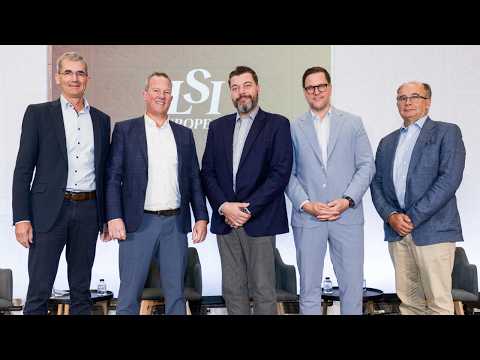
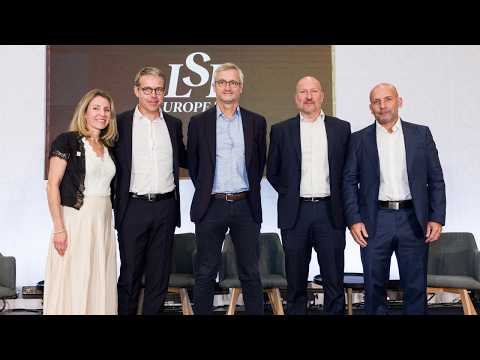
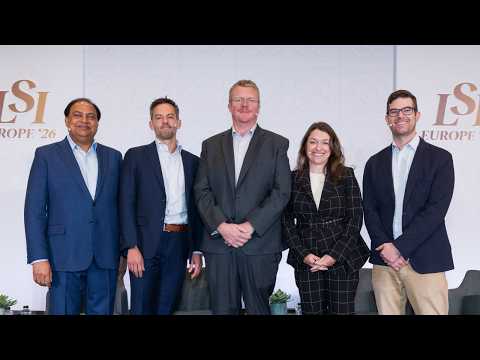
Industry leaders from Cambridge Consultants, Augmedit, Panda Surgical, XARlabs, and Medtronic discuss digital transformation in surgical environments, exploring innovations that bridge training simulations with real-world operating room applications.
Join Our Next Event
Partner with the leaders
shaping the future of
Medtech at LSI USA ‘26
March 16th - 20th, 2026
Waldorf Astoria, Monarch Beach

Fraser Gillies  0:05  
Well, good morning everyone. Thanks for joining us. My pleasure to welcome you to this panel, which brings together four innovators seeking to create the digital operating room of the future from digitally enabled visualization systems to next generation electromechanical tools, we have a nice focus in the neuro surgical space, where for too long, surgeons have struggled with 2d images in a 3d world, and with sub optimal tools for complex, minimally invasive approaches. So a nice focus in neurosurgery, but I'm sure we'll we'll go beyond that, and lots here for those interested in surgery and beyond. My name is Fraser Gillies. I'm the vice president of digital surgery at the technology consultancy, Cambridge consultants, and it's my pleasure to welcome you all, and let's meet our panelists. Claartje.


Claartje Ypma  1:08  
Thank you so much for having me here. I'm Claartje Ypma and CEO and co founder of Augmedit, a Dutch company, and we develop augmented reality software, mostly for neurosurgeons. At this time, we convert MRI and CT scans into 3d models using AI segmentations to automatically segment anatomical structures. We are currently on the European market and FDA cleared for surgical planning, and we are very close to MD R certification for our first intraoperative product, and that's when a whole aww is being registered on the patient's head for placement of drape.


Ali Haddad  1:48  
Thank you for the introduction. It's a pleasure to be with you all today. My name is Ali Haddad. I'm a neurosurgeon that trained in the UK, mostly at Imperial and I'm also the founder and CEO of X art labs, where the company was born out of a frustration pain points that me and my colleagues face on a day to day basis, very similar to what was just described, but we want to do is solve surgical intelligence, and the first step to that was to give surgeons deep vision. So we're combining extended reality with Machine Learning by Giving surgeons a platform that they can see better through we can then see with them and train them. But we didn't just want to start with navigation and surgical planning. We wanted to start with patient consent. We wanted to start with patient specific rehearsals enable surgeons, for the first time to train on patient specific models before ever laying a single incision on the patient. Then through that, the visualization platform goes into the theater, and then we'll start working with medical device companies, so the all unifying platform that will integrate the countless technology stacks that exists in the neurosurgical theater.


Manios Dimitrakakis  3:03  
Thanks Fraser for expertly moderating and thanks LSI for holding a Euro focused session. I think it was greatly needed. And man, use some of the SEO at Banda surgical we're introducing Hunter robotics for minimally invasive neurosurgery and adjacent approaches in the space of confined space surgery were quite early stage. We are now transitioning into our clinical phase, but I think it's very important to have these discussions at whichever stage to try and shape pathways.


Erin McEachren  3:35  
Thank you, Fraser, good morning. My name is Erin McEachren, and I am the VP gm of enabling technologies at Medtronic, and we work in the CST space. We currently have install base of 10,000 units worldwide, and we're working to build our our next able ecosystem for our future. Excellent.


Fraser Gillies  3:55  
So you can see where we're fortunate this morning to have three startup founders, and then we're also going to get the corporate strategic view as well, which I think is a very nice, very nice balance as well. So I thought we should dive straight into commercialization. And I think many in the room will be signed up to the vision that we're sketching out here. I suspect on the investor side, you know, there's not too many dollars for for for 2d vision systems and and basic, standard tools. So I think many will be believers in a in a digital operating room of the future. I think the question for many will be, how do we get there? What do the winners look like? And so I thought we might dive into maybe Claire, you could start us off. You're on the market today. You have a product. Obviously you have another generation coming. But what lessons are you learning now you're in some of the top neurosurgery departments in the finest hospitals in the world. What are you learning now that's setting you up for success as you sort of go full on commercialization?


Claartje Ypma  4:55  
Yeah, I think when we started, we really wanted to solve a problem in. Indeed, surgeons rely on to the images and for young residents, the problem is bigger than for experienced neurosurgeons. But we've always said we want to develop something that's useful, not just for the residents, but also for the Chairman and the senior neurosurgeons out there. And so we did that, but then it's about adoption, right? So what, what we learned is that when we onboard a new customer, we always ask for a dedicated super user, and that's usually a tech savvy younger person, and they will prepare the holograms for the whole department, and that way you see that even senior people who do not want to take the time those five minutes to create a hologram, they just put on the glasses, and they really get the, hopefully, the confirmation of the plan they made in their head, what is going To be the roadmap to reach that tumor or aneurysm or something like that. So I think that that's very important to make sure you have everybody in the department involved and wanting to use your product.


Fraser Gillies  6:12  
Yeah, and Ali, you're in a similar spot in the sense of, you know, first generation, moving into into into second generation. But I think you see commercialization slightly differently in terms of the role that x our labs is going to play in the ecosystem. Can you, can you speak to that?


Ali Haddad  6:27  
Yeah, sure. So I founded the company 18 months ago, and within two months, we had our first license at an NHS Trust at a big value, and that was because I knew exactly what the surgeons wanted, and what was the pain point? So they became the champions and went and asked for the fun they could do it. And what was that? Our first platform was a sim platform, and that was to allow the surgeons not just to see the anatomy in 3d but to be able to plan out different incisions, different approaches. And very quickly, just from that, we were asked to help with the most complex surgeries around the world, which was a set of conjoined twins in Turkey, and then six months later, it was another set of conjoined twins in the Middle East. And for that, we were just we kept pushing the boundaries of what was possible. We enabled the first ever implant design in mixed reality within a few seconds, based on a low compute AI that was all done on the headset, and this was what was just changing the area of understanding of what graphical fidelity was on in the mix for healthy devices. Our next level is not to just enable navigation from that findings there is to integrate with what surgeons work with inside the operating theater, because surgery doesn't happen at eye level, especially in neurosurgery, unique magnification. So that's what we're working on, and that's our next commercialization route to scale the current sim platform that we've had recurring revenue on is just to get key opinion leaders and to learn about users and data pipelines.


Fraser Gillies  7:55  
So there's a difference here in terms of the channel, I guess for you, is more on the through the device companies themselves.


Ali Haddad  8:03  
That's what will lead us to scale, because we're creating a visualization platform that is continuously going to learn for the different data streams that come within it. Because, you know, as I said, we don't just operate at eye level. We operate at magnified levels or scopes that go into the patient, whether for it's for an pituitary surgery, whether it's for tumor revivals in the spine. But also, you don't want to get into this thing where you start building your navigation stack, because there are other players that do navigation quite well, so why not intubate with them? Yeah.


Fraser Gillies  8:36  
Well, that's a really nice tee up for for Erin, of course, you have a navigation system, and so perhaps you could give us medtronics view on how you see the digital parts of your portfolio evolving over the coming years.


Erin McEachren  8:54  
Sure. Thank you. Fraser, first off, I'm really glad to have this panel, because I think there's just way too much variability in spine and neurosurgery, right? And so I think the assets that we're working on here are going to be really important for patients in the future. And far too often, patients that get treated come back for revisions. And so think the value is really important. Their significant software adoption was artificial intelligence, our cloud based platforms, and then also really working across intelligent workforce, and we found, you know, trying to harness all of those pieces together to create better patient outcomes and to be able to track and close a feedback loop is, you know what's What's really important? I know that from a Medtronic standpoint, integrating the hardware, the existing hardware that we have, and the software that we have now and where we want to go in the future, I believe it's about having insight driven care, so that you can give surgeons help for them to make the best decisions, not only just in the. Or where we always used to focus at Medtronic, but even preoperatively, interoperably and post operatively. So excited and good to be here at LSI with founders so we can learn about new ideas for the future. And I


Fraser Gillies  10:12  
definitely want to pick up on this idea. We'll come back to it, this idea of the what's currently a fairly sort of fragmented ecosystem, and how we move towards something that's more interconnected, which I think you know has to happen if we're to realize the benefits of digital tools, tools in the operating room. But, but before we get there, manios, I think you're part of a really interesting wave of of a new type of robotics company that's that's bringing more procedure specific, smaller architectures to the to the table. Many in the room will be familiar with the existing Meiji, let's call them large format, either in orthopedics or soft tissue, and we'll be wondering about this new wave of smaller architecture. So maybe you could share, what can you learn from how a mA or Da Vinci or averse is commercialized? And you know, how are you know, how are you similar? And how are you going to do things differently given your, you know, a really different sort of system.


Manios Dimitrakakis  11:06  
Well, sitting boys are things to learn. Sitting in both robotic surgery and neurosurgery, I think there's a lot of lessons you could derive from the the space of alternative form factors has been picking up recently, and I think it's because the proposition for robotic surgery has been largely it's been proven by now. So now we're trying to understand where these capabilities is enhanced. Robotics could be deployed in procedures that are largely underrepresented and to no one. Shock Neurosurgery is one of them, in terms of commercialization, what we've learned, and probably from the non da Vinci type robots, is that you have to implement it. Well, well, well in advance. The as a founder, you're very you're very fixated with tech at first, let's get this to work. Then regulations, then commercialization. But it's now evident that you have to start thinking about everything from day one, and everything can sort of inform each other aspect. So in our case, being in a handle form factor makes us a very fairly inexpensive proposition, which means that we can tap into the various different business models that we've seen work and try and understand, get that market feedback on what is the best avenue to approach. I don't think you can always do that, and large form factor robots are much more difficult to maneuver. But in our case, I think there's a lot of things to try and pick up from those opportunities. Yeah, sure.


Fraser Gillies  12:46  
So let's come back to this idea of the sort of fragmented to the to the interconnected. Because I think when, when a lot of us hear about, you know, phrases like a digital operating room, you know that that can mean many different things, you know as ambient sensors, robots, obviously, visualization systems, navigation systems, and on the face of it, that can appear a fairly, you know, fragmented list of often separate technologies. So I want to see if we can dig into how we can start to pull some of these together to really, you know, get the data flowing in the right way, as part of the right, you know, as part of the right workflow. So, you know, maybe, maybe Claire kick us off. How are you making sure that your technology just just fits in, you know, to what already exists in.


Claartje Ypma  13:30  
Fitting in is essential. Its interoperability is very important indeed. So we are a cloud only software platform, and we have made sure from the beginning that all types of MRI or CT scan, all type of dicoms images can enter into our cloud and will automatically be converted into a hologram. Hospitals can choose whether they want to make a peck connection or not, and we have, yeah, we make sure that we comply with all the regulations that are needed, also from hospital level, in terms of security, etc. So that is key. You don't, you don't. And at this time, what we are doing is we focus on high volume, high impact indications that are not necessarily yet needed for with microscopes and stuff. So it's just the platform and you need augmented reality glasses, and it's plug and play, basically, plug and play, yeah, yeah. But eventually our segmentation algorithms, they can be put into the robots that you will need to to visualize things in 3d


Fraser Gillies  14:42  
Yeah, and Ali in the context of surgical intelligence.


Ali Haddad  14:46  
So from we're very lucky, from the data streams that the CT and MRIs that we've been capturing for decades are already in 3d spatial resolution, right? It's just the fact that for some reason, we've still thought that viewing them. On the screen was the best way. So semi toon medics is doing red X or labs can do the same things and read through that. And I don't think that's the huge novelty there, right? So 3d holograms things have been around now for a while. It's what you do with them and how you play around with them. Let me set the scene, because the hardware is the issue. I think so in in new operating theater, when a neurosurgeon is operating, you have one computer stack, which is giving you navigation. One computer one stack is giving you either the feet of an endoscope or a microscope or an exoscope, whatever it may be. But your your feet, you've got a bipolar pedal, you've got a sonar pedal. You then you've got a massive other pedal to control the robot. So you're trying to do microsurgery or micro movements in a very unforgiving organ, which you have to dance around your feet. So why not? And this is the proposition, not only give them better visualization on a headset, but give them a better visualization and ability to also control other factors with it or other hardware stacks and reduce the number of stacks. So just on Saturday, we revealed that we can now control exoscopes from our headset. Have stereoscopic vision and control headsets exoscopes, whether through gaze, whether through voice, or whether through tool tracking mechanisms that we've been training within the Nvidia's Omniverse, and we demonstrated that with the Olympics exoscope. So neurosurgery, you start at eye level, but very often you need to go microscopic. So solve for the entire journey and solve for the entire problem, is what we're trying to do.


Fraser Gillies  16:33  
Erin, if I could come to you, you're the panelists, uniquely responsible for a suite of technologies. How do you see that move from fragmented to interconnected across your your portfolio?


Erin McEachren  16:45  
Yeah, thank you. And Ali, you tee me up really nicely, because when you think of our operating room and how complex it is, there is a lot of data out there, right? There's the EMR systems, there's the imaging data, there's the navigation, the robotics, and then there's also patient wearable data. So for me, it's really critical that we are integrating the software and the hardware and the services together in a procedural approach. And I think when you talk to our customers, and when you focus really on how the surgeon's feeling in the procedures, they're inundated by so much data, what isn't happening. And this is the challenge, and the opportunity is to be able to provide succinct and really clear, actionable insights to surgeon before the procedure, during the procedure and posts, so that they can make better decisions and have better outcomes. So that's that's opportunity. And I think you know, when you when you think about a total hip or a total knee, those procedures are the same pathways each time. But when you're in neurosurgery or spine surgery, there's 17 or 18 different procedures that can be happening. And so having those insights that are clear and actionable, I think, is what needs to happen. Thank you. So we've


Fraser Gillies  18:04  
obviously got a room full of non neurosurgeons. I thought it would be worth us just picking out some of the, some of the challenges of this, this clinical area in in particular, and shining a light on it and showing why it's really ripe for for this sort of digital transformation. I guess I should start with you. Ali, as a, as a, as a neurosurgeon. Help us to understand for the for the non neurosurgeons in the room, you know what? What makes neurosurgery such an exciting area for this sort of technology?


Ali Haddad  18:39  
I think, first of all, it's the most complex object in the universe that we don't understand. Now, whether you take the whole nervous system from brain to spine, it's an extremely unforgiving organ or object. The margins for error are non existent. You cannot repair what you damage, and you need to plan every single step far in advance, and that's why it's such a from a pre operative planning, it's such a fascinating area to be involved with. From an intra operative area, you need neuro monitoring, you need magnification, you need navigation for those reasons, because you don't want to damage the eloquent structures. And then for the post operative phase, which is also as equally as important, and that's where there's a lot of pre operative imaging, and then also intraoperatively, of intraoperative MRIs. So the entire theater of a neurosurgeon, neurosurgical theater is inundated with complex tech sacks. So one way to win, and for the surgeon, ultimately for the patient, is to try to reduce that tech stack, the top cognitive burden, the attention shift, down to something form that's much more compatible with what we see in the outside world, where the technology stack is getting smaller and smaller and smaller but more powerful. But in surgery, for some reason, we've gone the other way is just to give more and more data, complex tech into the surgeon's field. But the other thing I would just just think, this is not a neurosurgery, you know, limited thing, because if you solve for that complex specialty, if you show that the accuracy that you're achieving is good enough for that, because the organ you're dealing with, you can just extend it on to the other specialties, because it's the same CT, it's a sammarise, same spatial DICOM resolution that you have to play with. And so that's why I think all of us are like starting with it, yeah.


Fraser Gillies  20:38  
So we've obviously seen leaps forward in visualization, but not so much in tools. You know, the tools the surgeons are dealing with, even as surgery has become less invasive, you know, are still fairly rudimentary. Maybe you could speak to that Marius and where you see the opportunity on the on the tool side, to maybe help that keep pace with what's happening in visualization.


Manios Dimitrakakis  21:05  
Yeah, to sacrifice the tools instruments in neurosurgery, they haven't been updated since the 90s, really, when it comes to the minimal invasive endoscopic approaches, to the point where sometimes they have to use tools from other disciplines, like hair, nose, throat, my one of my co founders in neurosurgeon, he has this running joke that he he want. He tries to avoid dinner parties with his laparoscopic surgeon friends because they always boast about this new technology that he can't have. I think the there was a big trouble there. Ali put it in perspective perfectly. This is a very difficult area to innovate in, and a very slow sector too. Regulations is a long journey, and it should be, if I'm honest, because it is a delicate object, the brain, the nervous system. And for the longest time, there wasn't really a huge market, at least compared to your other surgical disciplines. I think because of this big leap that you had to do in innovation to get there, other technologies have now kept to pace and they have been introduced in the space navigation is the great example where you can now very safely and reliably navigate, or to the best extent you can within the system. But when you're there, you're out of options. So now that robotics in other disciplines and similar technologies, they've matured to us a place where they can be miniaturized effectively and from a cost effective standpoint, I think this is what has created the opportunity for us, for a few other players in the field, to introduce neurotech, cutting edge tech, and try to get that a slice of this emerging market that is now being created in neurosurgery


Fraser Gillies  23:00  
and ambitions beyond neurosurgery, because, I guess fundamentally, you're operating in small spaces,


Manios Dimitrakakis  23:05  
exactly right? We define this. We didn't humor the term, but the term is a confined space surgery. So there's a lot of surgery that is much more constrained than minimally invasive surgery, and shares various and different access pathways. In neurosurgery, for example, most normally you have a cylinder access pathway. This can be replicated in ENT in endoscopic spine, we mentioned previously, even in neurology, in some procedures. And I think this is what makes technologies like ours, and again, there's a few in the space so exciting because you can now tap markets that were previously underrepresented.


Erin McEachren  23:49  
Evan your thoughts, yeah, lots of good insights today. I think, for when I when I think about where we're going, what's really, truly exciting is we have a patient database now of over 30,000 patients that have had spine surgery. And so when those every time we get one more patient, and it's happening now, exponentially, we can learn and become better from those patients, and then surgeons across the world can communicate and understand and so I think it's a really, really exciting time. And I think the theme is, we're an extremely high risk and complex environment, yeah, and how we can make things easier for our clinicians and better for our patients is, I think, the ultimate challenge for us, and we're all up for


Fraser Gillies  24:33  
it, yeah, what I've heard is is, you know, if something can work in neurosurgery, you can do it anywhere. You can pretty much do it anywhere. So many else you talked about regulation. You know, we're here at LSI Europe. I think it would be remiss if of me, if I didn't ask you all about the regulatory situation in in Europe and where it fits into into your your plan. So. At, how do we balance innovation regulation? You know, in Europe, manios, is Europe going to get Panda's tools first? Can you absolutely, yeah, Europe first. Okay, but you're the US first. Us first. Sorry. Thank you. Yeah, yeah. Tell us more.


Manios Dimitrakakis  25:17  
We have become a bit of a meme in this I've been asked a lot, and I'm always complaining. I'm not going to complain today. I think I've been maturing, but Europe is drastically slower in in neurosurgery, at least in our experience, with good reason or not. I'm not, I'm not necessarily commenting on the on why that is, but the in our case we are, the regular burden in Europe would be much, much longer than in the US. My complaint normally isn't the time it's going to take itself, because, at least in our case we we Europe is a very large focus in what we do because of the inexpensive form factor we can make at least. We hope we can make both the US and Europe work, so we are certainly aiming for it. My main issue is the lack of transparency and interaction. We have found that the FDA and it's not necessarily a paradise over there either, but you do get much more connection, contact, interaction with the FDA. And at least in our experience, this hasn't been the case in Europe. You can have meetings, but I, I haven't seen them being as productive as they have in the US. And actually, I'd love to learn different experiences and if this has been our case, but yeah, generally it is lengthier. But that's not necessarily my issue as it is that it also feels tougher than it should be.


Fraser Gillies  26:51  
Claire, as I said at the start, you're in some of the top neurosurgery departments in the best hospitals in the world, including in the US. And then you have a second version of your product coming. How do you decide where to invest in your commercialization?


Claartje Ypma  27:06  
Yeah, so for the planning software, we started in Europe, and we still took advantage of the previous law, the MDD. So that was a pretty straight shot. And then we went to the FDA, got a 510, K. And now for this intraoperative product we decided to do start in Europe, because, yeah, this is where we are. I think it's all also Shane, if everything moves away from Europe, and we lucked out in a sense that we work with a new notified body who only works with medical software. So there we have weekly interactions, and it's a different process, but it's still painful process, yeah, and once we I hopefully in October, we got it, and then we go to the FDA, okay,


Fraser Gillies  27:53  
Erin, how do you? How do you see it from the strategic view?


Erin McEachren  27:56  
Yeah, thanks. Thanks for asking. Fraser. You know, certainly EU, MDR, I think the intent for the patients is a good one. It certainly cost the amount of resources needed for a larger company to get all of their devices ready and to get the future devices ready is challenging. And I think no matter what side you're on, what I do believe is important for the future is we are where we are, but I do hope, like many of you said, there, we can be slower here in Europe, but I hope that we work with those regulators to partner, because I think it'll be a real shame if we don't have, you know, more founders coming out of Europe, and we always used to launch first in Europe, and now we're taking a back seat. And I think that's not good for innovation. So I think everyone has realized that and understood that, and now we need to move forward and make it better together.


Fraser Gillies  28:46  
Yeah. Ali, just to round out, round out this innovation versus regulation subject, I


Ali Haddad  28:52  
think everyone said what that was really to say. But I would say the way I approach this from the learnings, I would it's very similar learnings I kept reading about when I started my journey was, let's give us time. We bought that time by putting out a market first on the putting a product onto the market first that didn't need regulation. So we had the revenue to come in to let the company continue, but also start documenting all the data pipelines, all the usability learnings that we were learning. And then we said, we'll let the market dictate where we go first. So when we, when we started installing at Penn State, we realized that they wanted to take this for the clinical application. So we'll, we'll get our FDA approval there, and now for the stuff that we're working on, if the exoscopes, it's European driven, so we'll do that on the European side. That's the approach I took with it. And then we'll let time decide if that was the right, okay, yeah,


Fraser Gillies  29:44  
you're fortunate to have the flexibility to to go where the market takes you. Just a few minutes to go. Happy to take questions from the audience. If anyone does, please just raise your hand. But I thought we may might close with a few. You sort of rapid fire questions. So help us to understand next 12 months. For each of you, briefly, what is, what is success for you in the next 12 months?


Erin McEachren  30:15  
Erin, I start from your so we need to persist in ourself for growth. But also for me, our priority is to make sure each outcome for patients is better every single patient that goes in the operating room that we're giving them the right tools. So we bend that curve.


Manios Dimitrakakis  30:32  
For us, it's pretty straightforward. We are in the next 12 months, we hope to have our first in human investigation with all our end points met.


Ali Haddad  30:39  
Yeah, I have three milestones, and I'll be very quick. One is our first regulatory approval in the US. Second is our series arrays to then go and really strengthen our medical device partnership.


Claartje Ypma  30:54  
Claire, yeah, for us to get the MDR certification for the intuitive products and ramping up sales in Europe us, and starting Singapore as well. Okay, so it's next 12 months. Yeah, very good.


Fraser Gillies  31:13  
Finish this sentence. The biggest blocker for introducing new technology in the operating room is Claire has started the sale, and we've moved back,


Claartje Ypma  31:22  
I would say regulatory. I think that's yeah, that's takes so much time and resources. It's yeah, you have to prepare for that.


Ali Haddad  31:33  
Ali, but design building something that's not built for the surgeons that will really block you. Okay?


Manios Dimitrakakis  31:41  
Nothing else I was thinking to say regulatory, but also this was a really good answer the designing for the application you want to introduce. This is a process that takes a long time, but yes, regulatory takes longer, so I'll go with that,


Erin McEachren  31:55  
instead integrating the different streams of data and making the complex simple.


Fraser Gillies  32:06  
What one piece of advice would you offer to to I guess I'm particularly thinking about our startup founders here to to someone thinking about starting a med tech company, particularly in the in the in the digital surgery space?


Claartje Ypma  32:24  
Well, I think the most important thing is to really solve a problem that was discussed this morning as well. If you see a problem and you can solve it with your digital tools, I think that's essential, not the other way around. There's a nice gadget and you find a problem for it, and next to that, it's a grit and perseverance, of course, to grit.


Ali Haddad  32:44  
Yeah, I have two pieces of advice. One is for me, and one is one I've learned the hard way. Yeah, don't be fat. One is first built. Don't forget why we're building and why we're all here, which is patience. So actually, the first people that got to try our software were patients, and that's why we're used being used to do patient consent down at Imperial. And the patients become the advocates. They go around, they tell other floors in the wards about what they just saw. They go and talk about their journey on stage. So build something for patients. Second is the team is so important. Map out your team, your hiring process, that for me was the most difficult part, and I'm so glad that I have a great team now around me that I can rely on them to deliver what we need to. And it's really tough out there.


Fraser Gillies  33:32  
And how large is your team? Just to Apple stun,


Ali Haddad  33:36  
it's a team of nine people, but it's not quantity, it's quality, right? And the experience they bring the hunger, they breathe, if they believe in the mission, they will go the extra mile with you. And I think finding those people is so important because they get the message of what you're trying to achieve.


Manios Dimitrakakis  33:55  
For me, it will have to be something that I think everyone shows. We even heard it in the organized panel previously, where huge success, they even they had their very difficult times the in this line of work, I think you you're bound to have these very difficult nights, these very low lows, these milestones, miss, these fundraising that they come through. This shouldn't distract you from how rewarding successes in this space can be in primarily patients, those interactions, when you see a surgeon using your device, and their eyes light up, I think that's the reward we get with patient outcome as well.


Fraser Gillies  34:34  
Yeah, and Erin, as you look at the startup community, advice from from your seat in Medtronic?


Erin McEachren  34:41  
Yeah, I think the answers are really nicely said, but grounding yourself in solving a clinically, clinical unmet need. And I love the part about the people right. Everyone talks about strategy and performance, but culture eat strategy for breakfast and having the right people on your team and the conviction that's necessary to get. Through the roadblocks ahead are really important. Excellent.


Fraser Gillies  35:04  
Well, we're just about on time. Thank you all very much. We've heard this morning, you know, if it works in neurosurgery, hopefully it works anywhere. We've heard, we've heard about the need to move from, you know, fragmented, fragmented, digital operating room into something interconnected. And all our panelists shared their perspective on that. I think importantly, we've heard about Europe and some different approaches to to navigating the sort of US versus Europe conundrum. And then finally, I think people is the last thing that I've picked up on here. And I think Erin's culture eat strategy for breakfast. I think that's a great way to finish. So please join me in thanking our panelists as well.