Fredrik Nyberg 0:01
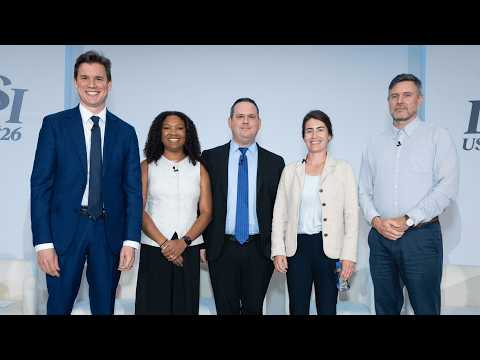
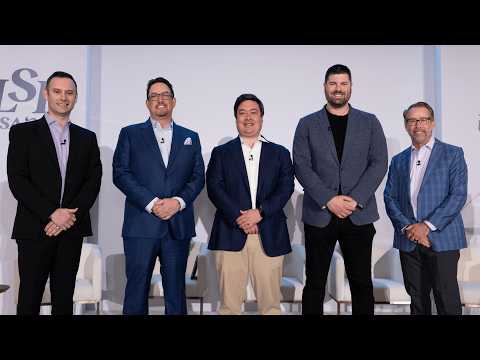
All right, good morning everyone. And welcome to to this panel session on strategy, commercial building, commercial infrastructure in the in the US. So the the focus, of course, of of this morning session is really getting the perspective and getting some insights on how an Asian based medical technology company, small or large, can scale in the US. And we have it. We have an outstanding panel this morning, and I will let each of our panelists introduce themselves in in just a moment. For those of you who don't know me. My name is Frederick Nyberg. I'm the managing director for Medtech Innovator, based here in Singapore. But let me just very quickly introduce let you know who is on our panel, and they will introduce themselves in just a moment. So we have Ken Nelson here, angel investor, partner at medtech advantage fund. He's had a number of really interesting exits that are relevant for today's conversation. So he'll speak a bit more about that in a moment. Honored to have Dave Uffer here as well, one of the most best networked individuals that I know in the med tech space in North America. So we'll get Dave to introduce himself as well. He's managing director for me, tech at the twin at Trinity Life Sciences. Last, but certainly not least, good to have Dr Veronica Michalak here from based in Miami and working now at HTD health. So I'll get each of them to introduce themselves, and then we'll dive into into the topic strategy and commercial infrastructure needed to scale Medtech in the US. And maybe Ken, I'll, I'll start with you, just a brief, brief introduction and and then we'll, we'll go into the topic.
Ken Nelson 1:53
Ken Nelson, I'm on the partner and co founder and the medtech advantage fund. The medtech advantage fund will be investing exclusively in Medtech Innovator alumni companies. Medtech Innovator is the largest medical device digital health and diagnostics startup accelerator in the world. We also have an Asia Pacific branch, which Frederick runs. Prior to that, started my med device career with guidance first in cardiac rhythm management, so implantable pacemakers, defibrillators, then Boston Scientific post that. And then the back half of my career, I built the teams, the cultures, the infrastructures for what had become three of the four largest digital health diagnostics and monitoring companies on the cardiac side, cardiac wearable side. First was I rhythm, which eventually went public. The second was bio telemetry, which got acquired by Phillips. And then the third was Bardy, which is where I went through Medtech Innovator, and actually went to the LSI program, and that was acquired by Hill RAM and Baxter so and those I was on the led the commercial teams for all three of
Fredrik Nyberg 3:05
those. Great thanks. Thanks. Ken, Dave,
David Uffer 3:09
please. Hi, Dave Uffer, I'm the managing director of the Medtech practice for Trinity life sciences to 1200 person global advisory firm doing strategy, data and analytics. My co managing director was the previous panelist, Deepak Sahu, who we've been partnered together in two different firms for about eight years. I've been in Medtech myself 35 years. And that's why Frederick says I might know a lot of folk. You go to events like this, and you get to meet a lot of people, and you stay active. My first 25 years was in very large corporate strategy and business development commercialization through companies, and I'm sure everybody is well known with EP labs, Boston Scientific, covidian, Medtronic, and so forth. And I transitioned about 10 years ago, into the other side of the house, advising companies who would look to build out commercial infrastructure, get product to market and then eventually either IPO or likely be acquired by those large companies.
Fredrik Nyberg 4:14
Right? Thanks, Dave, hello.
Weronika Michaluk 4:16
I'm Veronica Michaluk, Medtech Practice Lead at HTD health, biomedical engineer by training. Started career as an engineer in Poland, then moved to South Korea, where I was a neuroscientist researcher, and after that time, moved to Miami, Florida, where I worked for also Boston Scientific was in charge of digital health cross division and remote support. Then had a period of working in Barcelona, Spain, also for Boston Scientific, for EMEA region. And for the last four years, I've been leading Medtech practice at HTD health and at HDD. We are strategy technology consultancy company. So we support different size of organic. Organizations, from startups all the way to corporations to build successfully their digital health and software's medical device solutions, and we are especially good at in interoperability, so making sure that the devices are actually interconnected and work well in the healthcare ecosystem, and also designing and building best in class use a usable digital health solutions for both patients and clinicians.
Fredrik Nyberg 5:28
Great. Thank you. Thank you so much. So Ken, maybe let me. Let me start with you. A lot of Asian based med tech companies don't necessarily think of the pathway to an exit when they're thinking about entering the US. But given your your experience involved in three exits, you were, most recently, if I remember correctly, Chief Commercial Officer at party diagnostics acquired for close to half a billion by by Hill, wrong a few years ago, what's what's needed to when scaling in the US, what's needed if you want to plan for an ultimate trade, sale, exit in the US,
Ken Nelson 6:07
I think the most important thing is to make sure you're wearing a white shirt with blue checks. And I think Dave would probably agree. Anybody get the joke? He's wearing the same shirt. Anyway. I thought it was funny. I see it from the back. I think the one thing that people don't concentrate on enough is reimbursement pathway, making sure that there are either established codes or there's good pathway to establish codes. I think the US is a great market to really drive initial revenue with the company so to show strong adoption, and I think that starts with finding things like the accelerator programs. Medtech Innovator is an example of one, and then just trying to come to events like LSI, where you can network across the entire startup ecosystem and find potential acquire so it's really going to events like this and getting your network just expanded
Fredrik Nyberg 7:09
right? And if we just just stay with that thought for a second, you're all given your role as Chief Commercial Officer, maybe tell us a little bit of how you built that commercial organization for bar to
Ken Nelson 7:23
diagnose? Yeah, so, great question. I think recruiters become a very important part of the process. I think at least for me, I was fortunate that I had a foundation with Gaiden and Boston Scientific that had a really amazing culture. And so trying to find the right people, especially those early people, to help you commercialize. So finding those people who can be player coaches, really, really important, I think, as a company coming from outside the US, finding people that have established relationships, either to add somebody to your board, or add somebody as an advisor, and then getting those people who can get that early adoption, which is so important, and then going to the industry events. For me, my background was cardiac so going to American Heart Association and heart rhythm society really, really important to get those early key opinion leader adopters, which then they go on to speak at these events, and do the clinical studies, get that clinical evidence that's going to really help you scale in the long run.
Fredrik Nyberg 8:31
That's helpful. Ken, thanks, Dave. I know we've been working with large numbers of Medtech companies, large and small, both in the US as well as outside of the US. What are some of the, some of the challenges where sometimes do these companies fall short when it comes to to scaling in in the US? What are, what are the challenges and the problems that you typically need to where you need to come in and assist them as a or support them as a, as an advisor.
David Uffer 9:02
The first failure is not to get deep and intimately involved in the market, to understand how the market operates, just as Ken was mentioning. First off, is to understand reimbursement. And that's the same thing in any market, whether you're going to go to France, Italy, Australia, or the US, see too many people look from outside and try to understand it inside. We could talk about 100 different ways to get in and learn the market. But even from a payer schematic, it's reimbursement in one regard. But there's a ton of different schematics for payment. Whether you have a Kaiser Permanente that it's not about reimbursement. They have a captive audience, and they just look to save money for their system while providing care. Or you have different government versus private insurers versus value based healthcare organizations. This is not to scare any but, but to say there's ways to. Learn how to commercialize that's just on the payment side. How are you going to set up your commercial organization? From a sales standpoint, there is really no turn key approach and strategy, but you have to understand how your product is going to get into market the most efficient way, whether it's very targeted or broad, and I see people fail, even US companies is startups fail that and then have to retrench. And it's time and money that is wasted, and it's too precious to make those few mistakes. Of course, you go to limited marketed release to hone your pitch to understand your market a little bit better, so you don't go broad and fail big and broad, but you still can be much more efficient when you get in there and understand that market on the stand up of the organization. I say there's no one solution. It's Ken you were asking if you're setting yourself up, whether it's IPO, you want to be stand alone to get to a half a billion dollars, or you like to exit, I always advise people work from your endpoint, your objective, and come backwards. And what you need to do to be able to attract and acquire is very different, depending on what your business, your technology, and what the acquirers would be looking for. And some want to just say, you get to X dollars and show me that you could do it in five accounts, and we'll take it with five reps, and we'll take it to our 150 people and go broad. So again, understand your local market. Enlist advisors that can help you and be there. You have to be there.
Fredrik Nyberg 11:43
Great, great, great advice. We'll come back to some of those points, and in a moment, I wanted to get Veronica's perspective here as well. Obviously, at your your focus is very much on the the area of software, as a medical device, digital health, connected devices and so on. In what respect are those types of technologies different when it then comes to planning to scale a business in the US, especially maybe for a non you may be having that perspective being European, living in the US, for a non US company coming to the s us in in those with those particular types of innovations and technologies, how is that different from what do they need to? What are those types of companies need to think about as they scale in, in the US?
Weronika Michaluk 12:32
Great question, you know, and I would like to talk about couple of different points, because even Frederick, we talked about it before the panel that you know, like when you enter the US market, I would say yes, is centralized and decentralized from different topics, right? So, for example, in Asia, like in Singapore or China, you have more government led, you know, markets and in in US, you have so many different health systems, but yes, we have one. You know, notified body would say the FDA, one agency that will then give you the clearance or approval when it comes to software as a medical device or connected devices when you enter the US market, it's so important to understand that you should think about and plan ahead about the interoperability, because it's not just about designing and building standalone product, but making sure that it actually works well within the clinicians and patient workflows, and also that it really adds the value. So just planning ahead and creating the strategy for the interoperability is super important because, you know, I call it kind of like it's also the more, the bigger you get, the more difficult it is, and the more customizable you have to be. Because if you each health system, they have their own EHR electronic health records. And then each every institution, they have their own instances. So maybe we go very like deep technical but in order to integrate and get access to patient data in each and every health system, you have to understand not only their technical requirements, but also you know how their how they work, how they collaborate day to day. So just kind of like planning ahead is super important, and then also, because we are in in the software space, in the med tech, it's, I would say it's relatively new, comparing to the traditional hardware medical devices. So we don't have all of the regulations and standards yet. So FDA recently released new guidance for cybersecurity for AI. So if you are in the software space, you have to keep up to date with all of the new things happening. So we are in very exciting times, but you know, you just have to be stay. Agile and be, you know, open for for the change, and just keep up to date.
Fredrik Nyberg 15:05
Great, great point. And I would want to, just to stay with you for a second Veronica, because it obviously will speak about traditional medical device commercial infrastructure setups in more detail in just a moment. But a device company typically would would work with distributors, build sales offices, a direct sales force. How are channel partners different when you you working on a mobile app or just a pure digital health platform, and how do you, how do you scale that? What are the types of local partners across the US that a startup venture in, in digital health, say, or in the in, in a software as a medical device innovation is, is working on? Yes,
Weronika Michaluk 15:53
so great point again, you know, so normally, as you mentioned, in the traditional medical device, you would have a sales team. You would have distributors in software. You don't have, like, you know, physical, let's say even issues with, like, supply chain. So we don't focus on the supply chain. We don't sell hardware devices because there is nothing. Everything is in the cloud, right? So I would say kind of your your warehouse, if you will, would be this cloud solution providers. So one of the channel partners would be cloud solutions, whether it's AWS, Azure, Google or others, and then making sure that it's actually stored securely. So in the warehouse, for example, right? You You would take care of your hardware devices to be stored securely in the same in the cloud, and even, I would say, more difficult, because everything you know must be really taken care of. When it comes to cyber security, there is lots of patients data, if you want to again connect to EHR systems like epic Cerner and my chart that would be also your channel partners, I would say, because there is patient data stored there. So maybe we are not focusing so much on the supply chain, you know, in the in the software, but like Cloud and EHR, is definitely something very, very important.
Fredrik Nyberg 17:14
And I guess the business model would influence the commercialization strategy as well, the B to C mobile app is, is going to be, that's going to be a vastly different approach from from something like a, like a, b to b to to see potentially
Weronika Michaluk 17:31
Correct, yes, and you know, like, there's more and more mobile applications, but we have to, you know, how many mobile apps you have on your phone. I have a lot. So also, you know, just making sure that we build the ones that is usable and friendly for for patients. So that is something we should definitely think about. And what one more thing that, you know, the subscription model. It's very popular, I would say, in the software space. But what I've been seeing that more and more traditional medical device. Companies like Medtronic, for example, also wants to, like, enter the subscription based model. It may be not so easy, because there's lots of, like, data governance involved, but I think it's the future is bright when it comes to this. So I would say, let's see what the future will bring. Yeah, yeah. Thanks.
Fredrik Nyberg 18:19
Thanks for that Ken you mentioned earlier, the benefit of being part of an accelerator as somewhat startup venture is looking to scale, whether a local us, company or company from outside of outside of the US. Maybe you can just tell us a little bit about your experience there, because I know that before you exited party diagnostics. You are, in fact, a Medtech Innovator alum. Yeah.
Ken Nelson 18:45
So I think the role that the earlier stage incubators play is really, really important, and then as companies get further along, trying to get into the bigger accelerators, like a Medtech Innovator, also really important. I wish I'd known about it to start ups prior, I would have you know, been that much more educated and had a much better network earlier. But in terms of finding consultants on the regulatory side and on the reimbursement side and finding other recruiters to help you find that commercial team, it's all so important. And then also getting introduced to the hospital based venture funds. And you know, I just think the time and effort that you spend trying to do all that on your own is impossible, so getting into something like Medtech Innovator, and then again, once those companies go through the accelerators and they're going to raise capital, spending the money and taking the time and effort to come to things like LSI are also really important to expand that network out, and it'll just help you scale faster. So I think it's absolutely critical. I think some of them take equity. 30. So it's, it's a challenge, and people don't want to do that. Medtech Innovator doesn't do that. It's a non profit. They give away non dilutive funding. So if you can find ones like that that are reputable, very, very much worth it. And then I wouldn't stop there. We did, did programs after Medtech Innovator as well. I did Health Tech Arkansas, which is now hard X also really important in terms of getting clinical studies done. But I think it's it's just important, even just to network with other founders going through the same types of things that you are as either a commercial person or a CEO, or CEO that's going through the program, sometimes talking to other people going through the same thing is just a health helpful thing to do.
Fredrik Nyberg 20:47
Yeah, yeah, no, that's, that's, that's, that's a great point. Dave, maybe let's, let's talk a little bit more about the your experience working with smaller companies and helping them build that commercial infrastructure in the US a question very often we hear from startups that are based outside of the US say, Well, I really need to set up a legal entity. I need to build my own team on the ground in the US. How important is that? Is that absolutely mission critical? Or is that something that can come a little bit later on in the as a company evolves and start to build their presence as
David Uffer 21:24
far as a legal entity, I'm not going to say that that's a requirement. I really don't see that as an absolute necessity. There are some disadvantages, obviously, the cost and the governance of the organization, and it takes a little bit more governance over that who's in charge and who's going to be set up and the cost, it's really not too cost prohibitive, if you have some law firms that will go out an infomercial for somebody like McDermott that lectures around the world, and we're going to give you the playbook when you literally need to execute that will help You and do that. So it's not so difficult, but there are certain investors that would be precluded from investing in foreign entities, and that's us or even Europe. So they do require a local entity, and some just want to be close to the senior management to be able to see up close what they're doing, how they're acting, how they're executing, and then others want that full founder led org to be established. So I've seen companies that will the CEO will go locate for a period of time into the market, or at least have and be a president of a foreign entity to operate there. And again, as we started the discussion, I was saying before, just to be in that infrastructure, in your understanding the environment that you're operating in is so critical,
Ken Nelson 22:57
I do think, and you mentioned this a little bit, I do think it's really important that they establish at least a US subsidiary. You don't have to flip the headquarters here or to the US, but you do need to establish some sort of subsidiary, or you're going to really limit yourself in terms of the US investors, especially now, I feel like, for whatever reason, post covid, it's become kind of a requirement to have a subsidiary for a lot of these VCs. Great.
Fredrik Nyberg 23:24
Yeah, that's, that's a great point. Thanks. Thanks for that. And I think that that's something else that's very often top of mind on especially startup med tech, startup companies in Asia Pacific. Do I need to flip my organization? Do I need to relocate my headquarters to the US as I'm as on as I'm scaling and building infrastructure and and obviously you also went now where the investor hat Ken, and maybe you can expand a little bit more. So
Ken Nelson 23:51
I'm on several boards of companies in outside the US, and a lot of them have either established you have subsidiaries, or actually done the flip to the headquarters in the US. And I think you don't have to go through the effort to flip the headquarters over. That's a lot. And some people want to keep their R and D or parts of the business wherever they started, which also, I think makes sense. But I do think having some sort of entity, especially if you're trying to get major US investors on the venture side, you need to have some sort of the US subsidiary.
Fredrik Nyberg 24:25
Yeah, yeah. Great. Great point. Veronica, as you work with startups in digital health, s, AMD, other connected devices from from outside the US what? What are some of the typical stumbling blocks that they come across that are unique to those types of technologies. And how do you how do you go about helping them,
Weronika Michaluk 24:49
you know? So there are many, especially depends from where you're coming from, but definitely what we also mentioned before is the US typical, you know. Just like the structure that the health systems, and just understanding that, again, this interoperability is so important, and making sure that you think about it from day day one. And the other thing is like reimbursement. So, you know, lots of organizations, especially startups, they just want to, like, develop amazing, great looking products. But I would say it's so important to think about reimbursement and your like commercial strategy from Day Zero. I would say, and, and in software, sometimes there's no CPT codes for, you know, for specific connected digital health software solution that even adds to this complexity. So I would say to even like have, if you want to enter US market, to have us based advisors like the entity you know, or subsidiary, definitely, but also find this you know, people that were there, that are experienced in us and can guide you for the reimbursement for the interoperability from day one.
Ken Nelson 26:01
And even from a clinical study protocol design standpoint, I think sometimes people design the study just to get FDA clearance, but really they should be designed to not only get clearance, but also get coverage, definitely. And if they don't do that, then you can be, you know, wasting lots of time and money having to do a secondary or third study, because you didn't get that consultant to help with the protocol design,
David Uffer 26:25
not only coverage. The biggest thing I've been looking at in investors when we were raising capital for some companies is your health economics. And what we didn't see people doing was building in the health economics. We're advising them to build the health economics even into the initial stages of the design of the company. But for sure, in the clinical trials, had the company come to me and said, we need to do a health economic study, if they had buried those endpoints into their initial trial, all the data would have been there, and it was another $1.4 million just to do a health economic trial.
Fredrik Nyberg 26:59
Great, great point. And Dave, I was going to ask you, given your current you've been in past senior roles in in in providing market access, advisory services to companies for a startup, metric, startup that's based outside of the US, what should they think about when they evaluate a potential advisor or consulting firm in the US, in the area of market access and commercialization, or reimbursement or health economics, even
David Uffer 27:29
there's no there's no shortage of providers in the market, obviously cost, and you have to find out the right organization the right cost. So always get at least three people to talk to, to be able to look because it's quite variable. Now, some are scaled for much larger organizations. Some are scaled for for smaller startups. Our price point at Trinity is about a third of the big box McKinsey types, but we are so overpriced for early startups, and I refer to small shops all the time that don't have the infrastructure, nor do they need the type of work with the fidelity that we're doing for when we advise a Stryker or Baxter. So understand who's scaled for your operation, what your needs are, and then, as Ken was mentioning, we've got a large industry, but a small ecosystem, and folks like the Medtech Innovator and other accelerators, we saw one kick off the other night that's getting yourself into the ecosystem. And you find the appropriate ones, you have to find them with domain experience, not a med tech advisor for reimbursement, but somebody that has done your technology before and understands those nuances, and they're there, but you have to be able to get people to help point those out that have deep experience in your specific clinical or Technological sector.
Fredrik Nyberg 29:00
Great point. Dave, thank you for that. I'm realizing we are getting short on time, so I'm going to ask each panelist to just give a few closing words final advice that any of you may have to our audience of typically, Asia Pacific headquartered medical technology startups, and maybe Ken I'll start. Yes, I
Ken Nelson 29:25
think two things. One, you may think you're too far along to join an accelerator, that that's not necessarily true. We were a raising of a $35 million Series B already at FDA clearance. We already started commercializing when I went through Medtech Innovator, and it was extremely helpful. The other thing I'll say is, you're here at LSI Asia. If you really want to be commercializing in the US, you should also come to LSI and Dana Point, because you're going to have even more people from the US that can help you. But it's worth the time, the effort and the money to go to these types. Of things to find the right people to help you.
David Uffer 30:02
Great point. I would say you have your direct hires, you have your part time hires, you have your different advisory boards, but I'd say everybody here at this conference should be a resource to you. Everybody, every conversation, will have something to help you along this journey. It's not easy, but you're not alone, and as you were saying, CEO only events, I hosted one in Australia last week, and they were just fascinated about how they can find the ways to help each other and have some of the same experience and challenges that they can help solve for each other. Use your resources in the ecosystem. Everybody's here to make a good industry and help each other,
Weronika Michaluk 30:41
I would definitely agree. And would add, you know, like med tech is a marathon, it's not a sprint, so we have to be patient, you know, stay agile, be persistent. But also, you know, if you want to enter to US market that is new for you, look for partners. Look for people that have been there and have done this, you know, like have been in this field for many years, have done some errors that you know, mistakes that you will not make thanks to their experience. So I would say, you know, if you want to go far, go with, like, Good, great partners that have been there,
Fredrik Nyberg 31:14
great advice. Thank you very much. On that note, we will wrap up. Do catch our three panelists during the break. They have a lot more information on, on, on entering the US, but thank you.
Fredrik Nyberg 0:01
All right, good morning everyone. And welcome to to this panel session on strategy, commercial building, commercial infrastructure in the in the US. So the the focus, of course, of of this morning session is really getting the perspective and getting some insights on how an Asian based medical technology company, small or large, can scale in the US. And we have it. We have an outstanding panel this morning, and I will let each of our panelists introduce themselves in in just a moment. For those of you who don't know me. My name is Frederick Nyberg. I'm the managing director for Medtech Innovator, based here in Singapore. But let me just very quickly introduce let you know who is on our panel, and they will introduce themselves in just a moment. So we have Ken Nelson here, angel investor, partner at medtech advantage fund. He's had a number of really interesting exits that are relevant for today's conversation. So he'll speak a bit more about that in a moment. Honored to have Dave Uffer here as well, one of the most best networked individuals that I know in the med tech space in North America. So we'll get Dave to introduce himself as well. He's managing director for me, tech at the twin at Trinity Life Sciences. Last, but certainly not least, good to have Dr Veronica Michalak here from based in Miami and working now at HTD health. So I'll get each of them to introduce themselves, and then we'll dive into into the topic strategy and commercial infrastructure needed to scale Medtech in the US. And maybe Ken, I'll, I'll start with you, just a brief, brief introduction and and then we'll, we'll go into the topic.
Ken Nelson 1:53
Ken Nelson, I'm on the partner and co founder and the medtech advantage fund. The medtech advantage fund will be investing exclusively in Medtech Innovator alumni companies. Medtech Innovator is the largest medical device digital health and diagnostics startup accelerator in the world. We also have an Asia Pacific branch, which Frederick runs. Prior to that, started my med device career with guidance first in cardiac rhythm management, so implantable pacemakers, defibrillators, then Boston Scientific post that. And then the back half of my career, I built the teams, the cultures, the infrastructures for what had become three of the four largest digital health diagnostics and monitoring companies on the cardiac side, cardiac wearable side. First was I rhythm, which eventually went public. The second was bio telemetry, which got acquired by Phillips. And then the third was Bardy, which is where I went through Medtech Innovator, and actually went to the LSI program, and that was acquired by Hill RAM and Baxter so and those I was on the led the commercial teams for all three of
Fredrik Nyberg 3:05
those. Great thanks. Thanks. Ken, Dave,
David Uffer 3:09
please. Hi, Dave Uffer, I'm the managing director of the Medtech practice for Trinity life sciences to 1200 person global advisory firm doing strategy, data and analytics. My co managing director was the previous panelist, Deepak Sahu, who we've been partnered together in two different firms for about eight years. I've been in Medtech myself 35 years. And that's why Frederick says I might know a lot of folk. You go to events like this, and you get to meet a lot of people, and you stay active. My first 25 years was in very large corporate strategy and business development commercialization through companies, and I'm sure everybody is well known with EP labs, Boston Scientific, covidian, Medtronic, and so forth. And I transitioned about 10 years ago, into the other side of the house, advising companies who would look to build out commercial infrastructure, get product to market and then eventually either IPO or likely be acquired by those large companies.
Fredrik Nyberg 4:14
Right? Thanks, Dave, hello.
Weronika Michaluk 4:16
I'm Veronica Michaluk, Medtech Practice Lead at HTD health, biomedical engineer by training. Started career as an engineer in Poland, then moved to South Korea, where I was a neuroscientist researcher, and after that time, moved to Miami, Florida, where I worked for also Boston Scientific was in charge of digital health cross division and remote support. Then had a period of working in Barcelona, Spain, also for Boston Scientific, for EMEA region. And for the last four years, I've been leading Medtech practice at HTD health and at HDD. We are strategy technology consultancy company. So we support different size of organic. Organizations, from startups all the way to corporations to build successfully their digital health and software's medical device solutions, and we are especially good at in interoperability, so making sure that the devices are actually interconnected and work well in the healthcare ecosystem, and also designing and building best in class use a usable digital health solutions for both patients and clinicians.
Fredrik Nyberg 5:28
Great. Thank you. Thank you so much. So Ken, maybe let me. Let me start with you. A lot of Asian based med tech companies don't necessarily think of the pathway to an exit when they're thinking about entering the US. But given your your experience involved in three exits, you were, most recently, if I remember correctly, Chief Commercial Officer at party diagnostics acquired for close to half a billion by by Hill, wrong a few years ago, what's what's needed to when scaling in the US, what's needed if you want to plan for an ultimate trade, sale, exit in the US,
Ken Nelson 6:07
I think the most important thing is to make sure you're wearing a white shirt with blue checks. And I think Dave would probably agree. Anybody get the joke? He's wearing the same shirt. Anyway. I thought it was funny. I see it from the back. I think the one thing that people don't concentrate on enough is reimbursement pathway, making sure that there are either established codes or there's good pathway to establish codes. I think the US is a great market to really drive initial revenue with the company so to show strong adoption, and I think that starts with finding things like the accelerator programs. Medtech Innovator is an example of one, and then just trying to come to events like LSI, where you can network across the entire startup ecosystem and find potential acquire so it's really going to events like this and getting your network just expanded
Fredrik Nyberg 7:09
right? And if we just just stay with that thought for a second, you're all given your role as Chief Commercial Officer, maybe tell us a little bit of how you built that commercial organization for bar to
Ken Nelson 7:23
diagnose? Yeah, so, great question. I think recruiters become a very important part of the process. I think at least for me, I was fortunate that I had a foundation with Gaiden and Boston Scientific that had a really amazing culture. And so trying to find the right people, especially those early people, to help you commercialize. So finding those people who can be player coaches, really, really important, I think, as a company coming from outside the US, finding people that have established relationships, either to add somebody to your board, or add somebody as an advisor, and then getting those people who can get that early adoption, which is so important, and then going to the industry events. For me, my background was cardiac so going to American Heart Association and heart rhythm society really, really important to get those early key opinion leader adopters, which then they go on to speak at these events, and do the clinical studies, get that clinical evidence that's going to really help you scale in the long run.
Fredrik Nyberg 8:31
That's helpful. Ken, thanks, Dave. I know we've been working with large numbers of Medtech companies, large and small, both in the US as well as outside of the US. What are some of the, some of the challenges where sometimes do these companies fall short when it comes to to scaling in in the US? What are, what are the challenges and the problems that you typically need to where you need to come in and assist them as a or support them as a, as an advisor.
David Uffer 9:02
The first failure is not to get deep and intimately involved in the market, to understand how the market operates, just as Ken was mentioning. First off, is to understand reimbursement. And that's the same thing in any market, whether you're going to go to France, Italy, Australia, or the US, see too many people look from outside and try to understand it inside. We could talk about 100 different ways to get in and learn the market. But even from a payer schematic, it's reimbursement in one regard. But there's a ton of different schematics for payment. Whether you have a Kaiser Permanente that it's not about reimbursement. They have a captive audience, and they just look to save money for their system while providing care. Or you have different government versus private insurers versus value based healthcare organizations. This is not to scare any but, but to say there's ways to. Learn how to commercialize that's just on the payment side. How are you going to set up your commercial organization? From a sales standpoint, there is really no turn key approach and strategy, but you have to understand how your product is going to get into market the most efficient way, whether it's very targeted or broad, and I see people fail, even US companies is startups fail that and then have to retrench. And it's time and money that is wasted, and it's too precious to make those few mistakes. Of course, you go to limited marketed release to hone your pitch to understand your market a little bit better, so you don't go broad and fail big and broad, but you still can be much more efficient when you get in there and understand that market on the stand up of the organization. I say there's no one solution. It's Ken you were asking if you're setting yourself up, whether it's IPO, you want to be stand alone to get to a half a billion dollars, or you like to exit, I always advise people work from your endpoint, your objective, and come backwards. And what you need to do to be able to attract and acquire is very different, depending on what your business, your technology, and what the acquirers would be looking for. And some want to just say, you get to X dollars and show me that you could do it in five accounts, and we'll take it with five reps, and we'll take it to our 150 people and go broad. So again, understand your local market. Enlist advisors that can help you and be there. You have to be there.
Fredrik Nyberg 11:43
Great, great, great advice. We'll come back to some of those points, and in a moment, I wanted to get Veronica's perspective here as well. Obviously, at your your focus is very much on the the area of software, as a medical device, digital health, connected devices and so on. In what respect are those types of technologies different when it then comes to planning to scale a business in the US, especially maybe for a non you may be having that perspective being European, living in the US, for a non US company coming to the s us in in those with those particular types of innovations and technologies, how is that different from what do they need to? What are those types of companies need to think about as they scale in, in the US?
Weronika Michaluk 12:32
Great question, you know, and I would like to talk about couple of different points, because even Frederick, we talked about it before the panel that you know, like when you enter the US market, I would say yes, is centralized and decentralized from different topics, right? So, for example, in Asia, like in Singapore or China, you have more government led, you know, markets and in in US, you have so many different health systems, but yes, we have one. You know, notified body would say the FDA, one agency that will then give you the clearance or approval when it comes to software as a medical device or connected devices when you enter the US market, it's so important to understand that you should think about and plan ahead about the interoperability, because it's not just about designing and building standalone product, but making sure that it actually works well within the clinicians and patient workflows, and also that it really adds the value. So just planning ahead and creating the strategy for the interoperability is super important because, you know, I call it kind of like it's also the more, the bigger you get, the more difficult it is, and the more customizable you have to be. Because if you each health system, they have their own EHR electronic health records. And then each every institution, they have their own instances. So maybe we go very like deep technical but in order to integrate and get access to patient data in each and every health system, you have to understand not only their technical requirements, but also you know how their how they work, how they collaborate day to day. So just kind of like planning ahead is super important, and then also, because we are in in the software space, in the med tech, it's, I would say it's relatively new, comparing to the traditional hardware medical devices. So we don't have all of the regulations and standards yet. So FDA recently released new guidance for cybersecurity for AI. So if you are in the software space, you have to keep up to date with all of the new things happening. So we are in very exciting times, but you know, you just have to be stay. Agile and be, you know, open for for the change, and just keep up to date.
Fredrik Nyberg 15:05
Great, great point. And I would want to, just to stay with you for a second Veronica, because it obviously will speak about traditional medical device commercial infrastructure setups in more detail in just a moment. But a device company typically would would work with distributors, build sales offices, a direct sales force. How are channel partners different when you you working on a mobile app or just a pure digital health platform, and how do you, how do you scale that? What are the types of local partners across the US that a startup venture in, in digital health, say, or in the in, in a software as a medical device innovation is, is working on? Yes,
Weronika Michaluk 15:53
so great point again, you know, so normally, as you mentioned, in the traditional medical device, you would have a sales team. You would have distributors in software. You don't have, like, you know, physical, let's say even issues with, like, supply chain. So we don't focus on the supply chain. We don't sell hardware devices because there is nothing. Everything is in the cloud, right? So I would say kind of your your warehouse, if you will, would be this cloud solution providers. So one of the channel partners would be cloud solutions, whether it's AWS, Azure, Google or others, and then making sure that it's actually stored securely. So in the warehouse, for example, right? You You would take care of your hardware devices to be stored securely in the same in the cloud, and even, I would say, more difficult, because everything you know must be really taken care of. When it comes to cyber security, there is lots of patients data, if you want to again connect to EHR systems like epic Cerner and my chart that would be also your channel partners, I would say, because there is patient data stored there. So maybe we are not focusing so much on the supply chain, you know, in the in the software, but like Cloud and EHR, is definitely something very, very important.
Fredrik Nyberg 17:14
And I guess the business model would influence the commercialization strategy as well, the B to C mobile app is, is going to be, that's going to be a vastly different approach from from something like a, like a, b to b to to see potentially
Weronika Michaluk 17:31
Correct, yes, and you know, like, there's more and more mobile applications, but we have to, you know, how many mobile apps you have on your phone. I have a lot. So also, you know, just making sure that we build the ones that is usable and friendly for for patients. So that is something we should definitely think about. And what one more thing that, you know, the subscription model. It's very popular, I would say, in the software space. But what I've been seeing that more and more traditional medical device. Companies like Medtronic, for example, also wants to, like, enter the subscription based model. It may be not so easy, because there's lots of, like, data governance involved, but I think it's the future is bright when it comes to this. So I would say, let's see what the future will bring. Yeah, yeah. Thanks.
Fredrik Nyberg 18:19
Thanks for that Ken you mentioned earlier, the benefit of being part of an accelerator as somewhat startup venture is looking to scale, whether a local us, company or company from outside of outside of the US. Maybe you can just tell us a little bit about your experience there, because I know that before you exited party diagnostics. You are, in fact, a Medtech Innovator alum. Yeah.
Ken Nelson 18:45
So I think the role that the earlier stage incubators play is really, really important, and then as companies get further along, trying to get into the bigger accelerators, like a Medtech Innovator, also really important. I wish I'd known about it to start ups prior, I would have you know, been that much more educated and had a much better network earlier. But in terms of finding consultants on the regulatory side and on the reimbursement side and finding other recruiters to help you find that commercial team, it's all so important. And then also getting introduced to the hospital based venture funds. And you know, I just think the time and effort that you spend trying to do all that on your own is impossible, so getting into something like Medtech Innovator, and then again, once those companies go through the accelerators and they're going to raise capital, spending the money and taking the time and effort to come to things like LSI are also really important to expand that network out, and it'll just help you scale faster. So I think it's absolutely critical. I think some of them take equity. 30. So it's, it's a challenge, and people don't want to do that. Medtech Innovator doesn't do that. It's a non profit. They give away non dilutive funding. So if you can find ones like that that are reputable, very, very much worth it. And then I wouldn't stop there. We did, did programs after Medtech Innovator as well. I did Health Tech Arkansas, which is now hard X also really important in terms of getting clinical studies done. But I think it's it's just important, even just to network with other founders going through the same types of things that you are as either a commercial person or a CEO, or CEO that's going through the program, sometimes talking to other people going through the same thing is just a health helpful thing to do.
Fredrik Nyberg 20:47
Yeah, yeah, no, that's, that's, that's, that's a great point. Dave, maybe let's, let's talk a little bit more about the your experience working with smaller companies and helping them build that commercial infrastructure in the US a question very often we hear from startups that are based outside of the US say, Well, I really need to set up a legal entity. I need to build my own team on the ground in the US. How important is that? Is that absolutely mission critical? Or is that something that can come a little bit later on in the as a company evolves and start to build their presence as
David Uffer 21:24
far as a legal entity, I'm not going to say that that's a requirement. I really don't see that as an absolute necessity. There are some disadvantages, obviously, the cost and the governance of the organization, and it takes a little bit more governance over that who's in charge and who's going to be set up and the cost, it's really not too cost prohibitive, if you have some law firms that will go out an infomercial for somebody like McDermott that lectures around the world, and we're going to give you the playbook when you literally need to execute that will help You and do that. So it's not so difficult, but there are certain investors that would be precluded from investing in foreign entities, and that's us or even Europe. So they do require a local entity, and some just want to be close to the senior management to be able to see up close what they're doing, how they're acting, how they're executing, and then others want that full founder led org to be established. So I've seen companies that will the CEO will go locate for a period of time into the market, or at least have and be a president of a foreign entity to operate there. And again, as we started the discussion, I was saying before, just to be in that infrastructure, in your understanding the environment that you're operating in is so critical,
Ken Nelson 22:57
I do think, and you mentioned this a little bit, I do think it's really important that they establish at least a US subsidiary. You don't have to flip the headquarters here or to the US, but you do need to establish some sort of subsidiary, or you're going to really limit yourself in terms of the US investors, especially now, I feel like, for whatever reason, post covid, it's become kind of a requirement to have a subsidiary for a lot of these VCs. Great.
Fredrik Nyberg 23:24
Yeah, that's, that's a great point. Thanks. Thanks for that. And I think that that's something else that's very often top of mind on especially startup med tech, startup companies in Asia Pacific. Do I need to flip my organization? Do I need to relocate my headquarters to the US as I'm as on as I'm scaling and building infrastructure and and obviously you also went now where the investor hat Ken, and maybe you can expand a little bit more. So
Ken Nelson 23:51
I'm on several boards of companies in outside the US, and a lot of them have either established you have subsidiaries, or actually done the flip to the headquarters in the US. And I think you don't have to go through the effort to flip the headquarters over. That's a lot. And some people want to keep their R and D or parts of the business wherever they started, which also, I think makes sense. But I do think having some sort of entity, especially if you're trying to get major US investors on the venture side, you need to have some sort of the US subsidiary.
Fredrik Nyberg 24:25
Yeah, yeah. Great. Great point. Veronica, as you work with startups in digital health, s, AMD, other connected devices from from outside the US what? What are some of the typical stumbling blocks that they come across that are unique to those types of technologies. And how do you how do you go about helping them,
Weronika Michaluk 24:49
you know? So there are many, especially depends from where you're coming from, but definitely what we also mentioned before is the US typical, you know. Just like the structure that the health systems, and just understanding that, again, this interoperability is so important, and making sure that you think about it from day day one. And the other thing is like reimbursement. So, you know, lots of organizations, especially startups, they just want to, like, develop amazing, great looking products. But I would say it's so important to think about reimbursement and your like commercial strategy from Day Zero. I would say, and, and in software, sometimes there's no CPT codes for, you know, for specific connected digital health software solution that even adds to this complexity. So I would say to even like have, if you want to enter US market, to have us based advisors like the entity you know, or subsidiary, definitely, but also find this you know, people that were there, that are experienced in us and can guide you for the reimbursement for the interoperability from day one.
Ken Nelson 26:01
And even from a clinical study protocol design standpoint, I think sometimes people design the study just to get FDA clearance, but really they should be designed to not only get clearance, but also get coverage, definitely. And if they don't do that, then you can be, you know, wasting lots of time and money having to do a secondary or third study, because you didn't get that consultant to help with the protocol design,
David Uffer 26:25
not only coverage. The biggest thing I've been looking at in investors when we were raising capital for some companies is your health economics. And what we didn't see people doing was building in the health economics. We're advising them to build the health economics even into the initial stages of the design of the company. But for sure, in the clinical trials, had the company come to me and said, we need to do a health economic study, if they had buried those endpoints into their initial trial, all the data would have been there, and it was another $1.4 million just to do a health economic trial.
Fredrik Nyberg 26:59
Great, great point. And Dave, I was going to ask you, given your current you've been in past senior roles in in in providing market access, advisory services to companies for a startup, metric, startup that's based outside of the US, what should they think about when they evaluate a potential advisor or consulting firm in the US, in the area of market access and commercialization, or reimbursement or health economics, even
David Uffer 27:29
there's no there's no shortage of providers in the market, obviously cost, and you have to find out the right organization the right cost. So always get at least three people to talk to, to be able to look because it's quite variable. Now, some are scaled for much larger organizations. Some are scaled for for smaller startups. Our price point at Trinity is about a third of the big box McKinsey types, but we are so overpriced for early startups, and I refer to small shops all the time that don't have the infrastructure, nor do they need the type of work with the fidelity that we're doing for when we advise a Stryker or Baxter. So understand who's scaled for your operation, what your needs are, and then, as Ken was mentioning, we've got a large industry, but a small ecosystem, and folks like the Medtech Innovator and other accelerators, we saw one kick off the other night that's getting yourself into the ecosystem. And you find the appropriate ones, you have to find them with domain experience, not a med tech advisor for reimbursement, but somebody that has done your technology before and understands those nuances, and they're there, but you have to be able to get people to help point those out that have deep experience in your specific clinical or Technological sector.
Fredrik Nyberg 29:00
Great point. Dave, thank you for that. I'm realizing we are getting short on time, so I'm going to ask each panelist to just give a few closing words final advice that any of you may have to our audience of typically, Asia Pacific headquartered medical technology startups, and maybe Ken I'll start. Yes, I
Ken Nelson 29:25
think two things. One, you may think you're too far along to join an accelerator, that that's not necessarily true. We were a raising of a $35 million Series B already at FDA clearance. We already started commercializing when I went through Medtech Innovator, and it was extremely helpful. The other thing I'll say is, you're here at LSI Asia. If you really want to be commercializing in the US, you should also come to LSI and Dana Point, because you're going to have even more people from the US that can help you. But it's worth the time, the effort and the money to go to these types. Of things to find the right people to help you.
David Uffer 30:02
Great point. I would say you have your direct hires, you have your part time hires, you have your different advisory boards, but I'd say everybody here at this conference should be a resource to you. Everybody, every conversation, will have something to help you along this journey. It's not easy, but you're not alone, and as you were saying, CEO only events, I hosted one in Australia last week, and they were just fascinated about how they can find the ways to help each other and have some of the same experience and challenges that they can help solve for each other. Use your resources in the ecosystem. Everybody's here to make a good industry and help each other,
Weronika Michaluk 30:41
I would definitely agree. And would add, you know, like med tech is a marathon, it's not a sprint, so we have to be patient, you know, stay agile, be persistent. But also, you know, if you want to enter to US market that is new for you, look for partners. Look for people that have been there and have done this, you know, like have been in this field for many years, have done some errors that you know, mistakes that you will not make thanks to their experience. So I would say, you know, if you want to go far, go with, like, Good, great partners that have been there,
Fredrik Nyberg 31:14
great advice. Thank you very much. On that note, we will wrap up. Do catch our three panelists during the break. They have a lot more information on, on, on entering the US, but thank you.
17011 Beach Blvd, Suite 500 Huntington Beach, CA 92647
714-847-3540© 2025 Life Science Intelligence, Inc., All Rights Reserved. | Privacy Policy