Catherine Mohr 0:04
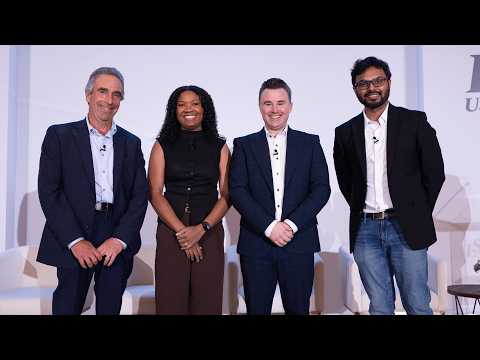
Steve, thank you. Thank you so much, and thank you for joining us in the pre panel discussion that we had with this group. One of the things that we were really looking at was a lot of the synergies that sit between their very different types of products, but also how we would make this panel speak to other companies that are in this same sort of space, where you're building a product that is beautiful and deceptively simple, because there's some real challenges associated with that, there's challenges from the intellectual property point of view, there's challenges associated with regulatory and there's challenges associated with telling your story to investors, and so we're going to explore quite a few of those in the panel today. But one thing that unites all of these different products, and I'm going to give you a an opportunity to hear from everybody is it's relatively simple to build kind of a prototype, but to get something to perfection is a relentless Journey, and being able to get something through iteration after iteration after iteration to the point where it has gotten to the level where you look at the product, you say, well, that's so simple. Why didn't somebody else, you know? Why hasn't someone thought about that? It's actually easy to do complex. It's very difficult to do simple beautifully. And so I'd love to introduce you to the various companies. And what I'm going to ask you, Rui Jing, you'll all have you start tell us really about your laser focus on the patient experience. And that's really you know, as you tell us a little bit about your product, what is it that was the genesis of this, in terms of the patient focus? Because I was really struck by that with all three of your technologies as we were talking about this.
Rui Jing Jiang 2:13
Yeah, absolutely. Hi everyone. Happy to be here. My name is Rai Sheng Jiang. I am founder and CEO of Avisi Technologies, and at Avisi, we are developing nanotechnology based devices to treat glaucoma, which is a leading cause of irreversible blindness that's largely asymptomatic. Many of the patients who present with glaucoma may have already lost much of their visual field or have been on a number of medical or even surgical treatments that have failed to stop the progression of their blindness, and one thing that led us to developing an ultra thin, micro, fluidic implant for these patients was the idea of, how do we give patients back their quality of life without making them suffer through Endless repeat treatments? And how can we take the medication burden away from these patients such that they can actually go out, have fun with their friends and family and enjoy life without the fear of going blind just from missing an eye drop. So our device is five microns thick, 20 times thinner than a human hair, almost 300 times smaller than some of the existing glaucoma treatments, with an emphasis on patient comfort, on longevity of treatment, and lowering and controlling their eye pressure, and on the esthetics of the eye, because so many treatments today fail to take those factors into consideration. And that's a little bit about Avisi, awesome,
Sydney Robinson 3:38
tough act to follow. I'm Sydney. I'm the CEO and co founder of VSSL prosthetics. Also very excited to be here today at vessel we've developed an adaptive volume management system for people that have a leg amputation. So what we know is that poor socket fit, which is the fit between an amputees leg and their prosthetic leg, is the biggest problem in prosthetics today, and the reason for that is because our bodies are dynamic. Everyone's body is changing size, from diet, exercise, weight fluctuation, even the seasons, and those changes lead to a misfit inside of the prosthetic leg, which does not change size at all. And so you can imagine, if you're wearing shoes that don't fit, how much more painful it would be if it was your leg that wasn't fitting properly. And so similarly, when we were thinking about what kinds of solutions we wanted to bring to market, we spent a lot of our time speaking with patients. Is actually how we came across the problem with shadowing a doctor at a diabetes clinic, diabetes being the leading cause of leg amputation, and when we were speaking with people there, we just learned how debilitating It was when your socket didn't fit absolutely perfectly. And why was it that we were putting a dynamic limb inside of a static prosthetic leg? So that was the insight behind vessel prosthetic we've created, as I mentioned, an adaptive volume management system. So it's in addition to i. A prosthetic socket that allows it to adapt dynamically as the leg is changing size.
James Stone 5:07
Good morning, everybody. I'm Dr James Stone. I'm the inventor of the cannulate device, and the founder and CEO of cannu light technology. So this is our little device. Here it is effectively a simple pressure sensor that attaches to an IV catheter needle. So IV catheterization is the most performed invasive medical procedure worldwide, over 1.4 billion per year. But the failure rate of first stick success is anywhere between 30 and 75% in some pediatric cases. So I first experienced this problem in my working practice as a dentist, I was removing lots of wisdom teeth and the intravenous sedation. And the most stressful, unpredictable part of the whole morning was trying to find that that vein and get that IV line in. And if I couldn't do that, then I'd be sending a patient home who I've poked with a needle 10 times, possibly at that point, and they've still got their infected, painful wisdom teeth. I've had to cancel a whole morning of clinical times. That's maybe $4,000 of loss, and it damaged the my reputation, the reputation of the business and and failure to achieve IV access first time is a huge problem through all types of medical care, hospital systems, emergency care, and the patient really suffers, and they shouldn't have to. It's become an accepted part of medical care, and that's what we're trying to change.
Catherine Mohr 6:36
And so I think when you all of these problems were hiding in plain sight. When I talked last year about solving the wicked problems, none of them came with a technology and tried to fit it into something. They came with a problem, and they tried to look at it in a way that, although many people had tried to solve this before, no one had come in that in that space. And so that gets a little bit to the development of intellectual property in an area like this. And again, we're talking about something that's deceptively simple. Someone looks at a better fit for a prosthetic, a glaucoma shunt in an area where there's a lot of products that have tried and are failing, in the in the, you know, in the marketplace, and cannula technology that hasn't seen an advance in quite a while or has very complicated imaging systems to assist with it. So talk a little bit, please, about your intellectual property and the challenges for protecting a deceptively simple product. Maybe it will start, well,
James Stone 7:49
the the first, the first comments I'll make, and it's probably a good thing, is that I probably deceived myself in those early stages of development. You think, Well, this is going to be easy. It's a pressure sensor. But actually, the more you, the more your design progresses, the more you face those design challenges, the more your your IP builds. So So those design challenges, and there are many of them, and they and they, they don't stop. They are actually an opportunity to generate additional IP. So, you know, the first patent we filed with our first prototype was maybe five pages long, and now it's a 32 page document, and it's really shows what you've built through that design process. So I think that's the advice I'd give to anyone who's just starting that journey, is that don't, worry too much about your about your IP to begin with, because that will certainly build as you face those design challenges, and you have to think of innovative ways to to get around them.
Catherine Mohr 8:52
So I'm going to the thing that struck me when I was learning about your technology was the crux of the patent, which is a pressure range, yes, and, and. So the the deceptively simple aspect of this is that you can poke a needle into any part of the body, but when the tip of that needle is inside the vein, it sees a very specific pressure window. And you can patent sensing that Yes. So so anyone can copy whatever else is outside, but not the fundamentals.
James Stone 9:31
And it was actually a patent or an IP strategist who told me that it wasn't my IP attorney, so as a strategist. So that was a really good investment of fairly modest funds to get a strategist on board. So, yeah, we protect the technology the way it works, but also the parameters in which it works. You have to, you have to do some testing and provide that, that desktop data, and put that into, write that into the past. Patent. So you have to prove that the device you're describing does actually work in those parameters. But if you can do that, then you protect those parameters. So yeah, that's another piece of advice I'd have to anyone starting off is fairly early on in the piece. Get, get an IP strategist involved,
Catherine Mohr 10:16
and that's a major aha moment in terms of the sort of the simplicity and so similar to Sydney, mean you're solving a problem that has people have been trying to solve for a very long time. And you're using a few technology, a couple of technologies that are well trodden, but the innovation comes in the combination. So tell us a little bit about your IP Well, I
Sydney Robinson 10:39
think it builds off a couple of points that you'd made earlier, one being that there are some devices in both of our spaces that have existed previously. And so navigating that when you're making your own patent is is part of the puzzle. But going back to what you said, as well as as you build on and you start coming up with new technologies to solve the technological problems you're coming up against, I would relate that back to what we were saying before about being so end user focused and so focused on the patient. You develop a device, and if it doesn't work the way that you thought it would, maybe then you're developing a new version and a completely different route to take, as long as you're dedicated to solving the problem and not just dedicated to some kind of widget that you've created and so that has really built out a robust patent strategy for us. We also spoke with some IP strategists early on to make sure that we are developing out that robust pathway, but really having something that is an automatic but passive system, that was the innovation that we were really able to protect,
Rui Jing Jiang 11:41
I think both of what our fellow panelists have talked about is this unique patient insight which can help drive design innovation or method innovations at Avisi. It's a little bit different, because we have a technological innovation that we actually leapfrog the development cycle of by licensing from the University of Pennsylvania. But even so, you know, this very unique, novel meta material that is the basis of our technology is only one piece of the portfolio. As any entrepreneur in the room knows, you have to constantly be looking at the competitive landscape building upon your portfolio. We actually have a strategy to meet with IP counsel at least quarterly, review the landscape, make sure we continue to have FTO. Of course, we don't have a written opinion, but I'm not a lawyer. I can't give advice on that. Just to make sure that we have all of our bases covered, that we're staying one step ahead and that we have a continuing family of patents that get renewed. So I'm a big fan of being able to take efficient paths to where you want to go. If there's a university or other research institute that has what you need for your portfolio, try to work with them and try to license that IP
Catherine Mohr 12:58
well, and a lot of your early manufacturing was using some of these labs out of the universities as well.
Rui Jing Jiang 13:06
Yeah, and on that, you do have to be a little bit careful, right? Try to use your own people, for example, make sure your access rights to those facilities don't have any IP constraints.
Catherine Mohr 13:19
And so you've got IP protection. What are the kinds of regulatory or reimbursement issues that you feel again this class of you're in some cases, some crowded spaces, in some cases, some fairly wide open spaces. You're all at different levels of acuity, like I cannot stress how different we've got a New Zealander, Canadian and an American. We're in class one, class two, class three. We're, you know, we're, it's a wide spread, from really high tech materials to these A ha moments to almost a consumer product in the space of of a prosthetic, and yet, there are so many similarities in sort of the approaches to these things so but you live in very different regulatory environments. So maybe ru jink, would you talk to us a little bit about some of the issues associated with your technology,
Rui Jing Jiang 14:23
sure, and with all the turmoil recently with the FDA, I think this is a very OnPoint topic here. So out of VCs, you know, we have a number of products in the portfolio, as Catherine, our board member knows, but the primary one is a 510, K device that requires a limited clinical trial. So it's kind of in that in between, right? You're a class two device, but there is still this clinical trial requirement of a one year study and a limited set of patients. We see that as an advantage anytime there is a clinical hurdle. We think that. Does create a moat for the product and the company, and it gives you data that you can then go and market to your future customers. With that being said, it would be great to be able to get onto the market with a class one device and be able to sell and show, you know, market uptake. So curious to know a little bit about how you think about that.
Sydney Robinson 15:20
Yeah, absolutely, as you said, having that clinical data is still incredibly important. So while being an FDA class one medical device, we don't need big clinical trials. It's still definitely a part of our strategy going forward. I would say the reimbursement is an interesting conversation as well, which you kind of alluded to. And we, you know, part of startups is also just really good timing sometimes. And when you're in the right space and you're working on the right problem, I think a lot of those kind of good timing things tend to come out. And so a new reimbursement code passed specifically for adjustable sockets around this time last year, and that was a huge green flag for us that we were working on the right thing at the right time, and while there weren't as many regulatory hurdles, certainly reimbursement was something that we were very aware of. Being a group that would have to sell into a prosthetic clinic. Prosthetic clinics obviously being very aware of their profit margins and their revenue so that they can help patients. So reimbursement was a big factor of ours, and we're glad that we have that new code now. Well,
James Stone 16:24
we're, interestingly, we're a class two device, as far as the FDA concerned, but kind of the rest of the world, TGA, Australia and Europe were a class one device. So that's that's been an interesting journey, learning, learning about that. We are on a 510, K FDA pathway, and we're considered an accessory medical device because we fit to an existing market IV catheters. We're actually the FDA recommended that we use an IV catheter system as our predicate device, which was a surprise to us. We're not complaining, but that was some that was something that did raise a couple of eyebrows, particularly with investors. They wanted a little bit more certainty on that, so we had a q sub with the FDA, and they confirmed that, yep, that's your predicate, and they were happy with our substantial equivalent table. So so we've communicated quite a lot with the FDA just to make sure that certain things that they said that were kind of backed up. So we, I actually can't really complain too much about our FDA pathway so far. Don't want to speak too soon, but we're looking like we'll submit our 510, K in about June, July, this year. So if everything goes well, we could have FDA clearance by September, October of this year.
Catherine Mohr 17:42
Now, you had some interesting companions when you went to go visit the FDA. And I think for a lot of people who are working in the medical device area, they might be interested in hearing a bit about your military partnerships.
James Stone 17:57
Yes. So we had tactical military support at our FDA pre submission meeting, which is very good.
Catherine Mohr 18:03
Then when your friends show up in uniform, it's always a good sign.
James Stone 18:06
Yeah, well, it was a little more sinister than that. They never, they never turn on the cameras, on their on their zoom calls, so we still don't know what they look like. So it's just these black screens. But yeah, I think we had a couple of naval officers. And one of the FDA presub So that was very useful. And that really that, I think that indicated to the FDA that this is indeed a real problem that needs a solution. I think that's the first thing they want to satisfy the FDA, is that you're actually they're not wasting their time and going through all this paper. They need to know that it's a real problem. So that support was was really helpful. And the the the US Marines are particularly interested in our progress through FDA clearance, because we've got US military funding to test the cannula device with the US Marine Corps, and they have also allocated part of that funding for an infrared version of the canyon light device so they can use it with night vision goggles, because so much kind of Battlefield combats now happens at night time. So placing an IV in the dark in those stressful conditions is really difficult, and the New Zealand Navy did our first human study, and in dark, cramped, stressful conditions, can you light improve the success rate of first stick access from 27% which is really low and really scary if you need medical treatment and morphine and fluids, to 89% so we kind of tripled the success rates in those specifically military, challenging environments, so we're delighted to those results.
Catherine Mohr 19:45
Yeah, and as a pathway in for a lot of these types of devices, when you get a very motivated customer core, essentially them being able to both guide the development of the product and help you through. True in terms of pathways for other small companies in that space, it's of interest, absolutely so. But also with the challenge of deceptively simple comes telling your story to investors and being able to compete against everyone saying that they've got Gen AI or that they've got a SaaS model, or this is our subscription model, or things like that, and you're selling a device, how has that complicated? The stories that you're telling, the connection you're making to investors in this space, and what advice do you give for other companies, kind of in your space, and you can tell us where you are in your raising, in your investment pathway, because that's a little interesting, too. So ruijing, I would start
Rui Jing Jiang 20:59
with you. I think for medical device entrepreneurs, it's important to pitch the right audience right you have a very important clinical need you're trying to address what story resonates with those investors that are already familiar with the risks and rewards of medical device investing, for example, how can you adequately characterize the market in your entry point. For example, we are treating moderate to severe glaucoma patients with our first device, of which there are 2.6 million patients in the US right, being very, very clear, understanding the regulatory pathway, as we just mentioned, on how to get there. For example, we're 510 k medical device. We think after a one year US, pivotal study with 65 patients, will achieve 510, K clearance in late 2027 and then showing the investors the potential return on their investment, pointing to precedent transactions in your space, telling the story of, hey, we know the buyers in this space, or we see a path to IPO and exit. I think that's very important. We don't typically go pitch digital health investors or folks who are looking at those Gen AI SaaS model companies, because we're simply not one. Maybe we will have that one day, but definitely not today. And I just really quickly want to say that for any you know, young entrepreneur or first time founder out there, Medtech Innovator is a great resource that can help you refine these points of your story. I didn't know anything about reimbursement starting out, for example, right? And that's a key part of the pitch, too. Hey, there's an existing category one, CPT code that our product can fall under. And why does that matter? Well, it helps you slot into these hospital systems more easily and more effectively, and those are things I think accelerators like MTI can really help with as well, if you're looking for that type of support. I think that
Sydney Robinson 22:47
was an excellent point that you made, is to find the investors that the story will actually resonate with, make sure that you're talking to the right groups. I think LSI, there's a reason we're all here, because we know that the right people are going to be in this room as well. And for us, while the product is deceptively simple, the market is deceptively complex for prosthetics. And so being able to not just articulate your pathway for reimbursement and regulatory and kind of the check boxes that people really look for, but also being able to articulate what is prosthetics like. You know, are we selling to the hospital, or are we selling to a clinic, or are we a consumer device? Are we selling directly to the patient, and how does that impact what our pathway is going to be, and all the different elements of our business? So I think that that's one really key aspect that I learned, kind of as I was pitching was okay, I need to take a step back and just really educate people on how different prosthetics is from like a typical selling to a hospital situation. That was one of the hurdles that I kind of overcame while we were while we were fundraising. We just closed our pre seed round earlier this year, so it was certainly a learning process throughout that time, but I now know how to explain it a little bit better when we start
James Stone 23:59
raising again. Yeah, and even though they're deceptively simple, they are simple. So it's quite easy to explain to investors. Well, this is how it works. This is what it does. It's tangible. They can hold it. When we we met investors last year, we had fairly advanced prototypes that they could, they could play about with and and they can almost see what they're getting. I think if you're in AI or software space, maybe that's a little bit more challenging. You can see something on a screen, but you don't really understand maybe how it works. I certainly wouldn't understand how AI software works. So having something really simple that they can see and touch and understand is helpful. I mean, we were fortunate that IV access is such a common procedure and so many people experience failures with it. In fact, our lead investor, he phoned me probably a couple of weeks before he actually invested, saying he'd just gone to have some blood taken. He spoke to the nurse who was taking the blood at the time to. Told her about the product, showed us some pictures, and she said, Wow, that's amazing. And he said that was a moment that he went, Okay, that's my key opinion leader, Brandon, and that I think was an important part of him investing
Sydney Robinson 25:15
well. And that's a great point, James, because I think for Rei Jing, and I like you, do have something that people have all we've all gotten, you know, blood drawn or been poked by a needle before. So I think it's kind of easier to get to that point where you can relate to the problem. And I think for us, I mean, I won't speak for you, but certainly for me, if you know someone with a leg amputation, you understand right off the bat, like I can almost skip the story. And then there's a lot of people like me. Before I started the company. I didn't know someone with an amputation, so being able to articulate that story and try and explain it in a way that is easily relatable, that's why I always go back to shoes. We've all worn, shoes that are uncomfortable, and so having something that people can really easily relate to, and kind of use that as a jumping off point, I found that to be extremely helpful as well. I don't know if that's a similar experience to what you had raising.
Rui Jing Jiang 26:03
I always like to have a sample of product with me. Thankfully, it fits in a pocket, but I'm sure many investors here will meet entrepreneurs throughout the week carrying a little suitcase with their because we are solving physical problems, right? We are solving problems that can only be solved with surgery, and these are life changing solutions.
Catherine Mohr 26:23
And I think there's another element in terms of the telling the story of a deceptively simple product that is solving a major problem, is it sits inside a medical ecosystem, and it brings value that is far beyond the cost of the individual product. When you know, I think about the story of all of your products, the avoided costs later on, of redos, on surgeries of management or redos of fittings, of re sticks or line infections, there are things about these products and where they fit that is a value story beyond the sale or the price of an individual device, and more and more. When we think about how these products are fitting into larger ecosystems, we're really thinking in terms of it may cost money here, but where is it saving money in other places? And that gets to who's your customer? Is it the individual that's going to have the device implanted or used on them, or they're going to wear it? Is it the environment in which they are operating and someone is making purchase decisions? Or are there more, as we learned, we heard in the keynote earlier, the world of control that GPOs are putting on these larger ecosystems, and you're making cases at all of these different levels in terms of the effects of using your individual products. So any thoughts, I'm going to start with you, Sydney, because I put you on the spot about this last night in in that area,
Sydney Robinson 28:04
yeah, I think you you definitely need both drives, right? You need the emotional drive and you need the financial drive. And for us, like most medical technologies, I would assume it there's a very clear long term benefit. Having the short term benefit of the new reimbursement code really helps, but the long term, you know, clinicians are spending two thirds of their time on follow up visits that they're not reimbursed for, and so not having those unnecessary follow up visits saves hundreds of 1000s of dollars per clinic per year. That's a pretty compelling financial story, and so being able to share that with clinicians is extremely helpful, but you do need to know kind of when to when to bring each factor out. I would say,
James Stone 28:48
well, we're a hospital consumable. I think our biggest challenge is the failed IV access is just an accepted part of of everyday medical care. So I think that's our challenge. Is really proving to the procurement teams that there's this saving there. And we've got data from financial modeling from 400,000 NHS ED patients that really shows us what our value add is and how much we can retail for. But then you've got the things that you can't measure patient fears and and what it actually does that patient's personal situation. So there's with Medtech. That's why we're here. There's always those extra benefits that you can't measure.
Rui Jing Jiang 29:27
Yeah, for us, it's a lot about reducing the post operative burden, because so many patients who are getting glaucoma surgeries today need to go back for a re intervention to either unblock scar tissue, control their intraocular pressure be re introduced to medications such that it hurts their quality of life, and by being able to reduce that post operative burden, not only are we making freeing up time for those patients to go enjoy their lives, but also freeing up time for the provider to see new patients instead of the same reoccurring patient. Events, and that's also a huge cost saving to payers, right? Instead of paying for a lifetime of medication, you could pay for a visit plate and have your patient be controlled and preserve their vision in a more cost effective lifetime value type of way.
Catherine Mohr 30:15
Okay, well, thank you everybody. We've heard about beautiful, deceptively simple products, things that take years to hone with a laser focus on the actual patient benefit, solving the wicked problems with things that don't have to look overly complex, but can really make a real difference. Very, very different technologies, very different areas that they're all in, but some really interesting commonalities. So thank you very much. Join me in thanking my panelists.
Catherine Mohr 0:04
Steve, thank you. Thank you so much, and thank you for joining us in the pre panel discussion that we had with this group. One of the things that we were really looking at was a lot of the synergies that sit between their very different types of products, but also how we would make this panel speak to other companies that are in this same sort of space, where you're building a product that is beautiful and deceptively simple, because there's some real challenges associated with that, there's challenges from the intellectual property point of view, there's challenges associated with regulatory and there's challenges associated with telling your story to investors, and so we're going to explore quite a few of those in the panel today. But one thing that unites all of these different products, and I'm going to give you a an opportunity to hear from everybody is it's relatively simple to build kind of a prototype, but to get something to perfection is a relentless Journey, and being able to get something through iteration after iteration after iteration to the point where it has gotten to the level where you look at the product, you say, well, that's so simple. Why didn't somebody else, you know? Why hasn't someone thought about that? It's actually easy to do complex. It's very difficult to do simple beautifully. And so I'd love to introduce you to the various companies. And what I'm going to ask you, Rui Jing, you'll all have you start tell us really about your laser focus on the patient experience. And that's really you know, as you tell us a little bit about your product, what is it that was the genesis of this, in terms of the patient focus? Because I was really struck by that with all three of your technologies as we were talking about this.
Rui Jing Jiang 2:13
Yeah, absolutely. Hi everyone. Happy to be here. My name is Rai Sheng Jiang. I am founder and CEO of Avisi Technologies, and at Avisi, we are developing nanotechnology based devices to treat glaucoma, which is a leading cause of irreversible blindness that's largely asymptomatic. Many of the patients who present with glaucoma may have already lost much of their visual field or have been on a number of medical or even surgical treatments that have failed to stop the progression of their blindness, and one thing that led us to developing an ultra thin, micro, fluidic implant for these patients was the idea of, how do we give patients back their quality of life without making them suffer through Endless repeat treatments? And how can we take the medication burden away from these patients such that they can actually go out, have fun with their friends and family and enjoy life without the fear of going blind just from missing an eye drop. So our device is five microns thick, 20 times thinner than a human hair, almost 300 times smaller than some of the existing glaucoma treatments, with an emphasis on patient comfort, on longevity of treatment, and lowering and controlling their eye pressure, and on the esthetics of the eye, because so many treatments today fail to take those factors into consideration. And that's a little bit about Avisi, awesome,
Sydney Robinson 3:38
tough act to follow. I'm Sydney. I'm the CEO and co founder of VSSL prosthetics. Also very excited to be here today at vessel we've developed an adaptive volume management system for people that have a leg amputation. So what we know is that poor socket fit, which is the fit between an amputees leg and their prosthetic leg, is the biggest problem in prosthetics today, and the reason for that is because our bodies are dynamic. Everyone's body is changing size, from diet, exercise, weight fluctuation, even the seasons, and those changes lead to a misfit inside of the prosthetic leg, which does not change size at all. And so you can imagine, if you're wearing shoes that don't fit, how much more painful it would be if it was your leg that wasn't fitting properly. And so similarly, when we were thinking about what kinds of solutions we wanted to bring to market, we spent a lot of our time speaking with patients. Is actually how we came across the problem with shadowing a doctor at a diabetes clinic, diabetes being the leading cause of leg amputation, and when we were speaking with people there, we just learned how debilitating It was when your socket didn't fit absolutely perfectly. And why was it that we were putting a dynamic limb inside of a static prosthetic leg? So that was the insight behind vessel prosthetic we've created, as I mentioned, an adaptive volume management system. So it's in addition to i. A prosthetic socket that allows it to adapt dynamically as the leg is changing size.
James Stone 5:07
Good morning, everybody. I'm Dr James Stone. I'm the inventor of the cannulate device, and the founder and CEO of cannu light technology. So this is our little device. Here it is effectively a simple pressure sensor that attaches to an IV catheter needle. So IV catheterization is the most performed invasive medical procedure worldwide, over 1.4 billion per year. But the failure rate of first stick success is anywhere between 30 and 75% in some pediatric cases. So I first experienced this problem in my working practice as a dentist, I was removing lots of wisdom teeth and the intravenous sedation. And the most stressful, unpredictable part of the whole morning was trying to find that that vein and get that IV line in. And if I couldn't do that, then I'd be sending a patient home who I've poked with a needle 10 times, possibly at that point, and they've still got their infected, painful wisdom teeth. I've had to cancel a whole morning of clinical times. That's maybe $4,000 of loss, and it damaged the my reputation, the reputation of the business and and failure to achieve IV access first time is a huge problem through all types of medical care, hospital systems, emergency care, and the patient really suffers, and they shouldn't have to. It's become an accepted part of medical care, and that's what we're trying to change.
Catherine Mohr 6:36
And so I think when you all of these problems were hiding in plain sight. When I talked last year about solving the wicked problems, none of them came with a technology and tried to fit it into something. They came with a problem, and they tried to look at it in a way that, although many people had tried to solve this before, no one had come in that in that space. And so that gets a little bit to the development of intellectual property in an area like this. And again, we're talking about something that's deceptively simple. Someone looks at a better fit for a prosthetic, a glaucoma shunt in an area where there's a lot of products that have tried and are failing, in the in the, you know, in the marketplace, and cannula technology that hasn't seen an advance in quite a while or has very complicated imaging systems to assist with it. So talk a little bit, please, about your intellectual property and the challenges for protecting a deceptively simple product. Maybe it will start, well,
James Stone 7:49
the the first, the first comments I'll make, and it's probably a good thing, is that I probably deceived myself in those early stages of development. You think, Well, this is going to be easy. It's a pressure sensor. But actually, the more you, the more your design progresses, the more you face those design challenges, the more your your IP builds. So So those design challenges, and there are many of them, and they and they, they don't stop. They are actually an opportunity to generate additional IP. So, you know, the first patent we filed with our first prototype was maybe five pages long, and now it's a 32 page document, and it's really shows what you've built through that design process. So I think that's the advice I'd give to anyone who's just starting that journey, is that don't, worry too much about your about your IP to begin with, because that will certainly build as you face those design challenges, and you have to think of innovative ways to to get around them.
Catherine Mohr 8:52
So I'm going to the thing that struck me when I was learning about your technology was the crux of the patent, which is a pressure range, yes, and, and. So the the deceptively simple aspect of this is that you can poke a needle into any part of the body, but when the tip of that needle is inside the vein, it sees a very specific pressure window. And you can patent sensing that Yes. So so anyone can copy whatever else is outside, but not the fundamentals.
James Stone 9:31
And it was actually a patent or an IP strategist who told me that it wasn't my IP attorney, so as a strategist. So that was a really good investment of fairly modest funds to get a strategist on board. So, yeah, we protect the technology the way it works, but also the parameters in which it works. You have to, you have to do some testing and provide that, that desktop data, and put that into, write that into the past. Patent. So you have to prove that the device you're describing does actually work in those parameters. But if you can do that, then you protect those parameters. So yeah, that's another piece of advice I'd have to anyone starting off is fairly early on in the piece. Get, get an IP strategist involved,
Catherine Mohr 10:16
and that's a major aha moment in terms of the sort of the simplicity and so similar to Sydney, mean you're solving a problem that has people have been trying to solve for a very long time. And you're using a few technology, a couple of technologies that are well trodden, but the innovation comes in the combination. So tell us a little bit about your IP Well, I
Sydney Robinson 10:39
think it builds off a couple of points that you'd made earlier, one being that there are some devices in both of our spaces that have existed previously. And so navigating that when you're making your own patent is is part of the puzzle. But going back to what you said, as well as as you build on and you start coming up with new technologies to solve the technological problems you're coming up against, I would relate that back to what we were saying before about being so end user focused and so focused on the patient. You develop a device, and if it doesn't work the way that you thought it would, maybe then you're developing a new version and a completely different route to take, as long as you're dedicated to solving the problem and not just dedicated to some kind of widget that you've created and so that has really built out a robust patent strategy for us. We also spoke with some IP strategists early on to make sure that we are developing out that robust pathway, but really having something that is an automatic but passive system, that was the innovation that we were really able to protect,
Rui Jing Jiang 11:41
I think both of what our fellow panelists have talked about is this unique patient insight which can help drive design innovation or method innovations at Avisi. It's a little bit different, because we have a technological innovation that we actually leapfrog the development cycle of by licensing from the University of Pennsylvania. But even so, you know, this very unique, novel meta material that is the basis of our technology is only one piece of the portfolio. As any entrepreneur in the room knows, you have to constantly be looking at the competitive landscape building upon your portfolio. We actually have a strategy to meet with IP counsel at least quarterly, review the landscape, make sure we continue to have FTO. Of course, we don't have a written opinion, but I'm not a lawyer. I can't give advice on that. Just to make sure that we have all of our bases covered, that we're staying one step ahead and that we have a continuing family of patents that get renewed. So I'm a big fan of being able to take efficient paths to where you want to go. If there's a university or other research institute that has what you need for your portfolio, try to work with them and try to license that IP
Catherine Mohr 12:58
well, and a lot of your early manufacturing was using some of these labs out of the universities as well.
Rui Jing Jiang 13:06
Yeah, and on that, you do have to be a little bit careful, right? Try to use your own people, for example, make sure your access rights to those facilities don't have any IP constraints.
Catherine Mohr 13:19
And so you've got IP protection. What are the kinds of regulatory or reimbursement issues that you feel again this class of you're in some cases, some crowded spaces, in some cases, some fairly wide open spaces. You're all at different levels of acuity, like I cannot stress how different we've got a New Zealander, Canadian and an American. We're in class one, class two, class three. We're, you know, we're, it's a wide spread, from really high tech materials to these A ha moments to almost a consumer product in the space of of a prosthetic, and yet, there are so many similarities in sort of the approaches to these things so but you live in very different regulatory environments. So maybe ru jink, would you talk to us a little bit about some of the issues associated with your technology,
Rui Jing Jiang 14:23
sure, and with all the turmoil recently with the FDA, I think this is a very OnPoint topic here. So out of VCs, you know, we have a number of products in the portfolio, as Catherine, our board member knows, but the primary one is a 510, K device that requires a limited clinical trial. So it's kind of in that in between, right? You're a class two device, but there is still this clinical trial requirement of a one year study and a limited set of patients. We see that as an advantage anytime there is a clinical hurdle. We think that. Does create a moat for the product and the company, and it gives you data that you can then go and market to your future customers. With that being said, it would be great to be able to get onto the market with a class one device and be able to sell and show, you know, market uptake. So curious to know a little bit about how you think about that.
Sydney Robinson 15:20
Yeah, absolutely, as you said, having that clinical data is still incredibly important. So while being an FDA class one medical device, we don't need big clinical trials. It's still definitely a part of our strategy going forward. I would say the reimbursement is an interesting conversation as well, which you kind of alluded to. And we, you know, part of startups is also just really good timing sometimes. And when you're in the right space and you're working on the right problem, I think a lot of those kind of good timing things tend to come out. And so a new reimbursement code passed specifically for adjustable sockets around this time last year, and that was a huge green flag for us that we were working on the right thing at the right time, and while there weren't as many regulatory hurdles, certainly reimbursement was something that we were very aware of. Being a group that would have to sell into a prosthetic clinic. Prosthetic clinics obviously being very aware of their profit margins and their revenue so that they can help patients. So reimbursement was a big factor of ours, and we're glad that we have that new code now. Well,
James Stone 16:24
we're, interestingly, we're a class two device, as far as the FDA concerned, but kind of the rest of the world, TGA, Australia and Europe were a class one device. So that's that's been an interesting journey, learning, learning about that. We are on a 510, K FDA pathway, and we're considered an accessory medical device because we fit to an existing market IV catheters. We're actually the FDA recommended that we use an IV catheter system as our predicate device, which was a surprise to us. We're not complaining, but that was some that was something that did raise a couple of eyebrows, particularly with investors. They wanted a little bit more certainty on that, so we had a q sub with the FDA, and they confirmed that, yep, that's your predicate, and they were happy with our substantial equivalent table. So so we've communicated quite a lot with the FDA just to make sure that certain things that they said that were kind of backed up. So we, I actually can't really complain too much about our FDA pathway so far. Don't want to speak too soon, but we're looking like we'll submit our 510, K in about June, July, this year. So if everything goes well, we could have FDA clearance by September, October of this year.
Catherine Mohr 17:42
Now, you had some interesting companions when you went to go visit the FDA. And I think for a lot of people who are working in the medical device area, they might be interested in hearing a bit about your military partnerships.
James Stone 17:57
Yes. So we had tactical military support at our FDA pre submission meeting, which is very good.
Catherine Mohr 18:03
Then when your friends show up in uniform, it's always a good sign.
James Stone 18:06
Yeah, well, it was a little more sinister than that. They never, they never turn on the cameras, on their on their zoom calls, so we still don't know what they look like. So it's just these black screens. But yeah, I think we had a couple of naval officers. And one of the FDA presub So that was very useful. And that really that, I think that indicated to the FDA that this is indeed a real problem that needs a solution. I think that's the first thing they want to satisfy the FDA, is that you're actually they're not wasting their time and going through all this paper. They need to know that it's a real problem. So that support was was really helpful. And the the the US Marines are particularly interested in our progress through FDA clearance, because we've got US military funding to test the cannula device with the US Marine Corps, and they have also allocated part of that funding for an infrared version of the canyon light device so they can use it with night vision goggles, because so much kind of Battlefield combats now happens at night time. So placing an IV in the dark in those stressful conditions is really difficult, and the New Zealand Navy did our first human study, and in dark, cramped, stressful conditions, can you light improve the success rate of first stick access from 27% which is really low and really scary if you need medical treatment and morphine and fluids, to 89% so we kind of tripled the success rates in those specifically military, challenging environments, so we're delighted to those results.
Catherine Mohr 19:45
Yeah, and as a pathway in for a lot of these types of devices, when you get a very motivated customer core, essentially them being able to both guide the development of the product and help you through. True in terms of pathways for other small companies in that space, it's of interest, absolutely so. But also with the challenge of deceptively simple comes telling your story to investors and being able to compete against everyone saying that they've got Gen AI or that they've got a SaaS model, or this is our subscription model, or things like that, and you're selling a device, how has that complicated? The stories that you're telling, the connection you're making to investors in this space, and what advice do you give for other companies, kind of in your space, and you can tell us where you are in your raising, in your investment pathway, because that's a little interesting, too. So ruijing, I would start
Rui Jing Jiang 20:59
with you. I think for medical device entrepreneurs, it's important to pitch the right audience right you have a very important clinical need you're trying to address what story resonates with those investors that are already familiar with the risks and rewards of medical device investing, for example, how can you adequately characterize the market in your entry point. For example, we are treating moderate to severe glaucoma patients with our first device, of which there are 2.6 million patients in the US right, being very, very clear, understanding the regulatory pathway, as we just mentioned, on how to get there. For example, we're 510 k medical device. We think after a one year US, pivotal study with 65 patients, will achieve 510, K clearance in late 2027 and then showing the investors the potential return on their investment, pointing to precedent transactions in your space, telling the story of, hey, we know the buyers in this space, or we see a path to IPO and exit. I think that's very important. We don't typically go pitch digital health investors or folks who are looking at those Gen AI SaaS model companies, because we're simply not one. Maybe we will have that one day, but definitely not today. And I just really quickly want to say that for any you know, young entrepreneur or first time founder out there, Medtech Innovator is a great resource that can help you refine these points of your story. I didn't know anything about reimbursement starting out, for example, right? And that's a key part of the pitch, too. Hey, there's an existing category one, CPT code that our product can fall under. And why does that matter? Well, it helps you slot into these hospital systems more easily and more effectively, and those are things I think accelerators like MTI can really help with as well, if you're looking for that type of support. I think that
Sydney Robinson 22:47
was an excellent point that you made, is to find the investors that the story will actually resonate with, make sure that you're talking to the right groups. I think LSI, there's a reason we're all here, because we know that the right people are going to be in this room as well. And for us, while the product is deceptively simple, the market is deceptively complex for prosthetics. And so being able to not just articulate your pathway for reimbursement and regulatory and kind of the check boxes that people really look for, but also being able to articulate what is prosthetics like. You know, are we selling to the hospital, or are we selling to a clinic, or are we a consumer device? Are we selling directly to the patient, and how does that impact what our pathway is going to be, and all the different elements of our business? So I think that that's one really key aspect that I learned, kind of as I was pitching was okay, I need to take a step back and just really educate people on how different prosthetics is from like a typical selling to a hospital situation. That was one of the hurdles that I kind of overcame while we were while we were fundraising. We just closed our pre seed round earlier this year, so it was certainly a learning process throughout that time, but I now know how to explain it a little bit better when we start
James Stone 23:59
raising again. Yeah, and even though they're deceptively simple, they are simple. So it's quite easy to explain to investors. Well, this is how it works. This is what it does. It's tangible. They can hold it. When we we met investors last year, we had fairly advanced prototypes that they could, they could play about with and and they can almost see what they're getting. I think if you're in AI or software space, maybe that's a little bit more challenging. You can see something on a screen, but you don't really understand maybe how it works. I certainly wouldn't understand how AI software works. So having something really simple that they can see and touch and understand is helpful. I mean, we were fortunate that IV access is such a common procedure and so many people experience failures with it. In fact, our lead investor, he phoned me probably a couple of weeks before he actually invested, saying he'd just gone to have some blood taken. He spoke to the nurse who was taking the blood at the time to. Told her about the product, showed us some pictures, and she said, Wow, that's amazing. And he said that was a moment that he went, Okay, that's my key opinion leader, Brandon, and that I think was an important part of him investing
Sydney Robinson 25:15
well. And that's a great point, James, because I think for Rei Jing, and I like you, do have something that people have all we've all gotten, you know, blood drawn or been poked by a needle before. So I think it's kind of easier to get to that point where you can relate to the problem. And I think for us, I mean, I won't speak for you, but certainly for me, if you know someone with a leg amputation, you understand right off the bat, like I can almost skip the story. And then there's a lot of people like me. Before I started the company. I didn't know someone with an amputation, so being able to articulate that story and try and explain it in a way that is easily relatable, that's why I always go back to shoes. We've all worn, shoes that are uncomfortable, and so having something that people can really easily relate to, and kind of use that as a jumping off point, I found that to be extremely helpful as well. I don't know if that's a similar experience to what you had raising.
Rui Jing Jiang 26:03
I always like to have a sample of product with me. Thankfully, it fits in a pocket, but I'm sure many investors here will meet entrepreneurs throughout the week carrying a little suitcase with their because we are solving physical problems, right? We are solving problems that can only be solved with surgery, and these are life changing solutions.
Catherine Mohr 26:23
And I think there's another element in terms of the telling the story of a deceptively simple product that is solving a major problem, is it sits inside a medical ecosystem, and it brings value that is far beyond the cost of the individual product. When you know, I think about the story of all of your products, the avoided costs later on, of redos, on surgeries of management or redos of fittings, of re sticks or line infections, there are things about these products and where they fit that is a value story beyond the sale or the price of an individual device, and more and more. When we think about how these products are fitting into larger ecosystems, we're really thinking in terms of it may cost money here, but where is it saving money in other places? And that gets to who's your customer? Is it the individual that's going to have the device implanted or used on them, or they're going to wear it? Is it the environment in which they are operating and someone is making purchase decisions? Or are there more, as we learned, we heard in the keynote earlier, the world of control that GPOs are putting on these larger ecosystems, and you're making cases at all of these different levels in terms of the effects of using your individual products. So any thoughts, I'm going to start with you, Sydney, because I put you on the spot about this last night in in that area,
Sydney Robinson 28:04
yeah, I think you you definitely need both drives, right? You need the emotional drive and you need the financial drive. And for us, like most medical technologies, I would assume it there's a very clear long term benefit. Having the short term benefit of the new reimbursement code really helps, but the long term, you know, clinicians are spending two thirds of their time on follow up visits that they're not reimbursed for, and so not having those unnecessary follow up visits saves hundreds of 1000s of dollars per clinic per year. That's a pretty compelling financial story, and so being able to share that with clinicians is extremely helpful, but you do need to know kind of when to when to bring each factor out. I would say,
James Stone 28:48
well, we're a hospital consumable. I think our biggest challenge is the failed IV access is just an accepted part of of everyday medical care. So I think that's our challenge. Is really proving to the procurement teams that there's this saving there. And we've got data from financial modeling from 400,000 NHS ED patients that really shows us what our value add is and how much we can retail for. But then you've got the things that you can't measure patient fears and and what it actually does that patient's personal situation. So there's with Medtech. That's why we're here. There's always those extra benefits that you can't measure.
Rui Jing Jiang 29:27
Yeah, for us, it's a lot about reducing the post operative burden, because so many patients who are getting glaucoma surgeries today need to go back for a re intervention to either unblock scar tissue, control their intraocular pressure be re introduced to medications such that it hurts their quality of life, and by being able to reduce that post operative burden, not only are we making freeing up time for those patients to go enjoy their lives, but also freeing up time for the provider to see new patients instead of the same reoccurring patient. Events, and that's also a huge cost saving to payers, right? Instead of paying for a lifetime of medication, you could pay for a visit plate and have your patient be controlled and preserve their vision in a more cost effective lifetime value type of way.
Catherine Mohr 30:15
Okay, well, thank you everybody. We've heard about beautiful, deceptively simple products, things that take years to hone with a laser focus on the actual patient benefit, solving the wicked problems with things that don't have to look overly complex, but can really make a real difference. Very, very different technologies, very different areas that they're all in, but some really interesting commonalities. So thank you very much. Join me in thanking my panelists.
17011 Beach Blvd, Suite 500 Huntington Beach, CA 92647
714-847-3540© 2025 Life Science Intelligence, Inc., All Rights Reserved. | Privacy Policy