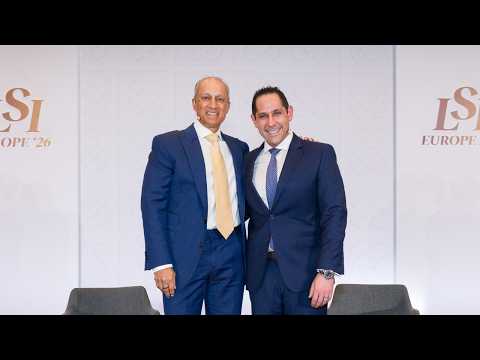
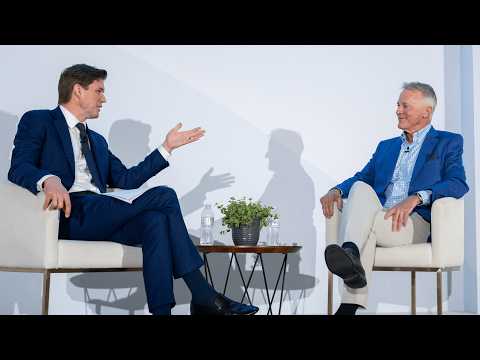
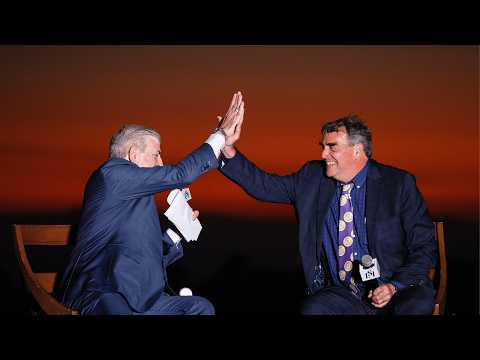
Signature Series with Harry Stebbings, Founder of 20VC | LSI Europe '25

Join venture capitalist Harry Stebbings of 20VC Fund as he hosts a signature conversation with Henry Peck from LSI, exploring insights on investment strategies and market trends in the life sciences industry.
Join Our Next Event
Partner with the leaders
shaping the future of
Medtech at LSI USA ‘26
March 16th - 20th, 2026
Waldorf Astoria, Monarch Beach

Henry Peck  0:04  
First of all, thank you everyone for joining us. I know it has been a full, packed week, Harry, meeting you in the lobby. It was a little jarring at first, because I've only heard your voice through my air pods.


Harry Stebbings  0:14  
I look young in these pictures, and then you meet me and you're like, Jesus, you're older and bigger than I thought you'd be everyone's honestly, everyone meets me like I thought you were 12, and I'm like, No, I'm not. I've just taken 10 years ago. Thank you. It's really to meet you too, man.


Henry Peck  0:27  
It's great to have you here. And I want to start, I think you know, for so many in the audience of the investors, we was talking with them before the session, what you do needs no introduction. But I want to start with the introduction, an introduction, essentially, particularly, an introduction relevant to an audience of healthcare entrepreneurs, investors and corporate strategic acquirers and partners. You shared a lot about your connection to healthcare, to chronic diseases, etc, and how it shaped you in the work you do today with your family. And I'd love to give you the opportunity here to let everyone know about that connection and how it shapes the work you do at 20VC.


Harry Stebbings  1:03  
Yeah, sure. So, I mean, I saw venture capital for the first time when I was 13 years old. I saw the social network, and there's a scene where Peter Thiel invests in Facebook with Clarion capital, his hedge fund. And I was 13, and I thought, wow, this is incredible. This is two of my big loves, finance and technology coming together, and so I was a massive nerd on venture when I was in my teenage years. It's why I had no friends and no girlfriends when I was in high school. Probably many other reasons too, to be fair. And then when I was 18, a I think great companies are founded on the back of insight developments a way that an entrepreneur sees the world that is different to the way everyone else sees the world. And I thought the future of venture would be transparent. It would not be an old boys club anymore, and I thought they would be commoditized. I thought you would need to bring products to the table to win the right to invest in the best entrepreneurs. And so I started 20 VC from my bedroom. I had no money, and I didn't know one single VC. So slight check challenge in that starting point. And then about a year in a year and a half in, my mother said, you know, my MS is getting worse. My mother's had multiple cirrhosis and has done since I was kind of 13. My Multiple Sclerosis is getting worse, and I'm going to, you know, be in a wheelchair in like five years time with the latest results that she had. And, yeah, the medication is just way too expensive, and there's all these different pills and injections and everything that I need at the time. So it's gonna be like, $700,000 so there's no way that I can do it. And I was like, Well, don't worry about it. I'll pay for it. And I was like, 19 that had no money and had absolutely no fucking idea how on my routes work, absolutely no idea how I'd pay for it. But with incredible gusto and confidence, I proceeded up to my bedroom, plotted out the five most competitive software categories and the five wet, most well funded companies within them, so 25 companies, and I got the cold emails, or the emails for the CEOs of those companies, Mark Benning off dharmash at HubSpot, you name it. And I called email them, and I realized that $100,000 was the price where they needed procurement. A la pobbell, we hate procurement, so 95 was the price. And I would email them and say, Oh, Mark, I love Salesforce, but HubSpot want to sponsor the show so, you know, we'd love to work with you, and for $95,000 baby, it's yours. And 22 out of 25 came back within three days, and then a weekend, we made about $2 million Bush was nice. Pretty good return. Allen horizon, yeah, it was pretty good. And I had no idea that you could actually make money from podcast before that moment, but that was, like, the sole reason why we built a business was because I needed to pay for my mother's that mass medication. And that's been really, really impactful. Yeah.


Henry Peck  3:55  
And now today, you recently announced a new fundraise for what


Harry Stebbings  3:59  
Do you want to know something nuts. Sorry, yeah, we're never gonna, like, have any control over me in this. Sorry. My mother used to have a relapse, like once every three weeks of her MS, she has relapse in remitting. Ms, it's not bad, but it's not good. She does suffer pretty format, or she did and when she was drinking, she used to have a relapse once a month, a week, should be out like properly, in bed, not good. She stops drinking. Has a relapse every 18 months. What the fuck like all of the doctors that we went to? Oh, diet doesn't really make a difference. It was maybe, do this have a higher fat here? No one fucking said, Stop drinking. Her life changed insanely.


Henry Peck  4:48  
It is funny to think about all the technologies we're building here to treat chronic diseases, to treat things that need surgical intervention. You know, really, really heady problems, yet kind of the connection between deep med tech. Like that, and just health and wellness in general seems to kind of be very fragmented. You did an episode with the founder of the David protein bar, and a lot of the things you were asking around, you know, is it good to be consuming all this protein? Is it, you know, is that better for you?


Harry Stebbings  5:15  
No, it's definitely not, by the way. Like I had this old girlfriend who would always tell me that, like, protein bars would, like, kill me, and I didn't believe her, and then actually, like, she was right, synthetic protein, it just is so bad from the gut makes you fart like the trooper, sorry, it just don't do it. Yeah, fair enough. Take away.


Henry Peck  5:35  
Well, I think my, I think my biceps might be a little smaller than yours, so I might be telling you not to use them instead of me. But regardless, it is incredible to think about, you know, how the your experience with with healthcare, through your mother as you know, really kind of shaped as a seminal point in your in your life. And I think another thing that you talk a lot about kind of totally shifting gears away from just health, being here in London, we have a lot of European based startups that are here at this summit raising capital. We have us startups that are coming overseas. US and European investors, you've been extremely, extremely vocal through your podcast about the opportunity here in Europe to build generational companies. And with this new fund, you did something about it with Project Europe. I know when that came out. It was almost the exact day, I think, that we announced the session here at LSI Europe. So a lot of people had asked me to, kind of ask you, to explain what project Europe is, what's the goal? How are you building it, and where do you see it going?


Harry Stebbings  6:34  
The fundamental problem is we tell young people that if you want to build great companies, you have to move to Silicon Valley, which is absolute bullshit. They will continue to do so if we continue to tell them that that's what they need to do. And so project Europe is very simple. It's about funding 16, if we can quite get away with below that, 16 to 25 year olds funding them with the right amount of money to build insanely ambitious projects. We have one project in Greece that is robotics for injection delivery. We have incredible cyber security projects, very ambitious projects where there are 18 year olds with no data points to suggest they will be successful. No venture capitalists will fund this, and we will fund them as early as humanly possible, and encourage them to build businesses that they wouldn't have otherwise built like every company needs, like an unwavering North Star. Our unwavering North Star is, in 10 years, there will be 10, 10,000 person companies that came from Project Europe.


Henry Peck  7:32  
Wow. And when you say we, I know you have an incredible network behind you. In addition, you have kitty, you have a whole network of


Harry Stebbings  7:39  
fund is funded by 200 of the best entrepreneurs. People forget when raising money to utilize your cap table, one like a sports team, everyone has an individual role to play, and you draw on them for that individual role, but also to weaponize your cap table, turn your cap table into a strategic advantage that you can use to win. And we thought here, respectfully, it's like 10 million bucks. We can fund it ourselves. We could fund it from anyone. But how do we turn it into a weapon? We get 200 of the best founders in Europe to be our LPs, each with 20k 25k checks, and make sure that we have that weapon at our disposal.


Henry Peck  8:19  
It sounds that sounds a lot like some of the things we've heard from entrepreneurs this week that have had success using that cap table strategically. They think a lot about in healthcare. You know, do they want some of these corporate acquirers or health systems on their cap table? As CDC is early, there's pros and cons. They weigh you. Not only are a founder, but have seen some of the best founders backed a lot of the best founders for the founders in the room here, I'm curious and the investors that look at founders, what are some of the common traits that you see across the best founders in your portfolio that we can take into this industry as we build companies?


Harry Stebbings  8:52  
Yeah, absolutely. Is a really good question. There's, there's two different elements to this question, like, what makes the best entrepreneur says the mindset. And, you know, lucky that we've invested in $12 billion companies and work very closely with them. When you look at the mindset of the best entrepreneurs, they have three core traits. The first is they have this superiority complex. They fundamentally believe that in some way they're better than other people. They don't like to admit it, but they do, I am better and more talented. I'm more capable than other people, which is why I am who I am. That's what they believe. Superiority complex at the same time. They have this kind of paradoxical inferiority complex that they are not achieving enough. They could be moving faster. They're not hitting where they should be. And it's this strange duality which they hold at the same time. And then you layer on top of that impulse control, which is the ability to suspend desires for pain and endurance and to prevent doing things that other people would otherwise fall victim to or do. So it's kind of those three, which is superiority complex inferiority, and then the impulse control that's kind of on the mindset side, on the. Are characteristics or traits in one's past? I'm never went to university, but I think be a great job to be a psychologist. Sit in my chair and I'll charge you like 500 bucks. Great job. But when you look at childhoods, they unwaveringly inform great entrepreneurs. And there's really three traits. The first trait is the best. Entrepreneurs always move around a lot in their childhood. They're forced to assimilate with new environments, make new friends, join new clubs, leave friendships, a core trait of leadership. The second is they are often very competitive gamers or lead clans, one of the most common signals of a high, highly successful software entrepreneur.


Henry Peck  10:43  
For those who are wondering what clan means outside the context of video games, yeah, can you if I clarify


Harry Stebbings  10:48  
like an online community that participates in games and they lead them, organize them, structure them. You know, I remember Toby Looker at Shopify, the CEO of Shopify, telling me that he derives a lot more signal from whether you led a clan than whether you went to Harvard. If anyone went to Harvard, I'm so sorry you could have just led a clan save the 150k but this didn't do an MBA, but I get in trouble for that one, but that's really important. And then the third and final one is great. Entrepreneurs always show entrepreneurial flare early. They present signs of greatness early. No one at 25 in software, for sure, is like, Ah, I'm going to do my first ever entrepreneurial thing. Entrepreneurialism always reveals itself early in the life of an entrepreneur. And so those three things in the kind of childhood and background really make for a fantastic entrepreneur.


Henry Peck  11:43  
Does it have to be something entrepreneurial? And I think when we think entrepreneurial, we think company making money, you know, starting a business of that sort. Can you give me some examples of a sign of an entrepreneur in childhood?


Harry Stebbings  11:56  
Oh, yeah, there's, I mean, the most common one that we see given kind of the generational patterns that we invest in is I made websites for local businesses. That's the most common one that you will see I created a gaming company. Often is another one. In lieu of entrepreneurship or making money, I need exceptionalism, and so I want to see where you have outperformed compared to your benchmark. And so I love investing in athletes. They are unwaveringly disciplined. They're willing to forego short term benefits for long term sacrifice. That's really, really important. And so in lieu of, like, money making activities, absolutely athlete says a lot to me. And this is a game of, fundamentally, like, the work you do in private is the work you are ordered for in public. And most of the time, people won't give a shit about you, and you have to be very willing to put up with that. You know, we did, like, two years before we hit, like, 1000 plays. For a long time, 1000 plays on your podcast, yeah, per show. It was a long time of no one giving a shit. Now we get that two and a half million you have to persist through that. It's a game of who can survive the longest.


Henry Peck  13:09  
Yeah, you've talked about that idea of kind of a game of attrition in in building media distribution, great product. And I think when these things you're talking about with some of these incredible founders, being an avid listener of your show, with a lot of these AI company founders, you hear those signals and the way that you ask the questions, you kind of lead us to this interesting, rich data set of starting to compare their backgrounds and think about what they did. And I want to kind of use that to segue maybe into the topic of the moment, which is, you know, these incredible AI companies and how they're growing. You know, across industries, there is so many, so many applications. It's almost dizzying thinking about where we are here today in healthcare, there's everyone thinking,


Harry Stebbings  13:53  
who's this reprobate on stage? Sorry, like, also with this kind of weird tattoo. This is not a permanent tattoo, just to be clear, my mother would kill me. It shows you the state of the venture capital industry, though she's really interesting, like, the excess capital supply is terrifying. There's so much money, so much money chasing so few deals, that we have to do everything humanely fucking possible to win the right to invest and the best founders yesterday, the team all got transfer tattoos just to show something different, to prove to an entrepreneur that we're willing to think differently and out of the box, that is a very interesting depiction of the state of capital markets.


Henry Peck  14:36  
I think what's so incredible is the juxtaposition between what you just said, which is, which is 100% true in the world that we're talking about. And I think what so many of the operators here that work in a highly regulated industry like healthcare experience on a day to day is not a flurry of investors competing to get into their rounds. Raise your raise your hand if you're a med. Tech operator that's had a flurry of investors competing to get into year round consistently raise your hand if you're a med tech startup that would say it's challenging to raise capital in today's environment. It's just a really interesting yeah, it's a really interesting difference,


Harry Stebbings  15:14  
and that may be towards me, because I'm fucking questioning my life choices. You've got a 19 year old who kind of went into open AI for a coffee that raises 100 million bucks at a billion dollars. And it's fucking nuts.


Henry Peck  15:24  
Yeah, the and that is, I mean, it is crazy. Some of the companies you have, too, that are just the revenue growth, like


Harry Stebbings  15:30  
we have, like, four companies that scale to $100 million in revenue in a


Henry Peck  15:36  
year. Unbelievable. Yeah, we did this


Harry Stebbings  15:38  
business cognition very early, and, you know, it just raised it $10 billion and it was nothing 18 months ago, nothing to $10 billion in 18 months. Like, the whole story and journey of company development has changed in software. It's astonishing.


Henry Peck  15:56  
And so to ask, maybe, like, the million dollar question, right? What is what are we doing wrong? Or what can we do differently? How? How can we get more of the people that are building those kinds of businesses that have access to those kinds of funds to care about an industry that accounts for so much of our GDP affects all of us in so many ways. What kinds of things do you think about with respect to the future of healthcare, and what can you know the people that are building in that space do, maybe to kind of bridge that rift?


Harry Stebbings  16:29  
I think there's an incentives drive outcomes, and while the incentives are so heavily skewed towards insanely steroid driven software company acceleration, you will not see that transition occur. What you will see, though, is a lack of sustainability in those revenues. Are these companies durable? Are these ongoing? Can 2030, year companies? The honest answer is unwaveringly No. And any ambassador who says they are is bluntly propping up their own book. They are not. Some are and some aren't. Truth is, are we in an AI bubble? 100% yes. Are bubbles bad? Good question. A lot of great innovation comes from bubbles, and the funding that goes into them spawns a lot of development. So are we in a bubble? Yes. Could it be a good bubble? Yes. The question really then, for me, becomes when the tide turns and we realize that we've lost a lot of money on a lot of AI hype, where does the money go from there, and how do we direct it efficiently into a meaningful category, like healthcare and not something less meaningful, like Degen crypto communities or web three, where it could equally go again, incentives drive outcomes. And so I think the true question for the healthcare community is, how do we package the incentives to investors where they can see that upside in a similar way? We're all just fucking dopamine driven monkeys these days. Honestly, I know it sounds like it's true. We noticed it in our content here before we used to really insightful, great content, you know, sit down with the founders of stripe and Shopify and Spotify and talk about leadership lessons and hiring. Yeah, what people want now? A 62nd Reel on like Sam Altman fighting with Elon Musk in a mud boss who died, no one, but it's a 62nd Reel that grabs attention. And I think sadly, investors are the same, which is why they're going so nuts for this zero to 100 million dollar acceleration. And I guess the question, and again, I hate people that pretend to know more than they do, which is most of the investing world, but I don't know if there's structural elements to healthcare that mean you can't accelerate in the same way that software businesses can do. I'm sure certifications, FDA approvals mean that actually that's much more challenging, but if I was thinking as a healthcare entrepreneur. So how do I package this? To show to a software ambassador, the acceleration that can come also so much is just vibes. You know, honestly, software investors are not very smart, like, it's why we just move from thing to thing very quickly. You know, defense. What the fuck do we know about defense? Seriously? Well, I mean, I have so many people are like, have you seen this new drama category? Of them all, I may have a Harvard MBA at the other told me about cost per kill. And like cost, and so I'm just like, customer acquisition cost on Facebook, what? And it's like, the cost it takes to kill someone. It's ridiculous. Why is that? It's because it's the topic du jour, and, you know, it aligns to, obviously, foreign affairs and where a lot of concerns go there, but a lot of investor is mimicry and vibe investing that may not make you feel better. Sorry. No, my goodness.


Henry Peck  19:53  
So much in there to look at. I think the it's interesting listening to some of the, you know, the talks with. The SAM Altman's, for example, who, you know, right now, they're going hard after all these B to B applications and trying to play in the, you know, in the B to B SAS, essentially, on top of their their infrastructure. Yet in some of these talks, it's like, but the real opportunity is in healthcare. The real opportunity is accelerating scientific research and, you know, all and helping doctors and I, you know, we've seen a little noise in enterprise storage. Yes, exactly. And I wonder if that just sounds really good in your opinion, or if it's, you know, if there's something there where they're really going to make a make a play here.


Harry Stebbings  20:36  
I mean, I fucking hope they make a play. Yeah, is the real opportunity there. Yes, is the tangible, easy win there. No takes longer. It's hard. It's a long time. Stakeholders are incredibly difficult. Pay ecosystems are incredibly difficult. Access to data is incredibly difficult. It's it's inherently much more challenging. And you know, again, where incentives drive outcomes. If Sam Altman says, Hey, we're going to align all of our resources to unlocking healthcare and human data and or anything we want to do in healthcare. Bluntly, everyone funny and will shit the bad. They're spending hundreds of billions of dollars on capex, dude, I need to see revenue like, nice, sweet. You've been burning my money. But when is it coming back caps needs to be repaid, and people don't have that long a patient span. And so honestly, what you're seeing is the movement for him to this desperate awareness that shit I need to make money, and absolutely, I think that will drive a lot of his product decision making. So yes, the real opportunities in healthcare? No, the focus will not be that, because, bluntly, businesses spending a lot of money on AI tools is West arm's businesses.


Henry Peck  21:48  
I think it's consistent with kind of what we've seen in the past as healthcare insiders looking out at some of these, you know, at the hyperscalers, the mega apples and Googles and Amazon's, you know, always coming out with these, these big pushes to totally revolutionize healthcare, right? Amazon, starting their joint venture with Berkshire Hathaway, Google with verily Apple, with the watch and all the features we're supposed to get. And while there have been some incremental wins and a lot of very public failures, I think we can agree, largely, healthcare still, like hasn't been completely disrupted and fixed by those three companies in the past five years. So I want you know it is, it sounds like something that they always that they want to invest in, that they talk about investing in, a bridge, you know, a gap that we're going to bridge between big tech and health care, health tech. Yet I don't feel like we're much closer. And I wonder if that AI story, if that AI opportunity is the unlock to bridge that gap, or if, as you said, it sounds good, but it's certainly not the immediate focus for, you know, for these mega AI companies, the honest truth is,


Harry Stebbings  22:51  
there are three things that are needed to drive efficient AI, which is compute, that's algorithms, and its data in its simplest, most basic form, which is helpful. You know, compute and algorithms we can provide on our own as a technology ecosystem and data is the one that you are better placed than me to answer. I don't know about the portability of data and healthcare, the freedom of access of data and healthcare, but without that, we will not unlock the true potential. There I am with that we will. And So to what extent we see a closed wall, closed garden ecosystem for healthcare data, we're not going to see much improvement. If we are able to see that open up a lot more, then we're going to see a lot of improvement. Does it make me incredibly excited that we could have unbelievable ms breakthroughs with this opening up? Yeah, do I worry that it's going to remain closed.


Henry Peck  23:41  
Yeah, you're citing a lot of the very well known challenges in healthcare, and I think it's why you see such a community around it and a set of specialists around it, because of the regulations, because of the limitations imposed by the EHR, which I know you and Rory and Jason in your weekly show, you guys got into epic a little bit one week, which was week, which was super fun to hear, kind of, you know that perspective, the SaaS perspective, unpacking that company, the


Harry Stebbings  24:07  
really interesting on startups is like, will the startup acquire distribution before the incumbent acquires innovation? And when you look at, say, an epic versus an a bridge and all the other transcription providers, which there are many, many. The question is, there will epic innovate on a transcription product faster than these other providers will innovate and acquire and distribute effectively, honestly, when epic announced their transcription products, I think everyone in the transcription industry had a very bad night's sleep like that is a oh shit moment for them. And I think they're really searching for a lot of meaning right now,


Henry Peck  24:49  
you were thinking about, kind of the stepping out into the funds, and some of the things you've talked about around VC incentives and how things are changing. Now, when you think about you. The where we're going to be with venture in a few years. You cited some of the opportunities with a lot of dry capital and things sitting here. You mentioned on one of your shows that you are bearish on specialist funds. You mentioned defense earlier as an industry where maybe you're not so bullish on a fund focused fully on a vertical like defense. But there was one vertical you said you think might be logical to have a specialist fund around, and that was healthcare. And I'm curious. I'm curious, if you can explain a little


Harry Stebbings  25:28  
bit more, why, because tourist investors in healthcare are gonna lose their money. Yeah, it isn't. It's lovely to be here. Thank you for having me, dude. About healthcare investing. Like, seriously, which, listen, I'm happy to invest with friends of mine who are very smart healthcare investors, you know, but it's very arrogant to swim outside of your swim lane. Think it's the most important thing in life is to know what game you're playing and to stick to your swim lane. Atlas ventures, my word, they're very intelligent healthcare investors, to think that I am better than Atlas ventures at predicting healthcare innovation and finding those entrepreneurs. It's it's not naive, it's moronic. And there's a big difference. You can get lucky with naivety. With moronic, it's much harder. And so yes, I think being deeply sector specific as a healthcare investor and vertical pays dividends. You are aware of breakthroughs, you're aware of what people want to buy, you're aware of what people want to sell. As A Software investor, we don't know that. And so, yeah, that and cyber security are the two where I really believe in vertically specific funds.


Henry Peck  26:35  
There's a lot of companies that I think tend to go to investors outside of those swim lanes. And you know, you hear stories about, kind of how challenging it can be to reconcile incentives and motivations of those funds on the board, or, you know, you've got two totally different sets of expertise that want to govern the company differently. I'm curious now, kind of, as you've been involved with more companies, been involved with more boards, maybe tell some give some insight into what you've learned about being effective on boards. Maybe some war stories. It seems like you're you're willing to share some of those with our with our audience, but anything that comes to mind around board governance and and what you've learned doing that?


Harry Stebbings  27:14  
Yeah, never lose control of your board. It's very simple. Never lose control of your board. You always think you know people until things go wrong. And truth be told, it's easy to be a champion. It's very, very difficult when things go wrong and people change. People change so much, and confidence in partnerships change a lot over time. What do I mean by that? A partner leads the round at a firm, and they invest in your company, and three, four years later, their investments are not paying out, their partners are going, Are you any good? You've got a slew of investments that are not doing well, and the partnership puts pressure on that partner. That partner then takes that pressure that's being put on them and puts it on you, the entrepreneur. They change as a result of the pressure that their partnership puts on them, very, very dangerous. Makes your life as an entrepreneur much harder. Very often, partners leave firms. We've seen this exodus of partners as they realize that bundley, that calorie that was worth so much money is worth fuck all, and they're leaving firms. You're then orphaned within a fund. Incredibly difficult to get any subsequent funding. I'd always say, work with the principles of firm where possible. It literally can't leave unless they die. And so it really important there, you know, on on a board membership, as I said, retain control of the board. Always, always, always call everyone before the board 15 minutes. What do you want to achieve out of this board meeting? Align with them. If there's anything that you don't want to have discussed in the board, you have the chance to kill it there. Great. That's a really good point. Why didn't we discuss it now, me and you, and then we can take that off the table. It allows you to much more control the conversation that happens in the boardroom, and then it'll shape a lot of the topics that you put in the agenda for the agenda, again, it may be different than healthcare, but you know, in software, we have these long decks, absolute crap. We just need a Google Doc with three of the most pressing strategic questions you face in the business, and then encourage people share it as a Word document, not as a Google Doc. People are heavily influenced by the views of the people around them. So if you show it as a Google Doc, and I've sat on boards with people from Sequoia and benchmark and Founders Fund it, and you name it, if I see that the head of Sequoia has very vociferously put something forward, I'm not exactly going to be like, Wow, here's a total moron. It completely shapes your opinion. And so you want to send it as a Word doc and ask them to comment in isolation, get them to send it to you a day or two beforehand, and then you can use that to inform your discussion. Really, really important. The best entrepreneurs absolutely guide and control the board in a way that suits them. And you can very easily tell tier like top tier entrepreneurs. Hours through how they prep for that board. And then another really important thing that just shows a level entrepreneur is like, encourage feedback sessions between the board post board meeting where it's like, hey, it's really important for me that I'm the best CEO and head of the board that I can be. I'd love for you guys to spend some time together. I'll leave you together now, but have a have a discussion about how I can do this better, what we can do to be more productive as a board, and you can let me


Henry Peck  30:27  
know, yeah, thinking about the you know, kind of the things that the best entrepreneurs, you know, do when you're talking about board management, one of the things that you really went viral for pretty recently was talking about work culture, the best entrepreneurs and


Harry Stebbings  30:40  
you Hate it. Hate it. You got so much coverage. You should see my DMs.


Henry Peck  30:45  
Well, it certainly went around our office. I'm looking at my team, that I would look like. We sent this around with our CEO, and we were like, we've got to do this. Are we not doing this? Are we not hitting all those numbers? And I'd love you to kind of tell everyone what it was that went viral, your perspective on work culture and what the best teams are doing that you believe, you know, needs to be done as par for the course in this fast moving world.


Harry Stebbings  31:08  
Listen, speed of execution is the most important thing in the success of company building today, and a large element dictates that is the number of at bats, the number of opportunities that you have. What dictates the number of opportunities you have is funny how hard you work and the volume and cadence with which you work. Now I went relatively viral, good or bad, for essentially saying that in the US, all of the best companies are working six days a week, 996, which, for anyone that doesn't know, that's 9am to 9pm six days a week. My initial thought is, what we doing on the Sunday for goodness sake? But that wasn't the right answer. I then said, I cannot name one single company in the UK that is in the office on Saturday, or does 996, I can't name one single company that went very viral. Everyone in the comments was, fuck you. I'm not paid for the sixth day. And I just thought, God, this is why you short the UK. I mean, what a depressing way to look at life. I responded my word, when you go to the treadmill and run for the first time, do you never go back because you didn't lose two stone? No, you have to put in the work when there is no obvious or expected return, and continuously do so knowing that it will come. And so I basically went viral for saying that we need to work much, much harder and be much more intense about the way we work,


Henry Peck  32:36  
to make it really direct. When you floated that a couple of times in different areas. I always, I love reading the LinkedIn comments on that. By the way, that's got to be my favorite thread on planet Earth. I do, and it's incredible. And I I read both. I read a bunch of stuff, and, you know, some of them, it's, you know, I think there is a direct correlation between those that agree with you and maybe those that have some some critique on that point and age, or presence of children, right and family obligations. When I'm reading that, that seems to be the direct, the direct correlation the young, scrappy right out of college, you know, it's this or die kind of thing is like, 996, how about 1010? Seven, baby. Like, let's go, let's go all in and then they're the 10.


Harry Stebbings  33:16  
Then seven is not it. It's double. Oh, seven in trouble is midnight. Is midnight. It's midnight seven days


Henry Peck  33:23  
a week. That really, what you're seeing that, that level of, Oh, yeah. Are we falling that far behind?


Harry Stebbings  33:28  
I'm sleeping in office with pillows on us. Yeah, that I'm not advocating for that. No, sure. Yeah, you absolutely are seeing it. And that in Chinese AI labs, you are absolutely seeing that. Wow.


Henry Peck  33:37  
How do you So, how do you, if you're if we take the, if, we'll come back to that in a second, if we take the, I idea or the we take the hypothesis that there is this correlation between, you know, age or and or presence of children, and those that want to work that hard and those that, frankly, aren't going to do those hours, take that at face value for a minute. How do you think about balancing the need for people that are going to put in all that time, the executors, young generalists in a lot of cases, versus really seasoned specialists that bring expertise and experience. How do you think about building a team? You know, with that being the case, I


Harry Stebbings  34:12  
honestly think in the early days, you want the 996 and everyone needs to be on board for the 996 it's very hard to have a culture early on first 20 to 25 where you're not all of one or all of the other. It's a nice idea to have have a little bit of both. Honestly, it's very rare and very difficult to do. And so for me, it's the question of, we have 996, until we get to a scale where we want to supplement it with incredible knowledge and experience. And there are amazing people who are often more mature with more years of experience, who we absolutely want as part of the business. And what you're looking for there is impact and leverage, where it's like absolutely, when you have two kids, three kids, four kids, whatever it is, no, you can't do 996, it's ridiculous to assume that you can. But because of the. Experience, wisdom and knowledge. The leverage that they have on their time is much, much more. I'm able now to do, much more than I am I was 10 years ago because of what I've done, and so the impact has changed, and so you have to supplement it quite intelligently. And I'd say that's the hardest thing that I'm working with a lot of young founders on today, which is we've got this incredible, fast moving organization of 996, but no one great wants to join it, because they're like, this is terrifying. You're a load of Red Bull drinking crackheads who just sit in an office all day flipping between Tik Tok and discord, which is true. And so the question is like, how do you blend that culture efficiently? And again, you have to be malleable to it and say that, hey, I respect impact, and I respect the ability to move the needle. I think you can. And with that is an awareness that you maybe not be able to do the 996 and that's okay, wow.


Henry Peck  35:53  
As we wind down on time here, and I want to be respectful of your time, as hard as it is to let you off the stage. I know there's a tube strike and I can't keep you here all day, but I have two final questions. One is, there's a company that you talked about on your podcast a few times, founded by a colleague of yours, a friend, Daniel Eck, the previous founder of Spotify, called Neco health. And I think something that's really interesting when you talk about that company again, as you self acknowledge, right? You know, I didn't


Harry Stebbings  36:17  
invest saying, What a fuck up. You'd miss. You didn't invest in that. Dano called me and he was like, He's the founder of Spotify. He's a very old friend and investor my funds. And he called me and he's like, you know, you always said, If there was ever another company after Spotify, you wanted to invest? I mean, yes, yes, I'm here. I'm here. And thinking, kind of music consumer I'm fucking in. How do I wire the money? And he's like, great, it's in the healthcare. I'm like, by the way, the worst category of software entrepreneur is one that makes so much fucking money that they're like, I'm gonna solve health. It's like, oh no. And it's in healthcare, okay, okay, I'm still gonna write the check at this point. Right? Was Dan, whatever. He's like, Yeah, great. So you're in. I'm like, Yeah, I'm in, I'm in. He's like, 50 million on a 500 million press I'm like, no, no, that's outrageous, though, the company is now worth, you know, two and a half billion dollars, and is kind of reshaping, I think, a lot of the kind of the consumer layer, of how we assess a lot of the kind of front facing metrics of what is human health, yeah, that was a mistake. Yeah.


Henry Peck  37:36  
It sounds like the company we've heard the company is, you know, really, really interesting. And I think what maybe would be helpful for the audience is just anything you can cite around the way that Daniel, as an outsider looking into healthcare, was thinking about the size and the scale of what they could build. We hear a lot.


Harry Stebbings  37:52  
I love this company, because anyone in healthcare like shit. Son at night, Aaron, it's not any real healthcare. Fuck off like it's not the point. The point is, they've really efficiently packaged a product that was a little bit more cumbersome before. Is it a breakthrough leap in, you know, testing, or, you know, healthcare? Probably not, but it was a really cumbersome, arduous process before he's packaged it in a really sexy, cool way where you get your bloods back in 45 minutes. It's coolly lit. It's a nice process. And actually, he understands the most important thing, which is, what does my customer want to buy? And yeah, rightly or wrongly, it's been phenomenally successful because of that. So I think that's really important. That's why he's been so successful. Daniel understands better than anyone what his customers want to buy, almost better than they understand what they


Henry Peck  38:47  
want to buy. Yeah, well, I have time just for one more question. And before I ask and I want to get your permission, can I use one of your famous questions from your own podcast on you? So after this year, this is kind of wrapping up our summit with healthcare, entrepreneurs, investors, corporate acquirers. We talked about everything from what the best founders do to what AI is. You know, how AI is reshaping everything? What didn't I ask you on this stage that I should have?


Harry Stebbings  39:22  
That's a very good question. 


Henry Peck  39:23  
Thanks. You wrote it.


Harry Stebbings  39:27  
You know, I got asked this question the other day, which I think is a really important one, which is, what would you do if you weren't scared? Everyone's scared of something, scared of losing someone, scared of losing their business, scared of scared of the brain. I want something proper. I want some meaningful don't give me shallow stuff. And I really thought about that a lot, you know. And I think the honest truth is, when I answer that myself is, if I wasn't scared, I'd probably move to Silicon Valley. It's me serious. This is the area. Is why I might probably the worst speaker to invite, because I'm just so like open noise. But this is the epicenter of technology and of AI right now. But the truth is, I'm scared on losing in Europe. You know, we are probably the dominant seed firm, and we will be the dominant series A and B firm, in the next two to three years, I can tangibly touch winning. Losing is a very scary thought, going to the epicenter of Silicon Valley and competing in the Coliseum of technology against the greatest investors of our generation, that's quite scary, and you should probably always do the thing you're scared of most one of my dearest mentors, he wonderfully, always gives me $20 million of fund, makes him even dearer mentor. But amazing happens, but he always said, You're never wrong to do the right thing challenges the right things, often the hardest thing. I always think of that


Henry Peck  41:03  
we're gonna leave it there. Everyone, please. Round of applause for Harry. Thank you so much.