Peter Horan 0:05
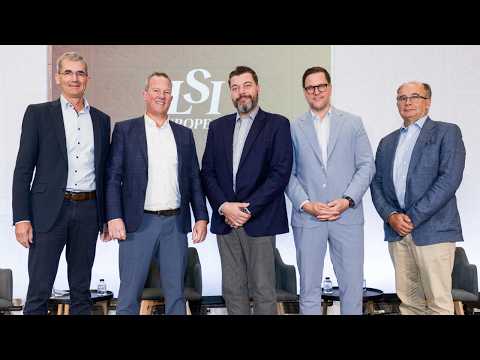
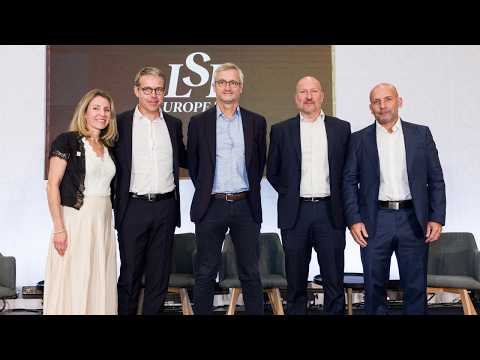
So welcome, ladies and gentlemen, we have a really exciting topic to discuss today. Singapore is a well established manufacturing center, some figures from the EDB, just in the last 10 years, manufacturing output has more than tripled from just over $5 billion to over $19 billion between 2013 and 2023 and the number of people working in manufacturing has increased by over 50% between 2013 and 2023 it increased between just under 11,000 and just under 17,000 people working in manufacturing in Singapore. So Singapore is a well established manufacturing area. What many companies in Medtech are starting to realize is that there are advantages to establishing research and development and innovation here in Singapore, integrating r, d, supply chain and innovation in order to increase overall competitiveness, reduce manufacturing costs, improve time to market and to increase overall competitiveness. So our talk today here is going to be focusing on what companies are doing, how they're doing this here in Singapore, and what does the future hold. How do we continue to leverage this opportunity to integrate R and D supply chain and innovation? So we have Cindy from the EDB, we have Joaquin from Smith and Nephew, and we have we Han from venture. So what I'd like to do is start with with you, Cindy, and of course, we can get some additional inputs from others. But taking a broad view, how do you see companies in Singapore starting the process of integrating r, d innovation and supply chain. And how is Singapore continuing to develop startups in order to enhance innovation here in Singapore?
Cindy Koh 2:17
Thank you. Peter, happy to share that I would say that manufacturing is a well kept secret in Singapore. For many of our visitors, you know, you take your you land at Changi Airport, and you get to your hotel in CBD, don't see much of manufacturing. Like to say that, you know, manufacturing is all hidden underground. This one is the best kept secret, by the way, yes. So manufacturing contributes around 20% of GDP. We made a long term policy decision to try to keep it at around 20% it is not easy. It is not easy because we are not the lowest cost location, right? And yet we are able to keep manufacturing around 20% of GDP. We are selective in times in terms of the types of manufacturing, the types of products, but also the type of capabilities. So I've been EDB for 24 years, and I look at the evolution of economic development, even the medical technology, med tech sector. You know that when it comes to med tech, a lot of the products actually are, say, for example, the life sciences equipment side is actually, you know, there's not much of customization that's required, all right, is therefore, then, is for the global market. And we have companies the likes of Illumina, for example, Agilent, they are doing their manufacturing in Singapore, and it is not just for the Asian market. It's actually for the global markets. So I was Illumina, for example, one of the best selling equipment, I think it's called ni seq is a sequencing equipment, right? One of the best selling ones was actually developed and manufacture in Singapore doing to sequence covid virus. Agilent dense manufacturing is mass spectrometry equipment here in Singapore. So the I think, is their global manufacturing side. So again, for the global markets, and increasing we're seeing that they are not just manufacturing in Singapore. They are also citing their R D, and I would say no, because these are global These are products for the global market. So they started investing also in R and D in terms of manufacturing automation, right to really improve yield and product quality. And then we have companies like bar electronic, right, who is also manufacturing, so doing R and D in Singapore. And there are the med tech products whereby you do need to customize the products and solutions for the Asian market. And that's where then that the product development actually comes. In we have seen then, how companies, when they cite their or CO locate the R and D, as was manufacturing together. It does help when the design engineering teams actually, you know, collaborate with the engineers and the manufacturing side, and that actually accelerates the time to market, right? So these are just some examples.
Peter Horan 5:25
That's great. A lot of good examples. How about in terms of where some examples from other industries might be useful as examples as med tech is maybe earlier in the progression towards establishing an integrated R and D and supply chain setup.
Cindy Koh 5:43
I give the example. I think, Peter, you asked me the question around startups, right? I will cite the example from another industry, which is aerospace. What I'm showing here is public information. So GE Aerospace is one of the leaders in the aerospace they are engine OEM, Aero engine OEM. They started off a maintenance repair overhaul facility in Singapore, and today, Singapore is the critical site, and GE Aerospace is the first industry player in the aerospace industry to develop additive manufacturing in this repair processes, and they actually develop their additive manufacturing technology partner with two of our local startups, and Singapore is the first site for them to actually deploy it, right? So this is another example of how MNCs actually partner with our local startups. I have many other examples from the semiconductor industry as well. So Infineon, for example, Infineon is one of the world's largest integrated device manufacturer. They have a facility here. Singapore is also the global test Competence Center. So SV actually automated the facility here, they partner with some of our local startups and small medium enterprise enterprises in the development of their factory industrial automation solutions. So by the way, Infineon is one of the World Economic Forum Lighthouse factories,
Peter Horan 7:21
right? You mentioned earlier time to market, and that, of course, is important in all industries, the medical device industry included Joaquin, perhaps if you can share with us some insights concerning how integrating r, d and supply chain can help in terms of speed to market for businesses. Yeah,
Joaquin Lasso 7:41
thanks, Peter. First of all, I wanted to introduce Smith and Nephew, just for the audience, right? So we are, we are the largest medical device company from the UK, British, but we are basically a mid size med tech company, where for us, innovation plays a critical role in the way we try to differentiate ourselves in the marketplace. So we've gone through all the journey that Cindy mentioned before around integrating supply chain and R and D in Asia Pacific. We've done it, obviously with the support of EDB throughout the years. But you know what I would say is that the biggest benefit that we have seen, obviously, time to market, is one. But I think the biggest benefit is that this integration is not just an operational integration, where you basically localize capabilities, teams and resources. It basically creates this mindset of of innovation, where everyone in the organization shifts towards trying to solve a problem specific to to the patients that we are trying to to support right? I also run a business, which is a sports medicine arthroscopy business, where Asia Pacific plays a critical role, not only in Asia, but actually in driving some of the global trends. For those of you that don't know, the first arthroscopy surgery that was ever done in the world was done in Japan, many years ago. Japan obviously plays a very important role in imaging technology and things that you need to do minimally invasive procedures, right? Australia, for example, is the country in the world with the highest incidence of sports injury also. So there is a lot of global trends that actually start in Asia, and the fact that we have done this transition to, in a way, localize and integrate our supply chain and R and D and innovation mindset in the region has been a very important way of how we try to differentiate in the market, specifically around capturing global trends, right? So I think, I think beside time to market, which obviously is a key component, because you you are, and by time to market, I mean from the moment that there is an idea until the moment that you, you know, you kind of design a product, manufacture a product, deliver a product, and use a product in a patient. That time to market really shrinks, because you are much closer to to the, you know, healthcare professionals or the patients that you are trying to treat, right? But I think beside the time to market advantage for. As it has been a critical component of, how do we capture global trends that then we kind of feed to the global R and D organizations, right? And actually, our R and D organization in Singapore is actually a global R and D team. They develop products for the world. And it's precisely for this, for this example that I gave you, around the importance of Asia Pacific, around driving global trends in the business that I currently run.
Peter Horan 10:26
Great, great, maybe just continuing with with this theme. So when you're looking at the market here in Asia Pacific, do you see unique market demands and patient needs here in Asia Pacific, where you see that there can be an advantage to integrating supply chain and innovation.
Joaquin Lasso 10:45
Yeah. So I think, I think in Asia Pacific, obviously there is, first of all, I think Asia Pacific, as we all know, is not just one region. There is a lot of countries that have, from a patient perspective, they have very different needs. One obvious one is the clinical needs. We have patients in Asia that anatomies are smaller, especially in the Asian side, Japan, Singapore, China and so forth. So when you develop implants, they have to kind of match those anatomies. So that's that's an easy an easy one to understand, but, but then there's also the complexity of the regulatory environment, right? So Asia Pacific has multiple regulatory frameworks that obviously companies need to operate and navigate, and obviously being closer to those from the early design of products is also a very important, you know, reason why we kind of localize, right? And I think the third component is also understanding the different access challenges that countries have, and different price pressures and economic realities. And that is not only about whether you design a low cost implant or a mid tier implant, it's also about how do you, for example, in our case, we do a lot of products that, in the US, you use disposable kits, right? Whereas in Asia Pacific, we sometimes prefer to do reusable kits, right, which is at the end of the day, is the same product, but there's parts of the kit that are disposable versus reusable, and that basically makes it more more affordable, affordable, right? So again, for us, this will be kind of the three major trends that that we are trying, or market demands that we are trying to fulfill with an integrated R and D and supply chain in the region around again, the clinical needs and the patient anatomies and so forth, the regulatory frameworks, and also the, again, the economic realities of every single market.
Peter Horan 12:37
Great. Thanks. Joaquin, it makes a lot of sense when you're close to the physicians, you can receive feedback from them more directly, more quickly. We also have experienced this at biotronic We recently held a summit with 65 cardiologists in Singapore, and this gives us an opportunity to hear from the physicians directly what's important to them. There are some unique aspects of treatment that are unique to Asia Pacific. It might not be the same in Europe or the US. Anatomy definitely is one of those things. So the size and the dimensions of our products can also change, yeah.
Joaquin Lasso 13:13
So just to add to that, Peter, and that's why I mentioned that supply chain and R and D integration is important. But I think the innovation component, and the innovation mindset is is also critical to make sure that this loop actually works in an effective manner. So we we also have an innovation center in Singapore where we do training for healthcare professionals. And because that innovation center is basically co located with the R and D center, every time we have healthcare professionals coming to the region, we also invite our R D colleagues to also do a voice of customer and try to capture some of the needs for the for the future of the patients in APAC, right? So, so that's exactly why I think connecting also supply chain, R and D, but with with kind of an innovation culture within the companies, is really critical. Yeah,
Peter Horan 13:58
it makes sense. It seems that it's a benefit for both the R D organization within the medical device company, and, of course, for the clinicians, for the physicians. The physicians understand a little bit more about what's involved with developing the product, and the R D engineers and scientists also understand more directly what's important to the physicians. Great. Like to shift gears a little bit if we're looking at from a supply chain and R and D ecosystem perspective. So we, Han, I'd like to direct this question to you. So of course, we're on a journey, so the process is running, but what gaps Do you see that still need to be closed in the next years in order to even be more successful as we integrate R and D supply chain and innovation within the ecosystem?
Wee Han Kuek 14:50
Thank you, Peter for the questions, right? First of all, I just want to introduce about venture cooperation itself, and borrow what Sydney had mentioned, that is the best kept secret, right? Because we are. A technology, global technology provider and service provider itself, for many of the Fortune 500 companies, but with revenue well over annual revenue, well over $2.5 billion Singapore dollars. So we have been working with many customers, and we providing r, d and supply chains solution for companies. So I think this question come in timely in the right place to sell, right? So how company, Medtech company, integrate all these r, d and the supply chain together for innovation to sell right? First of all, they need to have technology rule map, understanding how, where the gap they have in locally, and what can they transfer from their global tech centers, and what they need to build locally in order to integrate with the local supply chain ecosystems, right? So locally, I think in this region, hardware design is one the key strength that we have over here. We have many talents in the hardware design. Of course, need to integrate with the individual companies technology roadmap and the recovery framework on this space and the same time in terms of supply chains, you need to understand the whole supply chain ecosystem in the region, and looking at, how do you build up the identify the gap and build up those capability with the technology roadmap. So Right? And in this globalization climate, of course, with the challenges of regional lines, centric kind of focus company in this area, need to understand that who are the partners in the supply chain area, that you can work with them at the same time that develop the capabilities. I think it's important that you understand that what you need and what your partner can bring to you and you can work together to develop those capability together. I think those are the important parts that the company need to work together with a partner in the whole ecosystem. Right? Thank you. Peter, right.
Peter Horan 16:50
Thanks. We on. Joaquin, do you have some additional insights from Smith and Nephew perspective concerning gaps that are needing to be closed in order to further prepare the people in the region to fully execute a successful integration of supply chain and R and D,
Joaquin Lasso 17:09
yeah. So from, from our angle, I would not call it gaps. I would call it evolving needs. Right? What we see in our space, we call it, let's say the orthopedic space is that there is a significant shift in in the technology needs. Right for many years, designing implants that were fit for purpose, fit for specific anatomies was, you know, was, was kind of what was expected. Right now, we've moved to an area where most of the orthopedic procedures that are happening these days are happening with robotic enabled technology, right? That's kind of the gold standard today, but what we are seeing now is that the expectation is now that we also move towards more personalized surgery, and that basically means that the robotic enabled technology has to also be able to capture a specific patient data, and then using predictive models, AI and so forth, guide surgeons to basically perform that surgery in the most personalized way for that specific patient, right? So I think obviously what we are seeing now is the need of having AI capabilities within the R and D organizations, data management capabilities within the R and D organizations, and even you know that data has to be stored somewhere. So we are talking obviously about cloud based expertise, but also cyber security expertise, because obviously that's another risk that having these devices that are now technology and AI enabled and connected to the cloud brings to the to the equation, right? And then, and then the discussion that we are having as an industry, I'm also part of, I mean, the board of APAC Med, so we are also doing a lot of work on APAC med around working with governments to also understand, what are the frameworks for these digital health technologies, right? What is the regulatory framework, but also the Cybersecurity Framework, and, and, yeah, and we are starting to talk about things that, even for executives like myself, you know, five years ago, we had no idea, right? So even all of us, we also need to kind of upscale our own capabilities to be able to to prepare this for the future. But, but, yeah, I think it's not a gap, per se, is more evolving needs. And, yeah, you know, we will fix that evolving need, and then there will be another evolving need. So I think kind of the message is that we need to have this nimbleness, or, you know, ability to adapt to what the technology is kind of bringing to the equation. Because at the end of the day, what we all want is to serve our patient needs in the better way possible, right? Absolutely,
Peter Horan 19:42
absolutely. And this also brings another dimension. It's not just a matter of looking at the supply chain from a product hardware viewpoint, but also from a digital interface viewpoint as well. And many companies are expanding their use of digital. Digital technologies in order to reach more patients. Cindy, do you see some perspectives from that viewpoint? So in terms of using AI and internet of things within not only the med tech industry, but also, again, maybe whether there are some lessons that can be gleaned from other industries here in Singapore,
Cindy Koh 20:19
definitely, I mentioned that, well, manufacturing is our best kept secret, so I want to keep manufacturing around 20% as well doing things a lot faster and more productive. And that's where technology comes in, and that includes AI, right? I give the example of Infineon like I wanted to highlight, Infineon, Angela de Ginn, how Infineon really went towards getting certified as one the World Economic Forum lighthouses is they started off with automation, and With automation, digitization, short floor connectivity, and then being able to build foundational models to analyze what's happening on the shop floor, or rather, the factory right? And it was, it took them about eight, eight years, kind of a journey so innovation, but also the deployment of some of these technologies, and we've seen how they have the plant in Singapore is actually one of the most productive, most efficient and compared to the other plants that they have globally, we saw Agilent as well. So Agilent is manufacturing their mass spectrum into mass spec equipment in Singapore, and is also one of the West World Economic Forum like Taos is, in fact, is West first high mix, low volume use case. So they produce, from a production volume point of view, in vineyard is producing about 1.3 billion chips a year. And for thing, for Agilent, the number of the volume, the production volume, we're talking about less than 1000 a year, and yet they're able to actually innovate around manufacturing processes, deploy automation and leverage AI. So most recently, last year, our Deputy Prime Minister launched our AI sense of excellence for manufacturing. We've identified five use cases, so around the operations optimization, that includes, actually outside the shop floor. So really looking at, you know, your demand, forecasting, your supply chain, you know what's happening, and then the operations optimization also what's happening it comes to within the short floor. So you talk about scheduling and planning. Then we have competitive maintenance. You also look at QA, QC, using, again, visual images, right as a data. And then you apply AI in actually analyzing the data. And then the industry automation as well as then, how do you apply AI to process and product development. So we have seen, actually, even the lighthouse companies, in fact, factories, actually still being able to benefit by working with the AI Center of Excellence in manufacturing. And like said, No, even you have gotten even when the companies attain that lighthouse status, there's always this continuous improvement that they need to undertake. So these are some examples I've seen,
Peter Horan 23:31
great, great, yeah. So there are a lot of examples of how we see that companies are leveraging technology, leveraging the talent in the region in order to further integrate R and D supply chain and innovation. So now, if we think about the future, so looking ahead into the future, in the next five years or so, what are the next steps? What are the things that companies are going to need to do beyond what we already do? And maybe we Han, we start with you, but I think it'd be good to get some insights from each person on the panel.
Wee Han Kuek 24:03
And Peter, there's a great question. I think this is something that when the leader are busy working on a current task on hand, they need to look forward that what's going to come in the future as well, right? I mean, one of the big thing is about this digital visualization of real time data tracking itself, right? So understanding what is, what you can monitor in each patient yourself, and how can you make actionable data right? Gather those external data and make the next step required for each patient itself, right? So at the same time that, for example, the IoT enabled logistic tracking devices for all the cold chains, supply chain, cell that, how do you deliver temperature sensitive package to the patients safely? I think those are very important things, that things are ongoing at the moment, at the same time that in the future, right? How do you leverage what has been going on on this continuous glucose monitoring cell that the patient and clinician can take action? On those data that gather, imaginate, all these important bio biomarker data available to the patients, to the doctors, that they can do a lot of Wonder things itself for the humans, apart from that as writing or what Cindy had mentioned about the AI enabled solutions, right? I mean, what you have put up is a very good platform, a very good initiative to sell, right for all the Medtech company leaders, they need to understand. How do they integrate those AI, enable solution into their product and their supply chain to sell right? So those are the important thinking process and steps and investigation and R and D need to put in place on those areas. Apart from that, we are seeing that with the growing demand of these med tech manufacturing, r, d, in this space itself, I believe that that outsourcing activity may come up because, as outsource funder, for example, venture cooperation limited. We have been through and work with many companies that we understand where are required, and we had the available platform and supply chain network to help the company in accelerate their process, especially for the startup, because we can help them to avoid all the potholes or the what not to do and what to do, right? So those are the key things that I think is going to come out in the future, right?
Peter Horan 26:18
Thanks. So you see, companies are maybe companies that traditionally in source much of their manufacturing, starting to look for partners who they can outsource parts of their manufacturing to, and yeah, and even development, I suppose, as well, correct?
Wee Han Kuek 26:33
I think it may not be the wholesale itself, it may be certain portions, because companies still need to keep their core competence internally and what is close to them at the same time that their partners out there can do much better things in terms of positions, in terms of certain kind of solutions that the company doesn't matter. Company doesn't have to duplicate those effort in this region, right? Yeah,
Peter Horan 26:56
I suppose all organizations need to think about what they're good at. Where do they want to spend their money and resources?
Wee Han Kuek 27:01
Yes, money resources always, budget is always limited,
Peter Horan 27:06
right? Good. Other insights,
Joaquin Lasso 27:07
yeah, so I would say that that question is kind of the the billion dollar question, right? I think all the companies are kind of trying to understand how to implement AI technology right now, from upstream to downstream, right? I think the challenge is that you start to evaluate that technology, and then you know, very fast that technology has evolved to something, so the speed of innovation now is like, super fast, right? So I think at least in our case, what we are trying to do is we're trying to find the right assessment framework that is agile. Again, we are a big M and C, right? So sometimes MNCs, they have a very structured way of approaching this type of projects, but that structure way leads to some sort of a slow down process that as soon as you evaluate a technology, it's already too late, because there's something new, right? So we are trying to find the right balance between agility and still have an, you know, as a framework that we can scale throughout the world the adoption of that specific use case technology, right? But, yeah, we are looking at use cases on upstream. Obviously, many things have been discussed, R and D manufacturing and so forth, but also downstream, right? I mean, how can I, for example, enable my sales force to be more effective by implemented AI in the way they do the customer interactions, right? So if you can go on, if you're going and meet a customer, a and you can get just before the meeting, a lot of information around what publications this customer has done, what the specific fields, and then you can connect that to what you are trying to present to that healthcare professional. That's, that's, for example, one use cases we are looking at the moment. There's use cases also that we are looking at the moment in HR, in the way we do talent acquisition, right, and how we evaluate potential candidates. But I think the challenge is, okay, how do you get a technology? You scale it globally, because we are m and c, but you do it in a way that is also kind of agile, right? And I think the question is still not 100% results, but it's, it's a hot topic right now for us, and I would say, for most companies, and then as part of a pack met industry body, we also, I mean, we actually collaborating with EDB at the moment on on a project around scaling our teams on AI, right? So that's another area we are trying to see how we can partner with them.
Peter Horan 29:31
Great Cindy, some insights from you. What do you see in the future? What do we see in the next five years or so, in terms of how organizations can even do more than what they're doing today in order to continue to be successful on this journey towards realizing the business benefits of integrating R D innovation and a supply chain,
Cindy Koh 29:52
I think there is going to be a global competition for talent. I mean, we spoke about, you know. Know the potential that AI, the deployment of AI, can unleash, right, be it manufacturing or product design, and there is going to be that demand for AI talent. And so Singapore is preparing, preparing itself for it. We have a national AI strategy, 2.0 and part of the to support it, actually, we are going to invest about Singapore $1 billion into this strategy. That includes actually training people, but also procuring GPUs. And we are going to procure GPUs, not just for the Singapore government's use, but we're actually coming up with some GPU and enterprise credit to allow enterprises that undertaking AI innovation activities here to actually utilize those GPUs. Training of talent. We are going to triple the number of AI talent as well. I think the baseline was at 5000 when we launched this, and you see going triple it to 15,000 now the number 15,000 is not very exciting, because from an absolute number point of view, right? It's only 15,000 but these are high quality talent, I think more importantly, actually is beyond the 15,000 AI talent is what we call the training on the bilingual AI talent. So it's AI that is applied. So it's not a talent looking at AI talent just to build the large language models, but really then training people who have a deep understanding of, you know, research in a healthcare environment, or, you know, people with deep expertise in manufacturing, right? And then upskill them, giving them that that AI training, we have done a few things. One is working with companies as this AI apprenticeship program whereby they spend three months right in deep skill, deep training when it comes to understanding how AI programming language, then six months is attached to the industry, working on real life industry use cases, right? And then we have been working with companies, I think we launched this in 2023 this called the Google Trailblazer, where we worked with companies to identify 100 AI use cases, right? And in a span of 100 days, really, then coming up with working with companies to identify, what are these use cases, right? So I would say that these are some of the things we are doing. And in the next three, five years, how Singapore looks at it is one, there's going to be global competition for AI talent. So we are attracting but we are also training our people, and we are working with the existing base of industrialists, manufacturers, companies doing their R and D here. How do you up skill, your existing talent that's working with you so that it can be bilingual, AI talent that I talk about resourcing. So that's where the AI, the GPU chips come in
Peter Horan 33:23
great. So any final thoughts we ha,
Wee Han Kuek 33:28
I think this is the so called the future. Why Singapore and the regions to integrating both the r, d and supply chain, together with the innovation in this place, and cater for the growth of ASEAN in the whole, whole Asia itself, right in the regions. So I think with the AI, what the Sydney had mentioned, apart from the AI, is proficient. You need to know how to use AI tools. I think those are very important, right? Yeah. Thank
Peter Horan 33:54
you. Great. Joaquin, additional points from your side.
Joaquin Lasso 33:56
I think from my end, just to wrap up on what we have discussed, I think not only understanding that that integration is good to be able to serve better our patient needs, I think one thing that we didn't have a lot of time to discuss also is the point of care, right? I think we need to do innovation that serves our patients better, but also understanding that the patients are not being treated in the same places, everywhere, right? Specific to my business. If you look at the US, most of my business is down now in an outpatient setting, day surgery, one day hospital stay. But you have many parts of Asia where that point of care is different and the reimbursement in the point of care is also different. So that kind of connects with the economic realities, right? And I think that again, when we look at integrating R and D supply chain and innovation for benefiting, you know, the patient needs in Asia, I think we also need to understand the point of care, because it is different. It is changing also, but it's different to what we have in in Europe, especially in in the US, with the the growth of outpatient surgery, right? So, so, yeah. Think that will be kind of my my closing remarks is try to connect everything to innovation, to the patient needs, but try to think about patient needs beyond anatomy, and try to understand economic realities, regulatory complexity and point of care. What are the surgery or the surgical event is actually happening?
Peter Horan 35:17
This is also driving our company's shift towards more focus on on digital solutions. Statistically, there are fewer physicians in the world and yet more patients. Know Is that ratio of physician to patient continues to skew towards the direction of there not being enough physicians. There have to be other solutions in order to be able to ensure that patients are receiving the care they need. Cindy, some final thoughts from your side.
Cindy Koh 35:45
Well, I'm glad that Singapore, though, is a small market and small country that we are actually being able to be a convening location, right? I mean, this conference is an example, but more importantly is that, you know, we see the multinational corporations here doing their manufacturing as well as R and D, but also starting to see a vibrant ecosystem of startups. And I'm glad that Singapore, while we are small, we can play a very critical role in working with companies to shape the future of health care.
Peter Horan 36:25
Great. Well, I really want to express a sincere thank you to you, Cindy, to Joaquin, to Wen for participating and sharing your insights. I think it was a really good discussion and very interesting to hear from each of you concerning the topic of how organizations can leverage the integration of r, d, supply chain and innovation in order to continue to create competitive advantages and ultimately to provide better services and care for the patients. One of the takeaways, also, I think, here, is that innovation and supply chain integration is not just about manufacturing, it's about the entire value chain that starts with the very beginning, understanding what the clinical needs are, designing products that are going to meet the needs of Patients, bringing those products into manufacturing and into the market and meeting the needs of the patients where they're where they are. So again. Thank you very much. Audience. Thank you so much for your attention as well.
Peter Horan 0:05
So welcome, ladies and gentlemen, we have a really exciting topic to discuss today. Singapore is a well established manufacturing center, some figures from the EDB, just in the last 10 years, manufacturing output has more than tripled from just over $5 billion to over $19 billion between 2013 and 2023 and the number of people working in manufacturing has increased by over 50% between 2013 and 2023 it increased between just under 11,000 and just under 17,000 people working in manufacturing in Singapore. So Singapore is a well established manufacturing area. What many companies in Medtech are starting to realize is that there are advantages to establishing research and development and innovation here in Singapore, integrating r, d, supply chain and innovation in order to increase overall competitiveness, reduce manufacturing costs, improve time to market and to increase overall competitiveness. So our talk today here is going to be focusing on what companies are doing, how they're doing this here in Singapore, and what does the future hold. How do we continue to leverage this opportunity to integrate R and D supply chain and innovation? So we have Cindy from the EDB, we have Joaquin from Smith and Nephew, and we have we Han from venture. So what I'd like to do is start with with you, Cindy, and of course, we can get some additional inputs from others. But taking a broad view, how do you see companies in Singapore starting the process of integrating r, d innovation and supply chain. And how is Singapore continuing to develop startups in order to enhance innovation here in Singapore?
Cindy Koh 2:17
Thank you. Peter, happy to share that I would say that manufacturing is a well kept secret in Singapore. For many of our visitors, you know, you take your you land at Changi Airport, and you get to your hotel in CBD, don't see much of manufacturing. Like to say that, you know, manufacturing is all hidden underground. This one is the best kept secret, by the way, yes. So manufacturing contributes around 20% of GDP. We made a long term policy decision to try to keep it at around 20% it is not easy. It is not easy because we are not the lowest cost location, right? And yet we are able to keep manufacturing around 20% of GDP. We are selective in times in terms of the types of manufacturing, the types of products, but also the type of capabilities. So I've been EDB for 24 years, and I look at the evolution of economic development, even the medical technology, med tech sector. You know that when it comes to med tech, a lot of the products actually are, say, for example, the life sciences equipment side is actually, you know, there's not much of customization that's required, all right, is therefore, then, is for the global market. And we have companies the likes of Illumina, for example, Agilent, they are doing their manufacturing in Singapore, and it is not just for the Asian market. It's actually for the global markets. So I was Illumina, for example, one of the best selling equipment, I think it's called ni seq is a sequencing equipment, right? One of the best selling ones was actually developed and manufacture in Singapore doing to sequence covid virus. Agilent dense manufacturing is mass spectrometry equipment here in Singapore. So the I think, is their global manufacturing side. So again, for the global markets, and increasing we're seeing that they are not just manufacturing in Singapore. They are also citing their R D, and I would say no, because these are global These are products for the global market. So they started investing also in R and D in terms of manufacturing automation, right to really improve yield and product quality. And then we have companies like bar electronic, right, who is also manufacturing, so doing R and D in Singapore. And there are the med tech products whereby you do need to customize the products and solutions for the Asian market. And that's where then that the product development actually comes. In we have seen then, how companies, when they cite their or CO locate the R and D, as was manufacturing together. It does help when the design engineering teams actually, you know, collaborate with the engineers and the manufacturing side, and that actually accelerates the time to market, right? So these are just some examples.
Peter Horan 5:25
That's great. A lot of good examples. How about in terms of where some examples from other industries might be useful as examples as med tech is maybe earlier in the progression towards establishing an integrated R and D and supply chain setup.
Cindy Koh 5:43
I give the example. I think, Peter, you asked me the question around startups, right? I will cite the example from another industry, which is aerospace. What I'm showing here is public information. So GE Aerospace is one of the leaders in the aerospace they are engine OEM, Aero engine OEM. They started off a maintenance repair overhaul facility in Singapore, and today, Singapore is the critical site, and GE Aerospace is the first industry player in the aerospace industry to develop additive manufacturing in this repair processes, and they actually develop their additive manufacturing technology partner with two of our local startups, and Singapore is the first site for them to actually deploy it, right? So this is another example of how MNCs actually partner with our local startups. I have many other examples from the semiconductor industry as well. So Infineon, for example, Infineon is one of the world's largest integrated device manufacturer. They have a facility here. Singapore is also the global test Competence Center. So SV actually automated the facility here, they partner with some of our local startups and small medium enterprise enterprises in the development of their factory industrial automation solutions. So by the way, Infineon is one of the World Economic Forum Lighthouse factories,
Peter Horan 7:21
right? You mentioned earlier time to market, and that, of course, is important in all industries, the medical device industry included Joaquin, perhaps if you can share with us some insights concerning how integrating r, d and supply chain can help in terms of speed to market for businesses. Yeah,
Joaquin Lasso 7:41
thanks, Peter. First of all, I wanted to introduce Smith and Nephew, just for the audience, right? So we are, we are the largest medical device company from the UK, British, but we are basically a mid size med tech company, where for us, innovation plays a critical role in the way we try to differentiate ourselves in the marketplace. So we've gone through all the journey that Cindy mentioned before around integrating supply chain and R and D in Asia Pacific. We've done it, obviously with the support of EDB throughout the years. But you know what I would say is that the biggest benefit that we have seen, obviously, time to market, is one. But I think the biggest benefit is that this integration is not just an operational integration, where you basically localize capabilities, teams and resources. It basically creates this mindset of of innovation, where everyone in the organization shifts towards trying to solve a problem specific to to the patients that we are trying to to support right? I also run a business, which is a sports medicine arthroscopy business, where Asia Pacific plays a critical role, not only in Asia, but actually in driving some of the global trends. For those of you that don't know, the first arthroscopy surgery that was ever done in the world was done in Japan, many years ago. Japan obviously plays a very important role in imaging technology and things that you need to do minimally invasive procedures, right? Australia, for example, is the country in the world with the highest incidence of sports injury also. So there is a lot of global trends that actually start in Asia, and the fact that we have done this transition to, in a way, localize and integrate our supply chain and R and D and innovation mindset in the region has been a very important way of how we try to differentiate in the market, specifically around capturing global trends, right? So I think, I think beside time to market, which obviously is a key component, because you you are, and by time to market, I mean from the moment that there is an idea until the moment that you, you know, you kind of design a product, manufacture a product, deliver a product, and use a product in a patient. That time to market really shrinks, because you are much closer to to the, you know, healthcare professionals or the patients that you are trying to treat, right? But I think beside the time to market advantage for. As it has been a critical component of, how do we capture global trends that then we kind of feed to the global R and D organizations, right? And actually, our R and D organization in Singapore is actually a global R and D team. They develop products for the world. And it's precisely for this, for this example that I gave you, around the importance of Asia Pacific, around driving global trends in the business that I currently run.
Peter Horan 10:26
Great, great, maybe just continuing with with this theme. So when you're looking at the market here in Asia Pacific, do you see unique market demands and patient needs here in Asia Pacific, where you see that there can be an advantage to integrating supply chain and innovation.
Joaquin Lasso 10:45
Yeah. So I think, I think in Asia Pacific, obviously there is, first of all, I think Asia Pacific, as we all know, is not just one region. There is a lot of countries that have, from a patient perspective, they have very different needs. One obvious one is the clinical needs. We have patients in Asia that anatomies are smaller, especially in the Asian side, Japan, Singapore, China and so forth. So when you develop implants, they have to kind of match those anatomies. So that's that's an easy an easy one to understand, but, but then there's also the complexity of the regulatory environment, right? So Asia Pacific has multiple regulatory frameworks that obviously companies need to operate and navigate, and obviously being closer to those from the early design of products is also a very important, you know, reason why we kind of localize, right? And I think the third component is also understanding the different access challenges that countries have, and different price pressures and economic realities. And that is not only about whether you design a low cost implant or a mid tier implant, it's also about how do you, for example, in our case, we do a lot of products that, in the US, you use disposable kits, right? Whereas in Asia Pacific, we sometimes prefer to do reusable kits, right, which is at the end of the day, is the same product, but there's parts of the kit that are disposable versus reusable, and that basically makes it more more affordable, affordable, right? So again, for us, this will be kind of the three major trends that that we are trying, or market demands that we are trying to fulfill with an integrated R and D and supply chain in the region around again, the clinical needs and the patient anatomies and so forth, the regulatory frameworks, and also the, again, the economic realities of every single market.
Peter Horan 12:37
Great. Thanks. Joaquin, it makes a lot of sense when you're close to the physicians, you can receive feedback from them more directly, more quickly. We also have experienced this at biotronic We recently held a summit with 65 cardiologists in Singapore, and this gives us an opportunity to hear from the physicians directly what's important to them. There are some unique aspects of treatment that are unique to Asia Pacific. It might not be the same in Europe or the US. Anatomy definitely is one of those things. So the size and the dimensions of our products can also change, yeah.
Joaquin Lasso 13:13
So just to add to that, Peter, and that's why I mentioned that supply chain and R and D integration is important. But I think the innovation component, and the innovation mindset is is also critical to make sure that this loop actually works in an effective manner. So we we also have an innovation center in Singapore where we do training for healthcare professionals. And because that innovation center is basically co located with the R and D center, every time we have healthcare professionals coming to the region, we also invite our R D colleagues to also do a voice of customer and try to capture some of the needs for the for the future of the patients in APAC, right? So, so that's exactly why I think connecting also supply chain, R and D, but with with kind of an innovation culture within the companies, is really critical. Yeah,
Peter Horan 13:58
it makes sense. It seems that it's a benefit for both the R D organization within the medical device company, and, of course, for the clinicians, for the physicians. The physicians understand a little bit more about what's involved with developing the product, and the R D engineers and scientists also understand more directly what's important to the physicians. Great. Like to shift gears a little bit if we're looking at from a supply chain and R and D ecosystem perspective. So we, Han, I'd like to direct this question to you. So of course, we're on a journey, so the process is running, but what gaps Do you see that still need to be closed in the next years in order to even be more successful as we integrate R and D supply chain and innovation within the ecosystem?
Wee Han Kuek 14:50
Thank you, Peter for the questions, right? First of all, I just want to introduce about venture cooperation itself, and borrow what Sydney had mentioned, that is the best kept secret, right? Because we are. A technology, global technology provider and service provider itself, for many of the Fortune 500 companies, but with revenue well over annual revenue, well over $2.5 billion Singapore dollars. So we have been working with many customers, and we providing r, d and supply chains solution for companies. So I think this question come in timely in the right place to sell, right? So how company, Medtech company, integrate all these r, d and the supply chain together for innovation to sell right? First of all, they need to have technology rule map, understanding how, where the gap they have in locally, and what can they transfer from their global tech centers, and what they need to build locally in order to integrate with the local supply chain ecosystems, right? So locally, I think in this region, hardware design is one the key strength that we have over here. We have many talents in the hardware design. Of course, need to integrate with the individual companies technology roadmap and the recovery framework on this space and the same time in terms of supply chains, you need to understand the whole supply chain ecosystem in the region, and looking at, how do you build up the identify the gap and build up those capability with the technology roadmap. So Right? And in this globalization climate, of course, with the challenges of regional lines, centric kind of focus company in this area, need to understand that who are the partners in the supply chain area, that you can work with them at the same time that develop the capabilities. I think it's important that you understand that what you need and what your partner can bring to you and you can work together to develop those capability together. I think those are the important parts that the company need to work together with a partner in the whole ecosystem. Right? Thank you. Peter, right.
Peter Horan 16:50
Thanks. We on. Joaquin, do you have some additional insights from Smith and Nephew perspective concerning gaps that are needing to be closed in order to further prepare the people in the region to fully execute a successful integration of supply chain and R and D,
Joaquin Lasso 17:09
yeah. So from, from our angle, I would not call it gaps. I would call it evolving needs. Right? What we see in our space, we call it, let's say the orthopedic space is that there is a significant shift in in the technology needs. Right for many years, designing implants that were fit for purpose, fit for specific anatomies was, you know, was, was kind of what was expected. Right now, we've moved to an area where most of the orthopedic procedures that are happening these days are happening with robotic enabled technology, right? That's kind of the gold standard today, but what we are seeing now is that the expectation is now that we also move towards more personalized surgery, and that basically means that the robotic enabled technology has to also be able to capture a specific patient data, and then using predictive models, AI and so forth, guide surgeons to basically perform that surgery in the most personalized way for that specific patient, right? So I think obviously what we are seeing now is the need of having AI capabilities within the R and D organizations, data management capabilities within the R and D organizations, and even you know that data has to be stored somewhere. So we are talking obviously about cloud based expertise, but also cyber security expertise, because obviously that's another risk that having these devices that are now technology and AI enabled and connected to the cloud brings to the to the equation, right? And then, and then the discussion that we are having as an industry, I'm also part of, I mean, the board of APAC Med, so we are also doing a lot of work on APAC med around working with governments to also understand, what are the frameworks for these digital health technologies, right? What is the regulatory framework, but also the Cybersecurity Framework, and, and, yeah, and we are starting to talk about things that, even for executives like myself, you know, five years ago, we had no idea, right? So even all of us, we also need to kind of upscale our own capabilities to be able to to prepare this for the future. But, but, yeah, I think it's not a gap, per se, is more evolving needs. And, yeah, you know, we will fix that evolving need, and then there will be another evolving need. So I think kind of the message is that we need to have this nimbleness, or, you know, ability to adapt to what the technology is kind of bringing to the equation. Because at the end of the day, what we all want is to serve our patient needs in the better way possible, right? Absolutely,
Peter Horan 19:42
absolutely. And this also brings another dimension. It's not just a matter of looking at the supply chain from a product hardware viewpoint, but also from a digital interface viewpoint as well. And many companies are expanding their use of digital. Digital technologies in order to reach more patients. Cindy, do you see some perspectives from that viewpoint? So in terms of using AI and internet of things within not only the med tech industry, but also, again, maybe whether there are some lessons that can be gleaned from other industries here in Singapore,
Cindy Koh 20:19
definitely, I mentioned that, well, manufacturing is our best kept secret, so I want to keep manufacturing around 20% as well doing things a lot faster and more productive. And that's where technology comes in, and that includes AI, right? I give the example of Infineon like I wanted to highlight, Infineon, Angela de Ginn, how Infineon really went towards getting certified as one the World Economic Forum lighthouses is they started off with automation, and With automation, digitization, short floor connectivity, and then being able to build foundational models to analyze what's happening on the shop floor, or rather, the factory right? And it was, it took them about eight, eight years, kind of a journey so innovation, but also the deployment of some of these technologies, and we've seen how they have the plant in Singapore is actually one of the most productive, most efficient and compared to the other plants that they have globally, we saw Agilent as well. So Agilent is manufacturing their mass spectrum into mass spec equipment in Singapore, and is also one of the West World Economic Forum like Taos is, in fact, is West first high mix, low volume use case. So they produce, from a production volume point of view, in vineyard is producing about 1.3 billion chips a year. And for thing, for Agilent, the number of the volume, the production volume, we're talking about less than 1000 a year, and yet they're able to actually innovate around manufacturing processes, deploy automation and leverage AI. So most recently, last year, our Deputy Prime Minister launched our AI sense of excellence for manufacturing. We've identified five use cases, so around the operations optimization, that includes, actually outside the shop floor. So really looking at, you know, your demand, forecasting, your supply chain, you know what's happening, and then the operations optimization also what's happening it comes to within the short floor. So you talk about scheduling and planning. Then we have competitive maintenance. You also look at QA, QC, using, again, visual images, right as a data. And then you apply AI in actually analyzing the data. And then the industry automation as well as then, how do you apply AI to process and product development. So we have seen, actually, even the lighthouse companies, in fact, factories, actually still being able to benefit by working with the AI Center of Excellence in manufacturing. And like said, No, even you have gotten even when the companies attain that lighthouse status, there's always this continuous improvement that they need to undertake. So these are some examples I've seen,
Peter Horan 23:31
great, great, yeah. So there are a lot of examples of how we see that companies are leveraging technology, leveraging the talent in the region in order to further integrate R and D supply chain and innovation. So now, if we think about the future, so looking ahead into the future, in the next five years or so, what are the next steps? What are the things that companies are going to need to do beyond what we already do? And maybe we Han, we start with you, but I think it'd be good to get some insights from each person on the panel.
Wee Han Kuek 24:03
And Peter, there's a great question. I think this is something that when the leader are busy working on a current task on hand, they need to look forward that what's going to come in the future as well, right? I mean, one of the big thing is about this digital visualization of real time data tracking itself, right? So understanding what is, what you can monitor in each patient yourself, and how can you make actionable data right? Gather those external data and make the next step required for each patient itself, right? So at the same time that, for example, the IoT enabled logistic tracking devices for all the cold chains, supply chain, cell that, how do you deliver temperature sensitive package to the patients safely? I think those are very important things, that things are ongoing at the moment, at the same time that in the future, right? How do you leverage what has been going on on this continuous glucose monitoring cell that the patient and clinician can take action? On those data that gather, imaginate, all these important bio biomarker data available to the patients, to the doctors, that they can do a lot of Wonder things itself for the humans, apart from that as writing or what Cindy had mentioned about the AI enabled solutions, right? I mean, what you have put up is a very good platform, a very good initiative to sell, right for all the Medtech company leaders, they need to understand. How do they integrate those AI, enable solution into their product and their supply chain to sell right? So those are the important thinking process and steps and investigation and R and D need to put in place on those areas. Apart from that, we are seeing that with the growing demand of these med tech manufacturing, r, d, in this space itself, I believe that that outsourcing activity may come up because, as outsource funder, for example, venture cooperation limited. We have been through and work with many companies that we understand where are required, and we had the available platform and supply chain network to help the company in accelerate their process, especially for the startup, because we can help them to avoid all the potholes or the what not to do and what to do, right? So those are the key things that I think is going to come out in the future, right?
Peter Horan 26:18
Thanks. So you see, companies are maybe companies that traditionally in source much of their manufacturing, starting to look for partners who they can outsource parts of their manufacturing to, and yeah, and even development, I suppose, as well, correct?
Wee Han Kuek 26:33
I think it may not be the wholesale itself, it may be certain portions, because companies still need to keep their core competence internally and what is close to them at the same time that their partners out there can do much better things in terms of positions, in terms of certain kind of solutions that the company doesn't matter. Company doesn't have to duplicate those effort in this region, right? Yeah,
Peter Horan 26:56
I suppose all organizations need to think about what they're good at. Where do they want to spend their money and resources?
Wee Han Kuek 27:01
Yes, money resources always, budget is always limited,
Peter Horan 27:06
right? Good. Other insights,
Joaquin Lasso 27:07
yeah, so I would say that that question is kind of the the billion dollar question, right? I think all the companies are kind of trying to understand how to implement AI technology right now, from upstream to downstream, right? I think the challenge is that you start to evaluate that technology, and then you know, very fast that technology has evolved to something, so the speed of innovation now is like, super fast, right? So I think at least in our case, what we are trying to do is we're trying to find the right assessment framework that is agile. Again, we are a big M and C, right? So sometimes MNCs, they have a very structured way of approaching this type of projects, but that structure way leads to some sort of a slow down process that as soon as you evaluate a technology, it's already too late, because there's something new, right? So we are trying to find the right balance between agility and still have an, you know, as a framework that we can scale throughout the world the adoption of that specific use case technology, right? But, yeah, we are looking at use cases on upstream. Obviously, many things have been discussed, R and D manufacturing and so forth, but also downstream, right? I mean, how can I, for example, enable my sales force to be more effective by implemented AI in the way they do the customer interactions, right? So if you can go on, if you're going and meet a customer, a and you can get just before the meeting, a lot of information around what publications this customer has done, what the specific fields, and then you can connect that to what you are trying to present to that healthcare professional. That's, that's, for example, one use cases we are looking at the moment. There's use cases also that we are looking at the moment in HR, in the way we do talent acquisition, right, and how we evaluate potential candidates. But I think the challenge is, okay, how do you get a technology? You scale it globally, because we are m and c, but you do it in a way that is also kind of agile, right? And I think the question is still not 100% results, but it's, it's a hot topic right now for us, and I would say, for most companies, and then as part of a pack met industry body, we also, I mean, we actually collaborating with EDB at the moment on on a project around scaling our teams on AI, right? So that's another area we are trying to see how we can partner with them.
Peter Horan 29:31
Great Cindy, some insights from you. What do you see in the future? What do we see in the next five years or so, in terms of how organizations can even do more than what they're doing today in order to continue to be successful on this journey towards realizing the business benefits of integrating R D innovation and a supply chain,
Cindy Koh 29:52
I think there is going to be a global competition for talent. I mean, we spoke about, you know. Know the potential that AI, the deployment of AI, can unleash, right, be it manufacturing or product design, and there is going to be that demand for AI talent. And so Singapore is preparing, preparing itself for it. We have a national AI strategy, 2.0 and part of the to support it, actually, we are going to invest about Singapore $1 billion into this strategy. That includes actually training people, but also procuring GPUs. And we are going to procure GPUs, not just for the Singapore government's use, but we're actually coming up with some GPU and enterprise credit to allow enterprises that undertaking AI innovation activities here to actually utilize those GPUs. Training of talent. We are going to triple the number of AI talent as well. I think the baseline was at 5000 when we launched this, and you see going triple it to 15,000 now the number 15,000 is not very exciting, because from an absolute number point of view, right? It's only 15,000 but these are high quality talent, I think more importantly, actually is beyond the 15,000 AI talent is what we call the training on the bilingual AI talent. So it's AI that is applied. So it's not a talent looking at AI talent just to build the large language models, but really then training people who have a deep understanding of, you know, research in a healthcare environment, or, you know, people with deep expertise in manufacturing, right? And then upskill them, giving them that that AI training, we have done a few things. One is working with companies as this AI apprenticeship program whereby they spend three months right in deep skill, deep training when it comes to understanding how AI programming language, then six months is attached to the industry, working on real life industry use cases, right? And then we have been working with companies, I think we launched this in 2023 this called the Google Trailblazer, where we worked with companies to identify 100 AI use cases, right? And in a span of 100 days, really, then coming up with working with companies to identify, what are these use cases, right? So I would say that these are some of the things we are doing. And in the next three, five years, how Singapore looks at it is one, there's going to be global competition for AI talent. So we are attracting but we are also training our people, and we are working with the existing base of industrialists, manufacturers, companies doing their R and D here. How do you up skill, your existing talent that's working with you so that it can be bilingual, AI talent that I talk about resourcing. So that's where the AI, the GPU chips come in
Peter Horan 33:23
great. So any final thoughts we ha,
Wee Han Kuek 33:28
I think this is the so called the future. Why Singapore and the regions to integrating both the r, d and supply chain, together with the innovation in this place, and cater for the growth of ASEAN in the whole, whole Asia itself, right in the regions. So I think with the AI, what the Sydney had mentioned, apart from the AI, is proficient. You need to know how to use AI tools. I think those are very important, right? Yeah. Thank
Peter Horan 33:54
you. Great. Joaquin, additional points from your side.
Joaquin Lasso 33:56
I think from my end, just to wrap up on what we have discussed, I think not only understanding that that integration is good to be able to serve better our patient needs, I think one thing that we didn't have a lot of time to discuss also is the point of care, right? I think we need to do innovation that serves our patients better, but also understanding that the patients are not being treated in the same places, everywhere, right? Specific to my business. If you look at the US, most of my business is down now in an outpatient setting, day surgery, one day hospital stay. But you have many parts of Asia where that point of care is different and the reimbursement in the point of care is also different. So that kind of connects with the economic realities, right? And I think that again, when we look at integrating R and D supply chain and innovation for benefiting, you know, the patient needs in Asia, I think we also need to understand the point of care, because it is different. It is changing also, but it's different to what we have in in Europe, especially in in the US, with the the growth of outpatient surgery, right? So, so, yeah. Think that will be kind of my my closing remarks is try to connect everything to innovation, to the patient needs, but try to think about patient needs beyond anatomy, and try to understand economic realities, regulatory complexity and point of care. What are the surgery or the surgical event is actually happening?
Peter Horan 35:17
This is also driving our company's shift towards more focus on on digital solutions. Statistically, there are fewer physicians in the world and yet more patients. Know Is that ratio of physician to patient continues to skew towards the direction of there not being enough physicians. There have to be other solutions in order to be able to ensure that patients are receiving the care they need. Cindy, some final thoughts from your side.
Cindy Koh 35:45
Well, I'm glad that Singapore, though, is a small market and small country that we are actually being able to be a convening location, right? I mean, this conference is an example, but more importantly is that, you know, we see the multinational corporations here doing their manufacturing as well as R and D, but also starting to see a vibrant ecosystem of startups. And I'm glad that Singapore, while we are small, we can play a very critical role in working with companies to shape the future of health care.
Peter Horan 36:25
Great. Well, I really want to express a sincere thank you to you, Cindy, to Joaquin, to Wen for participating and sharing your insights. I think it was a really good discussion and very interesting to hear from each of you concerning the topic of how organizations can leverage the integration of r, d, supply chain and innovation in order to continue to create competitive advantages and ultimately to provide better services and care for the patients. One of the takeaways, also, I think, here, is that innovation and supply chain integration is not just about manufacturing, it's about the entire value chain that starts with the very beginning, understanding what the clinical needs are, designing products that are going to meet the needs of Patients, bringing those products into manufacturing and into the market and meeting the needs of the patients where they're where they are. So again. Thank you very much. Audience. Thank you so much for your attention as well.
17011 Beach Blvd, Suite 500 Huntington Beach, CA 92647
714-847-3540© 2025 Life Science Intelligence, Inc., All Rights Reserved. | Privacy Policy