Signature Series: Medtech is Broken. What Changes Will Make the Next 100 Years a Su... | LSI USA '25

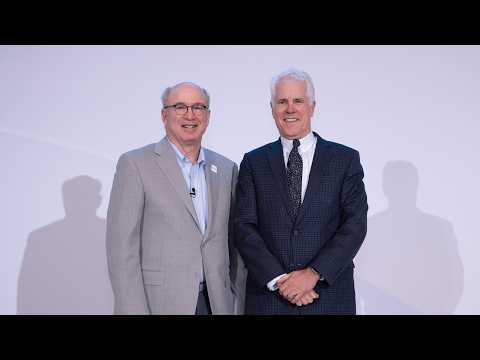
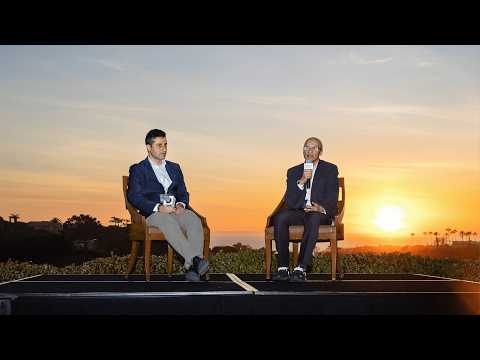
Moderator Alan Cohen from DCVC and David Bell from Remedy Robotics discuss critical challenges facing medtech today, offering insightful solutions and innovations needed to shape the industry's next century of success.

Alan Cohen  0:04  
Good afternoon everybody. David and I were spending a couple of minutes talking before we came down for the panel, and I said we were given the most provocative title of the conference, so we'll do our best before we before we jump in to this, I think it's worth actually taking a taking a minute on this concept of why Medtech is broken. Actually, I don't think med tech is broken. And I always think about Shakespeare, and I think about the opening of scene of Julius Caesar, when Brutus stabs Caesar and he goes, I came not to bury Caesar, but to praise Him. And the folks that work in the med tech industry provide some of the most critical technology and services of our entire society. When we talk about why med tech is broken, we think about on some level, the challenges of funding and building innovative companies in this space. We think about how hard people work sometimes, and the some of the delays in getting some of this out. And probably most significantly, and I'm going to really push David on this this afternoon is, you know, the focus on why it takes so long for some of the leading technologies that are running through other industries, particularly AI, to make its way into the medical field. And that's really the thesis on tech med. For those of you who missed the lovely time in Sintra, the tech med thesis is very simple. We look at companies that are already deploying a various array of modern computational methods, computer vision, machine learning, data strategies in other industries, particularly things like robotics or autonomy, and we pen, we see how these capabilities can go into the alleviation of human suffering and providing better health and outcomes for people. And so that's the core of the tech me thesis. It's why the terms are inverted and David and remedy represents just a great example for that. So maybe David worth taking a minute about why you started remedy and what you saw as a practicing cardiac surgeon, and then how these technologies kind of made their way into where you were building. Yeah,


David Bell  2:40  
for sure. Thanks for having me. Everyone I to add to kind of why Medtech is broken. I think part of the reason that we came up with that title was I looked at the last 100 Years of kind of med tech innovation, and there's been some tremendous achievements. And then I looked forward 100 years, and I was thinking, shit, what are we? What are we in for, for the next 100 years? And you see where a lot of that investment is being directed, and it's towards companies almost masquerading as healthcare companies, working in services, revenue, cycle management. And I just want to make sure that that capital gets redirected essentially towards patients and technology. But a little bit of my background, like Alan said, I was a practicing cardiac surgeon, well, a trainee, essentially, in Australia. I was a doctor for a long time, and I studied maths. Was probably a frustrated engineer. I spent a lot of time using surgical robots, and I always thought that they could be doing more for the patient. And I used to do a lot of air retrieval work flying around the South Pacific and around Australia, and I always thought it was crazy that these people had access to nothing, and I thought it was crazy that we weren't using technology to kind of help solve that problem of lack of access. At the same time, I spend a lot of time in the cath lab, and as much as kind of surgeons overrate ourselves, I was literally standing next to a table looking at a 2d grayscale image, moving tools along very few degrees of freedom. And I was thinking like, this isn't automatable. What is I remember looking at a junior doing a procedure, and simply based on the X ray images, I could tell were they about to do something dangerous or not. And I thought, wow, like this is where machine learning and computer vision needs to be directed. And so I had those thoughts kind of percolating around in my head. Came to the States, and I was sitting in a class at Stanford, they were talking about self driving cars. And I thought, all right, that's it. If you can teach a car to drive through the streets of San Francisco, surely we can redirect tech to teach a catheter to drive through the endovasculature, and in doing so, radically expand access to care for all these people who don't don't have it. So that's essentially what remedy robotics does. Us. We're a software and ml first company focused on expanding access to care for cardiovascular conditions and also really optimizing cardiovascular care. As it turns out, we needed to build hardware along with the with the software, which is another story, but yeah, that's


Alan Cohen  5:20  
us, awesome. One of the things that we focus on in the tech med thesis is data strategy. And a lot of what we looked at in the medical device industry is that a lot of companies actually build devices, procedures and services, and they think about the data set strategy secondarily, like they're in fact, I talk to companies all the time, they go, yes, in our next phase, we're going to be working on our data strategy. We actually think that's a logical fallacy. It seems right, but it's actually wrong that companies that are going to innovate in this next generation of technology, they actually have to start data first. So maybe looking at remedy example, we can talk about your data strategy and how you and your team thought about


David Bell  6:09  
that. Yeah. So initially, like I was saying, we started off as a as only a software company, and then we realized there was no robot to integrate with, so we were predominantly a machine learning company, and we knew that the time it would take to collect data from hospitals would be long, and the annotation cycle would be long, and we needed a lot of data to do what we wanted to do, which was essentially kind of optimize cardiovascular care all the way From the initial scan until patient discharge. So we needed a ton of CT data, we needed a ton of angiogram data, and we needed to annotate that at scale. And we knew that that was like going to be a barrier to entry for other companies, and also really unlock a whole lot of stuff that we needed to do, but I knew that it would take a lot of time, so that's basically kind of where we we started. I also knew that as like, we were just too young schmucks with an idea, we could go to hospitals and they would give us their data on far more generous terms then once we were more established.


Alan Cohen  7:16  
So funding really cost you a lot of money.


David Bell  7:19  
Exactly,


Alan Cohen  7:21  
it's interesting. And the thing that's really interesting about data in the medical field is a lot of the conversation in the market, if you look at the business press, or if you look at kind of you know, the bloggers and the websites like CNBC or The Wall Street Journal, most of the focus has been on generative AI models, which are these enormous data sets. Imagine inhaling the internet, all of YouTube, every book ever written, those kinds of things, very expensive to train, very expensive to manage. Literally have to burn down small villages in remote parts of the world, the amount of power generated to process all those tokens in a generative AI model. But things are different in physical AI and somatic AI things in healthcare, let's double click on that, because for people that are thinking about working in this area, you don't have to raise 14, you know, billion dollars like open AI or anthropic. You don't have to personally be responsible for the rise in a quarter for Nvidia and AMD, right? These are you started by talking about that the data sets needed to create autonomy in vascular procedures is a lot more prescribed. So let's double click so people understand what that what that actually means? Yeah,


David Bell  8:52  
yeah. So one thing that I kind of knew from working is that, like, we can't rely on doctors to do pretty much anything, right? So we needed to, when we talk about doing all this amazing stuff in the cath lab, and we talk about doing this amazing stuff with the CT scan, I knew that doctors weren't going to annotate or touch up anything. Doctors weren't going to register anything to the angiogram. So we needed to train models to do that, and we needed to build up a workforce to be able to kind of allow us to do that. And it actually wasn't that much data that we needed. So there was that. And then there is some other work that we do that kind of is, is more data intensive, like real time simulation, but a lot of the other stuff, especially what we do during a procedure, boils down to pretty much running a machine learning model on a 2d x ray, which is, is not that data or compute expensive. You just need to know what questions you're asking. And you need to know, if I'm a clinician looking at that image, what do I want to know based on that image? And then. Once you frame that question, it's very easy to structure your data set and subsequent training around it.


Alan Cohen  10:06  
Yeah, maybe also to riff from that David is I think some of you may have been in a panel yesterday with Ann Gabe and Armen talking about building companies and raising money. I'm actually the lead investor in Proprio games company, and every time Proprio does a multi hour surgery, they collect gigs of uncompressed video data. I'm sorry, compressed video data. So when you think about the richness of what you get from all of that video data, and doing that again and again and creating that 3d view, you're actually building an incredibly rich data set. You're also not just focused on a specific instance during a during a procedure or surgery, you come into a procedure, as you mentioned, David, you have pre operative scans. It could be fluoroscopy, it could be CAT scans, PET scans, MRI, you know, there's an array of that that establishes a static baseline before you get into a live procedure. You're then capturing that, but you capture all of the workflow. When did a procedure stop start? When did it stop? What happened along the way? How did the in the case of surgery, what did the practitioner do? What were their hand movements and angles if they put in an implant? How did that implant go at? What angle, if it was surgery, did I have 100 sponges come in? 100 sponges come out if I put in a if I put in a stent, or if I put it in your case, or if I put in pedicle screws and a titanium rod the straight in the spine, the computer vision actually knows the make, the model, the size and the count that went in, and when it's done, it creates a post procedure, post surgical record, as opposed to a doctor two days later over a glass of Chardonnay, kind of scratching through their note, because they had really busy week. So the data strategy is not just the data of the procedure, but it is the actual practitioner for that that is absolutely critical in over time to one improving performance and obviously patient outcomes. That's what the data is really important to. And at some point in time, that same data strategy will create automation. I


David Bell  12:45  
agree. I think that bit's easy. I think everyone think What's hard is, is collecting the data when that patient comes back to hospital in one year's time, or two years time, collecting that scan, and then being able to pair that back to that procedure and that pre operative scan, and haven't found any smart ways to do that yet, other than pay people and have people actually, actually do that, because I think we want to get to the stage where we can say, based on this scan, this patient needs X intervention or y intervention, and their prognosis is q and and the way we get there is by having data that's paired across time. And that's kind of one of the holy grails.


Alan Cohen  13:30  
Yeah, no, I think that's right. Going back a minute for the title of the presentation, our friends at LSI, Henry and Scott came up with the title. It wasn't but we'll try to live up to it. I like the title. I like the title too. Yeah. Is that when I look at a lot of the med tech industry as a tech investor, I actually think the terms of the business is actually quite unfair. Really talented people build new technologies, many cases, with the hope of selling it to a large incumbent. And the multiples on the capital are kind of in the single digits. They're kind of low. Yesterday, Google bought a cloud security company called Wiz. Gotta love these names for 45x for $32 billion Wiz is really great cloud security product. It is not remotely as important to people's lives as things that people here in the room are working on. So to me, that's another part of the industry that absolutely needs to come under examination and change, that people that work in mid tech should have tech outcomes, yes, and not mid tech outcomes.


David Bell  14:55  
Well, yeah, we found ourselves in a position where I think we're rewarding the company. Company that builds the 510, cable device that will then be acquired for two, 50 million right and and that company is great. They're not necessarily differentiated, and they're certainly not necessarily thinking of, how are we helping patients over the next 100 years, and the industry doesn't reward that at the moment, unfortunately, and that has a whole lot of flow on effects, including, why is the best technical talent not in in med tech?


Alan Cohen  15:34  
Yeah. I mean, I came to the LSI conference this week because I'm looking for the next Intuitive, Surgical, right? I think people that work as hard as the people in this room and the people in this industry should have outcomes, right? If I think about if somebody who spent three and a half years building a four years building a cloud security product, actually, I think they're five years old and receiving $32 billion which are basically based on public markets and market share, somebody that is going to deal with things like stroke and orthopedics and the brain, and for large amount of people with an incredible work ethic, they need to change. So I think we encourage folks as investors to think much more ambitiously that way, that's what I'm looking to fight. We have a lot of capital. My fund has over $4 billion under management. We will put 50 to $75 million into a company we expect to go somewhere between seven and 10 years for a deep tech investment, what we do, and if there's one thing you know when I when I spoke to Henry and Scott about the panel, is that we're hopeful that the industry can make the shift to more of this tech direction, um, take on more ambitious products, and ultimately be rewarded by the capital markets for that. Lots of things happen beyond kind of monetary rewards for the individuals that work in the company and invest in it, it will pull more talent through the ecosystem, yet it'll encourage people to take more risk. And also, one of the lessons from the tech industry, which I think is implicit in tech Med, my first startup was a complete flaming fireball. I built a company with a bunch of folks that were going to allow people to get to the internet over their mobile phones. The problem is there were no 3g devices, and we were all dressed up with nowhere to go, and it burned through $75 million that did not stop the same and new investors to take the risk on my second company. So I think another part of what I think we need to see in the med tech industry is investors that will say, sometimes timing doesn't work, sometimes technology doesn't work, sometimes all kinds of things happen. But it doesn't mean that they're not talented people, or their next idea isn't really great. So I will tell you that Sand Hill Road, Silicon Valley, Boston, all of the countries around the world, London, Paris, pick victory one, China, Hong Kong, Singapore that are investing in tech are desperate for health care companies to embrace AI and to build this things that will hopefully be around 100 years long for me, I go, imagine having five I don't know to be around yours.


David Bell  18:47  
Yeah, I would say, I do think a company like intuitive is a very dangerous company for a young entrepreneur to try to model their business on. It's an incredible company that has found its way to success, you know, like a little bit of a circuitous fashion. And I do think my advice to a young entrepreneur would be to go back to the med, bit of tech Med and the problem. And there are a bunch of diseases out there that we don't have a technology to properly detect, properly cure and properly surveil. And I think a very smart technical mind should be working with a very smart medical mind who understands the problem. And I would kind of start there and take big swings in that sector and focus on big problems, rather than kind of trying to micro invent technology that already exists. I think it's really hard for a company comes along and says, I want to be a robotics company in medicine. It's like, okay, well, then what? Right. So. So I think grounding your company in in a really high impact. Problem with a really deeply technical, interesting solution that's borrowed from other industries, I think, is also very helpful in recruiting a lot of technical talents that would otherwise be at open AI Facebook. Those are the people that we've kind of brought to our company, rather than kind of people from the med tech world. And they come from the mission. They're all looking for it. So I think there are a lot of big problems to solve, and Product Market Fit should be punching you in the face. So I would kind of start there.


Alan Cohen  20:34  
Let me ask you. Let me ask you another question. David, and if we have time, we're happy to take some questions as well, or barbs and arrows, slings and arrows of outrageous commentary. If you were to start a company today to go after a segment in Medtech, what five positions would you be hiring like? So I'm a huge basketball fan. I'm a golden state yet warrior season ticket holder. I'm used to a style of basketball that's kind of fast, great shooting small ball. And yes, I would know who I would pick. What if you were to hire five people to start a company with what were their backgrounds be if you were starting from scratch? It


David Bell  21:14  
would depend on what problem we were solving. I do think the way we went about it, I would probably do again, which means the first five people were very, very bright technical and engineering minds, and I had a fantastic CTO. And then we partnered with about 40 or 50 clinicians around the world who, depending on how savvy they were, got some equity or not. But that's kind of a model that I really like, kind of bringing really, really deeply technical minds into the clinical world. And I think for that first bit, we're really, really focused on the problem and the solution and trying to not get bogged down by who's going to pay for it. IP, regulatory strategy, all of that matters, obviously, but if you're solving a big problem and kind of you're using the best possible technology to get there, like that would be my focus to start.


Alan Cohen  22:10  
Okay, I'm gonna give you my five. How about your five? My five? How about my Five? One? I would start with whatever discipline. So I'll use Proprio as an example. The and they're they're all co founders. One was a computer vision engineer that came out of the sensor lab at University of Washington, since a visioning system is kind of the big engine that drives that. So I would have somebody who had that that was complemented by hiring the key architect of the light row camera, which creates that light field 3d imaging, which is the modality that all of the services that comes from that. The second one, I'd hire a brilliant business strategist, because you're talking about business models that bank transition. I mean, that's what I we saw with Gabe. I would absolutely have a clinician take a year or two off from their day job, because clinicians deliver Karen, whatever that that factor would be. My fourth would be a a kind of an engineering leader who would actually think about, you know, how do I build out a product? What kind of team do I need to hire behind that? And probably the fifth position would be a a CTO that could actually be by bilingual or bilateral between the medical or medical devices space and the computing. So thinking about that as a kind of technical architect. So business architect, technical architect, to me, the clinician is the user architect, and then the depth and the technology. So that's how I would think about it. Would you like to revise your No,


David Bell  24:02  
I wouldn't. I think the clinician should be on the founding team, and they should be full time. You forget about yourself. And, yeah, exactly. And I think the problem should be so big in the market, should be so large that you shouldn't need to worry about a business strategist.


Alan Cohen  24:17  
Now, what one other area that I also think is worth looking at. There's a lot of white space in in the industry, because problems are extremely difficult. When we funded Proprio, my partner said, why are we doing anything in spines? Spines a mess. Speaking of that, the coach of the Golden State warrior, Steve Kerr had a bad back surgery and spent the second championship year in the locker room because he couldn't sit in the bench. He had such a lousy surgery. But we recognize two things. One, if you solve a problem that's somewhat intractable, you're going to have a lot of market coming your way. And then also that technology is a bridging. I'm sorry that part of the anatomy is bridging, because the spine is what connects the brain and the nervous


David Bell  25:07  
system. Yeah, I don't think the problems are difficult, yeah. I mean, I mean, they're there. It is for me. No, they're there, right? Like, if you go in and have a scan, and your scan diagnoses some sort of aneurysm. How are we deciding whether or not it should get treatment? As a company, you go to operation, how are you going to decide what it's going to be treated with? There's a company. How are you going to surveil it? How you going to decide if it needs follow up, like by by kind of connecting yourself with the right clinical person, the problems are everywhere. Healthcare is so imperfect.


Alan Cohen  25:47  
Sorry, wow, we have a couple of minutes. So if there's any questions from the audience, Any brave souls, yes please. 


Audience Question  25:54  
So there's just so much acceleration in how software is developed and engineering is done, the roles I think are going to change significantly. We're already seeing that, and when I reflect on the roles you suggested hiring, it makes my mind go, Well, how is that changing with LM and the way we're developing code? You know, I recently had a talk with a friend whose tech company says Agile is out and we're doing prompt based product development. I don't think we're there in Medtech, but we should be accelerating.


David Bell  26:35  
Expectations are higher from the CEO, so you just need to be doing more in that period of time, like in a shorter period of time, the assistance for the technical team is immense. I think in the next 10 to 20 years, it looks like a lot more nuanced decision making, a lot less guesswork. And hopefully it doesn't look like no clinical innovation, but just doctors not needing to write anything down.


Alan Cohen  27:04  
Great. Other questions,


Audience Question 2  27:08  
David, you talked earlier about product market fit, having to punch you in the face. I have my own stories of how I feel like that happened to us, but I'd like to know what did that look like for you?


David Bell  27:22  
For me, that looked like, I mean, a few different things. There are a couple of different stories. One of them was, I was at Stanford, and there was a lady there who had a stroke at some other peripheral hospital, and she was transferred for a mechanical thrombectomy, and it took her, like, five or six hours to get there before she had a procedure and she was transferred to a nursing home. I'm like that. How can this be the case? And then really just spending any time in the cath lab and looking at how people move catheters, finagling them against the vessel wall? It's like, is this really 21st century? But yeah,


Alan Cohen  28:05  
great one. I think we have one last time for one last question, and then, yes,


Audience Question 3  28:10  
this is Yuli from Sirica therapeutics. I know that AI is going to be more and more involved with medical device and other innovations. How do you see that changing the business model of healthcare? You know, the way I the reason why I'm thinking is I'm sure there are a ton of procedures, a ton of devices that may or may not be helpful in the outcomes. Will AI be able to sort these things out, and some of them will? They become obsolete? It's


Alan Cohen  28:45  
a great question. I'll take a crack, and then we'll let David, and then we'll finish up. I think it's really important to realize that AI is just the next turn of the crank of computer science, right? It is a way of data structuring to to either parse information from a unstructured data set, data lake, or a structured data set load, also known as a data house. If you were in finance today and you spent a lot of your career doing models on SQL, you kind of just it just became obsolete, because you can drop it into chat GPT and not spend hours creating an army of macros on a spreadsheet or or a SQL development tool. So I think what you have when you think about AI is you have the ability to rapidly get answers or results that normally would have taken a lot of other time. Probably the best example that I can think about is what we're actually seeing in the bio and pharmaceutical space. So we now have companies that are building in silico models of new molecules and therapeutics, which used to take very long. Time at doing lab bench science, you still need somebody very talented to parse through it. You can't just take it for granted. So I think a lot of the work that used to take a long time, you can speed up and you can model, and you can use these tools to to use versus, you know, the traditional ways of doing it. So she should think about it as a tool for doing your job, more than a replacement for your job. I don't know.


David Bell  30:32  
I think it. It should augment performance. I like today, you come in and you have a scan, you and you find a lesion in your left lung somewhere right AI might say, oh, there's a nodule in 20 years, the AI should say that's a non small cell lung cancer that needs to be operated on. And how it saves money is that patient doesn't have a bronchoscopy and biopsy, that patient goes straight to an operation. So I think we we're just going to get a lot better with our decision making.


Alan Cohen  31:00  
Great. Well. Thank you very much for your time. It was a pleasure. 


David Bell  31:04  
Thank you.

LSI USA ‘26 is filling fast. Secure your spot today to join Medtech and Healthtech leaders.

March 16th - 20th, 2026  Waldorf Astoria, Monarch Beach Register arrow