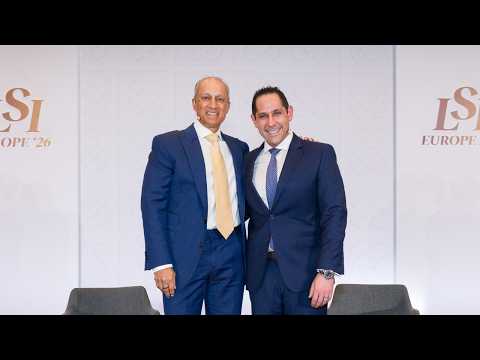
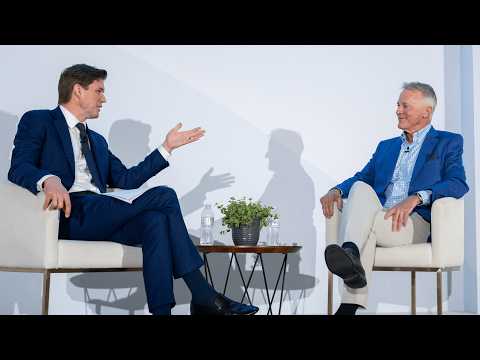
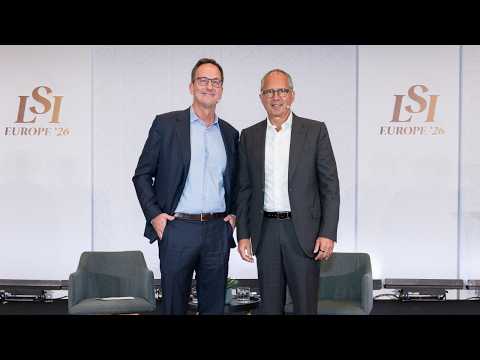
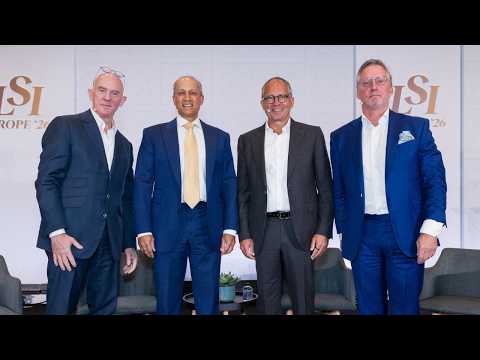
Martin Frost 0:04
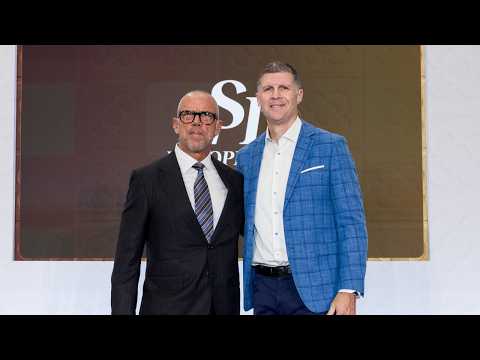
Good morning, everybody. I'm Martin. Martin frost.
Michael Ebner 0:10
I'm Michael Ebner. Quite a pleasure meeting everybody here.
Martin Frost 0:13
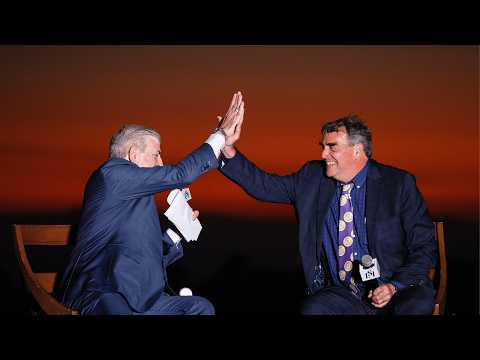
Welcome to London. It's your first time in London. Hope you're having fun here. So by way of introduction, I I was, I am Michael's chairman at hypervision surgical. I've given him full permission to complain about his board. Also got Matt Ginn in the audience, who whose business I chair. So there's likely things going to be thrown at me at some point on the stage today. Prior to that, I was involved in starting CMR surgical 2014 and and that was a journey that took us through 2020 at which point I came off the board now involved in three companies in life science area, all three, all three companies will be here in this conference.
Michael Ebner 1:03
Michael, yeah. Michael, it's a really, really nice meeting everybody. My deduction is probably much, much shorter given the different time skills and certain experiences. So my background really has been in on the technical side applied mathematics, which, for those who know mathematics, there's not really a lot of applications that people see as part of that. So then really focused on medical image computing and over time, mostly from innovation work at universities spinning on hypervision surgical from King's College London, which on the way then yeah, helping across paths with Yeah, including Martin. So very delighted to be here on stage now with you and talk a bit about the journey.
Martin Frost 1:45
And I know you're going to interrogate me for most of this, Michael, but we start. So when you from a CEO point of view, were thinking about, what would a what would a good board look like? What was written on your blank piece of paper.
Michael Ebner 2:01
So it's obviously a very difficult question. So again, like trying to anchor this from, of course, many of you have their own founding stories, but essentially, when you're first time founder, most from technical side, it's really hard to know what ideal should look like, and it's often really important as well, didn't cross paths with those who have come the journey before. So had been a pleasure, actually, with many who are here today in this room and have had plenty of interactions and helped and as well, define what it could look like. For me in particular, it has always been really trying to figure out what the blind spots could be, trying to understand what you don't yet know. And that, of course, like the first you know, guess, is clear on the commercial side, as from the academic sphere, close on the clinical and technical world. And someone like you, Martin, of course, brings a lot of weight to being able to understand what it takes to navigate commercially and, of course, by extension, the bonds to help foster these types of relationships.
Martin Frost 3:07
Yeah, so I think my experience at CMR was interesting on board, I think I managed to work my way through four chair people still at number one. There rather than the other way around. And I remember my last chair said to me, you know, Martin, my job is to support you, bit like a chairman of a football club to a football manager. My job is to support you until, until the minute I ask you to leave. That was really encouraging.
Michael Ebner 3:39
When did that happen?
Martin Frost 3:43
Well, actually, that that that's that's a really interesting topic, actually, because boards of core, of course, have to evolve, and management teams have to evolve. Because it's not, there aren't many examples of people starting a company and taking that company all the way through to exist. I mean, these days when we're looking at timescales of 1012, years, I'm 62 now, you know, the thought of having to do another six years new leading company would have been a daunting one, but that evolution of roles, senior roles in in companies like CMR, very, very difficult, very, very difficult indeed. And when I look back on that, the Board did a couple of good things, and then and then a terrible thing, the couple of good things it did was to identify, in advance that there needs to be some evolution of leadership and to discuss, you know, what, what that might look like before and after, because there's always a sensitive subject around, you know, is it a good idea for the founder, the CEO, other founders, to stay on, on in the company, once you bring the CEO into that company? I stayed on the board of CMR for about six months or so after after my role changed, and I've been involved in conversations around transition of leadership for for a few months, until the point where I discovered that the board had actually already talked to the person who was going to succeed me a couple of months before, which wasn't playing fair, at which At which point, we had a few conversations around that. But I think it's very, very hard for founders such as yourself, Michael, to have all of the skills necessary to build a business to the point where you have regular regulatory approval on a product and then to scale it globally. That's a very, very difficult thing to do, and especially from the UK, where we have, until organox, really, very, very few examples.
Michael Ebner 6:01
I guess one thing I would like to figure out also for the audience here, sort of like those could if you're an executive, could you please raise your hands? That's roughly if what I see here, for those who are executives, how many of you have do this now for the first time. Two, well, so it's like then three as all with me here. So it's quite interesting. Those who are not have, who those who have not not raised their hands. Which background do you have? Is it more than investor side? Yeah. Yep. And who's the like half of the other audience then around here, yeah, exactly as well from Yeah, technology support. So I guess the question, of course, that sort of I have as well for you, Martin, thinking back, what you know, what are the learnings that you've had along the way, and also how, how you then try to support as well. And yeah, in part is as part of hypervision,
Martin Frost 7:12
yeah, so, the same, our story legally started in January 2014 actually, those of us and Paul in the audience today was involved in the early conversations. Well before 2014 we know how long it starts to it takes to start a business and the thinking that goes into it. In advance at CML, we had to raise in our seed round, I think we raised 3.8 million pounds, which was difficult to raise with no product, no IP, no team. That was that was a fairly hard it was a fairly hard task, and literally spoke to hundreds of investors seeking to find the early investors in the company. But when, when, when, with the benefit of hindsight, I look at what we accomplished and where we could have done better, and we sit in this room, and at the point where we started at CMR surgical, there were maybe two or three companies in the surgical robotic space that, yeah, we did diligence on, we could look at they started a couple of years before us. Market obviously dominated, still dominated by Intuitive Surgical, phenomenally successful company. Why? Why on earth would somebody seek to compete with a company like intuitive very difficult, but at that time, we believe that we that we could bring something different to the market, some different thinking in terms of functionality, the way that the device will be handled, etc. And because we're in Cambridge, in the UK, Cambridge is fantastic place to recruit very talented engineering teams. And we did that very, very well. And the time it took for us to get from that, I think it literally was a design on the back of a napkin, if I remember correctly, through to a regulated product, was for a very complex medical device was, I think, just over four years, four to five years, and that was phenomenally fast. And at that time, though, we believe that we had to get a product out there and in the hands of surgeons, because we had two very large companies in the form of Medtronic and J and J, who were likely to be snapping at our heels. And the interesting thing is today is that really neither of those companies are yet at the point where they are entering, entering the market to challenge intuitive so very often in our sort of business life, lives, actually the. The single most important factor in success is timing. You know, we talk about teams, we talk about capital, we talk about intellectual property, but timing is very often the single most important factor in a company's success. And I think we were, yeah, we were fortunate in our timing. But I think in retrospect, we we did get a couple of we made a couple of wrong assumptions and wrong turns, which is that at the point where we had a regulated product, and we'd done that very, very quickly, company was able to raise a lot of capital. And there's some irony in what I'm about to say, but raising a lot of capital is sometimes can be a burden, because if you raise too much capital, then you have to get your product into market. And sometimes that's your first generation product, you have to get that product into market very, very quickly. And actually, that product has has sold well in the market. But when I look back on it in retrospect, what we really should have done in the company was limited launch learnings from customers, second generation product and then and then, and then, put our foot down, and we got some choices around that wrong at the time, partly because we believe that the market dynamics were going to be more competitive than actually, in retrospect, proved, proved to be the case. So we we got that wrong. Second thing, I think, when I think back on it. We benefit of hindsight. Could have done better is that it's very difficult for a founding team to have all of the skills necessary to take a company through from incorporation, intellectual property file, first product, commercialized product. So so therefore, the people you recruit, they need to go on a journey and and it's very hard for you know, the first a team of 40 people, for those 40 people to continue to have the same scope in their roles. And when the company is six, 700 people, actually, what tends to happen is you get more specialists in people's scope of their role tends to narrow, and they're and they no longer have quite the same challenge. And actually, if you think about when I look back on it, and I think of the way we designed our incentivization structures, share option schemes, etc, in some ways, and combined with the culture we built in the company, they were designed to make sure we never wanted people to leave. And I wonder whether, in retrospect, what we should have done is said, Actually people have got a great thing to do between here and here, and then we need to figure out actually how we're going to then recruit in people, and then essentially allow people to go and do what they did at CMR, somewhere else at that stage, share. You know, different types of share option schemes are not always best defined for things like that.
Michael Ebner 13:24
Yeah, I guess, like, sort of like looking at that. How do you see as well, the journey for hypervision and a bit different as well.
Martin Frost 13:32
So why don't you explain to folk in the audience, Michael, what hypervision does today, and then I'll then I'll answer a question.
Michael Ebner 13:41
So for those of you who do not know hypervision surgical so what we are focusing on is really providing completely new ability of seeing information during surgery. There's about all of us, of course, are very familiar with laparoscopy. So you have a camera, you have basically an optical imaging system to see what the human eye would see. Well, all of us know there's so much information in the spectrum of light that is lost on the human eye, that is lost on existing vision systems, and now we have developed a, what is called a spectral imaging systems of fundamentally being able to see wavelengths that are beyond human vision capabilities, and pairing this up with AI machine learning to then extract information. So in many ways, we have now provided a completely new platform approach to that seamlessly integrates in all vision technologies in surgery, but going far beyond the existing capabilities. And we have now, end of last year, secured UK same marking is our first clearance, and also now a few months ago, FDA clearance, even to the point where the FDA gave us a new product code for having now a new ability for AI machine learning informed image reconstruction and visualization for a real time surgery. And that, in many ways, also kick. Of some wonderful partnerships. And actually one of very important partnerships for hyper version is iMac. IMac also represented here today and providing the next generation of sensing technology, which we now are developing in partnership to really further optimize for the context of surgery. So basically, what we're aiming to do is with a very lean concept of compact sensors that fit in all vision technologies and all vision systems and machine learning AI having then the future of tissue differentiation and characterization that is heavily software driven, because once these chips are in vision systems, then they keep on learning. And in many ways, it's kind of like a new that a vision system can act as a new sensing tool. And that's really where we think the future is less from complex hardware, but rather a very well, carefully orchestrated addition or replacement of the future of sensing and then having soft evolutions to provide more insights, and that's not very exciting for us. The system is being deployed at three UK sites. The first indication is in general surgery, in particular colorectal surgery, where we aim to reduce anastomotic leakage, and we also have ongoing work in various gi related studies there, and so now it's it's really the time for us to go towards an early market release and basically learn as well with a very targeted ability to refine our products based on software changes and now make it truly well fit for purpose. It's very exciting periods of time for us. Time for us,
Martin Frost 16:43
in fact. So the reason I got involved in hypervision surgical is partly because Michael is probably the most persistent, annoying, annoyingly persistent, I should say, and person, person, medical devices. And also because when we were again, when we when Paul and I and others were starting CMR, we believed, in the end that the robot would become really the ubiquitous platform, and in the end, potentially not the big differentiator. And the big differentiator in the end, would be either the quality the instrumentation or the software, or, in fact, more now the learnings from the data and the imaging. And I think next generation surgical imaging, for me was, was always going to be that, that next wave, and I think getting involved the early, the early stages of a company that, in the end, can impact the whole industry. That was really very interesting, I
Michael Ebner 17:49
guess, from the new perspective, of course, given the experience you have as a founder, operator, advisor, manager, board members, wealthy, like, where do you see actually, most difficulties as well, then especially the early stages, to get it right.
Martin Frost 18:06
I think, I think, I think most, I think one of them, what the most difficult things for early stage companies is, is to manage times, timing and timescale very, very carefully. I mean, delighted to see Matt from IQ Endoscopes in the in the in the in the room too. And I think managing the expectations of the board, the investors around time to market, market entry proof points. It's just a very, very difficult thing to do, because you're constantly working out cash, out, what it was, what, how much capital you need to take to limited market launch learnings from from that launch, that's very difficult. The decision we took at CMR, actually, early on, was that was to actually build a UK medical device manufacturing company. Yeah, we were told that that really couldn't be done, wouldn't be done. And now and now to see CMR at the point where, you know, there's a robotics factory just up the road in Ely, is a very proud moment for us, really, because Cambridge had been, has been responsible for a lot of innovation in that area. Cambridge is home to some of the the best engineering consulting companies in the UK, but to actually have manufacturing here in the UK before Donald Trump hammering that particular drum that that was great to us, and means that we get as much innovation in the manufacturing as we do in the device actually. So. Know whether or not you're whether or not hyper vision will go on that same journey. Is an interesting one, Michael, because I know that you have a different view in the end, as to how hyper vision will be supplying into your market,
Michael Ebner 20:12
certainly trying to stay away from direct manufacturing as, yeah, as much as possible. I mean, for us, it's really, you know, in our core DNA, it's about it's about software. And also the key expertise that we're having is, in our way. It's about like key components, like the chip, of course, making sure that we have them the right partners to make it happen. But fundamentally, it's about like, delivery of the systems in our way. And that was also for us, really important at this early stage, to figure out, okay, who could be those individuals that actually could happen. I mean, for us, when, when we raised our first round, in fact, our pre seed rounds, this was in 2122 at the time, was it about like reaching out to Angel networks, and this was all in the way getting to know Martin as part of this. Because, as you start right, and if you read it from a, from a from a clean slate, even a roll, decks a road, decks of investors, is what you don't yet have access to. So we really was, then pretty much relentless, as you have said, in trying to figure out various different contacts who could be helping us and Angel networks. Of course, as you will well know, are extremely interested in pairing, not just up individuals who could provide funding, but rather those individuals who could help along the journey. And I still remember as part of the actual first interaction I've I've had them there at the time, with individual then trying to pair it, asking me what I was looking for, who is the individual that I was, you know, would be lacking to work with. And at the time, because I haven't done my homework at the time, I hadn't realized that Martin actually was part of the angel, yeah, of the of the Cambridge angels, but I was describing somebody like Martin really understanding, okay, if I wanted to be, you know, individual joining an hour Board, who had successfully gone through the early commercialization stages, who basically has navigated surgical vision and robotic space, and ideally, yeah, UK embedded environments. And this actually led to, well, us initially providing further information. And she said, Well, we have, we might have somebody, we might have somebody in our networks who could help you. And she initially suggested that's going to be a follow up call. But after a week or so, she said, Look, I have something better for you. Why not meeting this person? Why not meeting Martin frost? And that, of course, was, at the time, an immense privilege. It felt, because, as you start out, you still don't really have a lot of leads into the ecosystem. Speaking to Martin frost, of course, was extremely important for us. We met then at King's Cross at the time, and I still remember, like for the first probably half an hour, trying to convey what we're doing, because it's generally difficult in a highly complex environment. And wanted and pulled out. And I realized, of course, it was close to Martin's heart. I mean, vision is close to robotics. I knew it. I knew it's important to him, but I still couldn't convey the importance in terms of market size. And at some point I just, like a desperate or pulled out the spreadsheet. He said, Look, this is all the information here, all the things that I was running through. And then, oh, now I'm getting interested. And this then led to actually further conversations, yeah. And it was very clear, look, Michael, there's so much going on right now, like I cannot do any investment, I cannot do any advisorship, I cannot do any board member, and I certainly will never be your chair. But over time, we had then at least smile, regular, irregular relationship of, you know, asking for advice. And I think the key moment was that, after having worked for about a year, effective in a mentorship capacity, quite informally, and when we were aiming to raise our seed round, and in fact, this was LSI at the time, was extremely important to us, because the first time in London was when we then secured our seed investor. But in the run up to that, the people were always saying, Look, Marcum, you have a great team in terms of technology, or at least, a lot of potential to be seen what actually works, but also very good potential in terms of clinical but we don't believe that you can pull it up, that you can actually put, put off commercially. And Martin saw that, or, like, almost a year me like putting, like, you know, my hat against the wall, and always getting the same results. And someone saying, like Martin, he didn't think to me, okay, fine, Michael, if you pull together a large enough round to be what that means, but a few million large enough rounds, then I might be willing to go on the board like sweet. I have an idea something that I could use as a hook, and that actually got us then towards a. Am more and more towards de risking this in our way. But again, Martin told me, like, Don't worry, Michael, I would never be a child. Don't even think about it. But I might be on on the board, as non Executive Director, and that's really the way it started. I think what it highlighted is was there's a lot of just having to be persistent, trying to just push for something that you like know, is effectively a limitation of the current, you know team, of the current expertise, of the current journey, and in that capacity, keeping on pushing for what might be a better outcome. And as in the round was was shaping up, and we had a set of five board directors. Two were existing founders, two were investors, and one independent. And it was already shaping up more and more that's going to be Martin. They they independent there. And at some point, Martin tells me, look, Michael, I know what you're doing. Remember, I'm still, I'm I'm not going to be your chair like, that's fine, Martin, you know you don't need to be our chair, but as long as I can have you as an independent and help us navigate and as it worked out, of course, at some point, Martin, given all the experience seeing Michael, look Michael, given that I'm already doing the work as a chair and interacting as I was a chair, would You mind even I take on the role as a chair. And that was, of course, immensely gratifying, because it's been such a long journey, probably by then, two and a half, three years of building this relationship. And I think when people always ask me what it takes to build the board, and, you know, find the right investor, so the right either independent or chair, my experience has always been it really takes years to invest into a relationship to find the right match, and it's genuinely hard for all of these relationships that one is building over time, who is going to be the right fit and who is going to be the right match. And so I think the Sauvie have been very fortunate to keep on learning and then making this
Martin Frost 27:05
I think when I look across the different companies I'm involved in in the area, I think good boards can can make a big difference. It's very tempting as somebody. It's very tempting, as a former CEO of a company in this area, for for you to want to go immediately to actually, this is what we need to do ABC. But I think the difficulty is, obviously, if you do that, then you're essentially doing the job of the CEO. And I don't think that that that's not appropriate. So it's actually quite difficult, I think, for people to make the make a good transition from being a CEO to chair, good non exec board director. And it's also where I find it difficult, is that the people side of building businesses is very important to me. If I if I don't fully buy into the values of the leader, no matter what the company is doing, I can't associate myself with the company. I just won't do it. And that naturally pulls you quite close to the CEO and makes you a backer of of that person. But that's not necessarily, really what the investors want you to do, and I this is still a work in progress for me, insofar as I think, I think the role between chair and CEO is very important. I think you really want the CEO to, you know, my whatsapp is full of WhatsApp from you. What's that from you? Michael, at three, three o'clock in the morning, two o'clock in the morning, one o'clock in
Michael Ebner 28:56
the morning. Burning Questions. I'm sure
Martin Frost 28:58
you want, you want the sort of relationship where, where you have that that close contact, but the but that also takes you into a tricky territory of sort of independence, naturally. I also think as far as Europe, in the UK is concerned, obviously, many, many companies here are seeking to go on that journey into commercialization in the United States. And that's also a a tricky thing to do, because you can't naturally find people in Europe, in the UK, who have done that. Yeah, I can think of two companies immediately that are going on that transition and finding the right cultural and and business fit is is very tricky, not least because we have different ideas in the UK and Europe about. What's normal in terms of, bluntly, compensation, you know, in that area, I think, I think to get the right person on our board, and as we commercialize into the US will cost a lot more money than it costs us to find similar people in the UK, in Europe, and then working out the comparatives, then across existing board members, new more board members. That's really very difficult. Much so, but exciting, but exciting, I think the the other, the other thing that I think we need more of something in the UK and Europe is people wanting to get involved. It's not enough to be doing a job. I think you have to, I think you have to be committed to help, to helping a company and and the market for independent advisors, mentors, board members in this sector, in this country, this is tricky.
Michael Ebner 31:12
Indeed, very much. So obviously, as well, the community here NSI is a very important one. Also one wonder at the stage, is it useful to be telling mind the new audience for questions as well, and anything that you would like as well.
Martin Frost 31:25
I'd love to know. I'd love to know from the audience what, what? What are the key attributes you're looking for? You would look for in an independent chair. How important is market intelligence, market knowledge, the ability to find key investors, the personal, human relationship with the team. Time availability I'm involved in. I've involved in three companies, I would say, all here over the next two to three days. Is, how many is too? Many? What fake think?
Audience Question 32:15
Don't be shy. So my name is Frank Billings. I'm a partner with imacx funds. We are currently investing out of our second Fund, which is a 300 million euro fund investing in health tech, but also in deep tech opportunities. Actually, I make is, is a favorite partner for us in terms of research development. So I think the points you were describing for the chairman profile was a very good summary. We are currently looking for a chairman for one of our portfolio companies. Now, I think the challenge is that to find all those features attributes in someone who's based in Europe is not obvious. There are certainly like yourself, but it's a limited size pool, and what we, usually, we try to do for a company based in Europe, is to look for a chairman in the US to bring that additional connection. So that's the only addition I would, I
Martin Frost 33:11
would give you. And when you do that, if you have done it, does that? Does that have any an implication for how many board meetings you can have? Because certainly I've been on board, so we've had us board members, and they can come over for maybe two or three of them, but and that, and then having board having board meetings where there's a person who's joining virtually, and the rest of the board is there physically, that's hard. It's hard to do if the US person is the chair,
Audience Question 33:42
and I agree with that comment. So having time, having affinity for, for Europe, and being able to travel at least a couple of times per year, that's, that's, that's the condition for sure, I think in the current environment, since Corona, we are used to web calls and so forth, but there should be physical meetings as well, and really frequent interactions, like you described. I think it's perfect, frequent interactions between chairman and CEO of a startup, sounding board coaching. That's that's what you need.
Martin Frost 34:19
Yeah, I'm also a sort of fan of small boards, which is often the problem we have, you know, with companies that have investors with investor rights, consent lights to sit on boards. I think certainly felt at times that the CMO board was was just simply too many people, and you got too many vested interest around the table you're trying to manage, and that becomes very difficult. I actually quite like the situation at hypervision, where essentially it's a it's a couple of investors, an independent that's me, said from the school and Michael, that works pretty well. Actually.
Michael Ebner 34:59
Great question as well.
Audience Question 35:01
Were you the Chairman, before you brought in Mark?
Michael Ebner 35:06
we haven't had the question was whether I was the chairman before Martin joined. It's quite a humbling question. So we didn't have a formal board before we closed our seed rounds, it was very much like co founders. And with our pre seed round, it was angel investors. We didn't have a structured board that changed, and it's a quite a different dynamics now, which, of course, is as part of the journey in establishing corporate governance and making sure we have the ability to have the right infrastructure for scaling with Martin that was introduced.
Martin Frost 35:36
Yeah. So I think you're I think there is a difference. Can be a difference between US and UK and and European or UK companies actually, where the the role of president in the in the US can can sometimes span what what a chair would do in the in the UK. So typically, there's greater sort of segregation of duties around that in UK and Europe than there is in the USA. Yeah. How do
Martin Frost 36:13
I think the I think you I think as chair, your job, your job is to see where people are and aren't contributing, and then, yeah, and then be be clear with the person who's not contributing that you'll be replacing them. I mean, the advantage for non exec director contracts is it costs a lot less money to terminate than it does for other types of contract, I think, in terms of trying to apply what I've seen CMR and other companies to my own own position. I like, I prefer companies where I'm involved to know how long to they can expect me to be involved and I'd and I'd prefer to err on the lower, the lower side of that, than the higher side of that, because I think, yeah, boards, boards need to evolve. They must involve in evolve in order for the company to benefit from, from a good board, certainly, certainly private companies. Yeah, has anybody got any nightmare stories of ball? So they'd like to share, share with the broader group of companies.
Audience Question 37:39
We only as long as your other board members out here. Yeah, actually, I'm Allen Kersey with Uncle Lux again in the imaging space. Yeah, and know Michael quite well. And we're also bringing some photodynamic therapy into play. It's interesting. Your comments on on founders and their and their incentives to stay. Yeah, and as management teams, you often find yourself, of course, after four years, re incentivizing those very founders to stay even longer. Yeah, with Cliff agreements on their shares to stay one year, two year or whatever. But that does stand in the way of the company evolving in the right way and maturing in the right way. Yeah, it's an interesting because, you know idea that you have there to sort of incentivize them to do the job they need to do. And then move on to other pastors.
Martin Frost 38:31
I think that's the I mean, there are various people who've put effort into sort of options, which are sort of exit only options. But if you leave the company, you sort of retain, you know, retain your your share of the pool, or there's, there's a lot of sort of innovative thinking around that. But I think the difficulty, obviously, founders tend to own sort of ordinary or common shares outright, and can take those away. I do know some investors, he will insist that they sort of reverse vest. In fact. In fact, I think we, I think Paul, we did that at CMR, where actually, had we left in the first three years of the company, we'd have lost some of our ordinary and common shares. And I think this is something also the university sector in the UK is trying to work out, which is, what's the right way to set up a company, in terms of how much, how much of the company the university owns, versus the founders own, versus the academic founders who don't join, join the company. I think new investors tend to, to be honest, to put very little value on academic founders who aren't committed and beyond beyond a half tar, beyond 50% into a company, quite rightly, because they want interest aligned in the company. So there are certainly lots of examples of Kemp. And the Oxford, Cambridge and London where, you know, we're trying to work that out in terms of how much equity, how little equity should the university hold? Isn't it better that the university ends up with a smaller stake of a company which is low, worth a lot of money, compared to a larger stake of a company that actually isn't isn't going to achieve what it could?
Audience Question 40:24
Since I have the microphone, I get to ask one question, Michael, I'm curious, how do you think about you talked a little bit about aligning incentives between the board, the academic founders and the investors that come in later. How do you as the CEO, think about your relationships differently with academic founders who may be part time or not, part of the day to day operations at this stage, the early investors that have their stake and are involved in their way, and then bringing in independent board members later to augment capabilities that may be missing from the core team or part of the next phase of growth.
Michael Ebner 40:56
It's very interesting question. So I think every history of company is very different. For us, the fact that we are spinning out from the university, there is a real strength in having the assets, in our case, accessible. I mean, like we have an operating theater that we can use for development, for literally shortening the period of time for product development, which is all there, we have a very close relationship as part of this various with various hospital sites that we can as well interact with for clinical studies. That means also co founders, in this case, we're not jumping full time to the company. There is a real asset in having these links to various different parties that allows us to accelerate. Of course, the expectation has to shift, because when you start out with a small team, co founders of four, you one naturally, I certainly did expect people to take on more than they realistically could over time, one realizes on where the right sweet spot is right by having ability that a company has now the operative management taking on more and more and more responsibility and having then as well, co founders very active, but almost in a sounding word capacity, on the scientific development, on the clinical development, but also on the actual strategic engagement that is all accessible to a meta cub around St Thomas's that we are so closely embedded in. But managing these relationships is genuinely hard, right? In a way, when, when people are not in a full time capacity of different interests there. But I think it's always that, always trying to figure out, what is it that one has within the core team? Where does it have to be external parties, we're also investors, adding a completely new lens to what we have to be doing. But certainly that's, I think I can imagine difficult at every stage. But when you start out, we initially four co founders. Now we are 16 filter members. It's still small, but if you take on various consultants, various different, you know, supporters, it's around 25 it already starts to be kind of getting an interesting complexity of managing that, especially because we're running things very tightly. I mean, we spent thus far, 4 million pounds to date, and we got through clearance in the UK, clearance in the United States, and closed extremely important partnerships now for scaling. So it's always the question on how much slack one allows oneself in managing relationships, or how tight they want to be. And I clearly want to have things as effectively as possible. But it also means figuring out what's ideal in each relationship is always, yeah, a new experience.
Martin Frost 43:36
I think. I think the interesting thing is as well, I mean, the organock story, very interesting next door is that, you know, when you have a success, all of a sudden you discover founders that you didn't know you had, yeah, you know, as in, you know, everything, yeah, success has success has multiple fathers and sort of failure as an orphan. So I'm, I have some I'm identifying with that quite a lot at the moment,
Michael Ebner 44:09
I guess, also I think in I guess, the way I see it is various different you know, individuals can add a lot of value in may different contexts, but also timelines, right? So certain individuals can be extremely important for certain period of time, and unlocking key milestones, then for us, for another stage, it might not be directly sort of as much weight, but things again change, and I see this interplay of expertise is coming back and forth are so important as the journey of a company evolves, and I think it's also the excitement on learning, on who are the right people at the right stage, how to curate this well ahead of time you need it, and then capitalize on the opportunity in the moment when it does arise, and make it seem as Sean as it can be. Me, and it's hard one,
Martin Frost 45:01
how many minutes do we have no good thank you very much. Okay, thanks very much. I hope we've not offended anybody in the room, who's we'll see later, but nice to see everybody enjoy your conference. Thank you.
Martin Frost 0:04
Good morning, everybody. I'm Martin. Martin frost.
Michael Ebner 0:10
I'm Michael Ebner. Quite a pleasure meeting everybody here.
Martin Frost 0:13
Welcome to London. It's your first time in London. Hope you're having fun here. So by way of introduction, I I was, I am Michael's chairman at hypervision surgical. I've given him full permission to complain about his board. Also got Matt Ginn in the audience, who whose business I chair. So there's likely things going to be thrown at me at some point on the stage today. Prior to that, I was involved in starting CMR surgical 2014 and and that was a journey that took us through 2020 at which point I came off the board now involved in three companies in life science area, all three, all three companies will be here in this conference.
Michael Ebner 1:03
Michael, yeah. Michael, it's a really, really nice meeting everybody. My deduction is probably much, much shorter given the different time skills and certain experiences. So my background really has been in on the technical side applied mathematics, which, for those who know mathematics, there's not really a lot of applications that people see as part of that. So then really focused on medical image computing and over time, mostly from innovation work at universities spinning on hypervision surgical from King's College London, which on the way then yeah, helping across paths with Yeah, including Martin. So very delighted to be here on stage now with you and talk a bit about the journey.
Martin Frost 1:45
And I know you're going to interrogate me for most of this, Michael, but we start. So when you from a CEO point of view, were thinking about, what would a what would a good board look like? What was written on your blank piece of paper.
Michael Ebner 2:01
So it's obviously a very difficult question. So again, like trying to anchor this from, of course, many of you have their own founding stories, but essentially, when you're first time founder, most from technical side, it's really hard to know what ideal should look like, and it's often really important as well, didn't cross paths with those who have come the journey before. So had been a pleasure, actually, with many who are here today in this room and have had plenty of interactions and helped and as well, define what it could look like. For me in particular, it has always been really trying to figure out what the blind spots could be, trying to understand what you don't yet know. And that, of course, like the first you know, guess, is clear on the commercial side, as from the academic sphere, close on the clinical and technical world. And someone like you, Martin, of course, brings a lot of weight to being able to understand what it takes to navigate commercially and, of course, by extension, the bonds to help foster these types of relationships.
Martin Frost 3:07
Yeah, so I think my experience at CMR was interesting on board, I think I managed to work my way through four chair people still at number one. There rather than the other way around. And I remember my last chair said to me, you know, Martin, my job is to support you, bit like a chairman of a football club to a football manager. My job is to support you until, until the minute I ask you to leave. That was really encouraging.
Michael Ebner 3:39
When did that happen?
Martin Frost 3:43
Well, actually, that that that's that's a really interesting topic, actually, because boards of core, of course, have to evolve, and management teams have to evolve. Because it's not, there aren't many examples of people starting a company and taking that company all the way through to exist. I mean, these days when we're looking at timescales of 1012, years, I'm 62 now, you know, the thought of having to do another six years new leading company would have been a daunting one, but that evolution of roles, senior roles in in companies like CMR, very, very difficult, very, very difficult indeed. And when I look back on that, the Board did a couple of good things, and then and then a terrible thing, the couple of good things it did was to identify, in advance that there needs to be some evolution of leadership and to discuss, you know, what, what that might look like before and after, because there's always a sensitive subject around, you know, is it a good idea for the founder, the CEO, other founders, to stay on, on in the company, once you bring the CEO into that company? I stayed on the board of CMR for about six months or so after after my role changed, and I've been involved in conversations around transition of leadership for for a few months, until the point where I discovered that the board had actually already talked to the person who was going to succeed me a couple of months before, which wasn't playing fair, at which At which point, we had a few conversations around that. But I think it's very, very hard for founders such as yourself, Michael, to have all of the skills necessary to build a business to the point where you have regular regulatory approval on a product and then to scale it globally. That's a very, very difficult thing to do, and especially from the UK, where we have, until organox, really, very, very few examples.
Michael Ebner 6:01
I guess one thing I would like to figure out also for the audience here, sort of like those could if you're an executive, could you please raise your hands? That's roughly if what I see here, for those who are executives, how many of you have do this now for the first time. Two, well, so it's like then three as all with me here. So it's quite interesting. Those who are not have, who those who have not not raised their hands. Which background do you have? Is it more than investor side? Yeah. Yep. And who's the like half of the other audience then around here, yeah, exactly as well from Yeah, technology support. So I guess the question, of course, that sort of I have as well for you, Martin, thinking back, what you know, what are the learnings that you've had along the way, and also how, how you then try to support as well. And yeah, in part is as part of hypervision,
Martin Frost 7:12
yeah, so, the same, our story legally started in January 2014 actually, those of us and Paul in the audience today was involved in the early conversations. Well before 2014 we know how long it starts to it takes to start a business and the thinking that goes into it. In advance at CML, we had to raise in our seed round, I think we raised 3.8 million pounds, which was difficult to raise with no product, no IP, no team. That was that was a fairly hard it was a fairly hard task, and literally spoke to hundreds of investors seeking to find the early investors in the company. But when, when, when, with the benefit of hindsight, I look at what we accomplished and where we could have done better, and we sit in this room, and at the point where we started at CMR surgical, there were maybe two or three companies in the surgical robotic space that, yeah, we did diligence on, we could look at they started a couple of years before us. Market obviously dominated, still dominated by Intuitive Surgical, phenomenally successful company. Why? Why on earth would somebody seek to compete with a company like intuitive very difficult, but at that time, we believe that we that we could bring something different to the market, some different thinking in terms of functionality, the way that the device will be handled, etc. And because we're in Cambridge, in the UK, Cambridge is fantastic place to recruit very talented engineering teams. And we did that very, very well. And the time it took for us to get from that, I think it literally was a design on the back of a napkin, if I remember correctly, through to a regulated product, was for a very complex medical device was, I think, just over four years, four to five years, and that was phenomenally fast. And at that time, though, we believe that we had to get a product out there and in the hands of surgeons, because we had two very large companies in the form of Medtronic and J and J, who were likely to be snapping at our heels. And the interesting thing is today is that really neither of those companies are yet at the point where they are entering, entering the market to challenge intuitive so very often in our sort of business life, lives, actually the. The single most important factor in success is timing. You know, we talk about teams, we talk about capital, we talk about intellectual property, but timing is very often the single most important factor in a company's success. And I think we were, yeah, we were fortunate in our timing. But I think in retrospect, we we did get a couple of we made a couple of wrong assumptions and wrong turns, which is that at the point where we had a regulated product, and we'd done that very, very quickly, company was able to raise a lot of capital. And there's some irony in what I'm about to say, but raising a lot of capital is sometimes can be a burden, because if you raise too much capital, then you have to get your product into market. And sometimes that's your first generation product, you have to get that product into market very, very quickly. And actually, that product has has sold well in the market. But when I look back on it in retrospect, what we really should have done in the company was limited launch learnings from customers, second generation product and then and then, and then, put our foot down, and we got some choices around that wrong at the time, partly because we believe that the market dynamics were going to be more competitive than actually, in retrospect, proved, proved to be the case. So we we got that wrong. Second thing, I think, when I think back on it. We benefit of hindsight. Could have done better is that it's very difficult for a founding team to have all of the skills necessary to take a company through from incorporation, intellectual property file, first product, commercialized product. So so therefore, the people you recruit, they need to go on a journey and and it's very hard for you know, the first a team of 40 people, for those 40 people to continue to have the same scope in their roles. And when the company is six, 700 people, actually, what tends to happen is you get more specialists in people's scope of their role tends to narrow, and they're and they no longer have quite the same challenge. And actually, if you think about when I look back on it, and I think of the way we designed our incentivization structures, share option schemes, etc, in some ways, and combined with the culture we built in the company, they were designed to make sure we never wanted people to leave. And I wonder whether, in retrospect, what we should have done is said, Actually people have got a great thing to do between here and here, and then we need to figure out actually how we're going to then recruit in people, and then essentially allow people to go and do what they did at CMR, somewhere else at that stage, share. You know, different types of share option schemes are not always best defined for things like that.
Michael Ebner 13:24
Yeah, I guess, like, sort of like looking at that. How do you see as well, the journey for hypervision and a bit different as well.
Martin Frost 13:32
So why don't you explain to folk in the audience, Michael, what hypervision does today, and then I'll then I'll answer a question.
Michael Ebner 13:41
So for those of you who do not know hypervision surgical so what we are focusing on is really providing completely new ability of seeing information during surgery. There's about all of us, of course, are very familiar with laparoscopy. So you have a camera, you have basically an optical imaging system to see what the human eye would see. Well, all of us know there's so much information in the spectrum of light that is lost on the human eye, that is lost on existing vision systems, and now we have developed a, what is called a spectral imaging systems of fundamentally being able to see wavelengths that are beyond human vision capabilities, and pairing this up with AI machine learning to then extract information. So in many ways, we have now provided a completely new platform approach to that seamlessly integrates in all vision technologies in surgery, but going far beyond the existing capabilities. And we have now, end of last year, secured UK same marking is our first clearance, and also now a few months ago, FDA clearance, even to the point where the FDA gave us a new product code for having now a new ability for AI machine learning informed image reconstruction and visualization for a real time surgery. And that, in many ways, also kick. Of some wonderful partnerships. And actually one of very important partnerships for hyper version is iMac. IMac also represented here today and providing the next generation of sensing technology, which we now are developing in partnership to really further optimize for the context of surgery. So basically, what we're aiming to do is with a very lean concept of compact sensors that fit in all vision technologies and all vision systems and machine learning AI having then the future of tissue differentiation and characterization that is heavily software driven, because once these chips are in vision systems, then they keep on learning. And in many ways, it's kind of like a new that a vision system can act as a new sensing tool. And that's really where we think the future is less from complex hardware, but rather a very well, carefully orchestrated addition or replacement of the future of sensing and then having soft evolutions to provide more insights, and that's not very exciting for us. The system is being deployed at three UK sites. The first indication is in general surgery, in particular colorectal surgery, where we aim to reduce anastomotic leakage, and we also have ongoing work in various gi related studies there, and so now it's it's really the time for us to go towards an early market release and basically learn as well with a very targeted ability to refine our products based on software changes and now make it truly well fit for purpose. It's very exciting periods of time for us. Time for us,
Martin Frost 16:43
in fact. So the reason I got involved in hypervision surgical is partly because Michael is probably the most persistent, annoying, annoyingly persistent, I should say, and person, person, medical devices. And also because when we were again, when we when Paul and I and others were starting CMR, we believed, in the end that the robot would become really the ubiquitous platform, and in the end, potentially not the big differentiator. And the big differentiator in the end, would be either the quality the instrumentation or the software, or, in fact, more now the learnings from the data and the imaging. And I think next generation surgical imaging, for me was, was always going to be that, that next wave, and I think getting involved the early, the early stages of a company that, in the end, can impact the whole industry. That was really very interesting, I
Michael Ebner 17:49
guess, from the new perspective, of course, given the experience you have as a founder, operator, advisor, manager, board members, wealthy, like, where do you see actually, most difficulties as well, then especially the early stages, to get it right.
Martin Frost 18:06
I think, I think, I think most, I think one of them, what the most difficult things for early stage companies is, is to manage times, timing and timescale very, very carefully. I mean, delighted to see Matt from IQ Endoscopes in the in the in the in the room too. And I think managing the expectations of the board, the investors around time to market, market entry proof points. It's just a very, very difficult thing to do, because you're constantly working out cash, out, what it was, what, how much capital you need to take to limited market launch learnings from from that launch, that's very difficult. The decision we took at CMR, actually, early on, was that was to actually build a UK medical device manufacturing company. Yeah, we were told that that really couldn't be done, wouldn't be done. And now and now to see CMR at the point where, you know, there's a robotics factory just up the road in Ely, is a very proud moment for us, really, because Cambridge had been, has been responsible for a lot of innovation in that area. Cambridge is home to some of the the best engineering consulting companies in the UK, but to actually have manufacturing here in the UK before Donald Trump hammering that particular drum that that was great to us, and means that we get as much innovation in the manufacturing as we do in the device actually. So. Know whether or not you're whether or not hyper vision will go on that same journey. Is an interesting one, Michael, because I know that you have a different view in the end, as to how hyper vision will be supplying into your market,
Michael Ebner 20:12
certainly trying to stay away from direct manufacturing as, yeah, as much as possible. I mean, for us, it's really, you know, in our core DNA, it's about it's about software. And also the key expertise that we're having is, in our way. It's about like key components, like the chip, of course, making sure that we have them the right partners to make it happen. But fundamentally, it's about like, delivery of the systems in our way. And that was also for us, really important at this early stage, to figure out, okay, who could be those individuals that actually could happen. I mean, for us, when, when we raised our first round, in fact, our pre seed rounds, this was in 2122 at the time, was it about like reaching out to Angel networks, and this was all in the way getting to know Martin as part of this. Because, as you start right, and if you read it from a, from a from a clean slate, even a roll, decks a road, decks of investors, is what you don't yet have access to. So we really was, then pretty much relentless, as you have said, in trying to figure out various different contacts who could be helping us and Angel networks. Of course, as you will well know, are extremely interested in pairing, not just up individuals who could provide funding, but rather those individuals who could help along the journey. And I still remember as part of the actual first interaction I've I've had them there at the time, with individual then trying to pair it, asking me what I was looking for, who is the individual that I was, you know, would be lacking to work with. And at the time, because I haven't done my homework at the time, I hadn't realized that Martin actually was part of the angel, yeah, of the of the Cambridge angels, but I was describing somebody like Martin really understanding, okay, if I wanted to be, you know, individual joining an hour Board, who had successfully gone through the early commercialization stages, who basically has navigated surgical vision and robotic space, and ideally, yeah, UK embedded environments. And this actually led to, well, us initially providing further information. And she said, Well, we have, we might have somebody, we might have somebody in our networks who could help you. And she initially suggested that's going to be a follow up call. But after a week or so, she said, Look, I have something better for you. Why not meeting this person? Why not meeting Martin frost? And that, of course, was, at the time, an immense privilege. It felt, because, as you start out, you still don't really have a lot of leads into the ecosystem. Speaking to Martin frost, of course, was extremely important for us. We met then at King's Cross at the time, and I still remember, like for the first probably half an hour, trying to convey what we're doing, because it's generally difficult in a highly complex environment. And wanted and pulled out. And I realized, of course, it was close to Martin's heart. I mean, vision is close to robotics. I knew it. I knew it's important to him, but I still couldn't convey the importance in terms of market size. And at some point I just, like a desperate or pulled out the spreadsheet. He said, Look, this is all the information here, all the things that I was running through. And then, oh, now I'm getting interested. And this then led to actually further conversations, yeah. And it was very clear, look, Michael, there's so much going on right now, like I cannot do any investment, I cannot do any advisorship, I cannot do any board member, and I certainly will never be your chair. But over time, we had then at least smile, regular, irregular relationship of, you know, asking for advice. And I think the key moment was that, after having worked for about a year, effective in a mentorship capacity, quite informally, and when we were aiming to raise our seed round, and in fact, this was LSI at the time, was extremely important to us, because the first time in London was when we then secured our seed investor. But in the run up to that, the people were always saying, Look, Marcum, you have a great team in terms of technology, or at least, a lot of potential to be seen what actually works, but also very good potential in terms of clinical but we don't believe that you can pull it up, that you can actually put, put off commercially. And Martin saw that, or, like, almost a year me like putting, like, you know, my hat against the wall, and always getting the same results. And someone saying, like Martin, he didn't think to me, okay, fine, Michael, if you pull together a large enough round to be what that means, but a few million large enough rounds, then I might be willing to go on the board like sweet. I have an idea something that I could use as a hook, and that actually got us then towards a. Am more and more towards de risking this in our way. But again, Martin told me, like, Don't worry, Michael, I would never be a child. Don't even think about it. But I might be on on the board, as non Executive Director, and that's really the way it started. I think what it highlighted is was there's a lot of just having to be persistent, trying to just push for something that you like know, is effectively a limitation of the current, you know team, of the current expertise, of the current journey, and in that capacity, keeping on pushing for what might be a better outcome. And as in the round was was shaping up, and we had a set of five board directors. Two were existing founders, two were investors, and one independent. And it was already shaping up more and more that's going to be Martin. They they independent there. And at some point, Martin tells me, look, Michael, I know what you're doing. Remember, I'm still, I'm I'm not going to be your chair like, that's fine, Martin, you know you don't need to be our chair, but as long as I can have you as an independent and help us navigate and as it worked out, of course, at some point, Martin, given all the experience seeing Michael, look Michael, given that I'm already doing the work as a chair and interacting as I was a chair, would You mind even I take on the role as a chair. And that was, of course, immensely gratifying, because it's been such a long journey, probably by then, two and a half, three years of building this relationship. And I think when people always ask me what it takes to build the board, and, you know, find the right investor, so the right either independent or chair, my experience has always been it really takes years to invest into a relationship to find the right match, and it's genuinely hard for all of these relationships that one is building over time, who is going to be the right fit and who is going to be the right match. And so I think the Sauvie have been very fortunate to keep on learning and then making this
Martin Frost 27:05
I think when I look across the different companies I'm involved in in the area, I think good boards can can make a big difference. It's very tempting as somebody. It's very tempting, as a former CEO of a company in this area, for for you to want to go immediately to actually, this is what we need to do ABC. But I think the difficulty is, obviously, if you do that, then you're essentially doing the job of the CEO. And I don't think that that that's not appropriate. So it's actually quite difficult, I think, for people to make the make a good transition from being a CEO to chair, good non exec board director. And it's also where I find it difficult, is that the people side of building businesses is very important to me. If I if I don't fully buy into the values of the leader, no matter what the company is doing, I can't associate myself with the company. I just won't do it. And that naturally pulls you quite close to the CEO and makes you a backer of of that person. But that's not necessarily, really what the investors want you to do, and I this is still a work in progress for me, insofar as I think, I think the role between chair and CEO is very important. I think you really want the CEO to, you know, my whatsapp is full of WhatsApp from you. What's that from you? Michael, at three, three o'clock in the morning, two o'clock in the morning, one o'clock in
Michael Ebner 28:56
the morning. Burning Questions. I'm sure
Martin Frost 28:58
you want, you want the sort of relationship where, where you have that that close contact, but the but that also takes you into a tricky territory of sort of independence, naturally. I also think as far as Europe, in the UK is concerned, obviously, many, many companies here are seeking to go on that journey into commercialization in the United States. And that's also a a tricky thing to do, because you can't naturally find people in Europe, in the UK, who have done that. Yeah, I can think of two companies immediately that are going on that transition and finding the right cultural and and business fit is is very tricky, not least because we have different ideas in the UK and Europe about. What's normal in terms of, bluntly, compensation, you know, in that area, I think, I think to get the right person on our board, and as we commercialize into the US will cost a lot more money than it costs us to find similar people in the UK, in Europe, and then working out the comparatives, then across existing board members, new more board members. That's really very difficult. Much so, but exciting, but exciting, I think the the other, the other thing that I think we need more of something in the UK and Europe is people wanting to get involved. It's not enough to be doing a job. I think you have to, I think you have to be committed to help, to helping a company and and the market for independent advisors, mentors, board members in this sector, in this country, this is tricky.
Michael Ebner 31:12
Indeed, very much. So obviously, as well, the community here NSI is a very important one. Also one wonder at the stage, is it useful to be telling mind the new audience for questions as well, and anything that you would like as well.
Martin Frost 31:25
I'd love to know. I'd love to know from the audience what, what? What are the key attributes you're looking for? You would look for in an independent chair. How important is market intelligence, market knowledge, the ability to find key investors, the personal, human relationship with the team. Time availability I'm involved in. I've involved in three companies, I would say, all here over the next two to three days. Is, how many is too? Many? What fake think?
Audience Question 32:15
Don't be shy. So my name is Frank Billings. I'm a partner with imacx funds. We are currently investing out of our second Fund, which is a 300 million euro fund investing in health tech, but also in deep tech opportunities. Actually, I make is, is a favorite partner for us in terms of research development. So I think the points you were describing for the chairman profile was a very good summary. We are currently looking for a chairman for one of our portfolio companies. Now, I think the challenge is that to find all those features attributes in someone who's based in Europe is not obvious. There are certainly like yourself, but it's a limited size pool, and what we, usually, we try to do for a company based in Europe, is to look for a chairman in the US to bring that additional connection. So that's the only addition I would, I
Martin Frost 33:11
would give you. And when you do that, if you have done it, does that? Does that have any an implication for how many board meetings you can have? Because certainly I've been on board, so we've had us board members, and they can come over for maybe two or three of them, but and that, and then having board having board meetings where there's a person who's joining virtually, and the rest of the board is there physically, that's hard. It's hard to do if the US person is the chair,
Audience Question 33:42
and I agree with that comment. So having time, having affinity for, for Europe, and being able to travel at least a couple of times per year, that's, that's, that's the condition for sure, I think in the current environment, since Corona, we are used to web calls and so forth, but there should be physical meetings as well, and really frequent interactions, like you described. I think it's perfect, frequent interactions between chairman and CEO of a startup, sounding board coaching. That's that's what you need.
Martin Frost 34:19
Yeah, I'm also a sort of fan of small boards, which is often the problem we have, you know, with companies that have investors with investor rights, consent lights to sit on boards. I think certainly felt at times that the CMO board was was just simply too many people, and you got too many vested interest around the table you're trying to manage, and that becomes very difficult. I actually quite like the situation at hypervision, where essentially it's a it's a couple of investors, an independent that's me, said from the school and Michael, that works pretty well. Actually.
Michael Ebner 34:59
Great question as well.
Audience Question 35:01
Were you the Chairman, before you brought in Mark?
Michael Ebner 35:06
we haven't had the question was whether I was the chairman before Martin joined. It's quite a humbling question. So we didn't have a formal board before we closed our seed rounds, it was very much like co founders. And with our pre seed round, it was angel investors. We didn't have a structured board that changed, and it's a quite a different dynamics now, which, of course, is as part of the journey in establishing corporate governance and making sure we have the ability to have the right infrastructure for scaling with Martin that was introduced.
Martin Frost 35:36
Yeah. So I think you're I think there is a difference. Can be a difference between US and UK and and European or UK companies actually, where the the role of president in the in the US can can sometimes span what what a chair would do in the in the UK. So typically, there's greater sort of segregation of duties around that in UK and Europe than there is in the USA. Yeah. How do
Martin Frost 36:13
I think the I think you I think as chair, your job, your job is to see where people are and aren't contributing, and then, yeah, and then be be clear with the person who's not contributing that you'll be replacing them. I mean, the advantage for non exec director contracts is it costs a lot less money to terminate than it does for other types of contract, I think, in terms of trying to apply what I've seen CMR and other companies to my own own position. I like, I prefer companies where I'm involved to know how long to they can expect me to be involved and I'd and I'd prefer to err on the lower, the lower side of that, than the higher side of that, because I think, yeah, boards, boards need to evolve. They must involve in evolve in order for the company to benefit from, from a good board, certainly, certainly private companies. Yeah, has anybody got any nightmare stories of ball? So they'd like to share, share with the broader group of companies.
Audience Question 37:39
We only as long as your other board members out here. Yeah, actually, I'm Allen Kersey with Uncle Lux again in the imaging space. Yeah, and know Michael quite well. And we're also bringing some photodynamic therapy into play. It's interesting. Your comments on on founders and their and their incentives to stay. Yeah, and as management teams, you often find yourself, of course, after four years, re incentivizing those very founders to stay even longer. Yeah, with Cliff agreements on their shares to stay one year, two year or whatever. But that does stand in the way of the company evolving in the right way and maturing in the right way. Yeah, it's an interesting because, you know idea that you have there to sort of incentivize them to do the job they need to do. And then move on to other pastors.
Martin Frost 38:31
I think that's the I mean, there are various people who've put effort into sort of options, which are sort of exit only options. But if you leave the company, you sort of retain, you know, retain your your share of the pool, or there's, there's a lot of sort of innovative thinking around that. But I think the difficulty, obviously, founders tend to own sort of ordinary or common shares outright, and can take those away. I do know some investors, he will insist that they sort of reverse vest. In fact. In fact, I think we, I think Paul, we did that at CMR, where actually, had we left in the first three years of the company, we'd have lost some of our ordinary and common shares. And I think this is something also the university sector in the UK is trying to work out, which is, what's the right way to set up a company, in terms of how much, how much of the company the university owns, versus the founders own, versus the academic founders who don't join, join the company. I think new investors tend to, to be honest, to put very little value on academic founders who aren't committed and beyond beyond a half tar, beyond 50% into a company, quite rightly, because they want interest aligned in the company. So there are certainly lots of examples of Kemp. And the Oxford, Cambridge and London where, you know, we're trying to work that out in terms of how much equity, how little equity should the university hold? Isn't it better that the university ends up with a smaller stake of a company which is low, worth a lot of money, compared to a larger stake of a company that actually isn't isn't going to achieve what it could?
Audience Question 40:24
Since I have the microphone, I get to ask one question, Michael, I'm curious, how do you think about you talked a little bit about aligning incentives between the board, the academic founders and the investors that come in later. How do you as the CEO, think about your relationships differently with academic founders who may be part time or not, part of the day to day operations at this stage, the early investors that have their stake and are involved in their way, and then bringing in independent board members later to augment capabilities that may be missing from the core team or part of the next phase of growth.
Michael Ebner 40:56
It's very interesting question. So I think every history of company is very different. For us, the fact that we are spinning out from the university, there is a real strength in having the assets, in our case, accessible. I mean, like we have an operating theater that we can use for development, for literally shortening the period of time for product development, which is all there, we have a very close relationship as part of this various with various hospital sites that we can as well interact with for clinical studies. That means also co founders, in this case, we're not jumping full time to the company. There is a real asset in having these links to various different parties that allows us to accelerate. Of course, the expectation has to shift, because when you start out with a small team, co founders of four, you one naturally, I certainly did expect people to take on more than they realistically could over time, one realizes on where the right sweet spot is right by having ability that a company has now the operative management taking on more and more and more responsibility and having then as well, co founders very active, but almost in a sounding word capacity, on the scientific development, on the clinical development, but also on the actual strategic engagement that is all accessible to a meta cub around St Thomas's that we are so closely embedded in. But managing these relationships is genuinely hard, right? In a way, when, when people are not in a full time capacity of different interests there. But I think it's always that, always trying to figure out, what is it that one has within the core team? Where does it have to be external parties, we're also investors, adding a completely new lens to what we have to be doing. But certainly that's, I think I can imagine difficult at every stage. But when you start out, we initially four co founders. Now we are 16 filter members. It's still small, but if you take on various consultants, various different, you know, supporters, it's around 25 it already starts to be kind of getting an interesting complexity of managing that, especially because we're running things very tightly. I mean, we spent thus far, 4 million pounds to date, and we got through clearance in the UK, clearance in the United States, and closed extremely important partnerships now for scaling. So it's always the question on how much slack one allows oneself in managing relationships, or how tight they want to be. And I clearly want to have things as effectively as possible. But it also means figuring out what's ideal in each relationship is always, yeah, a new experience.
Martin Frost 43:36
I think. I think the interesting thing is as well, I mean, the organock story, very interesting next door is that, you know, when you have a success, all of a sudden you discover founders that you didn't know you had, yeah, you know, as in, you know, everything, yeah, success has success has multiple fathers and sort of failure as an orphan. So I'm, I have some I'm identifying with that quite a lot at the moment,
Michael Ebner 44:09
I guess, also I think in I guess, the way I see it is various different you know, individuals can add a lot of value in may different contexts, but also timelines, right? So certain individuals can be extremely important for certain period of time, and unlocking key milestones, then for us, for another stage, it might not be directly sort of as much weight, but things again change, and I see this interplay of expertise is coming back and forth are so important as the journey of a company evolves, and I think it's also the excitement on learning, on who are the right people at the right stage, how to curate this well ahead of time you need it, and then capitalize on the opportunity in the moment when it does arise, and make it seem as Sean as it can be. Me, and it's hard one,
Martin Frost 45:01
how many minutes do we have no good thank you very much. Okay, thanks very much. I hope we've not offended anybody in the room, who's we'll see later, but nice to see everybody enjoy your conference. Thank you.
17011 Beach Blvd, Suite 500 Huntington Beach, CA 92647
714-847-3540© 2026 Life Science Intelligence, Inc., All Rights Reserved. | Privacy Policy