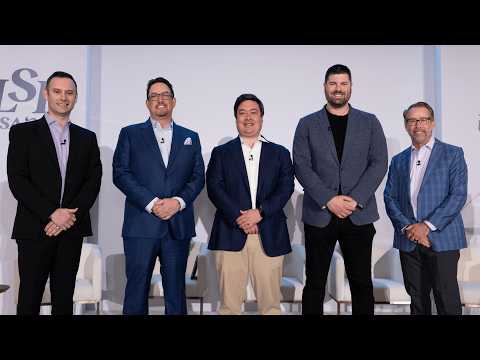
Signature Series: Current Market Perspectives from Shifamed and Novo Holdings | LSI USA '25

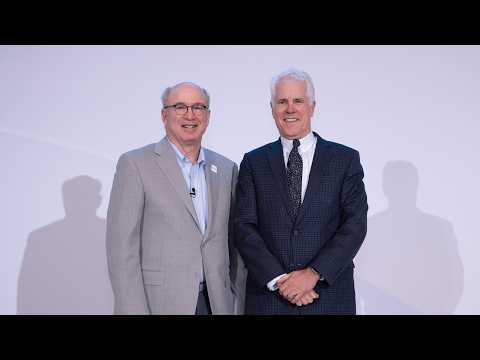
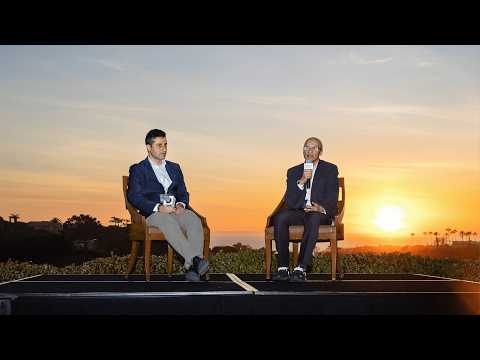
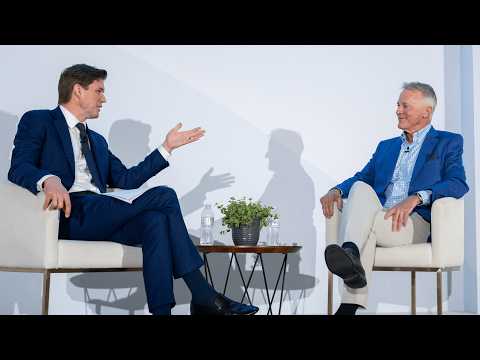
Join Roger Brooks of RBrooks Group as he sits down one-on-one with Amr Salahieh, President and CEO of Shifamed, exploring insights and strategies driving medtech innovation.

Roger Brooks  0:05  
Roger, thank you. Well, welcome Amir and Kris so for joining us. And so I'm Roger Brooks. I'm the founder of our Brooks group, a retained executive search firm. And why don't we just go ahead and with some introductions of


Amr Salahieh  0:24  
Sure, so my name is Amr Salahieh. I'm CEO, founder of shifamed. We're a venture studio in Silicon Valley.


Christopher Shen  0:34  
Hi Chris Shen, partner at NOVA holdings. Nova Holdings is the asset manager for the Nova Foundation, we manage assets totaling about $170 billion we have seven different investment teams within Nova holdings and on the venture side, we're deploying about 700 million US dollars per year in terms of new and follow on investments. Med tech comprises about 10 to 15% of our total outflows every year. We're trying to improve that and get that up to about 20 to 25% in next couple of years. Thanks.


Roger Brooks  1:14  
Good. So if anybody's been watching, the agenda we started out was just myself and Amir. We were going to go into AMR story of Chief Ahmed. We had the opportunity to add Kris in, and we're going to talk about maybe things top of mind, things that they changes there, they're seeing out there. But before we do that, let's dive into a bit about who you guys are, because they're starting with Amr. There's nobody else out there like him, and so starting 14 companies, is it? Yes, a few exits raised a lot of capital, and so so many people want to have might say, have accomplished what you've you're doing now, but so talk to us a little bit, maybe about what you're doing and some interesting lessons learned that help new entrepreneurs with their companies. Thank


Amr Salahieh  2:15  
you. Appreciate it. Thanks for the kind words. So we started chief Ahmed back in 2008 2009 The concept was, I found myself, you know, building a company, and then at the beginning of starting a new one, I was spending a lot of time doing a lot of non technical, non development work about, you know, which building we're going to be in, who's going to be our CFO, who's going to be our HR and so forth. And that's why we established shifa med to really, you know, once we have an idea, we can immediately go to action, build a prototype, look at the IP, talk to physicians and so forth. And right now, that's really it's come evolved with time. We do have one team that really manages the GNA functions for the portfolio, but each company is a separate team dedicated to that particular product, trying to bring that into the clinic as quickly as possible. And so we're now. We're 400 people, eight different companies, and the big lesson for me in the recent past is that you really have to anticipate and build for success. We've seen that when we do sell companies and do transactions, a big part of what happens is there's a transition period, and if the transition period doesn't get executed, well, you're not going to hit your milestones, you're you're going to be delayed. And really, things are not as good as they could be. And when we look back at our portfolio and look to see which ones have succeeded, we've come to the realization that the groups that had the setup, the facility, the clean rooms that were well functioning before the transaction, were actually able to deliver on the milestones have a success based on the pro forma and what everybody was anticipating on because the engineers before and after the transaction, they still go to the same place. They go to that R D lab or the clean room, they're not disrupted, and they can keep doing what they're doing. The alternative, which we've experienced, is you don't have enough of a facility, you don't have enough of a space, immediately, you ask for support from the large company that just acquired you from the mothership. And you say, can you guys make this assembly for us? Can you do this one and this other facility? And on the receiving end, they say, Yeah, fantastic. We love it. We can do this. Let us show you how to make it better, and let's put it in the quality system. And I've gotta, you know, bring somebody else on board who's gonna help with this. And so you end up with, you sucked into the democracy, and really, you miss deadlines and so forth. So our, you know, the last example of company, we sold no Vera to Jay, and Jay, you know, we were 29 people. We had over built the cleanroom. We thought it was too much possibly, and it turned out to be just the right thing. They kept on growing the team. They went to over 100 people. They launched the product from our facilities. They commercialized them from there. And then ultimately, when they set up their large scale production facility in Mexico, they were able to shut down our facility, but they didn't miss a beat. Yeah. So for us, we used to think, you know, you have to invest the least you can, but at some point in time, you really have to take it to the next level, because the strategics, they're trying to reduce risks. They don't want to spend so much from their P and L, the further along you are, the more set up you are, the less risk there is. You know, more more successfully you're likely to have, to me, that's sort of the latest. And I think the reality is that's gotten even more that way, right? Companies are being bought later and closer to commercialization. So you really have to think about that and make it part of your plan, at least the way we think about


Roger Brooks  6:01  
it. Yeah, thank you for that. And it's truly an impressive facility. You can walk from facility to facility. Everybody does have their own space. He's got several independent CEOs that know how to run their companies. They hire the great teams. And I don't know how you did that, and I'm not sure if anybody can duplicate it. So nice work. It's hard enough to build one company, let alone what you've done. So Kris love to hear more about as far back as you want to go, but especially talk about Nova holdings a little bit, and what types of investments really intrigue you, interest you. When Should people call you? When should they not call you?


Christopher Shen  6:45  
Sure, actually, before I do that, I just also want to compliment Amir. I mean, we've been great admirers of what he's been doing, what you've been building, a Shu from Ed, it's very unique model. I mean, the institutional knowledge that I think his group has really built over the years. That's something that's very hard to replicate. You know, I've funded a number of incubators over the years, over the last 25 years of doing this. But, you know, at the end of the day, it's about the people and about that knowledge, and also about the infrastructure and be able to do things quickly. I mean, if you look at the kind of technologies that his companies are building, I mean, they're extraordinarily complex. This is, you know, stuff that cannot just be kind of just ginned up overnight. And you need people who really are very, very technically savvy. But then you have all of the other infrastructure around the r, d, etc, that know how to build these types of products and then also be able to get them into the clinic. How do you design those kind of clinical trials? So it's, it's a monumental task, very hard to replicate. I would say, thank you. That's off to appreciate it. Thank you. Yeah. So a little bit, you know, on novel holdings, there is a connection between Novo Nordisk, you know. So we are, you know, part of the the asset manager for the NoVo Foundation, which is 30% shareholder of Novo Nordisk. We are also the controlling shareholder. This is very, you know, typical kind of European governance structure, you might find a lot of the assets within the foundation come from dividends that flow off of Novo Nordisk stock that we own. Probably no secret, ozempic is definitely fueling a lot of the inflows into the company and into the foundation. So our task is a for profit task, to really grow, you know, those assets under management. So what's kind of unique about what we do is that, you know, there's seven investment groups, six of the groups which are the active investment groups within holdings. We only do healthcare, either planetary health or human health, and we don't go into other areas like tech or real estate or anything like that. But we're very mission focused on, you know, benefiting in our motto and our mission is benefiting the health of, you know, humans and for the planet. And that's what we do. You know, we have groups that focus on everything from very small seed stage deals to private equity size, where, you know, the check size is about 100 million or more. We have a growth team, you know that invest between 50 to 100 million. The Ventures team, which is kind of overlaps a bit, but 40 to 60 million, typical check size per round, that generally equates to us focusing more on late stage, clinical to early commercial stage opportunities, where. Can we believe we can add more kind of firepower to the company to really kind of grow their business? Obviously, a lot of the things that have been said in the previous panel about just, you know, focusing on great teams, great technology, proprietary in a position in the market, those are all things that we care about. Quite a bit


Roger Brooks  10:19  
Good. Thank you. All right, so why don't we, why don't we move into talking about your perception right now, about the current, current changes that you're seeing out there, what what seems to be top of mind, and the big shift that's happening in your world.


Amr Salahieh  10:39  
So for us, and I think for all of us in general, it's all about machine learning and AI, I mean, it's affecting every everything that we're doing. Some of us have seen it already, are using it or impacted by it. Sometimes we're aware of it, sometimes we're not, but it is everywhere, and certainly in our world of interventional cardiology and ophthalmology and what we're doing at chief emit, this is something that, you know, I didn't really anticipate. These events took place, but a while back, started really digging into a SaaS solution to solve our problems, manufacturing, quality, procurement, you know, inventory and all those kinds of things. It got me exposed to development of software solutions. I was very fortunate, because I think it really helped us as we started doing some of our latest companies, one of the latest ones that's built on AI, you know, has so much software in it. So that first step of doing SAS and AWS sort of got me thinking about things. Then we come up with Laza medical, which is an imaging ultrasound robotic system that is absolutely dependent on machine learning to build 3d model reconstruction of the heart on the fly. This is technology. I mean, the Robotics has been around. That's not really the innovation. The innovation really is, how do you take these ultrasound images and rebuild the model 10 times a second and show the physician exactly what they're doing without having to be interpreted? Everybody can see in the room what they're doing. They can see the devices. The system is intelligent and recognizes what view is what view so this is the kind of stuff that was not possible two years ago. The advances that are taking place are so rapid and so amazing that we're surprised at how well things are working so for us. And then what happens is we learn from this, and then migrates back to the other companies, and we adopt and take some advantage of some of those things, and and they become part of the solution for the other companies. And so for me, this is the thing that we should all be thinking about. How can I take advantage of these phenomenal tools and to improve what can be done with the current device, or create a another feature or capability that wasn't possible before? So day in and day out, I'm always trying to think about, what else can we do? How can I take learning from from this into another company, or how can we do another company that's taking advantage of those things? Wow.


Roger Brooks  13:23  
So keep going with that. Unpack it a little bit. What's it mean once it once it hits the or is it going to we're going to get better clinical outcomes. Things going to flow faster. We're going to be able to do things we've never done before. We need less workers. What's going to change once this hits the market and and other advanced AI tools hit the market, how's that going to shift things? I think it's going to


Amr Salahieh  13:47  
last certain things that are not possible or really difficult for a person to compute in their mind, to take place on the fly, right? It's very few physicians echo cardiologists that have the skill that can really guide a procedure for the interventionals to do a mitral clip or left H O appendage and so forth. And now that skill is just, there's not as many people who can do this stuff, but when you democratize the procedure, the robot is able to move things and show you exactly what's going on, and has the ability to understand what step you are in the procedure. It changes things. Yeah, now the physician who really likes to really be working with their patient and treating the patient, they can do their job easier and faster. They can treat more patients. They can do more difficult procedures. It can go to certain hospitals that didn't have the staff to do certain things. So it really scales the procedures and improves the outcomes is really at least for this one in other scenarios and other products we have, we have a lot of sensors in at least a couple of three of our companies, we have sensors, and the data from the sensor as a person, you cannot see what's going on. You can't figure out a trend. Certainly, you can do it. You. Just by looking at a few points, but when you're looking, let's say, in heart failure, we have a an adjustable pressure sensors on the left and the right. That data ultimately is going to be in a dashboard. The system is going to automatically predict and forecast what's going to happen with this patient. Alert the physician so they can change the drug regimen, so they can maybe eventually change the size of the aperture of the shunt, so it's going to, ultimately, it's going to allow the physician to focus on the patients that need that focus, as opposed to, you know, going through one at a time and not really being able to forecast and having a lot of conversations back and forth that wasting a lot of money and time for the hospitals. So those are the kinds of things that are critical. We have another sensor in our thrombectomy system to measure the pressure throughout the procedure in every branch of the vessels that you're treating. And as you collect the data and understand the outcomes, you understand how much you've clot, you've removed, and how much was there before you can start indicating and helping the physician identify in a pre op. Do this. Don't do this. Treat this way, and then move forward and again, forecast what may be something that you do with a patient post procedure. So in my view, our role as people who are developing technologies, if we can't find a way to incorporate a sensor or incorporate a sophisticated imaging and leverage some machine learning, you've kind of failed in your mission. You're spending so much money and time bringing that invasive product to be inside the patient, going through all the regulatory and clinical hurdles, and yet you don't have the ability to scale it and so forth. So the way I see it, since I've started the and Leo, that that software solution, every company we've done since, is trying to find a way to improve what it can do with with a machine learning a sensor data cloud and so forth. So that is our philosophy at this point, and at least half our company, our companies right now are using large language models. Are using image processing and machine


Roger Brooks  17:09  
learning. Yeah, wow. So Kris want to hear what's top of mind for you, and maybe take that 700 million a year, just give it to Amr, and then you don't have to do anything


Christopher Shen  17:20  
Ryan, I want to build on someone. He said, Because I, you know, great, agree with a lot of what you know, his vision is like too. You know, a couple years ago, you know, I was in a couple of these structural heart cases observing. I'm a physician by background. You know, I worked in med tech, actually doing us living in product development for a while before going to the dark side. But, you know, is amazing how, you know, you have these echo guys next to, you know, sitting alongside, you know, the guys who are actually doing the intervention. And, you know, interventionist, you think, you know, should know everything about how to navigate and whatnot, but yet they have to have another expert, expert interpret all of the echo work. And, you know, I just said that just seems really inefficient that you need this. But given the kind of state of technology and what you see out there, you do need someone who has, you know, incredible kind of pattern recognition. And I think that's honestly coming, you know, going back to my physician training, a lot of what you know, you learn in med school and in residency, etc, it's all about pattern recognition. But, you know, is there a way to, you know, as AMR put it, democratize some of that, and you don't need, you know this, you know, point 1% person or team, you know, that is only available some of the time to be able to do some of that work. Could you, you know, create a system that could interpret some of the information and then help guide, and, you know, provide better tools, better navigation, etc, and information back to, you know, the interventionalist, or whoever is actually providing the, you know, the care. So that's something we're definitely focused on. I think the other area that we're looking at, too is just the whole area of, you know, patient selection, too. That's such a big unknown, and turns out to be, you know, something that trips up a lot of companies in clinical trials, because we just because we just don't know what the right type of patient is. But you know, are there ways that we could actually, you know, use some of that information around pattern recognition, if you already understand, like a population, what's worked before. You know, what are, you know, the other factors, maybe they're not even the factors that we typically look at, but you know, if you feed enough data into the system, you can start to really start to understand better and select better for patients that could be responders, etc, in clinical trials. So I think there could be, you know, massive cost savings there over time, and hopefully, really. Reduction on some of these, you know, large pivotal trials that, you know, we tend to underwrite. That's part of, you know, our job and our focus here at novo. So I think other area I just want to also emphasize is that, given we're a very global organization, you know, we have, you know, offices just for, you know, investing spanning everywhere from Shanghai all the way to San Francisco and everywhere in between. You know, we really do look at, you know, healthcare and, you know, both biopharmaceuticals and med tech on kind of a global basis. Really, there are no kind of boundaries to, you know, what we can invest in, or where we can invest, I think, given a lot of the global uncertainties and, you know, geopolitics that are going on, and I want to get into a ton of that stuff, but just to understand that, you know, it's really important, I think to think about diversification. There's also, you know, a lot of healthcare needs outside of just, you know, our typical markets, of, you know, US, Europe, let's say Japan, right? China. There's a lot of other places. And when you think about some of these other areas, and I've been, you know, very focused on that. So I'm also adjunct professor at Stanford, working in the Biodesign program. So, you know, we have programs, you know, spanning everywhere from, you know, from Brazil to India to Singapore, Japan, Taiwan, Israel, Europe, etc. You know, the type of, you know, you know, the place of care, the type of care, type of disease states, the level of training, all of that stuff is really, really critical. And if you take that all together, you know, it does kind of change your perception of, you know, what type of, you know, training might be required for, you know, certain types of treatments. How can technology help that? I mean, trying to, you know, solve for a problem in a low tech or a low resource setting is almost as challenging as in a, you know, high resource setting, in my view. So I hope you know in a lot of discussions we've had with AMR as well as like, how can we use AI and other types of technologies to help make, you know, this care more accessible to, perhaps not that top 1% of physicians, but make it easier and also be able to treat more patients around the world.


Roger Brooks  22:33  
So Kristi, you can keep going with that. You get to see more of a global perspective. And so while we like to all think innovation all happens here in the US, and a lot of it's happening in the Bay Area. We are competing on the global level, especially around AI, and things are happening. How fast is it happening? How fast and where? Where are the epicenters of innovation for medical devices and AI, and what do we have to be paying attention to, and who are we really competing against? Is it just AMR and his group? Or where is all this coming from?


Christopher Shen  23:08  
Yeah. I mean, I think that given our visibility and exposure on the China side, we are seeing massive strides in terms of AI development over there, you know, not just on things like deep sea, but also on the healthcare side. I mean, there was even back in the COVID times. You know, former fund that I was working with had already a very, you know, highly trained expert system on, you know, in the radiology area for CT, and they were actually using that even to, you know, diagnose folks with COVID, just using CT alone because they didn't have, you know, enough of the normal kind of tests available. I think one of the reasons why they're able to scale and accelerate so quickly is that there's just not as many barriers to getting data. Patient privacy is not really a thing over there. And, you know, the government, there were two efforts underway, and it actually has a really good lesson. There was one very big sort of central government led effort that, you know, they partnered one of the top, you know, kind of tech companies in China. I won't mention who they were, but they basically said, Okay, for this whole swath of, you know, kind of, you know, class three hospitals in China, the top class, you just have all the data you want, it's completely open access to them. But those guys actually were really not thinking about workflow and really understanding the use cases for the physicians. And they kind of flounder, whereas, you know, our small company, they actually partner with just two hospitals also. Had full access, but because they only had those two hospitals, they were kind of living in those hospitals, day in, day out, trying to understand exactly what the physicians needed. And they created a system that really helped the doctors with their workflow, not only gave them interpretation, but actually, you know, very quickly integrated right into their electron patient record system, spit out the whole report, everything. They just had to read it and sign it. And that took hold very quickly, but it was just incredible how quickly they were able to train up that system. So I think, side note, I think that algorithms potentially will become kind of commoditized. It's really about the use case. How does it fit? How is it useful, I think, for the practitioner or the user, and that's going to and obviously at the end of the day, patient outcomes are going to be key, but I think that's going to rule the day. Good.


Roger Brooks  25:59  
So our strategics out there are, are incredibly good partners to us and as a large company. They're they're good commercializing. They're good with iteration. Oftentimes they have to acquire, they have to acquire innovation. How massive is this opportunity around taking things to the next level? How much opportunity is there for the people at LSI, or people who are innovators and or is it nichey, or is it massive? And I heard one investor say, well, there's very few billion dollar opportunities anymore. They've all been covered. And I'm wondering what you think,


Amr Salahieh  26:42  
Well, it's hard to predict, but certainly saying, you know, there's hardly any, you know, those kinds of stages are hard to you know, like, this is the end. There's no end. This is going to continue. This is just the beginning of the road. And as I want to go back to what Kris was saying, what matters, some aspects of this AI stuff is really accessible to all of us, which is beautiful, and that's really the exciting thing. But to make it useful, you have to leverage what you know and what your team is able to accomplish, and then it becomes really scalable. And so when you're thinking, How is AI going to be? Is it going to be this big or that big? It's just going to be part of everything, right? So, and we're not done improving and better solutions, better procedures, better devices and better outcomes. That's just an ongoing thing. It's just not it's not going to finish. So I think we should think about these solutions just like robotics. You know, it's the robotics today are going to be more focused on specific things to make it even better, as opposed to, like, one thing, one robot that does everything. There's not one AI will do everything. They're going to be all part of solutions that attend to a specific problem, leveraging what you've described, such as like, knowing how the physicians work the hospitals, you know, without that specificity, it's not useful. So it's not in it by itself, but it's part of everything else you have to do to treat a patient, make an invasive product or a diagnosis, or whatever it is that you need to do. It's just part of what we what we have to do now,


Christopher Shen  28:26  
I think it's all, I mean, going back to, you know, one of the mantras at Biodesign, I mean, you got to focus on the need first. And these technologies, like AI, while they're very powerful, they are, you know, just a tool and a technology that may or may not solve that problem. And you got to make sure that you match the right, you know, technology to the right solution. Really, the end of the day,


Roger Brooks  28:48  
wow, I just looked at the clock. I don't know what happened. So any closing thoughts to this topic?


Amr Salahieh  29:00  
I don't know, I think, by the way, I'll just say something real quick here, urgency, I think, and anybody, all the all the CEOs and leaders of companies, is the sense of urgency around staying ahead of things and not sitting back. But and it would go ahead, I mean, to for me. And my view is that this is really a new era for us as, you know, society, and what we can do that we couldn't do before, and it's going to be fun and exciting. There's a lot of learning, a lot of stuff that's going on and and being part of it is a, you know, it's, we're very fortunate.


Christopher Shen  29:37  
Yeah, I think I go back to something my, you know, one of my mentors used to say, which is, you know, time, you know, kills all deals, kills all opportunities. You got to move fast. The fuel for moving fast is capital. That's what we provide in this day and age. I think with you know, this environment, I think it's a challenging fundraising environment, if you can, you know. Raise more capital. Now, I'd say, do it, you know, find, you know, opportunities where there's some, you know, unique angle that you're taking. I think, you know, the classical approach, you know, where you're just kind of going through, you know, regular EFS to pivotal and then, you know, got to do all the stuff you got to do. I think that's, you know, necessary. But if there's a way you can accelerate or shortcut some of these, you know, steps, or maybe it's on the reimbursement side, you know, investors are looking for something where you know there's some type of unfair advantage, I think, to your opportunity and what you know you can provide, and we're, you know, and it's good for you, it's good for them. You know, every deal has, you know, terms of the outcome, it's going to be some, you know, some exit value. You know, you may say, I don't know what that is, but, you know, you probably have some idea. And you have to match that to how much capital is required to get there. So you don't want to overstep that and spend way too much money, and then there's no return, and then investors don't want to be aren't interested in what you're doing, right? So everything has to be kind of, you know, I think, planned out as best as you can, and you should have in your mind what the end game is, and then think about what you should be doing working backwards. Great.


Roger Brooks  31:17  
Thank you. Thank you. Really appreciate it. Really appreciate it. 


Amr Salahieh  31:21  
Thank you. 


Christopher Shen  31:22  
Yeah.

LSI USA ‘26 is filling fast. Secure your spot today to join Medtech and Healthtech leaders.

March 16th - 20th, 2026  Waldorf Astoria, Monarch Beach Register arrow