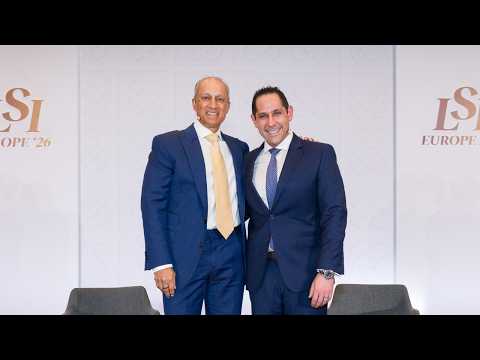
Susan Posner 0:05
Thanks everybody for joining us. Thanks to LSI for putting on another great event. We're thrilled to be here. I'll start off with an introduction, but before that, looking forward to this panel, you've got a great group on this panel with me that can provide great feedback, advice, tips, tricks, whatever you're looking for from the perspective of both being at the strategic side and and giving advice from that perspective, as well as working with companies as they're approaching the strategics and being on that side of the table as well. So we I've got a list of questions, but we certainly do want this to be interactive and make sure your questions are answered. So Susan Posner, I lead our med tech and digital practice at health advances. We're a commercial strategy consulting firm working with clients to understand their markets. Work growth at their growth aspects, and really make sure we've got that plan put together. As part of doing that, about 40% of our work is transaction related. So we work with both strategics as well as private equity investors to perform commercial due diligence, and we also work with innovators such as yourself in preparing for those conversations, making sure you've got your strategic plan together, your business plan, to put together that pitch deck or investor slides, and you're well prepared for those meetings. So looking forward to this conversation, and I'll let our panelists introduce themselves.
Nate Harrington 1:41
Okay, so Nate Harrington, currently with Philips. I'm a managing partner in our corporate venture capital group. I've been with Philips now for about 14 years. Prior to being on the CVC side, I was in business development and led few acquisitions that created our IGT group, as we call it, image guided therapy. Before Philips, I was at Boston Scientific for nearly a decade, had done a few acquisitions there, and before that in product management, where I had a real job and I was an overhead and before that, was six years of management consulting, so about two plus decades now in med tech.
Chris Bolten 2:25
Hi Chris Bolten, I'm an IP attorney at Greenberg Traurig. I am based in Southern California. I do med tech IP. I represent about 60 plus med tech companies from the very beginning, some very early stage companies up to commercialization and some of the biggest strategics as well. I also represent venture capital firms that are looking at companies from an IP diligence perspective, considering investing in them. My firm is a large global law firm. Has an office in London, but I think about 2500 attorneys across the US in 50 offices. As far as setting yourself up for success with strategics, I help companies build up their IP for investment strategy, litigation, M A so I get some examples for just talking name about Phillips. I worked with the company out of Paris called cardiologs, is using AI to analyze lecture cardiograms so heart signals, and got them through various rounds of investment and then acquisition by Philips a few years ago, on the J and J side, I been working with a company called V wave, which now is A lot of people have heard of now, since 2009 they have an inner atrial shunt for heart failure with reduced ejection fraction half ref, they were announced be acquired by by Jing J last year for, I think, up to 1.7 billion. I also have done work with Abed for years and work with are now Chief Medical Officer, Chief Scientific Officer, Dr Naveen Kapoor for a decade plus, and they were acquired a few years ago. And the other big name, one was did the IP diligence for Sophia Nova partners on shockwave medical for the original investment that they did about 1213, years ago, and they obviously got acquired for by J and J as well. So thank you, J and J,
Edna Lazar 4:29
happy to help. So I'm Edna Lazar. I'm with JJ DC, which is the venture arm of Johnson and Johnson. I've been at JJ DC for a year now, prior to jjdc, I was with Edwards Lifesciences on their exploration team for over four years, and before that, I was at an incubator based in Israel that seeded really early stage projects. I was the chief business officer. I started my career in marketing with J and J in the diabetes. Business. So I, like you, I started doing real work, and then I moved back to Israel and I worked with startups. So for over eight years, I was in two startups. The first one failed miserably, but only after we raised money and went through an IPO and even got to commercialization. The second one has started really tough, but eventually we were able to raise money, and then we went through an M and a process with an American company called Endo choice, which was later bought by Boston Scientific. So I've been in this roller coaster of startups, raising, not having money, going through M and A going through closure, and also through the investment side.
Gautam Kainth 5:42
Hi everyone. My name is Gautam Kainth. I'm a partner with TCP health venture TCP, or the capital partnership. We are an asset management firm based here in London for last 27 years at the group level, we manage $7 billion of assets which are primarily focused technology venture capital investments. We started doing Medtech investments almost 10 years ago. I joined the firm then, and since then, we our strategy is more focused on medical devices and digital health. We don't do biotech and primarily we look at integration of medical science and technology as a larger offshoot of our technological vertical. Within the group, so far, we've deployed $200 million of capital. We have a portfolio of around 15 companies. We've had three exits, including one, one sale to J and j5 years back. And we have seven of the foot of the 12 companies that we have. We have in seven strategics working with with us, in our companies, which are on the cap table of our existing companies as well. Selling to strategics is one of our main strategies in terms of creating an exit. We are happy to take the clinical risk, get an FDA approval or a CE mark, and we prepare companies for for the strategic so I'm very excited to be part of this panel and looking forward to an exciting discussion.
Susan Posner 7:01
Great, great. So why don't we start right off with, I think, one of the tactical questions that we hear a lot, you know, for those that are hoping for an eventual exit to a strategic How do you get on the radar screen? How do you get those conversations? Is it ever too early? Who wants to start us off?
Nate Harrington 7:23
I'm happy to start. I don't think it's ever too early. I also think it's helpful to get on the radar when you're not asking for money as well. Sometimes it's always nice to not so much put the pressure on there or something that we have to react to. I also think it's fair to, in some ways, try to find your advocate within the business, and so for companies like us and JJ DC or Johnson Johnson, ultimately, the business is driving a lot of our decisions in terms of where we will invest. So I think it's always helpful to have a contact within the business. That being said, I think it's also helpful to be very transparent on working either with the VC arm or someone in business development. I mean, ultimately, yes, you do want to get to a decision maker, and it's not us. But I think working with us and just being transparent can be very helpful. It can be frustrating. Sometimes, when you've gotten a no or not now, not yet, and people are trying to come in through the windows, the front door, the chimney, any advocate you know, you can try to find I understand that that's your job. Just be transparent. And as far as getting on the radar, I would say one of the best ways to get on the radar, in general, from from a strategic perspective, is through our customers. So a lot of times, if you're thinking about who are on your advisory boards and physicians, that's often how we hear about things.
Susan Posner 9:12
Edna.
Edna Lazar 9:13
So fully agree. Build the relationships early. That's absolutely fine. We're never going to invest if we met you just yesterday morning, right? So it does take time to build that trust. Venues like this are a great place to get in touch and get to know you. My email, I feel, is visible and transparent to everyone, so I do get a lot of cold calls, LinkedIn, everything anyway you want to reach us. It's fine. We we know that's the way that you come and that's one of the doors. Business Development, again, is one of the doors as well. We always work with our BD partners. It's never just us and it's never just our decision.
Gautam Kainth 9:56
My advice would be, first of all, at a generic level, and. Been a is not about deal flow. It's about building relationships. Relationships are actually built over the years. They cannot be built in within months or days over there. So you have to sort of cultivate that over a period of time and basically create their credibility and as well as trust, like walk the talk. This is what we plan to do for the next six months, and then see them again six months later and tell them, Oh, this is what we've done, and this is the plan. So So you build that credibility over a period of time. It needs investment of time. And that's the broader principle that the second factor that I will say, in terms of creating is basically attracting strategics, is you create a pull factor. You create that pull factor by having, say, solid key opinion leaders on your board, you hire or work with EX employees of strategics to get certain insight. So by accessing the back end channel, sort of, you create that pull factor, and then that also helps a lot in many of the situations that we've seen
Susan Posner 11:01
right great. Great. Think one of the things we talked about is during our planning session, is that in these innovative companies, they're fast, they're nimble, they're moving quickly. And sometimes, you know, companies, especially the larger strategics, may not be as quickly responsive as we might be used to. On the on the innovator side, can you give any tips for that? Or perhaps even, you know, give us a view under the tent. What's going on on the strategic side? Why are things taking more time? And any advice is it okay to ping again?
Nate Harrington 11:40
I mean, I think it's always fine to ping again. One thing which I very much try to do is manage expectations. I tend to be fairly blunt and transparent and usually one thing I would encourage is say, when is it appropriate to follow up? I'm always very much an advocate of if you haven't heard from me within X period of time, you are free to harass me because we need to follow up with what we're supposed to do now that being said, these are unfortunately large, complicated organizations where Sometimes you have to deal with stakeholders internally and from your perspective, looking in from the outside, you don't know what other deals or issues are coming up that may take some of our attention. So the best thing I can say is try to have straightforward communications let us know what timelines you have, and that's why I think it's always important to start early. No one ever likes to be in the position as a startup where you're running out of money. So be as transparent as possible, and demand that from your strategic
Edna Lazar 13:05
I'll add that you you probably don't want to get a really quick answer, because the quickest answer that we can provide is no, we're sorry we're not interested in investing. So so that keep that in mind, and if you want to the real, honest feedback, be it a yes or a no. By the way, sometimes you we may say not now and provide you with valuable feedback, which is something that I do try to all the time, like I can always say no but, but it will come with some sort of advice if you want to listen. But it's true. I mean, we have a lot of stakeholders that we have to check it inside. And if we do our job right, we check with everyone, and it takes time. And also people, at least at j and j change roles all the time. They switch people on us. The BD team reorganizes itself, and people move. So sometimes, you know, it get takes time for them to get up to speed, and it just takes time to get that answer back. I assure you, at least, you know, in the jjdc sign, you know, when we get an answer, we try to communicate it as quickly as possible, and the longer the relationship has been, that's, you know, I typically jump on a call with someone if I have that relationship with them, and not just send them an email saying, you know, hey, sorry, we're not so. Again, be patient. Understand, it takes this time to get an answer and and like I said, you don't want to hear the quick answer.
Gautam Kainth 14:28
And my advice is to add, is basically during the period of wave to try to educate yourself. The best thing about strategics is they come up on a quarterly basis. Most of them are listed. They do analyst calls. They publish their results, they give commentary to try to join their investor call commentary as well, where the management team, the senior management, speaks about their strategies and the vision. Try to align your objectives and your strategy with that, and that will give you a back door again, sort of pulse of their strategy and the focus and honestly as we work. Work. Our companies work a lot with the strategics. Personally, I also join some of the investor calls of the strategic just to get a pulse. What are the segments that they're focusing upon? What is like and that keeps on changing on a quarterly basis. Like the they do MNA, they do divestitures, so all of it, so just be on the top of that, and that and information is available to everyone, so we try to educate ourselves. And that's what my advice to all the founders who will also be utilized that time to sort of understand that better. Great.
Susan Posner 15:32
Thanks, Kris. I'm wondering if you can talk to us a little bit about how strategics are looking at IP, how that might vary from as they've taught as this group here has talked to VCs about IP, and what advice you might have and a little bit information about that
Chris Bolten 15:47
process, sure, yeah, I think that there's a lot of similarities between the way they look at IP as compared to VCs. You know, a lot of strategics now have venture arms that are looking at investment early on and will often syndicate with with VCs. And, you know, sometimes the VCs will take the lead on IP, and other times, you know, I've seen recently, jjdc took a lead in the deal. So, you know, I think that as you move along the how much depth goes into IP it gets deeper as there's more money being raised as there's more if you're in an acquisition, depending on the size of an acquisition. And obviously the goal is to be able to protect a product that they're either investing in or acquiring. And one of the key ways to do that is IP, and so it's not just having IP either. It's not, Oh, we've checked the box. We've got some patents. It's, do you have really good patents that can prevent others from encroaching on this space? Because if you're going to spend a lot of money on a company, you want to make sure that you have a competitive advantage, and one of the ways to do that is a very solid IP protection. So it's not just a box checking exercise, especially as you get further along, it's it's critical, and it's going to make a big I've seen it help deals go forward. I've seen deals end because of IP situation. So not only does the company have very strong IP positioning, but you know, freedom to operate, and what's happening with third party IP is is also going to be something that's critical, something that companies should be aware of and be able to respond and talk talk about,
Susan Posner 17:45
great thank you. Talked about approaching different companies, and you probably all have your list on who you think you should approach and who's in your area, and got them you mentioned that, um, you know going on the investor calls, but things change all the time. You know, how close to the core versus how far adjacent would you recommend companies go when thinking about who to approach, because they may be thinking down the line about that string of pearls, what's what's your experience there? And what advice would you give this group in terms of how inclusive and broad to be on their list of who to get those meetings with.
Gautam Kainth 18:29
So the way I would look at it basically finding that strategic fit. And I would look at it into two parts. First is the commercial sales infrastructure that they have, and then second is the product strategy fit. So to me, if your device or your product is is not a match within their existing sales infrastructure, don't waste your time. As in, that's not that's that that is a must have that needs to definitely happen. Now within this product strategic focus, of course, if your product is core and related to that, then definitely you can explore a conversation about an M, a, that's an obvious sort of link to that. But if you're ancillary to the strategic focus, then you can explore, like a VC investment from there. I'm just so that's how you sort of channelize and basically explore your strategy in terms of dealing with it.
Edna Lazar 19:20
Yeah. So J and J has a lot of businesses. We are broad in our offerings. I would say, if you're clearly in our sweet spot, okay, bulls eye, then, then that's a no brainer. Send us the information. We'll, of course, happely Look the the further you are from our bullseye. So that as you, as you kind of like spread, I think it is, it is your role to prove to us that this is something that has synergies, and we should look at it and invest so I mean, I know in general, kind of like our businesses, I know all the unmet needs of all the different businesses, but connect. The dots for us, because sometimes you see something that you know is, Oh, of course, that's an adjacency that has to go with your core business. I don't see it. So don't just send an email saying, Hey, this is what I have to offer. I think this will work for JJ, can we go through the whole exercise of, does it really, is it the call point? Is it the technology? Is it kind of like in the patient journey this falls well, like whatever it is that connects you to our business again, as long as you're not in the bull's eye, then, then you have to do that connection. Sometimes you have a brilliant idea, and I'm just not aware of what's happening in the head, so just make sure that it is and if it's out of scope, it's out of scope.
Nate Harrington 20:41
Sorry, yeah, I don't have too much to add. Like Edna said, we're often in the business of getting the fast nose, and if we can rule something out, we will, because we want to spend our time on things that we think are more promising. That being said, it is always worth taking the check if it's an adjacency and you can see some relevance, you don't necessarily know what's happening in terms of our strategy and what we're thinking. Those are the types of things which aren't necessarily on analyst calls. So it's worth checking in. But yeah, if it's a hard No, it's probably a hard No, unless there's something that we're missing and always open to being educated on that nothing more as we're
Susan Posner 21:36
talking about the different strategics and investors, you know, they're, you know, especially in your roles, there's investments happening by oftentimes more than one strategic how should these companies think about navigating more than one strategic investor? How you feel about being the second strategic investor? And we know that strategic and strategic priority. Priorities could change down the line. So how should they manage that? And think about that. Who wants to start us off?
Nate Harrington 22:12
Not me. Yeah. So I think one of the first questions one has to ask themselves is, do you want to have a strategic on the cap table? I think there are probably more pros than cons. But like with anything, you need to be thoughtful about the type of arrangements you have with a strategic if they're joining the cap table and be very careful about strategic rights. We want the traditional rights that most preferred investors have. So I just think you need to be savvy about that. Now. I think most strategics like to be the star of the show and be the only one on the cap table for probably obvious reasons, but candidly, in your roles, you should be thinking about having potentially more than one strategic on your cap table. The other thing I would emphasize is be very careful and do your diligence on those strategics, and frankly, even the the partners at the venture level who would be on your board to make sure that they play well in the sandbox. I think most of us who've been doing this for a while I'm in very good relations with most of my colleagues at the other med tech companies, and that sort of matters. So I would say yes, having multiple strategics is a consideration. Be careful what you asked for, but it's a reality of of how things work.
Edna Lazar 24:07
There's also a different like, there are strategics that are directly competing with each other, and your product is interesting to both. And there are some that are looking at from different angles, and then they can complement each other. And that's actually, that's a positive, having two strategics on the cap table. I would say for j and j, we have some situations where we're two strategics on the cap table and on the board, and some we're just, you know, alone. So you're right. I mean, it's it's pick the right strategic for you. Pick the right people. Some, some people can work well together, even if they're competing. And some, it'll get your board to be dysfunctional, so just make sure that you are. You're on your pulse. But yeah, do what's good for your company.
Gautam Kainth 24:48
And I think based upon our experience, it works both ways. In a particular situation, it was very difficult for us when we were setting a company one of the strategics under. The strategic was on the cap table. It we ended up wasting six months just to negotiate rights, and the deal was on the verge of collapse as well. So we've learned from that that was many, many years ago. And I think the best way is, as Nate mentioned, is basically how you document and basically document that relationship, and think of a deadlock scenario. If you're dealing with two strategics, what rights do they have? And if, theoretically there is a deadlock, then, then, then what follows after that? So you have to visualize all those scenarios in your documents and create a way out you. The worst case scenario is to basically have a stalemate there. So it's dealing with fire in simple words. And you want to visualize that situation of conflict for sure years in advance.
Susan Posner 25:51
I'll ask another question, and I do have more. But you know, after this question, I do want to open it up to all of you, make sure we're addressing the questions that are on your mind. I think, you know, we've all seen a lot of Sims, confidential information presentations, investor decks, pitch decks, and some of them, the message and your value comes right off the table. And others were, there might be a little bit more that can be done in terms of clarity or making sure they get their IP story across. If you could each give you, know, 123, pieces of advice to make sure that when you're preparing that document, when you're meeting with the this team, when you're bringing it to the strategics, what do you like to see and what is it important to have in there, nicely, concisely stated?
Nate Harrington 26:48
I mean, the first thing is, you want to make sure there's alignment in the space and that you're addressing a meaningful unmet need, and that it's something that a strategic is going to prioritize. So I think being compelling in your value proposition matters. And then there's basically four very simple questions that I tend to ask at various stages. And I'll say it as does it work? That's one step. Can you prove it? Will someone buy it? And can you make money? And I think a lot of times people tend to focus on the first one that works, your clinical strategy, you know? Can you prove it? And I think a lot of times people will miss out on the market access or health economics or reimbursement of will someone buy that? Because ultimately you can have a fantastic technology. And if it's you just need to be prepared if it's a long row to hoe, so to speak, in terms of the reimbursement pathway. So it's nice when you have established reimbursement, wonderful. Or if it fits in with something where there's a very clear value proposition, great. And you know, the last part sometimes people forget is, can you make money? AI is a great example. There's very little IP around AI. And so while it adds tremendous value. How you capture that value and monetize it can be a bit challenging, and often I don't look at companies as being AI companies. They're companies that are solving a problem back to the first point that really matters, and they are AI enabled, and that's what makes them potentially more valuable. Unfortunately, AI is just being becoming a feature rather than a product. And so I think you know, looking at those four questions, does it work? Can you prove it? Will people buy it? And can you make money? You want to make sure that at some point, depending upon where you are in your pathway, that you can address those questions,
Chris Bolten 29:10
I think, from from an IP perspective, with your pitch deck, I would say, get feedback from your IP Council on the IP slide, it's you want to make sure you're saying the right things and that it's consistent. And frankly, I think having your IP Council look at your whole pitch deck too. I mean, I've seen too many times where I'm talking with a company I do an IP diligence, and, you know, they give the whole pitch on these great features, and the I am okay. How does the IP align with those features? And there's a disconnect. So you know, keeping your IP Council up to date on the features, what you're telling people are key, and then making sure that the strategy is aligned is going to make you look a lot better during an IP diligence, whether through a VC or. Or a strategic
Edna Lazar 30:04
so agree with everything, and I would stress the unmet need. What makes you stand out most is if you've done your homework. So homework, as far as you know, J and J, the business J and J as a whole, this specific business unit that you are targeting even, even as far as knowing kind of like me. Okay, so this information is completely public, so everything here is, I would say, is the must haves in order to convince us. But if you want to take it a step higher, then just do a lot of homework before you approach us. Don't assume that you can come in with your, you know, pitch deck and pitch the same thing to everyone and make it you know, and win on all of those. You have to tailor it to the person. You have to tailor it to the company and the situation too.
Gautam Kainth 30:51
Very simply, I'll say you will have to look after clinical regulatory reimbursement, total addressable market size, clinical unit economics and your commercial model. So all the six components, I would say, basically, are very critical, and you need to have sort of like your children. You have six children to look after. Just focus each and every one of them, not just one so,
Susan Posner 31:15
and I'll just put an I agree with all that. We see a lot of pitch decks, and as I mentioned, working with a lot of clients, and I think sometimes you're very used to seeing something, so it's very intuitive to you, but really laying it out clearly, well, what is your differentiation? How are you going to compete in this market? How is your value proposition different? Because we certainly have worked, you know, where I've worked with clients, and I've looked at them, said, I'm not exactly sure here what they're doing. And then somehow we've made it to the stage of diligence, and then we figure it out. But if you know so, bring it to others and make sure it's clear. And yeah, the market access piece, you know, we get into a great idea. But have you done your homework and you've gone through and laid out the value prop, the clinical economic the clinical argument, as well as the economic argument of how and why it's going to be paid. And if you need a new code, how you're going to get there, why value analysis committee is is going to take this so but lay it out nice and clear, so we don't have to spend our time on that first read figuring it out, because might not get past that first read any questions from the audience, and I'm happy to keep Asking questions, but here's your chance. Oh, go ahead. I Lake.
Audience Question 32:43
Hi, I've taken numerous companies to strategics, and sometimes you enter into a conversation of feedback, saying we need more clinical data. And there's always this catch 22 as to how much do you listen to that and how much about diversion from your core program that is. So I just welcome people's sort of thoughts on, okay, I'm an innovator. I'm looking for feedback. I've got some feedback from you. Is that something I should absolutely go on my way to do? Is it something I should just park on and think about as a future program? So just that, that that piece be interesting,
Nate Harrington 33:21
I want to make sure I understand. So you're saying that someone's giving you feedback, you have your core approach, and then they're saying, Well, have you thought about this? Oh, okay. I mean, it's a discussion I would say you want to have with your board. Remember, strategics have their own interests at heart. They also you'd like to believe are somewhat informed on the unmet needs. And so it's it's worth reflecting on. I mean, sometimes your ultimate market may not be the fastest way to get to market, and so I'm always very mindful that you don't want to confuse your regulatory strategy with your commercial strategy. I mean, I think the short answer is it depends, but try to understand why they're giving you that advice. Is it something that's purely their self interest, or is it something that you might not be seeing in the same way?
Audience Question 34:33
Yeah. Does that make sense? Yeah, it does. I mean, it's a bit of a catch 22 see what it'd be. Listen, you guys, know, but also, having worked at Joe, Dave said this, I realized strategies change. So you know, the car she pivot or Sonia, thank you.
Edna Lazar 34:54
Yeah. I think do you pivot just because you had a conversation with a strategic probably not. Yeah. Yeah, yeah. But does it give you kind of like, Hey, this is something I should inquire. This is something I should know. Again, reflect on Absolutely. Why not ask?
Nate Harrington 35:08
Ask another strategic Yeah, you ask four, and you'll probably get six answers, right? Yeah, yeah.
Audience Question 2 35:19
Thank Thank you very much. So maybe a question on how to measure progress in the interactions with the strategics, like you could be spending a lot of times, maybe dinners, meetings, different people from different departments, how what is a good way to measure progress versus a lot of back and forth? Like, when do you know you're in the right track for something serious, or is that, you know, just to understand the other side?
Nate Harrington 35:47
It's a great question. It depends with whom you're talking about. I think you'll find people like me and end that tend to be a little bit more blunt and upfront, because honestly, we don't want to waste your time. We don't want to waste our time. And I think sometimes people in the business have a hard time saying no. It's always tough telling someone you're not quite fit, and it's easier to do that. I would just try to be as explicit get explicit answers about what are the next steps? What do you want to see? And just seeking clarity. I mean, everyone has different styles about how they like to engage. And, yeah, some people are more, I will say, marketing and sort of sales oriented, and they're going to schmooze and talk about it and whatever, and others are going to be more cutting to the chase. I would know your audience is always a big thing of know who you're talking to, what their motivations are and how they're approaching this, and just try to tactfully pin people down thought, and that's part of
Edna Lazar 37:03
building that relationship, right? The longer the relationship, the more you get to kind of like feel if there is something there or not, you build the trust, and then if you have that, then that person on the other end, on the strategic side, will probably tell you, Hey, listen, we're not going to invest anytime soon. We're going to need to need to see this and this and that.
Gautam Kainth 37:24
So yeah, just to add one thing, I'll say basically, in terms of the wider relationship management within that organization is also very important, if they introduce to you, to your their BD team, their clinical team, their associated key opinion leaders. So that's a that's a progression in itself, which happens over a period of time. And I will take it as a positive. If that doesn't happen after one or two years of engagement, then that's very disappointing.
Audience Question 3 37:53
Hi everyone. Alex, we arena from panakes, if I go back to the exit, which is the reason why we, most of the startups, took to strategics 10 years ago, 50% of the exit were pre revenue. Post clinical, post regulatory approval nowadays is less than 10% at post clinical, post regulatory approval. Now, developing a product takes time, regulatory takes time, clinical takes time, and you want to go commercial takes time, and times is money. So do you believe that? And if you look at the latest exit, you know, we have been talking about shockwave Inari, organoxe, they were all making revenue, right? And real revenue, not just few Penny. So do you think that in the future, except for a few cases, which is still cardiovascular, mostly, we will go back to post clinical, post regulator approval, FDA, let's say, kind of exit or is going to be worse than worse. So you guys really need 50, 100 million revenue?
Nate Harrington 39:13
The short answer is, it depends. The more nuanced, I think you've pointed out a good caveat, an exception, like with cardiovascular and that can clearly talk to things which are required pre revenue. I mean, we've done that too. Boston does it. I mean, sometimes it's flipping the data card, and if you know what you're looking for, and the market's well established. There's reimbursement, and it's just a known thing. These tend to be very competitive types of assets, and they will go I think the key thing is to know when you're not like that, which is why I say it depends. And I think the more you. Look at, say, 510, K types of products. It's not quite as clear. The other distinction I would make, too is sometimes it's not about the amount of revenue, but let's say it's post commercial. It's more about can you demonstrate within some key accounts that you are able to take share, you're able to have stickiness. And what I mean by this is sometimes you don't need to waste a lot of investor money on building out a massive sales force and getting to that point. And you know, sometimes with Shockwave, for example, they had multiple opportunities where they could have exited early, but it wasn't satisfying to the board. They believed in higher. So by default, it got that big. Sometimes you're able to show it with less. So I think there's always going to be those types of segment, market segments, segments where things will go early, and people are companies are willing to endure the burn. And then there are others where you need enough proof, commercial proof points. And then there are some where it's you have to take it to another stage, or the board chooses to take it to another stage because they think they're going to get the value. And depending upon what the valuation is, you may be backing yourself into an IPO only situation because the given strategics for whatever the technology or spaces aren't willing to pay what the shareholders would like. And then you deal with the implications of that, which could be dilution and a whole bunch of other unpleasant things. I'll pause. I'm sure others
Susan Posner 42:03
have thought, yeah, and I know I think we're out of time. Do we? Do we have a moment? No, we can't. Okay, well, then I guess we will wrap it up. Thank you very much. Thank you.
Susan Posner 0:05
Thanks everybody for joining us. Thanks to LSI for putting on another great event. We're thrilled to be here. I'll start off with an introduction, but before that, looking forward to this panel, you've got a great group on this panel with me that can provide great feedback, advice, tips, tricks, whatever you're looking for from the perspective of both being at the strategic side and and giving advice from that perspective, as well as working with companies as they're approaching the strategics and being on that side of the table as well. So we I've got a list of questions, but we certainly do want this to be interactive and make sure your questions are answered. So Susan Posner, I lead our med tech and digital practice at health advances. We're a commercial strategy consulting firm working with clients to understand their markets. Work growth at their growth aspects, and really make sure we've got that plan put together. As part of doing that, about 40% of our work is transaction related. So we work with both strategics as well as private equity investors to perform commercial due diligence, and we also work with innovators such as yourself in preparing for those conversations, making sure you've got your strategic plan together, your business plan, to put together that pitch deck or investor slides, and you're well prepared for those meetings. So looking forward to this conversation, and I'll let our panelists introduce themselves.
Nate Harrington 1:41
Okay, so Nate Harrington, currently with Philips. I'm a managing partner in our corporate venture capital group. I've been with Philips now for about 14 years. Prior to being on the CVC side, I was in business development and led few acquisitions that created our IGT group, as we call it, image guided therapy. Before Philips, I was at Boston Scientific for nearly a decade, had done a few acquisitions there, and before that in product management, where I had a real job and I was an overhead and before that, was six years of management consulting, so about two plus decades now in med tech.
Chris Bolten 2:25
Hi Chris Bolten, I'm an IP attorney at Greenberg Traurig. I am based in Southern California. I do med tech IP. I represent about 60 plus med tech companies from the very beginning, some very early stage companies up to commercialization and some of the biggest strategics as well. I also represent venture capital firms that are looking at companies from an IP diligence perspective, considering investing in them. My firm is a large global law firm. Has an office in London, but I think about 2500 attorneys across the US in 50 offices. As far as setting yourself up for success with strategics, I help companies build up their IP for investment strategy, litigation, M A so I get some examples for just talking name about Phillips. I worked with the company out of Paris called cardiologs, is using AI to analyze lecture cardiograms so heart signals, and got them through various rounds of investment and then acquisition by Philips a few years ago, on the J and J side, I been working with a company called V wave, which now is A lot of people have heard of now, since 2009 they have an inner atrial shunt for heart failure with reduced ejection fraction half ref, they were announced be acquired by by Jing J last year for, I think, up to 1.7 billion. I also have done work with Abed for years and work with are now Chief Medical Officer, Chief Scientific Officer, Dr Naveen Kapoor for a decade plus, and they were acquired a few years ago. And the other big name, one was did the IP diligence for Sophia Nova partners on shockwave medical for the original investment that they did about 1213, years ago, and they obviously got acquired for by J and J as well. So thank you, J and J,
Edna Lazar 4:29
happy to help. So I'm Edna Lazar. I'm with JJ DC, which is the venture arm of Johnson and Johnson. I've been at JJ DC for a year now, prior to jjdc, I was with Edwards Lifesciences on their exploration team for over four years, and before that, I was at an incubator based in Israel that seeded really early stage projects. I was the chief business officer. I started my career in marketing with J and J in the diabetes. Business. So I, like you, I started doing real work, and then I moved back to Israel and I worked with startups. So for over eight years, I was in two startups. The first one failed miserably, but only after we raised money and went through an IPO and even got to commercialization. The second one has started really tough, but eventually we were able to raise money, and then we went through an M and a process with an American company called Endo choice, which was later bought by Boston Scientific. So I've been in this roller coaster of startups, raising, not having money, going through M and A going through closure, and also through the investment side.
Gautam Kainth 5:42
Hi everyone. My name is Gautam Kainth. I'm a partner with TCP health venture TCP, or the capital partnership. We are an asset management firm based here in London for last 27 years at the group level, we manage $7 billion of assets which are primarily focused technology venture capital investments. We started doing Medtech investments almost 10 years ago. I joined the firm then, and since then, we our strategy is more focused on medical devices and digital health. We don't do biotech and primarily we look at integration of medical science and technology as a larger offshoot of our technological vertical. Within the group, so far, we've deployed $200 million of capital. We have a portfolio of around 15 companies. We've had three exits, including one, one sale to J and j5 years back. And we have seven of the foot of the 12 companies that we have. We have in seven strategics working with with us, in our companies, which are on the cap table of our existing companies as well. Selling to strategics is one of our main strategies in terms of creating an exit. We are happy to take the clinical risk, get an FDA approval or a CE mark, and we prepare companies for for the strategic so I'm very excited to be part of this panel and looking forward to an exciting discussion.
Susan Posner 7:01
Great, great. So why don't we start right off with, I think, one of the tactical questions that we hear a lot, you know, for those that are hoping for an eventual exit to a strategic How do you get on the radar screen? How do you get those conversations? Is it ever too early? Who wants to start us off?
Nate Harrington 7:23
I'm happy to start. I don't think it's ever too early. I also think it's helpful to get on the radar when you're not asking for money as well. Sometimes it's always nice to not so much put the pressure on there or something that we have to react to. I also think it's fair to, in some ways, try to find your advocate within the business, and so for companies like us and JJ DC or Johnson Johnson, ultimately, the business is driving a lot of our decisions in terms of where we will invest. So I think it's always helpful to have a contact within the business. That being said, I think it's also helpful to be very transparent on working either with the VC arm or someone in business development. I mean, ultimately, yes, you do want to get to a decision maker, and it's not us. But I think working with us and just being transparent can be very helpful. It can be frustrating. Sometimes, when you've gotten a no or not now, not yet, and people are trying to come in through the windows, the front door, the chimney, any advocate you know, you can try to find I understand that that's your job. Just be transparent. And as far as getting on the radar, I would say one of the best ways to get on the radar, in general, from from a strategic perspective, is through our customers. So a lot of times, if you're thinking about who are on your advisory boards and physicians, that's often how we hear about things.
Susan Posner 9:12
Edna.
Edna Lazar 9:13
So fully agree. Build the relationships early. That's absolutely fine. We're never going to invest if we met you just yesterday morning, right? So it does take time to build that trust. Venues like this are a great place to get in touch and get to know you. My email, I feel, is visible and transparent to everyone, so I do get a lot of cold calls, LinkedIn, everything anyway you want to reach us. It's fine. We we know that's the way that you come and that's one of the doors. Business Development, again, is one of the doors as well. We always work with our BD partners. It's never just us and it's never just our decision.
Gautam Kainth 9:56
My advice would be, first of all, at a generic level, and. Been a is not about deal flow. It's about building relationships. Relationships are actually built over the years. They cannot be built in within months or days over there. So you have to sort of cultivate that over a period of time and basically create their credibility and as well as trust, like walk the talk. This is what we plan to do for the next six months, and then see them again six months later and tell them, Oh, this is what we've done, and this is the plan. So So you build that credibility over a period of time. It needs investment of time. And that's the broader principle that the second factor that I will say, in terms of creating is basically attracting strategics, is you create a pull factor. You create that pull factor by having, say, solid key opinion leaders on your board, you hire or work with EX employees of strategics to get certain insight. So by accessing the back end channel, sort of, you create that pull factor, and then that also helps a lot in many of the situations that we've seen
Susan Posner 11:01
right great. Great. Think one of the things we talked about is during our planning session, is that in these innovative companies, they're fast, they're nimble, they're moving quickly. And sometimes, you know, companies, especially the larger strategics, may not be as quickly responsive as we might be used to. On the on the innovator side, can you give any tips for that? Or perhaps even, you know, give us a view under the tent. What's going on on the strategic side? Why are things taking more time? And any advice is it okay to ping again?
Nate Harrington 11:40
I mean, I think it's always fine to ping again. One thing which I very much try to do is manage expectations. I tend to be fairly blunt and transparent and usually one thing I would encourage is say, when is it appropriate to follow up? I'm always very much an advocate of if you haven't heard from me within X period of time, you are free to harass me because we need to follow up with what we're supposed to do now that being said, these are unfortunately large, complicated organizations where Sometimes you have to deal with stakeholders internally and from your perspective, looking in from the outside, you don't know what other deals or issues are coming up that may take some of our attention. So the best thing I can say is try to have straightforward communications let us know what timelines you have, and that's why I think it's always important to start early. No one ever likes to be in the position as a startup where you're running out of money. So be as transparent as possible, and demand that from your strategic
Edna Lazar 13:05
I'll add that you you probably don't want to get a really quick answer, because the quickest answer that we can provide is no, we're sorry we're not interested in investing. So so that keep that in mind, and if you want to the real, honest feedback, be it a yes or a no. By the way, sometimes you we may say not now and provide you with valuable feedback, which is something that I do try to all the time, like I can always say no but, but it will come with some sort of advice if you want to listen. But it's true. I mean, we have a lot of stakeholders that we have to check it inside. And if we do our job right, we check with everyone, and it takes time. And also people, at least at j and j change roles all the time. They switch people on us. The BD team reorganizes itself, and people move. So sometimes, you know, it get takes time for them to get up to speed, and it just takes time to get that answer back. I assure you, at least, you know, in the jjdc sign, you know, when we get an answer, we try to communicate it as quickly as possible, and the longer the relationship has been, that's, you know, I typically jump on a call with someone if I have that relationship with them, and not just send them an email saying, you know, hey, sorry, we're not so. Again, be patient. Understand, it takes this time to get an answer and and like I said, you don't want to hear the quick answer.
Gautam Kainth 14:28
And my advice is to add, is basically during the period of wave to try to educate yourself. The best thing about strategics is they come up on a quarterly basis. Most of them are listed. They do analyst calls. They publish their results, they give commentary to try to join their investor call commentary as well, where the management team, the senior management, speaks about their strategies and the vision. Try to align your objectives and your strategy with that, and that will give you a back door again, sort of pulse of their strategy and the focus and honestly as we work. Work. Our companies work a lot with the strategics. Personally, I also join some of the investor calls of the strategic just to get a pulse. What are the segments that they're focusing upon? What is like and that keeps on changing on a quarterly basis. Like the they do MNA, they do divestitures, so all of it, so just be on the top of that, and that and information is available to everyone, so we try to educate ourselves. And that's what my advice to all the founders who will also be utilized that time to sort of understand that better. Great.
Susan Posner 15:32
Thanks, Kris. I'm wondering if you can talk to us a little bit about how strategics are looking at IP, how that might vary from as they've taught as this group here has talked to VCs about IP, and what advice you might have and a little bit information about that
Chris Bolten 15:47
process, sure, yeah, I think that there's a lot of similarities between the way they look at IP as compared to VCs. You know, a lot of strategics now have venture arms that are looking at investment early on and will often syndicate with with VCs. And, you know, sometimes the VCs will take the lead on IP, and other times, you know, I've seen recently, jjdc took a lead in the deal. So, you know, I think that as you move along the how much depth goes into IP it gets deeper as there's more money being raised as there's more if you're in an acquisition, depending on the size of an acquisition. And obviously the goal is to be able to protect a product that they're either investing in or acquiring. And one of the key ways to do that is IP, and so it's not just having IP either. It's not, Oh, we've checked the box. We've got some patents. It's, do you have really good patents that can prevent others from encroaching on this space? Because if you're going to spend a lot of money on a company, you want to make sure that you have a competitive advantage, and one of the ways to do that is a very solid IP protection. So it's not just a box checking exercise, especially as you get further along, it's it's critical, and it's going to make a big I've seen it help deals go forward. I've seen deals end because of IP situation. So not only does the company have very strong IP positioning, but you know, freedom to operate, and what's happening with third party IP is is also going to be something that's critical, something that companies should be aware of and be able to respond and talk talk about,
Susan Posner 17:45
great thank you. Talked about approaching different companies, and you probably all have your list on who you think you should approach and who's in your area, and got them you mentioned that, um, you know going on the investor calls, but things change all the time. You know, how close to the core versus how far adjacent would you recommend companies go when thinking about who to approach, because they may be thinking down the line about that string of pearls, what's what's your experience there? And what advice would you give this group in terms of how inclusive and broad to be on their list of who to get those meetings with.
Gautam Kainth 18:29
So the way I would look at it basically finding that strategic fit. And I would look at it into two parts. First is the commercial sales infrastructure that they have, and then second is the product strategy fit. So to me, if your device or your product is is not a match within their existing sales infrastructure, don't waste your time. As in, that's not that's that that is a must have that needs to definitely happen. Now within this product strategic focus, of course, if your product is core and related to that, then definitely you can explore a conversation about an M, a, that's an obvious sort of link to that. But if you're ancillary to the strategic focus, then you can explore, like a VC investment from there. I'm just so that's how you sort of channelize and basically explore your strategy in terms of dealing with it.
Edna Lazar 19:20
Yeah. So J and J has a lot of businesses. We are broad in our offerings. I would say, if you're clearly in our sweet spot, okay, bulls eye, then, then that's a no brainer. Send us the information. We'll, of course, happely Look the the further you are from our bullseye. So that as you, as you kind of like spread, I think it is, it is your role to prove to us that this is something that has synergies, and we should look at it and invest so I mean, I know in general, kind of like our businesses, I know all the unmet needs of all the different businesses, but connect. The dots for us, because sometimes you see something that you know is, Oh, of course, that's an adjacency that has to go with your core business. I don't see it. So don't just send an email saying, Hey, this is what I have to offer. I think this will work for JJ, can we go through the whole exercise of, does it really, is it the call point? Is it the technology? Is it kind of like in the patient journey this falls well, like whatever it is that connects you to our business again, as long as you're not in the bull's eye, then, then you have to do that connection. Sometimes you have a brilliant idea, and I'm just not aware of what's happening in the head, so just make sure that it is and if it's out of scope, it's out of scope.
Nate Harrington 20:41
Sorry, yeah, I don't have too much to add. Like Edna said, we're often in the business of getting the fast nose, and if we can rule something out, we will, because we want to spend our time on things that we think are more promising. That being said, it is always worth taking the check if it's an adjacency and you can see some relevance, you don't necessarily know what's happening in terms of our strategy and what we're thinking. Those are the types of things which aren't necessarily on analyst calls. So it's worth checking in. But yeah, if it's a hard No, it's probably a hard No, unless there's something that we're missing and always open to being educated on that nothing more as we're
Susan Posner 21:36
talking about the different strategics and investors, you know, they're, you know, especially in your roles, there's investments happening by oftentimes more than one strategic how should these companies think about navigating more than one strategic investor? How you feel about being the second strategic investor? And we know that strategic and strategic priority. Priorities could change down the line. So how should they manage that? And think about that. Who wants to start us off?
Nate Harrington 22:12
Not me. Yeah. So I think one of the first questions one has to ask themselves is, do you want to have a strategic on the cap table? I think there are probably more pros than cons. But like with anything, you need to be thoughtful about the type of arrangements you have with a strategic if they're joining the cap table and be very careful about strategic rights. We want the traditional rights that most preferred investors have. So I just think you need to be savvy about that. Now. I think most strategics like to be the star of the show and be the only one on the cap table for probably obvious reasons, but candidly, in your roles, you should be thinking about having potentially more than one strategic on your cap table. The other thing I would emphasize is be very careful and do your diligence on those strategics, and frankly, even the the partners at the venture level who would be on your board to make sure that they play well in the sandbox. I think most of us who've been doing this for a while I'm in very good relations with most of my colleagues at the other med tech companies, and that sort of matters. So I would say yes, having multiple strategics is a consideration. Be careful what you asked for, but it's a reality of of how things work.
Edna Lazar 24:07
There's also a different like, there are strategics that are directly competing with each other, and your product is interesting to both. And there are some that are looking at from different angles, and then they can complement each other. And that's actually, that's a positive, having two strategics on the cap table. I would say for j and j, we have some situations where we're two strategics on the cap table and on the board, and some we're just, you know, alone. So you're right. I mean, it's it's pick the right strategic for you. Pick the right people. Some, some people can work well together, even if they're competing. And some, it'll get your board to be dysfunctional, so just make sure that you are. You're on your pulse. But yeah, do what's good for your company.
Gautam Kainth 24:48
And I think based upon our experience, it works both ways. In a particular situation, it was very difficult for us when we were setting a company one of the strategics under. The strategic was on the cap table. It we ended up wasting six months just to negotiate rights, and the deal was on the verge of collapse as well. So we've learned from that that was many, many years ago. And I think the best way is, as Nate mentioned, is basically how you document and basically document that relationship, and think of a deadlock scenario. If you're dealing with two strategics, what rights do they have? And if, theoretically there is a deadlock, then, then, then what follows after that? So you have to visualize all those scenarios in your documents and create a way out you. The worst case scenario is to basically have a stalemate there. So it's dealing with fire in simple words. And you want to visualize that situation of conflict for sure years in advance.
Susan Posner 25:51
I'll ask another question, and I do have more. But you know, after this question, I do want to open it up to all of you, make sure we're addressing the questions that are on your mind. I think, you know, we've all seen a lot of Sims, confidential information presentations, investor decks, pitch decks, and some of them, the message and your value comes right off the table. And others were, there might be a little bit more that can be done in terms of clarity or making sure they get their IP story across. If you could each give you, know, 123, pieces of advice to make sure that when you're preparing that document, when you're meeting with the this team, when you're bringing it to the strategics, what do you like to see and what is it important to have in there, nicely, concisely stated?
Nate Harrington 26:48
I mean, the first thing is, you want to make sure there's alignment in the space and that you're addressing a meaningful unmet need, and that it's something that a strategic is going to prioritize. So I think being compelling in your value proposition matters. And then there's basically four very simple questions that I tend to ask at various stages. And I'll say it as does it work? That's one step. Can you prove it? Will someone buy it? And can you make money? And I think a lot of times people tend to focus on the first one that works, your clinical strategy, you know? Can you prove it? And I think a lot of times people will miss out on the market access or health economics or reimbursement of will someone buy that? Because ultimately you can have a fantastic technology. And if it's you just need to be prepared if it's a long row to hoe, so to speak, in terms of the reimbursement pathway. So it's nice when you have established reimbursement, wonderful. Or if it fits in with something where there's a very clear value proposition, great. And you know, the last part sometimes people forget is, can you make money? AI is a great example. There's very little IP around AI. And so while it adds tremendous value. How you capture that value and monetize it can be a bit challenging, and often I don't look at companies as being AI companies. They're companies that are solving a problem back to the first point that really matters, and they are AI enabled, and that's what makes them potentially more valuable. Unfortunately, AI is just being becoming a feature rather than a product. And so I think you know, looking at those four questions, does it work? Can you prove it? Will people buy it? And can you make money? You want to make sure that at some point, depending upon where you are in your pathway, that you can address those questions,
Chris Bolten 29:10
I think, from from an IP perspective, with your pitch deck, I would say, get feedback from your IP Council on the IP slide, it's you want to make sure you're saying the right things and that it's consistent. And frankly, I think having your IP Council look at your whole pitch deck too. I mean, I've seen too many times where I'm talking with a company I do an IP diligence, and, you know, they give the whole pitch on these great features, and the I am okay. How does the IP align with those features? And there's a disconnect. So you know, keeping your IP Council up to date on the features, what you're telling people are key, and then making sure that the strategy is aligned is going to make you look a lot better during an IP diligence, whether through a VC or. Or a strategic
Edna Lazar 30:04
so agree with everything, and I would stress the unmet need. What makes you stand out most is if you've done your homework. So homework, as far as you know, J and J, the business J and J as a whole, this specific business unit that you are targeting even, even as far as knowing kind of like me. Okay, so this information is completely public, so everything here is, I would say, is the must haves in order to convince us. But if you want to take it a step higher, then just do a lot of homework before you approach us. Don't assume that you can come in with your, you know, pitch deck and pitch the same thing to everyone and make it you know, and win on all of those. You have to tailor it to the person. You have to tailor it to the company and the situation too.
Gautam Kainth 30:51
Very simply, I'll say you will have to look after clinical regulatory reimbursement, total addressable market size, clinical unit economics and your commercial model. So all the six components, I would say, basically, are very critical, and you need to have sort of like your children. You have six children to look after. Just focus each and every one of them, not just one so,
Susan Posner 31:15
and I'll just put an I agree with all that. We see a lot of pitch decks, and as I mentioned, working with a lot of clients, and I think sometimes you're very used to seeing something, so it's very intuitive to you, but really laying it out clearly, well, what is your differentiation? How are you going to compete in this market? How is your value proposition different? Because we certainly have worked, you know, where I've worked with clients, and I've looked at them, said, I'm not exactly sure here what they're doing. And then somehow we've made it to the stage of diligence, and then we figure it out. But if you know so, bring it to others and make sure it's clear. And yeah, the market access piece, you know, we get into a great idea. But have you done your homework and you've gone through and laid out the value prop, the clinical economic the clinical argument, as well as the economic argument of how and why it's going to be paid. And if you need a new code, how you're going to get there, why value analysis committee is is going to take this so but lay it out nice and clear, so we don't have to spend our time on that first read figuring it out, because might not get past that first read any questions from the audience, and I'm happy to keep Asking questions, but here's your chance. Oh, go ahead. I Lake.
Audience Question 32:43
Hi, I've taken numerous companies to strategics, and sometimes you enter into a conversation of feedback, saying we need more clinical data. And there's always this catch 22 as to how much do you listen to that and how much about diversion from your core program that is. So I just welcome people's sort of thoughts on, okay, I'm an innovator. I'm looking for feedback. I've got some feedback from you. Is that something I should absolutely go on my way to do? Is it something I should just park on and think about as a future program? So just that, that that piece be interesting,
Nate Harrington 33:21
I want to make sure I understand. So you're saying that someone's giving you feedback, you have your core approach, and then they're saying, Well, have you thought about this? Oh, okay. I mean, it's a discussion I would say you want to have with your board. Remember, strategics have their own interests at heart. They also you'd like to believe are somewhat informed on the unmet needs. And so it's it's worth reflecting on. I mean, sometimes your ultimate market may not be the fastest way to get to market, and so I'm always very mindful that you don't want to confuse your regulatory strategy with your commercial strategy. I mean, I think the short answer is it depends, but try to understand why they're giving you that advice. Is it something that's purely their self interest, or is it something that you might not be seeing in the same way?
Audience Question 34:33
Yeah. Does that make sense? Yeah, it does. I mean, it's a bit of a catch 22 see what it'd be. Listen, you guys, know, but also, having worked at Joe, Dave said this, I realized strategies change. So you know, the car she pivot or Sonia, thank you.
Edna Lazar 34:54
Yeah. I think do you pivot just because you had a conversation with a strategic probably not. Yeah. Yeah, yeah. But does it give you kind of like, Hey, this is something I should inquire. This is something I should know. Again, reflect on Absolutely. Why not ask?
Nate Harrington 35:08
Ask another strategic Yeah, you ask four, and you'll probably get six answers, right? Yeah, yeah.
Audience Question 2 35:19
Thank Thank you very much. So maybe a question on how to measure progress in the interactions with the strategics, like you could be spending a lot of times, maybe dinners, meetings, different people from different departments, how what is a good way to measure progress versus a lot of back and forth? Like, when do you know you're in the right track for something serious, or is that, you know, just to understand the other side?
Nate Harrington 35:47
It's a great question. It depends with whom you're talking about. I think you'll find people like me and end that tend to be a little bit more blunt and upfront, because honestly, we don't want to waste your time. We don't want to waste our time. And I think sometimes people in the business have a hard time saying no. It's always tough telling someone you're not quite fit, and it's easier to do that. I would just try to be as explicit get explicit answers about what are the next steps? What do you want to see? And just seeking clarity. I mean, everyone has different styles about how they like to engage. And, yeah, some people are more, I will say, marketing and sort of sales oriented, and they're going to schmooze and talk about it and whatever, and others are going to be more cutting to the chase. I would know your audience is always a big thing of know who you're talking to, what their motivations are and how they're approaching this, and just try to tactfully pin people down thought, and that's part of
Edna Lazar 37:03
building that relationship, right? The longer the relationship, the more you get to kind of like feel if there is something there or not, you build the trust, and then if you have that, then that person on the other end, on the strategic side, will probably tell you, Hey, listen, we're not going to invest anytime soon. We're going to need to need to see this and this and that.
Gautam Kainth 37:24
So yeah, just to add one thing, I'll say basically, in terms of the wider relationship management within that organization is also very important, if they introduce to you, to your their BD team, their clinical team, their associated key opinion leaders. So that's a that's a progression in itself, which happens over a period of time. And I will take it as a positive. If that doesn't happen after one or two years of engagement, then that's very disappointing.
Audience Question 3 37:53
Hi everyone. Alex, we arena from panakes, if I go back to the exit, which is the reason why we, most of the startups, took to strategics 10 years ago, 50% of the exit were pre revenue. Post clinical, post regulatory approval nowadays is less than 10% at post clinical, post regulatory approval. Now, developing a product takes time, regulatory takes time, clinical takes time, and you want to go commercial takes time, and times is money. So do you believe that? And if you look at the latest exit, you know, we have been talking about shockwave Inari, organoxe, they were all making revenue, right? And real revenue, not just few Penny. So do you think that in the future, except for a few cases, which is still cardiovascular, mostly, we will go back to post clinical, post regulator approval, FDA, let's say, kind of exit or is going to be worse than worse. So you guys really need 50, 100 million revenue?
Nate Harrington 39:13
The short answer is, it depends. The more nuanced, I think you've pointed out a good caveat, an exception, like with cardiovascular and that can clearly talk to things which are required pre revenue. I mean, we've done that too. Boston does it. I mean, sometimes it's flipping the data card, and if you know what you're looking for, and the market's well established. There's reimbursement, and it's just a known thing. These tend to be very competitive types of assets, and they will go I think the key thing is to know when you're not like that, which is why I say it depends. And I think the more you. Look at, say, 510, K types of products. It's not quite as clear. The other distinction I would make, too is sometimes it's not about the amount of revenue, but let's say it's post commercial. It's more about can you demonstrate within some key accounts that you are able to take share, you're able to have stickiness. And what I mean by this is sometimes you don't need to waste a lot of investor money on building out a massive sales force and getting to that point. And you know, sometimes with Shockwave, for example, they had multiple opportunities where they could have exited early, but it wasn't satisfying to the board. They believed in higher. So by default, it got that big. Sometimes you're able to show it with less. So I think there's always going to be those types of segment, market segments, segments where things will go early, and people are companies are willing to endure the burn. And then there are others where you need enough proof, commercial proof points. And then there are some where it's you have to take it to another stage, or the board chooses to take it to another stage because they think they're going to get the value. And depending upon what the valuation is, you may be backing yourself into an IPO only situation because the given strategics for whatever the technology or spaces aren't willing to pay what the shareholders would like. And then you deal with the implications of that, which could be dilution and a whole bunch of other unpleasant things. I'll pause. I'm sure others
Susan Posner 42:03
have thought, yeah, and I know I think we're out of time. Do we? Do we have a moment? No, we can't. Okay, well, then I guess we will wrap it up. Thank you very much. Thank you.
17011 Beach Blvd, Suite 500 Huntington Beach, CA 92647
714-847-3540© 2026 Life Science Intelligence, Inc., All Rights Reserved. | Privacy Policy