Pau Rodriguez 0:05
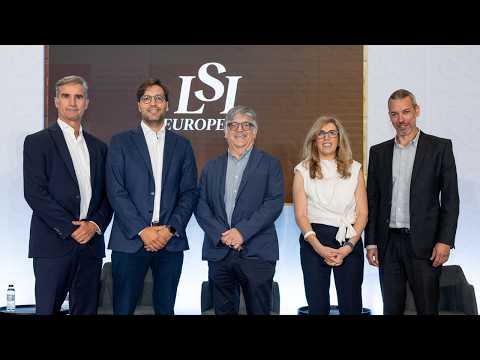
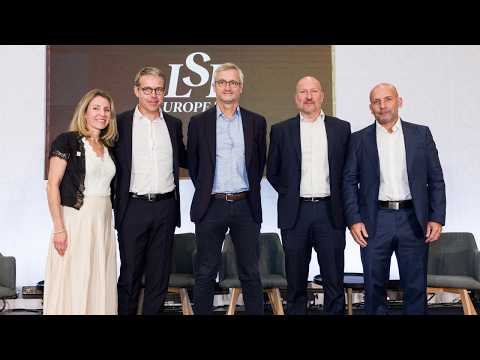
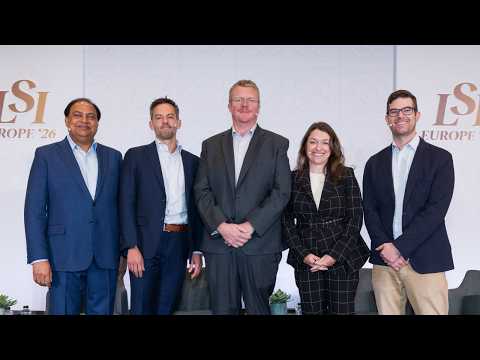
Well, good morning to everyone. Thank you for joining us in this panel. Probably most of you have thought about how impactful is AI and really all of us. We thought that these would have a quicker scalability, right, so that every hospital could have access to this AI, and have this impact. Many companies around the world have been trying to solve it from different angles, and unfortunately, today, it's not scalable enough. The concept of the winner takes it all is struggling a little bit. So a discussion that we have with our panel is was, how can each of them in their area, specifically so senior Horton from Medtronic, from Berger from Siemens, Angela alberig from key beam, and Stephen wood from Microsoft. All of them, how they contribute to the scalability. So thanks for joining us. Maybe we can start with some introduction. Then Stephen can introduce yourself.
Stephen Wood 1:11
Yeah, great. Thank you. Pau. So I'm Stephen Wood. I am responsible for healthcare and life sciences across EMEA, so Europe, Middle East and Africa from Microsoft. So I run the whole business for Microsoft across our region, and I have a team of industry consultants who work closely with our healthcare and life sciences customers, going deep into how AI can really help them drive transformation in their business. Thank you, signo, please.
Signe Haughton 1:36
I'm Signe Haughton. I lead government affairs, medical affairs and societal affairs within the Medtronic neurovascular business. I've been in the neurovascular space for for more than 25 years, so I've had a unique opportunity to to really sort of see this space grow from what it was in early implementation to where it is now today. And as we all know, stroke is an extraordinary big business in the space, and I think right now, AI is something that device manufacturers in this space are trying to navigate.
Pau Rodriguez 2:13
Thank you. Frank,
Frank Berger 2:14
yeah. Frank Berger, representing, Siemens Healthineers, global leader of imaging, cancer therapy, diagnostics, digital. 25 years in service being an engineer from from education, have dedicated the last 10 years in driving the stroke care across our pathways, across our fields. So at the moment, being the accurate Stroke Treatment global lead for simultaneous Thank you.
Angel Alberich-Bayarri 2:43
I'm Angel Alberich-Bayarri, and I'm the founder and CEO of key beam. What we do basically is to transform imaging data coming out from radiology modalities like MRI, CT and PET, and transforming it into diagnostics and into action over predictions. Very much interested in this panel and looking forward to the discussion, because we've established already some partnerships with corporate companies such as Philips, Tempus and IQVIA, among others, and some lesson flared that are great to share. Great.
Pau Rodriguez 3:17
Thank you so much. So let's start with Signe trying to understand, you have 25 years experience. You've seen the in the vascular space from the very beginning. What is the need for AI? And how can we do more treatments? Explain us a little bit more.
Signe Haughton 3:32
Yeah, you know AI right now, especially, I think within the neurovascular space is, certainly an area that is gaining a lot of attention, but is still a bit gray just in terms of how this can be implemented, specifically within neurovascular care, with with stroke being the leading pandemic here. I mean, we have to remember that one in four people in the world will get a stroke at some point in time in their lives. Stroke kills six and a half million people every year. The fact that we don't consider this a global pandemic, as compared to, you know, what covid 19 represented to the world is, is a bit shameful, when you think about the fact that, you know, we've now had mechanical thrombectomy, Endovascular treatment of stroke accessible for more than 10 years, and yet, the worldwide penetration rate of eligible patients actually receiving mechanical thrombectomy as a viable treatment option is about 3% worldwide. It's obviously much higher in certain parts of the world, but in lower and middle income countries, it's less than 3% so the fact that so little progress has been made is really due to the challenges that we have in terms of infrastructure, in terms of being able to access and reach parts of the world. World in which you know the the opportunity for treatment could certainly be there, but we lack the infrastructure and the patient pathway systems of care to get us there where AI could actually be a potential alternative to allow the Hub and Spoke models that we have in terms of comprehensive stroke care centers who provide the treatment for for smaller local hospitals within their respective regions and countries, if we had something that provided a faster diagnosis of of the actual stroke, Therefore a faster treatment option, ultimately the economic burden that that stroke is burdens the entire world on today, which is more than $890 million back in 2017 predicted to become $2.3 trillion by the year 2050 having some type of AI capability for faster diagnosis, therefore, faster treatment, better outcomes, is really going to shift the world. But trying to navigate in which this type of AI capability can happen is what needs to happen now.
Pau Rodriguez 6:14
So Frank here we see sign. How can we do more Endovascular treatments? Right? So that's one piece of the puzzle. But you're in the radiology space. So how do you relate with them? What is your positioning here?
Frank Berger 6:26
Yeah. So I mean, first of all, you called it a global pandemic, and it is. Stroke is indeed number two cause of death worldwide, number one cause for long term disabilities. Huge cost factors out there, one out of four in this room will have a stroke in their lifetime. And I assume many of you have relatives who suffer also suffered from stroke. So it's clear that this is something to go about. And despite of the great therapies that are out there, too little number of patients can receive the treatment because it's all about time and acute stroke. And for that, at the moment, there's no other technology out there than imaging, CT or MRI imaging, that can clearly detect the stroke and can safely help the neurologist to decide about the treatment. And this is something where now coming to the radiologist, and of course, we want to sell our great CT advanced or Mr. Advanced Technologies in the big hospitals at good prices. But unfortunately, 80% of the patients won't arrive in these hospitals that are equipped with this technology. The radiologists usually would want to, of course, do the proper diagnosis. They want to do this based on their work list prioritization. Yeah, they want to write a report, but whenever they have the full certainty of that, it's already too late. So there is somehow a distraction between the neurologists, who want to be fast, who sometimes have to triage, not being 100% secure, and the radiologists who have to make sure that this is safe and proper. And bringing these two fields together in stroke care, in the spoke sites where there is not, so not this technology is on, is one of the great fields where I could play a role, yes.
Pau Rodriguez 8:28
So we have the Endovascular treatments, we have the radiologies, but then you have the IT departments, right? So how do you adopt this technology? And here is where Microsoft has a strong relationship with this system. So what is your thought? How do you help corporates and hospitals to adopt this technology and solve this problem?
Stephen Wood 8:49
Yeah, I think, I think there's probably three areas. The first is solving real world problems. So we've heard very clearly the some of the challenges and issues. And I think all all healthcare providers out there are looking to bring AI solutions that really transform the patient outcomes and the clinical the clinicians experience, but do it in a way that feels seamless across the entire integrated workflow. And I think that's one of the biggest areas of what we're being asked to help with is to make sure that there's a level of integration, and an AI really offers something unique in that space, because it helps to reinvent those workflows. It helps to to do things, to join up those those different specialties in ways that that we've not been able to see before. So I think the first area is definitely solving real world problems. And let's just put it in perspective. We conducted a survey recently, 31,000 people, hundreds of countries, dozens of companies across the world, across healthcare and 79% of healthcare workers said that they have reached capacity. They are effectively have run out of time and energy to be able to do their jobs efficiently. And yet, we know demand continues to rise and. With all the things that we see around us. And so when we look to the leaders in healthcare, they tell us, 80% of them tell us that they are looking to AI and specifically to agents, agentic AI to help them solve those problems. So I think connecting everything together is definitely the first point. But then looking to solve real world problems is the other key area data, then also is the second thing around where we want to make sure that we're leaning into help, and everybody wants to unlock and access and activate and protect data to be able to bring some of those real world solutions together that I just talked about. And the final thing, actually, you mentioned the IT teams. And yes, of course, technology is a key component of anything that's to do with AI and yes it, teams are having to assess dozens of AI solutions, and they're having to assess hundreds of use cases. I've talked to some organizations that come to me with we've got 150,000 use cases across our organization. How on earth can you implement all of those? So yes it, teams are definitely swamped. But also organizations are looking to us to help share some of the insights that we've gotten. Best practices around how to implement AI, and that's really drives the transformation, and this is things like organization and cultural change, the process change that is associated with the workflows, governance, security, compliance, privacy, responsible, AI, and also, not least, is making sure that AI strategy is line to the to the business strategy, the outcomes they're trying to drive as an organization. So I think those are the three key areas where we see organizations looking to get advice and guidance from us as to how to adopt AI across their organization.
Pau Rodriguez 11:37
I see it makes sense. So Angel, you're a veteran in the space, your company is doing very well, and how do you approach the market? I mean, which are the challenges that you see as a startup, and what are your thoughts?
Angel Alberich-Bayarri 11:51
Well, we clearly see the challenges you mentioned. Now, with regards to IT integration, there are a lot of algorithms out there, and IT departments. In the end, need to prioritize stuff. I would say that in the end, part of the secret is to find an algorithm that can be a pain killer, right, and not a vitamin, right? And we typically classify solutions that are kind of nice to have, that's a vitamin, right? You can forget a vitamin in the morning, and nothing happens to you. But if definitely you are suffering pain, you need a pain killer now. And and we managed to do that. We in the area of cancer. I'm not that experience in the acute care, but, but in the area of cancer, that's where we an autoimmune disorders, that's where we develop most of our experience. And what we found out there is that if we want to establish like meaningful partnerships, especially with large firms, with corporates, you really need to build your own leverage, right? And the best way to build your own leverage is to gain install base. Of course, that's hard, because you need to go through all the procurements to all the hospitals. But you need investment. You need investment to build your own sales team being able to do direct sales and then try to gain this leverage when the kind of serious negotiations with the corporates come in the end, an ideal scenario for a corporate or for a firm is to the risk the whole relationship, especially Working with a startup or with a small company like like us. But in the end, if you go to those meetings with an install base of, you know, 100 hospitals already working with you, with doctors asking for your solution, with evidence, then of course, you can flip the conversation and say, well, we can engage in potential partnerships that can help our product go to market with channels, right? And, you know, we started with a bold direct sales strategy that right now is flipping more and more to channels, 80% 20% direct. And it's clear, right? The sales force of large companies like you know, the ones in this table is way stronger widespread, and we are getting like three to five to 10 licenses requests per week from every single company that wouldn't be possible to do on our case with our direct sales team, right? So, in the end, I think the secret is on trying to de risk the relationship from the corporate standpoint, like being a trustworthy partner, proving that you have already learned how to sell yourself have also survived during the last years. Because I think it's important to prove to them that it's a company that learns how to survive in economic uncertainty as well. And yeah, and being very strict on the regulatory processes, because, of course, we are in this regulated environment. And yeah, I think that coming up,
Pau Rodriguez 14:52
yeah, so see me. How has he? Have you approached it from Medtronic, we well, and this. CEO of an AI software company, that what we tried to do is, why don't we breach these three aspects, right? So we work with Medtronic to understand the need of the interventionist. So we say, Okay, what do you need? How can we help you? And now we had the first collaboration with Siemens in Catalonia to try to adopt the technology and see how we can engage with them, and we use Microsoft Teams as the communication system to allow to coordinate all the process. Now, what are your thoughts around that senior and how do you how do you manage it?
Signe Haughton 15:33
Or no, it's a good question, and I think, you know, we've had the unique opportunity to help support the done simple clinical trial that that, methinks, has has initiated, and I think that's sort of step one in this process, is to understand, from a research perspective, what what are the outcomes of this? How much are we improving efficiencies, and how is that having a clinical impact at the end of the day, in terms of, you know, faster treatment for for stroke patients. So I think it's, it's important that, you know, companies like like Medtronic, that have the capability to support early stage research, to begin to better understand where this type of AI complement can can actually provide those efficiencies, is really important. So that's one aspect of that, and and ultimately from there, the hope is then that the evidence of that early research can then help to bridge partnerships through device manufacturers to imaging companies, because those are partnerships that that are really critical to ensuring that, you know, this capability is then offered to a much bigger population of the world. And I think that's where you know these, these type of unique partnerships exist. And I think that's that's extremely important, because we can't do our job without the capabilities that Siemens provides in terms of imaging. So so all of those partnerships are extremely important. So we're beginning to find those opportunities to bridge those partnerships to a stronger, a stronger level than we had before.
Pau Rodriguez 17:21
So Frank here, and what are your thoughts? How we Siemen approaching partnerships, the what's what's your vision?
Frank Berger 17:29
Our classic approach towards our classic customers, the real radiologists, would be to make the imaging more precise, understand the root cause, for example, with photon counting CT where you can see much smaller, much smaller aspects of an image. We try to bring our CT technology closer to the patients, like in mobile stroke units. We try to make our technology easier to operate with more autonomous scanners. But none of this is is good enough? Yeah, we have. We have to accept that on the customer side, it stroke care is a team sport. It has to be an orchestration between the ambulance stuff, between the radiology, between the neurologist, between the interventionalist, and the IT departments to really have a smooth workflow happening, in particular for those patients who arrive in these smaller hospitals, in these spoke sites, maybe in the emerging markets. So therefore partnering is key, and therefore simpler imaging technologies are key, and then really trying to bring everything together. Because, I mean, think about yourself. If you are yourself in an emergency situation at home, somehow, there are three ways, either you know somebody who is an expert to deal with in this situation, unfortunately, not so many experts worldwide out there. The second thing would be a clear protocol that you follow all the time, and if both is not available, yeah, maybe there's something else that can happen here. Ai comes into play. But of course, integrate it into something which people can influence, because AI alone will also not do the trick.
Pau Rodriguez 19:18
Yeah, no, makes sense. So something I'm very grateful about Microsoft is when, when we were started thinking about, okay, we're focused on AI the best as as Angel was saying the best performance possible, this pain killer, and then how do we scale it? I mean, should we develop our own communication system that's not scalable in every single hospital, so we thought about teams as a communication system, and Microsoft has been tremendously supportive with their ISB program to help us co develop within teams, the CT Scan Viewer to be able to do that. So explain us a bit more. I mean, how do you partner? How do you leverage? Of these ISVs. How do you help in this go to market eventually?
Stephen Wood 20:04
Yeah, I mean, it kind of goes without saying. The partnerships are critical, not least because there's no one organization that solves all of the challenges of any medical organization end to end. So we all have to work together to solve that end to end workflow that we've just talked about. And from a Microsoft perspective, we recognize we need to nurture the whole ecosystem to be able to do that, and it's not least because of the way that organizations are going to start using agentic technology in the future. So agents are going to become part of everybody's daily existence, and they're going to help to automate some of these workflows end to end. So we want to, we want to make sure that we're building the platform for partners to innovate and integrate. That also reflects how people are going to be using the AI in the future as well. With a we call it a UI for AI, a place where you can go. And the example that you gave with the stroke diagnostic solution from from ethics and how that's integrated into into teams, is a great example of that. We believe that by going where people are actually working and operating, that means makes AI much more accessible, but it also means that it works and integrates across the entire workflow. So from that perspective, that that partnership ecosystem is critical for us. And then I think also I mentioned data earlier on, data is one of the key underlying factors of making sure that everything is brought together to be able to drive the results, and we show now in medical with healthcare data, something like 90% of data is unutilized and unused, even though we are digitizing healthcare information at an increasing rate, so giving partners access to that entire dataset, because AI can now reason across all of that in truly remarkable ways and allow us to interact with it in new and novel ways to be able to solve some of the challenges and problems we've got so allowing partners to build on top of a platform that reflects how people are going to use technology, but also making sure that that we're bringing together the data sets to be able to solve those problems and and deep into the workflow, I think that's the critical component as well, and it's an approach that we took with with Dragon co pilot, which just went general availability last week in the UK, to make sure that not only are we looking To transform the the patient, clinician consultation. But it also allows integration deep into the EHR system through partners like epic and etc, and deep into the imaging systems with with some of the partners that we've got here as well, and deep into the data with Siemens and Medtronic and that sort of stuff. So it's bringing the partner ecosystem together to be able to solve the problems holistically for the customers across the workflow, because that's where true AI transformation happens. And I think lots of one of the big pitfalls that I see lots of organizations falling into is they believe that by doing lots of use cases, they're going to be driving AI transformation. And I think by far, the organizations that take a step back and look holistically at the workflow, the business process. That's really, truly where transformation happens from the clinical clinicians experience, or the patient outcomes or or the patient journey, end to end. That's where real transformation for using AI happens, not in the individual use cases.
Pau Rodriguez 23:14
Yeah, no, great. So Angel, actually, you have very, very good investors. And in the previous panel, they were saying about the importance of coach ability and to listen and how to navigate all of this, because there was a certain expectation with AI AI companies, this has evolved to a certain extent. How have you leveraged this advice? And how do you do you see the future?
Angel Alberich-Bayarri 23:40
Well, I think that we've gone through some struggle as a market, let's say in the AI and radiology in general, right? Because I think the timing was not really there yet. I mean, the radiologists were not massively adopting solutions in general, and definitely you need to basically coach investors also to understand that and the why. I think it's quite clear to all of us that basically, in the years to come, radiologists are going to massively use more and more these kind of solutions, because there is a limited workforce. There is a growing number of images and needs and guidelines that are changing, and they need to keep up. And eventually, radiology's profession as we know it today will disappear to to another thing, right, to diagnostic specialist or something like that. And while you know it's true that during the last years, the adoption has been slow, in the end, we share that common vision, right, that AI agents and AI solutions are going to take over basically all the imaging departments in hospitals. So having that clear, then this is a question of timing and which companies are more effectively operating, and we saw that in the market. So. Some companies were pitching just workflow improvement to radiologists, and I think that's a very limited vision and a very narrow vision, if you are just there or your only Why is to improve radiology's life on to make them report faster. Do really? Do they really want to report faster, or maybe they don't. Maybe they want to have more value. Maybe they want to extract more information out of the images, right? And then we started thinking, Okay, our value proposition, the reason why I found it ki beam is not really to make radiologies go faster. It's basically to be more productive, no. And productivity is also value. And we started to think, okay, maybe we can extract information from the imaging data that might be actionable, also for the Biopharma companies, helping them to better stratify patients for drug development, or even once the drug is approved, maybe we can help them using imaging to identify those patients that are candidates for treatment. And we started to build partnerships with Biopharma companies and proving that there is value beyond pitching just a workflow improvement right? And we saw some some deals in the market, of companies that started with very clear, just workflow improvement pitch that ended up with very kind of low recognition from from the market in general. And I think that you need to have investors on board and understand that this is a long shot, that it's probably more related to the value you bring to healthcare in general, and how your tools can be actionable beyond what is initially intuitive, like, Okay, I'm an AI radiology company, and I work with radiologists. No, maybe that data is bringing value to other streams, right? And that happens also with with your business as well. It's not just the acute care at that time is all the downstream costs that you are saving afterwards, no, and I think that's it. It's basically working with them, understanding the market trends and adapting to the situation. I think it's more on the adaptability, sure.
Pau Rodriguez 27:12
So Frank here. I mean, you see, from a position that you see all the different companies with different angles, different points of views, what, what are your thoughts about that, and how, I mean, do you agree with ANGEL or what? What is your position here?
Frank Berger 27:26
No, I'm totally, I'm totally with you. We are. It's, it has to be something more than just solving that one little trick. And I know as a as a startup, you have to start with a narrow focus, but for the big clinical benefit, it's about integrating different different steps. I mean, we are, at the moment, thinking about this hub and spoke stroke network market. It's clearly clinical, proven that there is a benefit if you build networks. It is cost efficiency is proven. There are around 250 of those stroke networks worldwide out there, based on world stroke organization research, growing by 10% in the emerging markets, much faster, and even in countries like Germany, where this concept has been established since many years, where actually the whole country is covered, and every patient can reach a stroke center within 2030, minutes. Even there, when you ask, what is the technologies that are used? It's maybe just still phone it's maybe something like an audio video connection that a neurologist can look into the eyes. Yeah, sometimes a bit of digital integration, but still, none of that is really optimizing. So you like in Catalonia, where we currently are partnering, where it's probably one of the best developed regions of the world, there is potential to really integrate it and make that better. And one of these big potentials is not using advanced imaging, but using simple imaging, which can be done by every tech, it the night shift in Sundays, no contrast agent, nothing that you first have to think again, how does this work? And then a player AI on it, and ideally still has to be proven, but ideally get to the same results that you could today only do as a radiologist based on an advanced imaging technology, yeah. And this is, of course, then better if it's integrated in an smart and simple and easy way, for example, based on Microsoft Teams, which everybody has, everybody knows how to use, where you don't have to ask again how that works, yeah. And with this, then routing the patient, and sorry, forgot one thing together with a CT technology, which everybody could use, should utilize, yeah, which more or less a push button scan, where you immediately after the scan. Know already, hey, this might be a patient with a stroke. Get the ambulance there, get the lyces there, get the team in the bigger hospital prepared for it from back to me, and then go direct into Anjo so this is the workflow where all pieces come together. We have to pilot this in locations like in Catalonia, but that would be actually something which scares to all these 250 stroke networks across the world.
Pau Rodriguez 30:23
Something that I discuss with other fellow CEOs in the space is, how do you actually interact with the physicians to understand the real value in all the aspects. And I have a question for seniors, how do you leverage the physicians you work with your QoS to understand what is needed and how it should be applied. I mean, do you interact a lot with them? Because you have your vision as a company, but then you need to understand their point of view, right? Yeah.
Signe Haughton 30:53
I mean, and I think it in this particular space, especially it's it's unique, because there's still a level of intimacy that that exists that is very global in terms of outreach. So, you know, when I started out in this space, 25 years ago, there was one specialty. It was interventional neuroradiologists that were doing everything they were diagnosing, they were treating. And since then, we have, in all fairness, about three and a half specialties that are now playing in this space in terms of providing the treatment. That's interventional cardiology, interventional neuroradiology, which is, you know, decreasing an interventional neurosurgery. And then, of course, there's interventional neurologists who are specially trained as well, who can provide the treatment. So the space itself has has transformed, but yet that that unity and the the networking, the relationships within this market are still intimate, and therefore is highly driven by by the the true desire of the practitioner, the one providing the treatment, in terms of making a lot of those strategic decisions. That's not to say that the infrastructure within the hospitals still doesn't have a critical role. They absolutely do, but we're still enough of a unique space in in that the subjective requirements or or subjective desires as to, you know, which technology, which imaging, you know, whatever you know, future innovation they they want, they have a strong voice in that. So it's very important to find key opinion leader champions who can really become, I think, the the word and the voice of, of how this type of AI integration can really play a role. And Frank, I agree with you, because, you know, there have been, there's been such innovation in this space which is extraordinary and is and is really critical, but yet, we have to be careful of innovation that isn't going to have global reach in that, you know, we have to recognize that the burden of Stroke in lower middle income countries is highest, and the imaging capabilities of advanced imaging are certainly not going to be implemented in those parts of the world for a very long time. So therefore, if there's imaging capabilities that are simple that can provide now this type of capability to to be able to at least diagnose and then more rapidly treat a greater population is is really going to be instrumental. But I do think the the uniqueness of this market and the importance of the networking of the key opinion leaders that that are within this space is going to be critical.
Pau Rodriguez 33:59
I think last year, I happened to be at the Microsoft Evans Madrid, the AI tour. And is actually you see the future of what's going to come, and you see AI agents all sort of fancy stuff and but the point is that the adoption of AI is very difficult, and in particular in the in the healthcare space. So we have all the technology. They were saying yesterday that in some hospitals, they still use a fax well, how? How Microsoft beyond the technology and allowing us to build on your infrastructure? How do you understand the clinical need? How do you work with Medtronic? How do you work with Siemens? How do you work with our help and with the hospitals to understand, how can we help us?
Stephen Wood 34:47
And it's a wonderful question, and we do it in a number of ways. So one, obviously, we work very closely with our partners that you just mentioned, and understanding from their perspective how they're engaging and working with customers. We all. Have, as I mentioned earlier, on my my team, for example, has clinicians on it. So we have clinical experts. In fact, one of them is in the room today, who is a practicing pediatrician, and so he spends time with us and also spends time in his practice. And I've got a in a number of other clinicians on the team who who go and work and understand and sit next to people who are impacted by the change. If we look back a few years when we were sort of digitizing all the digital transformation we talked about it, and basically that was taking human processes and moving them onto a, onto a onto a mobile device or a PC or something like that. The human processes didn't, didn't undertake a huge amount of transfer information. We were doing the same thing, but we were just using a PC for it. We're just computerizing it. Ai, is fundamentally different, and it's fundamentally different in the way that it operates and interacts. And so when we look further to the future, as I mentioned earlier on, we do see a future where people will be operating and working with agents in their as part of their everyday life, and will be managing agents. And so clinicians managing agents to go off and do more diagnostic work, or managing agents to go and give them deeper consultation or help them in a more diagnostic scenario, and working across different and behaving like specialties and providing information back to them. So that's quite a transformational way that the clinicians are going to be operating. So we have to sit close next to the clinicians. We also have to sit next to the administration, because a lot of the benefit from Ai comes from that administrative burden across the organization. So yeah, we have to sit next to them. We have to help understand what the transformation is going to happen and share our experience of that journey as well. We're going through the same journey like every organization, about how we're leveraging AI in our sales, marketing and engineering teams, and what does that do to the jobs that people are going to do in the future? And how do we help skill those organizations that the healthcare organizations you talked about, for that transformation, preparing for that transformation. And it is, it is just as important as the technology itself, in fact, probably more important the technology is that, is that organizational structure, the culture change, but also the change in those workflows and processes that people are going to have to consider, how do they how do they work in this future state? And we all know that healthcare organizations aren't necessarily, you know, right at the head, at the front end of cutting edge of cutting edge of those kind of transformations. So it's hard work. It's, you know this, there's, there's a body of work in front of us, definitely,
Pau Rodriguez 37:27
well, so we have a couple of minutes left only. So I would like each of you to share, like a final thought. You'd like the audience to stay with so Angel, please.
Angel Alberich-Bayarri 37:37
I'd like to share that even if we said that the initial adoption of AI in our space was slow. I would encourage all partners to start engaging right right now. Right now is time companies the market is consolidating. Companies are starting to have, like meaningful revenue numbers passing from one to five to five to 10 to more than 10 million companies developing like single algorithms. And I think, is a moment to engage in these kind of collaborations in a more meaningful way, because we need to. We need to transform the market and the space No, and the more the partners way, the more expensive no the companies will become. Sure, Frank,
Frank Berger 38:20
keep it short, yeah, as I said, stroke is a team sport. It's amazing what the caregivers do every day, bringing the acts together. I think it's our application from industry, from startups, from investors to also partner and to help them and to really improve this currency, which is time is brain, and this is a simple thing. It's easy to prove it's not long that it takes, and then we can really scale.
Signe Haughton 38:48
Craig senior, yeah, I think we're right at the cusp of something that can be pretty exciting. And I think what's what's important, and I think where we are in a unique moment in time is that, you know, we are NCDs, for example, are going to be at the forefront of the United Nations General Assembly, which we're going to be participating in again this year, in which, you know, stroke is a major focus. So this type of partnership, integration of an AI capability, is that a moment where, you know, we can take advantage of the fact that stroke is getting that type of focus, and then be able to, you know, share this, this type of capability even further and hopefully make an even bigger impact.
Pau Rodriguez 39:39
Super Stephen,
Stephen Wood 39:41
I would echo everything that the colleagues have said here on the panel about that we are at the cusp. It feels like I often liken it to this is feeling a little bit like how maybe people felt at the beginning of the Industrial Revolution, and the reality is, or the internet era, the reality is, this is going to take. Many years, possibly decades, in order to fully see it realize its full potential. But I think the key point is that partnership and the ecosystem that we build now will help these organizations through manage that change through the future. So I think that partnership and the ecosystem is critical.
Pau Rodriguez 40:18
I would like to end up by saying that, look, many companies have done a very successful job, and they're working a lot. We need to find synergies, and less is more. We don't need to reinvent the wheel. We need to leverage what is out there and make the most out of it. So is this efficient and is scalable? So thank you very much for for joining us. Thank you The panelists, and if you're you want to meet us, just let us know. Thank you so much.
Pau Rodriguez 0:05
Well, good morning to everyone. Thank you for joining us in this panel. Probably most of you have thought about how impactful is AI and really all of us. We thought that these would have a quicker scalability, right, so that every hospital could have access to this AI, and have this impact. Many companies around the world have been trying to solve it from different angles, and unfortunately, today, it's not scalable enough. The concept of the winner takes it all is struggling a little bit. So a discussion that we have with our panel is was, how can each of them in their area, specifically so senior Horton from Medtronic, from Berger from Siemens, Angela alberig from key beam, and Stephen wood from Microsoft. All of them, how they contribute to the scalability. So thanks for joining us. Maybe we can start with some introduction. Then Stephen can introduce yourself.
Stephen Wood 1:11
Yeah, great. Thank you. Pau. So I'm Stephen Wood. I am responsible for healthcare and life sciences across EMEA, so Europe, Middle East and Africa from Microsoft. So I run the whole business for Microsoft across our region, and I have a team of industry consultants who work closely with our healthcare and life sciences customers, going deep into how AI can really help them drive transformation in their business. Thank you, signo, please.
Signe Haughton 1:36
I'm Signe Haughton. I lead government affairs, medical affairs and societal affairs within the Medtronic neurovascular business. I've been in the neurovascular space for for more than 25 years, so I've had a unique opportunity to to really sort of see this space grow from what it was in early implementation to where it is now today. And as we all know, stroke is an extraordinary big business in the space, and I think right now, AI is something that device manufacturers in this space are trying to navigate.
Pau Rodriguez 2:13
Thank you. Frank,
Frank Berger 2:14
yeah. Frank Berger, representing, Siemens Healthineers, global leader of imaging, cancer therapy, diagnostics, digital. 25 years in service being an engineer from from education, have dedicated the last 10 years in driving the stroke care across our pathways, across our fields. So at the moment, being the accurate Stroke Treatment global lead for simultaneous Thank you.
Angel Alberich-Bayarri 2:43
I'm Angel Alberich-Bayarri, and I'm the founder and CEO of key beam. What we do basically is to transform imaging data coming out from radiology modalities like MRI, CT and PET, and transforming it into diagnostics and into action over predictions. Very much interested in this panel and looking forward to the discussion, because we've established already some partnerships with corporate companies such as Philips, Tempus and IQVIA, among others, and some lesson flared that are great to share. Great.
Pau Rodriguez 3:17
Thank you so much. So let's start with Signe trying to understand, you have 25 years experience. You've seen the in the vascular space from the very beginning. What is the need for AI? And how can we do more treatments? Explain us a little bit more.
Signe Haughton 3:32
Yeah, you know AI right now, especially, I think within the neurovascular space is, certainly an area that is gaining a lot of attention, but is still a bit gray just in terms of how this can be implemented, specifically within neurovascular care, with with stroke being the leading pandemic here. I mean, we have to remember that one in four people in the world will get a stroke at some point in time in their lives. Stroke kills six and a half million people every year. The fact that we don't consider this a global pandemic, as compared to, you know, what covid 19 represented to the world is, is a bit shameful, when you think about the fact that, you know, we've now had mechanical thrombectomy, Endovascular treatment of stroke accessible for more than 10 years, and yet, the worldwide penetration rate of eligible patients actually receiving mechanical thrombectomy as a viable treatment option is about 3% worldwide. It's obviously much higher in certain parts of the world, but in lower and middle income countries, it's less than 3% so the fact that so little progress has been made is really due to the challenges that we have in terms of infrastructure, in terms of being able to access and reach parts of the world. World in which you know the the opportunity for treatment could certainly be there, but we lack the infrastructure and the patient pathway systems of care to get us there where AI could actually be a potential alternative to allow the Hub and Spoke models that we have in terms of comprehensive stroke care centers who provide the treatment for for smaller local hospitals within their respective regions and countries, if we had something that provided a faster diagnosis of of the actual stroke, Therefore a faster treatment option, ultimately the economic burden that that stroke is burdens the entire world on today, which is more than $890 million back in 2017 predicted to become $2.3 trillion by the year 2050 having some type of AI capability for faster diagnosis, therefore, faster treatment, better outcomes, is really going to shift the world. But trying to navigate in which this type of AI capability can happen is what needs to happen now.
Pau Rodriguez 6:14
So Frank here we see sign. How can we do more Endovascular treatments? Right? So that's one piece of the puzzle. But you're in the radiology space. So how do you relate with them? What is your positioning here?
Frank Berger 6:26
Yeah. So I mean, first of all, you called it a global pandemic, and it is. Stroke is indeed number two cause of death worldwide, number one cause for long term disabilities. Huge cost factors out there, one out of four in this room will have a stroke in their lifetime. And I assume many of you have relatives who suffer also suffered from stroke. So it's clear that this is something to go about. And despite of the great therapies that are out there, too little number of patients can receive the treatment because it's all about time and acute stroke. And for that, at the moment, there's no other technology out there than imaging, CT or MRI imaging, that can clearly detect the stroke and can safely help the neurologist to decide about the treatment. And this is something where now coming to the radiologist, and of course, we want to sell our great CT advanced or Mr. Advanced Technologies in the big hospitals at good prices. But unfortunately, 80% of the patients won't arrive in these hospitals that are equipped with this technology. The radiologists usually would want to, of course, do the proper diagnosis. They want to do this based on their work list prioritization. Yeah, they want to write a report, but whenever they have the full certainty of that, it's already too late. So there is somehow a distraction between the neurologists, who want to be fast, who sometimes have to triage, not being 100% secure, and the radiologists who have to make sure that this is safe and proper. And bringing these two fields together in stroke care, in the spoke sites where there is not, so not this technology is on, is one of the great fields where I could play a role, yes.
Pau Rodriguez 8:28
So we have the Endovascular treatments, we have the radiologies, but then you have the IT departments, right? So how do you adopt this technology? And here is where Microsoft has a strong relationship with this system. So what is your thought? How do you help corporates and hospitals to adopt this technology and solve this problem?
Stephen Wood 8:49
Yeah, I think, I think there's probably three areas. The first is solving real world problems. So we've heard very clearly the some of the challenges and issues. And I think all all healthcare providers out there are looking to bring AI solutions that really transform the patient outcomes and the clinical the clinicians experience, but do it in a way that feels seamless across the entire integrated workflow. And I think that's one of the biggest areas of what we're being asked to help with is to make sure that there's a level of integration, and an AI really offers something unique in that space, because it helps to reinvent those workflows. It helps to to do things, to join up those those different specialties in ways that that we've not been able to see before. So I think the first area is definitely solving real world problems. And let's just put it in perspective. We conducted a survey recently, 31,000 people, hundreds of countries, dozens of companies across the world, across healthcare and 79% of healthcare workers said that they have reached capacity. They are effectively have run out of time and energy to be able to do their jobs efficiently. And yet, we know demand continues to rise and. With all the things that we see around us. And so when we look to the leaders in healthcare, they tell us, 80% of them tell us that they are looking to AI and specifically to agents, agentic AI to help them solve those problems. So I think connecting everything together is definitely the first point. But then looking to solve real world problems is the other key area data, then also is the second thing around where we want to make sure that we're leaning into help, and everybody wants to unlock and access and activate and protect data to be able to bring some of those real world solutions together that I just talked about. And the final thing, actually, you mentioned the IT teams. And yes, of course, technology is a key component of anything that's to do with AI and yes it, teams are having to assess dozens of AI solutions, and they're having to assess hundreds of use cases. I've talked to some organizations that come to me with we've got 150,000 use cases across our organization. How on earth can you implement all of those? So yes it, teams are definitely swamped. But also organizations are looking to us to help share some of the insights that we've gotten. Best practices around how to implement AI, and that's really drives the transformation, and this is things like organization and cultural change, the process change that is associated with the workflows, governance, security, compliance, privacy, responsible, AI, and also, not least, is making sure that AI strategy is line to the to the business strategy, the outcomes they're trying to drive as an organization. So I think those are the three key areas where we see organizations looking to get advice and guidance from us as to how to adopt AI across their organization.
Pau Rodriguez 11:37
I see it makes sense. So Angel, you're a veteran in the space, your company is doing very well, and how do you approach the market? I mean, which are the challenges that you see as a startup, and what are your thoughts?
Angel Alberich-Bayarri 11:51
Well, we clearly see the challenges you mentioned. Now, with regards to IT integration, there are a lot of algorithms out there, and IT departments. In the end, need to prioritize stuff. I would say that in the end, part of the secret is to find an algorithm that can be a pain killer, right, and not a vitamin, right? And we typically classify solutions that are kind of nice to have, that's a vitamin, right? You can forget a vitamin in the morning, and nothing happens to you. But if definitely you are suffering pain, you need a pain killer now. And and we managed to do that. We in the area of cancer. I'm not that experience in the acute care, but, but in the area of cancer, that's where we an autoimmune disorders, that's where we develop most of our experience. And what we found out there is that if we want to establish like meaningful partnerships, especially with large firms, with corporates, you really need to build your own leverage, right? And the best way to build your own leverage is to gain install base. Of course, that's hard, because you need to go through all the procurements to all the hospitals. But you need investment. You need investment to build your own sales team being able to do direct sales and then try to gain this leverage when the kind of serious negotiations with the corporates come in the end, an ideal scenario for a corporate or for a firm is to the risk the whole relationship, especially Working with a startup or with a small company like like us. But in the end, if you go to those meetings with an install base of, you know, 100 hospitals already working with you, with doctors asking for your solution, with evidence, then of course, you can flip the conversation and say, well, we can engage in potential partnerships that can help our product go to market with channels, right? And, you know, we started with a bold direct sales strategy that right now is flipping more and more to channels, 80% 20% direct. And it's clear, right? The sales force of large companies like you know, the ones in this table is way stronger widespread, and we are getting like three to five to 10 licenses requests per week from every single company that wouldn't be possible to do on our case with our direct sales team, right? So, in the end, I think the secret is on trying to de risk the relationship from the corporate standpoint, like being a trustworthy partner, proving that you have already learned how to sell yourself have also survived during the last years. Because I think it's important to prove to them that it's a company that learns how to survive in economic uncertainty as well. And yeah, and being very strict on the regulatory processes, because, of course, we are in this regulated environment. And yeah, I think that coming up,
Pau Rodriguez 14:52
yeah, so see me. How has he? Have you approached it from Medtronic, we well, and this. CEO of an AI software company, that what we tried to do is, why don't we breach these three aspects, right? So we work with Medtronic to understand the need of the interventionist. So we say, Okay, what do you need? How can we help you? And now we had the first collaboration with Siemens in Catalonia to try to adopt the technology and see how we can engage with them, and we use Microsoft Teams as the communication system to allow to coordinate all the process. Now, what are your thoughts around that senior and how do you how do you manage it?
Signe Haughton 15:33
Or no, it's a good question, and I think, you know, we've had the unique opportunity to help support the done simple clinical trial that that, methinks, has has initiated, and I think that's sort of step one in this process, is to understand, from a research perspective, what what are the outcomes of this? How much are we improving efficiencies, and how is that having a clinical impact at the end of the day, in terms of, you know, faster treatment for for stroke patients. So I think it's, it's important that, you know, companies like like Medtronic, that have the capability to support early stage research, to begin to better understand where this type of AI complement can can actually provide those efficiencies, is really important. So that's one aspect of that, and and ultimately from there, the hope is then that the evidence of that early research can then help to bridge partnerships through device manufacturers to imaging companies, because those are partnerships that that are really critical to ensuring that, you know, this capability is then offered to a much bigger population of the world. And I think that's where you know these, these type of unique partnerships exist. And I think that's that's extremely important, because we can't do our job without the capabilities that Siemens provides in terms of imaging. So so all of those partnerships are extremely important. So we're beginning to find those opportunities to bridge those partnerships to a stronger, a stronger level than we had before.
Pau Rodriguez 17:21
So Frank here, and what are your thoughts? How we Siemen approaching partnerships, the what's what's your vision?
Frank Berger 17:29
Our classic approach towards our classic customers, the real radiologists, would be to make the imaging more precise, understand the root cause, for example, with photon counting CT where you can see much smaller, much smaller aspects of an image. We try to bring our CT technology closer to the patients, like in mobile stroke units. We try to make our technology easier to operate with more autonomous scanners. But none of this is is good enough? Yeah, we have. We have to accept that on the customer side, it stroke care is a team sport. It has to be an orchestration between the ambulance stuff, between the radiology, between the neurologist, between the interventionalist, and the IT departments to really have a smooth workflow happening, in particular for those patients who arrive in these smaller hospitals, in these spoke sites, maybe in the emerging markets. So therefore partnering is key, and therefore simpler imaging technologies are key, and then really trying to bring everything together. Because, I mean, think about yourself. If you are yourself in an emergency situation at home, somehow, there are three ways, either you know somebody who is an expert to deal with in this situation, unfortunately, not so many experts worldwide out there. The second thing would be a clear protocol that you follow all the time, and if both is not available, yeah, maybe there's something else that can happen here. Ai comes into play. But of course, integrate it into something which people can influence, because AI alone will also not do the trick.
Pau Rodriguez 19:18
Yeah, no, makes sense. So something I'm very grateful about Microsoft is when, when we were started thinking about, okay, we're focused on AI the best as as Angel was saying the best performance possible, this pain killer, and then how do we scale it? I mean, should we develop our own communication system that's not scalable in every single hospital, so we thought about teams as a communication system, and Microsoft has been tremendously supportive with their ISB program to help us co develop within teams, the CT Scan Viewer to be able to do that. So explain us a bit more. I mean, how do you partner? How do you leverage? Of these ISVs. How do you help in this go to market eventually?
Stephen Wood 20:04
Yeah, I mean, it kind of goes without saying. The partnerships are critical, not least because there's no one organization that solves all of the challenges of any medical organization end to end. So we all have to work together to solve that end to end workflow that we've just talked about. And from a Microsoft perspective, we recognize we need to nurture the whole ecosystem to be able to do that, and it's not least because of the way that organizations are going to start using agentic technology in the future. So agents are going to become part of everybody's daily existence, and they're going to help to automate some of these workflows end to end. So we want to, we want to make sure that we're building the platform for partners to innovate and integrate. That also reflects how people are going to be using the AI in the future as well. With a we call it a UI for AI, a place where you can go. And the example that you gave with the stroke diagnostic solution from from ethics and how that's integrated into into teams, is a great example of that. We believe that by going where people are actually working and operating, that means makes AI much more accessible, but it also means that it works and integrates across the entire workflow. So from that perspective, that that partnership ecosystem is critical for us. And then I think also I mentioned data earlier on, data is one of the key underlying factors of making sure that everything is brought together to be able to drive the results, and we show now in medical with healthcare data, something like 90% of data is unutilized and unused, even though we are digitizing healthcare information at an increasing rate, so giving partners access to that entire dataset, because AI can now reason across all of that in truly remarkable ways and allow us to interact with it in new and novel ways to be able to solve some of the challenges and problems we've got so allowing partners to build on top of a platform that reflects how people are going to use technology, but also making sure that that we're bringing together the data sets to be able to solve those problems and and deep into the workflow, I think that's the critical component as well, and it's an approach that we took with with Dragon co pilot, which just went general availability last week in the UK, to make sure that not only are we looking To transform the the patient, clinician consultation. But it also allows integration deep into the EHR system through partners like epic and etc, and deep into the imaging systems with with some of the partners that we've got here as well, and deep into the data with Siemens and Medtronic and that sort of stuff. So it's bringing the partner ecosystem together to be able to solve the problems holistically for the customers across the workflow, because that's where true AI transformation happens. And I think lots of one of the big pitfalls that I see lots of organizations falling into is they believe that by doing lots of use cases, they're going to be driving AI transformation. And I think by far, the organizations that take a step back and look holistically at the workflow, the business process. That's really, truly where transformation happens from the clinical clinicians experience, or the patient outcomes or or the patient journey, end to end. That's where real transformation for using AI happens, not in the individual use cases.
Pau Rodriguez 23:14
Yeah, no, great. So Angel, actually, you have very, very good investors. And in the previous panel, they were saying about the importance of coach ability and to listen and how to navigate all of this, because there was a certain expectation with AI AI companies, this has evolved to a certain extent. How have you leveraged this advice? And how do you do you see the future?
Angel Alberich-Bayarri 23:40
Well, I think that we've gone through some struggle as a market, let's say in the AI and radiology in general, right? Because I think the timing was not really there yet. I mean, the radiologists were not massively adopting solutions in general, and definitely you need to basically coach investors also to understand that and the why. I think it's quite clear to all of us that basically, in the years to come, radiologists are going to massively use more and more these kind of solutions, because there is a limited workforce. There is a growing number of images and needs and guidelines that are changing, and they need to keep up. And eventually, radiology's profession as we know it today will disappear to to another thing, right, to diagnostic specialist or something like that. And while you know it's true that during the last years, the adoption has been slow, in the end, we share that common vision, right, that AI agents and AI solutions are going to take over basically all the imaging departments in hospitals. So having that clear, then this is a question of timing and which companies are more effectively operating, and we saw that in the market. So. Some companies were pitching just workflow improvement to radiologists, and I think that's a very limited vision and a very narrow vision, if you are just there or your only Why is to improve radiology's life on to make them report faster. Do really? Do they really want to report faster, or maybe they don't. Maybe they want to have more value. Maybe they want to extract more information out of the images, right? And then we started thinking, Okay, our value proposition, the reason why I found it ki beam is not really to make radiologies go faster. It's basically to be more productive, no. And productivity is also value. And we started to think, okay, maybe we can extract information from the imaging data that might be actionable, also for the Biopharma companies, helping them to better stratify patients for drug development, or even once the drug is approved, maybe we can help them using imaging to identify those patients that are candidates for treatment. And we started to build partnerships with Biopharma companies and proving that there is value beyond pitching just a workflow improvement right? And we saw some some deals in the market, of companies that started with very clear, just workflow improvement pitch that ended up with very kind of low recognition from from the market in general. And I think that you need to have investors on board and understand that this is a long shot, that it's probably more related to the value you bring to healthcare in general, and how your tools can be actionable beyond what is initially intuitive, like, Okay, I'm an AI radiology company, and I work with radiologists. No, maybe that data is bringing value to other streams, right? And that happens also with with your business as well. It's not just the acute care at that time is all the downstream costs that you are saving afterwards, no, and I think that's it. It's basically working with them, understanding the market trends and adapting to the situation. I think it's more on the adaptability, sure.
Pau Rodriguez 27:12
So Frank here. I mean, you see, from a position that you see all the different companies with different angles, different points of views, what, what are your thoughts about that, and how, I mean, do you agree with ANGEL or what? What is your position here?
Frank Berger 27:26
No, I'm totally, I'm totally with you. We are. It's, it has to be something more than just solving that one little trick. And I know as a as a startup, you have to start with a narrow focus, but for the big clinical benefit, it's about integrating different different steps. I mean, we are, at the moment, thinking about this hub and spoke stroke network market. It's clearly clinical, proven that there is a benefit if you build networks. It is cost efficiency is proven. There are around 250 of those stroke networks worldwide out there, based on world stroke organization research, growing by 10% in the emerging markets, much faster, and even in countries like Germany, where this concept has been established since many years, where actually the whole country is covered, and every patient can reach a stroke center within 2030, minutes. Even there, when you ask, what is the technologies that are used? It's maybe just still phone it's maybe something like an audio video connection that a neurologist can look into the eyes. Yeah, sometimes a bit of digital integration, but still, none of that is really optimizing. So you like in Catalonia, where we currently are partnering, where it's probably one of the best developed regions of the world, there is potential to really integrate it and make that better. And one of these big potentials is not using advanced imaging, but using simple imaging, which can be done by every tech, it the night shift in Sundays, no contrast agent, nothing that you first have to think again, how does this work? And then a player AI on it, and ideally still has to be proven, but ideally get to the same results that you could today only do as a radiologist based on an advanced imaging technology, yeah. And this is, of course, then better if it's integrated in an smart and simple and easy way, for example, based on Microsoft Teams, which everybody has, everybody knows how to use, where you don't have to ask again how that works, yeah. And with this, then routing the patient, and sorry, forgot one thing together with a CT technology, which everybody could use, should utilize, yeah, which more or less a push button scan, where you immediately after the scan. Know already, hey, this might be a patient with a stroke. Get the ambulance there, get the lyces there, get the team in the bigger hospital prepared for it from back to me, and then go direct into Anjo so this is the workflow where all pieces come together. We have to pilot this in locations like in Catalonia, but that would be actually something which scares to all these 250 stroke networks across the world.
Pau Rodriguez 30:23
Something that I discuss with other fellow CEOs in the space is, how do you actually interact with the physicians to understand the real value in all the aspects. And I have a question for seniors, how do you leverage the physicians you work with your QoS to understand what is needed and how it should be applied. I mean, do you interact a lot with them? Because you have your vision as a company, but then you need to understand their point of view, right? Yeah.
Signe Haughton 30:53
I mean, and I think it in this particular space, especially it's it's unique, because there's still a level of intimacy that that exists that is very global in terms of outreach. So, you know, when I started out in this space, 25 years ago, there was one specialty. It was interventional neuroradiologists that were doing everything they were diagnosing, they were treating. And since then, we have, in all fairness, about three and a half specialties that are now playing in this space in terms of providing the treatment. That's interventional cardiology, interventional neuroradiology, which is, you know, decreasing an interventional neurosurgery. And then, of course, there's interventional neurologists who are specially trained as well, who can provide the treatment. So the space itself has has transformed, but yet that that unity and the the networking, the relationships within this market are still intimate, and therefore is highly driven by by the the true desire of the practitioner, the one providing the treatment, in terms of making a lot of those strategic decisions. That's not to say that the infrastructure within the hospitals still doesn't have a critical role. They absolutely do, but we're still enough of a unique space in in that the subjective requirements or or subjective desires as to, you know, which technology, which imaging, you know, whatever you know, future innovation they they want, they have a strong voice in that. So it's very important to find key opinion leader champions who can really become, I think, the the word and the voice of, of how this type of AI integration can really play a role. And Frank, I agree with you, because, you know, there have been, there's been such innovation in this space which is extraordinary and is and is really critical, but yet, we have to be careful of innovation that isn't going to have global reach in that, you know, we have to recognize that the burden of Stroke in lower middle income countries is highest, and the imaging capabilities of advanced imaging are certainly not going to be implemented in those parts of the world for a very long time. So therefore, if there's imaging capabilities that are simple that can provide now this type of capability to to be able to at least diagnose and then more rapidly treat a greater population is is really going to be instrumental. But I do think the the uniqueness of this market and the importance of the networking of the key opinion leaders that that are within this space is going to be critical.
Pau Rodriguez 33:59
I think last year, I happened to be at the Microsoft Evans Madrid, the AI tour. And is actually you see the future of what's going to come, and you see AI agents all sort of fancy stuff and but the point is that the adoption of AI is very difficult, and in particular in the in the healthcare space. So we have all the technology. They were saying yesterday that in some hospitals, they still use a fax well, how? How Microsoft beyond the technology and allowing us to build on your infrastructure? How do you understand the clinical need? How do you work with Medtronic? How do you work with Siemens? How do you work with our help and with the hospitals to understand, how can we help us?
Stephen Wood 34:47
And it's a wonderful question, and we do it in a number of ways. So one, obviously, we work very closely with our partners that you just mentioned, and understanding from their perspective how they're engaging and working with customers. We all. Have, as I mentioned earlier, on my my team, for example, has clinicians on it. So we have clinical experts. In fact, one of them is in the room today, who is a practicing pediatrician, and so he spends time with us and also spends time in his practice. And I've got a in a number of other clinicians on the team who who go and work and understand and sit next to people who are impacted by the change. If we look back a few years when we were sort of digitizing all the digital transformation we talked about it, and basically that was taking human processes and moving them onto a, onto a onto a mobile device or a PC or something like that. The human processes didn't, didn't undertake a huge amount of transfer information. We were doing the same thing, but we were just using a PC for it. We're just computerizing it. Ai, is fundamentally different, and it's fundamentally different in the way that it operates and interacts. And so when we look further to the future, as I mentioned earlier on, we do see a future where people will be operating and working with agents in their as part of their everyday life, and will be managing agents. And so clinicians managing agents to go off and do more diagnostic work, or managing agents to go and give them deeper consultation or help them in a more diagnostic scenario, and working across different and behaving like specialties and providing information back to them. So that's quite a transformational way that the clinicians are going to be operating. So we have to sit close next to the clinicians. We also have to sit next to the administration, because a lot of the benefit from Ai comes from that administrative burden across the organization. So yeah, we have to sit next to them. We have to help understand what the transformation is going to happen and share our experience of that journey as well. We're going through the same journey like every organization, about how we're leveraging AI in our sales, marketing and engineering teams, and what does that do to the jobs that people are going to do in the future? And how do we help skill those organizations that the healthcare organizations you talked about, for that transformation, preparing for that transformation. And it is, it is just as important as the technology itself, in fact, probably more important the technology is that, is that organizational structure, the culture change, but also the change in those workflows and processes that people are going to have to consider, how do they how do they work in this future state? And we all know that healthcare organizations aren't necessarily, you know, right at the head, at the front end of cutting edge of cutting edge of those kind of transformations. So it's hard work. It's, you know this, there's, there's a body of work in front of us, definitely,
Pau Rodriguez 37:27
well, so we have a couple of minutes left only. So I would like each of you to share, like a final thought. You'd like the audience to stay with so Angel, please.
Angel Alberich-Bayarri 37:37
I'd like to share that even if we said that the initial adoption of AI in our space was slow. I would encourage all partners to start engaging right right now. Right now is time companies the market is consolidating. Companies are starting to have, like meaningful revenue numbers passing from one to five to five to 10 to more than 10 million companies developing like single algorithms. And I think, is a moment to engage in these kind of collaborations in a more meaningful way, because we need to. We need to transform the market and the space No, and the more the partners way, the more expensive no the companies will become. Sure, Frank,
Frank Berger 38:20
keep it short, yeah, as I said, stroke is a team sport. It's amazing what the caregivers do every day, bringing the acts together. I think it's our application from industry, from startups, from investors to also partner and to help them and to really improve this currency, which is time is brain, and this is a simple thing. It's easy to prove it's not long that it takes, and then we can really scale.
Signe Haughton 38:48
Craig senior, yeah, I think we're right at the cusp of something that can be pretty exciting. And I think what's what's important, and I think where we are in a unique moment in time is that, you know, we are NCDs, for example, are going to be at the forefront of the United Nations General Assembly, which we're going to be participating in again this year, in which, you know, stroke is a major focus. So this type of partnership, integration of an AI capability, is that a moment where, you know, we can take advantage of the fact that stroke is getting that type of focus, and then be able to, you know, share this, this type of capability even further and hopefully make an even bigger impact.
Pau Rodriguez 39:39
Super Stephen,
Stephen Wood 39:41
I would echo everything that the colleagues have said here on the panel about that we are at the cusp. It feels like I often liken it to this is feeling a little bit like how maybe people felt at the beginning of the Industrial Revolution, and the reality is, or the internet era, the reality is, this is going to take. Many years, possibly decades, in order to fully see it realize its full potential. But I think the key point is that partnership and the ecosystem that we build now will help these organizations through manage that change through the future. So I think that partnership and the ecosystem is critical.
Pau Rodriguez 40:18
I would like to end up by saying that, look, many companies have done a very successful job, and they're working a lot. We need to find synergies, and less is more. We don't need to reinvent the wheel. We need to leverage what is out there and make the most out of it. So is this efficient and is scalable? So thank you very much for for joining us. Thank you The panelists, and if you're you want to meet us, just let us know. Thank you so much.
17011 Beach Blvd, Suite 500 Huntington Beach, CA 92647
714-847-3540© 2026 Life Science Intelligence, Inc., All Rights Reserved. | Privacy Policy