Vincent Legay 0:00
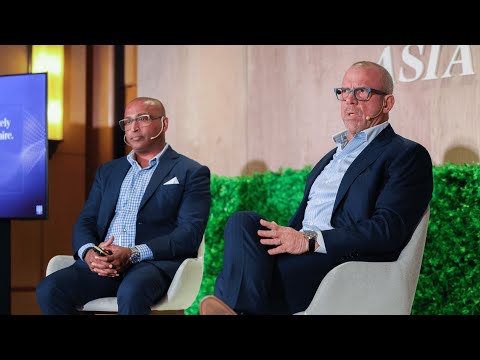
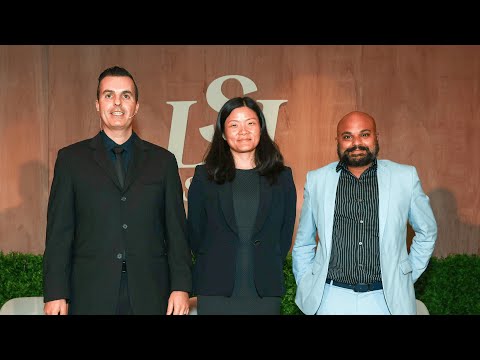
Thank you everyone for joining this panel discussion this morning. I hope it will be interactive and fruitful. I am very honored to be on the podium trying to facilitate the conversation. I am Vincent Leger French, as you can hear from the accents, working with NAMSA, and I am the Regional Manager of NAMSA in Europe. And I'm happy to be here with a few colleagues, Adam Saltman, who will introduce himself, and also some panelists, Brian, no Brian and Melin, if you want to introduce yourself a few minutes,
Adam E Saltman MD PhD 0:38
okay, yeah. Thanks, Vincent. Adam Saltman, I'm the Chief Medical Officer for NAMSA. Started out thinking I was going to be an academic cardio thoracic surgeon, and then things went a little bit sideways. Let's say I went to the FDA after practicing for about 25 years. I was there as a medical officer in the Center for Devices for about 12 years, and then became chief medical officer for some startup companies before joining NAMSA in 2023
Bryan Nolan 1:09
so I'm Brian Nolan. I'm the founder and CEO of my biometry, our company is focused on non invasive monitoring of asthma and COPD, we have a breath test that measures inflammation you measure daily at home, and it tells you whether you're going to have an asthma attack. Have an asthma attack or a COPD attack about 20 days in advance. And then you use that information to self titrate your therapy, and it reduces the risk by about 50%
Malin Nilsson 1:33
Hi, I'm Marlin Nelson. I'm the CEO of inosia. We make a magic ingredient that you can add to ordinary bone cement and make them softer, and for that reason, reduce the number of unnecessary and painful fracture in in osteoprotic spine. So it's an implant for the spine. And yeah, to your point, I have I also did a sideways travel. I started as a materials engineer, and then I did a PhD in medical faculty in orthopedics. And after that, I realized I really want to do business so and now I'm the CEO of a company.
Vincent Legay 2:14
Thanks for the introduction. So you see, it's kind of interesting and fruitful panel, because as we discuss regulatory crossroads and when to decide, or how to decide, US market or EU market and EU market and elsewhere, those three experts will definitely bring some value in their conversation. So maybe the first way to engage this discussion is about when we discuss going to the US going to EU, there is an assessment. First we need to assess where to go and why to go. So when it comes to the strategic decision for those markets, I was starting with and, or is this a US or EU, or US and EU? So Adam, starting with you. What do you think is an ideal approach thinking about those markets separately or simultaneously?
Adam E Saltman MD PhD 3:01
Well, the thing that I learned when I was working at FDA is that, you the answer is, always, it depends. So there is, there is no one size fits all. And I think that, you know, it's been interesting to see over the last, I'd say, 10 or 15 years, you know, before MDR that you had MDD, which was a reasonably low bar of entry, and then you had the FDA regulations, which were fairly significantly, you know, challenging, and so companies went to the EU first. But you know, FDA has made a concerted effort over the last decade or so to establish things like the breakthrough pathway and pre submission discussions with with the review team, you know, before you submit a marketing application, breakthrough designation, all these things that really have, I think, helped companies get to market quicker In the United States than it ever has been. So the question really is important, is important now we see a lot of customers at NAMSA who come to us with exactly that question, like, I'm already on the market in the EU, should I go to the US or I'm thinking about getting on the market? Do I do the US first? Etc? And the only thing I'll really say that I want to kind of leave you with, my opinion is that it's not just a regulatory decision, and so, you know, I'm sure my panel mates will have a lot to say about that. You also have to consider, you know, who's going to buy your product, who's going to pay for your product. How is that all going to happen? And that is at least as important as getting through the regulatory gauntlet.
Bryan Nolan 4:44
So I'll leave it there. Yeah, I can sort of just speak to our experience. So we are, from a stage perspective, we are literally shipping our product next week for our pivotal study. So we are very much an or was it going to be Europe? Or the United States. And I think to Adam's point, it really starts with, you know, how are you going to allocate capital, both human and financial, and then time, how long is it actually going to take, and where are you going to make a difference right away? And then, when we start thinking about it, regulatory is one of many hurdles that you have to get over is to get a company off the ground. So we actually started backwards when we thought about it, we looked at the market itself, we looked at the reimbursement pathway, we looked at how much of that we could actually capture in a short period of time, and then how would that grow over time, to decide where we started investing our resources. And this decision happened, you know, five years ago, during early stage product development, right about the time when Brexit was going on. So we, you know, Europe and the UK was a interesting market for us to start, but that slowly and very, you know, slowly and then very rapidly became not, not as desirable as the US, where reimbursement for what we're doing was increasing. The concept of monitoring patients at home was increasing. So there were a lot of of tail winds that I think made the decision pretty easy for us to pick the US first.
Malin Nilsson 6:14
Yeah, we pivoted. So we thought it would be most beneficial for us to be on our home market, which would be Europe. In this case, we are based in Sweden, and we started off fairly bold, in 2020, without clinical data, saying, Okay, we will try to do the MDD submission while it was still accessible. So we sent in the file, but got rejected because we only had two patients treated, which was not enough. Yeah, you could be wise afterwards and say, of course not, it was not enough, but it is what it is. And then we we continued on that pathway to go for Europe first, but with the MDR, or the shift between MDD and the MDR, it not only increased the requirements to get approval, it also increased the time or the length of the this process, because the notified bodies didn't have time, or they didn't have people, and they had long queues and everything. So we we kind of rapidly understood that this is not going to be viable for us. We can't wait 24 months to get the approval, because it's laying on someone's desk for a year first before someone starts to look at it. So we pivoted over to the US, and luckily for us, there was this breakthrough device designation pathway and everything that made it easier, and now, actually for us as an implant, the requirements is fairly similar between Europe and the US. So we have, we are preparing now both files in parallel, because we we are concluding all the clinical data we have and everything. So it will probably save us time to do both in parallel, even though, to Brian's point, when it comes to the the launch of the product on the market, we will focus mostly on the US. Yes, that's what our team can take at the moment.
Bryan Nolan 8:24
I would also just add, I think your commercial strategy, and whether it's a partnership or direct, obviously, is a big decision, big impact on the decision if you're going to partner with somebody, like, in your case, you know having European clearance with a European organization distributing is a lot. Is a much more logical strategy, where, for us, it would be a direct sales force, and we just you can't afford both markets or both areas.
Vincent Legay 8:47
An interesting add on, Brian, because I was about to ask, when you are as a CEO, Melinda and Brian, you are thinking with the end in mind, which is to commercialize. You spoke a lot about the hurdles and constraints, but when going back to the market and how to sell, and where to sell, and how much you know, product you can put on the market, how is your strategy, or how did you assess the market size in terms of commercial potential to balance the cost? Did you have some exercises? Do I have some recommendations for those startup in the room? Yeah, I
Bryan Nolan 9:21
mean, we, I mean, at the end of the day, the market, to me, is sort of in its most generic form, number of patients times reimbursement, and then you've got to start layering on, okay, well, what about access? Who's going to, you know, will the payers actually pay that? Do I need to generate extra evidence to get them to pay for this? Etc. So we started out from a market perspective, doing sort of macro market, and then, you know, macro down, and then micro up. From the patient level, you know, we got so detailed into going into, you know, a number of patients by by state, by insurer in the state, by reimbursement, by coverage policy. Within that state. For the CPT codes that were we're going to look at, we narrowed down from the US as a whole into which five states we thought would be the most beneficial to even start in. So that's sort of how we did it. And then you know that in those states the market is x 100 million dollars. We think by putting, you know, these types of resources there, we can capture a couple million, 5 million, you know, you start building it up from that particular perspective. So that's how we really thought about it. It wasn't just the US is a large, larger market. And it's not actually number of people, as we were talking about before. It's actually because the amount the US is willing to pay for what we were doing on a CPT code basis. It's a larger market. And also, just like Europe, there's micro markets within it. I think somebody once told me, the US is 1000 billion dollar markets in health care. So even for us, while yes, there's a lot of respiratory patients in the US, you know, California is the largest, you know, state with respiratory patients, it actually doesn't have the best reimbursement policy for what we're doing. So it's not the best place to start. It's something that has to evolve over time. But that's kind of how we just from a structure. That's how we started thinking about things.
Adam E Saltman MD PhD 11:12
And so you can't think of the EU as one block either, right, correct? I mean, every country has its own reimbursement and so forth. So it's a similar kind of exercise, same
Bryan Nolan 11:23
thing, even in the end. So we looked pretty extensively at the NHS, and then you quickly realize it's you're not selling to the NHS, you're selling to the different regions within the NHS and the different trusts within the NHS. It's everything. While it seems, it's very easy to say this is the macro market, it very quickly becomes a micro market and sub segmented, you know, beyond that.
Adam E Saltman MD PhD 11:44
And just to layer on top of that, if you don't have an existing code for your product, because you're right exactly, because you're in, like, a de novo pathway, right? And so you now have to generate evidence to get a code, to get a coverage determination.
Bryan Nolan 11:58
So Well, it goes back to the original question of which market do you choose? That that's the time aspect that most people also need to consider is, if there's no reimbursement code, where are you gonna where you can get coverage and payment fastest, regardless of market size? Actually makes a lot of sense for a small company.
Vincent Legay 12:18
I can ask Marine. But before making a comment we are used to see, I am used to see in Europe with the European startup or companies willing to innovate and put on markets. When we discuss with our client about the reimbursement strategy, they always come to me and said, I'll figure out when I am CE marked. And I think those two first conversation raised the point that this is probably not the ideal strategy. We need to think about reimbursement way up front, with the end in mind, because your reimbursement strategy can help determine which market. So I was willing to ask you, marine, as you pivoted from EU first to us, was reimbursement also a strategic endpoint for you to reconsider the US so you can facilitate the journey,
Malin Nilsson 13:04
in a way, because us is one country, and compared to Europe, where you have to look into all the all the aspects of every country that you would like, where you would like to enter. But also in our case, we will probably not be able to get a unique code, because it's part of a procedure of treating the fracture in the spine already. So we, we are more thinking about that. We will we, when we, when we launch in the US. It will be a pilot launch to show what, what are additional ingredient to this bone cement can do, in combination with the bone cement, to attract big distributors with who is already holding the bone cement, or strategic partners that can leverage on the sale and make it more large volume. We cannot do that from Sweden. That's impossible for us. So we will need to find a partner in the US. And the strategy is to do this in a very controlled way, with only six hospital to start with, and to create momentum from there. And we work very closely with key opinion leaders to hold the our message and to bring this out in this in a scientific way, more than a safe way.
Adam E Saltman MD PhD 14:29
I think that's a really important point, and that is your exit strategy. I mean, if you're trying to attract a strategic investor and eventually be acquired, they're going to have a strong influence on where you go to market. And we're not all going totally independently on our own. So that's just another branch to throw in the machine, a spanner. Excuse me, I'm in Britain now. It's a spanner.
Vincent Legay 14:58
So it looks like when you assess. Your market, those reimbursement consideration were taken, constraint and hurdles were taken that you mentioned. Ma Lin, MDD, going to MDR, now we are today in September 2025 and as of a sudden, there are some new uncertainties rising up. The situation in the US is the FDA, the situation in EU with the UK and Switzerland being in the European space, but not necessarily in Europe. So I'm going to ask those kind of more tactical regulatory questions to the three of you, maybe starting with you, Adam with a how do you think innovators can cope with them? FDA situation today? What would be your advice?
Adam E Saltman MD PhD 15:40
I think the the one single thing that I would say is, don't panic. There's been a lot of upheaval, a lot of uncertainty going on right now. And I said earlier that we see at NAMSA, a lot of companies coming saying, I want to get into us first, you know, coming from Europe or whatever, and now there seems to be a The tide is seems to be switching, and people are now saying, Should I go to Europe first? But I have to say, you know, don't panic. Don't make any rash decisions at the moment, because honestly, there haven't been serious, material changes yet. I haven't seen anything. One of the things that's important to realize is that, what is it about? 20 years ago, the FDA was under a huge amount of pressure by industry to speed its reviews, and so they developed the medufa, the medical device user fee amendment, and industry pays a lot of money to FDA, to staff and to provide reviews and other programs. There's a claw back provision in the medufa legislation that says if FDA doesn't meet a certain number of those milestones, the money goes back to industry. Obviously, FDA does not want that to happen. There would be tremendously adverse side effects. So we are seeing FDA adapt, and some programs are not as active as they were before, but the review processes and the early access programs are still happening, and so I'm still having meetings with FDA on time, on schedule. I'm seeing applications. They're still meeting the clock. So, you know, the dust hasn't settled yet. But I would say, don't panic. That's the most important thing that I can say.
Bryan Nolan 17:36
I would echo that advm, which is our trade association in the US is negotiating medufa Six. I think right now is the right is the current one. You know, the when there was disruption, and a lot of the FDA reviewers were, quote, let go, they were also rehired because of this provision, within weeks. We haven't heard from advm that there's much disruption. We have a strategic investor on our cap table. They have told us they've actually seen improvements in FDA more recently, this is Dexcom, the doing continuous glucose. So I would just echo that. I think it's a fairly stable situation at the moment with FDA. And I know in medufa Six, the industry is pushing. Essentially, they decided not to put their foot in the ground on the tariff thing and focus more on getting FDA to be more efficient and more predictable. So I think good things are going to come in meduva Six.
Malin Nilsson 18:33
Yes, I have the same experience. We we received the breakthrough device designation in June this year. It was announced the day before the deadline. So they are working on time, but they are really pushing the time. I think we are also in sprint discussion at the moment, and they are holding the timeline. So to your point, Adam and Bryan, I think that they are holding on to what they are measured on, basically, and on the other side, on, on the EU side, this long queues that were built up a couple of years ago, they are now also coming down. So we have had quotes from two notified bodies, and they are quoting now a 10 months pathway to get CE approval for a class three device, which is which is acceptable, and much better than the 24 months we had a couple of years ago. So it's it's getting better, better in Europe and and us is still holding on to the the timelines, and we hope it will going to be like that for for for the rest of the this year, at least
Vincent Legay 19:47
good when it comes to you mentioned native Phoenix timelines. And there is another factor, which is inferencing timelines. It's collecting clinical evidences. Clinical evidences are key for submission to the. Authorities, but also for reimbursement. And circling back on the look as we discuss reimbursement is a key insight to the decision. How do you approach your clinical evidence generation for you, Brian and Melin, when it comes to you being in the US and looking at the US or you, Melin, pivoting, what was your approach to collecting clinical evidences, first in human in Europe, and then going to the US, or leveraging PMS from pm CF from your post market, Nicole follow up. But everybody knows those acronyms, so PMC has studied, then to go to the to the US. What was your approach on that? And then maybe Adam can finalize on this question after,
Malin Nilsson 20:37
yes, yeah. So we, we, we started our clinical trial in Europe. We got a grant from EIT health, and we we had the possibility to start with four centers, which we did. They didn't work very well, unfortunately, because I had to choose the centers from a list that was with the European Commission. So we struggled. Struggled a lot, and then covid Hit in the middle, so we were delayed. But we kept on working with this and and now we are concluding the data. We had the first patient in in March, 2021, so it has been a really long struggle for us, but now we have, we are concluding 196 patients, one in the control group, which is directly comparing. It's the same bone cement. But in one group, we have our softener to it our device, and the other one is is without the device. And this is also strategically built like that, because we would like to go for a 510, k in the US, so we have the direct comparison with our predicate device. But yes, when we when we understood that European market would be difficult to to hit first with the CE mark, then we wanted to include also us sites. It is extremely expensive compared to Europe, so we couldn't afford it, but we have now a Canadian site. So we have at least a North American site, even though it's not us. It has also been a struggle. But we have now coming together with all the sites. So we have one CRO working in in Canada. We have another one, another CEO managing the eight sites we have in Europe. So it has been a long and complicated work to do, but now, when we are concluding it, we will be able to use that data, both for the CE mark and for the 510, K with clinical data. So we hope this would be beneficial at the end. But yeah, if I would give you an advice is that try to work only with one zero at least, so you don't have to manage two at the same time.
Bryan Nolan 22:59
Yeah, I think there's, I think evidence generation is an ongoing strategy for the company. It never ends. It will always be happening as long as you are alive and on the market. There's three buckets of that. There's data you need to convince clinicians that they should use the product and it's got clinical value. There is data you need to satisfy the regulatory bodies and getting the product cleared, and there's data that you need to satisfy the payers and get them to actually pay for it. The hard part from a startup is you don't have the resources to necessarily do all of those appropriately. So the question becomes, how do you actually strategically get the data you need while you know wisely investing your resources? So our approach to this is the following. So from what we're measuring, we're measuring a clinically established biomarker of airway inflammation. It's part of the respiratory guidelines, so we have some base level of clinical evidence that we can rely on on an ongoing basis. We sat down with FDA, and we got FDA to agree, in a couple pre subs, that the existing clinical literature supports the claims that we are trying to establish the existing guidelines in clinical literature, and that we just need to demonstrate performance in the environments in which we want to sell the product. So we designed our study in the US, because most of that literature was was collected in Europe. So the FDA specifically wanted us based sites. We designed the study to capture all of the data necessary to submit for a point of care application and a home application all in one study. We did that on purpose. We segmented just clearance data. On top of it, the clinical evidence strategy for us is actually finding pharmaceutical companies and getting our product into all of their clinical trials. Right now, a lot of them use the biomarker. Occur is patient stratification. They're doing it at the point of care. We want to do that in the home. That's a way to get high quality phase two, three and post market data from a pharmaceutical company with our product. So it's going to be gold standard, you know, gold standard data, the economic evidence data. We have a insurance company that's an investor. As soon as the we are cleared. We have a pilot scheduled with them, about 300 patient pilot where we're going to look at clinical and economic evidence or outcomes associated with monitoring pediatric Medicaid asthma patients at home. We have another partnership with UMass, which is looking at the same thing in adults. So the way that we think about it is the pharma companies help us handle the clinical we do the regulatory out of pocket, and then we do commercial pilots. So we actually get paid for these, and we design those pilots in such a way that it generates the economic evidence that we're looking for.
Adam E Saltman MD PhD 25:56
So I mean, that's a really excellent, detailed strategy you've really thought about, you know what I always think about at that high level, which is, you need to have the three components to be a successful product on the market. Many companies have gotten through regulatory and then just withered because nobody would pay for it. No clinician wanted it. So you know, if it's possible to strategize a trial that you could combine those disparate end points into one that would be like the Holy Grail to do that, but to the extent that you can, I think you should try, at least to do that, because they're very different audiences, right? You know, safety and effectiveness versus medical necessity and reasonableness versus, you know, positive clinical outcomes. So, you know, can you do them all at once? Maybe, but I try, if I can, when I'm helping people design a clinical study, I try to put them together as best I can without having people do three separate trials or more. And I completely agree with what Bryan said about continual evidence generation over time, even when your product is on the market, you know, then, okay, how can I expand my indications or coverage with additional evidence while you're generating revenue from a product that's being sold? So, you know, those are all ways to strategize it. The other thing which I mentioned earlier applies here too, which is, what's your exit strategy, if it's just to get through regulatory and then someone's willing to buy your company, okay? You're laser focused on that, right? They'll carry the other things. But if they're not, and you're more or less going it alone, then you do have to think all the way to the end. How am I going to get everything so it's complicated, and you can't always make everything work at once, but to think about it, I think, is the most important thing.
Vincent Legay 27:44
Yeah, thanks, Adam. I was adding a lot of other questions, but I'm watching the time. I wanted to make sure the audience could ask questions. So if anyone in the room like to ask anything about how those panelists were successful, you can raise your hand as microphone.
Adam E Saltman MD PhD 28:06
Well, I guess they're all ready for the quiz, then ready. There
Vincent Legay 28:10
is no question from the room I will ask one related to successful fundraising. The three of you are, were involved and will continue to be involved in fundraising. Is there, is there any approach around your market strategy, your go to market strategy, that influences the way you approach investment investors? And would you have some tips around what to do and what not to do when it comes to raising funds? I'm asking, starting with money, maybe, and then go to the race?
Malin Nilsson 28:41
Oh, that's it's a big question. We are, we have, we have strategy of focusing very much on on this comparison between the ordinary treatment and the new treatment that would be possible with our device. So we are building the pitch lot around that, and everything comes around to the clinical evidence at the end. So for us, it's a very, very big part of of the pitch, and also of the investors that we are meeting, that they understand also our case and and and, and the reimbursement situation in the US. So for the moment, most of our investors are scan from Scandinavia and, and there is a also big how to say this. It's it's also important to understand that even though the money comes from Scandinavia, the expertise from the investors will not come from them. So we will need to to build this also with expertise from the US to be able to to to successfully launch our product in the US market. Uh, yes. So coming over to what, what is your strategy when it comes to investors?
Bryan Nolan 30:10
And, yeah, I think the it's very hard to build a company thinking that you're just going to sell the company to somebody else. So you have to assume that you are going to go to market and turn it into a standalone, successful company. Once we made the decision that it was going to be in the US, we wanted a couple and obviously fund rate the fundraising environment. Environment is challenging, but we were very we wanted two very specific types of investors to start in that mix. We wanted a customer or a strategic customer, and we wanted somebody that could one day buy us, and we wanted to get them on the cap table at some point, in some fashion, and then fill in the rest with existing investors. Now, maybe in a different market, you go to a big VC firm, and then you bring the other two strategics in, but we've been, you know, really commercial or, like, getting the company moving since covid, that really wasn't a great option for us. So we focused on an insurance company. We got care source, which is a big insurance company, to make an investment and also commit to being a customer. And then we got Dexcom, which is obviously a company looking for other things outside of glucose, got them to be an investor, and then, believe it or not, there's actually customer strategic overlap. You know, about 10% of anybody who's got diabetes is probably going to have some kind of chronic respiratory disease. So there's a joint commercial channel there. Now, what we want to do is get more customers and more strategic so Dexcom isn't the only strategic that has an interest in acquiring us. All of that being said, we're planning to generate revenue and be commercial, and that's really the only path that we're focused on. And if somebody else decides that, you know, we don't need to be on that path, that's great. But our fundraising is focused on that the strategic investors that are customers, strategic investors that could buy us and then filling in the gap with with, you know, capital that can really help us grow the business, the venture capital or individual capital.
Adam E Saltman MD PhD 32:15
Yeah, I think if I were to take what you said, I would put it into a word of the word I would use is credibility, establishing credibility with the investors. Because when you're starting a company and you don't have a product yet on the market or anything, you have to show that your plan is credible, that your team is credible, all those things, because the investors are essentially trusting you to do what you said you're going to do. So you can't have outlandish timelines. You can't have guesses at market segments or addressable market sizes. You know you have to have pressure tested these things, and then show the evidence that you have pressure tested them, and have the appropriate experts with the depth of experience that they're on your team and they're helping you. And so I think I that's what I've seen in more successful pitch decks. One of the things that I wanted to bring up, that I think people don't think enough about, is obtaining non dilutive funding through essentially, what are peer reviewed validation of your product before it's a real product. So like the SBIR program in the United States, or many governments in Europe, I know, have their own innovation funds, VC funds. So if you can attract funding from those sorts of things, that's a big stamp of credibility on your company and your product. And that should be like right up top, you know, on your on your pitch deck. So I think those are good ways to then bring in other sources of funding. So you guys are in the thick of it. You're doing it every day. I'm just sort of seeing, you know, overviews and general trends.
Vincent Legay 33:51
So thank you. I think we are next, the next presentation I see the people are preparing themselves, I would say we learn or discuss about when you think about markets, the size of the market is not only assessed by the number of patients, but by the ability of those patients to adopt the technology. So think about that, which means the end in mind. And with the end in mind, it's certainly looking at the cost of putting on the market, but also the potential reimbursement, and again, I cannot redirect more. I think about reimbursement strategy way ahead of your regulatory strategy or clinical strategy. It's combined and your clinical evidence collection can influence reimbursement and regulatory approval. And last but not least, I would say, don't panic. There will be lunch at noon. I'm kidding, there will be a next presentation. But to Adam's point, into the panelists, Brian and Melin, there are always ways to discuss and interact with the authorities. FDA notified buddies, and things are getting nicer and brighter today than they were maybe a few months ago, hopefully, and we all hope for the key. The next future to be to be bright as well. So thank you very much for the insights and sharing your perspectives and experiences. And we can if there is one question from the audience, it's time, otherwise we go to the next. Thank you.
Vincent Legay 0:00
Thank you everyone for joining this panel discussion this morning. I hope it will be interactive and fruitful. I am very honored to be on the podium trying to facilitate the conversation. I am Vincent Leger French, as you can hear from the accents, working with NAMSA, and I am the Regional Manager of NAMSA in Europe. And I'm happy to be here with a few colleagues, Adam Saltman, who will introduce himself, and also some panelists, Brian, no Brian and Melin, if you want to introduce yourself a few minutes,
Adam E Saltman MD PhD 0:38
okay, yeah. Thanks, Vincent. Adam Saltman, I'm the Chief Medical Officer for NAMSA. Started out thinking I was going to be an academic cardio thoracic surgeon, and then things went a little bit sideways. Let's say I went to the FDA after practicing for about 25 years. I was there as a medical officer in the Center for Devices for about 12 years, and then became chief medical officer for some startup companies before joining NAMSA in 2023
Bryan Nolan 1:09
so I'm Brian Nolan. I'm the founder and CEO of my biometry, our company is focused on non invasive monitoring of asthma and COPD, we have a breath test that measures inflammation you measure daily at home, and it tells you whether you're going to have an asthma attack. Have an asthma attack or a COPD attack about 20 days in advance. And then you use that information to self titrate your therapy, and it reduces the risk by about 50%
Malin Nilsson 1:33
Hi, I'm Marlin Nelson. I'm the CEO of inosia. We make a magic ingredient that you can add to ordinary bone cement and make them softer, and for that reason, reduce the number of unnecessary and painful fracture in in osteoprotic spine. So it's an implant for the spine. And yeah, to your point, I have I also did a sideways travel. I started as a materials engineer, and then I did a PhD in medical faculty in orthopedics. And after that, I realized I really want to do business so and now I'm the CEO of a company.
Vincent Legay 2:14
Thanks for the introduction. So you see, it's kind of interesting and fruitful panel, because as we discuss regulatory crossroads and when to decide, or how to decide, US market or EU market and EU market and elsewhere, those three experts will definitely bring some value in their conversation. So maybe the first way to engage this discussion is about when we discuss going to the US going to EU, there is an assessment. First we need to assess where to go and why to go. So when it comes to the strategic decision for those markets, I was starting with and, or is this a US or EU, or US and EU? So Adam, starting with you. What do you think is an ideal approach thinking about those markets separately or simultaneously?
Adam E Saltman MD PhD 3:01
Well, the thing that I learned when I was working at FDA is that, you the answer is, always, it depends. So there is, there is no one size fits all. And I think that, you know, it's been interesting to see over the last, I'd say, 10 or 15 years, you know, before MDR that you had MDD, which was a reasonably low bar of entry, and then you had the FDA regulations, which were fairly significantly, you know, challenging, and so companies went to the EU first. But you know, FDA has made a concerted effort over the last decade or so to establish things like the breakthrough pathway and pre submission discussions with with the review team, you know, before you submit a marketing application, breakthrough designation, all these things that really have, I think, helped companies get to market quicker In the United States than it ever has been. So the question really is important, is important now we see a lot of customers at NAMSA who come to us with exactly that question, like, I'm already on the market in the EU, should I go to the US or I'm thinking about getting on the market? Do I do the US first? Etc? And the only thing I'll really say that I want to kind of leave you with, my opinion is that it's not just a regulatory decision, and so, you know, I'm sure my panel mates will have a lot to say about that. You also have to consider, you know, who's going to buy your product, who's going to pay for your product. How is that all going to happen? And that is at least as important as getting through the regulatory gauntlet.
Bryan Nolan 4:44
So I'll leave it there. Yeah, I can sort of just speak to our experience. So we are, from a stage perspective, we are literally shipping our product next week for our pivotal study. So we are very much an or was it going to be Europe? Or the United States. And I think to Adam's point, it really starts with, you know, how are you going to allocate capital, both human and financial, and then time, how long is it actually going to take, and where are you going to make a difference right away? And then, when we start thinking about it, regulatory is one of many hurdles that you have to get over is to get a company off the ground. So we actually started backwards when we thought about it, we looked at the market itself, we looked at the reimbursement pathway, we looked at how much of that we could actually capture in a short period of time, and then how would that grow over time, to decide where we started investing our resources. And this decision happened, you know, five years ago, during early stage product development, right about the time when Brexit was going on. So we, you know, Europe and the UK was a interesting market for us to start, but that slowly and very, you know, slowly and then very rapidly became not, not as desirable as the US, where reimbursement for what we're doing was increasing. The concept of monitoring patients at home was increasing. So there were a lot of of tail winds that I think made the decision pretty easy for us to pick the US first.
Malin Nilsson 6:14
Yeah, we pivoted. So we thought it would be most beneficial for us to be on our home market, which would be Europe. In this case, we are based in Sweden, and we started off fairly bold, in 2020, without clinical data, saying, Okay, we will try to do the MDD submission while it was still accessible. So we sent in the file, but got rejected because we only had two patients treated, which was not enough. Yeah, you could be wise afterwards and say, of course not, it was not enough, but it is what it is. And then we we continued on that pathway to go for Europe first, but with the MDR, or the shift between MDD and the MDR, it not only increased the requirements to get approval, it also increased the time or the length of the this process, because the notified bodies didn't have time, or they didn't have people, and they had long queues and everything. So we we kind of rapidly understood that this is not going to be viable for us. We can't wait 24 months to get the approval, because it's laying on someone's desk for a year first before someone starts to look at it. So we pivoted over to the US, and luckily for us, there was this breakthrough device designation pathway and everything that made it easier, and now, actually for us as an implant, the requirements is fairly similar between Europe and the US. So we have, we are preparing now both files in parallel, because we we are concluding all the clinical data we have and everything. So it will probably save us time to do both in parallel, even though, to Brian's point, when it comes to the the launch of the product on the market, we will focus mostly on the US. Yes, that's what our team can take at the moment.
Bryan Nolan 8:24
I would also just add, I think your commercial strategy, and whether it's a partnership or direct, obviously, is a big decision, big impact on the decision if you're going to partner with somebody, like, in your case, you know having European clearance with a European organization distributing is a lot. Is a much more logical strategy, where, for us, it would be a direct sales force, and we just you can't afford both markets or both areas.
Vincent Legay 8:47
An interesting add on, Brian, because I was about to ask, when you are as a CEO, Melinda and Brian, you are thinking with the end in mind, which is to commercialize. You spoke a lot about the hurdles and constraints, but when going back to the market and how to sell, and where to sell, and how much you know, product you can put on the market, how is your strategy, or how did you assess the market size in terms of commercial potential to balance the cost? Did you have some exercises? Do I have some recommendations for those startup in the room? Yeah, I
Bryan Nolan 9:21
mean, we, I mean, at the end of the day, the market, to me, is sort of in its most generic form, number of patients times reimbursement, and then you've got to start layering on, okay, well, what about access? Who's going to, you know, will the payers actually pay that? Do I need to generate extra evidence to get them to pay for this? Etc. So we started out from a market perspective, doing sort of macro market, and then, you know, macro down, and then micro up. From the patient level, you know, we got so detailed into going into, you know, a number of patients by by state, by insurer in the state, by reimbursement, by coverage policy. Within that state. For the CPT codes that were we're going to look at, we narrowed down from the US as a whole into which five states we thought would be the most beneficial to even start in. So that's sort of how we did it. And then you know that in those states the market is x 100 million dollars. We think by putting, you know, these types of resources there, we can capture a couple million, 5 million, you know, you start building it up from that particular perspective. So that's how we really thought about it. It wasn't just the US is a large, larger market. And it's not actually number of people, as we were talking about before. It's actually because the amount the US is willing to pay for what we were doing on a CPT code basis. It's a larger market. And also, just like Europe, there's micro markets within it. I think somebody once told me, the US is 1000 billion dollar markets in health care. So even for us, while yes, there's a lot of respiratory patients in the US, you know, California is the largest, you know, state with respiratory patients, it actually doesn't have the best reimbursement policy for what we're doing. So it's not the best place to start. It's something that has to evolve over time. But that's kind of how we just from a structure. That's how we started thinking about things.
Adam E Saltman MD PhD 11:12
And so you can't think of the EU as one block either, right, correct? I mean, every country has its own reimbursement and so forth. So it's a similar kind of exercise, same
Bryan Nolan 11:23
thing, even in the end. So we looked pretty extensively at the NHS, and then you quickly realize it's you're not selling to the NHS, you're selling to the different regions within the NHS and the different trusts within the NHS. It's everything. While it seems, it's very easy to say this is the macro market, it very quickly becomes a micro market and sub segmented, you know, beyond that.
Adam E Saltman MD PhD 11:44
And just to layer on top of that, if you don't have an existing code for your product, because you're right exactly, because you're in, like, a de novo pathway, right? And so you now have to generate evidence to get a code, to get a coverage determination.
Bryan Nolan 11:58
So Well, it goes back to the original question of which market do you choose? That that's the time aspect that most people also need to consider is, if there's no reimbursement code, where are you gonna where you can get coverage and payment fastest, regardless of market size? Actually makes a lot of sense for a small company.
Vincent Legay 12:18
I can ask Marine. But before making a comment we are used to see, I am used to see in Europe with the European startup or companies willing to innovate and put on markets. When we discuss with our client about the reimbursement strategy, they always come to me and said, I'll figure out when I am CE marked. And I think those two first conversation raised the point that this is probably not the ideal strategy. We need to think about reimbursement way up front, with the end in mind, because your reimbursement strategy can help determine which market. So I was willing to ask you, marine, as you pivoted from EU first to us, was reimbursement also a strategic endpoint for you to reconsider the US so you can facilitate the journey,
Malin Nilsson 13:04
in a way, because us is one country, and compared to Europe, where you have to look into all the all the aspects of every country that you would like, where you would like to enter. But also in our case, we will probably not be able to get a unique code, because it's part of a procedure of treating the fracture in the spine already. So we, we are more thinking about that. We will we, when we, when we launch in the US. It will be a pilot launch to show what, what are additional ingredient to this bone cement can do, in combination with the bone cement, to attract big distributors with who is already holding the bone cement, or strategic partners that can leverage on the sale and make it more large volume. We cannot do that from Sweden. That's impossible for us. So we will need to find a partner in the US. And the strategy is to do this in a very controlled way, with only six hospital to start with, and to create momentum from there. And we work very closely with key opinion leaders to hold the our message and to bring this out in this in a scientific way, more than a safe way.
Adam E Saltman MD PhD 14:29
I think that's a really important point, and that is your exit strategy. I mean, if you're trying to attract a strategic investor and eventually be acquired, they're going to have a strong influence on where you go to market. And we're not all going totally independently on our own. So that's just another branch to throw in the machine, a spanner. Excuse me, I'm in Britain now. It's a spanner.
Vincent Legay 14:58
So it looks like when you assess. Your market, those reimbursement consideration were taken, constraint and hurdles were taken that you mentioned. Ma Lin, MDD, going to MDR, now we are today in September 2025 and as of a sudden, there are some new uncertainties rising up. The situation in the US is the FDA, the situation in EU with the UK and Switzerland being in the European space, but not necessarily in Europe. So I'm going to ask those kind of more tactical regulatory questions to the three of you, maybe starting with you, Adam with a how do you think innovators can cope with them? FDA situation today? What would be your advice?
Adam E Saltman MD PhD 15:40
I think the the one single thing that I would say is, don't panic. There's been a lot of upheaval, a lot of uncertainty going on right now. And I said earlier that we see at NAMSA, a lot of companies coming saying, I want to get into us first, you know, coming from Europe or whatever, and now there seems to be a The tide is seems to be switching, and people are now saying, Should I go to Europe first? But I have to say, you know, don't panic. Don't make any rash decisions at the moment, because honestly, there haven't been serious, material changes yet. I haven't seen anything. One of the things that's important to realize is that, what is it about? 20 years ago, the FDA was under a huge amount of pressure by industry to speed its reviews, and so they developed the medufa, the medical device user fee amendment, and industry pays a lot of money to FDA, to staff and to provide reviews and other programs. There's a claw back provision in the medufa legislation that says if FDA doesn't meet a certain number of those milestones, the money goes back to industry. Obviously, FDA does not want that to happen. There would be tremendously adverse side effects. So we are seeing FDA adapt, and some programs are not as active as they were before, but the review processes and the early access programs are still happening, and so I'm still having meetings with FDA on time, on schedule. I'm seeing applications. They're still meeting the clock. So, you know, the dust hasn't settled yet. But I would say, don't panic. That's the most important thing that I can say.
Bryan Nolan 17:36
I would echo that advm, which is our trade association in the US is negotiating medufa Six. I think right now is the right is the current one. You know, the when there was disruption, and a lot of the FDA reviewers were, quote, let go, they were also rehired because of this provision, within weeks. We haven't heard from advm that there's much disruption. We have a strategic investor on our cap table. They have told us they've actually seen improvements in FDA more recently, this is Dexcom, the doing continuous glucose. So I would just echo that. I think it's a fairly stable situation at the moment with FDA. And I know in medufa Six, the industry is pushing. Essentially, they decided not to put their foot in the ground on the tariff thing and focus more on getting FDA to be more efficient and more predictable. So I think good things are going to come in meduva Six.
Malin Nilsson 18:33
Yes, I have the same experience. We we received the breakthrough device designation in June this year. It was announced the day before the deadline. So they are working on time, but they are really pushing the time. I think we are also in sprint discussion at the moment, and they are holding the timeline. So to your point, Adam and Bryan, I think that they are holding on to what they are measured on, basically, and on the other side, on, on the EU side, this long queues that were built up a couple of years ago, they are now also coming down. So we have had quotes from two notified bodies, and they are quoting now a 10 months pathway to get CE approval for a class three device, which is which is acceptable, and much better than the 24 months we had a couple of years ago. So it's it's getting better, better in Europe and and us is still holding on to the the timelines, and we hope it will going to be like that for for for the rest of the this year, at least
Vincent Legay 19:47
good when it comes to you mentioned native Phoenix timelines. And there is another factor, which is inferencing timelines. It's collecting clinical evidences. Clinical evidences are key for submission to the. Authorities, but also for reimbursement. And circling back on the look as we discuss reimbursement is a key insight to the decision. How do you approach your clinical evidence generation for you, Brian and Melin, when it comes to you being in the US and looking at the US or you, Melin, pivoting, what was your approach to collecting clinical evidences, first in human in Europe, and then going to the US, or leveraging PMS from pm CF from your post market, Nicole follow up. But everybody knows those acronyms, so PMC has studied, then to go to the to the US. What was your approach on that? And then maybe Adam can finalize on this question after,
Malin Nilsson 20:37
yes, yeah. So we, we, we started our clinical trial in Europe. We got a grant from EIT health, and we we had the possibility to start with four centers, which we did. They didn't work very well, unfortunately, because I had to choose the centers from a list that was with the European Commission. So we struggled. Struggled a lot, and then covid Hit in the middle, so we were delayed. But we kept on working with this and and now we are concluding the data. We had the first patient in in March, 2021, so it has been a really long struggle for us, but now we have, we are concluding 196 patients, one in the control group, which is directly comparing. It's the same bone cement. But in one group, we have our softener to it our device, and the other one is is without the device. And this is also strategically built like that, because we would like to go for a 510, k in the US, so we have the direct comparison with our predicate device. But yes, when we when we understood that European market would be difficult to to hit first with the CE mark, then we wanted to include also us sites. It is extremely expensive compared to Europe, so we couldn't afford it, but we have now a Canadian site. So we have at least a North American site, even though it's not us. It has also been a struggle. But we have now coming together with all the sites. So we have one CRO working in in Canada. We have another one, another CEO managing the eight sites we have in Europe. So it has been a long and complicated work to do, but now, when we are concluding it, we will be able to use that data, both for the CE mark and for the 510, K with clinical data. So we hope this would be beneficial at the end. But yeah, if I would give you an advice is that try to work only with one zero at least, so you don't have to manage two at the same time.
Bryan Nolan 22:59
Yeah, I think there's, I think evidence generation is an ongoing strategy for the company. It never ends. It will always be happening as long as you are alive and on the market. There's three buckets of that. There's data you need to convince clinicians that they should use the product and it's got clinical value. There is data you need to satisfy the regulatory bodies and getting the product cleared, and there's data that you need to satisfy the payers and get them to actually pay for it. The hard part from a startup is you don't have the resources to necessarily do all of those appropriately. So the question becomes, how do you actually strategically get the data you need while you know wisely investing your resources? So our approach to this is the following. So from what we're measuring, we're measuring a clinically established biomarker of airway inflammation. It's part of the respiratory guidelines, so we have some base level of clinical evidence that we can rely on on an ongoing basis. We sat down with FDA, and we got FDA to agree, in a couple pre subs, that the existing clinical literature supports the claims that we are trying to establish the existing guidelines in clinical literature, and that we just need to demonstrate performance in the environments in which we want to sell the product. So we designed our study in the US, because most of that literature was was collected in Europe. So the FDA specifically wanted us based sites. We designed the study to capture all of the data necessary to submit for a point of care application and a home application all in one study. We did that on purpose. We segmented just clearance data. On top of it, the clinical evidence strategy for us is actually finding pharmaceutical companies and getting our product into all of their clinical trials. Right now, a lot of them use the biomarker. Occur is patient stratification. They're doing it at the point of care. We want to do that in the home. That's a way to get high quality phase two, three and post market data from a pharmaceutical company with our product. So it's going to be gold standard, you know, gold standard data, the economic evidence data. We have a insurance company that's an investor. As soon as the we are cleared. We have a pilot scheduled with them, about 300 patient pilot where we're going to look at clinical and economic evidence or outcomes associated with monitoring pediatric Medicaid asthma patients at home. We have another partnership with UMass, which is looking at the same thing in adults. So the way that we think about it is the pharma companies help us handle the clinical we do the regulatory out of pocket, and then we do commercial pilots. So we actually get paid for these, and we design those pilots in such a way that it generates the economic evidence that we're looking for.
Adam E Saltman MD PhD 25:56
So I mean, that's a really excellent, detailed strategy you've really thought about, you know what I always think about at that high level, which is, you need to have the three components to be a successful product on the market. Many companies have gotten through regulatory and then just withered because nobody would pay for it. No clinician wanted it. So you know, if it's possible to strategize a trial that you could combine those disparate end points into one that would be like the Holy Grail to do that, but to the extent that you can, I think you should try, at least to do that, because they're very different audiences, right? You know, safety and effectiveness versus medical necessity and reasonableness versus, you know, positive clinical outcomes. So, you know, can you do them all at once? Maybe, but I try, if I can, when I'm helping people design a clinical study, I try to put them together as best I can without having people do three separate trials or more. And I completely agree with what Bryan said about continual evidence generation over time, even when your product is on the market, you know, then, okay, how can I expand my indications or coverage with additional evidence while you're generating revenue from a product that's being sold? So, you know, those are all ways to strategize it. The other thing which I mentioned earlier applies here too, which is, what's your exit strategy, if it's just to get through regulatory and then someone's willing to buy your company, okay? You're laser focused on that, right? They'll carry the other things. But if they're not, and you're more or less going it alone, then you do have to think all the way to the end. How am I going to get everything so it's complicated, and you can't always make everything work at once, but to think about it, I think, is the most important thing.
Vincent Legay 27:44
Yeah, thanks, Adam. I was adding a lot of other questions, but I'm watching the time. I wanted to make sure the audience could ask questions. So if anyone in the room like to ask anything about how those panelists were successful, you can raise your hand as microphone.
Adam E Saltman MD PhD 28:06
Well, I guess they're all ready for the quiz, then ready. There
Vincent Legay 28:10
is no question from the room I will ask one related to successful fundraising. The three of you are, were involved and will continue to be involved in fundraising. Is there, is there any approach around your market strategy, your go to market strategy, that influences the way you approach investment investors? And would you have some tips around what to do and what not to do when it comes to raising funds? I'm asking, starting with money, maybe, and then go to the race?
Malin Nilsson 28:41
Oh, that's it's a big question. We are, we have, we have strategy of focusing very much on on this comparison between the ordinary treatment and the new treatment that would be possible with our device. So we are building the pitch lot around that, and everything comes around to the clinical evidence at the end. So for us, it's a very, very big part of of the pitch, and also of the investors that we are meeting, that they understand also our case and and and, and the reimbursement situation in the US. So for the moment, most of our investors are scan from Scandinavia and, and there is a also big how to say this. It's it's also important to understand that even though the money comes from Scandinavia, the expertise from the investors will not come from them. So we will need to to build this also with expertise from the US to be able to to to successfully launch our product in the US market. Uh, yes. So coming over to what, what is your strategy when it comes to investors?
Bryan Nolan 30:10
And, yeah, I think the it's very hard to build a company thinking that you're just going to sell the company to somebody else. So you have to assume that you are going to go to market and turn it into a standalone, successful company. Once we made the decision that it was going to be in the US, we wanted a couple and obviously fund rate the fundraising environment. Environment is challenging, but we were very we wanted two very specific types of investors to start in that mix. We wanted a customer or a strategic customer, and we wanted somebody that could one day buy us, and we wanted to get them on the cap table at some point, in some fashion, and then fill in the rest with existing investors. Now, maybe in a different market, you go to a big VC firm, and then you bring the other two strategics in, but we've been, you know, really commercial or, like, getting the company moving since covid, that really wasn't a great option for us. So we focused on an insurance company. We got care source, which is a big insurance company, to make an investment and also commit to being a customer. And then we got Dexcom, which is obviously a company looking for other things outside of glucose, got them to be an investor, and then, believe it or not, there's actually customer strategic overlap. You know, about 10% of anybody who's got diabetes is probably going to have some kind of chronic respiratory disease. So there's a joint commercial channel there. Now, what we want to do is get more customers and more strategic so Dexcom isn't the only strategic that has an interest in acquiring us. All of that being said, we're planning to generate revenue and be commercial, and that's really the only path that we're focused on. And if somebody else decides that, you know, we don't need to be on that path, that's great. But our fundraising is focused on that the strategic investors that are customers, strategic investors that could buy us and then filling in the gap with with, you know, capital that can really help us grow the business, the venture capital or individual capital.
Adam E Saltman MD PhD 32:15
Yeah, I think if I were to take what you said, I would put it into a word of the word I would use is credibility, establishing credibility with the investors. Because when you're starting a company and you don't have a product yet on the market or anything, you have to show that your plan is credible, that your team is credible, all those things, because the investors are essentially trusting you to do what you said you're going to do. So you can't have outlandish timelines. You can't have guesses at market segments or addressable market sizes. You know you have to have pressure tested these things, and then show the evidence that you have pressure tested them, and have the appropriate experts with the depth of experience that they're on your team and they're helping you. And so I think I that's what I've seen in more successful pitch decks. One of the things that I wanted to bring up, that I think people don't think enough about, is obtaining non dilutive funding through essentially, what are peer reviewed validation of your product before it's a real product. So like the SBIR program in the United States, or many governments in Europe, I know, have their own innovation funds, VC funds. So if you can attract funding from those sorts of things, that's a big stamp of credibility on your company and your product. And that should be like right up top, you know, on your on your pitch deck. So I think those are good ways to then bring in other sources of funding. So you guys are in the thick of it. You're doing it every day. I'm just sort of seeing, you know, overviews and general trends.
Vincent Legay 33:51
So thank you. I think we are next, the next presentation I see the people are preparing themselves, I would say we learn or discuss about when you think about markets, the size of the market is not only assessed by the number of patients, but by the ability of those patients to adopt the technology. So think about that, which means the end in mind. And with the end in mind, it's certainly looking at the cost of putting on the market, but also the potential reimbursement, and again, I cannot redirect more. I think about reimbursement strategy way ahead of your regulatory strategy or clinical strategy. It's combined and your clinical evidence collection can influence reimbursement and regulatory approval. And last but not least, I would say, don't panic. There will be lunch at noon. I'm kidding, there will be a next presentation. But to Adam's point, into the panelists, Brian and Melin, there are always ways to discuss and interact with the authorities. FDA notified buddies, and things are getting nicer and brighter today than they were maybe a few months ago, hopefully, and we all hope for the key. The next future to be to be bright as well. So thank you very much for the insights and sharing your perspectives and experiences. And we can if there is one question from the audience, it's time, otherwise we go to the next. Thank you.
17011 Beach Blvd, Suite 500 Huntington Beach, CA 92647
714-847-3540© 2026 Life Science Intelligence, Inc., All Rights Reserved. | Privacy Policy