Real World Evidence — The Evolving Landscape of Regulatory and Commercial Use | LSI Europe '25

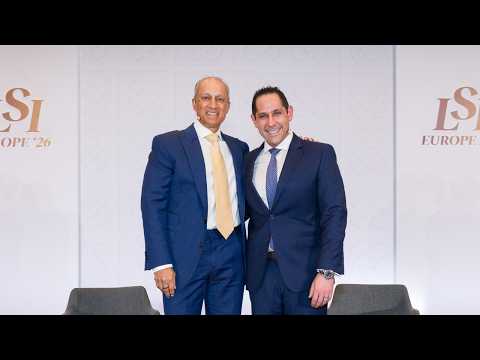
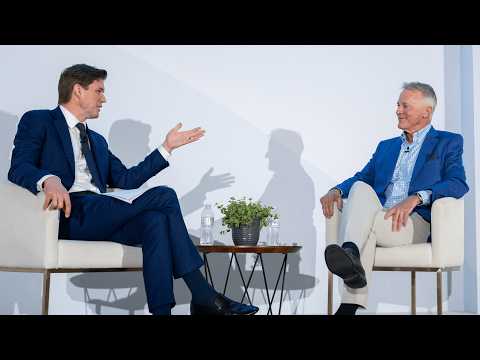
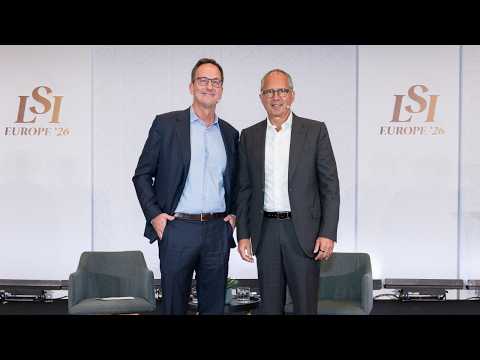
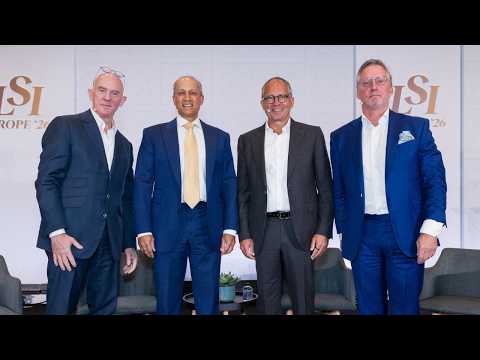
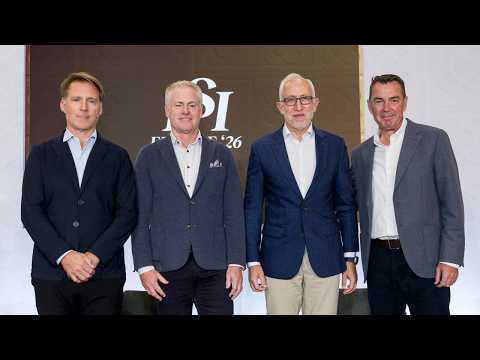
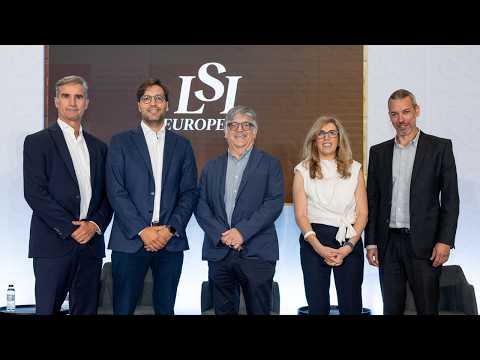
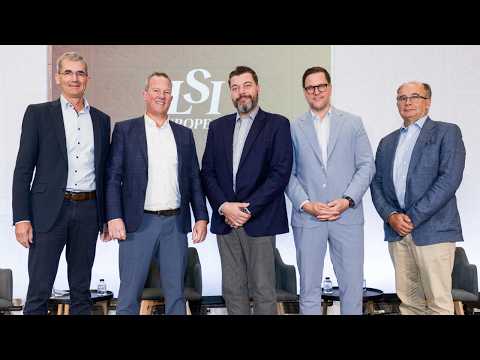
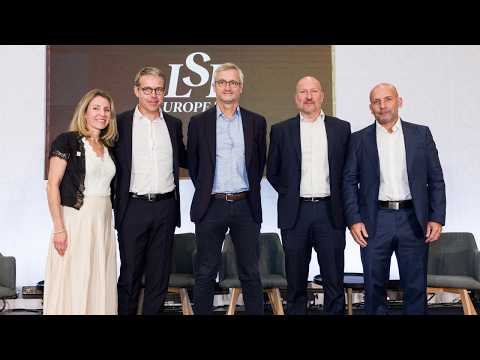
Industry leaders from Caresyntax, Teleflex, Paragonix Technologies, and CMR Surgical discuss how real-world evidence is transforming regulatory approval pathways and commercial strategies in medical technology, moderated by LSI's Henry Peck.
Join Our Next Event
Partner with the leaders
shaping the future of
Medtech at LSI USA ‘26
March 16th - 20th, 2026
Waldorf Astoria, Monarch Beach

Henry Peck  0:05  
Thank you everyone for joining us. Hope your first day has been productive, filled with meetings, panels, everything happening, and if you're still looking to figure out how to get from one room to the other, just check the app. We uploaded something. It's a it takes a little time, but it's quite a property. So thank you again to the to the grosner House for hosting us, and thank you all for joining us for this fireside. I want to quickly set the stage. We have an incredible group of panelists here. We did a fireside chat around real world evidence in Dana Point this past March, we had Bruce and we had a set of startups that they were partnering with at Caresyntax that were applying real world evidence to their strategies. And now we have a very different set of executives representing companies, well funded, high growth startups, global corporate strategics, startup that had been recently acquired. So a really incredible group of later stage leaders leading global businesses across many indications. I'd like to invite the panelists to introduce themselves. We're going to start with Mark at start with mark at the end, and then Bruce, when we get to you, I'd like you to talk a little bit about your background and where this passion for real world evidence comes from the clinical experience that gets us here.


Mark Slack  1:12  
Great. Thanks. Hi. I'm Marc Slack. I'm the co founder and Chief Medical Officer of CMR surgical I was previously, for most of my career, an academic at Cambridge University in the United Kingdom, but I've done lots of other inventing, which I've sold on to companies like J and J in the past and so on. And my staff would have told you that I'm data obsessed, and which is probably why I'm here.


Michael Tajima  1:38  
Excellent. My name is Michael Tajima. I'm the Chief Strategy Officer for Paragonix Technologies. When I joined paragonics just under six years ago, there was 12 people, and we had just done a million dollars in sales with one product in heart. And now we're the world leader in cardio thoracic preservation for organ transplantation, and we've expanded with five products into heart, lung, liver, and we're going to do about 100 times that revenue than we did back back in 2020 Oh, and I run all of our medical affairs and part of Product Management Research.


John McDonald  2:11  
Thanks, Michael. My name is John McDonald. I'm the head of clinical evidence generation Teleflex. Teleflex is an American and multinational company with headquarters in Wayne, in Pennsylvania. So I lead up the sponsor clinical trials and real world evidence for Teleflex. And prior to my current role at Teleflex, I worked with Allergan medical in research and development that's now part of AbbVie. And prior to that, I was in diagnostics, again, in R and D in Trinity biotech, which is an Irish company. Thanks.


Bruce Ramshaw  2:42  
I'm Bruce Ramshaw CMIO at Caresyntax, and like Henry mentioned, I had a different career that led me to this kind of passion. I had 30 years as an academic general surgeon, and just by chance, got evolve, got involved with the early stages of laparoscopic surgery back in the early 90s, and that kind of put me on a path where eventually I got recruited in to leadership positions, and I started studying leadership and and healthcare and business because I wanted to be a good division chief, which is where I started. And as I studied, I began to realize and learn that our healthcare system hasn't really adopted principles of systems and data science, and that put me on a whole different path. I brought in a team of data scientists and engineers, and we worked for over a decade learning how to apply these principles of systems and data science to real patient care. And we learned the science is all about measurement and improvement. If you can measure something and use data tools appropriately, you can improve what you measure. And it took us a few years, but we realized, if we're going to have a sustainable healthcare system, we need to learn how to measure the value of care in the context of every whole definable process. And as we began to do that, we were able to lower costs and improve outcomes. At the same time, the business that came out of that was we learned if we can measure the value of care for any patient process, we can also measure the value of any drug, device or diagnostics tool in that process. And so we began to partner with with industry and go into clinical environments together and help the clinicians measure value of care and also look at the data that supports the value proposition and improves the value proposition of our clients, technologies, and that really was a whole new way to look at data and health care, and I think it's going to help us lead to a sustainable health care system globally. So that's where my passion is. As a leader in health care, I could not get the hospital to do that as a surgeon leader in a hospital, and so in 2019 I left clinical practice and became full time CEO of our healthcare data analytics company. It was called CQ insights and care syntax acquired us two years ago, taking on this mission and vision, and it was very aligned, because our care. Syntax. Mission and vision is all about improving patient outcomes.


Henry Peck  5:04  
So when you're talking about the different things that you wanted to achieve with data, if I said to you, well, we have RC TAs, why can't we just use those? Isn't that enough? Can you tell me a little bit about how you think about RC TAs in relation to real world evidence, and what the potential to augment, replace may be, or, you know, add value to that.


Bruce Ramshaw  5:23  
Yeah, there's a very fascinating history about RCTs and where reduction of science was chosen as the science for healthcare came out of the World War Two. I won't go into that in too much detail, but if you look up, you know, the history of science, the Endless Frontier by Vannevar Bush, and what happened right after World War Two, you can see kind of what happened for me. I started to realize this. I was considered a hernia expert, world expert. I go around the world talking about hernias and mesh was a big deal. Like when I graduated residency, there was maybe three types of mesh by the time I was considered world expert and going around the world, 10 years later, there were 300 types of mesh. And I always get the same question, what's the best mesh? Which mesh should I use? I was like, I don't know. There's 300 and I can't design the prospect the randomized control trial to see which one's best. And that was part of my change in thinking, my evolution of realizing as complexity increases and the pace of change increases, the reduction of science tools like RC cheese become less valuable, and then systems and data science tools for to deal with that complexity become very necessary.


Henry Peck  6:37  
Since we're talking about this in the context of both regulatory and commercial strategy. Let's stay with regulatory for a moment, maybe to the panel over on this side. Mark, if we go over to you thinking about CMRS business, how do you think about the utility of RW E and regulatory strategy as you look at expanding globally across multiple indications?


Mark Slack  6:56  
But I mean just to first say and to follow up from Bruce, when they were promoting all the 300 different types of mesh, I took a couple of them and did spectroscopy on them and did memorize on them, and found they were all same, and in fact, were made in the same factories and just packaged differently. So it is quite an interesting insight, and I have some nice slides to show on that. But I mean, that's a very good example. So with the mesh in gynecology, they had two large randomized control trials comparing the operation without with nation without mesh, and they had done about 400,000 cases before they published the results. But those results showed absolutely no problem with the mesh at all because they were too small and too short, and what was needed was a registry, which were identified at a much earlier stage the difficulties that people were experiencing with the mesh. So I don't say RC, TAs are bad in the surgical context. They're extremely difficult to do because you've also got the are your surgeons equal? Are they randomizing all the patients? Because one of the habits is they randomize only the ones they think are good for the operation. And you get a group of people board eligible, but not randomized. So get totally skewed documentation. Those need to be followed up. So I think RC TAs have a place more pharma, but they will have a place in surgery as well, as long as properly curated. However, what we've ignored is the real world evidence or the real world data. So from the get go in CMR surgical I had, I've been obsessed with registries my entire clinical career, and anybody that ever worked for me had to have their data on a registry so that I knew if they were going off feast. And on the very anecdotal one was one of our cardiac surgeons suddenly started getting bad results, so we were able to stop him immediately, audit his stuff and find that he was getting bad results. But he's a divorce. He's drinking in the evenings. He's living alone in a in a bed, so to able to say, just stop your clinical work completely, get yourself healed, and then come back. If you hadn't had that by the time you found out that they were underperforming, you'd have to get them struck off because the number of cases would be too high. So it's a positive thing. And from the get go in CMR, we had a registry collecting indications intraoperative complications, interrupted, bug lost time. And then post off, you know, return to theater, return to hospital, complications according to so at any one point, I knew exactly how many people had complications, how many deaths there'd been. Were they attributable to the robots, or not, where the safety was, and could compare that data with the published literature in the data. So that combination of real world data, which you synthesize into real world evidence, we can discuss that, combined with with your clinic outcomes, makes you very safe, protects the patients, protects the companies


Henry Peck  9:54  
and in you know, conversely to what you're saying about the importance of an RC T, but the limitations whether. An RCT and where RW comes into play. Michael at paragonics, you guys had no RC TAS as part of your strategy. Can you talk a little bit about your unique strategy and how it juxtaposes with the combination of the two and how you've used real world evidence?


Michael Tajima  10:14  
Absolutely, I couldn't agree more with what Bruce said. You know, when the first time we spoke together, we both went off for, I think, half an hour on the importance of real world evidence for us at paragonics, from the very beginning, we have 510, K products. We didn't need an RCT for clearance, but generating so we could have gone to the market to start selling this product, but generating data was critical to us. Our founder and CEO is a scientist by training, and she felt this was extremely poor man porn. We set registries for all of our systems, and this really has helped us. If you think about the high tech adopter curve, the beauty with registries and real world evidence is it scales in terms of commercialization. It scales with your market needs. You know, your first early adopters will start using a product based on very limited evidence. You know, they see the vision. They get the idea the next set of sort of early stage market, you need small, few 100 patients. Once you get to the late stage, you need a few 1000 patients. And the beauty of RC TAS is every year you're going back to the clinical community. You're engaged with the clinical community. You have evidence. You have evidence to go into the sessions, to submit to abstracts. And that's really helped us just progress through all the stages at a very rapid pace. And we've also discovered, as we've gone from heart to lung to liver, RCTs or RBE is really a broad scope. And so we found our core benefits were slightly different in these different organs, and we're able to lean into those evidence, that evidence, and really we speak to that in each of these spaces, which we wouldn't have been able to do in an RCT. And just the last thing I'd say to what Bruce was saying about the when the speed of change is increasing, there's been a real challenge in the transplant space, allocation, policy, regulatory, policy on the way organs are allocated has been changing. Just in the last five years, there's been six changes across the major organ systems in the US. New clinical practices are coming out. Other adjunctive technologies are coming out. If we were running a RC t, we would just be publishing evidence now, and it would already be dated, and it would be it'd be like driving a car and looking in your rear view mirror to see where you're going.


Henry Peck  12:37  
So one thing I want to add on, on that and ask is the, I think the picking up on the point of expansion of indications, understanding your strengths in that indication is really interesting, maybe for Jon and Mark, as you think about the size and scale of your operations, not just across indication, but globally, across different geographies, thinking about the role of RW e in that global commercial expansion.


John McDonald  12:59  
Yeah, great question, like, I'm the head of clinical evidence generation. So we have RC, TAs, and what we're seeing is real world evidence becoming more and more important as part of our global clinical strategy. So we have the FDA with a draft guidance published in in 2023 in terms of real world evidence to support regulatory decision making in Europe. Here we have the European Commission updating its MDC G guidance documents and using the terms real world data. So we see real opportunity to unlock value, right to unlock value, driving efficiencies in in regulatory submissions, and, you know, reducing costs. So I think it's a, it's a key real world evidence has a key role, in particular, depending on where the device is in its life cycle, as well, to, you know, we're using it to expand indications, to drive claims, generate evidence to support claims, and and also, you know, from an ongoing evidence, I suppose, from a publication, peer review, publication perspective, evidence to drive adoption and support peer discussions. So, quite a broad utility, but it's really that entire ecosystem that's evolving right, and whether it's, you know, influencing the strategy within your organization and then finding the right partners to ensure that you can execute.


Henry Peck  14:28  
Yeah, I'm curious. I want to pick up on something. I want to cut I want to cut mark loose, to talk about real world data versus real world evidence in a moment. But before I do that, John, I want to ask you, with the size of a business like Teleflex, this is obviously a very unique, novel part of the strategy, where does real world evidence fit in the organization?


John McDonald  14:49  
Yeah, it's a good question. I think just there's a number of possibilities. Like, you know, currently in Teleflex, it sits within the clinical form. Function, right? But it could sit within a regulatory function, either, in my view, like you have to be able, you know, to have the expertise to understand the changing regulatory environment, right, and so you've that blend of clinical regulatory expertise to be able to navigate that. So whether it's standalone within a regulatory function, or stand alone within a clinical function. You really have to operating as one, right? So it's you need that blend to understand both areas, I would say, and


Henry Peck  15:31  
juxtapose that. Michael, how does it? How does it sit inside paragonics, and maybe now thinking about where it will sit longer term


Michael Tajima  15:38  
for us, it sits in the medical affairs department. For us, we haven't really been using it for indication expansion with relatively broad indications, but it's been really core to us to be able to launch it within each each space, but also really work with our physicians to continually adjust it to the changing conditions, I'd say also is it's it was very important for us, when we were going through due diligence and our acquisition to really substantiate the value of of our company and our business. If we hadn't been doing this, would have been much more challenging, which I think I also see a greater appreciation from strategic, larger strategics seem being able to have departments who recognize the value of real world evidence.


Henry Peck  16:26  
Got you Mark, I'm gonna go over to you now and maybe Bruce, weigh in on this real world data versus real world evidence.


Mark Slack  16:32  
Okay, so data that you collect on a registry, on on a database, is real world data, and it's not yet evidence, and there are certain criteria you need to fulfill to turn data into evidence, and it's very practical stuff as well. So you do need audit trails within your registry so you can actually make sure that people haven't been interfering with data. Having said that, when your data set gets up to a million patients, it's very difficult to manipulate the data, which is very easy in a small randomized control trial, and is very common in small randomized control trials. We've seen a number of high profile dismissals over the last year of academics for in leadership positions. So so it takes away that fraud element, but you must have the you have to have an understanding what your total data set is. You have to have an understanding what percentage are filled in, you have to understand the completeness of the data that you've filled in as well, and therein lies a bit of a challenge for real world data at the moment, is most registries are done manually, and that is a problem, and so we have to work more closely with electronic Medical Record providers and have the data written into the so when you're writing your OP note, it collects the fields that you need to go into your registry. Post op, when they doing the discharge notes, it's collecting the data that goes in. Then you're going to end up with an impressive, real world evidence data set. I mean, the two papers in the last month just come out of the US, one with 1,100,000 patients having been randomized to either robotic cholecystectomy or handheld laparoscopy, and another 660,000 sleeve gastrectomies are randomized to either open that's when you really are looking at some pretty powerful data. And we model the vaginal mesh into work out when, if we had had a registry running internationally, they would have picked it up at about four years. That would be 1996 to 2000 not 2012 and it would have massively limited the number of people had them implanted.


Henry Peck  18:36  
Interesting, Bruce, we were having a bit of a philosophical discussion outside, and outside, and I'd like multiple people to weigh in on this with, with your thoughts, but the idea we've talked a lot about how r, W, E can help substantiate add color, add context on top of RC, TAs, or in some cases, you know, with a different pathway. But there are questions of, you know, with the evolution in the business of healthcare, when you think about it from the hospital side or the payer side. Will that evidence always substantiate? Will it always be good? And what is the price potentially of data that doesn't always support a hypothesis fully? How do you think about that real potential, and how the you know how it plays with the evolving dynamics of healthcare?


Bruce Ramshaw  19:20  
Yeah, that, I think, is a question that addresses the evolution of business models that's happening not just in healthcare but our world. I think 20th Century Business models, sell, sell, sell, you don't care. You know what the outcome is. You just want to sell and hit revenue targets and quarterly profit and and revenue margins. But that's not a sustainable business model, right? So when we do real world evidence, we can get feedback much, much faster. And like Mark had said, you can learn things, and even if it's negative information that's much more helpful to learn that short term, very quick, very. Low cost, then, say, a product liability lawsuit, you know, 12 years down the road, costing hundreds of millions of dollars for the company. So, so I think it's really important to change the thinking and the mindset, and it's happening. We're seeing that, you know, we wouldn't have clients if they were afraid of learning from rural data, both the good and the bad, because the clients we have, they want to do what's best, long term for value of the patient, long term value for their clients, the hospitals and their KOLs and their their clinicians. And I think that brings everybody together around the patient, process and value based outcomes. I think that's really how we can transform healthcare to more of a sustainable system,


Henry Peck  20:43  
yeah? John care to weigh in on that.


John McDonald  20:46  
And I think, you know, with real world evidence, there's the, you know, more broader skill sets, etc, required, like data analytics, right? So we've development of those fields, and that may new fields and new expertise needed to help and weigh in and deliver that real world evidence. I think, you know, I think of it quite simply. You have your real world data plus your analytics, and you know your resources around that it could include an AI that generates your evidence. You have lots of different data sources, right? But it's having that analytical expertise that you know, curation of that data that turns it into evidence that will be acceptable to the regulators. So you need all that ecosystem working. You need an understanding end to end of the chain, like up front. It has to make business sense, right? You have to have to have a service, but addressable market. There has to be an ROI, the business has to be interested in funding. You know, the regulators, you need to be meeting them very, very frequently, talking to the FDA, talking to your notified body, around, okay, this is our strategy, and it's around real world evidence, and they may give you feedback. You may go back home and learn from it and go through an iterative cycle. So yeah, I think there's a lot of a lot a lot of opportunity to tap into.


Michael Tajima  22:09  
Yeah, I'd like to just jump in. And I completely agree. I think there's all sorts of opportunities to find concerning areas and steer away from them, but I also think in our experience, we've been able to use it to lean in. You know, when we when we went into Hart, we designed our CRF a certain way, based on, sort of our assumptions about what's how the product is going to work. And then we were surprised by some of the benefits we thought there were only going to be, you know, benefits in the first few hours post transplant. And since then, our investigators have continued to update the protocol. We now are following patients out to five years. We're finding survival out to five years different, and by by doing in a real world protocol, we're really able to be flexible with the different environments. And when we shifted to lung, at first, we weren't seeing these the early signals that we saw in heart, and part of it is we had missed the fact that this can happen when you set up an RCT. We had missed the fact that there was a confounding practice change that was going on in the field. But by continuing to collect large, a large amount of data, eventually we're able to really define what that difference, control for it and see the actual impacts of our product. And so it helps you continue to investigate where your product has the greatest strengths and where it's making the biggest patient impact, so you can and that also helps, you know, inform practice that the physicians then had new questions about how they could apply it, and they've transformed their practice change into daytime surgery and commercial transport and all sorts


Henry Peck  23:44  
of things. So Bruce, you've obviously been doing this, beating this drum for a while, on this, on this RW e mission, I imagine you face absolutely no resistance from regulators, payers, societies, etc. And if I'm wrong on that, which I assume I am, tell me a little bit about what some of the objections are, and maybe debunk them or demystify them a bit.


Bruce Ramshaw  24:03  
Yeah, I think I'll start with the regulars. We've had a couple of successes with new 510, KS, removal of contraindication, expanded indication with only using our continuous quality improvement generated methodology, which is real world evidence, and because it's quality improvement, doesn't require IRB submission, doesn't require clinical trial. And they accepted that. That's, I think the first one was in 2019 there's still no way we can do that pre market. And so there's a resistance there. I think that'll change over time, because it's better, faster, less expensive, better for the patient, better for the system as a whole. And I know it's interesting at the FDA, we talked to one of their lawyers a few months ago, and at the high level in the FDA, they know the future is real world evidence, even for pre market in some form or fashion. Don't know exactly how that'll happen, but when you go. Of the committees, and they're responsible, they're still default setting is always asking for a control trial, because that's what they know. But I think as we bring more and more examples and we show how it works and how valuable it is, I think that is going to change resistance from the hospitals. That's a big thing. We struggled to get data, especially financial data, they're very risk averse, but as we showed the hospitals that our methodology actually helps them lower cost and improve their net margin, and that we're showing them data in ways they've never seen it before, and we're showing the clinicians their patient outcomes in ways they've never seen it before. That's really opening the door. We're starting to sign some agreements to be the data company for the entire hospital and hospital system. So the resistance was no question, was there this? I've been doing this for over 15 years, and it's only been in the last few years where we're starting to see that traction happen. I think timing is one of the most important factors in the success of any startup, any company, any idea. But we're getting there. I think more and more people are recognizing the value, and it's real important that the foundation for our methodology is based on systems and data science, a robust science. It's not some idea we came up with, you know, drinking a few beers like the pet rock, but it was really based on science and so things like decentralizing the data in each local environment and in the context of each definable whole process using feedback loops, getting data, analyzing the data the way you said, getting insights, applying those insights, and then collecting more data. Those are some things in using non linear analytics. We're so used to linear statistics, where you try to prove statistical significance, but the non linear tools can give us insights to different weighted correlations and sub populations and match the right value treatment with the right sub population. So these are things. They're embedded in our methodology. They're really important because they're based on real science.


Henry Peck  27:02  
Anyone else have any tales of resistance? I was going to say I could see the smile coming from over there. Go ahead, Michael,


Michael Tajima  27:07  
I'm surrounded by three, three doctors I want to cure. I'm curious, particularly, what you said, Dr slack, you know, from the medical societies, the guidelines for level of evidence. A evidence you can have a 300 patient RCT that has all the limitations that you're saying of perfectly selected patients, versus a 30,000 patient registry that that shows all of the corners and all of the sub populations and the underrepresented upper underrepresented groups, and that can't be leveled out, and say, do you, do you think the medical societies will will be able to change their thinking around this? It is starting


Bruce Ramshaw  27:49  
to change. We just I came straight here from the American hernia society in Nashville, where they announced partnership with Caresyntax, and now their whole data strategy for the whole society is decentralized, continuous quality improvement with our methodology. So there's one society that's done it. I think there'll


Mark Slack  28:11  
be more, but you can also use it and as well. So I mean, the whole idea of a registry is you try and limit the number of entries. You're always lowering it so that you it's sufficient and it tells you, but you can also if you have registries. We've just done a study in pediatric surgery, and all the competing hospitals were using our registry. So you just add a few fields to it, you enter it into it, and that massively limits the cost of your clinical trials. And we have to do something in med tech to lower the cost of clinical trials. We do not earn 20 to 30 billion per product when it goes in the market like in pharma, and we cannot afford the massive and expensive and inappropriate and hopelessly over engineered studies that are used in that industry, where the main motivation is to make money for the CRO rather than really to get the good data you need. And that's where the real world data turned into evidence becomes very powerful. So I quite like the idea of doing clinical studies using my basic databases as well.


Henry Peck  29:15  
There's two things BRUCE You said that I want to come back on. One, I'm going to come back to the pet rock comment off stage because I am a big fan of my pet rock childhood. But two you talked about timing being really important, and I think we'd be remiss if we didn't pontificate at least for a moment on the unique timing with the ascent of RWE, with society starting to come on board, regulators coming on board, more companies thinking about it this way, and what we're seeing with AI broadly, and I'd love to start maybe with Jon, kind of from how Teleflex may be thinking about AI at the macro, what's the interplay with real world evidence and AI? What becomes possible? Or what do you think may become possible in the future when you have that technology available?


John McDonald  29:54  
Yeah, great question. I think so much is gonna be possible, right? Or. Going to be a lot of opportunities created. I think, you know, with with EHRs or electronic health records, where you can have access to hundreds and millions of patients, it creates, you know, potential data sources that could be very rich right to to unlock value, and using AI potentially through the use of large language models to help extract that data, I think has a lot of potential. So I think that's a really exciting opportunity, but we have to be able to show to the regulators, the FDA, for example, you spoke about the quality, the quality, the relevance and the reliability. So it's, it's key, right? That we're always thinking of those elements, you know, no matter what the technology or the AI that we explore that's going to be key, that we can hit that what the regulator is looking for. Apologies.


Henry Peck  31:02  
John, maybe over to you with the same question. Ai, what's the strategy and and how does it run to play with the real world evidence strategy as the Chief Strategy Officer,


Michael Tajima  31:12  
absolutely, for us, I think we're looking forward to working with companies like care syntax. We just got into a partnership with them to because as far as our registry took us when we were a small company, and they helped scale with us, we're looking to go to the next stage. And exactly what you're talking about, the manual entry and the lag in time is really, really slowing us down, and we're looking to accelerate that and speed that up. Because I do think it kind of reminds me, you know, you know, the science of marketing 50 years ago was selecting, you know, 70 perfect candidates for, you know, focus groups and doing AB testing. And nowadays that's not their world. They take Facebook and Google takes tons of messy, dirty data, but if you have 300 million data points, you can get really strong insights, and you can see very small sub populations and how they're affected. And I think that's exactly where the medical field needs to go. Is pulling in large quantities of data on your products, and then you can you can scale it very quickly. You can do it efficiently and really see the insights. And I think that's where we need to go. And then use AI, use advanced data science tools to handle the irregularities of the real world and be able to really draw those insights, because that's what other fields are doing that they're already there. We need to get there.


Mark Slack  32:43  
Yeah, AI goes beyond the data just itself as well. So on a robotic system like ours, the AI measures the telemetry. So it's looking at the hand movements of the surgeons, looking at the movements of the instruments, and with the 99.9% accuracy, it can distinguish between a novice and an expert already. So you could see doctors undergoing their annual appraisal for surgery, sitting down, having to do a set of tasks, and the robot saying, you're not very good at number seven. You need a bit more practice and actually and so promote that as well. I'm sure they appreciate that, yeah. But just an interest. About seven years ago, I was giving a talk in the United States, and the CMO of one of the biggest hospital groups stood up and he said, you have a registry of all the patients. I said, Yes. He said, then your robot will never be inside one of my hospitals anyway. His colleagues gave him a bit of a going over, but the first private hospital I sold into in the world was that same group. So things are changing


Henry Peck  33:44  
well as we start to wrap up here, and I want to go to everyone for some closing thoughts, but Bruce, I'll start with you. We've now done three sessions together at LSI summits, one on the heels of caresyntaxes financing this time last year, one in LSI, USA, starting this conversation with startups, and now here in London, what have I not asked you about real world evidence across those sessions that I should have asked you,


Bruce Ramshaw  34:08  
I guess I'll piggyback on the last question. I think the concepts that are evolving around AI, machine learning, the ability to take vast amount of vast amounts of data and make sense of it, really important, but it's just a tool, and there will always need to be a human computing symbiosis, and where that human component comes in, instead of manually extracting data and all the challenges with that, the human team can think at a higher level and program what is the Most important information to program into the computer, the AI, and then when all these amazing things are done in terms of analysis, data visualization, interpretation, then that human team still needs to assess those outputs the analysis and look for insights and make sure there's not spurious correlations and things like that. So the. AI and the tools that are coming that's going to allow us to scale this, for sure, it's going to allow us to bring this across the globe, but there's still always going to need to be that human component. Help the clinicians learn, you know, how to interpret results, how to program what goes in, and so that keeps it at the patient level, at the clinician level, we're not going to replace human beings like that, like some people are afraid of, but we're going to use this to be able to scale, scale value based improvements for health care, so that, literally, the entire global health care system can see costs continue to go down and outcomes continue to improve.


Henry Peck  35:37  
And to wrap it up with our additional panelists here, I'd love to ask you guys, when we have this kind of conversation about real world evidence next year, where do you hope that your companies are in their real world evidence strategies, where the industry at large is and John, I'll start with you.


John McDonald  35:52  
Yeah. And so a year out, you know, I would like to see, you know, evolving regulatory guidance, right? FDA, maybe have moved to finalize their guidance and Europe as well, more successes right around indication, expansion, etc, publications, I think CEOs you know, are, you know of large med tech are listening right and are investing because they see the return right where it makes sense. From a strategy perspective, you know, the speed and the efficiency with regard to the regulatory submission. So there's a lot of opportunity there with the right products and then with the right partners. From an execution perspective, I think, you know, I'm very excited about where we could be in a year's time. Awesome. Thank you. Michael, Well, I'm


Michael Tajima  36:46  
certainly very excited to start getting more into the financial side of things, the value based care. You know, I think we're all in this field to make things better for patients, but when it comes down to it, you've got to make things better for the healthcare system. And right now, we're certainly able to show different interventions, reductions and complications that are beneficial for the healthcare system, but they're sort of tangentially or extrapolated, right? And that's one of the areas we're going to be working on, is really trying to get into that value based care, of showing exactly how much benefit you are giving to the systems that that you're really working with in their their own hands, in their own own program.


Mark Slack  37:30  
Mark, bring us on. I'd like to see some more regulatory maturity. I really when you hear people talk about real world evidence, they very often talk about an RCT, and if you look at the 2019 FDA guidance, that's exactly what it is, but more regulatory maturity, better understanding of the difference between real world data and evidence, greater usage, and then with the analytics that are available to us now, you know, just look at these rich data sets in the big problem with clinical Studies is they usually pick off males, not females. You know, Caucasians middle class, and are leaving out a whole pile of people from the database, whereas the thrill world evidence you're suddenly incorporating all those groups and getting some real knowledge.


Henry Peck  38:13  
Well, if we can do all that in a year, it will not only be in credit for patients, but unprecedented, I'd say, in med tech. Well, thank you guys so much for joining me. Thank you everyone here, and we're going to continue with the women in med tech reception upstairs in the Albemarle suite. So please join us for that, starting at six o'clock. Thank you so much.