Chris Crockford 0:06
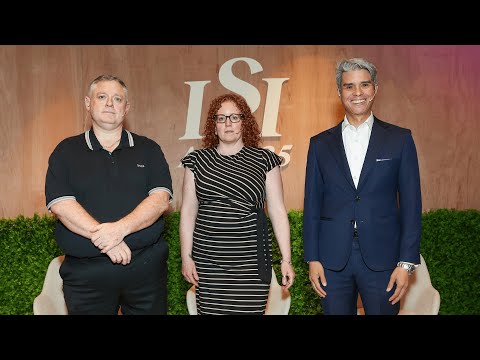
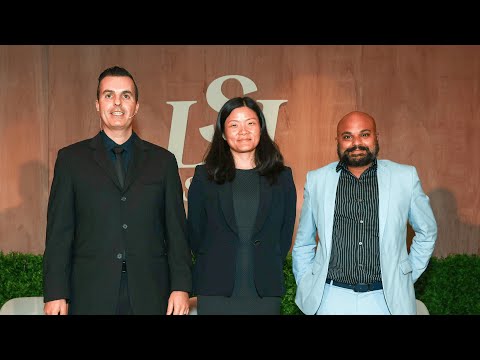
Well, good afternoon. This is a panel session looking at the technology push versus the user needs in med tech. Before we get into that, I'm just going to ask the panel, just to quickly introduce themselves. So Pierre,
Pierre Frouin 0:24
yes, so I'm a partner at Newfund Capital. We are a investment VC specialized in neuroscience, with offices in Paris, in Palo Alto, and we try to we came here to LSI to scout for startups to invest in those specific areas.
Sanjay Shrivastava 0:46
My name is Sanjay Shrivastava, and I am an entrepreneur. I have a company called Innova Vascular that I founded, and I run, and this is my second company that I founded, a previous one called Black Swan vascular that I had co founded, that sold, and before that, I worked for large strategics in cardiovascular field, namely Medtronic, Abbott and J&J,
Almog Aley-Raz 1:11
yes, I'm Almog Aley-Raz and the CEO of CorNeat vision, we develop an artificial cornea, a device that enables corni bland patients to completely rehabilitate their vision without the need for donor tissue. It's in clinical phase. Previously, I managed a high tech startup to an exit after a decade of military service. So every 10 years, give or take, I switch career. So I have a broader perspective on this challenge.
Chris Crockford 1:40
Okay, so I'm Chris Crockford. I'm the founder of YourHeartCheck Limited. We're a UK SME, and we're currently fundraising. I have also changed careers a few times. About 1516, years ago, I won the Formula One World Championship with McLaren, whereas the Business Development Director for there looking after mainly looking after the patent portfolio for the group, I left to exploit some some sensor technology into the cardiovascular world, developed a product to get through certification FDA, etc, eventually sold that into the NHS and some export, I've subsequently Built a drone business, and now I'm back in Meditech, looking at more ECG analytics. So I've kind of done a number of different industries, have a number of different leads, and so I have an interesting, I think, take on pushing technology versus user needs, and I've kind of come full circle from one to the other. But that's really the first question that I, you know, we're going to put out to the panel. So what was your opinion and experience with regards to the questioning of, you know, oh, should we be looking for and should we be embracing a technology push, or should we ignore that and embrace the needs pull of the customer,
Pierre Frouin 3:02
so I'll start. So before joining new fund, I was actually an entrepreneur in neurosciences, and I grew a business from the ground up to about 40 million in annual recurring revenue in the neuroscience space. But that's not how the story started. I am an engineer by trade in embedded electronics, and so when I saw the emergence of miniaturization IoT, also the level of the population that had a smartphone, I thought we could use that in help in med tech And as an engineer, not a healthcare professional. The ideas of where we could push that technology came from my personal experience. And so I thought, Oh, we can monitor sidds For worried patients, monitor the babies. And so it was very much a technology push. I did find that people in my surroundings were generally in support of this, but then when I came to see the doctors, they told me, that's a horrible idea. There's no medical need, no strong medical need for that kind of monitoring. All you're going to do is worry parent parents more. So you might sell it, but there's not a strong medical need. And I, being the stubborn entrepreneur that I was continued with this until I had that second and third conversation, saying exactly the same thing, and that made me realize I absolutely need to change what I'm going for. And I completely embraced the feedback from the neurologist that I was talking to, and went to neuter neuroscience, and that was very successful afterwards.
Sanjay Shrivastava 4:42
Sanjay, yeah. So I'd say my entire career, which is about 20 of medical devices, which about 25 years in cardiovascular interventional devices. It's been founded based on the user need. Understanding of the user need. I've seen people technology. Experts of a given technology, where, let's say somebody is a laser expert, somebody is expert of a given polymer that they are trying to find various applications, but the path is much shorter to success and much faster to success, if you understand the customer needs. So in my specific case, I came into the industry with a PhD in material science and engineering as a materials expert, but pretty quickly, I found out that it's really about understanding the vascular disease. And every three to five years, in my 25 years, I've taken one vascular bed, understood the diseases in that space, understood the therapies that exist today and their limitations, and from there on, we tried to find a solution that works. So one example for is 2007 or 2011 I was the R and D leader for a product for acutechemic stroke, for clot addressing the clot problem in acutechemic stroke. Now at that time, there were people who were RF technology expert, they were trying to say, can I apply RF to bus this clot? Can I apply laser to bus this clot? But since we were in that position, that we were not trying to push a given technology, that this is, this has to be the solution we were looking for, whatever is the best solution is what our job is, to crack the code of stroke here that how do we address this Claude, regardless of what works? And after trying many things internally, as well as looking, we were at a mid sized company, so we were in a position that we could look at acquisition targets, and we could be acquired at the same time as well. So we looked at many companies products, and ultimately, it worked out that a stent like product that had a stent attached to a guide wire, what we call stent on a stick, that removed the cloth the best and and it ended up being a breakthrough device in treating acutechemic stroke, a product named solitaire that today Medtronic sells even 15 years later, Medtronic selling it with a with A market leadership in the world of clot retrievers. So that's that's one example, and almost every frontier that I've worked on has has been that way today, for example, I'll give example of electrophysiology world that lately, people had been doing RF ablation for, for for atrial fibrillation. For example, somebody came up with a cryoablation balloon that okay, cryo. Cryo can work. And most recently, in the last year or two, it's been the pulse field ablation. So again, it's not that a given technology. It's people who understand the disease and why this value proposition of pulse field ablation is working better, because it may be, it may have similar effectiveness, but its safety profile is better because pulse field attacks the tissue, but not the vessel. So. So in my opinion, it's all it's all about understanding the need that gets you there much faster.
Almog Aley-Raz 7:54
Okay, so wine life started simpler. I was serving in the Air Force for a decade, almost a decade. And in that configuration, I say life is simple, because the operational need needs to be approved first, and then you get the budget, and then you get the team, and then you find how to solve it, right? So it's it's really a straightforward, needs driven process. When I left and join this high tech startup. Basically, it was all about voice biometrics, like technologies that started for military use, but they wanted to commercialize it deployed in call centers. So we had that technology, and we had to figure out, where does it fit within the call center. Who do we sell this to? Is it like operational savings, it's a security product, and took like a decade to figure this out, and eventually it succeeded, and all of the banks around the world were just using this technology. Eventually, that startup was sold to Nuance Communications at US Corporation, and the business grew to about $100 million in turnover, so it was a technology, but which had already been proven in one market segment, and it was just finding the killer app and the right way to deploy it on the commercial side. When I joined CorNeat, it's a totally different story, because my co founder is one of my best friends, and we mountain bike together, and this started as a friendship, and he was just about to present to an investor his idea about this artificial cornea, which is amazing solution. And he shared with me his presentation, and I told him, Hey, wait a couple of days. This is too technical, right? You know, register your company. And basically I rewrote his deck, kind of augmenting the market needs, the market potential, and bringing the business aspect to his idea. Eventually, I managed the R and D of this company. But my best tip to technical people that want to start is, you know, you. Be, you know, with some humility, find someone that really understand the customer needs. And if you want to put your life and chase this solution, have someone that is independent, that is not you, that has business experience that successfully launched a product to market and having, giving, have you having, give you the that perspective that many entrepreneurs miss, and then they pivot, and they pivot until they get right, hopefully in the second or third time.
Chris Crockford 10:28
Yep. Okay, so for me, I go back about 15 years. I'm the gatekeeper for technology, for a Formula One team. People knock on the door and say, I can make your car go faster. I sit there and answer the door and politely get rid of 90% of them, the other 10% of them we may evaluate. And Formula One is a very arrogant business, so it's not really a case of your technology can make the car go faster. We're going to buy it. It's case of your technology may make the car go faster. We'll test it out, and you can pay us to do the testing, because everything is seen as a service in f1 and so one day, some some academics turned up with a new new sensor, and this was an electric potential sensor, and we were looking at using it in certain area of the car, but I became quite interested in how this sensor worked, and did some research on it. And my time at Formula One was coming to an end, and I say, we've won the world championship, and it gets a bit boring off you've done that. So we basically, when I was looking at something new to do, and I thought, arrogantly, I you know, well, I can take this sensor into into the world of ECG sensing, and we looked at different ways. And we tried out the sensor in its native form, and we looked at building we had some great ambition for how this technology was going to change the world of ECG monitoring. And we looked at having shirts that had sensors that could sense the electric potential without being in contact with the skin, so it could just be on the underside of a shirt button, and you could just literally be wearing a shirt. But go back 15 years, and the comms technology was nowhere near what we have today. So Bluetooth LE wasn't around. We had very heavy power drawing, sort of comms to get off. If you think back to, you know, days before smartphones, what was your you know, what was your mobile like? How big it was, etc. So we didn't really have the ability to offload the data from these new sensors embedded into shirts for anything, probably more than about an hour. So you're trying to do longevity monitoring with this technology. Wasn't going to be the way forward. But we did think actually, how could we develop a product? And we thought to ourselves, well, ECG screening and population screening. We naively thought, that must be a great there must be a need for proactive screening of populations, proactive healthcare. 15 years ago, we thought, Oh, well, everyone's going to bite our arm off at this. So we built a system that you could just place it. There had some hand prints on it, and you could place your hands on it, and it would, you know, in 30 seconds, it would give you a very simple lead one ECG, and we could run some analytics on there. And there were various algorithms around that would tell us what the arrhythmia type was. But we thought, this is brilliant. You know, we've got some technology. You don't have to take your clothes off to use it happy days, people will absolutely love it. So then we went out to some GPS and they were like, oh, it'd be really good if you could then get the data into the patient record, whereupon I'm still, you know, I'm still having therapy because of that concept. In the UK, we have a very, very tightly sort of monopoly system on primary care patient records, and the cost of us getting our data into the largest service provider with GPS was astronomic. It was just ridiculous. But nobody seemed to have the enthusiasm for proactively screening patients going into GPS that we did, even we could see the benefits of this, and the GPS could, but we could. We didn't have the infrastructure there. And the key thing was no one was getting reimbursed to do this. So even though it was a great idea, and even the you know, even even the users going the you know, the patients going into the GP surgeries, were quite happy to do it, but there was no way that we could persuade the NHS to have a charge code that they could reimburse the GPS for operating this service. And then, of course, we had the difficulty of, if the patient does it, how do we get that data into the record and how do we escalate from it? So we started off with a little USB connected pad that went into the tried to go into the patient record, and we sold a few of those into the NHS. And then we came up with the idea of actually making a screening kiosk, because people sat around in waiting rooms that family doctors want something to do. So we built this, these kiosks. And we deployed them around all over the country, in the UK, and there were about 60 units around the country, and they were using Windows eight back in those days as the hardware that was gathering the data. And it was, it was, we screened 300,000 people, and we found endless cases of people who were in permanent AF or had other rhythm issues. And the hardest thing was making sure that the data got to the right thing that got to the right GP and was actually actioned upon. And in the end, we sort of, you know, we'd done all of this, and we still weren't making revenues from this, because even though we've got this out there, it's CE marked, it's FDA, five Ted, we really had missed the key thing in so far as it has to be, what if you're going to be proactive healthcare, it has to be what the state healthcare needs, as opposed to being, you know, what the technology could provide. In the end, we sold quite a large number of units and we licensed it into into the Central Asian republics. And strangely, Cuba licensed it from us and sold it into the South American market for us, which was a little bit strange, but it was, it was all good revenue in those days, but we actually found where it's kind of ended, was we, we had a lot of contracts with the NHS in the end, but the difficulties of keeping those technologies going, even though our sensors worked fine, the difficulties of integrating with 13 or 14 different versions of Windows from 13 or 14 different hospital trusts in the NHS was just too much for us. So we, in the end, we, we sold the business over to the Central Asian Republic distributor. But before we did that, I don't think this is really funny. We, we identified that the ultimate place for screening for atrial fibrillation in in the UK was at the checkout in garden centers, because the natural population of down in the demographic of people who go in, into UK garden centers, is absolutely perfect for finding people with arrhythmias who didn't know about it. So it just so, for me, it's sort of, you know, just goes to show that you know how you deploy the technology is very important. But we I really did discover, to my expense, and an experience that, you know, pushing this technology into a reactive healthcare system was incredibly difficult to do, so I'm back here with a direct to consumer solution for the worried well, and I've taken all the learning from the from the first company, put us into the second company. So we now sell through Facebook, through Insta, to the worried well. So if you have a, you know, heart murmur, etc, you can actually order online. It's delivered to you the next day. You wear it for three days, post it back, and then we did. We work on your results. So the user need there is that the director, you know, the consumer, is worried about what is going on with their heart, and we provide the solution directly to them. So I think I've come full circle from, from from foolish ideas about shirts that can monitor your ECG and garden centers, through to, you know, actually selling this through Facebook and Insta Kris.
Pierre Frouin 18:21
You took Formula One technology. You got pivoted. You pivoted to healthcare and cotton sensors. Are you sure Cuba and the other Central Asian republics that you mentioned didn't pivot back to something else?
Chris Crockford 18:36
I looks like a it was, it was, say, it was really interesting, because the Cubans just, you know, bought into it straight away. And their sort of state healthcare mentality is very different from the rest of the world, as was, as was the Central Asian republics. So they could mandate that, you know, GPS had to use this and, you know, fund it accordingly. So that wasn't really, you know, that we were, I think my, you know, the the political situations of those countries kind of led towards a customer need, perhaps that wasn't being fulfilled elsewhere. Fascinating. So moving on. And just has anybody in the audience got any questions at this stage? Yeah.
Audience Question 19:26
So I think one of the things that I see sometimes in med tech is when we say user needs is really who is the user, and the number of different stakeholders that can be involved, and especially back committee. So if you're going to a hospital, and when you think about developing for clinical users and non clinical users, what are some of the strategies that you've seen early stage companies, where they've done it well and maybe where they've missed the mark on even if they thought they were doing development, they were missing some of those key stakeholder groups.
Sanjay Shrivastava 19:57
I can start. I mean, for me, all. My users are generally the interventionalists, interventional cardiologists, interventional radiologists or vascular surgeons. So there is very sort of uniform group of them, and we try to understand it's not always about asking them on what you need. It's most more important thing is to observe them doing the procedure and understand the challenges that they have, and that's when you you're as a creator, as a person that has imagination can understand what can make this procedure better. So it's understanding by by observation, rather than asking. Because if you ask, and we were talking about it yesterday, that most people are not that innovative. So most people tend to tell you about an incremental improvement. They don't, they don't tell you the next level thing. So that's that's one sort of observation. Now, in some cases, it does happen that you have, for instance, we have our main product that's used by interventionalists, and now we've created a little add on, thing that's done while they are doing intervention, another device that I it's not approved yet, so I wouldn't say the name, but it's about to be approved, and that's to be used by the technician that's helping the doctors. So in that case, what we did is we actually invited some of the technicians to come to our office and do testing that cath lab technicians, and they are doing the testing, because doctors don't have patients to do this. Use this, add on little thing that I have created, and they wouldn't provide me meaningful input and that. So we invited, you know, sequentially, about half a dozen of those technicians from various hospitals that came and tested that and gave us some very, very valuable feedback. So in that, that's my experience, mostly it depends on who is using your product and who the call point is quickly.
Pierre Frouin 21:46
Yeah. So I'd like to complete that because so in healthcare, usually the users and the user need is multiple. And what we when we see startups coming to us, it's kind of interesting to see those who've just validated that there's a medical need, and those who actually went through the actual sales cycle and use cycle. And there are a number of stakeholders who have the power to say yes, but there's also some who have the power to say no. And so the doctor wants it, but the nurse will not, or the technician will not set it up. That doesn't work. The doctor once said, but the patient will does not agree to this therapeutic solution that doesn't work. And so it's kind of interesting to see the startups who have actually done their homework and went through the entire path. That said, when you're in early stage, you mentioned early stage company, it's also about fundraising. And of course, if you've secured support from patients, but not from the Kol. We also know that it's going to be difficult to fundraise, and so I think I'm just going to bring up an anecdote. But when I was an entrepreneur, I had this big meeting, and I was about to get married three days later, and so I was running out of time. I took a train to go to Paris and and get the to that appointment, and I was late, because this is France, and there was a strike. And so anyway, well, there's strikes here too, but
Chris Crockford 23:13
i i They're in sympathy for the French. Yes, thank you.
Pierre Frouin 23:17
I called the doctor, who's supposed to go on an appointment. I was supposed to pick him up, and I said, we're never going to and I said, we're never going to make it unless we take, we take a motorcycle. And so he told me, Okay, pick me up. And that's a neurologist, big, you know, like key opinion leader, and the VC saw me arriving with him behind me on the motorcycle, and they were like, okay, he's clearly in support of this, and that's really helped with the fundraising.
Chris Crockford 23:45
So here you go. That's a new tactic, like before. And so the Kol on pillion passenger.
Almog Aley-Raz 23:55
So in our case, we kind of look at it from two different angles, the end user, meaning the ophthalmology is implanting this right, whether he's a cornea specialist, or maybe in the future, in areas where there are no corneas, there are no cornea specialists. So we should design the device to enable non specialists to implant it. So so the focus is totally on the usability and the features that help the surgeon do it right? But the surgeon is not paying for it, so we so he's the end user, but we have the customer right, the hospital, right? And we need to get it through the value committee. So we got to find the needs and the benefits that these people are looking for to approve our device and drive us in so where we always look at it from the commercial and the technical, try to define the right people in each in each area that will help us build the right solution that will be adopted eventually. Okay?
Chris Crockford 24:56
So from my perspective, I think I say. I've gone full circle. I've started with the technology, and now version two, we're focused 100% on the user needs. And our users are basically people who are who can't get to see their GP in this country, people who have got issues, have got concerns about their heart's performance, and they want to find out without necessarily going through the GP circuit. So we're kind of pushing, we believe, against an open door. We provide something that they didn't know that they could get before, but it's key for us. We don't ever want to see our customers. We don't ever want to speak to our customers. We want to automate the back end to give them the most amazing patient portal experience. And we're using a lot of AI avatars? Of we've got a GP avatar and we've got a cardiologist avatar. Last night, we ended up in a huge discussion about where, you know, what are the pronouns for an AI avatar, cardiologist? No one knows. But the key thing for us is we are using all of this technology to enhance the user experience, so that if the user doesn't know what a specific terminology means, they've got the opportunity to ask and then that AI chat bot will come back and help them. So we're sort of, you know, we're looking at the user need in terms of, what immediately can we do for that customer, but we're also looking at, how can we take the customer on a journey so that they understand the medical terminology and their potential condition in a way that they're going to accept and also present to them the pathway moving forward. Any other questions?
Sanjay Shrivastava 26:35
Sorry, yeah, yeah, sure, so I can start it. So it's a very accomplished and diverse panel. By the way, I'm enjoying listening to the race car expert turning into a medical device, a airline, Air Force pilot turning into a medical device, a medical device entrepreneur turning into motorcycle race obviously. Yeah, it's amazing. So mine is probably the most straightforward I've always done cardiovascular devices, always done interventional devices, and always I've focused on the need, and that's kind of what my career has been built. So I think your question appears to have two components there. That first that how do we find solutions? And most of the cardiovascular intervention that has evolved in the last 25 years has been relatively similar. You know, you have the tubular objects that you're trying to get to one part of the body and do something to repair it, and it's more about customization of that fart. So primarily, it's about understanding which part of the body, like earlier I gave the example, 2007 2011 I worked on stroke, and then about 2016 17, I've started to think, okay, where else there is a big clot problem in the body? And pulmonary embolism, thrombosis came to mind. So now it's about customization of tools that worked in acute ischemic stroke, where clot burden is much less, but then arteries are very tortuous, and it's in the arterial system. And also it's farther from going from groin, for example, there versus the PE where our arteries, it's really it's called artery, but it's a vein, it's a so it's a different anatomy, Claude verden is huge, but it's not as same degree of tortuosity as compared to acute ischemic stroke. So it's more it becomes around customization of of technologies or methods to evolve that evolve those solutions. So that's what one part of your your question, the second part has to do with the reimbursement that how does one go about getting reimbursements for for new therapies that you're trying to so in my my experience, I'd say it's more about building a case for health care, that what are you going to save at the end of it, that how many patients and how much burden to the health care? And that's the way to justify it becomes a long and arduous process. I am on. I'm an independent board member at a company called enveno that has a Venus stance, so that probably comes close Venus valve, and there's no Venus valve today. They've been trying very, very hard to try to do clinical trials to show the value proposition and transcatheter Venus valves now, and building that case with the CMS that what it saves for the healthcare burden. So that's that's my experience. Hopefully answer your question, yeah.
Pierre Frouin 29:20
So I would like to complete that with the fact that if you're funding at an early stage, we, as we understand there's risk, we understand that it's there's uncertainty on the amount of reimbursement, you will know. So what we want to know is, do you know the healthcare system that you're entering? Do you know the pathways to obtain reimbursement? Do you have a good plan to get there? And finally, can you prove to us that there is a strong willingness to pay either by the system, by the patient, by the doctor, by the hospital, doesn't matter, but, you know, get some concrete evidence, not just somebody who says, Yeah, I like this, but something that helps us understand that that willingness to pay is is real.
Almog Aley-Raz 29:58
Yeah, in our case. Was a really straightforward process, a reimbursement landscape study, basically understanding what calls are out there, the payment rates, what has been done and what's available. And in our case, it turned out that there are codes, although there is a failed product in the market, there are codes and payment rates. And there was a device that was removed from the market, so the code is still alive, and we can piggyback on on it. So it was critical. I mean, talking to investors before that and after that was a totally different conversation. And I encourage everyone that is joining that can fund this. I mean, you can get information today, much easier than it was 10 years ago. Right? You can just ask a bot and get at least an initial but I strongly advise on just doing it right, and paying for it and getting the information backed up by someone that the investors can trust, that you can leverage to drive your fundraising forward.
Chris Crockford 31:00
There's just one aspect I'd like to mention. You mentioned DVT. You're talking about technology and the user need. So I go back to 2010 there's a company called decode me, and they were doing genetic analysis of DNA for people, and the McLaren funded me to have my DNA sequenced, and they gave us this report. I mean, it was hellish expensive, but decode me are no longer in existence. They weren't they weren't under and you look at 23andme and you can see that. And I think there is a really interesting point with regards the user acceptance of the technology as well, and how far along that acceptance journey before the technology is actually accepted and becomes a user need. So the circling back to DBT, I found out that from my DNA that I was 7.84 more times, times more likely than the average person to have a pulmonary embolism. So it's fascinating talking to essentially, and it's fascinating toward to you. But my point is that back in 2010 the market, people weren't prepared to pay that sort of money privately for it. And I think it was really sort of people who were just experimenting in the market, like myself, who actually, who went down that down that route. So I think there is, not only is a case of technology push and user need, but there's also this technology maturity and the user acceptance of that and trying to find that sort of perfect fit. So people aren't necessarily going to embrace new technology, consumers, especially, people aren't going to embrace that technology on day one, they need to leave it for a few years and see the results, etc, before it becomes popular, etc. So I think that's the you know, that the timeliness of the technology and the user needed key.
Sanjay Shrivastava 32:55
By the way, this has been an interesting topic that we that sort of evolved for this panel discussion. But I also want to acknowledge and say that Stanford Biodesign has been teaching this, the need, that the medical device business is need driven, and the method that how you identify the need first before you go and find a solution. And the person that pioneered the Stanford Biodesign just happened to walk into the room. Dr Josh mark over while we're so we're honored to have you in the panel as well. That first time I heard the need was from you about 21 years ago, and a meeting at Stanford when I was just kind of starting out my journey as well in the in medical devices.
Chris Crockford 33:39
So okay, so do we have any any further questions? Or anybody, anybody got any anecdotal stories of failing with pushing technology or failing to understand the user need? I've got some further questions for the panel. If not so the other question I have
Almog Aley-Raz 33:57
a great example. You know, I sold my first startup to Nuance Communications. Nuance is the global was the global leader in speech recognition. So for 15 years they've been working on this algorithms, right? And basically it always was like, hey, next year is it will happen, and then another year go by, and for 15 years it didn't happen. And everybody thought at nuance that people will speak to machines, right? And we're talking about the 90s and the early 2000 years, and I've kind of watched this revolution goes by. And there was that single day when Siri in Apple four, iphone four, just went out, and people were standing in lines to buy it. And in one single day, all of a sudden, we had a couple of million inter voice interactions of people trying Siri for the first time, and, you know, 20 years later, and it's just you talk to anything now, right? It's it's your car, it's your computer, it's your Yeah, and the technology was there, but the adoption, the need, and the fact that they had to optimize. It and make it more natural. That took a while.
Chris Crockford 35:04
Yeah, fascinating. So what parts, what role did, did push versus user need play in your first fundraise, when you were first out raising funds, were you raising it from a technology push or use a user need basis.
Pierre Frouin 35:22
So I still think the same is that the hot technology, because there are trends, because we are, like, AI right now, things like that, the hot technology gets you the first meeting, but the validation of the user need gets you the funding, right? I think that's that's really the case and and so I recommend everybody to make sure that they have that in mind before they start fundraising.
Sanjay Shrivastava 35:48
Yeah, and I'd say take a step further so the need and also the usability of the product. So in certain spaces like and like in ours interventional world, we also want to demonstrate that the concept of the product that we have created is simple and something that the market will adopt, and the investor community is definitely looking for that, that type of validation, that it's not something that you just created, but it's something that people will adopt. And in my case, when I had my liquid embolic company, then there was no liquid embolic agent approved for for peripheral vascular use. And the there were some off label things being used from neurovascular so when we, when we created the product, that was the first thing, is it usable? Is it something that's and there were other companies that concurrently were trying to do that, and their product may have been more novel and perhaps more disruptive, but that actually had not, didn't have as much user friendliness. So we got funded, we finished our clinical trial, we got a PMA done, we got the company sold, and others are still working on theirs.
Almog Aley-Raz 37:00
So there's a twist to my story, right in order to develop an artificial cornea, which is a lens that enables corneatley Blind fishes to regain their site, the main technical challenge is how to bridge that gap between synthetic materials and living tissue, and our core material technology actually create that bridge. It's a synthetic mesh that permanently integrates and does not resolve over time. And every physician I meet, whether it's a gynecologist, a plastic surgeon, maxillofacial reconstruction, when he sees our pre clinical results and what we've been able to do, he immediately comes up with 124, different application to that same technology in his own field, and the challenge here is exactly no to not to the focus, not to go after another killer app or partner with someone to do something else, but rather focus on the needs that he decided to address get them done later on. You know, expand land and expand
Chris Crockford 37:59
that's really good. Well, guys, thank you. We're almost at time, so I'm going to say thank you very much. I think me, personally, the key takeaway was, was your comment about the technology gets you the first meeting and the user need, and the evidence in that gets you the check. And I think, I think that's a really, really good point to end on that. And of course, having a key opinion leader on the back around Paris, so for that. Thank you very much guys. It's been really good. Thank you. Thank you. Bye.
Chris Crockford 0:06
Well, good afternoon. This is a panel session looking at the technology push versus the user needs in med tech. Before we get into that, I'm just going to ask the panel, just to quickly introduce themselves. So Pierre,
Pierre Frouin 0:24
yes, so I'm a partner at Newfund Capital. We are a investment VC specialized in neuroscience, with offices in Paris, in Palo Alto, and we try to we came here to LSI to scout for startups to invest in those specific areas.
Sanjay Shrivastava 0:46
My name is Sanjay Shrivastava, and I am an entrepreneur. I have a company called Innova Vascular that I founded, and I run, and this is my second company that I founded, a previous one called Black Swan vascular that I had co founded, that sold, and before that, I worked for large strategics in cardiovascular field, namely Medtronic, Abbott and J&J,
Almog Aley-Raz 1:11
yes, I'm Almog Aley-Raz and the CEO of CorNeat vision, we develop an artificial cornea, a device that enables corni bland patients to completely rehabilitate their vision without the need for donor tissue. It's in clinical phase. Previously, I managed a high tech startup to an exit after a decade of military service. So every 10 years, give or take, I switch career. So I have a broader perspective on this challenge.
Chris Crockford 1:40
Okay, so I'm Chris Crockford. I'm the founder of YourHeartCheck Limited. We're a UK SME, and we're currently fundraising. I have also changed careers a few times. About 1516, years ago, I won the Formula One World Championship with McLaren, whereas the Business Development Director for there looking after mainly looking after the patent portfolio for the group, I left to exploit some some sensor technology into the cardiovascular world, developed a product to get through certification FDA, etc, eventually sold that into the NHS and some export, I've subsequently Built a drone business, and now I'm back in Meditech, looking at more ECG analytics. So I've kind of done a number of different industries, have a number of different leads, and so I have an interesting, I think, take on pushing technology versus user needs, and I've kind of come full circle from one to the other. But that's really the first question that I, you know, we're going to put out to the panel. So what was your opinion and experience with regards to the questioning of, you know, oh, should we be looking for and should we be embracing a technology push, or should we ignore that and embrace the needs pull of the customer,
Pierre Frouin 3:02
so I'll start. So before joining new fund, I was actually an entrepreneur in neurosciences, and I grew a business from the ground up to about 40 million in annual recurring revenue in the neuroscience space. But that's not how the story started. I am an engineer by trade in embedded electronics, and so when I saw the emergence of miniaturization IoT, also the level of the population that had a smartphone, I thought we could use that in help in med tech And as an engineer, not a healthcare professional. The ideas of where we could push that technology came from my personal experience. And so I thought, Oh, we can monitor sidds For worried patients, monitor the babies. And so it was very much a technology push. I did find that people in my surroundings were generally in support of this, but then when I came to see the doctors, they told me, that's a horrible idea. There's no medical need, no strong medical need for that kind of monitoring. All you're going to do is worry parent parents more. So you might sell it, but there's not a strong medical need. And I, being the stubborn entrepreneur that I was continued with this until I had that second and third conversation, saying exactly the same thing, and that made me realize I absolutely need to change what I'm going for. And I completely embraced the feedback from the neurologist that I was talking to, and went to neuter neuroscience, and that was very successful afterwards.
Sanjay Shrivastava 4:42
Sanjay, yeah. So I'd say my entire career, which is about 20 of medical devices, which about 25 years in cardiovascular interventional devices. It's been founded based on the user need. Understanding of the user need. I've seen people technology. Experts of a given technology, where, let's say somebody is a laser expert, somebody is expert of a given polymer that they are trying to find various applications, but the path is much shorter to success and much faster to success, if you understand the customer needs. So in my specific case, I came into the industry with a PhD in material science and engineering as a materials expert, but pretty quickly, I found out that it's really about understanding the vascular disease. And every three to five years, in my 25 years, I've taken one vascular bed, understood the diseases in that space, understood the therapies that exist today and their limitations, and from there on, we tried to find a solution that works. So one example for is 2007 or 2011 I was the R and D leader for a product for acutechemic stroke, for clot addressing the clot problem in acutechemic stroke. Now at that time, there were people who were RF technology expert, they were trying to say, can I apply RF to bus this clot? Can I apply laser to bus this clot? But since we were in that position, that we were not trying to push a given technology, that this is, this has to be the solution we were looking for, whatever is the best solution is what our job is, to crack the code of stroke here that how do we address this Claude, regardless of what works? And after trying many things internally, as well as looking, we were at a mid sized company, so we were in a position that we could look at acquisition targets, and we could be acquired at the same time as well. So we looked at many companies products, and ultimately, it worked out that a stent like product that had a stent attached to a guide wire, what we call stent on a stick, that removed the cloth the best and and it ended up being a breakthrough device in treating acutechemic stroke, a product named solitaire that today Medtronic sells even 15 years later, Medtronic selling it with a with A market leadership in the world of clot retrievers. So that's that's one example, and almost every frontier that I've worked on has has been that way today, for example, I'll give example of electrophysiology world that lately, people had been doing RF ablation for, for for atrial fibrillation. For example, somebody came up with a cryoablation balloon that okay, cryo. Cryo can work. And most recently, in the last year or two, it's been the pulse field ablation. So again, it's not that a given technology. It's people who understand the disease and why this value proposition of pulse field ablation is working better, because it may be, it may have similar effectiveness, but its safety profile is better because pulse field attacks the tissue, but not the vessel. So. So in my opinion, it's all it's all about understanding the need that gets you there much faster.
Almog Aley-Raz 7:54
Okay, so wine life started simpler. I was serving in the Air Force for a decade, almost a decade. And in that configuration, I say life is simple, because the operational need needs to be approved first, and then you get the budget, and then you get the team, and then you find how to solve it, right? So it's it's really a straightforward, needs driven process. When I left and join this high tech startup. Basically, it was all about voice biometrics, like technologies that started for military use, but they wanted to commercialize it deployed in call centers. So we had that technology, and we had to figure out, where does it fit within the call center. Who do we sell this to? Is it like operational savings, it's a security product, and took like a decade to figure this out, and eventually it succeeded, and all of the banks around the world were just using this technology. Eventually, that startup was sold to Nuance Communications at US Corporation, and the business grew to about $100 million in turnover, so it was a technology, but which had already been proven in one market segment, and it was just finding the killer app and the right way to deploy it on the commercial side. When I joined CorNeat, it's a totally different story, because my co founder is one of my best friends, and we mountain bike together, and this started as a friendship, and he was just about to present to an investor his idea about this artificial cornea, which is amazing solution. And he shared with me his presentation, and I told him, Hey, wait a couple of days. This is too technical, right? You know, register your company. And basically I rewrote his deck, kind of augmenting the market needs, the market potential, and bringing the business aspect to his idea. Eventually, I managed the R and D of this company. But my best tip to technical people that want to start is, you know, you. Be, you know, with some humility, find someone that really understand the customer needs. And if you want to put your life and chase this solution, have someone that is independent, that is not you, that has business experience that successfully launched a product to market and having, giving, have you having, give you the that perspective that many entrepreneurs miss, and then they pivot, and they pivot until they get right, hopefully in the second or third time.
Chris Crockford 10:28
Yep. Okay, so for me, I go back about 15 years. I'm the gatekeeper for technology, for a Formula One team. People knock on the door and say, I can make your car go faster. I sit there and answer the door and politely get rid of 90% of them, the other 10% of them we may evaluate. And Formula One is a very arrogant business, so it's not really a case of your technology can make the car go faster. We're going to buy it. It's case of your technology may make the car go faster. We'll test it out, and you can pay us to do the testing, because everything is seen as a service in f1 and so one day, some some academics turned up with a new new sensor, and this was an electric potential sensor, and we were looking at using it in certain area of the car, but I became quite interested in how this sensor worked, and did some research on it. And my time at Formula One was coming to an end, and I say, we've won the world championship, and it gets a bit boring off you've done that. So we basically, when I was looking at something new to do, and I thought, arrogantly, I you know, well, I can take this sensor into into the world of ECG sensing, and we looked at different ways. And we tried out the sensor in its native form, and we looked at building we had some great ambition for how this technology was going to change the world of ECG monitoring. And we looked at having shirts that had sensors that could sense the electric potential without being in contact with the skin, so it could just be on the underside of a shirt button, and you could just literally be wearing a shirt. But go back 15 years, and the comms technology was nowhere near what we have today. So Bluetooth LE wasn't around. We had very heavy power drawing, sort of comms to get off. If you think back to, you know, days before smartphones, what was your you know, what was your mobile like? How big it was, etc. So we didn't really have the ability to offload the data from these new sensors embedded into shirts for anything, probably more than about an hour. So you're trying to do longevity monitoring with this technology. Wasn't going to be the way forward. But we did think actually, how could we develop a product? And we thought to ourselves, well, ECG screening and population screening. We naively thought, that must be a great there must be a need for proactive screening of populations, proactive healthcare. 15 years ago, we thought, Oh, well, everyone's going to bite our arm off at this. So we built a system that you could just place it. There had some hand prints on it, and you could place your hands on it, and it would, you know, in 30 seconds, it would give you a very simple lead one ECG, and we could run some analytics on there. And there were various algorithms around that would tell us what the arrhythmia type was. But we thought, this is brilliant. You know, we've got some technology. You don't have to take your clothes off to use it happy days, people will absolutely love it. So then we went out to some GPS and they were like, oh, it'd be really good if you could then get the data into the patient record, whereupon I'm still, you know, I'm still having therapy because of that concept. In the UK, we have a very, very tightly sort of monopoly system on primary care patient records, and the cost of us getting our data into the largest service provider with GPS was astronomic. It was just ridiculous. But nobody seemed to have the enthusiasm for proactively screening patients going into GPS that we did, even we could see the benefits of this, and the GPS could, but we could. We didn't have the infrastructure there. And the key thing was no one was getting reimbursed to do this. So even though it was a great idea, and even the you know, even even the users going the you know, the patients going into the GP surgeries, were quite happy to do it, but there was no way that we could persuade the NHS to have a charge code that they could reimburse the GPS for operating this service. And then, of course, we had the difficulty of, if the patient does it, how do we get that data into the record and how do we escalate from it? So we started off with a little USB connected pad that went into the tried to go into the patient record, and we sold a few of those into the NHS. And then we came up with the idea of actually making a screening kiosk, because people sat around in waiting rooms that family doctors want something to do. So we built this, these kiosks. And we deployed them around all over the country, in the UK, and there were about 60 units around the country, and they were using Windows eight back in those days as the hardware that was gathering the data. And it was, it was, we screened 300,000 people, and we found endless cases of people who were in permanent AF or had other rhythm issues. And the hardest thing was making sure that the data got to the right thing that got to the right GP and was actually actioned upon. And in the end, we sort of, you know, we'd done all of this, and we still weren't making revenues from this, because even though we've got this out there, it's CE marked, it's FDA, five Ted, we really had missed the key thing in so far as it has to be, what if you're going to be proactive healthcare, it has to be what the state healthcare needs, as opposed to being, you know, what the technology could provide. In the end, we sold quite a large number of units and we licensed it into into the Central Asian republics. And strangely, Cuba licensed it from us and sold it into the South American market for us, which was a little bit strange, but it was, it was all good revenue in those days, but we actually found where it's kind of ended, was we, we had a lot of contracts with the NHS in the end, but the difficulties of keeping those technologies going, even though our sensors worked fine, the difficulties of integrating with 13 or 14 different versions of Windows from 13 or 14 different hospital trusts in the NHS was just too much for us. So we, in the end, we, we sold the business over to the Central Asian Republic distributor. But before we did that, I don't think this is really funny. We, we identified that the ultimate place for screening for atrial fibrillation in in the UK was at the checkout in garden centers, because the natural population of down in the demographic of people who go in, into UK garden centers, is absolutely perfect for finding people with arrhythmias who didn't know about it. So it just so, for me, it's sort of, you know, just goes to show that you know how you deploy the technology is very important. But we I really did discover, to my expense, and an experience that, you know, pushing this technology into a reactive healthcare system was incredibly difficult to do, so I'm back here with a direct to consumer solution for the worried well, and I've taken all the learning from the from the first company, put us into the second company. So we now sell through Facebook, through Insta, to the worried well. So if you have a, you know, heart murmur, etc, you can actually order online. It's delivered to you the next day. You wear it for three days, post it back, and then we did. We work on your results. So the user need there is that the director, you know, the consumer, is worried about what is going on with their heart, and we provide the solution directly to them. So I think I've come full circle from, from from foolish ideas about shirts that can monitor your ECG and garden centers, through to, you know, actually selling this through Facebook and Insta Kris.
Pierre Frouin 18:21
You took Formula One technology. You got pivoted. You pivoted to healthcare and cotton sensors. Are you sure Cuba and the other Central Asian republics that you mentioned didn't pivot back to something else?
Chris Crockford 18:36
I looks like a it was, it was, say, it was really interesting, because the Cubans just, you know, bought into it straight away. And their sort of state healthcare mentality is very different from the rest of the world, as was, as was the Central Asian republics. So they could mandate that, you know, GPS had to use this and, you know, fund it accordingly. So that wasn't really, you know, that we were, I think my, you know, the the political situations of those countries kind of led towards a customer need, perhaps that wasn't being fulfilled elsewhere. Fascinating. So moving on. And just has anybody in the audience got any questions at this stage? Yeah.
Audience Question 19:26
So I think one of the things that I see sometimes in med tech is when we say user needs is really who is the user, and the number of different stakeholders that can be involved, and especially back committee. So if you're going to a hospital, and when you think about developing for clinical users and non clinical users, what are some of the strategies that you've seen early stage companies, where they've done it well and maybe where they've missed the mark on even if they thought they were doing development, they were missing some of those key stakeholder groups.
Sanjay Shrivastava 19:57
I can start. I mean, for me, all. My users are generally the interventionalists, interventional cardiologists, interventional radiologists or vascular surgeons. So there is very sort of uniform group of them, and we try to understand it's not always about asking them on what you need. It's most more important thing is to observe them doing the procedure and understand the challenges that they have, and that's when you you're as a creator, as a person that has imagination can understand what can make this procedure better. So it's understanding by by observation, rather than asking. Because if you ask, and we were talking about it yesterday, that most people are not that innovative. So most people tend to tell you about an incremental improvement. They don't, they don't tell you the next level thing. So that's that's one sort of observation. Now, in some cases, it does happen that you have, for instance, we have our main product that's used by interventionalists, and now we've created a little add on, thing that's done while they are doing intervention, another device that I it's not approved yet, so I wouldn't say the name, but it's about to be approved, and that's to be used by the technician that's helping the doctors. So in that case, what we did is we actually invited some of the technicians to come to our office and do testing that cath lab technicians, and they are doing the testing, because doctors don't have patients to do this. Use this, add on little thing that I have created, and they wouldn't provide me meaningful input and that. So we invited, you know, sequentially, about half a dozen of those technicians from various hospitals that came and tested that and gave us some very, very valuable feedback. So in that, that's my experience, mostly it depends on who is using your product and who the call point is quickly.
Pierre Frouin 21:46
Yeah. So I'd like to complete that because so in healthcare, usually the users and the user need is multiple. And what we when we see startups coming to us, it's kind of interesting to see those who've just validated that there's a medical need, and those who actually went through the actual sales cycle and use cycle. And there are a number of stakeholders who have the power to say yes, but there's also some who have the power to say no. And so the doctor wants it, but the nurse will not, or the technician will not set it up. That doesn't work. The doctor once said, but the patient will does not agree to this therapeutic solution that doesn't work. And so it's kind of interesting to see the startups who have actually done their homework and went through the entire path. That said, when you're in early stage, you mentioned early stage company, it's also about fundraising. And of course, if you've secured support from patients, but not from the Kol. We also know that it's going to be difficult to fundraise, and so I think I'm just going to bring up an anecdote. But when I was an entrepreneur, I had this big meeting, and I was about to get married three days later, and so I was running out of time. I took a train to go to Paris and and get the to that appointment, and I was late, because this is France, and there was a strike. And so anyway, well, there's strikes here too, but
Chris Crockford 23:13
i i They're in sympathy for the French. Yes, thank you.
Pierre Frouin 23:17
I called the doctor, who's supposed to go on an appointment. I was supposed to pick him up, and I said, we're never going to and I said, we're never going to make it unless we take, we take a motorcycle. And so he told me, Okay, pick me up. And that's a neurologist, big, you know, like key opinion leader, and the VC saw me arriving with him behind me on the motorcycle, and they were like, okay, he's clearly in support of this, and that's really helped with the fundraising.
Chris Crockford 23:45
So here you go. That's a new tactic, like before. And so the Kol on pillion passenger.
Almog Aley-Raz 23:55
So in our case, we kind of look at it from two different angles, the end user, meaning the ophthalmology is implanting this right, whether he's a cornea specialist, or maybe in the future, in areas where there are no corneas, there are no cornea specialists. So we should design the device to enable non specialists to implant it. So so the focus is totally on the usability and the features that help the surgeon do it right? But the surgeon is not paying for it, so we so he's the end user, but we have the customer right, the hospital, right? And we need to get it through the value committee. So we got to find the needs and the benefits that these people are looking for to approve our device and drive us in so where we always look at it from the commercial and the technical, try to define the right people in each in each area that will help us build the right solution that will be adopted eventually. Okay?
Chris Crockford 24:56
So from my perspective, I think I say. I've gone full circle. I've started with the technology, and now version two, we're focused 100% on the user needs. And our users are basically people who are who can't get to see their GP in this country, people who have got issues, have got concerns about their heart's performance, and they want to find out without necessarily going through the GP circuit. So we're kind of pushing, we believe, against an open door. We provide something that they didn't know that they could get before, but it's key for us. We don't ever want to see our customers. We don't ever want to speak to our customers. We want to automate the back end to give them the most amazing patient portal experience. And we're using a lot of AI avatars? Of we've got a GP avatar and we've got a cardiologist avatar. Last night, we ended up in a huge discussion about where, you know, what are the pronouns for an AI avatar, cardiologist? No one knows. But the key thing for us is we are using all of this technology to enhance the user experience, so that if the user doesn't know what a specific terminology means, they've got the opportunity to ask and then that AI chat bot will come back and help them. So we're sort of, you know, we're looking at the user need in terms of, what immediately can we do for that customer, but we're also looking at, how can we take the customer on a journey so that they understand the medical terminology and their potential condition in a way that they're going to accept and also present to them the pathway moving forward. Any other questions?
Sanjay Shrivastava 26:35
Sorry, yeah, yeah, sure, so I can start it. So it's a very accomplished and diverse panel. By the way, I'm enjoying listening to the race car expert turning into a medical device, a airline, Air Force pilot turning into a medical device, a medical device entrepreneur turning into motorcycle race obviously. Yeah, it's amazing. So mine is probably the most straightforward I've always done cardiovascular devices, always done interventional devices, and always I've focused on the need, and that's kind of what my career has been built. So I think your question appears to have two components there. That first that how do we find solutions? And most of the cardiovascular intervention that has evolved in the last 25 years has been relatively similar. You know, you have the tubular objects that you're trying to get to one part of the body and do something to repair it, and it's more about customization of that fart. So primarily, it's about understanding which part of the body, like earlier I gave the example, 2007 2011 I worked on stroke, and then about 2016 17, I've started to think, okay, where else there is a big clot problem in the body? And pulmonary embolism, thrombosis came to mind. So now it's about customization of tools that worked in acute ischemic stroke, where clot burden is much less, but then arteries are very tortuous, and it's in the arterial system. And also it's farther from going from groin, for example, there versus the PE where our arteries, it's really it's called artery, but it's a vein, it's a so it's a different anatomy, Claude verden is huge, but it's not as same degree of tortuosity as compared to acute ischemic stroke. So it's more it becomes around customization of of technologies or methods to evolve that evolve those solutions. So that's what one part of your your question, the second part has to do with the reimbursement that how does one go about getting reimbursements for for new therapies that you're trying to so in my my experience, I'd say it's more about building a case for health care, that what are you going to save at the end of it, that how many patients and how much burden to the health care? And that's the way to justify it becomes a long and arduous process. I am on. I'm an independent board member at a company called enveno that has a Venus stance, so that probably comes close Venus valve, and there's no Venus valve today. They've been trying very, very hard to try to do clinical trials to show the value proposition and transcatheter Venus valves now, and building that case with the CMS that what it saves for the healthcare burden. So that's that's my experience. Hopefully answer your question, yeah.
Pierre Frouin 29:20
So I would like to complete that with the fact that if you're funding at an early stage, we, as we understand there's risk, we understand that it's there's uncertainty on the amount of reimbursement, you will know. So what we want to know is, do you know the healthcare system that you're entering? Do you know the pathways to obtain reimbursement? Do you have a good plan to get there? And finally, can you prove to us that there is a strong willingness to pay either by the system, by the patient, by the doctor, by the hospital, doesn't matter, but, you know, get some concrete evidence, not just somebody who says, Yeah, I like this, but something that helps us understand that that willingness to pay is is real.
Almog Aley-Raz 29:58
Yeah, in our case. Was a really straightforward process, a reimbursement landscape study, basically understanding what calls are out there, the payment rates, what has been done and what's available. And in our case, it turned out that there are codes, although there is a failed product in the market, there are codes and payment rates. And there was a device that was removed from the market, so the code is still alive, and we can piggyback on on it. So it was critical. I mean, talking to investors before that and after that was a totally different conversation. And I encourage everyone that is joining that can fund this. I mean, you can get information today, much easier than it was 10 years ago. Right? You can just ask a bot and get at least an initial but I strongly advise on just doing it right, and paying for it and getting the information backed up by someone that the investors can trust, that you can leverage to drive your fundraising forward.
Chris Crockford 31:00
There's just one aspect I'd like to mention. You mentioned DVT. You're talking about technology and the user need. So I go back to 2010 there's a company called decode me, and they were doing genetic analysis of DNA for people, and the McLaren funded me to have my DNA sequenced, and they gave us this report. I mean, it was hellish expensive, but decode me are no longer in existence. They weren't they weren't under and you look at 23andme and you can see that. And I think there is a really interesting point with regards the user acceptance of the technology as well, and how far along that acceptance journey before the technology is actually accepted and becomes a user need. So the circling back to DBT, I found out that from my DNA that I was 7.84 more times, times more likely than the average person to have a pulmonary embolism. So it's fascinating talking to essentially, and it's fascinating toward to you. But my point is that back in 2010 the market, people weren't prepared to pay that sort of money privately for it. And I think it was really sort of people who were just experimenting in the market, like myself, who actually, who went down that down that route. So I think there is, not only is a case of technology push and user need, but there's also this technology maturity and the user acceptance of that and trying to find that sort of perfect fit. So people aren't necessarily going to embrace new technology, consumers, especially, people aren't going to embrace that technology on day one, they need to leave it for a few years and see the results, etc, before it becomes popular, etc. So I think that's the you know, that the timeliness of the technology and the user needed key.
Sanjay Shrivastava 32:55
By the way, this has been an interesting topic that we that sort of evolved for this panel discussion. But I also want to acknowledge and say that Stanford Biodesign has been teaching this, the need, that the medical device business is need driven, and the method that how you identify the need first before you go and find a solution. And the person that pioneered the Stanford Biodesign just happened to walk into the room. Dr Josh mark over while we're so we're honored to have you in the panel as well. That first time I heard the need was from you about 21 years ago, and a meeting at Stanford when I was just kind of starting out my journey as well in the in medical devices.
Chris Crockford 33:39
So okay, so do we have any any further questions? Or anybody, anybody got any anecdotal stories of failing with pushing technology or failing to understand the user need? I've got some further questions for the panel. If not so the other question I have
Almog Aley-Raz 33:57
a great example. You know, I sold my first startup to Nuance Communications. Nuance is the global was the global leader in speech recognition. So for 15 years they've been working on this algorithms, right? And basically it always was like, hey, next year is it will happen, and then another year go by, and for 15 years it didn't happen. And everybody thought at nuance that people will speak to machines, right? And we're talking about the 90s and the early 2000 years, and I've kind of watched this revolution goes by. And there was that single day when Siri in Apple four, iphone four, just went out, and people were standing in lines to buy it. And in one single day, all of a sudden, we had a couple of million inter voice interactions of people trying Siri for the first time, and, you know, 20 years later, and it's just you talk to anything now, right? It's it's your car, it's your computer, it's your Yeah, and the technology was there, but the adoption, the need, and the fact that they had to optimize. It and make it more natural. That took a while.
Chris Crockford 35:04
Yeah, fascinating. So what parts, what role did, did push versus user need play in your first fundraise, when you were first out raising funds, were you raising it from a technology push or use a user need basis.
Pierre Frouin 35:22
So I still think the same is that the hot technology, because there are trends, because we are, like, AI right now, things like that, the hot technology gets you the first meeting, but the validation of the user need gets you the funding, right? I think that's that's really the case and and so I recommend everybody to make sure that they have that in mind before they start fundraising.
Sanjay Shrivastava 35:48
Yeah, and I'd say take a step further so the need and also the usability of the product. So in certain spaces like and like in ours interventional world, we also want to demonstrate that the concept of the product that we have created is simple and something that the market will adopt, and the investor community is definitely looking for that, that type of validation, that it's not something that you just created, but it's something that people will adopt. And in my case, when I had my liquid embolic company, then there was no liquid embolic agent approved for for peripheral vascular use. And the there were some off label things being used from neurovascular so when we, when we created the product, that was the first thing, is it usable? Is it something that's and there were other companies that concurrently were trying to do that, and their product may have been more novel and perhaps more disruptive, but that actually had not, didn't have as much user friendliness. So we got funded, we finished our clinical trial, we got a PMA done, we got the company sold, and others are still working on theirs.
Almog Aley-Raz 37:00
So there's a twist to my story, right in order to develop an artificial cornea, which is a lens that enables corneatley Blind fishes to regain their site, the main technical challenge is how to bridge that gap between synthetic materials and living tissue, and our core material technology actually create that bridge. It's a synthetic mesh that permanently integrates and does not resolve over time. And every physician I meet, whether it's a gynecologist, a plastic surgeon, maxillofacial reconstruction, when he sees our pre clinical results and what we've been able to do, he immediately comes up with 124, different application to that same technology in his own field, and the challenge here is exactly no to not to the focus, not to go after another killer app or partner with someone to do something else, but rather focus on the needs that he decided to address get them done later on. You know, expand land and expand
Chris Crockford 37:59
that's really good. Well, guys, thank you. We're almost at time, so I'm going to say thank you very much. I think me, personally, the key takeaway was, was your comment about the technology gets you the first meeting and the user need, and the evidence in that gets you the check. And I think, I think that's a really, really good point to end on that. And of course, having a key opinion leader on the back around Paris, so for that. Thank you very much guys. It's been really good. Thank you. Thank you. Bye.
17011 Beach Blvd, Suite 500 Huntington Beach, CA 92647
714-847-3540© 2026 Life Science Intelligence, Inc., All Rights Reserved. | Privacy Policy