Pre-clinical Perspectives: Navigating the Investor and Regulatory Landscape Before First in Human | LSI Europe '25

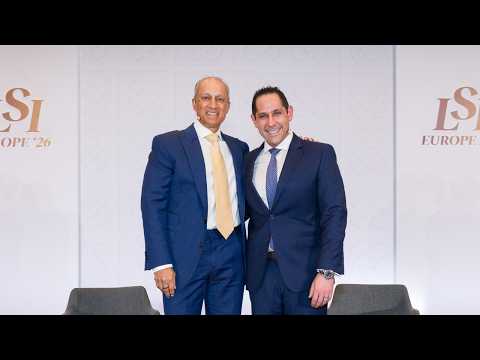
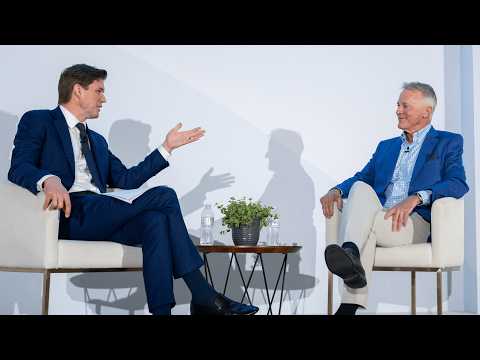
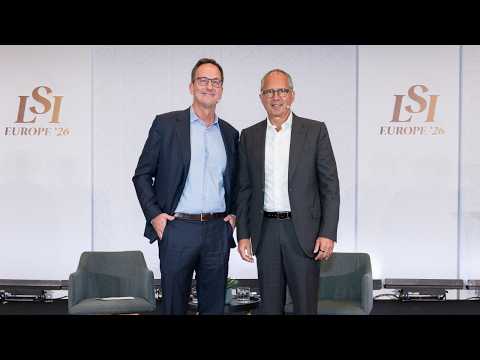
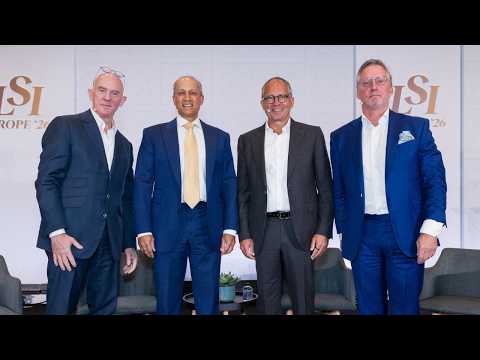
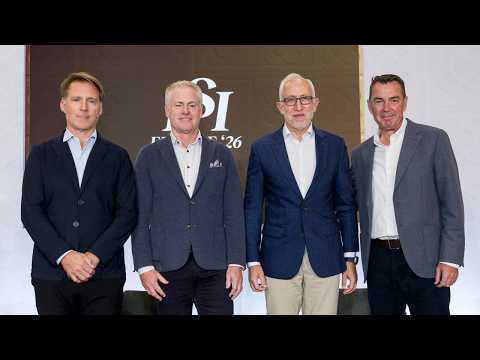
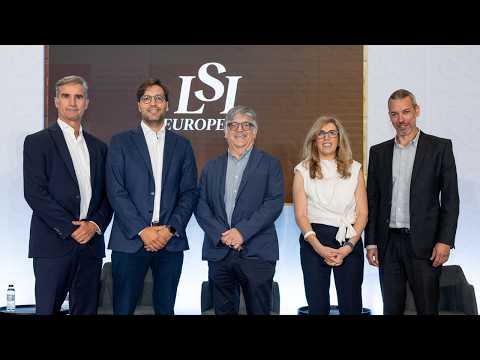
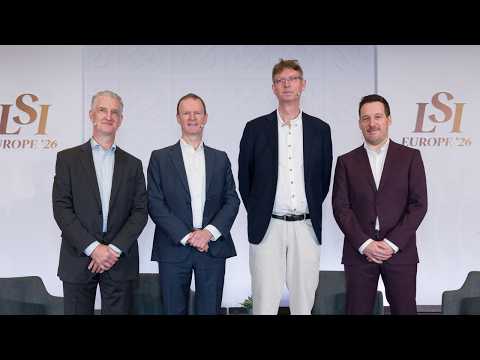
Industry experts from Veranex, Qaelon Medical, Cardiawave, and a former FDA official share critical insights on navigating pre-clinical development challenges, regulatory considerations, and strategic approaches for medical device advancement.
Join Our Next Event
Partner with the leaders
shaping the future of
Medtech at LSI USA ‘26
March 16th - 20th, 2026
Waldorf Astoria, Monarch Beach

Ryan Roberts  0:06  
All right. Well, let's get started. We've got a All Star audience from around the globe filling the arena today. The pre clinical journey is to first in human it's a important balance between two stakeholders, investors and then regulators. Innovators want to showcase their devices amazing potential outcomes or impact on patient outcomes, while simultaneously maintaining a balance within a budget to get the evidence they need to keep their project moving to next rounds of funding, we've got an all star panel today. I'm thrilled to moderate. We'll do introductions in a moment, but we've got a regulator, we've got an investor, we've got some innovators, and we've got the founder and leader of inarguably, one of the greatest preclinical labs in the world that's made a great impact on health care. And let's let's start with some brief introductions starting to my left.


Nicolas Borenstein  1:02  
Nicolas, well, hello, everyone happy to be here today. My name is Nicolas Borenstein. I'm French. I'm a veterinary surgeon, and I have been working in pre clinical research for the better part of the last 30 years, and I'm the co leader of a of that pre clinical lab called now veronix, but which used to be called immr in Paris, which I co founded with Luke bail, and that's for me.


Liam Burns  1:35  
Hi, I'm Liam Burns. I'm the CEO of Calon medical. My background really has two parts. The first is the first half of my career doing every sales, marketing, commercial leadership job you can do in med tech at Johnson and Johnson. And then the second half of my career has been in startups, taking early stage technologies through the final stages of development, launch and exit.


Carine Schorochoff  2:01  
Hi. My name is Carine Schorochoff. I'm actually the woman replica of Liam, so kind of the same background. Started my career 30 years ago in large Corp. Recently joined cada wave as a CEO, has been quite privileged to participate to several, I would say, revolution in the med tech role. First one with J and J at the very onset of my career, moving from laparotomy to laparoscopy. Then with Medtronic, moving from surgical valve to tavern, and now at cardiac wave. I think we're going to bring the next frontier in the treatment of Arctic valve disease with non invasive ultrasound to treat that disease. Very happy to be with you today.


Pablo Morales  2:42  
Good afternoon. My name is Pablo Morales. I am a trained vascular surgeon who spent the last 16 years with the Food and Drug Administration, the first 10, as a medical officer in the office of cardiovascular devices, subsequently chief medical officer in the office of clinical evidence and analysis, and last but not least, as a Senior Medical Advisor to the FDA commissioner.


Dave Adair  3:04  
So I'm David deer. I'm a statistical critical care physician by training venture capital now full time with souls bio ventures in Chattanooga, Tennessee, and for full disclosure, I'm a board member of Veranex.


Ryan Roberts  3:19  
Very good. Well, thanks. We thought we'd tackle four topics that we thought would be germane to the room, the changing and challenging regulatory landscape, navigating the how much is enough dilemma, how much is enough and what's too much? The complementary goals of safety and efficacy. As you build your evidence plan towards commercial launch through early stages and later stages of development, and then maybe a session at the end on best practices or common mistakes and execution. Let's start with the changing regulatory landscape. Pablo, I'm looking at you as a former sitting member at high levels in the FDA. You've seen a lot of change in your in your nearly two decades of the FDA, and you're in the mix on the modernization act. From your perspective, what are the most important changes in the regulatory landscape that that emerging innovators looking for funding right now should know about?


Pablo Morales  4:18  
Yeah, thank you, Ryan. I think what we have seen in the last 1510, years is the regulations are the same right that requires an act of Congress to change them, but the interpretation of the regulations via guidance documents, and I think we have seen with the beginning of the real world evidence, guidance by CD, Rh, the early feasibility guidance, the benefit read, guidance, and So forth and so on. The agency took a step towards trying to promote innovation by balancing safety and innovation. It's not like we lower the bar. No, the bar is the same. We're just changing the interpretation of the tools that the FDA has to facilitate medically device innovation to try to meet the new. To the relatively new vision of CD, Rh, that was posted by Jeff Shon about 10 years ago, which is he wants patients in the United States to be first in the world safe and effective devices. And we did have seen a chief, for example, in the aortic valve space. When the first percutaneous valve was approved in Europe, it took eight years for FDA to approve it. But if you look at the landscape today, after all these guidance documents implemented, changing the landscape, we go more aortic, not aortic, mitral, tricuspid and now pulmonic pulse under development and getting into market in the United States, when compared to Europe. So I think all those tools allow achieved in how the framework and the paradigm from a evidence generation have happened, or from the beginning of the conceptual device design all the way to clinical trials.


Ryan Roberts  5:52  
Nicolas, curious, you see clients and prospective clients all the time trying to think about meeting the regulatory requirements, while also satisfying investor curiosity, your perspective on how they're viewing EU versus us or other markets when they come to you saying, I need the right evidence to keep my programs moving.


Nicolas Borenstein  6:13  
Well, it, you know, this is the natural history of a project. It's not all regulatory when I see them, oftentimes it's proof of concept, de risking funding, convincing yourself that you actually have something. So it's not always the regulatory which is the final aspect, and honestly the most important if you want to go anywhere. But I have definitely seen the pendulum go us towards the US. It used to be back in the day, 20 years ago, everyone was doing it in Europe, and namely in Germany, where it was relatively easy to set a study. And then, you know, the pendulum swing the other way. And something that I have, you know, a clear recollection of prominent cardiac interventionalists who who said, with a little bit of spite, he was disappointed, truly disappointed, that the US He was American, that America was, like the 36th country to have Tavi or I'm, you know, don't quote me exactly on this, but that's pretty much what he was saying. Yeah, he thought it was abnormal. And he was right. It is abnormal. I think there was a moment, you know, an epiphany at one point where, where FDA thought, well, we're not going to let this be we don't want to be second. And things have changed. And at the same time, we had regulatory hurdles in Europe, which made things a lot more difficult. So right now, most of the studies that we do go to the US, and we do, I just check yesterday, we have currently 23 pre sub projects in the lab, just for the US, of course, just for FDA. So right now, I'm not saying Europe should be forgotten. I'm just saying that, clearly, the pendulum is completely the other way.


Ryan Roberts  8:17  
Appreciate that. Let's move to the next topic. This is the how much is enough? Dilemma, and I'm hoping we can get you guys to mix it up a little bit, because if you're making me work too hard, that means you guys aren't, aren't engaging in the banter yourselves. But I'm curious, Karine and Liam, you've both worked for large cap med tech companies. You're both now leading fundraising efforts for innovative startup companies. For an innovator with limited capital, what's the risk for you in designing kind of the minimum viable product, kind of clinical package, and how do you think about the overall evidence generation you're going to need throughout the life cycle?


Liam Burns  8:57  
I think it's about confidence. So the biggest challenge we're we're doing right now is trying to raise money. And we're not unlike every other startup that's that's here in London, you have to generate confidence with your investors. And so I think that first starts with what's your plan for data? I don't think about it as the minimum viable product. I consider data as one of the core parts of the corporate strategy. And so your data has to satisfy the regulatory needs. It has to set up your claims, it has to set up your commercialization. And so when investors look at your plan, I think they have to have great confidence that you can, a, execute it and B, that the outcomes that come from that are going to be powerful enough to tick the regulatory, the strategy, the commercial, the exit box, because strategics, in the end, are buying your data. And so I think that has to be embedded very early in the company. Strategy, and then it can, it can flow out from there in terms of the minimum amount of evidence, I think you want to whatever the the number is. You know, we so often are like, Okay, let's do 100 person randomized control trial. And 100 is powered properly, but that might get you your regulatory clearance. But if you did 200 or 150 or 300 I think you have an opportunity to check more of those boxes at one time.


Ryan Roberts  10:29  
Karen, your perspective, from big company, lots of resources. Can get all the evidence we want, including too much just to convince ourselves to now at the other end of fundraising, with a different perspective,


Carine Schorochoff  10:42  
yeah, sure, but just focusing maybe on the pre clinical phase, right? Because, I guess that's that's the question. So big company, small company, your pre clinical phase is an essential. And there are two phases, the one where you will go from your ID on the napkin and your prototyping and finalizing your prototyping and being able to demonstrate that you have something that works. And that's the moment where you work with, with labs, with Nicolas, I've been there within 15 years ago on very first tricuspid, I think, trans catheter solutions. It was very important, by the way, to have a lab where people are not just vet, where they will not just put your subject, your animal model, asleep, but they will also tell you what the best model will be. They can guide you. They can use images on those models that has nothing to do with human and when you bring in your doctors in the lab, they know the human anatomy, but they don't know the sheep or the pig or the whatever anatomy so very important even at that phase, because you may invest a bit more in some labs, but each day that passes by in a startup or you have not created value is a last day. So I think this is very key. And then when it comes to the second phase of pre clinical, to your question, you know, what is enough. You can have with the regulators in Europe or in the US, early conversations right in those pre sub meetings. You can even present your pre clinical protocol, saying, Look, this is what we think we're going to demonstrate through our pre clinical study. You can discuss with them the model that you have selected and then the number of subjects they want you to provide in the frame of your pre clinical because for them, they need to have the security that this is showing enough safety, and it's allowing you to then go into into human and just the subtility between Europe and US. Keep in mind that for those of you that may go first to Europe, as we did in Europe, you can obtain a first in human with data down outside of GLP lab. They will be accepted. And you can go to human in the US, no way. So think that, you know, think a lot about that when you do your pre clinical, if you think that you will go to the US, and most of us do, make sure that you collect the pre clinical in the right environment, straight on, so that you don't have to redo


Pablo Morales  13:03  
Ryan, if I may. I want to complement that. Thank you for taking us back to a pre clinical but I think when, when you the inventors are doing that exercise, is this new idea going to work? Like I said yesterday, try to do a landscape assessment, because if you want to get money, investor wants predictability, and I think the more outlined the pathway it is, including the regulatory classification. Is this a 510, K? Is this a PMA, is going to require additional resources that need to be putting through equations. So make sure that as you are building your prototype, you engage the right expertise, the three or four different type of expertise you need, so that you can map out, to the extent possible, what is going to take you to go from point A to point B, so to satisfy the requirements throughout the line. And then you do everything that Corinne just suggested, because otherwise you end up navigating what pathway. And then you say, Well, you know what you you're not a moderate risk dy, plus one, you're a PMA device. Because this is first of a kind, or a perfect example, a cyanoacrylates or crazy glue. If you use it outside the skin, it's a class two dy. But if you use it intravascular, is a class three dy. Just a simple difference will allow you a headache if you start navigating the investor and the product development in their own pathway.


Dave Adair  14:18  
Pablo, I want to extend that a little bit. You just gave the most elegant explanation of what we look for. We don't build things to be sold, we build them to be bought. And he said, Well, isn't that the same thing? Now it's a big difference. So recognizing there's limits to time and money, at least having some roadmap that touches on reimbursement. Okay, you got to start where you're going. Where's the journey going to go? What's that going to look like? Now, it doesn't have to be a fully baked plan, but at least you know, is this a DRG or is this going to be a CPT code that we need to get and how? What is your thought process behind it, thinking through the trial. Now, obviously, as we learned from. Christian human, we may go up or down, but ballpark, then what's the competition? I mean, you know, we talked about Tavi, what's the other people been doing? You know, maybe if we're a fast follower, we can go lower. If you're the Pioneer, which, you know, in the US, I mean, the American Indian shot you in the back with arrows. So being a pioneer is not always the best thing. So understanding that landscape and having that. And a lot of people say, Well, I don't have enough money for that. They'll pitch us well for if you give us enough money to fund a Vespa, this is the plan. If you give us enough money to do the Rolls Royce, this is the plan. I'm like, that's not a plan at all. Okay, that's, that's a hedge, okay. What is the plan? And if it's really quality investment type grade company, you're going to have all that baked in there, and the number is the number. Okay. Now it may be embarrassing to whoever you're talking to that may be too big or too small, but you'll find the right person if you concentrate on the quality piece of it, not the they're trying to check a box to satisfy me or the next investor. So I think that was wonderful that what you guys just said, because that's what we look for. I guess I'm the odd person now, and I'm the investor here, right? So, yeah, this is the finished product. This is what we're looking for. That's the secret sauce, well, but I'd like to dig a little bit farther, right? And all of you, I'm sure, have a view or will collaborate on coming up with a better one. But you mentioned the Rolls Royce and the Vespa and as an investor, tell us your plan. How does one come up with a plan? So Pablo, does the regulatory body help to advise what the plan should be from? From our CEO leaders, is your experience the biggest contributor? Do you reach out to other executives to say, when have you done this before? Nikola, how many times do clients come to you and say, I really need some help coming up with what my alternatives are for plan? So I would love to hear a little more discussion on what's the plan.


Pablo Morales  16:53  
Well, I can take it, as I say yesterday in the in the panel with Joe Ferrara, FDA doesn't charge, and they always put on the letter, please come early and come often. They're they're there to help. They are there to facilitate innovation, because the the mission of the FDA is protect and promote public health, and they won't promote if they don't facilitate innovation. So I think their answer is not going to change if you come with a 10 peaks animal study, or with no pig animal study. And my advice to you is go early ask the question, this is what I have. This is where I want to go. What do I need? And they will like me. They're humans. They believe in what they're doing. And they're going to give you a roadmap to the extent possible of what testing is requiring, depending on the risk classification of your device, they're going to tell you which ISO standards you need to satisfy, which one are recognized by FDA, and which one no and go as soon as you think that you're company and to have that conversation.


Carine Schorochoff  17:53  
And I think to rebound on that exactly sometimes I like your phrase. Those are humans, and we tend to sometimes look at processes and forget the human part of the dialog we can have with the regulators in Europe. In US, if I'm an FDA reviewer, I may see 200 files in six months. And if someone comes and takes the time together with one of the physicians that works with them to educate me, I'll welcome that, and that has been my experience. They're very much open to dialog, to listening, to understanding. At the end, these people also value innovation. They also want to do good to the patients. They also want to do good to the healthcare system. They are not just there to block everything and try to keep it outside. No, that's exactly the opposite. So yes, I can only encourage this dialog. Same in Europe, you can have dialog with the regulators. You can go to what we call CPR, clinical path we review, which means you present what you intend to do. They'll ask external expert to review your plan, and they will come and they cannot tell you what to do, but they can definitely say, Okay, this is going to probably meet our expectations or not. So, yeah,


Liam Burns  19:03  
there's risk in that, though, and this is, you know, look at you. You put a hypothesis together, you put your strategy together. We're focused on Lake detection, so that is what our ultimate focus is. I would find the right expert to guide me, because I think you want to go to fda with a hypothesis, you've done some research to power your study, because if you say, hey, what do we need to do? And they come back with a 500 patient study, you've left it all open, and at that point in time, you're stuck doing what was suggested and what I've seen in my career with the right regulatory consultant guiding me, we can curate that, that discussion that says, Okay, it's 100 patients, so we're going to do 150 to be well beyond the powering and this is why we believe that our hypothesis works. So I'm a little still, maybe respectful or scared of FDA. In the right way to bring them this is my solution, because then you kind of keep them corralled to a range, rather than giving them an open homework assignment, and then you end up with this


Dave Adair  20:12  
massive trial. That's a hybrid approach, is what we call it. And it's exactly the same thing. I mean, to one degree, I vote in Chicago early and often. You know, you want to engage, but you want to be an educated consumer. You don't want to be like your first time to Disney World and you got a map you are here. You want to go in. And I think preparation, you know, and that's where luck is. It's preparation meets with opportunity. So you get to KOLs, you get organized bodies that help you form this their thesis. Then, when you go to the agency, you're an educated consumer, and when they say, you know, we have to do 5000 patients, like, well, so and so only did 100 or this or this. And based on this, having the thing, then I think published point about early and often having them give guidance. So it's really a blended thing. I would not go in, you know,


Ryan Roberts  21:01  
kind of, yeah, you rightfully reminded us that preclinical labs aren't just about the GLP study that you need for submission. It's about early technical and clinical feasibility, feasibility validation. So we share a little bit your experience in that process and what matters to getting to what the plan is that an investor or regulator would care


Nicolas Borenstein  21:21  
about what are the questions that I get the most? And it's one of the presentations that I gave the most, is, what's it going to be a pig or a sheep? I mean, it's as simple as that. You know, most of the time the the the company has no clue how to test it. What is the right species? How many animals, what weight? What is the anatomy, comparable or not? And the second part of the discussion is, and a lot of the things that I say is, those are the limitations of the animal model. You can't beat that. You can try. You can, but if you cannot make it work in an animal, then you write up, and I will help you do it, sort of a report saying we've tried, we've tried hard. We've tried in so many animals, but this is not possible in a sheep because tissue frailty, because of coral rupture, etc, and we adapt. So it's very the preclinical route is very much about finding the right solution to make something that's imperfect as representative as possible and convincing as possible. And to echo what you just said about the FDA, I had this year very good interaction with FDA. I thought they were open minded, you know, there was this one company that had a stent, a valve, stent for, you know, I will not tell you where exactly, but anyway, it's very difficult to make work in a sheep. You need, you don't need to have regurgitation for it to work, need to have torrential regurgitation, meaning that you're going to lose 90% of the animals. That was an argument that the FDA accepted, and we engage into the discussion. I gave the ins and outs and what worked, what was risky, what but the people that I spoke to were open to it, and I will agree with the fact that you shouldn't go there with a minimal, minimal number of cases or animals. And I have seen more often than not, companies coming back to us saying, Well, yeah, you were right. Okay, okay, we'll have n equals six per group and


Pablo Morales  23:37  
not three. I would like to time into that, because it also depends. So when you're doing the landscape assessment, you first you look at clinician, Is this likely going to fix a clinical problem? You look at the regulatory consultant, and he's going to tell you, based on the risk classification, what are the likely steps that you need to take, and depending on that, if you're going to go through break through, you don't need to get the whole season rational. You're going to go for an Oscar nomination. Not everybody that gets breakthrough approval is going is going to be approved. You are nominated. Not everybody has done it. We don't know how many percentage today, but I think that's something. But to a point that Leah make, I would agree, yes, you need to go there with some level of education, because one of the mistakes more commonly done by a sponsor that I have seen when I was a reviewer is that the company assumed that the FDA knows everything we don't know everything. We know everything about the landscape or the competitors, but your technology and your application stand by its own in whatever you provided in writing, and what is not in writing is not part of your technology. So you need to educate yourself and your team with the right expertise before you engage in that conversation, so that you can funnel it to the right approach to avoid the mistake that Leah was mentioning. So once you assemble your team, once your strategy is as solid as possible, and you understand it from different angle, then you go to fda. Right? And then you can have a conversation when you can educate them on your technology. Remember, we're talking about technologies that never been tested before. So the FDA has very good engineer. We have very good veterinary medicine. A file come in could easily get anywhere between 10 to 20 different consoles between the expertise at the FDA. Okay, so you need to do your diligences to understand how these work, how these operate, what problem you're trying to solve, what are the alternative treatment? Blah, blah, blah, blah. And once you assemble that knowledge strategy, you go to FDA, and you engage in the conversation. But I think the level where the body is going to be, it depends on where you are and in which category you're going to apply for.


Ryan Roberts  25:41  
You mentioned the word adaptability, and we've got three surgeons on the stage, all of whom have either invented or seen dozens, if not hundreds, of inventions come through the process. What if it's not the animal? What if it's the device? Share a little bit about your experience of with all apologies to technical innovators in the room. You thought your baby was really pretty. The baby's not that pretty. The device needs some work. Tell me a little bit about that interaction, especially as it as it relates to teaming with the innovators to get to a good outcome. That's key.


Nicolas Borenstein  26:17  
I have yet to see a device that's in its in its infancy, that truly is ready. I mean, there's always work. There's work in the device, there's work sometimes in the concept. There's definitely work in the experimental setup, and there's work in the delivery system. There's work in the imaging technique that's going to be used. So all of that has to be done hand in hand with the with the physicians, with the KOLs, with the CEOs, and, you know, we spoke a little earlier about, I think it was you LEM, who said that it was important that everyone had a say at the table. And I totally agree with that. I think it's important that you're not just in a technical platform where you're going to be able to do your pre clinical research, whatever 12 animals, done histopathology, done ticking the box. No, I think you need to work together. You need to improve. You need to be in a group, or, you know, working in a preclinical lab where people actually like innovation. It's not just, you know, in the restaurant, we're actually here to do something together.


Liam Burns  27:26  
I think, I think you highlight the need for choosing the right key opinion leaders. And so to me, there's, there's groups of key opinion leaders that you need in various roles. So you're fundraising your key opinion leaders that bring credibility, the thought leaders, they may not be the same people that get in the lab as surgeons and solve mechanical device problems, and so you have to set that up with the right people. I personally recommend that, if you haven't been with a key opinion leader in the operating room or the cardiac suite or wherever, and you've seen the way they interact with their team, the ones that are telling and it's their way or the highway, that aren't learners. They're not growers, they're not facilitating that dialog. Those are not the ones to bring in the pre clinical lab, especially when your prototype is early on. You can bring them in at the end, but I think you need those surgeons and operators that are going to solve problems and are going to participate with you, whether that's the vet tech, and I've learned a lot from the vet techs working in the right labs to residents and fellows that are supporting some thought leading surgeon. They all bring great perspective. You got to create the environment where they can contribute.


Carine Schorochoff  28:40  
And I think the same way at the at the lab level, because I've seen implants being done back then on the tricuspid valve, where we brought in an intervention cardiologist, an echo, cardiographies, and at the end, it was the lab staff that said, no, no, no, that's not the way you're going to get your best images on the tricuspid valve. You need to go from the bike, you need to do this, you need to do that. And that was an immense amount of time that was gained, a lot of money saved, just through the fact that we're dealing with people who, as you said, are at the table to to bring their expertise, kind of surgical expertise as well. And I think that, as you said, you need to have, then physicians who are capable to listen to that at the table and willing to allow the people at the wet lab make


Nicolas Borenstein  29:23  
their voice. Karen, you had one of those in that you have worked with, and I'm thinking of Hugo Bannerman, who is one of those rare bolt Kol and innovators that can actually listen and do what you know, exchange with you. But many and this is definitely something you guys have to be careful about. When you choose who you bring to the table to do research, if, if they're so important, so well known, their ego is so big that you're not going to be able to work with them, then you know, it's, it's time lost. Maybe people will have suggestions. Suggestions, and they'll just go, oh, no, no, no, no. That's not the way it's done. And nobody will dare to tell them. But hold on, I think there's an idea.


Dave Adair  30:07  
I've delivered 1000s of babies, guys, so real babies, and I can tell you, every parent their baby is the prettiest. Okay, there are no ugly babies to the parents. Okay, obviously walk down the street there's some ugly people. So there's a disconnect, right? I am very straightforward people. I'm like, your baby. What great eyebrows, but dang, it's not pretty. Okay, so how do we make it pretty? And I think that's the reality, and I think that's where you separate the person, because you fall so in love with your invention. If you're not coachable you're not willing to listen, then that's not a fundable project. Okay? So you know, when you have experts, you know, like this panel here, people who are helping you with that, be open to making the product better. The process is what at the end result, what we're trying to get to, right? So if you're not willing, from the day one to take your cocktail napkin and realize this, it's got hair on it, okay? And I like to have some hair, but, you know, that's a different story. But learn to take that feedback in a positive way. Don't take it negative. And I see too many people bow up, you know. And I saw Nicholas's reaction when he was talking about, you know, people don't listen that they're giving you information to help you to be better.


Ryan Roberts  31:28  
I'll play devil's advocate. We began this discussion with an objective of finding the right path that combines the necessary safety elements of a preclinical study with some hope for efficacy in an eventual human trial. And you've talked about collecting the right team to give you the right feedback to get enough evidence to build the right plan, I would think that sometimes that could go wrong, like somewhere between I've got the right, most cost effective plan to get the evidence I need. And this is a science fair project that has now become a research mode that's costing way too much. How do you balance that, especially when you get, I'll say, luminary, klls involved, that are there for other purposes than just getting your study done the most effectively possible. Where have you seen that? How do innovators? Innovators manage that.


Nicolas Borenstein  32:22  
The first thing you probably don't want to do is develop an excellent device for sheep. You have to remember that in the end, this is for humans. So you may struggle. You try, you fail, you try again, you iterate, you try another one, and then you get the perfect ovine or porcine device, but it doesn't mean that maybe you've lost track of where you want to go. That's one of the mistakes that I think we should avoid. And sometimes it's kind of paradoxical, because this is what I do, but I tell them. I tell them, stop, stop. You know, you we have to find another solution. We have to maybe cut your device into this part will be implanted in the heart, the other one in the neck, the other one in the foot. I'm slightly exaggerating, but that's pretty much what we do. So finding another strategy when it's just too much, and because you're so in love with your device, you think it has to work, and it has to work in this species, that's a point of attention or


Ryan Roberts  33:29  
listening maybe too attentively. David and his ilk are not here to fund pure research, right? No, no, sure. Our CEOs and innovators have to leap from the chaff and say, we have an objective, and that's to move product development


Nicolas Borenstein  33:43  
along in cardiovascular it happens all the time. Now, people come and say, So, how does this work? Why does it work? And I tell them, Well, maybe this, maybe I'm not the right person, and maybe our my lab is not the right place to figure it out right. Now, you want to prove that it works. Sure, you want to convince yourself. You want to prove that it's safe, and you want to go to the clinics fast enough. I'm not saying I'm not against basic research, and there's lots to do. I'm just saying that this pathway that will take you to regulatory and to the to the clinics is not necessarily a pathway where you want to go into the mechanistic challenges and trying to understand that are the very minute, little explanations as to why a device is efficient or not.


Dave Adair  34:32  
It has to get the clinic. I mean, you want to do it right. Has to be efficient, cost effective. They get to clinic as soon as possible, because that's where you're going to prove the thesis. And that first one human data is where you'll figure out, a Ha, this is good, or we need to tweak it a little bit, or Let's kill it, and that's a fast yes or no. That's really what you're striving to get from all of this. The whole purpose of this panel, really is to. Get us to that spot. Because once you get to that spot, if it's good, you're fundable, and everything's gonna be good. Before that, there's a lot of places you know, where you can step in cow dung or pig dung or cheek dung, whatever dung that's there, right? So you got to be very careful on how you do that. And you really just want to be efficient, because time is money on an early stage company,


Nicolas Borenstein  35:21  
about the time thing, the one thing I would also strongly advise you to look into is to having very good engineers that listen, that understand anatomy and understand surgery and and that iterate quickly, because you are going to fail. As I said, you know, the v1 is not going to be perfect. You're going to have to tweak a little thing for sure, and then maybe something else. So you need to have people that are ready to try to not one year later. I mean, if possible, two months later, tops. And then you can really get the ball rolling and move quickly, and then have your your project come to fruition. You need engineers that can iterate quickly. All right,


Ryan Roberts  36:07  
clock is ticking, so I'll, I will two minute drill wind a sort of two minute drill. And it is football season in America. So on behalf of LSI, I want to thank our panelists. I'd like to do rapid fire. We've got a time for call it 1520, seconds per person. Let's tackle the best practices or really problematic errors on execution. Advice for for the innovators in the crowd, Nicola, let's start with you.


Nicolas Borenstein  36:34  
Okay, so that was my first one. Engineers get good ones and iterate quickly. Fail quickly and improve quickly. The second thing is get a group, a pre clinical group, where there's really an understanding, if you, if you don't get along, go somewhere else, you are going to need to work hand in hand, and a lot, you're going to meet a lot of headwinds. It's going to be difficult. You need to be able to build together and innovate together. Sure, it's your baby, but you want to do it in an area, in an environment where you're comfortable, where you can do things quickly, and in a with trust. So you know one word is that I would definitely stress, is trust.


Ryan Roberts  37:20  
Liam, common mistakes and execution or best practice.


Liam Burns  37:24  
I think safety and efficacy is too narrow of a look at the data strategy, the whole portfolio, or the whole process, has got to be laid out there from the start. For example, economics, you should build the strategy that has the entire data plan. It should back into your point. There's got to be collaboration between regulatory between engineers, between KOLs and the commercial arms, so that what you're creating can be used for everything. You're not doing it all at once. Otherwise, you just do your safety and efficacy study and then you start over in the next step, and the next step which will lead to launching without data, and that's not acceptable anymore.


Ryan Roberts  38:04  
Karim, yeah, sure. Pay no attention to that clock. It's just fine. We need your 30 seconds.


Carine Schorochoff  38:10  
Totally, totally agree. Start with the end in mind with just, just back to the topic of the of this panel. Pre clinical perspective, I like the quote, don't fell in love with your innovation, because that's likely to end, not badly, but you'll need to tweak so be able to accept that, be able to listen to the people you work with in the lab, consider all the voices around the table and talk early with the regulators, go to them with your proposal, indeed, so that you don't end up with like 1000s of patients, but make sure you understand the perspective, so that you're going to bring them what they want to see.


Ryan Roberts  38:47  
Pablo hot Take, 


Pablo Morales  38:48  
I will say, do a landscape assessment of your invention and assemble a team of experts that are going to help you getting from point A to point B,


Dave Adair  38:58  
real quick and simple. A lot of white boards and a lot of dry erase markers different colors, have trusted partners that you're working with. And then the other piece to this, I would think, is that do it the right way, because if it's worth doing, do it the right way, but do it fast and efficient with those caveats.


Ryan Roberts  39:16
Thank you everybody. Appreciate it.