Patient Outcomes That Attract Investment | LSI Europe '25

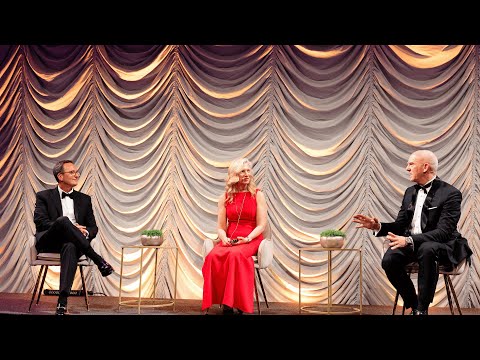
Investment leaders from Watershed Therapeutics, Earlybird Health, and Segulah Medical Acceleration discuss which patient outcomes are most compelling to investors, offering strategic insights for medtech companies seeking funding in this interactive workshop session.
Join Our Next Event
Partner with the leaders
shaping the future of
Medtech at LSI USA ‘26
March 16th - 20th, 2026
Waldorf Astoria, Monarch Beach

Topher Kinsella  0:05  
Hi everybody. I'm Topher Kinsella, CEO of watershed therapeutics, and I'm joined by two people who have a lot of experience investing in companies. Would you guys like to introduce yourselves? 


Karin Leire  0:15  
Thank you. I'm Karin Leire. I'm investment director in Segulah Medical. We're a Swedish based VC company investing in late stage Medtech.


Thom Rasche  0:21  
Hi, my name is Thom Rasche. I'm partner at early bird health. We are a venture capital provider from Germany, in Berlin. We are priding ourselves to be the only fund in Europe, if not in the world, who has public health insurances as Cornerstone investors, which is rather unique, at least in Europe.


Topher Kinsella  0:48  
So topic of our discussion is the only patient outcomes that matter for investment. So when people come to you and they razzle dazzle you with the size of the market or the opportunity or the size the unmet need, when does the patient outcome actually pop into that conversation? Like, are you really motivated by a 10% improvement, or is it about the patient pain point? Like, what are the things that actually grab you and make you really perk up and pay attention to that pitch


Thom Rasche  1:18  
happy to do so? So, as I said, we have public health insurances, so patient outcome is very high on our list. It's probably going to be right at the beginning of the question, how much will you improve it? And when it's a 10% improvement, I'm probably shaking my head, because 10% is within margin of error, usually in the stuff we measure, so it needs to be dramatic, 3040, 30% better than what you have today. But the question really is, how do you one define patient outcomes? I Is it site or care? Is it length of stay? Is it less pain? What is it really you're trying to define? But my next question would automatically be is, how do you prove it? So what's the way how you can show that you actually do improve patient outcome, that actually makes sense from a clinical perspective. So next to the question of patient outcome, my question will be the clinical trials, the size of it, and what you need to actually prove your point, I think that is really important. About 50% of our deal flow is in diagnostics, all kinds, be it the modern digital tech ones or the traditional ones with fluids always to determine diseases earlier, differently, faster, all of those things. And again, I would be always asking, so what's the point? IE, what the therapeutic impact you're going to have with that new diagnostics, and will you change people's life with that? At the end of the day, that's the way we approach it. I know those are usually questions people cannot answer. I realize that, but I do know that they you have to think it through and actually say what the end game will be. Plans change. I realize that too, but at least have a thought process on that. So in


Topher Kinsella  3:19  
the diagnostic space, there's a lot of companies here that are in diagnostics, and that's a tricky spot to be in, because you're claiming that you're going to get your technology works and you can detect a thing or state a thing, but it's not the therapeutic. So if they can't, if the diagnostic cannot directly generate the outcome, do you ever run into situations where the technology absolutely worked, they did what they said they did, but it did not move the needle for the patient outcome that they wanted?


Thom Rasche  3:52  
So I mean point of care diagnostics, for instance, a good example on those things is like you really have to ask yourself, is a point of care diagnostic, improving care by getting the information right there and then, if it's an infectious disease, you can argue this, because you can actually have a therapy acting right there and then, if it's just another diagnostic, which you can do as well and as good as in the central lab. And it doesn't really matter whether you have a day or two later, then I would question this, because those labs are highly efficient, very cost efficient, and all of that. So point of care diagnostics is one of those examples where I say I'd be very careful to look at those if they really make a difference to people's life, ie, we didn't need to know it now or soon, rather than wait another day or two where you can get it, and most of the things are process questions. So it's established processes within an healthcare system, where if you change the processes, you would get the answer as fast. It's just a new technology was trying to. Overcome an established process in the healthcare system which you can change the process, and then you would get the information as fast.


Karin Leire  5:08  
And tying on to that, I think you have, you have to have to, we would, in detail, evaluate how many stakeholders is it actually that needs to be convinced about changing a standard of care or a way of operating as you introduce something, something new, if you do to build on to your your ex or your example, there will be, there will be places where they will actively work against you to implement this improvement, even though it's an improvement, because you're changing you're changing something that's functioning for them today.


Topher Kinsella  5:52  
So how should companies handle it when you know there's some point of care diagnostics that, I think, absolutely prove that they can detect the thing that they say they do, and they'll make the argument that this information will be valuable. The reason we don't have a care pathway is because everybody does not have this information. So things like early detection of a AV fistula in trouble, this is a unmet need you see all the time and struggles for investment. Grading and staging of concussion severity is another one that struggles early detection of a diabetic foot ulcer. So what is it about, you know, so if you're a company that's focused on one of these things, what is it? What is the reason why this doesn't move forward from a patient outcome standpoint, or from attracting investment? And what? What should those companies change about the way they tell that story, or how they approach it?


Karin Leire  6:58  
They're just so they're just simply too many things within healthcare that are bad, that are accepted as being bad or pain, that is a pain level that is accepted where no one, where no decision maker, is actively working to reduce that pain level. So having a then in that specific situation, a 10% reduction in pain level is not the dry will not be the driver for us as investors, because we need to see, we need to see the, in the end, the business case that will drive the value of the of the company. So for that situation, it's valuable as a company to present which are in rather detail actually, which which are the different activities that we are going to do over the coming years to drive the change needed for my solution to Be A must within the organizations, just like you have, you know, penalties for readmission into hospital, for example. How can you tie your solution product to such decision making so that you can, in addition to your, you know, the get the given how it improves health, how you also can drive implementation of it.


Thom Rasche  8:28  
I mean, I think at the end of the day, you have to see us as a middle man. So we managing other people's money. They have the trust and faith in us, and say, you will be investing those company which will producing a good exit at some point in time. So you have to look at it from a back. So if you look at a diagnostic company and say, Okay, what will this company have to show before we believe they believe jointly. This is exit ball. And diagnostics, we've learned you need to have revenue traction. So no revenue traction, ie validating your business model, no exit, which we know is a costly endeavor. It usually is a little bit of trial and error until you figured out your strategy and all of that. So it will take time number one, and if you look at, for instance, stroke detection, which is actually a good example, because there's a number of companies out there selling devices or trying to develop devices, which gives you the ability to determine whether a patient had a stroke or not very early on, even in an ambulance. Now you need to look at that market and says, Who is the purchaser in ambulances? It's usually the fire department, or anybody of those guys, will they be investing in a company which actually has an early stroke detection device, even though you could argue the patient outcome is going to be improved, because you do know that once you actually have figured out that they had a stroke, that you better bring it rather than to general how. Hospital, emergency room, but the problem is, in that market, it's really, really difficult to get a foothold, and you actually get that revenue traction I described early on, because there's no money in in those areas to be made, and the decision making is really fragmented and spread out, so you really have to think about the whole process, having the commercial experience as well, is what it will take to actually get that commercial traction, which in particular in diagnostics, I think you do need to have. I think in other indications, you can actually sell the technology more on its promise, rather than on the traction there, where you say, like, Okay, does this area have money? How is decision making being made? Will this? Will this change the needle? Even though you could argue that if it is adopted, it will improve patient outcome pretty dramatically, actually, but getting there is painful, will take a lot of time, and maybe need to change the system actually to a certain degree, and you will be surprised in Europe and in the US, even though we have very different healthcare systems. But the fundamental way of how things are adopted are rather similar. They are not that different at the end of the day, because again, being back with my my stroke detection device. It's being used and utilized in all the countries in a very similar way, and the people who purchase it are different ones, but acting the same way.


Karin Leire  11:34  
This is also the beauty of operating in the Medtech space. It's, you know, comparing to pharma or biotech, where it's super strict and all the different phases and what you are to do, and you can't do anything outside of that. That's what you can do in in Medtech. So you can, you can re, you can really make, make the that plan for your product or solution that's unique to you, and that that means that in some, in some cases, if we take your example, it's It's most probably people that are completely outside of the health care chain that are to make the decision. And it could be a it could be a really simple, not even health economic, but economical study showing the journey from the patient's home to when they leave the hospital, type of journey that won't cost you very much, but will very clearly describe the value of what you're doing. And I think that's that's something that that is as investor, that's what you evaluate a lot in the ability of the team to to really maneuver these challenging hurdles that come all the time in understanding who am I to who am I to please.


Topher Kinsella  13:08  
So you talked about how you know you're the shepherd of capital and you're a middle man between the entrepreneur who has the vision and ultimately the acquirer. And you gave an example of an acquisition target or an output where the patient outcome is not what they're going to get acquired on. It's going to be the revenue the market has to prove it out. What comes to mind is patient outcomes that actually do drive acquisition prior to revenue. What are the things that in your industry or your particular focus that people sort of do not question. You can demonstrate this perfect.


Thom Rasche  13:48  
I mean, it really depends on the indication, but if you, let's say, go in height failure, or any of those, those areas, I think if you can show and demonstrate in rather smallish trials, that you actually change people's life by either having no admission into the emergency room, survival, when they have a short, short time horizon. You can actually go for that, which is a pretty strong endpoint, but it's rather rare. You can actually pick that one, but I think there's a number of sub Ed points you can look where, if you can demonstrate it with your technology, that outcome will drive adoption there pretty severely. Now, there is an economical side to this, because it has to fit into current I would say adoption patterns, be it cardiologists or any like that, where you say, okay, it fits in there. So the likelihood that somebody of the corporates can put that in their bag and add that to their bag is high, rather than needing to invent a new distribution channel to a new group of customers which nobody has access. To so I think that's all the thinking we are trying to blend in again. We're trying to look, from the end, if the company is ready, what do they need to show that somebody hopefully we can define it, and it hopefully should be more than one that would say, if you can show that, then this is a potential acquisition target. Now, will that happen? You never know. We all know that the venture business is not only knowledge and expertise. It's a lot of to do with luck, whether you like this or not, but that's the analytics we do at the beginning. So we always look from the end to


Karin Leire  15:43  
No, I just want to say we also see quite a few companies where you, you enter the market with less claims than what you what you're aiming for, with a with a product in order to build that revenue being asked for. And that's that's, in many ways, a street smart way of doing it, and in in areas where there is, you know, where there isn't a given outcome to work for us, for everything, that's a class three device or more, more regulatory, regulated products, the outcome is already given which one you're to work with. But for the for the other ones, it's beneficial to look at what has been done by your competitors, because your product is, of course, better than the competitors. So by showing, by using the same outcome that the competitor has done, you can piggyback on quite a big bit and still show that you are a better choice than theirs.


Thom Rasche  16:54  
And I think the important thing is we don't pretend that we know it all, because we don't, then you get surprises, like the organoxe exit, where you say, like, Hmm, interesting, but I never anticipated this. Or when you look at Axonics as an exit where you say, Hmm, really have not thought that in neurology would actually be able to find those kind of exits. So it always shows and display to you to say, like, you really don't know everything. You have a list of assumptions, and they may not be right, and the entrepreneur may actually be right, not you. But that's okay. I think that's where all the discussions come and where, where you have to figure it out. And again, do we pretend we know it all knows how I think actually, the older you get and the more you're in the venture business, the more you learn you know nothing, really, absolutely nothing.


Karin Leire  17:50  
One thing to add. Too often, too often, we come across device companies where the entrepreneur you know, shows the device, shows the shows how obvious it is that this is a great product. And almost, you know, is, don't feel that there is a need to actually prove that with any data, because it's so obvious when you see the product. Don't go down that path, because there are always decision makers we offer. We work in, we work in a data driven world, right? You need to have data points, regardless of which, which one it is you that's a critical one.


Topher Kinsella  18:40  
So for the entrepreneurs that are here who may pitch to either of you in the future, are there any patient outcomes that they tried to sell you on early on where you just think that's sort of inappropriate? So like as a seed stage or series a company, if somebody comes to you and says, the reason you should back us is because we're really going to improve quality. You know, how do you respond to something like that?


Karin Leire  19:05  
It needs to be put into perspective in each of the in each of the cases. So I've seen, I've seen many, many slides today and yesterday, where, where you should, where you see the you see the difference, but don't tell at all. What's the impact of this difference for the patient, for the hospital system, to put it into context, is, is what I'm missing out on quite often. So then you could almost have skipped, you know, skipped it instead of showing something, but not the why,


Thom Rasche  19:42  
when you say quality, this is an excellent, interesting term, term because quality of life with patients. So the softer the endpoints are getting, the more critical I we would be getting. So I'll tell you, give you a couple of examples. For instance. And all of the digital apps which go for ADHD, for which go for depression, which go for any other anxieties, is one area, the other one is quality of life for really severely diseased individuals, heart failure, certain stages, neuro class three and four, then you have to go for the what are the eight minute walk test? You really need to be careful if you invest in those companies. I think that when you do that, you need to be convinced that the changes this technology is going to make is pretty dramatic. In particular, with any neuro modulation technologies, you need to be very careful about the placebo effect, because any trials you do in that fact, just by definition, if you have patients involved in that will improve, regardless of whether the technology does anything or nothing. So all of those things, the more soft the endpoint is going to get, the more difficult will it be, or the more harder, the higher the threshold will be in order to change patient impact. I think that's really, really important, and there are so many neuromod companies out there right now, and I guarantee you a number of them are sitting in this room, even where you really need to be careful on definition of your end points and making sure that the trial is powered big enough, is diversified enough, ie from, From the site perspective, to make sure that you get this effect as minimal as possible. It's never, it's never going to go away, but it's, it's going to be and that's the argument I would have. I mean, if you then start going and doing a 30 or 40 patient trial, it's not going to be sufficient. No way.


Topher Kinsella  22:01  
Earlier you mentioned that your career humbles you. And you know, like most people, I think we all kind of learn from scars. Have you had an experience investing in the company where you really did believe in the technology? You thought the patient outcome was going to be great and drive an acquisition, and we're surprised.


Thom Rasche  22:26  
I can give you an example. It's not my investment, it's our investment. So it's from early bird, and I was actually the biggest critiquer of it. It has not had an exit yet, but it is amazing how it is developing. And it's a classic a digital health company. You may know it Aviva Veeva is a nutritional consultancy company active in founded, actually in Switzerland, now active in Germany and in the UK, and starting to do some work in France, which is going to generate over 100 million euros in revenues this year. Unbelievable. And growing more than 100% every year, year on year. And I was the biggest critiquer on it, I have to admit, and I'm stunned how well they have executed. Now it's not a classical device investment, I agree, but those things do happen. So


Topher Kinsella  23:28  
one of the things you can't help notice is it's either a great signal or a bad signal when you see multiple companies going after the exact same goal, and you have to question Is it, are they wrong about the unmet need for Are they wrong about the patient outcome they're going after, or are they wrong about the tech? And one of the ones that I have watched for years is non invasive blood pressure monitoring. And I would have put this in the camp of, I'm not sure anybody's ever going to be successful there, but I find out that I'm I get surprised, and you have a recent example of that. Do you not? Can you share what drove you to look at that technology and reconsider?


Thom Rasche  24:13  
Yeah, I can even tell you that I have a little bit of history with this, because I was part of the first non invasive but occlusive blood pressure monitoring devices which were used in intensive care and operating theaters, company called critic on which was owned by J and J way back when, and that's when I was involved. So I do have a little bit of background knowledge in this, and we invested in actia now. High, Low, because actually, as you said, it's a very much of a data driven spill. These days, Attia has a phenomenal wealth of data on their non invasive blood pressure monitoring. And I think we are very. Convinced that the technology will hold up in its accuracy. Now the next level of question is, how can you make sure that this is being used and utilized, not necessarily reimbursed, but actually utilized in the healthcare system, and we believe it can only work through the clinics. Ie regulatory approval, FDA as well as European approval. They have just received an FDA approval for their spot check measurement, but they will be shortly going, going, hopefully getting their approval for the 24 hour blood pressure monitoring. It's such a burden to society, if you actually find a way that it is passively monitored, easy, I think it has a chance to be adopted now the jury is out. We will see, I think, but we made the investment just recently, and what is it like a month ago or so, we quite convinced that this technology has the ability to do that, to manage blood pressure much better than we have done in the past, with a very low threshold of adoption. And I think those ease of use, as well as the data they have with regulatory path, those are the key components to make this a potential success.


Karin Leire  26:32  
But this must be, I don't know this specific case of yours, but it must be a case where you really, where you really trust in the team, and you trust in their in their ability to scale this into something successful, absolutely, because, but to your point on, you know, when there's, I think we get, I think we get some type, some, some device that measures vital signs in Different ways. I think we get one a week. So you, if you're in that space, you really need to be able to show why we are, why we will be able to be successful in this field. Because no doubt that there is a need for an easy solution to to the monitoring to to ease the daily burden on the on health care staff. But how are, how are you to work successfully, to grow the business beyond your your you know your friend, not your friends, of course, but your hospital friends and scale it that's challenging to evaluate.


Thom Rasche  27:47  
This is a tricky question, because at the end of the day, I think blood pressure, as we all know, is a really big burden on society, but you have to develop a technology, which I think can be adopted by both physicians and patients easy on a low threshold. So any pads, sticky stuff, all of that stuff, I think is out. I think we know compliance is very low. People won't do it. Having a wristband potentially could work, maybe even if it's integrated in your watch even easier. So that's one side. That's the clinical side of the world. And then you look at things like aura, the aura ring, where you say, like, Hmm, what I'm missing as a medical device. Investor, conservative, looking at outcomes, all of those things where you see, like, okay, there's a company which just provides you with vital signs in the stupid ring, and they make 500 million in revenues, and you're scratching your head and say, like, Okay, I'm missing something here. Something doesn't add up in my mind. And that comes to my humbleness again to say like, okay, I guess we'll have to revisit our thinking and understand what we what our assumptions are, and whether that those are necessarily right. They're never right, by the way, or going into the right direction.


Topher Kinsella  29:12  
We have a mixed crowd, plenty of people here from the United States, plenty of people here from Europe. Those two health systems treat patient outcomes and their importance very differently. How do you counsel companies who have a thesis that says the reason you should invest in this is because, let's say NIH NHS is going to love us, but not specifically tailored to the US. Or do you try to push as many companies as you're working with to go after the larger market? How do you balance those two things?


Karin Leire  29:44  
I guess. I guess what we would, what we what in the in the evaluation we would, we would first evaluate if they actually know about these differences, because they don't always do. But then it's, it's a. Um, it's we have, we have reimbursement systems that are very different in in the US and in the different European countries. And I think to be able to to, I have one example of us, of a Swedish company where they there's the Swedish thesis used with with the healthcare system, is really based on, on patient health, whereas in in the in their pitch, in the in the US, it's about how you wither with their software. Can have more more patients, you know, more patients monitored in a day. So more revenue for to the to the into the investor, essentially not talking at all about the value it actually brings to the to the patient. And then for, for us as investors, where we, you know, we put in our we say that we want to invest in companies that will improve global health as an overarching thesis. Sometimes that's actually, some of the pitches actually threaten that sometimes, because it gets more into a business than improving improving health. And then you need to think, what's some what's the water most important there?


Thom Rasche  31:28  
Yeah, there's a distinct difference between investing in the US and Europe. In Europe, we are not worried about reimbursement, because we believe if it changes people's life and you improve outcome, it will find its way into reimbursement in the US. That's not the way in the US, you have to look at reimbursement first, and will it have a chance for the physician to make money? If it doesn't, it's a I wouldn't say it's a problem. It just adds time. So you need to look at whether there is not necessarily codes for it, but how easy is it to get one, or how easy it is for a physician population to actually make money on the product. That is not a consideration you had at all in Europe, not at all. The physician in Europe alone has usually not that decision power to say, I'm buying it or not. It is driven by a different motive.


Karin Leire  32:27  
Appear, an investor of us said to me that when, when it comes to health tech, they only, they only invest. They only invest into companies where the value of the use is so high that it will stand alone regardless. So if there's reimbursement or not, I think that's an interesting, an interesting thought to it, not not. And by that, I guess questioning if you're if you're designing something purely to match the existing codes.


Topher Kinsella  33:09  
So given the distinction and that in the US, if the physician doesn't make money, it doesn't have, well, you were very careful. You said it adds to the timeline. So does that mean that for any startups that are trying to advocate for the patient benefit, is that stakeholder, the physician is going to be treating? Are they the ultimate arbiter? So if I came to you and I said, like, I've got this survey, it's 100 potential patients. They all want our solution, our magical device, versus I came to you and I said, 100 doctors want it. I have no information from the patients. Do you treat those two differently, like if I don't have the doctors? Is it? Is it dead on arrival?


Thom Rasche  33:52  
You really have to look at the individual cases. I mean, we are invested in the company, for instance, in the US. Actually, I think Ted is here in shape memory medical which treats aortic aneurysms, what do you have reimbursement for the for that device in it? No, you don't, but is the benefit you deliver to the patient? So I that the physicians will, regardless, utilize it. Yes, it will. So if you look at individual cases, you would say, Okay, if the impact is so dramatic that the likelihood that this will be adopted is quite high, I think then you pick it, you really have to look and take it into details, in bits and pieces, to say, Can you do it? Can you not do it? What's your assumption in terms of the likely benefits you're delivering to the patients? I mean, if you look at triple A's aortic aneurysms or false lumen, and all of those patients are in dire need, and the physicians are physicians, thank God, and actually using and utilizing the technologies, which, in that case is best, even though it may not be reimbursed yet.


Karin Leire  34:58  
And specifically, if you had the have the. The added value of other outcomes that aren't patient related, but that are that improves the likelihood of use from the from the from the from the caregiver, like the usability or or time saved by by using it. Then all those are drivers to increase use are


Topher Kinsella  35:26  
there any cases that come to mind where, let's say that your product does not involve the physician, let's say it's solving a patient at home problem, or just a use case between, let's say, a tertiary caregiver and the patient. What are the you know, are patient outcomes enough to drive adoption of those technologies? I'm specifically thinking of, you know, you see lots of companies coming up with very clever solutions for patient transfer, and you see these sort of evergreen and you just kind of wonder, why is this problem not getting solved?


Thom Rasche  36:04  
It's simple. There's no exits. It's a medical problem, and the problem for the caregivers completely agreed, no question. But there is no exit. Nobody buys this. It's highly fragmented market in particular for this, transfer devices, most a lot of local providers, some bigger ones, but very few. I mean, the hospital bad ones, is actually starting to be a little bit more consolidated. But other than that, there's very few exits. So you wouldn't really getting into this. It's sad to say, it addresses the need, and there is a number of companies and technologies we see it really addresses something which is really, really needed. But if we can get a fantasy around a potential exit, no matter what the company has done and no matter how well they have performed, then this is not a case for us.


Karin Leire  37:02  
Unfortunately, I do think, though, to your point of your LPs, I think it's, I think it's you have these cases where, where the insurance companies play an important part, and that's, and that is, that is these cases are not, not for the transportation, but more for the home care products. That's that's where a buy in from, from insurance companies can be your your way forward,


Thom Rasche  37:36  
and it's very local. So if our insurance companies would like it, then we have a German insurance company who likes it, nice, good. But that's not sufficient at the end of the day. I mean, it's proving the case that there is a need, but it doesn't proving the case for an exit at the end of the day, which is okay, by the way, at times we actually help those companies to get financed other in other ways, not all through us, and get them on their feet in a more local manner. It's at least a solution for the company at the point.


Topher Kinsella  38:12  
So unfortunately, the people that decide that they're going to start a company are made an initial decision to disagree with the world and proceed anyway, against odds. So how do you give to how do you give to a CEO who's aspiring to solve one of these problems? The advice that, yes, you may be the first person to ever demonstrate an exit in this space, but it's incredibly fraught. I mean, how do you you have to come into that often. How do you handle that moment?


Thom Rasche  38:44  
I mean, at the end of the day, we are trying really to help those people when they when I believe they are addressing really a medical need which is there. So, I mean, we have other means of giving them recommendations, for private investors, for public money for the insurances and all of those things. If we believe that there is really in a need which is being addressed, then we help those people. But of course, time is limited. You can't do it to everybody. But if there's somebody where you say, like, this is really clever, but it doesn't really fit our thesis, then we would engage. We usually do that. We always have. I would say, I don't know. I have like, 567, pet projects, I call them, which are sitting in the drawer, the guys calling me at times and asking for help and supervision and all of those. So this is quite normal.


Topher Kinsella  39:42  
Well, I want to thank both you so much for the conversation. We're over time, but this was fascinating. Thank you. 


Thom Rasche  39:48  
Thank you.


Karin Leire  39:49  
Thank you.