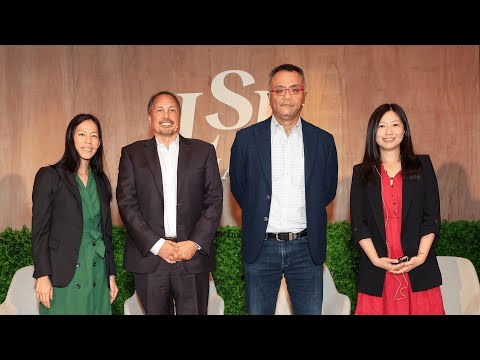
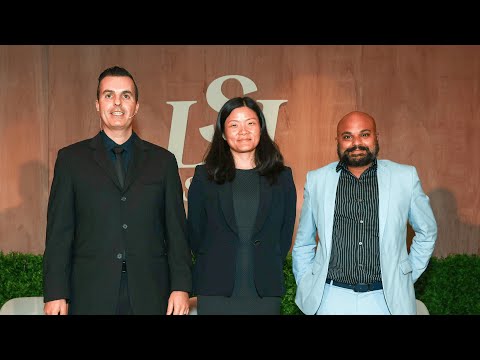
Passing the Torch: Next-Gen CEO Leadership | LSI Europe '25

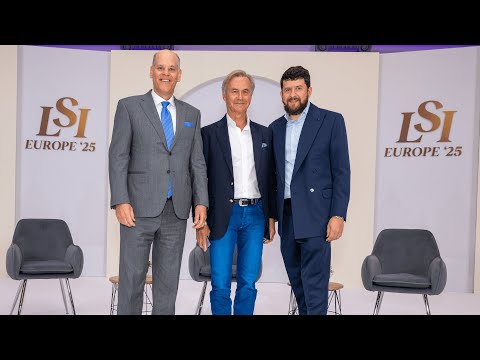
Join CEOs from innovative medtech companies as they discuss leadership transition strategies and the future of executive management in the medical device industry, featuring insights from leaders at Gradient Denervation, Acoustiic, and Vascular Perfusion Solutions.
Join Our Next Event
Partner with the leaders
shaping the future of
Medtech at LSI USA ‘26
March 16th - 20th, 2026
Waldorf Astoria, Monarch Beach

Amanda Way  0:06  
I hope you had a great lunch. It's my pleasure to introduce these lovely, lovely speakers to the stage. I'm Amanda Way. I'm the Global Program Director here at LSI, and also the CEO of cognizance. And today we're going to talk a bit about the variety of paths you can take to CEO. I come from Silicon Valley, and more from the tech side. And on the tech side, there's actually this huge push to really be all about the founding CEO. And a lot of investors are often questioning, you know, can a CEO have the same level of commitment if you've come in later as starting a company? But in med tech and biotech, we do that quite a little bit differently. And so today you're going to get to know these three amazing CEOs, how they got to their positions. And please ask any questions along the way. We'll save some time at the end so we can understand the best ways to be stepping into these roles. So first question, just to introduce yourselves, it'd be great for you to introduce yourself your company and when you stepped into your current role, you want to start us off?


Martin Grasse  1:04  
Martin, absolutely so. Marty Grasse, CEO of Gradient, Denervation Technologies. Gradient is a Paris based medical device startup. We've developed a pulmonary denervation system based on a catheter platform using therapeutic ultrasound. We are treating patients with pulmonary hypertension and associated heart failure. So who group two pulmonary hypertension. We're in clinical right now. We're enrolling on early feasibility study and working with FDA on next steps, as well as actively working on the financing. To your question, I joined gradient around gone three and a half years ago. I joined the company as it was being incubated at sofanova MD start, which is sofanova's Medical Device incubator based in Paris, as we'll talk about, had the great advantage of being able to build on all of the great groundwork and foundational work that MD start had put in place and kind of joined in the model that they typically use of bringing on a CEO to take the company and run with it. Right around the time of series a great RAAF,


Rafael Veraza  2:02  
do you want to go next? Yeah, I'm Rafa, Rafael Veraza. I'm the CEO of Vascular Perfusion Solutions. We are an organ preservation company developing a device for heart transplants, for preserving the heart, increasing the viability of the heart, for basically, patients are waiting for a life saving organ. I'm being with VPs for about seven years. My I took the leadership of the CEO position about three years ago, so I came internally within the company, but also it was academic founders that started the company, and it's been an interesting journey to get the company where it is now, yeah, and Adam,


Adam Hill  2:42  
thank you. Thank you very much for having me. Adam Hill, I'm the Chief Executive of Acoustiic based in Bellevue. We're an extra corporeal therapeutic ultrasound company out licensed the technology in 2017 from Siemens Healthineers, and have been re engineering that platform for commercial scale. And since we are due to go into clinicals, q1 next, next year, this is my third role as chief executive of a medical device, medical device company, each has been each has been very different that I've been delighted to join this company 19 months ago and have the two co founders of this company and be able to focus on the engineering and clinical development of our products.


Amanda Way  3:29  
Thanks, guys. So I don't know how many of you have read the book first 90 days, but typically, the first 90 days of joining a new role or stepping into a role like CEO, can really make or break the momentum that the company has moving forward. Think it'd be great to hear from each of you what those first 90 days look like for you, if you had the opportunity to really think about it, if you were thrust into it. And maybe you know biggest challenge or biggest win that happened during that 90 day period. And for you, Adam, if you want to touch upon a few of your experiences or how those 90 days look different across the companies, that'd be great as well. Do you want to start


Adam Hill  4:05  
us off? Yeah, sure. I'm more than happy to. And I think look each, each of certainly, the opportunities that I've had over the last 10 years or so have been, have been very different. The first was a mid size growth phase company, which I never expected to be the chief executive in, but a board meeting on a Friday afternoon ended up with a bit of a reshuffle, and so I think I was the last man standing, and so ended up with a job on Monday morning. I was then the second opportunity that came my way was to take over from a founder that had taken a company public, probably prematurely, on the behest of the board, and orchestrate what I think, in retrospect, I can only describe as a bloodless coup of the founder in order to take over the role. But most. Pleasingly, my most current role, I was actually approached by the two co founders, one of whom was the chief executive, and I think they both had realized that they needed to bolster their senior team. There were skill sets that they simply didn't have and time that they weren't able to give to core functions within the business where they had greater expertise. And so I was able to join in. In that first 90 days, it was very much a case of, just like stepping into any role, a bit of a soak period, trying to understand what's gone on before, what people do, and what direction of travel was, what challenges existed within the business? Try and open every cupboard door to see if skeletons fall out. Continue your diligence beyond that, that you do before taking on on any role, and then trying to find a way, and I guess, uniquely, trying to find a way of working, working with the two co founders, who still very much feel as though this is their business. This is their baby, but they are willing to report into you as as their as their new chief executive and and listen to some of the guidance that you'll may be able to to provide them in navigating, navigating the short and medium term challenges. A lot of that, of course, is just like all of these roles relational. It's about building, building strong relationships and partnerships across them, across the business and so certainly, in my first 90 days, and every single one of those scenarios, I spent an inordinate amount of time trying to build strong relationships,


Amanda Way  6:51  
that's great. And Martin, I think you would have had a much different path. I know you're working with more of the venture studio model. Were any of those 90 days, pre written for you of the venture firm coming in and telling you this is how it's going to go. How much of that was a partnership?


Martin Grasse  7:06  
Yeah, you know, pre written, no, you know, the model is such that the team, when I joined the company, the team was as part of the incubator, was things were going well, right? Everything was going it was progressing. They were looking at the next step of bringing on a CEO, getting ready for a first in human getting ready for the series a financing. And so I was able to take advantage of that, you know, process, and I consulted for the company for a period of three months so I could get to know the company. They could get to know me. We mutually decided that this was the right fit, and I jumped in full time, I think, through that process, your question, on 90 days that process, as well as then, you know, in full time, not consulting anymore, but full time leading the company. The most important thing I thought for for me to do, and I would do this again, is building trust, right? And building trust and led to the relationship point, building trust with with the employees, with the team that's taken the company to this stage, with the board, with the investors, who have decided that, together with me, and that we're going to take this and go forward. And you know, in our situation with the clinical community, right of you know, here's a product we're working on where the company was already in discussions with doctors who are going to use and refer patients as part of a clinical study. And so it was important for me to then establish those relationships and build that trust, to be able to have a fruitful collaboration with those folks going forward.


Amanda Way  8:23  
Thank you. And Raphael, I'm curious, was those for those first 90 days, was that a clear section of time with you, having spent so long with the company, or was it more of a longer arc and and blending into those 90 days? What did that feel like, having been at the company for so long.


Rafael Veraza  8:41  
Yeah, so for me, was a little different. Coming in. I was not expected to be the CEO. They also asked me to step in and, yeah, I don't remember exactly if it was a 90 days, but it was a lot of things. I guess coming from the inside, there were things that that I that I wanted to change. I couldn't change a CEO. So those, those are the first things kind of I focus on, and things that united the team coming from the inside is, you know, the little different. There are other challenges that that we had to deal with. There was also, you know, academic, and the founders are very active in the company. But the first thing I did was really look at, you know, as a startup coming from the academic spin out of the university usually don't have the right structure. The first thing that I would basically this, like, let's have a, you know, strong financial backing of our financials have to be in place. So we hire a fractional CFO with an experience that came in and then little little by little, making petitioning to the board changes little by little. And so, yeah, coming from the inside was frustrations that I had as a, you know, being not the CEO. And those changes were happening pretty quickly.


Amanda Way  9:57  
Yeah, and each of you mentioned trust. Just as being a key element as you stepped in. And a few of you mentioned the board, and the importance of the board a little bit different for you, Martin, but for the two of you, the investors who are existing on the board potentially didn't directly invest in you, but definitely approved you stepping in as CEO. I think it'd be great to hear how you thought about building relationships with those board members as you continue to work with the company and Martin as you for you as well, how you continue to build out those relationships? Were your board members wanting to check in with you a bit more often than maybe the existing or the previous CEO? Were they a little bit more micromanaging? Or were they ready for you to just take the stride and keep going. Adam, do you want to start


Adam Hill  10:45  
us off? Yeah, sure. Look, I mean, I, in my experience, which has been one of taking over at a point in, of challenge within, within a company, there is a pre existing mandate to get on and do something to deal with that challenge. But that mandate doesn't survive if you don't, you don't a build trust, and B, communicate regularly, and I guess C deliver upon those things that you said you're going to deliver upon. In fact, you run out of road pretty quickly. And so it was absolutely key to me in each of those roles to build strong relationships with board members and, quite frankly, all stakeholders within the company, founders. Substantial investors in the company that may not sit on the board anymore, were also instrumental in where the company come from, where it got to, and potentially could be very supportive in in taking the company where it needed to get to. So So doing that stakeholder map, getting around everyone, engaging them, regularly, communicating periodically, and as I said, doing what you say you're going to do, being clear as to what's worked and what hasn't as soon as you possibly can. I think we're all lessons that, that I learned from those, from those three roles.


Amanda Way  12:26  
Thanks, Rafael. What did that look like for you? I'm curious, maybe even diving in a little bit more logistically like I think it's always interesting to see inside your view of like our maybe for all of you, it's like, are you on calls with these investors, weekly, monthly. Typically, I think a lot of people think of the quarterly board meeting, which, as you mentioned, Adam, like chatting with your investors. Quarterly is not enough, especially in a point when there's a lot of these challenges, and especially having investors sometimes from all over the world, that you could have different relationships, whether it's in person or or hopping on Zoom, maybe for us, dive a little bit deeper into how you navigated that with your existing board members. Were there some that were a bit more challenging, others that were, you know, there to uplift you, things that investors did that really made this transition easier or harder for you?


Rafael Veraza  13:18  
Yeah, one of the points that I'm, you know, worked when I took the role was complete transparency. Be complete transparent with the board. And there were some really good allies, and there are some others that they cause challenges that I had to kind of navigate for almost two years, the whole process of, you know, just dealing with that. But then I had my allies, and the allies were really it was not quarterly, it was almost every week. And some of these investors that sit on the board for us a small startup, a lot of our investors are high net worth individuals and a family office. A lot of them don't truly or are not involved in the MEDX world. They come from other industries, so getting them to understand, you know, milestones and FDA regulations. So for me, was really choosing a few allies on the board that I knew that I could count with to be able to do all the changes that we pushed through. The whole all the changes really took about two years to really get the company in good shape and presentable to investors. So a couple allies are still there, advocating and also making them aware that at least some of those investors in the early stages for us is they use, they still have to continue putting capital into it until we could get it to a place where it was, you know, institutional investor friendly, that's


Amanda Way  14:44  
helpful and maybe to pivot a little bit and just thinking about the future of fundraising, the future investors that you're thinking up bring about, bringing on, or have brought on since you joined. I'm curious what those initial conversations with investors have or will. Have you seen investors really push into your story about stepping into your CEO role? Sometimes it can be a clear story arc. If you're like, hey, I discovered this invention, and I'm building a company around it, and now I'm growing it versus your why on why it made sense for you, whether it's the diligence, your passion, your expertise beforehand, Martin, maybe starting with you. What does that look like? Have you found a lot of support, or especially in med, tech, biotech, since it is a bit more common that investors haven't been as worried that you, I guess for you, you are the founding CEO, in the way of the first CEO, but not the one that generated the technology. Could you dive into that a little bit on what that those conversations have


Martin Grasse  15:42  
been like, yeah, yeah, absolutely, yeah. I mean, very straightforward. I mean, as you say, it's not uncommon for founders to step away from running the day to day to the company. I think it was expected of us, given the MD start model, that this would be what it is. I think you know, for me, what's resonated is is, you know, building educating myself over the last years and going into this on the patient population, the unmet need, the ability of this technology to really dramatically impact patient outcomes and move the needle and how these patients are treated. And then, you know, telling that story, right, of how me, with my background, can can help pull this together and be able to evangelize this story amongst the clinical community, amongst the investor community, and ultimately, amongst


Amanda Way  16:30  
the Strategic Community. Yeah. Adam Raphael notes to add along those lines, things that investors were excited to see, that you were stepping in, or any pushback that you got in those initial conversations


Rafael Veraza  16:40  
some of our investors, or members of the board, were really excited about the the their first, their frustrations before, and they're really happy that we're pushing for at least in our case, we know more transparency, and I still can with those investors and my board as part of my board. So yeah, that's an


Amanda Way  17:01  
out of any future investor conversations or conversations you've had over the past 19 months that, or maybe over your past few experiences where you've seen investors be cautious with you having just stepped in or more of this excitement of you being the right person and the reason why they want To invest.


Adam Hill  17:19  
Okay, I think at each stage, I've stepped in at a point where I can add at my skill set, my experience suggests that I might be able to add value. And so, of course, they're excited and supportive of me adding value to the company to overcome overcome challenge. But there is always the question about your incentives. There is always the question about how long you might be here. There's always a question as to how committed you're going to be to the company. Are you going to be working on Saturdays and Sundays? What happens if there's a cash crunch, are you going to be the first to reduce your salary in the company? How much of an employee Are you versus how much ownership are you going to be taking of this company? And so I think it's important to recognize that I'm not a founder of this company. I've never had, quite honestly, I've never had the guts to be a founder of a company. I found that I'm I'm well suited to helping folk that have taken that tremendous risk for themselves and for their family in navigating some of the early challenges that companies companies face, and to get it to key, investable miles, debts. And so, you know, what I bring is different. But equally, my risk tolerance is different. The way in which I'm compensated is, is is different, and having those open and transparent conversations is key. Yeah, I'm not a founder, but you're going to get something that I think is complementary to those that have founded this business and continue to work with it.


Amanda Way  19:16  
Yeah, thanks, Adam. I'm curious this could be relevant for you and your current roles moving forward, or just through your experiences and being in med tech in general. When do you think a CEO should stick with the company versus when do you think having a transition to someone like you or someone who might take over one of you in the future should happen? Do any of you have strong feelings on that? If I think a lot of people. I mean, a lot of founders want to stick with their technologies long term, and want the ability to grow and grow expertise, but sometimes bring someone in with a specialized skill set could make more sense for the company. Ra, do you want to start off on your take on that? Yeah.


Rafael Veraza  19:55  
I mean, at least in our case, I know what my limitations are. I don't think I'm the commercial CEO. I'm getting the company ready for clinical trials. I can get him, get him through that. Our team is very capable of getting us there. But at some point I know that what's best for the company is getting the right expertise of a CEO that has taken commercial, you know, companies commercial. I am not that person. I think it's also preparing the board, and I've told them, I say, hey, look, I'll stay. I'll stick around until we get our FDA approval or the IDE but you know that, you know there has to be some CEO that's going to come here and take the company commercial level, yeah, and having those early conversations, I think it helps also sex expectations of what they expect from me and what I expect from them.


Amanda Way  20:45  
Yeah, sounds like you're you'll always have your eye out, maybe even at these LSI events, of who could who could be next. Yeah, Adam, you mentioned that you weren't potentially thinking that you were going to be the person at a previous company to be stepping in for where the stage of the company was. Can you tell us a little bit about that, and if you felt that was that the option was that the opportunity that opened you up to being CEO of a later stage company, or could you have ended up in this position, maybe even without that role?


Adam Hill  21:11  
I I'm not sure whether I could have i previous roles before that had me, had me pecked as the chief medical officer. I trained as a clinician, and actually, it's quite difficult to step out of that role when you're the clinical expert in the room. But I was increasingly frustrated at the fact that everyone else, everyone else around the sort of executive team table, just didn't listen to me if I was talking outside of my swim lane, which I often like to do. And so I was looking for the opportunity, and serendipity, of course, threw me a bit of a curve ball, and I stepped up and was able to grip that with both hands. But in that process, the best bit of advice that I was given when I asked a very similar sort of question that you have of us, of a close ally within the business and the CTO of this this business was close to retirement. I said, you know, how do I know? How do I know when I'm done? How do I know that I should be handing the button to someone else? And he said, Look, you know, for the last decade of my career, every day I've come to work intentionally trying to make myself redundant at the point at which I turn up and I can't find anything that I can add value to. I know that. I know that my job here is done, and I think actually that's a pretty good litmus test. If I turn up every day and there's something that I can do that adds value to the business, then I'm probably still useful. That's great about him. But at the point at which I turn up, and actually those that I've been able to bring into the team, bring up through the company, hire into the company, are now running it themselves, then I probably need to start thinking about passing the button.


Amanda Way  22:59  
Yeah, and Martin, want to run us out,


Martin Grasse  23:01  
yeah, I think, you know, you touched on this in the different stages of the company. And I think med tech, especially PMA, med tech, has such distinct phases of the company is of, you know, there's, there's preclinical and engineering, right? And then there's clinical stage of we're trying to treat patients, and the biggest challenges is rolling the study and finding new centers and so on. And then there's commercial right? And these are the company is so different at each of those stages in terms of who should be working on it, who should be running the project, and the team and the company, what the key performance indicators are and what success looks like. And so it, I think it lends itself really easily to, you know, defining one's sweet spot within, within Medtech, you know, for me, that is concept, preclinical and clinical, so similar to what you said.


Amanda Way  23:48  
Yeah, thanks, guys. And before wrapping things up, I do want to see any questions from the audience for the CEOs on their journeys, whether you're an investor, a CEO, just a quick tab. Any questions. Awesome. All right. Well, then for the last question, it'd be great to hear from your experiences a piece of advice you'd give to a rising leader who is considering on stepping into a CEO role, no matter what their background is. And I'd say advice and it can be as nitpicky around the diligence you've done before, how organized you wish the CEO was that was before you to make things easier, or really just preparing, building a career before to have that expertise, to step into the role. Anyone have something top of mind.


Rafael Veraza  24:36  
I have advice that someone gave me, but I forgot who he was, or I heard it at a conference. And now that I reflect back, and I would, I would basically advise this to anyone besides the actual job of making sure that you can do the job, always count with your personal board. So there's your board for the company, but there's also that personal board of people that have done this before. Board that you can go to outside of the board to vent, to cry or stress out. That personal board is so crucial, because this job is it can be pretty lonely. Sometimes having that that group of people outside that have done this is super helpful for me.


Martin Grasse  25:19  
Thank you. Yeah, I think that's I was gonna say the same thing is find, find a peer group of other folks who are in similar situations have been in similar situations, both for the but what you touched on? I mean, that's most important of the the support and the network, but also the more tactical things like, what does a comp package look like? Which law firm should I use? Right? How do I I'm thinking about moving the companies geographically. Have you done that before? Right? I mean, there's, there's people have solved a lot of the problems that you face, and why reinvent it if you don't


Amanda Way  25:48  
have to. Did you guys find that other CEOs that you reached out to were pretty transparent about that? Were you pulling from people existing in your network? Or were was, you know, coming to an LSI or other event, and being like, Hey, this is a CEO who went through a similar transition. Where did you find those, I guess, personal advisory board folks,


Martin Grasse  26:09  
yeah, for me, mostly, mostly personal network. And then intros from those folks to the next layer in the next layer, yeah,


Rafael Veraza  26:17  
yeah. And then network like events like LSI,


Amanda Way  26:20  
awesome, and then Adam, take us home. Last piece of advice you'd give everyone in this room, if they're thinking about being a CEO,


Adam Hill  26:28  
do your diligence. Don't rush into your first role. So do your diligence. And don't just do your diligence alone. Rely upon those that you trust in order to help and support you doing that diligence, I think is a critical lesson that I learned. Build trust with those that you're going to work with, both pre and post, taking over, taking over the role. Communicate frequently and remember that you don't need to know all the answers. Often you feel as it's been said, It's a lonely place, and people look to you for the answers, but you don't always need to have all the answers. And then maybe the final bit of advice is an English saying, you know, measure twice, cut once. Don't rush into making decisions that you're going to regret later. Yeah.


Amanda Way  27:23  
Well, thank you everyone, and thanks you guys for coming to the workshop that's all and enjoy the rest of the conference. Thank you.