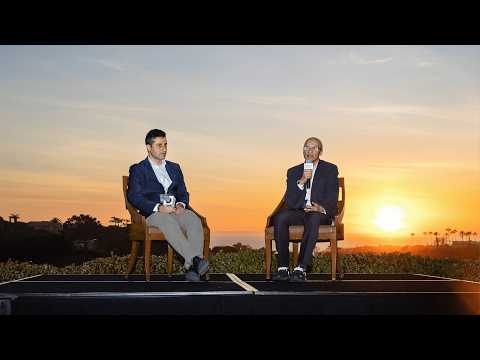
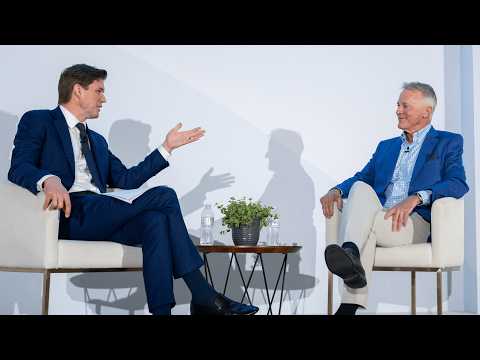
Navigating Innovation, Investment, and Impact in 2025 | LSI USA '25

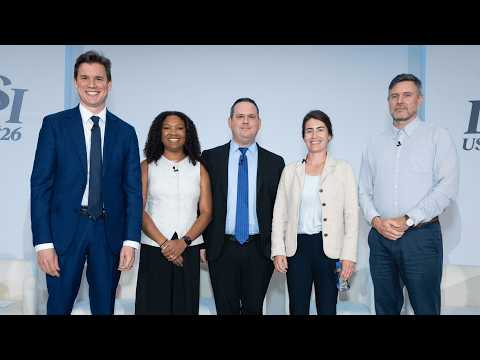
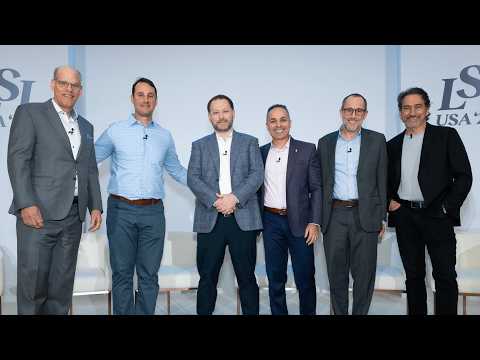
Industry leaders from Anthro Ventures, Rex Health Ventures, Catalyst Health Ventures, and Knobbe Martens discuss strategies for driving innovation, strategic investing, and impactful healthcare solutions heading into 2025.

Sabing Lee  0:05  
All right. Welcome everybody. Welcome to our panel on navigating innovation, investment and impact in 2025 My name is Sabing Lee. I'm a attorney at Kennedy Martens. We're an IP firm here in Orange County. I'm the co chair of our Medtech IP practice. We've been a proud sponsor of LSI since inception. Really happy to work with so many of the companies here. And I think we have a great panel here today to talk about what their views are for 2025 on all these great topics. I'm going to ask the panel to do really, really brief introductions themselves, and maybe to speak about your investment focus. If you have one, we'll go down the line and start with


Anita Watkins  0:40  
Anita Sure, sure. Good morning. Anita Watkins, REX, Health Ventures, we're the corporate venture arm for UNC healthcare. We invest all across the healthcare spectrum, so not just med tech. And our primary criteria is that we can be strategic to you and you can be strategic to us.


Omid Akhavan  1:00  
Hey. Omid Akhavan, I run Anthro Ventures. We're a family office based out of DC. We invest across the spectrum of healthcare, Medtech healthcare services, really clinical through commercial stage opportunities.


Justin Klein  1:15  
I'm Justin Klein, co founder of a firm called Vensana Capital. We invest in medical technologies, mostly medical device, but also digital health diagnostics tools at all stages of development. We're based in the DC area, where I'm located, Minneapolis, and also California.


Josh Phillips  1:36  
Josh Phillips, I'm a co founder and Managing Partner with Catalyst health ventures. We're a Boston based fund. We focus on therapeutic and diagnostic devices. We're relatively early stage. Right around first in human is when we start our investments. No particular area of focus. We're just looking for good opportunities.


Sabing Lee  1:58  
All right, let's start with the outlook for 2025 hopefully we'll have some hope here in the panel. We talked a little bit beforehand about whether we're going to be a pessimistic panel or an optimistic panel. So what is your view on the 2025 outlook? Omid, you want to start


Omid Akhavan  2:15  
Sure? I'm happy to I mean, we started off great. You know, market was ripping, everything was going well, and then next thing you know, people are being laid off from the FDA. They're coming back, they're gone, they're here, they're there. It's been a confusing time. I think we're coming out of the last two years where capital has been difficult to find in the private markets, especially for Medtech startups. And we've, as you've listened to the panels over the last few LSI, I think there's been a lot of shift on preserving portfolio companies, helping them extend runway. But I do think that there is a shift in, you know, investor mindset, where now there are a lot of new opportunities on the horizon, and I think people are back to deploying capital. But,


Anita Watkins  3:05  
yeah, I agree with that. I mean, we've done four new deals in six months. I think that investors are seeing a lot of interesting technologies. There's I mean, as any entrepreneur in the audience here knows, there's definitely been a shift in valuation expectations, and I think that's helped loosen up some of the purse strings. But is, I do feel good that that there are, there's a lot of dry powder out there, there's a lot of funds that are still raising, and there's a lot of opportunity to really work together. It's something that teams like us look at of how we can work together to syndicate and really support the technology get to the next inflection point.


Justin Klein  3:49  
I agree with those comments. I think, I think the year started well, and I think we came into this year with an expectation that the IPO markets would open, and I think we've seen some high quality companies get public. There's also been good breadth of M and A activity, and having companies like J and J focus on growth markets like cardiovascular I think, has also been a really important driver in the sort of capital markets. So I feel like we're hopeful in a positive sense. I think we try to maintain a consistent pace or cadence of investing, because we appreciate these markets moving cycles, and it's really hard to market time and the value creation process also takes years, right? Not weeks or quarters. At the same time we talked in our pre planning session here, hope is not a strategy. It doesn't work in Medtech. It hasn't. We've definitely proven that. And I think you have to pick your spots, you know, very carefully, by therapeutic area, stage, clinical regulatory reimbursement path, and really be thoughtful about the value creation path for the entrepreneurs. For the investors and and acquirers or public investors, so trying to be very deliberate. And I think we'll continue that cadence, but that's kind of a sense of how we're seeing things.


Josh Phillips  5:14  
Yeah, you know, against that, that sort of macro backdrop of what's going on, I think we're, we're really excited about innovation going forward. And I think there's a number of things that you know we're seeing that I've seen here from a number of companies where you know, whether it's you know, we're looking we're better understanding disease, we're bringing in new technologies, AI, machine learning, a number of different things that were that can contribute to the innovation and really provide solutions to problems that and I'm seeing a number of you, whether it's sensor technologies and longer term monitoring, which generates new data sets that have never been available before, that can bring new insights. So we're seeing a lot of that, and we're really excited about it. But the reality is, is that comes crashing headlong into the structure of the med tech world, and I know we'll get into that a little bit more. But you know, if you bring in a long term monitoring solution that provides really valuable insight into a chronic disease that allows that to be treated differently, how are you going to get paid for it? You know, that doesn't really exist today in many cases. So we're very excited about the opportunities, but very careful about how it's going to be deployed within the construct of the med tech


Sabing Lee  6:30  
world. So maybe you guys can give some practical examples about how you're helping your portfolio companies as they're either going through fundraising, they're on cash conservation. What kinds of things are you doing to work with the companies? And how should they work with you as their investors?


Anita Watkins  6:45  
I'm happy to jump in there. I mean having an entire health system at my fingertips to support our companies, it results in us being able to support them in a variety of ways. So a lot of cash conservation in any company right now, they're looking at how to conserve cash. But we also leverage our clinicians to help them advance their technologies. We even leverage our legal and it if they've got to get through those approvals to just remove as much friction as possible and the commercial process, our docs service PIs for the companies or advisors. So we we really work. We we want to truly be a strategic investor, and we're going to do everything we can once we invest, to to live up to that role.


Sabing Lee  7:34  
So you're facilitating directly with the companies through your connections to help them with their resources. Yes,


Anita Watkins  7:39  
good, absolutely.


Omid Akhavan  7:40  
Yeah. I mean, I think, as I think about investing, I always like to think about dollars to milestones. You know, when you think about rounds, as people like to raise round numbers there, I'm doing a $5 million raise, I'm doing a $20 million raise, I'm doing a $50 million raise. But I think it's always important to get to the nuance, details of where does that capital go, and are you raising money because that's what the funds want to deploy, or are you raising the right amount of money to create the right amount of value and to de risk? And as you're thinking about your budgets, are you being systematic about where you're spending capital, you know, are you hiring too many people too fast? Or are you thinking about, well, what happens if, you know you get the IDE approval and you're ready to start your clinical trial, and your round takes another six months to close? And I think that's what happened to a lot of companies over the last few years, where the markets tightened, investors were less willing to put money forward, and so how do you think about your budget and, you know, lasting and maintaining a cadence of progress while being, you know, kind of building the ship while sailing and trying to get to the next milestone and the next capital raise. So I think capital efficiency is paramount in this market.


Justin Klein  9:00  
Yeah, I think, you know, hopefully, as venture investors, we're, we're serving on boards, we do our best to be really good, constructive partners at the board level continually, and beyond that, it's really very case by case. I mean, I think that we have an investment thesis and an alignment with our teams and our CO investors around what the company is setting out to do. It is never a straight line to accomplish those things. And for example, issues come up, you know, for example, you know, three weeks ago now, Doge laid off 229 people within CDRH, across the board, multiple HTS, biostatisticians and it left a lot of discomfort in the market. We have tried to work with our companies to get in direct touch with each of the folks within those ohts and the review teams to understand exactly how might they be impacted, who's coming back and what to expect going forward, and what are the things. Our companies can do proactively with FDA, for example, to facilitate efficient reviews and and frankly, share in the work that we're all trying to do together. Wouldn't have expected that, you know, four weeks ago? So these things come up, we try to be involved in ecosystems, so we have the relationships and resources to assist our companies when the surprises happen.


Josh Phillips  10:20  
Yeah, I think one of you know, as often as a lead investor in the earlier stages, it's finding and helping the team to put together a syndicate, as Justin said, that are like minded and aligned. And as you say, things go wrong all the time. You need to make sure that we're we're in alignment, and what happens? What we've seen from time to time is that, you know, if you have three or four venture firms that are in a syndicate together, they can start to drift in their, you know, in their interest in what's going on, and keeping that all aligned is really important. So we spend a good amount of time doing that and making sure we have the right, right people in at the beginning. And whether it's a tranche financing, you know, to make sure you have enough money to get all the way where you need to go, in alignment with your you know, with the milestones you're trying to create, or at least making sure everyone's on board with that same, same plan.


Sabing Lee  11:12  
Can you speak to any partnerships with strategic investors as well, in terms of syndicating and then having strategics as well, coming along with funds like yourself.


Josh Phillips  11:21  
Yeah, a number of our companies have strategics in them, some from the initial round, some that come in later on. I think they our experience is they kind of operate on a spectrum. There are some who are very, very active and want to bring to the companies their expertise, whether it's in manufacturing or clinical or whatever it may be, all the way to those that you know are quiet and may be an observer and never say a word, and it's sort of in between and all over the spectrum, But we've, by and large, had very, very good relationships. And they're often in our companies,


Sabing Lee  12:06  
any preference between the type of strategic or makes no difference if they're getting the investment.


Josh Phillips  12:11  
No, I think each one you go into and you you kind of assess how they're going to how what their interest is, and what they want to bring to the table and and it's kind of a case by case basis.


Sabing Lee  12:23  
How are you guys seeing in terms of what companies are asking for? Do you find that they're realistic? Do you think they're under shooting, overshooting in terms of the ask? And anybody can take this


Anita Watkins  12:36  
one. Well, I mean, I commented on valuation earlier. I think between cash conservation and balancing. You know, CEOs are always sensitive to wanting to show that inflection point, wanting to show the increased evaluation. But you also have to listen to the market, yeah, and so it's, it is a tough balance. But right now, everybody is price conscious, and one of the deals we did this past fall was one that they've been raising for about a year, and then they agreed to some tweaks made a little more investor friendly, and like we got a syndicate that include us and Medtronic, another health system fund, J and J, and we closed it, you know, in a month or two. So it's if the technology is there, as long as the company is willing to come to reasonable terms, especially in this kind of market of unknowns, right now, you can get a deal done.


Sabing Lee  13:42  
Let's talk about returns. Because Justin, when we were talking in our prep call, we talked about, what is a realistic return on an investment, what would be something that is a multiple, that would be acceptable in terms of making it investable to a firm like yours, you want to speak to that in terms of what's realistic there, and what would you be looking for to represent your investor group?


Justin Klein  14:03  
Yeah. I mean, I think look as an asset class, we have to strive for above public market returns. That's often a benchmark that our LPS think about. So they often quote things in IRR. We're probably striving for 30% plus IRR s, and that's important, because our investments are illiquid, and, you know, our LPS have alternatives. Often, we also talk about a cash on cash return. And I think, you know, the venture world assuming reasonable time horizons and how capital gets deployed over time. You know, 3x is probably a minimum, honestly, for the venture industry, if somebody is going to underwrite to less than a 3x it's hard to get a 3x plus fund on 2x deals. So I think harder, impossible. Yeah, I think people also talk about, you know, early stage, I need a 10x i. Yeah, those are exceptional, honestly. So we don't really underwrite those cases either, but I think we do think a lot about the return or reward relative to the risk. Time capital, you know, probability of success, and you know, for S 3x is probably a minimum, and we're striving for 5x plus with reasonable assumptions, you know, around how that investment is going to go. Sometimes, you know, we may end up back at a 3x because things take more time and money. Sometimes we get to a seven, 8x and occasionally it's a 10x plus. But I think that kind of bookends how we think about it. And then again, it's through that lens of, what stage is this company at? What's the value creation path? How do we think about value, you know, at exit, whether it's IPO or M and A, and we just have to kind of do the backwards math to arrive at a reasonable set of assumptions. Yeah,


Omid Akhavan  15:50  
I was gonna jump in because I think, you know, everyone dreams of this billion dollar exit. And, you know, we see these big headline numbers of these multi billion dollar acquisitions that get announced around JP Morgan or throughout the year. I think the the challenge that I see is most med tech exits happen, you know, in the sub 100, sub 100 $50 million range, and a lot of them are either undisclosed or, you know, never reported. And so if you think about those kind of that as a benchmark, and you work backwards and say, how much capital does it take to get a product to market? Usually 10 to $20 million well, how do you engineer a return? Right? If you're, you know, if you put in $20 million and you're expecting, let's call it a 5x and you're capped at $100 million exit, then the investor has to own 100% of the company to make five times their money. And so I think the challenge is finding that balance in terms of, how do you create value with limited resources, limited capital, and then, because most there are very few just, and maybe this is my biased view, but there are very few real, billion dollar markets left In Medtech that don't have, you know, innovative solutions. Obviously, there are always new disease areas that are transforming and evolving. But in terms of, you know, you want this billion dollar market opportunity, you want to convince investors to pour money into it, a lot of, a lot of innovation has happened, right? There's been innovation for last 3040, 50 years. And so being transformative in a market, you have to be very careful thinking about the balance of how much capital it takes to go address this brand new billion dollar opportunity versus where your realistic exit is as sub 100 million dollars. And how do you convince an investor to get behind that is always the challenge in the early stage.


Josh Phillips  17:41  
So I beg to differ a little bit. I think that there are a lot of billion dollar opportunities. I think we're and as I said at the beginning, we're really optimistic about about the level of innovation. There are challenges to getting to it, though, and I think they're going to have to be some changes primarily. I mean, we talked about this in the in the pre call. You know, reimbursement is the big, big issue here, and innovation means new, new is difficult when it comes to that. You know, CMS doesn't like new and new ways of doing things and but I do think there are a lot of opportunities out there, but it's finding them and understanding how to get to them and manage those risks and those challenges along the way, which is saying, actually the same thing around capital efficiency is making sure that you are so


Sabing Lee  18:32  
Josh, can we elaborate on that? Because in our pre call, we talked about innovation, how you assess innovation as you're balancing it against whether something's investable, the time that it's going to take to get into patients and so when? And maybe you can speak to some recent examples, because I know you've made some investments for companies that you thought were innovative, but how do you look at innovation for something that is going to take a really, really long time and a lot of money to get to market, versus something that perhaps has more competition but has still a pathway forward.


Josh Phillips  19:00  
Yeah, so we've done a couple of investments in, I guess, what in the grand scheme of things would be considered sort of patient monitoring. One is in EEG, and one is in blood pressure. And the way we've approached those is that the long term plays for those are going to be, you know, again, longer term monitoring, generating completely new data that no one's ever had, you know, EEG over six months or three months, no one's ever had that before. So what can you learn with that? However, it's balanced with an existing market. So there's already a market for EEG and hospital and out of hospital that we can immediately plug into blood pressure continuous in the hospital. Is a market today, it's a billion dollar market. So we have these opportunities where the new technology can fit into an existing play that on its own is really exciting. But then the future. Implications of it create completely new ways of looking at you know, whether it's seizure detection or epilepsy or stroke or other neurological conditions that no one's ever been able to look at them over a long period of time, but you're based on an existing market where you can play, where you have something transformational. In that market where there's already reimbursement, there's, you know, the FDA really understands that hospitals understand that people understand it, but so we're looking for those types of things that kind of balance the two aspects of it. The


Justin Klein  20:34  
key is getting paid for the upside associated with, yeah, you know, future potential, because that may take a lot of different time and money, and companies are acquired generally when they can be productive assets in the hands of the acquirers, right? You know, you could show me magic wand and tell me that this magic wand does magic every time and cures the condition, you know, is a healing magic wand. No risk whatsoever. It's going to get FDA approved. I still can't underwrite that for a 2x right? You can take all that risk off the table, because if there's no codes and payment and coverage policies for the magic wand procedure, like we're going to spend five years, you know, climbing the hill and defining those things. And there's uncertainty, you know, to the path, the timing and the money required. And even in our space, there's uncertainty to how that M and A process might play out when you've validated everything and even start driving revenue. So it's it's really challenging to kind of filter investment opportunities through the lens of money and time. But I when you come back to your question of, like, kind of, what's the reasonable ask or expectation? Like, everybody in our ecosystem has to realize how hard it is. And, you know, look at the data on where returns are as a category for the last 10 years, and we all have to do a better job, kind of finding the efficiencies, getting these innovations to patients and creating real economic value for the whole flywheel to work.


Anita Watkins  22:11  
I'll just add, I mean, one of the things that I think companies need to understand, especially if your device is going to be used within a health system, is the pressure that health systems are under right now. They're low margin businesses to begin with, and it's really challenging. So I see a lot of companies that it's a nice to have, and it costs three times the amount of what's being used today with incremental patient improvement, that it's just not something that's ever going to be commercially viable within a health system. Price parity is important. Hard ROI, both from an efficiency standpoint within healthcare, and then also hard ROI on patient outcomes. You've got to be able to demonstrate all of those. Just saying that, you know, it's a magic wand. I agree. There's so many other factors that have to be considered, at least within, in the world, within, if it's in the hospital,


Sabing Lee  23:19  
so on the impact on patients. I'm assuming everybody here is in this business, because you want to make a positive impact on patients. Do you feel that the investability goes hand in hand with that? Or when you see something that's really impactful, even though the returns aren't as great, is that something that's still of interest to you? So you're asking if, if we see something that's impactful, but the returns, returns, or the time to get into patients, there's a lot of obstacles to get it


Anita Watkins  23:46  
there. I think we all have, I think each of our funds, we have an investment thesis and criteria that have to be met. If you know, if it's really exciting, then the return should be there. They should go hand in hand. But yeah, if it doesn't meet our fundamental investment criteria, it's going to be hard to get across the finish line.


Justin Klein  24:12  
I think for us, the answer is, yes, we're always really interested in those things. The question is, is this the right moment in time for us to invest? And I absolutely, I went to medical school to help people. I do venture because I want to have an even bigger impact than I could have as a physician or a surgeon that sees so many patients a week. But those realities are real, and a lot of times we work with follow, even you know, informally, help companies for three to four years before we make an investment and get involved, because we want them to be on that trajectory, to have the impact. But from a financial return standpoint, we have to look at later rounds where, you know, we can get back into the window of, you know, risk adjusted returns. That makes sense for us. So we hope to do that.


Omid Akhavan  24:57  
And I think to your point, it's mm. How do you balance the social return? Right? We're all in healthcare because we want to have a positive impact on the health of humanity. The challenge is that the return, you know, the returns in Medtech, are typically not very good returns in tech. And you look at now all these AI companies emerging, and you know, you know, autonomous robots and things like that. Maybe that's a better place to invest for return. But I think fundamentally, why at least we we invest in healthcare and continue to invest in healthcare is because there is a positive impact and a social benefit. On the flip side, you still have to make sound business decisions. And if you can figure out how to innovate and how to invest and generate a return while making that impact, then you have, you know, a double bottom line. And so, you know, for us, at least as a family office, you know, we peg to the market. We invest in real estate, we do a diverse set of investments, but the reason we're still in healthcare is because we see value to society.


Josh Phillips  26:05  
Yeah, I think to have if you're going to have a major impact, then I think kind of by definition, these patients aren't being served today, which means there is a real opportunity, and if it's making a real impact, the potential returns can be tremendous. The key is, can you realize that potential? So again, going being able to identify something like that, where you can have the impact, but yet, navigating through to generate the returns that are commensurate with it is a real challenge, but it can be done. We got to find those companies.


Sabing Lee  26:40  
So none of you have referred to yourself in the term that we talk about in our pre call as Mavericks, but maybe you can speak to that as Sue. Do you view yourselves as unique in the investment community? And then I think I'm hearing optimism from all of you, or do you think other investors are like minded? So does anybody want to speak to that?


Anita Watkins  27:00  
It's so I think we seek out, you know, investors that are like minded. You know, that's why we work together, that we want to find the right syndicate. I do think that there is a level of of risk averseness out there that I get, but, you know, I've just, I've seen funds. The thing that that frustrates me the most is to watch a fun drag a company along, drag a company along for, you know, six, nine months a year, and then pass, don't do that. So while I think we're, you know, yeah, we're optimistic, there's still an element of the market out there that is tough, that hopefully, I don't know that will inspire folks


Omid Akhavan  27:48  
today, but I think to your point like, you know, what does it mean to be a maverick? It means that you're trailblazing. And I look at the entrepreneurs in this audience, and you are setting on a hard journey without a playbook to know how to address that problem. And I think we, as investors, you know, come along that journey with you, right as we invest, and we are working together to figure that out. And I think that it's so important to remain humble that none of us have the answers, right, even us with our decades of experience, investing, operating, studying medicine, we don't have the answers. And so I think it's a collaboration between the investor and the entrepreneur to figure out how you solve these big problems and how you overcome the reimbursement, regulatory, commercial challenges that exist.


Sabing Lee  28:41  
All right, we're like 10 seconds away from being done. So any parting thoughts of wisdom from anybody,


Josh Phillips  28:49  
I would say, just be tenacious and keep at it. Try to find the right investors to fit with what it is. You're doing


Sabing Lee  28:59  
great. All right. Thank you to our panel for us today. Anybody has questions, we'll be outside, and I forget the name of the room, but everybody will be around down the hall, I believe. Thank you. 


Anita Watkins  29:09  
Thank you.

LSI USA ‘26 is filling fast. Secure your spot today to join Medtech and Healthtech leaders.

March 16th - 20th, 2026  Waldorf Astoria, Monarch Beach Register arrow