Mission Possible: Disrupting Clinical Workflows | LSI Europe '25

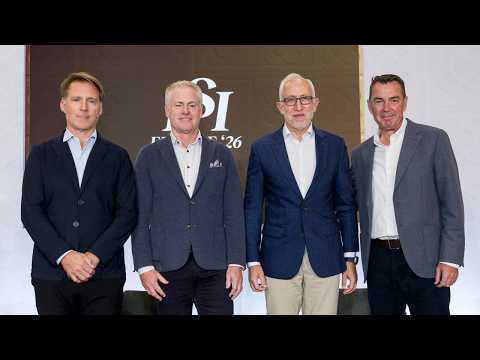
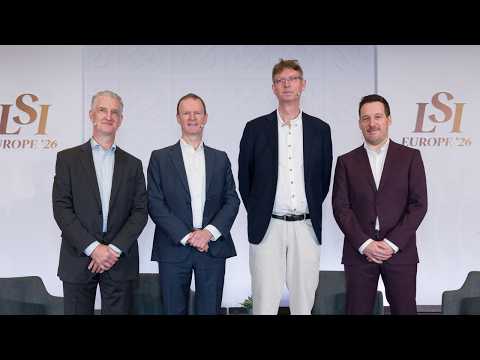
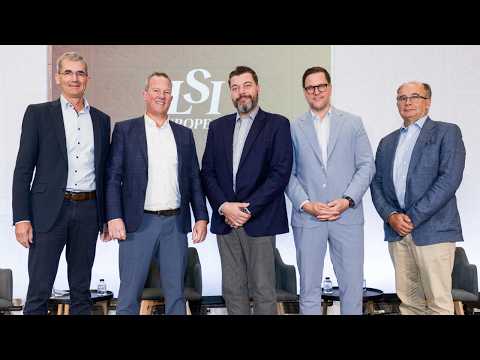
Industry leaders from Stanford Biodesign, May Health, Tensive, CDX Medical Technologies, and Nostics discuss strategies for successfully transforming clinical workflows, sharing insights on overcoming resistance to change in healthcare settings.
Join Our Next Event
Partner with the leaders
shaping the future of
Medtech at LSI USA ‘26
March 16th - 20th, 2026
Waldorf Astoria, Monarch Beach

Josh Makower  0:05  
Good afternoon, everybody. I'm Josh Makower. I'm the director of Stanford Biodesign and serial entrepreneur in the med tech space. Pleasure to be here. Thanks LSI for inviting us, and we have a fantastic panel here, and we're going to, you know, touch on their businesses and backgrounds and and really talk about how they're disrupting clinical workflows, really, in an effort to improve patient care. So why don't I start right off with Kolbe, you want to introduce yourself and talk a little bit about your your


Colby Holtshouse  0:38  
company, absolutely Thanks, Josh, and thanks everyone for coming and welcoming us. I'm Colby Holtshouse. I'm the CEO of May health. May health is working on a technology for women with polycystic ovary syndrome, and PCOS prevents women from ovulating, and our device is intended to allow ovulation in order to both conceive at home in you know, continue your fertility journey, as well as looking at the broader symptoms of PCOS that we can tackle. We're a clinical stage company working on our US, IDE study right now, which is a randomized control trial ongoing in the US, looking at us commercialization. After that. We're also on the verge of getting our CE mark looking at a pilot EU commercialization in the near term. Fantastic.


Josh Makower  1:27  
Thanks. We have, Sanjay. You want to introduce yourself and


Sanjay Kakkar  1:30  
thank you very much. Thanks for the invitation. I'm Sanjay Kakkar I'm the CEO of tensive. I'm a physician by training, but I've been a serial biotech entrepreneur for the last 25 years or so. My first Medtech company, I have to say, and that's tensive, the CEO of the company. We are a Milan Italy based company developing innovative polymeric scaffolds that are bio absorbable and promote the natural growth of the patient's own tissue. The first applications of this technology are for breast reconstruction following lumpectomy, breast tumor marking following lumpectomy, and eventually we'll move into the augmentation space. We've completed five years of follow up in our first in human study, and we recently completed recruitment of a 94 patient pivotal study to support the first two indications in reconstruction and tissue marking. We'll move forward to seeking CE marks in Europe and FDA 510, K approval during the course of next year and 27 and we're venture backed by panic s partners with a 14 million series a financing that was announced earlier this year. That's great.


Josh Makower  2:36  
Congratulations. Gopal, you want to talk about yourself? 


Gopal Chopra  2:40  
Thank you, Josh, Yeah, lovely to be here. Also physician and serial entrepreneur. I've been in the med tech space now two, almost three decades. CO CEO of CDX medical technologies. We've redesigned basically life support. Emergency life support went through a huge transformation during the covid pandemic. We've seen a lot of innovation in terms of clinical innovation, very little in the terms of device innovation. And CDX has redesigned what was a 60 pound ECMO device on a trolley and realized that it needed to be easy to use, needed to be safer than it is currently with all of its anti coagulation and catheters and also needed to be ambulatory. So we took a 60 pound device, and if I may, this is it, and it's a wearable ECMO pump, which, once you prime connect, turn vertical, prime connect plug to the controller and push play. So we're allowing physicians to really kind of reimagine ECMO. And that's the exciting part. I think the title of this panel is dear to my heart. Is as a clinician, workflow is critical, protocols are critical. So you know, very reproducible outcome is critical. And having a design lens with that in mind really kind of help us shape a reimagining of how ECMO could be used, making it ambulatory. It was clear that anyone in respiratory distress or failure, being recumbent, being ventilated, had a lot of morbidity. So we discovered what was eventually showed up as a perfect storm. Everyone was trying to try to use ECMA in other scenarios, other arenas, even in the ambulances, at points of care, but you couldn't do it with a 60 pound device, and so it's very exciting that we got to this stage. We've done all of our testing validation. We're now in the second phase of reproducing that in data for FDA submission. We've got their very kind collaboration and excitement about what we're doing. And we, too, just finished a round, a smaller round, but a series, a which Joe Kiani from Massimo, led the round and joined our board. So we're pretty excited about next stage. Yeah, Joe's a great guy.


Josh Makower  4:59  
Eva. Tell us about yourself and your company.


Eva Rennen  5:02  
Thanks, Josh. So I'm founder of Gnostics. I've been an entrepreneur for a while, but this is my first Medtech venture. So, and we're tackling the second largest cause of death globally, which is bacterial infections that we're used to be able to treat well. But you know, it's been challenged by antimicrobial resistance. And we do this by making sure that we know directly, within 10 minutes, if someone actually leads an antibiotic, and if so, exactly the right one. Because currently that takes a couple days in the lab. So excited to talk about clinical workflows, we are development stage. It's a biosensor combined with generative AI. We're a company of 25 based in Amsterdam and Cambridge in the US.


Josh Makower  5:48  
Yeah, fantastic. Really interesting, different markets right here. You know, women's health, plastic surgery, I think cardiovascular you know, intervention and diagnostics for antibiotic resistance. So what I'd love for you to do is talk about the current state of care and then how that is transformed with your technology. And really, you know, we'll get into what the challenges are. But let's at least for you know, everybody here paint the picture of today and then what it's going to look like tomorrow. You want to start Kolby,


Colby Holtshouse  6:22  
absolutely right. Great. Thanks. So if you think about a woman who has polycystic ovary syndrome, she is on a fertility journey. She's been attempting to conceive at home with her partner, or however she is going about that, and she is not able to ovulate. So when you can't ovulate, obviously, no egg, no conception. First line treatment is, is drugs. So there's two options, Coleman and lettres, all which can be prescribed by an OB GYN. And they sort of send you out into the world with these drugs. And then if those don't work for you, you're moving to a reproductive endocrinologist. And again, they'll start prescribing the same drugs, but now with more monitoring, more office visits, more time spent coming back to see if that follicle is growing. And those office visits start to add up in terms of time that you're spending as a patient, being monitored and for the physician, obviously, seeing those patients back if it doesn't work. One month, one cycle, you're increasing your dose and continuing on this journey. So eventually women may they may ovulate and conceive, or they may just drop out of the process. And actually, at this point, 60% of women who are trying these ovulation induction drugs are dropping out of the process. Reproductive endocrinologists will move a patient on from the next step, which is in their you know, in the current treatment algorithm, IVF. IVF is a miracle for families who are trying to conceive, but is pursued by only 33,000 women who have PCOS, where half a million are eligible to are eligible to do something after a second line and aren't getting therapy. So those 33,000 women may move on to IVF. They may have 123, cycles in order to try to achieve pregnancy, and the REI clinic is sort of well set up to do that. But if you look at the rates of IVF in the US today, and you think about that drop out rate, the cost and the real emotional and physical challenges of going through that process of IVF are preventing many families from accessing the technology. So we present an opportunity in that second line to come in with a one time procedure, office based procedure to ablate the ovary, which helps to reduce androgen production and allow the rebalancing hormones and allow ovulation at home on your own, and in our feasibility studies, we've seen 45% of women are able to ovulate in that first three months, where previously the drugs were not working for them. If you add drugs after three months, we saw another 20% ovulate. So what happens for the these patients is that they're given an option that in one day, they can now continue without coming back into the office. And from an REI perspective, thinking about their clinical workflow, they're not adding an option that requires a lot of follow up or requires a lot of lab work, where IVF today is really backed up is in the lab with embryology, in terms of after that egg retrieval happens, how do we get all the way to a number of this ready for transfer. So here we're creating something that's leveraging their existing space, procedural space, they can go to a ASC if they choose. Doesn't take a lot out of their their time, and doesn't impact their lab. Adds a whole new option for women who are otherwise leaving their practice. And that is one of the reasons that I was really excited about coming to may health is because of the option to create a sort of seamless second line that Arias can offer without a big impact to their practice.


Josh Makower  9:46  
Awesome. So if you look at time, let's say from starting the process to baby and cost, versus the same time to baby and cost. You do? You have a sense of what that that difference is?


Colby Holtshouse  10:02  
Yeah, it's a great question, and one that we're, you know, trying to answer with our larger study, because today we have 32 patients in right so we'll see a little more right now, in our 32 patients, where we have done 12 month follow up, 44% had achieved pregnancy. We had eight live births. So that's a thank you. Those, those babies are there. The reason we keep going, those, those eight babies that came from the feasibility study. So at 24 months, we'll see if we had a few more ongoing pregnancies result. And you know, if you compare that to the drug process, you know, again, you're sort of month by month, monitoring and looking for pregnancy. So there's both a difference in, you know, the time to achieving ovulation and then the amount of time that you need to spend, maybe in your physician's office, monitoring or working towards that pregnancy.


Josh Makower  10:55  
So Sanjay, same question, current state, future state, and how? What are the differences? And, you know, explain, like, what, what the disruption and in sort of workflows are to be necessary to accomplish.


Sanjay Kakkar  11:08  
So every year, millions of women around the world will hear the words, you have breast cancer. It's a devastating thing to hear, and while surgery will save many of those lives. It's sometimes at a cost, and the cost is the loss of something deeply personal, the sense of wholeness. And that's the really premises of intensive is that we believe that there is a better way forward. That's what started all this off, and that's why we've deployed our bio absorbable polymeric implants that facilitate natural tissue regrowth, first, to that particular setting. Now, there are approximately, well, there are over 3 million breast cancer surgeries around the world every year. Over 2 million of those are lumpectomies. Now, for those are not familiar with this, in the audience, a lumpectomy is, I'm sure most of you are aware, is where the tumor and the margins are resected, as opposed to a mastectomy, which is a total breast removal, which was the more traditional approach towards breast surgery. Now today, over 80% of mastectomies are reconstructed because we have silicon implants that can be used for that. However, the vast majority of lumpectomies are not reconstructed. So therefore, for the majority of women around the world at the moment, there is no suitable reconstruction. Suitable reconstruction option, and we know that that affects recovery. Appearance affects recovery, it affects confidence, it affects


Josh Makower  12:29  
quality of life. So why then? How would you even reconstruct it today without Yeah, I mean, well, this


Sanjay Kakkar  12:34  
is the issue. Because the thing is, today, the solutions don't work. We have, there's two main options. There are silicon implants, which can't be tailored for a lumpectomy defect. They carry the risk, as you know, of rupture or capsular contraction, and they require re operation in about 40% of cases. Also, you don't want to put something in that may has a risk of a lymphoma into an already malignant setting. So really, silicon implants are not the option that leaves oncoplastic surgery, you know, autologous, autologous flaps or fat graphs. Now, those are invasive. They are complex. They require multiple painful and costly surgeries, and they don't achieve the desired result. So we know the patients and surgeons are crying out for a simple, safe and natural solution, which is what we delivered. So what we've been able to demonstrate so far in five years of follow up, after the first in human study, and also the more recent pivotal study that we've completed the recruitment of, and we've now started to publish the follow up, are a few key things what we saw in the first in human study, which is where we asked ourselves, can We essentially rebuild the body naturally with our technology. And the answer was very clear. Our device was safe, it was predictable, and it delivered a natural reconstruction. In fact, the surgeons in the study, they wrote in breast cancer, the publication in the abstract and the conclusion that regenera can transform breast surgery by offering faster recovery time, less morbidity and higher patient satisfaction, the we had 100% excellently setting scores at six months, no adverse events related to the device or serious adverse events. We saw retention or preservation of breast shape and symmetry. You know, pain was minimal, decreasing to zero at three months, and surgeon satisfaction was 9.8 out of 10 in this initial study. So more recently, in the pivotal study, where we get to the actual workflow, we're starting to see data around how these procedures are done and what's important. We continue to see the same safety, no allergic reactions, no infections. We're seeing a compatibility with radiotherapy in that the radiotherapy itself does not disrupt the biocompatibility of the product or the mechanical properties of the product itself. We're seeing seamless integration with surrounding tissue. This is all published. We're seeing the continuation of the excellent self reported outcomes from patients with the doubling of the physical well being score at one month. We're seeing improved surgical effectiveness, because what the surgeons can do now with this device is exercise a greater margin, more precisely around the tumor itself, with the confidence that they have a device to fill the space, right? And then absolutely, for providers, what we're showing is that the average operative time, interoperative time is 74 minutes, even with Sentinel low lymph node biopsy, which compares to over two hours when you're doing autologous flaps. So we're seeing a clear benefit for the provider and the economics of the procedure as well. So these are where we see, really see the direct disruptions, the ability to rebuild the breast in a natural, permanent and safe way, with gradual degradation of the device, improved esthetics and outcomes and satisfaction amongst the patients. In fact, one of the patients stated, for the first time since my diagnosis, I feel like myself again. I mean, that's one of the most satisfying things out of this kind of technology. And obviously for surgeons, high satisfaction levels, low morbidity, less intraoperative time. That also filters through to the economics for providers.


Josh Makower  16:13  
Super exciting. Yeah? Gopal, please tell us about, you know, the same existing state and the future state with your


Gopal Chopra  16:20  
technology, yeah, and where I think there's a common theme of existing state is we're asking, like, why is it so complex? And the innovators mind is, like, it just there be an easier way, a smarter way to do things. And I think when we looked at lung transplant, which is where we initially got our footing, and we saw our patient optimization be a very slow, very choice operation of trying to get someone who'd suffered either a viral insult or interstitial lung underlying condition, have to be prepped for a lung transplant, but not prepped enough so that the transplant was complicated and post operative complications of recovery were hampered by the fact that they had to be ventilated and intubated and sedated and kept recumbent for some time, no one was really able or enabling a patient to have respiratory recovery, and all of this was tied to the fact that the device and the process was tethered. The patient was tethered to the device. Lying flat on the bed. The physician was tethered to the operating room with physio, with perfusionists having to manage and monitor ECMO systems and access just getting vascular access to be able to cannulate and take the blood out for oxygenation. You were tethered to the surgeon, and we all know my my peers were hard to get ahold of, and so access to getting someone on an ECMO was significantly reduced by a very complicated process that originally was built to keep it safe. You know, we didn't need as much. But along came covid, along came the discovery of a lot of other lung diseases where ECMO could have a significant impact, get to recovery and change mortality rates from 60% in ARDS to 20 to 30% in ARDS. So dramatic effects. We realized that ECMA needed to be redesigned, and so we went up against cannulation, which was done by a surgeon, now being done by an intensivist and interventionalist, interventional radiologist, cardiologist, emergency medicine. So you got all of these minimally invasive physicians very capable of cannulating a patient, and they just recently published in the Critical Care Medicine Journal that their safety rates were equivalent, if not better, than surgeons, because they're focused on the procedure. Secondly, you know, we saw that the ECMO device itself was was built in such a fashion that you couldn't wheel this without high level resources. So you needed three nurses and a physiotherapist to actually pull the patient out of the bed with a horse tail of cannula down a corridor for ambulation and actually created better outcomes simply by ambulating the patient. So we said, what if you didn't need all of this? And so now the state of care is anyone cannulates, and the cannulate doesn't have to be surgical insertion. You can dilate up to 2021 French from 19 to 23 actually connect this to our device, hook it to an oxygenator and be ambulant at the get go. So the protocol opportunity changes is that I can do this anywhere in the hospital. It doesn't have to be operating room or critical care. I can choose all respiratory patients prior to ventilation. So I can now experiment with ECMO and the protocol and the standards change as a result, and the physician is doing all of this because they're confident that easy and safe, those are the critical steps that that we saw. And when you look at the the cost and differential analysis of having a patient removed from ICU into a step down ambulant and recover. Suffering. It's a hands down. Awesome.


Josh Makower  20:04  
Thanks. Eva. Tell us again, current state, future state, yeah.


Eva Rennen  20:10  
So you know when, when you're sick, you want to know what you have, right? And then you want to start treatment. I think that makes total sense to everyone. But the crazy thing is, when we talk about the current state for infectious disease, or for many infectious disease, that's not the case. So it takes way too long to get those answers on diagnosis. So treatment will start before we know actually what's going on. If you look at our first clinical engagement, is UTIs, right? So there's see quite a few women here, so they will probably know what that's like. So currently, if you have a UTI, or think you have a UTI, you'll go to physician, or you even go to the pharmacy. You they'll, they'll do a pretty simple test, if they even do a test, which is a dipstick. Gives you a bit of an idea on is there inflammation? You know, there's certain biomarkers that could indicate for UTI, and usually they'll prescribe antibiotics based on that. We call that blind prescribing. You're not really sure if it's a UTI, and you also if it is a UTI, you don't know what bug is causing it, and this thing is really essential. So if you want to do effective treatment, you need to know for sure, is this indeed a UTI? Is there bacteria, and what is it? And if you look at the current state because of a lack of this access to diagnostics, you see that for UTIs, a huge part of it actually is not a UTI, they'll still get antibiotics. And if they do, about 1/5 in cases get the wrong antibiotic, you know. So that means you're suffering for more days complications like kidney infections. And I think what a lot of people don't know is that sepsis, actually, the largest part of sepsis is actually caused by UTI, so it's really critical in the future that we know within minutes what's going on and what should be treated so, you know, we're there in time. So yeah, if we look at the clinical workflow, I think we're putting sense back into the clinical workflow. I would say it's quite disruptive at the moment, we're making it fit again.


Josh Makower  22:19  
This is why I love this panel. It's true innovation, you're creating lives, improving lives, and saving lives. If you're on stage, all the VCs in the audience, these are the innovatives that are going to change our lives. Okay, on on the full spectrum, beginning to hopefully extend, extending and with the better quality. So, so let's turn our attention in the last sequence here, really, to what the challenges are. Because I think if, if I'm listening to this, I'm like, Yeah, bring it on. You know, this makes total sense. Why? Why don't we do this? Right? So, what are the barriers, like, what's the challenges? Right? It will start. Even get you to start this time. You know, why is this not a no brainer, like, what? What are the barriers and sort of changing that, and what are your How are you going to be your tactics to overcome those barriers?


Eva Rennen  23:10  
Yeah, I think key is that when you transform or disrupt, there is someone that's going to maybe lose, you know? So there's always a current value chain. And if you're moving care, or if you're moving a solution from one place to another, you have to really be aware of that, because the traditional industry might be very influential. So I think that could be like a key barrier that you have to be aware of. And I think if you look at so, you know, obviously what we're trying to do is make the clinical workflow make sense. Again, we're still introducing a new solution, right? So there's a new workflow. I think one of the things that we've really put an emphasis on, it has to be extremely easy to use. So you'll see a lot of innovations. You'll see a lot of great solutions, but it requires too many steps. It requires training, it requires a device that needs maintenance, and I think for effortless, let's say clinical workflow, design. You have to design your product that people want to use it and they really love it, but it's a challenge for a lot of technologies. You know, try and make something simple is always harder than making something, let's say, keeping it complex. So I think these are the key challenges, really, in this awesome but what,


Josh Makower  24:27  
what's like others with their How do you over? What are the bar like? Who's pushing back on this? Because it seems like obvious, if this was available, you'd do it. Do you foresee any pushback, or any resistance to adoption? Well, I think if


Eva Rennen  24:40  
you, for example, look at the US. So in the US currently, what happens is that a physician can be an OB GYN, or can be family doctor, they'll send off a sample to the lab. They get reimbursement for that part, but they often even don't even administer it and administrate it, because it's too much work for the reimbursement. They. Gap, then the lab, they'll get the reimbursement for running the test right now, moving doing the test from the lab to the physician makes someone really happy, which is the physician, because then have a very healthy incentive, financial incentive, to run these tests. But obviously there are some parties that are now used to running all these tests that won't be doing that anymore in the future. And these are the, you know, some of the centralized microbiology labs. But if you look at infectious disease, microbiologists are essential. They will will, for sure, be in future as well, but they'll have a changing role. So specifically for us, that's the move of care, so from the centralized lab to the point of care.


Josh Makower  25:41  
So, so it's who has control of it. Have it interesting? Yeah, couple. How about in your case where the what are the challenges to getting to this future state?


Gopal Chopra  25:51  
Yeah, as we talk to clinicians who wanted to be using ECMO more and for broader indications in in new clinical sites outside of the intensive care unit. It was the protocol. We have a standard way of looking at, you know, saving lives that has a defined outcome, but they realize that that protocol needs to be challenged. So how do you challenge that? What's the setup of your clinical process? Who are you engaging? And there is a very clear balance of who you enabling, who you're disenfranchising, who are you taking away, who you're inserting. And at the end of the day, it was really, you know, take out all these complex variables and reveal to them that their protocol is very restrictive. You know, that their protocol currently has barriers in complexity. And if you could simplify those, those protocol steps and allow fewer resources, well trained resources, but fewer resources to provide the actual treatment you get buy in. And it's a step wise process. It's not overnight, as we all know. We've all been doing this for a long time, but you're you've got your enablers, you've got your passionate champions, you've got your naysayers. You know, the the the edge case scenario, conversation happens every single day. Oh, I needed to do this. I need nine leaders. Now. When do you need nine? Well, I had a patient three years ago, and so you kind of break this down and say, well, in most of the protocols, this is what you require. And go out with a very specified cohort, very specified endpoint, clarify the protocol and put it to test at the end of the day. It's scientific, absolutely.


Josh Makower  27:39  
So Sanjay, it seems like every patient would want, would you have to offer, but where, who, who? What would be the reasons that a surgeon might push back, or, you know, what are the resistance that you you


Sanjay Kakkar  27:51  
see, too, excellent question. I mean, so far in development, we found a huge level of enthusiasm once surgeons got familiar with it. I mean, and patients as well, for the reasons you you've laid out in the pivotal study, recruitment was very fast, because surgeons were already telling us that this is intuitive, you know, it's a one stop solution. You hydrate the sponge intraoperatively, put it in the resected tumor space, close it up, and you can follow it through radiology, and you see the growth of new tissue and the degradation of the of the device, so that, as you say, I mean, there's, there's a lot of positives there, I think, as we but looking at that and thinking about it as we go forward, I think communicating that is going to be an important feature. I mean, we found surgeons wanting to get into the study or asking whether they can use it in use the device just through word of mouth, but that's locally. You know, that's obviously in the 10 leading breast cancer centers that we've been we've been working with in Italy and in Spain. So I think communication is going to be an absolute key to be able to explain the surgeons that this is a real innovation. I mean, obviously we're getting some very strong peer reviewed publications. I think one of China is going to be regulatory, you know, because we're in that mixed space, or that sort of Twilight Zone, because it is not a permanent device, you know, this is a degrading, a gradually degrading, biopolymer. And so therefore, the duration of follow up studies to be able to confirm that what's left behind and is decreasing, and what effects that's having locally, and then what effects systemically is happening with what's being released. I think that is something where I know we're working on that and we're getting good data there, but making sure the regulators and you know, practitioners are aware of that and comfortable with that is going to be important. And I think ultimately, coming back to also the economic discussion is that, you know reimbursement and how that's structured, because today, for lumpectivities in the States, a lot of surgeons don't do reconstructions because the reimbursement rate relative to the time they're going to have to take to do autologous flat. Advice or do fat grafting just doesn't make it worth their while, and likewise for the providers, so being able to position this device within that space to get the right reimbursement code and the right reimbursement level, because the economics so favorable, because it does reduce operative time, it does lead to faster recovery. And obviously they're the other esthetic and patient outcomes, as well being able to get that into the right package and being able to sort of convince and communicate for reimbursement purposes, I think, is going to be the other key challenge or opportunity, whichever way you


Josh Makower  30:33  
want, absolutely makes sense. And Kolbe in your case, where the what's the resistance you expect, and how are you going to overcome that.


Colby Holtshouse  30:41  
So I think, you know, when we think about clinic workflows, there's kind of two dimensions that we can make it easier and more digestible. One is just the ease of use of the product and the procedure itself. And the other dimension is the power of the reward, right, the motivation to do that disruption. So I had a, you know, the gift of working on a product previously where we did not have, you know, it was hard to get people to use the product because it was an emergency scenario, or this is an obstetrics product for postpartum hemorrhage physicians. You know, it's very hard to get into the case as a, you know, industry person and support them. So they, they were reluctant to try it that first time, but when they did try it, and it worked exceptionally well right there, in the moment, they were highly motivated to make that change. So that's, you know, kind of one profile. I would say we're in the other profile, because you asked the question about, How long does it take to see a benefit? You know, even once you get pregnant, then it's nine months for the baby, right? And so at the clinic is really excited about the physicians are very excited about its pregnancy. And then, of course, when patient brings baby back in to, you know, show him or her off, then we we really have a happy family, right? So that's a long time, whoops, long time to get that reward. But the reward is very powerful. So what we've kind of focused on is that ease of use dynamic, right? And so working with reproductive endocrinologists to make sure that the procedure is as similar to an egg retrieval as possible, and that we're fully managing all of their expectations about what that procedure is going to feel like. So they are familiar with doing a transvaginal ultrasound, guided needle delivered to the ovary. That's what egg retrieval is. We made our device look just like that so that they have this familiarity. Okay, I'm putting this needle in the same place, you know, looking at the same TV that I'm doing Meg retrievals every day, there are going to be differences. We invest heavily in training up front to make sure that they know exactly what it's going to feel like when they put that needle out there. That's one of the focuses that we bring to try to make it easier. And then, you know, that gives them, okay, I can try this a number of times to look for that pay off of my patient getting pregnant and bring the baby.


Josh Makower  32:49  
That's fantastic. Yeah, I've had a few experiences, you know, transforming paradigms in clinical care. And it feels like the table stakes are, you have to have the data. So in ideally, you your that data includes, you know, safety and as well as calls. And then you really do need your champions. The the champions ideally is especially society. And I've faced situations with one of my companies where the specialty society, was adamantly against it, because it threatened the power structure within the within the specialty society, and that is an exceptionally difficult thing to navigate, but in all cases, the way we did navigate it is with champions, and the champions came from the community physicians that were seeing the benefits in their practices and literally staged an uprising that ultimately brought the brought the specialty society to heal and and we got, you know, the company saved, but it's, it's a classic thing you think that physicians, in the most part, would adopt things. Everything that we've just heard here is just makes so much sense for healthcare. I mean, everything should be adopted like I wish it was here today. It would just make healthcare so much better, patients better and and yet, change is really hard for physicians, and change is really hard for the healthcare system and and I'm hoping, you know, we can, we can have a more enlightened, you know, policies around these types of things that that really encourage this, because this is the future, right? And we have to, we have to see these, these companies, succeed, because we're all going to want or need these technologies for ourselves or our families. So it's a really important thing. I'm going to ask each of the panel is sort of like, in our remaining time here, just sort of a word of wisdom. We've talked a lot about your technologies, but I want you to like now think about everyone who's, you know, watching this online or here with us, like, what? What advice? What encourages you through this journey and and sort of, you know, where do you get your inspiration? You know? Know, motivation, I think it I'll let anybody start, but I'd love to hear, sort of, when you know, as you go into this, what is truly a battle for the change of healthcare, right? I mean, it's not as these are all seem obvious, but I know they're hard, right? So what keeps you going? What's the thing that you're focused on in, sort of that journey, somebody want to jump on it,


Sanjay Kakkar  35:23  
patient experience? Yeah. I mean, I think that's probably what motivates all of us around here and all of us in the audience. Ultimately, that's the most rewarding thing we get, and that's the thing that gets us out of bed in the morning, and that's I would say, to having the sixth company I've built over a few decades. And when you're dealing with all of the challenges of developing a technology, bringing it into the clinic, getting regulators engaged, working with physicians, dealing with investors, all of those things are going to be heavy and hard and difficult, but the one thing that will get will keep your motivation up is seeing that patient experience, and therefore in the design and development of a new molecule or a new product, try, in case, stay close to that. Try and always be understanding what is this going to do for patients, and not just in an abstract way, not just in a, you know, in a motivational way, but really in the operating dish, in the or in the in the post operative period or in the the treatment flow, is that, how is the patient going to benefit here? What? How is their life going to change? Because ultimately, physicians, despite the challenges they face, if that works, they'll eventually get on board. And I think that's, that's, I think probably a pretty spoken for all of us on the panel here. I hope that that's probably the one of the guiding stars for us,


Josh Makower  36:43  
absolutely anyone else,


Gopal Chopra  36:46  
I'd see the same thing from the perspective of the physician. You go out there and you say, you see the clinicians, the surgeons, the intensivists, the nurses, they're all geared to one thing, their patient safety and outcome. Every day they are fighting their own battles to get good treatment into, you know, deployed to the patient and best outcome. And so when you see that frustration, and then you give your innovation, and put their innovate, your innovation, in their hands, and you see a great outcome. You see a patient walk out of ICU. That's it. That's gold, right there. And, you know, I feel that's the that's the sole motivator, is you're impacting lives, but you're impacting it as a team. Everyone is trying to do the same thing, and they're struggling against the inertia of the politics, the system, the reimbursement, as are we. But you know, we kind of do it with with like minded people, and I think that's a great thing. And I'd also recommend, like, if you're going out and trying to persevere through this arduous journey and get innovation into the right hands, is to be a designer, not a marketer. I think that you know, you really need to be listening. It's a scientific design and and everybody out there, every physician, clinician knows is, is a


Josh Makower  38:04  
collaborator? Yeah? Fantastic, awesome.


Eva Rennen  38:08  
Yeah, I think, yeah, I get completely, you know, motivated by, I'm solving my own problem with the clinical indication that we're working on. I think that's a huge driver. But speaking to a man of many people, they've experienced the same thing, and I think that's such a big driver, you can make an impact on so many people. And I think on the other aspect, I think in terms of engaging champions. And what we found is, because we're developing this new scientific breakthrough, people microbiologies, are very, very keen to use a tool where they can kind of see biology in a different way. So we're looking at the metabolism of pathogens. It's exciting, you know, beyond the clinical use case, it's also very exciting new science, and those people can also really help push the adoption of your technology. And there might not even be the end user, so that one might be something for other people too.


Josh Makower  38:57  
All right, Colby, in the last 10 seconds, here you get the last word, my favorite drink and last word, all right.


Colby Holtshouse  39:05  
Okay, that's next. Obviously cannot take away from the patient outcomes being you know what drives us? But you know, when you ask, what do you do when you're facing challenges? To me, it's just get out into the field, go visit our customers, spend time with them, and talk about what's challenging. And I think what's great about medical technology is that you you know, me a history major, like, I'm not an engineer, I'm not a doctor, but I can truly understand physicians problems and clinicians problems by sitting with them, watching how they work, you know, asking questions, hearing their feedback, and try to break down, you know, eating the elephant in little bites to try to solve our problems. I love it.


Josh Makower  39:40  
There you have it, everybody disrupting clinical workflows and improving patient care. Thank you. Great panel. Thanks everybody. Thank you.