Leveraging Local: Capital Efficiency & Growth in Untapped Markets | LSI Europe '25

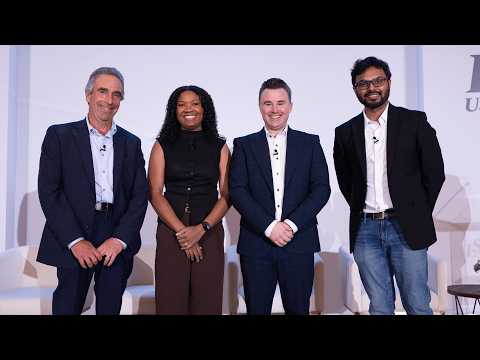
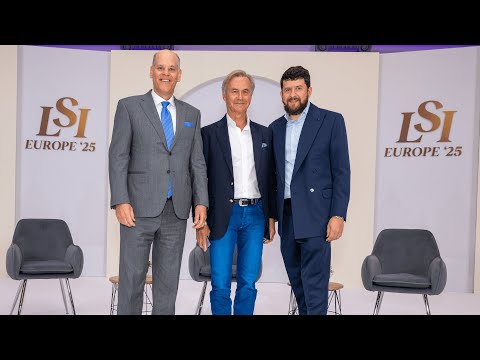
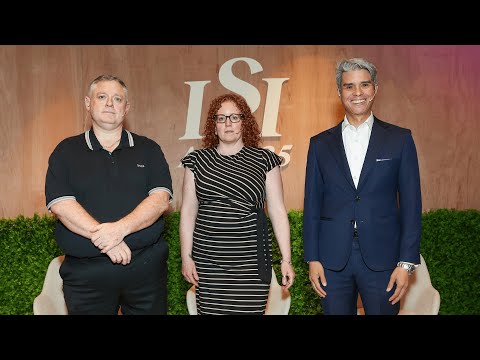
Industry leaders from Precision Life Science Partners, LIQID Medical, Proton Intelligence, and Tenmile discuss strategies for achieving capital-efficient growth in emerging markets, offering insights on identifying and capitalizing on untapped opportunities in the medical technology sector.
Join Our Next Event
Partner with the leaders
shaping the future of
Medtech at LSI USA ‘26
March 16th - 20th, 2026
Waldorf Astoria, Monarch Beach

Nick Pachuda  0:05  
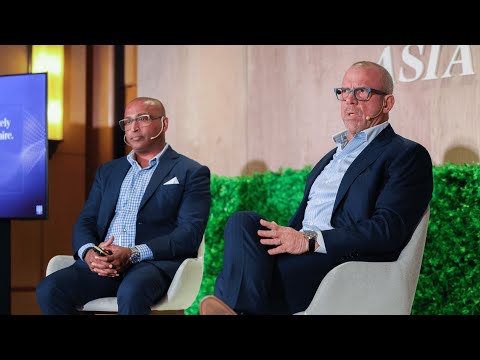
So welcome everybody. This. I'm Nick Pachuda moderating our session on leveraging local it's really about capital startups, investors and growth in untapped markets. I really I want to thank LSI Scott and Henry and the team. They do a fantastic job and really make this the most compelling Medtech investor set of conferences in the world. So as I said, I'm Nick Pachuda. I'm partner at Neovate Capital. I'm also one of the co founders of Precision Life Science Partners. I was a surgeon for 10 years. 25 years in industry, ran external innovation for J and J and about 60% of the deals that we did then. And what I do now with the fund and our consulting businesses outside of the United States, we tend to focus outside of key hot spots like London, San Francisco and Boston. We focus everywhere, and with that in mind, it allows you to find amazing people, transformational technology and attractive valuations. And with that, we put together an amazing panel of entrepreneurs and investors. So I want to give a chance for everyone to introduce themselves.


Joshua Fischer  1:19  
So please, Josh, yeah, hi everyone. Thanks for coming to the graveyard shift. I'm Joshua Fischer. I'm the Chief Operating Officer of LIQID Medical. We're a clinical stage company developing a GL coma shunt with a novel drainage pathway. We found a company in around 20 2017 in Cape Town in South Africa, where we're still operating. And I think that's kind of been one of our key competitive advantages being in South Africa, and I'm excited to delve into that a little bit deeper in this workshop.


Sahan Ranamukhaarachchi  1:45  
Hi everyone. Thanks. Thanks for having us here. I'm Sahan Ranamukhaarachchi I'm the CEO of Proton Intelligence. We're developing a biomarker monitoring platform in the form of a wearable to monitor electrolytes in your body. Primarily, we're focused on heart failure and chronic kidney disease to prevent people from having cardiac arrhythmias and crashing into dialysis. We've raised about $12 million to date. We work across two untapped markets. We're based in Vancouver, Canada and Melbourne, Australia, and both of them are non obvious, but great places to build businesses. So happy to share more information about that.


Aizaz Syed  2:08  
Hi everyone. Good to meet you all say. Aizaz from Tenmile ventures. We're a venture capital Life Science firm based out of Australia, with a two 50 million initial allocation. We've been pretty active in the last three years. We've deployed over 100 million we're up to about 23 or 24 companies, it seems to change every week. So and yeah, definitely, I think you know very much looking forward to this conversation. We're obviously a bit biased towards Australia and that ecosystem, but we are global investors. So you know, probably about 35% of our portfolio is international, and there's definitely lots of strengths to different jurisdictions.


Nick Pachuda  3:03  
So yeah, so let's dig into that. Look, there's been a bit of a contraction in the last five years, post covid, of new entrance of venture capital everywhere in the world, doing early stage, pre seed, seed, a round investments. So what you've the trend you've seen is governments are stepping up more more grants, more R and D incentives, tax rebates, to drive companies into all sorts of interesting corners of the world to develop and to create companies. And with that, we see these ecosystems changing. And it'd be great to hear from people that are in those non traditional places emerging med tech, you know, beds of innovation, because there's advantages of what can be done. So let's talk about, you know, some of the advantages. Let's start from a startup perspective. For Sahan and Josh, what are the advantages of generating local capital versus working globally? Yeah.


Joshua Fischer  4:01  
Well, the first obvious thing is that that the cost of skills is just exceedingly less expensive in South Africa. I mean, if we, if we had to take our company in airlifted to San San Francisco, they were about half our runway. So we can deploy a lot more, a lot bigger percentage of our capital on activities that create value inflection points. We have to spend it on, on salaries, and then because, because Africa is, is, is obviously a country with incredible wealth inequality, it creates a pretty interesting opportunity for us, where we we have world, world class medical facilities and surgeons, but a greatly underserved public health care system where patients are desperate for care. So we're able to do clinical trials in South Africa at at a fraction of the cost. Our recruitment rates are extremely high, and we have a lot of a lot of interest from government in terms of grants, as you mentioned. So that those factors in mind, we were able to get through our first first and humans almost exclusive. Early on, non dilutive funding, corn funding from government. So it's been really great for us, building in that


Sahan Ranamukhaarachchi  5:05  
economy, and also local ecosystems for us have created this sense of wanting to build internally, especially in light of covid, where our supply chain was a big issue for vaccines. So there's most of the jurisdictions we operate out of have quite a lot of effort since covid, to put resources behind companies to build locally for us. What that really meant was, at the beginning, we went to the creative destruction labs program, where we got a lot of angel investors in Canada that gave the first million dollars of the 12 million we raised. And then, of course, as a young company, we want to, we wanted to expand our horizons, went into the San Francisco Bay area to get the next set of capital. But after that, we realized there's actually a lot of capital available in many different jurisdictions. So at this stage in our journey, we have European investors, US investors, Japanese investors, Brazilian investors and Australian investors and we actually find that they bring very different kinds of networks and connections, irrespective of where you're located, but especially for us, they are interested in looking at how different talent and different capabilities exist in other jurisdictions that they're not typically looking at. So it's been an interesting opportunity, especially post covid, to take that approach for us.


Nick Pachuda  6:23  
So as let's talk about the investor perspective in, you know, in local innovation and local investment,


Aizaz Syed  6:30  
yeah, I think it's sort of a double edged sword in some ways, in that when you're in a call it a smaller pond as an investor, you know, if you fund a startup, you're automatically maybe raising the profile of that startup, and that can often have, you know, a follow on effect in terms of capital, human capital, talent, you know, marketing that startup to build stronger capability. I think the challenge we find is, you know, we take a stronger role as an investor to connect that local ecosystem to the more global ecosystem. So we spend a lot of time and effort connecting with syndicate partners of offshore, international venture funds to come come in at the right stage. So I think that's sort of our approach, is to try and maximize the benefits of being in a local ecosystem. And you know, as you mentioned, grant programs, incentives, local subsidies, they seem to be quite more prevalent in those sort of smaller ecosystems. So trying to take advantage of those, but then also facilitate connectivity globally.


Nick Pachuda  7:38  
I think, you know, the world continues to get smaller. And, you know, just for example of what we've been able to do, you know, at LSI, in that I saw all of you guys very recently, you know, in Singapore, and with the ability to say, 10 Mile, you're in London, you're at Dana Point in California, you're in Singapore. So your ability to work with startups and then connect them and syndicate globally with global funds, with strategic partners, the world is incredibly small. So even though you may be funding and building your company locally, the ability to extend quickly to other parts of the world through a mechanism like this, you know, is really useful. So let's talk a little bit. There's amazing technology, and there's very welcoming markets around the world, and that's something I did want to stress, is that, you know, the experience that you have, the relationships you that you can build in all of the ecosystems, not just the traditional ones, and how welcoming the governments are, or the innovation ecosystems in some of these parts of the world is really impressive. So it's clearly getting a little easier from non dilutive funding and R and D credits to be able to get to 123, $4 million of capital you're getting through your pre seed and your seed round, but now you're getting to a point where you may have to do a sizable series A and people are asking you questions now about, what's your commercial strategy and the details of that, and what is your capital strategy for this a round and your B round, and what's this exit going to look like? And what are the strategic saying? So you kind of get to a wall. So how are you guys overcoming, you know, that challenge of, you know, keep staying local, but being able to get connected to the right people for say that a round when you have to think beyond the confines of being, you know, a local company.


Sahan Ranamukhaarachchi  9:31  
Well, if I were to jump in for him, I think from the get go, it's pretty obvious to most companies that are here at LSI that US is probably the first market. Therefore, from day one, having the opportunity to build the medical advisory board out with key opinion leaders across the various institutions across the US has been part of our strategy, that which then allows even investors who are interested in writing those bigger checks to conduct their due diligence with. Familiar institutions and capabilities and expertise. So I think that's always been the key market that we focused on. But of course, recognizing that whether it's regulatory strategy or growth opportunities, the other markets where we operate also present interesting avenues to build and commercialize capabilities, but the US is nonetheless the primary place, so it's always in the back of our minds, when's the right time to move to the US, when to establish a wholly owned subsidiary? What kind of talent do we actually need to start to hire first in order to grow that grow that out, and as we get through, in our case, seed financing, we've actually established a wholly owned subsidiary in the US, started to think about who we needed to hire in that place, because you can, you have to get started on that process


Nick Pachuda  10:49  
relatively So, when did you start thinking about formally, you know, engaging outside of the region?


Sahan Ranamukhaarachchi  10:55  
Well, because we're based in Canada, just 40 kilometers north of the US border, it's always an easy thing to think about when to start a US subsidiary, but having US investors, I think, has helped that process quite, quite quickly for us. But at pre seed stage, we established wholly on subsidiary in the US so that we can think about how we could hire people and and get them on payroll.


Joshua Fischer  11:18  
Yeah, for us, we've been think, toiling on the property for five years. When go, we're not to go. We're not to go because there's always this presumption in South Africa that there's not enough capital around there, especially when you get to a Series A round. So you could probably do a you get three or four scrap together in a seed round in South Africa. But when you only go, get serious capital, like a 10 to 1510, to 20, you almost have to go overseas. But it's interesting, because, so we speak, as iPhone companies, everyone just wants to go to the US, and they already take into account how expensive it is to go overseas. And the reason, if you ask him, Why do you want to go overseas? It's always or to the US. It's always, we want to be in proximity to capital, because that's how you raise capital. You have to be there. And then you ask them and show you shocker, show me your CRM so we can see in the local market, which investors have you approached? And you look at the CRM, and they've only done like 40 or 30% of the local investors. There's no real validation for them that they have to move. There's no pool to that side. They're trying to push to that side without the pool. And then what happens is they set up this US entity. They spend so much this, we've spent a vast majority of the operating cost setting up an entity over there, and it doesn't yield any any benefits for them, because the problem isn't where they are. You can get to America every two months is going to be you can fly there. It a lot cheaper than setting up an entity there, and then you can be in proximity to everyone. And that's kind of what we were twinning with for probably three years. And then we finally pulled the trigger. The beginning of the series. Okay, it's time. We need to go. We've exhausted opportunities in South Africa. We need to expand our horizons a bit.


Sahan Ranamukhaarachchi  12:53  
Okay, if I were to just jump in one, I think people who build in in the US don't quite recognize how capital efficient it could be to build build outside of the US. So maybe I could give an example of what that looks like. You know, an engineer, PhD engineer, that comes out of, you know, prestigious university might cost 120,000 in the US to hire for the first year. You can hire the same caliber of engineer in Australia for the same month, but it's Australian dollars, so it's about 80,000 US instead of 120,000 and on top of that, the government gives us 43.5 cents on every dollar back at the end of the year for hiring that person. So we get people for more, more or less, 45 $50,000 PhD level engineers. So instead of hiring one, 420,000 you could think of maybe hiring three, and sometimes maybe even more. And the more you do that, the more you get back. So this scheme actually ends up making you grow your teams a lot faster. So every time we think about the US we want to get to the US, we always think, man, we can do that a lot cheaper in Australia, and the capabilities and talent does exist. So it's, it's always a bit of a tension that we think about, but it's a good tension to have.


Joshua Fischer  14:05  
I can echo that. I mean, when we were raising our seed round, we were speaking to a little bit investors outside, and they were asking about our financials. And I'm saying, Yeah, we're burning about $70,000 $80,000 a month. And we got a team of of 10, and they're like, What are you guys? You're in clinical trials. You got 10 employees. You're spending $70,000 a month. How are you doing that? So definitely way, way more capital efficient in in at least in South Africa, like where you are as well.


Aizaz Syed  14:33  
I think, to echo some of the comments, you know, I think it's very important to be engaged with the US market very early on. So you know, if you're gonna, if it's often one of the major commercial markets for for your innovation. So understanding what you know, the global caliber of your technology sits at, what are investors in that market looking for? I do hear this quite a lot, that I have to go to the US before and in. Investors are going to invest in me? Yeah, and I'm not sure that that's true. I think, you know, it sort of becomes apparent over time when you have to jump over most investors that you know, that we work with, they're really driven by technology and innovation, and if they find something that's outside of their jurisdiction, but they're really interested in it, they will say that to you. They'll say, you know, bring the company over, and this is how we're going to invest in it. But I think what often happens is that that's sometimes an easy excuse. Early on, you know, you might be getting feedback that you're maybe not hitting a caliber, a global caliber, of, you know, effectiveness in the technology that you're building, and it can often boil down to, actually, it's a funding problem. I don't have investors that are backing or supporting now, but you have to really, and, you know, I know Sirhan does this very well, but we really have to make the effort to go out to events like LSI, you know, multiple trips internationally. Understand how you're going to be a global, global player in your field.


Nick Pachuda  16:04  
Yeah, so maybe just capping that early on, you know, when you're pre seed and you're raising a 500,000 a million or two you you don't need to be focused on the US, right? You're focused on, you know, de risking technically and maybe pre clinically and local is perfectly fine. You want to be having a strategy in the back of your head and talking to advisors. And that's what I look for. You know, when I'm looking at pitch decks, and you know, not when they're asking for a million dollars, but when they're asking for five or 10 or 15, I pull up that slide deck and I look for the team, okay, who's on the board, who's in the leadership team, who are the clinical advisors, who are the business advisors, particularly regulatory and reimbursement. And I want to see some us names on there. I don't want to see it's just your friends from that are local, and that's a quick way to see, you know, is the CEO really prepared for, you know, raising money outside of the region? Have you added resources that are helping you an independent board member from the United States that's helping you get connected at a meeting like this, and it goes a long way. It doesn't mean you have to do everything, but are you getting the right inputs at the board, the leadership, the clinical and the business level that makes you credible and is giving you some, you know, market validation outside of your region, and you're at, you're asking maybe hard questions from those people before you really go out there, and are, you know, running a process to raise money? So, you know, let's get specific for a minute about, you know, these stages, and when is it okay to stay local, and when is it okay to move outside? And let's talk about, you know, development, early on, development and early stage manufacturing. Is that something that you guys have done locally, or have you gone outside the region for just development manufacturing early


Joshua Fischer  17:49  
Yeah, well, a lot of our OEM sit outside of of South Africa, just because the capabilities don't exist there. So we've had to go outside for tube manufacturing, injection molding, things like that, but then we bring it in, because labor is exceedingly cheaper, we can build it in South Africa at a fraction of the cost. So that's what we've done. And but we are definitely looking at, when we set up our Series A now to move some of the manufacturing offshore, back into the US, perhaps.


Nick Pachuda  18:19  
And why is that important?


Joshua Fischer  18:22  
Well, because we're flying everything from the US to South Africa, and then making it and then flying it back. So I think just from a value, value chain, that doesn't really make sense. Yeah, that's, that's pretty much


Nick Pachuda  18:34  
what one of the things I would add to that would be, you want to have manufacturers, especially when you're working with not your early prototype people, William, you're dealing with commercial stage manufacturers. You want to ask your question, have they been audited by the FDA? Have they been audited by the big players that are going to acquire you? Because you don't want to get into a diligence process at the end with a large acquirer, and they run your supply chain and say, This is not transferable. Only that one shop that's never been in front of the FDA that's an issue. So when you think about commercial ready supply chain, you want to make sure that it's easily transferable to someone else.


Sahan Ranamukhaarachchi  19:09  
I think that's true. We're juggling with the same question now of, how do we get through the clinical trials in front of us, versus where do we actually want to go for manufacturing? And the long story short is, if our primary markets the US, we got to be close to where we want to deliver it to your point. So that's that's what we're the conversations we're having is, once we have a pilot production line, then we need to figure out how to transfer that as soon as possible to a bigger player that's proven to manufacture similar products. And luckily for us, in our case, continuous glucose monitors are pretty close analog product, and relying on a similar approach seems most viable for us, which means they will have to be built in the US. I would just add, you know, I think you have to think about your whole business strategy.


Aizaz Syed  19:57  
So, you know, I. Lot of companies are pursuing us first markets. But there are, you know, companies that I've seen that have actually pursued a European regulatory pathway first, and that's because in some spaces, you can often start getting clinical data a lot faster through Europe, actually prove out the technology before you go under an FDA process and in terms of that same thinking in terms of acquisition. So, you know, a lot of the medical device manufacturers, they often will look for early commercialization. So if you can actually just start generating revenue in a European market, and then position yourself for a pivotal trial that approves that innovation in the US, that often sets up quite nicely. But I think it's just trying to think through what is the pathway and what is the manufacturing you don't want to sort of cut corners on the manufacturing supply chain.


Nick Pachuda  20:57  
Yeah, right, exactly. Well, let's double click on that, that clinical trial bit, right? You can get, there are lots of places to do clinical trials. You know, what do you see are the trends of, you know, clinical trials in your region, or Eastern Europe, Latin America, versus doing a clinical trial in the United States?


Joshua Fischer  21:16  
Well, it's just, it's just much more difficult to do a trial in the US. To get it approved South Africa, we got our trial approved very quickly. We started 2017 in 2018 we were in trial patients blind eyes, though, and a lot of glaucoma companies on South Africa, because our population has really bad outcomes in glaucoma. So it's almost like if you can make it there, you can make it anywhere. And it is. It's just easier to run. We're there. We set up there. We don't have to pay your cost to do it. It's inexpensive. You get great data. The surgeons are world class. The facilities are world class. So I know about four other good karma companies that run their trials, so that for me, including one you're invested in. So it's, it's really a hot spot for glaucoma trials,


Sahan Ranamukhaarachchi  22:04  
and for us, if I, if I can speak on behalf of Australia, the clinical infrastructure is really excellent, some world class institutions, like the George Institute, and right in our backyard, it's Victorian Heart Hospital, which is where we are planning on running some of our clinical trials so very well known key opinion leaders, people who sit on guideline committees, and most importantly, for early stage companies, one of the biggest benefits is in Australia, if you want to run a first in human trial, you basically only need to get ethics through a well established IRB and the therapeutics good administration doesn't need to have a review process, which actually allows you to get the studies started much earlier than you would in the US or even in Canada, where you need to have Health Canada approval or an IDE and that actually is a big reason why people want to run trials in Australia. And then, if you think about the costs associated with it, it's actually a lot cheaper to run the trial.


Aizaz Syed  23:03  
And I think to just add to that, you know, understanding what you're running the trial to for. So if your earlier stage, you're often doing feasibility studies. You want to iterate quickly. You want to understand, you know, what are the shortcomings of what you've developed so far? So I would say, in that sort of construct, you don't always have to go into the US. There's other places you can run trials very quickly, very efficiently, get some of that feedback. I think the key milestones that you need for funding, you need to be very aware of and make sure that you know the data that you're going to use for that fundraising is at reputable institutes, particularly when you get later stage. You know, if you're going to sell into the US market, you'll often need sites with the key PI's and the key KOLs that you know will stand next to your data and convince the rest of their clinical population that you know your next innovation is the one that they should be using. So I see that quite a bit. People go, Well, I'm running my pivotal trial, and here are the sites, and I don't have any US sites, and you know, that is always a bit of a flag for me, because, yeah, it's just really hard to sell through to these markets. And if you haven't done that groundwork of actually convincing the clinical population. It's even harder.


Joshua Fischer  24:23  
Yeah, I'll give you example. We had a we had an investor call about two months ago, two months ago, say, and we were talking about the sites we're considering South Africa for for one of our trials. And I couldn't be it's, it's always a little bit of Jar jarring to us how sophisticated US investors are, these guys. You guys know what you're doing. He says, he says to us, No, I wouldn't do that site because in 1980 there was a glaucoma device there, and the outcomes are incredible. And then as soon as they moved outside of the that site, the outcomes were better. So there's like a reputation for the site from the 80s, before I was born.


Aizaz Syed  24:58  
And I think the other. Heart to the, you know, going back to that speed bit, sometimes in the US, you've got competitor devices that are running the same trials. So recruitment can be really hard and challenging, so you have to sort of strategize for all of that. But the good news is, you know, there's, there's so many experts that can help you with this. And going back to what you said before, Nick It's, you know, really building your team, whether it's with fractional advisors or whatever it might be. There's really great experts that are accessible to do that.


Nick Pachuda  25:29  
So, right? So let's, let's tackle that last stage of commercialization, because you touched on it earlier. There's probably some controversy about, you know, where to commercialize, you know, in your local region in Europe, with a CE in the US. So let's get the panel to talk a little bit about maybe the Where do you what is your opinion on commercialization? So in the US first, or outside of the US first?


Joshua Fischer  25:56  
For us, it's in us first, because the market is just incredibly, much, much bigger, and our local, regular regulator doesn't regulate our class of products, so we have to get FDA or CE approval anyways. So that means we'll go if we're going FDA, because it seems that these days that's a little bit easier, especially in the coma devices. So if they approval, and they will commercialize in in the US first,


Sahan Ranamukhaarachchi  26:19  
I suppose, where's healthcare most broken, is one, that's one way I would think about and then as a result, whereas, whereas their money flowing, I think us actually is probably where we will see the first most compelling place to start. But that That being said, I think all the other jurisdictions that we operate out of are looking for the earliest evidence out of us in order to start supporting so I think that's that's why, always the first place to go would be, would be us in our case, and particularly if I can plug a little bit for kidney care, it's a place that really has cried for innovation across the board. And finally, in the last five years, we see tremendous uptake in moving towards a value based care realm. And I think there are people in this conference that are much bigger experts in this space, but but as a result, the US is really leading charge there to show that we could total, we could take a total cost of care approach and provide wrap around services to patients and make sure that they're covered in in bubble wrap, basically to prevent them from crashing into what we call life support and kidney care dialysis. And so it's, it's a, it's a place where US is innovating first, and we'd very much like to be there first. Went with that whole market moving in the right direction.


Joshua Fischer  27:39  
Yeah, I have to agree. I think the US market is the most open to do new surgical innovations or medical device innovation. I think it's easier to get market adoption there than is probably to get anywhere.


Nick Pachuda  27:49  
Yeah, well, I'll make a quick comment, and I'll go to you as you know, you raise that. You raise your money locally. Early. You got some grants. You might have an EIC grant here in Europe. You've got matching funds. There's some a little bit of pressure that I should commercialize in Europe. And there are times when you can get three to five sites. You get early input. You know, sort of market preference evaluations is, do you really have product market fit with the physicians? But you have to be careful, because when you know, especially in Europe, every country's access is different. It takes time. Some are faster, some are slower. But my word of caution is, wherever you commercialize, and now you have a commercial team, when you have sales people, you have to feed the machine, and you're constantly taking calls from sales people and sales managers and hospitals, and instead of you preparing for your series B in the US, and your commercialization, your exit plan in the US, you're now on the phone for three hours with someone that had a problem with the contract in Switzerland, one day, in France, the next day, and Belgium the next day. So you have to be careful of not just it's the advantage of maybe a little early experience commercially, but the disadvantage of every distraction that a multi country sales team can become when? And I'm going to go back to as on this one, what milestone Are you looking for as an acquirer? What's going to generate the most value, the fastest for the least amount of money and the least amount of distraction? Maybe you comment on that.


Aizaz Syed  29:15  
Yeah, I think I would agree for the most part. You know, what I would say is it's not an easy world to raise money for your ed tech, device or diagnostic or whatever it might be. And so I think, you know, in an ideal world, if you're all on track and everything's going well, I would highly recommend going after the US first. But the reality is, most companies probably fall in the 80% bucket, which is, you know, there's, they're coming up against some sort of investor sentiment, that it's not something investable. And I think that's where, you know, again, strategizing with the right set of advisors to go, okay, how can I overcome some of these sentiments? Is it worthwhile me getting down? Data in some of these other markets to actually prove, prove the validity of my device a little bit better to show that, you know, we saw a cardiac intervention device that went to Germany first, you know, started selling about $5 million worth in Germany, before they did their pivotal in FDA in the US, and that was massive, because they were going into a really competitive market, but they had clinicians in Germany that used the incumbent product and were shifting. And so to be able to show that, I think that really changed the sentiment around that product, because as much as we like theory, actually showing it somewhere can often carry a lot of weight. But you know, if it's a completely new market, you know, I would, you have to think about the US that's really the place where you're going to get paid. And if you're not thinking about the pay a dynamics in that environment, you're you're a long way behind.


Nick Pachuda  30:59  
So let's talk a little bit about, I think, the hardest thing for anyone in the last four years, especially in, you know, pre commercial med tech, is raising money, right? We've talked about at the beginning, it's going to continue to be a challenge. And covid sort of taught us that there's a lot of things you can do on zoom right? But let me, let me start with as, how often have you invested in someone that you haven't met never I wish that could echo across the globe, because I'm constantly getting emails and the outreach, hey, could we set up a zoom call? Send you my slide deck, and then you get to the end of the first call, and it's, are you interested in investing? I've never met you, right? I invest in people, not technology and not PowerPoint slides. So if I don't know you, and we're building a relationship over time, because when times are good, it's easy to be an investor. It's easy to be on the board. Just things just sound great. There's up rounds, the strategics love us. Your child one day might not go so well. You might have a supply chain issue, and now you're on the phone with your board, and now you don't have a relationship, right? You've got, you've never really built a relationship live. So let me talk to you guys a little bit about LEM. Me ask you to comment on, well, maybe just please,


Aizaz Syed  32:13  
I'm gonna question back to you. Have you ever had the experience where you've met a company online looks very exciting, interesting, and then you meet them in person, you go, absolutely not sure. And that's, you know, I would say that's a universal investor experience, and that's why you just pick up so many different things when you start meeting people in person, around culture, around the environment, of what you're investing in. I think in venture capital, a lot of what you're investing in is people, and, you know, the ability for a team to deliver or execute and innovate over time. So yeah, I think that's very universal.


Nick Pachuda  32:53  
You hear it too many times. Well, I'm six months away from my a round, so then I'm going to start going out and engaging with investors. If you're six months away from your a round, you're a year too late in guest investing, so in spending time with those investors. So that's why I always talk about it's the radar screen meetings, right? You're not asking for something, you're preparing to ask for something, and the preparation is you have. Did you have a one on one here? Did you see them in the bar? Did you see them at the next meeting? Are you in the ecosystem, or are you not? And I'll use an example of the CEO of pharmas labs out of New Zealand, Zhu Jiang, a great guy. And I met him the first time seven or eight years ago, and he was pitching to me, and I saw him about three or four times a year, and I asked him where he lived in the United States. He said, No, no, no, I live in Auckland. He was at every meeting. It was invisible to me where he lived. It was not an issue, right? So to me, you know, I ran a panel in Singapore about get on the plane. If forget zoom, yes, you can get started. It gets you in the door, but get on the plane and be present in those ecosystems. I want to ask the CEOs here, how, when did you start getting out there and getting in the ecosystem? How early did you start getting out there and getting on the radar screen of folks?


Joshua Fischer  34:15  
We were too late, for sure, because we with South Africa, the capitals escapes. We were trying to stay as lean as possible. So I had this we had this perception that the ROI on traveling so much is not great if you're not going to a conference and presenting or your technology trying to get people excited. It's only really since the beginning of this year where, where we've we've made the mind switch where the return on investment in getting on a plane, flying to a conference like this and just talking to people, just talking to people, even if you're not coming to to present something, or it's a conference, or you got a poster, is, is incredible. It's, it's, it's money well spent. The the amount of inbound interest we've gotten since we've been starting to be more visible at conferences is as almost it must have tripled.


Sahan Ranamukhaarachchi  34:59  
I. Yeah, I think when I first started the company, I was in Vancouver, I would take flights in the morning to San Francisco and get catch the flight back at the end of the day. At least, I felt lucky about that. Now that I live in Australia, it's a 16 hour flight to San Francisco, so I spend a lot of time on United economy and but once a month at least, I'm in San Francisco and I or some if it's Boston, it's a lot harder, but you got to do it. And so from my perspective, I write to investors as if I live in San Francisco, if they give me a time, I'm like, Okay, I'm there, and you got to show up. And in the same, same day, or two days, or whatever it is, you have to figure out how to get more investors lined up. I think it always helps if you have a local investor or or home in a in a VC office in in San Francisco, to organize meetings, have them talk, come and talk to your potential investors. I think, as you say, it's a people game, and you have to start early. You have to think of a five year horizon, at least in my mind, and multiple connections into a VC, not just one. And I think because what I haven't been able to figure out is, when do they actually translate into actual transactions? But you have to put a lot of the work in in order to get to that level of trust and and credibility in order to make something happen, yeah,


Joshua Fischer  36:22  
can I say at a point there? So when we started transitioning for looking for foreign capital, it was quite a mind shift for us, because it it wasn't like this in South Africa. In South Africa, the currency was your your input on public health, so how much you can help the public healthcare system. That's what attracts investment in us. It feels to me that the currencies is network. So you you have to pay to get the network, and that's what attracts capital. It's who you know, where are they sitting? Who Are they friends? Who are they've invested in? That's what's important. So, I mean, so we call it US tax. So we will, we'll get invited. We've got a couple of advisors on board that we just bring on board, just to access network. So we'll give them a little bit of equity, and then on the balance sheet, it says US tax.


Sahan Ranamukhaarachchi  37:10  
One thing I'd add on the fundraising aspect, while investors like looking at untapped markets, I think their comparison is always the talent and the optionality to invest locally, in the US. So you have to figure out, as a as a foreign entity, how to put them, put yourself at the same level. When you're looking at the overall pool of investments that they could potentially make if they're only investing the top 1% you got to figure out how to be the top 1% and I think, I think that then takes additional thinking and strategizing and being in person and constantly chasing up investors. It's, it's hard work. I think it's extra work that we as entrepreneurs have to do because we're outside of the US in order to appeal to to investors and get it, get attention from them.


Aizaz Syed  37:58  
I think that makes a really good point. You know, there's a lot of people that innovate, and they go, Look, I've ticked all, ticked all the boxes. And it's like, Okay, that's great. You know, you've got an innovation and idea that's probably viable, it's probably a good market. But we're not grant programs, right? So we're not a tick the box kind of investor. We're looking for that top one 2% and you know, we often say no to things, not because actually you don't have a viable product, but it's not that you're in that top 2% and I think that's a real mindset that, you know, you only pick up when you get out of your local market, when you start thinking globally, and you start seeing the innovations. There was a panel before around BCIs and people, you know, looking to make trillion dollar companies. And you go, okay, these are the global companies that I'm sort of trying to compete against for a venture investor.


Nick Pachuda  38:50  
So I'm going to go for a parting shot. We only have a few seconds left. I love the line of, how do you make yourself the top 1% so you know, in a few words, each of you, you know, what do you think is the key to making yourself if a venture fund only invests in one out of every couple 100 things they see, how do you make yourself the top 1% What's your one quick key to success?


Joshua Fischer  39:14  
Anyone? So for us, it's just being clearly differentiated in the market, because the market is so saturated. There's so much going on there, but there's nothing new. So for us, it's just being clearly, being able to define how we're very, very different and very, very much better than anything else


Aizaz Syed  39:30  
on the market. I think there's a I think persistence is probably the one that the word I would use. We get beat up a lot, but you have to figure out how to let go and get back up and go again, you know? Because I think if you really believe in the big vision of what you're you're going after, then nothing's going to get you down. And you have to make sure that investors understand that. So, yeah, I think that would be my persistence assistance, yeah, as I think tenacity is a good one. But I would say I. Think about how you're going to create a market, as opposed to steal a market. Yeah, because, you know, we see a lot of innovation where you go, where there's this great, big product, it sells, you know, 100 million dollars in revenue, and we're going to do it a little bit better, and that gets you, you know, top 10, 20% but the top 1% they're going, this is a, you know, a billion dollar new market that actually, it doesn't exist right now, but we're going to unlock it perfect.


Nick Pachuda  40:26  
Well, thanks everybody. I appreciate your patience and attendance today. Great people on the panel here sharing their thoughts. So thank you very much, and thank you to LSI.