Tal Wenderow 0:00
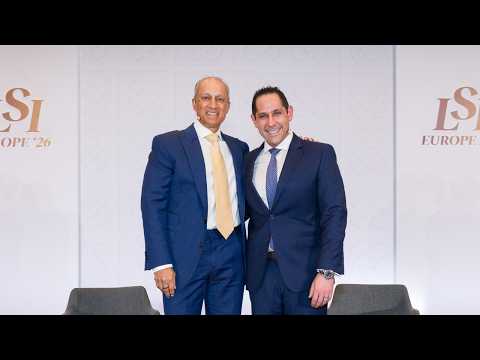
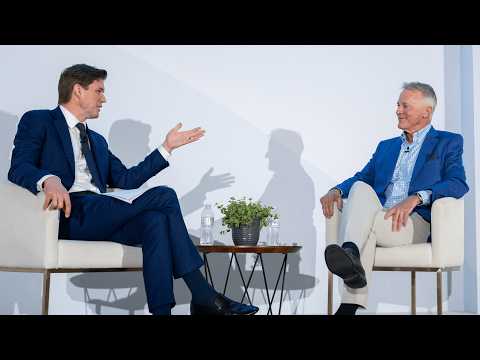
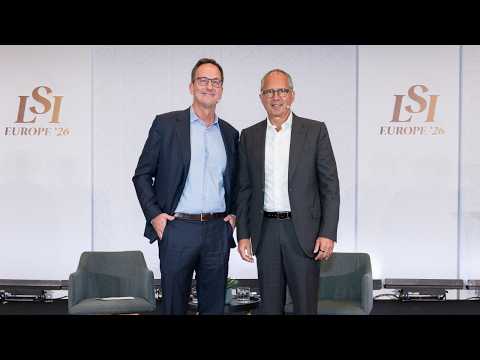
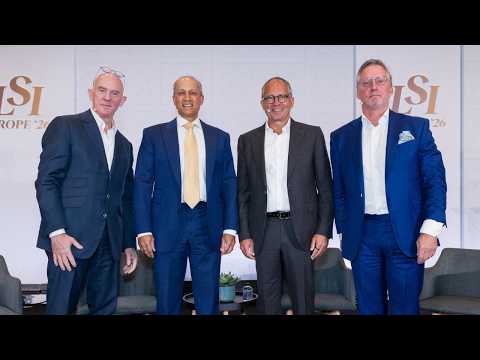
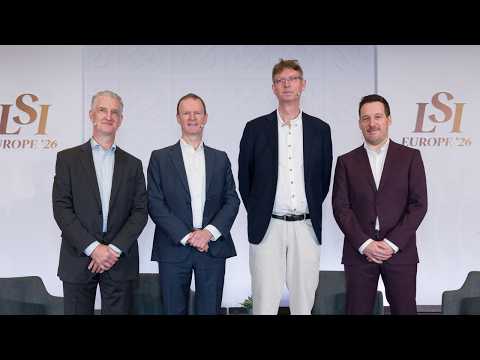
All right, thanks everyone for having us, LSI for organizing that. Scott and Henry, we have an exciting panel here, sharing about Israel innovation and how we drive the future of cardiac care. We'll start with a quick introduction. Then Professor Allan will give a short overview for to kind of share our experience and knowledge, and then we'll open up for some panel discussion. So I'm tal Wender. I'm managing partner star 51 capital, first all time you wanted to stop
Chaim Lotan 0:35
Well, Chaim Lotan, intervention and cardiologist, the head of the heart center at hadasa, and currently I'm the chief innovation officer in the hospital with a background in several startups. And together with Professor baya, we're running a very big meeting, which is called ici, namely, for innovation cardiovascular interventions. And we'll show you some of it.
Amos Ziv 1:04
Amos Ziv. I'm the founder and chief scientific officer of cardiac care and non invasive neuromodulation wearable device for the treatment of atrial fibrillation at the at home settings. Was privileged to participate in many of the ICI meetings which are considered. I consider the one of the best in the world in cardiology.
Rann Marom 1:25
My name is Rann Marom I'm the CEO of paragate Medical. We are developing an implantable device to decongest chronic heart failure patients and basically eliminate vast amount of readmissions and take a very painful inpatient problem and move the treatment of it to an outpatient setting. We're in clinical trials at the moment.
Benny Greenburg 1:49
Hi, I'm Benny Greenburg, co founder and CEO of magnicity. Magnesity Develop a novel tracking 3d tracking technology that enable us tracking the deformation of anatomy. Our initial indication is for the lung, but we're looking for other indication like structure, heart and nowhere.
Tal Wenderow 2:11
Great. Thanks everyone. Chaim, do you want to start?
Chaim Lotan 2:14
Well, no, just for starting the presentation, I'd like to talk a little bit about Israel innovation driving the future of cardiac care. Why Israel? Because Israel is really considering a start up nation, as we all know. And despite the fact that Israel is a really, very small country, you can see that with one gas station, you can cover the entire country, still it's a hub for many, many companies in Israel, international hub for the rest of the world. Some of the interesting things about it is that the time and the price to get from an idea to an exit in Israel is very short, first prototype, advanced prototypes, and animal studies, clinical trial, the time is relatively half the time that it takes in, for example, the US, and the total investment to positive cash flow in US might be between 23 and 70 million compared to Israel, which is much, much lower. I love science. In Israel is going very much. We have close to 1800 companies with life science, where cardiovascular is really one of the leading ones. And the idea is that there is a lot of companies with out of the box thinking a strong ecosystem and integration organized medical database. We have a very good database for more than 20 years, government support and definitely cutting edge technologies. And for those of you are in the field, you know that many, many of innovation and intervention in cardiology really started in Israel. There are some new areas of cardiac innovation. With the advanced platform for valve and stent. AI is taking a very big step, and also all the implantable sensor that are there. There is a huge trend to device miniaturization, genomic medicine, wearable and we'll see some of them. And the surgical, interventional thing AI is taking a very big role, like we heard in the previous session, with predictive analytics, automated interpretation and personalized treatment. All of them are in those companies, and this has been translated to quite significant success stories. In the past, we had med in all that had the first stance, Val tech, cardio with Valve treatment, dia imaging, CathWorks, we. Recently with analysis of FFR corindus, which was by our friend here with a robotic characterization Professor VR and PVT started. But even in the last two years, which are quite difficult to use in Israel, we had the exit of V wave for 1.7 billion shunt innovolve for treating valves, and Boston Scientific acquired sonovy for renal denervation. And even just last week, we had Edward, which acquired victorious. So despite everything, there are a lot of activities. As you can see, innovation is our DNA and our heartbeat. And Shimon Peres, who was the late president, and in one of our meeting ici meeting, said Our legacy is mortality, knowledge and peace. Dissatisfaction has led us so far, and I'm fully confident that it'll carry us to new heights in the never ending quest for Tikkun Olam. So with this, I will invite all of you to come to our next ici meeting in December, where we celebrate 30 year anniversary for the meeting with a lot of new things and innovation. The theme of the meeting is, what is the unmet need? Unlike other meeting where you see the past this trial, we are discussing what is still missing, what are the problem and where are we going? So thank you very much for coming to this session, and tal The floor is yours. Thanks.
Tal Wenderow 6:38
Fine. Hear me right now. Here we go. Thanks. Fine. This is fascinating. So I, I forgot about the the gas tank. I wonder what happened for like the car, if you can do the same now, but just starting from the top right. So much innovation, so many companies, so much exit. And people ask me, I live in Boston, why Israel? Right? So kind of go across to our panelists here, meaning, when you get the same question right from investors, from friends, colleagues, how do you answer that? Why does such a cluster of innovation in Israel? Should I say, Yeah, go for it.
Amos Ziv 7:19
You know, they say in Israel that two or three too many people meet, it takes about 10 minutes before they they realize that they have a mutual acquaintance. So it's, it's very tight and very communicative community. People know people and things spread very fast. On a very personal level, initially, I think that's, that's, that's one reason. I think a very important reason is an Chaim mentioned that in his presentation is the Israeli healthcare system, which is based on, or has basically, databases that actually have, have been following patients and outcomes for decades now, which are very accessible to to startups and VCs and a lot of especially now the age of AI, this is making a huge, huge advantage, also in Israel, and specifically about cardiology. I think Cardiology is, in general, the one of the most open to innovation paradigms out there. I mean, compared to other other fields, I feel that as a cardiovascular startup, you know, you approach the KOLs and you talk to the cardiologist with new innovation and the reception is, is always enormous. It's like, I think Cardiology is the most open minded and open to innovation field in Israel. So when you combine that with something like ici, that's you get a very, very prolific ecosystem.
Tal Wenderow 8:59
Yeah. Rann Ben,
Rann Marom 9:02
I think one other element is Israel is a country of immigrants, which the result of that is, there's there's a lot of ties between the population Israel and the countries where these people came from, specifically for our context, it's Western Europe and the United States. And that, in turn, drove people in Israel to go and work for American companies in the US, and then bring them back to Israel. And then they started R and D operations, and that just seeded, and then acquisitions, and we've seen that in high tech and then in medical devices as well. So that element of having strong ties between what is a small and isolated and innovative country and the target markets, on the other hand, has been a huge force multiplier for us. And it's just, it's a self perpetuating cycle. It just, it just continues to grow. Foreign companies can. Continue to grow their operations and grow acquisitions, and that just drives yet additional Talent Exchange, etc. So that's been, I think, a key element.
Chaim Lotan 10:11
You know, Rana, I'd like to ask you one question. Part of the thing is really thinking out of the box. And I want to understand, why do Israel think out of the box? And I'll take example, your company, paragate, which initially when I heard about it, I think it's crazy, yeah, and it's still working. So can you explain how did you arrive to this idea, your team? And how do teams arrive to? Well, I think what seems to be crazy ideas. Well, first of all,
Rann Marom 10:44
if you look at the, you know, the country, what it looked like 100 years ago, going and establishing a state there was thinking out of the box and slightly crazy. So it's in the DNA, and the circumstances enforced a lot of creativity and finding solutions without a lot of resources. As you pointed out, it's just become part of the culture, and then that has been able to tap into the some of the other strains that we've been discussing. And we see that hotbed of activity there specifically for us. You know? I mean, you know, our founder, Jay orfeld, he's a national cardiologist, yeah, a little bit about the technology so, and he's a physicist, and he came up with this idea of, basically, he saw a patient that was suffering from too much congestion, and They predicted they have a life expectancy of two weeks, and she continued to survive because her body was just finding other ways to get rid of the excess fluid that was impeding her breathing. And then he came up with this idea, again, being an engineer and a physicist, to find a parallel gateway, para gate into the system and remove the congestion. And yes, being a creative person, he thought about it very, very differently. Actually, it's pretty straightforward. Go to where the fluid is in the tissue and take it out. Don't try and strengthen other mechanisms of the body that are already way too weak, just take the fluid out and help the body with with a parallel system. And yes, so far in clinical trials, it's showing very promising results.
Tal Wenderow 12:32
And I think part of that is what drive innovation Israel and more in cardiac is the early successes, right? Can those early success drive more and more people into that. Ben, you were involved like, not necessarily in cardiac but early success, and then you took that to the next step.
Benny Greenburg 12:46
So first of all, I want to say that the healthcare in Israel is fairly developed, and also a lot of physician go to do fellowship and sub specialties, mainly in the States. So they bring, they the drive for those new technologies back to Israel, collaborating with engineer bring that closing the loop very fast, also on the side of of the engineers or innovators. It's if you look at the last 30 years the industry has been developed very much. I mean, 30 years ago, there were no catheter manufacturing capability in Israel, so everybody had to go and do and now there are a lot of engineers that do that, understand that, develop developer system. And the industry is very much developed. People move from one company to another, bring that out of the box, thinking from from one specialty to a different specialty. So I think that's that's something that drives a lot of innovation, and we strive when wherever some somebody tells us it doesn't work, that's what we start thinking and finding different ways. For instance, in my experience, we've I've been working with electromagnetic tracking for 30 years, and it has limitations. So me and my partner thought, how we overcome those limitation, the cost and the meta interference, and we came up with completely different em tracking that is good for any any air in the in the body, it's low cost, enable us to track not just a single point, but a full curve, and enable us with the navigation, which is important any in any interventional procedure. Thanks.
Tal Wenderow 14:39
So we all drinking for the Kool Aid, right? We're a little bit biased. If people from the outside look at Israel right and said, there's some challenges, and let's ignore the geopolitics situation for a second. What are challenges that you're facing when you're building a company in Israel and vanity, your point of physician that are trained in the US, but practicing something differently in Israel, or manufacturing or car. What kind of the challenges you guys are facing?
Amos Ziv 15:03
Yeah, I think, well, for startups, the financing landscape in the past few years has been difficult anyway, especially more so for Israeli companies trying to fundraise from, you know, US based companies or European VCs. And, you know, I think the role of an innovator is to keep on innovating and thinking out of the boxes, not just the technology we see that every day. I mean thinking creatively, even in deal deal making. So example for us, it was two things that kind of led to two kind of out of the box. I was just happened to be here in LSI last year. I was in Portugal near Lisbon, and I entered a panel which was called alternative fundraising opportunities that talked about family offices and talked about high network individuals and syndicates. And, you know, I approached one of the panelists over there, and I think that, you know, he was really appreciative of our technology and our data. And basically we started, we started diligence. And in that process of diligence, he said they were saying, you know, many of our investors are US based investors, and they qualify for some certain tax benefits only for US companies. So, you know, we, we have a US subsidiary company now that that so there's one. The bottom line is, this is going very well, and we're causing 10 million around it. It's very difficult time. But it all started was like looking to looking at these alternatives, and sometimes you have to make these adjustments, you know, like a US subsidiary, for example, to, you know, to have US investors come in as well.
Tal Wenderow 16:59
So, and Chaim, from your perspective, innovation is the same. Meaning patient, obviously, is patient, but you practice even PCI or struggle hard, sometimes different, different people, different helpers. Us versus Israel. How do
Chaim Lotan 17:11
you see that? I think, I think the problems in Israel, in the entire West world, are the same. It's different. When you approach the eastern part of the globe, and I have a lot of experience in China, and there are, there are a lot of differences, but on the whole, the same problems that we see here we see in Europe and United States. But I want to continue the same question that you ask, and actually come to you as one of the pioneers that started robotic intervention, together with Professor Bayer. You know, it's out of the box idea to have a robot that will do all the work you start to do. And then there is a problem to continue big scaling in Israel, and at some time you have to move. What are the problem? When are the problem approaching? What is the time to move? How do you find your way in this big world?
Tal Wenderow 18:14
I don't think there's a one single solution or answer for that. Meaning I can tell you we moved my family and I, my child was three back then, to the Boston area, and they all made sacrifice right to move into civil option. I do think there's a point, depends on the company's phase, that you have to be where the market is. I'll you know roughly, hear your thoughts later on, but I'll believe if we stayed in Israel, the company will go under because you don't have the late scales of investors and inability of physician and be part of that ecosystem on a daily basis. But, you know, even on this panel, we can you have three categories, I say, right? The founder, CEO, actually just brought a US CEO, Randolph there, you'll take off, a VC guy actually moved to be a CEO, and Ben is running it from scratch as a founder, meaning, so it's different perspective, and that's, I think, part of the unique but, you know, it's found as well. Founders are it's a grind. We all know that, and it you have to believe, and you have to be persistent and just keep whether there is a box or not. You can have those chicken in the egg discussion, if there is even a box, but, but one going back to your meaning, we met the first time a couple of months ago in Boston, when you came to a conference and you said I was a VC, and then moved to bc of a company which is really and nothing, Medtech VC, right? A little
Rann Marom 19:39
bit. Yeah. Right now. Yeah.
Tal Wenderow 19:41
Why?
Rann Marom 19:41
Why? That was a good question. Well, what, you know, there's, there's why, and there's some of the challenges and some of the, you know, the things that have helped me, the why is basically, and this, this is not my first operating position after I was a VC. Uh, but in all of them, there was an element of falling in love. I think you need that, because it's an early stage company, and it takes you notice, it takes a lot of passion. And I read what you were saying in the lens interview, that I need to do what it takes I clean the coffee machine or whatever, and you cannot do this if you don't have some kind of emotional connection to to the need that you're addressing and to the people that you're working with. And on that point, you know, you ask, what helps Israel innovate and succeed? And part of it is the talent pool. And I was very lucky in my group to really to inherit a very, very strong core team of VPS that have great experience, both in entrepreneurial situations and also in large corporates such as Medtronic. And I'm just able to rely on them for that, and that helps me a lot with with learning curve and just with having, you know, base to consult with. So I'm really lucky to be to have an example of the strength of the talent pool in Israel, around around my company. So it's not the only answer, but it's, I mean, it's not the whole answer, but it's, it's a big part of it is just having those people with me, both to motivate me to join and then to enable success. Of course, we haven't succeeded yet, but I think we will.
Tal Wenderow 21:39
So there's no other option, right? That's the it's not enough, right? That's what you promise your wife that, yeah.
Rann Marom 21:47
Wife, investors, you know, colleagues, yeah.
Tal Wenderow 21:51
Meaning, the other thing for the artist, I'm not sure how many people know there's a lot of medical device strategic company has actually an office in Israel, right? They've developed an office and all that meaning when you in the ecosystem, do you hire from those strategic development house? So they already change the mindset to be corporate like in the US, because they usually hire, you know, Bob company, like many old companies, super difficult, and they try to go the internal scale and internal R and D. Do you see the same culture? Stay on the R and D in Israel? On the strategic point?
Amos Ziv 22:27
I think it's a very it's a company specific answer. I guess it changes. My co founder, CTO, just moved to Austin because our production facilities in Richmond, Texas, which is an hour away. So talented, he's, he's not recruiting has to do with, you know, the local area, and in that phase, I can see, go with Liz on the other hand. You know, we have discussions with the strategics we've always had, you know, they're interested in what we're doing, especially in the post ablation field and so I don't know. So for us, it's transition phase. I mean, so far, all the talent was from Israel. But for now, we're going to be starting recruiting some in the US. So I still don't have an answer.
Chaim Lotan 23:18
Part of the main problem of a startup company is getting the first money to move on, and as everyone knows, it's getting more and more complex now you are on the other side. What would your advice be? Or how would you suggest for young companies to bring in money, especially when they want to approach your American companies and distance and everything.
Tal Wenderow 23:48
I think the most unique thing I've found, and I was in a venture partner in strategic for a couple of years, is in the end of the day, you're not doing a lot of investment. And Ron knows that SFC or, you know, people think you're doing a lot. Each partner do 234, potentially five a year, and you see 1000 so what it means that you have to develop those personal relation with people, because people wants to work with people. They want to trust you. They want to trust that if there's an obstacle, you will share that, and they will be with you. So I think that personal relation is almost as important than the product, oftentimes, because you don't want to invest that, invest in people that are not fixed to your ecosystem, and just keep talking meaning in the end one will be there. So you have to, it's not the same pitch to all investors. Each one has a different swim lane. Each have a different things that they invest or different angle point that they like. From that regards, I wish again there was a magic solution, because then everyone will will stand in line to get that switching a little bit to the future. I. That is future of cardiac care, meaning we have three kind of out of the box, disruptive whenever you call it from you know, new pulse watch to change AFib to heart failure to make navigation. What do you see next? Right? Imagine your product is out there. Do you what do you see next? What do you see? Else is coming from your perspective, robotics, for sure, that's history, right?
Benny Greenburg 25:29
It's not history. And the term robotics is not correct because it's it's manipulator autonomous in medical device would take some time, like it takes in cars, but first of all, the ability to do things slowly and leave your hands for a second and not, not need to, to hold the patient. That's, that's, I think that's clear, that is much better, but accurate in any procedure and it's being developed. I mean, intuitive brought Da Vinci, 2530 years ago, and now I wouldn't consider doing an open surgery. I would, I would go and do a robotic surgery, because the outcomes are the patient outcomes are much better. And the healing process, I think it would imply to all other indications and all other interventional procedure that would be minimal invasive and robotics and autonomous would follow, because AI would support it. My view
Chaim Lotan 26:39
is a little bit different. I must say, I was in a visit in Finland A while ago, and we went to visit some new hospital, and it was amazing that the size of the hospital today is half of the size that the old hospitals. And I said, why is that? And they said, in the future, people will not be in the hospital, they will be at home. Hospital will be only intensive care units and surgery unit, the patient will be hospitalized at home. So I see the future of care and cardiac care as how to deliver the best care at home, in cardiology, in monitoring, in telemedicine, in cardiac all the cardiac care. And I think that now more and more I'm trying to think, you know, we used to talk about telemedicine or whatever, but the question is, how do we sit here and monitor our patients? Provide them the care. Provide them everything at home, the population is aging, and we see it very quickly. We need other things for the aging population, other needs and everything. So I believe that robotics is important, but we need the robots at home, and we need everything at home, and we need to control it. And I think those are going to be the challenging dealing with aging population at home.
Amos Ziv 28:04
Yeah, you want to echo on what Hayman is saying that it's a great example. I think that point of care is one of the major shifts that we're going to be seeing in the next decade, and has to do with home care monitoring and our example therapy. So we, you know, we, we always said our startup initially had two, two paths to choose from. We had a big device which was supposed to be a clinic point of care, which was supposed to do neuromodulation patients for a period of several weeks to prevent AF. And then we also had some IP that we wrote una wearable, this wearable so and and we decided to make the gamble on going saying the future is going to be home care. The future is going to be both monitoring and therapy at home. So, you know, I totally agree. I think that there's no contradiction. By the May of of course, acute cardiac care and surgeries will be in the hospitals and robotics. But in terms of, like, the shift in point of care, and I didn't know that about about hospitals in Norway, yeah, and it makes sense. It makes perfect sense. So the aging population and the ability to monitor patients, not alone for us, we always said that the evolution of wearables is going to be wearable home care, monitoring and therapy. And this is, this is what we've done. So, yeah, I see that happening, by the way. We see that also in terms of regulation. FDA is, FDA has got a lot more guidelines about remote monitoring. Reimbursement is becoming also a big you know, we have remote monitoring codes, you know, CPT codes already existing for patient monitoring at home. So, yeah,
Tal Wenderow 29:44
so almost you're holding the watch. So when you design now, we all used to design for, you know, the or the IC right, for the customers, the physician, the nurse, the tech and all that. How does it change your mindset that in the end of the day you designed for a consumer? Do. Worried at home
Amos Ziv 30:02
since this I haven't done a non consumer before, so I can't say, but I can say that there's a lot of work, and there are actually a lot of challenges, also in the clinical studies to do home care. So there's a lot of work that goes into the design, the a lot of work, the work, work that needs to be done in terms of bio engineering the device so it's comfortable, usable. The the aging population is a challenge. You know, our first first two studies, we wanted to make sure that we're getting the right population. So average age was 65 so we you have to make the app very approachable, very simple for us. It's just measure one button, treat next second button and and there's also a challenge of the studies that most of the centers that run, the hospitals that run clinical studies are not accustomed to home care studies, and that was a huge challenge for us, both in Sinai and in Tel Aviv So,
Tal Wenderow 31:03
yeah, run your thoughts.
Rann Marom 31:07
I think most, most has been said. I mean, we're in the same area of moving care for a very inpatient problem out to the to the to the home. I think the economic pressures are going to make it inevitable. It's just the current model is unsustainable. I think what else is happening? I think we're both an example of that is the convergence between digital and device. At the end of the day, there's a lot of opportunity to use data in order to personalize treatment, and especially when you talk about aging populations and chronic disease, the variability between patients just becomes huge. So that becomes an imperative. So this dichotomy in certain VCs might between digital and device is there's a huge interface between those those they're going to converge. But the other trend is where you're saying it is, I think
Tal Wenderow 32:02
so, switching gears. Chaim, you started with Professor br the ICI like kind of point was today, everyone speak about innovation, but 30 years ago, no one did that. What drove me to even, oh,
Chaim Lotan 32:17
my failures. You know, I was in charge of the cath lab, and I had some ideas. One of the idea, for example, was impatient with bad kidneys, and you cannot give dye. And we had a crazy idea, trying to take the dye out of the coronary sinus. And that was 30 years ago. We tried. We did, I did it on patient at the time, didn't need an IRB or whatever. Was very, very successful. And, you know, I wrote a paper, and then someone came to me and he said, you stupid. If you write a paper, you don't have an IP. I said, What is an IP? Realizing that in medical school, they don't teach us anything about innovation, about startup, about anything. And I was lucky to be in Stanford and meet my friend there and so on, and the foundry and a lot of other people. And I realized that if you really want to understand what innovation is, is you have to teach physician also innovation. Professor br was on the same side with his ideas. And when we came back, I said, you know, we had a small meeting in Israel, which was teaching people how to put sense and everything. And I said, that's already in the past. We don't have any added value. Let's start a meeting which will be the future. We are not going to talk in the meeting about studies and p values, and because if you have the results of a study, it means the past. We're going to talk about the future. And part of this meeting is, what are the unmet needs really? One of the slogans that and I learned two things in Stanford. One is, what is the unmet need? The second one, what is your team? I realizing that if you have a very good, strong team, and you have a good unmet need, you're starting a good way. So the theme of the meeting was, what are the unmet needs? Where are we going? What is missing, and what's nice in medicine, that even if you create a very good technology, this technology, by itself, brings a lot of unmet need. Take the tubl, for example. You know, it was a revolution, and then we have paraviralik and conduction problems and other problems. So each technology and each advance brings in itself the need for a lot of new things. And I think part of this meeting is really thinking a. About the future, where are we going, what is still missing, and what should be changed, and
Tal Wenderow 35:06
thanks, and what's unique. And now you have a partnership with LSI as well for the ici. And you see also not just startup, but similar to LSI, in different, more focus, you have strategic physicians, and kind of put them all together, you try to drive innovation, or partnership, or both, both, both
Chaim Lotan 35:25
actually and again. Like you said, it's very important to have a team. It's also very important to have partnership. I realized that about five years ago, I was in, actually in a big meeting in China, in Beijing, the CIT meeting, and in the in breakfast. You know, in the hotel, you don't find a place to sit because it's overcrowded. So finally, I saw a place, and I I went to sit there, and the German looked at me, Professor baton, calm, sit down. And I looked at him. I didn't have a badge. I didn't know the guy. What's going on? And I said, Sorry, do I know you? And he said, Yes, of course, I'm here because of you. And I said, because of me. What did I do? He said, I came to your ici meeting, and we had the Chinese meeting together with China. And I was sitting next to a Chinese guy that is a big investor. We started to TUV, and we made a deal in the ici, and here I am coming to China, so realizing that when you bring together all the stakeholders, the physicians, the bio engineers, the cardiologists and especially, what's important is people that bring with them the money that's the best place. So I think that, in answer to your question, teaming with LSI for ICI is very important, where we bring more start up more VCs. And I think that in order to have a good cake, you need all the ingredients.
Tal Wenderow 36:56
And sounds like you still have the fun. So I see we have, like, a couple of minutes Any final thoughts, whether it's on the weather, sports, your company life,
Amos Ziv 37:07
again, I just gonna say one more thing, if you'll allow me. I think there's one more benefit to ici, and that's the educational part, the Academy of Innovation Day, which, so, which is, like, you know, I attended that. And for me as as an early entrepreneur, it was a wow. This is how you go through it. You know, first you do the IP, then, then you do the study design, you go into it. So, Academy of innovation. I think, I think the fact that you guys are also pushing education into innovation is also really important. That was like, last two cents
Tal Wenderow 37:42
you need the check. That's, it,
Rann Marom 37:44
more or less good.
Tal Wenderow 37:47
Any last thoughts,
Benny Greenburg 37:50
we need more funds.
Chaim Lotan 37:53
That's, that's, that's what we need then. But I think we're doing well. It's not that we cannot do because we do things much more cost effective than worldwide, but still, we need funding. And I think the nice thing in innovation that you don't see really the patient that you treat, but you know that you really helped. It's not that doesn't matter really the amount of the check at the exit, but if you know that you treated so many patients this at the end of the day, you feel very good. And I think that as a treating physician, and what's nice is that Professor br and myself are both cardiology, both academics and everything, but when you combine the innovation together within it gives us a lot of satisfaction,
Tal Wenderow 38:41
yeah, and I agree with that. And I'll say, first, thank you for joining the panel. And I still, I live in Boston, so I see a lot of people still believe in Israel, and so keep the belief, and Israel has a good name for innovation. Chaim just mentioned the acquisition by Edwards, and there's a lot of R and D center. So more innovation will come. I'll bet we hear more stories. We'll hear from the panel tomorrow, as well some other stories, and not just in cardiology. Thanks for everyone for joining. Appreciate it.
Tal Wenderow 0:00
All right, thanks everyone for having us, LSI for organizing that. Scott and Henry, we have an exciting panel here, sharing about Israel innovation and how we drive the future of cardiac care. We'll start with a quick introduction. Then Professor Allan will give a short overview for to kind of share our experience and knowledge, and then we'll open up for some panel discussion. So I'm tal Wender. I'm managing partner star 51 capital, first all time you wanted to stop
Chaim Lotan 0:35
Well, Chaim Lotan, intervention and cardiologist, the head of the heart center at hadasa, and currently I'm the chief innovation officer in the hospital with a background in several startups. And together with Professor baya, we're running a very big meeting, which is called ici, namely, for innovation cardiovascular interventions. And we'll show you some of it.
Amos Ziv 1:04
Amos Ziv. I'm the founder and chief scientific officer of cardiac care and non invasive neuromodulation wearable device for the treatment of atrial fibrillation at the at home settings. Was privileged to participate in many of the ICI meetings which are considered. I consider the one of the best in the world in cardiology.
Rann Marom 1:25
My name is Rann Marom I'm the CEO of paragate Medical. We are developing an implantable device to decongest chronic heart failure patients and basically eliminate vast amount of readmissions and take a very painful inpatient problem and move the treatment of it to an outpatient setting. We're in clinical trials at the moment.
Benny Greenburg 1:49
Hi, I'm Benny Greenburg, co founder and CEO of magnicity. Magnesity Develop a novel tracking 3d tracking technology that enable us tracking the deformation of anatomy. Our initial indication is for the lung, but we're looking for other indication like structure, heart and nowhere.
Tal Wenderow 2:11
Great. Thanks everyone. Chaim, do you want to start?
Chaim Lotan 2:14
Well, no, just for starting the presentation, I'd like to talk a little bit about Israel innovation driving the future of cardiac care. Why Israel? Because Israel is really considering a start up nation, as we all know. And despite the fact that Israel is a really, very small country, you can see that with one gas station, you can cover the entire country, still it's a hub for many, many companies in Israel, international hub for the rest of the world. Some of the interesting things about it is that the time and the price to get from an idea to an exit in Israel is very short, first prototype, advanced prototypes, and animal studies, clinical trial, the time is relatively half the time that it takes in, for example, the US, and the total investment to positive cash flow in US might be between 23 and 70 million compared to Israel, which is much, much lower. I love science. In Israel is going very much. We have close to 1800 companies with life science, where cardiovascular is really one of the leading ones. And the idea is that there is a lot of companies with out of the box thinking a strong ecosystem and integration organized medical database. We have a very good database for more than 20 years, government support and definitely cutting edge technologies. And for those of you are in the field, you know that many, many of innovation and intervention in cardiology really started in Israel. There are some new areas of cardiac innovation. With the advanced platform for valve and stent. AI is taking a very big step, and also all the implantable sensor that are there. There is a huge trend to device miniaturization, genomic medicine, wearable and we'll see some of them. And the surgical, interventional thing AI is taking a very big role, like we heard in the previous session, with predictive analytics, automated interpretation and personalized treatment. All of them are in those companies, and this has been translated to quite significant success stories. In the past, we had med in all that had the first stance, Val tech, cardio with Valve treatment, dia imaging, CathWorks, we. Recently with analysis of FFR corindus, which was by our friend here with a robotic characterization Professor VR and PVT started. But even in the last two years, which are quite difficult to use in Israel, we had the exit of V wave for 1.7 billion shunt innovolve for treating valves, and Boston Scientific acquired sonovy for renal denervation. And even just last week, we had Edward, which acquired victorious. So despite everything, there are a lot of activities. As you can see, innovation is our DNA and our heartbeat. And Shimon Peres, who was the late president, and in one of our meeting ici meeting, said Our legacy is mortality, knowledge and peace. Dissatisfaction has led us so far, and I'm fully confident that it'll carry us to new heights in the never ending quest for Tikkun Olam. So with this, I will invite all of you to come to our next ici meeting in December, where we celebrate 30 year anniversary for the meeting with a lot of new things and innovation. The theme of the meeting is, what is the unmet need? Unlike other meeting where you see the past this trial, we are discussing what is still missing, what are the problem and where are we going? So thank you very much for coming to this session, and tal The floor is yours. Thanks.
Tal Wenderow 6:38
Fine. Hear me right now. Here we go. Thanks. Fine. This is fascinating. So I, I forgot about the the gas tank. I wonder what happened for like the car, if you can do the same now, but just starting from the top right. So much innovation, so many companies, so much exit. And people ask me, I live in Boston, why Israel? Right? So kind of go across to our panelists here, meaning, when you get the same question right from investors, from friends, colleagues, how do you answer that? Why does such a cluster of innovation in Israel? Should I say, Yeah, go for it.
Amos Ziv 7:19
You know, they say in Israel that two or three too many people meet, it takes about 10 minutes before they they realize that they have a mutual acquaintance. So it's, it's very tight and very communicative community. People know people and things spread very fast. On a very personal level, initially, I think that's, that's, that's one reason. I think a very important reason is an Chaim mentioned that in his presentation is the Israeli healthcare system, which is based on, or has basically, databases that actually have, have been following patients and outcomes for decades now, which are very accessible to to startups and VCs and a lot of especially now the age of AI, this is making a huge, huge advantage, also in Israel, and specifically about cardiology. I think Cardiology is, in general, the one of the most open to innovation paradigms out there. I mean, compared to other other fields, I feel that as a cardiovascular startup, you know, you approach the KOLs and you talk to the cardiologist with new innovation and the reception is, is always enormous. It's like, I think Cardiology is the most open minded and open to innovation field in Israel. So when you combine that with something like ici, that's you get a very, very prolific ecosystem.
Tal Wenderow 8:59
Yeah. Rann Ben,
Rann Marom 9:02
I think one other element is Israel is a country of immigrants, which the result of that is, there's there's a lot of ties between the population Israel and the countries where these people came from, specifically for our context, it's Western Europe and the United States. And that, in turn, drove people in Israel to go and work for American companies in the US, and then bring them back to Israel. And then they started R and D operations, and that just seeded, and then acquisitions, and we've seen that in high tech and then in medical devices as well. So that element of having strong ties between what is a small and isolated and innovative country and the target markets, on the other hand, has been a huge force multiplier for us. And it's just, it's a self perpetuating cycle. It just, it just continues to grow. Foreign companies can. Continue to grow their operations and grow acquisitions, and that just drives yet additional Talent Exchange, etc. So that's been, I think, a key element.
Chaim Lotan 10:11
You know, Rana, I'd like to ask you one question. Part of the thing is really thinking out of the box. And I want to understand, why do Israel think out of the box? And I'll take example, your company, paragate, which initially when I heard about it, I think it's crazy, yeah, and it's still working. So can you explain how did you arrive to this idea, your team? And how do teams arrive to? Well, I think what seems to be crazy ideas. Well, first of all,
Rann Marom 10:44
if you look at the, you know, the country, what it looked like 100 years ago, going and establishing a state there was thinking out of the box and slightly crazy. So it's in the DNA, and the circumstances enforced a lot of creativity and finding solutions without a lot of resources. As you pointed out, it's just become part of the culture, and then that has been able to tap into the some of the other strains that we've been discussing. And we see that hotbed of activity there specifically for us. You know? I mean, you know, our founder, Jay orfeld, he's a national cardiologist, yeah, a little bit about the technology so, and he's a physicist, and he came up with this idea of, basically, he saw a patient that was suffering from too much congestion, and They predicted they have a life expectancy of two weeks, and she continued to survive because her body was just finding other ways to get rid of the excess fluid that was impeding her breathing. And then he came up with this idea, again, being an engineer and a physicist, to find a parallel gateway, para gate into the system and remove the congestion. And yes, being a creative person, he thought about it very, very differently. Actually, it's pretty straightforward. Go to where the fluid is in the tissue and take it out. Don't try and strengthen other mechanisms of the body that are already way too weak, just take the fluid out and help the body with with a parallel system. And yes, so far in clinical trials, it's showing very promising results.
Tal Wenderow 12:32
And I think part of that is what drive innovation Israel and more in cardiac is the early successes, right? Can those early success drive more and more people into that. Ben, you were involved like, not necessarily in cardiac but early success, and then you took that to the next step.
Benny Greenburg 12:46
So first of all, I want to say that the healthcare in Israel is fairly developed, and also a lot of physician go to do fellowship and sub specialties, mainly in the States. So they bring, they the drive for those new technologies back to Israel, collaborating with engineer bring that closing the loop very fast, also on the side of of the engineers or innovators. It's if you look at the last 30 years the industry has been developed very much. I mean, 30 years ago, there were no catheter manufacturing capability in Israel, so everybody had to go and do and now there are a lot of engineers that do that, understand that, develop developer system. And the industry is very much developed. People move from one company to another, bring that out of the box, thinking from from one specialty to a different specialty. So I think that's that's something that drives a lot of innovation, and we strive when wherever some somebody tells us it doesn't work, that's what we start thinking and finding different ways. For instance, in my experience, we've I've been working with electromagnetic tracking for 30 years, and it has limitations. So me and my partner thought, how we overcome those limitation, the cost and the meta interference, and we came up with completely different em tracking that is good for any any air in the in the body, it's low cost, enable us to track not just a single point, but a full curve, and enable us with the navigation, which is important any in any interventional procedure. Thanks.
Tal Wenderow 14:39
So we all drinking for the Kool Aid, right? We're a little bit biased. If people from the outside look at Israel right and said, there's some challenges, and let's ignore the geopolitics situation for a second. What are challenges that you're facing when you're building a company in Israel and vanity, your point of physician that are trained in the US, but practicing something differently in Israel, or manufacturing or car. What kind of the challenges you guys are facing?
Amos Ziv 15:03
Yeah, I think, well, for startups, the financing landscape in the past few years has been difficult anyway, especially more so for Israeli companies trying to fundraise from, you know, US based companies or European VCs. And, you know, I think the role of an innovator is to keep on innovating and thinking out of the boxes, not just the technology we see that every day. I mean thinking creatively, even in deal deal making. So example for us, it was two things that kind of led to two kind of out of the box. I was just happened to be here in LSI last year. I was in Portugal near Lisbon, and I entered a panel which was called alternative fundraising opportunities that talked about family offices and talked about high network individuals and syndicates. And, you know, I approached one of the panelists over there, and I think that, you know, he was really appreciative of our technology and our data. And basically we started, we started diligence. And in that process of diligence, he said they were saying, you know, many of our investors are US based investors, and they qualify for some certain tax benefits only for US companies. So, you know, we, we have a US subsidiary company now that that so there's one. The bottom line is, this is going very well, and we're causing 10 million around it. It's very difficult time. But it all started was like looking to looking at these alternatives, and sometimes you have to make these adjustments, you know, like a US subsidiary, for example, to, you know, to have US investors come in as well.
Tal Wenderow 16:59
So, and Chaim, from your perspective, innovation is the same. Meaning patient, obviously, is patient, but you practice even PCI or struggle hard, sometimes different, different people, different helpers. Us versus Israel. How do
Chaim Lotan 17:11
you see that? I think, I think the problems in Israel, in the entire West world, are the same. It's different. When you approach the eastern part of the globe, and I have a lot of experience in China, and there are, there are a lot of differences, but on the whole, the same problems that we see here we see in Europe and United States. But I want to continue the same question that you ask, and actually come to you as one of the pioneers that started robotic intervention, together with Professor Bayer. You know, it's out of the box idea to have a robot that will do all the work you start to do. And then there is a problem to continue big scaling in Israel, and at some time you have to move. What are the problem? When are the problem approaching? What is the time to move? How do you find your way in this big world?
Tal Wenderow 18:14
I don't think there's a one single solution or answer for that. Meaning I can tell you we moved my family and I, my child was three back then, to the Boston area, and they all made sacrifice right to move into civil option. I do think there's a point, depends on the company's phase, that you have to be where the market is. I'll you know roughly, hear your thoughts later on, but I'll believe if we stayed in Israel, the company will go under because you don't have the late scales of investors and inability of physician and be part of that ecosystem on a daily basis. But, you know, even on this panel, we can you have three categories, I say, right? The founder, CEO, actually just brought a US CEO, Randolph there, you'll take off, a VC guy actually moved to be a CEO, and Ben is running it from scratch as a founder, meaning, so it's different perspective, and that's, I think, part of the unique but, you know, it's found as well. Founders are it's a grind. We all know that, and it you have to believe, and you have to be persistent and just keep whether there is a box or not. You can have those chicken in the egg discussion, if there is even a box, but, but one going back to your meaning, we met the first time a couple of months ago in Boston, when you came to a conference and you said I was a VC, and then moved to bc of a company which is really and nothing, Medtech VC, right? A little
Rann Marom 19:39
bit. Yeah. Right now. Yeah.
Tal Wenderow 19:41
Why?
Rann Marom 19:41
Why? That was a good question. Well, what, you know, there's, there's why, and there's some of the challenges and some of the, you know, the things that have helped me, the why is basically, and this, this is not my first operating position after I was a VC. Uh, but in all of them, there was an element of falling in love. I think you need that, because it's an early stage company, and it takes you notice, it takes a lot of passion. And I read what you were saying in the lens interview, that I need to do what it takes I clean the coffee machine or whatever, and you cannot do this if you don't have some kind of emotional connection to to the need that you're addressing and to the people that you're working with. And on that point, you know, you ask, what helps Israel innovate and succeed? And part of it is the talent pool. And I was very lucky in my group to really to inherit a very, very strong core team of VPS that have great experience, both in entrepreneurial situations and also in large corporates such as Medtronic. And I'm just able to rely on them for that, and that helps me a lot with with learning curve and just with having, you know, base to consult with. So I'm really lucky to be to have an example of the strength of the talent pool in Israel, around around my company. So it's not the only answer, but it's, I mean, it's not the whole answer, but it's, it's a big part of it is just having those people with me, both to motivate me to join and then to enable success. Of course, we haven't succeeded yet, but I think we will.
Tal Wenderow 21:39
So there's no other option, right? That's the it's not enough, right? That's what you promise your wife that, yeah.
Rann Marom 21:47
Wife, investors, you know, colleagues, yeah.
Tal Wenderow 21:51
Meaning, the other thing for the artist, I'm not sure how many people know there's a lot of medical device strategic company has actually an office in Israel, right? They've developed an office and all that meaning when you in the ecosystem, do you hire from those strategic development house? So they already change the mindset to be corporate like in the US, because they usually hire, you know, Bob company, like many old companies, super difficult, and they try to go the internal scale and internal R and D. Do you see the same culture? Stay on the R and D in Israel? On the strategic point?
Amos Ziv 22:27
I think it's a very it's a company specific answer. I guess it changes. My co founder, CTO, just moved to Austin because our production facilities in Richmond, Texas, which is an hour away. So talented, he's, he's not recruiting has to do with, you know, the local area, and in that phase, I can see, go with Liz on the other hand. You know, we have discussions with the strategics we've always had, you know, they're interested in what we're doing, especially in the post ablation field and so I don't know. So for us, it's transition phase. I mean, so far, all the talent was from Israel. But for now, we're going to be starting recruiting some in the US. So I still don't have an answer.
Chaim Lotan 23:18
Part of the main problem of a startup company is getting the first money to move on, and as everyone knows, it's getting more and more complex now you are on the other side. What would your advice be? Or how would you suggest for young companies to bring in money, especially when they want to approach your American companies and distance and everything.
Tal Wenderow 23:48
I think the most unique thing I've found, and I was in a venture partner in strategic for a couple of years, is in the end of the day, you're not doing a lot of investment. And Ron knows that SFC or, you know, people think you're doing a lot. Each partner do 234, potentially five a year, and you see 1000 so what it means that you have to develop those personal relation with people, because people wants to work with people. They want to trust you. They want to trust that if there's an obstacle, you will share that, and they will be with you. So I think that personal relation is almost as important than the product, oftentimes, because you don't want to invest that, invest in people that are not fixed to your ecosystem, and just keep talking meaning in the end one will be there. So you have to, it's not the same pitch to all investors. Each one has a different swim lane. Each have a different things that they invest or different angle point that they like. From that regards, I wish again there was a magic solution, because then everyone will will stand in line to get that switching a little bit to the future. I. That is future of cardiac care, meaning we have three kind of out of the box, disruptive whenever you call it from you know, new pulse watch to change AFib to heart failure to make navigation. What do you see next? Right? Imagine your product is out there. Do you what do you see next? What do you see? Else is coming from your perspective, robotics, for sure, that's history, right?
Benny Greenburg 25:29
It's not history. And the term robotics is not correct because it's it's manipulator autonomous in medical device would take some time, like it takes in cars, but first of all, the ability to do things slowly and leave your hands for a second and not, not need to, to hold the patient. That's, that's, I think that's clear, that is much better, but accurate in any procedure and it's being developed. I mean, intuitive brought Da Vinci, 2530 years ago, and now I wouldn't consider doing an open surgery. I would, I would go and do a robotic surgery, because the outcomes are the patient outcomes are much better. And the healing process, I think it would imply to all other indications and all other interventional procedure that would be minimal invasive and robotics and autonomous would follow, because AI would support it. My view
Chaim Lotan 26:39
is a little bit different. I must say, I was in a visit in Finland A while ago, and we went to visit some new hospital, and it was amazing that the size of the hospital today is half of the size that the old hospitals. And I said, why is that? And they said, in the future, people will not be in the hospital, they will be at home. Hospital will be only intensive care units and surgery unit, the patient will be hospitalized at home. So I see the future of care and cardiac care as how to deliver the best care at home, in cardiology, in monitoring, in telemedicine, in cardiac all the cardiac care. And I think that now more and more I'm trying to think, you know, we used to talk about telemedicine or whatever, but the question is, how do we sit here and monitor our patients? Provide them the care. Provide them everything at home, the population is aging, and we see it very quickly. We need other things for the aging population, other needs and everything. So I believe that robotics is important, but we need the robots at home, and we need everything at home, and we need to control it. And I think those are going to be the challenging dealing with aging population at home.
Amos Ziv 28:04
Yeah, you want to echo on what Hayman is saying that it's a great example. I think that point of care is one of the major shifts that we're going to be seeing in the next decade, and has to do with home care monitoring and our example therapy. So we, you know, we, we always said our startup initially had two, two paths to choose from. We had a big device which was supposed to be a clinic point of care, which was supposed to do neuromodulation patients for a period of several weeks to prevent AF. And then we also had some IP that we wrote una wearable, this wearable so and and we decided to make the gamble on going saying the future is going to be home care. The future is going to be both monitoring and therapy at home. So, you know, I totally agree. I think that there's no contradiction. By the May of of course, acute cardiac care and surgeries will be in the hospitals and robotics. But in terms of, like, the shift in point of care, and I didn't know that about about hospitals in Norway, yeah, and it makes sense. It makes perfect sense. So the aging population and the ability to monitor patients, not alone for us, we always said that the evolution of wearables is going to be wearable home care, monitoring and therapy. And this is, this is what we've done. So, yeah, I see that happening, by the way. We see that also in terms of regulation. FDA is, FDA has got a lot more guidelines about remote monitoring. Reimbursement is becoming also a big you know, we have remote monitoring codes, you know, CPT codes already existing for patient monitoring at home. So, yeah,
Tal Wenderow 29:44
so almost you're holding the watch. So when you design now, we all used to design for, you know, the or the IC right, for the customers, the physician, the nurse, the tech and all that. How does it change your mindset that in the end of the day you designed for a consumer? Do. Worried at home
Amos Ziv 30:02
since this I haven't done a non consumer before, so I can't say, but I can say that there's a lot of work, and there are actually a lot of challenges, also in the clinical studies to do home care. So there's a lot of work that goes into the design, the a lot of work, the work, work that needs to be done in terms of bio engineering the device so it's comfortable, usable. The the aging population is a challenge. You know, our first first two studies, we wanted to make sure that we're getting the right population. So average age was 65 so we you have to make the app very approachable, very simple for us. It's just measure one button, treat next second button and and there's also a challenge of the studies that most of the centers that run, the hospitals that run clinical studies are not accustomed to home care studies, and that was a huge challenge for us, both in Sinai and in Tel Aviv So,
Tal Wenderow 31:03
yeah, run your thoughts.
Rann Marom 31:07
I think most, most has been said. I mean, we're in the same area of moving care for a very inpatient problem out to the to the to the home. I think the economic pressures are going to make it inevitable. It's just the current model is unsustainable. I think what else is happening? I think we're both an example of that is the convergence between digital and device. At the end of the day, there's a lot of opportunity to use data in order to personalize treatment, and especially when you talk about aging populations and chronic disease, the variability between patients just becomes huge. So that becomes an imperative. So this dichotomy in certain VCs might between digital and device is there's a huge interface between those those they're going to converge. But the other trend is where you're saying it is, I think
Tal Wenderow 32:02
so, switching gears. Chaim, you started with Professor br the ICI like kind of point was today, everyone speak about innovation, but 30 years ago, no one did that. What drove me to even, oh,
Chaim Lotan 32:17
my failures. You know, I was in charge of the cath lab, and I had some ideas. One of the idea, for example, was impatient with bad kidneys, and you cannot give dye. And we had a crazy idea, trying to take the dye out of the coronary sinus. And that was 30 years ago. We tried. We did, I did it on patient at the time, didn't need an IRB or whatever. Was very, very successful. And, you know, I wrote a paper, and then someone came to me and he said, you stupid. If you write a paper, you don't have an IP. I said, What is an IP? Realizing that in medical school, they don't teach us anything about innovation, about startup, about anything. And I was lucky to be in Stanford and meet my friend there and so on, and the foundry and a lot of other people. And I realized that if you really want to understand what innovation is, is you have to teach physician also innovation. Professor br was on the same side with his ideas. And when we came back, I said, you know, we had a small meeting in Israel, which was teaching people how to put sense and everything. And I said, that's already in the past. We don't have any added value. Let's start a meeting which will be the future. We are not going to talk in the meeting about studies and p values, and because if you have the results of a study, it means the past. We're going to talk about the future. And part of this meeting is, what are the unmet needs really? One of the slogans that and I learned two things in Stanford. One is, what is the unmet need? The second one, what is your team? I realizing that if you have a very good, strong team, and you have a good unmet need, you're starting a good way. So the theme of the meeting was, what are the unmet needs? Where are we going? What is missing, and what's nice in medicine, that even if you create a very good technology, this technology, by itself, brings a lot of unmet need. Take the tubl, for example. You know, it was a revolution, and then we have paraviralik and conduction problems and other problems. So each technology and each advance brings in itself the need for a lot of new things. And I think part of this meeting is really thinking a. About the future, where are we going, what is still missing, and what should be changed, and
Tal Wenderow 35:06
thanks, and what's unique. And now you have a partnership with LSI as well for the ici. And you see also not just startup, but similar to LSI, in different, more focus, you have strategic physicians, and kind of put them all together, you try to drive innovation, or partnership, or both, both, both
Chaim Lotan 35:25
actually and again. Like you said, it's very important to have a team. It's also very important to have partnership. I realized that about five years ago, I was in, actually in a big meeting in China, in Beijing, the CIT meeting, and in the in breakfast. You know, in the hotel, you don't find a place to sit because it's overcrowded. So finally, I saw a place, and I I went to sit there, and the German looked at me, Professor baton, calm, sit down. And I looked at him. I didn't have a badge. I didn't know the guy. What's going on? And I said, Sorry, do I know you? And he said, Yes, of course, I'm here because of you. And I said, because of me. What did I do? He said, I came to your ici meeting, and we had the Chinese meeting together with China. And I was sitting next to a Chinese guy that is a big investor. We started to TUV, and we made a deal in the ici, and here I am coming to China, so realizing that when you bring together all the stakeholders, the physicians, the bio engineers, the cardiologists and especially, what's important is people that bring with them the money that's the best place. So I think that, in answer to your question, teaming with LSI for ICI is very important, where we bring more start up more VCs. And I think that in order to have a good cake, you need all the ingredients.
Tal Wenderow 36:56
And sounds like you still have the fun. So I see we have, like, a couple of minutes Any final thoughts, whether it's on the weather, sports, your company life,
Amos Ziv 37:07
again, I just gonna say one more thing, if you'll allow me. I think there's one more benefit to ici, and that's the educational part, the Academy of Innovation Day, which, so, which is, like, you know, I attended that. And for me as as an early entrepreneur, it was a wow. This is how you go through it. You know, first you do the IP, then, then you do the study design, you go into it. So, Academy of innovation. I think, I think the fact that you guys are also pushing education into innovation is also really important. That was like, last two cents
Tal Wenderow 37:42
you need the check. That's, it,
Rann Marom 37:44
more or less good.
Tal Wenderow 37:47
Any last thoughts,
Benny Greenburg 37:50
we need more funds.
Chaim Lotan 37:53
That's, that's, that's what we need then. But I think we're doing well. It's not that we cannot do because we do things much more cost effective than worldwide, but still, we need funding. And I think the nice thing in innovation that you don't see really the patient that you treat, but you know that you really helped. It's not that doesn't matter really the amount of the check at the exit, but if you know that you treated so many patients this at the end of the day, you feel very good. And I think that as a treating physician, and what's nice is that Professor br and myself are both cardiology, both academics and everything, but when you combine the innovation together within it gives us a lot of satisfaction,
Tal Wenderow 38:41
yeah, and I agree with that. And I'll say, first, thank you for joining the panel. And I still, I live in Boston, so I see a lot of people still believe in Israel, and so keep the belief, and Israel has a good name for innovation. Chaim just mentioned the acquisition by Edwards, and there's a lot of R and D center. So more innovation will come. I'll bet we hear more stories. We'll hear from the panel tomorrow, as well some other stories, and not just in cardiology. Thanks for everyone for joining. Appreciate it.
17011 Beach Blvd, Suite 500 Huntington Beach, CA 92647
714-847-3540© 2026 Life Science Intelligence, Inc., All Rights Reserved. | Privacy Policy