IP Masterclass: Protecting What's Yours | LSI Europe '25

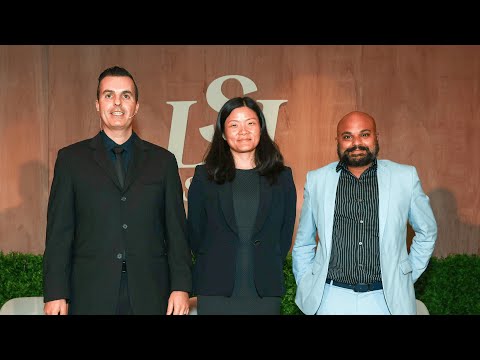
Legal experts from Knobbe Martens join medtech leaders from LifePulse and Emboline to share essential strategies for protecting your intellectual property in the medical device industry.
Join Our Next Event
Partner with the leaders
shaping the future of
Medtech at LSI USA ‘26
March 16th - 20th, 2026
Waldorf Astoria, Monarch Beach

Kregg Koch  0:06  
Hello everyone. My name is Kregg Koch. I'm a patent attorney with a United States Patent firm, Kenobi Martens, Olson and bear, and I'm a member of our part of our medical device practice group. I want to share one little fun fact about myself, and then I'm gonna let everybody introduce themselves before coming into law. I was actually an engineer on the space shuttle program for NASA, and actually even got to sit inside the Space Shuttle at one point, so thought I'd pass that along.


Harnik Shukla  0:33  
I don't know how I'm supposed to follow that. I work closely with Kregg. I'm also a partner at Kenobi Martens. My background is more in the electrical engineering, so I do a lot of signal processing wearable devices, AI. And I guess if we're sticking with nerdy theme, then I coded a neural network from scratch in high school, you know, before it was cool.


Gary Strange  0:57  
So that's amazing. I don't even know where to start after that, so I'm Gary strange. I'm the Chairman CEO of it's actually life false Corporation. MMD technologies is our corporate registered name. But since we're doing weird stuff, I used to be a police officer 40 years ago, and nobody believed that, and I showed them a picture this morning. You're nuts. So that was that was fun. Excellent.


Scott Russell  1:28  
I'm Scott Russell. I'm president and CEO of Emboline, and I'm a metallurgist by training, and started in the aerospace industry working for Pratt Whitney doing jet engine alloys. I didn't get to sit in a space shuttle, and now I'm doing medical devices.


Kregg Koch  1:46  
That's fantastic. All right, so today's IP master class, we're going to kind of mostly focus on patents, but just wanted to make sure everybody is familiar with other forms of intellectual property. The three other main ones that we like to talk about are trademarks, kind of protect the company, name, branding, logos. A funny one about our firm, Kenobi Martens, like Obi Wan Kenobi were like IP Jedi, is that we might be something that you might want to trademark if that were something serious, but we're just joking about that. Now, copyrights protect works of authorship once they're basically in some tangible form of medium. It can be anything from user manuals or photographs. It could even be product designs of a medical device or even a delivery device of some sort. Trade secrets are a really important one. I think it's kind of the cousin of the patent. But the opposite aspect of trade secrets is that you really got to keep it confidential. You actually have to take reasonable precautions to keep the information confidential. It has a lot of benefits relative to a patent, but really it's the kind of internal know how it's the special sauce, the special manufacturing processes, or even client list, customer list, things like that, stuff that you don't let the public typically know about, and you can protect it pretty much as long as you can keep it confidential and secret patents. So there's a fourth category we're going to spend the most time talking about patents. So we'll get right into that. When we look at IP generally, I think there are three main questions that you really want to be thinking about, and this is kind of a roadmap for our discussion today as well. Who Deon the IP? And it seems like it's a pretty straightforward question, but there's a lot of complexity in it that you wouldn't really appreciate until you start until you start learning about these through bad experiences in the past, and we've helped out a lot of companies get through those bad experiences. Ownership is a thing that can snowball if you don't handle it very carefully and well in the beginning, and if you do handle it, then it's kind of an easy issue. But those are the things that you start want to start thinking about, and we're going to get into that a little bit more detail. Second one is, how good are your patents? You really want to kind of really cover that core technology, but we're going to talk a lot about kind of comprehensive disclosures. I know that, Scott, you had a lot to say about that. We'll get into that a little bit more detail. The third main topic that we want to discuss today is, do you have freedom to operate? And if everybody knows what that means. I'll move on. But typically it's, you know, can you make that product? Can you practice the process without being sued for infringement? Shouldn't really say sued without being liable for infringement, is really the main question. So, you know, I think you were talking about this earlier. Rachel, make it fun. Gamify it. So we're going to start out with a pop quiz question. Does anybody know the answer to this? I filed a patent application on my invention, so I must own it exclusively, and this goes into that first prong of ownership. Who knows true or false? You are correct? Anybody want to add into some color on this one?


Harnik Shukla  4:42  
Yeah, so there's a lot of times there's obligations that you might have, and this happens with consultants a lot. So I've noticed that my clients both, especially after covid, they're using a lot more contractors and consultants, and they're forgetting that inventorship is a legal requirement like whoever. Conceives of the invention, sort of like in the copyright whoever the author is, according to the legal requirements, they become the inventor. So many times, these consultants, contractors, they become the inventors, but they're not necessarily the employees of your company. So if you don't have the right agreement with this contractors, then you the company might not own the IP that was generated. So this is something that gets much harder to fix after the fact. So always make sure you have good agreements with your consultants and contractors, contract manufacturers and you know, make sure that that's all button up.


Kregg Koch  5:44  
And Gary, you had something to add to that, because I think you're on the verge of licensing some new technology.


Gary Strange  5:49  
Yeah, we were about to pick up, or license, rather, six more patents. We're sitting at about 20 right now, six from Virginia Tech and three from Georgia Tech, developed by the same scientist. And, yeah, you got to be super, super careful. And we, fortunately, when we're working with universities, these people have vast amounts of experience in their tech transfer departments that they've they've done their homework that these things are filed so tight, and the scientists, most of them that we work with, if they're new to it, you might want to really dig a little deeper. But if they, if they've got a lot of experience that they have made it as broad as they possibly can to give you as much protection as you can,


Kregg Koch  6:38  
yeah, and we often see a lot of new startups come off of university type technology, and they end up licensing that technology without really understanding what their scope is, whether or not they have exclusive rights to the technology, if other people can exploit that technology, that would be a non exclusive license. And it becomes really important. But typically what we look at is everything is kind of on a scale, earlier stage. You really want to set that foundation for getting that ownership, those agreements in place, like Harnik was talking about, if you have new consultants coming in, you want to make sure you've got agreements to assign any innovations that they come up with to the company, to your company, if it's University and, you know, tech transfer offices that you're dealing with, you want to really, very closely look at those license agreements and make sure you're getting the rights, maybe Even the Right to Control prosecution. You're talking about the breadth of the claims, their application of it, or their idea for their inventions, might be different than what your technology is. So you might have a different strategy for protecting your inventions in a different way. So controlling who actually what attorneys or who makes the decisions on the patent strategies becomes very important at this phase as well, hammering out these details with agreements at an early stage prevents those big snow balls later on from becoming out of control and more difficult to reverse. So it's really important at that early stage, get those agreements in place again, trade secret protection, we talked about that a little bit, getting trade secret protocols in place to make sure that your employees understand that they're under an obligation of confidentiality and they can't take that technology somewhere else, making sure that the public doesn't have access to that information. Make sure that your employees know that they can't go out and disclose it. Once you disclose trade secret information, you lose the ability to enforce it later. So getting those agreements and those understandings maybe in the training in place at an early stage really helps prevent those bigger issues later on, later stage stuff. You want to talk about, some later stage things that you might want


Harnik Shukla  8:27  
to do, yeah, that's right. So later stage again, I think, as Kregg mentioned, trade secrets is now getting even more important, particularly in with AI, right? You're trying to keep a lot of things, trade secrets and balancing out with patents and copyrights and with employees moving around a lot these days, it's something that you know, again, setting up the right protocols is really important, making sure the employees, if they're like, leaving then you do an exit interview and, you know, Make sure you remind them of their obligations you specifically mentioned like, what was, you know, what is your company trade secrets? Making sure, if they have any recent disclosures, you file pan applications on it, some way to document it. So these are some of the things that are really important as employees are going to be moving around a lot these days, to have proper protocols? I don't know if you've seen anything.


Scott Russell  9:26  
Yeah, I'd just like to maybe have you comment on the inventorship piece of this. So you know, especially when you're working with outside contractors. So ownership of the IP is one thing, but I think one mistake that companies make is forgetting to put some of the inventors that come from those outside things on those patents and that can have invalidity issues down the road. So documenting inventorship, even if it's clear that you own it, is especially important with outside contractors.


Kregg Koch  9:54  
Really good point. I think the documenting part of it is really important, because oftentimes patents, you know, you're still. Prosecuting a continuation or divisional or some continued version of a patent application many years down the road, and at least in the United States. And I think what we're talking about today is pretty universal for anywhere in the world, but a lot of what we're talking about right now is like in the United States. You want to it's the claims or inventorship are based on the claims, and that's essentially the portion at the end of a patent that really defines the metes and bounds, or scope of a of an invention. And in the United States, inventorship, meaning who should be listed as an inventor on a patent is based strictly on the claims. And if you're, you know, 10 years down the road, a patent application was filed a long time ago, and you're still mining it for some of those little gold nuggets. I know we were talking about that, and that's a strategy that your company uses quite a bit. You might not know exactly who contributed to that invention, but your your point of documenting that very carefully and in detail, who the inventors are, what they contributed to, can really help, again, create, you know, or avoid some of those big snowball issues that might happen later. People arguing over, I invented this? No, he invented it. And then also, the other thing too that's really important is, you know, initially, your claim set in the United States is going to be again, your inventorship in the United States is going to be based on your claims. If you have a really comprehensive disclosure that covers all kinds of different aspects of the invention, but your claims only focus on a few. Sometimes, what we'll do is we'll add additional claims to make sure that we've got all the inventors listed on there, and then we can get a formal assignment agreement to make sure that ownership is consummated in the you know, the company that ultimately is should be having it. So we'll end up adding a lot more claims to it, just to make sure all the inventors are listed. So another nuance, but another way of just ensuring that you've got all the documentation in place to show that that company owns all rights in that every aspect of the invention, so documentation becomes important. All right, moving along chapter two here, patents are critical to every innovator, and it's big, small, startup, multinational, whatever it is. And you know, the main thing is, is everybody a little bit familiar with what a patent is. We're going to get into kind of the the anatomy of a patent here in a minute. But essentially, a patent can prevent others from making, using, selling or importing your invention. And it, it really, it's, it's probably the most critical and important way to prevent others from really taking your market share. You end up spending millions in research and development and all the investment that goes in that in time and money, this is one of the best ways to protect that market share and protect all that value in that research and development. Trade secret is another one that's the more in house, stuff that's more proprietary and confidential, but patents become probably the most important way to protect your intellectual property and the value of your company. And you know, one of the things is that becomes really important to understand is that even with I mentioned it earlier, for trade secrets, you can't divulge that information. With patents, it's really critical that you know that you can't share that information, really, until after you've filed a patent application. So patents become a really good way to protect yourself. If you're coming to a conference like this and you want to start sharing your idea, sharing your idea with investors or or collaborators, or strategics or whatever else, you really have to have a patent application on file before you do that. So getting that patent application, you know, started early, that process started early, is really very important. I know, Scott, you've got a lot to say about that too, and I know that you've had really great success with building early foundational IP. And we want to hear about that. The other thing is, you know, just proving to investors that you've got something that's of value, something innovative, something patentable, something that's going to really help, again, the company protect its market share. So I don't know if you want to chime in now, or whenever you think you want to add some of your stories, I would


Scott Russell  13:40  
on the one thing that you just said, then this is why you'll mention this later on. It's really important to have a good patent attorney that prevents you from getting into trouble, because the disclosure thing that you just talked about, there are different rules in different parts of the world. So in in the United States, if you disclose something, you've got a period of time in which you can file the patent, you don't have that same benefit outside the US in certain jurisdictions. So you know the rules are different and and if you want to have worldwide coverage, you need to understand those differences to make sure you don't get yourself


Kregg Koch  14:12  
into trouble. Absolutely right. All right. So quick anatomy of a patent. We'll go through this relatively quickly, but I just want to make sure everyone was kind of familiar with what a patent looks like, so that you when you look at it next time, you can understand, you know, where the important parts are that you should be focusing on when you're preparing an application, or even if you're helping kind of do, like a freedom to operate, type clearance. So the cover page is going to have, and this is a US patent, but a lot of other, you know, like European patents, are going to look pretty similar. You're going to have information about who the inventors are, who the owner is, or assignee, patent number up in the upper right, and then you're going to have an abstract and then a representative figure, and that should just give you a quick little indication about what the subject matter of the patent is. And then beyond that, you're. Um, the meat of the patent is really in the the drawings and the detailed description. I think this is where, Scott, you're going to be able to add a lot of value here in this discussion. But typically the drawings and the description are going to really provide the substance of what the invention is. It's going to talk about the physical structure, maybe methods of using it, surgical methods, which are really important to protect in the United States, even methods of manufacturing. Potentially, it really should cover your core technology that should be the focus of the patent. But that's not where you stop. A lot of inventors and a lot of the clients that we work with, I think we bring a lot of additional value because we tease out all that other fringe information that really makes a patent valuable. It's the alternatives. And you know, this is that what we talked about, you know, in our earlier discussions a couple weeks ago, is just the comprehensiveness and detailed aspects of it, covering the alternatives, not just the most optimal design, because that actually might change in the future. And a lot of times, when you're preparing patent applications at an early stage, you're not sure what your commercial product is going to look like yet, or what future generations might entail, and so when you add all these different alternatives, or maybe the less optimal but still feasible designs to it, then you start developing a lot more ability to cover future generations, design arounds from competitors, things like that that become really valuable for a company, give you the ability to develop like, you know, the castle, the moat and the archers kind of thing. And Scott, if you want to


Scott Russell  16:28  
add to that, yeah, the specification is incredibly critical. I think of the specification is sort of, it's your plot of land. And, you know, in your first patent, you build your initial little stockade in the middle of that plot of land, your initial picket fence, as they call it in the patent world, primarily around whatever your invention is on that day, but all of that other land is fodder for future continuations and additional coverage. And so if your design changes during development, or you want to make sure you cover alternatives to really build that picket fence to prevent competitors from getting in this space. All of that ammunition goes back to the original priority date of that original application. And so anything that's in there, you can continue to mine for method claims and device claims and all sorts of things as you go forward. And it's really important. Then the other piece of it that we didn't talk about a couple weeks ago is that also becomes public disclosure. So anything that's in your specification is prior art for your competitors. So you know, even if you don't end up eventually incorporating that into future claims, it prevents them from writing claims around it, because you have put it out there in the world in a published


Kregg Koch  17:40  
application. Dumb question, but why is that important?


Scott Russell  17:44  
Because you don't want them to to undercut you by by filing a patent on something that that you know may cover your device, yeah,


Kregg Koch  17:51  
and prevent you from continuing to innovate, right? That's right, right?


Harnik Shukla  17:55  
From from a practical perspective, I've been involved in multiple litigations for my clients, and it's never really the first patent that is asserted. It's always like something else that was in your specification that you're able to mine and get a claims on that you need to assert. You know, one of the cases that I've been involved with, it's the original cases were related to the sensors. But, you know, who knew, like, 15 years later, these sensors will be in wearable devices, and you would need to cover something like that. So that's what you know, Kregg was talking about, and Scott too, making sure that you have your core innovation, but patents, they can be for 20 years, and this technology evolves, you need to think about all the surrounding circumstances.


Gary Strange  18:42  
Go ahead. One of the strategies that we've employed coming at it from the business owners perspective, is to file combination patents. So instead of just having a single patent for the device or for a drug, we combine everything together, and so there's a patent for the for the device, and there's a patent for the device with the use of a drug and the electrodes and everything else to give us total protection. That'd be very, very difficult for somebody to recreate what we did with that infringing. Yeah, and


Kregg Koch  19:12  
here's an interesting point that'll kind of tie into the concepts that we've been talking about. You license your technology, your content, you're continuing to innovate. You're obviously going to keep building that technology, but if you've licensed it originally, you can still file new patent applications on those improvements that you've developed in house based on that license technology. You want to make sure your ownership of that is pretty clear, that that ownership is going to be strictly in the company and not from the university that you may have licensed it from, and things like that. But there's an example of continuing to innovate, continuing to file. A lot of people wonder, you know, what can we file on? What can we pat and what can we protect? Think about all those, those innovations that you're making. And we'll kind of get into some of the standards here in a minute. But I think, you know, out of the 20 years that I've been practicing, I think I've seen 98% of the technology. Technology that's been developed turned into a patent that's valuable for that company. So it's a really, I can't say it's a low bar, but there's, there's certainly a lot of availability for continued invasion innovation and protection of that via patents. And I think a lot of people don't totally appreciate that point.


Scott Russell  20:18  
Just one, one final point on the specification aspect of things. I did want to mention, it's important to pay attention to the words as well as the drawings, because in different parts of the world, you can rely on things that are in the drawing and aren't described in the words. Other parts of the world you can't. So make sure that you know anything that's on a drawing you comprehensively talk about with words to make sure you really have it thoroughly covered in all the different jurisdictions.


Kregg Koch  20:46  
That's an excellent point. Yeah, he's right about that. So I talked about it earlier. At the very end of the patent is where you have the claims. And again, the claims define the meets and the bounds or the scope of the invention. And that's really what you focus on for determining you know what you can exclude others from making, using, selling, etc, is in the claims. You'll read the claims in light of that entire description. If you read a set of claims, you might kind of scratch your head and wonder what they're talking about. And I often do too, when you start reading about the technology, you can understand really what what's meant by it. And that's how you help construe help. That's how you construe the scope of the claims. Is by reading those terms that are in the specification. May be shown in the drawings as well, to help you really understand the nature of the invention and understand what that claim scope coverage is. But it's the claims at the end of the day that really define the inventions, and each claim itself is kind of like a separate invention itself, independently enforceable. So you guys will does everybody have a little bit of experience reading claims than anybody doing that? Yeah, yeah. Typically kind of challenging. But once you start looking at the specification and defining what the terms mean, it kind of starts making sense. And you can really understand what, what an in that, what an invention entails. And you know, as part of the freedom to operate challenge, a lot of times we get clients that will come to us and say, Hey, this patent looks right on point. I mean that picture. Point. I mean, that picture right there looks like exactly what we're doing, etc. But if you read the claims, there's a lot of differences compared to what their technology actually is. You have to go well beyond just the figures and the the body of the patent itself, and really look at the claims truly understand what protection they've got, right. And so that's why the claims become very important. Some commonly patented medical device technology. Maybe you guys can tell us a quick little bit about yours.


Scott Russell  22:30  
Sure ours is an embolic protection device for use during cardiovascular procedures. And Dr Belson, who's in the audience, filed the first IP in this space. We're primarily aimed at transcatheter heart valves, literally three months after the first heart valve was ever put in, before anyone was thinking about this space. And we've been mining those early patents ever since, because they were so early and so broad, so but in my background, we've done stents and Vena cava filters and all sorts of things. I'm a Gizmo Guy. All of my stuff has been physical things.


Gary Strange  23:07  
Gary over you. So we everybody in here, anybody familiar with pulse field ablation? Everybody is now right. Five years ago, nobody knew what it was, but now everybody using a tree afib. That is that technology, that's the heart, that's the high power end that just destroys cells. At the lower end of it is much lower fields that just create permeability, the cell membrane pores, if you will, so that you can place any therapeutic that benefits from cellular delivery inside of a cell, and that way we can treat metastatic disease locally, creating systemic effects, without the systemic side effects. Been around a long time, but we just really very fortunate. If we had gotten there a year later, we'd never got the patents, because that's when everybody started jumping in for PFA.


Kregg Koch  24:02  
That's great. Yeah. So, I mean, just to add a little bit more context to it, too, there's, you know, methods of manufacturing that you can get claims on surgical methods, again, certain jurisdictions that you can do that, in United States, that tends to be a very good strategy. So looking at those surgical processes and making sure those are very well described in your patent application can lead to really good different types of disclosure, and I mean different types of claim coverage. And so when we look at strategies, we look at all the different ways that you might be able to protect a device. You might start out by protecting the actual implant itself, and I'm kind of a Gizmo Guy too. Then you might look at the delivery device, or you might look at the method of implantation. And the good thing about developing that diversified approach is that you're getting so many different aspects of coverage that it becomes much more difficult for anybody to a design around B invalidate. Everybody's heard about the inner parties review or IPRS in the US best way of getting. Around those is develop a really good, diverse portfolio of claim protection. And so having that again, starting with that very comprehensive, detailed, alternative, rich patent application, is the best place to start computer implemented software type devices


Harnik Shukla  25:16  
for sure, right? Like, I think sometimes people forget that user interfaces, you could file a design pattern on user interfaces, and not many folks think about it, but as especially useful for AI and software you're trying to figure out, like, what is your mode going to be? You might not always want to file a patent on your very complex algorithm and keep it a trade secret. So then what else is left? And that's your user facing features. So anything that's user interaction that's highly worth protecting, because if somebody else is copying, they'll likely want to copy how you know, current users are interacting with a particular software, because that's what they're used to. So focus on that. And also, like you know, there's other forms of non patent protection, so you could also think about like trade secrets and copyrights, again, with AI, protecting your data is very important. So how do you do that? And that's something to also think about, and that's not necessarily done through patents, but other forms of IP


Kregg Koch  26:18  
All right, next, true or false stents have been around for decades, so there's no way to get a patent on my improved stent, true or false. And this is a pretty open question. I think everybody knows the answer at this point. Anybody know anyone? Take a stab. Yeah, false. And here's a pretty good example. So, and this is basic, and this is all now part of the public domain, but back in time, this would have been a little more relevant. So patent number one is just on the stent that might have been decades ago. That's part of the public domain. Say you come up with a nickel titanium or a night and all stent, of course, you got a patent on that. When you develop that, say, now you're a covered nickel titanium stent, you know, a graft added to it, that's another patent. So any of these types of innovations, even over the existing prior art, those innovations are still potentially patentable, and often times are now you've got a drug eluting covered nickel, tiny instant. So all these are examples of different innovations that build on the prior art, or the other inventions that are part of the public domain at that point, all of those are patentable, or would have been patentable at the time that they were invented. I have a patent. So my device must be protected. Is that all you need to do file one patent or get one patent, and you're good. I think we've all kind of diffuse that one already, right? Never going to be done with just one patent. Number one, there's worldwide protection. Number two, we've talked about all those different strategies you're going to implement in the United States just to get that diversified patent claim protection. And again, I think, like everything else, it's kind of on a scale. At an earlier stage, you want to develop some of that foundational IP. You want to really focus on that core technology as well as you can predicting what your commercial products or processes might be later on, but also covering all those alternatives for again, those improvements, or the, you know, the design arounds from competitors and things like that. And the further you get along, the more sophisticated your IP should be. So at an early stage, you're met, you're meeting with potential investors now, etc. They want to see that you've got some patent applications at least file, they want to have a flavor for what the chances of getting a patent are. Maybe you've done some internal patentability analyzes. Things like that are good early stage steps to take. But I think, again, I think, Scott, you really hit the nail on the head with this one. You just got to be really comprehensive in your early disclosures, because you don't know exactly the direction that you're going to go with your final product. And you also want to be able to cast a wider blanket later on, and with that comprehensive disclosure, you can continue mining that for other patent strategies and claim protection along the way and in the years to come, and sometimes decades to come. So it's really important in an early stage, even when the revenues are not there yet the money's tight, you got to establish a really solid budget for your IP, because I think that's probably that foundational. IP tends to be really very important. That's when you're new to the game. There's a lot less competition out there. Your product hasn't been discovered by others yet. You're able to get maybe broader protection at that early stage. I mean, I've got some stories now of clients that went into the left atrial appendage and came up with, even though that area has been, you know, research developed patented, there's 1000s, it seems like, not really, but products on the market that cover that they came up with a brand new way of doing it, and we got them the best, broadest protection, because they were pioneers in a completely different way of treating the left atrial AppEngine closing the left atrial appendage. And they ended up being acquired by Johnson and Johnson for a really significant amount of money because they filed extensively at an early stage, even as they're still developing their earliest patent applications, didn't even they didn't even disclose what their ultimate best embodiments were. But it got there along the way, and it protected them all the way around. Around their little castle of original IP and the original concepts. Yeah, please.


Audience Question  30:08  
You say something about in the application phase to keep it open, that the ability to add to that buttons as we continue to event, and the risks related to that, versus trying to get more effective, absolutely. Yeah, do you want to?


Harnik Shukla  30:24  
So do you mean like, this is once you file an application, but then you want to keep adding on more. So the description part that process like, once you file a full what we call utility application, whether it's in the US or in Europe, it will be their corresponding application. You cannot change the description for that particular priority. So for that, you can just update the claim. So one you can get claim on method of manufacturing if it's part of the description. Another would be the device. But what you can do is file a second application or and third applications. These can be separate applications that you can do serial filing. You want to try to be strategic about it. You know, make sure that before the first one publishes, you try to include the improvement so your own applications don't become prior art. You can try to get priority. And this can get a little bit complex, like, how you can connect all these applications together, but that's something to think about, because that's why, when Scott was saying, like, make sure you include your description as much as possible, because once it's filed, that description itself cannot be changed. The only thing you're really changing is the claims.


Kregg Koch  31:38  
And I'll add to that, there's, you know, the first bullet point, there is a provisional patent application, and that one gives you it itself is never examined, but it gives you a priority date for everything that's disclosed in that application. So you're protected from, you know, talking about it with other people exploiting it, etc. But that provisional application must you meet. You must file the utility patent application that Harnik mentioned within 12 months. But along the way, there what we'll often do in those early stages of development, and that, you know, this particular client that I had, I mean, they were constantly churning out ideas. We I think, within the first 12 months, we filed 11 provisional applications, which is a little bit kind of extreme compared to most of the clients that I work with. But along the way, we just kept building and adding on to that original disclosure. So by the time we got to that 12 month period, we had, you know, accumulation of all of the patent applications along the way. And then when you file that utility patent application, you claim priority back to each of those provisionals that you filed in that 12 month period. And each of the inventions that would be supported by any of those provisional applications gets the date of filing of that provisional application for purposes of cutting off prior art, preventing those patent bars that we talked about, like disclosure, which in Europe, it's immediate. So those become very important. So you file quickly, you file early, and at least in the provisional application aspect of it, you can continue adding new details to it. Each of those new details gets a new filing date, etc, but it's a good way of following the path along the development, at least within that 12 months. Isn't itself very much time, but you can still innovate in that 12 month period and kind of protect along the way when you've got something fairly remarkable that you think is worth another patent application. So but you know the problem with if you don't do it that way. And after you file utility applications, they're not the cheapest, especially when you start filing internationally, looking at your worldwide protection, and you know you can't add new details to that application, as Harnik pointed out. So you really want to make sure you're as comprehensive as you can be in those applications, so you don't have to have multiple families with just incremental changes. And so within that 12 month period, the provisional application, provisional application is the way to do it. Beyond that you want to make sure you've got something kind of remarkable that's really important to protect before considering filing a new series of applications. Would that answer your question?


Harnik Shukla  33:53  
Wolff, okay, if anybody has any more questions, feel free to interrupt. I know we've got five minutes left so we can keep talking. But also more questions. Go for it.


Audience Question  34:04  
The second one, then one of the questions was, how strong is your pattern, or how secure is I think that's really, really interesting, perhaps for


Kregg Koch  34:15  
all of us. Yeah. I mean, we, I think we've hit on that a lot, but mainly the thing that you want to focus on. I mean, the number one question is, if you've got a commercial, you've got a commercial product, or something that you believe is going to be a commercial product, does your patent cover it? Do your claims cover that commercial product? And that's the threshold question. Beyond that, it's going to be, how narrow is the scope of your protection? If you wrote, like a really narrow, or what sometimes is referred to as a picture claim that really just covers that exact embodiment, and like, somebody makes a slight variation, they're not going to be they're not going to be liable for infringement. That's not the best patent. So you really want to look at not just the one patent and set of claims, but even if you've got a really important product, you want to start looking at that portfolio of patents and what the different claim sets cover. Are we covering? Not just the implant, but we're. Covering also the delivery device, the methods of use, things like that, other aspects of it, certain aspects of the components, maybe even performance related criteria, of the benefits of it, things like that, and the software aspects. I mean, almost every device has software in it too.


Harnik Shukla  35:13  
So, right? So I think it's not the question of how strong is a patent will so when I'm doing diligence for investors, right? Like, when investors come to us and like, okay, let's help us evaluate this company. What we're trying to do is mapping. So let's say you're the company and you're doing the presentation, and you say, Hey, these are all the amazing features that I have. Then the next thing, as a pan attorney for an investor, what I'm doing is, I'm trying to map that your patents. Are they disclosing those features? Like, is there a match between your commercial features that you're promoting and what's actually included in the pan application, in the description, and, even better, in the claims? So that's, you know, from an investment perspective, you know that's at the end of the day, you want the money right for your company, that's what you want to do, is make sure that your pitch deck is aligned with what's in your pan application.


Audience Question  36:11  
Really good point. If I can add something to that, then part of the reason why I'm asking, we face the question quite often, how credible is it that this can be circumvented? And I was a bit surprised when one of the large consultant companies approached and said, patent circumvention is part of our business, and we really don't want that. Of course,


Harnik Shukla  36:38  
of course, right? Like, you know, we're always working with different entities and like, you know, you can circumvent, I think, again, as part of that analysis, how good is a patent also is whether you have something, what we call continuation pending. That means the ability to go back and secure additional patents on that concept. So if I am, you know, I'm working with a client. We're trying to design around, but at the end, but at the same time, we know that continuations are pending, so there's always this moving target. Like, if we design around, can they actually go after the design around itself and and that's very important. I think a lot of the startups make this mistake of, like, they get this one patent, like, Okay, I'm done. And that leaves a lot of these holes that you need to plug later on and won't be able to. I don't know if Scott Gary have any further comments on that.


Scott Russell  37:30  
Yeah, it back to strong. What's, what's a strong patent? The more the more general it is, the stronger it is, potentially against a competitor. But it's, it's a mixed bag, because the more general it is, the harder it is to get, but also the easier it may be to invalidate, because it's not specific enough. So it's it's a delicate balance. The broader you can get with with significance, with sufficient support in your application and avoiding the prior art, the better you are. Yeah.


Kregg Koch  38:04  
So a couple things we talked about, claim diversity, and I think that's, you know, the most important thing you can do is claim diversity, and that's going to come in the form of multiple patents, but put your competitor hat on and say, okay, if I'm trying to design around this, and if you have a good understanding what the scope of the claim is, what are some of the alternatives that I can come up with. And if you can beat them to that and file a patent application on it, or if it's in there, and you can mine it from your already existing patent application, then you're going to be able to prevent those design arounds. And again, we're going back to that whole comprehensive disclosure. But if it's not in there, that's when you think about maybe a CIP, it's a continuation in part application where you're adding new matter to it, or details to it becomes important enough to justify the cost. So if you know, the further you get into the commercialization or towards the commercialization side of the spectrum, the more sophisticated your structure, your patent strategy should be. So I'm gonna leave it with one last question. We didn't really get to dive into this part of the topic, but I think we've covered some really good material here, but by a show of hands, and I'd like to see full audience participation. I have a patent on my device, so I have freedom to operate. And this is a well, I'm not going to tee it off. Anybody know, yes, true or false. Thumbs up, true, thumbs down, false. All right, good crowd. Okay, great. And honestly, this is one of the most common misconceptions that I get from inventors. They think I've got a patent on it, so that gives me the ability to make you sell it whatever it is, and that's absolutely false. Patent confers the right to exclude others from doing that. And as we've shown by that kind of that building block type of approach, if you've got a drug eluting stent, but that original stent patent still in existence, you're not gonna be able to make a drug eluting stent without infringing that stent patent. So that's kind of the roots that we showed that. So here we go.


Harnik Shukla  39:49  
So we're out of time, but we'll be sticking around if you have any other questions. 


Kregg Koch  39:53  
This is probably the most important slide here, a


Harnik Shukla  39:56  
little bit of self promotion. I.


Kregg Koch  40:00  
Thank you all for being a great audience, and as Harnik mentioned, we'll be around if you have any questions.