Investors Live! Feedback Workshop | LSI Europe '25

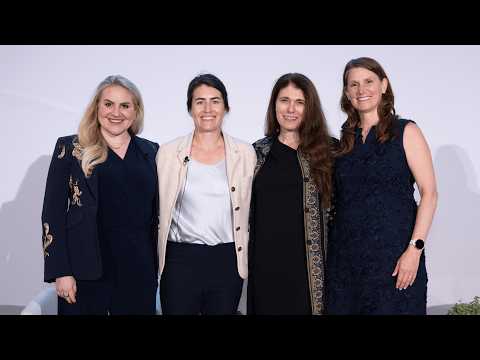
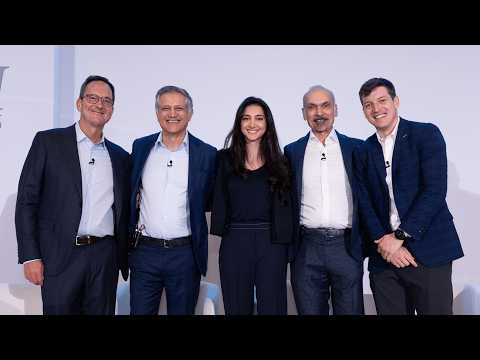
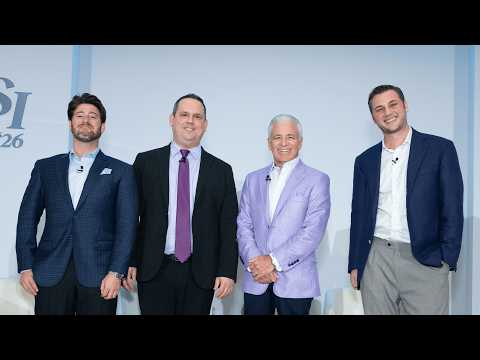
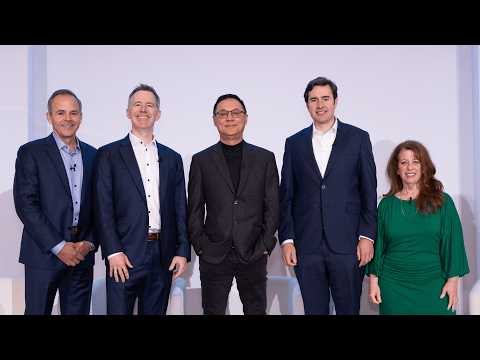
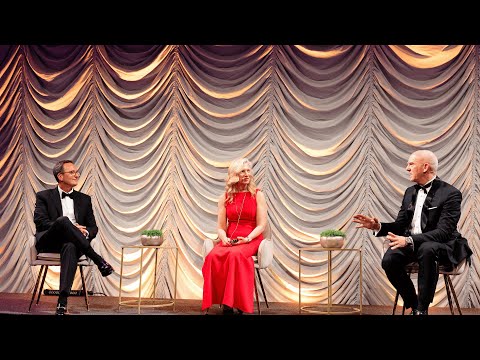
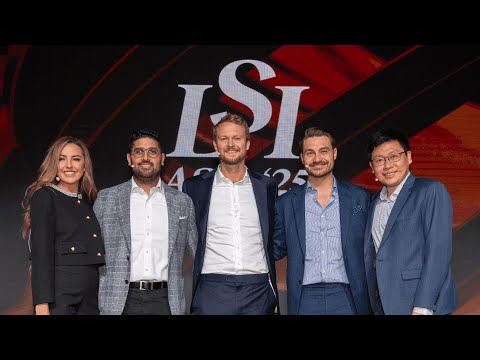
Gain real-time feedback and insights from a panel of leading medtech investors as they evaluate pitches and investment opportunities, featuring venture capital experts from We Venture Capital, Sectoral Asset Management, YAYA Capital, and KCK Medtech.
Join Our Next Event
Partner with the leaders
shaping the future of
Medtech at LSI USA ‘26
March 16th - 20th, 2026
Waldorf Astoria, Monarch Beach

Catherine Poulin-Filion  0:05  
Hello. I'm Catherine Poulin-Filion from Sectoral Asset Management. I've been with the firm for seven years now. I'm principal on a team focused on Medtech investments, and what I look for is late stage Medtech investments, so where we can have an exit over two to four years disruptive technologies, great teams and great products that solve a unmet need in the in the market.


Chase Garfield  0:30  
Thank you all for joining Chase Garfield, Senior Analyst with KCK Medtech. We are a single family evergreen fund that invests specifically in therapeutic devices and technologies, anything from first in human clinical stage and later.


Tiago Menezes  0:47  
Yeah, great. Thanks for having us guys, and we're excited to hear all the pitches Tiago Menezes from YAYA Capital investment manager at the firm we do later stage investments in medical devices, therapeutics and diagnostic tools. We're very focused on business development and in Latin America. So if you're early stage commercial and want to expand into other regions, we're the key partners there.


Gokce Gun  1:14  
Hi everyone. Thank you for joining. My name is Gokce Gun. I work for We Venture Capital, which is the corporate venture capital arm of Vern. We based in Barcelona, but we invest globally. Our sweet spot is series A by we invest from C to B, and we are strategically investing in diagnostic startups.


Amanda Way  1:33  
All right. First Company,


Audience Question  1:39  
hello. Good afternoon. My name is Ron Davidson, and I'm the CEO of try Sol medical. Very nice to meet you. Try so medical is developing trans catheter, tricuspid valve replacement, and we have a team of over 20 employees. We're based in the northern part of Israel, vast experience in development and bringing to market of structural heart devices. Our valve is very unique. It's probably the only valve that was intended, initially intended for the tricuspid position. We have many advantages in our valve, such as the fact that we are reducing the leak, but in the same time preserving and improving the right ventricle function. We have many other advantages, such as the we cover a large sizes of valves that is not covered by others, and we have very low prevalence of adverse events A so far, we have been planted our vibe in 27 human 18 of them in the US early feasibility study. The results are very, very good, both in safety level and efficacy level. So our we are very happy by our results. Our next step is to complete our EFS study and get approval for a pivotal study, both in the US and in Europe, and then a complete the pivotal study, and after that, go into sales. Okay? Thank you very much.


Catherine Poulin-Filion  3:14  
So the first, the first thought that comes to mind, well, first of all, I did like the pitch. I like it was very concise. The I like the fact that you've mentioned that your device was was designed for tricuspid, because oftentimes in my troll, you do see some some designs that get translated into tricuspid. So this is differentiating factor. The area that I would have liked to hear a little bit more is on what needs to be done from a clinical perspective. You kind of went at it on a very high level, but number of patients, let's say, on the feasibility study and in the pivotal would have been helpful?


Chase Garfield  3:55  
Yeah, I completely agree. Very succinct pitch, very clear and easy to understand, I think, to echo the comments made earlier, the specifics around the pivotal design would be helpful for me to understand, as well as the kind of fundraising time horizon here. What does the next fundraise look like? And assuming the pivotal goes well, what's the fundraise after that?


Tiago Menezes  4:19  
Yeah, if I may add to my colleagues. I think it would be interesting as well to understand in the trial what are the end points that you're focusing on. Of course, it might be a bit obvious for some investors, it's more specialized, but especially when you're talking to broader investors or more generalistic investors, showcasing, Oh, these are the end points we're after, and this are the endpoints we had compared to standard of care would be really helpful too. Well.


Gokce Gun  4:44  
I will join as well. I would like to hear a little bit more about fundraising and as well as the detail of the clinical study and the end points and what you found in the end. But overall, like for the time frame, I think it covers most of the important things.


Amanda Way  4:59  
Thank you. All right. Company Number two, and investors this time around and for future companies, it's a little more spicy. Would you take that follow on meeting or not? Well, yes, I do have a follow on meeting scheduled. Amazing. All right. Second company,


Audience Question 2  5:16  
thanks for the invitation to get out of the comfort zone. I need more of that in my life, I'm Valentin co founder and CEO of custom search. I found it a company with two very close friends are in the Thomas search and an associate professor at Harvard. Thomas is a biomedical engineer who has brought multiple implant systems to the market, and I've worked in Medtech BD for 17 years, and we decided to tackle complex bone fractures. So the status quo of complex fracture care is that the surgeon doesn't know the problem before he cuts the patient open, and we can run a number of AI and biomedical engineering and image processing steps on the CT scan and push the best possible surgical plan to the surgeon smartphone. And our clinical data indicates we can really double the primary outcome stability after the fracture, which is the most important endpoint right after the surgery. And we can also cut surgical time by about 30% a really amazing advisory board with the Best Global key opinion leaders, thanks to the affiliation and network of my co founder and medical director, we're currently raising a Series A we just got FDA clearance. We're getting CE marking early next year. We have first revenues, first signed contracts with major implant manufacturers, and we need 12 million for market entry. I'm closing half of that with most of the existing investors by the end of the year. So if you have one to 3 million to spare. This is your last chance to get a mic cap table, right?


Gokce Gun  6:47  
I can start maybe. Thank you very much for the fish. Being second is always easier than being first, I guess, after the first feedbacks. So in my review, I think it covers everything very well, like you also mentioned about the background from my side, because I have a strategic lens as well, like the investment diagnostics, it wouldn't be something for me to because it's more in the tech clients my meeting request, which is fair, yeah, but overall, I think it was a very good pitch. Thank you.


Tiago Menezes  7:17  
I love the energy. I think that's really, really key as well. Sometimes we forget about that in med tech, but potentially hearing more about the unique selling proposition, where your unique solution in that space would be also really nice.


Chase Garfield  7:32  
I completely agree on the energy, very inviting to me to want to learn more when you're high energy. I would have loved to hear more about the business model and how you plan to get paid something I see a lot in these types of kind of more software based solutions is, I'm not quite sure how you integrate into the hospital.


Catherine Poulin-Filion  7:53  
Yeah, and well, I like that you tied your your software to direct clinical impact. So that's the first part. The one aspect I always worry about with software is IP. It's very difficult to get meaningful IP in that space, so if you have anything there, that's a real key differentiator


Audience Question 2  8:15  
we do. But yeah, thanks a lot. I appreciate the feedback.


Amanda Way  8:20  
Thank you. All right. Company Number three,


Audience Question 3  8:25  
thank you, and thank you all for the opportunity to meet you. I'm Colby Hols and the CEO of May health. We have a technology that is intended to help women who have PCOS ovulate, so that they conceive, conceive children at home. We are a clinical stage company. We've completed feasibility work here in Europe, as well as in the US. And right now, we have a US RC T underway. We're enrolling 150 patients. We've treated 44 so we're well on our way, and that's ahead of a PMA submission coming towards the end of next year. In the meantime, in Europe, we have a CE mark also underway. We're a class 2b here in Europe, and they have accepted our feasibility data. So we have an opportunity to start commercialization much earlier here in Europe. So we're looking at planning a pilot launch here as well. I actually joined the company relatively recently, about six months ago. This is my third Women's Health startup. The first one landed with library. The second one, we sold oregonon alidia Health several years ago for two, $40 million and I spent the last three years at oregonon looking at women's health landscape, you know, looking at what was out there. And when the opportunity came up at mayhealth, I was personally really excited about it, because of the opportunity to build on the clinical research that exists, as well as the president technology, which is a laparoscopic approach, is really well proven, combined with the opportunity to start in the fertility space, where there's really strong economics, well into cash pay in the US, particularly, 70% of the fertility market is cash pay, which gives us a really strong runway as well. Well as the really wonderful team and investors that I'm joining. So we're came out of the MD start sofanova program, and then also backed by Charles impact and BPI France. So we are raising an extension on our series B. We're looking for about $10 million and we would love to have you join us.


Catherine Poulin-Filion  10:18  
Well, that was a really great pitch. Thanks. Very, very, very complete. And in terms of, let's say, our mandate, it may still be a little bit early, it may still fit, though. So I do have a follow up questions, and it'd be mostly on your primary endpoint. And how does that translate, you know, into market outcomes afterwards.


Chase Garfield  10:40  
Yeah, I agree on the translating the study into marketability. I think great pitch. I really love the way that you not only sold the company, but also sold your commitment to the company. I think that goes a long way for us as investors, wanting to make an investment as we make investments in people and your passion shows, shows a lot. I would take a follow up meeting. Great.


Tiago Menezes  11:07  
Thank you for the pitch. Was really, really nice to hear. And also equity on the energy and then your involvement with the company, that's super important. I would say that, once again, the uniqueness of the proposition, I think it's really important to understand. So I'm particularly not very used to this market, so I'm not familiar if how crowded it is, what are the current solutions? What is the unique proposition in this case, and what is the standard of care? So would be pretty great to have that on your page as well. Thank you.


Gokce Gun  11:38  
I also like to pitch Thank you very much. What I liked here also you mentioned about your background and your experience, and I think it's also stands out here as an impact wise. And like, what I would mention a little bit more is like how it impacts the woman salt, that will be good to hear a little bit more in the impact side. Whatever it was, a great pitch.


Amanda Way  12:05  
All right, next company. Hello,


Audience Question 4  12:09  
hello. My name is Tor. I'm a second time founder and medical doctor, and I'm here with the company, North Star medical. We started one and a half ago, early stage, and we're within a trying to tackle the opioid crisis, one of the outcomes of better pain management is conversion to same place surgery. So let me explain a little bit. Two co founders, medical doctors, anesthesiologists, they had a big issue treating pain. What can you do? You can use opioids post surgically, but there's also nerve blocks. Nerve blocks, it's like going to the dentist, getting your injection. You don't feel anything for a few hours, and then you feel a lot. If you could extend this, then you could have very good pain management, so good that people could get home much faster. If pain was the primary thing keeping at the hospital, there are catheter solutions like tape dual you can go specific, for example here, target the entire arm and cover the pain and shut off the nerve. The problem with the catheters is it requires a lot of skill, and after spending maybe half an hour inserting a catheter, it dislocates, migrates, stops working. The best of the best, they can hack it and make it work, but the rest of us, we can't. When you go to a rural hospital, there's not a possibility, even though it's a great opioid sparing alternative. So we solve those two issues. One, a rapid insertion device, at least five times as fast you click button and you insert a catheter, it's IP protected serving medical devices into the body one handed, usually with an ultrasound guided procedure, you need to put down the ultrasound probe and use two hands to insert the thing. The other thing is that we created tissue Velcro. It's a modification of the catheter which makes it stick like a gentle hold at the location where you wanted to stay with these two barriers overcome, you can sort a cafeter much faster and pain and make it reliable. So right now, we started one and a half year ago, and we're going first in human with amputation patients in a few months. We are raising our seed early next year on the back of these initial clinical data, we're Danish based, and we would love to talk.


Chase Garfield  14:31  
I'm happy to start here. I think you did an excellent job speaking to what the problem is today, how it's currently solved in a underwhelming fashion, and how you are coming along to to fix that problem. I think you're a little too early stage for my firm, but definitely interested to watch your story.


Tiago Menezes  14:53  
Yeah, I would echo that. I think it's really an incompetent pitch you talk about the problems so. Solution, maybe just one last thing, and doing the ask. So you said you're using seed, we don't know how much, or sometimes it's good to have that glimpse, but Yeah, same echoing that you're not on our mandate. But I would definitely take the picture otherwise.


Gokce Gun  15:18  
Okay, I'm going, I'm a medical doctor, right? Training as well. And I worked around three years with opioids, opioid patients. So it's, I know how big is the unmet medical need here? So it rings a lot of well, and you define the unmet medical need very well here. So in that case, I think that was a good background story to understand everyone from our side, because we invest in diagnostics that will be out of our strategic scope, but overall, it was a good pitch. Thank you.


Catherine Poulin-Filion  15:44  
I would add one constructive feedback. I would highlight which indication you're going after first or in the first 1015, seconds. Payne is a very large market, and there's different ways to tackle it. So for us to know which, which is your patient, your beach, hen market, initially, we can start thinking about what questions we want to ask the strategy and and also just having that earlier in the pitch would be helpful.


Audience Question 4  16:16  
Good point. Thanks.


Audience Question 5  16:27  
Hi. My name is Ramin, and I'm a registered dietitian as well as a mother, representing the bio sport. The bio sport is a platform that helps athletes use personalization, genomics and AI to reach their full potential, one of the biggest issues that athletes have is they tend to get injured, which leads to a loss of opportunity as well as a shortening of their career. What if they were able to find out about their injury risk, or if we could focus on prevention, understand what their real genomics is based on their sports? So by using the bio sport, we've created a platform to help athletes understand their risks, their risks of cardiac arrest, the risk of injury, how they can focus on prevention as well as guide them that if they were injured, how would they focus on capacity as well as gaining traction? It's a huge market. We're looking at about a $6 trillion market coming up in 2033 which can look at other things, such as consumables, such as apparel, nutrition, as well as, you know, orthotics, etc, based on their individual needs, we are asking for $5 million dollars to help scale up and look at global partnerships. Our product is ready to go, and we're looking to launch here in November or December. So you know, if we're wanting to get our athletes to get to that higher potential, we need to focus on personalization and customization right now. Programs are too generic. They're simple and they're not really focused on the individual. The bio sport not only applies to athletes, but it can be used for amateur kids who are getting into the world of sports, military, police, any any academia that is actually using their bodies or their fitness for their work. Thank you,


Tiago Menezes  18:26  
Roman, congrats on the pitch. I think it was really good. And the energy as well is this matching one interesting thing that you could potentially add to it. Towards the end you mentioned the current programs, so that's one of the key points I think should be added to the pitch is really understanding the dynamics currently and how your solution is uniquely positioned, because otherwise we understand the problem really well, the solution, how much you're raising, why you're raising, just a glimpse into current solutions in the market and technologies.


Catherine Poulin-Filion  18:54  
I'll go second on that one. So very good pitch. The I would have liked to hear more about the actual measurable clinical impact on these patients and sometimes the prevention. It's very difficult to do, but if you're pitching to a Medtech investor, that's going to be one of the first questions that they'll that they'll spend time on. I would say, for our fund, we really focus on what I call therapeutic med tech. So that would be less part of our core strategy, but I could see this being, you know, a great opportunity for a fund that does some direct to consumer and those type of investments.


Chase Garfield  19:34  
Yeah, I agree. Great energy. I think for me, business model would have been very helpful to hear a little more specifically on how you plan to monetize this, whether it's cash pay by consumers, or if you think that there's a possibility to have this reimbursed.


Gokce Gun  19:50  
Yeah, I also like the energy and like how you pitched us. I would like to hear a little bit more about the team and the business model as well, but overall, it was a good. One. Thank you.


Amanda Way  20:04  
All right, you're up next.


Audience Question 6  20:09  
Good afternoon. Think the bar has been pretty high so far. So I'm currently co founder and CEO of quantity light. We are a German spin off developing platform for frequent blood testing. So frequent blood testing is a problem that concerns 20 million patients worldwide, and it's rising to 14 million in 2030 and while 70% of clinical decisions are driven by diagnostics, it remains centralized, slow and costly. So at consulate, we want to democratize diagnostics, making make it a commodity, and where by that, bringing the lab at home and basically making blood testing for patients, chronic patients, as easy as walking their dog. And how do we do that with a small platform where they can test their blood? We turn results from days into 15 minutes. Patient can test from home, from work or from like the hospital, just 15 minutes, and then they can continue their life and receive recommendation from the physician of thoughts we already received the first pre seed 1 million euro grant, and we did validate it's the malcolmick lean on the first indication, which is organ transplantation, as well as early reimbursement codes. And in parallel, validated the tech through small clinical study with like users at home. The R tech is we've been working on it for the last 10 years, covered by frequent patents, seven different sensors for different analytes across four different families. So we can multiplex, we can adapt different mattresses, and we are versatile and scalable. So we'll start in organ transplantation, and so 2027 in the lab, in 2028 at home. And this way, we selected this because so strong on mechanical need, and it's also very trending thing that we have seen this morning, this morning with organox, we want to monetize through so razor blade business model, having early reimbursement, high margin, so thanks to low Cox. And right now we are so raising 8 million euro for seed, for product development validation, as well as regulatory in Europe and being FDA ready. And we are two founders from So, from the lab, with seasoned advisors across key functions. And so I'd be happy if you can help us to, like, bring patients, payers and providers, new diagnostics for the future. Thank you.


Catherine Poulin-Filion  23:05  
So I really like that you frame the business model, because the first question I have with pretty much any diagnostic that is not a procedural diagnostic is who's going to pay for it? So you you answered that question right in the first, you know, few minutes. So that's definitely a strong positive.


Chase Garfield  23:26  
I agree. Appreciate that you framed that earlier. I would have liked to hear a little bit more about the device specifically. Is it you can draw the blood better? Is it better use of the diagnostic tools? I'm I wasn't quite sure what, exactly what it is,


Tiago Menezes  23:44  
yeah, I would say same aspect of it would be, what's the technology about, and specifically the endpoints you're after and the technologies you're trying to replace, or solutions you're trying to replace, in a way, I think, was the was the thing that was lacking, But overall, it was a very complete pitch.


Gokce Gun  24:02  
Well, thank you very much for the pitch. This is definitely in our scope. So therefore, I think you also covered a lot of things that, as I mentioned, but that would be a little bit more about hearing more about technology would be also good.


Audience Question 6  24:17  
Yeah, happy to detail that in the follow up. Yeah, thank you.


Amanda Way  24:23  
Thank you. All right, we can take two more. Could you please raise your hand if you're interested in pitching? All right, one, two.


Audience Question 7  24:33  
Hi, I'm George Kramer. I'm the founder and CEO of Neo core. We're the developer of the co op valve, which is a transcatheter Mitchell valve. Right now, going through your head is that's a really crowded space, and we're still early stage, but where, unlike any transcatheter valve that you've seen, I guarantee that our delivery size is. Is eight and a half French sheath, versus 35 to 40 French for most of the devices. So we don't have the the complications associated with that. The we don't have a stinted frame. If you look at all those other valves, they basically a stented frame with a by prosthetic valve sewn in the middle of it. More or less all of them, we've got an electrospun polymer. The device opens up like an umbrella, drops on the mitral annulus. The electrospun polymer drops down between the native leaflets, so it works in cooperation with the leaflets. It doesn't disrupt the normal mitral apparatus, so you still have that important connection between the annulus and the ventricle. Additionally, it's, as I said, a very small profile. You can deploy it very quickly. The anchor catheters go in first, then the valve portion, and then that gets locked into position, and then you're out. So we've done that in within 18 minutes. That's the quickest we've deployed it in a pig heart. So as I said, we're early stage. We're looking for starting our round a or Series A round. We've raised 3.3 million in our seed round. And that's that's where we're at. I hope you're interested in in the concept.


Catherine Poulin-Filion  26:30  
So for our mandate, if we be like too early, the key question I would have is durability of effect, long, longer term, and also the you've mentioned 18 minutes of deployment. That's probably in your absolute best doctor.


Audience Question 7  26:48  
That was me, and that was the best I ever did.


Catherine Poulin-Filion  26:51  
Oh, well, congratulations. And I'd just be curious to see if 1520 surgeons use this. How will that time change?


Chase Garfield  27:05  
Yeah, I agree. I think you did a great job of laying out the clinical value proposition, the differentiators of the technology. You read my mind. Why is it different? You did a great job explaining, I think, for me, understanding the roadmap for the company going forward, what does the first clinical trial look like? What does the pivotal trial look like? Would have been helpful?


Tiago Menezes  27:27  
Yeah, I follow the same rational path. I think the what's lacking towards the end is understanding why you're raising, what you're I mean, it's kind of obvious, but how much you're you're raising, and for each specific steps, that would be really, really nice, but overall, great pitch. I think you laid out the problem, why your solution is different. Why is tackling an issue that we currently have in this crowded market, and how are you tackling that? So congrats.


Gokce Gun  27:54  
Okay, thank you. As I, as my colleagues mentioned, you define the clinical need very well. In that case, I think that was very clear, because it's early stage. Of course, maybe we wanted to hear a little bit about your future plans in the business, or, like, what, how do you map yourself in the later status? But overall, that was a good pitch.


Audience Question 7  28:18  
So would that mean a second pitch or to take a second me, that's slightly


Gokce Gun  28:23  
out of our scope, unfortunately, but overall, the clinical need part, I liked it.


Audience Question 7  28:29  
Thanks a lot. Appreciate it.


Audience Question 8  28:33  
Hi there. Thanks. I am the Interim Chief Medical Officer for Eureka and now. And what I wanted to present to you is that there's a really big problem at the moment that most people aren't aware of. And aren't aware of, and that's that in every surgery, 19 errors are made on average. And it's because, at the moment, surgery is in a pre digital era, so surgeons don't have any assistance in their decision making or recognition. So it's a little bit like asking pilots to navigate and fly without any kind of assistance at all, and just looking out the window. That's essentially what we're in the situation we're in surgery at the moment. So the solution that we've got is this AI, which takes any video feed and it will recognize any structure and highlight it so that it's much more obvious to the surgeon and reduce the risk of complications. So we can cut errors, and therefore cut complications. And by doing that, we can potentially cut complication rates by 90% so that's our solution. We've already got approval, as in Japan, in terms of regulatory approvals, so it's already being sold or revenue generating in Japan, and so it's my job to get this rolled out across the globe. So it's a the market opportunity is around 5 billion in total, and if we even only penetrate 2.5% of that in about three to five years after our regulatory approvals come through in the next two years, then we'll have revenue of 100 million a year within three to five years. So we're looking for series arrays. We've already raised 25 million the past, and we're looking for another 20 million, and that will hopefully get us through these regulatory approvals to the next inflection value, inflection points. So yeah, that's a general idea.


Gokce Gun  30:12  
So you mentioned it. You cut the complication rate 90%


Audience Question 8  30:17  
Well, that's, that's, that's the hope. I'm so if you look at the complication rates that were cut by pilot assistance tech, which is very similar to what we're doing. So in pilot assistance tech, there's just stopping pilots from crashing into things. And so what we're doing is stopping surgeons from crushing their knife into things. And so if they, if we could cut it in night by 90% in that tech, it's essentially the equivalent


Tiago Menezes  30:40  
tech, great. I think there are two questions maybe and follow up. One would be to understand, specifically with surgeons, how do you approach it? Because we know surgeons are quite complicated with dealing technology that's going to prevent them or change the way that they do things. So that's what we want to understand, maybe in deeper detail, in the pitch, absolutely. And another one is the business model, and who's going to pay the bill at the end of the day. And it's always in the Health Tech, a bit nebulous, so it's great to have that on the page already.


Chase Garfield  31:13  
Business model, he stole it from me. That's where I would have started. You said revenue generating in Japan. How much? You know, tell tell us. Let us know. And if it's early, say, hey, it's this, but it's early. I thought interesting, interesting tech. I'd love to understand what clinical value and clinical studies you're building up to prove that you're going to be justifying the health care spend on the technology


Catherine Poulin-Filion  31:41  
makes sense. My biggest concern is integration into existing workflows. How do you bring that into how? How do you get a hospital to say yes, to bring this because there's also liability components. Well, I guess it's helping, but I think it's it may be difficult to get hospitals to say yes. So any arguments you would have for this in a second meeting that'd be very helpful.


Audience Question 8  32:08  
Yeah, I'd love to answer these questions, but I can't right now.


Amanda Way  32:12  
All right, thank you. Can I get a round of applause for our pitching companies and our investors? Thank you.