Luc Marengere 0:04
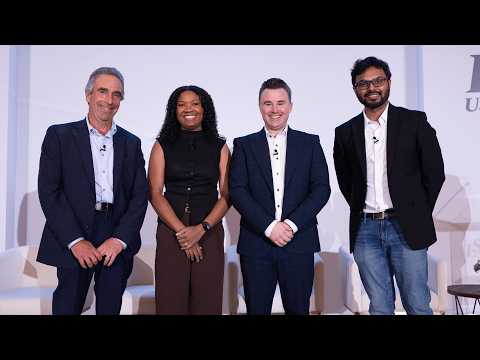
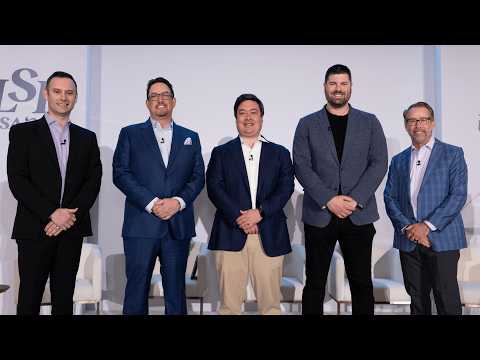
Thank you everyone for attending this panel. The question today is that, if you're a really good operator, do you really need investors? Okay, now we only have less than half an hour now, so maybe a few words about myself and TVM, but I will quickly give the torch to the microphone to my panelists here. So I'm Luc barranger. I'm a managing partner and co owner of TVM Capital. We are transatlantic based venture fund with an office in Munich and an office in Montreal. We usually invest in medical device as well as therapeutics, and we tend to lead or CO lead transactions. Okay? We, of course, have a lot of experience working with boards, building boards, going from beginning to M A and the topic today is very relevant as as there are a lot of entrepreneurs here in the room, and my very good panelists are going to prove to you that the question is a rhetorical one, in fact, and the answer is very clear. So I will ask the panelists to introduce themselves, introduce the fund, the group that they work with, and then perhaps give a couple of examples as to how investors have improved added value to a company, to a board, to a management team. Okay, so would you kindly lead us into this quest?
Rebecca Raabe 1:34
Yeah, happy to kick it off. Hi everyone. My name is Rebecca Raby, and I am one of the co founders and an investment partner at SPRIG Equity. SPRIG Equity is a new med tech fund. We were founded in 2023 we're about to do the final close of our fund. The end of this quarter, we'll have 50 million in assets under management. We've made three investments today. We're closing our fourth investment next week, and we are focused on late stage venture and growth opportunities across medical devices, diagnostics and tech enabled services. Just a little bit on my background prior to founding SPRIG Equity, I've been working in the medical technology space now for the last 20 years as an operator, an investor and a consultant. As an operator, I've worked for both large and private companies and commercial roles. As a consultant, I work for SPRIG consulting, our sister organization, which is a strategy and commercialization consulting firm that specializes in working with private medical technology companies. And then as an investor, I worked at Abbott ventures prior to founding SPRIG Equity. So going to your question, you know, I really think that the best operators really do use their investors as an extension of their team. You know, I think for operators, CEOs, that it's really common to get caught in the daily grind and the challenges. And you know, as investors, who are already bought into the company the strategy and up to speed, you know, one of the things that we can do is help keep companies on focus with that bigger goal and vision. And I believe, you know, as investors. It's not just about providing capital or guidance, but we're here to be put to work. And I think at SPRIG Equity, you know, this is something that's definitely near and dear to our hearts. For being a smaller fund and nimble fund, we prefer to work with companies that see us as resources and partners, and so one of the things that we do is really being actively involved with our portfolio companies. So whether that's jumping into reviewing financing materials or supporting the fundraising process, you know, another big one for us is in engaging with strategics, especially with our backgrounds at Abbott ventures. These are all ways that we like to be involved with our portfolio companies. I was telling the group here, I often find that I'm doing a lot of the same consulting work that I was doing previously, now, just in an unpaid fashion here at SPRIG Equity. So I think really, the best investors are, I'm sorry, the best operators really are thinking about how they can use their investors as an extension of their team.
Tal Wenderow 4:30
Tal, over to you. I need to go after Rebecca. So thanks everyone, and thanks to LSI and Henry. Tal Wenderow. I'm a managing partner at Star 51 capital, which is a investment vehicle we just launched. I shifted to the dark side. A couple of years ago. I was an operator, Founder, CEO by heart, build companies, scale companies, mainly in vascular robotics, digital health and most recently, venture power is strategic. I think I. I agree it's a rhetorical question, right in and it doesn't need to be the investor, right, meaning founders. And I hard for me to say, but I was one of them is romantic. They're naive, they're optimistic. It's always everything will happen on time. There's often no contingency plan, and you need people that have different perspective. You can call them independent board member. You can call investors. But in the other day, what investors bring is, in my opinion, is a focus. Like Rebecca, you mentioned that on the real key milestone, what is the value inflection milestone? But secondly is having the perspective of what's going on in the market. When is the right time to go out, even in the question, do you go public? Do you go M A Do you race for a strategic and most of us have good relation of the strategics, and we know them on a personal level. We can get a call, and when you get a strategic how to view that from the other side. So we can go on and on and on. In the end of the day, I think being a founder is a really, really hard job, and it's a grind, and you need people in your right side that will help you, and that's how you need to view investors. I always tell people that I'm on their board. I want to be your 3am call, because when something goes wrong, and it will go wrong. It's not an if. It's a when you need people to help you that actually want to know that the first thing that they can adjust because they have the same incentive as you are. If the incentives are aligned, and that's what we're trying to build with star 51 capital, you can walk it out, but the incentives are not aligned, and you hide from the investors, then it's dysfunctional board, and you're probably the first one out as well, right? So I think you need the right investor. We all are amazing investors, by the way, on this panel, right? So, but I can go on and on, but I'll probably pass it to Amy.
Megan MacDonagh 6:54
Thanks. Tal so I'm Megan McDonagh. I'm an investor with Ally bridge group. Ally Bridge is a fund based out of New York, has been investing in Medtech and biotech since 2012 and, you know, principally focused on, you know, commercial stage Medtech, that would be the kind of bread and butter. But, you know, looking across all stages, and then, you know, on the biotech side tends to be, you know, earlier, you know, fund five is what we're investing out of right now. That's a $500 million fund, and typically writing checks in the 20 to $40 million range, although that's, you know, flexible as well. And yeah, I kind of agree with the sentiments here. Obviously we as investors like to think we're valuable. And certainly, I think even the best operators like to get a check as well. But I think you know what, what tal is saying, there is really resonating with me on like choosing the right investor. And I think the best operators know, you know which investors they you know can add value to their board. So like for us, we have a lot of portfolio companies that have, you know, pursued this dual track between, you know, M and A and IPO, and we actually have quite a diverse group of individuals on our investment team. So not only you know, former operators, I was also an operator before I got into investing, but also, you know, former equity research analysts and bankers that can really, you know, help companies think through, you know that next stage of commercializing, and you know what, what you'll need to see, and you know what's the right track for you to get to the best kind of exit and best outcome. And I do think it's, it's not only a matter of the fit with the firm, you also need to think about, okay, are you with an investor who's going to want to put a lot of capital to work? For some companies, that makes sense? For others, it doesn't, and can actually be destructive. And I think another question is just the actual individual that's going to be joining your board. And so what we always tell companies is to make sure they do their diligence on us the same way we do that our diligence on them, and make sure that there's a good, good fit there, and that we're kind of seeing the world, you know, in a way that's complimentary as well. So I think it can actually go both ways, but I think if you know done right, like the best, operators know, you know where to where to use their their investors to their to their advantage.
Vishal Gulati 9:30
Very good comment. Vishal, thank you very much. I agree with a lot of the things that have been said. My name is Vishal Gulati. I am managing partner of Recode ventures, VR, a transatlantic venture fund with offices in San Francisco and London. We invest very focused in AI and and technology platforms that are transforming healthcare. So most of our investments, we launched our fund in 2022 I launched it with my co founder, Armen Vidian, and I. Um, most of the companies that we have invested in are could not be formed without novel ways of AI that that is currently what they focus on. So I, myself, am a physician scientist. I started my first company when I was a medical student, and then continued to have a entrepreneurial approach to to life, sold my soul as a physician scientist, became a venture capitalist, and that's what I've been doing for a long time. And one of the benefits of being a venture capitalist is that, you know, the the normal view of startups is that everything goes great. You start a company, it becomes great, goes does an IPO, and everyone's happy. But that's, that's the media narrative. What really happens is that almost every company is fighting a battle. Those of you who are entrepreneurs, you you know that. And as a venture capitalist, the greatest benefit you have is that you can fight, fight five, six battles at the same time, because you have for a portfolio, which also means that you over time, if you have been a venture capitalist for a while, you have seen every mistake that can be made in whichever format. And so my role largely is to ensure that my founders have the ability to make new mistakes, and not the mistakes that I have already observed. So that's what I try and do. We invest in, in a in an emerging sector. So a lot of the founders we back are first time founders. So we have a mixture of seasoned operators. We have some people who have not yet finished their PhDs and are starting their company. So it gives a sample opportunity, on the one hand, to learn from the seasoned operators, but at the same time, to mentor those that are younger and are doing their first company
Luc Marengere 11:48
very good. So the very constitution of this panel, in fact, offers a very strong diversity. So if you've heard all the backgrounds, everyone on this panel would bring a different background, a different set of experiences and so on to the table. Right? What is also very important for operators, and really I like the title, is that good operators, well, then good operators, in fact, do work with their investors, because they realize this is going to be a long road. There will be detours, potholes, speed bumps, all sorts of things. So while that one operator is operating one company right, each and every one here, so the five people here, that's just just in the last few years, that's at least 50 companies worth of experience amongst amongst the five of us here. Okay, so the other thing too to realize, and that's why it's important to work with your investors, is that while, while Rebecca or Megan or Vishal or tal are actually on your board, right? But there's also a team within each and every one of these funds, and then on top of that team, there's a layer upon layers of experts that gravitate around what they actually do, right? So the the the very notion that some operators treat their their boards, their investors, for example, as necessary evils is, is just such a waste, such a waste, okay, with the 15 minutes that we have left, what, what I think would be, would be fun to do as well, is, if, for each of you, if you can provide an example right of how you you landed on a board, you faced a certain issue, and how you work with the operator to navigate around that issue and of course, reach that pot of gold with a beautiful rainbow. So which, well, why don't we go opposite direction this time? For sure, would you start us off?
Vishal Gulati 13:53
Yes, very happy to talk about a company which is from my previous fund portfolio, and this was a very unique situation. It was a medical device company in surgical guidance space, and we looked at the company. It was an interesting technology they had nice sales traction coming up in Europe, and the US, we went in. And you know what happens when you go to the first board meeting, which is, by the way, in the industry, that's called the OH SHIT board meeting. And you show up and you realize that some of the things you thought were were going on were not going on, and some of the things you didn't think were going on were going on and so on. So very soon, it started to become, become clear to us that we were working with some of their earlier investors who were who had a different plan for the company. They they did not have the same scale of ambition, and they were keeping the company down. And it was a really hard situation for me at the time, because in general, we try. Work in very convivial way with investors on the board, but in this situation, I was able to go back to my investment committee and make it so that we were able to buy some of those investors out. So which is a very unusual situation that you that you land up in, but my judgment was very clear at the time, that if we do not have the right kind of ambition at the board, this company will not be able to achieve achieve its goal, and will not be able to serve the patients that they wish to serve. And I'm very happy to say recently, the company was acquired by Hologic. They have served more than half a million women with breast cancer with their product. And I think that this is sometimes, sometimes you have to do these sort of things to help companies.
Luc Marengere 15:50
Very good example, in fact, and quite, quite relevant to the situation we often face as investors. Megan,
Megan MacDonagh 15:58
yeah, so I think you know, as an investor, one of the things that you can bring is just a deep network of other very experienced operators. And I think you know, increasingly med tech acquisitions are happening later. And frequently, you know there are team changes that need to be made or additions that need to be made. And I think you know, one example would be a team that that we joined the board of and, you know, really needed to to, to bolster their their sales and marketing function, and we were able to, you know, just from from our Network, actually introduce them to to a range of different, you know, operators, and we're able to help kind of navigate that that change. And I think so. I think, you know, helping bolster the team is probably a key piece that investors can bring just because we have such a broad, broad kind of scope of companies that we're involved with. And, you know, when we look at as Medtech companies, and what ends up being the difference between a great outcome and a good outcome, often it's the team and if you can have, you know, investors that can help you with that, you know, that team building, I think that's, you know, that's kind of a key value that that investors can bring as well. Yeah,
Luc Marengere 17:24
very good. Tal Um, let me start with the I mean, may I ask you too, because you have an unusual profile, because you were an operator and now you are an investor, maybe you can provide two examples of how your investors added value as an operator, and how you are now in adding value as an investor.
Tal Wenderow 17:45
Yeah, unfortunately, I probably have more bad in example. That's the reason I became a investor, because I, you know, the reason I actually switched to what some people call the dark side is because I was helping so many companies pro bono, because you have to pay it forward and realize, okay, you can make it actually very good living, hopefully. But I have a variety of bad examples. I think the most that jumps into my head is we had an investors, and I'll not mention names that we've presented a board meeting. Cogs was really high, and it's like, that's not a problem. We'll buy five years worth of inventory into molds and metal and parts and all that, and we drop the cost. I was like, the product is not ready. You know? It's like, we need to test that. And luckily, we didn't do that, because we had to redesign it after the phase one. So I think you need to. And I think Megan mentioned, look on the strength of the investors and what they can bring to the table. And as an operator, say, abuse that literally right in a good way. And one, you foster the relation with the investor. And second, you know what his strength or her strength is, and in they'll work with you, because it ends today. If you don't want to work with investor, don't get their money. That's very simple, right? It's easy. You can raise other vehicles or family office that have their own challenges. Or if you are a successful entrepreneur and you did that, you don't need money. But to me, the most rewarding was to work with portfolio companies and action on the position on storytelling. I mean, my kids laugh at me that I'm just doing emailing and talk on the phone all day long and positioning. But most medical device companies, if you look on the successful one without generalizing, had to pivot either indication or technology or customers through their life cycle and when to know how to do that, which, how is it also very important when to do that? And what is the storytelling? What's the patient journey? And how do you also adapt that? Typically, founder has the same story. I saw that no matter who they pitch to, they can go to an early stage fund, a late stage fund, a strategic a banker, and it's the same exact pitch, but the story change. The story change like the customer. You go to the hospital if you CFO or physician or head of the unit, so how to adjust your story, and how to write storytelling that's actually having fun, and that's I see most founders are being challenged with because they're so focused on, I'm the best. I don't need to do anything else, and it's great. We want them like
Luc Marengere 20:15
that. Yeah, absolutely. If, if anyone here in the room have raised money, right? You realize that there's no fun in fundraising, right? And it's certainly not a character builder, but it sure reveals it so so and being adaptable and understanding your audience who you're pitching to, is key. Rebecca,
Rebecca Raabe 20:39
yeah, yeah, I definitely have one example that comes to mind, a current portfolio company where we were able to really use a lot of the skill sets that I think are unique to our finance Berg equity, specifically around engaging with strategics and preparing them for that commercialization phase. We have a portfolio company that had been working with strategics, trying to get some penetration into the folks there, hitting the, you know, typical BD contacts, and really weren't making much traction. And I think from our experience at Abbott ventures, and being a part of M and A deals there, and actually seeing, you know, what it takes to get these deals across the finish line, how these big organizations work, who those key influencers are? We were able to bring some unique insights to that process, you know, letting them know, it's not necessarily, you know, the folks within the BD group, but who are those KOLs that have the ears of the key influencers within these strategics? So really, getting involved in their strategic subcommittees and leading that process and providing those insights has been something that I think has really been beneficial for this portfolio company, and then on the same end, really using our backgrounds as commercial leaders, as operators to dive into their commercialization strategy. That's a piece that we really like to get a hold of, especially with our focus on later stage venture and growth investments, you know, thinking through the commercialization strategy, whether that's customer segmentation, positioning, messaging, targeting, you know, diving into their commercial model. What are those key assumptions, pressure testing them. We like to roll up our sleeves and really get involved in those things. And I think overall, you know, pressure testing these things with our operators just puts them in a better position.
Luc Marengere 22:26
Very good example as well. So let me offer two examples as well, as to how working with the with the board, with the operators, created value. Some of you in the Boston area may remember a company called colucid. So that was a company that we invested in in 2014 company went public a year and a half later, they produced data, phase three data for migraine, okay, a year and a half to recruit the first phase three produce data. And we were very fortunate, because in clinical development, you can do all the right things and still still roll a snake eye right. However, what we did do is we got hold of the protocol. Ahead of finalizing the protocol, we have extensive clinical and regulatory experience in house, and of course, around TVM, we were able to make some key changes to the protocol, inclusion, exclusion criteria that allowed a much more streamlined ability to to recruit Okay, two years down the road from the initial investment the the phase three trial was expertly executed by the management team. We can't take credit on that, but one of the things that worked really well is the recruitment pace, and then after that, the data showed up, and we sold the company in exactly two years to Eli Lilly for just shy of a billion dollars, right? So that's one great way, if the operator is saying, you know, we know you guys know clinical and you've got your regulatory consultants and so on. But shove off. We know what we're doing. Well, we might be two and a half, three years down the road, and we still haven't recruited the trial. Okay? And of course, what usually comes with this, you need more money, and in a phase three trial, when you need more money, you need substantial additional capital, and then the whole investment thesis just crumbles. Okay, another example more relevant to the medical device field, we all want to forget the COVID years, but 2022, post COVID Supply Chain disruptions. Supply chain disruptions led to North American North America getting flooded with counterfeit parts, right? One of our invest investee companies that has a very good product, it's called the egg nest. Egg, EGG Medical out of Minneapolis. Right? The egg nest is a relatively simple but. Very elegant product. It creates an s around the table in a cath lab, so that when the side arm, the C arm, goes around and generates image, it also generates scatter radiation. Right? Everybody gets radiated in the room, but with the cocoon around it, you quench that radiation, and nobody gets radiation, right? That's done by these carbon fiber flaps that contain lead. Okay, so what we do, because we mainly invest in companies that are early commercial and want to grow scale? Well, one of the things that we make sure can be scaled is the manufacturing side, as you want to rush to increase your top line revenues, you want to rush to build your inventory. You want to rush to get product out. A lot of operators forget that little thing, which is, which is quality control, and make sure that you know what you're putting out there. So we implemented a QA QC step within the company which intercepted, uh, carbon fiber flaps, devoid of lead, right? So you can imagine what would have happened to that company. We put out, we put out these products. They use it the rate the the Radiation Safety Officer picks up the little badges on the people working in the room, and in one month that would have been a product recall, a target for a lawsuit and a write off for that deal. Today, I'm very happy to tell you that EGG Medical is on an incredible growth rate. We're probably going to hit more than double digit revenues this year. That's a company that is really successful commercially. Now, the AMA put out the associate Association, American Association of Medical Association, put out the guidelines in December of 2024 highlighting the real issues with scatter radiations to healthcare providers, and putting that at the very top of the list of things to fix, right? Well, we wouldn't have a solution today if the operator had not worked with us back in the day. Okay with that said, there's only a few minutes left. Any other comments that anyone would want to say, I forgot to mention this, or I just thought of something else.
Vishal Gulati 27:25
Can I say one thing, I think the best thing the founders should do is that they should treat talk to other founders and operators that have worked with the VCs that they're going to work with, get your references so you you you know you will find how well they work with other people. And I think that I'm very happy to suggest that, because I think I have a great NPS score,
Luc Marengere 27:46
a very mature and secure suggestion. How about you? Megan, any, any last thoughts?
Megan MacDonagh 27:54
Yeah, I think like would echo that. And I think also thinking about like, your like, long term, ideal trajectory of the company, and what gives you the most optionality and just making sure that fit is right as well as like, you know, is the investor good? A good investor
Tal Wenderow 28:13
and a good partner? I will say that first investor need the founder as well. And Second World people, and most of us, want to have fun and make that fun environment, even if it's sometimes not fun. Because I firm believer, when you have fun and make an impact, you get executed much better, and then the financial reward for everyone will come so people at the end of the day, and Rebecca,
Rebecca Raabe 28:38
yeah, I think the last comment would just be, you know, put us to work. Let your investors go to work for you, and think about how your can, investors can add value outside of your operational team, and what perspectives they can provide that you're not getting from your day in and day out team.
Luc Marengere 28:54
So we hope that today's panel convinced you unequivocally that the only answer to the question posed is a resounding yes. And with that, I thank you. I thank my panelists. I thank LSI for the opportunity all of you for attending, and we're just going to go right next door to the other Pacific room. So if you have questions, just follow us to that room so that we can, we can free up the stage for the next the next panel. Thank you. Thank you all. Thank you.
Luc Marengere 0:04
Thank you everyone for attending this panel. The question today is that, if you're a really good operator, do you really need investors? Okay, now we only have less than half an hour now, so maybe a few words about myself and TVM, but I will quickly give the torch to the microphone to my panelists here. So I'm Luc barranger. I'm a managing partner and co owner of TVM Capital. We are transatlantic based venture fund with an office in Munich and an office in Montreal. We usually invest in medical device as well as therapeutics, and we tend to lead or CO lead transactions. Okay? We, of course, have a lot of experience working with boards, building boards, going from beginning to M A and the topic today is very relevant as as there are a lot of entrepreneurs here in the room, and my very good panelists are going to prove to you that the question is a rhetorical one, in fact, and the answer is very clear. So I will ask the panelists to introduce themselves, introduce the fund, the group that they work with, and then perhaps give a couple of examples as to how investors have improved added value to a company, to a board, to a management team. Okay, so would you kindly lead us into this quest?
Rebecca Raabe 1:34
Yeah, happy to kick it off. Hi everyone. My name is Rebecca Raby, and I am one of the co founders and an investment partner at SPRIG Equity. SPRIG Equity is a new med tech fund. We were founded in 2023 we're about to do the final close of our fund. The end of this quarter, we'll have 50 million in assets under management. We've made three investments today. We're closing our fourth investment next week, and we are focused on late stage venture and growth opportunities across medical devices, diagnostics and tech enabled services. Just a little bit on my background prior to founding SPRIG Equity, I've been working in the medical technology space now for the last 20 years as an operator, an investor and a consultant. As an operator, I've worked for both large and private companies and commercial roles. As a consultant, I work for SPRIG consulting, our sister organization, which is a strategy and commercialization consulting firm that specializes in working with private medical technology companies. And then as an investor, I worked at Abbott ventures prior to founding SPRIG Equity. So going to your question, you know, I really think that the best operators really do use their investors as an extension of their team. You know, I think for operators, CEOs, that it's really common to get caught in the daily grind and the challenges. And you know, as investors, who are already bought into the company the strategy and up to speed, you know, one of the things that we can do is help keep companies on focus with that bigger goal and vision. And I believe, you know, as investors. It's not just about providing capital or guidance, but we're here to be put to work. And I think at SPRIG Equity, you know, this is something that's definitely near and dear to our hearts. For being a smaller fund and nimble fund, we prefer to work with companies that see us as resources and partners, and so one of the things that we do is really being actively involved with our portfolio companies. So whether that's jumping into reviewing financing materials or supporting the fundraising process, you know, another big one for us is in engaging with strategics, especially with our backgrounds at Abbott ventures. These are all ways that we like to be involved with our portfolio companies. I was telling the group here, I often find that I'm doing a lot of the same consulting work that I was doing previously, now, just in an unpaid fashion here at SPRIG Equity. So I think really, the best investors are, I'm sorry, the best operators really are thinking about how they can use their investors as an extension of their team.
Tal Wenderow 4:30
Tal, over to you. I need to go after Rebecca. So thanks everyone, and thanks to LSI and Henry. Tal Wenderow. I'm a managing partner at Star 51 capital, which is a investment vehicle we just launched. I shifted to the dark side. A couple of years ago. I was an operator, Founder, CEO by heart, build companies, scale companies, mainly in vascular robotics, digital health and most recently, venture power is strategic. I think I. I agree it's a rhetorical question, right in and it doesn't need to be the investor, right, meaning founders. And I hard for me to say, but I was one of them is romantic. They're naive, they're optimistic. It's always everything will happen on time. There's often no contingency plan, and you need people that have different perspective. You can call them independent board member. You can call investors. But in the other day, what investors bring is, in my opinion, is a focus. Like Rebecca, you mentioned that on the real key milestone, what is the value inflection milestone? But secondly is having the perspective of what's going on in the market. When is the right time to go out, even in the question, do you go public? Do you go M A Do you race for a strategic and most of us have good relation of the strategics, and we know them on a personal level. We can get a call, and when you get a strategic how to view that from the other side. So we can go on and on and on. In the end of the day, I think being a founder is a really, really hard job, and it's a grind, and you need people in your right side that will help you, and that's how you need to view investors. I always tell people that I'm on their board. I want to be your 3am call, because when something goes wrong, and it will go wrong. It's not an if. It's a when you need people to help you that actually want to know that the first thing that they can adjust because they have the same incentive as you are. If the incentives are aligned, and that's what we're trying to build with star 51 capital, you can walk it out, but the incentives are not aligned, and you hide from the investors, then it's dysfunctional board, and you're probably the first one out as well, right? So I think you need the right investor. We all are amazing investors, by the way, on this panel, right? So, but I can go on and on, but I'll probably pass it to Amy.
Megan MacDonagh 6:54
Thanks. Tal so I'm Megan McDonagh. I'm an investor with Ally bridge group. Ally Bridge is a fund based out of New York, has been investing in Medtech and biotech since 2012 and, you know, principally focused on, you know, commercial stage Medtech, that would be the kind of bread and butter. But, you know, looking across all stages, and then, you know, on the biotech side tends to be, you know, earlier, you know, fund five is what we're investing out of right now. That's a $500 million fund, and typically writing checks in the 20 to $40 million range, although that's, you know, flexible as well. And yeah, I kind of agree with the sentiments here. Obviously we as investors like to think we're valuable. And certainly, I think even the best operators like to get a check as well. But I think you know what, what tal is saying, there is really resonating with me on like choosing the right investor. And I think the best operators know, you know which investors they you know can add value to their board. So like for us, we have a lot of portfolio companies that have, you know, pursued this dual track between, you know, M and A and IPO, and we actually have quite a diverse group of individuals on our investment team. So not only you know, former operators, I was also an operator before I got into investing, but also, you know, former equity research analysts and bankers that can really, you know, help companies think through, you know that next stage of commercializing, and you know what, what you'll need to see, and you know what's the right track for you to get to the best kind of exit and best outcome. And I do think it's, it's not only a matter of the fit with the firm, you also need to think about, okay, are you with an investor who's going to want to put a lot of capital to work? For some companies, that makes sense? For others, it doesn't, and can actually be destructive. And I think another question is just the actual individual that's going to be joining your board. And so what we always tell companies is to make sure they do their diligence on us the same way we do that our diligence on them, and make sure that there's a good, good fit there, and that we're kind of seeing the world, you know, in a way that's complimentary as well. So I think it can actually go both ways, but I think if you know done right, like the best, operators know, you know where to where to use their their investors to their to their advantage.
Vishal Gulati 9:30
Very good comment. Vishal, thank you very much. I agree with a lot of the things that have been said. My name is Vishal Gulati. I am managing partner of Recode ventures, VR, a transatlantic venture fund with offices in San Francisco and London. We invest very focused in AI and and technology platforms that are transforming healthcare. So most of our investments, we launched our fund in 2022 I launched it with my co founder, Armen Vidian, and I. Um, most of the companies that we have invested in are could not be formed without novel ways of AI that that is currently what they focus on. So I, myself, am a physician scientist. I started my first company when I was a medical student, and then continued to have a entrepreneurial approach to to life, sold my soul as a physician scientist, became a venture capitalist, and that's what I've been doing for a long time. And one of the benefits of being a venture capitalist is that, you know, the the normal view of startups is that everything goes great. You start a company, it becomes great, goes does an IPO, and everyone's happy. But that's, that's the media narrative. What really happens is that almost every company is fighting a battle. Those of you who are entrepreneurs, you you know that. And as a venture capitalist, the greatest benefit you have is that you can fight, fight five, six battles at the same time, because you have for a portfolio, which also means that you over time, if you have been a venture capitalist for a while, you have seen every mistake that can be made in whichever format. And so my role largely is to ensure that my founders have the ability to make new mistakes, and not the mistakes that I have already observed. So that's what I try and do. We invest in, in a in an emerging sector. So a lot of the founders we back are first time founders. So we have a mixture of seasoned operators. We have some people who have not yet finished their PhDs and are starting their company. So it gives a sample opportunity, on the one hand, to learn from the seasoned operators, but at the same time, to mentor those that are younger and are doing their first company
Luc Marengere 11:48
very good. So the very constitution of this panel, in fact, offers a very strong diversity. So if you've heard all the backgrounds, everyone on this panel would bring a different background, a different set of experiences and so on to the table. Right? What is also very important for operators, and really I like the title, is that good operators, well, then good operators, in fact, do work with their investors, because they realize this is going to be a long road. There will be detours, potholes, speed bumps, all sorts of things. So while that one operator is operating one company right, each and every one here, so the five people here, that's just just in the last few years, that's at least 50 companies worth of experience amongst amongst the five of us here. Okay, so the other thing too to realize, and that's why it's important to work with your investors, is that while, while Rebecca or Megan or Vishal or tal are actually on your board, right? But there's also a team within each and every one of these funds, and then on top of that team, there's a layer upon layers of experts that gravitate around what they actually do, right? So the the the very notion that some operators treat their their boards, their investors, for example, as necessary evils is, is just such a waste, such a waste, okay, with the 15 minutes that we have left, what, what I think would be, would be fun to do as well, is, if, for each of you, if you can provide an example right of how you you landed on a board, you faced a certain issue, and how you work with the operator to navigate around that issue and of course, reach that pot of gold with a beautiful rainbow. So which, well, why don't we go opposite direction this time? For sure, would you start us off?
Vishal Gulati 13:53
Yes, very happy to talk about a company which is from my previous fund portfolio, and this was a very unique situation. It was a medical device company in surgical guidance space, and we looked at the company. It was an interesting technology they had nice sales traction coming up in Europe, and the US, we went in. And you know what happens when you go to the first board meeting, which is, by the way, in the industry, that's called the OH SHIT board meeting. And you show up and you realize that some of the things you thought were were going on were not going on, and some of the things you didn't think were going on were going on and so on. So very soon, it started to become, become clear to us that we were working with some of their earlier investors who were who had a different plan for the company. They they did not have the same scale of ambition, and they were keeping the company down. And it was a really hard situation for me at the time, because in general, we try. Work in very convivial way with investors on the board, but in this situation, I was able to go back to my investment committee and make it so that we were able to buy some of those investors out. So which is a very unusual situation that you that you land up in, but my judgment was very clear at the time, that if we do not have the right kind of ambition at the board, this company will not be able to achieve achieve its goal, and will not be able to serve the patients that they wish to serve. And I'm very happy to say recently, the company was acquired by Hologic. They have served more than half a million women with breast cancer with their product. And I think that this is sometimes, sometimes you have to do these sort of things to help companies.
Luc Marengere 15:50
Very good example, in fact, and quite, quite relevant to the situation we often face as investors. Megan,
Megan MacDonagh 15:58
yeah, so I think you know, as an investor, one of the things that you can bring is just a deep network of other very experienced operators. And I think you know, increasingly med tech acquisitions are happening later. And frequently, you know there are team changes that need to be made or additions that need to be made. And I think you know, one example would be a team that that we joined the board of and, you know, really needed to to, to bolster their their sales and marketing function, and we were able to, you know, just from from our Network, actually introduce them to to a range of different, you know, operators, and we're able to help kind of navigate that that change. And I think so. I think, you know, helping bolster the team is probably a key piece that investors can bring just because we have such a broad, broad kind of scope of companies that we're involved with. And, you know, when we look at as Medtech companies, and what ends up being the difference between a great outcome and a good outcome, often it's the team and if you can have, you know, investors that can help you with that, you know, that team building, I think that's, you know, that's kind of a key value that that investors can bring as well. Yeah,
Luc Marengere 17:24
very good. Tal Um, let me start with the I mean, may I ask you too, because you have an unusual profile, because you were an operator and now you are an investor, maybe you can provide two examples of how your investors added value as an operator, and how you are now in adding value as an investor.
Tal Wenderow 17:45
Yeah, unfortunately, I probably have more bad in example. That's the reason I became a investor, because I, you know, the reason I actually switched to what some people call the dark side is because I was helping so many companies pro bono, because you have to pay it forward and realize, okay, you can make it actually very good living, hopefully. But I have a variety of bad examples. I think the most that jumps into my head is we had an investors, and I'll not mention names that we've presented a board meeting. Cogs was really high, and it's like, that's not a problem. We'll buy five years worth of inventory into molds and metal and parts and all that, and we drop the cost. I was like, the product is not ready. You know? It's like, we need to test that. And luckily, we didn't do that, because we had to redesign it after the phase one. So I think you need to. And I think Megan mentioned, look on the strength of the investors and what they can bring to the table. And as an operator, say, abuse that literally right in a good way. And one, you foster the relation with the investor. And second, you know what his strength or her strength is, and in they'll work with you, because it ends today. If you don't want to work with investor, don't get their money. That's very simple, right? It's easy. You can raise other vehicles or family office that have their own challenges. Or if you are a successful entrepreneur and you did that, you don't need money. But to me, the most rewarding was to work with portfolio companies and action on the position on storytelling. I mean, my kids laugh at me that I'm just doing emailing and talk on the phone all day long and positioning. But most medical device companies, if you look on the successful one without generalizing, had to pivot either indication or technology or customers through their life cycle and when to know how to do that, which, how is it also very important when to do that? And what is the storytelling? What's the patient journey? And how do you also adapt that? Typically, founder has the same story. I saw that no matter who they pitch to, they can go to an early stage fund, a late stage fund, a strategic a banker, and it's the same exact pitch, but the story change. The story change like the customer. You go to the hospital if you CFO or physician or head of the unit, so how to adjust your story, and how to write storytelling that's actually having fun, and that's I see most founders are being challenged with because they're so focused on, I'm the best. I don't need to do anything else, and it's great. We want them like
Luc Marengere 20:15
that. Yeah, absolutely. If, if anyone here in the room have raised money, right? You realize that there's no fun in fundraising, right? And it's certainly not a character builder, but it sure reveals it so so and being adaptable and understanding your audience who you're pitching to, is key. Rebecca,
Rebecca Raabe 20:39
yeah, yeah, I definitely have one example that comes to mind, a current portfolio company where we were able to really use a lot of the skill sets that I think are unique to our finance Berg equity, specifically around engaging with strategics and preparing them for that commercialization phase. We have a portfolio company that had been working with strategics, trying to get some penetration into the folks there, hitting the, you know, typical BD contacts, and really weren't making much traction. And I think from our experience at Abbott ventures, and being a part of M and A deals there, and actually seeing, you know, what it takes to get these deals across the finish line, how these big organizations work, who those key influencers are? We were able to bring some unique insights to that process, you know, letting them know, it's not necessarily, you know, the folks within the BD group, but who are those KOLs that have the ears of the key influencers within these strategics? So really, getting involved in their strategic subcommittees and leading that process and providing those insights has been something that I think has really been beneficial for this portfolio company, and then on the same end, really using our backgrounds as commercial leaders, as operators to dive into their commercialization strategy. That's a piece that we really like to get a hold of, especially with our focus on later stage venture and growth investments, you know, thinking through the commercialization strategy, whether that's customer segmentation, positioning, messaging, targeting, you know, diving into their commercial model. What are those key assumptions, pressure testing them. We like to roll up our sleeves and really get involved in those things. And I think overall, you know, pressure testing these things with our operators just puts them in a better position.
Luc Marengere 22:26
Very good example as well. So let me offer two examples as well, as to how working with the with the board, with the operators, created value. Some of you in the Boston area may remember a company called colucid. So that was a company that we invested in in 2014 company went public a year and a half later, they produced data, phase three data for migraine, okay, a year and a half to recruit the first phase three produce data. And we were very fortunate, because in clinical development, you can do all the right things and still still roll a snake eye right. However, what we did do is we got hold of the protocol. Ahead of finalizing the protocol, we have extensive clinical and regulatory experience in house, and of course, around TVM, we were able to make some key changes to the protocol, inclusion, exclusion criteria that allowed a much more streamlined ability to to recruit Okay, two years down the road from the initial investment the the phase three trial was expertly executed by the management team. We can't take credit on that, but one of the things that worked really well is the recruitment pace, and then after that, the data showed up, and we sold the company in exactly two years to Eli Lilly for just shy of a billion dollars, right? So that's one great way, if the operator is saying, you know, we know you guys know clinical and you've got your regulatory consultants and so on. But shove off. We know what we're doing. Well, we might be two and a half, three years down the road, and we still haven't recruited the trial. Okay? And of course, what usually comes with this, you need more money, and in a phase three trial, when you need more money, you need substantial additional capital, and then the whole investment thesis just crumbles. Okay, another example more relevant to the medical device field, we all want to forget the COVID years, but 2022, post COVID Supply Chain disruptions. Supply chain disruptions led to North American North America getting flooded with counterfeit parts, right? One of our invest investee companies that has a very good product, it's called the egg nest. Egg, EGG Medical out of Minneapolis. Right? The egg nest is a relatively simple but. Very elegant product. It creates an s around the table in a cath lab, so that when the side arm, the C arm, goes around and generates image, it also generates scatter radiation. Right? Everybody gets radiated in the room, but with the cocoon around it, you quench that radiation, and nobody gets radiation, right? That's done by these carbon fiber flaps that contain lead. Okay, so what we do, because we mainly invest in companies that are early commercial and want to grow scale? Well, one of the things that we make sure can be scaled is the manufacturing side, as you want to rush to increase your top line revenues, you want to rush to build your inventory. You want to rush to get product out. A lot of operators forget that little thing, which is, which is quality control, and make sure that you know what you're putting out there. So we implemented a QA QC step within the company which intercepted, uh, carbon fiber flaps, devoid of lead, right? So you can imagine what would have happened to that company. We put out, we put out these products. They use it the rate the the Radiation Safety Officer picks up the little badges on the people working in the room, and in one month that would have been a product recall, a target for a lawsuit and a write off for that deal. Today, I'm very happy to tell you that EGG Medical is on an incredible growth rate. We're probably going to hit more than double digit revenues this year. That's a company that is really successful commercially. Now, the AMA put out the associate Association, American Association of Medical Association, put out the guidelines in December of 2024 highlighting the real issues with scatter radiations to healthcare providers, and putting that at the very top of the list of things to fix, right? Well, we wouldn't have a solution today if the operator had not worked with us back in the day. Okay with that said, there's only a few minutes left. Any other comments that anyone would want to say, I forgot to mention this, or I just thought of something else.
Vishal Gulati 27:25
Can I say one thing, I think the best thing the founders should do is that they should treat talk to other founders and operators that have worked with the VCs that they're going to work with, get your references so you you you know you will find how well they work with other people. And I think that I'm very happy to suggest that, because I think I have a great NPS score,
Luc Marengere 27:46
a very mature and secure suggestion. How about you? Megan, any, any last thoughts?
Megan MacDonagh 27:54
Yeah, I think like would echo that. And I think also thinking about like, your like, long term, ideal trajectory of the company, and what gives you the most optionality and just making sure that fit is right as well as like, you know, is the investor good? A good investor
Tal Wenderow 28:13
and a good partner? I will say that first investor need the founder as well. And Second World people, and most of us, want to have fun and make that fun environment, even if it's sometimes not fun. Because I firm believer, when you have fun and make an impact, you get executed much better, and then the financial reward for everyone will come so people at the end of the day, and Rebecca,
Rebecca Raabe 28:38
yeah, I think the last comment would just be, you know, put us to work. Let your investors go to work for you, and think about how your can, investors can add value outside of your operational team, and what perspectives they can provide that you're not getting from your day in and day out team.
Luc Marengere 28:54
So we hope that today's panel convinced you unequivocally that the only answer to the question posed is a resounding yes. And with that, I thank you. I thank my panelists. I thank LSI for the opportunity all of you for attending, and we're just going to go right next door to the other Pacific room. So if you have questions, just follow us to that room so that we can, we can free up the stage for the next the next panel. Thank you. Thank you all. Thank you.
17011 Beach Blvd, Suite 500 Huntington Beach, CA 92647
714-847-3540© 2025 Life Science Intelligence, Inc., All Rights Reserved. | Privacy Policy