Investor Ready vs Clinician Friendly Clinical Trial Design | LSI Europe '25

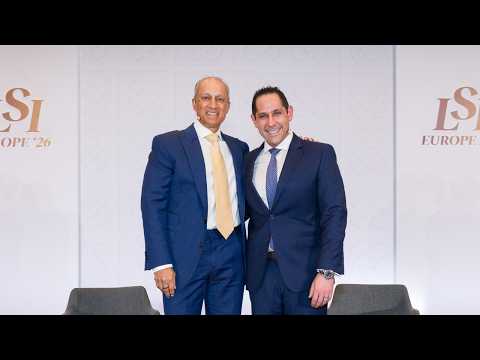
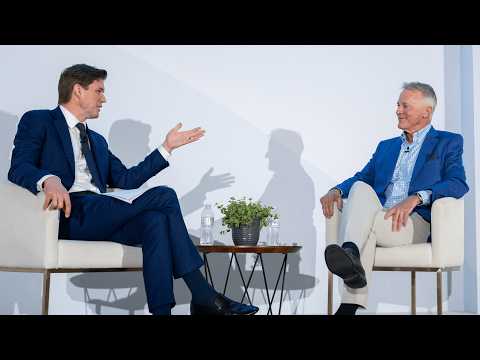
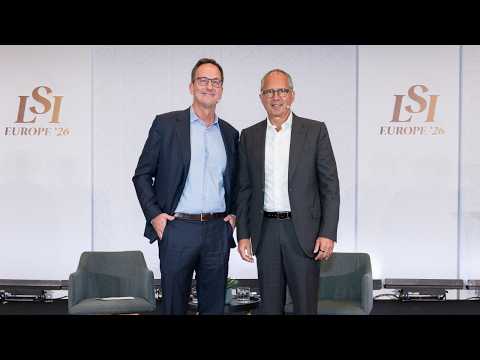
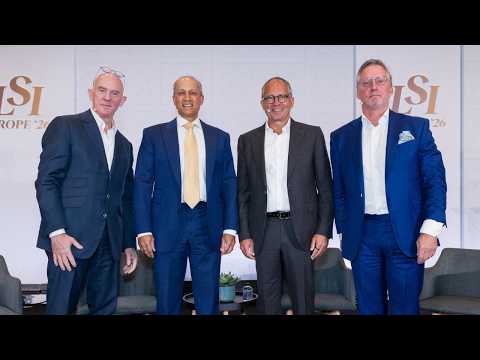
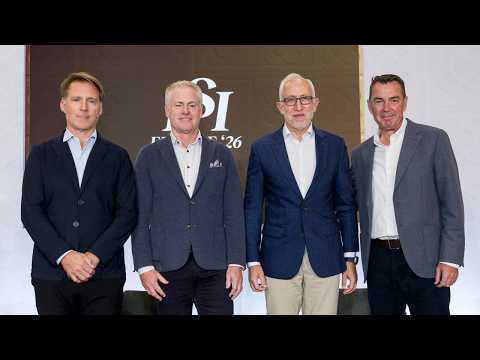
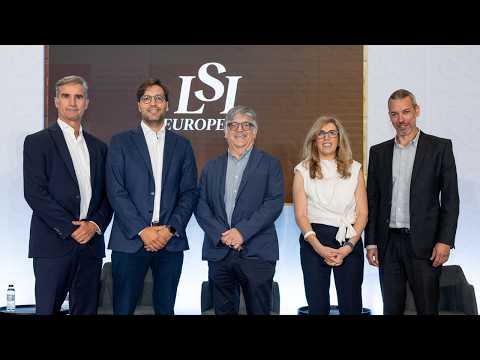
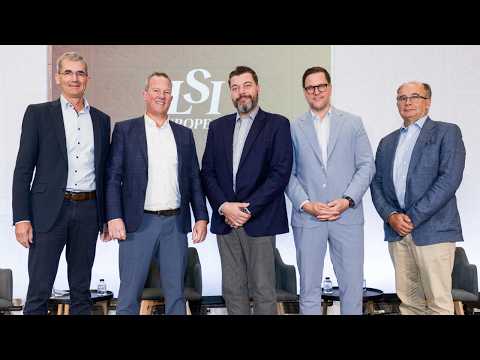
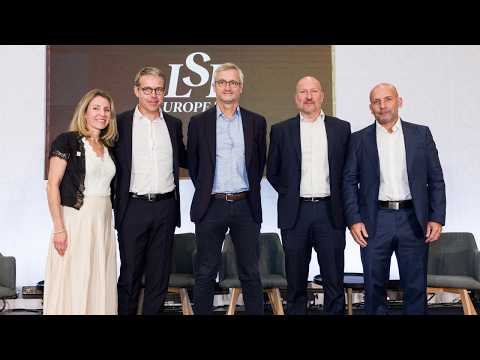
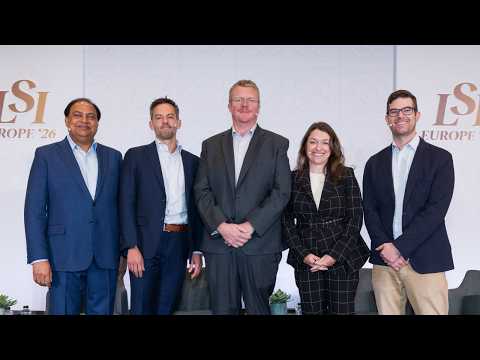
Industry leaders from investment, medical device companies, and consulting discuss the balance between designing clinical trials that appeal to investors while meeting the practical needs of clinicians, featuring perspectives from Andera Partners, AdjuCor, EBAMed, Nilo Medical Consulting, and Retia Medical.
Join Our Next Event
Partner with the leaders
shaping the future of
Medtech at LSI USA ‘26
March 16th - 20th, 2026
Waldorf Astoria, Monarch Beach

Aneta Sottil  0:05  
Okay, I'm hearing we get to start. I think we are the last panel of the day and almost the last intervention of the of the day of the last day of the conference, right? So wrapping up in style. Welcome to everyone who's still here. We are looking forward to this discussion on on clinical trial design and what's what investors wants, what companies wants, what other people want. And before we dive into this, I'll let everyone introduce themselves briefly. Introduce myself. My name is Aneta Sottil. I'm a partner at anderra. We are a fund based in Paris. We invest in med tech and in biotech. We've been doing that for the past 25 years, and we look forward to deploying our now seventh fund into some of the fantastic Medtech companies present here. I let everyone just say a word, and the way that we've thought about this panel is it's maybe a little different, sharing a little bit in depth our story. So each of the panelists will give an example and that we dive into. You know how difficult it was to make decisions and how difficult it is still to make decisions on the right clinical trial design? So there'll be more time to talk about companies. So just briefly, go ahead, please.


Stephen Wildhirt  1:21  
Yeah, good afternoon. Stephen Wildhirt, I'm the co founder of ador. We developed a novel cardiac assist device, mechanical cardiac assist device for heart failure patients, being a first mover in this, in this field of blood pump technology. I am by education, a cardiac surgeon. Did it over 20 years. So the idea and then the product development came really from the clinical and deep clinical understanding about the problem.


Marina Izzo  1:50  
Good afternoon. My name is Marina Izzo. I'm the CEO of epamed. I have a master in economics, and since four years, I'm leading this small organization which aims to treat cardiac arrhythmias, non invasively. So this is a disruptive therapy. We have a design frozen we have done extensive clinical trials, and we are preparing for our first in human clinic as cardia.


Marc Zemel  2:17  
Hello everybody. I'm Marc Zemel. I'm the CEO and co founder of Retia Medical. We're a commercial stage developer of AI algorithms for monitoring and management of high risk surgical and ICU patients.


Aneta Sottil  2:32  
Thank you, everybody. So the topic we're going to discuss is clinical trials and clinical trial design, and what do various people want? And I think everybody who's been to a conference like this, and every company that's present here today has faced this dilemma at least once, if not many times. There is certain expectations from the clinician community. There's different expectations from the like regulators, different from the payers, different from the strategics. And then when you come to fundraising and you present your plan normally, there's yet a different expectation. So I'm here to also defend the investor side and give investor perspective on each of the stories that we'll discuss. And we'll focus maybe on three questions today, and each of them will be backed by by a story from each of our panelists, and we all comment on each of them. We'll start with with Steven talking about first mover advantage and how you think about clinical trial design with that. And Marina has a story about pre Clinical Centers of Excellence now they get help or not, and Mark will tell his story about multiple, multiple clinical trial experiences, but also about outcomes versus no, versus smaller studies. So these are the topics that we'll cover. We've got about 30 minutes, and I suggest that we jump right into it, Steven, so tell us your story, and tell us how you've designed or haven't designed to you know, and when what you ended up doing in your clinical trial design.


Stephen Wildhirt  4:10  
I'm happy to so I spent until 2012 I spent my weekends at nights, sometimes not always with bleeding patients, with patients having severe heart failure, needing a mechanical system wise, are on their waiting list to transplantation. And I felt like, my god, it's not what I'm suffering. It's suffering what the patient has to go through. And I felt, why can we support a heart mechanically without touching the blood? It should be possible. We can resuscitate the patient. Everybody can resuscitate the patient once they owe a train trough. So anyways, from this, this idea in 2013 we I found it at you core, the company, and we built up a team of 50 people up today, we went through four prototypes, and then we developed it. And the design fees for the RE beat system, which is a soft robotic system individualized for every single heart failure patient with very different geometries, we designed our clinical study for a bridge to transplantation scenario, which is a temporary support, a temporary way of supporting the patients until they get their transplant. With this documentation on the trial design, we then chose our clinical board and the three centers we attended to do the study in Europe. We wanted to prevent to go to South America or to Kazakhstan, because we felt we're safe and secure with this device, we can show our data in Europe. So the first site we visited was UK, Newcastle, and we presented our our pitch and and the and the trial design and, and, of course, there were clinicians around. And all of a sudden we were faced with the idea of having a very short term trial first, because we are first mover in the field. Nobody knew about this device working from the outside of the heart. Even though it sounded safe, nobody knew what to do with this. And so did Hanover medical school. They suggested to have a short term trial, which means we implant the device on a blood pump patient just before the blood pump is actually inserted, just to see whether or not safety implantability workflow can be established before we then going on into a second trial, the way we can do the bridge to transplantation. So it was a new and new idea for us, and a new situation. Me, as a clinician, I very much understood this, but from a viewpoint of a CEO having timelines, having pressure, having financial matters, I felt like maybe I should fight this. I lost. So anyways, we went into this short term trial.


Aneta Sottil  6:54  
But just to stop you there for a second, you had your vision, and you had your investors that back to it right, and you had your board management, everyone had a vision of showing something with your novel system for these patients. But the clinician said, No, this is too risky, right? Van Gogh, we're not going to do that. Yeah. You need to add a step on your way, right? So how did your How did your investors react to that?


Stephen Wildhirt  7:16  
Well, I think we did not have a choice, neither on the board nor on the shareholder side to do other than what's suggested by the clinicians. And I at the end said, well, from a viewpoint of a clinician and de risking the patient side is very understandable. So it took, it didn't take us too long to accept this and then go through with the study, since we had all the clinical board already in place and didn't want to go to Kazakhstan or to South America to do a bridge to transplant trial. So we did this, and we succeeded with 10 patients on a 100% safety profile with beautiful performance data short term. And here we are with those data, and now going forward to the next trial, and here we go with the investor side heavy. Finding new investors with those short term data, which are still very beautiful, becomes another challenge. I see that very positive, but still we are now facing, I would say, impressions that those data are not enough for the new investors coming into the company supporting the digital transplant


Aneta Sottil  8:25  
study, throw a letter. Yeah, the panel as well. Comment. But I think it's it. You know, it's not the only case, right? Just in so many cases where you're you have a plan, you push to do something a little bit smaller, something that's doable today that people will agree to, and then at the end, you deliver on edge, and people tell you, well, that's not enough, because that's, that's what, that's what happened here.


Stephen Wildhirt  8:50  
Yeah, exactly. That's what, that's what happened. So of course, I also understand and fully support the investor side to de risk the investment. I think we have done a lot to de risk the investment, but still, in terms of the timeline we did for the patients, for some of those are, this is not enough. Maybe it's also a current mixture of the economic situation. You know, we have not enough IPOs. We have not not enough exits. So maybe the the total volume of of investment is getting less, so they choose lower risk of investment could be but still, I have to support our data definitely, and that's what we have. And so we keep going with this.


Aneta Sottil  9:33  
And maybe marina or mark you want to comment on this. You know, maybe you've seen examples that are similar, or you have reaction to Steven's story, right? Just so impactful.


Marina Izzo  9:45  
I mean, in my case, I think what was very relevant for me was that the investor had the request, but this was for them first to be convinced to. To be part of my investment syndicate. So this was more, they need the data to decide that I was I, my company, myself, were worth investing it. And then, and then later on, they set goals for for reaching inflection point, and also linked to second tranche payment. So also as a way to make sure that we were spending sufficient money at every step and not too much on wrong activities. So I think they gave a rhythm of what we needed to be done. And in my experiences, because we are dealing with cardiac arrhythmia. So we are, we are. We are a player in cardiology, but the therapy is delivered by an external beam. So we work with radio oncologist and medical physicist, and in the in the world of radio oncology, there is no such a mindset of that data driven evidence. I mean, it's a and also, and also, how they do study is very different from from what we're used to seeing in cardiac ablation. So for example, in cardiac ablation, when you want to see if an ablation was effective or not, you do an histopathology analysis. You might be doing an EP map afterwards to see the effect of worry action. But in radio oncology, you look at cells, and there were, in my case, not established methodology to verify what happened in the sales when you wanted to look at this. So there was a mismatch between what my investors wanted to see and what the customer were able to deliver. So and that was very challenging and inspiring for me, because we end up also testing something new, and I didn't, I wasn't sure this would be successful at the end, but then at the end, it turned out to be successful. But sometimes you also need to have a little bit of a luck, okay, because, for example, I was talking about doing animal study in Upen, and they only had some experiences with mouses and on cell analysis, and we were not sure whether this could be reproducible in a in a pig in an animal setting, and what degree of effect we could measure. Or, for example, my investor were used to have GLP animal labs. Mean I work in trans catarrh before there are plenty of well established facilities. Everything is ready. You go there with your little device and you do your test. But in our case, you know we need the beam to be available in a lab. So there are no GLP animal lab available where you have a beam. So, you know, there was a he was really interesting, but never said. So I think, I think it was good to be challenged, to have target to be reached, and it was interesting to work correctly with very smart physicians on trying to find a solution to this. In my case, we work a lot with the center of Excellences, so we the company was also founded by the Mayo Clinic, and there was extensive work done by Douglas Parker before I joined but when I joined the organization, he was sick and was no longer working and the facility was the rest of the team was very busy doing other activities and trials, so I could not really work together with them like I expected. So I decided to work with the UPenn in Philadelphia, because they they are very they have a reputation in the treatment of VT patients with electrophysiology, but they also have a fantastic facility with any kind of radiotherapy equipment. They also do research for for for Beam Company on the next generation of radiotherapy solutions. So, so I work with them, and I think this was, at the end, a good choice, because not only it's important to deliver data, but it's also to make sure that the data is credible and comes from a group of people who has an established workflow. And it's also a way to check that what you are proposing could be integrated in their clinical practice. And also. New a publication is important, but the authorship is also very important. So in general, this adds credibility to a company. And this, for me, was, was very important. And after that, we work with in Boston, with the Massachusetts General Hospital. They had never done research with animal so we were literally looking around and trying to to find, to build a team with people that they've never worked with together before. And there was very funny, because in Boston, and the installation of the proton beam was the first proton machine ever installed in the world. But this also may this also means that this machine now had reach life end, so they this machine needed to be replaced. And while we were planning all our studies, the doctor said to me, by the way, in December, we are going to dismantle the system, because there is a construction plan to build, to replace this unit with a new unit and and that was also that played in my favor, because we knew that if we didn't image and treated the animal, in this case, by that time, there will be no beam available to continue our research. So that created a lot of stress, but at the end, was made. I mean, we made it so.


Aneta Sottil  16:36  
Thank you, Marina. And fascinating story of you know, adversity and finding ways to make it happen, yeah, when no one's done this before, yeah, this is really right, pushing the boundaries of science innovation and what clinicians can do just, can I ask maybe, because it's something that is similar to the thing that Stephen mentioned. You know, when you had to convince the clinicians to do it and to set up their centers and to, you know, and they haven't done this before, and it could be an absolute disaster. What's the you know? What's the killer argument, or what's the tip that you can give everyone else you know, what worked so


Marina Izzo  17:14  
the, I think it's critical to find the right driver or the right team member on the two institution where I work, I really found different type of partners. In one hand, one was, you know, very eager to be the first doing something new and publish. On the other hand, I found a very humble and calm and pleasant medical physicist who who basically selected very carefully every persons who joined the program. And the way we were working was very different. But in one case, we had weekly conference call. And I mean, we we work probably much more than what was really necessary, because we needed to form the team and create a vision for what we wanted to achieve and make sure that everybody was contributing towards the goal. In the other case, we had a driver and we had a person so knew what needed to be done, and other were just supporting him. So sometimes it's, I think it's not only the technology is important, but the people behind what you're doing and and then at the end, forming a strong team.


Aneta Sottil  18:42  
And Mark, let's listen to your stories. I mean, you've got plenty of


Marc Zemel  18:45  
them, but yeah, so I'm going to echo some of the things that we already talked about, about data not being enough. So we develop AI algorithms for monitoring and management of circulation, and that field has been littered with a lot of failures where people had over promised their algorithms working and under delivered. And so we're so we're selling to anesthesiologists, intensivists, ICU nurses. And so they have gray hairs on this, and they've been burned before. And so when I'd go and talk to them about what do you need to see? Well, does it work in this patient population? Does it work here? Does it work there? So there's a whole list of of cases where those algorithms didn't work. So one of the challenges we had with this kind of technology was you can't get all the patients in one study. You had to cover a lot of different surgeries, a lot of different ICU conditions, and so by definition, you know, we had to do multiple studies, and then the risk with AI and algorithm development in general is you're only as good as your training data. So then the question is. You, are you going to generalize, right? So, you know, most people, they look at me and they're like, you took six years to get to FDA, right? I was like, yeah, a lot longer than just building a prototype and, you know, running one study, right? So along the way, I asked, in the very beginning, I to our clinical trial lists and advisors, I said, so, so is that it? If I show that it's accurate across all these populations, will you buy we said, Yep, we know what to do, right? And then fast forward eight, nine years, and they're like, Okay, stop doing accuracy studies. We believe it works. Now we need some studies to show outcomes like, Well, why didn't you tell me that? Then I would have collected the outcomes along the way. They're like, you know? But the thing was, they didn't want to do those studies, nor did they want to waste their time on that kind of study if they didn't trust the data, right? Because you're talking now looking at implementation and interventions, it's a higher risk profile. So in some ways, you're stuck, right? You have to, you can't go to the end like the investor wants all the time, right? You have to build your credibility to get to the point, to recruit the clinician who's going to do the study that you ultimately want. But on the other hand, there's some things you can do along the way that I wish we would have done, like we could collect a lot more data around, okay, this is working. How is it helping you in your practice, right? And, you know, did you change your decision making? Right? You can get sort of like, secondary data, right, that you can then show to the early adopters and say, Look, these people like it and they're using it and all that. So that's one of the solutions. The other thing that happens is, you talk to the investor, and they're like, Okay, maybe the geek, the buff, who they know what to do with this. They'll buy it. But what's going to move the market? You know, what kind of study is that? And either because we're a monitor, we're not a therapy, right? Then it's like, Okay, what's going to force that adoption? And that's a whole different type of study, right? So over time, I think you just have to continue to make sure that you're soliciting feedback from enough clinicians of varying walks of life, right? And enough investors to continue to refine your clinical study strategy, right? Because you can't cover all the cases. You get a plenty of clinicians. They're academics, and they want to do another publication, and they're like, yes, we need this study to do whatever and pay me, you know, $150,000 $200,000 to do this. And, you know, like, and what's the size of that market, right? And how is this going to move? Venito, well, we want to do this, and then that, and then, well, then we'll do a multi center study, and all this, I said, Okay, and what's the study that's going to drive, you know, your boss to give you the capital to adapt, and then, then they think, right? But if you don't ask that question, they'll burn all the capital you have doing studies.


Aneta Sottil  23:11  
Indeed, so many, so many good thoughts in that, in that story, right? I mean, outcomes, right? You can't get the right away, and then they might have to do multiple steps, but you get the ultimately. And I think the tip on data collecting along the way, how simple is it, but how true is it, right? I mean, if it's not good, like you just, you just not really, you know, put it forward. Some people are afraid. I think of collecting data saying, right? I'm gonna have to present it all. But, yeah, but that's what your device did. It's unlikely that, if it works, it really hurt the patient. So I think it's really smart tips for the whole community, and I wish that all our companies did that and right in the past, and we've now promised I'll share some stories as well, anonymized, so I can share a story of a company that I've recently seen that has done a micro study, and from an investor perspective, you could say, right, perfect, because they've just done a little bit and going to go straight to a PMA study in in the US and get it approved, right? And, well, I'm like, No way. Have you, you know, on this little bunch of patients, Have you measured the effect? Do you are you confident that this design is the right one? Are you confident that you've got the right patient selection? So yes, of course, we want to get there with the minimum amount of capital, minimum amount of time, and minimum amount of risk. But if you don't do the steps along the way, and if you don't de risk your project incrementally, you're setting up for failure, because, well, you can be very lucky, right? But in most cases, you're not going to be so it's not to do. Stream of being super efficient either. But then there's other examples, and it's probably for the interesting technologies. The most common reason why we reject businesses is because the clinical plan is just too long, too long, too costly, too risky. Who's going to wait five years for an outcome, and then it can be negative at the end, and then by the time you get to discuss your pricing, and you know, you're you're really there for long, you know, for a long haul, so you need to find them. So that's in that's a second example. But, you know, I have 10s of examples like this of companies coming with beautifully designed studies, you want to keep it too few centers, because you don't want too much discrepancy or too much disparity, because you don't want to have operator differences or whatnot, of course, but then you end up with a very, very long Road, and that's not financeable, because as a fund, I mean, as most of the funds, we all have a 10 year horizon. It doesn't mean that I want to, you know, exit in 10 years. That means I want to exit in three years, because that I'm doing this investment sequentially, right? So, and you guys need to squeeze this all in. So you need to make sure that the clinicians are comfortable, right, that the patients will be treated well, and that you show incrementally but meaningful data each time to advance the project. And as you say, Steven, to push on right? Very difficult, yet I'm thinking if you if you apply some key principles, and some of them, you guys all mentioned, right? It should be possible you collect your data along the way. You speak to you know, what's expected. You think about the outcome in the end, what is really necessary, you know, what's the most important question that you, that you, that you ask yourself when you're designing clinical trial, is it, is my technology good? Is it accurate? Is it safe? You know, you need to ask all these questions, but does this technology have a place in the clinical care pathway? That's the outcome. Spit, right? So, I know I said a lot of things, but maybe you can all comment on, what would be the lessons learned, or what would be, you know, some other things that you wish you had known years ago before your studies, that that people should know, that people who will watch the video should know.


Stephen Wildhirt  27:32  
You ask me, I'm asking you, Well, I I feel like you know when, when I started ador 10 years ago, the situation was completely different. I didn't ask about what what would be a clinical a clinical study design at that moment, because we weren't so far. So over the time course, a lot of things changed, actually, and what taught me that you have to be flexible. So, for example, all of a sudden, the FDA cleared to be to reimburse pill trials in the United States, which is very attractive in our case, because we have very complex treatment options and long, long run of the study. Another important point is that that all of a sudden, the waiting time for transplantation in the United States became much less for a certain group of patients, down to 15 to 30 days. So all of a sudden, the bridge to transplantation study is not that long, but it's only that long, so we have to be flexible, and that's what we did in the last year, learning from our short term trial with excellent results, we have now activated our FDA pre submission meeting, and we going with a pivotal trial, not to Europe, but to the US, because we we cut down significantly on study duration with the same patient population, which is tremendous, but it didn't exist three years ago. This situation, which means we have to be flexible to the end points. I feel fortunately, because of our short term trial, we didn't. We were not in the position to make that mistakes, but we learned. And so what for us is important to have not only outcome parameters, survival, bridge to transportation as a primary endpoint, but also secondary economic endpoints, which are also very important. So that's what we implement in our next study trial, for example, for this particular patient group, it would be earlier mobilization after our device is placed in the hospital from ICU to the normal Ward, which saves significant amounts of money during the waiting time for those patients to transplant. So we learned a lot on study design, and we also learned to be very careful to put in as many any end points as possible in one study to really reach our goals to prepare for the pivot trial. That's what we do.


Marina Izzo  29:48  
Yeah, thank you. Steven Marina, I think so. For example, this is related not to my current job, but to my previous one, when I was in. Valve. Something that for me was new, is we did. I was in charge of the Canadian market, and while the company was preparing for the US ID trial, and in that case, it's important not only to do a good trial, but to make sure that the new technology is used well in the context of the trial. So a critical success factor is also how the physician are trained on using a new technology as part of a trial. So what I did do at that time, which maybe might be valuable for us all of to consider, is we, we use the product in Canada under compassionate use, which also generated revenue because there is a system in Canada where you make specific request of a product for specific cases or patient segments, and when You are in the official list of the approved suppliers, the Canadian government is even enabling you to sell this technology and and so we, on one hand, we develop the business in Canada, but on the other hand, we also develop the proctors to be used as trainer in the context of A clinical trial in us. So this is something that I mean I experienced and was very valuable. And the other aspect is also any the assessing or trying to access grant, because there is indeed the need to study many aspects of your therapy or your device, but unfortunately, the money that the investor provider might not be sufficient to cover all these aspects, but this aspect has to be covered somehow. So you either partner with a clinical institution who is willing to co work together with you for very little costs. Sometimes they also do it for free, because, you know, if, if what you are working on, it's very special and very novel. They are also because they want to publish. They may want to collaborate without charging for every hour of support they provide to you. But sometimes it's also good to try to apply to grant together so that you can continue to study your technologies and the effect of your technology on on patients in in this way. And so, yeah. I mean, it's when I worked for Medtronic. We had almost unlimited funding and a huge clinical department available. They were doing a lot of post marketing studies, so customer were just listing their ideas and somebody would follow up. Now, when I joined a startup, I discovered that this was not our day to day, so you have to become a little bit more creative about and sometimes you need to say no. So what you want to do is very interesting, but unless this is a requirement for me to from FDA, I'm not going to initiate this activity, because I have limited funding. I have salary to pay. And if I, if I, if I drift outside of my street, this will create problem to a lot of people. So and these are difficult discussion to have, I have to tell


Aneta Sottil  33:37  
you, but it's good you say that, but out, because these are really negotiations. Yes, all your stakeholders, right? You negotiate something that you can all agree on to. It's not one discussion. It's sometimes months and sometimes years, before you come to a consensus of what people are willing to support. Yes, you need everyone to agree, and every everyone has a different interest at heart. And as you say, you don't have medtronics funding, right? So what can you do? What's the minimum and what's the minimum that will allow you to incrementally, de risk your new innovation and get the new funding right to then, to then, move the needle and progress, because you cannot be stuck where people tell you, right, you've done well. The data is not enough to fund further.


Marina Izzo  34:31  
So it's, it's, it's a,


Aneta Sottil  34:33  
it's a good thing to say no to things that are superfluous.


Marc Zemel  34:39  
Mark, you've got many, many thoughts. Yeah, lots, lots of different thoughts and tips. So first of all, so I've done three med tech startups, probably done 2025, studies over across those three and so first thing is to find the right partner who's going to do that study. So a lot of people go to the. The the Kol, you know, who has the most citations, and you don't work with them when your product isn't fully baked, because you're going to have problems, and they're not going to be putting up with it, and then they'll tell everybody that this technology is terrible, right? So you got to find an up and comer who's wanting to make a name for themselves and willing to put up with things not being perfect, right? It's a different kind of mindset. So that's the first thing. Second thing is, all these guys over promise the number of patients they're going to enroll in what time frame, right? So divide the enrollment by three, multiply the time by two to three, right? That you got to do, right? And make sure that you're not beholden to one center. So put them in competition. What are they motivated to do? They want to publish? Okay? Well, enroll more, and you're going to publish before that other group, right? So these are, you know, practical things that you have to consider, right? Otherwise, you know, you can lose a lot of time, and you're hoping for that next enrollment, and you know it's not moving fast enough, and your investors like what's happening, what's happening, right? Then? Then, when you're running the study, don't leave it to them. Get in there and be right next to them and make sure they're executing the protocol properly, because, you know, that's very expensive data, right? And so it's your device, you know how it works, right? Make sure that it's being set up correctly, that they're trained on it properly, that they're getting the right patient. Because if you have to do a deviation, you know, all your statistics go, you know, in the toilet. So a lot of those steps that you got to do, right? And it's a lot of like, you know, hard lessons, right? When you miss one of them, right? Yeah, and they set you back months, they don't set you back a few days, right? So the more you can learn from other people's mistakes and have done this before, the better.


Aneta Sottil  36:57  
So we're now over time, but this has been a very in depth discussion, leading to some very in depth conclusions and a lot of very rich material. I think for all of us, startups and investors, I would like to add that I think it's, this is a problem everyone faces, right, and this is a negotiation, and it's normal and and it's important, as you said, Steven just a minute ago to be flexible and all that. If you can't fund what you're convinced is the best design well fund, you will fund something else, and you will progress, and you still incrementally the risk, and then you'll be in a different starting point sometime later. So that sometimes is the acceptable outcome as well. But ultimately, you have to push on, right? You have to push on. And there is no perfect clinical trial design. You will always know the error said at the end. So thank you all for sharing your experiences. This has been a very interesting discussion. Thank you. Thank you. Thank you.