Dennis McWilliams 0:06
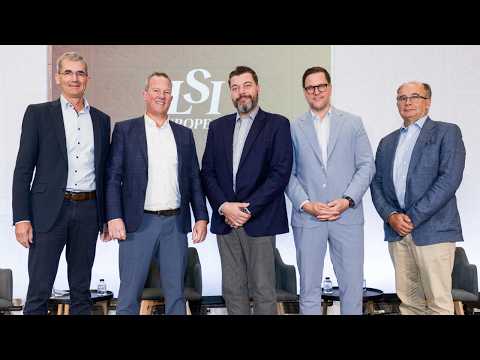
So we've been asked to give a panel on investing artificial intelligence, and we brought some real intelligence on the stage, I think, for the most part, but for the most part, Alex, but no, it's obviously a topic that's top of mind for all of us, both on the startup side and the venture side. But we're going to break the panel into kind of two general sections. The first part, we're actually going to talk about implementation of artificial intelligence within our organizations. How are we using AI? How's it changing the way that we do venture and think about things? And then the next half, we'll talk about where we're actually deploying capital and some of the nuances of investing in venture capital, and we'll open it up for questions as we go, but maybe quick introductions, Alex, start with you and just you know your firm, and you know any context you want to give relative AI Sure.
Alexander Schmitz 0:55
Good morning, everyone. I hope you all made it in without any trouble because of the transit strike. Alex Schmitz, partner at Endeavor vision. We're a growth stage investor in medical device companies in Europe and the US. I'm originally from the US, but have been over here in Europe now for the last 26 years, and look forward to the discussion today. We're not currently invested in any AI portfolio companies, per se, but we're seeing it more and more in the companies that we're working with, either in the products themselves or in the processes that are used to develop those those products. Great.
Lars Olthof 1:34
Lars, so my name is Lars Olthof. I'm an investment director at NLC health ventures. We're an Amsterdam based venture builder and early stage investor. So we really build companies from the ground up, often starting with academic IP or IP coming from corporates, build a team around it, build a company around it, and then provide the funding to hopefully make it grow. But that doesn't always work. And yeah, great to be here today, Chris.
Christoph Massner 2:00
Yeah, hi everybody. I'm Chris Massner from Earlybird venture capital. We're a Berlin based venture firm where I have a dedicated fund that is only investing in healthcare. We cover all the different sectors of healthcare. And our name is a little bit misleading because it's 27 years old. So we're not a pre seed seed fund anymore. We are investing in series A onwards when we're focused on European companies, but we also do deals on US based companies.
Dennis McWilliams 2:32
We just said one Sunday exactly, Kris.
Chris Bolten 2:36
Hi, I'm Chris Bolten. I'm an IP partner at Greenberg Traurig, which is a global law firm doing pretty much any kind of law you can imagine, corporate venture capital. We have a whole department dedicated to AI. I'm dedicated to IP. I do basically help companies in AI or med tech develop an IP strategy for investment and acquisition. Work also with venture capital firms that are looking to invest in med tech and and AI companies to do IP diligence to see, you know where the risks are from a freedom to operate standpoint, how's the patent coverage? Other IP risks been working in med tech for about 18 years. Currently represent probably 60 plus med tech companies. Most of them are companies that are like the ones that LSI, but the a good chunk of them are also commercial, some including the big, biggest strategics as well. So you know, for companies that I've worked with in the AI space. An example would be cardiologix was a France based company that was using AI to analyze electrocardiograms so signals from the heart to give cardiologists indication of abnormalities and things to help speed up their process. Started working with them from the very beginning on their IP strategy, building it up, and they got them through several investment rounds. They were eventually acquired by Philips. Another one is a company out of Belgium called philops, which had an AI based or has an AI based software for structural heart planning, so getting patient specific anatomy and getting structural heart devices like prosthetic heart valves, left atrial appendage devices, being able to simulate implantation of those devices preoperatively and find the right size the right placement to avoid complications and prolonged surgeries. They also got them through several investment rounds, and they were acquired by materialize. So I can kind of talk about helping companies build up their IP strategy for for investment and acquisition great.
Dennis McWilliams 4:53
And I'm Dennis McWilliams, managing director as Sante. We're early stage investors across Medtech, health tech and biotech. I think I was counting, we've done eight investments that are kind of core AI based technology. So we've been doing that for quite some time. You know, jury's still out on a lot of that, and we'll talk about that today. But I think we wanted to start first more around how this is impacting our daily lives as investors. I'm curious. I mean, at Sante, we have a pretty concerted internal effort to implement AI based tools to help us with our workflows. Curious panelists, you know who's who's been utilizing day your life is making your life easier. Are you sourcing companies with AI? Where can you get Lars? Maybe. Do you have some examples of, you know, how you guys are using AI at your firm? Yeah.
Lars Olthof 5:37
So it's interesting. So when I started at NLC in 2017 then, already we tried to build an algorithm to Help Scout publications back in the day, it was absolutely terrible. It sucked, because in 2017 really, your data had to be very structured for any outcome to be usable at all. And I think that's the big change we've seen over the last couple of years, is that your data input needs to be less structured, meaning that it becomes a lot more usable, very quickly. So for us, I mean, all the quick wins I think we're doing. So if you're trying to, you know, if you want to summarize the due diligence report, AI can do it for you. If you want to help with a comparable transaction analysis, you know, helping to pull together some valuations. All of that's very doable. And I think really, the next step is, how can you really get better at the deal flow, sourcing using AI? But all the quick wins, we're definitely implementing, and it's, it's working great. I think by now, we're already saying that in my team, it saves about one analyst all the work that we're automating. So it's so you're saying
Dennis McWilliams 6:41
it's already cost one job, one potential job adventure.
Lars Olthof 6:45
Honestly, I think that's tricky. You're if you're starting now the, you know, the human element is still understanding what comes out of the AI, but producing it. I think, yeah, you might see some, some job, job loss there, actually, yeah.
Dennis McWilliams 6:59
Christoph, what about you guys, yeah,
Christoph Massner 7:01
so So at early bird, we started with this, actually four years ago. So so early bird, as I said, we have a health fund. We have also a generalist fund stream, and together, we have more than 2 billion Aom, and this allow us to build a dedicated team. So we have five FTEs that are working for four years now on this platform. And we use this platform for sourcing, but it's also really our internal intelligence platform. So we we pull data from a lot of different data sources. We do entity matching, which you know so so we basically take data from from different news articles, from LinkedIn, from pitch, book, crunch, base and so on and so forth. And we put this all together so that that an analyst that we do, we still have, can look at it relatively quickly and see a lot a lot of well curated data. Then this database also is combined with our CRM system. This is where we lock deals. And we have also smart watch lists, right? Where we can start following companies. Then we see whether these companies are mentioned in any news, whether they're mentioned, say, for instance, in LinkedIn, whether they're there, still start hiring sales people, for instance, right? So this may also give you a certain indication where this company is aware and hiring R and D engineers. So, so this is what we you know, what we're building internally for for years now,
Dennis McWilliams 8:30
yeah, I mean, for us, I mean, we've hired a full time analyst, just for AI internal programs and some external as well. I mean, so, you know, for us, we're doing similar in terms of building internal agents to go. Couple years ago, you were worried about the accuracy of the data, but that's now been solved. So Alex, what about you guys? You tend to be a little bit later stage investor. So how would you compare contrast your use of AI on daily basis?
Alexander Schmitz 8:55
Yeah, so we're, I mean, we're less focused on using AI for screening and sourcing, because the universe of later stage companies is just smaller, and therefore we feel like it's well known to us, but we're leaning into it, you know, increasingly on the process side of managing deal flow. So you know, screening deals that come in, summarizing clinical reports, financial reports, looking at clinical trial protocols, histories of interactions with the FDA. There's, there's a, you know, obviously, there's a wealth of publicly available information, and then there's a whole, you know, sort of trove of internal, proprietary information that we built up over, you know, 25 years of investing and a combination of those two can yield some pretty interesting insights. I'm personally using it just for for productivity, because, you know, there's a lot of, I think all of our time is spent on doing relatively menial, low value added things. And AI is getting really, really good at automating those and make. It easier. I mean, Kris, thank you so much for the tip on superhuman, which is a for those of you that don't have it, let me send you a link. You don't know I'm sending it.
Christoph Massner 10:11
It's gonna go on my account.
Alexander Schmitz 10:13
But I mean it. I hate email, and I'm really bad at it, and so if I've failed to respond to an email from somebody, I apologize. It's not intentional. It just gets overwhelming. And I feel with with this app, it's it's making it easier to get control of the inbox. And it's just like a wonderfully liberating feeling. And I think we're going to see that more and more, I think, where it's still not, you know, really nuanced, technical questions, accounting questions don't rely on it. Legal questions don't rely on it. Tax questions don't rely on it. Use it as a starting point. But the number of times that that we've done a fairly complex query with one of the big llms, and we're like, but Wait, that doesn't sound right. What about this IRS publication, or, what about this statement of accounting standards? And it just comes back, oh, yeah, it
Dennis McWilliams 11:03
does have a bias to agree with you, right? Yeah, that's one of the challenges that so if I send if an unsolicited business plan comes into your firms, is it getting analyzed by a real human being, or is it getting analyzed by an algorithm?
Alexander Schmitz 11:16
At the moment, it's still largely human, but I think we're increasingly going to be going towards as we get more comfortable with the the sort of training and the prompting so that the likelihood of an accurate assessment, because it's like, you know, type one, type two, error, we don't want to have an AI agent pass on something that would be A potentially good investment for our fund strategy, and we don't, you know, want to invest in stuff or spend time on stuff that's clearly not a fit, and so we're still doing most of it manually, because we have our own sort of internal model that helps us figure out what, what fits for us and what, what doesn't. Sometimes it's right, sometimes strong but, but, you know, we're getting more confident that, at least for rough triaging of stuff, that it can do a really well.
Dennis McWilliams 12:08
But also, I'd be interested to get the audience feedback on this in a bit. But I mean, entrepreneurs are using this as well too, and I'm sure, you know, if I'm approaching endeavor vision, how should I, you know, design my business plan for maximum chance of getting Alex to respond. I mean, these are the types of queries that are on the other side. We're not quite in the bot versus bot world. I think just based on the industry is, I mean, but in other areas, we've already moved to that, if you think about it.
Alexander Schmitz 12:32
But in some ways, that's, I mean, I think that could be a really good thing, because the worst thing for both entrepreneurs and for investors, is spending time where there isn't a fit, like we get pitches for biotech deals that are doing phase one trials. We don't invest in biotech full stop, and that's just a waste of everybody's time. So to the extent that the algorithms can help us better match make, that's probably a good thing, but, you know, there'll be some turn
Dennis McWilliams 13:04
as we work through it. So Kris, I know, you know, a lot of folks have been using AI to help them on IP and IP strategy, kind of for first fast FTO and things like that. Like, what are some of the better practices you're seeing in terms of both on the company side and the venture side, using AI to build efficiency, and then what are some of the pitfalls they need to watch out for and using algorithms to assist?
Chris Bolten 13:25
Yeah, I mean, certainly pitfalls. One question is always with respect to the attorney client privilege. You know that a lot of these AI models are sending things to a third party service, and so if you're having a communication with your attorney and there's an AI note taker involved, or there is, you know, you have an invention, and you're, oh, draft me a patent application. Let me disclose what the invention is. You could be. The law is still out. We don't really know if there could be a waiver of the attorney client privilege. And also, you know, with respect to patent applications, another thing that can get folks in hot water is that if your own public disclosure of an invention before you file a patent application can be used against you to prevent you from getting that patent. So it usually has come up in the context of you're at a conference, and you right, you have a prototype of the invention you haven't filed on it yet, or there's a publication out there, but now there's questions coming in here, with respect to AI, of by disclosing it into this by putting it in AI software, could I be doing a public disclosure that later prevents me from filing this patent application. So you know, way law firms are at least ours, the way that we're looking at it is we've got some software that uses sandboxing to ensure that these inquiries are not going out into the public domain and being a public disclosure. So there are ways. Yes, that, I know my law firm is certainly trying to minimize any issues with respect to that. But, you know, it's the law is changing, but it's not changing as fast as the technology, which is always the case. The law always is a little slow, so there's a lot of unknown still.
Dennis McWilliams 15:16
Well, I mean, I love my Firefly as note taker, but I mean, the number of times that attorneys on board calls have yelled to shut it off, you know? I mean, it's good advice too, because, you know, we one of the benefits of, you know, happiness, where it just to have those deep, open conversations and not have to worry about documentation of it, and now that somebody is always listening it. I mean, and we haven't seen the case law, to your point, really evolve on that yet. What about on your company, on the portfolio side in terms of your company's utilization of AI. Are you guys? Do you guys offer resources to your companies, educational things, try to help them become more efficient? Are they teaching you things? What are you seeing in the portfolio side in terms of their utilization of AI? Christophe, I don't know. Yeah.
Christoph Massner 15:57
I think for us, it's, it's really, it's really a wide spread, right? We have very classical meta companies. We're very classical biotech companies in our portfolio. You know, they're there. I think we can teach them something. But my, my honest conviction, is that we should not be teaching them the stuff, right? I think, I think, you know, they're innovators. They should be on the forefront of that, right? And, you know, even though I'm, you know, I love my job, but you know what we are doing a lot is we're consuming, right? We're reading documents, we're analyzing documents, but we're, we're not the ones producing a lot of this stuff, right? So, so I think, I think the portfolio should be, should be, should be doing this. We will. And by the way, on the other side, for instance, I'm wearing a wearable here that is from one of our portfolio companies that is a a approved AI medic, AI driven medical device, all right. So, so this, this is the complete other side where the core of their product is AI driven, right? So, so these guys can teach us all quite, quite a lot, right? So, yeah, and for, you know, for, for the for the next generations of funds, what we want to really focus about is to, we want to continue investing in cutting edge technologies, but this technologies, and also the products that need to be accelerated by intelligent data platforms, right and on the science side, but also on the operation side. And that's really something that that will will come, you know, properly health care is, is always a little bit slower than other, you know, than other sectors. But you know, this, this, this wave will not stop in front of health care or med tech. So, so we want to be really set up also for for the next, you know, decades, we've taken
Dennis McWilliams 17:45
a little bit different approach with our portfolio companies, and we've tried to actively disseminate kind of best practices to them. We, when we get our CEOs together, every year, we give them a seminar that's become one of the most popular things we do in terms of just practical things, of like, how do you use chat GPT to write a press release? I mean, things like that, that just these companies are under resourced that, and that's been a pretty popular piece. And then we get things back from them as well, too. And so it's been a nice dialog as you go, because, you know, a lot of times they're just so focused on their day to day, it's hard for them to take step back, to change. So we don't judge them on that like we don't require them to do it, but we do try to expose them,
Alexander Schmitz 18:23
and they don't. I mean traditional med tech, you know, therapeutic device companies don't, don't always have that skill set knowledge, right? The things that make for a great development stage or clinical stage med tech team doesn't always overlap with people that are plugged into the latest developments in AI, and we're trying to do the same thing. And just when we see something that works, call it out to our portfolio companies. And sometimes it's just, it's nothing to do with the device itself. It's just, we think
Dennis McWilliams 18:52
about regulatory application. Regulatory application, you think about the other side. The FDA just announced, you know that they, you know, AI, you know, FDA has now an AI agent to review applications and disseminate clinical data. So, I mean, again, back to the bot versus bot. I mean, I don't think we're that far from things like clinical protocols and regulatory filings will be, you know, 90% AI, you know, generated and AI read Lars. What about your portfolio? You guys are working and you're doing this venture building. So what are you seeing them use that are good practices? Yeah.
Lars Olthof 19:22
So what we're seeing is, most of our portfolio companies, when they start, it's a, it's a one or a two van show. So you need to be scrappy, and that's where AI can really help out, also, with all the quick wins that I talked about in the beginning. You know, as an early stage company, you need to have an online presence as well. You need to be active on social media. I need to, sometimes, you know, inflate your your size a little bit. So what's the way to do it? Yeah, use AI to churn out LinkedIn posts on a regular basis. Use, you know, vibe coding to make a website that looks like you've just raised your 20 million series A even though you're still your pre seed level. I think those kind of things can really work. Work. And we're seeing all of our portfolio companies doing that more and more. And it's also there. It's a productivity hack. And if there's anything you don't have enough of in the early stages, it's it's time, yeah, so it really works.
Dennis McWilliams 20:12
All right, let's pivot over now. Let's talk about not utilization of it, but actually investing in artificial hubs from a fund perspective. I thought was interested. Alex, you said you guys have not done an AI specific deal yet. And Kristoff, you know, Lars and Sante, we've done a few. And, I mean, we've not exited one yet, so I think jury's still out on that, but maybe Kris, I'll start with you like, you know, for from your investment thesis perspective, how did those investments come about? Were you actively thinking about how AI is going to transform medical devices and diagnostics. And you found it, or, you know, you were, you were approached on this opportunistically. How did your firm start getting involved with that?
Christoph Massner 20:53
I think you just said it correctly evolved, right? So, so at first it came to us almost naturally, right? So, so they were so, so the innovators came to us and, and they just showed us products that we that we thought this, this connection not work, right? You know, this doesn't make sense, right? How can you? How can you, how can you measure blood pressure only in light based sensor on your wrist, right? Well, turns out you can do it, right. So, and, or, how can you measure, you know, heart flow just went public, right? So everybody knows a heartfelt right? How can you measure FFR based on an image? Well, turns out you can, right? So, so, and, I think this took a while in our team to realize, all right, so, so these new technologies, they can deliver something that has true value in the medical community. So we're not trying to push a technology somewhere into into market. It doesn't exist, right? This is a problem, and this problem can be solved very elegantly, sometimes by by AI. And now we are at a stage where we are we actively looking for this? Because we believe that the acceleration that we have seen in the capabilities of AI that just happened, you know, we all forget chat GPT was actually launched three years ago, right before that, it just wasn't there right at least not for the public. And the acceleration and the potential that this has is probably something that at least I cannot fathom right now, but I want to be part of it, right? And as we're investing in very long term, right, we're investing on the horizon of five to 10 years, I think we need to invest in the right teams who can then use also the technological advance, advancements that that will happen that's without a question, that can use that to make better products, right? And this is why we are. We're actively looking for these kind of companies, yeah, and teams, by the way, teams, right? This is really, it's always a different mindset. Think we need to go a little bit away from the safe hands approach that we have in med tech and also that we have in in biotech, and look into teams that are literate as as maybe bench scientists, right, as engineers, but also really literate in data science and data engineering, so that we can harvest this, you know, this potential. Well, the
Dennis McWilliams 23:14
convergence is amazing. I mean, we're seeing that exactly for us, you know, investing in health tech, biotech and Medtech, you're seeing kind of across all categories, which is a lot of fun. Yes, yeah. Lars, as you guys are developing new things. I mean, what's, you know, these things are fairly low capital requirements to get in sometimes. I mean, how are you guys thinking about and approaching it?
Lars Olthof 23:35
Yeah, so it really depends for us. So again, taking the early stage angle, right as an investor, often you're looking to a company, okay, if I add extra fuel, can I rev this engine? But for us, we're really looking, Can I at least, you know, spark it so that the engine gets running a little bit so commercial traction, which we know is often very tricky in this space. If you're looking more into the digital health space, by default, there's none. So, so what do you look at? And for us, the main thing is, one, you know, what's the access to data that you have, especially in a clinical space, that's often your only real asset in the beginning? And the second thing is, how does it fit into the workflow? Because, as we're saying, you know, we invest often 10 years out on the development side, a lot of things can still change, but your proposition needs to fit within the workflow very well, because it's very hard to convince a physician to change the way of working. So you need to be either a good disruptor or really fit in properly. And to give you an example, I actually see he's in the room Marc, one of our portfolio companies, angiogenesis analytics. They're using AI to help diagnose prostate cancer, rather than using MRI or now utilizing ultrasound, as you were saying, you know, a couple years ago, just technically, how is this possible? And they're seeing with the advancements in AI Now, technically, it is becoming possible. But the key thing is, how does it fit within the workflow? And that's really what we're trying to assess in the. Early stages, and then, yeah, the tech usually comes, only comes after,
Dennis McWilliams 25:05
Alex, you said you haven't. But is that because you live through the.com bubble burst like I did in the late 90s?
Alexander Schmitz 25:11
Not at all, although that those memories still still, still haunt me. But no, it so. And when I say we haven't invested in AI, I mean, we haven't invested in something where you would look at it and say, this is an AI investment, but we invested in a company that does automated microbial quality control for pharma manufacturing. So a tools play, they use AI and machine vision to detect contaminants and bio burden in pharma facilities days before the traditional manual process would be able to detect it. So a little bit like, you know, early stage prostate cancer detection, right? The this degree of change and the patterns that computer vision, plus algorithms, ml, you know, AI, whatever, whatever the you know, the sort of abbreviation is, it just can do certain things better than human beings can do with greater precision, faster, cheaper, better. And so we have invested in AI, but it's embedded in the right knowledge, right? We haven't done sort of an AI first, and we've looked at and gotten close, including to now hi lo but formerly actea, the blood pressure monitor, a number of kind of AI forward companies, you know, CathWorks, hartflow, elucid, cerebel, I could name a whole bunch of other companies where, you know, it's very much AI driven, although, I mean, I would say, like, something like 70% of FDA cleared AI products are diagnostic and mostly in radiology and imaging, because that's the most obvious and easiest place to start. I think we'll probably do more as it gets into therapeutic devices. So targeting for robotic surgery, you know, hybrid interventions, custom implants, those sorts of things. I think that's probably more where we're likely to play versus, you know, pure AI software only because there's a whole bunch of investors that probably know how to do that much better than we do well.
Dennis McWilliams 27:13
I mean, that's how we ended up in some way. I mean, for me, the pathway some of our AI deals was we were looking a lot of the medical robotics and surgical robotics. And you know the capital profile and the capital requirements are, you know, hundreds of millions of dollars, which is going to be on what Sante could do, surgical. What are the implications of a robot eyes, surgical or and you know, your first like, well, wow, there's now unprecedented access to data and unprecedented access to be able to automate in the future. So we started looking kind of down the road there. We'll see how that goes.
Alexander Schmitz 27:42
But, but at the same time, I mean, the funny thing for me is that that a bunch of money is pouring into, basically healthcare, it AI enabled. So a company called pre doc just raised $30 million they're helping the 1000s of, you know, general practices, and, you know, general physician practices in the US get off of fax machines like I kid you not. In 2025 fax machines still play in the US, at least an important role in healthcare delivery. And so there's this weird kind of Tale of Two Cities. On the one hand, the people that are really deep into AI research, are genuinely and profoundly concerned about generalized artificial intelligence and what that might mean for all of us, which they generally agree is not good. And then, and then fax machines like this, the scope of how it's being rolled out, and the sort of the asymmetries at the pace of adoption it'll
Dennis McWilliams 28:41
have athlete care. I mean, a lot of a lot of that, we're just so rigid and ancient the things that we do so Kris, one of the things I know, from an investment standpoint, we've struggled with, as we've looked at AI first companies, is really what your what's your moat? I mean, we, you know, in med tech, we're typically relying upon a patent or something along those lines, but when you get an AI one, it's very hard to think about building defensible technical positions. So what advice do you give? I mean, what is patentable in some of these algorithm things, and how do you guys advise your clients?
Chris Bolten 29:12
Yeah, I mean, so with respect to AI versus med tech, I think there's a lot more similarities than one might initially think in that with Medtech, you know, you need to get patents. You need to have strong patents, a good patent strategy, AI, I mean, you should get patents as well. If you're an AI company, developing new algorithms, new training models. You've got new inputs, developing new outputs. You should get patents on that. That is patentable subject matter, certainly in the US, but I've gotten AI software patents in all the major jurisdictions in the world. And so, you know, I think that there's a dual approach that we see a lot of companies doing that, that we recommend is you're a little more. Reliant, I'd say, on trade secrets with AI, then, then, I mean med tech. It depends where you are specifically, but in AI, certainly you've got a ton of your own data, annotated data that is the company's trade secret that's going to be important, the company's source code, that the models that they're using that are hard to reverse engineer. Those things are all great trade secrets that are going to provide value to the company. But I also think having a good patent strategy to complement that is where we see the most value, and what we see with the venture firms and the strategics liking the most, because relying on trade secrets alone sometimes has its risks. If you're looking at Silicon Valley right now and all of the AI engineers moving from company to company moving around. I mean, there's this major transition of employment from place to place that have a bunch of trade secrets, you know, hopefully they're
Dennis McWilliams 31:05
it's easier there. It's easier to buy an employee than it is to buy the company, yeah, which I think is concerning for us in, you know, and like, you know, when, when one of our companies gets acquired, to some extent, they're buying the intellectual property, that's the title to the house. And it's hard to really think about what the title is to some of these software companies as they go, we struggle with that. Yeah, yeah.
Alexander Schmitz 31:25
I don't know. When you see the pay packages that the pure play AI companies are throwing around to hire talent that drives well, we
Dennis McWilliams 31:31
wonder why we're in venture that particular point. The Lars, how do you guys think? What do you guys you these companies are starting really early. What are you counseling them in terms or what are you looking for in terms of technological moats
Lars Olthof 31:44
as very similar to what you're saying, we do see a lot of companies with patents. There is a lot that you can protect, but the big thing is your again, as I said in the beginning, your big mode is your data. What is actually the data that you have? How can you expand on it? What are the partnerships you can forge with, you know, hospital groups in order to expand your data set. To us, that's really the defensibility. Because I agree, if you are, you know, if you're just relying on the trade secret of, you know, the secret sauce that an engineer, an AI engineer, is adding to it, they can be bought away. So the big defensibility is data. And then the second thing eventually becomes a speed to market, right? What's your commercial success? Eventually, if you start entering into these hospitals, which is not an easy thing to do, then also there you create a moat. But it's the due diligence is very different than on the, you know, the typical Medtech or biotech deals that we look at, yeah, you need to, you need to make a judgment call there. But again, data is the biggest mode. We we look at.
Dennis McWilliams 32:43
Yeah, I think for us that, you know, data has been an important one. Some IP and then, you know, I would say more so than we do, even on the Medtech side, pure Medtech, as we think about the teams and their ability to integrate and stay ahead, like, I think, yeah, we're a surgical safety technologies company. We're in, you know, they have a solid IP based but like, their real win has been the ability just to stay ahead of innovation their product. They're launching something every two weeks. And I think, you know, we're having to look at things like that, which would then get trickier. You think about M A because it's like, you know, that's the whole point that you're in a startup. Is that big companies traditionally can't innovate that quickly, so I don't know. I think the market, you know, the the data is still out as to whether, you know the M A markets are going to be as robust for this or not, still waiting for some of that. But something you said, just in terms of, I mean, I have this feeling too, is like, if you can imagine it, you can make it work these days, I'm very seldom surprised anymore when somebody walks in technologically, you know, you think you're like, ICG, right? You know, like, the number of companies out that can just, you know, analyze with some type of signal and garner insights on that. It really is exciting. I mean, what are some of the areas you're most excited about, from an innovation standpoint, either things that you're looking at now or expect to see in the future?
Christoph Massner 34:03
You know, that's the typical question that you always ask a venture capitalist, right? And then, and then, usually, you realize that we are, they're very, again, more more reactive than we want to be, because, because you know
Dennis McWilliams 34:15
the you know you're wearing it on your on your wrist. It's literally adapter,
Christoph Massner 34:20
yeah, but I didn't tell you since when I know the company? No, but, but I think, I think, in general, what is, what is super exciting, is, is, actually, is really advanced analytics, I think, I think, and this is something, and the question is whether this is really the product or not, or this is a means to developing better products and faster products. And what really excites me personally is that I truly believe that we can again now come back to building large or very successful companies on venture timelines, right? And this is some. Thing that that, you know, it's, I know, I'm not directly answering your question, but, but I think, I think this is something that that we see now, is that we can have companies that can tap into more value creation. You don't have, you know, one shot and a goal in biotech, right? And it's not, it's not necessarily only a a binary outcome, yeah, because if you have an underlying platform on it, if you, if you're gathering while you're in the clinics, if you're gathering more digital biomarkers, for instance, you just gathering more data. You You see maybe safety issues earlier than your than you would have seen if you're if you're doing it the classical way, and combining this so you basically, you have an operational layer, where very small, incremental in, you know, advanced advancements, they basically compile the compound, right? And this may be the difference between you needing to raise a bridge, or you're hitting your milestone, right, and you're you're raising a next, the next round, or you that may be the difference between you needing 50 million, or you only need 40 million, or you can do way more with 50 million, right? So I think so for me, you know, again, I think the innovators are out there, but this is something that excites me so much that we'll see way better products. And I still believe that a product in general can be a medical device, right? This is a device, right? This is something I am this is a physical thing, right, but it's completely powered by AI, right? A drug is still a product. We still, I'm still convinced that we will need, you know, to inject something in your veins, or you need to swallow a pill. But how you get there, in the speed you're getting there, and then the value that you can create. I think in the next 10 years, it's going
Dennis McWilliams 36:42
to be amazing. Well, I mean, I know many of these LSI meetings, we've been lamenting the past few years, the death of the early stage Medtech ecosystem, where the severe challenges of it, I mean, we've all felt that as early stage investors. I mean, cramming evaluations hard to access capital, all that, and I think that's a very helpful way to think about it, is that it could kind of re restore, you know, capital efficiencies. That's something that went out out the window in 2020, 20 for new one, and now everyone's capital is, it's cool to be capital efficient again. But, you know, maybe we can really do that on different scale.
Alexander Schmitz 37:10
And I think that's, I mean, for for med tech particularly, I think that's a real, real positive development potential. Because when you look at venture broadly, the big money in venture capital is made in pure Tech because it scales so big, so fast, and serves these massive markets, med tech and pharma somewhere in the middle, and med tech, we're serving, relatively speaking, smaller markets. Yet we have long development cycles, long clean reg cycles, long reimbursement cycles, long commercial without the biotech, without the biotech. And so I think that, and this has been one of my kind of laments for for as long as I've been in med tech, is if we can get better at compressing the time or the cash required to do the necessary steps to bring a product to market that's going to, over time, result in better returns, more capital flowing in, in the fly will it starts turning and you know, whether it's drafting clinical protocols, responding to the FDA, following up with patients, you know, all these things that just take time in the traditional kind of paper, You know, CRF based world that are now getting automated and digitized, that's going to compress, and I think that unlocks potentially a lot of value.
Dennis McWilliams 38:27
It could and it could allow, I mean, it's interesting. I mean, again, it's just the past four or five of these meetings. It's been, you know, it's been a really challenging environment for everyone in med tech. And I think those of us have been in Medtech for a long time. It's always been kind of challenging. But I think what's exciting right now, I mean, having look at some of these other segments, you'd much rather be in med tech now than biotech. And when was the last time you said that? Right? I mean, I can tell you when 2003 2004 was really the last time that you wanted and you know, we've had better IPOs this year. We've had better MNA and med tech. And I think we have these efficiency plays that are coming in that are really, you know, you know, we're getting asked by limited partners about our Medtech exposure, which is before no one wanted to talk about it. So I think that's, that's an exciting development, and maybe that's our time. Maybe that's a great, positive way to stop maybe one or two questions from the audience, if there's, if there's anything? Yeah, Lisa
Audience Question 39:24
2026 is it going to be a better time to be admit,
Dennis McWilliams 39:30
I believe, yes, yeah. I mean, I don't know how you guys feel. I think biotech has, there's still a lot of churn left in biotech to have to work through. I think so. Yeah.
Alexander Schmitz 39:42
I mean, we're we're optimistic. I mean, the last couple of years have been tough because not only on the company raising side, but the fundraising side and the environments been really difficult. That's got a lot to do with upstream macroeconomic issues and the successful IPOs. We've seen so far in 25 and there's a pipeline of promising potential IPO companies throughout the rest of this year and in the next year that that starts to get the machine moving again and and that's generally, you know, good for for med tech, you know, over the medium term. But there's also a lot of uncertainty in the world right now, so we'll see how that shakes
Dennis McWilliams 40:21
that or Lars, are you guys bullish?
Lars Olthof 40:23
Yeah, I fully agree what you're saying. The fact that the IPO window slowly seems to be opening again, at least as a credible alternative to trade sale, really opens up the Medtech market more. And I think the liquidity constraints at the top on the LP level, that's going down to the funds, and that's effectively then also affecting the portfolio companies. I think I really see potential for change there. So, yeah, we're bullish.
Christoph Massner 40:48
Christo, we are always optimistic. That's our job. No, I mean job side. I think, I think it's you know, I would say to your question, as long as it's, you know, as as long as you're you're using the state of the art technology, and is also data technology in there. I think it's an, it's an amazing place to me.
Dennis McWilliams 41:10
Kris, any final words?
Chris Bolten 41:13
I mean, I hope so. I think the first few months of 2025 were some of the busiest and most optimistic that I had seen in years. And then global things happened, and it kind of changed. So I hope we get back to that and have a great 2026 which was coming
Alexander Schmitz 41:31
from an IP attorney. I think is unbridled optimist.
Dennis McWilliams 41:36
I think that's a great place to stop. Thanks everybody for the panel. It's great conversation, and thanks for attend.
Dennis McWilliams 0:06
So we've been asked to give a panel on investing artificial intelligence, and we brought some real intelligence on the stage, I think, for the most part, but for the most part, Alex, but no, it's obviously a topic that's top of mind for all of us, both on the startup side and the venture side. But we're going to break the panel into kind of two general sections. The first part, we're actually going to talk about implementation of artificial intelligence within our organizations. How are we using AI? How's it changing the way that we do venture and think about things? And then the next half, we'll talk about where we're actually deploying capital and some of the nuances of investing in venture capital, and we'll open it up for questions as we go, but maybe quick introductions, Alex, start with you and just you know your firm, and you know any context you want to give relative AI Sure.
Alexander Schmitz 0:55
Good morning, everyone. I hope you all made it in without any trouble because of the transit strike. Alex Schmitz, partner at Endeavor vision. We're a growth stage investor in medical device companies in Europe and the US. I'm originally from the US, but have been over here in Europe now for the last 26 years, and look forward to the discussion today. We're not currently invested in any AI portfolio companies, per se, but we're seeing it more and more in the companies that we're working with, either in the products themselves or in the processes that are used to develop those those products. Great.
Lars Olthof 1:34
Lars, so my name is Lars Olthof. I'm an investment director at NLC health ventures. We're an Amsterdam based venture builder and early stage investor. So we really build companies from the ground up, often starting with academic IP or IP coming from corporates, build a team around it, build a company around it, and then provide the funding to hopefully make it grow. But that doesn't always work. And yeah, great to be here today, Chris.
Christoph Massner 2:00
Yeah, hi everybody. I'm Chris Massner from Earlybird venture capital. We're a Berlin based venture firm where I have a dedicated fund that is only investing in healthcare. We cover all the different sectors of healthcare. And our name is a little bit misleading because it's 27 years old. So we're not a pre seed seed fund anymore. We are investing in series A onwards when we're focused on European companies, but we also do deals on US based companies.
Dennis McWilliams 2:32
We just said one Sunday exactly, Kris.
Chris Bolten 2:36
Hi, I'm Chris Bolten. I'm an IP partner at Greenberg Traurig, which is a global law firm doing pretty much any kind of law you can imagine, corporate venture capital. We have a whole department dedicated to AI. I'm dedicated to IP. I do basically help companies in AI or med tech develop an IP strategy for investment and acquisition. Work also with venture capital firms that are looking to invest in med tech and and AI companies to do IP diligence to see, you know where the risks are from a freedom to operate standpoint, how's the patent coverage? Other IP risks been working in med tech for about 18 years. Currently represent probably 60 plus med tech companies. Most of them are companies that are like the ones that LSI, but the a good chunk of them are also commercial, some including the big, biggest strategics as well. So you know, for companies that I've worked with in the AI space. An example would be cardiologix was a France based company that was using AI to analyze electrocardiograms so signals from the heart to give cardiologists indication of abnormalities and things to help speed up their process. Started working with them from the very beginning on their IP strategy, building it up, and they got them through several investment rounds. They were eventually acquired by Philips. Another one is a company out of Belgium called philops, which had an AI based or has an AI based software for structural heart planning, so getting patient specific anatomy and getting structural heart devices like prosthetic heart valves, left atrial appendage devices, being able to simulate implantation of those devices preoperatively and find the right size the right placement to avoid complications and prolonged surgeries. They also got them through several investment rounds, and they were acquired by materialize. So I can kind of talk about helping companies build up their IP strategy for for investment and acquisition great.
Dennis McWilliams 4:53
And I'm Dennis McWilliams, managing director as Sante. We're early stage investors across Medtech, health tech and biotech. I think I was counting, we've done eight investments that are kind of core AI based technology. So we've been doing that for quite some time. You know, jury's still out on a lot of that, and we'll talk about that today. But I think we wanted to start first more around how this is impacting our daily lives as investors. I'm curious. I mean, at Sante, we have a pretty concerted internal effort to implement AI based tools to help us with our workflows. Curious panelists, you know who's who's been utilizing day your life is making your life easier. Are you sourcing companies with AI? Where can you get Lars? Maybe. Do you have some examples of, you know, how you guys are using AI at your firm? Yeah.
Lars Olthof 5:37
So it's interesting. So when I started at NLC in 2017 then, already we tried to build an algorithm to Help Scout publications back in the day, it was absolutely terrible. It sucked, because in 2017 really, your data had to be very structured for any outcome to be usable at all. And I think that's the big change we've seen over the last couple of years, is that your data input needs to be less structured, meaning that it becomes a lot more usable, very quickly. So for us, I mean, all the quick wins I think we're doing. So if you're trying to, you know, if you want to summarize the due diligence report, AI can do it for you. If you want to help with a comparable transaction analysis, you know, helping to pull together some valuations. All of that's very doable. And I think really, the next step is, how can you really get better at the deal flow, sourcing using AI? But all the quick wins, we're definitely implementing, and it's, it's working great. I think by now, we're already saying that in my team, it saves about one analyst all the work that we're automating. So it's so you're saying
Dennis McWilliams 6:41
it's already cost one job, one potential job adventure.
Lars Olthof 6:45
Honestly, I think that's tricky. You're if you're starting now the, you know, the human element is still understanding what comes out of the AI, but producing it. I think, yeah, you might see some, some job, job loss there, actually, yeah.
Dennis McWilliams 6:59
Christoph, what about you guys, yeah,
Christoph Massner 7:01
so So at early bird, we started with this, actually four years ago. So so early bird, as I said, we have a health fund. We have also a generalist fund stream, and together, we have more than 2 billion Aom, and this allow us to build a dedicated team. So we have five FTEs that are working for four years now on this platform. And we use this platform for sourcing, but it's also really our internal intelligence platform. So we we pull data from a lot of different data sources. We do entity matching, which you know so so we basically take data from from different news articles, from LinkedIn, from pitch, book, crunch, base and so on and so forth. And we put this all together so that that an analyst that we do, we still have, can look at it relatively quickly and see a lot a lot of well curated data. Then this database also is combined with our CRM system. This is where we lock deals. And we have also smart watch lists, right? Where we can start following companies. Then we see whether these companies are mentioned in any news, whether they're mentioned, say, for instance, in LinkedIn, whether they're there, still start hiring sales people, for instance, right? So this may also give you a certain indication where this company is aware and hiring R and D engineers. So, so this is what we you know, what we're building internally for for years now,
Dennis McWilliams 8:30
yeah, I mean, for us, I mean, we've hired a full time analyst, just for AI internal programs and some external as well. I mean, so, you know, for us, we're doing similar in terms of building internal agents to go. Couple years ago, you were worried about the accuracy of the data, but that's now been solved. So Alex, what about you guys? You tend to be a little bit later stage investor. So how would you compare contrast your use of AI on daily basis?
Alexander Schmitz 8:55
Yeah, so we're, I mean, we're less focused on using AI for screening and sourcing, because the universe of later stage companies is just smaller, and therefore we feel like it's well known to us, but we're leaning into it, you know, increasingly on the process side of managing deal flow. So you know, screening deals that come in, summarizing clinical reports, financial reports, looking at clinical trial protocols, histories of interactions with the FDA. There's, there's a, you know, obviously, there's a wealth of publicly available information, and then there's a whole, you know, sort of trove of internal, proprietary information that we built up over, you know, 25 years of investing and a combination of those two can yield some pretty interesting insights. I'm personally using it just for for productivity, because, you know, there's a lot of, I think all of our time is spent on doing relatively menial, low value added things. And AI is getting really, really good at automating those and make. It easier. I mean, Kris, thank you so much for the tip on superhuman, which is a for those of you that don't have it, let me send you a link. You don't know I'm sending it.
Christoph Massner 10:11
It's gonna go on my account.
Alexander Schmitz 10:13
But I mean it. I hate email, and I'm really bad at it, and so if I've failed to respond to an email from somebody, I apologize. It's not intentional. It just gets overwhelming. And I feel with with this app, it's it's making it easier to get control of the inbox. And it's just like a wonderfully liberating feeling. And I think we're going to see that more and more, I think, where it's still not, you know, really nuanced, technical questions, accounting questions don't rely on it. Legal questions don't rely on it. Tax questions don't rely on it. Use it as a starting point. But the number of times that that we've done a fairly complex query with one of the big llms, and we're like, but Wait, that doesn't sound right. What about this IRS publication, or, what about this statement of accounting standards? And it just comes back, oh, yeah, it
Dennis McWilliams 11:03
does have a bias to agree with you, right? Yeah, that's one of the challenges that so if I send if an unsolicited business plan comes into your firms, is it getting analyzed by a real human being, or is it getting analyzed by an algorithm?
Alexander Schmitz 11:16
At the moment, it's still largely human, but I think we're increasingly going to be going towards as we get more comfortable with the the sort of training and the prompting so that the likelihood of an accurate assessment, because it's like, you know, type one, type two, error, we don't want to have an AI agent pass on something that would be A potentially good investment for our fund strategy, and we don't, you know, want to invest in stuff or spend time on stuff that's clearly not a fit, and so we're still doing most of it manually, because we have our own sort of internal model that helps us figure out what, what fits for us and what, what doesn't. Sometimes it's right, sometimes strong but, but, you know, we're getting more confident that, at least for rough triaging of stuff, that it can do a really well.
Dennis McWilliams 12:08
But also, I'd be interested to get the audience feedback on this in a bit. But I mean, entrepreneurs are using this as well too, and I'm sure, you know, if I'm approaching endeavor vision, how should I, you know, design my business plan for maximum chance of getting Alex to respond. I mean, these are the types of queries that are on the other side. We're not quite in the bot versus bot world. I think just based on the industry is, I mean, but in other areas, we've already moved to that, if you think about it.
Alexander Schmitz 12:32
But in some ways, that's, I mean, I think that could be a really good thing, because the worst thing for both entrepreneurs and for investors, is spending time where there isn't a fit, like we get pitches for biotech deals that are doing phase one trials. We don't invest in biotech full stop, and that's just a waste of everybody's time. So to the extent that the algorithms can help us better match make, that's probably a good thing, but, you know, there'll be some turn
Dennis McWilliams 13:04
as we work through it. So Kris, I know, you know, a lot of folks have been using AI to help them on IP and IP strategy, kind of for first fast FTO and things like that. Like, what are some of the better practices you're seeing in terms of both on the company side and the venture side, using AI to build efficiency, and then what are some of the pitfalls they need to watch out for and using algorithms to assist?
Chris Bolten 13:25
Yeah, I mean, certainly pitfalls. One question is always with respect to the attorney client privilege. You know that a lot of these AI models are sending things to a third party service, and so if you're having a communication with your attorney and there's an AI note taker involved, or there is, you know, you have an invention, and you're, oh, draft me a patent application. Let me disclose what the invention is. You could be. The law is still out. We don't really know if there could be a waiver of the attorney client privilege. And also, you know, with respect to patent applications, another thing that can get folks in hot water is that if your own public disclosure of an invention before you file a patent application can be used against you to prevent you from getting that patent. So it usually has come up in the context of you're at a conference, and you right, you have a prototype of the invention you haven't filed on it yet, or there's a publication out there, but now there's questions coming in here, with respect to AI, of by disclosing it into this by putting it in AI software, could I be doing a public disclosure that later prevents me from filing this patent application. So you know, way law firms are at least ours, the way that we're looking at it is we've got some software that uses sandboxing to ensure that these inquiries are not going out into the public domain and being a public disclosure. So there are ways. Yes, that, I know my law firm is certainly trying to minimize any issues with respect to that. But, you know, it's the law is changing, but it's not changing as fast as the technology, which is always the case. The law always is a little slow, so there's a lot of unknown still.
Dennis McWilliams 15:16
Well, I mean, I love my Firefly as note taker, but I mean, the number of times that attorneys on board calls have yelled to shut it off, you know? I mean, it's good advice too, because, you know, we one of the benefits of, you know, happiness, where it just to have those deep, open conversations and not have to worry about documentation of it, and now that somebody is always listening it. I mean, and we haven't seen the case law, to your point, really evolve on that yet. What about on your company, on the portfolio side in terms of your company's utilization of AI. Are you guys? Do you guys offer resources to your companies, educational things, try to help them become more efficient? Are they teaching you things? What are you seeing in the portfolio side in terms of their utilization of AI? Christophe, I don't know. Yeah.
Christoph Massner 15:57
I think for us, it's, it's really, it's really a wide spread, right? We have very classical meta companies. We're very classical biotech companies in our portfolio. You know, they're there. I think we can teach them something. But my, my honest conviction, is that we should not be teaching them the stuff, right? I think, I think, you know, they're innovators. They should be on the forefront of that, right? And, you know, even though I'm, you know, I love my job, but you know what we are doing a lot is we're consuming, right? We're reading documents, we're analyzing documents, but we're, we're not the ones producing a lot of this stuff, right? So, so I think, I think the portfolio should be, should be, should be doing this. We will. And by the way, on the other side, for instance, I'm wearing a wearable here that is from one of our portfolio companies that is a a approved AI medic, AI driven medical device, all right. So, so this, this is the complete other side where the core of their product is AI driven, right? So, so these guys can teach us all quite, quite a lot, right? So, yeah, and for, you know, for, for the for the next generations of funds, what we want to really focus about is to, we want to continue investing in cutting edge technologies, but this technologies, and also the products that need to be accelerated by intelligent data platforms, right and on the science side, but also on the operation side. And that's really something that that will will come, you know, properly health care is, is always a little bit slower than other, you know, than other sectors. But you know, this, this, this wave will not stop in front of health care or med tech. So, so we want to be really set up also for for the next, you know, decades, we've taken
Dennis McWilliams 17:45
a little bit different approach with our portfolio companies, and we've tried to actively disseminate kind of best practices to them. We, when we get our CEOs together, every year, we give them a seminar that's become one of the most popular things we do in terms of just practical things, of like, how do you use chat GPT to write a press release? I mean, things like that, that just these companies are under resourced that, and that's been a pretty popular piece. And then we get things back from them as well, too. And so it's been a nice dialog as you go, because, you know, a lot of times they're just so focused on their day to day, it's hard for them to take step back, to change. So we don't judge them on that like we don't require them to do it, but we do try to expose them,
Alexander Schmitz 18:23
and they don't. I mean traditional med tech, you know, therapeutic device companies don't, don't always have that skill set knowledge, right? The things that make for a great development stage or clinical stage med tech team doesn't always overlap with people that are plugged into the latest developments in AI, and we're trying to do the same thing. And just when we see something that works, call it out to our portfolio companies. And sometimes it's just, it's nothing to do with the device itself. It's just, we think
Dennis McWilliams 18:52
about regulatory application. Regulatory application, you think about the other side. The FDA just announced, you know that they, you know, AI, you know, FDA has now an AI agent to review applications and disseminate clinical data. So, I mean, again, back to the bot versus bot. I mean, I don't think we're that far from things like clinical protocols and regulatory filings will be, you know, 90% AI, you know, generated and AI read Lars. What about your portfolio? You guys are working and you're doing this venture building. So what are you seeing them use that are good practices? Yeah.
Lars Olthof 19:22
So what we're seeing is, most of our portfolio companies, when they start, it's a, it's a one or a two van show. So you need to be scrappy, and that's where AI can really help out, also, with all the quick wins that I talked about in the beginning. You know, as an early stage company, you need to have an online presence as well. You need to be active on social media. I need to, sometimes, you know, inflate your your size a little bit. So what's the way to do it? Yeah, use AI to churn out LinkedIn posts on a regular basis. Use, you know, vibe coding to make a website that looks like you've just raised your 20 million series A even though you're still your pre seed level. I think those kind of things can really work. Work. And we're seeing all of our portfolio companies doing that more and more. And it's also there. It's a productivity hack. And if there's anything you don't have enough of in the early stages, it's it's time, yeah, so it really works.
Dennis McWilliams 20:12
All right, let's pivot over now. Let's talk about not utilization of it, but actually investing in artificial hubs from a fund perspective. I thought was interested. Alex, you said you guys have not done an AI specific deal yet. And Kristoff, you know, Lars and Sante, we've done a few. And, I mean, we've not exited one yet, so I think jury's still out on that, but maybe Kris, I'll start with you like, you know, for from your investment thesis perspective, how did those investments come about? Were you actively thinking about how AI is going to transform medical devices and diagnostics. And you found it, or, you know, you were, you were approached on this opportunistically. How did your firm start getting involved with that?
Christoph Massner 20:53
I think you just said it correctly evolved, right? So, so at first it came to us almost naturally, right? So, so they were so, so the innovators came to us and, and they just showed us products that we that we thought this, this connection not work, right? You know, this doesn't make sense, right? How can you? How can you, how can you measure blood pressure only in light based sensor on your wrist, right? Well, turns out you can do it, right. So, and, or, how can you measure, you know, heart flow just went public, right? So everybody knows a heartfelt right? How can you measure FFR based on an image? Well, turns out you can, right? So, so, and, I think this took a while in our team to realize, all right, so, so these new technologies, they can deliver something that has true value in the medical community. So we're not trying to push a technology somewhere into into market. It doesn't exist, right? This is a problem, and this problem can be solved very elegantly, sometimes by by AI. And now we are at a stage where we are we actively looking for this? Because we believe that the acceleration that we have seen in the capabilities of AI that just happened, you know, we all forget chat GPT was actually launched three years ago, right before that, it just wasn't there right at least not for the public. And the acceleration and the potential that this has is probably something that at least I cannot fathom right now, but I want to be part of it, right? And as we're investing in very long term, right, we're investing on the horizon of five to 10 years, I think we need to invest in the right teams who can then use also the technological advance, advancements that that will happen that's without a question, that can use that to make better products, right? And this is why we are. We're actively looking for these kind of companies, yeah, and teams, by the way, teams, right? This is really, it's always a different mindset. Think we need to go a little bit away from the safe hands approach that we have in med tech and also that we have in in biotech, and look into teams that are literate as as maybe bench scientists, right, as engineers, but also really literate in data science and data engineering, so that we can harvest this, you know, this potential. Well, the
Dennis McWilliams 23:14
convergence is amazing. I mean, we're seeing that exactly for us, you know, investing in health tech, biotech and Medtech, you're seeing kind of across all categories, which is a lot of fun. Yes, yeah. Lars, as you guys are developing new things. I mean, what's, you know, these things are fairly low capital requirements to get in sometimes. I mean, how are you guys thinking about and approaching it?
Lars Olthof 23:35
Yeah, so it really depends for us. So again, taking the early stage angle, right as an investor, often you're looking to a company, okay, if I add extra fuel, can I rev this engine? But for us, we're really looking, Can I at least, you know, spark it so that the engine gets running a little bit so commercial traction, which we know is often very tricky in this space. If you're looking more into the digital health space, by default, there's none. So, so what do you look at? And for us, the main thing is, one, you know, what's the access to data that you have, especially in a clinical space, that's often your only real asset in the beginning? And the second thing is, how does it fit into the workflow? Because, as we're saying, you know, we invest often 10 years out on the development side, a lot of things can still change, but your proposition needs to fit within the workflow very well, because it's very hard to convince a physician to change the way of working. So you need to be either a good disruptor or really fit in properly. And to give you an example, I actually see he's in the room Marc, one of our portfolio companies, angiogenesis analytics. They're using AI to help diagnose prostate cancer, rather than using MRI or now utilizing ultrasound, as you were saying, you know, a couple years ago, just technically, how is this possible? And they're seeing with the advancements in AI Now, technically, it is becoming possible. But the key thing is, how does it fit within the workflow? And that's really what we're trying to assess in the. Early stages, and then, yeah, the tech usually comes, only comes after,
Dennis McWilliams 25:05
Alex, you said you haven't. But is that because you live through the.com bubble burst like I did in the late 90s?
Alexander Schmitz 25:11
Not at all, although that those memories still still, still haunt me. But no, it so. And when I say we haven't invested in AI, I mean, we haven't invested in something where you would look at it and say, this is an AI investment, but we invested in a company that does automated microbial quality control for pharma manufacturing. So a tools play, they use AI and machine vision to detect contaminants and bio burden in pharma facilities days before the traditional manual process would be able to detect it. So a little bit like, you know, early stage prostate cancer detection, right? The this degree of change and the patterns that computer vision, plus algorithms, ml, you know, AI, whatever, whatever the you know, the sort of abbreviation is, it just can do certain things better than human beings can do with greater precision, faster, cheaper, better. And so we have invested in AI, but it's embedded in the right knowledge, right? We haven't done sort of an AI first, and we've looked at and gotten close, including to now hi lo but formerly actea, the blood pressure monitor, a number of kind of AI forward companies, you know, CathWorks, hartflow, elucid, cerebel, I could name a whole bunch of other companies where, you know, it's very much AI driven, although, I mean, I would say, like, something like 70% of FDA cleared AI products are diagnostic and mostly in radiology and imaging, because that's the most obvious and easiest place to start. I think we'll probably do more as it gets into therapeutic devices. So targeting for robotic surgery, you know, hybrid interventions, custom implants, those sorts of things. I think that's probably more where we're likely to play versus, you know, pure AI software only because there's a whole bunch of investors that probably know how to do that much better than we do well.
Dennis McWilliams 27:13
I mean, that's how we ended up in some way. I mean, for me, the pathway some of our AI deals was we were looking a lot of the medical robotics and surgical robotics. And you know the capital profile and the capital requirements are, you know, hundreds of millions of dollars, which is going to be on what Sante could do, surgical. What are the implications of a robot eyes, surgical or and you know, your first like, well, wow, there's now unprecedented access to data and unprecedented access to be able to automate in the future. So we started looking kind of down the road there. We'll see how that goes.
Alexander Schmitz 27:42
But, but at the same time, I mean, the funny thing for me is that that a bunch of money is pouring into, basically healthcare, it AI enabled. So a company called pre doc just raised $30 million they're helping the 1000s of, you know, general practices, and, you know, general physician practices in the US get off of fax machines like I kid you not. In 2025 fax machines still play in the US, at least an important role in healthcare delivery. And so there's this weird kind of Tale of Two Cities. On the one hand, the people that are really deep into AI research, are genuinely and profoundly concerned about generalized artificial intelligence and what that might mean for all of us, which they generally agree is not good. And then, and then fax machines like this, the scope of how it's being rolled out, and the sort of the asymmetries at the pace of adoption it'll
Dennis McWilliams 28:41
have athlete care. I mean, a lot of a lot of that, we're just so rigid and ancient the things that we do so Kris, one of the things I know, from an investment standpoint, we've struggled with, as we've looked at AI first companies, is really what your what's your moat? I mean, we, you know, in med tech, we're typically relying upon a patent or something along those lines, but when you get an AI one, it's very hard to think about building defensible technical positions. So what advice do you give? I mean, what is patentable in some of these algorithm things, and how do you guys advise your clients?
Chris Bolten 29:12
Yeah, I mean, so with respect to AI versus med tech, I think there's a lot more similarities than one might initially think in that with Medtech, you know, you need to get patents. You need to have strong patents, a good patent strategy, AI, I mean, you should get patents as well. If you're an AI company, developing new algorithms, new training models. You've got new inputs, developing new outputs. You should get patents on that. That is patentable subject matter, certainly in the US, but I've gotten AI software patents in all the major jurisdictions in the world. And so, you know, I think that there's a dual approach that we see a lot of companies doing that, that we recommend is you're a little more. Reliant, I'd say, on trade secrets with AI, then, then, I mean med tech. It depends where you are specifically, but in AI, certainly you've got a ton of your own data, annotated data that is the company's trade secret that's going to be important, the company's source code, that the models that they're using that are hard to reverse engineer. Those things are all great trade secrets that are going to provide value to the company. But I also think having a good patent strategy to complement that is where we see the most value, and what we see with the venture firms and the strategics liking the most, because relying on trade secrets alone sometimes has its risks. If you're looking at Silicon Valley right now and all of the AI engineers moving from company to company moving around. I mean, there's this major transition of employment from place to place that have a bunch of trade secrets, you know, hopefully they're
Dennis McWilliams 31:05
it's easier there. It's easier to buy an employee than it is to buy the company, yeah, which I think is concerning for us in, you know, and like, you know, when, when one of our companies gets acquired, to some extent, they're buying the intellectual property, that's the title to the house. And it's hard to really think about what the title is to some of these software companies as they go, we struggle with that. Yeah, yeah.
Alexander Schmitz 31:25
I don't know. When you see the pay packages that the pure play AI companies are throwing around to hire talent that drives well, we
Dennis McWilliams 31:31
wonder why we're in venture that particular point. The Lars, how do you guys think? What do you guys you these companies are starting really early. What are you counseling them in terms or what are you looking for in terms of technological moats
Lars Olthof 31:44
as very similar to what you're saying, we do see a lot of companies with patents. There is a lot that you can protect, but the big thing is your again, as I said in the beginning, your big mode is your data. What is actually the data that you have? How can you expand on it? What are the partnerships you can forge with, you know, hospital groups in order to expand your data set. To us, that's really the defensibility. Because I agree, if you are, you know, if you're just relying on the trade secret of, you know, the secret sauce that an engineer, an AI engineer, is adding to it, they can be bought away. So the big defensibility is data. And then the second thing eventually becomes a speed to market, right? What's your commercial success? Eventually, if you start entering into these hospitals, which is not an easy thing to do, then also there you create a moat. But it's the due diligence is very different than on the, you know, the typical Medtech or biotech deals that we look at, yeah, you need to, you need to make a judgment call there. But again, data is the biggest mode. We we look at.
Dennis McWilliams 32:43
Yeah, I think for us that, you know, data has been an important one. Some IP and then, you know, I would say more so than we do, even on the Medtech side, pure Medtech, as we think about the teams and their ability to integrate and stay ahead, like, I think, yeah, we're a surgical safety technologies company. We're in, you know, they have a solid IP based but like, their real win has been the ability just to stay ahead of innovation their product. They're launching something every two weeks. And I think, you know, we're having to look at things like that, which would then get trickier. You think about M A because it's like, you know, that's the whole point that you're in a startup. Is that big companies traditionally can't innovate that quickly, so I don't know. I think the market, you know, the the data is still out as to whether, you know the M A markets are going to be as robust for this or not, still waiting for some of that. But something you said, just in terms of, I mean, I have this feeling too, is like, if you can imagine it, you can make it work these days, I'm very seldom surprised anymore when somebody walks in technologically, you know, you think you're like, ICG, right? You know, like, the number of companies out that can just, you know, analyze with some type of signal and garner insights on that. It really is exciting. I mean, what are some of the areas you're most excited about, from an innovation standpoint, either things that you're looking at now or expect to see in the future?
Christoph Massner 34:03
You know, that's the typical question that you always ask a venture capitalist, right? And then, and then, usually, you realize that we are, they're very, again, more more reactive than we want to be, because, because you know
Dennis McWilliams 34:15
the you know you're wearing it on your on your wrist. It's literally adapter,
Christoph Massner 34:20
yeah, but I didn't tell you since when I know the company? No, but, but I think, I think, in general, what is, what is super exciting, is, is, actually, is really advanced analytics, I think, I think, and this is something, and the question is whether this is really the product or not, or this is a means to developing better products and faster products. And what really excites me personally is that I truly believe that we can again now come back to building large or very successful companies on venture timelines, right? And this is some. Thing that that, you know, it's, I know, I'm not directly answering your question, but, but I think, I think this is something that that we see now, is that we can have companies that can tap into more value creation. You don't have, you know, one shot and a goal in biotech, right? And it's not, it's not necessarily only a a binary outcome, yeah, because if you have an underlying platform on it, if you, if you're gathering while you're in the clinics, if you're gathering more digital biomarkers, for instance, you just gathering more data. You You see maybe safety issues earlier than your than you would have seen if you're if you're doing it the classical way, and combining this so you basically, you have an operational layer, where very small, incremental in, you know, advanced advancements, they basically compile the compound, right? And this may be the difference between you needing to raise a bridge, or you're hitting your milestone, right, and you're you're raising a next, the next round, or you that may be the difference between you needing 50 million, or you only need 40 million, or you can do way more with 50 million, right? So I think so for me, you know, again, I think the innovators are out there, but this is something that excites me so much that we'll see way better products. And I still believe that a product in general can be a medical device, right? This is a device, right? This is something I am this is a physical thing, right, but it's completely powered by AI, right? A drug is still a product. We still, I'm still convinced that we will need, you know, to inject something in your veins, or you need to swallow a pill. But how you get there, in the speed you're getting there, and then the value that you can create. I think in the next 10 years, it's going
Dennis McWilliams 36:42
to be amazing. Well, I mean, I know many of these LSI meetings, we've been lamenting the past few years, the death of the early stage Medtech ecosystem, where the severe challenges of it, I mean, we've all felt that as early stage investors. I mean, cramming evaluations hard to access capital, all that, and I think that's a very helpful way to think about it, is that it could kind of re restore, you know, capital efficiencies. That's something that went out out the window in 2020, 20 for new one, and now everyone's capital is, it's cool to be capital efficient again. But, you know, maybe we can really do that on different scale.
Alexander Schmitz 37:10
And I think that's, I mean, for for med tech particularly, I think that's a real, real positive development potential. Because when you look at venture broadly, the big money in venture capital is made in pure Tech because it scales so big, so fast, and serves these massive markets, med tech and pharma somewhere in the middle, and med tech, we're serving, relatively speaking, smaller markets. Yet we have long development cycles, long clean reg cycles, long reimbursement cycles, long commercial without the biotech, without the biotech. And so I think that, and this has been one of my kind of laments for for as long as I've been in med tech, is if we can get better at compressing the time or the cash required to do the necessary steps to bring a product to market that's going to, over time, result in better returns, more capital flowing in, in the fly will it starts turning and you know, whether it's drafting clinical protocols, responding to the FDA, following up with patients, you know, all these things that just take time in the traditional kind of paper, You know, CRF based world that are now getting automated and digitized, that's going to compress, and I think that unlocks potentially a lot of value.
Dennis McWilliams 38:27
It could and it could allow, I mean, it's interesting. I mean, again, it's just the past four or five of these meetings. It's been, you know, it's been a really challenging environment for everyone in med tech. And I think those of us have been in Medtech for a long time. It's always been kind of challenging. But I think what's exciting right now, I mean, having look at some of these other segments, you'd much rather be in med tech now than biotech. And when was the last time you said that? Right? I mean, I can tell you when 2003 2004 was really the last time that you wanted and you know, we've had better IPOs this year. We've had better MNA and med tech. And I think we have these efficiency plays that are coming in that are really, you know, you know, we're getting asked by limited partners about our Medtech exposure, which is before no one wanted to talk about it. So I think that's, that's an exciting development, and maybe that's our time. Maybe that's a great, positive way to stop maybe one or two questions from the audience, if there's, if there's anything? Yeah, Lisa
Audience Question 39:24
2026 is it going to be a better time to be admit,
Dennis McWilliams 39:30
I believe, yes, yeah. I mean, I don't know how you guys feel. I think biotech has, there's still a lot of churn left in biotech to have to work through. I think so. Yeah.
Alexander Schmitz 39:42
I mean, we're we're optimistic. I mean, the last couple of years have been tough because not only on the company raising side, but the fundraising side and the environments been really difficult. That's got a lot to do with upstream macroeconomic issues and the successful IPOs. We've seen so far in 25 and there's a pipeline of promising potential IPO companies throughout the rest of this year and in the next year that that starts to get the machine moving again and and that's generally, you know, good for for med tech, you know, over the medium term. But there's also a lot of uncertainty in the world right now, so we'll see how that shakes
Dennis McWilliams 40:21
that or Lars, are you guys bullish?
Lars Olthof 40:23
Yeah, I fully agree what you're saying. The fact that the IPO window slowly seems to be opening again, at least as a credible alternative to trade sale, really opens up the Medtech market more. And I think the liquidity constraints at the top on the LP level, that's going down to the funds, and that's effectively then also affecting the portfolio companies. I think I really see potential for change there. So, yeah, we're bullish.
Christoph Massner 40:48
Christo, we are always optimistic. That's our job. No, I mean job side. I think, I think it's you know, I would say to your question, as long as it's, you know, as as long as you're you're using the state of the art technology, and is also data technology in there. I think it's an, it's an amazing place to me.
Dennis McWilliams 41:10
Kris, any final words?
Chris Bolten 41:13
I mean, I hope so. I think the first few months of 2025 were some of the busiest and most optimistic that I had seen in years. And then global things happened, and it kind of changed. So I hope we get back to that and have a great 2026 which was coming
Alexander Schmitz 41:31
from an IP attorney. I think is unbridled optimist.
Dennis McWilliams 41:36
I think that's a great place to stop. Thanks everybody for the panel. It's great conversation, and thanks for attend.
17011 Beach Blvd, Suite 500 Huntington Beach, CA 92647
714-847-3540© 2026 Life Science Intelligence, Inc., All Rights Reserved. | Privacy Policy