Investing in Cardio in 2025 — What are VCs Considering? | LSI USA '25

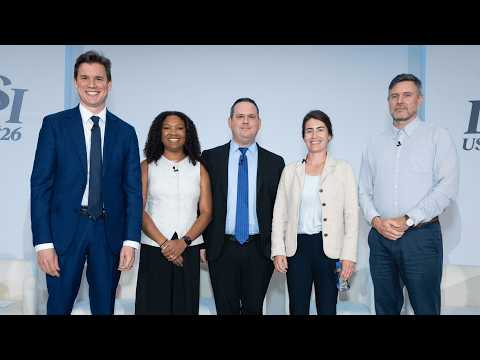
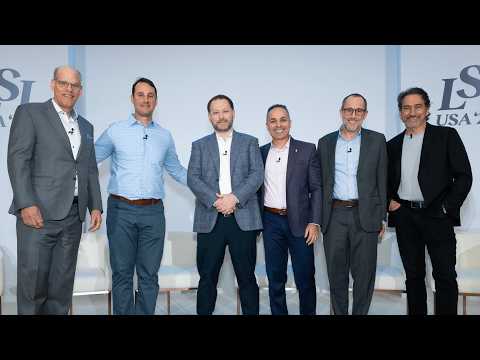
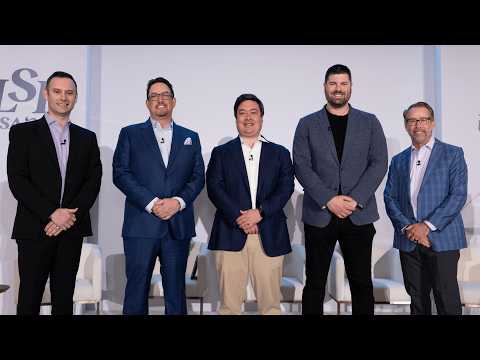
Top medtech investors from Deerfield Management, KCK Medtech, Broadview Ventures, and Orchestra BioMed discuss key trends, strategies, and opportunities shaping cardiovascular investments for 2025.

Bill Little  0:05  
So the topic we're going to be discussing today is investing in cardio in 2025 and what are the VCs considering? And when Henry and I first talked about this topic, to me, it's arguably the single most important topic for many of the attendees here. I mean, I think most of the innovators, pretty much everybody here, is trying to raise money, and most of them are trying to raise it through VCs. And so I'm glad we've got a large audience here, and we've got a terrific panel to help. So I'm gonna, I'm gonna ask each of you guys, starting maybe with Daniel, to introduce yourself, tell the group a little bit about your organization at Broadview. KCK Deerfield, and then we'll jump into the topics.


Daniel Gottlieb  0:46  
Okay, great. Thanks, Phil, yeah, pleasure to be here today. Daniel Gottlieb, I'm a director at Broadview ventures. We're an early stage investor focused solely on cardiovascular disease and stroke. Typically invest seed series, a financings with an initial check of two to 3 million and then a follow on investment vehicle called long view ventures that allows us to deploy up to additional $10 million in our companies.


Viral Gandhi  1:14  
Great. Hey everybody. Viral Gandhi, happy to be here today and look forward to the discussion. KCK is a evergreen Medtech fund. We're focused exclusively on medical device companies. There are parts of the other parts of the KCK Group investing in other verticals, such as FinTech, Industrial Tech, but our team of seven full time folks is focused exclusively on Medtech. Our typical check size is anywhere from 10 million to $30 million for the first check in I would, I would describe us as a fairly active investor, so we're almost always leading the round. We have followed in certain situations, almost always looking for a board seat. And this is primarily because everyone at KCK comes from an operating experience, so we like to lend, or, you know, help our portfolio companies more with more than just financial challenges. So my background spent about a decade in cardiovascular devices, working with Edwards in a clinical role, strap marketing, BD, I'm a bio engineer by training, and spend some time as an investigative journalist covering healthcare as well.


Bill Little  2:21  
Thanks, Mike. 


Mike Hurley  2:23  
Good morning everyone. Mike Hurley, very nice to meet you. We work at Deerfield management. Deerfield is a healthcare only investment firm. We invest across three verticals, therapeutics, devices or Medtech, I should say, and services. Our aperture in Medtech is very broad. We look at everything from devices to diagnostics to Life Sciences tools. That's sort of our mandate as well. I would say our minimum check size is about 15 million. We're stage agnostic. But you know, given that, we tend to skew little bit later, perhaps than earlier. We write equity checks, we do debt, we do creative structures. We like to think of ourselves as partners for our portfolio companies, and really sort of trying to find the best way to finance the company going forward, personally, I've been at Deerfield for about a couple for two and a half years now. Prior to that, I was at Blackstone life sciences, doing more structured financing. Structured finance things. And prior to that, I was a practicing physician, the same school. Va,


Bill Little  3:28  
great. Well, let's, let's jump right into it. I'll briefly introduce myself. So I'm Bill little with Orchestra BioMed, many of you were in the previous session here with David Hochman, our CEO, and Kristi so from, Medtronic, fundamentally at Orchestra BioMed. What we're looking to do is advance, late stage, large programs in risk, reward sharing partnerships between ourselves, a large, strategic and an innovative startup company and and share the work, share the rewards over the long term. And so thanks again to the to the panelists. Let's jump right into the topic. You know, what are VCs considering? And I think specifically, maybe vero, we'll start with you. What's your assessment on sort of behalf of KCK, or on your own of the cardio market? Specifically, right now,


Viral Gandhi  4:20  
we think it's an exciting time to be in cardiovascular devices, particularly with the focus on areas with the large unmet need. So I spent a lot of time working on really cool technology, you know, TAVR and other things where it's sort of a tech first approach, where, you know, you could really make a huge difference in the lives of patients, I think we we took a very methodical approach. I mapped out the 2025, areas on cardiology, everything from mitral tricuspid aortic regurgitation, mi monitoring, heart failure, half path, all these areas. And we created a matrix to figure out where is. Largest unmet need, and where can we have a pathway to leadership? So with that in mind, we've identified our top five sort of key areas where I'm spending a lot of my time right now.


Bill Little  5:13  
I was in a discussion yesterday with one of the large strategics, very active large strategics, and your description there is essentially exactly what they're going through as well. And they're looking at the environment, what markets do we want to play in? Where do we want to not play? And then, you know, they made the comments about, we're going to be very active and decisive in our moves in those categories. And I think that's reflective of sort of what you've said as well. Daniel, how about, how about you guys, what's, what's your sense of the cardio market right now at Broadview relative to other markets? And I know you guys have a deep emphasis


Daniel Gottlieb  5:50  
there, yeah, so, I mean, hopefully cardiovascular is still good, because that's how we're the only place we invest. So if the market goes away, we're in trouble. We're the, I think, earliest stage investor up here usually are investing in the first institutional financing that a company is going out and raising. And we continue to find the market really, really hot. We're often leading financings really helping early stage entrepreneurs again, raise that first round, and so we're often partnering with them after we've made a decision to invest, to go out and try to syndicate the financing, and we get great interest. There's a lot of other venture groups that and strategics that are interested in investing. Obviously, there's sometimes the this is too early for us. We want to see some more data. So that's certainly an appropriate response from a bunch of investors. But I was thinking back of like the last time we wanted to do a deal and we couldn't syndicate it, and I've been with Broadview for five years. Hasn't been a deal like that in my time, and I think it's been longer than that. So when we find something that we like, and we go out and syndicate it, we, you know, we can dust off our list of the, I don't know, probably 15 other investors that we go to, and we get great reception. Everyone wants to take the calls, wants to dig in. And so from an early stage syndication perspective, there's a lot of money out there, right? A lot of companies and but a lot of investors. And so it continues to be, I think, a market that everyone's interested in, and that has to do with later stage investors and strategics, who are, you know, remain really interested in finding good technology.


Bill Little  7:43  
So Daniel, you know, we hear a lot from innovators and entrepreneurs that the market's really tough right now, right? And think there's no doubt about that. But specifically at broad view, if you look at the number of investments that, let's say, you made in 2024 and what you expect to make in 2025 Can you compare the market today to, let's say, a year ago, and how's it trending for you guys?


Daniel Gottlieb  8:10  
I mean, I think over the last year, I'm not sure there's been as much change like certainly during COVID, there was a lot of work that we had to kind of retrench and make sure that we were supporting our current portfolio, and so the idea of new investments, we slowed down a little bit because, you know, we needed to deploy, as did our CO investors of deploy more money into companies that were already in our portfolio. That clinical trials were taking longer, even doing R and D work, getting supply from CMOS was taking longer, so there was a bit of retrenchment there. But I think over the last year, things have remained, I think, pretty positive. Last year was our busiest year as an investor. We did five new investments, which, for Broadview is you typically do three, and I think nine follow on financing. So definitely an active year. I mean it. I don't mean by any means to pass over the fact that it is tough for for founders, because so we did five investments last year that's across Medtech and therapeutics. That's after we saw 700 pitch decks to do five investments, I'm sure that's similar ratios that the other panelists so, so that is tough, and I don't by any means dismiss that there's a lot of competition for dollars.


Bill Little  9:37  
Mike, I saw you nodding your head affirmatively as as Daniel was talking about, in the environment, what do you see similarly? What do you see differently compared to the perspective from broad view? Yeah,


Mike Hurley  9:48  
look, I agree. I think, you know, the private markets are actually very robust right now. I view the world sort of a little bit differently. Kind of bifurcates, for me, you have sort of your how. Higher risk, but novel, super innovative technology, sort of first in class type devices, and then you have your differentiated fast followers, right? And I think in this environment, there's been a little bit of a risk off type mentality, as you know, prior to a couple months ago, people were a little unsure about, you know, are the public markets going to be a viable exit opportunity for my portfolio companies? What is the appetite of strategics to sort of do these acquisitions at earlier stages versus later stages? And so I think that kind of uncertainty is translated a little bit into sort of a differentiated view of those two groups of companies where, you know you might have it might be a lot more attractive to say, funding and supporting a company that has less technical risk, because they're fast forward, but They're trying to go to market with a differentiated platform versus funding sort of that truly innovative, novel, first in class type approach. People might want to see a little bit more data or a little bit longer term data for those assets. And so I think, you know, that's probably where some of the push and pull comes in terms of, sort of our view, and then sort of the view of the entrepreneur, in terms of how strong the markets are and how tough it is. Certainly, financings are taking a lot longer, I think, than they have in the past, and that's sort of internally for our portfolio, as well as sort of just seeing people raise and stuff like that, and how long they've been trying to but by and large, you know, I think that quality technologies, quality management teams, are getting across the finish line, which leads me to believe, okay, like, because the dry cap, the der I powder, is there. The capital is there. You know, things are getting funded as they should be in this environment still. Thanks,


Bill Little  12:07  
Vero. We know that. You know Daniel's group, they're all in on cardio, and they're early, right? I mean, if you're going to talk about Broadview, where does cardio fit in for Kc, KCK, and what about timing for you guys?


Viral Gandhi  12:20  
Yeah, it's interesting question, because I joined KCK about four years ago, and prior to that, KCK was exclusively, not focusing on cardio. And then we came in and we did a couple of deals in that space. I think it relates to now. We paid the tuition in learning some of these therapeutic areas we've really jumped in. I was the head of clinical for one of our portfolio companies for a couple of years to help them out. So it gets much easier to, you know, in a consensus based kind of a shop to convince other people's why, you know, why we should go in cardiovascular devices. So our leading portfolio companies, revamped medical in the space is going after acute heart failure. You know, acute heart failure. Heart Failure being the number one cause of admissions, you know, over the age of 65 this, this isn't, there's, there's a room for multiple solutions in this category, everything from, you know, the diuretic resistant population, to the, you know, your regular off the shelf kind of patients, where they just get one or two doses of IV diuretics and then they go home to monitoring them long term. So I think there's a there's just two a lot of unmet needs from taking care of them acute in the acute setting, or also once they go home, and how to take care of them broadly. Because I think what we've done really well as a industry in the cardiovascular space is you treat them once, and then you, you know, you get an IV reimbursement and you go home. Whereas I think most folks are now realizing that we might they're the bigger opportunities to be had are in a slightly different business model, because this, this, I think, is a proven business model, and it makes sense to continue investing in new widgets that with an established business model. And I think there is now room for a lot of other players to come in, especially with the NCD this year for for, you know, implantable monitoring, that I think is also a tailwind for other sorts of devices in the space that might give you the same kind of information without an implant, yeah, we see there being lots of room to grow in cardio.


Bill Little  14:32  
Mike for Deerfield, similar question. But where does cardio fit in? And then maybe more specifically, how do you think about PMA pathway versus 510, K pathway from an investability standpoint? Yeah, great question.


Mike Hurley  14:49  
So Cardiology in cardio in general, is a large part of our portfolio. That's not necessarily by design. I think that's just by the amount of innovation and opportunities that are. Happening in cardio relative to other sectors of med tech, but we do certainly have a very broad portfolio across different areas, surgical robots, et cetera, et cetera. So it's not like we sort of solely focus on cardiology or anything, but just by virtue of, I think, the opportunity, the interest from acquirers, et cetera. Et cetera does tend to be sort of a larger portion of it. And the second part of your question, 510, K PMA. 510 k versus PMA, of course. So generally speaking, I don't necessarily view companies differently if they're pursuing 510 k versus PMA, that obviously has implications on time to market or cash burn needed to get to approval, etc, etc. Generally speaking, obviously, sort of the more higher risk innovative technologies with a higher sort of hot gold at the end of the rainbow tend to be more PMA in general, but that's not necessarily the case. And so, you know, I don't think too I don't lose a lot of sleep. Don't have a lot of heartburn over whether a product is really PMA or 510, K, in my view, it's really, you know, how clinically disruptive is this technology ultimately going to be because that's going to drive utilization, that's going to drive acquire interest in those devices.


Bill Little  16:32  
Thanks Daniel for broad view, when you think about investability, and you're looking at things like Tam and ASP and reimbursement pathway and all the things that your management team, all the things that you're considering, what are the most important characteristics that you're looking for? And you're not allowed to say all of the above, right? So what really matters when it comes down to it?


Daniel Gottlieb  17:00  
Yeah, yeah, sir, great question. So maybe a little bit more background, Broadview, we're funded by a charitable trust, and so we're a mission driven investor focused on supporting technologies that are going to truly change patient outcomes. So 10 more towards PMA type investments, ones that are going to prove clinical benefit, usually through randomized studies. That's usually our sweet spot, not always. So first and foremost, we look at unmet need, and so that's our focus on, is there an identifiable unmet need that physicians understand? Are we going to the is the investment thesis that we're going to be able to demonstrate through typically clinical studies that we're improving outcomes, and by starting from that lens, it does kind of check a lot of the other boxes, right? It does suggest that there will be adoption. It does suggest that there will be a reimbursement pathway. It may be more challenging in certain cases than others, but it suggests that if we're improving outcomes, we're going to get physicians interested, we're going to get strategics interested. Payers will pay for good outcomes, and doesn't have to be just cost cost savings you can, we can actually spend money in the healthcare system if you demonstrate improved outcomes. And so we do think that that kind of unmet need checks a lot of those boxes that have to be considered, as well as a good, almost quick and dirty way to say, well, if they do all of that, strategic will be interested. Physicians will want to be involved in clinical studies, will be able to enroll clinical studies, and so on. So I think that is one area is unmet need, and then the second is team, absolutely. Now we're investing early, so team, first team that comes on board has to grow. Has to be complemented with more people. But obviously the fundamentals of a team that is interested in working with us, we're also, yes, very active investors. So team that wants our input, our involvement and those of other investors, team that understands that never this rarely goes according to plan, and we sometimes don't say pivot, but have to change our thought process of what we're working on. That is definitely something that we do focus on. We work with a lot of first time CEOs. We're excited to do that if we believe that this is the type of CEO, founder group, founding team that is going to be flexible. Listen to input. We're working with these companies for at least five years, typically. So also people that we think we can enjoy being with for the long term and getting to know that's


Bill Little  19:59  
great. Yeah, let's, let's shift gears a little bit and and you briefly touched on reimbursement. Let's go a little bit into reimbursement. How that impacts your investment thesis. And maybe we'll, we'll start with you, Mike, when you're considering an investment, how important is a clear pathway to reimbursement, to incremental reimbursement, and let's add on. How do you consider the value of getting a breakthrough device designation?


Mike Hurley  20:28  
Yep, I think it's important. It's definitely part of the many factors we consider. With that said, I would not put it at the super top of my list, because if there's a big clinical impact, that's reimbursement, or the breakthrough designation, reimbursement, sorry, reimbursement, yeah, yeah, if it moves the needle clinically, you know, for me, that's above all else. That's the most important thing. I think everything else kind of falls in line if you have that equation Correct. Breakthrough designation is great. It helps with sort of the cadence of regulatory feedback. It's kind of a stamp of approval. There are sort of a lot of devices that have received breakthrough designation, and so I think, on an sort of individual basis, it's kind of, it's nice to have, not a need to have because of that, it certainly doesn't make anything particularly stand out for me, but I know that, you know, the company will have a more streamlined path forward, and it certainly helps, again, from the reimbursement perspective as well. Gerald,


Viral Gandhi  21:46  
do you see it the same way, or do you not different? I actually have a different view than Michael on this. We have a number of commercial stage portfolio companies. So, you know, when KCK started, our initial check size was much larger. We would, you know, sometimes he would write $50 million checks and in helping companies scale their commercialization. So our team has a lot of commercial experience, primarily before, before the KCK their roles, and we've, we've seen a lot of these portfolio companies, you know, struggle once they get to market on the reimbursement side. And because we're long oriented investors, we're an evergreen fund, and don't necessarily have a horizon. We go into a lot of our investments thinking that we'll be there for the long haul, and maybe even, you know, build a standalone company. So if we see a standalone company potential, we really like it, and that's one of the things we've been looking for in some of our investments. So reimbursement and healthcare economics is just as important as clinical for our assessment.


Bill Little  22:51  
Yeah, I think at orchestra, you know, we see a lot of deal flow as well. And frequently, one of the things that we see is the the entrepreneurs will come in and say it, you know, this, this, whatever product, it greatly helps patients. And there's a huge Tam, and because it helps, patients will get it reimbursed. And they make an automatic linkage that, if it helps, it will get paid. And in the United States, that's just not true, right there. There are clear pathways of how to get reimbursement, some of which, you know, the clinical effectiveness matters, and others as a matter of you know, following the process and ensuring coding coverage, payment, inpatient, outpatient, and understanding those rules. And so it's one of the things that we focus on a lot, is, how can we make sure that when companies are making critical decisions around, let's say, clinical trial design, for example, that they're being thoughtful about the implications on reimbursement down the road, and so it's something we spend a ton of time emphasizing as we look at opportunities and existing things that we've got, let's, let's, we've got just a few minutes here. I'd like to ask each of you to just briefly comment on the next 12 to 18 months. What do you think the biggest change is going to be in the investing landscape? 12 to 18 months? BURL, I'm looking at you.


Viral Gandhi  24:14  
Well, we've already seen a lot of excitement in the last 12 months in this, in this category. So if you are to draw forward, I think we'll continue seeing a lot more investments in cardiovascular devices. I don't see that going away.


Bill Little  24:33  
I mean more meaning and acceleration from current stage or more of the same.


Viral Gandhi  24:38  
Well, from a large M and A point of view, I think probably strategics are going to try and digest and get their house in order before they make some larger acquisitions. But I do see there, you know, being rooms for for smaller, for investments to be to be made. I think, I think there will be probably similar, more investments in. Into earlier stage companies in the space. I mean, we're currently actively looking at several companies in the space right now, and we're looking to do deals. So I think that's different from at least for us last year. Yeah, getting better. Daniel,


Daniel Gottlieb  25:15  
yes. I think, you know, even though we're early stage, as we think through kind of the long term for our companies, the IPO market seem to crack open is, I think, encouraging of another path for Medtech companies, especially, maybe the ones that are not just the traditional implants that the big companies are going to acquire, but more on, let's say the digital space that that opens up, I think some more interest in technologies that may not have that perfect strategic buyer in mind. So I'm encouraged by that there's, I think, a lot of phase three data coming out in a bunch of different spaces, maybe some regulatory approvals, things like the shunt space as an example. And so some of these, let's say, heart failure related markets that I'm hoping will open up. I mean, I think we're incredibly positive about the next 12 to 18 months. We'll, of course have to see things around FDA and staffing, which is a big, you know, one of those exogenous variables that none of macro issue, yeah, that none of us can control. And the other thing I'm hoping is on the CMS side, you know, there's, I think, been these like shoots of progress around reimbursement and coverage for digital, AI type stuff, and how do you get reimbursed for better diagnosis of patients, the companies out there doing this work around the clearlys and so on, and I think establishment of that reimbursement pathway for that whole field in the next 1218, months of more progress on that so that investors can understand to that point of what is the reimbursement pathway for these types of technologies that are not traditional implants. I'm hopeful that, yeah, in the next year and a half, that we can get a little bit more confidence around what is the pathway for those companies. Thanks,


Bill Little  27:22  
Michael. I'm gonna give you the last word here. I'm a series. I'm an entrepreneur with a cardio device. I'm trying to raise a $15 million series. A what's the single piece of advice you would give me right now?


Mike Hurley  27:38  
That's a loaded question.


Bill Little  27:41  
You have 21 seconds to answer.


Mike Hurley  27:45  
Wow, okay, I would say something I see a lot, instead of designing a trial to get to you. This might not be Series A, maybe it's a little little later, but Series B, Series C, instead of designing a trial to hit the bar for FDA approval, design a trial that will make you successful commercially, because the end game is Not approval, the end game is showing sustained growth, repeatable, forecastable growth. And a lot of times, I think sometimes the bar set by the FDA is lower than what you might need to generate to convince the market to use your product. And it's very tantalizing to go for that somewhat lower bar, potentially, because it's cheaper, because it's faster, but then you're stuck, because after that, then you're trying to raise another round commercialize a product that you're going to try to differentiate as you launch. And I think that's a trap, so I would say, design to win. Don't design for FDA approval necessarily. Obviously, the winning strategy should be okay with the FDA too. Like you need to align on that, but that's what I'll say.


Bill Little  29:16  
Please join me in thanking these guys for their insights. 

LSI USA ‘26 is filling fast. Secure your spot today to join Medtech and Healthtech leaders.

March 16th - 20th, 2026  Waldorf Astoria, Monarch Beach Register arrow