Etienne Nichols 0:05
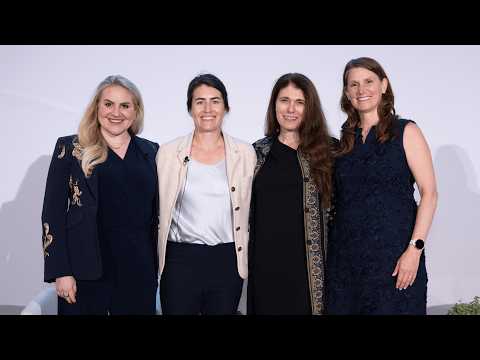
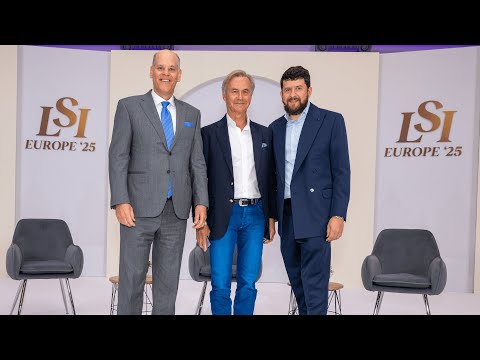
Well, welcome to the Inside the investor's mind workshop panel. It's more of a panel, but we'll try to include the audience as well. If you have questions, I didn't prep them necessarily for that, but if you have them during the presentation, feel free to ask them if care guys are okay with that. This is Susanna amarim. She's the let me get my intro out so I can actually do this right. Susana Amorim is an investment manager at Gil de healthcare, a 2.6 billion fund focused on healthcare innovation with hands on experience in cardiovascular med tech startup and in large corporations, along with a Biodesign fellowship from Stanford, she brings expertise in med tech and has successfully led three investments since joining guilty. And there was some conversation around how to pronounce guilty. Am I saying, Oh
Susana Amorim Lopes 0:53
yeah, that's always a topic, and I can't pronounce it, so I don't know. Oh no, yeah, I think it's Hilda.
Etienne Nichols 1:01
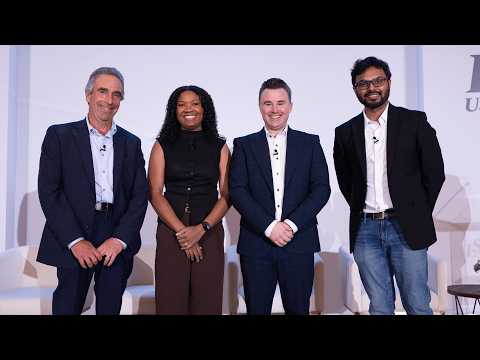
Okay, okay, right. So those of you who are pitching to her, you practice practice that, but maybe not with her. So Armen Vidian is a the Founder and Managing Partner of Recode ventures, who backs scientists and engineers building AI platforms to tackle big health challenges. The 10 investments in his first fund include companies ranging from those applying AI to create genetic medicines to surgical AI. Prior to Recode, Armen spent six years as a partner at dcbc, where he led investments in some of the earliest successes in computational biology and AI. Welcome. Glad to have you here. Thank you. So he is one to talk to about AI. I we've already had some conversation about that, so I'm excited to hear what he has to say. Shawn Morris is a general partner at cultivation caps capital and a serial med tech CEO. He currently leads R domedical and amplify vascular and builds next generation solutions for vascular disease. Previously, he founded vanity, which was acquired by Boston Scientific. Also, I hear he has a pitch five minutes after this presentation. So if he runs away, you can feel free to chase him down and you can talk to him later as well,
Sean Morris 2:10
if you can keep up, yeah, like Oh, Jay Simpson running it through the airport. So it's
Etienne Nichols 2:14
good to have you all with us today. Let's just start with the title of this panel inside the investor's mind. And Shawn, maybe we can start with you here at LSI. Here we are surrounded by all of the different founders and different investors. What's on your mind as we as we go throughout this week?
Sean Morris 2:31
Well, as you alluded to, I'm here to pitch the company that I'm currently operating. But I think, as I said here, I'm unique position. Not a lot of investors haven't been operators before, and so I always say I have a lot of empathy to the CEO person who's trying to make it work, trying to fix the car while you're driving at the same time. That's how I describe it. So you're fundraising, you're trying to reach endpoints, especially earlier stage. So for me, I like to just immerse myself and hear lots of people and their ideas and see how, how well they can condense their their talking points into a minute. And what are you what are you doing? What are you seeking to do? How do you, you know, develop that elevator pitch? There was a session here yesterday afternoon where they did that really quickly, in like three minutes. I thought was really interesting. But I'm I'm biased. I'm cardiovascular focused. So I really like that, because I feel like mechanical solutions to plumbing problems, whether they're Venus, arterial, cardiac, neuro there's really, really elegant solutions, and there's still a lot of innovation yet to come. I know he likes AI. My eyes roll back in my head. I it's hard for me to understand the value proposition of AI specifically, but I know it's a, it's a really, really big emerging, fun opportunity to talk about lots of cool things.
Etienne Nichols 3:47
Okay, Armen, let's talk. Let's what's on your mind?
Armen Vidian 3:50
Well, I can't let that one slide by. So you know what's on my mind? Because, you know, in the tone set yesterday, on the first talk. I think that when I and I say this with love, having been in the medical device industry for many years before I started as a venture capitalist, the medical device industry is sorely broken.
Sean Morris 4:15
And you know the unorthodox venture adventures guy, unorthodox venture guy, yes,
Armen Vidian 4:21
it's sorely broken, because we are looking at an industry that requires so much capital in which to launch a product that it has become very difficult for further capital to come on in. And we have a couple of options. We can shake a stick at the regulatory authorities. We can shake a stick at payers and so forth. Or we can reinvent our industry with technology. If I were to go visit the halls of guide it now Abbott, where I worked 20 years ago and. It would look a lot similar in its function to how it does today. And the technology people I know find this very strange and odd. I think that the value proposition in AI may be unclear to some because it's a little bit misplaced in what to expect from it. AI has the potential to by having tremendous sources of data to iterate much more quickly our product development cycles, to make it much easier to implement in a hospital or whatever care setting, and to decentralize from the hospital altogether, which we love because it expands markets and to offer more complete end to end health care solutions for physicians and patients Beyond the extremely important clinical benefits intraoperatively. So that's why we like AI and not for the sake of it unto itself.
Etienne Nichols 6:08
So I can imagine there's probably some people in the audience who are like, Well, my product is more along Shawn's line. So I'll just tune out as what you're saying. But I think that's might be a mistake in that it is almost like computers at some point where it's going to be a part of your company itself. So maybe we'll get back to that instead of the product the company. But let's talk about what your what's on your mind, Susana?
Susana Amorim Lopes 6:28
Yeah, no happy to share. And what's probably is on the audience mind right now is, please don't make it another AI panel, which I'm not intending to do, but, and believe me, I think AI is extremely powerful when paired with meaningful insights and integrated into the workflow. But just as per say, AI, I think it sometimes brings more noise than adds value. It's stopping AI now and talking about what's on my mind right now at LSI, it's all about finding the next big healthcare innovation product, and the one that truly solves in red, clinical needs improves patient outcomes, really can transform care. Gilda is better care at lower costs. That's our mantra. And also what's on my mind, it's always the team behind the product, how they execute. And basically, if the product can have the capability to overcome the hurdles and the complexities of the healthcare system, so it's basically a mix of vision and execution. Can this product become a reality? So let's probably write on what's on my mind at LSI.
Etienne Nichols 7:55
All right, well, I talked to a lot of founders yesterday, and there's some rough questions that they wanted me to ask. So I'm going to go a little bit different direction. I'm going to look at this as a relationship, and maybe we can talk from that perspective. So one of the things a lot of inve a lot of founders, are interested in, is, how do I get that first date? How do I get the conversation or in front of an investor? And maybe we can talk about that. I'm so I'm married with kids now, and I've been far removed from the dating world. So I think Matt more about maintaining my the life cycle of my relationship at this point and some at some point. We have to talk about what's your interaction with the portfolio and when you're in managing portfolio mode. But since we're at LSI, let's talk about how do you get in front of them, and the way I want to phrase that is, have you taken any meetings? And if you have, who are you excited to talk to? And why was it? What's the criteria that made you excited to talk to that specific person? Armen, we're making eye contact like you.
Armen Vidian 8:54
Sure, sure. So first of all, if you want to talk about an inappropriate application of AI. It's these mass emails I seem to get in 2010 it was said you needed a connection to get to an intro to a VC. And then that got better. And then along came all this AI. And now my inbox is bombarded with all these AI emails about a company, and now you just need an introduction from somebody who knows the person again. So it's gone full circle, but the types of things that excite me. Yes, I have taken lots of meetings. Yes, we just made two investments in July and August. And I say that as you asked the question, there is no magic thing that is required. I like being shown what I like, rather than my saying there is a specific thing, and I won't consider anything else. For example, we just invested in something in precision medicine, in cancer, which normally I think is a very fraught space with regulatory concerns and all kinds of competitors in it. I. But this particular company really showed me what was missing, both from entrepreneurs, from physicians, clinical data and so forth, and I loved it. So I think that you know, if you have something that you believe is truly unique, be sure that you emphasize those points and you can get a meeting, but make sure it's concise. Make sure it's to the point and realize that our inboxes are indeed inundated.
Etienne Nichols 10:33
Susana, what about you? What's the criteria you look at?
Susana Amorim Lopes 10:36
Yeah, let's see. I would say, to be concise, it's really relevant for me as well. So I would probably echo that point. It's relatively easy to get a meeting with me at the end, believe it or not, so just an email. I often reply to emails, LinkedIn messages, whatever. Very often I don't leave unanswered messages. I think it does help to get to know the Gilda investment strategy, our portfolio, our way of thinking, getting to know is a little bit better, and then hitting those points I just said, when I first answered the first question, better care at lower cost. Just tell me why your product is better care and delivers lower cost. And you probably get a meeting relatively easy. So, yeah, that's that's probably very high level. Al, to get the meeting.
Etienne Nichols 11:32
Sean, what about you?
Sean Morris 11:33
Yeah, so I'll have some meetings after today. The first few days have been all about me, you know, and the company that I'm trying to run and support and fund. But for me, if I'm just putting myself out there, you know, it's not easy. It's a grind. You have to put yourself out there. We're selling an idea in exchange for some capital to build the company. And for a lot of people, that's not the most comfortable thing to do, is to put yourself out there and but to get those meetings make a good first impression. Do your diligence, do your research. If I was pitching to anybody here, I would want to look at their backgrounds, you know, go on LinkedIn, see what they did, where the connections are, what they studied in school, and try to make some connections, so that when I get to the opportunity to have an interaction, I have something that I can relate to, maybe what they're passionate about, and then just be a really, really good listener. So for me, if I'm going to take a meeting, I want sort of the same thing. I want somebody to know what I like and what I like to invest in, what the funds thesis is, what other investments that are already in their portfolio? You do all that research, because really have one shot, unless you have something that is, you know, a new value milestone that you've achieved, so you're getting an IDE approval, or maybe you got some first in human data, or something like that, where you can kind of go back. So I would say, do you do your homework? Do a lot of diligence. Be kind. Consider it. Ask them what they're what they're focused on. Where do they see their portfolio, where they see their fun going? And even if you get a no, you still get a lot of feedback and a lot of data, because that's really, really important too. Where have I missed the mark? What would I need to do in order to make this more interesting to you? And if you do that, I feel like a lot of folks will be helpful and say, well, it's not good for us, but you should talk to this other fund, or you should make a good connection, because that all, I think, globally, just is really helpful.
Etienne Nichols 13:34
Yeah, that makes sense. I mean, what you're describing really is one on one relationship building. It sounds like if we it's easy to get focused on what we're trying to offer, but you're talking about knowing the other person. And I'm curious if there are any things that any patterns or things that you've seen that, wow, they really just don't understand what I'm trying to accomplish here. Are there any piece of advice or things that you've seen from that perspective that can be helpful?
Sean Morris 13:59
Yeah, I think just sort of what I just said in terms of asking for more rationale as to why they might have passed. Try to get some, you know, try to get some more perspective, because you learn so much. Hey, I'm a little worried about your healthcare economics journey and your plans, or I'm not convinced that this could be easily adopted. And how do you you know that helps you for the next pitch, right? Because you can sort of inoculate yourselves against those questions by being more prepared and up front and hitting those earlier so that they're not asked at the end. You know, you're sort of the weight of the world is sort of like, okay, let's get to this part, and then it's a big dud. So I think just getting feedback is really, really important, even if it's a no,
Armen Vidian 14:45
take a look at our portfolio. All three of us, they're on our websites, right? So if something is what you're doing is incredibly not in thesis for us, we're probably not the right fit, right?
Etienne Nichols 15:01
And do you know so you likely know other investors as well who could be. So I'll leave it at that. But Susana, what were your thoughts?
Susana Amorim Lopes 15:11
Did you have any No, that's right, yeah, often we indicate rounds, right? So we often work with the same folks over and over again. So yeah, what's a better fit for me? Might not be a good fit for for you. So we definitely have some suggestions. If a company Gilda is little bit more towards the late stage or later stage, I should say. So we often know a lot of funds that come in before us, and that's awesome validation from what you guys are trying to achieve. I will emphasize, though, that it's really relationship based, and we often see companies and CEOs multiple times throughout the years before we actually get to invest. So it's all about that building up of the relationship. And I will say that it's often more difficult to get the second meeting than a first one. And I know might sound a little bit odd, and that's why it's so important to really knock it out on that first meeting and making sure that the message stays consistent, because that's that's something that we that stays on our mind, gets stuck on our mind in terms of execution, and that capability to deliver on what you have just mentioned the year before or two years ago. So that's probably something that I pay a lot of attention to. So yeah, just something for you guys to be aware of.
Etienne Nichols 16:41
So you talk about that first impression, people always say first impressions are important, but I kind of disagree that they are the most important. I think the last impression is the most important impression you can make. But another question I wanted to ask was, you've made several investments. If you look back, who's your favorite, whether it's company or CEO that you invested in, is there a favorite? And what I'm really curious about are the any indications or indicators as to why they were your favorite?
Susana Amorim Lopes 17:10
We don't have ugly babies
Etienne Nichols 17:11
at the end. I don't believe it.
Susana Amorim Lopes 17:15
No, we don't. So really like, I mean, I don't know about you, but what I truly appreciate on our CEOs is the visionary mindset coped with the relentless capability to execute and deliver, right so the work ethics and all of that. So to me, it's it's that, and I think that's something that we pay attention during due diligence. So hopefully we won't get surprised once they become portfolio companies. We do due diligence on the team, right? So I would say that that's probably the trait that I appreciate most. And so I don't have a favorite, per se. I'm mostly involved with three companies, and believe it or not, it's three very different CEOs. It's also three very different company stages. So to some extent, that's expected. And I really like all of
Etienne Nichols 18:12
them, yeah, and maybe, maybe I should ask the kind of relationship you want to have going forward, because that kind of indicates how you want to start a relationship. And Shawn, I wanted to ask both of you the question as far as favorite CEOs, favorite companies that you invested in, any indicators, but I also want to say, if you have a question, anybody out there, feel free to shout it out, because I know somebody's got a question on their mind. But Shawn, what about you with the indicators?
Sean Morris 18:37
My favorite CEO is me. Yeah, I will outwork pretty much anybody. I mean, because I, I was dreaming about dialysis last night, because I'm pitching my company right after this. I'm, as you know, I'm running to the next meeting, and I'm even subconsciously, I'm thinking about stuff. I just came across a computational fluid dynamic study that the company did previously, which I thought was really illuminating. I'm like, How did I even, not even know did I even, not even know about this? Because I took over this entity and have restructured it, and, you know, brought the team down. But just like Susana said, I'm, you know, the same thing is the grit and determination of this, of the CEO, you know, he or she, you know, is driven. Professional holds, their timelines, but also communicates really well. And, you know, I've learned the hard way. You know, your board and your investors are should be your partners, and that should be part of the you know, what you think about when you're getting investment too. Sometimes Beggars can't be choosers, right? You need, you need capital. But sometimes you'll regret taking capital from somebody because they're not a great partner, and but the CEO's role is to deliver information, good or bad, and be very transparent. What's keeping you awake at night? What are you concerned about? And hopefully you can use your partners and they're not judging you for asking questions. You're uncomfortable by but they're looking at it and saying, Hey, okay, I have a resource, or I have a reimbursement person, or maybe we should think about this, or having having a conversation with the right investors. They'll open up your world to all kinds of, you know, extensions that could be really, really helpful. So I would say the best CEO is somebody who uses the resources, who's open and transparent and confident to know that they can't have an answer for every single thing, and that's why you have really good partners to help you through the through your journey.
Armen Vidian 20:30
You know, for us, I mean, the favorite companies we have aren't the favorite ones because of the technology. I would even say that mild the financial outcomes that are the best ones are fantastic, they're not even the best because the financial outcomes they're because the CEO is somebody who combines a relentless focus on the customer and their needs and their pain points in their day in subtle Ways that no one else can possibly know with a self awareness of who they need on their team, their personal strengths and weaknesses and their ability to cultivate feedback, to make themselves in a state of continuous improvement.
Sean Morris 21:16
He's a very calming voice. I mean, he'd be like a great person on your board. I feel like at peace.
Etienne Nichols 21:22
Since you're into AI, I hope you reproduce your voice so others can use it as well.
Armen Vidian 21:26
That's Thank you. No one's ever said that before, ever.
Sean Morris 21:29
I think we all agree, though his voice is nice and calming.
Susana Amorim Lopes 21:33
Etienne, I would like to emphasize something that Armen just said. I think good CEOs, they obsess about the problem. I think that's a commonality, a pattern I can definitely extract from, like the people that outperform expectations and and that's so aligned with the way Gilda also does their own investments. We obsess about the problem, the unmet clinical need, and that's why we have one flagship fund that invests that focuses on on the unmet clinical needs, rather than the technology and with the biotech and med tech. So yeah, just that one point, which I haven't mentioned, but I I definitely think it's a really good one.
Etienne Nichols 22:18
I think that's a really good point to bring out, so I didn't introduce myself. So I I'm the host of the Global Medical Device podcast, and have had the opportunity to interview hundreds of med tech professionals over the last five years, however many. And one stands out. His name is Howard rood. If those of you CEOs in the audience, if you haven't read his book, cardiac arrest, five years as a CEO on the Fed's hit list, he went through five years fighting the FDA, 100 lawyers, and eventually sold his company for over 1.2 billion. I think it was, and that was one of the best interviews I've ever experienced, besides today. And he actually talked about how, in his company, in his book, he was focusing on one problem, and it completely went sideways. He no longer had that problem, but they or that that product, but the company still went on because he was able to solve the problem in a different way, different doctor, different everything. And that was impressive to me. And I think you probably all have examples like that, I'm sure in your portfolio at past. So maybe when we flip the question, well, instead of talking about our favorite, what ticks you off, what really drives you crazy, and that is not something or red flag. Let's be polite about it, I guess. Yeah, the red flag both in the beginning and as you move through the relationship. Susana, you want to start Sure,
Susana Amorim Lopes 23:37
ought to be the most popular person in the room right now, okay, the things that call me off on a first meeting, let's see focusing maybe over over, focusing on the technology side of things. So I don't like to get the sense that the pitch turns around the is a technology pool side of thing, as opposed to an unmet clinical need push. So that's probably one thing. The second thing that really turns me off is, if I have a sense that this CEO, we call it, Louis Katz style, it's like, it's AI, instead of free, instead of like entitled, like empowering the team and believing that are giving credit to the team to some of the company's progress and achievements. So those are the two first things that come to mind on and that I definitely pay attention to.
Armen Vidian 24:43
Yeah, can't tell you how much I agree with that second point 1000 times over deserves repeating. If you can't give credit to your team, then you can't scale as a CEO. If I'm saying somebody on your team did a nice job, you did. Did a nice job, right? I think for us, and this should go without saying, but I think it needs to be said, lack of integrity is an immediate turn off. If something you're giving me is patently false, we're done game over. I think the thing after that, though, that I would say is, you know, there's a saying give people what you think they need, but also give them what they asked for. So if I'm taking a pitch and I asked a question and you're not directly answering it and making sure I feel like it's answered, then I kind of and you gave me another answer about what you really want me to know, I feel like you're trying to sell me something that's not quite exactly what I'm looking to see. So be sure that you're answering the question clearly, something that says,
Etienne Nichols 25:52
Sean, what about you?
Sean Morris 25:53
Yeah, I would say more than 20 slides. You can get lost. You're like, oh my god, I read through the whole thing. So just just being precise, I think, touching on the important things, or, you know, just getting really early in the weeds, it's really, really difficult to hold my attention. At least. Maybe I'm just too much ADHD and and I've also learned the hard way as as an operator. I've gone through this many, many times. I've seen both sides of the table, as an investor, as an operator. So that really tends to help because I'm like, I don't even like what I'm saying to myself. So you know, how's anybody else going to like it? So it really helps you. I need to make that really condensed, but I would say, yeah, just to or the the surprise slide that says, and again, learn the hard way. It's a platform technology, and it does this and this and this and this. Because then I started thinking, Well, I've gone down this road too, right? Do I really have focus on what I'm doing? Because you need absolute focus to to nail your clinical endpoint and what you're trying to achieve. Once you do that, then the platform opportunities really start to open. But if you start to incorporate that into the deck too early, then you sort of feel like the person's not really going to be focused to get over
Armen Vidian 27:00
the finish line. Did I add to that, actually? So I really encourage my entrepreneurs, after we've written them and wired them a check to say, okay, great. Now write the pitch for your next round. Wait. Why do you want me to do that? Because it's starting with what you want to be able to say when you get there, and then everything you need to do, you just wind backward from that right? And I also encourage them to develop a list of questions that people investors might ask, and to write them down in long form, not on a slide, and to ask the people your direct reports, especially on your team, to do the same and to contribute to that list because it does several things. One, it gets your executive team thinking about the business itself and where the challenges might be, and for them to think ahead to how they should be answered. It gives them a window into your job as CEO on fundraising, and and it helps you anticipate the pitfalls along the way. So I think that's a really useful exercise that will, in the long run, make your job easier,
Sean Morris 28:09
like that. That's a great point. I know it's not really on the investors mind, but involving the team, I think, is really important, because otherwise you're siloed. Just a quick story. We did a study in Paraguay where we used our technology, and I had all my engineers and my clinical, my regulatory, my even my finance guy, go down there, because I want, I want my finance person to understand where the dollars are going and they he also has, he built, some empathy for how challenging it is to not only build a medical device, but you're also building a unique, nuanced procedure for the device that you're bringing into the clinical world. So seeing the workflow, seeing how that works, and having everybody sort of feel it together, and then then there's the camaraderie that you're building in those events too, and it really builds a lot of empathy and understanding. And I always tell my service providers or my employees to preach the gospel about what you're doing, because, you know, relationships are important, and they may, they may find somebody that might want to invest. My last company, my IP firm, made an introduction to an investor that led my B round, and I told them, I said, Hey, you're my partner. I'm spending lots of money with you. I was joking last night that if I die, I want to be reincarnated as an IP attorney, because I pay them $1,000 an hour, $1,200 an hour. So but I get everybody talking about it, because you never know where that investor you know might be, and if they're talking about it, they're passionate about it and and just it just builds empathy and understanding across the organization.
Etienne Nichols 29:41
At LSI Dana Point, I got to interview a few family office as well as growth capital, and they looked at companies a little bit differently than I'd ever seen them before. So I'm curious your take on this. They looked at this. Okay, so I'm going to look at this company, and I maybe I want a five year investment to have a 10x reward or two. Next return, but most of the time he said, from the family office, guy, I'm looking for a two to three year turnaround and 2-3x so that I can quickly invest that money in something else. And I don't say it about the numbers or the duration, but he looked at it purely as the company is the product. And so I don't curious what is on your mind when you look at these companies. Look at these CEOs. Obviously, the product has to have viability. But what do you look at across these different companies as features of the company that you're curious about or interested in? This company needs to have XYZ, whether I'm sure Armen, you're interested in their use of AI to enhance the processes within the company, or something else that you've seen, you know, I'm sure. Shawn, having run several companies, you have you want a certain culture, you want a certain flow of activity. Susana, you work with a lot of different companies on the board. What are your thoughts as far as things you're really interested in and seeing that company possess?
Susana Amorim Lopes 31:00
It's a really broad question, right? And it's not very specific. Look, we do portfolio construction, right? So at gild, at least, out of the current fund, we will try to do maybe 20 investments, so that my answer to that question will change depending on which company, which space are we really talking about. I will just say that we already spoke about some of the features we are looking for here, so I will avoid repeating some of those. We, of course, underwrite a certain multiple and a certain time frame for an exit often doesn't go quite that way, but, but it's on the investment case, and we do have an investment strategy that we try to to follow, right, and that we have preached our LPS with. So in our case, it changes a lot. Well, of course we have the North Star, but it changes, whether it's biotech Medtech, it changes depending on the stage of the of the fund we are at right now. We are kind of like midway. It's our fund six. Is a vintage from 2023, we have the nine investments. So we try to do 20. So we are all for kind of there. So we probably not underwriting the same things as we were two years ago when we started deploying this fund. And certainly we are not underwriting the same things we will be in one year from now, when we will be hopefully trying to fill like, what's the last four or five thoughts on the fund? So really a very broad question, so you get a really broad answer, but Yeah, happy to zoom in in some aspects if you'd like to.
Etienne Nichols 32:48
Okay, Sean,
Sean Morris 32:51
a very, very top shelf, extremely robust, polished chrome Quality Management System. I'm just kidding, was for Greenlight guru. They do a really good job with that so But all kidding aside, obviously, quality at some point in time, you know, you can, you have this shiny car, and then you open up the hood and there's a clunker engine in there. I mean, you need to have all that polish. So there's so many, there's so many things to be concerned about when you're running a company, you know, a regulated company, and then the people that acquire you, if you do the right way, you know they're going to want to be able to see that they can integrate that quickly into their quality system, right? So I want to make sure that I plugged you, because I know you're dying over there with thinking about quality. I can tell
Etienne Nichols 33:38
Armen, I'd love you talk to us. I know he's got a pitch in 11 minutes.
Armen Vidian 33:42
So the only good thing they keep coming back to you as you ask that question is that whoever it is that's saying that you know success for them is two or 3x just don't send them to us, because that's not a success for us. We really want to look at a company and say, if this company is successful, how is the world different? How are we being treated as patients differently? How do we avoid becoming patients? How do we take care of ourselves better? And one of these things has to be substantially different. So we look at a company and we say, if what they tell us is true, how will things be different? So for example, if you're telling me that if I have an example of Instagram, let's use an out of industry example made us all professional advertisers, then your diagnostic technology with AI mates makes us all Professor professional diagnosticians, and how it would do that, and who is my buyer for that? How do we treat patients much more differently? That is what I look at as big Okay, and a 10x and 1040 mm.
Etienne Nichols 34:59
40 so there we go. Any questions from the audience? We have four minutes and 46 seconds before Sean is going to hit the door. Nothing. Three investors, yeah,
Audience Question 35:13
we're doing a series a Robert and obviously I talk to new investors. And one of the things I offer come across all the kickback, if you like, to say, well, you know, you've already raised capital. We didn't come in on that bound to returning in later. We need a big multiply and and 40x is not a little and I was, I often say, I would just to the perspective that in the med tech space coming in at that stage, they're for most exits is neither going to be a 40x multiplier. So they're hunting the unicorn when they're really pretty hard to find. So in other words, you get rejected because there's no way you're a 40x return. You're a 5-10x return.
Sean Morris 35:56
I feel like you're talking to the wrong investors.
Susana Amorim Lopes 35:59
Then I would love to hear about some of those names, because we want to syndicate tales with them. Interesting. Yeah, definitely. You got to manage the investors expectations as well. That's probably also the CEO's role, or on that case, because it's orders of magnitude apart of what we do see in Medtech often, of course, there are outliers, and thank God there is, and we have seen really interesting and encouraging exits recently, the most of which right here in the UK, with organox. But even that one, it's it's a stretch to say that he was a 40x for anyone on the cap table.
Armen Vidian 36:46
Yeah, to amend what I said a little bit, just because your business is into 40x business doesn't mean it's not a great business. Okay, you know, sometimes we look at companies and we say, you know, this is a great business, but it's just not a venture business of the return that we look for. And I think sometimes you have to consider that not every financing vehicle is the right one for your business. Why venture capital? Why is that the right one? And I think that especially technical founders or scientific founders, don't always answer that question first, because it's just not how they're trained.
Etienne Nichols 37:21
Yeah, any other question? Yeah,
Susana Amorim Lopes 37:30
that's a really important point, and one that we haven't mentioned thus far in the panel. What we try to do at GIlde is to speak with strategics, right? Because often exits are M A driven and having those relationships with strategics understand what they want to see the gaps on their portfolio, and although they look at certain companies and spaces, it's probably like it offers some guidance. It's not going to be 100% accurate, but it's one way of pinpointing where it's gonna land. And then, of course, there are comps. Every space has at least some comps, so that's probably one way of looking at it. No, yeah, it's
Armen Vidian 38:18
an answer from you all. I so you know when we when we try to forecast a return, I think it's a lot harder to do so for like a pre seed or seed investment where we're creating a new market. And anybody who tells me they have something more than a two year forecast is lying to me, but I think that we can use comps and so forth. But at the end of the day, for me, a really good investment is a bit as a business that that can make a lot of money. So, you know, I just want to really look at size of potential markets and realistic chance of how they can get there. I think when we get to starting around the series B, that's when we get out our pencils a little bit more, right? So, and we can look at, you know, IPO comparables in the space, we can say, well, you know, if conservatively, these facts are true, then what the realistic chance of their being able to implement a sales forecast, and so forth and so on. That's where it gets a little bit a little bit more quantitative in our analysis.
Etienne Nichols 39:30
I hope it's been a helpful panel. If you guys want to talk more, I hope this is this something of an introduction to these, these investors. I'm going to let Shawn go do his pitch here in just a moment. If you're interested in learning more about that shiny EQ, MS, feel free to hit us up at our booth at Greenlight guru. But otherwise, I hope it's been helpful and continue the conversation.
Sean Morris 39:51
Thank you all. Thank you everyone.
Etienne Nichols 0:05
Well, welcome to the Inside the investor's mind workshop panel. It's more of a panel, but we'll try to include the audience as well. If you have questions, I didn't prep them necessarily for that, but if you have them during the presentation, feel free to ask them if care guys are okay with that. This is Susanna amarim. She's the let me get my intro out so I can actually do this right. Susana Amorim is an investment manager at Gil de healthcare, a 2.6 billion fund focused on healthcare innovation with hands on experience in cardiovascular med tech startup and in large corporations, along with a Biodesign fellowship from Stanford, she brings expertise in med tech and has successfully led three investments since joining guilty. And there was some conversation around how to pronounce guilty. Am I saying, Oh
Susana Amorim Lopes 0:53
yeah, that's always a topic, and I can't pronounce it, so I don't know. Oh no, yeah, I think it's Hilda.
Etienne Nichols 1:01
Okay, okay, right. So those of you who are pitching to her, you practice practice that, but maybe not with her. So Armen Vidian is a the Founder and Managing Partner of Recode ventures, who backs scientists and engineers building AI platforms to tackle big health challenges. The 10 investments in his first fund include companies ranging from those applying AI to create genetic medicines to surgical AI. Prior to Recode, Armen spent six years as a partner at dcbc, where he led investments in some of the earliest successes in computational biology and AI. Welcome. Glad to have you here. Thank you. So he is one to talk to about AI. I we've already had some conversation about that, so I'm excited to hear what he has to say. Shawn Morris is a general partner at cultivation caps capital and a serial med tech CEO. He currently leads R domedical and amplify vascular and builds next generation solutions for vascular disease. Previously, he founded vanity, which was acquired by Boston Scientific. Also, I hear he has a pitch five minutes after this presentation. So if he runs away, you can feel free to chase him down and you can talk to him later as well,
Sean Morris 2:10
if you can keep up, yeah, like Oh, Jay Simpson running it through the airport. So it's
Etienne Nichols 2:14
good to have you all with us today. Let's just start with the title of this panel inside the investor's mind. And Shawn, maybe we can start with you here at LSI. Here we are surrounded by all of the different founders and different investors. What's on your mind as we as we go throughout this week?
Sean Morris 2:31
Well, as you alluded to, I'm here to pitch the company that I'm currently operating. But I think, as I said here, I'm unique position. Not a lot of investors haven't been operators before, and so I always say I have a lot of empathy to the CEO person who's trying to make it work, trying to fix the car while you're driving at the same time. That's how I describe it. So you're fundraising, you're trying to reach endpoints, especially earlier stage. So for me, I like to just immerse myself and hear lots of people and their ideas and see how, how well they can condense their their talking points into a minute. And what are you what are you doing? What are you seeking to do? How do you, you know, develop that elevator pitch? There was a session here yesterday afternoon where they did that really quickly, in like three minutes. I thought was really interesting. But I'm I'm biased. I'm cardiovascular focused. So I really like that, because I feel like mechanical solutions to plumbing problems, whether they're Venus, arterial, cardiac, neuro there's really, really elegant solutions, and there's still a lot of innovation yet to come. I know he likes AI. My eyes roll back in my head. I it's hard for me to understand the value proposition of AI specifically, but I know it's a, it's a really, really big emerging, fun opportunity to talk about lots of cool things.
Etienne Nichols 3:47
Okay, Armen, let's talk. Let's what's on your mind?
Armen Vidian 3:50
Well, I can't let that one slide by. So you know what's on my mind? Because, you know, in the tone set yesterday, on the first talk. I think that when I and I say this with love, having been in the medical device industry for many years before I started as a venture capitalist, the medical device industry is sorely broken.
Sean Morris 4:15
And you know the unorthodox venture adventures guy, unorthodox venture guy, yes,
Armen Vidian 4:21
it's sorely broken, because we are looking at an industry that requires so much capital in which to launch a product that it has become very difficult for further capital to come on in. And we have a couple of options. We can shake a stick at the regulatory authorities. We can shake a stick at payers and so forth. Or we can reinvent our industry with technology. If I were to go visit the halls of guide it now Abbott, where I worked 20 years ago and. It would look a lot similar in its function to how it does today. And the technology people I know find this very strange and odd. I think that the value proposition in AI may be unclear to some because it's a little bit misplaced in what to expect from it. AI has the potential to by having tremendous sources of data to iterate much more quickly our product development cycles, to make it much easier to implement in a hospital or whatever care setting, and to decentralize from the hospital altogether, which we love because it expands markets and to offer more complete end to end health care solutions for physicians and patients Beyond the extremely important clinical benefits intraoperatively. So that's why we like AI and not for the sake of it unto itself.
Etienne Nichols 6:08
So I can imagine there's probably some people in the audience who are like, Well, my product is more along Shawn's line. So I'll just tune out as what you're saying. But I think that's might be a mistake in that it is almost like computers at some point where it's going to be a part of your company itself. So maybe we'll get back to that instead of the product the company. But let's talk about what your what's on your mind, Susana?
Susana Amorim Lopes 6:28
Yeah, no happy to share. And what's probably is on the audience mind right now is, please don't make it another AI panel, which I'm not intending to do, but, and believe me, I think AI is extremely powerful when paired with meaningful insights and integrated into the workflow. But just as per say, AI, I think it sometimes brings more noise than adds value. It's stopping AI now and talking about what's on my mind right now at LSI, it's all about finding the next big healthcare innovation product, and the one that truly solves in red, clinical needs improves patient outcomes, really can transform care. Gilda is better care at lower costs. That's our mantra. And also what's on my mind, it's always the team behind the product, how they execute. And basically, if the product can have the capability to overcome the hurdles and the complexities of the healthcare system, so it's basically a mix of vision and execution. Can this product become a reality? So let's probably write on what's on my mind at LSI.
Etienne Nichols 7:55
All right, well, I talked to a lot of founders yesterday, and there's some rough questions that they wanted me to ask. So I'm going to go a little bit different direction. I'm going to look at this as a relationship, and maybe we can talk from that perspective. So one of the things a lot of inve a lot of founders, are interested in, is, how do I get that first date? How do I get the conversation or in front of an investor? And maybe we can talk about that. I'm so I'm married with kids now, and I've been far removed from the dating world. So I think Matt more about maintaining my the life cycle of my relationship at this point and some at some point. We have to talk about what's your interaction with the portfolio and when you're in managing portfolio mode. But since we're at LSI, let's talk about how do you get in front of them, and the way I want to phrase that is, have you taken any meetings? And if you have, who are you excited to talk to? And why was it? What's the criteria that made you excited to talk to that specific person? Armen, we're making eye contact like you.
Armen Vidian 8:54
Sure, sure. So first of all, if you want to talk about an inappropriate application of AI. It's these mass emails I seem to get in 2010 it was said you needed a connection to get to an intro to a VC. And then that got better. And then along came all this AI. And now my inbox is bombarded with all these AI emails about a company, and now you just need an introduction from somebody who knows the person again. So it's gone full circle, but the types of things that excite me. Yes, I have taken lots of meetings. Yes, we just made two investments in July and August. And I say that as you asked the question, there is no magic thing that is required. I like being shown what I like, rather than my saying there is a specific thing, and I won't consider anything else. For example, we just invested in something in precision medicine, in cancer, which normally I think is a very fraught space with regulatory concerns and all kinds of competitors in it. I. But this particular company really showed me what was missing, both from entrepreneurs, from physicians, clinical data and so forth, and I loved it. So I think that you know, if you have something that you believe is truly unique, be sure that you emphasize those points and you can get a meeting, but make sure it's concise. Make sure it's to the point and realize that our inboxes are indeed inundated.
Etienne Nichols 10:33
Susana, what about you? What's the criteria you look at?
Susana Amorim Lopes 10:36
Yeah, let's see. I would say, to be concise, it's really relevant for me as well. So I would probably echo that point. It's relatively easy to get a meeting with me at the end, believe it or not, so just an email. I often reply to emails, LinkedIn messages, whatever. Very often I don't leave unanswered messages. I think it does help to get to know the Gilda investment strategy, our portfolio, our way of thinking, getting to know is a little bit better, and then hitting those points I just said, when I first answered the first question, better care at lower cost. Just tell me why your product is better care and delivers lower cost. And you probably get a meeting relatively easy. So, yeah, that's that's probably very high level. Al, to get the meeting.
Etienne Nichols 11:32
Sean, what about you?
Sean Morris 11:33
Yeah, so I'll have some meetings after today. The first few days have been all about me, you know, and the company that I'm trying to run and support and fund. But for me, if I'm just putting myself out there, you know, it's not easy. It's a grind. You have to put yourself out there. We're selling an idea in exchange for some capital to build the company. And for a lot of people, that's not the most comfortable thing to do, is to put yourself out there and but to get those meetings make a good first impression. Do your diligence, do your research. If I was pitching to anybody here, I would want to look at their backgrounds, you know, go on LinkedIn, see what they did, where the connections are, what they studied in school, and try to make some connections, so that when I get to the opportunity to have an interaction, I have something that I can relate to, maybe what they're passionate about, and then just be a really, really good listener. So for me, if I'm going to take a meeting, I want sort of the same thing. I want somebody to know what I like and what I like to invest in, what the funds thesis is, what other investments that are already in their portfolio? You do all that research, because really have one shot, unless you have something that is, you know, a new value milestone that you've achieved, so you're getting an IDE approval, or maybe you got some first in human data, or something like that, where you can kind of go back. So I would say, do you do your homework? Do a lot of diligence. Be kind. Consider it. Ask them what they're what they're focused on. Where do they see their portfolio, where they see their fun going? And even if you get a no, you still get a lot of feedback and a lot of data, because that's really, really important too. Where have I missed the mark? What would I need to do in order to make this more interesting to you? And if you do that, I feel like a lot of folks will be helpful and say, well, it's not good for us, but you should talk to this other fund, or you should make a good connection, because that all, I think, globally, just is really helpful.
Etienne Nichols 13:34
Yeah, that makes sense. I mean, what you're describing really is one on one relationship building. It sounds like if we it's easy to get focused on what we're trying to offer, but you're talking about knowing the other person. And I'm curious if there are any things that any patterns or things that you've seen that, wow, they really just don't understand what I'm trying to accomplish here. Are there any piece of advice or things that you've seen from that perspective that can be helpful?
Sean Morris 13:59
Yeah, I think just sort of what I just said in terms of asking for more rationale as to why they might have passed. Try to get some, you know, try to get some more perspective, because you learn so much. Hey, I'm a little worried about your healthcare economics journey and your plans, or I'm not convinced that this could be easily adopted. And how do you you know that helps you for the next pitch, right? Because you can sort of inoculate yourselves against those questions by being more prepared and up front and hitting those earlier so that they're not asked at the end. You know, you're sort of the weight of the world is sort of like, okay, let's get to this part, and then it's a big dud. So I think just getting feedback is really, really important, even if it's a no,
Armen Vidian 14:45
take a look at our portfolio. All three of us, they're on our websites, right? So if something is what you're doing is incredibly not in thesis for us, we're probably not the right fit, right?
Etienne Nichols 15:01
And do you know so you likely know other investors as well who could be. So I'll leave it at that. But Susana, what were your thoughts?
Susana Amorim Lopes 15:11
Did you have any No, that's right, yeah, often we indicate rounds, right? So we often work with the same folks over and over again. So yeah, what's a better fit for me? Might not be a good fit for for you. So we definitely have some suggestions. If a company Gilda is little bit more towards the late stage or later stage, I should say. So we often know a lot of funds that come in before us, and that's awesome validation from what you guys are trying to achieve. I will emphasize, though, that it's really relationship based, and we often see companies and CEOs multiple times throughout the years before we actually get to invest. So it's all about that building up of the relationship. And I will say that it's often more difficult to get the second meeting than a first one. And I know might sound a little bit odd, and that's why it's so important to really knock it out on that first meeting and making sure that the message stays consistent, because that's that's something that we that stays on our mind, gets stuck on our mind in terms of execution, and that capability to deliver on what you have just mentioned the year before or two years ago. So that's probably something that I pay a lot of attention to. So yeah, just something for you guys to be aware of.
Etienne Nichols 16:41
So you talk about that first impression, people always say first impressions are important, but I kind of disagree that they are the most important. I think the last impression is the most important impression you can make. But another question I wanted to ask was, you've made several investments. If you look back, who's your favorite, whether it's company or CEO that you invested in, is there a favorite? And what I'm really curious about are the any indications or indicators as to why they were your favorite?
Susana Amorim Lopes 17:10
We don't have ugly babies
Etienne Nichols 17:11
at the end. I don't believe it.
Susana Amorim Lopes 17:15
No, we don't. So really like, I mean, I don't know about you, but what I truly appreciate on our CEOs is the visionary mindset coped with the relentless capability to execute and deliver, right so the work ethics and all of that. So to me, it's it's that, and I think that's something that we pay attention during due diligence. So hopefully we won't get surprised once they become portfolio companies. We do due diligence on the team, right? So I would say that that's probably the trait that I appreciate most. And so I don't have a favorite, per se. I'm mostly involved with three companies, and believe it or not, it's three very different CEOs. It's also three very different company stages. So to some extent, that's expected. And I really like all of
Etienne Nichols 18:12
them, yeah, and maybe, maybe I should ask the kind of relationship you want to have going forward, because that kind of indicates how you want to start a relationship. And Shawn, I wanted to ask both of you the question as far as favorite CEOs, favorite companies that you invested in, any indicators, but I also want to say, if you have a question, anybody out there, feel free to shout it out, because I know somebody's got a question on their mind. But Shawn, what about you with the indicators?
Sean Morris 18:37
My favorite CEO is me. Yeah, I will outwork pretty much anybody. I mean, because I, I was dreaming about dialysis last night, because I'm pitching my company right after this. I'm, as you know, I'm running to the next meeting, and I'm even subconsciously, I'm thinking about stuff. I just came across a computational fluid dynamic study that the company did previously, which I thought was really illuminating. I'm like, How did I even, not even know did I even, not even know about this? Because I took over this entity and have restructured it, and, you know, brought the team down. But just like Susana said, I'm, you know, the same thing is the grit and determination of this, of the CEO, you know, he or she, you know, is driven. Professional holds, their timelines, but also communicates really well. And, you know, I've learned the hard way. You know, your board and your investors are should be your partners, and that should be part of the you know, what you think about when you're getting investment too. Sometimes Beggars can't be choosers, right? You need, you need capital. But sometimes you'll regret taking capital from somebody because they're not a great partner, and but the CEO's role is to deliver information, good or bad, and be very transparent. What's keeping you awake at night? What are you concerned about? And hopefully you can use your partners and they're not judging you for asking questions. You're uncomfortable by but they're looking at it and saying, Hey, okay, I have a resource, or I have a reimbursement person, or maybe we should think about this, or having having a conversation with the right investors. They'll open up your world to all kinds of, you know, extensions that could be really, really helpful. So I would say the best CEO is somebody who uses the resources, who's open and transparent and confident to know that they can't have an answer for every single thing, and that's why you have really good partners to help you through the through your journey.
Armen Vidian 20:30
You know, for us, I mean, the favorite companies we have aren't the favorite ones because of the technology. I would even say that mild the financial outcomes that are the best ones are fantastic, they're not even the best because the financial outcomes they're because the CEO is somebody who combines a relentless focus on the customer and their needs and their pain points in their day in subtle Ways that no one else can possibly know with a self awareness of who they need on their team, their personal strengths and weaknesses and their ability to cultivate feedback, to make themselves in a state of continuous improvement.
Sean Morris 21:16
He's a very calming voice. I mean, he'd be like a great person on your board. I feel like at peace.
Etienne Nichols 21:22
Since you're into AI, I hope you reproduce your voice so others can use it as well.
Armen Vidian 21:26
That's Thank you. No one's ever said that before, ever.
Sean Morris 21:29
I think we all agree, though his voice is nice and calming.
Susana Amorim Lopes 21:33
Etienne, I would like to emphasize something that Armen just said. I think good CEOs, they obsess about the problem. I think that's a commonality, a pattern I can definitely extract from, like the people that outperform expectations and and that's so aligned with the way Gilda also does their own investments. We obsess about the problem, the unmet clinical need, and that's why we have one flagship fund that invests that focuses on on the unmet clinical needs, rather than the technology and with the biotech and med tech. So yeah, just that one point, which I haven't mentioned, but I I definitely think it's a really good one.
Etienne Nichols 22:18
I think that's a really good point to bring out, so I didn't introduce myself. So I I'm the host of the Global Medical Device podcast, and have had the opportunity to interview hundreds of med tech professionals over the last five years, however many. And one stands out. His name is Howard rood. If those of you CEOs in the audience, if you haven't read his book, cardiac arrest, five years as a CEO on the Fed's hit list, he went through five years fighting the FDA, 100 lawyers, and eventually sold his company for over 1.2 billion. I think it was, and that was one of the best interviews I've ever experienced, besides today. And he actually talked about how, in his company, in his book, he was focusing on one problem, and it completely went sideways. He no longer had that problem, but they or that that product, but the company still went on because he was able to solve the problem in a different way, different doctor, different everything. And that was impressive to me. And I think you probably all have examples like that, I'm sure in your portfolio at past. So maybe when we flip the question, well, instead of talking about our favorite, what ticks you off, what really drives you crazy, and that is not something or red flag. Let's be polite about it, I guess. Yeah, the red flag both in the beginning and as you move through the relationship. Susana, you want to start Sure,
Susana Amorim Lopes 23:37
ought to be the most popular person in the room right now, okay, the things that call me off on a first meeting, let's see focusing maybe over over, focusing on the technology side of things. So I don't like to get the sense that the pitch turns around the is a technology pool side of thing, as opposed to an unmet clinical need push. So that's probably one thing. The second thing that really turns me off is, if I have a sense that this CEO, we call it, Louis Katz style, it's like, it's AI, instead of free, instead of like entitled, like empowering the team and believing that are giving credit to the team to some of the company's progress and achievements. So those are the two first things that come to mind on and that I definitely pay attention to.
Armen Vidian 24:43
Yeah, can't tell you how much I agree with that second point 1000 times over deserves repeating. If you can't give credit to your team, then you can't scale as a CEO. If I'm saying somebody on your team did a nice job, you did. Did a nice job, right? I think for us, and this should go without saying, but I think it needs to be said, lack of integrity is an immediate turn off. If something you're giving me is patently false, we're done game over. I think the thing after that, though, that I would say is, you know, there's a saying give people what you think they need, but also give them what they asked for. So if I'm taking a pitch and I asked a question and you're not directly answering it and making sure I feel like it's answered, then I kind of and you gave me another answer about what you really want me to know, I feel like you're trying to sell me something that's not quite exactly what I'm looking to see. So be sure that you're answering the question clearly, something that says,
Etienne Nichols 25:52
Sean, what about you?
Sean Morris 25:53
Yeah, I would say more than 20 slides. You can get lost. You're like, oh my god, I read through the whole thing. So just just being precise, I think, touching on the important things, or, you know, just getting really early in the weeds, it's really, really difficult to hold my attention. At least. Maybe I'm just too much ADHD and and I've also learned the hard way as as an operator. I've gone through this many, many times. I've seen both sides of the table, as an investor, as an operator. So that really tends to help because I'm like, I don't even like what I'm saying to myself. So you know, how's anybody else going to like it? So it really helps you. I need to make that really condensed, but I would say, yeah, just to or the the surprise slide that says, and again, learn the hard way. It's a platform technology, and it does this and this and this and this. Because then I started thinking, Well, I've gone down this road too, right? Do I really have focus on what I'm doing? Because you need absolute focus to to nail your clinical endpoint and what you're trying to achieve. Once you do that, then the platform opportunities really start to open. But if you start to incorporate that into the deck too early, then you sort of feel like the person's not really going to be focused to get over
Armen Vidian 27:00
the finish line. Did I add to that, actually? So I really encourage my entrepreneurs, after we've written them and wired them a check to say, okay, great. Now write the pitch for your next round. Wait. Why do you want me to do that? Because it's starting with what you want to be able to say when you get there, and then everything you need to do, you just wind backward from that right? And I also encourage them to develop a list of questions that people investors might ask, and to write them down in long form, not on a slide, and to ask the people your direct reports, especially on your team, to do the same and to contribute to that list because it does several things. One, it gets your executive team thinking about the business itself and where the challenges might be, and for them to think ahead to how they should be answered. It gives them a window into your job as CEO on fundraising, and and it helps you anticipate the pitfalls along the way. So I think that's a really useful exercise that will, in the long run, make your job easier,
Sean Morris 28:09
like that. That's a great point. I know it's not really on the investors mind, but involving the team, I think, is really important, because otherwise you're siloed. Just a quick story. We did a study in Paraguay where we used our technology, and I had all my engineers and my clinical, my regulatory, my even my finance guy, go down there, because I want, I want my finance person to understand where the dollars are going and they he also has, he built, some empathy for how challenging it is to not only build a medical device, but you're also building a unique, nuanced procedure for the device that you're bringing into the clinical world. So seeing the workflow, seeing how that works, and having everybody sort of feel it together, and then then there's the camaraderie that you're building in those events too, and it really builds a lot of empathy and understanding. And I always tell my service providers or my employees to preach the gospel about what you're doing, because, you know, relationships are important, and they may, they may find somebody that might want to invest. My last company, my IP firm, made an introduction to an investor that led my B round, and I told them, I said, Hey, you're my partner. I'm spending lots of money with you. I was joking last night that if I die, I want to be reincarnated as an IP attorney, because I pay them $1,000 an hour, $1,200 an hour. So but I get everybody talking about it, because you never know where that investor you know might be, and if they're talking about it, they're passionate about it and and just it just builds empathy and understanding across the organization.
Etienne Nichols 29:41
At LSI Dana Point, I got to interview a few family office as well as growth capital, and they looked at companies a little bit differently than I'd ever seen them before. So I'm curious your take on this. They looked at this. Okay, so I'm going to look at this company, and I maybe I want a five year investment to have a 10x reward or two. Next return, but most of the time he said, from the family office, guy, I'm looking for a two to three year turnaround and 2-3x so that I can quickly invest that money in something else. And I don't say it about the numbers or the duration, but he looked at it purely as the company is the product. And so I don't curious what is on your mind when you look at these companies. Look at these CEOs. Obviously, the product has to have viability. But what do you look at across these different companies as features of the company that you're curious about or interested in? This company needs to have XYZ, whether I'm sure Armen, you're interested in their use of AI to enhance the processes within the company, or something else that you've seen, you know, I'm sure. Shawn, having run several companies, you have you want a certain culture, you want a certain flow of activity. Susana, you work with a lot of different companies on the board. What are your thoughts as far as things you're really interested in and seeing that company possess?
Susana Amorim Lopes 31:00
It's a really broad question, right? And it's not very specific. Look, we do portfolio construction, right? So at gild, at least, out of the current fund, we will try to do maybe 20 investments, so that my answer to that question will change depending on which company, which space are we really talking about. I will just say that we already spoke about some of the features we are looking for here, so I will avoid repeating some of those. We, of course, underwrite a certain multiple and a certain time frame for an exit often doesn't go quite that way, but, but it's on the investment case, and we do have an investment strategy that we try to to follow, right, and that we have preached our LPS with. So in our case, it changes a lot. Well, of course we have the North Star, but it changes, whether it's biotech Medtech, it changes depending on the stage of the of the fund we are at right now. We are kind of like midway. It's our fund six. Is a vintage from 2023, we have the nine investments. So we try to do 20. So we are all for kind of there. So we probably not underwriting the same things as we were two years ago when we started deploying this fund. And certainly we are not underwriting the same things we will be in one year from now, when we will be hopefully trying to fill like, what's the last four or five thoughts on the fund? So really a very broad question, so you get a really broad answer, but Yeah, happy to zoom in in some aspects if you'd like to.
Etienne Nichols 32:48
Okay, Sean,
Sean Morris 32:51
a very, very top shelf, extremely robust, polished chrome Quality Management System. I'm just kidding, was for Greenlight guru. They do a really good job with that so But all kidding aside, obviously, quality at some point in time, you know, you can, you have this shiny car, and then you open up the hood and there's a clunker engine in there. I mean, you need to have all that polish. So there's so many, there's so many things to be concerned about when you're running a company, you know, a regulated company, and then the people that acquire you, if you do the right way, you know they're going to want to be able to see that they can integrate that quickly into their quality system, right? So I want to make sure that I plugged you, because I know you're dying over there with thinking about quality. I can tell
Etienne Nichols 33:38
Armen, I'd love you talk to us. I know he's got a pitch in 11 minutes.
Armen Vidian 33:42
So the only good thing they keep coming back to you as you ask that question is that whoever it is that's saying that you know success for them is two or 3x just don't send them to us, because that's not a success for us. We really want to look at a company and say, if this company is successful, how is the world different? How are we being treated as patients differently? How do we avoid becoming patients? How do we take care of ourselves better? And one of these things has to be substantially different. So we look at a company and we say, if what they tell us is true, how will things be different? So for example, if you're telling me that if I have an example of Instagram, let's use an out of industry example made us all professional advertisers, then your diagnostic technology with AI mates makes us all Professor professional diagnosticians, and how it would do that, and who is my buyer for that? How do we treat patients much more differently? That is what I look at as big Okay, and a 10x and 1040 mm.
Etienne Nichols 34:59
40 so there we go. Any questions from the audience? We have four minutes and 46 seconds before Sean is going to hit the door. Nothing. Three investors, yeah,
Audience Question 35:13
we're doing a series a Robert and obviously I talk to new investors. And one of the things I offer come across all the kickback, if you like, to say, well, you know, you've already raised capital. We didn't come in on that bound to returning in later. We need a big multiply and and 40x is not a little and I was, I often say, I would just to the perspective that in the med tech space coming in at that stage, they're for most exits is neither going to be a 40x multiplier. So they're hunting the unicorn when they're really pretty hard to find. So in other words, you get rejected because there's no way you're a 40x return. You're a 5-10x return.
Sean Morris 35:56
I feel like you're talking to the wrong investors.
Susana Amorim Lopes 35:59
Then I would love to hear about some of those names, because we want to syndicate tales with them. Interesting. Yeah, definitely. You got to manage the investors expectations as well. That's probably also the CEO's role, or on that case, because it's orders of magnitude apart of what we do see in Medtech often, of course, there are outliers, and thank God there is, and we have seen really interesting and encouraging exits recently, the most of which right here in the UK, with organox. But even that one, it's it's a stretch to say that he was a 40x for anyone on the cap table.
Armen Vidian 36:46
Yeah, to amend what I said a little bit, just because your business is into 40x business doesn't mean it's not a great business. Okay, you know, sometimes we look at companies and we say, you know, this is a great business, but it's just not a venture business of the return that we look for. And I think sometimes you have to consider that not every financing vehicle is the right one for your business. Why venture capital? Why is that the right one? And I think that especially technical founders or scientific founders, don't always answer that question first, because it's just not how they're trained.
Etienne Nichols 37:21
Yeah, any other question? Yeah,
Susana Amorim Lopes 37:30
that's a really important point, and one that we haven't mentioned thus far in the panel. What we try to do at GIlde is to speak with strategics, right? Because often exits are M A driven and having those relationships with strategics understand what they want to see the gaps on their portfolio, and although they look at certain companies and spaces, it's probably like it offers some guidance. It's not going to be 100% accurate, but it's one way of pinpointing where it's gonna land. And then, of course, there are comps. Every space has at least some comps, so that's probably one way of looking at it. No, yeah, it's
Armen Vidian 38:18
an answer from you all. I so you know when we when we try to forecast a return, I think it's a lot harder to do so for like a pre seed or seed investment where we're creating a new market. And anybody who tells me they have something more than a two year forecast is lying to me, but I think that we can use comps and so forth. But at the end of the day, for me, a really good investment is a bit as a business that that can make a lot of money. So, you know, I just want to really look at size of potential markets and realistic chance of how they can get there. I think when we get to starting around the series B, that's when we get out our pencils a little bit more, right? So, and we can look at, you know, IPO comparables in the space, we can say, well, you know, if conservatively, these facts are true, then what the realistic chance of their being able to implement a sales forecast, and so forth and so on. That's where it gets a little bit a little bit more quantitative in our analysis.
Etienne Nichols 39:30
I hope it's been a helpful panel. If you guys want to talk more, I hope this is this something of an introduction to these, these investors. I'm going to let Shawn go do his pitch here in just a moment. If you're interested in learning more about that shiny EQ, MS, feel free to hit us up at our booth at Greenlight guru. But otherwise, I hope it's been helpful and continue the conversation.
Sean Morris 39:51
Thank you all. Thank you everyone.
17011 Beach Blvd, Suite 500 Huntington Beach, CA 92647
714-847-3540© 2026 Life Science Intelligence, Inc., All Rights Reserved. | Privacy Policy