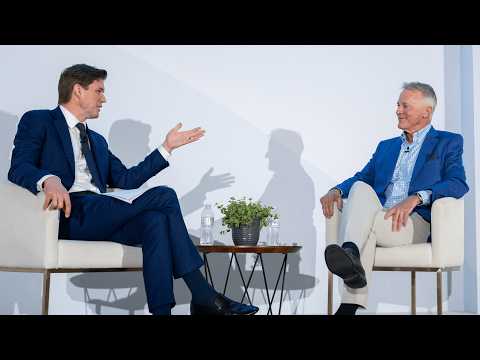
How Can Medtech Bridge the Philosophical Gap With Big Tech and Big Pharma | LSI USA '25

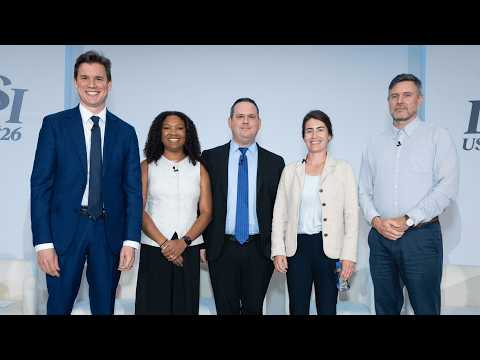
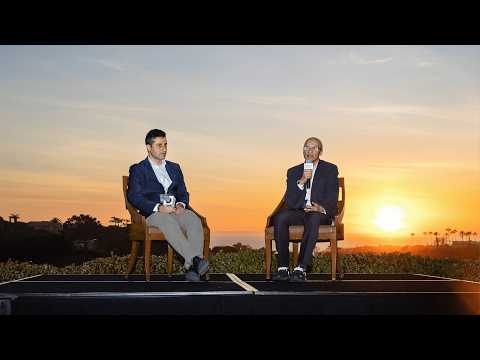
Industry experts Juan-Pablo Mas, Nishant Doctor, and Jordi Parramon discuss with moderator Katie Elias how medtech can effectively align philosophies with big tech and pharma to address critical unmet healthcare needs.

Katie Elias  0:04  
Okay, great. Good to see you guys. Thanks for joining us in the posted lunch digestion mode, so hopefully we'll wake you up a little bit. So I'm really pleased to have this group. We had a really fun prep call for today's panel, so I'm sure it's going to be a great discussion. And our topic is around the intersection and interplay of Medtech with pharma and tech in companies, in investment groups. Like, how do we cross this cultural divide, and what does that mean, practically, as investors and as entrepreneurs, and so joining me here today, we have Juan Pablo from action potential ventures. We have Nishant and Jordy, and they're going to introduce themselves as they talk about their experiences in this space. I think we have a lot of complimentary experiences and interests on this panel, so I know we're going to be in for a great discussion. So you know what we're going to kick things off with? Are a few different themes. And, you know, hopefully you guys remember to talk to each other and make it interesting so that I don't have to work so hard. So we're going to get started thinking about what are the different approaches to evidence generation between the med tech and pharma, and in some cases, the tech industry. And so I think, Jordy, you're going to kick us off on that one.


Jordi Parramon  1:27  
Well, thanks, Katie, yeah, I spent a first portion of my career working in what will be classical med tech, in the space of neuromodulation, specifically. And then I went to Google, and I worked there in this spin off called Early life science. So the first portion of my career was I learned a lot about the classical Medtech industry. I said, when I was at Google, we had opportunity to partner with a lot of pharma companies whose consortiums that usually were trying to put together, what was a big pharma with, with big tech, and I learned a lot through that. We had partnership with GlaxoSmithKline on Bioelectronics. We had a partnership with Sanofi, also in insulin delivery technology, or also with Novartis and Alcon before it was spin out on ophthalmological devices. So that was very interesting for me, because I it was helpful for me to put in context how different cultures, of these different industries are shaped based on the needs that they have to solve. And specifically to the question on evidence generation. The if you're in pharma, the average expenditure of a successful completion of Phase three is more than a billion dollars, he says, so there's a huge financial risk that you're exposing it if you're not making the right choices. So the whole evgen is designed to manage that risk, if you work at pharma, so you spend all the money with mechanistic action, understanding really deep molecular level, a scientific model creation. Then you have the phase ones, and I have the phase two, A's, A, B, etc. So that that is, that is really a big, big focus of the strategies that you're making here on pharma, your medical devices, you have a different type of problem usually, well, first of all, the size the side effects are usually much smaller because the technologies are more localized, so you don't have a molecule that goes to the bloodstream, so you don't have that problem in general. And also, the size of the clinical effect is usually quite large, and I would say, if it's pretty large, then don't even do it. Don't even invest in that, because Medtech needs so that. What it means is that, from a clinical evident generation perspective, the sample sizes and the statistical plans require much less money to invest in clinical studies. On the other hand, once you're done with the regulatory approvals, there is still a long journey of success of medical devices, because you need the reimbursement coverage after reimbursement. Market tax is often a challenge. The sales efficiency are also challenging, et cetera. So that's really a big contrast between these


Katie Elias  4:17  
two worlds. Yeah, and I might just pipe in. I'm happy to have others jump in as well. I think one of the other things that's hard for people from the pharma background to get their heads around, having worked on the biotech side myself for the last seven years, is this idea in Medtech that we do a series of smaller studies and we iterate the product between those studies, because that basically never happens in pharma. You You aren't testing the same molecule unless it fails spectacularly in the first trial, and you go back to square one and start from zero. So this idea that you're tweaking, refining, redesigning, your final commercial version of the product during the clinical trial process is just like a big mind shift for people who are coming from more of a their. Cudics background. I don't know if others have comments they want to make on those evidence generation strategies.


Juan-Pablo Mas  5:07  
Yeah. I mean, so myself, being a med tech person like most public meeting, but having worked at two pharma companies in my career, for Eli Lilly and most recently, currently for a subsidiary of GlaxoSmithKline. You know, I've definitely been surrounded by a lot of pharma approach to evidence generation, particularly Medtech within neuromod, which was one of the early initiatives that brought me to to action potential ventures. Interesting to see how pharma decided to approach new indications, new programs that they wanted to develop internally from a neuromod perspective, with rodent models, small, you know, pre clinical mouse models, where existing disease states were understood from a pharma perspective. And the first thing that was tackled was asking industry to develop miniaturized neuromodulation devices, small cuff electrodes, and that was like a call to action, to to the various vendors and academic institutions as step one in their approach to developing data that would support evidence that to initiate programs and clinical trials develop devices for humans that hopefully translate in, you know, and that was a big question, but it just to me, highlights how central questions around mechanism of action are in pharma and another bridge to gap, whereas in devices, historically, in Nir mod, you know, you'd seen empirical evidence generation and getting to Humans as quickly as possible is kind of like, you know, everybody's rule of thumb. So culturally very different when you bring those two types of organizations together.


Katie Elias  6:48  
Yeah, I definitely have experienced that too, this idea that Moa is king in pharma, and sometimes we have therapies, particularly neuromod, where we're not exactly sure we know how they work, but they do work, and that's why we do them, and hopefully, over the years and generations, we learn more about why they work, but in the meantime, they work, and that it just doesn't compute for a lot of pharma oriented mindset,


Nishant Doctor  7:12  
yeah. I mean, one thing that's interesting here, which you brought up, is, when you ask most med tech, especially neurotech companies, is like, Do you know why it works? They're like, doesn't matter. Like, I'm getting the outcome, then it doesn't matter. But what I think, I mean, this is a little bit cliche, but I feel, is like the first principle, knowing the first principle is so important, which is, pharma does that very well, like the MOA. And then what they do with that Moa is, then they really know what are the markets they can go after. And they can go after multiple markets, knowing what the real Moa is. For example, my first company was cyberonyx, that was doing vagal nerve stimulation for epilepsy, depression. They had no idea what vagal nerve does. They know this works. But then after over time, like people are still doing a lot of vagal nerve stimulation for many indication, but people don't know exactly what it does. And so if you had known that early on, you would have really figured out what the true potential is, which I feel like one company did that really well, set point medical. Now, the downside of that is they did understand the mechanism of action really well, but it took them a lot of time, a lot of capital, but now they know all the indications they can go after because of that, and it helps in platform expansion really well.


Katie Elias  8:19  
Well, I think this is a really good segue to our second topic, which is we see that there are different styles or issues that different types of investors, also on the boards of these companies, are thinking about and what they need to believe and sort of what they're focused on and driving company performance as a board. And so Juan Pablo maybe kind of piggybacking on some of the MOA discussion we already started to have. You know, what do you see as some of the challenges for getting those med tech deals or those kind of combo deals through diverse boards or diverse experiences?


Juan-Pablo Mas  8:55  
Yeah, no, we've done investments and worked with CO investors from a variety of backgrounds, including the sort of the three you mentioned. And I think it's not too surprising when you think about the types of questions that they ask, their focus, where they do diligence, how they drive management teams, how they drive board conversations and strategic decisions, if you kind of look at each individual business model and where exits occur and where, from a venture perspective, the end game is so medical device is not no surprise to anybody in this room, but though there are pre revenue earlier acquisitions in certain segments of Medtech, more typically, most often, companies are built with the intention to go commercialize and generate revenue such that they can be a creative acquisitions to acquirers, or they can access the public markets, you know, and in pharma, typically, you're you're not seeing those same startups necessarily commercialize those and they're either getting acquired on data, on approach. Approvals on their pipeline, if there's some significant promise within it across multiple indications, or, you know, tapping the public markets to continue clinical development and perhaps subsequent indications and approvals. So with that in mind, you know, the types of questions back to what these investors are thinking about, that's what you get from the investors in the space, including tech, right? Tech, typically you're asking about unit economics and scale. And you know, how can we essentially blow the doors off of revenue in the shortest amount of time once we're approved? Because the assumption often when you're working with tech investors that have less experience in Medtech is that, you know, the minute you're approved, it's time to, like, dump money into the sales force and just push so that you can show that ramp. And then figure out if that means, if that's, you know, then ask questions as to, do we remain an independent entity, or do we look to sell this as quickly as possible on the back of this recent momentum that we're generating. But, you know, I do think that med tech investors, because it's a long game ask, even in the earliest stages of a company, questions about the long term future, and are asking about, you know, procedural complexity, physician perspective, patient perspective, or preferences, you know, Salesforce efficiencies and other commercial you know, kind of considerations in addition to everything else, right? Like, in addition to so you're


Katie Elias  11:31  
just saying Medtech investors are smarter because we're asking all of those types of questions, and others are focused too narrowly, too many areas of secret quote him,


Juan-Pablo Mas  11:41  
yeah, like so many areas of scar tissue and med tech, where you could fail in so many different ways. So you learn to make sure to cover all your bases and diligence and not get ahead of your skis, often, because the burn rate considerations and the impact of delays that can really, you know, make for failed financings or financings that don't lead to a subsequent successful financing. So, yeah, I think that's probably the takeaway, is that you have more things to worry about, typically in Medtech, and so you get our patterns, yeah. I mean, I


Katie Elias  12:11  
think on the pharma side, you know, we try not to think too much about those commercial challenges, other than in a very theoretical, vague way. I mean, I have portfolio companies who've done pricing studies, and they hire people to do that. They're smart analyzes. But like, if you haven't been acquired by the time you're thinking about those things, from a practical standpoint, something has kind of gone horribly wrong generally. Like, we're really looking to exit companies on Phase Two proof of concept data sort of before you're essentially the equivalent of your pivotal study. Pivotal study. And if you don't exit, then, then the next opportunity, as you said, is on approval data, or kind of on the expectation of approval data, and if not that, then you're really in trouble. So, like, it's really the kind of the opposite, the opposite of what we're expecting from our Medtech


Jordi Parramon  12:59  
companies at the same time, the kind of classical BI model distribution, where a lot of companies fail in the beginning, and then few of them make it big time at the end, and then integrate that, and that's kind of your return. It is much easier to to apply to therapeutics, because a you have access sooner, right? You don't need to have all the way to creative acquisitions to do that. And secondly, the scalability of the opportunity is often larger because of the mass market access of drugs. So that's why it's so difficult for therapeutic investors and med tech investors to actually sometimes understand each other, because you're really optimizing for very different things. Yeah,


Nishant Doctor  13:46  
one example that I've seen it firsthand at a company that I was working at, they had a very diverse and dynamic boardroom. They had a pure biotech investor who's never done med tech, and they somehow did it in investment in Medtech, there was a pure med tech investor who's never done biotech, and then you had a tech investor who started to get a little bit into med tech, but they still didn't get it. And that, I mean, in my experience, it was the most drama that you see in that boardroom, because no one understands each other. But I think the diversity generally helps you come up with something more creativity, and that's what I saw in that boardroom. Because what biotech cares about is MOA platform expansion, and like, yeah, and the tech investors cares about monetization of data. So if you're collecting data, I care about that fastest user growth. And so how do you get there? And then Medtech cares about like, hey, we need to focus. We need to be on one market. Let's get there fast and as quickly as we can. And anyway, so it always reminds me of that quote that Steve Job made, is, when you have these people with very diverse and you're fighting in each other, you come up with something very beautiful. And that's what I've seen in that boardroom, which is, I think it works out. I think a little bit of diversity generally feels like an advantage.


Juan-Pablo Mas  15:00  
Is it feels like those conversations should be happening, though, before you bring those investors on as a founder, as a CEO, to make sure they're aligned, because I've certainly seen dynamics where founders get attention from maybe some big name tech investors, or vice versa, some well known med tech investors, and they use that to catalyze the round and pull people in. But if those investors aren't talking to each other before, they sort of lock arm as ever come in, and the assumption is that you're all envisioning this going in the same direction, you tend to get more of that drama in the boardroom. And then you're you're lucky if the conversations do become productive and collaborative, because more often than not, people go back to their corners and don't, you know, talk outside of the boardroom to sort of bridge those gaps. So I think one of the key takeaways for me in this whole topic is just communication, right? And it's like frequent and early and often, kind of, because you you'll know quickly, is this a partner I'm willing to sign up for, especially if they're from a different segment or sector, and if they have a wildly different outlook on, you know, the direction of travel?


Katie Elias  16:11  
Yeah. I mean, we've seen some pretty spectacular failures in terms of the tech med tech or the pharma Medtech combos, like I'm thinking back to the days of some of the regenerative medicine approaches between Genzyme and Medtronic trying to kind of grow new cardiomyocytes. And the project, scientifically, sort of didn't reach where it needed to go. But, like the idea of it made so much sense that both of these organizations would care, but the time scale of when they expected to see progress was completely misaligned, like the pharma company was mentally prepared that this was a 15 year project, and the med tech executives at Medtronic definitely don't think in those time of time horizons from an R D perspective,


Jordi Parramon  16:51  
imagine that, if you put that in the equation the big tech now, because at that time constant goes for 15 to three years to actually three Months, right? Because it's hard for them to assess anything that has a feedback loop of improvement of that is not measuring weeks to months maximum.


Katie Elias  17:10  
Yeah. And I think to your point, Juan Pablo, in terms of that communication, you know, what can CEOs or management team members do to kind of bring those groups and those perspectives together, and expect that you're going to have a different level of coaching and facilitation than you might have thought otherwise, right? So that's something that maybe there needs to be a support, peer support network of other entrepreneurs to help with that, or some investors who are willing to share more concrete or stories on what to watch out for?


Juan-Pablo Mas  17:41  
Yeah, and maybe one thing to add too, is just like, generally, stepping up our game in the med tech industry, to have stronger, better understanding of these things that I don't think it's to appeal to pharma, it's more to know more about our own products and how they work. I think there is a little bit of an arrogance amongst this generalization amongst pharma companies about what is, what are Medtech approaches? What are Medtech therapies and solutions? Are they kind of, you know, sort of like from a caveman era around like cutting nerves and surgical approaches? And it's not the elegance of this, you know, sort of mechanism of action that they can that can be explained through chemistry and biology and so, you know, putting that bias aside, but acknowledging it's there, I do think, as an industry, we sort of, and certainly in neurotech, we typically are looking for more understanding of these neural circuits and the mechanisms. I think it serves us well when you are talking to payers, when you're talking to customers, when you're recruiting talent and executives to your team as you scale and grow. I mean, it just serves a lot of facets so as less about trying to necessarily bridge, you know, gaps between parties, it's as much for ourselves as like a standalone industry that I think it's on us to do more of that.


Katie Elias  18:59  
And your point around like building miniature versions of things for mice and rats. Again, it kind of brings me back to like, hey, when we're designing some of the first transcatheter heart valves, we actually don't want to fix heart failure or valve disease in pigs and cows. We really, actually want to treat humans. So let's not over engineer how much time we're spending on evidence generation, on stuff that's actually not going to be an input to the final project. And you know also that's a regulatory issue, of course, like, how can we convince the regulators what is the appropriate amount of animal model data, particularly in fields that have been dominated by pharma, where even on the pharma side, like on the cell therapy side, we see now more of a willingness to move away from non human primate, you know, monkey data, because also of the ethical issues involved in that. And at the end of the day, we're not treating monkeys, we're treating patients. So I think we're going to see more of that creeping into the the med tech space too, rather than making miniature cuff electrodes for rats, hopefully, maybe less good use of burn rate. Yeah, maybe, before we move on to the next topic, something that came up in our pre discussion is within your own organizations, being a med tech oriented investor in a pharma company, you know, what do you have to do to convince your own internal stakeholders at GSK to think differently about a med tech opportunity, and how has that education process gone over time?


Juan-Pablo Mas  20:28  
Yeah, I mean, from the onset. So at GSK, I joined 10 and a half years ago, and at that time, they had a very specific vision of what a bioelectronic medicine was, and what advanced neuromodulation was, why they wanted to get into this field in the first place, and the constraints, or were so many, that it really left very few opportunities to go invest in. Thankfully, we have brought in that. But it was, and Jordy knows this from experience with with GSK on other projects. But like you know, it was autonomic nerves only. It was peripheral nerves only. So no spinal cord, no central nervous system. It was implantable devices only, not no noninvasive it was just a host of factors that meant we had to do a lot of educating when we showed up to say, Here, well, here's what makes a med tech startup investable in our estimation, and it may have some of those attributes, but those aren't the defining attributes for success. There was one case where we brought a company in, and I mentioned, you know, sort of the the idea of burning a nerve or dissecting a nerve, or cutting a nerve as viewed as, uh, sort of not elegant enough for this approach and and so we put forth a company that was developing a therapy for COPD and respiratory diseases. And the initial IC opinion was no way like nothing denervation, we're not going to touch it. But really not much more to the rationale than that. And you know, we pushed on this, and we ended up convincing them to meet with the team, and they brought the team in, and they met with the chief scientific officer at GSK, and, you know, the meeting went really well. The team delivered a very compelling argument and and we walked out of that meeting, and the CSO said to me, like, listen, I still have my reservations around these types of approaches. I you know, it is not what we want to focus on, but I now totally understand why you brought them in and why you pushed on this. I think it's very high quality data and high quality et cetera, you know. So like, again, needing to, like, have those maybe sometimes uncomfortable discussions and push on things, I think is what you know, ultimately leads to some success when you're working within these partnerships or inside of, you know, kind of those organizations, I don't know, Georgie, if you have


Jordi Parramon  22:39  
no exactly right? I mean, there's a huge component of education, because if you've been working all your life in pharma, you're just not going to walk in a room and have a rational discussion on investment case in Medtech without explaining the fundamental differences in how you think about solving the problems. So that, I think that that's because everybody's rational, as long as we all know what we're trying to solve the same problems and how we're going to solve them, right? That's if you frame it this way, it works, but it just takes a lot of energy. And I think also what happens, also in the when problems happen, the weak link always breaks first, and which is the lack of emotional connection between this new world versus what I'm used to, and then you go to where you're used to, and that's why pharma comes to go back to Pharma.


Katie Elias  23:30  
So Nishan, I'm going to ask you to share with us, maybe our last topic that we have time for, which is the role of data and software integration in the med tech space. Maybe, as it, you know, expands to the tech space, and what's your experience where? Where are their pain points, where we headed on that


Nishant Doctor  23:48  
interesting question? So in I think data is becoming a lot more important in Medtech now because of the whole AI boom, and a lot of investors care about it, there are, like, investors who won't even look at you if you don't have data component in kind of in your system, but the data, I think there are two ways you can get it right. One is from your own ecosystem of products that you can collect and use that to enhance the product. Or the second is you get it from another source and use it with your own data set and create a more holistic picture. I think that part the latter is much more harder to get, because everyone knows healthcare is very fragmented, getting data from another sources, and everyone treats it as a gold mile. I don't know why, because in tech, you openly share data, but in healthcare, it's very hard, and I've seen it very closely, where even getting it from hospital system is such a pain to get the data. So what I've started to see now, and I think it's happening recently, where the data you collect from your own product is so valuable. Like, there was a company that I was working on early on, and this was, again, a neuro mod company. They had no idea what parameters were the right parameters to get efficacy. They never tracked that. Like, okay, this parameter, we get this kind of efficacy. Like, there was no sense of that. I. The other company that I was working for was there was a big component of mobile apps where the patients were like consumers were at using it, and they weren't tracking any piece of like, where the the most drop off was for patients, like engagement wise. Because that was a key component of that, and that was something that I was kind of looking from a from a tech side, wanted to kind of anyway. So what I was trying to get is, I think data is becoming important, and you should start tracking either it could be a compliance, it could be about symptom reductions over time, like to start tracking that over time, which is going to be very important


Katie Elias  25:37  
when I think, to your point being open minded around, what are the key insights and the key benefits of your therapy, and just collecting as much of that information as you go along the way, because there may be some surprising benefits that you weren't thinking about when you developed the product. All right, I think we're getting close to the kind of rapid fire section. This has been a great discussion so far. But if there's anything else that you want to bring up instead of your Rapid Fire question, feel free to to hijack that. So what is the thing you wish you had known before today about partnering with pharma or tech for your company or your fund? Is there something that you think you know is a is a watch ad that we haven't already talked about, for the entrepreneurs in the room as you're building those companies,


Juan-Pablo Mas  26:29  
you can go quickly, I think, assuming that someone, just because they have expertise in their area or their industry, or the playbook that works in their industry, that trusting them in situations where it feels like that prevails may not be enough, like they didn't communication again is required, and like we've been burned, where a tech investor wants to ramp, you know, burn and try and hit really lofty sales expectations. And, you know, my like, med tech instincts are like, hold on, limited market, release, learn, you know, iterate. And I think that that that at least has burned us in instances where I assumed that at a scaling point of a device that doesn't require, you know, sort of a specialist, that that the tech playbook may may work. So just from a quick response, maybe that's one thing, is really check each other and understanding what everybody knows before you just, you know, yeah, I would add,


Jordi Parramon  27:36  
when partnerships with different industries together, there's always this issue of make sure first that there align expectation so, and that's not a true thing, because you can just have a goal that you share, but you really have to understand what the goal means, meaning that you have to understand the other if you have a partnership between big tech and pharma, what happens is that pharma thinks that these software guys can fix it everything and and the software guys don't even think about clinical evidence and all this. So first you have to understand the why and what. But the most important thing is always a how. What are you going to do to get those this value and and often these things fails, because, at the end of the day, once you get low enough into the execution chain, this kind of tension surfaces and efficiencies will go down, and there's conflict everywhere. And you just need a little bit of lack of resist over resistance somewhere in the chain of command for these things to disappear. And that's very problematic.


Katie Elias  28:38  
Nishan, last word for you,


Nishant Doctor  28:39  
yeah, I'll keep it short, I think don't ever become a contract research organization. What that means is, don't license out your core technology. Have your own view partnership as something that will complement your core strategy, but not replacing it. Is what I would advise. Is there are times people license out their core technology, which is never, yeah, you're putting all your eggs in one basket, so yeah, have them.Treat them separately. 


Katie Elias  29:06  
Great. Well, that's all we have time for. Thank you very much to the panelists, and thanks to the audience.

LSI USA ‘26 is filling fast. Secure your spot today to join Medtech and Healthtech leaders.

March 16th - 20th, 2026  Waldorf Astoria, Monarch Beach Register arrow