How Can Clinical, Supplier, and Other Types of Partnerships Make Precision Medicine a Reality? | LSI USA '25

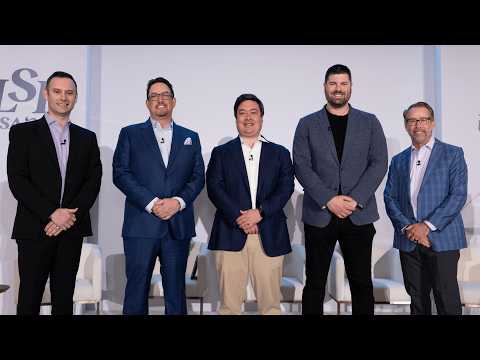
Industry leaders from Illumina, T.Rx Capital, EndoInnovate, and Insight Medbotics discuss how strategic clinical, supplier, and cross-sector partnerships can accelerate precision medicine innovation and adoption.

John Eng  0:00  
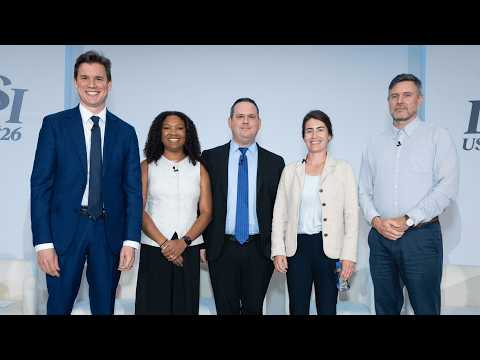
John, well, good morning everyone. So my name is Jon. I lead the Medtech team over at the Singapore economic development board. So a couple of us flew in from Singapore. Some of my colleagues are based in the US as well, and here with us today. Yeah. So a bit about the Singapore Economic Development Board, or as we call it, the EDB. It's the lead government agency for developing Singapore's economy in key industries such as AI and of course, healthcare, precision medicine, is a topic that myself and my team were personally very interested in and not just because of the opportunity to deliver an unprecedented amount of value towards healthcare and patients, but also because it opens up tremendous opportunities from an economic standpoint, as you think about startups as well as large corporates. And of course, this is where partnerships come in, and also where Singapore is investing heavily for us into cultivating ecosystems for collaboration across diverse partners, not in Singapore, but to the rest of the world as well. So on that point on diverse partnerships, I'd love to turn over to the great panel we have here today. So on my left is mish Ashley. Ashley is from Illumina, and she leads corporate development. There we have on her left as well Debbie from TRX capital, among her very many other roles. And on her left is Tofig from Endo innovaid as well as from City of Hope. Yeah. And further then, on my left is fadzila from inside medbotics. Round of applause first to my distinguished panelists, yeah. So thank you very much. And let's get started. Maybe I'll start with Debbie. So Debbie is the VP of strategic partnerships over at Keras, which is focused on precision medicine. So that's your home ground. So where are you seeing partnerships providing the most value to companies in this space?


Debbie Lin  2:13  
Yeah, so I play a dual role. So I'm full time at Keras life sciences, and that is a precision oncology diagnostics company, what we do is we provide clinical sequencing for patients with with cancer, and the clinicians use us, that's the core product. So you meant many of you know, or may not know that Karis started itself out as a immuno history immunohistochemistry company, long, long time ago, 14 years ago, and as next gen sequencing evolved, it's adopted that, and now we've sequenced over more than half a million patients, and we've linked that to the claims information, so that you do have outcomes that presents a tremendously powerful data set. So to answer your question, precision medicine is really sort of in the eye of the beholder. I'm sure many of our colleagues here are going to have different interpretations. But what's really exciting, both from a venture capital role, which I also play, as well as from Kerris, is I'm hearing a lot about the use of data number one, the use of the capability for patient identification and stratification in clinical trials, the use of the data for insights around Target ID for the biotech for biotechnology drug development, and just in general, insights for pushing the science forward. So we at Keris use the data for a number of things, both core as well as non core strategy. But I'll let my colleagues take that further.


John Eng  3:56  
Absolutely. I think lots of potential there in for data is the center of it all when it comes to precision medicine as an opportunity. Maybe I'll turn the mic over to Ashley as well. So Ashley, I think you've had a long career over at luminaire as well, including in product development. So where are you seeing some of the partnerships opportunities in this space as you've been looking to this, including your partnerships in Singapore,


Ashley Van Zeeland  4:20  
certainly. So really appreciate the opportunity to be here today, and I loved your opening as you talked about Singapore really investing in ecosystems, and that's very analogous to the way I think that we've viewed our role in advancing precision medicine is we have a very ambitious mission, right? It's to unlock the power of human health through the genome, and we absolutely cannot do that alone. So while we can develop meaningful and innovative technologies, you really have to partner with test providers, with clinicians, with drug developers, you know, AI houses to take the data that we're able to generate and turn. It into meaningful, actionable, precision diagnostics and therapeutics. And so we have been very happy to have a very long relationship with EDB in Singapore, as you mentioned. So in my r, d, roles at Illumina worked very closely in establishing partnerships for global supply chains, our manufacturing centers of excellence, all the way through creating an innovation open ecosystem. Because once you've created the technology again, we can't innovate every application that can take advantage for an NGS basis. And so really partnering with application developers, test developers, emerging technologies, venture capitalists, you name it, right around our platform is its own ecosystem, and we're now taking that into the tech stack with partnerships with AWS and Nvidia as we move from data generation into data insights. And we've also partnered deeply with pharma towards that aim of drug discovery and development, with other large programs. And then I could go on further, but the government partnership is also a really critical piece of how we advance precision medicine, working with departments of health, working with national scale genomics programs, like the one in Singapore, but there are many around the globe, genomics England, our future health as an example as well, to really think about what are all the pieces that have to come together to take genomic data into precision medicine? 


John Eng  6:32  
Yeah, it really takes a village. Absolutely takes to bring that to healthcare. Yeah. Thanks for that. Yeah. Well, Toufic, you have a very interesting perspective over at the City of Hope as well. Would you be able to share with us, I think, how you look at the many and the many requests for partnership opportunities as well with your organization?


Toufic Kachaamy  6:57  
Yeah, absolutely first. Thanks for having me on this panel. And John, I want to congratulate Singapore for laying the groundwork for precision medicine. And as you said, precision medicine, medicine means something different to different people. It's really personalized. Medicine is how do you give the right treatment for the right person to get the right outcome, and instead of the trial and error being more precise in getting the outcome that you want, and I give that example to everyone Framingham study, for those of you who are not familiar, decades ago, figured out that LDL cholesterol impacts people's lives, and since then, many medications have been created, and many lives have been saved. Quality of life have been improved. And that was one thing that we figured out, like, what Singapore is doing, from what we heard from you, is getting all this information on people to look in the next 510, years, what happens, and that's the future. So that's precision. It's, it's really personalized when we, when I get a request for partnership, yeah, we look at it in multiple different ways. First, it has to fit the mission. Does it? Does it help us deliver on the promise on the mission? For example, the mission at City of Hope is to bring innovative cancer treatments to everyone and to as many people as possible. So that's number one. If it doesn't fit the mission, really it doesn't. It doesn't it doesn't go the second is their synergy. What is the partners love language? What is the thing that they're missing? And do we have that to provide? So then together, we are more effective. It has to be a win, win, win. So when for the patients, win for the organization, and then, when for the partner and something that's something we forget, is scalability, like, if to impact the most number of people you can, the solution has to be scalable. You have to be able to provide it to as many people as possible. And then, finally, is there a potential for long term collaboration? You know, when you go through the speed dating and figure out that this is the the right person for you, you're going to be way more effective if you don't have to do that every time. So a partner who is aligned on your mission and fits all these criteria would be a long term collaborator


John Eng  9:20  
Got it. Well, that's quite a list, yes, but it makes a lot of sense. So about mission and impact as well as thinking long term as well. So thanks for that Toufic. Yeah, maybe over to you as well. Fazila, we really love to learn your perspectives as well as an innovator, and you've done it so many times. So what kind of ecosystem, programs or initiatives have you found to be useful in driving and approaching some of these partnerships?


Fazila Seker  9:51  
Yeah, so many of the technologies, tools and data exist and precision medicine from our perspective. That, in my experience, is being able to bring these tools and data together in a way and interface them in a way that just hasn't been done before. So that helps de couple physician schedules drive efficiencies and make possible what seems impossible. And so for for example, I always see a really great indicator of this is when physicians are trying to put together bits and bobs of different technologies and Jimmy rig their own solution. And that's a great gold mine for aware innovation. And it's really a call to industry like us. And so at insight med biotics, what we're doing, for example, is being able to marry AI enabled robotics into the MRI environment so that we can help more physicians be able to use the right tool to localize and treat cancers and access and working in the MRI is what's prevented that. And if you could do that, then you could reduce re biopsy rates where it could be as high as 40% in prostate cancer, for example, with four repeat biopsies. And compare that to when you use the right tool, MRI, in very dense breasts, then the rev biopsy rates are under 10% and so being able to do that and give access just by understanding that different partnerships across the industry spectrum that haven't worked together, working with MRI manufacturers in our case, and we're the robotics and then with the interventional companies on the actual treatment, focal ablation methods and also the needle biopsy methods. Those require different interfaces, those systems weren't meant to work together as being able to get them to work together in a seamless way that allows physicians to keep doing what they're doing in the most efficient way.


John Eng  11:47  
Yeah, well, sounds like quite a journey and a process to get the stars align for such collaborations. Yeah, thanks for that. So maybe Debbie over to you as well and just building upon some of the learnings from this panel so far, maybe I could ask your advice in your experiences so far, have there been any learnings or red flags, perhaps that might be indicative of ineffective partnerships so far?


Debbie Lin  12:15  
Yeah. I mean, I started by saying telling the story of Keris, which evolved from an IC company to now a, you know, next gen sequencing company to a data company. So I'm sure many of you who are in the room, who have, you know, both early stage and mature companies are seeing kind of the the evolution of precision medicine and how your your companies evolve with that. And oftentimes, you know, I also see many early stage companies as a venture capitalist, and I ask them, you know, what are, what's your exit strategy? What? What company are you trying to be? Or will you be if you start off as a robotics company or a sequencing company, you may end up, you know, in 1014, 15 years as a robotics and data company. So we answer that question that curious by saying we're precision oncology company, precision data company, and so that that means partnerships can sort of span the rainbow all the way from partnering with your core users, which might be the clinical partners, sequencing partners. It could be around data insights for research with NIH is NCIS, academic medical centers. Could be with pharma companies, as we mentioned, for drug target identification and also for clinical trials. So that would be pharma companies as well. And all of those kinds of partnerships do require seamless execution in order to get right. So you need to think about what's core, what's non core, what the time horizons look like for those partnerships, what resources and how do you match all of that so that you can actually conduct them in a way that is meaningful to the company and doesn't burn resources.


John Eng  14:10  
Partnerships are potentially value adding, but there's also a cost to partner absolutely so then it's important to prioritize. Yeah, how about the rest of the panel? Do you have any war stories around? I think how one forms partnerships, any learnings they'd like to share with the audience?


Ashley Van Zeeland  14:29  
I'll build on what you said, because I think that it's an underappreciated component of partnerships, which it really is true that you get out what you put in, right? You don't just sign a partnership agreement and you know kind of magical synergies happen. You really do have to be thoughtful and deliberate and resource for success and have very consistent communication. Because while you may have a perspective internally about the value of this partnership or where it's going, you. So it's critically important to realize the other side has their point of view, and that may stay aligned with you or it may drift. And so a way and a mechanism to really have frequent communication, checking their resources and investment against your own, making sure you're on the same page as a time to invest and double down or disposition. I mean, this really is a garden that you want to tend to. It is not, you know, you throw seeds out and just see what happens.


John Eng  15:27  
Yes, to be fairly directed as well. And I hear you on the importance of maintaining communications, which is easy at the start, but along the way, gets always a bit challenging when it creep comes in as well.


Fazila Seker  15:40  
Yeah, I'd like to add to that. It really takes having somebody dedicated in your organization that's driving those conversations. Because going back to echoing that, what Debbie was saying, it's identifying what's core, non core, and if you can relate to their core areas, then you really get that, that speed engine, and you get that synergy. But if you're trying to come in the side door through a non core area, which is often what we're doing as innovators, where the we have to be able to tell that story of relatability and help them connect the dots for the with those partners, from a non core area on the side door to how it's going to benefit their core areas. And until you can tell that story and and find an open door for a partner to help build that story with you, that it's, it's the long, rough road, but once you get that, it's, it's really exciting, and then you really start innovating together. Yeah, it's


John Eng  16:30  
almost like the mission that topic was mentioning, mentioning just now, aligning everyone on a common mission and narrative as we approach the collaboration. Yeah. How about topic? Do you have any


Toufic Kachaamy  16:41  
Yeah, you know, I think integrity is very important in collaboration. And I echo Debbie's thought on the ability to pivot. Sometimes you start thinking the collaboration is going to be this and that, and then it turns out that that's not what the partner needs or wants. And then you have to be able to pivot. And then I always like to ask, like, what is it that you're looking for? So communication, you know, it's an effective communication, what is it that you're looking for? And can the partner communicate what they really want? And then instead of you having to read between the lines, and this way, the two of you can be aligned. And sometimes the partnership is not going to work, yeah, but it's nice to know that early on, because what they're looking for you can provide and the other way around, it's not going to be a win, win situation.


Debbie Lin  17:30  
Yeah, I wanted to kind of add on to fake expectation management is also important both sides. I used to work for a large pharma company, and there were innovation divisions who simply were there to pilot innovations. It doesn't mean that, if you work with an innovation department or specific department that you're going to get scaled throughout the world, throughout the company. So it's really, it really, you really have to understand, you know, what is the goal of that division? What is the goal of that partnership, so that your expectations are managed in terms of scale, rollout, you know, and reporting to investors. A partnership does not necessarily mean you're going to get bought out by that by that company. So it's very, very important to understand


John Eng  18:21  
that. Got it? Yeah, I think another theme that was brought up is so precision medicine has potential implications across the entire spectrum of care, and at every step of that care pathway, there are different collaboration opportunities. And in order to bring precision medicine towards care involve involves different kinds of stakeholders. I think Ashley mentioned quite a couple of stakeholders, including pharma companies. For instance, it could be research, academic research partners, and also government. So actually, you mentioned just now, you know, one kind of collaboration is with the Ministries of Health. I'm from government in Singapore, so actually just maybe operate to the panel as well. What do you see any role that governments can play in actually helping to push and celebrate some of these partnerships and get around some of the potential roadblocks that some of you have mentioned,


Ashley Van Zeeland  19:22  
certainly I'll start, and would absolutely love to hear from the panelists as well, in in the space of genomics, right and precision medicine as it pertains to a genomics first, you know, pathway to diagnosis, I think we've seen tremendous success of shifting the paradigm, really, from a government first approach, starting back, you know, 10 plus years ago, with genomics England, which was the first large scale population health, you know, sequencing 100,000 individuals, and that had to be backed from the government. First, right? They had some pharma sponsorship, but it's a new paradigm. It had promise for changing the cost curve of healthcare. It had promise for unlocking new biomarkers for Pharma. But nobody had done an experiment of that scale previously, right? And so really took that investment from the government to catalyze that first program. And then we've seen that kind of catch like wildfire globally. And now the the other UK based study that I mentioned is our future health, which has ambitions for 5 million sequenced patients. And then, you know, again, across the globe, precise, in Singapore is a great example. But there's numerous both government and now privately funded activities, that are taking this framework and reproducing it. And I think that's where government can play a really important role, is you have a vision and you have a strategy, but you need some initial catalyst, some initial capital to be able to demonstrate the art of the possible. And then the private dollars can come in, then you can figure out the business model, then you can start to ascribe value. That's right. And so I think again, in our experience working with the EDB, you know, picking areas of strategic value to both not the local jurisdiction, but then also industry partners of across that ecosystem. And aligning those incentives has been a really, you know, kind of manageable recipe.


Debbie Lin  21:33  
I also think the government is a little I think of the government as more strategic and more patient. And so if the strategy is aligned, obviously the government can act as a neutral party. I had been involved in some work in Shanghai and also in Portugal, where the government was a real motivator to clear a lot of the regulatory and sort of other jurisdictional burdens that if one company or two companies came in and demonstrated that interest, there would be no way to surmount those kinds of things, like if we need to build a building, or if we need to provide some incentives for certain types of employees. So to clear those barriers is super, important. We were able to accelerate the projects immensely and get, get those, those projects started. So


Toufic Kachaamy  22:31  
so I mean the government role, I think, in driving innovation, is pivotal in creating the ecosystem right and serving, as I said, as a catalyst the ecosystem that provides opportunity, avoids, you know, the monopoly and provide the seed funding for innovation so they can take off and then accountability and when, when Things are unfair, being able to challenge the system, like we heard from Massimo CEO this morning how they were able to go against Apple. Like, that's the government's role in providing all of this infrastructure. And once you create the the innovators, and then they're competing in a fair way, then the then everyone benefits, the patients benefit, the economy benefit. I mean, that's what was created in the United States. You know, Singapore is a similar system that you all seem to be trying to create, and has been very effective. Has been very successful. Kudos to you.


John Eng  23:36  
Government might play a role in catalyzing and also seeding some of these infrastructure to build up for innovators. Maybe, from an innovator's point of view, is there a wish list for governments to weigh in more?


Fazila Seker  23:49  
Yeah. I mean, I agree with much of what I'm hearing here. I'll just add that, going back to helping to facilitate partnerships between companies who don't have the history of working together, where you're trying to come in through the non core and side door and try to align to that core area, like we were talking about before. We all know that funding coming from government, and if it's seen as free money from industry, that that suddenly catalyzes what looked like a non core, it's like, Well, great. This some free money. Let's, let's look at doing this. And so I think that for helping to, say, catalyze partnerships between small, innovative startups and large companies that have the existing infrastructure out there. But it's about marrying these new equipment so that physicians aren't having to invent things with bits and bobs and their medical physicists in the lab. I think that's where government can really define areas of precision medicine strategies, where it's about incentivizing those partnerships between the startups and the large companies, because marrying existing infrastructure with new technology


John Eng  24:50  
got it. Yeah, that's a lot of food for thought for us as we think about how to actually support precision medicine as well. I think we're just right about TA. Time, and I just wanted to take the opportunity to thank you again for sharing your insights so generously this morning as well. I think personally, I'm this is my first time here on the LSI. I'm here to explore partnerships, along with my colleagues as well, on how we can push the envelope for medtechnovation, and also think of some of these in another part of the world, in Asia. So I think the learnings from what you shared today hopefully useful for the audience here, as well as those online on how to approach partnerships. So thank you so much again. And also allow me to do a quick plug tomorrow, at 945 we have another session regarding, I think, how we approach Asia as a internationalization opportunity for innovators like so many of you in the room, we'd love to have you there as well 945 tomorrow, but if not without further ado, please join me in giving My panel here another round of applause. Thank you. 

LSI USA ‘26 is filling fast. Secure your spot today to join Medtech and Healthtech leaders.

March 16th - 20th, 2026  Waldorf Astoria, Monarch Beach Register arrow