Mark Gliner 0:05
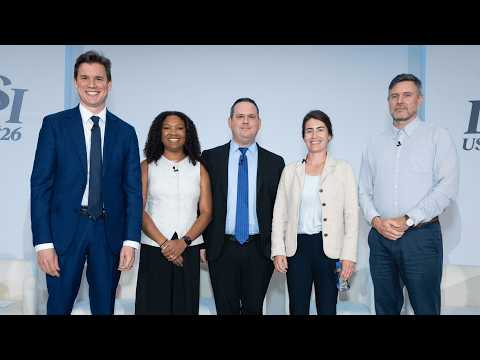
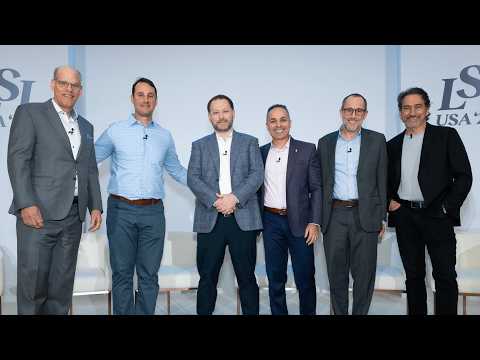
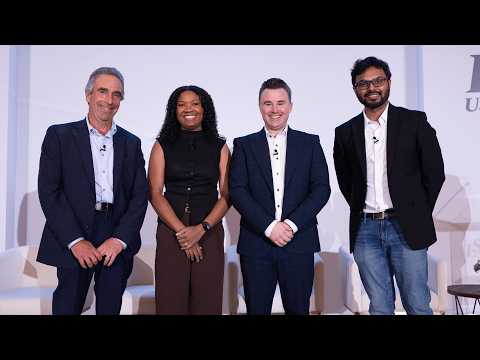
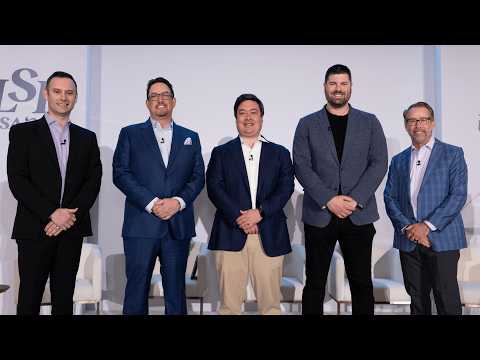
So hello everyone. Thank you for joining us for this panel. So as you may all know, the operating room is evolving today from a space defined by manual skills, one shaped by data robotics and digital tools. So today's conversation will bring together experts on this field to explore how technology is transforming surgery, enhancing precision and changing the role of surgeon in the or we'll look at the promise, the challenges and the future of the surgical suits. So we're joined by an outstanding group of panelists today, and now I'll let them introduce quickly. Maybe you want to start Lynn,
Dr. Lynne Lim 0:54
yeah, hi. I'm Lin, and I am CEO and founder at nuscu, a three year old Singapore medical device company with a year tube surgical applicator that is robotic.
Michael Clouthier 1:05
Mike, Hello, I'm Mike Clouthier. I'm the Vice President of Business Development for the surgical operating unit within Medtronic, which includes the open laparoscopic and robotic tool site.
Eduardo Fonseca 1:17
Hello, I'm Eduardo Fonseca. I'm the CEO of excas, a neurovascular robotics company, and interim CEO of endoquest robotics, flexible and aluminum robotics company.
Derrick Yong 1:28
Hi everybody. I'm Derek from biobot surgical. I'm Chief Engineer in biobot and well, pleasure to be here meeting everybody as well in person.
Mark Gliner 1:38
Thank you. So as we've witnessed these evolutions from open surgery to minimally invasive surgery and now robotic assisted surgery. Can you tell us maybe, how this, from your perspective, impacted both patient outcomes, on one hand and on the other, the efficiency in the or and in the hospital system as a whole. Shall I start? Yes, please.
Dr. Lynne Lim 2:04
So what we have is actually a we are in the space where we are dealing with middle ear infections, and so we have a current surgery to put a ear tube to treat in surgery is to have many different surgical instruments fiddling around the ear. So it needs general anesthesia, operating theater setup, surgical microscope to see that one millimeter tube. So now with our device, it's a robotic, single handheld device. With one click, we are able to insert the tube onto the ear drum in just one second, moving, therefore the surgery out of the operating theater to the clinic. So you can imagine, for the patients no longer waiting months to years for this surgery, they do not have to fast overnight come to a cold, scary place, afraid of the GA now that it's in the clinic, immediately walk in, click home the same day, hearing immediately back to school, Eating 15 minutes time. Yeah,
Mark Gliner 3:00
impressive, and maybe Michael, from your perspective, how a big company like Medtronic thinks about this, when, when they when they think robotic and move to robotics?
Michael Clouthier 3:10
Yeah, I think given the long history that Medtronic has had in surgery, we've seen the evolution from open to minimally invasive and then to robotic. I think the advantages from a patient perspective are often reduced, you know, bleeding less hospital stay time, but we've also seen that transition translate for the surgical staff into increased cognitive load or increased setup times and other things that need to be overcome to get the benefit. But the benefits of the technology for like robotics, 3d visualization, very precise dexterity for the surgeon, which hopefully doesn't in, increase the the beneficial outcomes for the patient as well. So there's there's trade offs, and it takes time, I think, to to eventually get to all of those great benefits for the patient, but they do come
Mark Gliner 4:05
Eduardo, please. Can you maybe introduce your your system and how, how you you thought about those, those elements when
Eduardo Fonseca 4:13
Wonderful. So, X Cath is a neuro Endovascular robot that's meant ultimately to treat stroke tele, robotically, so mechanical thrombectomy and Endo quest, the way to think about it is essentially an Endo, an endoscope with single port surgical tools and robotics, really is in this very interesting evolution where it's hard to argue of the clinical benefit that going from an open heart procedure to a simple outpatient and the luminal Endovascular procedure has done, or going from open to laparoscopy now, that begs the question, what is the future? And in my view, it'll be two, four. World. The first is robots that are able to bring the advent of a new class of procedures, so not just refining existing procedures, but creating an entirely new class of procedures, and such as endoclass so procedures that couldn't be done today with a current tool set and procedures that couldn't be done today because surgeons aren't there at the bedside. So that's telerobotics. The other very interesting thing is the advent of AI, but I guess we'll get into it later.
Mark Gliner 5:31
Okay, thank you, Terry. About your system. How do you do you see it? It fits these constraints of bringing value both to the patient and to the hospital system as a whole, without the burden of a new, maybe complex system like like Michael described it before.
Derrick Yong 5:51
Well, so bio board system is in the prostate space. We are robotic positioning system for all sorts of needles, burden or not, but I do agree with Mike what he was saying earlier, that it does take a longer time to set up, initially, to get a robot in there, get it all set up, but that increases with performance of the procedures. What we really benefit from, although that might be a disadvantage, is subsequently procedure times will be shorter because the robot is there to access with the procedure, and you're going to get better precision, because this kind of precision can only be achieved with a robot. And with precision, you get, well, smaller puncture point, in our case, lesser puncture points or smaller cuts, all of which would result in faster patient recovery.
Mark Gliner 6:35
Yeah, yeah. So we understand that with robotic systems, we can maybe reach precision we could not before this, this have, of course, inpatient recovery and regarding the impact on the our system, our staff and hospital system, we need to think about how to reduce the burden. So maybe that brings us to a question regarding learning curves and support of the staff at the hospital. Is it something you think about when designing your offer, designing your product, how you will train people to use your system?
Michael Clouthier 7:10
Maybe, Michael, you can start them absolutely. It's something that a lot of consideration right now. We're since we're really in the infancy of our robotic endeavors. We are putting people. I mean, we're flooding it with people to help the surgeons and the staff set up the system, train them, and so forth. So, I mean, it's like a one to one course. You know, relationship between surgeons and staff, our own staff, that's helping implement that, but that's not a sustainable model for the future. So as we continue to learn, we'll incorporate more and more simulations and even AI that can help where should the robotic arms be set up, where the Cho cars should be placed in simulations to help surgeons in training or staff in training to set up. So we'll incorporate more and more technology into this to make it a more scalable solution.
Mark Gliner 8:06
Okay, so from the perspective of a major like Medtronic, we understand that it might be like having investment to have those, those learning, learning sessions and learning of the staff for smaller companies. How do you how do you integrate that in your in your strategy? Yeah,
Dr. Lynne Lim 8:23
I think so maybe I'll take that first. So for for me, because I'm a surgeon, I, when I developed the device, I really thought of the surgeon in mind, yeah, I wanted something that was very simple, that would be a dog. Because I know, as a surgeon, we are, we are really, we are not very patient, yeah, but you know, it's interesting, because I use a lot of Medtronic device, and without bias, Medtronic gives really good support, and that makes a huge difference. So for the surgeon, it must first make sense for you to want to use the device. Do not increase my workflow too much. Make sure I get reimbursed fairly. And then what is really important is do not send your sales rep to me. Send your tech support. Yeah, we love tech support. So tech support them before the surgery with very good training. Do not leave them alone once they are in the OT we like the first cases to have ot support and and then also the team, the the team, like a small team, like almost we would learn from supporting the cases and knowing what to do the troubleshooting and all that. And post op really be there when they want to troubleshoot. So as a surgeon, I know I get, I get thrown all kinds of equipment all the time. There are like 30 same equipment. But how do I choose? I choose the company that gives the best support. That's as easy as that.
Mark Gliner 9:47
Thank you. Maybe from your perspective, Derek,
Derrick Yong 9:50
all right, I'm actually that tech support that Dr Lee is talking about, yeah. So at least on bio board side, we are, we are small as well, but we do. We do our best to give the personal touch, which is our applications team, our few engineers going in, providing the necessary support in the initial few cases or handful of cases. But I what I really think would help with adoption is how we design the product with the user in mind, just like what Dr Lin was saying as well, with a surgeon in mind. Design it in a user intuitive or surgeon intuitive way. Don't touch the screen that much. Whatever can be automated. We automate it, and ultimately that helps with the adoption and pick up the ability to be proficient using our systems too. That's what we have, we have experienced thus far with a lot of help from our doctors.
Mark Gliner 10:39
Eduardo, you want to add something before we move
Eduardo Fonseca 10:41
well, I could mention that most technologies that are truly groundbreaking tend to have very steep learning curves, and steep learning curves could equate to someone's family member on the table, and therefore, it's our priority to essentially expose physicians As much as possible to the actual clinical case ahead of time. So for Endo quest that that took the form of a digital twin, a simulator that they have extensive experience with the system prior to doing any clinical cases. And for and for excav That's patient specific anatomy models that are printed and the procedures can actually be done and rehearsed ahead of any case. So I think making physicians very comfortable and essentially haven't seen the movie before and rehearsed it greatly diminishes that learning curve that would be very important moving
Mark Gliner 11:36
forward. Thank you very much. Moving forward, I have a question. So we talked about robotic systems, so big capital equipments. Now we see also a lot of AI systems and maybe also augmented reality systems going to the or do you see them fitting together in one single, big system? Or do you see them as two separated systems with their own market, their own adopters. What's your thought about this?
Dr. Lynne Lim 12:07
Yeah, so I think it really depends on the device. But for something like clicks, it's not really possible for AI to take over the whole system, because we are a surgical device doing the surgery. We are not being assisted by something that we are working on, but I would see, because we have software, that we would be able to incorporate AI in the future. And it would be really nice now, a lot of devices are standalone inside the diagnostic and then the surgical device alone. I would like for my device eventually to have diagnostics together with a surgical and with AI, it's able to select the ear drums better, the angles, what type of tubes to put and at which position to place, to be very accurate, yeah,
Michael Clouthier 12:55
yeah. I think I kind of separate the two with AI, exactly how Lynn has described it being information that is useful for for decision making intraoperatively, and so being able to leverage a variety of different algorithms and information to provide surgeons with information on what the anatomy is, or you know Where the critical structures are located, or what the perfusion is at the site of the surgical resection, or things like this would be important information. And then I look at AI, AR, augmented reality is really a delivery mechanism for some of that information. With a robot, you've already got a screen, you know, a 3d screen and so forth. So I'm not sure it makes a ton of sense. Maybe you could remove some of that with a headset. Historically, what I've found with surgeons, you know, they don't necessarily like wearing things on their head, although there's, there's, you know, lamps and other things that that some surgeons do. But sometimes, if you're in a long procedure, fatigue and other things, you know, sometimes I don't even like wearing the 3d glasses that we have with our Hugo system. So being, you know, if you can reduce the weight, not have the fatigue factor, but I look at AI as really that visualization component of AI information. So whether it's 3d anatomy or other things that are being overlaid on what they see in the surgical field. So I think there's a variety of ways to do that, but I think the AI is the real value add honestly.
Eduardo Fonseca 14:31
Yeah, so a surgeon, in an exaggerated case, might do 20,000 procedures in his lifetime. It's not difficult to imagine a future where AI systems are trained on millions of cases and therefore surgery and the ability to put software in between surgeon's hands and the end effector will inevitably lead to a future where the best AI model is better than the best surgeon. Now that. Brings about a lot of different concerns, but I think we've seen the precedent with aviation as well. And therefore, at least in my view, where this will lead is a future where the AI guides surgeons, prevents motions that the AI system could consider dangerous. And if that were to happen, clinical outcomes would significantly improve, and surgery could quickly become a future where going to get operated in a day lost of your life. It's a nuisance, as opposed to something that's genuinely dangerous, and I think we're rapidly approaching that. We live in the era of greatest technology improvement of humankind. I'm confident that the pace of acceleration in AI is faster than we've seen with any other technology and in human history.
Mark Gliner 16:00
Eric, you want to add something before we I was just thinking about Skynet,
Derrick Yong 16:05
but yeah, like, like Eduardo was saying, AI is inevitable. I just caught my caught my boy using AI to do his homework. The other day. I had mixed feelings about it, but I believe in the surgery space it will be the same. On bio bot side, we have been seeing it as how it transforms our robot from a tool into an assistant, eventually into a copilot for the entire surgical procedure. And that's how we have been molding, infusing AI into our systems as well. So yeah, thank you.
Mark Gliner 16:35
And so if, if I, if I summarize correctly, if we want to fully benefit for what on, on what AI can bring. We would need, at some point, a robot between the surgeon and, like you said, the in the effector, to be able to fully capture the precision and the and the information that AI could bring. So robotics is here to stay. I think so. Thank you for for this. Maybe in terms of adoption, there is always discussion about robotics adoption problems of cost for the hospital, for example, what do you think would be the next trigger of major adoption of robotic systems in the hospitals? What is it? Is it a technological hardware that we still need to to reach. Is it? Is it a business model? What could it be?
Dr. Lynne Lim 17:29
Yes. So I think the I have seen quite a lot of robots which actually failed in the hospital systems, because maybe, I think a lot is the cost. It's hard to make back the amount you put in, and because the setup time and all that is long. So some surgeons prefer to just do the simple way and get over with it. So I think it must be cost efficient, it must not take the workflow. Must not be so difficult that it puts people off. But I I really think that the big enablers are actually just making things simple and being actually collaborative. I see like 20 versions of the same things, and I think there's a lot of waste, and the surgeons get fatigued being bombarded all the while. So I think it's important to answer the question, Is this really needed, and is this, could we collaborate a bit more, do something, one thing, instead of 100 of this robots, and for the adoption, I actually think we need to teach a mindset of change management, so it's very hard to persuade a surgeon to change. They will change if they think really needed, yeah, and if they think the patient really needs and so really change management and being open to new ideas, yep.
Michael Clouthier 18:56
I guess I'll focus my response first, just on adoption of current robotic systems. And then maybe we can come back and talk about future innovations. But I think for for the current innovations, the the adoption, I think is, is going to be, as you said, inevitable. I mean, I think surgeons want it in their training. You know, it's even sometimes I hear about difficult to get enough lap cases for their training requirements, because they're spent, you know, they want to spend so much time on robots. And has more and more older physicians that weren't trained on robots start to retire, and you bring in those new, new surgeons that really are demanding it. I think you're just going to continue to see adoption, and not to diminish at all the patient role in this. I think a lot of them patients are, you know, utilizing the resources available, and suggesting even going to their surgeons and saying, Are you going to use the robot on on this particular procedure? So I think a lot of that is going to continue to drive a. Adoption. But I think cost is as a significant barrier today for overall adoption. So that continues to evolve, and I think you'll find more and more companies trying to figure out how to do that. Could be through some business models as you describe. Maybe it's a per procedure type of model you see that being utilized more and more. So maybe there won't be as much of a capital cost with a disposable or an instrument cost. Maybe it'll be more of a business model around a per procedure expense that's utilized to drive those kinds of adoption. So I think you'll see a combination of innovation to make it simple, lower the cost, maybe some different business models, and then just overall demand from both surgeons and patients to drive forward the systems of today.
Eduardo Fonseca 20:49
So if we look at the history of surgical robotics, it's largely due to the resilience and rare genius of Dr Fred Mo and the fact that he was able to find the one procedure where he added clinical benefit to patients. What drove adoption, I would say, is largely marketing for surgical robotics as a class. But I strongly believe that's the past. I believe that surgical robots to gain commercial adoption will now, once again, need to prove enhance clinical benefit to patients and and that enables, again, doing surgery in areas where current tools are unable to do so, avoiding to go through healthy tissue, doing surgery where it's not available tele robotics or enabling a new class of procedure, but not just refining old ones and trying To find marginal benefits. The reality is surgical robotics, in nearly all cases, adds cost, complexity and time, and something needs to offset that, and that has to be clinical benefits.
Derrick Yong 21:55
I do have a simple answer. I heard simple being mentioned a lot along the way. Of course, it has to be simple for operation. But from what I've seen so far, when our surgeons, who are just like Dr Lin said, are generally impatient when they want to adopt something they they do want it to match their current workflow as best as possible. So I would say the main thing to be able to match this workflow. The challenge, however, is every physician has a slightly different workflow, so there should be some flexibility built into a robust robotic system still to enable modifications or adaptation for different kinds of workflow for different physicians and surgeons.
Mark Gliner 22:36
Okay, you talked about clinical benefits and yeah, it seems the key to to be able to to build a product that that brings clinical value, instead of pushing for technology. But so how do you make sure, when you design a product that it will have clinical relevance, and also throughout the life of the product? We talked about? AI, we hear a lot of now projects where they want to follow, make some follow up on the clinical data of the patient after surgery, to be able to close the loop and then learn about the outcomes to better better. Propose a planning or a surgery. Is it something that you think about when you design your product at Medtronic? Is it something that is
Michael Clouthier 23:21
absolutely I think, I think Eduardo made a great point about the clinical benefit. You know, these are really tools, and the surgeons, you know, have to utilize those tools in a efficient, effective manner, and you need to prove that through clinical trials and other things. But, but also, surgeons are very innovative themselves in using these tools and maybe different ways to in developing different techniques, and eventually, you know, some of those techniques become even better than the standard of care, but it takes time to get people trained and prove that the new techniques are there. So the clinical benefit is a really critical point to evolving these but designing into the product is absolutely one of the first things we think about is, what is the clinical need, and then, do we have a technology that can match it? But you often don't fully understand if that's, you know, it's a hypothesis at the beginning, so you have to test that hypothesis. And obviously that's what pilot studies and clinical trials, and you, you go back and you modify the design and verify if that truly does meet that that clinical benefit, but it's, it's certainly designed with with clinical benefit in mind at the beginning.
Eduardo Fonseca 24:36
Yeah. So in my view, if a company wants to have true humanitarian impact. It needs to create sustainable patient value. And by sustainable I refer to it actually has to be a successful business. So thinking of it stand alone as either this is only meant to treat this procedure or this robot is designed in a way to only enable clinical benefit is unfortunately. Not sufficient. It has. It has to be the whole life cycle, from training cogs. How are you going to develop new procedures? How are you going to democratize them? Are your procedures only applicable to the top KOLs, or you democratize it to the rest of the field? So it goes much beyond technology. And I would say the most important part of surgical robotics is human factors, defined by the complete interaction throughout the whole life cycle in order to create a sustainable business.
Mark Gliner 25:29
Thank you. Maybe one, one last topic, so we talk about a lot, notably in the US, about the difference between hospitals and ASCs, regarding like market, market access, in terms of robotics, is it something you think about when you develop your strategy, about how you will address both hospitals and surgery centers? Lin, maybe you, you have, you have an idea on
Dr. Lynne Lim 25:54
this. You're talking about different markets
Mark Gliner 25:57
surgery, like clinic, clinics, private hospitals and bigger hospital centers.
Dr. Lynne Lim 26:03
Okay? So I think the it really depends, like the private clinics, the doctors, the doctors are have to survive. They are thinking about returns, and so they are, if it makes sense, returns wise, they will do it if it's not very onerous, if you're talking about a big hospital, they have different kinds of reimbursements and all that. So the reimbursement becomes very important. If the hospital has already spent a lot on that robot, they have to make returns. So I think how you select which is the hospital you want to go to, a private, public or is it a very small center, or is it a one man clinic that could be your driver? You know, some products takes off. For example, in India every every day there's a new clinic being formed in India. And so if you have a correct device that really feeds into this market, it could be highly successful. Okay,
Mark Gliner 26:56
anyone wants to add on on this, maybe Derek or
Derrick Yong 26:59
Sure, um, just sharing from what we have attempted to be able to address both the or and the ASC side of things is, generally, there's no one solution that fits everything. We do have a robotic system that's fairly large fits perfectly in the OR, but once you push it into the clinic you do have, you do face challenge. It's still doable, but you do face challenges. But that's also what drives our engineers to continue to develop, and that's the part that I enjoy, actually. But as long as there's a clinical need, going back to the previous one, there's a clinical need, there will be a suitable solution engineering will be able to come up with
Michael Clouthier 27:35
Michael, I think with regards to ASCs and outpatient, you just see the demand of patients, you know, desiring that type of solution. And so with our robot in particular, we've made it into a very modular, flexible system. So in theory, we should be able to adapt that system from a hospital to a outpatient, day surgery center kind of environment, and I think AI can be a big part of that as well. To improve the efficiency get through as many procedures as possible. That's really important for those day procedure facilities, so that they can be cost effective and generate the revenue necessary to sustain it. But thinking about from a cost of the robot and the disposables and all the other things, it's probably going to be pretty simple procedures, so maybe it has to be tailored a little bit towards the types of procedures that will be done in those environments. So it is a very, I think, attractive market, and one that we think about as well.
Eduardo Fonseca 28:39
So our robots are designed for angiosuites and Endo suites. That's on purpose, because we there are areas that currently robotics haven't penetrated, and going towards an ASC, it really is an exercise of thinking of worst case outcomes and then working backwards from there, and eventually the vision is, as surgery becomes safer, more and more procedures will eventually be turned to the ASC regardless. So it's really important to give that front and center, okay, well,
Mark Gliner 29:09
I think that covers our topic today. We are running out of time. Thank you again, everyone for for this very insightful discussion. Thank you.
Dr. Lynne Lim 29:19
Thank you.
Michael Clouthier 29:20
Thank you.
Mark Gliner 0:05
So hello everyone. Thank you for joining us for this panel. So as you may all know, the operating room is evolving today from a space defined by manual skills, one shaped by data robotics and digital tools. So today's conversation will bring together experts on this field to explore how technology is transforming surgery, enhancing precision and changing the role of surgeon in the or we'll look at the promise, the challenges and the future of the surgical suits. So we're joined by an outstanding group of panelists today, and now I'll let them introduce quickly. Maybe you want to start Lynn,
Dr. Lynne Lim 0:54
yeah, hi. I'm Lin, and I am CEO and founder at nuscu, a three year old Singapore medical device company with a year tube surgical applicator that is robotic.
Michael Clouthier 1:05
Mike, Hello, I'm Mike Clouthier. I'm the Vice President of Business Development for the surgical operating unit within Medtronic, which includes the open laparoscopic and robotic tool site.
Eduardo Fonseca 1:17
Hello, I'm Eduardo Fonseca. I'm the CEO of excas, a neurovascular robotics company, and interim CEO of endoquest robotics, flexible and aluminum robotics company.
Derrick Yong 1:28
Hi everybody. I'm Derek from biobot surgical. I'm Chief Engineer in biobot and well, pleasure to be here meeting everybody as well in person.
Mark Gliner 1:38
Thank you. So as we've witnessed these evolutions from open surgery to minimally invasive surgery and now robotic assisted surgery. Can you tell us maybe, how this, from your perspective, impacted both patient outcomes, on one hand and on the other, the efficiency in the or and in the hospital system as a whole. Shall I start? Yes, please.
Dr. Lynne Lim 2:04
So what we have is actually a we are in the space where we are dealing with middle ear infections, and so we have a current surgery to put a ear tube to treat in surgery is to have many different surgical instruments fiddling around the ear. So it needs general anesthesia, operating theater setup, surgical microscope to see that one millimeter tube. So now with our device, it's a robotic, single handheld device. With one click, we are able to insert the tube onto the ear drum in just one second, moving, therefore the surgery out of the operating theater to the clinic. So you can imagine, for the patients no longer waiting months to years for this surgery, they do not have to fast overnight come to a cold, scary place, afraid of the GA now that it's in the clinic, immediately walk in, click home the same day, hearing immediately back to school, Eating 15 minutes time. Yeah,
Mark Gliner 3:00
impressive, and maybe Michael, from your perspective, how a big company like Medtronic thinks about this, when, when they when they think robotic and move to robotics?
Michael Clouthier 3:10
Yeah, I think given the long history that Medtronic has had in surgery, we've seen the evolution from open to minimally invasive and then to robotic. I think the advantages from a patient perspective are often reduced, you know, bleeding less hospital stay time, but we've also seen that transition translate for the surgical staff into increased cognitive load or increased setup times and other things that need to be overcome to get the benefit. But the benefits of the technology for like robotics, 3d visualization, very precise dexterity for the surgeon, which hopefully doesn't in, increase the the beneficial outcomes for the patient as well. So there's there's trade offs, and it takes time, I think, to to eventually get to all of those great benefits for the patient, but they do come
Mark Gliner 4:05
Eduardo, please. Can you maybe introduce your your system and how, how you you thought about those, those elements when
Eduardo Fonseca 4:13
Wonderful. So, X Cath is a neuro Endovascular robot that's meant ultimately to treat stroke tele, robotically, so mechanical thrombectomy and Endo quest, the way to think about it is essentially an Endo, an endoscope with single port surgical tools and robotics, really is in this very interesting evolution where it's hard to argue of the clinical benefit that going from an open heart procedure to a simple outpatient and the luminal Endovascular procedure has done, or going from open to laparoscopy now, that begs the question, what is the future? And in my view, it'll be two, four. World. The first is robots that are able to bring the advent of a new class of procedures, so not just refining existing procedures, but creating an entirely new class of procedures, and such as endoclass so procedures that couldn't be done today with a current tool set and procedures that couldn't be done today because surgeons aren't there at the bedside. So that's telerobotics. The other very interesting thing is the advent of AI, but I guess we'll get into it later.
Mark Gliner 5:31
Okay, thank you, Terry. About your system. How do you do you see it? It fits these constraints of bringing value both to the patient and to the hospital system as a whole, without the burden of a new, maybe complex system like like Michael described it before.
Derrick Yong 5:51
Well, so bio board system is in the prostate space. We are robotic positioning system for all sorts of needles, burden or not, but I do agree with Mike what he was saying earlier, that it does take a longer time to set up, initially, to get a robot in there, get it all set up, but that increases with performance of the procedures. What we really benefit from, although that might be a disadvantage, is subsequently procedure times will be shorter because the robot is there to access with the procedure, and you're going to get better precision, because this kind of precision can only be achieved with a robot. And with precision, you get, well, smaller puncture point, in our case, lesser puncture points or smaller cuts, all of which would result in faster patient recovery.
Mark Gliner 6:35
Yeah, yeah. So we understand that with robotic systems, we can maybe reach precision we could not before this, this have, of course, inpatient recovery and regarding the impact on the our system, our staff and hospital system, we need to think about how to reduce the burden. So maybe that brings us to a question regarding learning curves and support of the staff at the hospital. Is it something you think about when designing your offer, designing your product, how you will train people to use your system?
Michael Clouthier 7:10
Maybe, Michael, you can start them absolutely. It's something that a lot of consideration right now. We're since we're really in the infancy of our robotic endeavors. We are putting people. I mean, we're flooding it with people to help the surgeons and the staff set up the system, train them, and so forth. So, I mean, it's like a one to one course. You know, relationship between surgeons and staff, our own staff, that's helping implement that, but that's not a sustainable model for the future. So as we continue to learn, we'll incorporate more and more simulations and even AI that can help where should the robotic arms be set up, where the Cho cars should be placed in simulations to help surgeons in training or staff in training to set up. So we'll incorporate more and more technology into this to make it a more scalable solution.
Mark Gliner 8:06
Okay, so from the perspective of a major like Medtronic, we understand that it might be like having investment to have those, those learning, learning sessions and learning of the staff for smaller companies. How do you how do you integrate that in your in your strategy? Yeah,
Dr. Lynne Lim 8:23
I think so maybe I'll take that first. So for for me, because I'm a surgeon, I, when I developed the device, I really thought of the surgeon in mind, yeah, I wanted something that was very simple, that would be a dog. Because I know, as a surgeon, we are, we are really, we are not very patient, yeah, but you know, it's interesting, because I use a lot of Medtronic device, and without bias, Medtronic gives really good support, and that makes a huge difference. So for the surgeon, it must first make sense for you to want to use the device. Do not increase my workflow too much. Make sure I get reimbursed fairly. And then what is really important is do not send your sales rep to me. Send your tech support. Yeah, we love tech support. So tech support them before the surgery with very good training. Do not leave them alone once they are in the OT we like the first cases to have ot support and and then also the team, the the team, like a small team, like almost we would learn from supporting the cases and knowing what to do the troubleshooting and all that. And post op really be there when they want to troubleshoot. So as a surgeon, I know I get, I get thrown all kinds of equipment all the time. There are like 30 same equipment. But how do I choose? I choose the company that gives the best support. That's as easy as that.
Mark Gliner 9:47
Thank you. Maybe from your perspective, Derek,
Derrick Yong 9:50
all right, I'm actually that tech support that Dr Lee is talking about, yeah. So at least on bio board side, we are, we are small as well, but we do. We do our best to give the personal touch, which is our applications team, our few engineers going in, providing the necessary support in the initial few cases or handful of cases. But I what I really think would help with adoption is how we design the product with the user in mind, just like what Dr Lin was saying as well, with a surgeon in mind. Design it in a user intuitive or surgeon intuitive way. Don't touch the screen that much. Whatever can be automated. We automate it, and ultimately that helps with the adoption and pick up the ability to be proficient using our systems too. That's what we have, we have experienced thus far with a lot of help from our doctors.
Mark Gliner 10:39
Eduardo, you want to add something before we move
Eduardo Fonseca 10:41
well, I could mention that most technologies that are truly groundbreaking tend to have very steep learning curves, and steep learning curves could equate to someone's family member on the table, and therefore, it's our priority to essentially expose physicians As much as possible to the actual clinical case ahead of time. So for Endo quest that that took the form of a digital twin, a simulator that they have extensive experience with the system prior to doing any clinical cases. And for and for excav That's patient specific anatomy models that are printed and the procedures can actually be done and rehearsed ahead of any case. So I think making physicians very comfortable and essentially haven't seen the movie before and rehearsed it greatly diminishes that learning curve that would be very important moving
Mark Gliner 11:36
forward. Thank you very much. Moving forward, I have a question. So we talked about robotic systems, so big capital equipments. Now we see also a lot of AI systems and maybe also augmented reality systems going to the or do you see them fitting together in one single, big system? Or do you see them as two separated systems with their own market, their own adopters. What's your thought about this?
Dr. Lynne Lim 12:07
Yeah, so I think it really depends on the device. But for something like clicks, it's not really possible for AI to take over the whole system, because we are a surgical device doing the surgery. We are not being assisted by something that we are working on, but I would see, because we have software, that we would be able to incorporate AI in the future. And it would be really nice now, a lot of devices are standalone inside the diagnostic and then the surgical device alone. I would like for my device eventually to have diagnostics together with a surgical and with AI, it's able to select the ear drums better, the angles, what type of tubes to put and at which position to place, to be very accurate, yeah,
Michael Clouthier 12:55
yeah. I think I kind of separate the two with AI, exactly how Lynn has described it being information that is useful for for decision making intraoperatively, and so being able to leverage a variety of different algorithms and information to provide surgeons with information on what the anatomy is, or you know Where the critical structures are located, or what the perfusion is at the site of the surgical resection, or things like this would be important information. And then I look at AI, AR, augmented reality is really a delivery mechanism for some of that information. With a robot, you've already got a screen, you know, a 3d screen and so forth. So I'm not sure it makes a ton of sense. Maybe you could remove some of that with a headset. Historically, what I've found with surgeons, you know, they don't necessarily like wearing things on their head, although there's, there's, you know, lamps and other things that that some surgeons do. But sometimes, if you're in a long procedure, fatigue and other things, you know, sometimes I don't even like wearing the 3d glasses that we have with our Hugo system. So being, you know, if you can reduce the weight, not have the fatigue factor, but I look at AI as really that visualization component of AI information. So whether it's 3d anatomy or other things that are being overlaid on what they see in the surgical field. So I think there's a variety of ways to do that, but I think the AI is the real value add honestly.
Eduardo Fonseca 14:31
Yeah, so a surgeon, in an exaggerated case, might do 20,000 procedures in his lifetime. It's not difficult to imagine a future where AI systems are trained on millions of cases and therefore surgery and the ability to put software in between surgeon's hands and the end effector will inevitably lead to a future where the best AI model is better than the best surgeon. Now that. Brings about a lot of different concerns, but I think we've seen the precedent with aviation as well. And therefore, at least in my view, where this will lead is a future where the AI guides surgeons, prevents motions that the AI system could consider dangerous. And if that were to happen, clinical outcomes would significantly improve, and surgery could quickly become a future where going to get operated in a day lost of your life. It's a nuisance, as opposed to something that's genuinely dangerous, and I think we're rapidly approaching that. We live in the era of greatest technology improvement of humankind. I'm confident that the pace of acceleration in AI is faster than we've seen with any other technology and in human history.
Mark Gliner 16:00
Eric, you want to add something before we I was just thinking about Skynet,
Derrick Yong 16:05
but yeah, like, like Eduardo was saying, AI is inevitable. I just caught my caught my boy using AI to do his homework. The other day. I had mixed feelings about it, but I believe in the surgery space it will be the same. On bio bot side, we have been seeing it as how it transforms our robot from a tool into an assistant, eventually into a copilot for the entire surgical procedure. And that's how we have been molding, infusing AI into our systems as well. So yeah, thank you.
Mark Gliner 16:35
And so if, if I, if I summarize correctly, if we want to fully benefit for what on, on what AI can bring. We would need, at some point, a robot between the surgeon and, like you said, the in the effector, to be able to fully capture the precision and the and the information that AI could bring. So robotics is here to stay. I think so. Thank you for for this. Maybe in terms of adoption, there is always discussion about robotics adoption problems of cost for the hospital, for example, what do you think would be the next trigger of major adoption of robotic systems in the hospitals? What is it? Is it a technological hardware that we still need to to reach. Is it? Is it a business model? What could it be?
Dr. Lynne Lim 17:29
Yes. So I think the I have seen quite a lot of robots which actually failed in the hospital systems, because maybe, I think a lot is the cost. It's hard to make back the amount you put in, and because the setup time and all that is long. So some surgeons prefer to just do the simple way and get over with it. So I think it must be cost efficient, it must not take the workflow. Must not be so difficult that it puts people off. But I I really think that the big enablers are actually just making things simple and being actually collaborative. I see like 20 versions of the same things, and I think there's a lot of waste, and the surgeons get fatigued being bombarded all the while. So I think it's important to answer the question, Is this really needed, and is this, could we collaborate a bit more, do something, one thing, instead of 100 of this robots, and for the adoption, I actually think we need to teach a mindset of change management, so it's very hard to persuade a surgeon to change. They will change if they think really needed, yeah, and if they think the patient really needs and so really change management and being open to new ideas, yep.
Michael Clouthier 18:56
I guess I'll focus my response first, just on adoption of current robotic systems. And then maybe we can come back and talk about future innovations. But I think for for the current innovations, the the adoption, I think is, is going to be, as you said, inevitable. I mean, I think surgeons want it in their training. You know, it's even sometimes I hear about difficult to get enough lap cases for their training requirements, because they're spent, you know, they want to spend so much time on robots. And has more and more older physicians that weren't trained on robots start to retire, and you bring in those new, new surgeons that really are demanding it. I think you're just going to continue to see adoption, and not to diminish at all the patient role in this. I think a lot of them patients are, you know, utilizing the resources available, and suggesting even going to their surgeons and saying, Are you going to use the robot on on this particular procedure? So I think a lot of that is going to continue to drive a. Adoption. But I think cost is as a significant barrier today for overall adoption. So that continues to evolve, and I think you'll find more and more companies trying to figure out how to do that. Could be through some business models as you describe. Maybe it's a per procedure type of model you see that being utilized more and more. So maybe there won't be as much of a capital cost with a disposable or an instrument cost. Maybe it'll be more of a business model around a per procedure expense that's utilized to drive those kinds of adoption. So I think you'll see a combination of innovation to make it simple, lower the cost, maybe some different business models, and then just overall demand from both surgeons and patients to drive forward the systems of today.
Eduardo Fonseca 20:49
So if we look at the history of surgical robotics, it's largely due to the resilience and rare genius of Dr Fred Mo and the fact that he was able to find the one procedure where he added clinical benefit to patients. What drove adoption, I would say, is largely marketing for surgical robotics as a class. But I strongly believe that's the past. I believe that surgical robots to gain commercial adoption will now, once again, need to prove enhance clinical benefit to patients and and that enables, again, doing surgery in areas where current tools are unable to do so, avoiding to go through healthy tissue, doing surgery where it's not available tele robotics or enabling a new class of procedure, but not just refining old ones and trying To find marginal benefits. The reality is surgical robotics, in nearly all cases, adds cost, complexity and time, and something needs to offset that, and that has to be clinical benefits.
Derrick Yong 21:55
I do have a simple answer. I heard simple being mentioned a lot along the way. Of course, it has to be simple for operation. But from what I've seen so far, when our surgeons, who are just like Dr Lin said, are generally impatient when they want to adopt something they they do want it to match their current workflow as best as possible. So I would say the main thing to be able to match this workflow. The challenge, however, is every physician has a slightly different workflow, so there should be some flexibility built into a robust robotic system still to enable modifications or adaptation for different kinds of workflow for different physicians and surgeons.
Mark Gliner 22:36
Okay, you talked about clinical benefits and yeah, it seems the key to to be able to to build a product that that brings clinical value, instead of pushing for technology. But so how do you make sure, when you design a product that it will have clinical relevance, and also throughout the life of the product? We talked about? AI, we hear a lot of now projects where they want to follow, make some follow up on the clinical data of the patient after surgery, to be able to close the loop and then learn about the outcomes to better better. Propose a planning or a surgery. Is it something that you think about when you design your product at Medtronic? Is it something that is
Michael Clouthier 23:21
absolutely I think, I think Eduardo made a great point about the clinical benefit. You know, these are really tools, and the surgeons, you know, have to utilize those tools in a efficient, effective manner, and you need to prove that through clinical trials and other things. But, but also, surgeons are very innovative themselves in using these tools and maybe different ways to in developing different techniques, and eventually, you know, some of those techniques become even better than the standard of care, but it takes time to get people trained and prove that the new techniques are there. So the clinical benefit is a really critical point to evolving these but designing into the product is absolutely one of the first things we think about is, what is the clinical need, and then, do we have a technology that can match it? But you often don't fully understand if that's, you know, it's a hypothesis at the beginning, so you have to test that hypothesis. And obviously that's what pilot studies and clinical trials, and you, you go back and you modify the design and verify if that truly does meet that that clinical benefit, but it's, it's certainly designed with with clinical benefit in mind at the beginning.
Eduardo Fonseca 24:36
Yeah. So in my view, if a company wants to have true humanitarian impact. It needs to create sustainable patient value. And by sustainable I refer to it actually has to be a successful business. So thinking of it stand alone as either this is only meant to treat this procedure or this robot is designed in a way to only enable clinical benefit is unfortunately. Not sufficient. It has. It has to be the whole life cycle, from training cogs. How are you going to develop new procedures? How are you going to democratize them? Are your procedures only applicable to the top KOLs, or you democratize it to the rest of the field? So it goes much beyond technology. And I would say the most important part of surgical robotics is human factors, defined by the complete interaction throughout the whole life cycle in order to create a sustainable business.
Mark Gliner 25:29
Thank you. Maybe one, one last topic, so we talk about a lot, notably in the US, about the difference between hospitals and ASCs, regarding like market, market access, in terms of robotics, is it something you think about when you develop your strategy, about how you will address both hospitals and surgery centers? Lin, maybe you, you have, you have an idea on
Dr. Lynne Lim 25:54
this. You're talking about different markets
Mark Gliner 25:57
surgery, like clinic, clinics, private hospitals and bigger hospital centers.
Dr. Lynne Lim 26:03
Okay? So I think the it really depends, like the private clinics, the doctors, the doctors are have to survive. They are thinking about returns, and so they are, if it makes sense, returns wise, they will do it if it's not very onerous, if you're talking about a big hospital, they have different kinds of reimbursements and all that. So the reimbursement becomes very important. If the hospital has already spent a lot on that robot, they have to make returns. So I think how you select which is the hospital you want to go to, a private, public or is it a very small center, or is it a one man clinic that could be your driver? You know, some products takes off. For example, in India every every day there's a new clinic being formed in India. And so if you have a correct device that really feeds into this market, it could be highly successful. Okay,
Mark Gliner 26:56
anyone wants to add on on this, maybe Derek or
Derrick Yong 26:59
Sure, um, just sharing from what we have attempted to be able to address both the or and the ASC side of things is, generally, there's no one solution that fits everything. We do have a robotic system that's fairly large fits perfectly in the OR, but once you push it into the clinic you do have, you do face challenge. It's still doable, but you do face challenges. But that's also what drives our engineers to continue to develop, and that's the part that I enjoy, actually. But as long as there's a clinical need, going back to the previous one, there's a clinical need, there will be a suitable solution engineering will be able to come up with
Michael Clouthier 27:35
Michael, I think with regards to ASCs and outpatient, you just see the demand of patients, you know, desiring that type of solution. And so with our robot in particular, we've made it into a very modular, flexible system. So in theory, we should be able to adapt that system from a hospital to a outpatient, day surgery center kind of environment, and I think AI can be a big part of that as well. To improve the efficiency get through as many procedures as possible. That's really important for those day procedure facilities, so that they can be cost effective and generate the revenue necessary to sustain it. But thinking about from a cost of the robot and the disposables and all the other things, it's probably going to be pretty simple procedures, so maybe it has to be tailored a little bit towards the types of procedures that will be done in those environments. So it is a very, I think, attractive market, and one that we think about as well.
Eduardo Fonseca 28:39
So our robots are designed for angiosuites and Endo suites. That's on purpose, because we there are areas that currently robotics haven't penetrated, and going towards an ASC, it really is an exercise of thinking of worst case outcomes and then working backwards from there, and eventually the vision is, as surgery becomes safer, more and more procedures will eventually be turned to the ASC regardless. So it's really important to give that front and center, okay, well,
Mark Gliner 29:09
I think that covers our topic today. We are running out of time. Thank you again, everyone for for this very insightful discussion. Thank you.
Dr. Lynne Lim 29:19
Thank you.
Michael Clouthier 29:20
Thank you.
17011 Beach Blvd, Suite 500 Huntington Beach, CA 92647
714-847-3540© 2025 Life Science Intelligence, Inc., All Rights Reserved. | Privacy Policy