Dave Adair 0:06
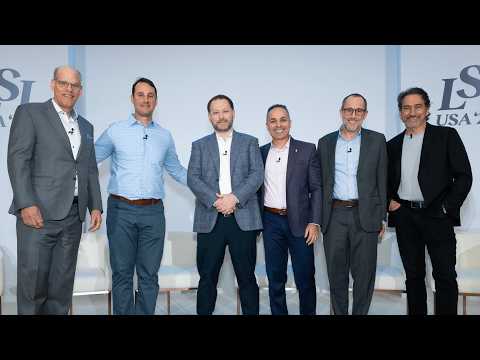
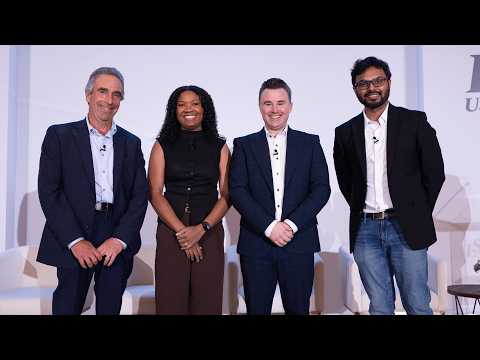
Good morning. Oh, come on, you can do better than that. We say in Tennessee, how all day, thank you all for coming. Must be Baptist. Everybody's in the back. So we'll have to talk it up for you, but thank you for coming today. We're going to be talking about from pitch to partnership. Our goals today are to pull back the curtains, if you will, on how to build patient, focused efforts and how it's viewed by the other side, which is your panelists today, your venture capitalists, we have a very diverse and talented panel, and with that, this is an opportunity for all serious innovators to learn how to enhance your entrepreneurial journey. So I'm Dave a deer, also known as Mugsy or no hair a deer, I'll be your moderator, and we have very talented pool of individuals here, so I will turn it over to them and let you guys introduce yourselves and tell a little bit about your firm.
Zoe Zhu 1:11
All right. Hi everyone. This is Zoe from EQT group. I'm based in Hong Kong, and I lead our healthcare growth investing efforts across Asia. For those of you unfamiliar with cqt, we are a global investment firm with a long term commitment in healthcare. So you know, across our healthcare investment program, we expand across early stage venture to late stage buyouts. And the early stage venture program is known as equity Lifesciences in Europe, and we have a similar program in Asia. And then within healthcare, we invest across all the key sub sectors, including med tech, biotech, diagnostics, digital health and health care services with a focus on companies solving real, clinical or system level problems.
Dave Adair 2:09
Irit,
Irit Yaniv 2:10
thank you, Eve, I'm coming from Israel. I'm leading Almeida ventures. This is an investment fund investing in medical device and digital health, taking clinical regulatory and pre commercial risk.
Dave Adair 2:26
And Evelyn,
Evelyn Tee 2:27
Hi, my name is Evelyn tee, and I lead the Medtech practice of LSC Life Sciences consultants. It's a boutique Life Sciences consultancy that works with large strategic investors as well as large PE companies to conduct third party market opportunity assessments and due diligences. We work across the med tech markets, and we specialize in interventional oncology, Structural Heart cardiology, neurovascular, Endovascular orthopedics.
Dave Adair 2:55
Did you miss anything? So I know we're supposed to talk about pitch to actually implementation. But let's level set a little bit about the pre pitch. Okay? Because this implies you've, you've earned the right to pitch, right? So, Evan, I want you to start give us a little background on on some pre pitch kind of thoughts that you have. Yeah,
Evelyn Tee 3:17
of course, I think you really need to come prepare and do your homework. Come, just not come, not just with your clinical data, with the clinical efficacy of the product, but also with market data, whether or not is the market adoption potential, the pricing potential, etc. And then second, I mean, I think you know, everyone should be doing a lot of research on who you're pitching to, so know your audience, know what their past investment history looks like, and that will enable you to better anticipate the skepticism around your pitch. So what areas they going to poke in your pitch, and what kind of, what are the assumptions they're going to be questioning when it comes to the valuation on your company? And I think, I think the third thing is about just making sure that your use case is crystal clear. I mean, if you look at the pitch competition yesterday, I mean, the winner, right? Um, Billy, Billy. SG, I thought they're the pitch. The reason why they partly why they want us, because the use case was just so clear. So you could have a technology that could be a game changer, that could be, you know, used across multiple areas, multiple therapeutic areas, but, you know, initial pitch, if you if you have really clear use case that really targets what you're trying to achieve, that is a much more compelling pitch than trying to, like, capture so much so many parts of the market. I mean, that can be later on down the roadmap, but just being really clear about what your first use case should be.
Dave Adair 4:37
So we have a special guest with us today, back by popular demand, Josh, you want to introduce yourself and your firm, and we were just kind of level setting about the pre pitch before you do the pitch, so you can dive some
Josh Berg 4:52
comments, yes. So I'm Josh Berg. I'm the CIO and the founder of Berg capital markets. We are a mix of investor. Partners and professional services. Kindling Investment Partners. Is our wholly owned sub and we invest in seed through Series A. We all all healthcare sub sectors except biotech, and we're also CFOs. We run M and A, and we raise capital. So pleasure to be here. And thank you very much. What would you like me to talk about?
Dave Adair 5:29
The question we kind of said we were doing some level setting on the pre pitch. How do you get to the pitch? So, you know, Evelyn did a great job of talking about knowing your target audience, etc, looking at prior rounds, that kind of stuff, if you wanted to, if you had anything to add, that'd be fine. If not, we'll, we'll move into the pitch.
Josh Berg 5:49
Yeah. I mean, you know, I sit on both sides of the table in terms of pitching. The one thing I would, I would say, you know, it's all the ostensible obvious things in my in my view, it's no know your audience if you're going to be pitching as an entrepreneur, do as much homework as you can ahead of time on who you're going to be talking to and and really, you know what they look for. The one thing I hear about, time and timing time again. You know, all these young companies, they do their work, and the investor does their work, and they say, Okay, what's your background and what's your market, and what's your product, and what's your differentiation and the size and the product market fit and the valuation, and things get really technical very quickly. And what I've found there's a massive disconnect when, when you're investing in early stage companies, you know, pre seed, all the way through series A you're getting married to the investor, and the investor is getting married to you. And some investors say, well, great, let's go out to dinner. I'll see how the entrepreneur treats the waiter. If they're nice, then I like them. I don't think that's enough. I think what I would recommend to people that have startups is go camping for the weekend, go skiing, go golfing, take take your if you're if you're the entrepreneur, go with your investor. And you haven't gotten married yet, but you are getting married, and it's just like a marriage, discuss your value systems. Things are going to go wrong. There's no clear line up. As a young company, you're going to get, you're, you're, you're going to have IP infringement. You're going to have employees that leave, key personnel that leaves. You're going to have competitive changes. You're going to have all these things and and go literally, literally, go camping for two or three days and get to know, I like
Dave Adair 8:14
the analogy there, because the one thing in life that's constant is change. So things are going to change. So Zoe, you know, we're still trying to level set this pre pitch. But any any thoughts from you
Zoe Zhu 8:26
or, yeah, I think you know, as both Evelyn and Josh mentioned in knowing your audience is always a great starting point. I would just add that also the clarity of the ask and outcome, right? So you need to be clear about what you're looking for. Is it funding, feedback, partnership or access, right? And be clear ahead of the meeting about what success looks like out of the meeting and some of the next steps you are hoping to trigger.
Dave Adair 8:59
You have anything to add, or we
Irit Yaniv 9:02
in light of what Joe said, I always look at the first meeting in order to get to the second meeting. Okay? So I prepare for a pitch thinking about, okay, what is going to be next? So I think in the pre pitch period, what you have to think is how to get the interest of my audience in such a way that I will get a second chance, and not no thank you, we will call you, but different way. So in light of, you know, do skiing or whatever, do whatever you can in order to get the second meeting, because the second meeting is the important one in my eyes. So I'm
Dave Adair 9:45
hearing know your audience preparation, because the other audience is preparing, and they know their their target, right? And then once you kind of get that, you kind of meddle that with going camping. So, so. So with that is thing
Josh Berg 10:01
Christine, or whatever you want,
Dave Adair 10:02
we can we use that one that's not trademarked or anything, going camping, okay, so let's change gears just for a second. Okay, this is going to go to Zoe and to Josh, who or what determines how you get the pitch. Okay, you know, one or two minutes just, you know, kind of give some tidbits on what goes through that process and being a gentleman. We'll start with Zoe.
Zoe Zhu 10:28
So from our side, what determines who gets the opportunity to pitch often comes down to two things, first and then foremost, is always strategic fit from very early on in the interaction. We always ask, you know, does it fit a lie is, does it align with our focus themes? Is it the right stage for us to come in? For example, for our Asian growth program, we tend to invest after Series B in the clinical stage of a company, and then is the technology or product differentiated? Is the market big enough? And lastly, you know, is it something that we believe that can scale in a way equity can uniquely support? And then secondly, I would say it's the warm introductions always help. So if a founder is referred to us by somebody we've worked with, whether co investor, advisor portfolio company, that's a strong signal. We tend to get a lot of imbalance. So filters do matter
Dave Adair 11:40
so familiarity again, I'm hearing this echo of knowing your audience and being prepared. Josh, do you have anything to add to that in terms of your shop? How you all determine who gets a pitch?
Josh Berg 11:55
No, well, a little. I mean, that was really well said. I mean, look, you know, investors. Investors have, have customers as well. We have limited partners, and those limited partners dictate, dictate your mandate. So it's all about fit in the beginning. So, you know, we get, you know, hundreds and hundreds of me emails, you know, every week from companies, and the first thing, quite frankly, is just, it's very simple. It's third grade stuff, you know, is it a fit? Is it a fit or not? We're pretty broad firm. We look at a lot of things. We have a lot of flexibility. So a lot of times it's a fit. But, you know, I have a lot of investor friends, and they have more narrow mandates, and it's just a simple screening process, a filtering process. So fit, fit. Fit is the is the name of the game at stage one.
Dave Adair 12:53
So there are no fast Yes, forever, maybe I'll kill you, and a quick no is a good friend. So when you're going through that process, absolutely so don't take that as an offense or a front, yeah,
Josh Berg 13:06
yeah, a good no is, is one of the best things to ever happen. You know, it saves everyone a lot of time.
Dave Adair 13:13
So switching gears a little bit. Okay, this, this is Evelyn, Eric. We'll start with you. We'll go to right afterwards, if you would tell us, what do you look for you've got the pitch. What are you looking for in that pitch? If you take a couple minutes a piece and share that with us,
Evelyn Tee 13:30
yeah. So of course, it has to start with a clear meeting of a clear unmet need. So they're looking if the technology of device is able to address a significant, significant pain point for a patient or physician, or are we talking about technology or device that enables greater access to a broader part of the population? But an unmet need alone is not enough. They're also looking for just clear business opportunity. So is the patient size large enough to justify an investment? You know, will hospitals and physicians actually switch to your product. You know, is the product going to be filed under the existing code? Are we going to talk about a entirely new code in order to justify the cost of using their product? You know, it could also be looking at, you know, how does the product work in the go into the workflow. Is it going to require training of the physicians to use it. It's going to require behavioral change of your off the patients in order to want to accept that therapy. Is it going to require a huge capital investment? And if you're talking about a large strategic investor, they're also going to be looking up, they're going to be looking a lot at strategic fit, right? And sometimes that could be in terms of, you know, will this product do they have to have an entirely new sales force to sell this product? Or can they just add this product to the current basket of goods and a lot of strategics? Now, they're not really, they're not just looking at that particular your particular company. They're going to see how the company fits into the entire patient journey. So they're really interested in connecting the dots. From the point of diagnosis to a point of therapy, and then the RE intervention, you know, post post intervention care. And so they're looking at how that particular investment fits into the entire patient continuum.
Irit Yaniv 15:14
Yeah, I would like to add something else. I mean, those are the points that we are looking in the content, but there is something else on top of the content, is the relationship between the team. So when someone is pitching me, or a company is pitching me, I would like to see the team that is pitching me. Who are the people that are speaking with me? It's not only the CEO. It might be the CTO, it might be the founder the relationship while they are speaking, you know, who is saying what, how they act to each other. So there are a lot of soft issues during the pitch that I would like to see. And this is what, why I prefer to meet those that fit in person and not by zoom, because this makes a lot of difference between the teams. Yeah,
Evelyn Tee 16:06
absolutely.
Dave Adair 16:07
So chemistry, okay, back to basic science. Yes, yes. Chemistry, well, you did such a good job on Emma put you and Zoe on the spot this time, we'll start with you again. What to say? What is your process? You know, once you go through the pitch, what's the process? A timeline to get to a partnership. Because remember, we're pitch to partnership. So if you would start us off, go ahead, you did a good job on the last one. So start us off, and then we'll go to Zoe.
Irit Yaniv 16:37
Zoe, it's you, no, it's you're the hot
Dave Adair 16:42
potato, right now. Sorry.
Irit Yaniv 16:45
So, yeah, so peach is first, and hopefully you get the second chance, as I said before. And then we are starting the due diligence. Due Diligence include going into the details on everything that you presented to us. You know, starting from the unmet need checking, speaking with KOLs and physicians and working together to verify and validate each of the points that was mentioned during the presentation. And then we start with the financial and the business model, validate, verify, make sure that we know exactly what, what and where we are stepping into. One of the things in early stage investment is to try and predict the future so how much money the company will need who are going to be the investor, because usually we are not going to fund the company on all those steps. And once we realize and have a clear plan, we can go to our investment Investment Committee and try to get an agreement on the terms, and then discuss with the partner of the terms and try to get into agreement with the partner. And once this achieve, we can go back to the Investment Committee and get the deal done.
Dave Adair 18:17
Okay. Zoe,
Zoe Zhu 18:20
our process is very structured, but founder friendly, so typically it starts with a short conversation or call or meeting with the team to for us to understand the business and and the team. If there's a mutual interest, then we would move to the next stage of a more focused diligence, you know, looking to the clinical, technical profile, fundamentals, the IP, the regulatory or commercial pathway, the product, market fit, etc. One aspect which we value a lot in our process. I was mentioning is that from very early on, we tend to involve working with we refer to as industrial advisors. So these are highly experienced professionals with deep domain knowledge that can support us in evaluation of a certain aspect of a target. For example, it could be clinicians who you know tend to be the end users of a particular products, regulatory or manufacturing experts, clinical experts, or strategics, who you know tend to be the could be the ultimate buyer of a technology. So we tend to involve them very early on in the process, to support us in the technical and commercial diligence, and then in most cases, what we often find is that they are incredibly useful to the company, to the founders benefit in. The Post investment, value creation phase, you know, through strategic insights, operational guidance or network access. So, so that's how we typically what the process looks like. And and, of course, being a large part of a international organization, we would also look at how does the target fit into the broader portfolio of the equity, healthcare portfolio, and how we can leverage some of our global resources.
Dave Adair 20:37
So all this can be accomplished in about 24 hours. Here's what the entrepreneur thinks and hears, right? But I know you think we, we, we're only working on one deal at a time, right? But we're working on multiple pitches, multiple phases, so it takes time. And so after doing a pitch, don't, don't send an email the next day and say, Okay, what's the term sheet? So, right? That's, there's a lot of work that goes into this. And both of you kind of touched on something that I think founders are sensitive about. How do you get a free money and, you know, how do you come up with that? It's not a special calculus, right? You said very clearly. You see the future. I try the crystal ball, right? You see the exit. You have to visualize the end and work backwards. So it's not a very it's not very precise or complicated, right? But that math is, is just working backwards. Okay, so let's switch gears over now and say, how do you visualize the partnership? Okay, we've done all this incredible work probably 90 days or so, particularly if you're going to lead, because you have to get patents and all that. I didn't, don't think I heard that piece of it, but that takes lawyers, which like to charge more by the hour, right? So it takes time, but you're ready to lead with a term sheet, and you're making a decision. So Zoe and Josh on that one. How do you visualize that final you're at the victory line, or, you know, lap, or whatever you want to call it. What do you see? You know, give me a couple minutes from each of you, and we'll start with Josh this
Josh Berg 22:20
time. Thank you, you know, so it's, it's not a one size fits all, but it, it definitely, you know, I agree with you. It's, it's probably 90 to 120 days. And if you arrive at the finish line, or the, you know, the 90 yard line, and you want to get to a term sheet, the unbinding term sheet initially that we would submit or would be submitted. You, what we found is very helpful is we'll have a verbal conversation ahead of time prior to submitting, and we'll say, Look, we're thinking about the following. Would this be a fit for you. We get different we get various answers back, if, if we do submit a term sheet or and we work collaboratively with with our potential investments, lock up is the lock up period is really important. So you know, every, every young company has a has a cash balance and has a certain burn rate and a certain runway, and you want to, if I'm an entrepreneur, you know, you want to find investors that are that are cognizant of that and that are benevolent to that dynamic. As an investor, you also want to be cognizant of the company. But when you submit an unbinding term sheet, you know that is potentially binding, and you say, Look, I'm going to do 30 days, or 45 days, or 60 days of final due diligence with KOLs and stakeholders and etc. It's it's very important on both sides of the table to be aware of the company's resources and constraints, because you don't want to leave. I've I've seen this movie before where the company's going to run out of money in three months. The potential investor submits the term sheet. They lock them up for 60 days. They leave them out that, you know, they say they're going to get married. They do their due diligence. They talk to a couple KOLs, and they don't like it for whatever reason, and they pass, all of a sudden the company is sitting there with two weeks of cash and no investors, and they've locked up and locked them up. And by lock up, as people may know, you're not allowed to speak with other investors. So I think it's really important to as an investor and an entrepreneur, be aware of that and be friendly. Only to the entrepreneur. Don't just be like, hey, our firm is the only thing that matters. And you know, we're we don't care. You know, if we leave you out the altar and you've got two weeks of cash and go, go pound sand and do a down round and get cram down and dilution, and that's not fair or nice, like a bad marriage. So for and my my advice and my whole thing, is it it, it it, both sides of the table should be aware and benevolent to that dynamic, right? So
Dave Adair 25:32
open and communicative between the two. Yeah. Zoe, you want to add anything to that?
Zoe Zhu 25:40
I will say that for us. You know, usually after the term sheet, it it's this confirmatory diligence phase, but really the heavy lifting is before that, before the term sheet and after the term sheet. You know, as long as there's no red flags identified in some of the standard diligence work streams, including legal, finance, background, etc, we would, you know, typically, I would say over 90% of the chances proceed with that investment. But one key aspect in the confirmatory dividends that we care a lot about is ip ip diligence, because, essentially, we invest in technology, we want to make sure that it's absolutely in a great shape. You know, when especially talking about Asia, for global technologies,
Dave Adair 26:35
that's the moot, and that's good. So we're, we got about five minutes, I think. So. Let's, we'll two minutes. They're saying, oh boy, okay, well, I was checking the phone there. Why don't we do this? We'll, we'll just go down. Start with Evelyn. Take 30 seconds. Tell us some, some favorite story memory, or any other parting shot that you've done in this pitch to partnership and your experience. All
Evelyn Tee 27:00
right, I'll try to keep it 30 seconds. So we were working with this Chinese company, and they were about to do a global launch of their product, studying the US and China. And so supposed to be a next generation product. It was a drug delivery device combination, so it prevents the the patient from having to go to an IV center to get the drip for the product. And so they could self administer it at home. So they thought they had a big breakthrough, right? And now they can access a much wider part of the population, especially in America, because there's a huge convenience, independent factor to it. But that's when things got interesting, because when they tested out the product in China, it just fell flat. It turns out patients actually like going to the clinical setting. They like going to the hospital. They like going to infusion center to get the product. And so, you know, what turns out to be a great play in America is actually perceived very differently once you go to a different market. And so I think the story there is that, you know, you could have a great global value proposition, but make sure that you're really understanding the market that you're trying to enter, and not just in terms of patient numbers or reimbursement codes, you're actually going to have to understand, you know, what really drives behavior change, you know, when it comes to therapies and treatments? Because knowing that audience again, right? Yeah, knowing your audience, in this case, patient audience, right? Because good health care actually has a different meaning to different people in different regions.
Irit Yaniv 28:23
You want to comment, yeah, just a quick story about the pitch that led to partnership. Actually a failed pitch, because the guy that came to pitch forgot his presentation, so he had to pitch. You know, just spoken about the product and from his bottom of his heart. And this was so hearty and so touchy that we decided to continue. And at the end of the story, it ended, it ends up with a partnership.
Dave Adair 28:54
Well, I'm going to have to cut it off because we're out of Tom. But in summary, I first want to thank the panelists, incredible talents and clap for them. Yeah, know your audience. Do your homework and realize timelines. It does take time to do this. Any quick parting shots? Josh, five seconds,
Josh Berg 29:17
a friend of mine, a friend of mine did no marketing. He had, he got a he received $100 million at a $400 million pre money, because he's got an AI company, and he was connected with the Silicon Valley crowd. And so if you can get that dinner, go for it.
Dave Adair 29:40
Dinner. We have lunch coming out here. We're standing in the way of them getting lunch, but Zoe, any last parting shot?
Zoe Zhu 29:48
Five seconds, yeah, but be clear. Vision Without clarity doesn't travel far.
Dave Adair 29:56
Yep. Thank you all for attending today. We appreciate you. So much, thank you,
Zoe Zhu 30:01
thank you.
Josh Berg 30:01
Thank you.
Dave Adair 0:06
Good morning. Oh, come on, you can do better than that. We say in Tennessee, how all day, thank you all for coming. Must be Baptist. Everybody's in the back. So we'll have to talk it up for you, but thank you for coming today. We're going to be talking about from pitch to partnership. Our goals today are to pull back the curtains, if you will, on how to build patient, focused efforts and how it's viewed by the other side, which is your panelists today, your venture capitalists, we have a very diverse and talented panel, and with that, this is an opportunity for all serious innovators to learn how to enhance your entrepreneurial journey. So I'm Dave a deer, also known as Mugsy or no hair a deer, I'll be your moderator, and we have very talented pool of individuals here, so I will turn it over to them and let you guys introduce yourselves and tell a little bit about your firm.
Zoe Zhu 1:11
All right. Hi everyone. This is Zoe from EQT group. I'm based in Hong Kong, and I lead our healthcare growth investing efforts across Asia. For those of you unfamiliar with cqt, we are a global investment firm with a long term commitment in healthcare. So you know, across our healthcare investment program, we expand across early stage venture to late stage buyouts. And the early stage venture program is known as equity Lifesciences in Europe, and we have a similar program in Asia. And then within healthcare, we invest across all the key sub sectors, including med tech, biotech, diagnostics, digital health and health care services with a focus on companies solving real, clinical or system level problems.
Dave Adair 2:09
Irit,
Irit Yaniv 2:10
thank you, Eve, I'm coming from Israel. I'm leading Almeida ventures. This is an investment fund investing in medical device and digital health, taking clinical regulatory and pre commercial risk.
Dave Adair 2:26
And Evelyn,
Evelyn Tee 2:27
Hi, my name is Evelyn tee, and I lead the Medtech practice of LSC Life Sciences consultants. It's a boutique Life Sciences consultancy that works with large strategic investors as well as large PE companies to conduct third party market opportunity assessments and due diligences. We work across the med tech markets, and we specialize in interventional oncology, Structural Heart cardiology, neurovascular, Endovascular orthopedics.
Dave Adair 2:55
Did you miss anything? So I know we're supposed to talk about pitch to actually implementation. But let's level set a little bit about the pre pitch. Okay? Because this implies you've, you've earned the right to pitch, right? So, Evan, I want you to start give us a little background on on some pre pitch kind of thoughts that you have. Yeah,
Evelyn Tee 3:17
of course, I think you really need to come prepare and do your homework. Come, just not come, not just with your clinical data, with the clinical efficacy of the product, but also with market data, whether or not is the market adoption potential, the pricing potential, etc. And then second, I mean, I think you know, everyone should be doing a lot of research on who you're pitching to, so know your audience, know what their past investment history looks like, and that will enable you to better anticipate the skepticism around your pitch. So what areas they going to poke in your pitch, and what kind of, what are the assumptions they're going to be questioning when it comes to the valuation on your company? And I think, I think the third thing is about just making sure that your use case is crystal clear. I mean, if you look at the pitch competition yesterday, I mean, the winner, right? Um, Billy, Billy. SG, I thought they're the pitch. The reason why they partly why they want us, because the use case was just so clear. So you could have a technology that could be a game changer, that could be, you know, used across multiple areas, multiple therapeutic areas, but, you know, initial pitch, if you if you have really clear use case that really targets what you're trying to achieve, that is a much more compelling pitch than trying to, like, capture so much so many parts of the market. I mean, that can be later on down the roadmap, but just being really clear about what your first use case should be.
Dave Adair 4:37
So we have a special guest with us today, back by popular demand, Josh, you want to introduce yourself and your firm, and we were just kind of level setting about the pre pitch before you do the pitch, so you can dive some
Josh Berg 4:52
comments, yes. So I'm Josh Berg. I'm the CIO and the founder of Berg capital markets. We are a mix of investor. Partners and professional services. Kindling Investment Partners. Is our wholly owned sub and we invest in seed through Series A. We all all healthcare sub sectors except biotech, and we're also CFOs. We run M and A, and we raise capital. So pleasure to be here. And thank you very much. What would you like me to talk about?
Dave Adair 5:29
The question we kind of said we were doing some level setting on the pre pitch. How do you get to the pitch? So, you know, Evelyn did a great job of talking about knowing your target audience, etc, looking at prior rounds, that kind of stuff, if you wanted to, if you had anything to add, that'd be fine. If not, we'll, we'll move into the pitch.
Josh Berg 5:49
Yeah. I mean, you know, I sit on both sides of the table in terms of pitching. The one thing I would, I would say, you know, it's all the ostensible obvious things in my in my view, it's no know your audience if you're going to be pitching as an entrepreneur, do as much homework as you can ahead of time on who you're going to be talking to and and really, you know what they look for. The one thing I hear about, time and timing time again. You know, all these young companies, they do their work, and the investor does their work, and they say, Okay, what's your background and what's your market, and what's your product, and what's your differentiation and the size and the product market fit and the valuation, and things get really technical very quickly. And what I've found there's a massive disconnect when, when you're investing in early stage companies, you know, pre seed, all the way through series A you're getting married to the investor, and the investor is getting married to you. And some investors say, well, great, let's go out to dinner. I'll see how the entrepreneur treats the waiter. If they're nice, then I like them. I don't think that's enough. I think what I would recommend to people that have startups is go camping for the weekend, go skiing, go golfing, take take your if you're if you're the entrepreneur, go with your investor. And you haven't gotten married yet, but you are getting married, and it's just like a marriage, discuss your value systems. Things are going to go wrong. There's no clear line up. As a young company, you're going to get, you're, you're, you're going to have IP infringement. You're going to have employees that leave, key personnel that leaves. You're going to have competitive changes. You're going to have all these things and and go literally, literally, go camping for two or three days and get to know, I like
Dave Adair 8:14
the analogy there, because the one thing in life that's constant is change. So things are going to change. So Zoe, you know, we're still trying to level set this pre pitch. But any any thoughts from you
Zoe Zhu 8:26
or, yeah, I think you know, as both Evelyn and Josh mentioned in knowing your audience is always a great starting point. I would just add that also the clarity of the ask and outcome, right? So you need to be clear about what you're looking for. Is it funding, feedback, partnership or access, right? And be clear ahead of the meeting about what success looks like out of the meeting and some of the next steps you are hoping to trigger.
Dave Adair 8:59
You have anything to add, or we
Irit Yaniv 9:02
in light of what Joe said, I always look at the first meeting in order to get to the second meeting. Okay? So I prepare for a pitch thinking about, okay, what is going to be next? So I think in the pre pitch period, what you have to think is how to get the interest of my audience in such a way that I will get a second chance, and not no thank you, we will call you, but different way. So in light of, you know, do skiing or whatever, do whatever you can in order to get the second meeting, because the second meeting is the important one in my eyes. So I'm
Dave Adair 9:45
hearing know your audience preparation, because the other audience is preparing, and they know their their target, right? And then once you kind of get that, you kind of meddle that with going camping. So, so. So with that is thing
Josh Berg 10:01
Christine, or whatever you want,
Dave Adair 10:02
we can we use that one that's not trademarked or anything, going camping, okay, so let's change gears just for a second. Okay, this is going to go to Zoe and to Josh, who or what determines how you get the pitch. Okay, you know, one or two minutes just, you know, kind of give some tidbits on what goes through that process and being a gentleman. We'll start with Zoe.
Zoe Zhu 10:28
So from our side, what determines who gets the opportunity to pitch often comes down to two things, first and then foremost, is always strategic fit from very early on in the interaction. We always ask, you know, does it fit a lie is, does it align with our focus themes? Is it the right stage for us to come in? For example, for our Asian growth program, we tend to invest after Series B in the clinical stage of a company, and then is the technology or product differentiated? Is the market big enough? And lastly, you know, is it something that we believe that can scale in a way equity can uniquely support? And then secondly, I would say it's the warm introductions always help. So if a founder is referred to us by somebody we've worked with, whether co investor, advisor portfolio company, that's a strong signal. We tend to get a lot of imbalance. So filters do matter
Dave Adair 11:40
so familiarity again, I'm hearing this echo of knowing your audience and being prepared. Josh, do you have anything to add to that in terms of your shop? How you all determine who gets a pitch?
Josh Berg 11:55
No, well, a little. I mean, that was really well said. I mean, look, you know, investors. Investors have, have customers as well. We have limited partners, and those limited partners dictate, dictate your mandate. So it's all about fit in the beginning. So, you know, we get, you know, hundreds and hundreds of me emails, you know, every week from companies, and the first thing, quite frankly, is just, it's very simple. It's third grade stuff, you know, is it a fit? Is it a fit or not? We're pretty broad firm. We look at a lot of things. We have a lot of flexibility. So a lot of times it's a fit. But, you know, I have a lot of investor friends, and they have more narrow mandates, and it's just a simple screening process, a filtering process. So fit, fit. Fit is the is the name of the game at stage one.
Dave Adair 12:53
So there are no fast Yes, forever, maybe I'll kill you, and a quick no is a good friend. So when you're going through that process, absolutely so don't take that as an offense or a front, yeah,
Josh Berg 13:06
yeah, a good no is, is one of the best things to ever happen. You know, it saves everyone a lot of time.
Dave Adair 13:13
So switching gears a little bit. Okay, this, this is Evelyn, Eric. We'll start with you. We'll go to right afterwards, if you would tell us, what do you look for you've got the pitch. What are you looking for in that pitch? If you take a couple minutes a piece and share that with us,
Evelyn Tee 13:30
yeah. So of course, it has to start with a clear meeting of a clear unmet need. So they're looking if the technology of device is able to address a significant, significant pain point for a patient or physician, or are we talking about technology or device that enables greater access to a broader part of the population? But an unmet need alone is not enough. They're also looking for just clear business opportunity. So is the patient size large enough to justify an investment? You know, will hospitals and physicians actually switch to your product. You know, is the product going to be filed under the existing code? Are we going to talk about a entirely new code in order to justify the cost of using their product? You know, it could also be looking at, you know, how does the product work in the go into the workflow. Is it going to require training of the physicians to use it. It's going to require behavioral change of your off the patients in order to want to accept that therapy. Is it going to require a huge capital investment? And if you're talking about a large strategic investor, they're also going to be looking up, they're going to be looking a lot at strategic fit, right? And sometimes that could be in terms of, you know, will this product do they have to have an entirely new sales force to sell this product? Or can they just add this product to the current basket of goods and a lot of strategics? Now, they're not really, they're not just looking at that particular your particular company. They're going to see how the company fits into the entire patient journey. So they're really interested in connecting the dots. From the point of diagnosis to a point of therapy, and then the RE intervention, you know, post post intervention care. And so they're looking at how that particular investment fits into the entire patient continuum.
Irit Yaniv 15:14
Yeah, I would like to add something else. I mean, those are the points that we are looking in the content, but there is something else on top of the content, is the relationship between the team. So when someone is pitching me, or a company is pitching me, I would like to see the team that is pitching me. Who are the people that are speaking with me? It's not only the CEO. It might be the CTO, it might be the founder the relationship while they are speaking, you know, who is saying what, how they act to each other. So there are a lot of soft issues during the pitch that I would like to see. And this is what, why I prefer to meet those that fit in person and not by zoom, because this makes a lot of difference between the teams. Yeah,
Evelyn Tee 16:06
absolutely.
Dave Adair 16:07
So chemistry, okay, back to basic science. Yes, yes. Chemistry, well, you did such a good job on Emma put you and Zoe on the spot this time, we'll start with you again. What to say? What is your process? You know, once you go through the pitch, what's the process? A timeline to get to a partnership. Because remember, we're pitch to partnership. So if you would start us off, go ahead, you did a good job on the last one. So start us off, and then we'll go to Zoe.
Irit Yaniv 16:37
Zoe, it's you, no, it's you're the hot
Dave Adair 16:42
potato, right now. Sorry.
Irit Yaniv 16:45
So, yeah, so peach is first, and hopefully you get the second chance, as I said before. And then we are starting the due diligence. Due Diligence include going into the details on everything that you presented to us. You know, starting from the unmet need checking, speaking with KOLs and physicians and working together to verify and validate each of the points that was mentioned during the presentation. And then we start with the financial and the business model, validate, verify, make sure that we know exactly what, what and where we are stepping into. One of the things in early stage investment is to try and predict the future so how much money the company will need who are going to be the investor, because usually we are not going to fund the company on all those steps. And once we realize and have a clear plan, we can go to our investment Investment Committee and try to get an agreement on the terms, and then discuss with the partner of the terms and try to get into agreement with the partner. And once this achieve, we can go back to the Investment Committee and get the deal done.
Dave Adair 18:17
Okay. Zoe,
Zoe Zhu 18:20
our process is very structured, but founder friendly, so typically it starts with a short conversation or call or meeting with the team to for us to understand the business and and the team. If there's a mutual interest, then we would move to the next stage of a more focused diligence, you know, looking to the clinical, technical profile, fundamentals, the IP, the regulatory or commercial pathway, the product, market fit, etc. One aspect which we value a lot in our process. I was mentioning is that from very early on, we tend to involve working with we refer to as industrial advisors. So these are highly experienced professionals with deep domain knowledge that can support us in evaluation of a certain aspect of a target. For example, it could be clinicians who you know tend to be the end users of a particular products, regulatory or manufacturing experts, clinical experts, or strategics, who you know tend to be the could be the ultimate buyer of a technology. So we tend to involve them very early on in the process, to support us in the technical and commercial diligence, and then in most cases, what we often find is that they are incredibly useful to the company, to the founders benefit in. The Post investment, value creation phase, you know, through strategic insights, operational guidance or network access. So, so that's how we typically what the process looks like. And and, of course, being a large part of a international organization, we would also look at how does the target fit into the broader portfolio of the equity, healthcare portfolio, and how we can leverage some of our global resources.
Dave Adair 20:37
So all this can be accomplished in about 24 hours. Here's what the entrepreneur thinks and hears, right? But I know you think we, we, we're only working on one deal at a time, right? But we're working on multiple pitches, multiple phases, so it takes time. And so after doing a pitch, don't, don't send an email the next day and say, Okay, what's the term sheet? So, right? That's, there's a lot of work that goes into this. And both of you kind of touched on something that I think founders are sensitive about. How do you get a free money and, you know, how do you come up with that? It's not a special calculus, right? You said very clearly. You see the future. I try the crystal ball, right? You see the exit. You have to visualize the end and work backwards. So it's not a very it's not very precise or complicated, right? But that math is, is just working backwards. Okay, so let's switch gears over now and say, how do you visualize the partnership? Okay, we've done all this incredible work probably 90 days or so, particularly if you're going to lead, because you have to get patents and all that. I didn't, don't think I heard that piece of it, but that takes lawyers, which like to charge more by the hour, right? So it takes time, but you're ready to lead with a term sheet, and you're making a decision. So Zoe and Josh on that one. How do you visualize that final you're at the victory line, or, you know, lap, or whatever you want to call it. What do you see? You know, give me a couple minutes from each of you, and we'll start with Josh this
Josh Berg 22:20
time. Thank you, you know, so it's, it's not a one size fits all, but it, it definitely, you know, I agree with you. It's, it's probably 90 to 120 days. And if you arrive at the finish line, or the, you know, the 90 yard line, and you want to get to a term sheet, the unbinding term sheet initially that we would submit or would be submitted. You, what we found is very helpful is we'll have a verbal conversation ahead of time prior to submitting, and we'll say, Look, we're thinking about the following. Would this be a fit for you. We get different we get various answers back, if, if we do submit a term sheet or and we work collaboratively with with our potential investments, lock up is the lock up period is really important. So you know, every, every young company has a has a cash balance and has a certain burn rate and a certain runway, and you want to, if I'm an entrepreneur, you know, you want to find investors that are that are cognizant of that and that are benevolent to that dynamic. As an investor, you also want to be cognizant of the company. But when you submit an unbinding term sheet, you know that is potentially binding, and you say, Look, I'm going to do 30 days, or 45 days, or 60 days of final due diligence with KOLs and stakeholders and etc. It's it's very important on both sides of the table to be aware of the company's resources and constraints, because you don't want to leave. I've I've seen this movie before where the company's going to run out of money in three months. The potential investor submits the term sheet. They lock them up for 60 days. They leave them out that, you know, they say they're going to get married. They do their due diligence. They talk to a couple KOLs, and they don't like it for whatever reason, and they pass, all of a sudden the company is sitting there with two weeks of cash and no investors, and they've locked up and locked them up. And by lock up, as people may know, you're not allowed to speak with other investors. So I think it's really important to as an investor and an entrepreneur, be aware of that and be friendly. Only to the entrepreneur. Don't just be like, hey, our firm is the only thing that matters. And you know, we're we don't care. You know, if we leave you out the altar and you've got two weeks of cash and go, go pound sand and do a down round and get cram down and dilution, and that's not fair or nice, like a bad marriage. So for and my my advice and my whole thing, is it it, it it, both sides of the table should be aware and benevolent to that dynamic, right? So
Dave Adair 25:32
open and communicative between the two. Yeah. Zoe, you want to add anything to that?
Zoe Zhu 25:40
I will say that for us. You know, usually after the term sheet, it it's this confirmatory diligence phase, but really the heavy lifting is before that, before the term sheet and after the term sheet. You know, as long as there's no red flags identified in some of the standard diligence work streams, including legal, finance, background, etc, we would, you know, typically, I would say over 90% of the chances proceed with that investment. But one key aspect in the confirmatory dividends that we care a lot about is ip ip diligence, because, essentially, we invest in technology, we want to make sure that it's absolutely in a great shape. You know, when especially talking about Asia, for global technologies,
Dave Adair 26:35
that's the moot, and that's good. So we're, we got about five minutes, I think. So. Let's, we'll two minutes. They're saying, oh boy, okay, well, I was checking the phone there. Why don't we do this? We'll, we'll just go down. Start with Evelyn. Take 30 seconds. Tell us some, some favorite story memory, or any other parting shot that you've done in this pitch to partnership and your experience. All
Evelyn Tee 27:00
right, I'll try to keep it 30 seconds. So we were working with this Chinese company, and they were about to do a global launch of their product, studying the US and China. And so supposed to be a next generation product. It was a drug delivery device combination, so it prevents the the patient from having to go to an IV center to get the drip for the product. And so they could self administer it at home. So they thought they had a big breakthrough, right? And now they can access a much wider part of the population, especially in America, because there's a huge convenience, independent factor to it. But that's when things got interesting, because when they tested out the product in China, it just fell flat. It turns out patients actually like going to the clinical setting. They like going to the hospital. They like going to infusion center to get the product. And so, you know, what turns out to be a great play in America is actually perceived very differently once you go to a different market. And so I think the story there is that, you know, you could have a great global value proposition, but make sure that you're really understanding the market that you're trying to enter, and not just in terms of patient numbers or reimbursement codes, you're actually going to have to understand, you know, what really drives behavior change, you know, when it comes to therapies and treatments? Because knowing that audience again, right? Yeah, knowing your audience, in this case, patient audience, right? Because good health care actually has a different meaning to different people in different regions.
Irit Yaniv 28:23
You want to comment, yeah, just a quick story about the pitch that led to partnership. Actually a failed pitch, because the guy that came to pitch forgot his presentation, so he had to pitch. You know, just spoken about the product and from his bottom of his heart. And this was so hearty and so touchy that we decided to continue. And at the end of the story, it ended, it ends up with a partnership.
Dave Adair 28:54
Well, I'm going to have to cut it off because we're out of Tom. But in summary, I first want to thank the panelists, incredible talents and clap for them. Yeah, know your audience. Do your homework and realize timelines. It does take time to do this. Any quick parting shots? Josh, five seconds,
Josh Berg 29:17
a friend of mine, a friend of mine did no marketing. He had, he got a he received $100 million at a $400 million pre money, because he's got an AI company, and he was connected with the Silicon Valley crowd. And so if you can get that dinner, go for it.
Dave Adair 29:40
Dinner. We have lunch coming out here. We're standing in the way of them getting lunch, but Zoe, any last parting shot?
Zoe Zhu 29:48
Five seconds, yeah, but be clear. Vision Without clarity doesn't travel far.
Dave Adair 29:56
Yep. Thank you all for attending today. We appreciate you. So much, thank you,
Zoe Zhu 30:01
thank you.
Josh Berg 30:01
Thank you.
17011 Beach Blvd, Suite 500 Huntington Beach, CA 92647
714-847-3540© 2025 Life Science Intelligence, Inc., All Rights Reserved. | Privacy Policy