Fireside Chat with Andrew Chung, Founding and Managing Partner at 1955 Capital | LSI Europe '25

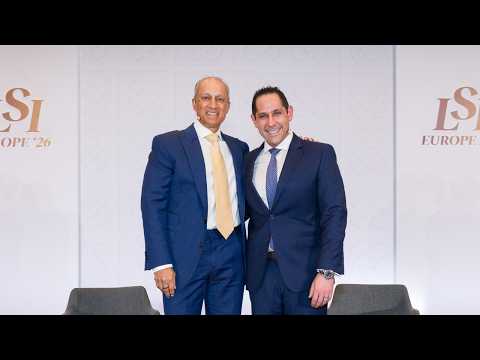
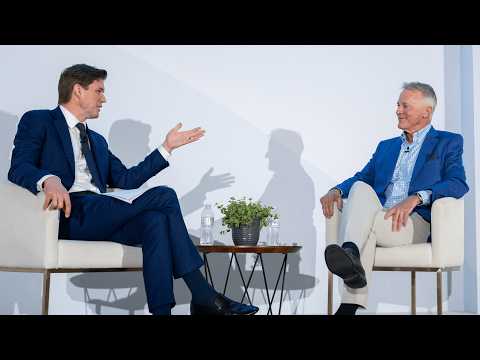
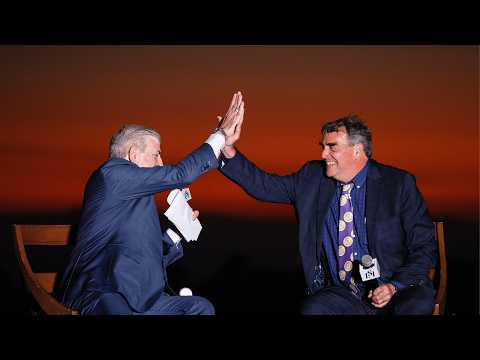
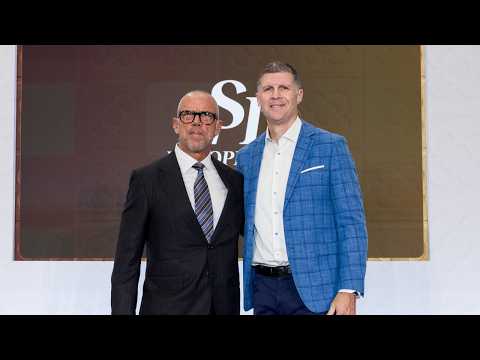
Join Addie Harris and Andrew Chung from 1955 Capital for an insightful fireside discussion exploring investment strategies, market trends, and entrepreneurial insights from the founding partner's perspective in the venture capital landscape.
Join Our Next Event
Partner with the leaders
shaping the future of
Medtech at LSI USA ‘26
March 16th - 20th, 2026
Waldorf Astoria, Monarch Beach

Addie Harris  0:04  
Okay, I'm Addie Harris. I done a number of these. I love coming to LSI. I think it's one of the best events in the industry. A little bit about my background that we'll have Andrew introduce himself. I'm a serial entrepreneur. I started a company back in 2014 called cardan robotics, in robotic surgery for spine. It that exited to Stryker. I then went to J and J, and I built out a business unit in J and J for robotic and digital surgery for the orthopedics group. Did a whole bunch of acquisitions, learned a lot, which was a big part of my intention with going to a really big company, as I wanted to learn the flip side. And then, you know, for the past few years, since I've left J and J, I really want to take it full circle, go back into the entrepreneurial space. Worked with startups, I suppose the advisor as board members really getting down into the trenches with entrepreneurs and and then I've also worked with some funds, both really early phase incubation, and most recently, working with 1955 capital, doing some incubation and translation out of universities. So let Andrew introduce himself.


Andrew Chung  1:15  
I know I'm the last thing keeping you from dinner, wine and partying. So hopefully we'll make this entertaining. I'm Andrew Cheung. I'm the founder and managing partner of 1955 capital. 20 years in deep tech venture capital investing. I started at light speed back when it was just nine of us. Helped to build the deep tech investing practice there, both on the med tech side as well as in climate, and then moved to Khosla ventures, where I was one of the six general partners that managed that firm with Vinod Khosla. And then started 1955 capital, really, in an effort to get back to the roots of venture capital. And we're going to talk a bit more about what that means in a moment. Yeah.


Addie Harris  2:02  
So start off by sharing with us the significance of the name 1955 obviously, I know what it is, but the rest of the audience here does it doesn't, and what is that sign? How does that significance tie into your overall investment thesis?


Andrew Chung  2:16  
It's clearly the year that I was born. And if you need the secret, you can ping me afterwards. It's actually the year that one generation of revolutionaries gave way to another. So 1955 was the year that Albert Einstein passed away, Alexander Fleming, who discovered penicillin, Charlie Parker, bebop jazz. Born that year were revolutionaries like Bill Gates, Steve Jobs, Eric Schmidt and my old partner, Vinod Khosla. So in some sense, it's a it's a transitionary time that means a lot to me, because I feel like venture capital and innovation on the technology side right now is in the process of of transition, and we're hopeful that we're part of the new generation of revolutionaries, backing amazing founders and building breakthrough technologies that can change the world.


Addie Harris  3:05  
So Harry Stebbings and Henry Peck touched earlier today on some of they say those markers of, you know, they were talking about entrepreneurs, but I think it's, it's really kind of, anybody who's in this, this space of either entrepreneurship or investment, there's a lot of similar similarities between raising a fund and also running a company. There are some of those I've often called out as kind of like these key markers. One of which, you know is, is sports. Another I've often related to is some of those early childhood experiences. I often say, if you're working in either a family business or in some level of like food service run of house, that's one of those experiences that will stay with you for the rest of your life, and has so many, like, really tangible lessons. What are a few that you know you have had in your experience? You and I have often talked about a couple of them that that we share. But what are some of those? And how does that kind of, how does that kind of lead on your pathway to to the early days of like your your first business and getting into venture? Yes.


Andrew Chung  4:14  
So first, I really enjoyed Harry's presentation earlier from 20 VC, I think the three markers that he mentioned first was moving around a lot when you were younger. I think I did that being being an athlete. I think that was something that that I discovered a little bit later in life. And then the the third one was


Addie Harris  4:34  
always being a leader. So he was saying being a leader of the clan.


Andrew Chung  4:37  
Now I was a not quite a game, because I'm a little bit older than that generation, but there was a bit of that in my background as well. But actually, the if I, if I kind of go back, I was the child of two immigrants from China who escaped to the United States. They escaped communism. They didn't speak English, and they were not educated. And so I was born in Chinatown, New York, and at. The time. I mean all of this, unlike him, watching the social network and discovering venture capital at 13, all of this was completely foreign to me at a very young age. So I did grow up in my my parents family business. We moved from Chinatown to suburban Philly, where going from a place where there were no non Chinese people and I didn't speak English, to a place where we were the only Chinese family. Starting a Chinese restaurant was quite a transition for me, and I had the opportunity to work at my dad's restaurant from ages of five to 17. And I will tell you that in that environment, you learn so much about how to treat people, how you want to be treated, customer service, how to take care of other people, how to put a good product out there, how to do marketing, how to convince people to come back to your Chinese restaurant and not the scores of others that were out there. And one of the things that my dad did, which turned out to be a very ingenious marketing move, was because his son was pretty good at arithmetic and pretty precocious in math. He would put me at the front of the front of house, on a big stool, and I would add up the bill of every customer that would come in, calculate tax 6% I can multiply by six faster than any human and basically make change. And, and that was the circus trick, and that got people to keep coming back, and it again, taught me a lot of lessons about the struggles of entrepreneurship. My parents didn't speak English, so every time there was a an issue with the rent or the lease or negotiating with a vendor, I had to somehow get involved and really learn how difficult it was for them to run a business. So I was very fortunate to grow up in that type of entrepreneurial environment, and then, you know, later, was fortunate enough to go to Harvard to study math. Sorry, Harry. I did go to Harvard, so that might be a ding for me, but, but that really changed my career and trajectory, given me an opportunity. I studied math there, and just really opening my eyes to a completely new world. So, so more humble beginnings. But you know, at at Harvard, I started my first company, so I think Harry did mention the website thing. So I actually started a web IT consulting company in 1996 that got funded by Harvard to basically go around and build websites for local New England businesses. So I would, I would hire these computer science majors. I'd offer to pay them up to 30 bucks an hour, which was more than any other work study job. And then they the requirement was they had to take two days a week off from classes. So they had to figure out how to maneuver their schedule, to have two days off, and we would basically drive around as 1819, year olds pitching websites and database applications to a bunch of businesses, and I charge them something like two to 300 bucks an hour, and they were happy to pay it. And Harvard was really happy, because we made them a lot of money. So that was really my first entrepreneurial experience in in understanding how, how technology really could change a business. When we were going in there as as young kids with these database apps and, you know, these websites that that that just just completely changed the way that they marketed it was, it was a spark, a type of energy that I had as an entrepreneur, and I saw in, you know, my partner who enjoyed our product, and that that really gave me an inkling that there was something really powerful about technology, about entrepreneurship, and that someday, maybe I was going to be more involved with that, with that space.


Addie Harris  8:41  
Yeah, that's fascinating. A funny a side story. My mother was a math teacher, and so she was always drilling math facts into us, and one of the things she would have us, us do is we had to add up the bill wherever we were as faster than the register. That's what she wanted us to do and then and do the tax. And she would, it was a race to see whether she could do it faster than us. But yes, I got very good at my my math facts from that,


Andrew Chung  9:10  
you know, one one aside to that, and something that's very relevant, whether you're investor or you're an entrepreneur or a corporate executive. You know, in the course of doing that, I there was one day where I was six, I'm going way back here, I was six, and a gentleman came in and I did my circus trick, and he went up to my dad, and he said, you know, Mr. Chung, your son is special. I'd like to spend some time with him next time I'm here. My uneducated dad, of course, is like, please, please, please, spend some time with him, talk to him about stuff. And every Saturday, on date night for this old gentleman, he was a Princeton plasma physicist, he would come into our restaurant every Saturday and teach me math and physics. And it was my first mentor in life, and it was one that completely changed, changed who I was, changed my. Life, and over the course of my career, there have been people like that that have shown up. On one hand, I had to be in a position to project some kind of talent for them to notice, but then when they did notice, and I had the right mentor, it unlocked a lot of different fortunate paths for me in my entrepreneurial and investing career,


Addie Harris  10:23  
oh, fascinating. I think it's, you know, you take advantage of those opportunities when they come. So tell us how you went, you know, from your your trick, your trick at the Chinese restaurant, through to your days at Harvard and you're like, hustling this, the side business, to your first job at Bain Capital and and how that led on to some of the future jobs from there.


Andrew Chung  10:49  
Yeah, so when I, when I was doing this startup again, I at Harvard, I saw the power of technology to transform things. And even though I was a math kid that was supposed to be on a finance track, I got an offer from Goldman Sachs to be an investment banker, which, you know, that offer letter came in and I showed my parents. It completely changed their worldview of what was possible. It's like, you know, a real salary. I was not going to be his successor in the restaurant, right? I was going to potentially be a banker at Goldman and and all my friends were were excited. It was a coveted job, and I instead, I passed on that job. I ended up not going to Bain Capital quite yet, but I ended up going to a software company in Austin, Texas called trilogy, which, at the time was this really hot enterprise software company that somehow, in their recruiting process, was able to convince McKinsey, offerees, Microsoft, offerees, Goldman, offerees, to drop what they were doing on the coasts and go to this Shangri La in Austin to build amazing enterprise software. And that's exactly what I did. And I went there against the advice of many, many people, including my parents and and I was there for about two months in training. And I ended up coming up with an idea to take trilogies enterprise platform, which at that time was already being sold into fortune 50 companies. And it was this supply chain configuration software, I decided that there was a way of doing this type of supply chain configuration and apply it to e commerce. So at that time, in the late 90s there, there were a very countable number of websites. And so the idea was, how can I configure this, this, this set of websites in a way where I can give consumers a centralized amount of power to do, like a universal shopping cart, which which I got back to do. I ended up selling it about a year later to a public company. And that was my first exit, and it started me on more of that path into into venture capital. I worked at Bain and Company for a brief period of time out in Asia, where I worked for certain clients that were in the health technology space and in sustainability, and that showed me the scale of the problems that people were dealing with when I was at a client site in Beijing, my asthma flared up because I could barely Breathe walking outside, and I went to a town where there was a power plant with 24 power plants, coal fired facilities, that was just releasing a blanket of apocalyptic smoke into the air. And that was really the moment where I felt like I need to be able to do something about this. I didn't know what, how or why or when, but that planted the seed. And so I did move over onto a Bain Capital. And I did private equity for for a brief period, and then, and then, you know, in a similar stroke of going against the grain, I passed on staying at Bain Capital and decided that I was going to leave private equity and beg for a venture capital job on Sand Hill Road, which again, leaving that paycheck to go do something or that was completely not baked and unknown, was something that I think startled a lot of people. But at that time, light speed Venture Partners, which was in its earlier days, this is in 2006 you know, gave me an opportunity and and that period that I spent there, which was early in that venture capital firm's life, gave me an incredible entrepreneurial opportunity, because as a young buck and new to venture capital, I was in a position where I could, I could look at technologies and areas that the six general partners were not familiar with. So I started looking at genomics. We were an early investor in Natera. I started looking at Whole genome profiling, and we incubated personalis out of Stanford, out of Mike Snyder, Russ, Altman and and Ewan Ashley's lab. These were all companies that that started with very basic research level. With very early data that over a period of time, we were able to help them build company, build the company, take it public, and then now, in May, Tara's case, they've become, you know, a deck of corn. I looked at a lot of the sustainability areas in the early days. So we were the first investors in nest. We were early investors in solar edge and solar company quantum scape, other companies that went on to become decorns, and we were very contrarian at that time. A lot of the other venture firms were not comfortable looking that early stage or working with professors and sitting down with PhDs in their dissertation projects to help them build companies. We were willing to do it and and we were able to bring a lot of operational scale capability to them. That led to some success. So So from from light speed, I ended up CO investing with the node Costa on several companies, including quantum scape. And, you know, one point he he recruited me to join as one of the six general partners to run that firm, and that was quite an incredible experience that that that sort of set that next act in my career, wonderful.


Addie Harris  16:12  
So I'm seeing this pattern of of your you're kind of like you're not moving around, well, you actually are moving around physically, but you're moving to very different things, you know, kind of within an ecosystem. So as you move to Khosla, what did you learn there that was different about their say, their investment thesis, how they did investments from what you had learned and done previously at lightspeed, which even there, it was contrarian. But, yeah, yeah, what was that next phase?


Andrew Chung  16:43  
Yeah, I think, I think, just to start, I mean, Vinod Khosla is a generational investor, entrepreneur. He's, he's one of the greats and, and it was quite an amazing experience to be able to spend, all told, seven years with with him and and debating deals, debating the future of different sectors, and really peering into the future of a lot of these different categories. And I think that the what, what made the two of us very compatible, because seven years was actually quite a long time as it as it pertains to most venture firms, particularly coastal ventures. And I think part of it was this shared idea that in order to truly transform industries and invent the future, you have to bet on things that are extremely, extremely high risk, where the chances of success might be less than 10% but then, if you are successful in that moon shot. It fundamentally transforms the course of that industry. And I think if you look at the spectrum of venture capital investors, corporate investors, there's a wide variation in the level of risk they are truly willing to take. Corporate venture capital tends to be a bit more careful in the way that they look at new technologies, because they're part of a balance sheet and an apparatus that is still within the realm of a very specific reality for that company, most venture capitals maybe are willing to take a bit more risk, but as venture capital firms are getting bigger and bigger, group think starts to come into play in order to get a deal voted through. If you have 12 partners, there's a certain level of consensus that naturally takes away the alpha that comes from betting on something that is truly transformative. So both, in my situation, at light speed, where, frankly, a lot of the partners in the early in the early days, didn't know a lot about these categories that we were looking at, we were really trying to find patterns that were around. How does a an industry get revolutionized and applying those patterns to these categories that we we weren't experts in, and in some ways, that became an advantage because we weren't bounded by convention. I think at Khosla Vinod historically, had just taken that to another level in the way that he thought about the future of an industry breaking the mold and working really early with entrepreneurs to to encourage them to take a type of risk that might be very unconventional and and not welcome in the industry, but Over time as the contrarian is proven right, the spoils go to that contrarian. So. So I think the biggest thing with my time at Coastal adventures was just this institutional culture of taking those types of moon shot risks, both as an investor, as well as how we worked with founders side by side to as entrepreneurs.


Addie Harris  19:43  
So when you take those moon shot risks you mentioned, like, you know, the the maybe the rate of success or potential for success might be quite low. But when they are successful, they are, you know, uber successful. They are unicorns. They are decorns. So. Me, what do you learn more from successes or failures?


Andrew Chung  20:03  
Yeah, I had, I had lunch with one of the partners from benchmark a long time ago, Andy rackliff, who I respect a great deal. He's another one of the greats, and he told me, and I agree, that you learn more from successes, not failures. And there are plenty of venture capital firms and venture capital investors that have dealt with failure. I mean, most of the companies we invest in don't work out, or they're not great successes. The pattern matching that comes from understanding how a technology comes from a napkin idea, or in the case of a software company, or in the case of the deep technology stuff, I work with deep science that has come from a lot of research and a lot of study over a long period of time, to take something that is a kernel like that, and turn it into a company that is has done something so important that it can list on the NASDAQ, or it can get acquired by Medtronic, or it can, it can partner with, you know, a massive firm like Google, that whole process is something that is quite unique. And so why is it that at conferences like these, you are listening to various CEOs who have gone through the process and have gone through the ups and downs as as an investor, you learn a lot from watching that journey and being a part of that journey with multiple companies. And what you realize is a lot of the greats. One of the things that makes people like Vinod and Andy and firms like Sequoia great is that they've created a repeatability in that so it's not like they've had one big hit that made it and then that was it. They found a way to identify these patterns consistently in many different sectors that that relate to how a company can be built, scaled, and ultimately add value to to human society in a way that creates a lot of market value. So I think you do learn a lot from the successes and and I, and I've been really fortunate that I've been a part of some firms that where some of the partners have just done some amazing things, and I've gotten to be a part of that, that journey


Addie Harris  22:11  
well, and probably a piece of it too, is, you know, there, there are so many, I would say, like lessons to be learned that you can, you can sit and be quite active on a board and really help those entrepreneurs. I know there's some talk earlier about, like, you know, how do you manage your board and everything? I think the very best CEOs are always looking for help, looking for advice, asking how I can do better. They're not afraid to ask where they don't know how to do something. I mean, I think it takes a little bit of crazy to be a CEO, because it is so scary. You're facing into so many things that you don't even know, that you don't know how to do. So you have to have this open mindedness to ask and when you can bring on, you know, a really seasoned, really successful investor, they have so much advice, even more than advice, they have so much guidance that they can give you along the way a follow on question to that, when there has been an investment that has failed in a certain sector, do you not invest in that sector anymore? Or do you look at, say your successes and say, Okay, how would I maybe do it a little bit differently next time,


Andrew Chung  23:20  
yeah, well, I think just, I'll address that in a moment. Going back to the point about board members and investors. I think you, whether you are an investor or a corporate executive or an entrepreneur, your choice of investor and board member is is like marrying a partner for life, or in this world, maybe shorter than life, it is an intimate relationship that is going to carry you through the challenging times as well as the good times. And so I do feel like I spend a lot of my time with entrepreneurs sifting through the various levels of advice that they get. Are certain board members providing valuable advice that will move the company forward, or is it something that should be avoided, or something that potentially has other types of motives? And while I don't have all the right answers, I really do push my founders and other investors to really challenge the thinking of the other board members, because in many cases, entrepreneurs just get really bad advice. And that's one of the unfortunate parts of our industry, is that there are many, many venture capital firms and venture capitalists out there, but most of them, unfortunately, have not quite earned the right to advise an entrepreneur on the most important thing in their life, which is their startup, and so that's something that we take really seriously, both in terms of how we elect to partner with other investors, but also the responsibility and the privilege that comes from me being on the board of a of a company I want to be someone who is the first on the speed dial, the person that is there. There to answer the tough questions and to challenge the thinking of the entrepreneur and the board and someone who is trusted. And I think that that is one of the things that venture capital really has evolved, in an unhealthy way, into becoming these really large firms where, you know, you have partners that are maybe at once responsible for 20 different companies or 30 different companies, and that becomes very difficult if you want to build that type of mental relationship. So so in our case, we have a smaller portfolio, we potentially go a lot deeper and a lot bigger in companies that we feel like are successful, and we want to marshal multiple partners to be involved with the company so that we can build that type of trust and earn the privilege of investing in them, to the question of, what happens when a sector doesn't work out and and investment doesn't pan out? Do you do avoid it like the plague? Or do you do you keep trying? I think one of the things that's a bit different, and when I started 1955 capital, it very much was in thinking about what did my light speed colleagues do back when we were very a small firm? And in khosla's case, he left Kleiner Perkins to start Khosla ventures. And in the early days, he incubated a lot of startups. He was involved deeply with a lot of the companies. Some of the partners even took CEO roles in the early days. And so in thinking about kind of that mentality for venture capital, 1955 really set out to think in a similar way, where I and my partners, we've been fortunate. We've been successful in investing. I've been part of 10 unicorn companies, and I've been fortunate to have done well in multiple sectors. And I think part of the idea is now I kind of know what I'm looking for. You know whether it's on the cancer detection side or in the genomics side. I've gone through that journey and now looking 10 to 15 years ahead, I have my own idea for where I think it might be going. We studied the surgical robotics area for a very long time when I was at my prior firms, and in thinking about, well, what are, what are the future steps? If you think about intuitive as the 800 pound gorilla, where is that industry going when camera technology is getting better, machine learning is getting better, components are getting cheaper, material science is improving, and you have all these different vectors of improvement, what is going to be that next intuitive as the generational player and and one of the companies that we were, we were series A investors in, is no a medical which was our, our view on taking a an intuitive scale surgical robot, shrinking it to the system to the size of a filing cabinet, and having the AI and the machine learning capability to be able to get into other areas better than what we thought intuitive Quebec. And since we invested in the series, a Noe has raised several 100 million from Sequoia, from Hill House, a couple of large players, but even in that, we're looking ahead yet another 10 years and thinking about where is the future going to be when you talk about these different vectors of improvement. And our view was, we believe that components necessarily will get smaller and need to get smaller in order to open up much more of the human body to to surgical robots, which currently are involved with maybe single digit percent of of procedures. How do you make it 50% of all procedures? You need to make the components smaller. And so even though we NOAA has not, has not exited yet, and we, we actually did invest in a couple of robotics companies that didn't quite work out, because we are grounded in a thesis that we believe strongly in. We We will continue trying, and we are going to continue to hunt and look at the multi generational opportunities into the future that that will change the industry, if it works. And so in the case of surgical robotics, and part of the reason you're, you're, you're working with us, is the we, we looked at this space of smaller robots, not not the kind that kind of goes in your bloodstream and are like nanites and from Star Trek. But you know, millimeter scale robots that are 95 98% smaller than current, intuitive robots. We started to meet companies. We were searching for them. We were looking for entrepreneurs scouring the globe. We were scouring the globe. We found some that were maybe 30% smaller, maybe 40% smaller, but nothing that was 95% smaller, nothing that was that radical. And so we decided to look for it at the lab level and build it. And I'm on the board of the engineering school at Harvard, and right under my nose was a professor that was working on a micro robotics fabrication platform that was doing all kinds of stuff, from insect sized robots to different things that. Were applied to agriculture, things that even Facebook was looking at, you know, potentially partnering with them to do small robots related to Facebook. I don't know how that works,


Addie Harris  30:07  
but Lynn around or something like, yeah, they were thinking about drones and yeah, and all this.


Andrew Chung  30:12  
And so I, I started to hang out with the professors, not unlike the way that I did with some of the other companies from Stanford and MIT. You know that that became successes, and I, and I started to hinge my thesis for surgical robotics with the platform that they had built, to basically spend about a year deciding whether there was a there, there, whether it was feasible. And then as it started to look like it was feasible, we started to bring other partners involved. So Addie Ewan Thompson, who was my partner at Khosla, and then later ran digital health at Samsung, and then, and then Johnson Johnson's R and D outfit, he came in to start looking at it. We started bringing key opinion leaders in, and over time, we built a product spec that has turned into what now we call summit micro robotics, which is a spin out that we licensed out of Harvard. And we formed the business plan, and we built the series a deck, and the indications that are going to be the first few, including kidney stone removal, cardiac access, all came from a 1955 Skunk Works team that is spending time with these professors, imagining what is possible, right? Imagining something that might be 510, 15 years down the road. And so that type of mentality, again, if, if, if that first surgical robotics thing that didn't quite work a while ago caused us to have hesitation behind high conviction on the need and the ability to change this industry. Then we would have given up on the space, and we wouldn't have been involved with NOAA. And then now summit microsurgery,


Addie Harris  31:57  
yeah, so you dove deep, you return to your roots, really, with like that, incubation, with the deep tech, with really understanding that they are there, finding the smartest people to do it, that are really driven to work hard, that know what they're doing. They have some sector level expertise.


Andrew Chung  32:13  
Yeah, right. And I think there's always this debate among LPS or limited partners around, oh, specialist funds and generalist funds. Oh, I'm only going to do specialists, because how could, how could a math kid from Harvard ever possibly figure out surgical robotics or genomics or the food space or battery technology and and I think one of the things that, if you look at truly that set of firms and the individuals that have, Have, have, have really thrived in venture capital. Many of them have made money in all sorts of sectors that they had no place being involved with, because part of the moment that you have expertise in a sector, it naturally is bounding your risk taking, because you have a preconceived notion of what is supposed to be the next surgical robot. And so there is a healthy balance of sector level expertise like Addie has built and sold companies in robotics, marrying that kind of knowledge with a more general pattern matching around building companies that could come from someone that built companies in a completely different space, in my opinion, is a is a very healthy combination, and it is why some of the generalist funds have been able to generate massive returns, even though some of these spaces are newer to them. Yeah.


Addie Harris  33:35  
So talking a little bit about incubation, it seems like this is a model you've returned to several times in your career. Is it something that you want to continue to do at 1955 beyond the summit microsurgery project we've been working on?


Andrew Chung  33:49  
Yeah, so we've had a few that were more opportunistic, and just because my team has some of the DNA, Ewan Thompson sometimes was called the chief incubator at Costa because he was involved with, you know, a number of he was like, and he's


Addie Harris  34:05  
CEO of was a five companies or seven companies. At one point, it was like, okay, Monday, from nine to one, I'm focusing on this company. Like, he's CEO of all the companies all the time. But he had to, like, he was telling me the story that he had to really break. And he was like, Monday, I was in Silicon Valley, and by Friday, I was in Boston.


Andrew Chung  34:26  
Yeah. And if anyone who knows you


Addie Harris  34:28  
and Thompson has ever had, you know the fantastic opportunity to get to he's just this lovely gentleman who works so hard, and is actually one of the few people who I think could do that and do


Andrew Chung  34:41  
it well, yeah. I think he finished his undergrad in a year and a half, and then his PhD into something like, yes, yeah, in the UK, he's, he's, he's a Brit and, and just an incredibly talented individual, yeah. So he was involved with a lot of these companies again, to get it from a very formative, embryonic state. To a place where you can hire a credible CEO to come in and take it from 20 to 100 and I think that model has been a bit lost in venture capital's evolution. Yeah, a lot of the asset managers now, when you're operating at the scale of the many, many, many billions of capital, and you have hundreds of portfolio companies, you simply do not have the time and bandwidth to be able to dive in in that way and shape the outcome in the way that the earlier generation of venture capitalists, I believe did. And so I think that one of the one of the flash points as well in recent times is how academic funding and fundamental science funding has been put at risk over the past six months with a lot of the political activity that is that has happened in the United States and elsewhere. And I think one of the things that that has become a bit of a call to action for us is feeling the importance of continuing the investment in that type of research. And as a Silicon Valley resident, I split time between Silicon Valley and Jackson Hole, Wyoming, the the it keeps me up at night when I think about the damage that could be done by professors choosing not to do academia because they feel like their funding is unstable, or postdocs choosing not to go to a particular university or pursuing research because they're fearful of whether or not their grant is going to get approved. And it's unclear at this moment which of those people are going to be the ones that invent a cure for cancer, or invent a early cancer detection technology, or invent an implantable device that ends up saving millions of lives. And I, and it's something that really, truly keeps me up at night and concerns me. And so one of the things that we are considering ourselves is more more of an institutionalized process to do this type of incubation on a much grander scale, partnering with different universities, including Harvard and others, and governments to be able to find ways to support the type of funding that is absolutely necessary for our children to thrive in the future. The other aspect and in coming to Europe, I think one of the things about the the infrastructure that resides at a place like Stanford or MIT, sometimes we take for granted when we are in Silicon Valley, that that those resources are plentiful, funding is relatively easy to get, and getting support from entrepreneurs is relatively straightforward, I think, in Certain other places and very well known universities that apparatus may not be there, and I think that that's one of the other parts of the call to action, is to be able to help support that in a way that just magnifies the number of entrepreneurs that can build great companies.


Addie Harris  37:53  
Yeah, I think a number of the conversations we've we've had over the last couple of days have been about that translation piece, talking to some of the really brilliant people who have come out of universities, whether they're in the US or they're over here in Europe, is this idea that a lot more work could be done with that translation from in Q, so from that research that is happening to translate it out into companies, into ideas that can really solve those, those next health challenges. So as you're wrapping up LSI here, as we're actually a little bit over time, but I'm gonna keep going till the Yank is off. What has been your impression of this event?


Andrew Chung  38:32  
I think this is fantastic. So when I as my first time at LSI, and when I logged into the jujama app for the first time, I believe I got 180 messages and you called me Addie. I don't know what to do. You have to log in. So for me, my first impression of the conference is wow. There is an incredible amount of activity, a lot of best practices, sharing, pitching, of innovations, collaborations with strategics that is happening, and I'm only scratching the surface, and I probably should have been checking, you know, a month earlier, so that I could meter out the way that I responded to folks, but I think it's been a very great experience, and I think


Addie Harris  39:16  
I told you, don't worry, they will find us.


Andrew Chung  39:19  
Yeah, that's right, that's right, yeah. So very grateful to have had the opportunity to be here and contribute


Addie Harris  39:25  
wonderful Well, thank you so much. I don't think we have time for questions, but we will be here afterwards. So So come up and say hi. Thank you, Andrew, thank you. Thank you. Thank you.