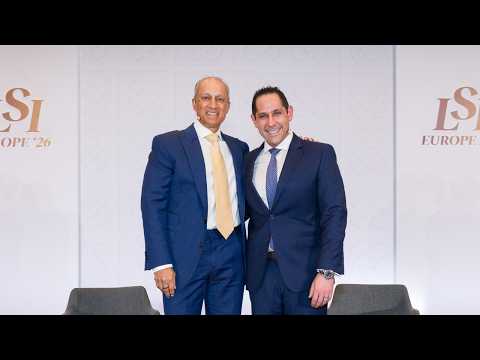
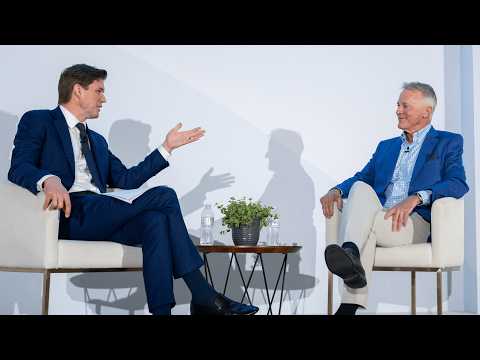
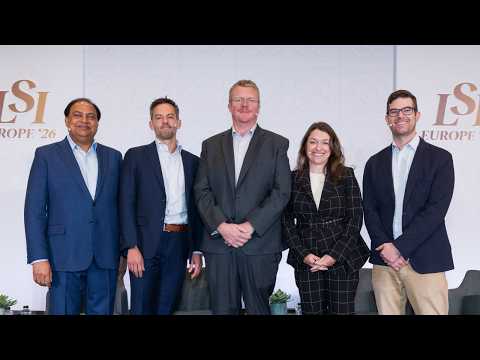
Fireside Chat: Wellness 3.0, Building and Scaling a Robotics Startup in a New Era | LSI USA '25

Join Eric Litman of Aescape and moderator Henry Peck of LSI as they explore strategies and insights for launching and scaling robotics startups focused on next-generation wellness.

Henry Peck  0:04  
Eric, thank you Erica, and thank you everybody for joining us. First of all, I'm thrilled to have Eric with me today for the opening fireside of LSI, USA, 25 Eric, why don I pass it to you first to just introduce yourself briefly, and then we'll, we'll jump into some of the fun


Eric Litman  0:17  
stuff. Yeah, absolutely. Hi everybody. I will say this is the first fireside event to I've been in a lounge like this, where they're passing around cocktails. And it's just warms my soul that you guys can have a drink now, five o'clock in the afternoon. I'm Eric Lipman. I'm the founder and CEO of escape. We are a robotics company that has automated soft tissue manipulation. You may otherwise know of it as massage therapy. We've been at this now for about seven years. We launched about six months ago. We are a consumer brand. Consumers are loving us. We're in places like escape and force, I'm sorry, like Equinox, four seasons, Lifetime Fitness, Ritz Carlton, a number of professional sports teams, corporate offices, and increasingly, in places that are probably very close to your homes.


Henry Peck  1:05  
Awesome. Well, before we get into the robotics and the company journey of it all, let's kind of talk about you and go back to when you were younger. How did you first make money when you were thinking about building business? Could be something when you were a child, something a little later. But what was the first money you made?


Eric Litman  1:23  
Yeah, I, I guess I definitely embody the idea of being a lifelong entrepreneur. I was about eight years old, living in Woodland Hills, California. My best friend at the time, Jacob Tannenbaum, and I started the T and L for Tannenbaum and Litman detective agency. We bought some little vinyl decals. We put them up in a window and in one of our houses, actually both of our house. Both of our houses, and we waited for the business to roll in. It might not surprise you to learn that business did not roll in. We had, we had a loving participant in our ecosystem who threw us a bone and gave us a small opportunity. But it was the fuel that, I guess, empowered me to think that opportunity would find a way into my life if I were to empower to do so. My father, lifelong entrepreneur, built a company here in Southern California, grew a little large for his interest, and one day, just decided to take up a very different life. And so he moved to the Virgin Islands, and graciously invited me to go grow up in the Virgin Islands with him, and he became a small business person. He ran stores and a Mexican restaurant and a jewelry shop and a photography studio, and I had the opportunity to work in every single one of these businesses throughout the course of my high school years, kind of learning what it means to run a business, learning the pain of running small businesses, of having to sort out all the problems on your own, and I took that forward into college, super early in college, started my first company at 19, and I guess I was fortunate enough to figure out at a very early age that I was wholly unemployable by anyone but myself, and I'm building my own company since then, yeah,


Henry Peck  2:55  
having that entrepreneurial bent so early and starting those businesses when you were young. And I want to give you the chance to kind of tell everyone a little bit about your background before about your background before escape in the professional sense. But I'm always curious with repeat entrepreneurs, folks that have had success multiple exits, Did you always know you were going to be successful at this? Or did you think you would be successful?


Eric Litman  3:15  
You know, it's I would all know that. I would characterize it in terms of thinking about success. I I just so abhor the idea of not winning that it's always been a motivator to me. And I left home to go to college at 15, and I haven't depended on parental support since, since well into my college years, and I knew that I had to be the only one to make the way. So there just wasn't another option. Success would be great when it came. And I was always excited about the prospect of it, but it was, it was never the core motivator. It was just the survival and and independence. Tell us a little


Henry Peck  3:49  
bit about some of the businesses that you did prior to escape, and maybe help us understand kind of what the unifying threat of your entrepreneurial journey is. What do these different businesses that you were talking about kind of have


Eric Litman  3:59  
in common? So 1991 I was the co founder of a company that became one of the first and certainly one of the largest of the interactive agencies for three friends of mine. And I started this pre commercialization of the internet, knowing that the internet was going to be a thing. We began building applications on Do any of you in here remember next computers Steve Jobs company, after he got fired from Apple and went and built cool things, and now the iPhones in our pockets are basically next computers. It's the same software a little bit newer, I couldn't have been any less significant. But in college, I worked for Steve at next and really learned the importance of obsessing over products and of the interconnectedness of technology. And so having been on the internet functionally since about 1977 My mom was a researcher at whose aircraft working on guidance systems for ballistic missiles, and she'd bring home little teletype and I'm absolutely dating myself here, but it was a little box with a printer and acoustic couplers. We would take the phone handset and stick it in the top, and things would print out on the other end. She'd connect me to come. Computer isn't all across. What was ARPANET at the time, I had no idea what I was doing, and I would I would hack and play. And so it instilled in me this sense that technology was connected. It was always going to progress, and that that progression, to me, has always felt like a level of evolution, either of human society or maybe even of the human entity itself. And so I've always wanted to find myself at the edge of that evolution. First of the companies was the first wave of the internet. The second one really capitalizing that further. The third was in mobile. There was another one in there that was a bit of a pirate business. We can talk about, if we want to. And then now robotics and the automation of the physical world, which I think is going to be bigger than any one of those coming one of those


Henry Peck  5:43  
combined. What did you learn from the businesses that didn't go as well as some of the early successes?


Eric Litman  5:50  
To the CrossFitters have a saying, I'm not a CrossFit guy. I value my joints way too much. But the CrossFitters have a saying, it never gets easier. You just get better at it. And having I'm now on number five, having been through this four times where three of them, three of them are great. One of them not so great. All of them were never this. It's always this, to get to some destination, being able to reflect at every moment on the moments of accomplishment, on the moments where you feel like you've moved something forward, have always been the thing that take you out of the darkest motive. They've taken me out of the darkest moment. And with the business in particular that didn't do particularly well, I think you know the number one lesson to learn there is maybe know, when you're beaten. We ended up going into a market that was dominated by a monopolistic player and and there was no amount of capital we could have poured into the business to have finally found our way through. And yet we we fought on hard, maybe a little bit harder than we should have. Fortunately, we were able to return capital back to investors, but, but, but it was a it was


Henry Peck  6:56  
a fight. Yeah. So thinking about where you are now, let's transition over to escape. You know, in the in the med tech world, we often talk about, you know, great companies being born out of an unmet need or a very visceral pain point. Some may say, in the case of escape, the pain point is not just visceral, but it's quite literal. Can you tell everyone a little bit about your founding journey with escape and how you got here?


Eric Litman  7:17  
Yeah, it literally was a pain point for me so lifelong of sitting like this at a computer. Remember starting back in the mid 70s, hunching over the teletype combined with athleticism, and then spending entirely too much on airplanes, cramped in seats all over the world. You're making me check my posture now I'm a little worried. I walk throughout my office every day and tap people on the shoulder, and should encourage them to sit up straight. I ended up with a bulging disc in my neck that left me utterly debilitated for about a year of my life and for about eight months of it, I needed someone to take an elbow and dig it into this one spot right here in my shoulder blade for about an hour a day, just to survive, just to make it to the next day and battle the flaming neuropathy down my arm and my inability to sleep. And you can imagine, if you do this every day in cities and countries around the world, you start to get a pretty good sense of what the product is. My favorite businesses are those that are driven for something very personal behind the founder. And this couldn't have been more personal for me. I would land an airplane head up into whatever city I might have been, go straight to a massage therapist. It wouldn't even go straight to a hotel in Jakarta. It would be $5 in central London, it's 300 pounds. Money was never the qualifier. You never know what you're gonna get when you walk in. And no matter how well intentioned the therapist was on the other end, they would almost never give me what I want. I'd ask for an elbow here for an hour. They nod, smile, give me the robe, the slippers, the cucumber water, fumble around on Spotify for any or whales making love to put on in the background, I'd lay down, and five minutes later, they're rubbing my glutes, and that's just not the product what I wanted. So out of frustration, I was just joking with a friend one day, thinking that I would go automate this industry and and candidly, I never thought I would have been foolish enough to go try it. But it was one of those ideas where, when I started kicking it around among investors who'd previously invested in me, and particularly friends who were in robotics, one in particular was the co founder of Kiva systems, and then subsequently went on to run Amazon robotics for years, they started telling me how impossible the task was, and that was just catnip. It got me to really dive in and and start to develop an hypothesis around a couple of key trends that seemed like they would be macro trends. Number one, that we were heading towards the inflection point of technological capability, price and performance of componentry, to where the physical world was all about to be automated that just it started to seem obvious back in 2017, and and the second was that the human body that we all live in right now is experiencing a renaissance of technology around its existence. We see it in Medtech. We see it in Health Tech. We see it in. Biotech. We see it all throughout this conference here, and that the solutions to many of life's problems will many of our body's problems will not necessarily be medical solutions, but things that act on the boundaries of the medical world. And so ultimately, that drove seven years of R D and the product we have today.


Henry Peck  10:20  
So talk about the product you have today. So I'm listening to these theses. I'm thinking about the trend of automation and augmenting the human body. And when I think robotics in massage, I think maybe someone from outside med tech would think humanoid robot that does massage, right? That would be where my mind first goes in science fiction. Why not humanoid robotics? In this case, how do you kind of think about the architecture of this system that you've that you've created, because it looks, you know, eerily similar to a surgical robot in a lot of ways. So how do you think about kind of the architecture meeting the need, and what went into that process of going from pain point, trend, this is the form factor of this robot.


Eric Litman  11:01  
You know, there's a there's a very good reason that forklifts don't look like people. The form factor for lifting heavy things up just requires a very different form, requires a very different structure, very different physics associated with it. And it turns out, for things like what we do, and there are other applications we're now thinking about and or working on building that that relate to what we're doing right now. They also would benefit from a form factor that is not humanoid. Turns out we're really good at doing the things we do, but there are things that we do that could be better by better done by other form factors. And you think about a massage therapist in particular, the kinematics of the human body, or even the humanoid form sort of demand that they work on one side of the body at a time, that we push hard in one direction, pull back lighter in the other. You can optimize that. We've optimized that to the domain. And in our domain, we can apply equal force simultaneously on both sides of the bodies. We can layer in incremental sensing that just wouldn't fit into the humanoid form. And we can build an experience that turns the moment into something candidly, in many ways, much richer than what it could be with a person, because we have other tools at our disposal to engage with the people that are getting the treatment. I want


Henry Peck  12:11  
to talk a little bit more about that experience for a moment, and to maybe just draw kind of a parallel from, you know, some of the bona fide applications of robotics in our industry. We see a lot of robotics in singularly singular, singularly focused, high complexity procedures in general, surgery, orthopedics, cardiovascular et cetera, where, yeah, it would probably not make sense to build a little human that you drop into the body to do bariatric surgery, right? So you have robotic instrumentation and things where a surgeon can comfortably sit in a chair drive, but that's one component of what you have here. You talk about the experience around this. This is solving a medical need, but what you've built feels much more like Apple than Johnson and Johnson. And I'm curious, you know, to hear a little bit about how you think about the productization of an experience around your technology and the pull through of that into the brand that your company has, you know, outside of the medical space,


Eric Litman  13:06  
yeah, I think the last, last thing you said probably applies most specifically. We've, we've very intentionally built this to be a consumer brand, because at the end of the day, we're all consumers, and given the choice to use a product that feels sterile, boring, uninteresting, very medically oriented, versus one that is relatable to the lives that we all live outside of the medical context, is much more likely to be adopted. We we go direct to consumers with our product. We license into businesses, but then you as a consumer go and you book through an app, and it feels like you like a booking experience you used before. It's like you're booking an Uber or resi you see all the locations near you in a map, and you say, oh, I want to go get a massage. Right now, what the team did really was just incrementally think through all the friction points that inhibit transactional volume in the space. Why would somebody get a massage, and then what would prevent them from going and finding a treatment for themselves? And it's look, a lot of these are obvious, but in collective they turn into an experience that becomes repeatable and relatable. So things like simplifying the booking flow, simplifying discovery, ensuring that there's familiarity and consistency from visit to visit, that when you go to any particular location that may offer a service, you are going to have a repeatable experience there that knows you. It learns from you, it gets better and delivers something that's increasingly tuned into the way you want to experience it over time. This isn't something we see a lot of in Medtech, right? It's not as something that, frankly, we see enough of in in many technology categories, but the lessons are all there. We've seen how powerful great consumer experiences can be to build lasting, sustainable brands, and we just, we wanted to, wanted to, wanted to take advantage of that and ultimately deliver something that that had staying power, and to be very candid opportunities for us to then introduce new products over time, leveraging the same


Henry Peck  14:51  
infrastructure, absolutely, when you talk about, you know, the staying power you've had, obviously the success with integration into gyms, athletic programs, spa. Et cetera speaks for itself, but that's required capital to get there. And I'm curious, you know, your experience raising capital for this company? I read an article from an investor online a couple of years back, and it said, the places where robotics will never work are massage therapy and haircuts, right? And you're here proving them wrong. I'm curious, what was it like one of the two? Maybe, who knows what the robot can do in a few days. Maybe that one's the humanoid. But when you think about the journey of raising capital for this company you mentioned, kind of starting with trusted investors, friends and family, you have a major announcement that you guys just made earlier this month on the capital raising front. Would love to kind of hear about the capital raising journey and key learnings at each inflection point.


Eric Litman  15:39  
Any entrepreneurs in the room here? How many of you have raised capital in the past? How many of you enjoyed it? Raising money for this business in its earliest days was about as much fun as UN medicated, invasive dental surgery. We have a cap table that's that's robust. Institutional Investors back in 2017 didn't get it. Robots aren't going to be a thing. AI isn't going to be a thing. Nobody's going to want an automated solution, right? You can just imagine all the tropes that I heard repeated again and again and again. Then COVID came along. The world is never going back to normal, and we're not going to invest anything now. And so instead, what we did was we raced towards a prototype that didn't require imagination. This was this was a lesson that was given to me by somebody else in the hard tech space, because it turns out, the the universe of investors willing to invest in something that is particularly capital intensive, that requires significant scientific discovery and solving a real engineering challenges, and looks like a science project is substantially smaller than one that matches those characteristics that they can see and don't have to think, oh, where is this going to go? Have to be able to see around the corners. So we built something pretty. It was. Doesn't look like it would look like today, but it resembled it. Resembled it. It was it was out of wood. It looked like maybe something you'd see on the Danish Space Station maybe 15 years from now. And that that ultimately got us to a place where individual investors would just fall in love the institutional guys wouldn't risk the capital. But there was a near one to one hit ratio of people who had money, who came in to come get a massage experience, who then said, proactively, can I give you some money? So we did that through the first, I don't know, three and a half four years of it, raised an institutional seed round cross link capital stepped up, and they were bold, and they took a big swing with us. And I loved that they were there for that journey. Oddly enough, raising the series A was staggeringly easy, because at that point we had a big backlog of customer Lois. We had a real prototype, no longer the wooden one, something that looked real pretty at this point. But the business didn't have to be proven. And this is where a lot of the early stage investors really loved to play right like you can't truly value it. There's no cash flows to look at here. It's all potential for the future. And we'll let the growth guys figure out the real metrics later on. So when we went to go raise our our series, A, we had, we was a 30 day process. We had multiple term sheets and and the our lead investor in our series, a came in, met me for the first time, got onto the table for oh, I was maybe five minutes into the massage, and turned to me and said, Holy shit, I'm going to my investment committee on Monday and getting the term sheet. Since then, we've had to prove the business right. You get into that tweener phase where all right now you've solved the prototypical challenges. You have something that mostly works, but boy, is it not a product. Can you not ship it yet to the world? And you solve the platform challenges and the booking challenges and the billing challenges and and the safety certifications and all the regulatory stuff you've got to get through to ultimately make it be a product and and it, for those of you who've been an entrepreneur, maybe in this category, it all went exactly according to plan, right? You shipped on exactly the day you anticipated. Yeah. And so throughout that, you need to find other ways to access capital to get yourself to the point where, where, ultimately you can get into the wild. Then have the metrics where growth stage investors and like, they're great people, they tend to be rather metrics driven, like the cure. Here's what our LP commitments are. We're going to go invest when you hit these sorts of targets in a sector that matches our thesis. But they all can get excited about. And yeah. So we just announced a week ago, $83 million in new capital into the business, and hopefully that lasts us a couple of weeks to go then build out to the next phase of business.


Henry Peck  19:30  
When you talked about the capital raise, you mentioned one that the cap table is robust, which makes sense given the significant influx you've had to get to this point. But it's also highly diverse in terms of the capital, you know, the sources of capital represented, and where, you know, those investors probably would label their sweet spot and where they play. You mentioned, you know, this as being a, you know, a hard tech company. It strikes me your company kind of solving a medical need with a concern. Consumer and, you know, pseudo clinical experience with technology and the robotics and future applications in AI, are you a med tech company, a health tech company, a software company? And how do you think that label may evolve in a world where we see more companies that kind of, you know that Bre that are that look like you built for this era. First


Eric Litman  20:24  
Short answer, yes, yeah.


Henry Peck  20:27  
We just haven't. We just had. We had a great talk with Allan Cohen from DC VC, where he coined the term tech Med, rather than med tech, kind of, you know, playing off tech bio. And what we've seen with the AI revolution in drug discovery and genomics and things like that. And I wonder, are we going to, you know, is that, is that the wave that you're in, as well as there a side speciation event, you know, help me kind of understand here, because I got to name this conference, you know, we call it the emerging Medtech summit, but I'm running out of new names that have met in them.


Eric Litman  20:55  
We we spend at least as much time as necessary, and there's a good chance substantially more than that, trying to figure out the right label here. We've gone back and forth. Fundamentally, we are a robotics company. Our mission is solving challenges of safe, autonomous human robot interaction. We think we've done that very well, and we think we're going to continue to build out robotics applications that leverage the core of what we've done there. Some of it is and will veer more med direct. Much of it will be med adjacent. Personal Care. Fits a lot into the way we think about things. You know, kind of given the popularity of the term, we've even toured the idea of longevity robotics, that's probably a bit of a stretch, but somebody on my team likes that word. I think at least in my category of robotics, even calling us a robotics company, I think will become staid at some point. I think we're we're at this really interesting transition point where consumers, people, businesses, are starting to accept the idea that physical automation will be a thing. And if you look at global GDP right now, pure play software represents somewhere in the three ish percent total of global GDP. So that leaves 97% of other right and some of it's represented by the industries in this room. But there's tremendous room for automation in there, and we will very likely see the automation of almost every physical task we know of today, plus countless new ones that we didn't know could be automated because we've never had the technologies to do so just like we don't really talk about computers today. Remember we used to call things computer companies and then internet companies, those words don't really make much sense any longer, because they're just they're so much the businesses that are engaged in those activities, there's so much more about the value that they bring in a particular category than the fundamental underlying technologies. And I think we'll see much of similar now that doesn't help you with your naming problem, but maybe when you figure out your naming problem, you can


Henry Peck  22:56  
help me with you back on the other side, when you talk about that naming problem, that is an era in our a it's an exercise in marketing. And I'd love to kind of bookend this portion with your commentary and thoughts about marketing in general. You have a lot of entrepreneurs in this audience that think about generating audiences for their companies, be that you know, potential strategic partners, investors, customers, etc, your company. If every day I open the news. You guys are in CNBC, Bloomberg, you're in traditional media. You're all over social media, going viral on Tiktok. You think about building kind of virality loops into your product, right? Talk a little bit about how you've done that and the value that kind of embracing, you know, marketing and you know, both traditional legacy and New Age marketing have really kind of brought to the


Eric Litman  23:42  
business. The the historical precedent for building brands has traditionally sound surrounded itself, at least in the last 50 to 70 years, with large media presences, large purchase media presences, and then significant activities on spend trying to drive people down the funnel, ultimately to a point of conversion. The model has really flipped today, and particularly for consumer oriented services, the acquisition costs continue to rise on the on the major media channels, to a point where as a as an entrepreneur and somebody who's spent a great deal of time in the marketing services and adjacent industries, I just didn't want to go there. And so we very intentionally built a product, despite the complexity some might have in pronouncing our name. It's escape, not a escape or Ha, escape. We hear them all. And for those who are interested, if there are any branding geeks in the room, the name Harkins esthetics, but it really was derivative of Aesculapius, the Roman god of healing and medicine, and some even say spa. So we built the marketing into the product itself. Have anybody? Has anybody here in the room here seen our product, seen a video, had any encounter with it, tried it and found Okay, a few of you. So imagine, if you will, a big BU. A full table, sensors overhead, a robot arm on either side, a large circular armrest in that lies a touch screen where you're engaging with the product. So you lay on the table, the sensor scan you, and then you see your body in 3d and you can make lots of changes, change the music, change the environment, the treatment, otherwise. Well, we decided very early on that we wanted people to be clothed for the massage, in part because it removed the need for the complexity of lubrication and sheeting and all the other things that come along with it. But as much as to build in a key marketing loop into the product, it's futuristic. Most people have never seen a robot in person, let alone been touched by one, so we knew there would be just this great sense of novelty when people first experience it. And sure enough, almost everyone that comes to massage for the first time, because they're in this cool space age looking very branded suit that we would give them, they take out their phone, they film it, and they put it on social media. And so we have phenomenal word of mouth mechanics in here, and we have a product that that influencers in their community really want to be involved in and our cost of customer acquisition on the influencer marketing side is nothing more than a massage. We've never paid an influencer but but everyone from from people with followers from 2000 to 25 million, and maybe even more, which I don't even know what the biggest influences are, come in and use our product just in exchange for a free massage. We build the mechanisms into the booking experience to encourage people to share the bookings with their friends, right? You just again, going back to we've learned all these lessons in consumer internet. These are all things that we can apply to the sorts of products that we have. If we just give them a bit of thought,


Henry Peck  26:38  
we're gonna change gears again here for the for the last few minutes here, I don't want to butcher it, because you are way more equipped than I am to explain it to the audience, but explain PGS founder mode essay to the audience in your own words, and tell me what you thought


Eric Litman  26:52  
about it. Okay, Paul Graham, we familiar with who Paul Graham is. Paul. Paul ran an organization called Y Combinator. He's now a notable internet pundit, super rich guy, and he published an article recently that basically said that the there is a mode of running a company in which the founder can and should be top to bottom, involved in every detail of the organization. They should be a hard driving force. They should be the final source of authority on any decision for which they choose to engage, and that the idea of delegation ultimately can become the death of innovation.


Henry Peck  27:33  
It's a lot right, in contrast to manager mode, which is


Eric Litman  27:37  
essentially the opposite, in contrast to what most of us would know to be traditional management structures and skilled organizations. And you asked me where we're having this discussion. What's my take on that? How do I feel about that? So I again, know mostly only ever having worked for myself, other than the periods of time where I spent time integrating my business into other businesses. I've seen both sides of this in my earliest career, I was all about doing that, about owning all the details middle career, learn to delegate a bit more as I've gotten later in my career, and now building something where the experience matters so much, I would practice what I would call selective founder mode. So I think the organization needs to be autonomous. You need to empower smart people to have great ideas and feel the freedom and the flexibility to go execute against them without fear of reprisal. And this concept of founder mode, I think, is very much counter to that right. You have to do it right. You have to do it the way the founder wanted, or nothing else works. But I do think to build something truly great, whether you're the founder or someone in a team that's a driving force behind a substantial initiative. You cannot let the details go astray. The details really matter in execution and having a communication structure, a decision making structure, and reporting structure that empowers the key driving forces to be able to have influence over the details, I think, is critically important, and it's something I continue to practice. How do


Henry Peck  29:01  
you think about building your teams? This is awesome. This is obviously a very different type of company than some you know, pure software businesses that you've built in the past. This involves r, d, a hardware engineering, capital equipment. How do you think about building teams? How do you think about empowering teams? And what kind of you know, lessons from doing this now, on your fifth time, would you share with the audience of entrepreneurs here about building high performing


Eric Litman  29:23  
teams like you know this. This is, this is a, this is a kind of trite cliche that's trotted out a lot, but I genuinely believe you should try to hire people that are better than you in any domain in which you're hiring them. I think it's, I think it's really, really important. I've been incredibly fortunate to bring together a team of people who are smart and capable and thoughtful, and the trait I look for most is empathetic, the ability to work well in a high stress environment and have productive conflict, the ability to disagree and commit, the ability to solve hard problems as a group. I to this day, I interview. I'm the final interviewer for every single person that works in the company. And I've done this for my last several company up and up into the hundreds, like it does scale if you put the processes in place that empower people to only bring you the really good ones, it then serves as an opportunity to break down the barrier that many incoming employees have around the role or the Office of the CEO, that it's something enshrined in distance, rather than another functional member of the team with whom they can collaborate. I could not imagine, at least as a founder, ever allowing organization to start to build a culture that isn't embodied with the values that we collectively hold. And to do that, I think you have to have to focus on not just how you attract people, but how you encourage the people who are bringing them into the organization to think like the cultural values? And by the way, those aren't necessarily the founder mode concept of where I'm driving them. I think cultural values change. They morph. They they evolve to be relevant to whatever the business may be at any point in time. And I think you you have to make sure that people that are that are involved in hiring know them and are capable of communicating them and filtering for them? Yeah,


Henry Peck  31:02  
I want to set up the, you know, kind of the final question here to understand where escape is going to be, you know, over the next decade, and maybe where wellness overall is going to be. You have a thesis on wellness 3.0 as we, you know, we called it. What does, you know, human wellness 3.0 look like over the next decade, and what's the role that escape plays in that?


Eric Litman  31:22  
I think it's it's it's increasingly measured. I think people have the opportunity to to be much more aware of what's happening within their bodies. Thanks. And I keep pointing out here, but thanks to so many innovations I've I've spoken with people about here and that are going to continue to grow and continue to democratize. I think that theme, the democratization of access will continue to proliferate. I think we're all just going to get a lot healthier, and I think the cultural wave that we're seeing right now of health awareness ultimately leads to significantly greater proactivity and us living healthier, longer lives. I love it. That's what I'm trying


Henry Peck  32:00  
for Fantastic. Well, I'll wrap up here. So we have some time to take questions from the audience. I know can't be the only one who gets to ask you all the zingers, but if anybody has a question, feel free to raise a hand. We can take one on stage and then afterwards, some in a curated format.


Eric Litman  32:14  
The good news is our partners get to set those prices, so in most locations, is a floor price of $2 a minute. So you'll pay 60 bucks for a 30 minute massage, $120 for an hour massage. Most people are opting into the 30 because those two arms are working simultaneously. It feels like you've had at least an hour treatment. You're not showering, you're not tipping. People are starting to incorporate this into just kind of a regular wellness and fitness patterns. We've had super fans come back as many as 16 times already since we launched just a few months ago. 


Audience Question  32:50  
So I'm I'm 36 only my second company, and you look like my younger brother, I get a lot of massages. There we go. Anything outside of the massage, 


Eric Litman  32:59  
anything outside of massages, I have what some might say is an over enthusiastic health stack. I've been doing it for an awfully long time. I, I don't know that I would recommend it, but it's, it's probably my biggest hobby outside of working. 


Henry Peck  33:22  
I do have a question kind of extending on that. In all seriousness, we didn't talk about kind of the future of human health more broadly, outside of just kind of the healthcare and sick care that we provide. You sound like someone who's very focused on longevity, maybe a little bit of biohacking, if that word is still cool. But where do you see kind of the intersection of that industry and that space, with the technologies that a lot of the companies here are developing that are focused on disease diagnostics, disease therapy, surgery, rehabilitation, et cetera. How do you think about the convergence of those two, you know, industries trying to achieve similar


Eric Litman  33:56  
goals? I've always been I've always been so appreciative of the medical profession and what it's capable of doing, what its role is in society. Role is in society. But I've never understood this sanctified relationship between patient and provider and this segregation of knowledge and authority link it's these are our bodies. We should have a measure of control. The problem is we haven't had either the distributed knowledge or the tools to enable that. You know, hopefully we push more and more power into our hands and power being knowledge, information, diagnostics, therapeutics, and then we end up with with regulatory policy that increasingly allows us to take more control of our own bodies and destinies. Take one more here.


Audience Question 2  34:40  
You mentioned the challenge with fundraising, with this idea many years ago, but now that you're distributing the product to vendors and things, how much of a challenge are you facing with this idea of, and I want to throw a robot to do your massages and these things? Are you getting pushback there? Are you seeing momentum in that area? I'm just curious how they view the product.


Eric Litman  34:59  
For fundraising, or in distribution, in distribution, distribution, we know we have a substantial backlog now, partners, partners. Well, sorry, let me get let me give a more thoughtful answer. Whenever you're bringing something new to market, you have to think about the slope of the bell curve, right, and where, where the adopters are going to come in, and what, what proof points you need for them. We got very, very lucky that when we launched in August of last year, Equinox, stepped forward to be a large partner for us. So just a great brand, they embody a lot of the attributes that we think about when we think about human performance and recovery and care, and together with them, we've been able to demonstrate real commercial viability and success to them and other partners along the way. Now that we've done that and we have the metrics on the consumer side, we're showing that people are using it repeatedly. We're good 30% monthly repeat utilization rate already. The distribution is coming much, much, much easier. Awesome.


Henry Peck  35:53  
Well, Eric, we'll, we'll wrap up here, but thank you so much for your time, for sharing the story, for having this conversation with us, for folks that want to continue the conversation, we'll head over to the lens lounge and kind of clear the bottleneck. Thank you again, Eric. Really appreciate it, and thank you all for joining


Eric Litman  36:06  
us. Thanks everybody. And I will throw out at the end here for anybody who would like to get an escape massage, since you came in here, rather than standing on the beautiful weather to have a cocktail, I'll make it real easy. Follow me on Instagram. Eric Litman, shoot me a message, and I will shoot you a code for free massage.


Henry Peck  36:24  
Thanks, guys, better than the wine cocktails really took away my big reveal. That was awesome, man. Thank you. You.


Transcribed by https://otter.ai

LSI USA ‘26 is filling fast. Secure your spot today to join Medtech and Healthtech leaders.

March 16th - 20th, 2026  Waldorf Astoria, Monarch Beach Register arrow