Fireside Chat: Real World Evidence as Commercial Strategy for Startups and Strategics | LSI USA '25

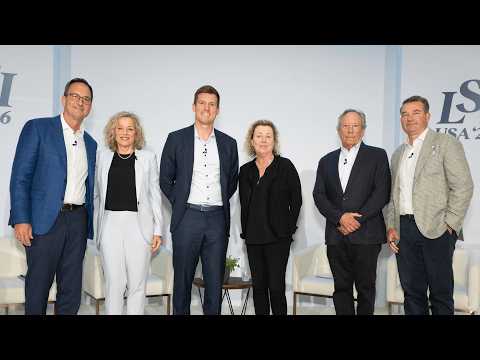
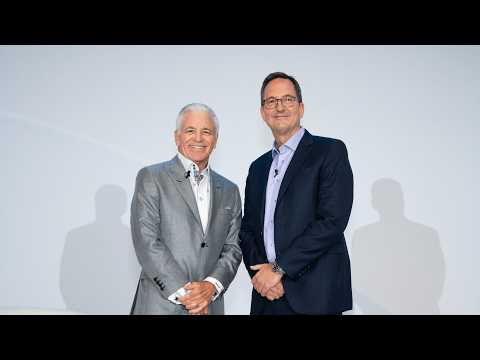
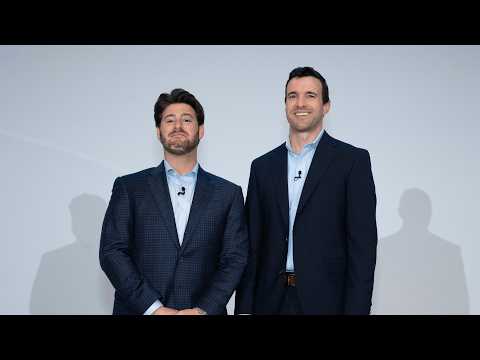
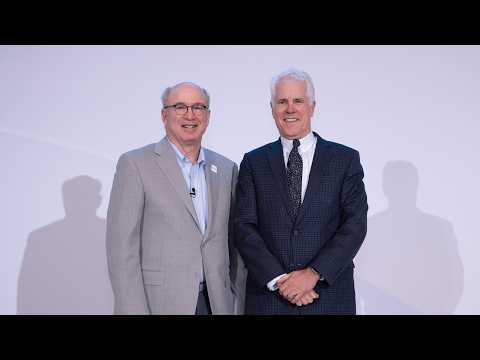
Join moderator Bruce Ramshaw (Caresyntax) and industry leaders John Erbey (Roivios) and Liam Burns (Qaelon Medical) for a focused discussion on leveraging real-world evidence to accelerate commercial success for startups and strategic medtech companies.

Henry Peck  0:00  
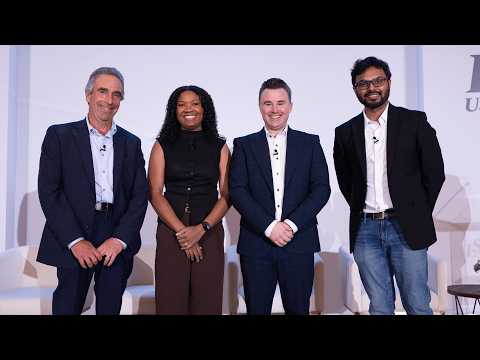
Lee, well, thank you everyone so much. I always get a little antsy when I see that picture. And Liam reminded me that since that picture has been taken, I've grown my hair out a lot longer. I think he's reminding because he's jealous of my hair.


Liam Burns  0:17  
Indeed, you have more hair than the three of us combined. No, but I could never grow my hair like that. As a naval officer, I always cut it short, and it's never worked out. There


Henry Peck  0:25  
you go. You're rocking the look, though it's good, but we're not here to talk about haircuts, or, you know, anything like that. We're here to talk about real world evidence as a commercial strategy. And we're thrilled to have three incredible companies joining us as part of this series of conversations. I want to first remind everybody who could join us at LSI Europe, 24 care syntax, one of the leading companies in our community, had just come off of a major raise. We were thrilled, thrilled to have Bruce with us on that stage in Portugal to kind of lay the foundation for this idea of real world evidence and the strategy that they were putting in place. And now to see the fruits of that strategy start to materialize in the community is incredible. So we're going to be learning about that here tonight, and we're going to and we're going to continue those conversations at our events this year in Asia and in London. So on that theme of partnerships, maybe before we get into the meat and potatoes of the strategy, I'm curious how these partnerships between care syntax and K lane and care syntax and royvios were formed. So maybe John, start with you. How did you get connected with Bruce and care syntax, and what was that journey?


John Erbey  1:25  
That journey was on a terminal bus in Boston between the flight in from Atlanta and the flight out from Boston to Portugal. Struck up a conversation with Bruce and found out that not only did he get the joke of what we were trying to do instantaneously, but he had actually lived it clinically, yeah, and I was that was a fun moment to see someone who understood what we were trying to accomplish and had an idea of how to take it much further and much faster.


Henry Peck  1:53  
This is the bus to LSI, Europe in 2024


Bruce Ramshaw  1:56  
less in between the terminals in Boston. Logan era the shuttle. Yeah, we were on the same flight from Atlanta, too. I was the last one on, yeah, there was a seat next to John, and I sat down, and I barely made it. So I was like, kind of has a little bit. And John was kind enough to look at me and go, are you going to LSI, Portugal? I


John Erbey  2:17  
was like, Yeah, that was the moment,


Henry Peck  2:22  
yeah, that's so funny. Liam yourself. How did you come to find yourself with with Bruce and care syntax?


Liam Burns  2:28  
So we were, I was presenting at LSI, Portugal, and Bruce came to watch our company presentation. And I know this sounds kind of strange, but we kind of looked at each other, and for some reason, it clicked. I spent a year and a half at CONMED with air seal and care syntax, you know, expanded their indications, probably expanded the transaction value of the search request acquisition because of that indication. And it was just within three minutes we realized, okay, so we're this incredible product, and now I find somebody that can execute the data strategy beyond what we could do as a startup. And, you know, with a with a world leading surgical intelligence platform, you know, they're already in 4000 or s, and startups have to focus, and so we're focused on leak detection and care syntax will focus on the data for us?


Bruce Ramshaw  3:22  
Yeah, and I think not only do we have a data solution that made sense, but being a clinician, I understood the problems that both of these companies are trying to solve, so I was able to really relate to the solutions and the elegance and the status quo just is not acceptable in both of these areas. And so I understood the clinical side. I had all the experience of building this data kind of platform with care syntax, and then it just resonated with with both of these companies, the opportunity to work


Henry Peck  3:51  
together before I want to learn a little bit more about those problems you experience that they're trying to solve. But something that's striking about this, I think when we think about strategic partnerships, we're often thinking about a startup partnering with a Johnson and Johnson a Medtronic, a Mayo Clinic, a much larger organization. And it strikes me that this is, these are partnerships that you're forming between other rap, you know, high growth startups in the space. And I'm curious, you know, how you think about the value of those partnerships, maybe in relation to some of the other types of partnerships that we see in med tech.


Bruce Ramshaw  4:24  
So I think the value to us is that we as a company, our mission and vision is about improving surgical outcomes, and to do that, we need to partner with companies that have solutions. Liam's problem for Kay LAN is the surgical leak after anastomosis. I did bariatric surgery. I did colon surgery. I can't tell you how incredibly uncomfortable it is when you do an anastomosis, especially in the low pelvis with the left colon. How much that keeps you up at night, because if that leak occurs, or if. You haven't detected it? Well, that patient can die. And as a surgeon, that's so important. And up until now with Kay LAN, the way that I tested leaks in my entire career was take a very fragile anastomosis, dunk it in a pool of saline and push air in and look for bubbles. I mean, how archaic is that? Well,


Liam Burns  5:23  
Bruce, it's it actually dates back. The first report of that of the medical literature was 1910, I think you were, what, four years old, or I


Bruce Ramshaw  5:31  
was quite young at that time. And so, for John Roivios, I used to do massive abdominal wall reconstructions. I would see patients with 1020 30 prior surgeries and 1020 her knee repairs, and their intestines were hanging below their knee, and I had to somehow take all of that excess viscera and put it back in the abdominal cavity. And what that did was it put huge pressure post op, especially with edema and swelling. And so we would look at that patient for the next 24 to 48 hours as the edema happened, and that pressure in the abdomen, the very first organ system to shut down was the kidneys. And all we could do was pray, please don't shut down. Please don't shut down, and if it shuts down, we'll just do dialysis. I mean, how archaic is that it's another solution where we actually have a technology that can help assist the kidneys to not lose their function after a complex surgery, whether it's abdominal or cardiac or whatever.


Henry Peck  6:35  
Bruce, the different areas that you're touching on here that you know from the outside looking in, maybe from some market analyst perspective, you may look at these two companies and say they're very different. They're in very different spaces, pursuing different markets with different types of technology, but the parallels you're drawing are obviously extremely unique to your background and your perspective. I'm curious if maybe you can give us some more depth into your your clinical and professional background, that helps kind of put in context how you see, you know, the forest for the trees in this context.


Bruce Ramshaw  7:08  
So the the clinical data is a service that we've developed as a business model really started when I was the Chief of General Surgery at University Missouri. I hadn't been chief of anything in my life, even back in 1910 and I studied I studied business, I studied healthcare, I studied leadership, because I wanted to do a good job as division chief. But what I learned pretty quickly was that our global healthcare system, the way it continues to try to function, is just not sustainable, and the core reason is we're not using data science principles appropriately. And so that led me on a path where I started to bring in a team of data scientists and engineers, and we worked together for over a decade learning how to apply principles of systems and data science to real patient care. And what we learned was the science is all about measurement and improvement. If you can measure something, use Data Tools appropriately, you can improve what you measure. And it took us a while, but we learned, if we're going to have a sustainable health care system globally, we need to learn how to measure the value of care and the context of every whole definable process. And as we did that, we were able to predictably lower cost and improve outcomes. And the business model that came out of that, and what we're working with these companies on is if we can measure the value of any patient process, we can also measure the value of any drug device or diagnostics tool in that process. And so we do that by partnering with industry going into real world clinical environments, no exclusion criteria, no inclusion criteria. So it's real world, and in doing that, we can really understand and gain insights into how to measure and improve value and how to support the value proposition for our clients.


Henry Peck  8:46  
Absolutely. So the topic of the discussion today that sets up this series is real world evidence as a commercial strategy. So let's break that down into its building blocks, real world evidence, R, W, E. We hear that term thrown around a lot, and I'm not quite sure if we all know exactly what it means, what it means in this context, and how it differentiates from, say, real world data, which we hear often. You know, in interchangeably. Jon, maybe we'll start with you on this one. Can you explain to us what real world evidence is and how it's different from real world data? So I'm


John Erbey  9:21  
coming from the perspective that I was trained as an epidemiologist. So data is sort of the core of where I'm coming from. Data and evidence are not interchangeable. They're related. Data is like the word, and evidence is the story. So as you build data and you put it together and interpret it and do the analysis. That's what leads to the insights and the implications that are the evidence that we're talking about here, and getting people to change behavior based on what that evidence would suggest leads to that performance improvement that we were talking about. So that's as simple as I can break it down,


Bruce Ramshaw  9:57  
yeah, and I love, I love the for. Fergus Connelly, who's a data essentially data science for high level athletics, published a concept on his website of the data to wisdom continuum, and I'll see if I can get it right. Data, in and of itself is just noise. Data requires context, and data in context is information and experimentation. Error is experience and information plus experience is knowledge, and


Henry Peck  10:26  
it's got all that you're going to read. Someone read that back to me real quick. Well,


Bruce Ramshaw  10:29  
in the way, is it? My favorite part of it, knowledge isn't good enough. Knowledge and humility produces wisdom. And when you go back to I always refer to money ball, because this was done in baseball over 25 years ago, and when they interviewed Billy Bean in the actual book Moneyball, they asked him, What did it take to actually introduce data science into baseball? He said it took a certain level of humility. We had to humble ourselves. We were We consider ourselves baseball experts, and we thought we knew the answer to every baseball situation, and we didn't. We had to humble ourselves and understand that the data science can help inform us and give us insights that we otherwise couldn't have just as experts. And I had to go through that as a clinician. As I learned this and as I worked with the data science team we work with, I had humbled myself because it wasn't all about when I was a Yeah, I was considered a world expert in my area of her knee disease. And when a patient came with a hernia, I thought I knew the exact best technique and the best mesh, and I didn't, and it was only through understanding the principles of data science I realized I needed to do better. And I think that's where we are in healthcare,


Liam Burns  11:38  
yeah. Liam, how do you think about that? So I think the real world, the real term that we should focus on, is real so real world evidence, real world data, is looking back in the past. You can't act on it. It's statistics that in real life, in that real moment when the surgeon is sitting there at the end of the case and they're trying to figure out whether their anastomosis has integrity or not at that moment when you can influence clinical decision making. That's real world evidence actually being used. That's surgical intelligence. I think one of the things I want to highlight, care syntax has already figured out the model to monetize the knowledge, the wisdom, the experience, the data into programs continuous quality improvement programs where hospitals are purchasing that service, knowing that the ROI on it is incredible. So a colorectal surgical leak cost $35,000 in my revenue model, I have as much revenue from the hardware as I do from the intelligence that we're going to provide, because we can change the way surgeons finish that procedure. They know there's a leak, they can act before the patient leaves the or, you


Henry Peck  12:51  
know, tying it back to that commercial idea. I would love to hear a little bit more about how you think about the revenue model there. As you mentioned, 50% coming from, you know, the intelligence in this case, how different is that from what's done today, what exists today? And John, you see that as well in your space, with your technology,


John Erbey  13:07  
absolutely, I'm a little further into the sculpting the fog, or not quite as far into the sculpting the fog as he is. But at the end of the day, a patient who crashes into dialysis, if they're a commercially insured patient, that insurance company is going to eat $650,000 of $1,000 of coordinated care before Medicare picks up the bill, the hospital is going to have to pay for a doubling of the ICU stay. And again, they're crossing their fingers and hoping the patient recovers. That influence and that insight to be able to avoid some of those catastrophes is really the value of what we're trying to


Bruce Ramshaw  13:41  
try to break until now, we've been all functioning in the silos of our own business model. You've got the payer here, you've got the hospital and facility here, you've got the doctor here, you've got the industry here. And what we're doing with our clinical data as a service is bringing everyone around the patient and value for the patient. So as long as you're bringing value to the patient, you can win in this model. And isn't it desperately needed in health care to have a model where we're measuring improving value? I think that's part of our mission is to improve patient outcomes and improve health care transformation to a value model.


Henry Peck  14:13  
Yeah, Bruce, you've been a leader in this space for so many years. I want to ask you, you know, I agree that it's desperately needed. I think everyone on this stage agrees it's desperately needed. When you bring this model out into the world, do other people agree that it's desperately needed? Then what's the response that you received?


Bruce Ramshaw  14:28  
Yeah, I had to leave three jobs along the way. So it's been a challenge. There's a lot of people benefiting by the status quo. There's a lot of companies benefiting by the status quo that don't bring value to the patient. And so certainly it was a challenge, but in that challenge, it allowed me and a small team, a data science team, to really understand how to apply the principles of data science in a scalable methodology. And I told you the Fergus con. Only data to wisdom. Well, our clinical data as a service. Methodology just mirrors that. First, we put data in context. We have to have a definable process, and then we do feedback loops, because there's no way to just do one analysis, one data. We have to have data decentralized in each local environment. When you centralize or aggregate data, you get averages. Nobody's reflected by the average, and unfortunately, marginalized sub populations and minorities are harmed because they're farther from the average. And in those feedback loops over time, we can get insights that truly impact what we measure. And if we're measuring value of care, we can improve value. Liam,


Liam Burns  15:38  
you want to comment on that? I think I want to take us back, because we've talked about patient impact, we've talked about evidence and decision making. I think we we never should stop talking about the patient. So real world for me is also this is a personal mission. So my son has Crohn's disease, well managed with infusion therapy, but at some point in time, he might have to have surgery. And so I think about what's real about this, for me, is that this is a mission to improve gi surgery, and the way we're doing this, and we get so lost in the AI and the buzzwords and machine learning and all that, you know, we have to remember that there's a patient on that table. And I want to just emphasize that first, you know, the other part of of just the the economic impact, you know, I think there's a call to action to, frankly, everyone in this room, everyone in this in this at this conference, you've heard a couple speakers talk about wanting to make impact, and so part of the challenge is with data. If you're one of those companies that pulls all that data back and holds it close and uses it to advance just your business, you're I don't think you're honoring the responsibility that we have to all of healthcare, because eventually all of these things are going to bankrupt health care there. There's not enough money there. 98% of hospitals are operating in the red, and so I believe the only way that we can advance health care collectively is to share that data in an open architecture care syntax is, thank you. The care syntax model is vendor neutral. They're not trying to make me look good. When I was doing clinical trials before, I took a narrow sliver to make sure that my product looked like a rock star. It was going to cure cancer. And so that data approach should not be used anymore. You have to contribute your data back surgical leaks, very complicated problem. Half the questions that I get from investors and surgeons, I say I don't know, and I say the world doesn't know, because we've all hoarded this data. So the architecture of care, syntax being open is going to advance the understanding of many complicated medical procedures. And here's the best part, I can still protect my proprietary data. I can protect my algorithms. I can create value that another insulator and no other company can do, but I can still contribute that outcomes data to the greater science understanding or the understanding of the surgical community, that's where I think this is different, and we're on that point where you won't be able to hoard your data anymore. You've got to share


Henry Peck  18:30  
it. How fast do you think we get there? Bruce, yeah,


Bruce Ramshaw  18:33  
I think we're in the early stages of real accelerating growth. You heard the response, right? We need to have data that's transparent, we need to measure value, and when we do that, everyone can win, as long as you're bringing value to the patient. So as you can see, these are the kinds of companies we want to work with. If you have a technology that's truly impacting value for the patient and for the system, we want to help accelerate that. One example, one of our earliest clients was surge request, who had the low pressure Pneuma para m system called air seal, and they were struggling to get market share. This is back in 2014 they had gained some market share in robotics cases, which was less than 1% of the greater laparoscopic and minimally invasive market. So we did a clinical data as a service CQI project with them in nine months, which doesn't require IRB. It's not a clinical trial, it's quality improvement. So we did a nine month project over 100 patients in laparoscopic cases. We showed the value. We did multiple feedback loops. We learned things like, how low on the pressure could we go? How could we decrease opioid use by combining it with expro, a long acting local anesthetic, we wrote, wrote a white paper together, their sales force used that data and that white paper to get into cases they couldn't get into. Their revenue accelerated. Six months later, they were acquired by CONMED for $265 million and the CEO of the company said that data helped improve their valuation by probably 10. Of millions of dollars over 10 years later, CONMED still our client. We still do projects. One of our more recent projects was they were only approved by the FDA for patients to weigh 20 kilograms and heavier, but it's a low pressure system, so lower pressure for smaller kids made sense. So pediatric surgeons were using off label, and so we went into did a project at CHOP in Philadelphia, in children's hospital Georgia, generated over 130 patients. Again, a quality improvement methodology, no IRB, no clinical trial. They brought that to the FDA. The FDA saw the value, and they awarded an expanded indication for all weight patients. So we can help continue to improve the value by using real world evidence and our quality improvement methodology,


Henry Peck  20:45  
not to move away from the patient side of this, but I do want to talk about kind of the predicate to commercial strategy to get us to that second building block, being regulatory strategy. And John, we'll start with you on this one. How has the real world evidence strategy and partnership that we're talking about here? We're talking about here impacted your regulatory strategy.


John Erbey  21:07  
So I think it's a go to market strategy that is holistic, that is really what we're talking about here. The regulatory strategy is the regulatory strategy the customers, the regulatory bodies, view level of evidence as their criteria, and the highest level is a randomized, controlled, double blind trial that tells you very valued information on the signal to noise of what your technology can do, both positively and negatively. But what that's missing is the the concept of is this generalizable to the population that is going to be using the technology? And that's where the overlay of a multi dimensional approach makes sense. We bring in the care syntax data that can both highlight the magnitude of the problem and who's most susceptible, but also the opportunity of where your technology has the best impact on both the hospital's ability to deliver quality and ability to economically advantage that quality. And so that package together gives us the opportunity to develop the Nama 114 claims that we can talk about the impact of our technology before we're on the market to the economic decision makers in that institution that gives us a leg up to be able to have the conversations with the policy makers within the institution before I'm promoting a product, so that they know where we're going, and we can have that conversation of what does good look like in the future, and then have those models ready. So when our our pivotal trial results come in, we can overlay that on the model and show them what is the real potential impact in the context. That's our labeling. Liam, how about you? I


Liam Burns  22:46  
think regulatory strategy is such a subset the data strategy has to be embedded in the entire corporate strategy from the stock from the start.


Henry Peck  22:54  
And how do you do that? Tell me. Give us some mechanics. Data strategy being embedded in corporate strategy sounds really nice. What does that mean? From the way you build the company, team process? Give us some mechanics for that. I'll


Liam Burns  23:06  
look at just the product development. So the regulatory piece is, you got to get to FDA clearance right then you can get into the market. You can talk to the big strategics, about exits and and things like that. I the data part has to be woven in, even into the product development. So, for example, our first integrated capital equipment box does leak detection and a state of the art insulator. We're not ready to have an automated export of data yet, so, but we're going to build that into the box from the absolute start, the way to communicate to the cloud, the way to export data so that it can be easily integrated into into what care syntax we as, as kind of the data hub. So it drives product strategy. It drives the revenue strategy. Because we're so many companies are struggling. How do I make money off the data that I bring you? Don't bring money off of data. Data is expected. Now, if you can bring intelligence, you can charge for it, and I think that's, that's where it gets embedded, into into the corporate strategy on the regulatory side. The FDA has, has, you know, post market surveillance in my 30 years, 25 of them was, it was a drive by. They didn't have a mechanism to actually look at your your post launch outcomes, and say, You should do this, or you should do this now that now the FDA can look at that and go, No, we're not going to do this little spreadsheet that you harvested from 20 people, or you just pulled it out of your QMS system. That's not enough. We asked you to to monitor the use of this product and how it impacts surgery. Their bar on post market surveillance has gone up. And when it's automated, and it's part of your whole strategy, we will over achieve that. That builds the kind of relationship with the FDA when you bring. Another indication that's driven by data that comes out of your real world data strategy. They see you, they trust you, and it goes a lot faster from there. So those are just a couple, I think, examples of how it gets embedded pretty well, absolutely. Bruce,


John Erbey  25:17  
yeah, I think another way to think about this for in our specific example is, we're a therapy that can sustain or enhance kidney function. So that begs the question, well, how do you measure kidney function today? And that's the gold standard. Is gamilular filtration rate. I think there are 26 different equations on how you estimate that, and a couple different ways of how you actually measure it that are complicated and require, you know, 24 access to urine and blood, etc. At the end of the day, filtration is not what makes the kidney unique. Is what the week. It's the way. It's this gold standard for how we measure it. But at the end of the day, the kidney doesn't spend any energy filtering the blood. The heart provides that energy. What the kidney spends a ton of energy doing is selectively keeping the stuff that it's filtered that the body needs to survive, so water, salt, glucose, that is nothing to do with glomerular filtration rate, because the end of the day, I mean, if you stop filtering, yes, you're not doing your the kidneys in trouble. But what we need to do is figure out a way to have data to supply to the agency that we're improving function, which is filtration based, but then also the insights into, well, what do we know about how the kidneys response to an injury has impact on multiple other organ systems? And that's really the beauty of where the care syntax comes in. If we don't manage electrolytes correctly, you lead to, I mean, electrolytes are what drive cardiac and neural function, you know, calcium, sodium, potassium, etc. So if you have abnormalities there, we can start seeing the canary start falling over in the coal mine, way before you see the clinical endpoints. And so it's that kind of wraparound that I think is particularly valuable for us, because we are changing the way people think about kidney function. If we're going to be successful, it's going to be a holistic view of the kidneys are responsible for managing the managing the body's internal environment. That's a little hard to put as a single metric. So that's where this program gets particularly exciting.


Henry Peck  27:19  
It sounds like the the excitement clearly there, the early indicators of success clearly there. And the trend that you're predicting is up into the right I'm curious, Bruce, in thinking about the future of this, do you see any tail or, sorry, some head winds to counteract those tail winds, any watch outs around the corner, things that you're already thinking about as obstacles that you need to leap or objections you're going to need to handle.


Bruce Ramshaw  27:44  
Yeah, and the status quo is very strong in healthcare, like we talked about earlier. So, you know, the headwinds are, this is the way we will always done it. This way we do it. We don't have a, you know, a payment model that's value based yet, although the, you know, the desire is there. So I think we have to show how to do value first. And certainly the strategy that we've had with clinical data as a service is industry is our primary client to start with, because industry is the farthest from the healthcare dollar. Obviously the payer controls it. Then there's a hospital and facilities and the clinicians and doctors. And with industry farthest from the dollar, we realized that they're under the greatest stress to demonstrate the value of their products for the system that's kind of failing, and so that was our strategy, to go with industry clients and partner there. They're also the only part of healthcare that really understands continuous quality improvement, because they do that around their products, and doctors haven't done that. Well, payers don't do that. So that was our strategy. I think the headwind is we now have to demonstrate the value in the hospital setting and show them that they can do data differently. And we've begun, we've begun to do that where they look at data and budget silos, and we come in and we say, hey, you know, we know you're paying X amount of dollars for this drug that's more costly than the others, and you're restricting use of it because it's a negative impact on that budget. But what is the impact to the overall financial outcome for the hospital as a whole and for the patient, and when we can show them their data that way and put hospital net margin and cost in with patient outcomes, because, again, if you can measure it, you can improve it. And so we're showing hospitals how they can do data differently, and actually they benefit more than just about anybody financially when we do this, and that's early on, but we're starting to see the traction there. Certain hospital systems were saying, We've been trying for years to measure the value of our robot program, and where does the robot have value, and where does it not and we've now gone into a couple sites and show them, well, if you use the robot in this setting with this set of factors, you're going to drive better outcomes and better financial outcomes for the hospital. If you use it in this setting, you're going to lose a lot of money, and the patient outcomes aren't any better. So we can start doing that market segmentation that other industries and industries have done, and we can do that appropriately in healthcare around patient value.


Henry Peck  30:13  
There's a couple things that you said that that strike me. I want to on the financial side that I want to talk about, and Liam and John, I want to put you guys on the spot here as startup operators, amongst many other hats that we're talking about here, when you're talking earlier about your relationship with CONMED and the origin of that relationship, the value expansion that you created for that company at exit based on this strategy. We've heard some commentary today around the historical exit constraints of med tech companies, and how other blue chip investors outside of med tech may be more enticed to invest in med tech if there were larger valuations at exit and opportunity and pathways for companies to realize more value, capture more value, create more value, that translated to financial returns and better multiples, Liam and John, as you've now been at this event and out in the world, you know, and broadly interfacing with investors and the financial community. What's their response to this? How is it, you know, how do they respond to this strategy? Has it changed? Their receptiveness, interest in your company? What's been, you know, what's been their response?


Liam Burns  31:21  
I think the first thing is that when you show confidence that you want to go get data without knowing the outcome, I'm not talking about a randomized control trial where you pick a very narrow subset to make yourself look good. I'm talking about the entire spectrum of patients, all the ones on the fringe that cost more, that are harder to diagnose, that are harder to treat. I think it demonstrates a confidence in the technology that we don't know exactly what it's going to prove, but I know that the ROI is going to be very high. And so that openness, I think, builds credibility and confidence with the investors as well, as, frankly, with with with the strategics. I look at the partnership as a way to prove the ROI. We've seen all those white papers in my early career where it was this very loosely trained like and here's the ROI, and there's so many gaps of assumption that there's no way that those are actually real. And so when you look at all the cost data, the payer data, all of the data that gets ingested by care. Syntax, when I say this is what the ROI is, and we're talking about, we can, real time, pull that off the system at any time as we build enrollment. That brings really great confidence with with the investors and now the strategics, who many of the large strategics have kind of held back data, or they haven't really built their ecosystem. You know, the surgical tower world is now the surgical video robotic tower. There's a, you know, the wars between those companies are battling for it. Those towers have to do more than just have incredible vision or incredible insufflation, they've got to do all of that. And so I think it builds confidence when I say, I'll prove the ROI on my capital equipment. And just, you know, as a point of reference, back to CONMED, we kind of like this, because we're also a constant flow insufflator. You know, the average insufflator cost $12,000 air seal cost over 30 because it's differentiated, because it does something different. And frankly, Bruce, I give you a little kudos, because I launched the air SEO robotic solution at combat. You know, that was growing 30% year on year on year on year on year, and that's because of the data that that goes with


Henry Peck  33:35  
that. Yeah. Jon, anything to add there?


John Erbey  33:38  
Yeah. I mean, I think our existing investors are so excited because it it lends credibility to the crazy assumptions that we could get to, not the ones that you know at the end of the day, we know that there is an attractive market and in cardiac surgery, and we're going to expand to major surgery and then expand into the medical ICU, those numbers get very big, very quick. The commonality is that we have a story that we can tell the same decision maker across all three of those on how they can improve their bottom line at the institutional level. This is a modest investment for them in the context of the consequence of not investing in it. And that story just gets better as we build out through this. And so having the conversation before we even get to market, about the realities of the problem they actually may not understand they have, or it may not understand why they have it, and how we can help them solve that has been been very exciting for for the investor group,


Henry Peck  34:35  
right? Well, as we come up on time, I want to ask you guys a question that'll help bring it all together and close us off. Obviously, as I mentioned, this is a series of conversations we're going to be doing around real world evidence, with our partners, care syntax, with companies that in the LSI community are embracing this idea, and it sounds like there's many that want to embrace this idea, based on the round of applause from earlier. But Liam, we'll start with you when we see you at the next event. Where will Kaylin be, and how will this strategy have evolved as part of your


Liam Burns  35:04  
growth? Yeah, well, first of all, we already signed another medical device company to join the data ecosystem, rev medica, which is a startup stapling company. They are now using our device to evaluate how their stapler performs and enhance product development, because we are a quantifiable data source for them. I think the other thing you're going to see is we're announcing our data advisory board, and it will be interesting that our data advisory board is being put together before our Scientific Advisory Board. Now, certainly there's going to be leading surgeons, and we want to get people that have or surgeons that are familiar with the different surgical societies, so can bring that perspective with it. But we're putting our data advisor board. We'll probably have our first members announced in the next couple weeks, and then we'll see how the strategics value our whole corporate strategy with data being, you know, at the at the core of it. So stay tuned. Absolutely, John, wherever you, and Roivios, be?


John Erbey  36:06  
so this time next year, we're hoping we're at the position where we've enrolled our pivotal trial, and we've completed the pilot for the the data overlay, the the IDE wrapper, and are already starting to talk to customers about their problems and and building that relationship so that when we get to, you know, FDA clearance, a little bit further down the road that we've got, you know, a nice soft spot to land with the customers on on how to make this work for them. Bruce, I'll ask


Henry Peck  36:36  
you to finish it up kind of with the closing thoughts in relation to where care syntax and your growing ecosystem will be at large.


Bruce Ramshaw  36:42  
Yeah, we're looking to partner with industry who truly wants to bring value to the patient in the system as a whole. And our job is to help get data that matters to you and the value props in your proposition, your product. And I'll give another example. We worked with a company who had a long term resorbable synthetic mesh, and they had a contraindication and contaminated field, which was really inhibiting their ability to grow. And so we did a project over time. The problem there was their resorbable synthetic mesh lasts for three years, so the FDA needed to see what was the performance after the mesh is gone. Care syntax has a patient follow up program. We can follow patients for years, even decades. So in that program, we had nearly 85% follow up, and the average follow up of four and a half years, and we showed that their product, a third of the patients were in contaminated fields. Their product had no mesh related complications, and after their product was gone, there were no recurrent hernias. After that, it gave the FDA confidence to issue a new 510, K and remove contaminated field as a contraindication. So we'll get data wherever you need it to support the Value Proposition. Proposition support the value of patient outcomes. The other thing that we do, and I think will help grow this, is that when we partner with industry, we go together into the clinical environment, and we add value to the clinician and the hospital. So it's kind of win, win, win for everybody as part of the the program that we bring in around


Henry Peck  38:15  
data, absolutely well. Thank you so much. Everyone on this panel really enjoyed the conversation, and thank you everybody listening. Our panelists will stay after for some questions, but I want to invite you all after this for dinner on the grand lawn. We have moonlight chats tonight on the terrace that overlooks it. Thank you so much for being here, and look forward to another great day tomorrow. Thank you.

LSI USA ‘26 is filling fast. Secure your spot today to join Medtech and Healthtech leaders.

March 16th - 20th, 2026  Waldorf Astoria, Monarch Beach Register arrow