Fireside Chat: Hard-Learned Secrets of Thinking Big in Asia | LSI Asia '25

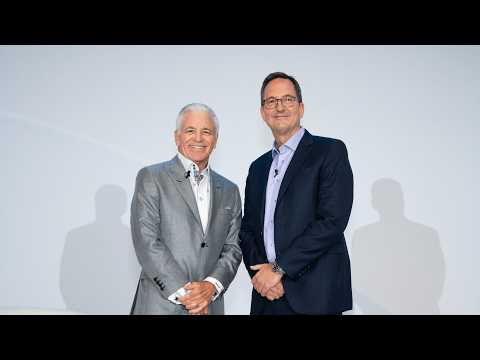
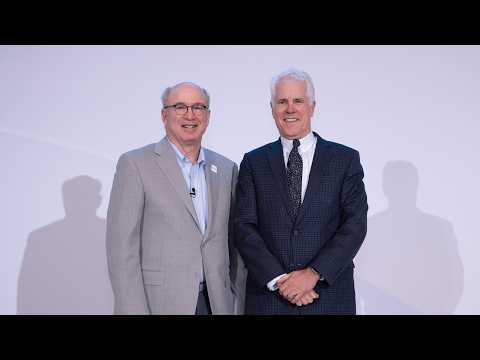
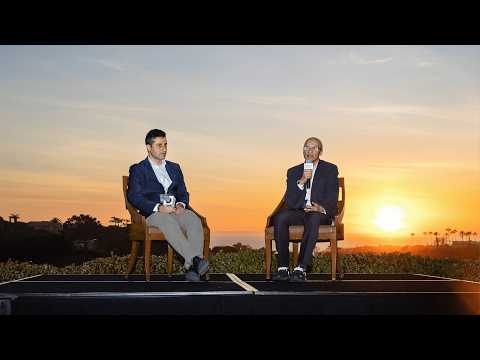
This Fireside Chat, “Hard-Learned Secrets of Thinking Big in Asia,” brought together Warren Wang, Chairman and CEO of Genesis MedTech Group, and moderator Roger Brooks, Founder of RBrooks Group, for a one-on-one conversation on what it truly takes to build and scale a globally minded medtech company across Asia’s fragmented markets.

Roger Brooks  0:05  
Once again, LSI does a wonderful job with these conferences. Much appreciated. So as soon as LSI Asia came to be the first thing I thought of was who's the most interesting person in Asia, and I hadn't met Warren at the time, but I knew about him. And then, of course, to use my network to make sure I found him and got a hold of him, but I had heard so many interesting things about him, so it's a pleasure to have him on stage as my most interesting friend in Asia, in Medtech. So he's, he's accomplished a lot, and so what I'd like to do is, is, is, towards the end, I'm hoping to get some time for questions, and so think now about things that might come up that you'd love to ask Warren or get Warren's insight on, and then we'll, we'll incorporate those in at the end. So appreciate that. So Warren, what a what a well, you know you're in an interesting spot. Maybe just kind of give a high level overview of, you know, kind of, maybe, of Genesis. And then we're going to go back, and I want to talk about your career and how you ended up where you are, because where you're at, it's really interesting. But talk a little bit about Genesis, and then we'll go on, we'll go backwards and unpack some things. 


Warren Wang  1:39  
Yep. Hey, thanks, Roger and the thanks for LSI for inviting me to this podium, you know, like, obviously, we as Genesis. We are, you know, like a startup company. We are a young company started five years ago. So what we are doing is, like, basically, we are med tech company focused on medical devices, right? We focus on two therapeutic areas. One is the surgical area. Basically we are making like sutures, staplers, energy devices, right, to support doctors to do like surgery. So that's one part of business. The other part is the cardiovascular portfolio. So we have John venture with Shockwave, which is now part of J and J, and we partnered with Penumbra for China market. So we basically, we are the China partner for penumbra, making all the aspiration based medical devices for selling in the China market. And also we have a Tara business. So we make, like a trans epical approach, Tara device in China. And we, last year, we made a deal with Edwards life sciences to basically carve out the global rights outside of Greater China to Edwards. So Edwards, right now is running the PMA trial in the US. And so that's who we are. In terms of portfolios. We have like, four factories in China. We have R and D centers in China, in Minneapolis, in Tokyo, and we have regional headquarters here in Singapore. And you know, we in general, we have around like 2000 employees. The reason why, like, we have been growing very fast, is because this model is very much focused on Merge acquisition. Right? When we started five years ago, we didn't have anything, but we make multiple acquisitions really roll up, right? Multiple small medical device companies along the verticals I just mentioned, surgical cardiovascular and we focus on driving efficiencies. So basically, we improve in efficiencies by combining companies, scaling them up on r, d, manufacturing and commercialization. So this is who we are as Genesis. So we are still a young company. So this year is the our so we finished the five year journey last year. So this year is the first year of the second five year journey for us. We still have long way to go. We but we are very excited to be this part of the world where we see a lot of growth opportunities. And you know, as the CEO of the company, you know this is a big responsibility, because we are facing a lot of uncertainties, like, example, tariff. Tariffs was a big challenge for us until now, when we we have this kind of, like pause of tariff war, but who knows what's gonna happen in a few months, so we are still hoping, like good things will happen. And in terms of R and D, right, we do see a lot of competition in this world, for example, like Shockwave. When we launched shockwave three years ago in China through the JV, we. Were the first one, right? The price level was pretty attractive, but right now, we are competing with the other eight IVL companies in China, and the price, you know, came down dramatically by almost like 60% within 24 months. So those are the challenges we are facing as a startup company, and as an individual, actually, like I've been the med tech, medical device business for over 24 years, and the super team over there. So he hired me out of business school 25 years ago, right? I always remember the first time I was interviewed by him, and I was convinced to join Johnson Johnson and as a pool, I was put in the training program in Cincinnati, Ohio. So that was like 2001 so I spent a year over there learning because I didn't have any medical background. So I was trained really well by j and j right, to be a good business person in the medical device space, and then move back to China to start my career in J and J China. So I did see the growth trajectory of j and j in China, and then I joined Boston Scientific.


Roger Brooks  6:20  
Right? How long were you, uh, Johnson, and Johnson, that 


Warren Wang  6:24  
was with J and J for like, 12 years. 12 years. 


Roger Brooks  6:27  
How long one in Cincinnati? 


Warren Wang  6:29  
That was in Cincinnati for over a year, 


Roger Brooks  6:31  
over a year, okay, yeah, and you had your MBA from Chicago before that, 


Warren Wang  6:37  
yes, yeah. So I was recruited by super team out of universe Chicago, all right, and now into this management program of J and J,


Roger Brooks  6:46  
yeah, and then, and you were there for how many years? Again, at Johnson and Johnson, 


Warren Wang  6:52  
12 years, 


Roger Brooks  6:53  
12 years. And then on to Boston Scientific. What's unique? There's probably few people in the world that could have ever started Genesis, and so it's, it's, it's interesting, your experience over there. And so what caused you to switch over to Boston Scientific? What? What was that about? You


Warren Wang  7:11  
know, like that. You know, I am always grateful for starting my medical device career in J, and J, I got a lot of exposure and, you know, and then I moved to Boston Scientific, because super team and Mike Mahoney, the champion CEO, we used to work together at j and j, so they moved to Boston scientifics. I follow their first steps into it turned out that was the best time to join Boston Scientific, 2012 and that was really, you know, kind of exciting journey, right from 2012 until I left Boston Scientific, end of 2019 that was really like, how to say, very fulfilling Journey, right? We see the turnaround of the company. And Boston Sandeep is, you know, Mike is, you know, kind of like concur in the whole world, yeah, it's been extremely well. And the Boston Scientific is doing well, 


Roger Brooks  8:13  
and you still have your stock, right? 


Warren Wang  8:15  
Um, I did have a little bit, not many you have, because I converted my stocks into Genesis stock. Yeah, I need to work really hard to best thing to make company.


Roger Brooks  8:28  
Yeah, yeah. So taking so I heard you took Boston science differ from about 70 million of revenue in China to over 700 million around that number. Now tell, tell us a little bit about the challenges of commercializing in China and Asia in general that people face. I always hear it's a it's really difficult. It's harder than anybody thinks. Why? What goes on that makes commercial in China so difficult.


Warren Wang  9:04  
So, you know, like, actually, as I said, the journey being part of the Boston Scientific turnaround, actually, it's one of the very real moments of med tech industry, right? I think the number one is actually, when you look at personal, scientific number one success factor is you gotta have the right portfolio, right? Think about a watchman. Think about like, you know, like des, think about the peripheral devices. And now there's a PFA that's doing extremely well. So the number one success factor you gotta have the right portfolio, right? It matters for all the markets, whether it's US, Europe or type. So that's number one. Number two is, you know, when you look at the challenges of entering into China, it's basically like there are a lot. Of uncertainties, right? China market is such a big market with over 1.5 billion people like and the China is not like one market divided by like 50 states in the US. Actually, China is like multiple countries divided by like 25 provinces in China. Each province has its own reimbursement policy, so you have to deal with each of the provinces when you go into those markets. So it's, there's no one mass standardized market for you to go into, right when it comes to China. So that's a very big challenge. Another challenge is basically competition. You know, like when you come up with one taver, there are many other companies that try to emulate, right? So basically, you are facing tremendous competition. So that's a huge challenge for innovative companies to go into large markets like China, unless you move very fast, unless you are very agile, to deal with all the changes you may face as you commercialize your product. Last but not least, obviously, is the education. You could really train and educate doctors right on new procedures, for example, IVL, even today, Shockwave, even though IVL market, it's facing like eight local companies. On top of Shockwave, the IV l penetration rate is pretty low because of lack of training, and doctors still don't believe in having a bloom catheter to open up the block vessel. So that's something, you know, like innovative companies have to do, right in terms of training physicians. You got a patient to get KOLs involved. You got to really, you know, identify the guidelines for new therapies, and you got to really train doctors at low at all levels to make sure the procedure is well received by all kind of doctors. So those are challenges right for a medical device company to go into large markets like like China, 


Roger Brooks  12:15  
and when you were doing all this work, you started observing all the, we'll call it the underserved, right? There's a lot of people that couldn't get access to the J and J products, or the boss of scientific products, or the Medtronic products. And did that? Some of that become a catalyst for you starting Genesis when you saw that,


Warren Wang  12:41  
yeah, you know, I was in, I was always passionate about the we call, like, the blue ocean market, right, being the emerging market globally, or being the value segment of a large market like China or India or Japan, you know, like, so I've been working for J and J Boston Scientific, which are fantastic company, great companies, but somehow I realized, right, they're still US based companies. They're far away from doctors who are in the region, from the region, who have lot of ideas, but they have hard time to accommodate those ideas, because the company is so big, they're so smart way, right? Most of the people here are commercially focused people. They are not like R and D focused people. So I I realized, gosh, this huge segment of patients who are not served very well by the current large multinational companies and and also like efficiency, is always a challenge, because you think about the value chain of bringing a device from far away, places like Europe and the US, into China, into Japan, actually progress creation, market access, getting the right people right for commercializing devices. That's a lot of work. And you know, I feel like, gosh, we should have locally based medical device companies with people who are very passionate about serving the patients, who are very close to their community, right? You know, like with working with doctors who are from the region and working on diseases that are specific to this region, with efficiencies that could be really competitive compared to some local, smaller companies. So I see this huge unmet needs right coming from all the angles. That's why I decided to leave a great company like Boston Scientific to start this journey. And when I look back, I wish I could, could have picked the. The time in better, just covid happened, right? We couldn't really do many things like for two or three years, but we we pulled off in. We still a long way to go, but right now, I think we are, right now, in a very good position to go to the next stage of growth,


Roger Brooks  15:21  
yeah. Well, you've accomplished a lot just five years. It's It's really neat. What do you have over 1000 sales people, right?


Warren Wang  15:29  
Yeah, we have 800 sales people. We have over 1000 distributors, and we are getting ready to launch our surgical products in Japan in two months. So building a team, and we are building a training center in Chile, Latin America, right to sell our robotic systems in Latin America. And we have a lot of very exciting r, d programs, you know, like my team are working on. So a lot of things are happening so and and by the way, when we talk about strategy, when we talk about go to market challenges, I think one thing that's really important is, is the human factor you go to have the right talent with the right mindset, right to work on your strategy. That's why it really doesn't matter how good your strategy is, or how like, well, develop your r, d, kind of like products are. It's at the end of day is about the team who can really get things delivered?


Roger Brooks  16:32  
Yeah, yeah. It's, let's, let's move into what it looks like to to become part of your your company, and you've got investments or alignments and JVs with with Penumbra Shockwave, the first time I heard about with the safe Hill and Silk Road.


Warren Wang  16:59  
And have you met? We were ready to sign a partnership with Avia Matt, and then a week, a few weeks before the big announcement came out, like Mike Minot called me. He say, Warren, I'm sorry I cannot do this partnership with you anymore, because we have something else going on.


Roger Brooks  17:19  
Yeah, yeah, well, and so I'm thinking there's a lot of companies out there that could partner with you. And instead of trying to go direct in in China or Asia, or maybe they're just not thinking about it, there's ways to work with you, license you would, they would license their technology to you, and you'd send them a check every, every month, every quarter, yeah, and so it's, it's a great win, win, but walk us through what that looks like. So maybe pick shock wave or penumbra. How does that look to the organization? Penumbra, back to the US, yeah, okay, yeah, a US company. What's it they sign? What do they have to sign and agree to? And then, how's it work? Yeah.


Warren Wang  18:11  
So basically, the end of days about the value creation, right? You know, like, for example, Shockwave, when shockwave started to commercialize in the US. I approached Doug with the CEO, Doug got shell, and also Isaac, who was still the head of like shockwave after J and J acquired it. Right approach, both gentlemen and the way I present the Genesis is like, you know, I can create a Genesis. We can create more value for shock wave within short period of time, because the shock wave is going IPO in the US, right? Shock Wave wants to really focus the resources on commercialization in the US and in Europe. Right? China is a big market. When you think of the PCI procedural number, China is already having 1.4 million PCI cases a year. But market is very complicated, right? It requires a lot of resources for startup company to commercialize in China. So why not we team up, we form a joint venture, and we help you to commercialize at the same time, when you focus your resources on commercializing your devices in US and Europe and the bot into this idea, that's why I'm you know, we form a joint venture after one year negotiation, and a year later, after we signed the JV agreement, we got approval in China, and then 18 months later, we localized the manufacturing of Shockwave in China for Shockwave. So now we have tiered offering. We have the premier branded Shockwave, which is a shockwave brand. We have local. JV brand, which is the low cost version, but without compromising the quality of Shockwave. So we have this kind of two tiered offering to cover both premium and value segment. So at the end of the is about the value creation, when you present you know your case to your future partners. So we are doing the same thing for, you know, different levels of partners, being shockwave penumbra, or being a startup company who has interest to come to the region, and we are happy to work with, you know, like all types of partners, as long as there's a value creation opportunity for both parties.


Roger Brooks  20:39  
So when, when one of the companies you're working with is is acquired, the acquirer has the option to to buy the joint venture, or they just leave the joint venture alone and continue to get the royalties and the licensing. So they have their option. So do the strategics like that if something's in place? Or do they do they oppose the idea of having a joint venture over nature.


Warren Wang  21:11  
So, you know, like, obviously, I cannot disclose too much of the details when it comes to shock wave case. But what happened is, of course, like initially, strategics were not very happy about having China being carved out part of the global market. But what happened is, like, first of all, we try to have very good communication with with the strategics about the value creation opportunity, again, right? Because China market is very complicated. You know, it's not like 20 years ago, when everything was very organized. You could see what's going to happen in two or three years, but now with geopolitical uncertainties, right? The lot of lot of challenges. So we try to communicate with strategics about the value creation opportunity being in this, you know, changing global order. Yeah, so, and what happened is, like, that's exactly what happened, right? You know, with tariff war, with trade war, with geopolitical uncertainties, right? Strategic realize, hey, having you know, like somebody like Genesis, who can be a trusted partner, who can take care of certain markets, may not be a bad thing, and how we manage is to make sure communication is transparent. We're fully compliant, right? We, we, and you


Roger Brooks  22:39  
get regulatory approvals for them as well, right? Exactly.


Warren Wang  22:43  
And also we, when we have JV, we have this kind of like JV port, like a board meeting, right? We make sure we share all the information we have, like everything that can be fully audited by Big Four company, like accounting firms. So we try to make everything transparent. We try to make the information sharing very smoothly, right? And so strategic, feel very comfortable about having us as a partner.


Roger Brooks  23:12  
Yeah, yeah. It's, yeah, you know, in in talking to you and studying what you have, it's, it's, more than sales and distribution. I think I read somewhere that your new factory you built, you can produce over a billion dollars US, dollars, billion dollars of of medical devices right there at that facility, right we


Warren Wang  23:36  
do have the capacity. We have to have the money. We do have, you have $0 manufacturing capacity, sure.


Roger Brooks  23:43  
So you got distribution, you have capacity. You get regulatory approvals. You've got your own design and development facility in several locations. You're expanding into Latin America. You cover Japan, India, Korea, Korea, Vietnam, all the major markets. So it just seems like a great win, win for US companies. So, so who do you? Are you US and European? What kinds of companies do you want to hear from? Who's a great match for you? Who, who could who, who should reach out to you? And how do they do that? Do they call you? Do they reach out to your team? Yep,


Warren Wang  24:26  
so we, we do get a lot of like, you know, like inbound requests. And also, we got a lot of phone calls from bankers who try to sell their like proposals to us. And again, we are very we are we position us as open platform, which means we are very open minded, as long as this value creation opportunity for, you know, multiple parties and but also we want to be very focused right again, in terms of therapeutic areas. We're very focused on surgical and cardiovascular within the cardiovascular we're very much focused on. Structure, heart and the cardiac surgery, because we, we have very strong engagement with cardiac surgeons. So, you know, like those two areas, are the areas where we want to put in a lot of resources. And you know, in terms of geographic focus, we, you know, we focus on China, we focus on Japan, which are considered direct markets. We are building a large, like commercial team, right in both countries. And, you know, like we are thinking about building a direct sales force in in in Western Europe, okay, like EU. So those are the focus markets for Genesis to be directly involved. And on other hand, we focus on, we have a we call the IBD team, the national business development team. So they basically, they actually recruit distributors to sell into record we call the emerging markets like Latin America, East Africa, North Africa. So we actually, we do have have two like types of, like commercial teams with different focuses, yeah, and again, we try to be very agile, which means we review our resource allocation strategy on constant basis, just to make sure, right, we want to invest sufficiently, but also we want to make sure the return is there. If the return is not fail, right, we need to review, and we may just pull back right to bring the resources to other areas, yeah, yeah. So we have this kind of very constant review of our resource allocation. That's why, you know, like, three or four years ago, we, we had over 2500 people, and we had this, like, huge strategic group, right? We had a big BD team, and we we did a lot of digital initiatives. And then we realized, you know, we maybe we respect two things, so we try to stay back, and then we stay focused. We, we reviewed our resource allocation. We change a lot of our strategies. So this is what happened to us. Yeah, that's why keeping all these challenges, we, we, we turned profit of profitable last year, and we have pretty decent like cash flow coming in this year. Yeah,


Roger Brooks  27:27  
so I'm going to look out there is, anybody have any interesting questions they'd like to address to Warren, we've got a microphone over there. Any any any burning questions that anybody has, if not they're thinking about their glass of wine outside the room, maybe. So we didn't really touch yet on AI robotics, and there's also JC medical, which is interesting, where they their their flexibility, or they have their own valve, their aortic valve, right? They're commercializing in Asia. They own the Asia rights, but they're like, we're not going to commercialize in the US. So they sold their non Asian rights to the valve off to Edwards, and was able to monetize that. So you're, you're working both sides, really relatively nice and clever. So maybe talk about either JC robotics or AI,


Warren Wang  28:32  
yeah, either for, for Tara program. Actually, we're actively looking around for, for structure, hard related assets. So we have a few deals working on right now. So I cannot disclose too much details, but, but our, but you look, we look at the structure hard assets, right? You know, you don't see any leading company in China or in Asia, right? You know, we actually in North Asia, to be honest, right? I have a huge respect for Merrill like Merri Life Science is a great company in America. Became one of the top taver player or structure our players in the world. So we have huge respect for Merrill like but when you look at like North Asia, like China, Japan, like Korea, or Southeast Asia, there's no, like, leading structure, hard company, so we think we have pretty good chance to do some roll up in that space, yeah. And when you look at the surgical space, you know, like the AI is very exciting, right? So we have a team working on this, like aI solution to provide intro, intro, Intro operative, like navigation support for Doctor Who do like lung cancer cases. So we, you know, took us like three years to figure it out, which this project extremely challenging. So we are, we're going to roll it out. Later of this year in Europe and also in Latin America and for robotic programs, we partner with Edge medical, right. So edge medical is one of the largest like robotic companies in China. So we partner with Edge medical, which supplies robotic system under Genesis brand to sell into emerging market. So we actually refocus on making smart instruments. We focus on making AI related softwares to supplement a robotic solution when we go to different markets. So we have a lot of exciting projects going on in the US, in Singapore, in Japan and in China. So I, you know, maybe stay tuned on LinkedIn, our news, we got a lot of interesting projects coming out of pipeline in the next 12 to 18 months. Yeah. And also, we are doing more acquisitions around the imaging part right just to at the end of day, we're going to embed devices with software, with imaging, right, as a whole total solution, like for for doctors at the hospitals. Yeah? So, so stay tuned. Yeah,


Roger Brooks  31:16  
wow. So we've covered a lot, so now everybody knows what I learned, one of the most interesting people in all of Asia for medical devices. So thank you so much. Thanks Roger for being part of this and being part of the program here. And with that, I don't know if anybody's going to come up or we just head out to the pool side for for cocktails and dinner. So thank you, everybody,


Warren Wang  31:42  
Hey, thanks, hey, thanks, Roger. 


LSI USA ‘26 is filling fast. Secure your spot today to join Medtech and Healthtech leaders.

March 16th - 20th, 2026  Waldorf Astoria, Monarch Beach Register arrow