Ben Moss 0:00
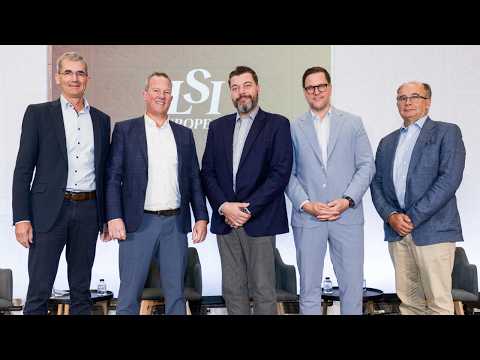
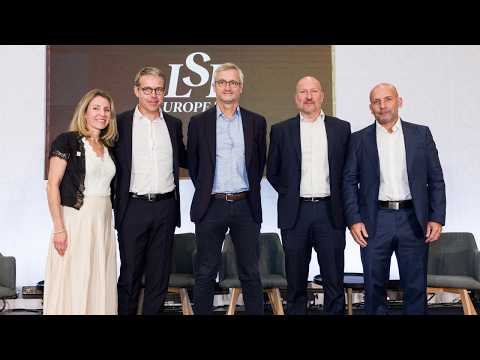
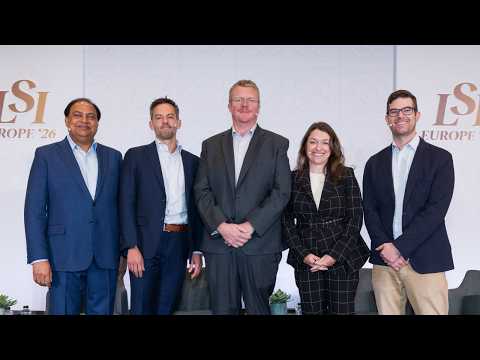
Good evening, everyone. Thank you very much for joining us. I think we are the last panel discussion before, I believe cocktail evening. So hopefully we can keep you entertained for 30 minutes, or maybe closer to 40 minutes. But we'll see. Before I introduce the panel and myself, I just wanted to say a really big thank you to Scott, to Henry and the LSI team. I think anyone who's kind of walked the halls of this very grand hotel over the last few days can see how much effort goes into engineering something out like this. I believe this is the 11th edition of LSI summits, and that means that over the years, they've assembled over 10,000 executives, investors, startup founders, and I believe over 2000 organizations. It's a really vibrant community of med tech people that have come together. And I think you can all agree that they've done an amazing job. It feels like things are happening, deals are happening, and from what I've seen, the kind of future of healthcare is kind of emerging before our eyes. So huge. Thank you to Scott and Henry in particular. Also forgive me if I refer to my notes occasionally, there's a picture of my daughter staring at me when I have to log in. So my name is Ben Moss, as you probably know, that without looking at my notes, and I'll be chairing this discussion today, I must admit that I'm not a med tech founder. I'm not an investor, which is also a great shame, and I'm not an academic. I work for an agency called Dirt and glory media. We're a healthcare communications agency based out of Somerset House in London, we work with different healthcare brands, organizations and individuals to really help them tell their stories, and hopefully, when we get it right, occasionally, we help them stand apart against their competitors. You know, both from a kind of full service creator perspective, so brand building, but also from the PR perspective. And it's been amazing to see some of our clients here at LSI over the last few days, including proximity and IQ Endoscopes. I'm probably going to forget some and get in trouble, but many other brilliant businesses are here today. Today we're here to talk about London's vibrant med tech scene. And I know that this is really a global operation, and there are businesses from all over the world, but as a Londoner, having briefly met Nicholas and Carrie earlier today, I've already learned a number of things about just how vibrant London is, and I'm just going to introduce you both. Sitting here in the middle is Carrie Baptist, who is Chief Strategy Officer at conception X, and Dr Nicholas Huber, Director of commercial operations and partnerships at the London Institute for Healthcare Engineering, and also acting director for kclys, which is the Medtech accelerator. I think Carrie, would you like to give yourself a much better introduction than I no doubt have
Carrie Baptist 3:09
no My pleasure, and I'm really excited to be here. So conception X is a PhD deep tech accelerator. So we are right at the heart of the intersection between the unbelievable technological innovation happening in the universities in London, but across the UK and Europe, and translation, building startups, helping them successfully raise seed series, a grow and scale. So we work with about 70 different universities in this country, but also across Europe. But our start was in London. We spun ourselves out of University College London, and most of the teams that participate in our program are from King's UCL, Imperial Oxford, Cambridge. So we're very immersed in the London and sort of Southeast Europe ecosystem.
Nicolas Huber 3:53
I'm Nicolas and I'm Nicolas Huber. I am the Chief Operating Officer for the London Institute for Healthcare Engineering, which is a translational Institute. It's quite unique in the UK and possibly in Europe, dedicated taking medical devices to the clinic and the market. We see about 50 companies a year at this point in time, and as though I am kings, it is an institute open to the rest of the UK. And we also invite companies from abroad to come and join us. We have a team of about 25 translation experts, going from our own ISO 1345, QMs, which is certified by the BSI. We have our own health technology assessment team, our own clinical translation team. And apart from this, we also being kings. Will leverage the largest academic health science network, possibly the largest in the UK, which is King's Health Partners, which includes guys at St Thomas's and King's College Hospital.
Ben Moss 4:53
Thank you. I really, really want to sort of hone in on this, this London or Landon scene that we like to call it. And. And we were talking earlier about the serendipity of it, the closeness, the proximity, the density of not just incredible infrastructure and educational facilities, some of which you've mentioned, but also one of the most diverse patient groups in the world, CARI. I was wondering, could you kind of sort of give us a view as to why you know London is really, you know, it sounds ironic, but London is London's greatest strength. From a kind of med tech and entrepreneurial sort of foundations,
Carrie Baptist 5:28
the density of the London ecosystem is extraordinary, and also the layers of it. And if you root into the universities and thinking about the labs where many of these innovations get their start. So you have Queen Mary in East London, you have UCL, you have Imperial, you have Birkbeck, the sort of depth. And you know, Imperial is the top university in the world in terms of STEM I mean, it's extraordinary, the density of talent centered in this physical space. And then each one of those universities has accelerators, med tech accelerators, innovation accelerators, digital health accelerators, each one of those University has special pathway collaborations with hospital trusts, so Queen Mary and st Bart's Imperial and the Imperial Health Trust, UCL and UCL kings and guys in St Thomas's. So as you're a academician, working and building, you know, whatever kind of new device, new technology, Frontier, AI model. There are these straight shot pathways to be able to test clinically in these hospital trusts associated with each university. And these aren't sort of small hospital trusts. These are the best hospital trusts. You know, the league tables were in the papers this morning. These are the top hospital trusts in the UK. And then you have the wider accelerators like conception X that then take and translate those discoveries into the market. And you have unbelievable VCs Cancer Research UK, these kind of really innovative funders that are seeding in at the very early stage. You have the role of government. You have NHS, innovation networks and trusts that are then mainlining those startups into the sort of southern England, all happening at the same time within sort of 15 minutes of central London,
Nicolas Huber 7:15
when the cube was working right, when the trip is not strong. Yes, I
Carrie Baptist 7:19
struggle to think of anywhere else in Europe which has that density and interconnected. Yeah, players
Ben Moss 7:28
and Nicholas, we were also talking earlier. It's not just about proximity. It's also about there's a kind of collaborative spirit between institutions that may be, and I don't want to get into a UK Europe debate here, but there seems to be in London a real sense from of willingness to collaborate, to share ideas, to share data,
Nicolas Huber 7:47
absolutely, as I was telling you earlier, when most of our recent spin up, especially in healthcare, are collaborative, either the IP was co developed with some other university in London, or with one of our partner trusts, or with some trusts that are not necessarily our everyday partners, but so much of the IP generated this collaborative and so you see that it is real, real need driven. It's usually with a partner hospital that's absolutely key, right? And the fact that hospitals can then collaborate, well, you know, not bashing any system saying, if anything is better than the other. But in the US, hospital systems are actually competitors to each other, so they will never actually actively share data or share IP. But this is not London, or at least the UK, right here it happens. So you will see in SPIN outs that they have on the cap tables, maybe two trusts and two universities. And this is quite rare. And we're talking about again in London. This happens so much. It's very, very often.
Carrie Baptist 8:50
Yeah, it's not rare here. What? It's not rare here in other geographies, that might be quite unusual. But the we send, you know, we get teams from universities. They've already done the Imperial med six protector, and then they come on to conception x, and then they go over to the venture builder. There is these sort of interconnected, linked up pathways from lab to market. To my knowledge, it's incredibly
Ben Moss 9:16
unique, and I think it's really interesting, and it's funny. I don't always associate with London being open minded and collaborative, necessarily, across industries. It's really interesting to talk about it. Nicholas, I just wanted to talk about li he for a minute. It's an incredible building opposite the Houses of Parliament. You know, we're talking about a sense of place here. I just, I wanted to sort of understand, architecturally and even metaphorically, you know, what does that building mean, and how does it kind of foster a sense of innovation and collaboration, and it feels very purposeful in its design and its location. I just was wondering if you could tell us a little bit about it.
Nicolas Huber 9:54
Well, thank you for that. The lie is a building with a mission. Its mission is to drive impact to patients. And because it's a university, it's a university with a civic duty, it's a public of course institution. We're University in the UK, and so all of lihee was designed with the idea of bringing all the stakeholders of Medtech into one place to collaborate, to accelerate innovation to patient impact. That's effectively what we're doing, and it is, and there is methods to how it has been designed from from pure education of undergrads and post grads to the entire translation team I mentioned earlier, to a floor dedicated to spin outs from across the UK and abroad, and also to corporate partners with Nvidia and Siemens Healthineers having offices in the building, which they use, of course, to collaborate with our both our academics and the spin outs that we bring into the ecosystem. And it is nine meters away from St Thomas' Hospital, so it's a completely unique place that we know of, and because of the word serendipity you used earlier. It's a place where that happens, when you've got everyone in the building you know, from BSI or partners who are often there to investors to corporates. And having that where it is which you said, the location is a testament to the fact that we strongly believe at King's that Medtech is a real business, and it is a real driver for patient impact. It's not just Pharma. You will have heard that before, under investment in Medtech, you know, not the big exits when the impact is there. We this is a statement with a mission.
Ben Moss 11:39
I'm learning more and more that there's lots of Unifying Threads between both the work that like he's doing in conception x, but I guess from a layman's perspective, one of them is you. You both work really hands on with with young, not necessarily young, actually, that's probably but scientists and clinicians, and you're a real enabler of those individuals to sort of think bigger, or certainly think more commercially, I guess. How do your kind of respective programs equip these individuals with the skills to to have a brilliant idea in the lab, to move, probably, from the boardroom and then to the point you're making Nicholas to the bedside for patient impact? What are the sort of skills you're equipping these people with?
Carrie Baptist 12:20
And I think there is this, you know, if it was 10 years ago, there'd be a skepticism a scientist can be a CEO. It was the reserve of MBs and more and more, as we're in this moment of unbelievable sort of scientific revolution. And there are these advances in AI, in materials, in biotech, which are absolutely reshaping industry, and what's possible, you see more interest from scientists to foreground impact, to think commercially, but then also, I think, an acceptance from investors, from industry, to see companies which are led by technical talent. And so we work exclusively with scientists. We back that talent, and we work with them very early on in the lab to help them, you know, think through the commercial potential of their innovations and develop it further. And the core traits that you have is a sort of a brilliant, brilliant analytical scientist. You do 1000 tests in the lab, and one comes good. They're already resilient. They already know how to persevere. They already are able to think analytically from first principles. They learn quickly. They fail quickly. They iterate. All of those core traits are there, and we simply equip them. We give them essentially a mini MBA to equip them with the business skills they need to build out their business and scale and build a strong founding team around themselves. I think it's there's a shift in idea of what a PhD can be, or what a postdoc can be, and the role of the university in this commercialization process. And shifting pressure from from government, but also from the university structures themselves, an openness towards this. You see that cultural shift in the labs. I guess
Ben Moss 14:04
there's also more enablers. There's more people you know, like yourselves, helping and being hands on and giving that knowledge. Whereas I guess previously, 1015, years ago, you'd have a brilliant idea in the lab. But okay, well, how do I take this to market? You know, what is the commercial roadmap for this particular piece of technology? Is it? And I guess the same on your side, Nicholas, you know, the information that you're, you know, equipping young clinicians with. And I know there are now countless examples across the NHS of, you know, entrepreneur programs and people, you know, taking brilliant ideas, you know, particularly you know, during and post covid, brilliant ideas, and getting them to bedside quicker. Have you noticed, like a cultural shift? Are people now, I've actually got a really good idea. Now, you know, what is that route to commercialization
Nicolas Huber 14:47
that there absolutely is, and there are multiple drivers for that. I mean, fund, if you're a researcher, you live off grants, right? I mean, that's in the UK, at least. That's what you get. A grant. You develop something, you write the paper. Sure, in its wisdom, the government has actually now made most grants translational. If the time when so much blue sky research was funded in the UK is probably over, and so there is so much drive that when you apply for a grant, you know how you're going to commercialize and you have to write clearly what the impact of this innovation hitting the market will be. Now, if you're an academic who has never been to a conception X, has never been to a like we do only Medtech, right? We're only Medtech. Well, conception X is across the board, then you don't actually have the answers, because we work with those grants, right? To write those grants anymore, which is a bit surprising, right? So, because of that, you see that shift. But also, I think that things have generally become so much more pressing. You know, healthcare is in crisis globally. You know, from of course, environment that, you know, Carrie is doing a lot more in as well. Is in crisis. People who are going into academia, you cannot be going in anymore because, oh, I just, I'm just doing a PhD anymore. You are reading things and doing things that are there to improve the human condition now, really, and that's what we're seeing as well. We're seeing that people are coming in actually dedicated to seeing their work make impact.
Carrie Baptist 16:23
But I do think that there's a need for specific support for scientists that are seeking to make that leap. It isn't the same as a sort of a generalized accelerator, you know, writ large, it is a specific pathway from science to scientist to founder. And so this is, I mean, this is why conception Nexus exists. And we provide the blueprint for these scientists who are, you know, want to be more impact led, and who are seeing these discoveries and want to see them translate to patient and clinical impact. And then we also provide an interface for industry that wants to engage earlier, that wants to, you know, you know, I want whatever 10 new devices in this area or that theme. What's the best? Give me, you know, source. Me the 10 Best, the five best companies that are building across Europe in x space or y space. Same with investors, same with governments that want to expand the pipeline, that are investing and see the industrial potential and the economic potential and want to invest in it, and want to sort of counter, factually, expand that pipe. Expand that pipeline of scientists becoming entrepreneurs, founding and building here in Europe, I just
Ben Moss 17:28
want to sort of pick up on that we were speaking earlier about it. But this idea that, you know, clinicians and researchers and people in academia, they're actually have so many traits of what you would consider a classic entrepreneur. You know, they fail fast. They can take criticism. You know, they're very creative. And I guess you know that a lot of those skills would translate very, kind of seamlessly to the boardroom in front of investors. I wanted to sort of hear your take on the kind of the characteristics of the modern entrepreneur that you see through the lens of of the respective organizations,
Nicolas Huber 18:05
should I yeah, I think the first switch that they have to make first is that when you're pitching to investors, okay, you must have a plan, but you're effectively pitching something that is still Gray, right, still not exactly certain what it's going to look like in 10 years time. It's all about the conviction about the character. It's all about the founder, as you know, CARI will tell you, and they have to switch out of being a died in the whole academic of science, being black and white, right? Once they've made the though, that leap that I believe in a future that I can't actually define yet, right? Once they have made that leap, because of running, you know, mental experiments, because of all the research that they need to do to prove anything, to put anything out of their years of work, right? They are eminently placed to be running a spin out, to be running a startup. And you get, if you're an academic, you get a feel for things, get a feel for numbers, get a feel for situations from sparse data sometimes, right? And they have this capability, and we see that a lot from academics. And the other thing is, they learn very quickly. You know, a good academic who's, you know, managed to develop multiple technologies, they learn very quickly. They think that the business side is rocket science. And then you explain to them, while you're doing surgical robotics, it's probably easier the business side, you know? So, yeah, absolutely, I think they're very well equipped.
Carrie Baptist 19:34
Yeah, the business is a skill that can be learned. You don't pick it up overnight. And there are these mindset shifts, you know, the sort of the comfort zone for a scientist is in the lab with a book to get them to, you know, talk to customers, do it now. Don't wait, you know, but that's you have a problem, either you have a sort of, you know, a solution, looking for a problem, or a problem looking for a solution. I infinitely prefer to have a solution. Look. Looking for a problem, because there is true novel technology there. And I'm thinking about one of the teams that sort of recently came through the program, and it's a company called respiro diagnostics, and it's you breathe out, and it's within sort of two minutes, can tell you if you have lung cancer. And it started as a covid device, and then, because you have a, you know, the founding team are stacked PhDs, and so, yes, they absolutely, sort of pivoted, and the covid sort of market moved on and now, but they realize the biomarkers that are in breath, and they were, because they had that deep, like world leading technical expertise, they were able to pivot this device so now that it can detect lung cancer, it can detect other sort of COPD, other lung they just found some really interesting results on breast cancer. The market for this device is extraordinary. It is truly world leading in terms of the technical back end and the science behind it. You can shift lung you know how you diagnose lung cancer for something that requires a tissue or a blood sample to an annual puff that's wild, but if they were a more traditional founding team, they wouldn't have been able to execute those technical pivots. It is. I mean, yeah, I'm really happy to be led by scientists and help them figure out the customer discovery in the market. It's, I guess
Ben Moss 21:25
that's what's amazing about med tech and health tech, is that they are, you know, that there's very few sort of manufactured problems. You know, clinicians, scientists, researchers, know that there's a problem, they want to find that solution. And I guess that's why, you know, the work that you do is probably really interesting. We were talking earlier about, I'm sure you both must be, you must have a front row seat to some incredible ideas. You know, I know on every panel discussion across the world, there are conversations around AI at the moment, but I guess both of you must be seeing, particularly in London as well, when you talk about the diversity of patients and the NHS network access to data. I guess you must be seeing really, really interesting and thought provoking and, I guess purposeful applications of AI. I just wanted to sort of pick up on that, are there any things that you're seeing from a trends perspective, or any businesses that you gone? Wow, that's that's pretty amazing.
Nicolas Huber 22:17
I mean, we've got a kings and UCL spin out called hologen. If you look it up, that's pretty wild, pretty wild stuff. I would go back to the point of, you know, why then London, because AI now everyone is investing in it, you know. And if you think, if you've got the compute power, you can do a lot, but you know, the diversity of the population is a huge asset, which which ideally, and with the way that trusts are now starting to collaborate, as under, under Unified Security enclaves, and all the things that are happening in London, we hope to be attracting foreign investment And in foreign partners and corporations to to leverage this data, right? For the benefit of the NHS, because in the in the UK, all the clinical data is owned by each trust, right? So not even owned by the patient, which is a good by the way, it's it's a good thing that's not owned by the physician themselves or some other entity, right? So with that in mind, we have, then, if you add all the elements here, we've got a massive amount of excellent talent in AI in London, with all the universities, we've got a lot of compute in London, and surrounding it with all the partnerships. We've got the secure data enclaves and the governance layers that are being put around all the data in London, effectively across all trusts, which is basically the bedrock for Fantastic developments we can't even think of yet. We can't even imagine. So. Back to the conversation of, why are we? Why is London such a fantastic ecosystem, I think, on the size and the number of patients we're covering and the diversity is probably unique, probably
Carrie Baptist 24:12
we were having the conversation about capital efficiency and why startups here can go so much further on a smaller race. You know, it's a few million gets them into clinical and yes, it is the unbelievable concentration of talent and the sort of lower operational costs. It is also these, the infrastructure provided by the NHS and these trusts. So if I want to, we talked about the foresight model developed by kings and UCL, trained on the NHS England secure data environment. So that's, you know, trained off of complete population wide, 57 million patient records that is hard to replicate. You know, there aren't very many data you know, national level health systems where you have an integrated data set like that. And if I'm building a startup and I want to access it, Cosm. Be like 5000 pounds. It costs nothing. So there are these infrastructural investments that the government that's making genomic data and the sort of strategy on that from the NHS 10 year in the national the sort of health service data research now the National Health Data Research Service that the welcome is CO funding up in Cambridge. It's a 500 million investment the NHS is making similarly to knit together these data sets. There is, yeah, there is unusual sort of ability to build foundational AI. And I think there's an important distinction to make between sort of surface level everything, sort of Google AI wrapper and foundational true novel algorithms, deep innovation, which you only get when you have access to high quality training data, the right evals to take the talent that you have at DeepMind and 11 labs and synaesthesia, and then these other sort of supporting, you know, ecosystem elements,
Ben Moss 26:04
just to pick up a couple things. So it feels like London has an amazing culture of innovation. And also, I think I'm showing impact. A lot of the people you work with know how to show the impact of their of their technology. I just wanted to sort of flip on to the investor side of things. How do you kind of when's the right time to put an individual that you work with in front of an investor? You know, what does that exchange look like? What does the kind of networking look like for me, from from your perspectives to the investor community, and how do you kind of bridge that gap working with these individuals and groups to do that? What does that sort of program look like from your perspective,
Nicolas Huber 26:39
perhaps later, great. So what we're doing at like here, we've got a national program, very much like conception Nexus, but ours is dedicated to Medtech, and it's very late stage. It's called the Medtech venture builder. Contrary to venture builder being a very early stage kind of program, or is a very late stage kind of program, and how we've approached it is with the idea that capital is becoming harder. Where we've approached it with the idea that those companies, if and when they're raised, they will have to be capital efficient. They will have to hit their probably first in human. We're talking medical device here. So the first in human, or at least some early clinical validation from their seed, or, you know, late seed sort of run, so with a little money, go far. And we can do that because within li he, we provide all this support, including access to clinicians and all these things ourselves, right? We have the links. We've got the networks, right, so we sort of de risk The Ventures, having said that, we put them in front of investors from day one. I mean, the whole The whole point is that it's not that, oh, I've met you today, and I'm going to have a deal, as every investor you know worth their salt will tell you, they want the relationship with the founders. They want to see that those founders going say, even through our program, can execute, right? Because it's all about execution. As Gary said earlier, it's not about the just the technology. So we even in the later parts of the program, we even partner each each company with the VC that is not there to invest. You know, it's all behind a veil. It's like they don't even tell their ICs, right, that they're there potentially. All they're doing is they are stress testing the business case, right? Do you have something here that if you go and fundraise, someone won't be able to pick holes in anymore, which is not the same as training you to pitch, right? So we are coming at it from the point of, can you be capital efficient? Can you live with little? Can you do this with not having so much money available as we did 510, years ago in the market, right? So that's our approach.
Ben Moss 28:56
I guess that must be music to people's ears in this room. I guess you know that you're these people are coming ready to the boardroom to really pitch their hearts out and know that they have a robust and capital efficient business that can actually make some of these investors money carrier. Just Is there anything you wanted to add on that?
Carrie Baptist 29:13
I think another similarity between what Nicholas and I are doing is our programs are law. You know, you're working with these companies for months. We're working with them for nine months at this early stage, it is. It's about talent. It's about relationships. It's about really looking under the hood to see what's there. It's about seeing the pace. How much ground do they cover in that period. I want to see how they run a little bit. And we work really closely with investors. We work very closely with X TX, but then also others and industry. So we bring in Nvidia and GSK and AstraZeneca and to work with these teams to do proof of concept to exactly it is. We don't talk about the technology. It is the business model. It's the customer is hammering that. And so that is a de risk sort of structure around them, an ecosystem of support and introductions. So it's a viable, strong commercial process.
Ben Moss 30:03
And I guess that's true mentorship. What you're doing, you know, that's true partnership. The knowledge and the work that you do with these people for a long time is is really it's not just, you know, you can kind of trivialize equipping it for commercialization, or whatever it may be. These are partners of yours and people, and presumably, friends that you work with every day to make sure that you their fantastic ideas go from lab to bedside. Yeah, it's amazing what you're both doing. And the
Carrie Baptist 30:30
sort of, yeah, it's we're mission driven. Yes, we're not
Nicolas Huber 30:33
points, right? Yeah, it's not about money. And I'm not saying I'm saying it in the room on investors. For us, we are the risking your investments, if it is, if this is a room of investors, right? Because someone has to do it. This is a difficult journey, right? This is difficult journey. So we are working to put those founders in the best possible footing on day one, effectively, when they when they're out there, amazing.
Ben Moss 30:57
We don't have very long left. I was, I feel like we've covered a lot of positives about London, and I was going to go to the negatives. Go to the negatives, but it doesn't feel quite right, to be honest, because I'm from London, and I love London strikes, tube strikes, yeah, that could go there. Just what a final thought, really, is you come into contact with so many interesting people, from the lab, scientists, PhD students, clinicians in from operating rooms, from the NHS. I was wondering in London, is there a kind of a sense that there's a London entrepreneurial spirit, or are these individuals, can you, is there something kind of, maybe unquantifiable that makes them feel like they're from London and they have this, you know, this proximity and density and access to all of these amazing sort of Organizations? Can you see it? Can you feel it?
Nicolas Huber 31:42
We we can, because I can, because kings is, is the biggest medical educator in Europe by far, both from a medicine perspective and a nursing perspective. So effectively, every single doctor in the UK probably has spent a year in Kings at some point, literally everyone. I mean, it's like, oh yeah, it was kings in nine, whatever. So we, they know that this is happening, you know that, and kings is at the epicenter, specifically for med tech. So I see it personally from where I stand.
Carrie Baptist 32:15
And so we work in excess. Exception x is, you know, across deep tech and Cross University. So I get to see I get to compare, you know, scientists that are coming from unstable to University College Dublin and everywhere in between, and there is absolutely a hunger that you see with researchers who are based here. They're not waiting for me to present them with an opportunity or give them a grant, or they are hungry. They are on their email, sending me follow ups, give me I want to be, you know, they're builders in that way, and you can, and it's the it's the culture around it's in the labs. It's the norm to build a startup. It's the norm to be thinking about this question. And it's that sort of positive social contagion.
Ben Moss 32:59
And then I guess on the flip side, one of the huge challenges, you know, I think it was alluded to in the NHS 10 year plan, is, how do you retain that talent? You know, how does London keep hold of it and not lose it to other countries, lose it to other organizations? How does London kind of keep its best talent here so that, you know, London can continue to flourish as a Medtech community.
Carrie Baptist 33:18
The global talent visa is hugely important, right? And so be able to keep those students. If you're attracting the best and brightest, you need to be able to keep them here. And yeah, mechanisms like that are essential.
Ben Moss 33:28
Another guess is why, you know Li, he and conception X are doing just that as well. You know you are retaining talent by the very nature of what you're doing in London, and pushing these people through the programs.
Nicolas Huber 33:39
I guess the announcement hasn't gone out, but it is in the public domain because it was advertised, but we will be hosting the first innovation surgical Innovation Fellow from the Royal College of Surgeons at lithi. So the Royal College of Surgeons has instantiated this fellowship for a surgeon to leave practice for a year to learn how to do innovation effectively and translation for the benefit of surgery. And the assumption is, it's not even an assumption, is a given that they expect that they will remain surgeons and will drive innovation in the field, having done their fellowship. So our position, and I'm telling this to my team, because we open up positions for like he for my team, right? And because we now have a name and a standing right, people apply, and I tell them, be careful if you're hiring from the NHS, because it is not right. My view is we want to equip clinicians and physicians to be more adoptive of innovation. If they see innovation, bring it in, right? Not just do it just because you need to also leave the NHS. That's not the plan. Okay? So we are as best we can. We're trying to retain that talent within the NHS.
Ben Moss 34:53
No negatives on London, Sydney. Just, thank you very much. I think we're out of time. I just thank you so much for any. Like to nurse about the work you do is it's amazing, and it's really nice to hear the sort of the mission driven and purpose behind it.
Carrie Baptist 35:05
Thank you. Bye.
Ben Moss 0:00
Good evening, everyone. Thank you very much for joining us. I think we are the last panel discussion before, I believe cocktail evening. So hopefully we can keep you entertained for 30 minutes, or maybe closer to 40 minutes. But we'll see. Before I introduce the panel and myself, I just wanted to say a really big thank you to Scott, to Henry and the LSI team. I think anyone who's kind of walked the halls of this very grand hotel over the last few days can see how much effort goes into engineering something out like this. I believe this is the 11th edition of LSI summits, and that means that over the years, they've assembled over 10,000 executives, investors, startup founders, and I believe over 2000 organizations. It's a really vibrant community of med tech people that have come together. And I think you can all agree that they've done an amazing job. It feels like things are happening, deals are happening, and from what I've seen, the kind of future of healthcare is kind of emerging before our eyes. So huge. Thank you to Scott and Henry in particular. Also forgive me if I refer to my notes occasionally, there's a picture of my daughter staring at me when I have to log in. So my name is Ben Moss, as you probably know, that without looking at my notes, and I'll be chairing this discussion today, I must admit that I'm not a med tech founder. I'm not an investor, which is also a great shame, and I'm not an academic. I work for an agency called Dirt and glory media. We're a healthcare communications agency based out of Somerset House in London, we work with different healthcare brands, organizations and individuals to really help them tell their stories, and hopefully, when we get it right, occasionally, we help them stand apart against their competitors. You know, both from a kind of full service creator perspective, so brand building, but also from the PR perspective. And it's been amazing to see some of our clients here at LSI over the last few days, including proximity and IQ Endoscopes. I'm probably going to forget some and get in trouble, but many other brilliant businesses are here today. Today we're here to talk about London's vibrant med tech scene. And I know that this is really a global operation, and there are businesses from all over the world, but as a Londoner, having briefly met Nicholas and Carrie earlier today, I've already learned a number of things about just how vibrant London is, and I'm just going to introduce you both. Sitting here in the middle is Carrie Baptist, who is Chief Strategy Officer at conception X, and Dr Nicholas Huber, Director of commercial operations and partnerships at the London Institute for Healthcare Engineering, and also acting director for kclys, which is the Medtech accelerator. I think Carrie, would you like to give yourself a much better introduction than I no doubt have
Carrie Baptist 3:09
no My pleasure, and I'm really excited to be here. So conception X is a PhD deep tech accelerator. So we are right at the heart of the intersection between the unbelievable technological innovation happening in the universities in London, but across the UK and Europe, and translation, building startups, helping them successfully raise seed series, a grow and scale. So we work with about 70 different universities in this country, but also across Europe. But our start was in London. We spun ourselves out of University College London, and most of the teams that participate in our program are from King's UCL, Imperial Oxford, Cambridge. So we're very immersed in the London and sort of Southeast Europe ecosystem.
Nicolas Huber 3:53
I'm Nicolas and I'm Nicolas Huber. I am the Chief Operating Officer for the London Institute for Healthcare Engineering, which is a translational Institute. It's quite unique in the UK and possibly in Europe, dedicated taking medical devices to the clinic and the market. We see about 50 companies a year at this point in time, and as though I am kings, it is an institute open to the rest of the UK. And we also invite companies from abroad to come and join us. We have a team of about 25 translation experts, going from our own ISO 1345, QMs, which is certified by the BSI. We have our own health technology assessment team, our own clinical translation team. And apart from this, we also being kings. Will leverage the largest academic health science network, possibly the largest in the UK, which is King's Health Partners, which includes guys at St Thomas's and King's College Hospital.
Ben Moss 4:53
Thank you. I really, really want to sort of hone in on this, this London or Landon scene that we like to call it. And. And we were talking earlier about the serendipity of it, the closeness, the proximity, the density of not just incredible infrastructure and educational facilities, some of which you've mentioned, but also one of the most diverse patient groups in the world, CARI. I was wondering, could you kind of sort of give us a view as to why you know London is really, you know, it sounds ironic, but London is London's greatest strength. From a kind of med tech and entrepreneurial sort of foundations,
Carrie Baptist 5:28
the density of the London ecosystem is extraordinary, and also the layers of it. And if you root into the universities and thinking about the labs where many of these innovations get their start. So you have Queen Mary in East London, you have UCL, you have Imperial, you have Birkbeck, the sort of depth. And you know, Imperial is the top university in the world in terms of STEM I mean, it's extraordinary, the density of talent centered in this physical space. And then each one of those universities has accelerators, med tech accelerators, innovation accelerators, digital health accelerators, each one of those University has special pathway collaborations with hospital trusts, so Queen Mary and st Bart's Imperial and the Imperial Health Trust, UCL and UCL kings and guys in St Thomas's. So as you're a academician, working and building, you know, whatever kind of new device, new technology, Frontier, AI model. There are these straight shot pathways to be able to test clinically in these hospital trusts associated with each university. And these aren't sort of small hospital trusts. These are the best hospital trusts. You know, the league tables were in the papers this morning. These are the top hospital trusts in the UK. And then you have the wider accelerators like conception X that then take and translate those discoveries into the market. And you have unbelievable VCs Cancer Research UK, these kind of really innovative funders that are seeding in at the very early stage. You have the role of government. You have NHS, innovation networks and trusts that are then mainlining those startups into the sort of southern England, all happening at the same time within sort of 15 minutes of central London,
Nicolas Huber 7:15
when the cube was working right, when the trip is not strong. Yes, I
Carrie Baptist 7:19
struggle to think of anywhere else in Europe which has that density and interconnected. Yeah, players
Ben Moss 7:28
and Nicholas, we were also talking earlier. It's not just about proximity. It's also about there's a kind of collaborative spirit between institutions that may be, and I don't want to get into a UK Europe debate here, but there seems to be in London a real sense from of willingness to collaborate, to share ideas, to share data,
Nicolas Huber 7:47
absolutely, as I was telling you earlier, when most of our recent spin up, especially in healthcare, are collaborative, either the IP was co developed with some other university in London, or with one of our partner trusts, or with some trusts that are not necessarily our everyday partners, but so much of the IP generated this collaborative and so you see that it is real, real need driven. It's usually with a partner hospital that's absolutely key, right? And the fact that hospitals can then collaborate, well, you know, not bashing any system saying, if anything is better than the other. But in the US, hospital systems are actually competitors to each other, so they will never actually actively share data or share IP. But this is not London, or at least the UK, right here it happens. So you will see in SPIN outs that they have on the cap tables, maybe two trusts and two universities. And this is quite rare. And we're talking about again in London. This happens so much. It's very, very often.
Carrie Baptist 8:50
Yeah, it's not rare here. What? It's not rare here in other geographies, that might be quite unusual. But the we send, you know, we get teams from universities. They've already done the Imperial med six protector, and then they come on to conception x, and then they go over to the venture builder. There is these sort of interconnected, linked up pathways from lab to market. To my knowledge, it's incredibly
Ben Moss 9:16
unique, and I think it's really interesting, and it's funny. I don't always associate with London being open minded and collaborative, necessarily, across industries. It's really interesting to talk about it. Nicholas, I just wanted to talk about li he for a minute. It's an incredible building opposite the Houses of Parliament. You know, we're talking about a sense of place here. I just, I wanted to sort of understand, architecturally and even metaphorically, you know, what does that building mean, and how does it kind of foster a sense of innovation and collaboration, and it feels very purposeful in its design and its location. I just was wondering if you could tell us a little bit about it.
Nicolas Huber 9:54
Well, thank you for that. The lie is a building with a mission. Its mission is to drive impact to patients. And because it's a university, it's a university with a civic duty, it's a public of course institution. We're University in the UK, and so all of lihee was designed with the idea of bringing all the stakeholders of Medtech into one place to collaborate, to accelerate innovation to patient impact. That's effectively what we're doing, and it is, and there is methods to how it has been designed from from pure education of undergrads and post grads to the entire translation team I mentioned earlier, to a floor dedicated to spin outs from across the UK and abroad, and also to corporate partners with Nvidia and Siemens Healthineers having offices in the building, which they use, of course, to collaborate with our both our academics and the spin outs that we bring into the ecosystem. And it is nine meters away from St Thomas' Hospital, so it's a completely unique place that we know of, and because of the word serendipity you used earlier. It's a place where that happens, when you've got everyone in the building you know, from BSI or partners who are often there to investors to corporates. And having that where it is which you said, the location is a testament to the fact that we strongly believe at King's that Medtech is a real business, and it is a real driver for patient impact. It's not just Pharma. You will have heard that before, under investment in Medtech, you know, not the big exits when the impact is there. We this is a statement with a mission.
Ben Moss 11:39
I'm learning more and more that there's lots of Unifying Threads between both the work that like he's doing in conception x, but I guess from a layman's perspective, one of them is you. You both work really hands on with with young, not necessarily young, actually, that's probably but scientists and clinicians, and you're a real enabler of those individuals to sort of think bigger, or certainly think more commercially, I guess. How do your kind of respective programs equip these individuals with the skills to to have a brilliant idea in the lab, to move, probably, from the boardroom and then to the point you're making Nicholas to the bedside for patient impact? What are the sort of skills you're equipping these people with?
Carrie Baptist 12:20
And I think there is this, you know, if it was 10 years ago, there'd be a skepticism a scientist can be a CEO. It was the reserve of MBs and more and more, as we're in this moment of unbelievable sort of scientific revolution. And there are these advances in AI, in materials, in biotech, which are absolutely reshaping industry, and what's possible, you see more interest from scientists to foreground impact, to think commercially, but then also, I think, an acceptance from investors, from industry, to see companies which are led by technical talent. And so we work exclusively with scientists. We back that talent, and we work with them very early on in the lab to help them, you know, think through the commercial potential of their innovations and develop it further. And the core traits that you have is a sort of a brilliant, brilliant analytical scientist. You do 1000 tests in the lab, and one comes good. They're already resilient. They already know how to persevere. They already are able to think analytically from first principles. They learn quickly. They fail quickly. They iterate. All of those core traits are there, and we simply equip them. We give them essentially a mini MBA to equip them with the business skills they need to build out their business and scale and build a strong founding team around themselves. I think it's there's a shift in idea of what a PhD can be, or what a postdoc can be, and the role of the university in this commercialization process. And shifting pressure from from government, but also from the university structures themselves, an openness towards this. You see that cultural shift in the labs. I guess
Ben Moss 14:04
there's also more enablers. There's more people you know, like yourselves, helping and being hands on and giving that knowledge. Whereas I guess previously, 1015, years ago, you'd have a brilliant idea in the lab. But okay, well, how do I take this to market? You know, what is the commercial roadmap for this particular piece of technology? Is it? And I guess the same on your side, Nicholas, you know, the information that you're, you know, equipping young clinicians with. And I know there are now countless examples across the NHS of, you know, entrepreneur programs and people, you know, taking brilliant ideas, you know, particularly you know, during and post covid, brilliant ideas, and getting them to bedside quicker. Have you noticed, like a cultural shift? Are people now, I've actually got a really good idea. Now, you know, what is that route to commercialization
Nicolas Huber 14:47
that there absolutely is, and there are multiple drivers for that. I mean, fund, if you're a researcher, you live off grants, right? I mean, that's in the UK, at least. That's what you get. A grant. You develop something, you write the paper. Sure, in its wisdom, the government has actually now made most grants translational. If the time when so much blue sky research was funded in the UK is probably over, and so there is so much drive that when you apply for a grant, you know how you're going to commercialize and you have to write clearly what the impact of this innovation hitting the market will be. Now, if you're an academic who has never been to a conception X, has never been to a like we do only Medtech, right? We're only Medtech. Well, conception X is across the board, then you don't actually have the answers, because we work with those grants, right? To write those grants anymore, which is a bit surprising, right? So, because of that, you see that shift. But also, I think that things have generally become so much more pressing. You know, healthcare is in crisis globally. You know, from of course, environment that, you know, Carrie is doing a lot more in as well. Is in crisis. People who are going into academia, you cannot be going in anymore because, oh, I just, I'm just doing a PhD anymore. You are reading things and doing things that are there to improve the human condition now, really, and that's what we're seeing as well. We're seeing that people are coming in actually dedicated to seeing their work make impact.
Carrie Baptist 16:23
But I do think that there's a need for specific support for scientists that are seeking to make that leap. It isn't the same as a sort of a generalized accelerator, you know, writ large, it is a specific pathway from science to scientist to founder. And so this is, I mean, this is why conception Nexus exists. And we provide the blueprint for these scientists who are, you know, want to be more impact led, and who are seeing these discoveries and want to see them translate to patient and clinical impact. And then we also provide an interface for industry that wants to engage earlier, that wants to, you know, you know, I want whatever 10 new devices in this area or that theme. What's the best? Give me, you know, source. Me the 10 Best, the five best companies that are building across Europe in x space or y space. Same with investors, same with governments that want to expand the pipeline, that are investing and see the industrial potential and the economic potential and want to invest in it, and want to sort of counter, factually, expand that pipe. Expand that pipeline of scientists becoming entrepreneurs, founding and building here in Europe, I just
Ben Moss 17:28
want to sort of pick up on that we were speaking earlier about it. But this idea that, you know, clinicians and researchers and people in academia, they're actually have so many traits of what you would consider a classic entrepreneur. You know, they fail fast. They can take criticism. You know, they're very creative. And I guess you know that a lot of those skills would translate very, kind of seamlessly to the boardroom in front of investors. I wanted to sort of hear your take on the kind of the characteristics of the modern entrepreneur that you see through the lens of of the respective organizations,
Nicolas Huber 18:05
should I yeah, I think the first switch that they have to make first is that when you're pitching to investors, okay, you must have a plan, but you're effectively pitching something that is still Gray, right, still not exactly certain what it's going to look like in 10 years time. It's all about the conviction about the character. It's all about the founder, as you know, CARI will tell you, and they have to switch out of being a died in the whole academic of science, being black and white, right? Once they've made the though, that leap that I believe in a future that I can't actually define yet, right? Once they have made that leap, because of running, you know, mental experiments, because of all the research that they need to do to prove anything, to put anything out of their years of work, right? They are eminently placed to be running a spin out, to be running a startup. And you get, if you're an academic, you get a feel for things, get a feel for numbers, get a feel for situations from sparse data sometimes, right? And they have this capability, and we see that a lot from academics. And the other thing is, they learn very quickly. You know, a good academic who's, you know, managed to develop multiple technologies, they learn very quickly. They think that the business side is rocket science. And then you explain to them, while you're doing surgical robotics, it's probably easier the business side, you know? So, yeah, absolutely, I think they're very well equipped.
Carrie Baptist 19:34
Yeah, the business is a skill that can be learned. You don't pick it up overnight. And there are these mindset shifts, you know, the sort of the comfort zone for a scientist is in the lab with a book to get them to, you know, talk to customers, do it now. Don't wait, you know, but that's you have a problem, either you have a sort of, you know, a solution, looking for a problem, or a problem looking for a solution. I infinitely prefer to have a solution. Look. Looking for a problem, because there is true novel technology there. And I'm thinking about one of the teams that sort of recently came through the program, and it's a company called respiro diagnostics, and it's you breathe out, and it's within sort of two minutes, can tell you if you have lung cancer. And it started as a covid device, and then, because you have a, you know, the founding team are stacked PhDs, and so, yes, they absolutely, sort of pivoted, and the covid sort of market moved on and now, but they realize the biomarkers that are in breath, and they were, because they had that deep, like world leading technical expertise, they were able to pivot this device so now that it can detect lung cancer, it can detect other sort of COPD, other lung they just found some really interesting results on breast cancer. The market for this device is extraordinary. It is truly world leading in terms of the technical back end and the science behind it. You can shift lung you know how you diagnose lung cancer for something that requires a tissue or a blood sample to an annual puff that's wild, but if they were a more traditional founding team, they wouldn't have been able to execute those technical pivots. It is. I mean, yeah, I'm really happy to be led by scientists and help them figure out the customer discovery in the market. It's, I guess
Ben Moss 21:25
that's what's amazing about med tech and health tech, is that they are, you know, that there's very few sort of manufactured problems. You know, clinicians, scientists, researchers, know that there's a problem, they want to find that solution. And I guess that's why, you know, the work that you do is probably really interesting. We were talking earlier about, I'm sure you both must be, you must have a front row seat to some incredible ideas. You know, I know on every panel discussion across the world, there are conversations around AI at the moment, but I guess both of you must be seeing, particularly in London as well, when you talk about the diversity of patients and the NHS network access to data. I guess you must be seeing really, really interesting and thought provoking and, I guess purposeful applications of AI. I just wanted to sort of pick up on that, are there any things that you're seeing from a trends perspective, or any businesses that you gone? Wow, that's that's pretty amazing.
Nicolas Huber 22:17
I mean, we've got a kings and UCL spin out called hologen. If you look it up, that's pretty wild, pretty wild stuff. I would go back to the point of, you know, why then London, because AI now everyone is investing in it, you know. And if you think, if you've got the compute power, you can do a lot, but you know, the diversity of the population is a huge asset, which which ideally, and with the way that trusts are now starting to collaborate, as under, under Unified Security enclaves, and all the things that are happening in London, we hope to be attracting foreign investment And in foreign partners and corporations to to leverage this data, right? For the benefit of the NHS, because in the in the UK, all the clinical data is owned by each trust, right? So not even owned by the patient, which is a good by the way, it's it's a good thing that's not owned by the physician themselves or some other entity, right? So with that in mind, we have, then, if you add all the elements here, we've got a massive amount of excellent talent in AI in London, with all the universities, we've got a lot of compute in London, and surrounding it with all the partnerships. We've got the secure data enclaves and the governance layers that are being put around all the data in London, effectively across all trusts, which is basically the bedrock for Fantastic developments we can't even think of yet. We can't even imagine. So. Back to the conversation of, why are we? Why is London such a fantastic ecosystem, I think, on the size and the number of patients we're covering and the diversity is probably unique, probably
Carrie Baptist 24:12
we were having the conversation about capital efficiency and why startups here can go so much further on a smaller race. You know, it's a few million gets them into clinical and yes, it is the unbelievable concentration of talent and the sort of lower operational costs. It is also these, the infrastructure provided by the NHS and these trusts. So if I want to, we talked about the foresight model developed by kings and UCL, trained on the NHS England secure data environment. So that's, you know, trained off of complete population wide, 57 million patient records that is hard to replicate. You know, there aren't very many data you know, national level health systems where you have an integrated data set like that. And if I'm building a startup and I want to access it, Cosm. Be like 5000 pounds. It costs nothing. So there are these infrastructural investments that the government that's making genomic data and the sort of strategy on that from the NHS 10 year in the national the sort of health service data research now the National Health Data Research Service that the welcome is CO funding up in Cambridge. It's a 500 million investment the NHS is making similarly to knit together these data sets. There is, yeah, there is unusual sort of ability to build foundational AI. And I think there's an important distinction to make between sort of surface level everything, sort of Google AI wrapper and foundational true novel algorithms, deep innovation, which you only get when you have access to high quality training data, the right evals to take the talent that you have at DeepMind and 11 labs and synaesthesia, and then these other sort of supporting, you know, ecosystem elements,
Ben Moss 26:04
just to pick up a couple things. So it feels like London has an amazing culture of innovation. And also, I think I'm showing impact. A lot of the people you work with know how to show the impact of their of their technology. I just wanted to sort of flip on to the investor side of things. How do you kind of when's the right time to put an individual that you work with in front of an investor? You know, what does that exchange look like? What does the kind of networking look like for me, from from your perspectives to the investor community, and how do you kind of bridge that gap working with these individuals and groups to do that? What does that sort of program look like from your perspective,
Nicolas Huber 26:39
perhaps later, great. So what we're doing at like here, we've got a national program, very much like conception Nexus, but ours is dedicated to Medtech, and it's very late stage. It's called the Medtech venture builder. Contrary to venture builder being a very early stage kind of program, or is a very late stage kind of program, and how we've approached it is with the idea that capital is becoming harder. Where we've approached it with the idea that those companies, if and when they're raised, they will have to be capital efficient. They will have to hit their probably first in human. We're talking medical device here. So the first in human, or at least some early clinical validation from their seed, or, you know, late seed sort of run, so with a little money, go far. And we can do that because within li he, we provide all this support, including access to clinicians and all these things ourselves, right? We have the links. We've got the networks, right, so we sort of de risk The Ventures, having said that, we put them in front of investors from day one. I mean, the whole The whole point is that it's not that, oh, I've met you today, and I'm going to have a deal, as every investor you know worth their salt will tell you, they want the relationship with the founders. They want to see that those founders going say, even through our program, can execute, right? Because it's all about execution. As Gary said earlier, it's not about the just the technology. So we even in the later parts of the program, we even partner each each company with the VC that is not there to invest. You know, it's all behind a veil. It's like they don't even tell their ICs, right, that they're there potentially. All they're doing is they are stress testing the business case, right? Do you have something here that if you go and fundraise, someone won't be able to pick holes in anymore, which is not the same as training you to pitch, right? So we are coming at it from the point of, can you be capital efficient? Can you live with little? Can you do this with not having so much money available as we did 510, years ago in the market, right? So that's our approach.
Ben Moss 28:56
I guess that must be music to people's ears in this room. I guess you know that you're these people are coming ready to the boardroom to really pitch their hearts out and know that they have a robust and capital efficient business that can actually make some of these investors money carrier. Just Is there anything you wanted to add on that?
Carrie Baptist 29:13
I think another similarity between what Nicholas and I are doing is our programs are law. You know, you're working with these companies for months. We're working with them for nine months at this early stage, it is. It's about talent. It's about relationships. It's about really looking under the hood to see what's there. It's about seeing the pace. How much ground do they cover in that period. I want to see how they run a little bit. And we work really closely with investors. We work very closely with X TX, but then also others and industry. So we bring in Nvidia and GSK and AstraZeneca and to work with these teams to do proof of concept to exactly it is. We don't talk about the technology. It is the business model. It's the customer is hammering that. And so that is a de risk sort of structure around them, an ecosystem of support and introductions. So it's a viable, strong commercial process.
Ben Moss 30:03
And I guess that's true mentorship. What you're doing, you know, that's true partnership. The knowledge and the work that you do with these people for a long time is is really it's not just, you know, you can kind of trivialize equipping it for commercialization, or whatever it may be. These are partners of yours and people, and presumably, friends that you work with every day to make sure that you their fantastic ideas go from lab to bedside. Yeah, it's amazing what you're both doing. And the
Carrie Baptist 30:30
sort of, yeah, it's we're mission driven. Yes, we're not
Nicolas Huber 30:33
points, right? Yeah, it's not about money. And I'm not saying I'm saying it in the room on investors. For us, we are the risking your investments, if it is, if this is a room of investors, right? Because someone has to do it. This is a difficult journey, right? This is difficult journey. So we are working to put those founders in the best possible footing on day one, effectively, when they when they're out there, amazing.
Ben Moss 30:57
We don't have very long left. I was, I feel like we've covered a lot of positives about London, and I was going to go to the negatives. Go to the negatives, but it doesn't feel quite right, to be honest, because I'm from London, and I love London strikes, tube strikes, yeah, that could go there. Just what a final thought, really, is you come into contact with so many interesting people, from the lab, scientists, PhD students, clinicians in from operating rooms, from the NHS. I was wondering in London, is there a kind of a sense that there's a London entrepreneurial spirit, or are these individuals, can you, is there something kind of, maybe unquantifiable that makes them feel like they're from London and they have this, you know, this proximity and density and access to all of these amazing sort of Organizations? Can you see it? Can you feel it?
Nicolas Huber 31:42
We we can, because I can, because kings is, is the biggest medical educator in Europe by far, both from a medicine perspective and a nursing perspective. So effectively, every single doctor in the UK probably has spent a year in Kings at some point, literally everyone. I mean, it's like, oh yeah, it was kings in nine, whatever. So we, they know that this is happening, you know that, and kings is at the epicenter, specifically for med tech. So I see it personally from where I stand.
Carrie Baptist 32:15
And so we work in excess. Exception x is, you know, across deep tech and Cross University. So I get to see I get to compare, you know, scientists that are coming from unstable to University College Dublin and everywhere in between, and there is absolutely a hunger that you see with researchers who are based here. They're not waiting for me to present them with an opportunity or give them a grant, or they are hungry. They are on their email, sending me follow ups, give me I want to be, you know, they're builders in that way, and you can, and it's the it's the culture around it's in the labs. It's the norm to build a startup. It's the norm to be thinking about this question. And it's that sort of positive social contagion.
Ben Moss 32:59
And then I guess on the flip side, one of the huge challenges, you know, I think it was alluded to in the NHS 10 year plan, is, how do you retain that talent? You know, how does London keep hold of it and not lose it to other countries, lose it to other organizations? How does London kind of keep its best talent here so that, you know, London can continue to flourish as a Medtech community.
Carrie Baptist 33:18
The global talent visa is hugely important, right? And so be able to keep those students. If you're attracting the best and brightest, you need to be able to keep them here. And yeah, mechanisms like that are essential.
Ben Moss 33:28
Another guess is why, you know Li, he and conception X are doing just that as well. You know you are retaining talent by the very nature of what you're doing in London, and pushing these people through the programs.
Nicolas Huber 33:39
I guess the announcement hasn't gone out, but it is in the public domain because it was advertised, but we will be hosting the first innovation surgical Innovation Fellow from the Royal College of Surgeons at lithi. So the Royal College of Surgeons has instantiated this fellowship for a surgeon to leave practice for a year to learn how to do innovation effectively and translation for the benefit of surgery. And the assumption is, it's not even an assumption, is a given that they expect that they will remain surgeons and will drive innovation in the field, having done their fellowship. So our position, and I'm telling this to my team, because we open up positions for like he for my team, right? And because we now have a name and a standing right, people apply, and I tell them, be careful if you're hiring from the NHS, because it is not right. My view is we want to equip clinicians and physicians to be more adoptive of innovation. If they see innovation, bring it in, right? Not just do it just because you need to also leave the NHS. That's not the plan. Okay? So we are as best we can. We're trying to retain that talent within the NHS.
Ben Moss 34:53
No negatives on London, Sydney. Just, thank you very much. I think we're out of time. I just thank you so much for any. Like to nurse about the work you do is it's amazing, and it's really nice to hear the sort of the mission driven and purpose behind it.
Carrie Baptist 35:05
Thank you. Bye.
17011 Beach Blvd, Suite 500 Huntington Beach, CA 92647
714-847-3540© 2026 Life Science Intelligence, Inc., All Rights Reserved. | Privacy Policy