Nir Goldenberg 0:05
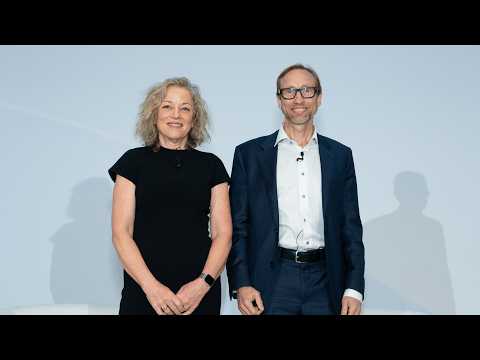
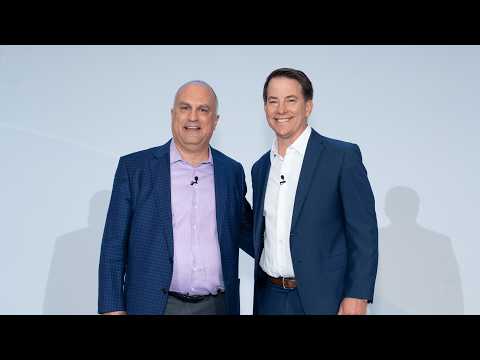
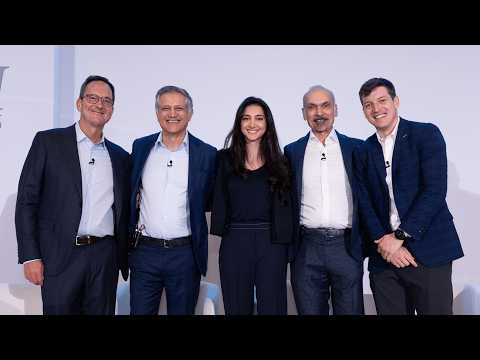
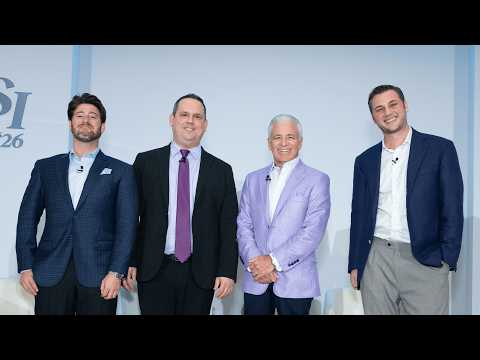
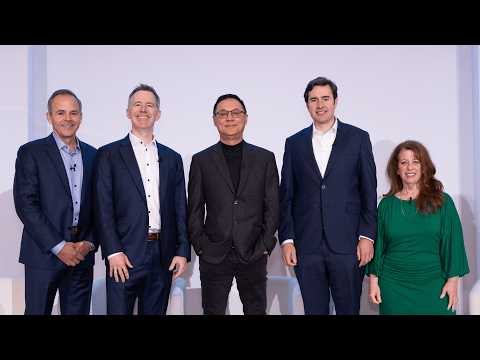
Hello, everyone, hello. Yeah, I think we can start with a quick introduction. So of course, thank you all for being here. Very excited. Maybe Shai, you can go first.
Shai Ran Sapir 0:17
Yeah, thank you all for joining. We're very happy to be here on stage and talk a little bit about partnerships with Mayo Clinic. My name is Shai. I work for em Mayo business development. We'll talk about what we do throughout the this this session, but I lead the cardiovascular portfolio for mayo.
Nir Goldenberg 0:40
Thanks, Jai. I'm Nir Goldenberg, Senior Director with mayo ventures and leading our technology development function for the group.
Mohamad Alkhouli 0:46
Good morning, everyone. Mohamad Alkhouli, I'm a cardiologist and vice chair for strategic partnerships at Department of cardiovascular medicine. Hi.
Lisa Carmel 0:56
I'm Lisa Carmel, and I am one of the chairs of business development and I lead partnering, strategic Partnering For Mayo Clinic crossed all the verticals for the global enterprise.
Shai Ran Sapir 1:11
Thanks, Lisa. Okay, so Mayo Clinic, we like to say is always open for business to help companies work together with us to bring innovation in the best way to patients, both internal innovation that comes from Mayo and then external innovation. I want to start with Mohamed. Mohamed, I want to hear from you. We all want to hear from you. How do you see working with startups from a clinical perspective to best guide their solution into practice?
Mohamad Alkhouli 1:48
Yeah, I think there's two, maybe two parts to that question. First is to know that we, we you have a physician here and three business development people, right? So, so what we do is we closely align on every single opportunity. So I do the clinical kind of unmet need evaluation, and Chai and team are very agile in doing the you know, due diligence and business aspects of things. So we we can come up with a very, you know, accurate assessment of the opportunity. But I think, you know, because we are a small hospital, and because we're being number one worldwide for a while, we get a lot of requests to work with mayo. I think understanding what Mayo can help you with is the key. Because what happens is a lot of people come for the brand, and they don't really have identified a Kol or value proposition to work with mayo. So as long as is a good unmet need, that's a separate problem, right? And then you have an identified Whom do you want to work with mayo? Or in which capacity Mayo can help you? You can say, I'm uncertain, and help me like I have this technology, I would like to work with mayo. What can, what could Mayo add? We can help you with that. But as long as that is very clear, I think we can have a successful partnership. Thanks.
Nir Goldenberg 3:06
Maybe, you know, just, just to add to that. So, you know, we are, Hamed mentioned of the fact that we are the number one leading hospital, and when we are thinking about how to maintain that leadership position, you know, we approach that through consistent and constant investment in our practice, of course, in research, education and innovation. So regarding the innovation side of things, right, the way that we go about it is, you know, we are working closely with industry across the whole spectrum, you know, from multinationals all the way to startups, in order to identify the best opportunities that are representing, you know, what's out there 510, years from now, what can we bring to our patients, novel solutions to enhance the care that we are providing to all those patients? So that's this, that's approach that you will see when you are working with us. We will do some initial diligence jointly with you in order to understand what is your vision, what you're trying to to bring to patients, and then we will try to collaborate with you, both potentially through capital, but always through joint innovation, to help you to accelerate your program and to bring that solution as quick as possible to patients. So that's the way we we go about our collaborations.
Shai Ran Sapir 4:19
Thank you. A question that we we get often is, how do we how do we work with Mayo Clinic? How do we approach mayo and what are different agreements that we're able to do with companies? So basically, I like to say that we're very, very creative, but at the end of the day, we're all about impact. We want to see technology getting to the patient bed side. Nir, could you please elaborate a little on the different deals that we are able to do with startups? Would that be some co development, new company formation, or so?
Nir Goldenberg 4:54
Yeah, it's a good question. First, before we I talk about the specific deals. We are executing, I think it's, it is important to underline the fact that we have a pretty unique structure. So I think Shai mentioned that in his opening remarks, we are leading both the tto side of things for mayo and the health system venture side of things. So we are, you would when you will engage with us, you know, we you will hear us talking about technologies and, you know, licensing and so on, so forth and investment. So every year, we execute around 170 agreements, out of which around 141 50 are licensing deals, and then 20 to 30 are investment deals. On the licensing side, you know, we are executing, you know, across the whole spectrum. So we are licensing out Mayo technologies, you know, from Biopharma new drug development all the way to medical devices, diagnostics and digital assets. And in addition to that, we also enter into CO development agreements. So that's, that's, we park that under our, you know, our licensing side of things. So, and we do a lot of these again, following our diligence, we select the most prominent companies, and then we bring assets and resources to the table and to work with them for a couple of years to help them accelerate a specific program. So that's the way we go about it. On the tto side of things, on the investment side of things, we have two internal funds to which we invest, and I've mentioned the numbers, 20 to 30 investment deals a year. Sweet Spot check size one to five. Typically, you know, occasionally, sometimes we will go beyond that. Our biggest deal is a $20 million deal that we've done recently. But again, sweet spot is one to five. Sometimes we will go below for tactical investments. We can go half a million and so on so forth. And regarding stage, you know, we do 10 to 15 New Venture formation deals a year and beyond that we invest from seed, typically to B, maybe C. So we are an early stage strategic investor. That's our DNA. Maybe one last sentence when you will interact with us. Of course, it goes without saying. We are not a financial investor. We are strategic, strategic investor from Mayo. So you will again see us thinking about, okay, beyond the capital, what can we do together in the context, in the context of joint research, joint advancement of technologies.
Shai Ran Sapir 7:12
Thanks, Nir. So when we look at how innovation, medical device at the end of the day reaches the patient bedside. We all see that eventually we need to have the strategics around the table, right? It's really that we see the startups that end up commercializing that specific device. It's about acquisition. So Lisa, can you please share a little bit about the work that we do with the strategics? How do we interact? How are they around the table, around the innovation that's done at Mayo?
Lisa Carmel 7:44
Yeah, I think we're engaging with the large strategic typically, when they have a new area or an existing area, a next gen opportunity, a next gen device, and they're coming to us for expertise know how co development, and we're also bringing them on board, sharing our portfolio, especially engaging with the corporate development groups we're co investing, and we have quite a few co investment partners that we regularly keep in touch with. So I think whether it's partnering in the within ventures or CO development or bringing them on board to our innovation summits to share with him new areas that we're excited about. We there's many ways to work with them, and I would say part of the reason we have a newly created partnering group is to exactly meet that need. I'd say, over the past 20 years, Mayo was doing more transactions. And as it's become, as we move towards more CO development arrangements, it's not just a single transaction, it's a partnership. It's a multi year, multi engagement type of relationship. And so I'd say partnering is here to help navigate mayo and and help manage that relationship and make it easier to partner with mayo. Thanks.
Shai Ran Sapir 9:33
Lisa. Next, a question we obviously get a lot, and we all know the phrase data is king. So want to hear from Mohamed and Nir, please talk a little bit about the approach Mayo takes. When it, when it, when it relates to data and algorithmic development.
Mohamad Alkhouli 9:54
Go first. So when, when we get the approach, it's either a med tech or a data. Yeah, saying, Great. So my job as a vice chair is to take Mayo innovations, identify the right partners on the outside, and vice versa. When it's outside in, it's either somebody who has a medical device that they would like either to do their little later stage they would like to do research with us, or early stage, and they have some KOLs that they would like to work with, and then I get Shai in the team to help us find creative way. And I want to say this because maybe the audience wouldn't know I've been at Mayo for about 10 years now. And I think that all of the team members you see are, what, less than five years at Mayo or years or shy. It's made a huge difference, because in the past, he was more tactical than strategic, and it was, you know, we're a big, successful institution, so there is heavy weight with that, and slow movement and stuff like that. So the team here, I mean, I've asked Chai to limit the number of text messages he sends me to as a few a day, but that's that's the agility we have now on both the clinical side and the business side. So so I this is just a compliment to you guys, but we can move much, much faster and find creative way now, when it's data and Nir maybe can elaborate on that a little bit more, we do have something called the Mayo Clinic platform. It's a distinct entity that governs all of mayo clinical data. So there they have to be engaged if you have developed the algorithm, and you want to, you know, deploy it, to validate it on Maya, on Mayo data, retrospectively. Then, then you could do that through a fairly, you know, streamline process through the platform, but, but it's another layer. Three partners have to come together. They may have inture the platform and the physicians, if it's if it's new, like if you have, if your default example, if you're developing a robotic thing, and you could, you need some data validation prospectively. I want to do it in a research fashion. We can have a multi layered way, and then the platform doesn't get involved. The platform essentially governs all of the metadata for the over 150 years that we have data for. Now. You could put some more color on that.
Nir Goldenberg 12:18
Yeah, I think just to connect a couple of dots regarding data and AI and how we are working with actually, this includes startups, but also multinationals, bigger companies. It's pretty fascinating. We are leveraging pretty nicely our unique position, which includes, you know, we are, we have, we have a huge ocean, I would say, of data internally. So we have all the required data assets, and then also internally, we have amazing clinical expertise, together with a couple of internal AI labs where we have, you know, just AI scientists and developers. So we have all these resources internally. So we can actually, when we're working with industry, we have a couple of programs, again, with the biggest leaders in the Medtech segment. We can close the loop and then work on a specific again, I'm referring only to AI assets and technologies, right? We can close the loop and then do iterative work all the way to a point in which the asset technology is pretty accurate and ready to be commercialized or embedded within an existing Medtech platform. Sometimes that's a context, right? We're working on the software layer just to add additional value proposition or capabilities to a Medtech play. So that's a very unique positioning that we have. And we, you know, we see more and more that industry, and again, across the whole spectrum. That's my message. You know, startups, multinationals see that value. They approach us. We help them to navigate the mayo kind of waters in order to define a collaborative structure that will help us to, you know, understand, what are we going to do in the next one, two, sometimes three and more years in order to conclude the development of this AI asset all the way to the point that is commercialized?
Mohamad Alkhouli 13:56
So I want to add one, just one more thing, building on what you said, Nir, this ecosystem opportunity even has some aspect that are not available readily to other places, like, for example, doing a pragmatic trial or an AI algorithm. So not only you could bring it and test it and all, we have a whole center for pragmatic trials. So one of the algorithms that was developed using electrocardiograms was deployed across the practice in a randomized fashion, in a very, very neat way, and as hundreds of publications came out from that exercise in nature and some other big journals. So that aspect is also unique. It's not just developing and deploying, but also the clinical validation in a unique ways is an asset.
Shai Ran Sapir 14:41
Thanks, thanks.
Nir Goldenberg 14:42
Maybe one more sentence. Would also like to encourage you, so sometimes there are, like, very interesting surprises. So we have a pretty extensive portfolio of assets. And so right now we're referring only to our AI assets, right? So sometimes a company would approach us and say. Hey, can we co create, co develop this program? And then we tell them, hey, actually, we have a model that we have developed that is already in a pretty good stage. And then when we are doing joint assessment of that model, we see that this is like, maybe not fully baked, but half baked towards the direction that this company was thinking about. And then we have some asset that we can start working on together, which provides very nice acceleration of their program. So I would like to encourage all of you to reach out to us in order to review together our portfolio of technologies and see if there are some, you know, hidden gems in our portfolio that could be meaningful for you guys.
Shai Ran Sapir 15:39
Thank you. We often hear about, what is the strategy for mayo? People come to us, what interests mayo? What's next on your radar? I think a unique approach that we take at Mayo is we have an entire team that's their job is to identify gaps in practice and when we identify a gap, we either scout the earth for a company that has a solution that we can work with, or basically build on on oftentimes we don't find anything, and then we start a company. So I want to hear from our panel about, how does Mayo do it? How do we do it? How do we start a company? What partners do we have along the way? Do we bring in money from Mayo? Do we have external partners?
Mohamad Alkhouli 16:35
Think that should be one of you I can talk about the gapology. You guys can talk about the how we get
Nir Goldenberg 16:42
the new partnership, yeah, so it's interesting. You know, some of our internal discussions, when we are talking, you know, within our team is around, we are talking a lot about innovation. But, you know, we are, we are sometimes thinking, Do do we? Do we innovate enough? Like, you know, male ventures, right? Do we innovate enough? Do we think about novel structures, new structures to engage with, with industry and just do better? You know, do what we're supposed to do again, bringing novel solutions to patients. And in this context, you know, we've launched recently, end of last year, a new initiative under the name of practice transformation ventures, or the acronym for that, the May acronym is PTV, and the rationale there is, and Shai kind of alluded to that, to that in his question, is we are working closely with our practice. So if you would imagine, we are doing proactive work, working with different departments within mayo, in order to, you know, we always start by listening to them, okay, what's you know, what's wrong, what's not working, what's the problem? How can we help you to enhance your department? You know, that specific dimension within mail. And so we listen to them, we capture those significant unmet needs and problem statements, and then following that, you know, we do some landscape assessment. Sometimes it's easy. Sometimes, you know, we come back to that specific chair for department and say, hey, you know, we have this problem. But actually there is solution. There is a solution. There is a company out of, you know, London, that is actually, you know, they have a great solution. So just, let's, let's bring them in, right? That's easy, but sometimes we conclude our landscape assessment and we actually find out, you know, we our clinical team that we can't identify, I would say, you know, an optimal it's never optimal, but all the solutions that we see out there are sub optimal. So, you know, Shai was alluding to that in his question, then we identify a market gap, right? So, you know, and that could lead us to potentially start, you know, creating a new company that will compete in that segment, and then bring a solution that could be nicely positioned and competing in that same and so we've launched that initiative end of last year. So far, we've executed seven deals, so new seven companies that we've launched over the last it's already a year now, by the way, all these deals are in collaboration with, you know, VCs and venture builders. So you know, thank you for all our partners there. So we've created a nice syndicate of VCs that are working with us, that are on the table. Once we have an opportunity, we do join diligence, and then if there is a there, there, then we co invest and start a new company. That's a very exciting way, very novel way to go about new venture formation. Beyond that, we still do, you know, the traditional, you know, new venture formation, which is now we're relying on a mayo program. You know, this could be a device or system or, you know, a drug. Sometimes it was developed over five, seven years, and we, you know, we spin out of a company and start just a standalone startup that would develop that technology.
Lisa Carmel 19:41
Nir was gonna say, Do you want to speak to the MVP program?
Nir Goldenberg 19:45
Just like, yeah, sure, but I'm talking a lot. Do you want to talk about that?
Lisa Carmel 19:49
So, so I came on board in May, about the same time, to expand strategic partnering and collaboration. External. And to manage those relationships. At the same time, we also recruited four different MVP partners, Mayo Venture Partners, with the idea that they're they are looking to, internally and externally at the assets that Mayo has to generate and build new companies, new company formation. So for, for, for those in the audience that want to learn more about that, we can connect you to them. Each one has a different focus, Biopharma. It data, AI devices. So looking at all different areas
Nir Goldenberg 20:45
for new venture formation and Mohamed, I'll kind of refer to you here. You know, I think it's just amazing. Within mayo, we have physicians that know how to work so mayo, Carolines that know how to work with startups and also how to work in the context of new venture formation. We all know that that's not an easy that's a that's an interesting ride, right? Interesting journey. So, for example, Mohammad Shayne are working on on a deal, I will not go into the details right now around a solution that Mohamed came up with. And again, we'll not talk about the IP specifically. But this, you know, this would lead to a joint effort around a new venture in the cardiology space. And then, you know, Mohamed brings just an amazing expertise in the context of like, supporting the startup that we are now forming, which is very unique.
Mohamad Alkhouli 21:33
Yeah, we're trying to expand that. That's actually the vision of our chair is very innovative driven, and innovation driven in cardiology. So a while ago, they have invested in sending some physicians to do MBAs to understand, because we don't really, you know, we're not, we don't grow up talking business, right? So I'm a researcher. I have, I edit a journal, I have some research teams, but there is this, you know, clarity that we need to say, that, you know, your research needs to be bridged into innovation is you need to understand entrepreneurship. You need to understand how things work. Before these guys came, the physicians were in silo, and the MCV team was in another silo, like all the physicians are feeling, we have great ideas. MCV people don't understand. And the MCV was like, these physicians are nuts. So I think that that you know, vision of bridging this research to innovation by sending and training some physicians formally, not only as individuals, but to be ambassadors who can bring that back and spread that entrepreneurial mindset or innovation mindset through the physicians, through the enterprise. I think that has been a game changer for us, and hopefully we'll see the fruits over the next few years.
Shai Ran Sapir 22:45
Thank you. So basically, when we work with a company outside of mayo, it's on the basis of share the risk, share the reward, right? So while we work with the company to develop what we call a new layer of IP. Obviously, we negotiate some value in return to Mayo. We get, many times, people come to us and say, All right, so what is it going to take to work with mayo? So again, we're here for the impact. As Nir said, we're not a financial investor. We're here to really, really make sure that healthcare is better all over the world. So often time those co development deals, they would come with equity in the company and their royalties of whatever we're developing together. Nir briefly talked about the investment that we sometimes pair with, with with the companies that we work with. So Nir, can you please elaborate a little about how early is early or too early to work with mayo and when we do parent investment within, with, with a deal, how does that work?
Nir Goldenberg 24:06
Yeah, so regarding how early we can we start super early. So regardless, you know, this could be an internal mail technology or collaboration with a company I've mentioned that earlier, you know, we, we can start from, you know, concept phase. Internally, we start from ideation, right, you know. So we work together, you know, we have ventures. And our physicians, you know, to brainstorm to generate new concepts. And so we start super early, inherently. So, you know, the messenger is pretty simple. You can reach out to us as early as you want. Of course, you know, if it's still concept phase, you know, we will sign a CDA to protect your concepts and your future IP or existing IP, and then, you know, we will help you to think about the next steps there. Regarding the investment piece I've mentioned that, you know, there is, we have a very, you know, it's a way male Ventures is a well, old machine. We have a very good, you. Internal structure with, I would say, flexible enough, but still, you know, some structure, well structured SOPs. So, you know, we approach, these are two layers of diligence, right? Layer, one of diligence is like, for example, mainly for startups, right? You know, we are evaluating the start, to see, should we enter into a co development arrangement with the startup. Since shaiv mentioned that, you know, you know this is the context. There is that Mayo will join your journey. So we will take a Kol like Dr akuli That will now work with you for two, three years in the gutters, iteratively around your program to help you to advance it. And then, you know, we would like to have some skin, some skin in the game, and to take, to share the risk, right? So our upside will come based on future successful commercialization of your technology, period, right? So, you know, we share the risk, we share the reward. That's the thinking. But if you think about it, there is a significant risk. So for example, sorry, I'm using you as that. So, yeah, Dr akuli is a very busy physician, and he has clinical work that he needs to deliver for mayo. So our responsibility is to conduct that first layer of diligence to see is this a startup, for example, that you know that we would like to invest in, in the context of our asking Dr akuli to support for three, maybe more years, right? So that's our responsibility. We want to identify the best companies that can work with Dr akuli, for example, and other male physicians. That's the first their layer of diligence. The second layer is around the potential investment. And we have two internal IC investment committees, and we will engage with you to understand everything about your upcoming round and who's leading, and so on so forth. We can talk about different structures, you know, safes, notes, structure, rounds, and so on, so forth. And that will be a second layer of diligence and that we will conduct. That's it pretty simple,
Mohamad Alkhouli 26:54
and it's both ways. Actually, sometimes we identify opportunities on the clinical side, and, like, I don't really know the business aspect of this company, so I would just phone one of these guys. Can you just quickly tell me? And they're very quick. They look, okay, yes, these are we could work with those, you know, innovators or entrepreneurs, and maybe just on the how early side, Shai and I met with a couple engineers last week who were fresh out of school. They're out of school, not incorporated, that don't have a patent. They're very fresh, very
Shai Ran Sapir 27:28
interesting. I don't know what's that. They might even be 16.
Mohamad Alkhouli 27:31
They look like 1516, they're they're older. I think they graduate so. But they, they reached out as like, well, can we get your opinion on this? And they're like, as green as it can get on the business side, but they're super motivated, and they have a very good idea. So So essentially, the first session we had, so I pulled Chai, and the first session was, he was just showing them how to how to modify and optimize their slides. I was like, I'm going to mentor you through this. And then, and then, why don't you do the XYZ and then come to us? So I, myself, was actually surprised of how early we're open to work with with people, but it's across the spectrum.
Shai Ran Sapir 28:10
Yeah, they actually surprised me. I really enjoyed that. Yeah,
Mohamad Alkhouli 28:13
I'm wondering if we should just have a few minutes for questions.
Shai Ran Sapir 28:16
Yeah, just have two more things that I wanted to bring up. So Mayo has, I think, around 73,000 employees across all campuses, right? All right. Mayo has a company that works at ECG AI. Mayo is working on this micro five repair. What does that mean? Around exclusivity? Can we work on two solution, three solutions? Mohamed near Lisa,
Nir Goldenberg 28:43
I'll defer to no exclusivity.
Shai Ran Sapir 28:45
No exclusive exactly
Nir Goldenberg 28:47
bottom like bottom line, yeah, yeah, no exclusivity deals. Typically, you know, we would not engage in those. Again, we are attached to our mission, right? So our mission is the needs of the patient come first period in that context, you know, we will not exclude ourselves or patient right from working with another company that can bring a better solution. We have some very tactical contractual instruments if there is a very strong partner that we are working with to give many in the context of licensing of assets, to give a company, you know, some nice, I would say, events or, you know, like a gap, to compete properly with, with their competition. Of course, you know, for some of our licensing deals in that context, some, sometimes we would license an asset exclusively, right? So this will be a perpetual, exclusive worldwide license to a company. But in the context of like, you know, our engagement around different segments, we will not limit ourselves.
Shai Ran Sapir 29:54
Yeah, all right, we can talk for hours. That's what we do for a living. But. Maybe open up for questions.
Audience Question 30:07
Everyone was just about what the areas of interest that our yielded. But
Shai Ran Sapir 30:14
Does it help humans? We're interested. Period.
Lisa Carmel 30:22
I would like, yeah, I was gonna say, there are, you know, we have these strategic initiatives. I'm just gonna rat all off some but we're reimagining organ transplant. So if you have a technology, a regenerative xenografting, different types of technologies, we're highly interested in collaborating in that space. Another area is we're building as part of our forward, bold forward unbound initiative. We are building a $5 billion hospital the future in Rochester. It will be completed in 2030, part of that vision is roboticizing and automating that space. We'll it's a unique design with configurable space spaces, and so if you have technologies in the robotic and automation, we're highly interested and looking to partner in with anyone in the room that's got some new, novel, disruptive technologies. We have two summits coming up, the bears surgical innovation summit on November 18. So if you have a so by invite only, for 6070, startups, there's, we will have all of our surgeons there in the room. Investors are invited also. So if you have a novel surgical robotic procedure, AI device, we invite you to that. And then the cardiology Do you want
Mohamad Alkhouli 32:04
to speak about that? Yeah, June 11. So we did the inaugural cardiovascular Innovation Summit in May of this year. Is pretty good success. We aim to have 300 people. We ended up with 470 70 some startups, all the multinationals, essentially, and then 20 some investors, plus 150 Mayo KOLs. And I think Shai is bombarded with now proposals now, since his response rate has declined, and then he he's now disconnecting for sometimes, at times, because he has to deal with so many, I think 40 some for 6060, proposals came from that summit. So So version two is June 11 of next year. Mark your calendar. If you would like to participate, you can reach out. We will have some ads, but essentially it's by invite. So startups will send a one page proposal about how would they work? Want to work with mayo, just to increase the yield, and it's just not generic. Then they come to the summit, and we can hopefully not only have them present there, but finalize all of the engagement at that time and just celebrate it.
Shai Ran Sapir 33:10
Yeah, to add to what Mohamed is saying, so as I've said earlier, at the end of the day, it's about reaching the patient bedside by the strategics, right? So the purpose of that summit is building that company, investor mayo and strategic sit around the table and basically streamline that solution to patients. We've been super successful, I think, with the last summit, really building those little focus groups, a lot of investments eventually came up with that summit, both from Mayo and from the investors that we've invited. You know, we have a Rolodex of investors, and often times when Mayo is interested, our basically our financial partners or our VCs are also interested. So being a mayo portfolio company comes with, I would say, a lot of benefit. In addition to the
Nir Goldenberg 34:05
IP, I think very proud of our team, and this is, you know, the people that are on stage here, in addition to additional or additional colleagues from our team that help with that. But you know, the four of us, you know, we led the creation of these innovation summits from Mayo at this point, we have two innovation summits every year. So you know, November, one upcoming November, and that summit is focused on robotics, automation, surgery and digital pathology, including in the context of our recently announced collaboration with Nvidia around digital pathology. This was announced earlier this year in JP Morgan. So that's upcoming in November, and then June 11. June 11, you know, we will have the cardiology, radiology oriented Summit. So yeah, feel free to reach out to us to get more information. And then, you know, we will be happy, potentially, to extend. Invites, I would like to referring to your question regarding focus areas. So you will hear from us different focus areas. Beyond that, it is important to underline that there is a pretty, you know, we have a good structure, baseline structure. So we have in our teams, partnership managers, technology development managers that are focused on, you know, the traditional programs. So here on stage, we have the cardiology team, right? But we have additional teams, mini teams, that are focused for neurosurgery and so on and so forth, transplant, right? So you can always approach us, and we will be able to bring to the table the right team that can support the discussion with you around any technology. To be honest,
Shai Ran Sapir 35:41
think we have time for one more question.
Audience Question 2 35:45
So I heard Dr akulee say that any score is beating up historically. I've heard the educator saying that partnering stopped time. Could you give us an idea of how fast startup became the first point of contact at the actual partner, what time frame, talking about
Mohamad Alkhouli 36:06
20% of what it was before. But Shai,
Shai Ran Sapir 36:10
we have, we have a member of our team. So if you agree to our terms, we can start by tomorrow
Mohamad Alkhouli 36:14
morning to give you an idea. There is a person who deals with NDA, and it used to take a month or two to get that processed that and then we have an emergency NDA kind of thing. So Shai sent every single one to her as an emergency. I know he had to be talked to, but that's, that's the mindset like, you know, if she we want to change that.
Lisa Carmel 36:39
Oh, that explains everything. I didn't know that one.
Nir Goldenberg 36:46
Yeah, we're, we're doing our best, you know, there's still room for improvement, and we'll continue to enhance the way we engage with industry and, you know, our agility, right and but we're doing our best to be aligned, mainly when we work with startups, right? To be, you know, lean and mean and to move quickly, that's part of, you know, some and then sometimes we're, you know, there is great success. Sometimes, Shai was joking about what we can execute deals within, like, a month. There are, you know, there unfortunately, and there will be some, you know, occasions in wind or more complexities or constraints or unexpected events that are happening that would lead us to just, you know, being slower, and that's not always on our end. Sometimes, you know, just life, it's never,
Mohamad Alkhouli 37:29
and also, maybe near, also it's, it's the clarity of what, what, what is, what is your what is it that you're asking for? Right? If you're coming like, I want to work with mayo, it's very different than I have this. This is this, this Kol, and we think we can develop this if you have a very clear value proposition, it makes life a lot easier and it moves much faster.
Lisa Carmel 37:48
Yeah, and we're expanding and hiring.
Shai Ran Sapir 37:50
So, right. Thank you. This has been blinking for quite some time.
Nir Goldenberg 0:05
Hello, everyone, hello. Yeah, I think we can start with a quick introduction. So of course, thank you all for being here. Very excited. Maybe Shai, you can go first.
Shai Ran Sapir 0:17
Yeah, thank you all for joining. We're very happy to be here on stage and talk a little bit about partnerships with Mayo Clinic. My name is Shai. I work for em Mayo business development. We'll talk about what we do throughout the this this session, but I lead the cardiovascular portfolio for mayo.
Nir Goldenberg 0:40
Thanks, Jai. I'm Nir Goldenberg, Senior Director with mayo ventures and leading our technology development function for the group.
Mohamad Alkhouli 0:46
Good morning, everyone. Mohamad Alkhouli, I'm a cardiologist and vice chair for strategic partnerships at Department of cardiovascular medicine. Hi.
Lisa Carmel 0:56
I'm Lisa Carmel, and I am one of the chairs of business development and I lead partnering, strategic Partnering For Mayo Clinic crossed all the verticals for the global enterprise.
Shai Ran Sapir 1:11
Thanks, Lisa. Okay, so Mayo Clinic, we like to say is always open for business to help companies work together with us to bring innovation in the best way to patients, both internal innovation that comes from Mayo and then external innovation. I want to start with Mohamed. Mohamed, I want to hear from you. We all want to hear from you. How do you see working with startups from a clinical perspective to best guide their solution into practice?
Mohamad Alkhouli 1:48
Yeah, I think there's two, maybe two parts to that question. First is to know that we, we you have a physician here and three business development people, right? So, so what we do is we closely align on every single opportunity. So I do the clinical kind of unmet need evaluation, and Chai and team are very agile in doing the you know, due diligence and business aspects of things. So we we can come up with a very, you know, accurate assessment of the opportunity. But I think, you know, because we are a small hospital, and because we're being number one worldwide for a while, we get a lot of requests to work with mayo. I think understanding what Mayo can help you with is the key. Because what happens is a lot of people come for the brand, and they don't really have identified a Kol or value proposition to work with mayo. So as long as is a good unmet need, that's a separate problem, right? And then you have an identified Whom do you want to work with mayo? Or in which capacity Mayo can help you? You can say, I'm uncertain, and help me like I have this technology, I would like to work with mayo. What can, what could Mayo add? We can help you with that. But as long as that is very clear, I think we can have a successful partnership. Thanks.
Nir Goldenberg 3:06
Maybe, you know, just, just to add to that. So, you know, we are, Hamed mentioned of the fact that we are the number one leading hospital, and when we are thinking about how to maintain that leadership position, you know, we approach that through consistent and constant investment in our practice, of course, in research, education and innovation. So regarding the innovation side of things, right, the way that we go about it is, you know, we are working closely with industry across the whole spectrum, you know, from multinationals all the way to startups, in order to identify the best opportunities that are representing, you know, what's out there 510, years from now, what can we bring to our patients, novel solutions to enhance the care that we are providing to all those patients? So that's this, that's approach that you will see when you are working with us. We will do some initial diligence jointly with you in order to understand what is your vision, what you're trying to to bring to patients, and then we will try to collaborate with you, both potentially through capital, but always through joint innovation, to help you to accelerate your program and to bring that solution as quick as possible to patients. So that's the way we we go about our collaborations.
Shai Ran Sapir 4:19
Thank you. A question that we we get often is, how do we how do we work with Mayo Clinic? How do we approach mayo and what are different agreements that we're able to do with companies? So basically, I like to say that we're very, very creative, but at the end of the day, we're all about impact. We want to see technology getting to the patient bed side. Nir, could you please elaborate a little on the different deals that we are able to do with startups? Would that be some co development, new company formation, or so?
Nir Goldenberg 4:54
Yeah, it's a good question. First, before we I talk about the specific deals. We are executing, I think it's, it is important to underline the fact that we have a pretty unique structure. So I think Shai mentioned that in his opening remarks, we are leading both the tto side of things for mayo and the health system venture side of things. So we are, you would when you will engage with us, you know, we you will hear us talking about technologies and, you know, licensing and so on, so forth and investment. So every year, we execute around 170 agreements, out of which around 141 50 are licensing deals, and then 20 to 30 are investment deals. On the licensing side, you know, we are executing, you know, across the whole spectrum. So we are licensing out Mayo technologies, you know, from Biopharma new drug development all the way to medical devices, diagnostics and digital assets. And in addition to that, we also enter into CO development agreements. So that's, that's, we park that under our, you know, our licensing side of things. So, and we do a lot of these again, following our diligence, we select the most prominent companies, and then we bring assets and resources to the table and to work with them for a couple of years to help them accelerate a specific program. So that's the way we go about it. On the tto side of things, on the investment side of things, we have two internal funds to which we invest, and I've mentioned the numbers, 20 to 30 investment deals a year. Sweet Spot check size one to five. Typically, you know, occasionally, sometimes we will go beyond that. Our biggest deal is a $20 million deal that we've done recently. But again, sweet spot is one to five. Sometimes we will go below for tactical investments. We can go half a million and so on so forth. And regarding stage, you know, we do 10 to 15 New Venture formation deals a year and beyond that we invest from seed, typically to B, maybe C. So we are an early stage strategic investor. That's our DNA. Maybe one last sentence when you will interact with us. Of course, it goes without saying. We are not a financial investor. We are strategic, strategic investor from Mayo. So you will again see us thinking about, okay, beyond the capital, what can we do together in the context, in the context of joint research, joint advancement of technologies.
Shai Ran Sapir 7:12
Thanks, Nir. So when we look at how innovation, medical device at the end of the day reaches the patient bedside. We all see that eventually we need to have the strategics around the table, right? It's really that we see the startups that end up commercializing that specific device. It's about acquisition. So Lisa, can you please share a little bit about the work that we do with the strategics? How do we interact? How are they around the table, around the innovation that's done at Mayo?
Lisa Carmel 7:44
Yeah, I think we're engaging with the large strategic typically, when they have a new area or an existing area, a next gen opportunity, a next gen device, and they're coming to us for expertise know how co development, and we're also bringing them on board, sharing our portfolio, especially engaging with the corporate development groups we're co investing, and we have quite a few co investment partners that we regularly keep in touch with. So I think whether it's partnering in the within ventures or CO development or bringing them on board to our innovation summits to share with him new areas that we're excited about. We there's many ways to work with them, and I would say part of the reason we have a newly created partnering group is to exactly meet that need. I'd say, over the past 20 years, Mayo was doing more transactions. And as it's become, as we move towards more CO development arrangements, it's not just a single transaction, it's a partnership. It's a multi year, multi engagement type of relationship. And so I'd say partnering is here to help navigate mayo and and help manage that relationship and make it easier to partner with mayo. Thanks.
Shai Ran Sapir 9:33
Lisa. Next, a question we obviously get a lot, and we all know the phrase data is king. So want to hear from Mohamed and Nir, please talk a little bit about the approach Mayo takes. When it, when it, when it relates to data and algorithmic development.
Mohamad Alkhouli 9:54
Go first. So when, when we get the approach, it's either a med tech or a data. Yeah, saying, Great. So my job as a vice chair is to take Mayo innovations, identify the right partners on the outside, and vice versa. When it's outside in, it's either somebody who has a medical device that they would like either to do their little later stage they would like to do research with us, or early stage, and they have some KOLs that they would like to work with, and then I get Shai in the team to help us find creative way. And I want to say this because maybe the audience wouldn't know I've been at Mayo for about 10 years now. And I think that all of the team members you see are, what, less than five years at Mayo or years or shy. It's made a huge difference, because in the past, he was more tactical than strategic, and it was, you know, we're a big, successful institution, so there is heavy weight with that, and slow movement and stuff like that. So the team here, I mean, I've asked Chai to limit the number of text messages he sends me to as a few a day, but that's that's the agility we have now on both the clinical side and the business side. So so I this is just a compliment to you guys, but we can move much, much faster and find creative way now, when it's data and Nir maybe can elaborate on that a little bit more, we do have something called the Mayo Clinic platform. It's a distinct entity that governs all of mayo clinical data. So there they have to be engaged if you have developed the algorithm, and you want to, you know, deploy it, to validate it on Maya, on Mayo data, retrospectively. Then, then you could do that through a fairly, you know, streamline process through the platform, but, but it's another layer. Three partners have to come together. They may have inture the platform and the physicians, if it's if it's new, like if you have, if your default example, if you're developing a robotic thing, and you could, you need some data validation prospectively. I want to do it in a research fashion. We can have a multi layered way, and then the platform doesn't get involved. The platform essentially governs all of the metadata for the over 150 years that we have data for. Now. You could put some more color on that.
Nir Goldenberg 12:18
Yeah, I think just to connect a couple of dots regarding data and AI and how we are working with actually, this includes startups, but also multinationals, bigger companies. It's pretty fascinating. We are leveraging pretty nicely our unique position, which includes, you know, we are, we have, we have a huge ocean, I would say, of data internally. So we have all the required data assets, and then also internally, we have amazing clinical expertise, together with a couple of internal AI labs where we have, you know, just AI scientists and developers. So we have all these resources internally. So we can actually, when we're working with industry, we have a couple of programs, again, with the biggest leaders in the Medtech segment. We can close the loop and then work on a specific again, I'm referring only to AI assets and technologies, right? We can close the loop and then do iterative work all the way to a point in which the asset technology is pretty accurate and ready to be commercialized or embedded within an existing Medtech platform. Sometimes that's a context, right? We're working on the software layer just to add additional value proposition or capabilities to a Medtech play. So that's a very unique positioning that we have. And we, you know, we see more and more that industry, and again, across the whole spectrum. That's my message. You know, startups, multinationals see that value. They approach us. We help them to navigate the mayo kind of waters in order to define a collaborative structure that will help us to, you know, understand, what are we going to do in the next one, two, sometimes three and more years in order to conclude the development of this AI asset all the way to the point that is commercialized?
Mohamad Alkhouli 13:56
So I want to add one, just one more thing, building on what you said, Nir, this ecosystem opportunity even has some aspect that are not available readily to other places, like, for example, doing a pragmatic trial or an AI algorithm. So not only you could bring it and test it and all, we have a whole center for pragmatic trials. So one of the algorithms that was developed using electrocardiograms was deployed across the practice in a randomized fashion, in a very, very neat way, and as hundreds of publications came out from that exercise in nature and some other big journals. So that aspect is also unique. It's not just developing and deploying, but also the clinical validation in a unique ways is an asset.
Shai Ran Sapir 14:41
Thanks, thanks.
Nir Goldenberg 14:42
Maybe one more sentence. Would also like to encourage you, so sometimes there are, like, very interesting surprises. So we have a pretty extensive portfolio of assets. And so right now we're referring only to our AI assets, right? So sometimes a company would approach us and say. Hey, can we co create, co develop this program? And then we tell them, hey, actually, we have a model that we have developed that is already in a pretty good stage. And then when we are doing joint assessment of that model, we see that this is like, maybe not fully baked, but half baked towards the direction that this company was thinking about. And then we have some asset that we can start working on together, which provides very nice acceleration of their program. So I would like to encourage all of you to reach out to us in order to review together our portfolio of technologies and see if there are some, you know, hidden gems in our portfolio that could be meaningful for you guys.
Shai Ran Sapir 15:39
Thank you. We often hear about, what is the strategy for mayo? People come to us, what interests mayo? What's next on your radar? I think a unique approach that we take at Mayo is we have an entire team that's their job is to identify gaps in practice and when we identify a gap, we either scout the earth for a company that has a solution that we can work with, or basically build on on oftentimes we don't find anything, and then we start a company. So I want to hear from our panel about, how does Mayo do it? How do we do it? How do we start a company? What partners do we have along the way? Do we bring in money from Mayo? Do we have external partners?
Mohamad Alkhouli 16:35
Think that should be one of you I can talk about the gapology. You guys can talk about the how we get
Nir Goldenberg 16:42
the new partnership, yeah, so it's interesting. You know, some of our internal discussions, when we are talking, you know, within our team is around, we are talking a lot about innovation. But, you know, we are, we are sometimes thinking, Do do we? Do we innovate enough? Like, you know, male ventures, right? Do we innovate enough? Do we think about novel structures, new structures to engage with, with industry and just do better? You know, do what we're supposed to do again, bringing novel solutions to patients. And in this context, you know, we've launched recently, end of last year, a new initiative under the name of practice transformation ventures, or the acronym for that, the May acronym is PTV, and the rationale there is, and Shai kind of alluded to that, to that in his question, is we are working closely with our practice. So if you would imagine, we are doing proactive work, working with different departments within mayo, in order to, you know, we always start by listening to them, okay, what's you know, what's wrong, what's not working, what's the problem? How can we help you to enhance your department? You know, that specific dimension within mail. And so we listen to them, we capture those significant unmet needs and problem statements, and then following that, you know, we do some landscape assessment. Sometimes it's easy. Sometimes, you know, we come back to that specific chair for department and say, hey, you know, we have this problem. But actually there is solution. There is a solution. There is a company out of, you know, London, that is actually, you know, they have a great solution. So just, let's, let's bring them in, right? That's easy, but sometimes we conclude our landscape assessment and we actually find out, you know, we our clinical team that we can't identify, I would say, you know, an optimal it's never optimal, but all the solutions that we see out there are sub optimal. So, you know, Shai was alluding to that in his question, then we identify a market gap, right? So, you know, and that could lead us to potentially start, you know, creating a new company that will compete in that segment, and then bring a solution that could be nicely positioned and competing in that same and so we've launched that initiative end of last year. So far, we've executed seven deals, so new seven companies that we've launched over the last it's already a year now, by the way, all these deals are in collaboration with, you know, VCs and venture builders. So you know, thank you for all our partners there. So we've created a nice syndicate of VCs that are working with us, that are on the table. Once we have an opportunity, we do join diligence, and then if there is a there, there, then we co invest and start a new company. That's a very exciting way, very novel way to go about new venture formation. Beyond that, we still do, you know, the traditional, you know, new venture formation, which is now we're relying on a mayo program. You know, this could be a device or system or, you know, a drug. Sometimes it was developed over five, seven years, and we, you know, we spin out of a company and start just a standalone startup that would develop that technology.
Lisa Carmel 19:41
Nir was gonna say, Do you want to speak to the MVP program?
Nir Goldenberg 19:45
Just like, yeah, sure, but I'm talking a lot. Do you want to talk about that?
Lisa Carmel 19:49
So, so I came on board in May, about the same time, to expand strategic partnering and collaboration. External. And to manage those relationships. At the same time, we also recruited four different MVP partners, Mayo Venture Partners, with the idea that they're they are looking to, internally and externally at the assets that Mayo has to generate and build new companies, new company formation. So for, for, for those in the audience that want to learn more about that, we can connect you to them. Each one has a different focus, Biopharma. It data, AI devices. So looking at all different areas
Nir Goldenberg 20:45
for new venture formation and Mohamed, I'll kind of refer to you here. You know, I think it's just amazing. Within mayo, we have physicians that know how to work so mayo, Carolines that know how to work with startups and also how to work in the context of new venture formation. We all know that that's not an easy that's a that's an interesting ride, right? Interesting journey. So, for example, Mohammad Shayne are working on on a deal, I will not go into the details right now around a solution that Mohamed came up with. And again, we'll not talk about the IP specifically. But this, you know, this would lead to a joint effort around a new venture in the cardiology space. And then, you know, Mohamed brings just an amazing expertise in the context of like, supporting the startup that we are now forming, which is very unique.
Mohamad Alkhouli 21:33
Yeah, we're trying to expand that. That's actually the vision of our chair is very innovative driven, and innovation driven in cardiology. So a while ago, they have invested in sending some physicians to do MBAs to understand, because we don't really, you know, we're not, we don't grow up talking business, right? So I'm a researcher. I have, I edit a journal, I have some research teams, but there is this, you know, clarity that we need to say, that, you know, your research needs to be bridged into innovation is you need to understand entrepreneurship. You need to understand how things work. Before these guys came, the physicians were in silo, and the MCV team was in another silo, like all the physicians are feeling, we have great ideas. MCV people don't understand. And the MCV was like, these physicians are nuts. So I think that that you know, vision of bridging this research to innovation by sending and training some physicians formally, not only as individuals, but to be ambassadors who can bring that back and spread that entrepreneurial mindset or innovation mindset through the physicians, through the enterprise. I think that has been a game changer for us, and hopefully we'll see the fruits over the next few years.
Shai Ran Sapir 22:45
Thank you. So basically, when we work with a company outside of mayo, it's on the basis of share the risk, share the reward, right? So while we work with the company to develop what we call a new layer of IP. Obviously, we negotiate some value in return to Mayo. We get, many times, people come to us and say, All right, so what is it going to take to work with mayo? So again, we're here for the impact. As Nir said, we're not a financial investor. We're here to really, really make sure that healthcare is better all over the world. So often time those co development deals, they would come with equity in the company and their royalties of whatever we're developing together. Nir briefly talked about the investment that we sometimes pair with, with with the companies that we work with. So Nir, can you please elaborate a little about how early is early or too early to work with mayo and when we do parent investment within, with, with a deal, how does that work?
Nir Goldenberg 24:06
Yeah, so regarding how early we can we start super early. So regardless, you know, this could be an internal mail technology or collaboration with a company I've mentioned that earlier, you know, we, we can start from, you know, concept phase. Internally, we start from ideation, right, you know. So we work together, you know, we have ventures. And our physicians, you know, to brainstorm to generate new concepts. And so we start super early, inherently. So, you know, the messenger is pretty simple. You can reach out to us as early as you want. Of course, you know, if it's still concept phase, you know, we will sign a CDA to protect your concepts and your future IP or existing IP, and then, you know, we will help you to think about the next steps there. Regarding the investment piece I've mentioned that, you know, there is, we have a very, you know, it's a way male Ventures is a well, old machine. We have a very good, you. Internal structure with, I would say, flexible enough, but still, you know, some structure, well structured SOPs. So, you know, we approach, these are two layers of diligence, right? Layer, one of diligence is like, for example, mainly for startups, right? You know, we are evaluating the start, to see, should we enter into a co development arrangement with the startup. Since shaiv mentioned that, you know, you know this is the context. There is that Mayo will join your journey. So we will take a Kol like Dr akuli That will now work with you for two, three years in the gutters, iteratively around your program to help you to advance it. And then, you know, we would like to have some skin, some skin in the game, and to take, to share the risk, right? So our upside will come based on future successful commercialization of your technology, period, right? So, you know, we share the risk, we share the reward. That's the thinking. But if you think about it, there is a significant risk. So for example, sorry, I'm using you as that. So, yeah, Dr akuli is a very busy physician, and he has clinical work that he needs to deliver for mayo. So our responsibility is to conduct that first layer of diligence to see is this a startup, for example, that you know that we would like to invest in, in the context of our asking Dr akuli to support for three, maybe more years, right? So that's our responsibility. We want to identify the best companies that can work with Dr akuli, for example, and other male physicians. That's the first their layer of diligence. The second layer is around the potential investment. And we have two internal IC investment committees, and we will engage with you to understand everything about your upcoming round and who's leading, and so on so forth. We can talk about different structures, you know, safes, notes, structure, rounds, and so on, so forth. And that will be a second layer of diligence and that we will conduct. That's it pretty simple,
Mohamad Alkhouli 26:54
and it's both ways. Actually, sometimes we identify opportunities on the clinical side, and, like, I don't really know the business aspect of this company, so I would just phone one of these guys. Can you just quickly tell me? And they're very quick. They look, okay, yes, these are we could work with those, you know, innovators or entrepreneurs, and maybe just on the how early side, Shai and I met with a couple engineers last week who were fresh out of school. They're out of school, not incorporated, that don't have a patent. They're very fresh, very
Shai Ran Sapir 27:28
interesting. I don't know what's that. They might even be 16.
Mohamad Alkhouli 27:31
They look like 1516, they're they're older. I think they graduate so. But they, they reached out as like, well, can we get your opinion on this? And they're like, as green as it can get on the business side, but they're super motivated, and they have a very good idea. So So essentially, the first session we had, so I pulled Chai, and the first session was, he was just showing them how to how to modify and optimize their slides. I was like, I'm going to mentor you through this. And then, and then, why don't you do the XYZ and then come to us? So I, myself, was actually surprised of how early we're open to work with with people, but it's across the spectrum.
Shai Ran Sapir 28:10
Yeah, they actually surprised me. I really enjoyed that. Yeah,
Mohamad Alkhouli 28:13
I'm wondering if we should just have a few minutes for questions.
Shai Ran Sapir 28:16
Yeah, just have two more things that I wanted to bring up. So Mayo has, I think, around 73,000 employees across all campuses, right? All right. Mayo has a company that works at ECG AI. Mayo is working on this micro five repair. What does that mean? Around exclusivity? Can we work on two solution, three solutions? Mohamed near Lisa,
Nir Goldenberg 28:43
I'll defer to no exclusivity.
Shai Ran Sapir 28:45
No exclusive exactly
Nir Goldenberg 28:47
bottom like bottom line, yeah, yeah, no exclusivity deals. Typically, you know, we would not engage in those. Again, we are attached to our mission, right? So our mission is the needs of the patient come first period in that context, you know, we will not exclude ourselves or patient right from working with another company that can bring a better solution. We have some very tactical contractual instruments if there is a very strong partner that we are working with to give many in the context of licensing of assets, to give a company, you know, some nice, I would say, events or, you know, like a gap, to compete properly with, with their competition. Of course, you know, for some of our licensing deals in that context, some, sometimes we would license an asset exclusively, right? So this will be a perpetual, exclusive worldwide license to a company. But in the context of like, you know, our engagement around different segments, we will not limit ourselves.
Shai Ran Sapir 29:54
Yeah, all right, we can talk for hours. That's what we do for a living. But. Maybe open up for questions.
Audience Question 30:07
Everyone was just about what the areas of interest that our yielded. But
Shai Ran Sapir 30:14
Does it help humans? We're interested. Period.
Lisa Carmel 30:22
I would like, yeah, I was gonna say, there are, you know, we have these strategic initiatives. I'm just gonna rat all off some but we're reimagining organ transplant. So if you have a technology, a regenerative xenografting, different types of technologies, we're highly interested in collaborating in that space. Another area is we're building as part of our forward, bold forward unbound initiative. We are building a $5 billion hospital the future in Rochester. It will be completed in 2030, part of that vision is roboticizing and automating that space. We'll it's a unique design with configurable space spaces, and so if you have technologies in the robotic and automation, we're highly interested and looking to partner in with anyone in the room that's got some new, novel, disruptive technologies. We have two summits coming up, the bears surgical innovation summit on November 18. So if you have a so by invite only, for 6070, startups, there's, we will have all of our surgeons there in the room. Investors are invited also. So if you have a novel surgical robotic procedure, AI device, we invite you to that. And then the cardiology Do you want
Mohamad Alkhouli 32:04
to speak about that? Yeah, June 11. So we did the inaugural cardiovascular Innovation Summit in May of this year. Is pretty good success. We aim to have 300 people. We ended up with 470 70 some startups, all the multinationals, essentially, and then 20 some investors, plus 150 Mayo KOLs. And I think Shai is bombarded with now proposals now, since his response rate has declined, and then he he's now disconnecting for sometimes, at times, because he has to deal with so many, I think 40 some for 6060, proposals came from that summit. So So version two is June 11 of next year. Mark your calendar. If you would like to participate, you can reach out. We will have some ads, but essentially it's by invite. So startups will send a one page proposal about how would they work? Want to work with mayo, just to increase the yield, and it's just not generic. Then they come to the summit, and we can hopefully not only have them present there, but finalize all of the engagement at that time and just celebrate it.
Shai Ran Sapir 33:10
Yeah, to add to what Mohamed is saying, so as I've said earlier, at the end of the day, it's about reaching the patient bedside by the strategics, right? So the purpose of that summit is building that company, investor mayo and strategic sit around the table and basically streamline that solution to patients. We've been super successful, I think, with the last summit, really building those little focus groups, a lot of investments eventually came up with that summit, both from Mayo and from the investors that we've invited. You know, we have a Rolodex of investors, and often times when Mayo is interested, our basically our financial partners or our VCs are also interested. So being a mayo portfolio company comes with, I would say, a lot of benefit. In addition to the
Nir Goldenberg 34:05
IP, I think very proud of our team, and this is, you know, the people that are on stage here, in addition to additional or additional colleagues from our team that help with that. But you know, the four of us, you know, we led the creation of these innovation summits from Mayo at this point, we have two innovation summits every year. So you know, November, one upcoming November, and that summit is focused on robotics, automation, surgery and digital pathology, including in the context of our recently announced collaboration with Nvidia around digital pathology. This was announced earlier this year in JP Morgan. So that's upcoming in November, and then June 11. June 11, you know, we will have the cardiology, radiology oriented Summit. So yeah, feel free to reach out to us to get more information. And then, you know, we will be happy, potentially, to extend. Invites, I would like to referring to your question regarding focus areas. So you will hear from us different focus areas. Beyond that, it is important to underline that there is a pretty, you know, we have a good structure, baseline structure. So we have in our teams, partnership managers, technology development managers that are focused on, you know, the traditional programs. So here on stage, we have the cardiology team, right? But we have additional teams, mini teams, that are focused for neurosurgery and so on and so forth, transplant, right? So you can always approach us, and we will be able to bring to the table the right team that can support the discussion with you around any technology. To be honest,
Shai Ran Sapir 35:41
think we have time for one more question.
Audience Question 2 35:45
So I heard Dr akulee say that any score is beating up historically. I've heard the educator saying that partnering stopped time. Could you give us an idea of how fast startup became the first point of contact at the actual partner, what time frame, talking about
Mohamad Alkhouli 36:06
20% of what it was before. But Shai,
Shai Ran Sapir 36:10
we have, we have a member of our team. So if you agree to our terms, we can start by tomorrow
Mohamad Alkhouli 36:14
morning to give you an idea. There is a person who deals with NDA, and it used to take a month or two to get that processed that and then we have an emergency NDA kind of thing. So Shai sent every single one to her as an emergency. I know he had to be talked to, but that's, that's the mindset like, you know, if she we want to change that.
Lisa Carmel 36:39
Oh, that explains everything. I didn't know that one.
Nir Goldenberg 36:46
Yeah, we're, we're doing our best, you know, there's still room for improvement, and we'll continue to enhance the way we engage with industry and, you know, our agility, right and but we're doing our best to be aligned, mainly when we work with startups, right? To be, you know, lean and mean and to move quickly, that's part of, you know, some and then sometimes we're, you know, there is great success. Sometimes, Shai was joking about what we can execute deals within, like, a month. There are, you know, there unfortunately, and there will be some, you know, occasions in wind or more complexities or constraints or unexpected events that are happening that would lead us to just, you know, being slower, and that's not always on our end. Sometimes, you know, just life, it's never,
Mohamad Alkhouli 37:29
and also, maybe near, also it's, it's the clarity of what, what, what is, what is your what is it that you're asking for? Right? If you're coming like, I want to work with mayo, it's very different than I have this. This is this, this Kol, and we think we can develop this if you have a very clear value proposition, it makes life a lot easier and it moves much faster.
Lisa Carmel 37:48
Yeah, and we're expanding and hiring.
Shai Ran Sapir 37:50
So, right. Thank you. This has been blinking for quite some time.
17011 Beach Blvd, Suite 500 Huntington Beach, CA 92647
714-847-3540© 2026 Life Science Intelligence, Inc., All Rights Reserved. | Privacy Policy