Debate Session: Including Medtech, Biotech, or Healthtech in Your VC Thesis | LSI Europe '25

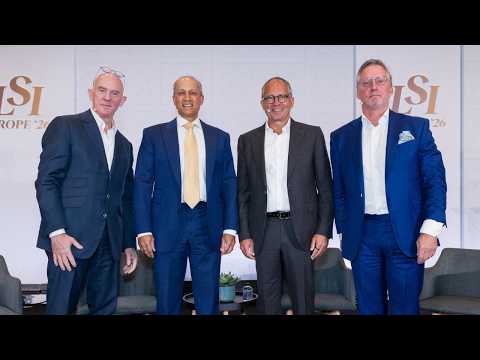
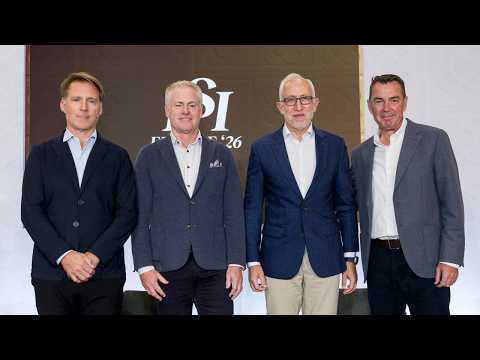
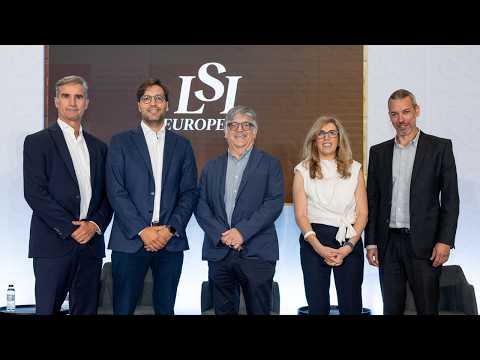
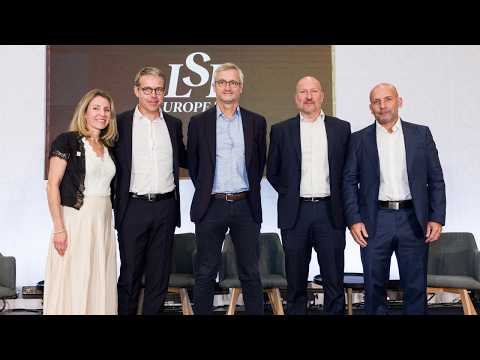
Leading venture capitalists from TVM Capital, Canaan Partners, Brightlands, Unorthodox Ventures, and Santé Ventures debate the strategic merits of including healthcare technologies in investment portfolios, examining risk profiles, market opportunities, and long-term value creation in the medtech ecosystem.
Join Our Next Event
Partner with the leaders
shaping the future of
Medtech at LSI USA ‘26
March 16th - 20th, 2026
Waldorf Astoria, Monarch Beach

Luc Marengere  0:05  
Okay, so today's topic is, as cited by Erica, is to try to strike the balance with Medtech, health tech and biotech as well. So today you have a number of funds on the panel, and I have the privilege of acting as moderator, so that's thank you again to the organizers of LSI and most of the funds here, with the exception of Lux Fund, which is a little bit more Europe centric, invest across the pond, so either in North America or in Europe as well, which I think is quite relevant to the make up of this crowd. I would suspect that in this particular crowd there's probably more med tech people than biotech people. But at the same time, the topic here and the focus of this panel is, how do we balance both? Basically, all right, so what I will do, in interest of time and for your benefits as well, is, I will ask each and every one of the panelists, and I'll, I'll go last to take five to eight minutes per panelists, please. And basically go through who they are, what they do, why they do what they do, okay? And provide some some some color on the investment strategy, the investment approach, if there's, if there's a secret sauce to what they do and how they do it, to go through that, and hopefully that will be useful to the to the audience. Okay, so we'll start with that. And please, Brent, why don't you lead us off? 


Brent Ahrens  1:39  
Thank you. Hope you can hear me. Okay. My name is Brent Aarons. I'm a general partner with Canon. Partners been with the firm since the late 90s. Canon is investing fund 13, which is about a billion dollars, and it's a split between tech and life sciences. Tech is typical stuff one would think of in Silicon Valley, enterprise software, lots of security companies. Course, AI is de facto in everything these days. Life Sciences is just biotech today, and that's one of the pertinent things. So when I was asked to join this panel, when I started with the firm in 99 it was to invest in med tech, therapeutic as well as diagnostic. And that spilled into other areas as well. And this point in time, we are not doing that. The Life Sciences side is just biotech, which is a mix of early stage, pre clinical some later stage, excuse me, with clinical data in hand, funding the next phase two or phase two three. So one of the pertinent questions is, so why did you guys pull the plug on med tech? I'll take the blame or the credit, since I'm a med tech guy by training, and I jokingly say me mechanical engineer, so I'm kind of making up biotech along the way, I maybe shouldn't say that, but it's reality. Going into fundraising, you start crunching numbers, because the limited partners of the world say, Well, tell me, where do you guys make money? Do you make money in tech or life sciences within these areas? Is it Series A, Series B, the seed whatever. And I started looking at the numbers for Medtech versus biotech, and the data that I generate at the time is still more or less true today, if I stage match investing, meaning pre clinical by, let's say, two, three years, Medtech versus biotech, the biotech companies exit in one half the time, compared with med tech, and for twice as much. Just pretty simple like so I'm suffering multiple points, meaning the cash on cash return, some of which comes into my pocket, ideally, hopefully, and it's taking longer. So you're suffering IRR points. Why would you do it? Which led to many, many funds. Which are, you know, fantastic funds. I think of HealthQuest and bensana and the list goes on, saying, You know what, we're going to take that IRR piece out of the equation and fast forward and invest in companies that are post approval. Maybe some early commercial traction, perhaps some reimbursement already exists. Doesn't necessarily change the magnitude of the outcome. Perhaps it does, perhaps it does, perhaps it doesn't, but at least you can sort of take that, you know, eight years toiling and anonymity kind of work out of the equation that we said we're just not going to do that, so we'll just wind down our Medtech portfolio. So that's partly how we arrived at saying we're not doing med tech. Fast forward to today. We're looking at at investing in med tech in a different way. If you think about, Am I okay, Anton, if you think about the P and L for med tech company, once you get to the commercial stages, the single biggest line item is sales or marketing, right? And if you're not spending at least 50% of the revenue to upwards of 200% investing in your commercial team and your platform, you're doing something wrong. The bad news is that crushes the early investors. If I invested, I think of a relieve it med systems, 17 years from start to finish, and it was a great outcome to Boston Scientific, and I'm delighted with what we do. You know, helping patients every single day is why I get up in the morning, but we were early investors in 2005 Fund, and here it is, you know, 17 years later, and we finally get an exit for this company. So that's exactly what happens. So we're looking at med tech today, saying, let's look at the commercial piece. Let me invest in companies. Get access to your technology from the commercialization perspective. You don't build that out, I will build that out. I'll get some ownership in your company. I'm going to be responsible for building up the commercial aspects, and that way your P and L looks a lot different, and hopefully you're not from an equity value creation perspective, I can help you create value, which I'll share on the upside, because I'm an own piece of the company, but I can still grow the business in a way that's off your P and L A pure variable piece. Happy to chat more with folks later about that. So with that, I'll stop. We invest in


Ashley Seehusen  5:43  
a very different way. So I'm Ashley Seehusen. I'm at Sante ventures. We invest in life sciences. So we think of that as biotech, health tech and med tech. About a third, a third, a third of each fund. We are just closing our fifth fund now, which will be probably a little bit more than 300 million. And you know, we continue to invest in med tech. We always think of that as sort of the steady Eddie of the three of those, biotech and health tech being a lot more volatile with valuations, etc. We took a very different look at how we invest. We like to go early. So we do seed series A and actually what I run, which is Sante Excel, is actually venture building. So we like to go really, really early. We also like to exit before we get to commercial. So we like to say we sell on hopes and dreams. So everything that we invest in has at least that potential. It doesn't always end up that way, but things that are definitely going to require commercial traction to exit are generally not things that we invest in. And we, you know, we have a smaller fund, and we do that very much on purpose. There's actually a great article, if you type in why venture doesn't scale into your Google search bar, it will pop up a white paper by Kevin Leland. He's our General Manager, which really gets into the detail of why we invest, the way that we invest, the size that we raise our fund. It's not a huge fund, but we do that very much on purpose. Again, we like to go early. We like to own a fairly big chunk of the company, and we're looking for exits that will be about the size of our fund, so 300 million and above. So the idea there is, if we own a fairly large chunk, we're not looking for unicorns to actually make our fund back. We only need a couple things to hit that can return a big portion of our fund to help us make a great return, which we do. So we continue to invest in med tech again, we we see that as the one that sort of, you know, it does have a little bit of a longer timeline. The upside is not quite as great, but that we get nice returns from that all the time. And for our foreign previous funds, that's been a really important part of how we've made a great return. And maybe


Luc Marengere  8:06  
I would ask you to expand a little bit, because Sante is certainly very well known in North America, but you started to make some investments in Europe as well, so maybe you could expand on that. And I would ask you to expand also on the med tech side, are there areas specifically that you're looking to invest, whether interventional cardiology or other other areas?


Ashley Seehusen  8:29  
Yeah, definitely. I'll address the European part. First, we have started to make investments, you know, in Europe and as well, Australia and New Zealand as well, looking to do two things. One, if it's companies trying to move to the US, so they've done their R and D, their research and development, and they're ready to kind of take the next step and come to the US. Most of the companies we invest in have a US first strategy. There's various reasons to do this. There's various reasons not to do it. But I think one of the things that we've really realized is that, you know, great innovation is not just happening in the US. With the current chaos that's happening in early stage funding, etc, we want to make sure that we have bets all over the world and making sure that that we are taking advantage of the great sciences coming from different universities, different places as well. Remind me what your second question was, specific areas of interest? Yeah, I would say, you know, we we're disease diagnostic, but we have things that we like, and I think that really speaks to one the exit potential. So looking at things that are going to exit 300 million or above, also things that will need commercial traction before they sell. So there's definitely some places, I'd say orthopedics is one of them, that commercial traction is going to be really important to get acquisition. So it's not that we don't. Look at things there, but we really look at what the ability to kind of sell that before having to go commercial.


Luc Marengere  10:07  
Okay, very good, very good, Luke. Why don't you carry


Luc Starmans  10:11  
us on? Yeah, good morning, everyone. My name is Luc Starmans. I'm a partner of Brightlands Venture Partners. We are early stage fund based in the Netherlands, and we are operating now out of our fort Fund, which is a 45 million fund, 2021, vintage, typical VC duration, 12 years, trying to construct a 15 portfolio company portfolio like you mentioned, Luke, focus on Europe with strong focus on Ben drugs in Germany. That's a relatively narrow geoscope. Meaning we get the aperture white on disease and therapeutic areas to keep the, you know, the pond as full as possible. And I think that's important on the topic of biotech, health, AG, Medtech, we play in all fields for similar reasons that we need to keep the pond full. We are a small fund. And I think, you know, Brent, you alluded to already early stage Medtech is a, I think, a difficult play to play. It's a and it requires, I think, a specialized strategy. So as an early stage fund, we look at all the usual things. I think any VC would be looking for a clear unmet need, strong technology, strong defensibility, clear regulatory part, market size, you name it. I think the regular things, I think we are starting to over index on Team quality, being an early investor. I also, my personal opinion is that you predominantly invested a team as you can do the due diligence all you want early stage, but the guarantee is in the next five, seven to maybe even 10 years, there will be surprises along the way, and only that the best teams pivot like you should. And I think the sort of the most important part of our strategy is that we look for capital efficient place. So we are 45 million, is a lot of money, but not in this context, right? So it leaves you quite vulnerable as an early stage VC, if you portfolio companies need 50 million, 100 million and next round, and you cannot contribute, and it's a bit difficult, then maybe the founders stay. They you know, they are salvaged. They get a new Eso package, but there's often not a lot of mercy for early investors, and that means we try to stay away from those plays and really try to invest in companies needing low double digit amounts to exit. So 10,000,020 30 million to exit. This is where we feel comfortable. If you say all of that, and you look at biotech, health tech, Medtech, then I think the logical consequence is also that biotech is increasingly becoming difficult. In the past decades, bone size have ballooned. And I think where we could play 1020, years ago in this field, we are not. We are basically not playing anymore today in biotech, and looking forward for the next one, we likely will formalize that as well, and we will fully focus on met and health tech. Yeah, I think that's an introduction.


Luc Marengere  13:05  
So I noticed Oliver just before we go to Daniel when, when Brent was describing their model and the leverage, etc. You, you certainly, you know, could relate to the early investors facing these larger rounds later on, right and you know, you very quickly reach for the abacus and go, I'm going to be going from that equity position to this equity position. How do you how do you select deals that may provide a little bit more risk mitigation on that front. Yeah.


Luc Starmans  13:45  
So I think, you know, one of our key parts into diligence is we really try to assess as good as possible what it will take to exit, how many rounds will follow up, what's approximately the need and and try to steer away from the very large rounds in the future. I think that's sort of the mitigation there. The order of risk mitigation is strong, initial syndicates, so that you know you share the risk together, ideally similar size funds, so that the incentives are aligned. I think that's what we like to do as well.


Luc Marengere  14:14  
Okay, very good Dan, unorthodox ventures, I would expect something very different. So please over to you. Yeah.


Daniel Allen  14:22  
So we're structured a little bit differently. So Daniel Allen un orthodox ventures, we're a single LP backed family office. Kind of operate similar, more similar to a VC than a typical family office. I myself am based out of Tel Aviv. We have two of us in Tel Aviv, two in New York, and the rest are based out of our headquarters in Austin. We had an unorthodox way of getting to spend most of our time now in healthcare. Real focus on med tech, medical device per se started off kind of in. Consumer Health Tech, you know, non FDA regulated consumer devices. And then as kind of started getting our feet wet in healthcare. More broadly, I came on, this was about four years ago. My background is kind of more hardcore Biosciences. My PhD is in immunology and genetic engineering to kind of help us scale up our efforts into healthcare space. Because of our structure, our single LP structure, we have the flexibility to kind of, you know, at the end of the day, play wherever we we get interested and see an outsized opportunity. So dove into, kind of all three buckets. You know, biotech, health tech, Medtech, and I've kind of found our comfort zone in in med tech, our team's built up of, you know, operators, engineers, you know, some people with more of a health care background, some people with less of a health care background. And med tech is kind of a nice bridge between, again, you know, the hardware consumer world, you know, in healthcare kind of bridge nicely, especially in early stage, where we've been spending more of our time. You know that engineering, early stage engineering is critical. We, as I said, are quite opportunistic. So we've invested in everything from, you know, 100 and $50 million commercial raises to first money in with an ID on the back of a napkin, we've skewed more towards that early stage, you know, early founders kind of helping them along the way, helping them maximize kind of early stage capital. And, you know, stretch that a little bit further than than maybe otherwise could, and that's kind of where we've we found a real sweet spot. So, so kind of anything from that first money into series A is where we spend the vast majority of our time. But again, have the ability to kind of see an opportunity that doesn't fit in that bucket and jump on it. Because, you know, we're obviously concerned about returns, but we don't have a set fund. We don't have outside LPs and a fund time horizon that limits us to one specific vertical thesis or opportunity. So we've taken a look at, you know, it's a, you know, has a special place in my heart, you know, biotech, gene therapy, stuff like that. So we'll, we'll take a look at some of those, kind of opportunistically, if there's an opportunity to get involved in a way where we think with a one to $3 million check, we can actually see some nice returns. But otherwise, kind of, our core competencies have focused on, you know, health tech, tech enabled services and, you know, medical device per se within that we've found a lot of comfort in, kind of anything in the vasculature, cardiovascular, neurovascular, peripheral that's kind of where we spend within med tech probably 60 to 70% of our time, but we've done everything from you know, you know, the gut to the brain to the heart to, you know, everything in between,


Luc Marengere  18:10  
given, presumably the audience. Here you have, surely early stage med tech Series B, early commercial, perhaps even more advanced commercial deals, given that you run the gambit little bit from from the seed to as the example you gave, you know, very large commercial rounds. Could you give one or two concrete examples that could be helpful to folks in the audience? So at that the seed stage, what would you be looking for at the commercial stage? What you you'd be looking


Daniel Allen  18:46  
for, yes, on the on the seed stage, or, you know, even pre seed, or first money in whatever, you know, the the rounds, all kind of are a bit ambiguous. And, you know, we're seeing more seed pluses and pre seed minuses and a, you know, people are coming up with all sorts of intermediate letters and titles. But on the earlier stage, it's really, you know, an idea that fits an actual need. You know, not not a solution looking for a problem, but an actual need with a market, you know, a sizable opportunity. And then you know, as Luke said, really, you know, a great entrepreneur, a great team, you know, kind of backing that, you know, whether we over index or just put a, you know, an extra stress on kind of team and ability for that entrepreneur, as I said, to make that money stretch. Because if you can make that first $5 million in your company, get you, you know, twice, three times as far than the potential exit the whole pathway going forward is a lot easier. You know, we've seen entrepreneurs that, you know, burn through that 5 million pretty quickly, and then they're taking on another, you know, five to 10 million just to get to first in human and all of a sudden, kind of the cap table gets messy. You see these extensions. CLA is that go on forever. So when we see an entrepreneur that can really on the. Engineering and make whatever that idea is work, but also on the financial end, kind of be savvy enough to stretch that to make the opportunity at the end of the day much more interesting. So that's kind of on the earlier side. On the later side, we're looking for that opportunistic outside, you know, situation. So whether it's a company that's kind of stalled on hard times, but we see real opportunity. There's a flat round or a down round. You know, we're okay to kind of get involved, as long as we see kind of that, there's the upside, there's the team in place to make that happen. You know, we are unorthodox. We like that, those opportunities. So if we see something we really believe in, and for whatever reason, kind of, the rest of the world has brush it off, either because they've been burned before. So we'll, we'll take a real look at that, even though we're coming in with, you know, smaller check. You know, if we get excited about it, there's nothing, nothing stopping us food.


Luc Marengere  20:54  
So I'll get back to a few thematics in a few minutes. So from, from our side TVM capital. So I'm a managing partner and co owner at TVM capital. We, much like many of the folks on the panel, we straddle North America and Europe. So we have an office in Munich as the portal for Europe. We have a group of people in Montreal, as well as a the portal to North America. We like to lift the dream too. So we do have a biotech side to our fund. So the last fund that we raised was just shy of 500 million, and about half of that goes to biotech. The other half to medical devices. So specifically for medical devices, we tend to invest when the the products are commercial, what we like to do is whether you're a European company looking to go to the US or vice versa, because of our ability to work in on both continents, kind of thing we we have the the background to help with CE mark and commercialization in Europe, just like we have the background to help in the other direction in the US, a strong preference for us on the medical device side is to have at least, at least one or $2 million worth of revenues. And the reason for that is it's not that complicated. We need to be able to make calls to the KOLs, not just early adopters that participated in in the in the clinical trial, but early commercial people actually paid for the device. Are they using it? Are they using it a lot that they that they do. They consider your product as a nice to have, as a must have. Yesterday, we couldn't do this today with your product, we can do that. We need visibility on your cap three, conversion to cap one. And usually for that, you need a lot of adoption. And you need repetitive adoption. You need fairly broad sales. Perhaps you need an RC T in certain cases to support your your cap one, right? So this is where we we live, particularly on the medical device side. We invest in Europe as well. I think, I think some days more on paper than in reality, most of our deals were done in in North America and and we do biotech as well. I'll put in a plug for some of my partners, because this is big news. All of you guys are aware of ALS as a terrible neurodegenerative disease. There's absolutely no cure for ALS, and last week, we press release phase two clinical data out of fund one. This is a deal that we did for an asset out of neuroimmune out of Switzerland, and we have the first set of data, phase two, clinical data in ALS that confers survival. And this is the first ever product that would confer a survival benefit for ALS patients that was press released two weeks ago. So that's on the therapeutic side. Therapeutic, we pick up assets that are late pre clinical, then we develop them to phase two. What we like about therapeutics? Where we where do we work? So we work in oncology and Immunology. Some people have immunology backgrounds here, perhaps, but every day, the the the Venn diagram is a little bit more overlapping between oncology and Immunology. So that goes hand in hand and where, where do you have the every year, the highest number of transactions the biggest premiums paid, it's usually oncology and immunology, and that's been the case for at least a decade. Right on the medical device side, loosely translating to that analogy is is interventional cardiology and electrophil. Physiology, structural, heart, vascular, broadly defined, right? So this is where we typically play on the medical device side, although we did interventional pulmonology as well. So, so when VCs say we focus in areas A, B and C, but then they very quickly say, but we've also done investments in D, E and F, that's this. It's our trick. So at this point, maybe we have about another 10 minutes or so, and I'd like to turn it over to Q and A for the last four or five minutes. You made a mention of of the white paper that that we read this well, I thought it was very well, well done, in fact, about how venture capital doesn't scale and when and what that what that actually means is very small funds can have some challenges in in providing enough exits and enough returns for the fund. Very large funds have a completely different set of challenges, but they're also challenged to provide a proper multiple and it looks like the sweet spot is in that 303 50 zone, based on quite a bit of historical data as well. But if you're going to invest in in biotech and medical device, roughly 5050 that that requires a certain amount of thoughtfulness and and strategy to do so and not be too diffused at the same time, be opportunistic, so you can be too focused and at the same time with an eye on On a proper multiple given the paper came from Sante ventures. Could you kindly take us through that logic? Ashley, yeah, absolutely.


Ashley Seehusen  26:49  
I think for any size fund, really, the thing that's most important is that the math has to work. So for us, we have one of our sayings around the firm is that every deal we invest in has to be a good deal, but we can't invest in every good deal. So there's lots of things that we just can't do because the math does not work for us. I think, depending on your fund size, that's going to look a little bit different. But for us, really it's, you know, how do we? How do we, you know, you know, in any firm that some things are, you know, it's kind of a bell curve. Some things in the middle are going to more or less return. What you put in, some things are going to blow up and do nothing, and others are hopefully going to be outsized returns. And so it's making sure that the math works, so that you have the opportunity to have those outsized returns. So every deal that we invest in has to have at least the opportunity to be that out size returns. And we know that some this is not going to happen. In every case, things happen, etc, but really being thoughtful about the kinds of deals we're investing in, and then also, then you know how they all kind of play with each other. And I think it's one of the reasons that we're disease diagnostic is that all your eggs are in one basket and that basket explodes, you're in trouble. So really being thoughtful about how you spread that around so that you have the best potential for a return,


Luc Marengere  28:16  
yeah, and maybe I to expand on that a little bit. So on the medical device side, you've made also the comment that you like to invest in, in areas of medical device that you can exit before going commercial, right? We play more on the commercial side are multiples the same,


Ashley Seehusen  28:40  
not necessarily. I think it's, it depends. It depends Absolutely. And I think that that's a totally valid strategy. It's just not our strategy, right? Ours is to get in early, have big ownership and and then have those out size exits before we get into commercial. You know, we have lots of friends that are very intelligent and also have great strategies that do the exact opposite, and we need all of those players in the ecosystem, otherwise we'd never get anywhere, right? So I think a little bit of diversity in how we think about stuff is appropriate and helpful for everybody. I think it's just knowing what your strategy is and having that very articulated. And we talk about this all the time internally. Of you know, very rarely do we make investments that are not on strategy very, very rarely. And so it's great we have a North Star. We know what we can do, we know what you don't want to do, and it's been successful for us


Luc Marengere  29:36  
so far. And actually, you've made a couple of comments here that that, you know, really resonate, given that there are a lot of entrepreneurs here and and different companies developing different products and so on, right? If so we do mainly interventional cardiology and EP. You come to us with a probably a very good product outside of that, and we say, well, that's out of scope, right? And some people don't understand why out of scope means no Okay, so there are two things that I think we have to expand on a little bit. So when we fundraise, because you guys raise money for your companies, we raise money for funds, right? So you're, you're you're walking around with with your slide deck, and you're saying, This is what I develop and why, and this is why I'm raising money now, and use of proceeds, and I will do this with the money that I'm raising, when we raise funds, we have a PPM private placement memorandum in that ppm, it says, On the therapeutic side for TVM case, we will invest in oncology and immunology, right on the medical device side, we will invest in ABC. If the first thing we do is is invest completely outside of this. We too have Masters, and they will knock on the door and say, Wait a minute, you sold me this and that, but you're doing something completely off strategy, right? That those are conversations we try to avoid. Okay? So this is why, when you approach VCs, it's useful for you to maybe go to the website, see what they've invested in, see what the strategy is and approach VCs that predominantly invest in your areas of product focus. The other piece as well is that whether you have one LP, whether you have multiple LPs, whether you're raising fund 13 or raising fund three, hopefully next year, right? You've heard today an R word Return, return, return, right? So the difference between Daniel's group, he's got one LP So the word patience may be patience you know, it may be stretched a little bit, right? For us, patient has more patience, right? So we need to, we need to return capital, okay? And we need to do that again within it, within a certain period of time, right? You're, you're, you're at number 13. So this question goes to you, what? Why is that important to return capital, but also the velocity of the capital, so the timing of that return? Why is that so important?


Brent Ahrens  32:32  
Put yourself in the shoes of those who entrusted you with that money. My mom is a pensioner from the state of Ohio, and she gets a check every month. It's because that pocket of money has a mission with associated with it. I'm a pension plan. I have to make pension payments every month to my pensioners. I'm an insurance company. I have claims. And so that capital just simply needs to have, as you said, some velocity is associated with it. Yes, it's patient capital. Venture investing is I invest today, maybe 678, 1012, years, you can get some return. The cash on cash, return matters, and the IRR matters. Ultimately you're going to say the IRR matters because you say, well, I generated a 3x return. Did that take you three years or 30 years? And so therefore it's an IRR question, but that capital that comes to us has some design, whether it's in the family office context, passing it on to the next generation or giving it away, paying pension funds, whatever it happens to be, it is a penalty, penalty importance. This isn't giving it away. If you want to give it away, that's fine. Do that with a different pocket of


Luc Marengere  33:35  
money, right? So, so words like fiduciary duty come into play, right? Your your particular one LP, obviously, a family office, very wealthy individual. What's, what's the dynamic when you invest? Do you have a 456, year horizon, or you have a whenever horizon?


Daniel Allen  33:54  
No, it's definitely not a, you know, an open ended check. No. Even with one LP, they still want to see their money back at somewhat of a predetermined date. We try to kind of take some shots that might be a longer time horizon. Take some things that we expect to, you know, be two or three years, kind of mix and match so that we, you know, the assumption is going to be that you have some flow back into the family office. And we can redeploy that, and can sprinkle that around, make everyone happy and keep things, kind of keep things going. So it's definitely not open ended, but we do have the ability to take that kind of outsized risk that maybe doesn't fit into the portfolio of a VC that has that strict timeline horizon at the end of the day, you know, when someone, whether it's one person or 100 people, entrust you with their money, they expect to see that back, and they expect to see that back with interest. So it makes it a little bit easier and a little bit more flexible. But at the end of the day, you know, we're not looking to. A to participate in philanthropy. That's kind of a separate a separate bucket, absolutely.


Brent Ahrens  35:06  
One thing to mention is funds have a finite life. Yes, historically was 10 years. Now they're going to 12 because, because it is, but


Luc Marengere  35:14  
that fund needs to get wrapped up in 12 years. And there's pressure from LPs, especially today, saying, Come on, give me some money back. To recognize we have a clock ticking. So we do have a clock ticking in fast and we have a couple of minutes, a couple of minutes left. But to maybe end on that point, you guys looking to raise money, you, you're you're in the room here. You've got five VCs in front of you, right? The reason why we're here is that we've raised funds. We have money to invest, right? But if you want us to keep raising funds and have money to invest, as the old saying goes, you know, it takes a village, right? So the entire ecosystem has to work ebb and flow in a certain synchronosity, right? You need to have your company go and be successful. Return capital within a reasonable amount of time, we return the capital. We've returned sufficient capital. We raise another fund, and so it goes. Okay, now I'll stop. I'll stop here for the formal panel section. We have two minutes any questions for this very distinguished set of panelists. Of course, I knew you'd have a question.


Audience Question  36:30  
So there are a lot of funds who just do med tech or just do biotech, as people who do both. How segregated is it within your fund? How much are you approaching an overall conversation about, how do we speed each other? How much are you wanting to see that kind of combined strategy, versus, if you're talking to somebody who's just a straight Medtech fund


Luc Marengere  36:47  
who would like to volunteer an answer,


Ashley Seehusen  36:50  
I can start with that one. We're very much integrated. So we look at how those two things play, what's happening in each ecosystem, what investments we've done, etc. So, you know, our partnership meetings, we talk about everything, and so it's very much integrated. And we certainly look at balance and how all those things play together all the time.


Brent Ahrens  37:14  
Yeah, Bryan, when we did have both active practices, it was the same sort of thing, although there was specialization. I did Medtech and biotech, and some of my biotech colleagues, excuse me, just did biotech.


Luc Marengere  37:26  
Yeah, so from, from our side, you have to be integrated, you know, it's, it's, you may have different buckets, but it's one fund, right? And everything the the soprano and the tenor have to sing together, and it's got to make sense, right? So, so integration is a key thing. I don't know if Daniel or Luke want


Luc Starmans  37:47  
to I agree. You need to have specialty, right? So you need to have someone really understanding Medtech, really understanding health tech, different fields, different access, different playbooks, yeah. But you need to have one conversation indeed. Otherwise it's not one foot.


Luc Marengere  38:01  
Any other questions. We have a whopping 22 seconds left.


Luc Marengere  38:10  
You go. First. You have the microphone, you have the power. You're very gracious.


Audience Question 2  38:15  
How do you guys approach people that are doing device and drug or drug and device? Is it best of both, worst of both, how does your firm look at it?


Luc Marengere  38:24  
Bret next, yes. So that's the tricky part is, is drug, drug devices, devices and drugs kind of thing, they make a very, very odd, if not awkward, marriage. It's very difficult to invest in. Both little bit similar to maybe a decade ago, you had a bunch of CROs that were also trying to be biotech companies, and that too was a flaming disaster. So that's that's a bit more complicated, and I love Brent's answer, answer, does this? Who somebody else had a question.


Audience Question 3  39:09  
So when it comes to relating the founding team at the seed stage, what is your kind of playbook? What do you look for, at red flags and good signs that you think these people going to make it as a worthwhile team.


Luc Marengere  39:21  
Just curious that would be to the seed players in the panel. Yeah?


Luc Starmans  39:24  
So I'm very biased, because one of our founders is asking this question. And I revert back to the over indexing on Team quality vehicle, yeah.


Daniel Allen  39:34  
And I mean to reiterate, obviously the founder means a lot, but, but having a clear sense of of the problem they're solving, how they're going to do it from the very beginning, whether it's going to be a commercial play, dealing with that from day one, who they need to target, who they're selling to knowing their customer is critical, and we see people thoughtful about that from day one,


Ashley Seehusen  39:57  
that's a green flag. I think the other thing. And on to that too, is just, you know, what do you know you're good at? What do you know you're not good at? And how do you have the conversation about how long you're going to be the CEO, and who would you bring in next? And just understanding kind of where you're at, what you can do, and then how you need to grow.


Luc Marengere  40:17  
So final words, perhaps. So if you've got to solve a problem, solve a big one, all right, address, address, a real, a serious unmet medical need, we all want to see things that are highly differentiated, that will make a big difference in health care practice. And I will end here and thank Scott for again, another fantastic LSI conference talking about addressing a big problem. This guy put together the LSI conference at a time when this industry really needed it. Thank you for that, and thank you again for the opportunity to be on stage and hopefully, together with the panelists, add value to the community. Awesome. Thank you.