Lisa Carmel 0:05
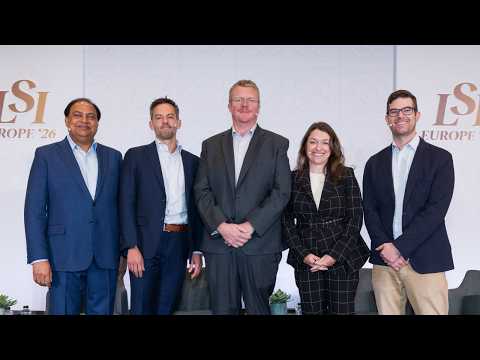
Good afternoon. Who has jet lag here? Who's Okay? Well, this is just the panel for you. We will wake you up exactly. So today's panel is all about resiliency, and before we jump into that, we I thought we could all introduce ourselves. My name is I'll kick it off. My name is Lisa Carmel. I'll moderate the panel today. I'm chair of Business Development at Mayo Clinic. I lead our strategic Partnering for the global enterprise for Mayo Clinic, and that's across all the different verticals, from Biopharma, Medtech, device, diagnostic and so on. And we're part of, I'm part of the overall ventures group
Amy Kruse 0:56
like the Absolutely. Thanks for joining us this afternoon. My name is Amy Kruse. I'm a neuroscientist by training. I have a PhD in neuroscience. Started my career at DARPA as a program manager building sort of high risk, high reward technologies for the government. And then more recently, I'm now a venture investor. So I run a venture fund called Satori neuro that's focused on mental health, brain health application of neuroscience technology, sort of under a larger framework of what I call human flourishing. And so happy to be here representing that perspective. Brilliant.
Agnieszka Janeczek 1:29
So good afternoon. My name is Agnieszka Janeczek, and my background is in medical biotechnology, but I'm also a co founder and CEO of renovate biologics. I don't have jet lag. I traveled here from the UK. We're a spin off from South Hampton University, so just an hour down south and we're based there in the Science Park. So we are pioneering these of synthetic nano clothes as carriers for precision therapeutics delivery, with the first market target being orthobiologics, and specifically the BMP two protein delivery. There's lots of complications with the current protein as it's used in spinal fusion procedures. We're trying to overcome that by developing an injectable product, a product that safely retains the protein and to reduce those that helps us reduce the cost of the of the of the biologic itself, and also in the future, impacting the cost of the very costly spine procedures. So we really have a platform that allows unprecedented retention of biologics. So in addition to BMP two, there's other avenues that we're developing in our career currently. So yeah, happy to be here and talk about the technology and the company and the resonance a bit more great.
Hillary Pierce 2:53
I'm Hillary Pierce. I'm CEO of total flow medical. My background is in medical devices, so I've going on 18 years and medical devices now, and most of the time has been in structural heart actually, at total flow medical, our mission is to reduce costs and improve outcomes for patients who need the use of a heart lung machine. So that is heart surgery, minimally invasive heart surgery. And also, in the future, there will also be ECMO patients. Our first, our first product that we're looking to get onto the market is a femoral arterial canula for use in heart surgery. So minimally invasive heart surgery and robotic heart surgery.
Lisa Carmel 3:30
Cool, you know, we have a great panel today. You can see different viewpoints coming in here. So before we jump in, I think it's always helpful to understand, like, the phase of where you are at your company, or or and your most immediate milestones, upcoming milestones. Basically, why are you here at LSI this week?
Amy Kruse 3:58
You guys start, and then I'll say, while here,
Agnieszka Janeczek 4:00
okay, so I'm here obviously, probably, as both co founders and CEOs are for fundraising. We're raising a $5 million round at renovos that will help us progress towards first proof of concept in a clinical setting. I'm also here to network with potential co development partners and other strategics. As it is a really platform technology that can deliver other biologics outside of BMP two outside of spine. So really for networking,
Hillary Pierce 4:31
and as far as milestones, so we, we recently, in the spring of this year, we closed our seed extension. And the goals there was to reach regulatory clearance for our first product, and also to conduct our first human study. So we're we're working very valiantly on both of those objectives right now as we speak. And so in 2026 we'll be looking at our commercial our commercial financing. Um and locking in our distribution partners for launch and continuing to build out our network of minimally invasive cardiac surgeons, our first users,
Lisa Carmel 5:11
awesome, LSI. What are you right? Is there a particular look?
Hillary Pierce 5:14
So we're looking, we're looking for commercialization partners, so financing partners for that, and also introductions to cardiac surgeons, heart surgeons with minimally basic practices.
Amy Kruse 5:29
And I'm here to meet awesome companies. You know, I think neuro tech in general has been growing in the LSI community. I have a lot of colleagues, both in Europe and the US who have been here, this is actually my first LSI, and really wanted to come and spend some time with the companies that were here and meet, meet new folks, and obviously connect with people that I that I've already known. So that's already happened since I've been here for like, four hours, so it's been great.
Lisa Carmel 5:56
Yeah, and I would say, you know, for myself, for Mayo Clinic, I'm obviously here to connect and partner. It's in my title, and that's what I love to do. But I have a particular eye out for robotics, automation, surgical innovation, cardiology, imaging, whether it's a device, data, AI. So I've got my eye out fund people that want to co invest in the space. And actually, I was going to add, I should have mentioned, are you mainly early, like, I'm generally like seed series, A can be a little bit later. How about you when you look at, you know, partnering things like that, what stage are companies at? You know, I wouldn't pegas, but we, we do a lot of early stage, but same time, we do a lot of CO development with more, much more mature companies that are looking at a next gen technology or a next gen platform too. So Well, okay, so we've got this topic around resiliency, but I thought maybe we could kick it off with first defining how you face resiliency is a very attractive quality that I think we're all lean into. But the question is, is, how do you perceive it? And I'm wondering, if you want to just throw out some some how you think about
Amy Kruse 7:16
it, descriptors, yeah, maybe flexibility, like, that's one thing that I think about is sort of the ability flexibility, adaptability, you know, sort of like nimble responsiveness. You're getting all the good objectives, I
Agnieszka Janeczek 7:32
think, for us, this long term view, and knowing what the goal is inside at the end as well, to really be resilience, to push for that.
Hillary Pierce 7:44
So I thought long and hard about this one, and I was thinking of it more as like an equation. There's like a state, and then there's also a function of time. So for me, it's like buoyancy, but not not buoyancy. And like a placid lake, it's like buoyancy and really rough seas, plus sort of perseverance, you know, like going, going the long haul.
Lisa Carmel 8:04
Yeah, I was gonna say, I think I agree. I think it's the ability to stay focused, but yet flexible. Say I think that. I think there's the aspect of being able to smartly pivot at the right time, and then I also think of them as being really savvy future proofers. So, yeah, okay, so with this, with this topic of building resiliency, usually there's a challenge, a burden that you have to navigate or address. How about each of us describe how you are either building resiliency with your organization, or maybe, in your case, maybe you want to tackle or discuss one of a portfolio company that you think has been particularly successful?
Amy Kruse 8:58
Yeah, no, I guess two things that come to mind in the context of this. One is just what a challenging fundraising environment. It's been like, it feels really important to say that out loud, even as an investor, and I think companies have been really creative around you know, both raising capital, maybe accessing non dilutive funding like it really feels sort of an all hands on deck in this capital environment. And I think part of that resiliency is bringing your I mean, you know, I often tell people like, put your investors to work. If they're good investors, they should be helping you and making introductions and things like that. And so there's been a lot of that this year. I've done, I've, you know, obviously, as a fund, I have to do my own fundraising, but, but I've been doing a lot of fundraising for for my companies, and I think that's really important, and I think that's something that companies should ask for from from their investors. On the more pointed topic of of you know, particular portfolio companies exist. Exactly we, you know, one of the things I was on a panel this morning, we talked about neuro tech being a platform type, you know, technology, and therefore the number of indications that you can possibly go after is can actually be quite broad. And so I had a company this year who started the year thinking they were going after one indication, but also had a couple other things in the back pocket. And when that first one, you know, was clearly not going to work, we were able to very quickly get some KOLs on the phone, get some early clinical data with some academic partners, and, you know, shift the company's focus towards a new indication. And fortunately, they had enough capital to do that. But that was a real this year, when you start a year thinking you're doing one thing, and then, you know, now it's, you know, October, and we're working on a different indication, and sort of leaning in on that was really, yeah, really nimble, right?
Agnieszka Janeczek 10:55
Well, my example would probably be in the supply chain area. So as you say, kind of future proofing the business. When we started the company, we we work on synthetic nano clay as a delivery biomaterial for pioneering its use in the medical field. So it became quite clear really early that we wouldn't be able to tap into supply at the appropriate clinical grade, because there just wasn't any available. And we're a small team at a time, but we had great expertise in the space, and like I said, right agility in the team and the ability to pivot. We established in house manufacturer of the synthetic nanoplay, initially, with the aim to eventually translate it towards GMP grade materials that can be supplied for other as other carriers. We could develop it ourselves. It's a material that's used in a cosmetics industry, a lot in the pharmaceutical industry, as a rheology modifier. So thanks to that in house capability, we're able to add huge value and additional IP as well. But what we managed to achieve, actually last year, is already produced some clinical grade batches of the material. So we're really moving towards the GNP grade and being able to supply the first synthetic nano clay, we call it arenavite, which is improved for medical application. So that's created a lot of value in the company. I think, yeah, we wouldn't be able to do it without the team that was willing to take on a challenge. And also with the long term view, that's actually going to create a lot more value along the way than just using a supplier.
Hillary Pierce 12:34
That's awesome. Congratulations. I'm everybody likes to, it's a hot topic here at LSI team. So we, you know, we recently, recently in the in the spring, we closed an extension. And so I guess from the from the company, or from the startup CEO side, there's kind of two elements that I was thinking of speaking to around challenge and resilience and one is sort of the the psychological aspect as a startup CEO, when you're hearing for, you know, a few years, how challenging the environment is, and I think for for us, is kind of tapping into almost like a like a primitive instinct, almost like a parenting instinct, where you're just like you're just not going To quit, like you've just made the decision that you're not quitting. Like, when it gets really hard, you don't quit. You just, you just have to keep going. So I feel like, you know, I think that's one thing that's I've always felt very helpful when I heard someone, you know, it just takes one yes. It takes one yes to get your lead investor. It takes one yes to tap into a whole new network of investors and connections and then around kind of resiliency. One of the things also, kind of Douglas down, what you said that, that we did was take a creative approach as much as we could, that every person that sort of is involved with our business, be it like investor advisor or mentor, can can support us on multiple planes. So we have users, we have we have surgeons, and we have clinicians as investors. We have distributors as investors. We have a health care system that is invested. And we have incredibly, well, you know, experienced med tech executives as as investors as well. So some of the things that we've you've sort of done, yeah, awesome.
Lisa Carmel 14:22
You know, you are being just slightly off topic, or, I mean, not off topic, just an add on observation. We were discussing this morning, and you said that you had some amazing mentors whose mutual friend. But I think that adds right on to this. You were talking about Andrew Cleveland and Marga with at Fogarty innovation. So identifying those mentors, advisors, also, it seems to be a have been a great choice on your part.
Hillary Pierce 14:54
Yeah, like building out your community or your village or your Hamlet, or you know, everyone. Has a Sarah, your clan, I think has been, yeah,
Lisa Carmel 15:04
well, I was gonna say at at Mayo. I would say that we, we classify as a resilient institution. We are fund founded, interestingly, in 1864 after Dr Mayo was tasked with heading to Rochester to by he was asked by President Clinton to go and and assess the health of the troops and and Dr Mayo's wife said, Okay, I'll move one more time, but I'm not gonna move after that. And so, you know, he basically stayed and they founded the Mayo Clinic, and fast forward to today. It's now one of the leading healthcare institutions globally. So so I would say the way that I see Mayo Clinic as continuing to be resilient is that they're always looking ahead. That future proofing comes into play here, thinking ahead of what are the patient needs for the future. And there's a strategy that's publicized at Mayo Clinic called Bold, forward, unbound, and this is a strategy that permeates the institution where we're building for the next era in patient care. And I think institutions like mayo, where there's inherent knowledge and about unmet needs of patients, clinicians and these insights that it's there's a responsibility that we have to use it, to leverage it, and to partner to build for better solutions for inpatient care going forward. And a couple examples that I can draw on and share is, you may be aware that Mayo is building, investing $5 billion to build the hospital. The future, it'll be completed in the Rochester campus. Right now, there's a lot of construction, a lot and but it will be completed in 2030 and the it's it's interesting because it's a blank slate we're designing and building for the future in healthcare, but with the idea that we'll be partnering with a lot of Folks in with the technologies that you'll need for beyond. So the spaces are reconfigurable, spaces so the space, the needs dictate that it be a hospital unit or an or a diagnostic imaging suite with full robotics as needed. It can be reconfigured another way that we're being looking ahead to be future proofing resilient, is we're partnering, and that's one of the reasons I'm looking at robotics, clinical and surgical robotics. I don't know if you've heard of, sir, mix a lot. It's a robotic system that mixes chemotherapy infusions For Mayo Clinic Cancer Center, so it has a dual purpose. It it helps staff, Mayo staff reduce their exposure to chemotherapy medications, but it also frees up staff and personnel so they have more human interaction and time so that other tasks can be, you know, automated, and so forth and so in this way, I guess. I think that Mayo is seeking to create resiliency by building this for the for the mayo business and patient care, but also creating an ecosystem where we can, with innovators, can thrive, right?
Amy Kruse 19:02
So you'll be looking to bring in new technologies, not just technologies from the Mayo ecosystem. Oh no,
Lisa Carmel 19:07
that's why we're here. That's awesome. Yeah? That's exciting, yeah. So got a few technologies for you, yeah? So she taught so, so let's see. So we've got plenty of time. We zipped right through, you know things. But I was gonna say, you know, one idea is to look ahead at 2026, and if you know, we have an investor on the panel, can you just look in your little crystal ball and tell us, like, what are the challenges you think we might be facing?
Amy Kruse 19:37
You know, I never want to say we're out of the woods, because it always feels like there's more wood so good as you get out of the one set of woods, but I would, I would say that we are definitely seeing capital start to move again, and rounds start to come together. I think a lot of the stuckness from earlier this year probably driven by tariffs and some supply chain can. Earns. I mean, there was a lot going on, and I think we're really in a spot right now where that sort of loosening up, as always. I think, you know, great outcomes, exits, you know, you know, positive. Positive news. You know, definitely helps. You know, drive investors. I think, frankly, if interest rates go down, it helps. I mean, it seems, you know, you know, very linear and silly, but you know, if people can make 5% of their capital just sitting there, sometimes investing doesn't look like the greatest deal. So I think, I think we're in an decreasing invest in interest rate environment that will also help capital come back into the space. And I think we've, I have seen just truly outstanding companies. And so I think, you know, companies that have been able to weather the storm over the last few years have come out more resilient, and, you know, look like great investments that have made a lot of progress. So, you know, I'm very bullish. We are deploying capital right now. We are continuing to look to deploy capital. I have friends out now who are raising their second or third fund, and are, you know, getting ready, or are deploying capital right now. So I think we're in a I do think we're in a better environment, and I do think it's looking good for for next year.
Lisa Carmel 21:15
So Well, I was just wondering, you know, we have a little bit of time. Is there one of your portfolio companies you want to highlight, sure?
Amy Kruse 21:27
So one portfolio company, very exciting, but has been, you know, kind of had a little bit of a break through year. Is called amp a health. They are building a, essentially a very portable deployable transcranial magnetic stimulation system. So imagine it fits like not on one of those big machines where it's on a big cart, but But literally in a suitcase. And this year they also so they're using it for mental health treatment, primarily depression anxiety. They're testing a variety of different outcomes, but this year they paired it with a simple, you know, neuroplastogen, so d cycloserine, which is something that's already on the market. It doesn't need a any kind of fancy new approval, although combining them, we will probably seek approval. But pairing that neuroplastogen With the TMS treatment, they're getting remission for depression in one day. And if anybody knows anything about TMS, treatment used to be, like, weeks long. And then there was the saint treatment, which was shorter, but it was still a week. So they're seeing remission within sort of one treatment for individuals, which is really, really exciting. And they've come up with a sort of novel business model. They're not actually trying to sell like hardware. They're actually using more of a subscription sales model, where people are sort of taking out leases on the equipment and having more of a recurring revenue model. And so TMS clinics are very excited about it. They're thinking like, Oh, I could have five of these systems, whereas before, I would have bought one giant Yan on a cart. And so that company is having a real breakout year, not not only in terms of like revenue and sales, but also in terms of, like, the number of lives that they've been able to impact really quickly this year. So it's pretty exciting now.
Lisa Carmel 23:13
Now, do you invest in in European companies?
Amy Kruse 23:18
Yeah, so we have definitely, we've invested in the UK, definitely looking at at European companies as well. The great thing about neuro tech in the brain is it's really, like, incredibly International. I was on a panel this morning with my colleague Jacques Caroline from ARIA the UK is sort of version of DARPA. And the amount of money that they're deploying right now they they have a 65 million pound program looking at precision neurotechnologies, and so I'm, you know, eagerly waiting with a catcher's MIT to see what comes out of some of the things that he's investing in. So yeah,
Lisa Carmel 23:53
now Agnes, agneska and Amy R Do you see different challenges in in Europe versus us right now.
Agnieszka Janeczek 24:06
So I'd say capital wise is probably similar. The VCs are still investing slightly larger rounds later status. So with early stage investment, I think it's a it's a similar situation, especially with the regulatory and the political landscape. So yeah, just with regards to resiliency, we have to get creative exactly how we can tap into non negative funding, some charities for support, yeah, some corporates and even, you know, think about license the technology outside of the core area. So yeah, it takes a village, as you said, right, yeah, yeah.
Amy Kruse 24:44
For for both of you, for investors, are your investors, primarily EU, UK, US, like, what's your mix of an investor base?
Agnieszka Janeczek 24:53
Oh, so to date, we were supported mostly by European investors and UK investors and. A, also UK corporate. A, UK research charity. So orthopedic research, UK invested in us in equity as well, because our primary market will be US market for our first product. We are actually raising around now, trying to expand this into US investors, and also outside of the usual areas. Now, the space is where Medtech is hot. So, yeah, we're trying to expand that.
Amy Kruse 25:25
Yeah, the village. How about you?
Hillary Pierce 25:27
Yeah, we're we're actually based in Canada, so we're based in Vancouver, in Canada. So we have both Canadian US investors, and we actually also have one European
Lisa Carmel 25:37
investor as well. Are you also talking to family office?
Hillary Pierce 25:41
Yes, yeah, yeah, we have family office. Yeah, we have, we have family offices as investor as well. And in Canada, we also have great opportunities for taking advantage of tax credits absolutely and non dilutive funding as well.
Amy Kruse 25:56
So, yeah, yeah, I was gonna say that that's maybe related to the resiliency topic and other things like, I do think it's those diverse sources of capital that way, that you know, family office money or what you know, there's now this category, sort of called venture philanthropy, right, where people are Taking, traditionally, dollars that would have been philanthropic, maybe grant making dollars and directing some of those towards actual, you know, companies, and venture investing, both funds as well as direct investing in companies. I think that's a great move. Where I've seen it be most successful is with the Alzheimer's drug discovery Foundation, ADDF, yeah, they've done grant making, they've done moon shots, they've done venture philanthropy, and all of a sudden now we have, you know, a blood test for, you know, for Alzheimer's diagnostics that I don't think would have happened without that sort of capital being brought together trying to get something like that Going for sort of my neuro tech space, right again, yeah, I think neuro degeneration and dementia are top of mind for people. But, you know, you could do the same thing in, you know, mental health or other neurodegenerative conditions. It's been really interesting.
Lisa Carmel 27:12
Yeah, I was gonna say we Hillary, and I was on that point. We're talking about other other venture sources, and one of them is, which is sometimes not thought about, but American Heart Association, Lisa Suennen, and they just launched, she just launched a women's health front. Yeah, their brain, focus on brain, and also and women's health, but, of course, cardiology. So yes, another
Amy Kruse 27:39
source, yeah, well, that's a big movement right now, is the sort of heart brain connection, right? You know, they're sort of saying what's good for the heart is good for the brain. And I think we're starting to see a lot of things in that, in that space, as well as with women's health as well. So it's
Lisa Carmel 27:54
pretty exciting. Yeah, well, I was going to say we had, we were going to, we were going to end up this, this panel with some advice to the startups in the room. And do you want to, do you want to kick it off?
Amy Kruse 28:10
I think the CEO should kick it off. Yeah.
Lisa Carmel 28:15
Or so, like, what? What do you know now that you wish he'd know the start of it. We might run out of time on that one, but
Agnieszka Janeczek 28:23
the advice to yourself eight years ago, okay, I'm happy to kick it off. So I think maybe alongside the lines of quality, always beat spin and something to be aware of that, okay, persistence and perseverance and grit are all important for resilience, but actually the long term view and the long term belief, and not only yourself, but actually what you're building and the technology that brings value is what gets you through all the difficult times, being critique, being unfavorable markets, any FDA issues. So that kind of quality, and knowing that you bringing value because you've tested it, you've got data for it, and you know that your customers will eventually benefit from it, and everyone will see through that, that's kind of what driving so the long term belief in what you're bringing to markets, bringing value, and that kind of helps you buffer out all the noise that will happen inevitably in the way. So kind of that logical, cool, calm approach, knowing that what you're doing is the right thing to do, and eventually it will pan out.
Hillary Pierce 29:41
And I'll start by kind of spinning it back to the to the clan, I think is, you know, I guess I just keep mentioning or going back to that. But, you know, one source of incredible, you know, inspiration and support and really being able to lift each other up is other, other startup stuff. Founders, you know, startup CEOs. So building out that network has been incredibly helpful and and also, I would say, like in the in the climate where we need to be, you know, extremely capital efficient, that it doesn't mean that it has to cost you, it doesn't, doesn't require capital. And I think that's another, you know, we've, we've participated in a number of different accelerators and incubators that have been incredibly supportive in different ways. We graduated from the creative destruction Lab, I'm not sure, yeah, and you know, that's how we got our first lead for our first financing, for our pre seed financing, and then we were fortunate to participate in med tech innovator, actually, no big Nicholas. Can I really think cohorts, yeah, and, you know, and that's, you know, an incredible resource for, you know, then, and just like forevermore, ongoing, a big resource for other startup CEOs. And then I was also going to mention, you know, full grade education. We mentioned Andrew Cleland and Margaret take a sweat again. But they have, you know, they have a phenomenal ongoing Speaker Series, which is, which is free, that anyone can can listen to, and it's incredibly high value content that you can access. And you don't, you don't need, you know, you don't, you don't need to pay to grow that, to grow that group around you, of believers, yeah,
Amy Kruse 31:22
for sure, yeah. I was. I mean, I'm going to return probably to what I said a little bit earlier, which is sort of, you know, make the ask. I think it's part of that building the village and your clan sort of thing. I think, you know, there are a lot of lot of resources out there, a lot of people who want to help. And I think it's important to continue to to ask, and whether you know the person like you said, you know, maybe figuring out what they can provide for you or what they can do is help. I, you know, I think you should really, I, you know, I think, although it's, it's difficult in a capital constrained environment, I still think you're, you're interviewing your potential investors as partners and people that will be along that journey with you. And I think it's totally fair to say, you know, to to interview them back, you know, and and talk about the resources that they have and what they can provide. I think it's a real privilege as an investor to get to work with CEOs and founders, and I try to show up for my CEOs and founders every day. And so I think it's, I think it's important to ask so,
Lisa Carmel 32:23
yeah, yeah. I think a lot similar, along similar lines, I would say that, you know, I would recommend picking your partners wisely and and look for resilient partners that that can help you, elevate your technology, elevate patient care partners that invest time and energy mentoring. Anyone that that is mentoring and giving of themselves for the greater good has my seal of approval, and I those are the kind of people that I look to learn from myself and and support. So I think those always deliver above and beyond expectations. And I will say that I think that you're likely to meet many of those kinds of people from six to 7pm this evening at the women in med tech reception, plug, plug. You don't have to be a female to attend, but it'll be in the Albemarle suite that's somewhere in the building.
Amy Kruse 33:35
I think it's on the I think it's up there. I simply,
Lisa Carmel 33:37
okay, well, I get lost every time I knock the door here, standing morale,
Amy Kruse 33:41
I'm like upstairs to go downstairs and
Lisa Carmel 33:45
and then I would say, if the other piece of advice, if you're interested in partnering with Mayo Clinic, we have a workshop tomorrow, and work by workshop. We want it to be interactive. Come ask us questions. We can tell you more about our funds we do invest and companies that we have collaborations with, we can talk more about that. Kumar, yeah, I'm gonna go to the workshop. You're all invited. So is there any questions? I think we actually finished early. I can't believe it, but we have a couple minutes if anyone has a question. Okay, no one's brave enough. So I think we're we're good, we're good. Thank you so much. Thanks for spending time. Thank you our panel, yeah. Thank you to LSI. You.
Lisa Carmel 0:05
Good afternoon. Who has jet lag here? Who's Okay? Well, this is just the panel for you. We will wake you up exactly. So today's panel is all about resiliency, and before we jump into that, we I thought we could all introduce ourselves. My name is I'll kick it off. My name is Lisa Carmel. I'll moderate the panel today. I'm chair of Business Development at Mayo Clinic. I lead our strategic Partnering for the global enterprise for Mayo Clinic, and that's across all the different verticals, from Biopharma, Medtech, device, diagnostic and so on. And we're part of, I'm part of the overall ventures group
Amy Kruse 0:56
like the Absolutely. Thanks for joining us this afternoon. My name is Amy Kruse. I'm a neuroscientist by training. I have a PhD in neuroscience. Started my career at DARPA as a program manager building sort of high risk, high reward technologies for the government. And then more recently, I'm now a venture investor. So I run a venture fund called Satori neuro that's focused on mental health, brain health application of neuroscience technology, sort of under a larger framework of what I call human flourishing. And so happy to be here representing that perspective. Brilliant.
Agnieszka Janeczek 1:29
So good afternoon. My name is Agnieszka Janeczek, and my background is in medical biotechnology, but I'm also a co founder and CEO of renovate biologics. I don't have jet lag. I traveled here from the UK. We're a spin off from South Hampton University, so just an hour down south and we're based there in the Science Park. So we are pioneering these of synthetic nano clothes as carriers for precision therapeutics delivery, with the first market target being orthobiologics, and specifically the BMP two protein delivery. There's lots of complications with the current protein as it's used in spinal fusion procedures. We're trying to overcome that by developing an injectable product, a product that safely retains the protein and to reduce those that helps us reduce the cost of the of the of the biologic itself, and also in the future, impacting the cost of the very costly spine procedures. So we really have a platform that allows unprecedented retention of biologics. So in addition to BMP two, there's other avenues that we're developing in our career currently. So yeah, happy to be here and talk about the technology and the company and the resonance a bit more great.
Hillary Pierce 2:53
I'm Hillary Pierce. I'm CEO of total flow medical. My background is in medical devices, so I've going on 18 years and medical devices now, and most of the time has been in structural heart actually, at total flow medical, our mission is to reduce costs and improve outcomes for patients who need the use of a heart lung machine. So that is heart surgery, minimally invasive heart surgery. And also, in the future, there will also be ECMO patients. Our first, our first product that we're looking to get onto the market is a femoral arterial canula for use in heart surgery. So minimally invasive heart surgery and robotic heart surgery.
Lisa Carmel 3:30
Cool, you know, we have a great panel today. You can see different viewpoints coming in here. So before we jump in, I think it's always helpful to understand, like, the phase of where you are at your company, or or and your most immediate milestones, upcoming milestones. Basically, why are you here at LSI this week?
Amy Kruse 3:58
You guys start, and then I'll say, while here,
Agnieszka Janeczek 4:00
okay, so I'm here obviously, probably, as both co founders and CEOs are for fundraising. We're raising a $5 million round at renovos that will help us progress towards first proof of concept in a clinical setting. I'm also here to network with potential co development partners and other strategics. As it is a really platform technology that can deliver other biologics outside of BMP two outside of spine. So really for networking,
Hillary Pierce 4:31
and as far as milestones, so we, we recently, in the spring of this year, we closed our seed extension. And the goals there was to reach regulatory clearance for our first product, and also to conduct our first human study. So we're we're working very valiantly on both of those objectives right now as we speak. And so in 2026 we'll be looking at our commercial our commercial financing. Um and locking in our distribution partners for launch and continuing to build out our network of minimally invasive cardiac surgeons, our first users,
Lisa Carmel 5:11
awesome, LSI. What are you right? Is there a particular look?
Hillary Pierce 5:14
So we're looking, we're looking for commercialization partners, so financing partners for that, and also introductions to cardiac surgeons, heart surgeons with minimally basic practices.
Amy Kruse 5:29
And I'm here to meet awesome companies. You know, I think neuro tech in general has been growing in the LSI community. I have a lot of colleagues, both in Europe and the US who have been here, this is actually my first LSI, and really wanted to come and spend some time with the companies that were here and meet, meet new folks, and obviously connect with people that I that I've already known. So that's already happened since I've been here for like, four hours, so it's been great.
Lisa Carmel 5:56
Yeah, and I would say, you know, for myself, for Mayo Clinic, I'm obviously here to connect and partner. It's in my title, and that's what I love to do. But I have a particular eye out for robotics, automation, surgical innovation, cardiology, imaging, whether it's a device, data, AI. So I've got my eye out fund people that want to co invest in the space. And actually, I was going to add, I should have mentioned, are you mainly early, like, I'm generally like seed series, A can be a little bit later. How about you when you look at, you know, partnering things like that, what stage are companies at? You know, I wouldn't pegas, but we, we do a lot of early stage, but same time, we do a lot of CO development with more, much more mature companies that are looking at a next gen technology or a next gen platform too. So Well, okay, so we've got this topic around resiliency, but I thought maybe we could kick it off with first defining how you face resiliency is a very attractive quality that I think we're all lean into. But the question is, is, how do you perceive it? And I'm wondering, if you want to just throw out some some how you think about
Amy Kruse 7:16
it, descriptors, yeah, maybe flexibility, like, that's one thing that I think about is sort of the ability flexibility, adaptability, you know, sort of like nimble responsiveness. You're getting all the good objectives, I
Agnieszka Janeczek 7:32
think, for us, this long term view, and knowing what the goal is inside at the end as well, to really be resilience, to push for that.
Hillary Pierce 7:44
So I thought long and hard about this one, and I was thinking of it more as like an equation. There's like a state, and then there's also a function of time. So for me, it's like buoyancy, but not not buoyancy. And like a placid lake, it's like buoyancy and really rough seas, plus sort of perseverance, you know, like going, going the long haul.
Lisa Carmel 8:04
Yeah, I was gonna say, I think I agree. I think it's the ability to stay focused, but yet flexible. Say I think that. I think there's the aspect of being able to smartly pivot at the right time, and then I also think of them as being really savvy future proofers. So, yeah, okay, so with this, with this topic of building resiliency, usually there's a challenge, a burden that you have to navigate or address. How about each of us describe how you are either building resiliency with your organization, or maybe, in your case, maybe you want to tackle or discuss one of a portfolio company that you think has been particularly successful?
Amy Kruse 8:58
Yeah, no, I guess two things that come to mind in the context of this. One is just what a challenging fundraising environment. It's been like, it feels really important to say that out loud, even as an investor, and I think companies have been really creative around you know, both raising capital, maybe accessing non dilutive funding like it really feels sort of an all hands on deck in this capital environment. And I think part of that resiliency is bringing your I mean, you know, I often tell people like, put your investors to work. If they're good investors, they should be helping you and making introductions and things like that. And so there's been a lot of that this year. I've done, I've, you know, obviously, as a fund, I have to do my own fundraising, but, but I've been doing a lot of fundraising for for my companies, and I think that's really important, and I think that's something that companies should ask for from from their investors. On the more pointed topic of of you know, particular portfolio companies exist. Exactly we, you know, one of the things I was on a panel this morning, we talked about neuro tech being a platform type, you know, technology, and therefore the number of indications that you can possibly go after is can actually be quite broad. And so I had a company this year who started the year thinking they were going after one indication, but also had a couple other things in the back pocket. And when that first one, you know, was clearly not going to work, we were able to very quickly get some KOLs on the phone, get some early clinical data with some academic partners, and, you know, shift the company's focus towards a new indication. And fortunately, they had enough capital to do that. But that was a real this year, when you start a year thinking you're doing one thing, and then, you know, now it's, you know, October, and we're working on a different indication, and sort of leaning in on that was really, yeah, really nimble, right?
Agnieszka Janeczek 10:55
Well, my example would probably be in the supply chain area. So as you say, kind of future proofing the business. When we started the company, we we work on synthetic nano clay as a delivery biomaterial for pioneering its use in the medical field. So it became quite clear really early that we wouldn't be able to tap into supply at the appropriate clinical grade, because there just wasn't any available. And we're a small team at a time, but we had great expertise in the space, and like I said, right agility in the team and the ability to pivot. We established in house manufacturer of the synthetic nanoplay, initially, with the aim to eventually translate it towards GMP grade materials that can be supplied for other as other carriers. We could develop it ourselves. It's a material that's used in a cosmetics industry, a lot in the pharmaceutical industry, as a rheology modifier. So thanks to that in house capability, we're able to add huge value and additional IP as well. But what we managed to achieve, actually last year, is already produced some clinical grade batches of the material. So we're really moving towards the GNP grade and being able to supply the first synthetic nano clay, we call it arenavite, which is improved for medical application. So that's created a lot of value in the company. I think, yeah, we wouldn't be able to do it without the team that was willing to take on a challenge. And also with the long term view, that's actually going to create a lot more value along the way than just using a supplier.
Hillary Pierce 12:34
That's awesome. Congratulations. I'm everybody likes to, it's a hot topic here at LSI team. So we, you know, we recently, recently in the in the spring, we closed an extension. And so I guess from the from the company, or from the startup CEO side, there's kind of two elements that I was thinking of speaking to around challenge and resilience and one is sort of the the psychological aspect as a startup CEO, when you're hearing for, you know, a few years, how challenging the environment is, and I think for for us, is kind of tapping into almost like a like a primitive instinct, almost like a parenting instinct, where you're just like you're just not going To quit, like you've just made the decision that you're not quitting. Like, when it gets really hard, you don't quit. You just, you just have to keep going. So I feel like, you know, I think that's one thing that's I've always felt very helpful when I heard someone, you know, it just takes one yes. It takes one yes to get your lead investor. It takes one yes to tap into a whole new network of investors and connections and then around kind of resiliency. One of the things also, kind of Douglas down, what you said that, that we did was take a creative approach as much as we could, that every person that sort of is involved with our business, be it like investor advisor or mentor, can can support us on multiple planes. So we have users, we have we have surgeons, and we have clinicians as investors. We have distributors as investors. We have a health care system that is invested. And we have incredibly, well, you know, experienced med tech executives as as investors as well. So some of the things that we've you've sort of done, yeah, awesome.
Lisa Carmel 14:22
You know, you are being just slightly off topic, or, I mean, not off topic, just an add on observation. We were discussing this morning, and you said that you had some amazing mentors whose mutual friend. But I think that adds right on to this. You were talking about Andrew Cleveland and Marga with at Fogarty innovation. So identifying those mentors, advisors, also, it seems to be a have been a great choice on your part.
Hillary Pierce 14:54
Yeah, like building out your community or your village or your Hamlet, or you know, everyone. Has a Sarah, your clan, I think has been, yeah,
Lisa Carmel 15:04
well, I was gonna say at at Mayo. I would say that we, we classify as a resilient institution. We are fund founded, interestingly, in 1864 after Dr Mayo was tasked with heading to Rochester to by he was asked by President Clinton to go and and assess the health of the troops and and Dr Mayo's wife said, Okay, I'll move one more time, but I'm not gonna move after that. And so, you know, he basically stayed and they founded the Mayo Clinic, and fast forward to today. It's now one of the leading healthcare institutions globally. So so I would say the way that I see Mayo Clinic as continuing to be resilient is that they're always looking ahead. That future proofing comes into play here, thinking ahead of what are the patient needs for the future. And there's a strategy that's publicized at Mayo Clinic called Bold, forward, unbound, and this is a strategy that permeates the institution where we're building for the next era in patient care. And I think institutions like mayo, where there's inherent knowledge and about unmet needs of patients, clinicians and these insights that it's there's a responsibility that we have to use it, to leverage it, and to partner to build for better solutions for inpatient care going forward. And a couple examples that I can draw on and share is, you may be aware that Mayo is building, investing $5 billion to build the hospital. The future, it'll be completed in the Rochester campus. Right now, there's a lot of construction, a lot and but it will be completed in 2030 and the it's it's interesting because it's a blank slate we're designing and building for the future in healthcare, but with the idea that we'll be partnering with a lot of Folks in with the technologies that you'll need for beyond. So the spaces are reconfigurable, spaces so the space, the needs dictate that it be a hospital unit or an or a diagnostic imaging suite with full robotics as needed. It can be reconfigured another way that we're being looking ahead to be future proofing resilient, is we're partnering, and that's one of the reasons I'm looking at robotics, clinical and surgical robotics. I don't know if you've heard of, sir, mix a lot. It's a robotic system that mixes chemotherapy infusions For Mayo Clinic Cancer Center, so it has a dual purpose. It it helps staff, Mayo staff reduce their exposure to chemotherapy medications, but it also frees up staff and personnel so they have more human interaction and time so that other tasks can be, you know, automated, and so forth and so in this way, I guess. I think that Mayo is seeking to create resiliency by building this for the for the mayo business and patient care, but also creating an ecosystem where we can, with innovators, can thrive, right?
Amy Kruse 19:02
So you'll be looking to bring in new technologies, not just technologies from the Mayo ecosystem. Oh no,
Lisa Carmel 19:07
that's why we're here. That's awesome. Yeah? That's exciting, yeah. So got a few technologies for you, yeah? So she taught so, so let's see. So we've got plenty of time. We zipped right through, you know things. But I was gonna say, you know, one idea is to look ahead at 2026, and if you know, we have an investor on the panel, can you just look in your little crystal ball and tell us, like, what are the challenges you think we might be facing?
Amy Kruse 19:37
You know, I never want to say we're out of the woods, because it always feels like there's more wood so good as you get out of the one set of woods, but I would, I would say that we are definitely seeing capital start to move again, and rounds start to come together. I think a lot of the stuckness from earlier this year probably driven by tariffs and some supply chain can. Earns. I mean, there was a lot going on, and I think we're really in a spot right now where that sort of loosening up, as always. I think, you know, great outcomes, exits, you know, you know, positive. Positive news. You know, definitely helps. You know, drive investors. I think, frankly, if interest rates go down, it helps. I mean, it seems, you know, you know, very linear and silly, but you know, if people can make 5% of their capital just sitting there, sometimes investing doesn't look like the greatest deal. So I think, I think we're in an decreasing invest in interest rate environment that will also help capital come back into the space. And I think we've, I have seen just truly outstanding companies. And so I think, you know, companies that have been able to weather the storm over the last few years have come out more resilient, and, you know, look like great investments that have made a lot of progress. So, you know, I'm very bullish. We are deploying capital right now. We are continuing to look to deploy capital. I have friends out now who are raising their second or third fund, and are, you know, getting ready, or are deploying capital right now. So I think we're in a I do think we're in a better environment, and I do think it's looking good for for next year.
Lisa Carmel 21:15
So Well, I was just wondering, you know, we have a little bit of time. Is there one of your portfolio companies you want to highlight, sure?
Amy Kruse 21:27
So one portfolio company, very exciting, but has been, you know, kind of had a little bit of a break through year. Is called amp a health. They are building a, essentially a very portable deployable transcranial magnetic stimulation system. So imagine it fits like not on one of those big machines where it's on a big cart, but But literally in a suitcase. And this year they also so they're using it for mental health treatment, primarily depression anxiety. They're testing a variety of different outcomes, but this year they paired it with a simple, you know, neuroplastogen, so d cycloserine, which is something that's already on the market. It doesn't need a any kind of fancy new approval, although combining them, we will probably seek approval. But pairing that neuroplastogen With the TMS treatment, they're getting remission for depression in one day. And if anybody knows anything about TMS, treatment used to be, like, weeks long. And then there was the saint treatment, which was shorter, but it was still a week. So they're seeing remission within sort of one treatment for individuals, which is really, really exciting. And they've come up with a sort of novel business model. They're not actually trying to sell like hardware. They're actually using more of a subscription sales model, where people are sort of taking out leases on the equipment and having more of a recurring revenue model. And so TMS clinics are very excited about it. They're thinking like, Oh, I could have five of these systems, whereas before, I would have bought one giant Yan on a cart. And so that company is having a real breakout year, not not only in terms of like revenue and sales, but also in terms of, like, the number of lives that they've been able to impact really quickly this year. So it's pretty exciting now.
Lisa Carmel 23:13
Now, do you invest in in European companies?
Amy Kruse 23:18
Yeah, so we have definitely, we've invested in the UK, definitely looking at at European companies as well. The great thing about neuro tech in the brain is it's really, like, incredibly International. I was on a panel this morning with my colleague Jacques Caroline from ARIA the UK is sort of version of DARPA. And the amount of money that they're deploying right now they they have a 65 million pound program looking at precision neurotechnologies, and so I'm, you know, eagerly waiting with a catcher's MIT to see what comes out of some of the things that he's investing in. So yeah,
Lisa Carmel 23:53
now Agnes, agneska and Amy R Do you see different challenges in in Europe versus us right now.
Agnieszka Janeczek 24:06
So I'd say capital wise is probably similar. The VCs are still investing slightly larger rounds later status. So with early stage investment, I think it's a it's a similar situation, especially with the regulatory and the political landscape. So yeah, just with regards to resiliency, we have to get creative exactly how we can tap into non negative funding, some charities for support, yeah, some corporates and even, you know, think about license the technology outside of the core area. So yeah, it takes a village, as you said, right, yeah, yeah.
Amy Kruse 24:44
For for both of you, for investors, are your investors, primarily EU, UK, US, like, what's your mix of an investor base?
Agnieszka Janeczek 24:53
Oh, so to date, we were supported mostly by European investors and UK investors and. A, also UK corporate. A, UK research charity. So orthopedic research, UK invested in us in equity as well, because our primary market will be US market for our first product. We are actually raising around now, trying to expand this into US investors, and also outside of the usual areas. Now, the space is where Medtech is hot. So, yeah, we're trying to expand that.
Amy Kruse 25:25
Yeah, the village. How about you?
Hillary Pierce 25:27
Yeah, we're we're actually based in Canada, so we're based in Vancouver, in Canada. So we have both Canadian US investors, and we actually also have one European
Lisa Carmel 25:37
investor as well. Are you also talking to family office?
Hillary Pierce 25:41
Yes, yeah, yeah, we have family office. Yeah, we have, we have family offices as investor as well. And in Canada, we also have great opportunities for taking advantage of tax credits absolutely and non dilutive funding as well.
Amy Kruse 25:56
So, yeah, yeah, I was gonna say that that's maybe related to the resiliency topic and other things like, I do think it's those diverse sources of capital that way, that you know, family office money or what you know, there's now this category, sort of called venture philanthropy, right, where people are Taking, traditionally, dollars that would have been philanthropic, maybe grant making dollars and directing some of those towards actual, you know, companies, and venture investing, both funds as well as direct investing in companies. I think that's a great move. Where I've seen it be most successful is with the Alzheimer's drug discovery Foundation, ADDF, yeah, they've done grant making, they've done moon shots, they've done venture philanthropy, and all of a sudden now we have, you know, a blood test for, you know, for Alzheimer's diagnostics that I don't think would have happened without that sort of capital being brought together trying to get something like that Going for sort of my neuro tech space, right again, yeah, I think neuro degeneration and dementia are top of mind for people. But, you know, you could do the same thing in, you know, mental health or other neurodegenerative conditions. It's been really interesting.
Lisa Carmel 27:12
Yeah, I was gonna say we Hillary, and I was on that point. We're talking about other other venture sources, and one of them is, which is sometimes not thought about, but American Heart Association, Lisa Suennen, and they just launched, she just launched a women's health front. Yeah, their brain, focus on brain, and also and women's health, but, of course, cardiology. So yes, another
Amy Kruse 27:39
source, yeah, well, that's a big movement right now, is the sort of heart brain connection, right? You know, they're sort of saying what's good for the heart is good for the brain. And I think we're starting to see a lot of things in that, in that space, as well as with women's health as well. So it's
Lisa Carmel 27:54
pretty exciting. Yeah, well, I was going to say we had, we were going to, we were going to end up this, this panel with some advice to the startups in the room. And do you want to, do you want to kick it off?
Amy Kruse 28:10
I think the CEO should kick it off. Yeah.
Lisa Carmel 28:15
Or so, like, what? What do you know now that you wish he'd know the start of it. We might run out of time on that one, but
Agnieszka Janeczek 28:23
the advice to yourself eight years ago, okay, I'm happy to kick it off. So I think maybe alongside the lines of quality, always beat spin and something to be aware of that, okay, persistence and perseverance and grit are all important for resilience, but actually the long term view and the long term belief, and not only yourself, but actually what you're building and the technology that brings value is what gets you through all the difficult times, being critique, being unfavorable markets, any FDA issues. So that kind of quality, and knowing that you bringing value because you've tested it, you've got data for it, and you know that your customers will eventually benefit from it, and everyone will see through that, that's kind of what driving so the long term belief in what you're bringing to markets, bringing value, and that kind of helps you buffer out all the noise that will happen inevitably in the way. So kind of that logical, cool, calm approach, knowing that what you're doing is the right thing to do, and eventually it will pan out.
Hillary Pierce 29:41
And I'll start by kind of spinning it back to the to the clan, I think is, you know, I guess I just keep mentioning or going back to that. But, you know, one source of incredible, you know, inspiration and support and really being able to lift each other up is other, other startup stuff. Founders, you know, startup CEOs. So building out that network has been incredibly helpful and and also, I would say, like in the in the climate where we need to be, you know, extremely capital efficient, that it doesn't mean that it has to cost you, it doesn't, doesn't require capital. And I think that's another, you know, we've, we've participated in a number of different accelerators and incubators that have been incredibly supportive in different ways. We graduated from the creative destruction Lab, I'm not sure, yeah, and you know, that's how we got our first lead for our first financing, for our pre seed financing, and then we were fortunate to participate in med tech innovator, actually, no big Nicholas. Can I really think cohorts, yeah, and, you know, and that's, you know, an incredible resource for, you know, then, and just like forevermore, ongoing, a big resource for other startup CEOs. And then I was also going to mention, you know, full grade education. We mentioned Andrew Cleland and Margaret take a sweat again. But they have, you know, they have a phenomenal ongoing Speaker Series, which is, which is free, that anyone can can listen to, and it's incredibly high value content that you can access. And you don't, you don't need, you know, you don't, you don't need to pay to grow that, to grow that group around you, of believers, yeah,
Amy Kruse 31:22
for sure, yeah. I was. I mean, I'm going to return probably to what I said a little bit earlier, which is sort of, you know, make the ask. I think it's part of that building the village and your clan sort of thing. I think, you know, there are a lot of lot of resources out there, a lot of people who want to help. And I think it's important to continue to to ask, and whether you know the person like you said, you know, maybe figuring out what they can provide for you or what they can do is help. I, you know, I think you should really, I, you know, I think, although it's, it's difficult in a capital constrained environment, I still think you're, you're interviewing your potential investors as partners and people that will be along that journey with you. And I think it's totally fair to say, you know, to to interview them back, you know, and and talk about the resources that they have and what they can provide. I think it's a real privilege as an investor to get to work with CEOs and founders, and I try to show up for my CEOs and founders every day. And so I think it's, I think it's important to ask so,
Lisa Carmel 32:23
yeah, yeah. I think a lot similar, along similar lines, I would say that, you know, I would recommend picking your partners wisely and and look for resilient partners that that can help you, elevate your technology, elevate patient care partners that invest time and energy mentoring. Anyone that that is mentoring and giving of themselves for the greater good has my seal of approval, and I those are the kind of people that I look to learn from myself and and support. So I think those always deliver above and beyond expectations. And I will say that I think that you're likely to meet many of those kinds of people from six to 7pm this evening at the women in med tech reception, plug, plug. You don't have to be a female to attend, but it'll be in the Albemarle suite that's somewhere in the building.
Amy Kruse 33:35
I think it's on the I think it's up there. I simply,
Lisa Carmel 33:37
okay, well, I get lost every time I knock the door here, standing morale,
Amy Kruse 33:41
I'm like upstairs to go downstairs and
Lisa Carmel 33:45
and then I would say, if the other piece of advice, if you're interested in partnering with Mayo Clinic, we have a workshop tomorrow, and work by workshop. We want it to be interactive. Come ask us questions. We can tell you more about our funds we do invest and companies that we have collaborations with, we can talk more about that. Kumar, yeah, I'm gonna go to the workshop. You're all invited. So is there any questions? I think we actually finished early. I can't believe it, but we have a couple minutes if anyone has a question. Okay, no one's brave enough. So I think we're we're good, we're good. Thank you so much. Thanks for spending time. Thank you our panel, yeah. Thank you to LSI. You.
17011 Beach Blvd, Suite 500 Huntington Beach, CA 92647
714-847-3540© 2026 Life Science Intelligence, Inc., All Rights Reserved. | Privacy Policy