Commercializing Across Continents | LSI Europe '25

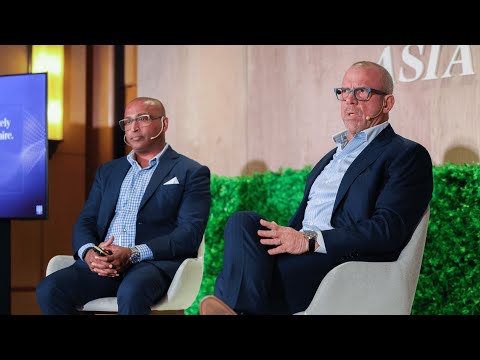
Industry leaders from NLC Health Ventures, PRIA Healthcare, TSTILL Enterprises, and Sofina share strategic insights on navigating international markets and scaling medical innovations across different regulatory environments and healthcare systems.
Join Our Next Event
Partner with the leaders
shaping the future of
Medtech at LSI USA ‘26
March 16th - 20th, 2026
Waldorf Astoria, Monarch Beach

Peter Wijffels  0:06  
All right, good morning, everybody. Welcome to the panel on commercializing across continents. My name is Peter rifles. I'm a partner at NLC Health Ventures. We are a Dutch based, but globally operating venture builder. We have about 70 portfolio companies. We also have a fund that invests in all of these ventures. Prior to becoming a partner at NLC, I spent 60 years in Philips across three continents. I spent six years living in China, four years in us, and the rest was Europe, where I'm also from, as you can probably tell by my accent. So I have a personal kind of affinity with this topic, and I'm very glad to host the panel today. I'd just like to go, you know, down, down the row, and ask the other panel members to introduce themselves as well, starting with Jeff. Yeah.


Jeff Sirek  0:50  
Jeff Sirek, I'm the CEO of PRIA Healthcare. We are a strategic reimbursement services company and market access. I have been in the med tech industry for about 30 years, commercializing products. I've gone concept to commercialization with seven products worldwide and worked for big companies, private equity, and I look forward to speaking with the group today. 


Timothy Still  1:11  
Hi there, Tim, still an operating partner with revival healthcare. I have been in medical technology for just about 35 years. A lot of those years have been in medical diagnostics and tools, been a CEO a handful of times, and I'm currently looking at additional investments and sitting on some boards. Pleasure to be here.


Diego Serrano  1:31  
Thanks, Tim so I'm Diego Serrano. I'm an investor at the healthcare group at Sofina. Sofina is a global investor with $10 billion in assets under management, give or take, we invest globally in growth stage companies and so usually commercial stage medical device companies within the med tech sector. Before that, I worked in M and A advisory for a couple years. I worked in an earlier stage venture capital firm focused on medical devices as well. And after that, I joined one of those companies and work with them in corporate development and expansion. So pleasure to be here.


Peter Wijffels  2:12  
Thank you all. So to start this discussion, you know, I mean, every company dreams of becoming global at some point, right? We don't start thinking, let's stick in inside of one country and, you know, scale there. However, having said that, you know, there are good and bad reasons for commercializing across continents. Yeah. So I'd like to start by just asking the question, maybe starting with Tim, what are some good and some bad reasons to to go global for for scale up companies in health, tech.


Timothy Still  2:45  
Well, it's it's been interesting. I've had a chance to be involved with a lot of smaller companies that are trying to bring an innovative product out to market, get into as many markets as they can and and grow grow share. And I've had the privilege of working with a number of founders and all of those those roles, and what I see is a bit of an ignorance with an awful lot of founders and companies that start out and trying to commercialize on a global basis. And I mean that from the standpoint of not appreciating some of the market access challenges and reimbursement and regulatory that some of the markets have. And now that I'm a little bit more on the investing side, and I'm seeing these companies come and pitch us for money, and I see founders coming in and saying, Well, we want to go global. We think our product is better than the current product, and this is why we're going to win. And then you start to ask questions about what's your priority for market access? Is your product reimbursed in that market? Have you done the regulatory research of what it's going to cost to get the clinical validation done in order to get that product accepted? And guess I probably shouldn't call it ignorance, but I guess it would just be the lack of appreciation for local regulatory and market access knowledge that you need to have at the company. So I've been fortunate where I've been involved with companies that have done that well, I've also been involved with companies where it's been more challenged. So I think that it's, it's really the best approach based on the product type and and what they're really trying to do, medical diagnostics is going to be different than medical devices. And I think really, more oftentimes than not, founders and companies need to start with market access. And I think that's when the big things that they miss, yeah?


Peter Wijffels  4:44  
So that is the perfect bridge to Jeff, because you live and breathe market access. You also went away on this topic, yeah,


Jeff Sirek  4:51  
I did not pay you, Tim. Appreciate that. I think first of all, it's important to understand every country is different, every technology. Matches a different country, right? I mean, you can't just have one product that's good in in Japan, good in Europe, good in the United States. It really needs to match the geography of where you're going to be attempting to commercialize the products. Plus, I mean, we're here in London. Has anybody heard of the NHS? It takes a year, year and a half, to commercialize with the NHS here, FDA approval in the US takes a short period of time, but it takes a lot longer to get reimbursement, to build evidence, to get society support, to build these areas, to make sure you can sell the product, because if it doesn't get reimbursed, people are not going to buy the product across the United States, for sure. So there's pathways and different ways to approach the business. Yeah.


Peter Wijffels  5:41  
So thank you. And so Diego, to also ask your perspective on this. So there are, if you, if you start with the end in mind as a company, right? So why do you want to even scale globally? How do you guys coach your portfolio companies on


Diego Serrano  5:55  
that? Yeah. So just a little disclaimer. I'll say, if you're, if you're here to learn how to commercialize better listen to Tim and Jeff, because I'm not the one to to teach anyone anything about commercializing. But maybe I can give, as you said, you know, the perspective from from an investor point of view. And I would also say that now this, why do you want to commercialize and and obviously, I think Tim and Jeff will contribute here, but you also need to prepare, you know, a stable base to really be able to commercialize where you think you have to. But I think from an investor perspective, it's also interesting to keep in mind the the end goal of the company. I think when we look at commercial stage companies, we can quickly see if the commercial efficiency for that company is going to be there whatsoever. And that's and that's not to say that, you know it's a bad thing. You have a bad company if you cannot reach commercial efficiency per rep for your product. But the reality is that within medical devices, sometimes it's very hard to do this. So as investors, I think we're always cautious of, okay, is this company going to be an independent company in the future? Can it be an independent company in the future? And does is the founder or the management team align on, on what kind of company they want to be, and how are they're building their, you know, their sales strategy for that end goal.


Peter Wijffels  7:22  
Yeah, so to build on that a little bit more. Tim, you, if mistaken, you have some serious exits under your belt. So if you look through the lens of potential acquirers, many, many of us are, you know, realize that our companies cannot scale indefinitely, and at some point, a strategic will hopefully show up and acquire US. Well, how do they look at, you know, the commercializing globally is that important to them? What do they really look for,


Peter Wijffels  7:49  
you know, in the situations where I've been involved in this, this might sound over simplified, but it's really if the company has had strategic thought and what their commercialization rollout is going to be. Too oftentimes, founders will, you know, everyone has the pitch deck where they want to talk about market opportunity, and the easiest thing to do is to look at the number of people in a given country, and then they say, well, in France, there's this many. In Spain, there's this many people, but they don't go down the next level to find out that that kind of testing in that particular country doesn't even exist. We take a year just to get registration, let alone right, get the registration. And I've literally been on the other side now as an investor, where I have seen founders come up and say that they want to roll out in a given country, and that kind of testing is not even reimbursed. So from an investor standpoint, we have some hesitation, and that translates to the strategics, right? And strategics are going to want to see a company that has a well thought commercialization plan. You don't have to go everywhere at once. You don't have to go global at the start. It's better to be successful and maybe penetrate in one particular market and do well and get some clinical data that you can use to then pursue different markets. It involves IP, it involves reimbursement, it involves regulatory so strategics are going to look at that and as someone that's led companies with founders, the advice that I give founders all the time is, don't be ashamed to get the expertise at the company that you don't have. It's impossible to know all of these different things in every market to be successful.


Diego Serrano  9:39  
Get some expertise. Yep, yeah. And maybe Tim, if I can add to that, I think, you know, I was thinking about what you were saying about, you know, pretty much looking at the market top down versus versus bottom up. So top down being, how big is this market potentially? I think, you know, it's a little bit of a. A dangerous message that is passed to founders many times, that investors only look at huge markets, and thus how that message is received by founders many times, is okay. I need to make sure that this pitch says that we have a huge market, an interesting story, and it may resonate is the is the organock story? For example, the transplant industry is not the biggest industry out there, and and the liver transplant industry is even a smaller part of that. Think organox has been one of the most successful exits for the year. And when we're looking at it as investors, which we invested in their latest round, we were very lucky on timing, but in any case, we were looking at the market. And when you look at that market, is not one of those that you say, Okay, this is huge. But when we talk to management, you know, the ability that they had to convey what their what their patients wanted, what their patients were, you know, getting from the product and and how well they were able to put together the plan and how they were going to grow and compete against the other main competitor in the market. It gave us the confidence to really bet on them at that time and say, Okay, we think that within this market, this company has the ability to really capture it, despite not being a huge one.


Jeff Sirek  11:14  
Sometimes the bigger markets are the worst places to go, quite honestly, based upon the technology and the needs of that area.


Peter Wijffels  11:21  
So Jeff building a little bit on that. So, you know, I we really like entrepreneurs that are pragmatic and, you know, go getters and go after opportunities, but when you think about global scale up, that's also risky, right? So we have portfolio companies that come back from a conference like this, and they've met a hospital group from Greece, and they think, you know, I have to go to Greece now. And then we're like, this is really the right, you know, use of your resources and time. So maybe contentious question, because we all know the nationalities in the room, but what are no go areas from your perspective, what's where was those


Jeff Sirek  11:56  
already commercialized in China before? How long does it take three years? Oh, forever for old one. Sure, that's not a good area, but I think it's really important to think about the landscape and the evidence that's needed here if you're going to go in the US and the society support need the K wells. I've seen way too many CEOs go in too early and commercialize too early, with all the evidence in place and experts. And when you do that, you really falter, and you have to come back and re up and over and over again. So really be careful to understand you these Mark markets and bring in experts, I think is really important.


Peter Wijffels  12:32  
Yeah, a so you mentioned China. I lived there for six years. All my kids were made in China. So I have a special place in my heart for for China. I didn't mean that poorly, though. You know, deep love for wonderful pace. One of the thoughts, you know, of course, you're, I mean, I think it when you're growing your business, you need to be conscious in the choices you make. And I'm curious about, you know, the two investors on the stage, when somebody has a traction in China, has a commercial partnership in China, maybe has an investor from China. How do you guys look at that? Does that influence your investment choice in a company at all?


Diego Serrano  13:08  
Sure. Yeah, we have. So we have a team in Singapore that covers the Asian markets, and we actively look at companies from from China as well. Of course, they're completely different dynamics, but, but it is not a, you know, it's not a problem for us necessarily, as we have, you know, a full entity in in Singapore and and we're looking at the full Asian market, although I understand that it can be a little bit challenging for other investors that may not have built that presence there and cannot give you, you know, it depends. Will be my answer.


Peter Wijffels  13:49  
I would just say it's another example of get the right expertise in the local market. And once again, I can continue to see companies now that want to go into China, because they say the numbers are huge. Well, that's great, but they don't think about their IP. They don't think about they have to manufacture the product there, locally. They don't think about pricing. They don't think about the margin local


Jeff Sirek  14:12  
commercial team they need, and managing that team,


Peter Wijffels  14:15  
yeah, it's you. You need to get the local expertise, and you don't have all the answers.


Peter Wijffels  14:20  
So this reminds me when I when I was living there, we'd go for drinks in the bar street on Friday with all the expats. And every Friday, a new Dutch guy would show up and say, I'm gonna sell the famous Dutch Carmel cookies in China. Because if only 1% of the Chinese eats eats this, then I'm rich. And it was another Dutchman every Friday, and they all filled. And I think that goes exactly to your point of that's not how market access works. You need guys like Jeff tools as well.


Peter Wijffels  14:47  
You really do. And you know, I'm obviously from the States, and so I get approached, and I have been involved with a lot of companies that have operations in Europe, and they want to come to the US, because the US is the biggest one. Market, right? And you have a founder who has a really novel product, and they say, We want to go to the US. It's 40% of the market. We think we know how to do it. And then you start to ask the founder about their strategy. Now, oftentimes the strategy and the plan is more important than what their actual results are. In the eyes of a strategic you basically say, What? What is your timeline for, getting your funding, getting your clinical data, getting your market access, getting your reimbursement, and oftentimes their eyes start to glaze, and it's for the US being 40 per percent for for most, most folks, it's astonishing to me that companies that are based outside of the US think they have the expertise and the knowledge to get into that market without, not necessarily Jeff's group, but a group like Jeff, come in and assist and help validate the plan. It's just so critical, and to me, it's so fundamental. So when, when I see founders now coming to pitch for capital that haven't done that. It's usually a pretty quick meeting.


Peter Wijffels  16:06  
No, hey, so to build a little bit on what you said earlier, Tim, about the team. Do we have founders in the in the room? Anyone? Cop, okay, so I have some bad news for you, the average number of founders that are needed to get from the start of a company to the exit of a company is 4.6 and there is a reason for this, right? And you know, there's an average. So that means some people, you know, will, will may take it all the way, but that's not the the expected journey of a venture, and because, as the famous saying goes, horses for courses, scaling is a different job than starting etc. So And Tim, Tim, you referred to this earlier, right? That you know, sometimes difficult discussions with founders have to be had when you start commercializing. Can you open that box a little bit more for us?


Peter Wijffels  17:01  
Well, I think when you look at raising capital, and you want to get into the US market, more often than the non boards and investors want to have a commercial experience CEO come in and help to raise capital and to lay out the plan and with with founders, if you can get the founder to feel that you're coming in to make their baby and the dream come come true, then it's a workable situation. But that's not always the case. I've worked with four different founders at four different companies, and every one of them was there's an emotional attachment there that you have to work there is well, and it's usually not the situation where the new leadership is coming into now to take anything away, it's just try to make it more successful. So yeah, I do have a lot of experience there. And I think if founders can just open up their eyes and their ability to take in some expertise that they don't have brilliant in all the ways they are, that it would really benefit them, and it is the open mind to have a founder carry it all the way through. Yeah.


Peter Wijffels  18:07  
So if you could, you give share a couple of examples about what makes scaling up such a different game from starting up.


Peter Wijffels  18:17  
Well, I in the diagnostic side, where I see an awful lot of companies fail, candidly, is that they have a wonderful product in research and development, and then they fail getting through manufacturing and operationalizing it and scaling it. So let's use a point of care system as an example. We're all familiar now with it because of covid, right point of care, testing, that cartridge that is used to test for that test. Where's that going to be manufactured? What's that going to cost? Do they have the scale? Do they have the ability? Oh, by the way, why is that important? Because during covid, from a regulatory standpoint, you could not get approval to sell your product unless you were able to manufacture at a certain level within three months of making that product. So once again, this kind of speaks to your need to have that expertise and knowledge


Jeff Sirek  19:15  
can say, how do you get there? You need the experts in operations, right? We're to manufacture here, overseas, wherever that's going to be very niche understanding, yeah.


Peter Wijffels  19:23  
So that's an area where I see a lot of companies have a challenge.


Peter Wijffels  19:28  
And Diego, what about you guys? How do you look at, let's say, you know, founders that have done a great role getting the company to where it is, but that may not be, you know, don't have the skill sets for the for the next step.


Diego Serrano  19:39  
Yeah? Well, I would argue that none of us have the skill sets to take a project to the next level, if it really is the next level, right? But some people are more aware of that, and others are less aware of that. I think we love found. Led companies, or management led companies. We are a growth equity investor, but we have a family office background, and I think for us, seeing that the founder is pushing it and wants to take things to next level is very relevant. That's not to say that that lack of skills will always be there, I believe, depending on the size for us, it will be more a matter of how pragmatic is this founder and how well has he been preparing for for the next stage of the company across different industries. But you know, specifically this one, there are founders out there who are critical thinkers enough to really start preparing for that next phase in advance and hire people that you know would have some learn along the way. Yes, exactly. But have you know, have prepared for that and have started hiring people that you know could be saying it's strange that this founder is, you know, managing over this person, because this other person has so much more experience and and seems to be so much more knowledgeable, but, but then there are some CCOs that are not interested in the CEO position, and there are CEOs that are or founders that are so good at managing people, understanding the next stage and giving responsibility that they can manage that transition. So for us, it's more a question, can this founder manage that transaction, and is he pragmatic about it?


Peter Wijffels  21:27  
Love it, so maybe as a gift to the founders in the room, how do you guys test for this mental flexibility that is needed? Yeah.


Diego Serrano  21:38  
I mean, it's Diego. Take that on. Yeah, sure. I mean, there's no black or white, of course, but, but when I talk with a founder, it's a matter of seeing how well prepared he is for what it's for, what is coming up, and the transparency in the conversation that that we will be having. If someone tells me, no, no, there's no challenges ahead, that is a red flag, right? Because there are challenges ahead. A question is that the ones that you don't know about what they're going to be, are you, are you thinking about them already or not? Are you planning for the future or not? And it's a huge ask, by the way,


Jeff Sirek  22:12  
do they have the right guidance, the right people helping them do this? Find the right experts? Yeah, of course. But yeah.


Diego Serrano  22:18  
And I think that's a it's critical and to surround yourself with with good people that can help you. But I don't want to be the one telling you to do it. I want you to come to the conversation with with a plan for it already.


Peter Wijffels  22:31  
Yeah, well, and the other brutal truth that I was I was just going to share with the group, and I'll put this to both of you, gentlemen, is when investors are looking at putting money into a company, they're going to look at the talent that is at the senior level of the company, and the talent of people on the board. Have they done it before? And if they have people that have done it before, you are much more likely to get an investment for a founder led company if they have that talent around them, if they don't, it's it's going to be a lot harder to convince investors that you have the chops that's necessary to really make it work.


Peter Wijffels  23:12  
Yeah, and Jeff for you. I mean, so yes, you want to send a check, right? That's your business, but you also want the company to be successful. And I'm sure every now and then a company shows up at your doorstep and ask you for advice, and then you look at the company thinking, I can give you an infinite amount of advice, but you're not going to be able to implement this. How do you handle situations like that? Well, I think, I


Jeff Sirek  23:34  
think we met 60 companies here, and we're giving them different advice at different angles, and trying to understand where they're at in the process, and assist them and in those processes and and try to get away from the BS, right? And so they're not BS ing themselves, and helping them understand with the dollars they have, where they're going to go and get in early, and understanding the reimbursement process and the landscape so that they don't get into the traps that Tim and others have talked about here.


Peter Wijffels  23:59  
Yeah, so you're trying to be also brutally honest when I think so, yeah, yes, yeah. And that's probably the only way to get you know they respond well to that, yeah, yeah. Hey. So, so before we open the floor to some questions, one final topic I think we should cover is, how do you operationalize all of this? So we are now, you know that a company has a plan there. They have done their market research. They know for a fact that there is a there is a need for their product in that markets and what, what happens next? How do you guys coach the companies on this? Maybe starting with Diego. Do you have any perspective on that?


Diego Serrano  24:38  
Yeah, I think again, not, not the one to give a lot of advice on how to do things commercially for founders out there, but, but maybe one thing that I can talk about is what we look for when we're looking at these companies, and maybe especially for the companies that are in an earlier phase, they are already, maybe in the US, starting to sell their first devices in a region or. Couple regions, a couple hospitals. It's Show me. Show me how your plan to do these sales motions efficient. And I don't care if the number is five or 12 at this stage, I rather see, you know, a sales motion that can be efficient and expand it if I'm going to be given the next 40 million to to expand the commercial team and the commercial plan, I want to see something that I can believe in, that you can replicate, rather than being in 28 regions and just having sold a couple devices in a couple hospitals with little repeat sales, yeah, that would be the only advice. Try to concentrate first, try, try to get the motion right in, in a couple centers, and demonstrate to the investors that you can replicate this expanding.


Peter Wijffels  25:48  
Yeah, so maybe yesterday I met a what I thought was a really good company that a very exciting technology. I then probe them on their scale up plan, and they said, Yeah, we are planning to partner with the strategic but if that doesn't come through, we will just use distributors. And then I That, for me, was a red flag. So, you


Jeff Sirek  26:07  
know, it can work with the right product, but you have to have a direct team, usually, in concert with that most of the time. Yeah.


Peter Wijffels  26:13  
So my question to to you is, you know, what is the right mix? How do you puzzle together the right go to market plan.


Peter Wijffels  26:23  
Oh boy. I don't think there's any one answer that I can give to that it's really going to be product and company dependent. Too often times you you see founders and CEOs come in, they say they want to commercialize, and they're going to be picked up by one of the bigger companies, because their product is great, and they haven't thought through what that looks like from a commercial stamp standpoint. So use an example I was involved with, with a company that that had a point of care device that tested for particular type of tests, and they said that their ideal company to buy them was one of the bigger companies, when I probed them about what their commercial strategy was, they said, oh, we'll just let the sales force of the bigger company handle that product. It makes makes sense. They didn't do the research to know that that big company did not have a sales force that served that segment of the market. And in order for that strategic to buy them, they would have to invest in a complete team, sales, Mark, marketing, everything to satisfy that market segment. So plus,


Jeff Sirek  27:29  
they have to prioritize at the big company. Yeah, right. There's we have their own priorities to worry about. So, no,


Peter Wijffels  27:35  
yeah, yeah. So, so there's no one solution. I think it's really going to be product and company


Peter Wijffels  27:42  
dependent, yeah, maybe for Diego. So you know that the plan B can be get acquired, right? That's usually pipe dream, but it can be the plan B. But you also always in such negotiations, even you need to have a credible plan A, right, yeah. And if you don't have a credible plan A, you're even if they buy you, it'll be at pennies on the door, because, you know, they know that you don't have a choice, and that's not a good negotiation. Starting point, when you guys look at financial plans, how do you look at, you know, the plan A, plan the B thing? Sure.


Diego Serrano  28:17  
So again, this is very I'm talking about ourselves, and not the rest of investors who may be looking at different things. We do not underwrite sales to to larger m&a acquirers. We're really looking to see whether the company can go independent on its own. And this is, you know, not the majority of the companies out there, and there's no one size fits all, but, but we really, really need to believe in the Plan A. If we do not see the plan a happening, we don't even take into consideration the plan B. Again, our case is not the standard. There are many investors out there that will invest or underwrite other things, but for us that that plan A and what we've been talking about being ready to to take your company all the way and be an independent company, it's very, very important.


Peter Wijffels  29:10  
It's, it's fundamental. And so I've, I've been fortunate that an awful lot of the companies that I've led, they have been acquired by one, one of the larger companies, and some of the folks here that I know that I've worked with in the past, when I would go to one of these, these companies, delete it, I was, was often asked, What is your plan for the company? Based on your background, you're probably here to make sure the company gets acquired. And that was never the case. Was always we wanted to run the company in the best way possible, and then if you're doing a good job at that, opportunities present themselves along the way. And candidly, it's not going to be the founder's choice. It's going to be your investors choice. But if you have the mindset that you're just building a company to get acquired, to commercialize, you. You're you're not going to be very successful. And investors are going to smell that out, and that's not what they're looking for. We look for what we call a high do, say, say, do ratio. When the founder says, this is the market we're going to get into, this is what we want to do. Do they do it when we check, check back six months? Do they do it in 12 months, and if that model works, then they're going to have strategic opportunities present themselves along the way. That's, that's a better way to build a company.


Peter Wijffels  30:28  
Yeah, I love it. So the way we look at this, we have, there's about 70 portfolio companies, you know, targeting different markets, different geographies, but also different strategics. So, but we have quite a bit a bit of data on, you know, when do strategic start engaging? And what is very clear to us, certainly in most of Medtech, not all, but most of Medtech, is that you need to have a so, you know, buying before commercial traction is not is a thing of the past. In most of our businesses, you need commercial traction. And that means not just, you know, if you're European company, which probably most here are, it's not one country. You need a couple of countries, because you need to prove the reimbursement works, the doctors, the daily practice of the doctors, they they will adopt it. You need repeat sales, and you need the customer to come back. There's a lot of innovation, you know, gathering dust in the corner of an or somewhere. So you need to prove that this thing is actually being used. And then what you probably also need is to jump to the US, even though that is really hard. But yeah, that is the biggest market in the world. And once you start doing that, that is when strategic start taking notice. But that means you have to commercialize a cost continents. In most of the cases, you have to do it yourself before you gain any interest from from the strategics as at least our conviction, hey. So at this point, before we go to closing remarks, we have time for some questions from the audience. Does anybody have any questions?


Audience Question  32:01  
Thank you, very, very helpful presentation. You talked about local expertise. Is there other not by name, but, but why not just link up? Let's take China for an example. A lot of established companies that are US companies with Chinese divisions. Is that a bad idea to link up with a Chinese division and say, you know, establish a licensed relationship and leverage their market access and their sales expertise.


Jeff Sirek  32:25  
If they'll do that right, because they have their own priorities, it's better to get experts that can help you commercialize in those areas, and there's people that can help you do that for sure.


Peter Wijffels  32:35  
Yeah, so I'd like to weigh in this one. So a lot of people don't want to go to China because they're afraid of copycat, right? They'll steal my IP. Not. So first of all, you know, I always say, if you, if you don't go, you don't have any sales. And if you go and they steal your IP, then you also don't have any sales. Yeah, yeah. You just put in some effort. But the, you know, there's, there's not a big difference. Chinese companies don't generally steal your IP and then make it global, because there is IP laws that will protect you outside of China and inside of China, the best protection you can have as a partner, a good local partner that has the right government connections. So scaling in China is, from my perspective, only feasible in a partnership. That's that's my experience. Thanks for the question. Any other questions?


Audience Question 2  33:33  
Thank you very much for this fantastic panel. We've discussed a little bit how to scale up, for example, like POC devices, but we I'm from nimble diagnostics, so we are developing a rather more intricate medical device that uses microwave to monitor coronary stents, detect blockages or fractures, before problems arise, etc, and you can have a follow on when patients don't have one. But our machine has very specific characteristics in electromagnetic settings, and there's components that are really difficult to get. We are using lab equipment because it's not a component that anyone is using anywhere to commercialize. So we're struggling on finding a good partner that can helps us manufacture a good prototype, prototype with these parts that are difficult. The antennas are very specific. We have patterns over the antennas, the material inside the antennas, the lab equipment that goes inside to generate the micro areas we want it. So what, for example, type of advice could be in that type of setting, because our type of device as well, it's not something repeatable in the same hospital. So each hospital may buy one to three devices and will last for five to seven years. So I would imagine that repeated sales will be most like. Different hospitals in the same region or same country? Would that be similar to what Diego said about having some hospitals and repeated sales in the hospital, which, in our case, the device itself, it's difficult to replicate further, like an ultrasound, for example, they're not buying it constantly.


Diego Serrano  35:22  
Luck. Okay, so again. So repeat sales is something that investors like to see, and if you don't have a device that can have repeat sales where you don't have disposables, you may need to think about, how can I manufacture this product in a way that I can charge per use, or I can add that, that establish contracts, for example, for eight years, measurements, software license, yeah, it, yeah. It definitely complicates, you know, and when you think about product design. It definitely complicates it. Because how do you measure a per click case and such? Definitely makes things harder. But I would think about this whenever you are putting together, you know, how am I passing the product to the hospitals? And it will complicate things nonetheless, but I think it's, it's manageable again, with the right maybe advice, or the or the right team. That's how you should probably think about it.


Peter Wijffels  36:25  
You might not have all of the answers, but I think one critical piece that I see that's not in a lot of pitch decks when folks are trying to raise raise capital, is show me the cost of goods roadmap as you scale your product, and candidly, it's one of the most overlooked pieces of information that founders and companies don't spend enough time on. And it's not just important for your business, because, to his his point, there's a chance that you might need to design the product differently to get the kind of scale. But even beyond that, anybody who's going to want that asset later, such as a strategic they're going to want to say, okay, in my hands, at my volume, what is this product going to look like? So it's worth doing everything that you're doing to really challenge product design, volume growth, to really get a good handle on that.


Peter Wijffels  37:19  
Love it. Hey. So to close this off, maybe ask each of the panel members short closing remarks, with the main question being, what is the one thing or the main thing you would like the audience to take away from from this panel? Jeff, I


Jeff Sirek  37:33  
think they need to get in early and get some experts to help.


Peter Wijffels  37:37  
Yeah. Thank you. Tim


Timothy Still  37:39  
I would say the same. And one of the biggest areas that people miss is market access and clinical validation. Start that earlier. Do not wait until the end. 


Peter Wijffels  37:49  
Thank you. Diego.


Diego Serrano  37:51  
Diego, from an investor perspective, just be transparent with the people you're you're talking to. They you know, creating a trustful relationship is one of the most important things you can do it in this industry, and best of luck. It's not easy for anyone. 


Peter Wijffels  38:10  
Thank you. So thank you very much.